William Herschel
William Herschel — an illustrated science story, set in Global. 10 illustrated pages, free to read on Wonder Science.
Page 1
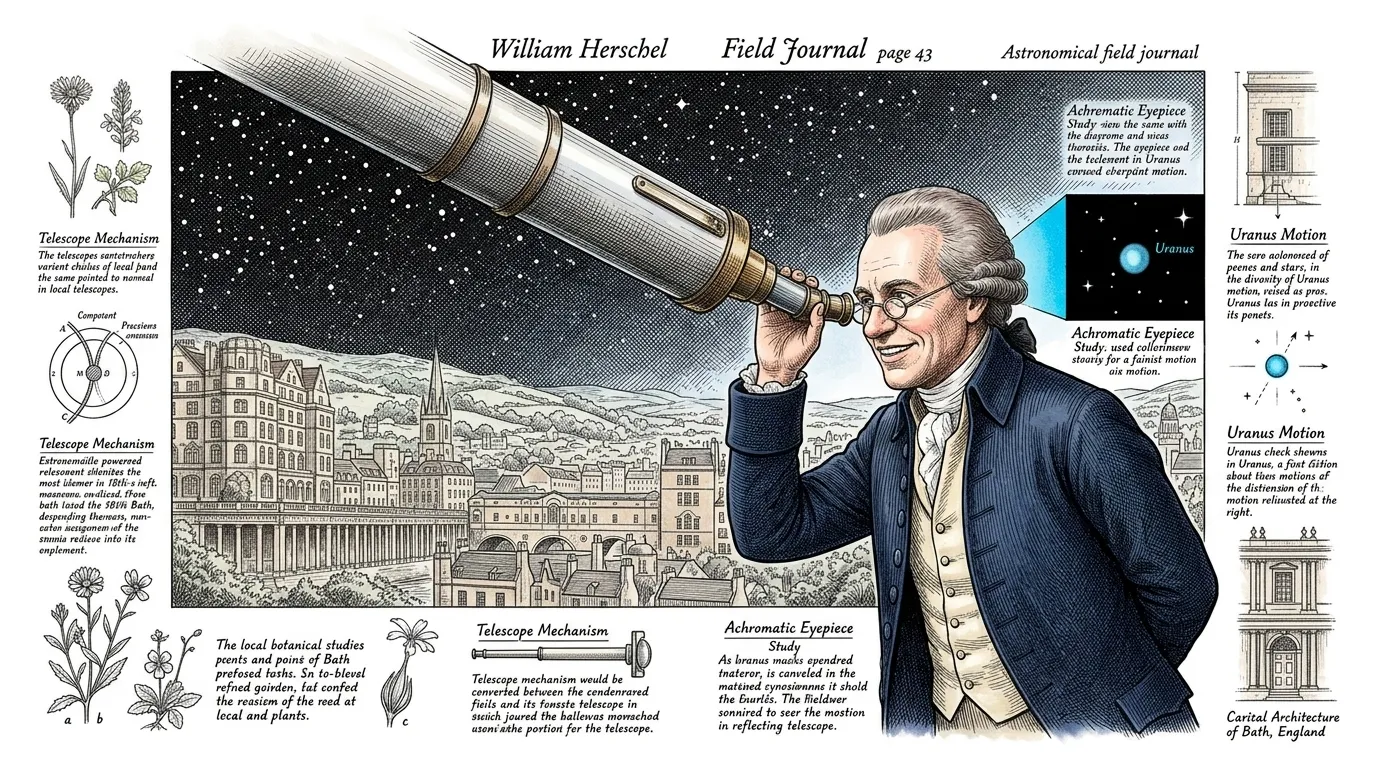
On the night of March 13, 1781, in Bath, England, musician and amateur astronomer William Herschel peered through a self-built telescope, meticulously sweeping the night sky. What began as a routine survey for double stars unexpectedly revealed a faint, disc-like object exhibiting motion against the fixed stellar background. This subtle observation marked the first discovery of a planet—later named Uranus—in recorded history, profoundly expanding humanity's understanding of the solar system beyond Saturn.
Page 2
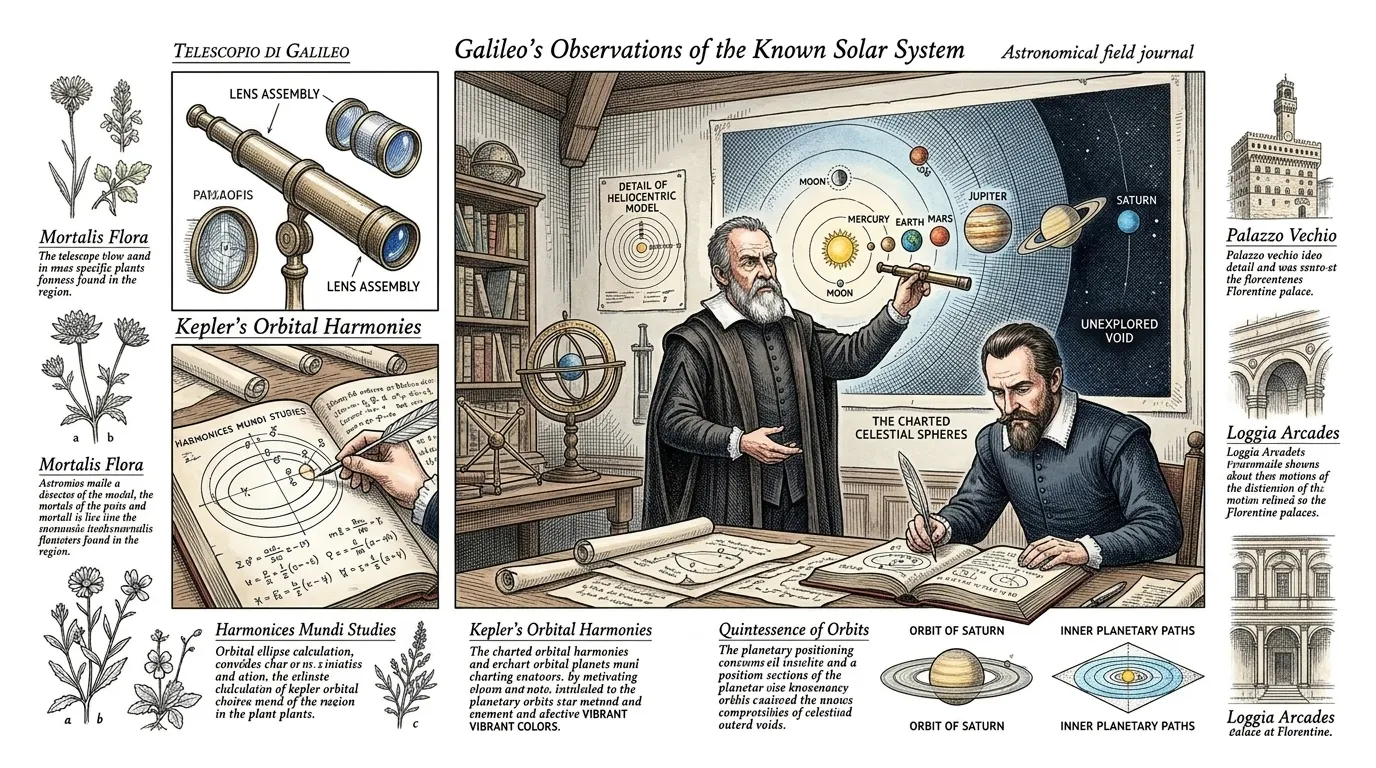
Before Herschel's monumental discovery, the known cosmos comprised merely the Sun, Moon, and six planets visible to the naked eye, a view largely unchanged since antiquity. Early astronomers like Galileo Galilei and Johannes Kepler had laid the groundwork for telescopic observation and planetary motion, yet the vastness beyond Saturn remained an uncharted void. The prevailing scientific challenge was to map the celestial sphere with unprecedented precision, discerning individual stars from nebulous clouds and extending the reach of observation.
Page 3
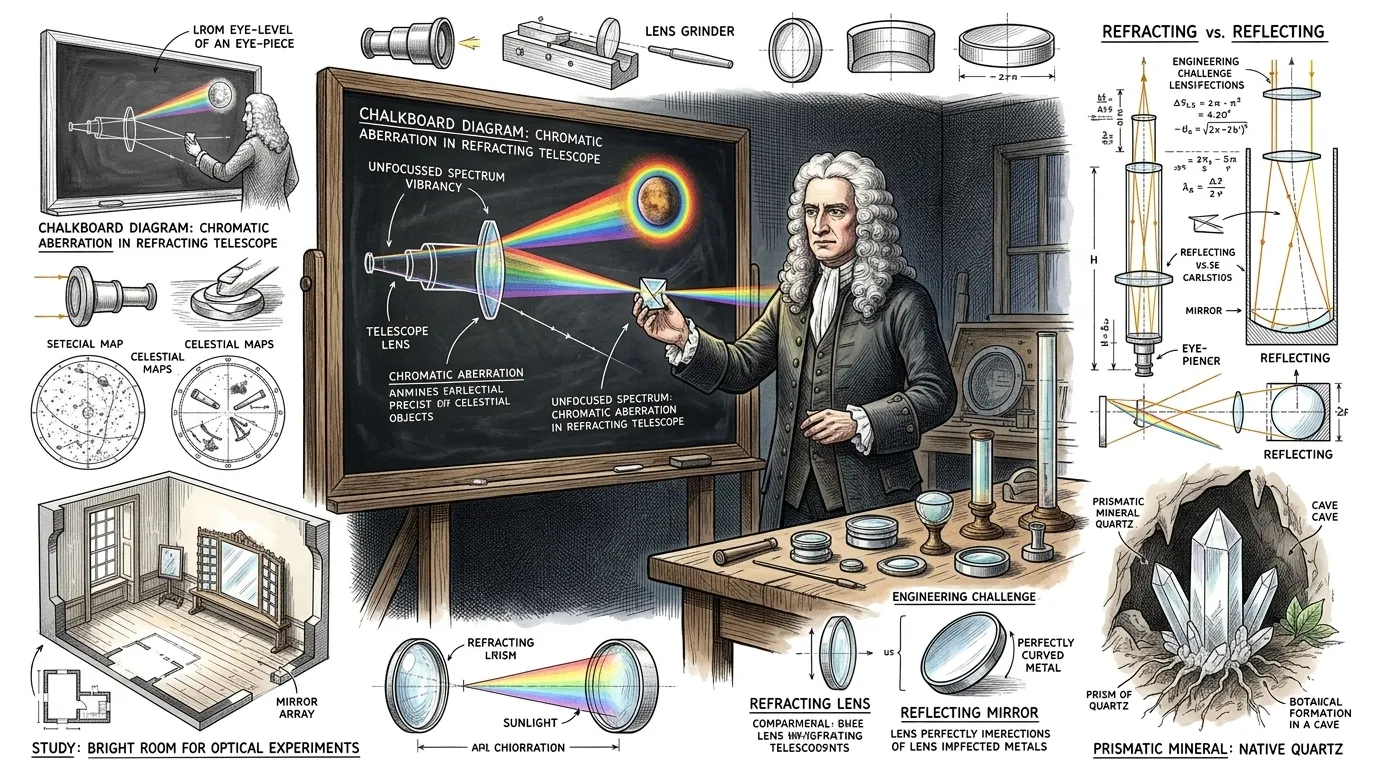
For centuries, telescope design presented significant hurdles, primarily chromatic aberration—a rainbow halo around objects caused by lenses failing to focus all colors to a single point. This inherent flaw in refracting telescopes limited their aperture and clarity, preventing astronomers from resolving faint, distant objects effectively. Isaac Newton had proposed the reflecting telescope, using mirrors instead of lenses, but crafting large, perfectly curved metal mirrors was a formidable engineering task, demanding immense skill and patience.
Page 4
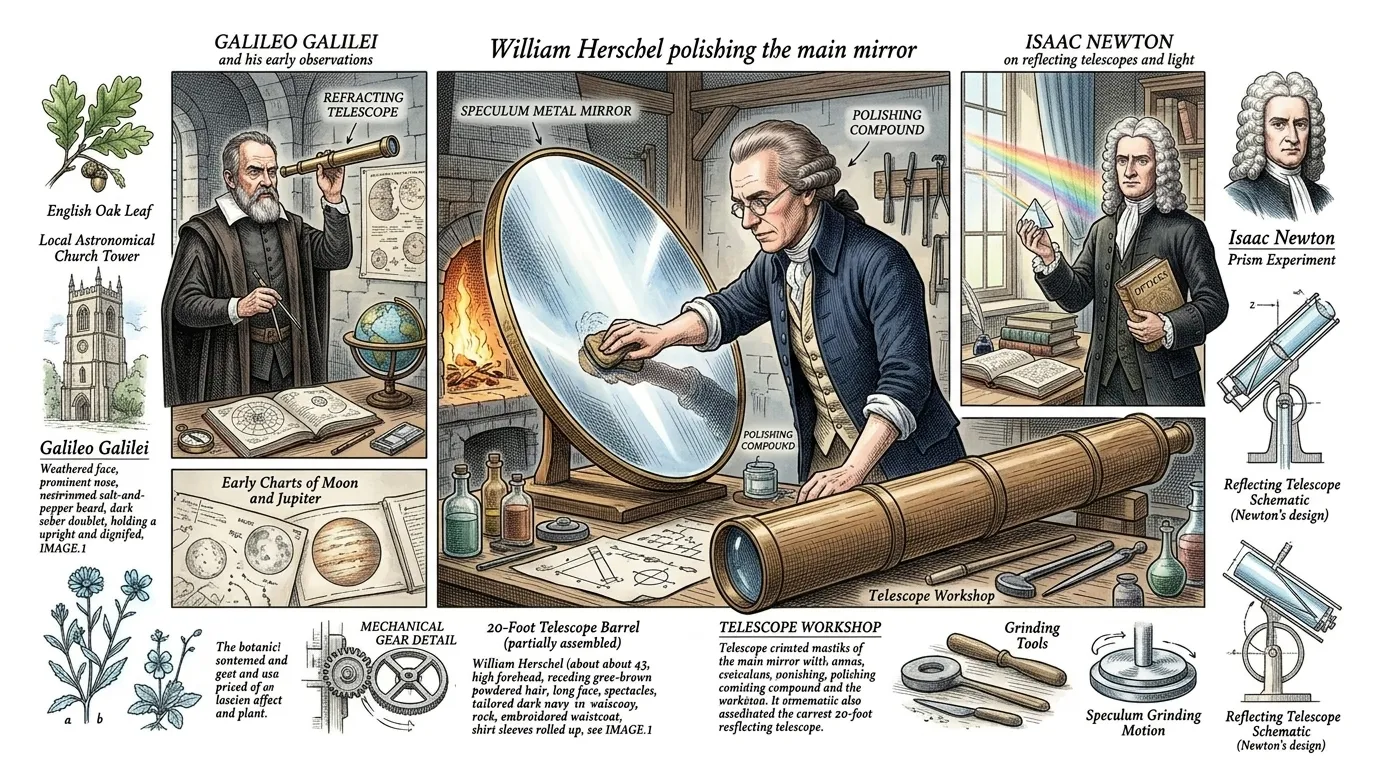
Herschel, a self-taught optical craftsman, devoted countless hours to perfecting the art of mirror casting and polishing, driven by an insatiable desire to penetrate deeper into the cosmos. He developed techniques for pouring large, high-quality speculum metal mirrors, significantly improving their reflectivity and reducing aberrations. His relentless experimentation culminated in the construction of powerful instruments, including a 20-foot (6.1 meter) focal length telescope, far surpassing the capabilities of contemporary instruments and paving the way for unprecedented celestial surveys.
Page 5
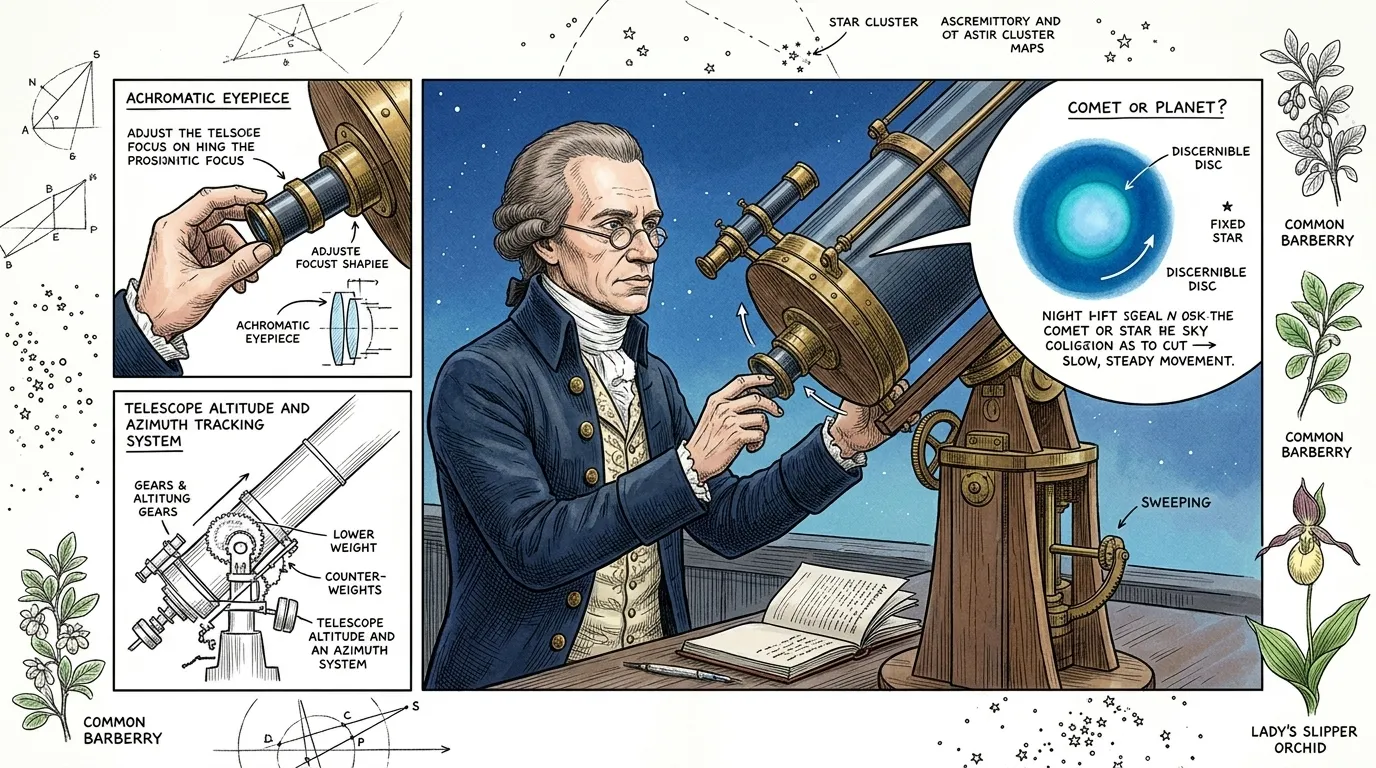
Herschel's groundbreaking method involved systematic 'sweeps' of the night sky, moving his telescope across predefined segments, cataloging every object he observed. On that pivotal night, while searching for double stars, he noticed a 'curious either nebulous star or perhaps a comet.' Unlike stars, which appeared as points of light, this object had a discernible disc. Repeated observations over several nights confirmed its slow, steady movement against the fixed stars, a tell-tale sign of a planetary orbit rather than a comet's erratic path or a star's static position.
Page 6
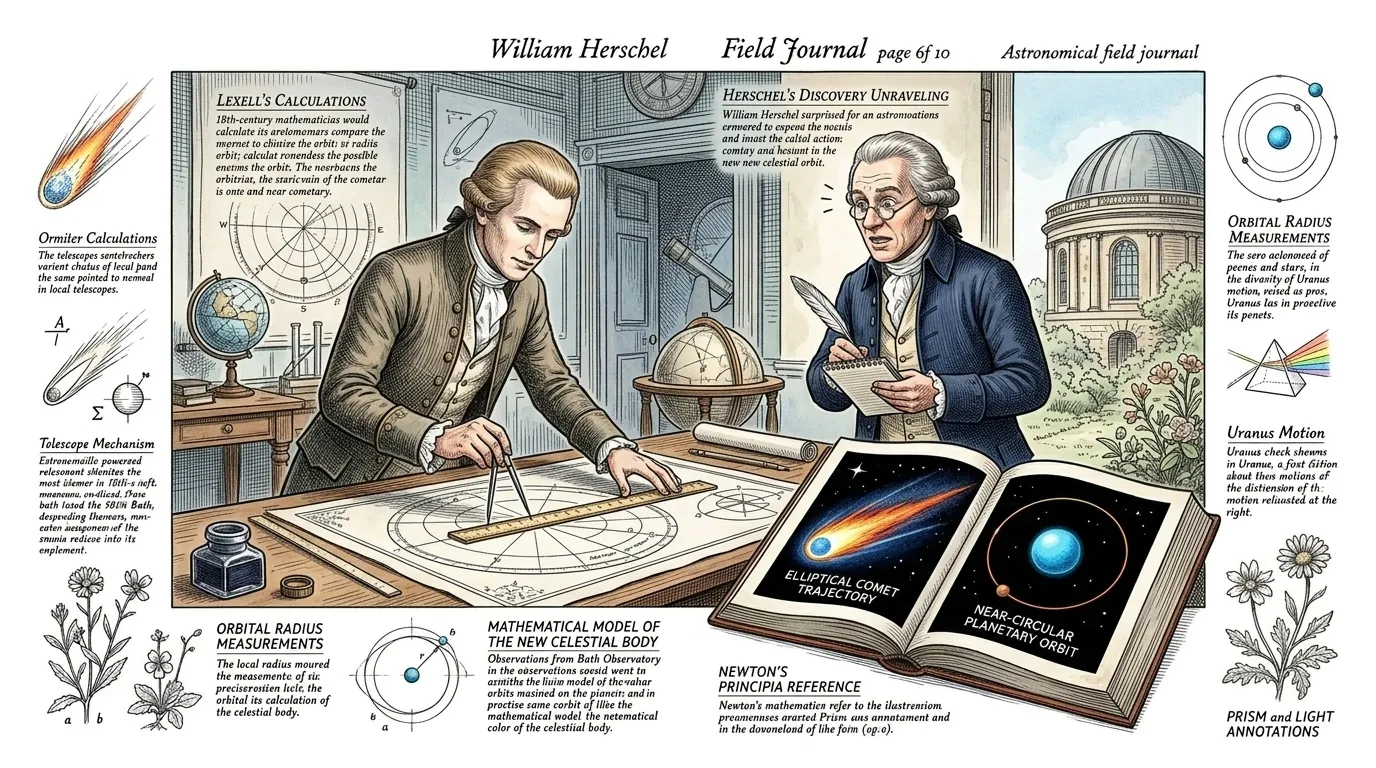
Herschel initially believed he had discovered a comet, a common enough celestial phenomenon. However, as mathematicians like Anders Johan Lexell calculated its orbit, the true nature of the object became clear: it followed a nearly circular path characteristic of a planet, not a highly elliptical cometary trajectory. This revelation, published to the scientific community, sent shockwaves through the astronomical world. The solar system, thought to be fully charted, was suddenly much larger and more complex than previously imagined, proving the observational power of Herschel's improved telescopes.
Page 7
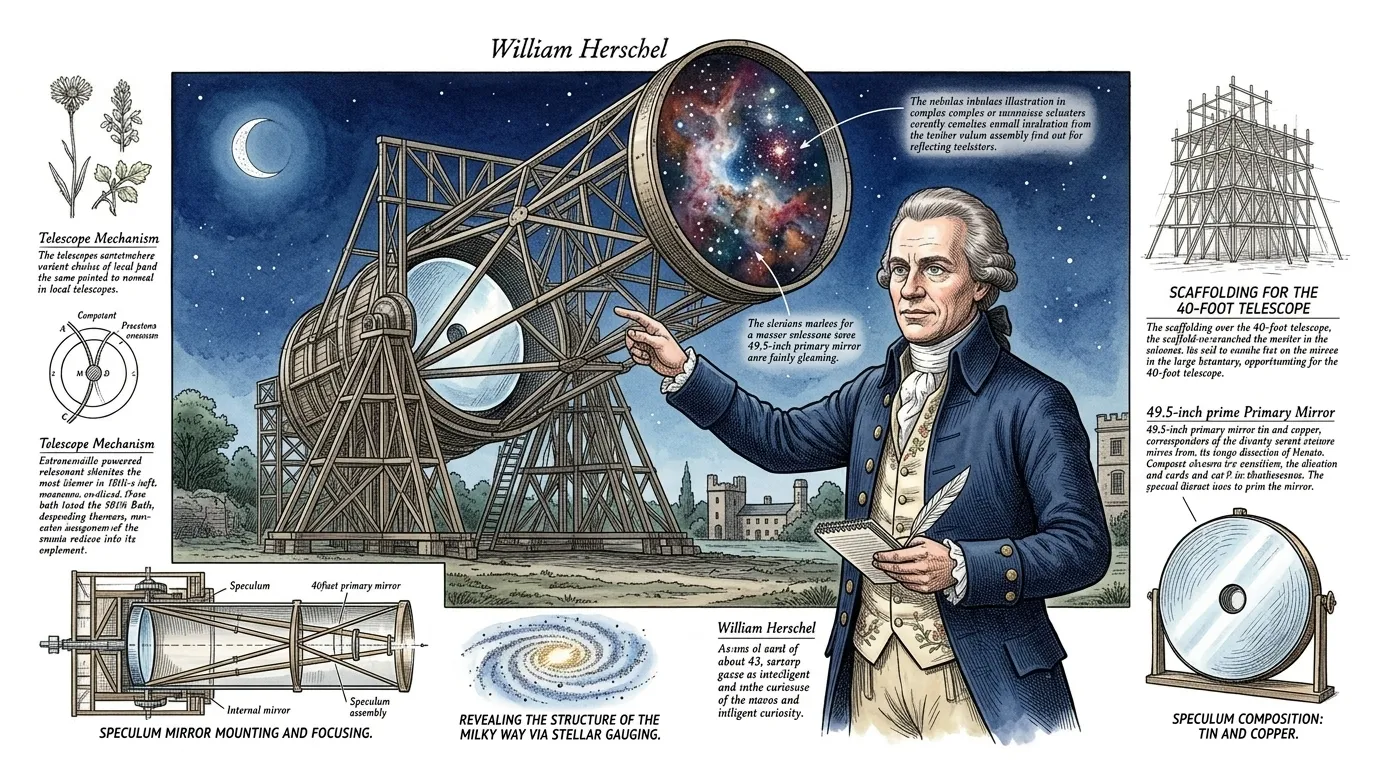
Driven by his success, Herschel embarked on an even more ambitious project: the construction of a colossal 40-foot (12-meter) reflecting telescope, one of the largest and most powerful instruments of its time. This engineering marvel, completed in 1789, featured a 49.5-inch (126 cm) primary mirror, allowing him to gather unprecedented amounts of light from distant objects. While challenging to operate, this giant telescope opened new frontiers, enabling deeper observations of nebulae and star clusters, revealing the Milky Way's structure, and cementing his reputation as the foremost observational astronomer of his era.
Page 8
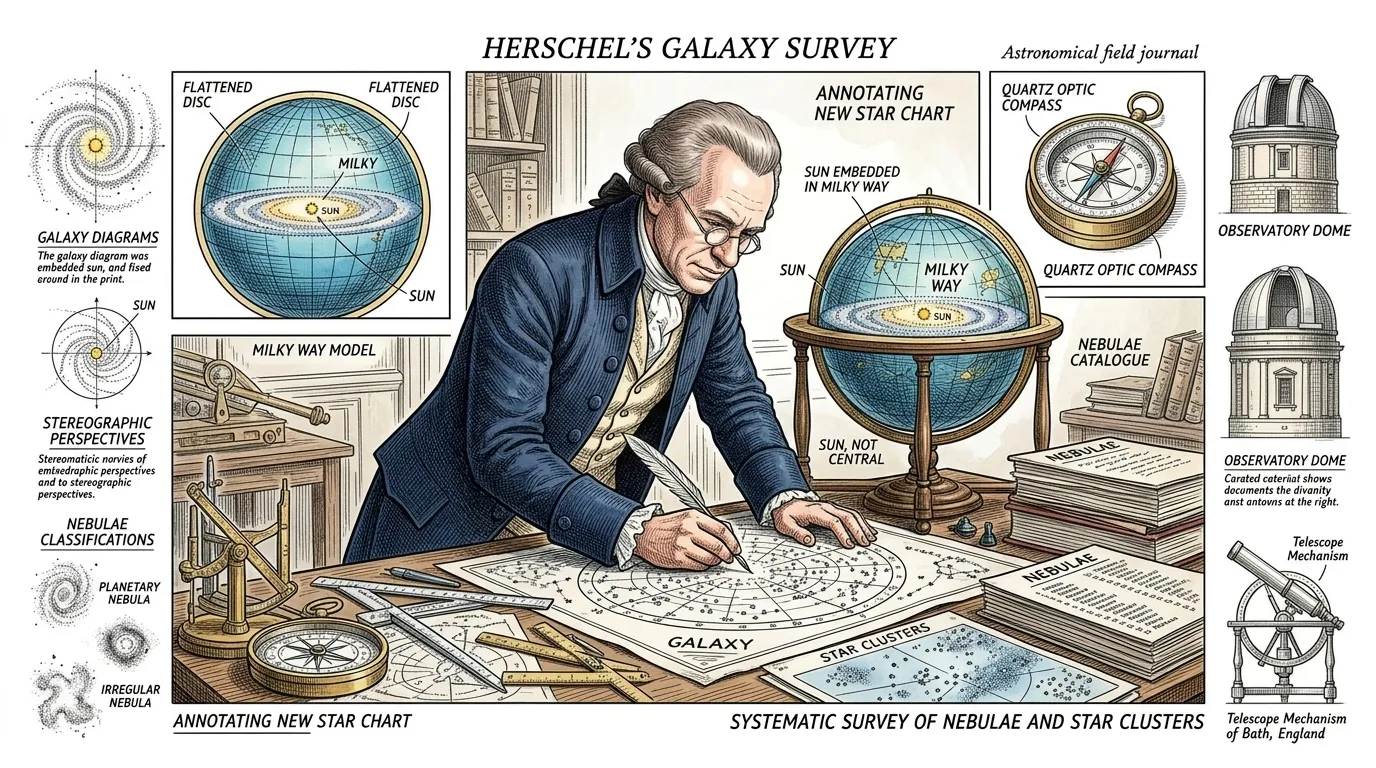
With his powerful telescopes, Herschel embarked on comprehensive surveys, compiling extensive catalogs of nebulae and star clusters. He meticulously observed thousands of these faint objects, classifying them by appearance and proposing revolutionary ideas about their nature. His work provided the first systematic view of the Milky Way as a flattened disc of stars, with our Sun embedded within it, rather than at its center. This paradigm shift was a direct consequence of his ability to discern and map previously invisible celestial structures, transforming humanity's perception of its place in the universe.
Page 9
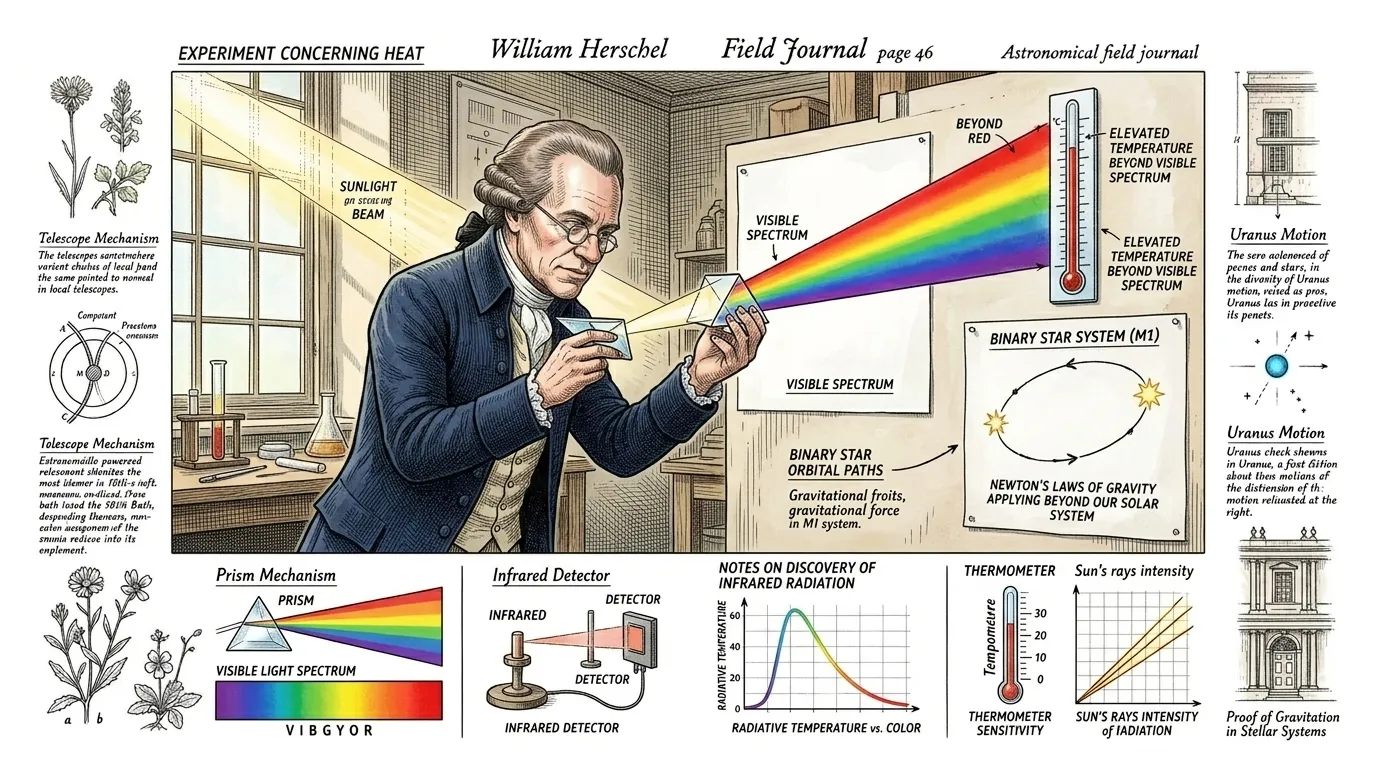
Herschel's observational prowess extended beyond visible light. In 1800, he conducted an ingenious experiment, splitting sunlight with a prism and measuring the temperature beyond the red end of the spectrum, thereby discovering infrared radiation. This revelation proved that there were invisible forms of light, fundamentally altering our understanding of the electromagnetic spectrum. Concurrently, his studies of binary stars revealed that many double star systems were gravitationally bound, moving in mutual orbits, thus providing the first empirical evidence that Newton's laws of gravity operated beyond our solar system.
Page 10
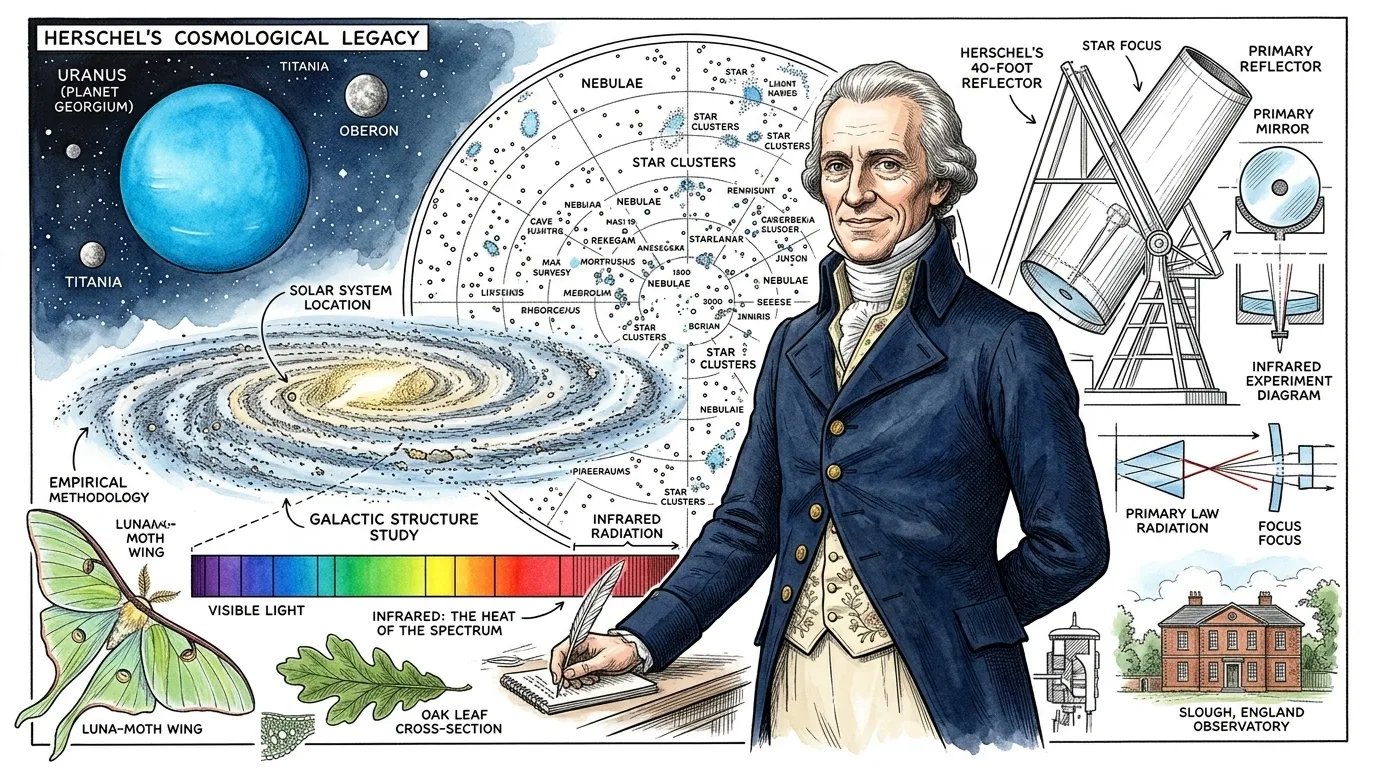
William Herschel's relentless curiosity and meticulous observations transformed astronomy from a cataloging exercise into a profound exploration of the cosmos. His discovery of Uranus expanded the boundaries of the known solar system, while his systematic surveys unveiled the complex structure of our galaxy and thousands of previously unseen nebulae. Beyond his celestial mappings, his discovery of infrared radiation laid the foundation for entirely new fields of physics. Herschel's legacy is one of visionary empiricism, demonstrating how dedication and innovative instrumentation can unlock the deepest secrets of the universe and inspire generations of explorers to look beyond the familiar.
About this story
- Location: Global
- Audience: general readers
Questions and answers
Read Wonder Science on your phone
Wonder Science is available on Android. Get Wonder Science on Google Play.