Yuri Gagarin
Yuri Gagarin — an illustrated science story, set in Global. 10 illustrated pages, free to read on Wonder Science.
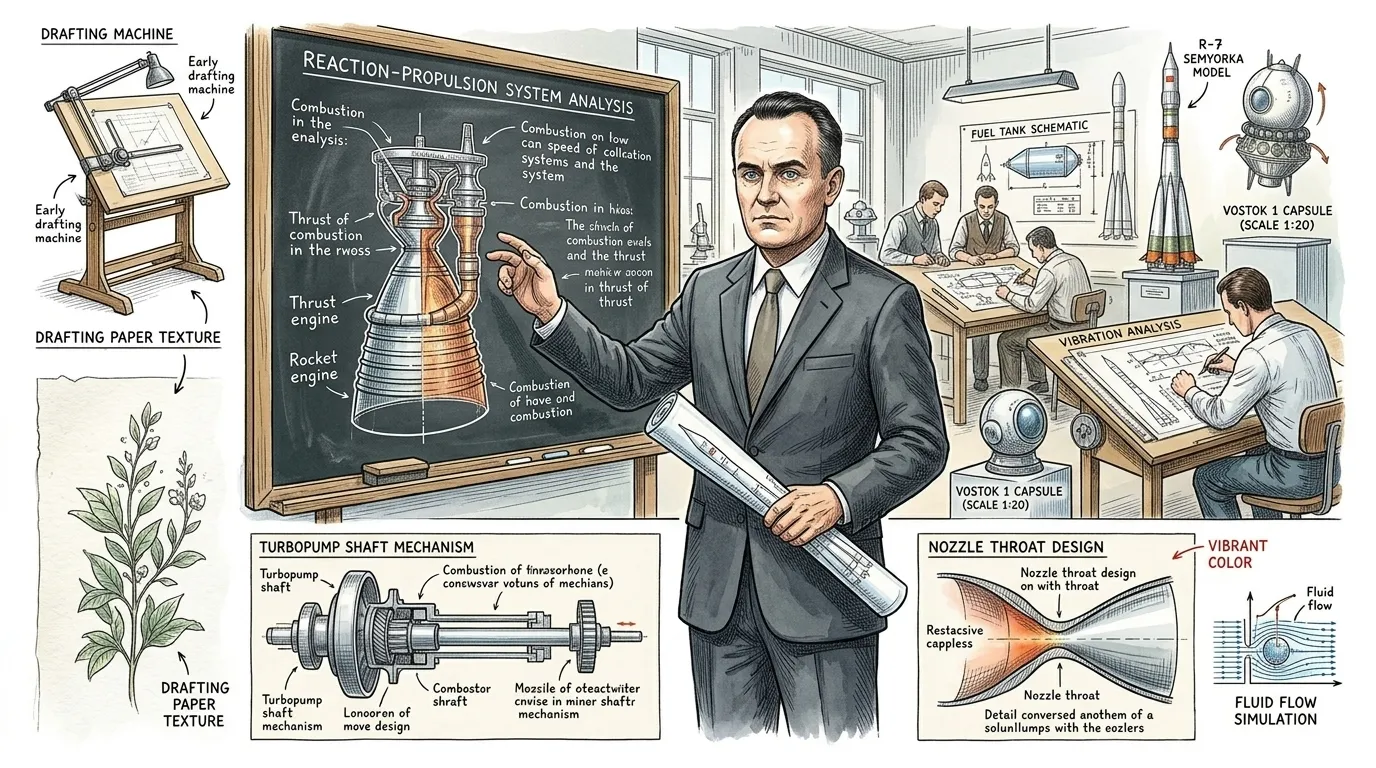
Page 1
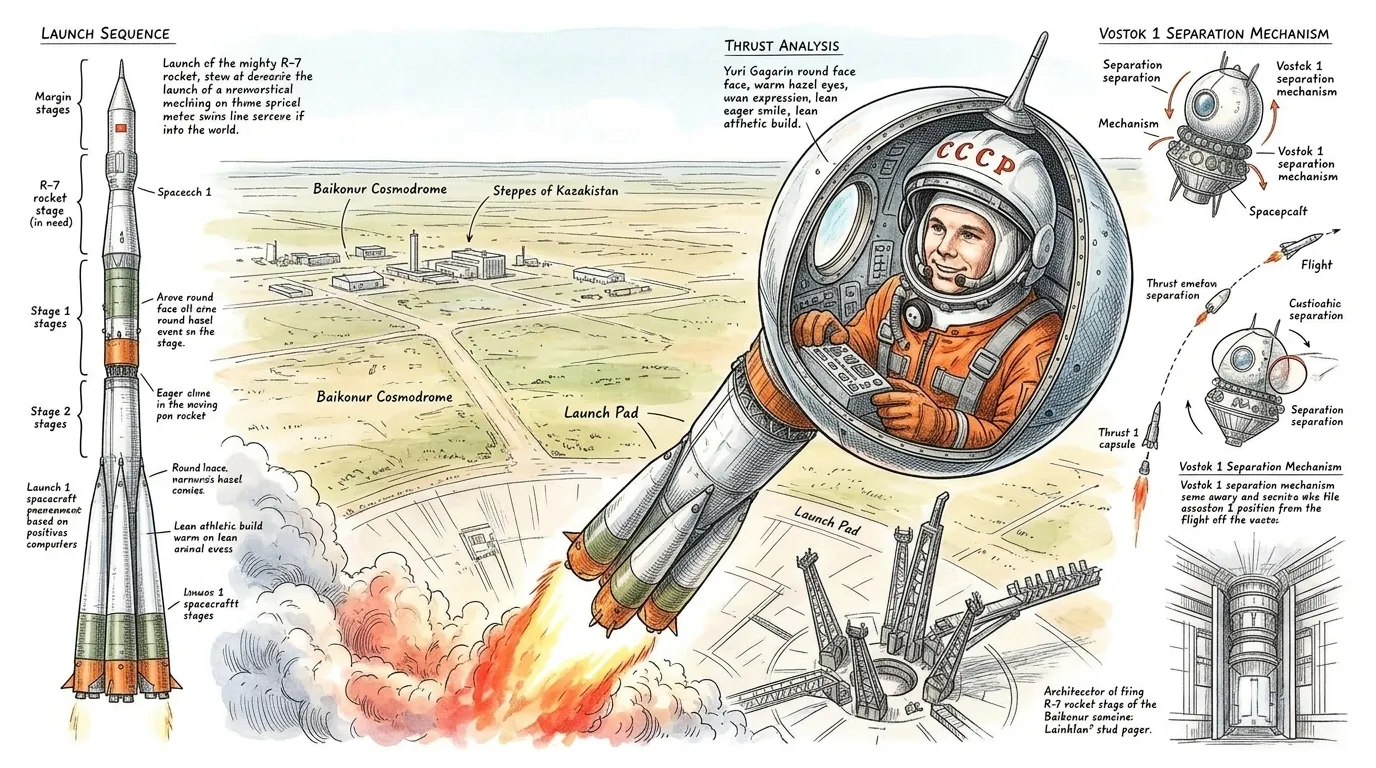
At precisely 9:07 AM Moscow time on April 12, 1961, an unprecedented event unfolded on the steppes of Kazakhstan. From the Baikonur Cosmodrome, a modified R-7 intercontinental ballistic missile, crowned by the Vostok 1 spacecraft, ignited with a thunderous roar. Inside, Soviet cosmonaut Yuri Gagarin, a 27-year-old fighter pilot, became the first human to ascend beyond Earth's atmosphere, embarking on a voyage that would irrevocably alter humanity's perception of its place in the cosmos. This single, audacious flight transcended political divides, momentarily uniting the world in awe and ushering in the true era of human space exploration.
Page 2
The journey to this pivotal moment was fueled by an intense Cold War rivalry, pushing both the United States and the Soviet Union into a frantic space race. Behind the Soviet effort was the enigmatic Chief Designer, Sergei Korolev, whose relentless vision transformed early rocket technology into the launch vehicles capable of breaching Earth's gravity. The sheer ambition was staggering: to launch a human into a hostile, unknown environment, where the very forces of nature posed existential threats, demanded a leap of faith backed by extraordinary engineering.
Page 3
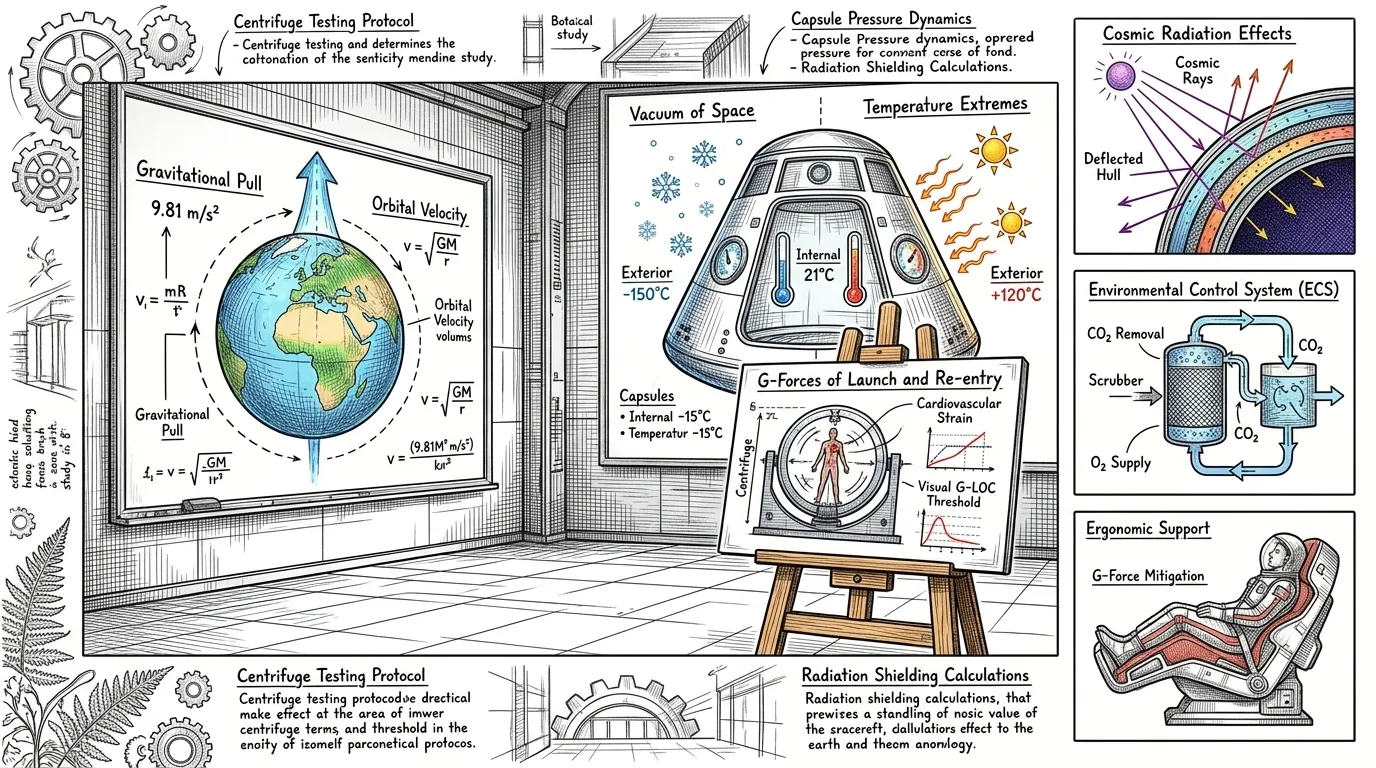
Venturing into space presented a unique cocktail of physiological and engineering challenges, a scientific problem of unprecedented complexity. Foremost among these was overcoming Earth's gravitational pull, requiring immense propulsion simply to reach orbital velocity. Beyond that, the vacuum of space, extreme temperature fluctuations, and lethal cosmic radiation fields demanded a completely self-sustaining, hermetically sealed environment. Furthermore, the psychological impact of isolation and the g-forces of launch and re-entry presented unknown variables for the human body.
Page 4
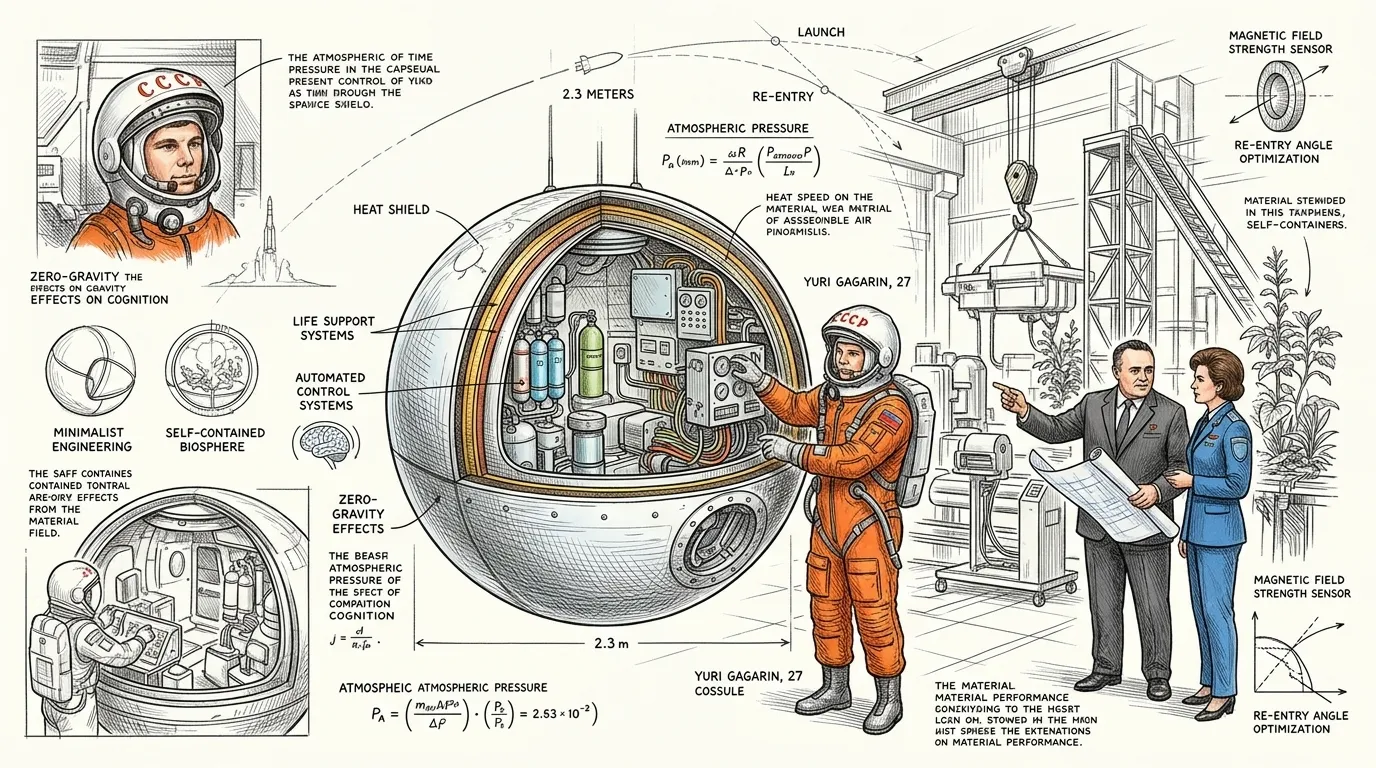
The Vostok 1 spacecraft itself was a marvel of minimalist engineering, a spherical capsule just 2.3 meters in diameter. Designed for full automation, its systems were intended to eliminate the need for complex pilot input, a decision born from both caution regarding the unknown effects of zero-gravity on human cognition and the need for simplicity. Its heat shield, designed to withstand the extreme temperatures of atmospheric re-entry, was a critical component, literally standing between the cosmonaut and incineration. This compact vessel was a sophisticated, self-contained biosphere, engineered for a single, audacious journey.
Page 5
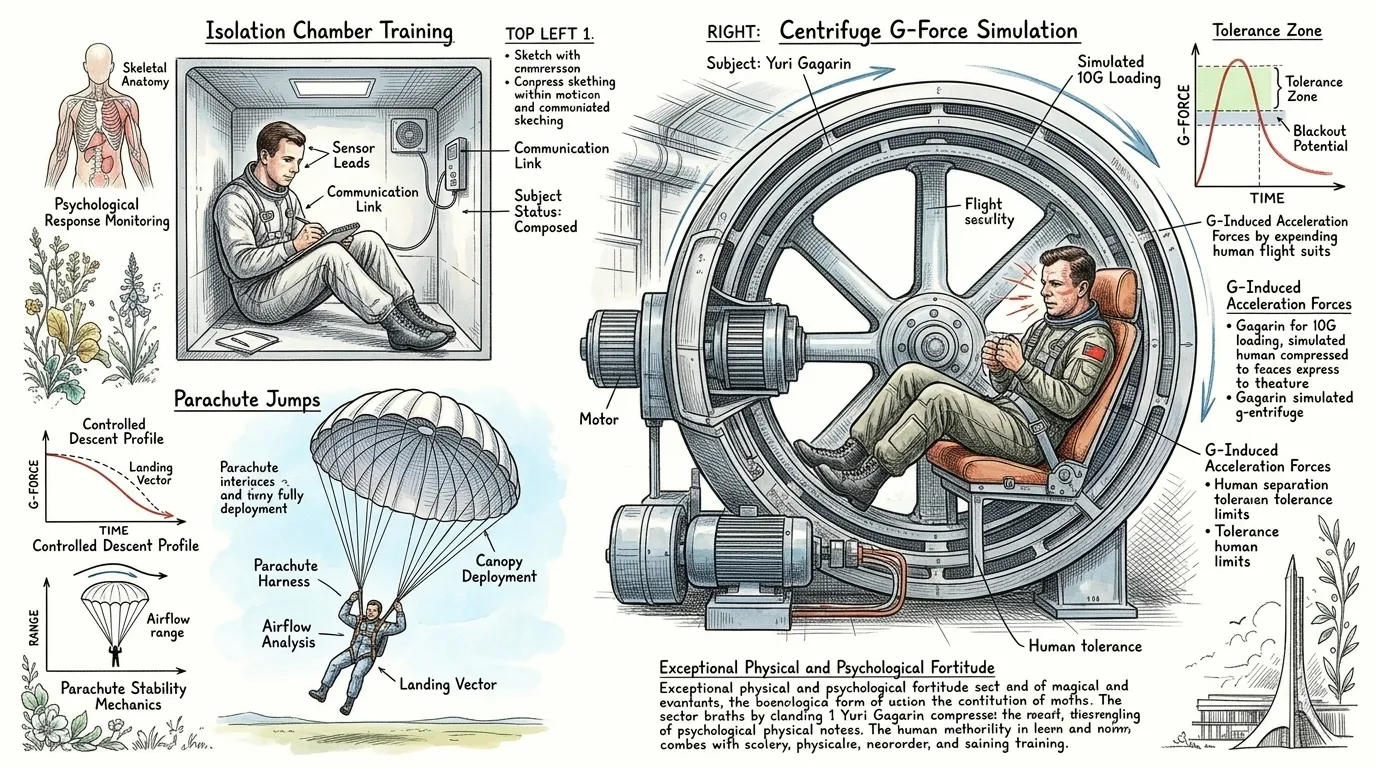
Gagarin's selection for Vostok 1 was no accident; he emerged from an elite group of 20 prospective cosmonauts chosen for their exceptional physical and psychological fortitude. His calm demeanor, sharp intellect, and humble background made him an ideal candidate, a symbol of the Soviet Union's aspirations. Training was brutal and exhaustive, including centrifuge tests simulating crushing g-forces, isolation chambers, and extensive parachuting, preparing both body and mind for the extreme rigors of spaceflight. Every aspect of his physical and mental resilience was pushed to its limits.
Page 6
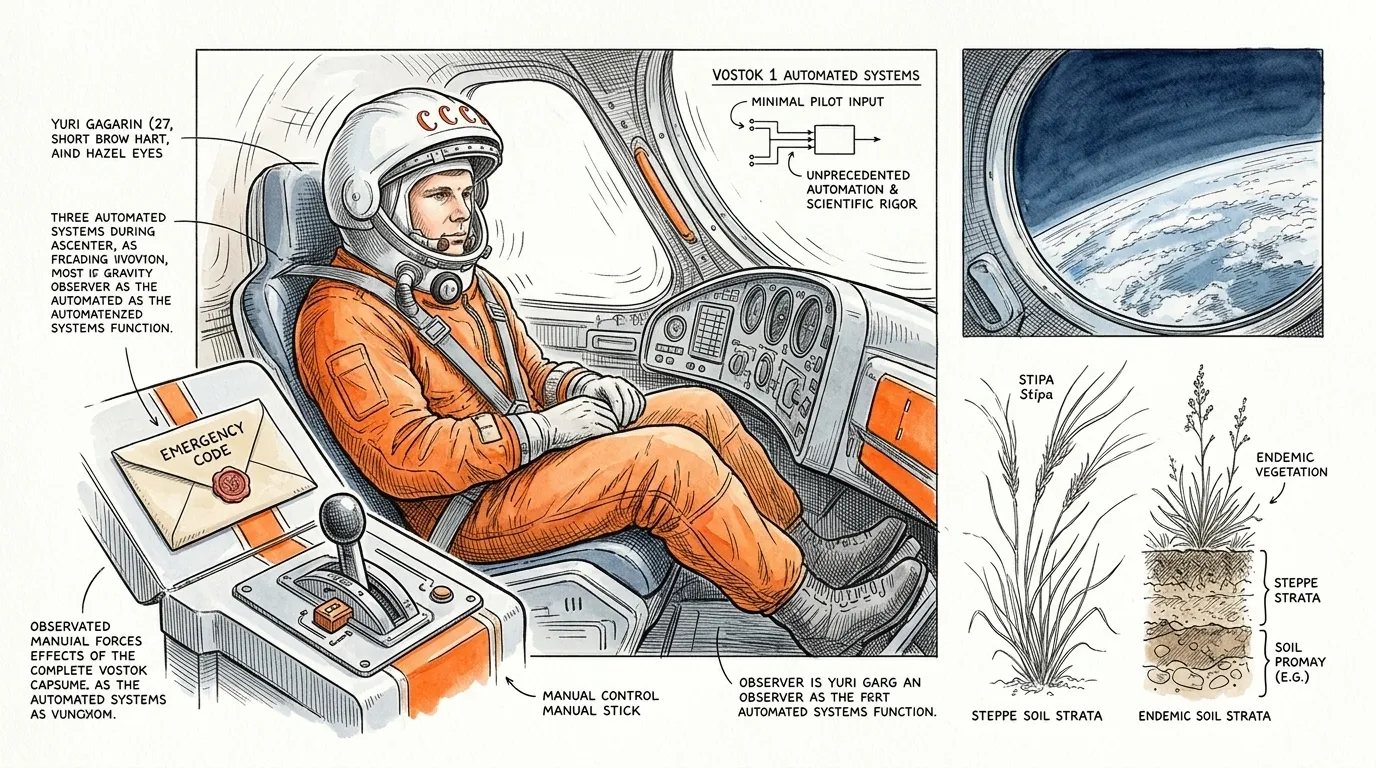
The Vostok 1 mission was fundamentally an automated flight, a deliberate design choice given the uncertainties of human performance in zero-gravity. Gagarin's role was primarily as an observer and an emergency backup pilot, with manual controls locked to prevent accidental interference. To unlock them, he would need to input a three-digit code, which was sealed in an envelope for use only in a grave emergency. This unprecedented level of automation underscored the caution and scientific rigor applied to humanity's first venture into the orbital frontier.
Page 7
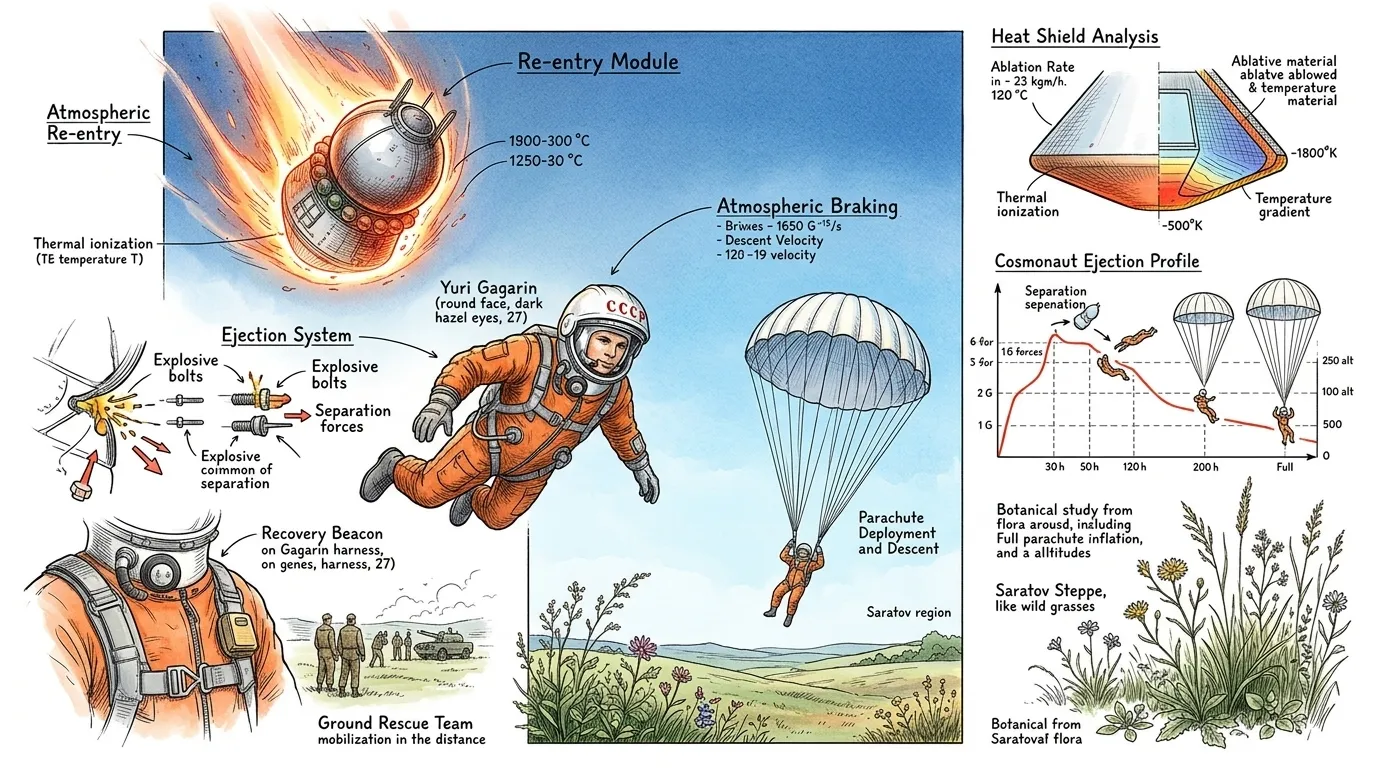
After a single, 108-minute orbit around Earth, the critical phase of re-entry began. The Vostok capsule's retro-rockets fired, initiating the controlled descent. As the capsule plunged into the atmosphere, its heat shield burned away, protecting Gagarin from plasma temperatures reaching thousands of degrees Celsius. At an altitude of 7 kilometers, Gagarin ejected from the capsule as planned, parachuting safely to Earth near the Saratov region. This ejection system, kept secret for decades, was a crucial part of the mission's safe return protocol, a daring conclusion to an even more daring flight.
Page 8
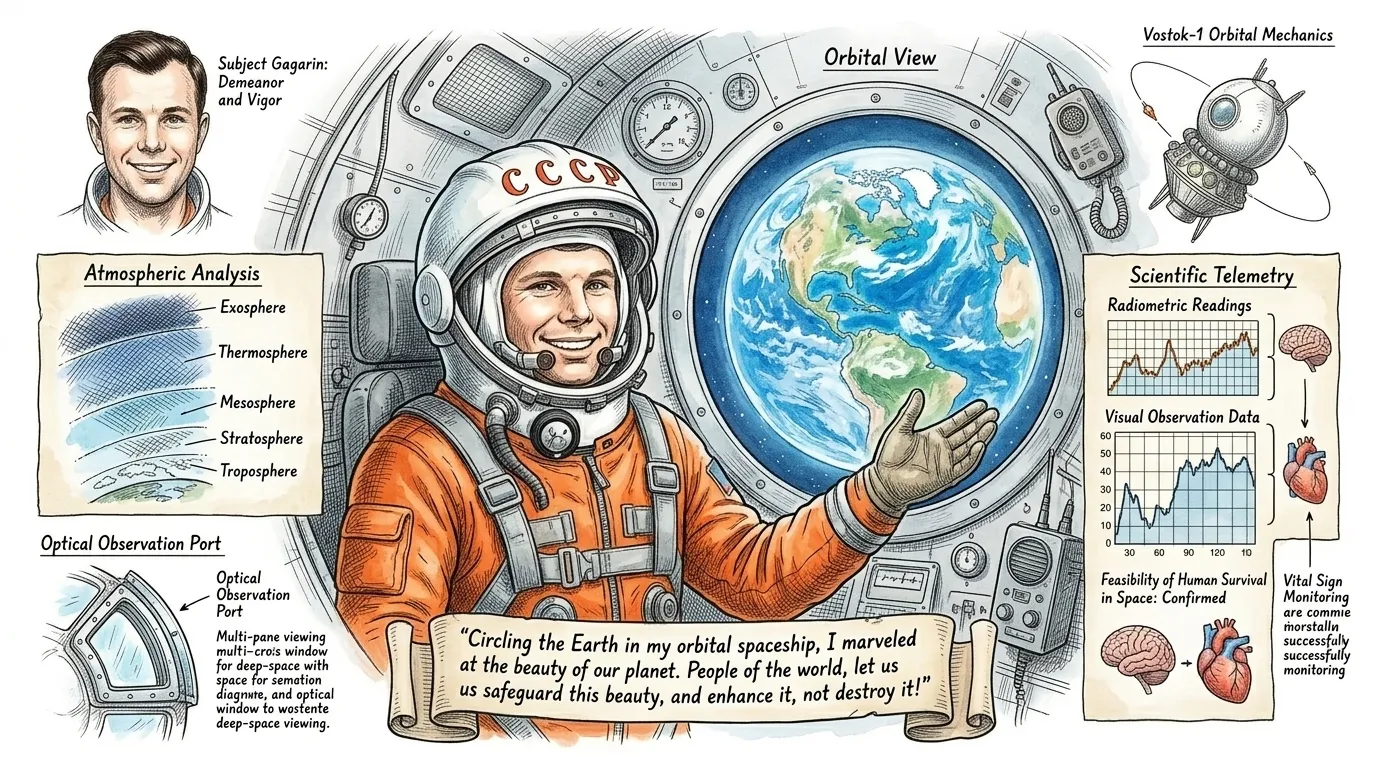
The moment Gagarin's flight was announced, the world erupted in a mixture of celebration and astonishment. His journey provided the first direct human observation of Earth from space, profoundly influencing global perspectives on our planet's fragility and interconnectedness. His famous quote, 'Circling the Earth in my orbital spaceship, I marveled at the beauty of our planet. People of the world, let us safeguard this beauty, and enhance it, not destroy it!', resonated deeply, transforming him into an instant global icon and a symbol of humanity's capacity for exploration and wonder. The scientific data collected during his brief orbit was invaluable, confirming the feasibility of human survival in space and paving the way for longer duration missions.
Page 9
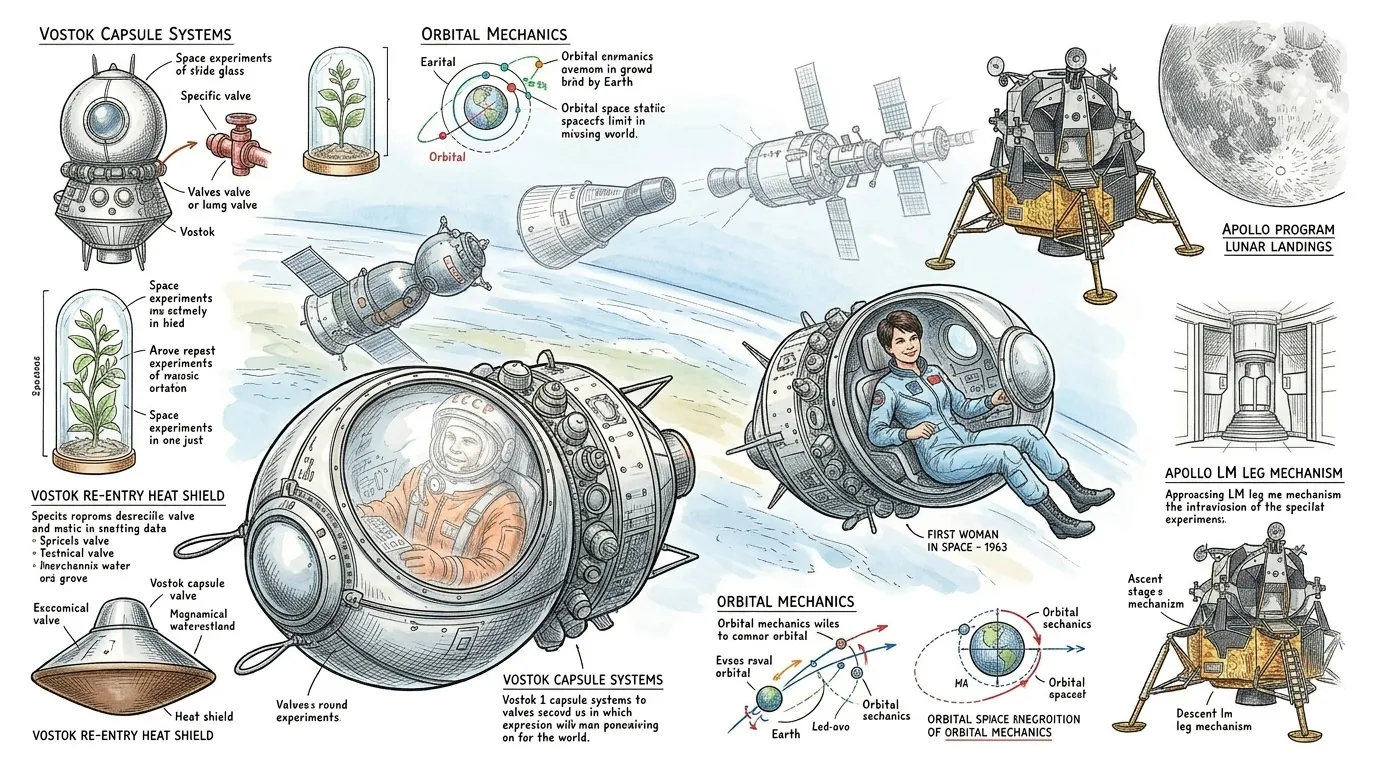
Gagarin's flight was not an isolated triumph but a crucial first step in a much grander endeavor. It proved that humans could indeed survive and function in the unforgiving environment of space, opening the door for subsequent, more ambitious missions. His pioneering journey directly enabled Valentina Tereshkova to become the first woman in space in 1963, and set the stage for complex orbital rendezvous, spacewalks, and ultimately, the Apollo program's lunar landings. Every subsequent human space mission, from Earth orbit to deep space, stands on the shoulders of the Vostok 1 breakthrough.
Page 10
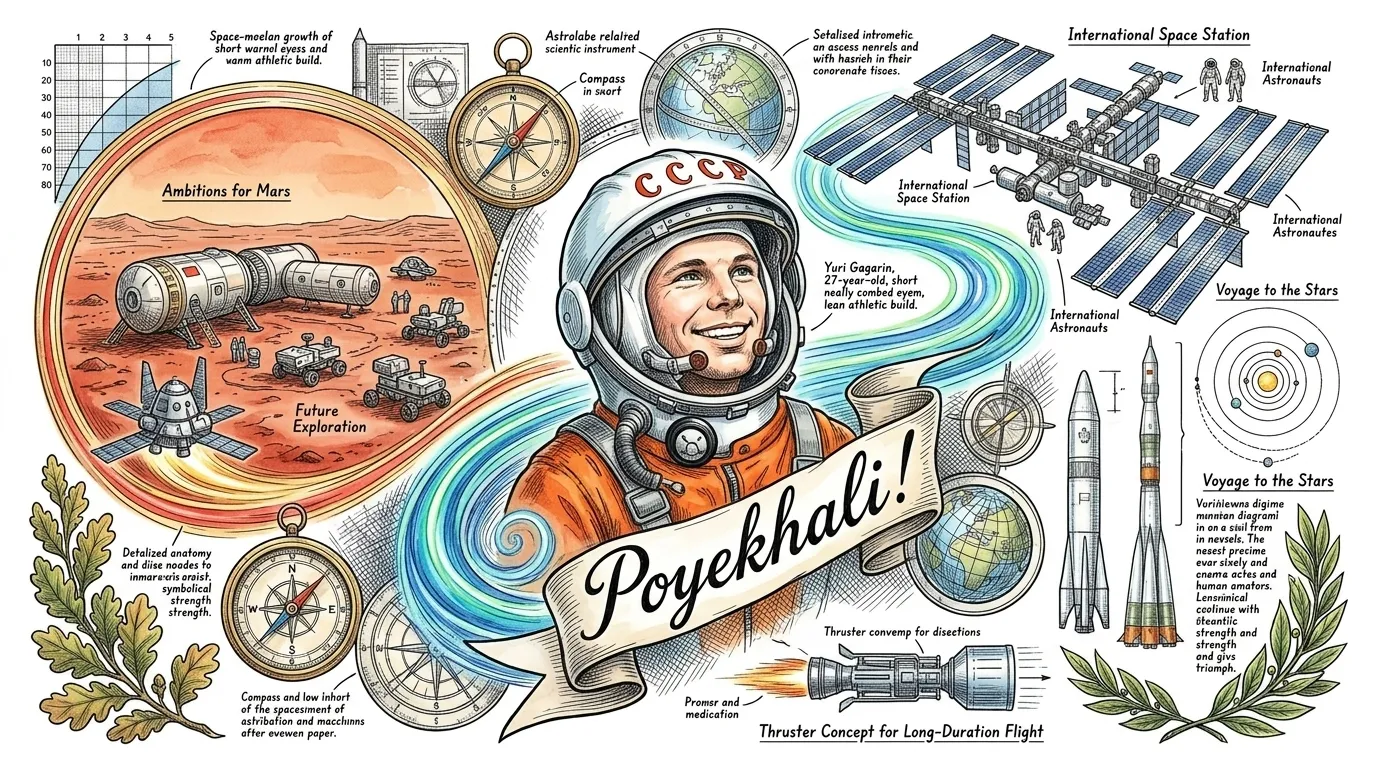
Yuri Gagarin's legacy extends far beyond a single orbital flight; it embodies humanity's insatiable drive to explore the unknown. His journey underscored the profound scientific and engineering capabilities required to transcend terrestrial limits. While his life ended tragically in an aircraft accident seven years later, his spirit of pioneering achievement continues to inspire generations of scientists, engineers, and astronauts. From the International Space Station to ambitions for Mars, the echoes of his 'Poyekhali!' ('Let's go!') resonate as a timeless call to push the boundaries of knowledge and experience, reminding us that the cosmos remains an infinite frontier awaiting discovery.
About this story
- Location: Global
- Audience: general readers
Questions and answers
Read Wonder Science on your phone
Wonder Science is available on Android. Get Wonder Science on Google Play.