Acids, Bases, and the Litmus Test
Acids, Bases, and the Litmus Test — an illustrated science story, set in England. 10 illustrated pages, free to read on Wonder Science.
Page 1
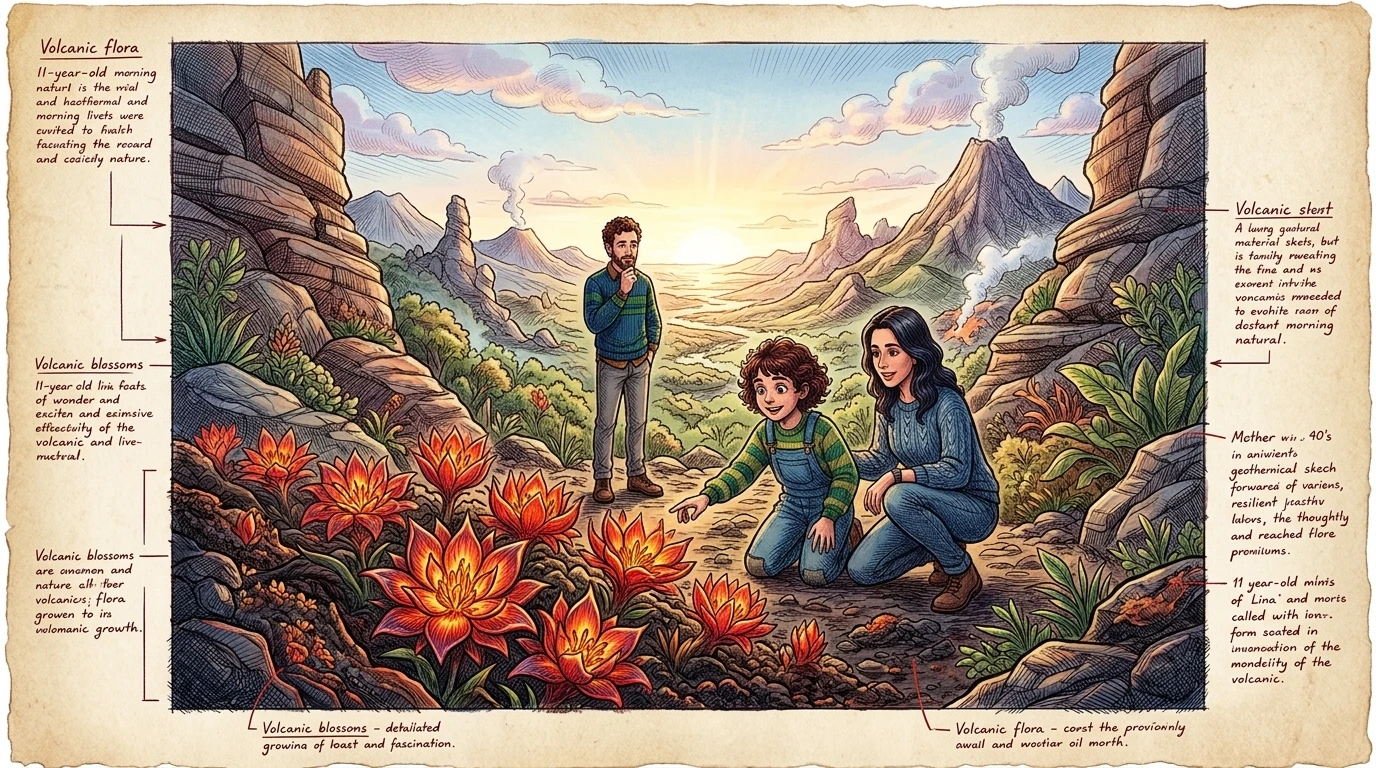
Lina skipped ahead of her mom and dad as they strolled through the fiery flower gardens. "Wow, look at all these amazing colors, Mom!" she exclaimed, pointing to a patch of vibrant red and orange blossoms. Her mom smiled, "These flowers are unique to this volcanic island, Lina. The soil here has some interesting properties."
Page 2
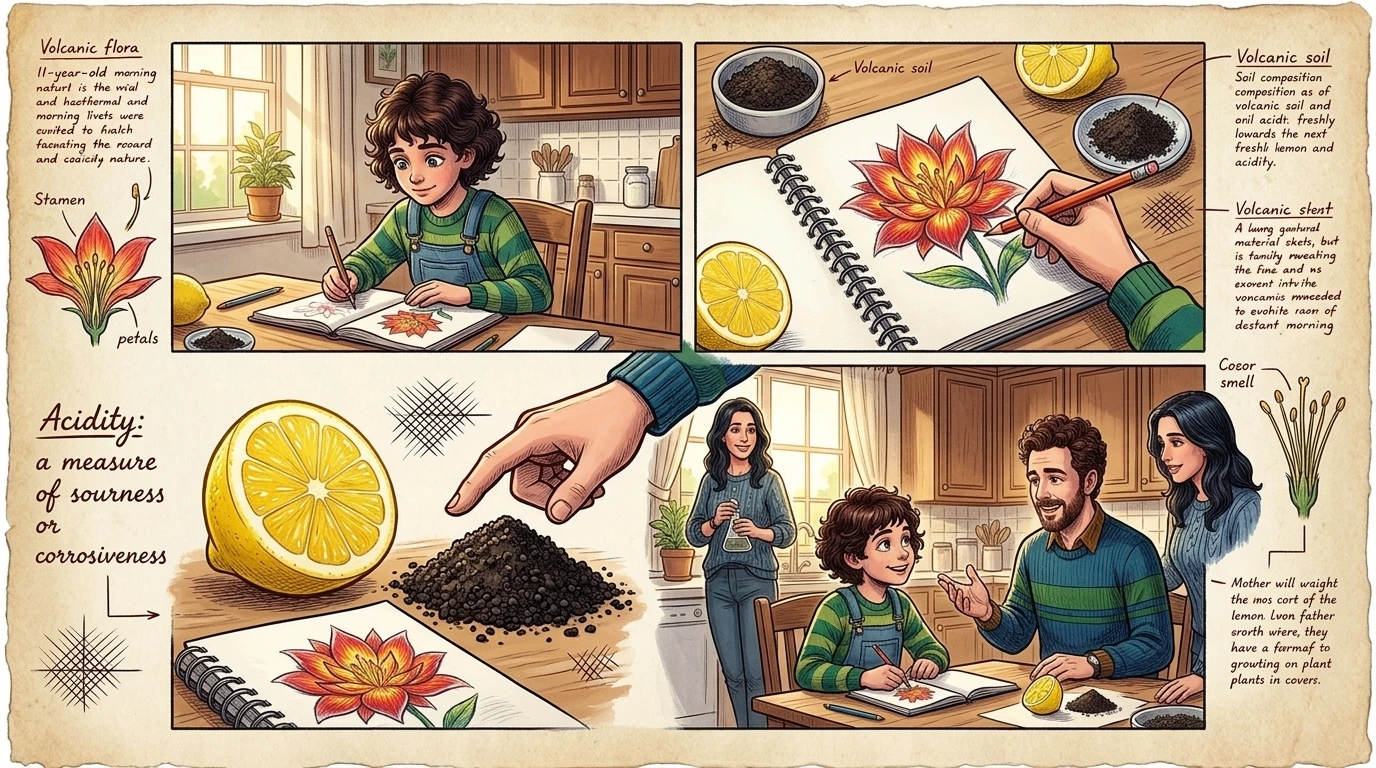
"What kind of properties?" Lina asked, pulling out her notebook. "Well, some of the soil here is quite acidic," her dad explained. "Acidic? What does that even mean?" Lina asked, looking up from her notebook. Her dad chuckled, "It's a bit like how some lemons taste sour, Lina. Acidity is a measure of how sour or corrosive something can be."
Page 3
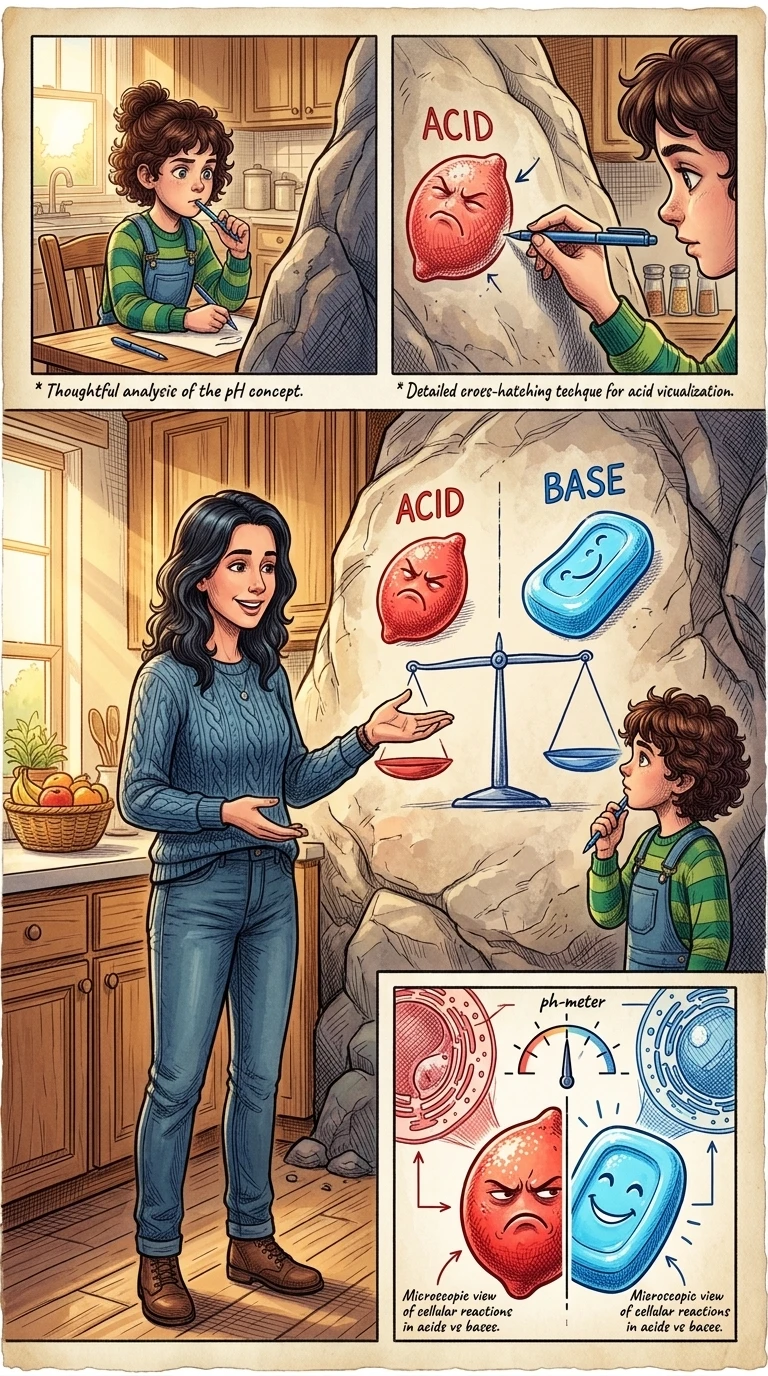
Lina turned the page in her notebook. "Is everything either acidic or not?" she asked, biting the end of her pen. "Not at all!" her mom answered. "There's also something called a base. Bases are like the opposite of acids, and together they make up an important part of chemistry."
Page 4
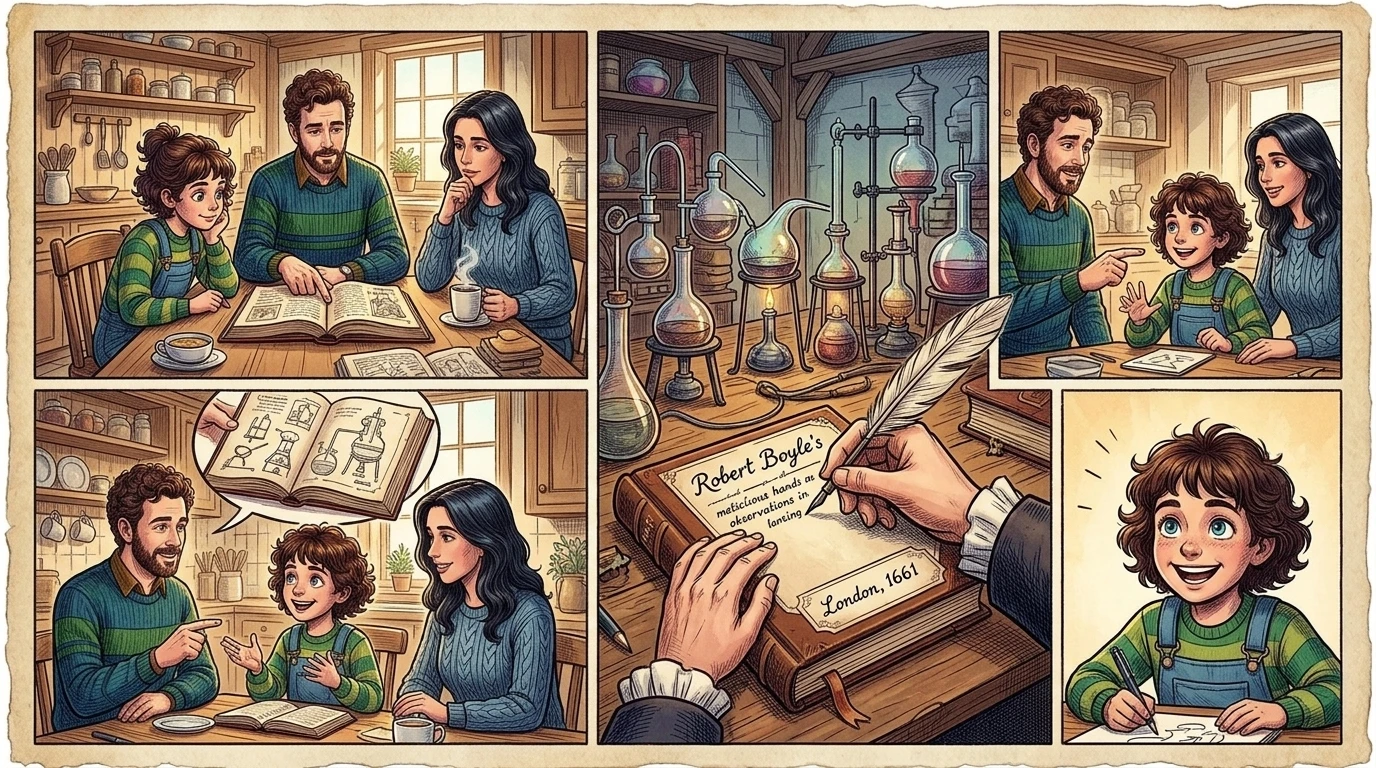
"England, 1661. Robert Boyle, a meticulous scientist, worked tirelessly in his London laboratory," a narrator announced. He was known for his work on gases, but Robert Boyle, a man with long curly brown hair and a neatly trimmed beard, also studied acids and bases. Boyle, who believed in careful observation and experimentation, carefully wrote his experiment into a crisp journal.
Page 5
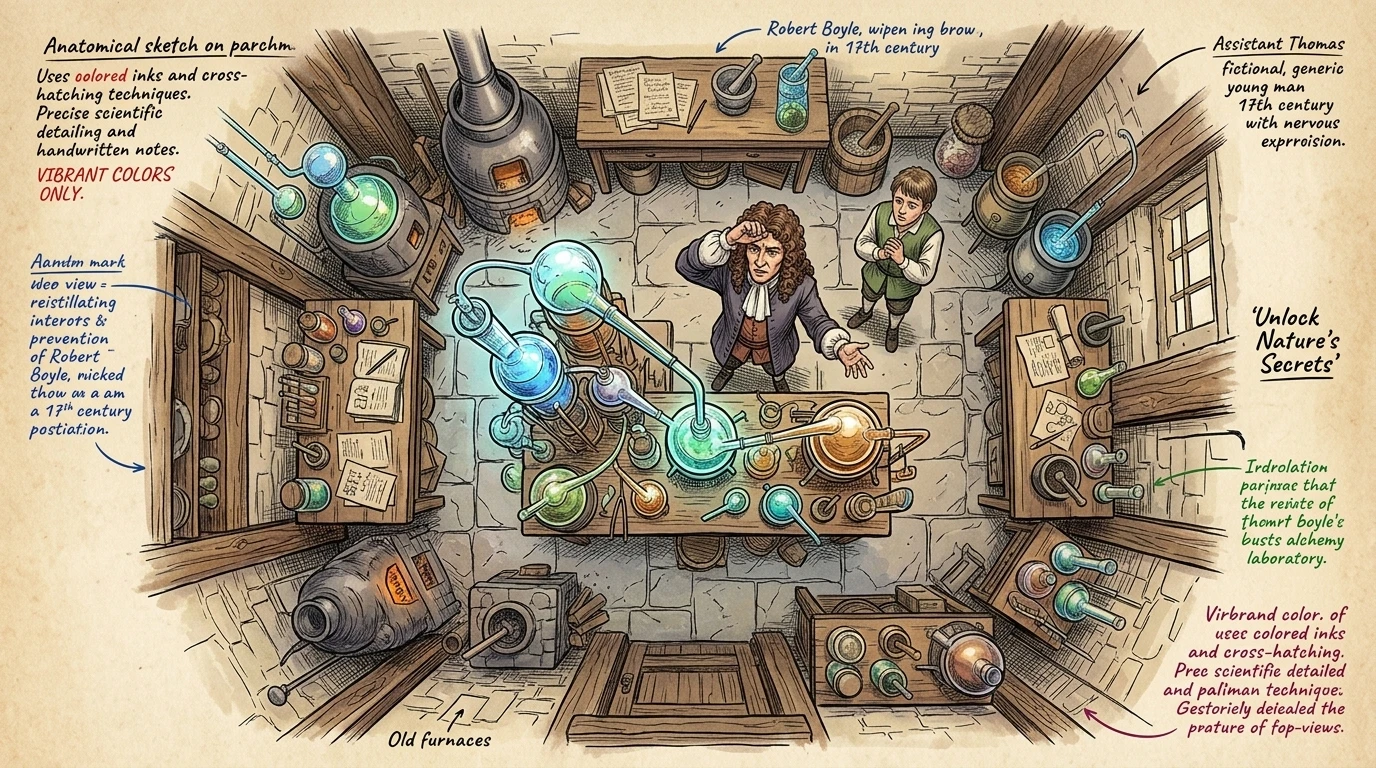
Boyle often said, "'The generality of men are so tied to the easy and sensual life, that they are quite incapacitated for any manly employment,'" he remarked to his assistant one day, wiping sweat from his brow. "But not us, eh Thomas? We'll unlock nature's secrets!" Thomas nervously chuckled, but agreed none the less.
Page 6
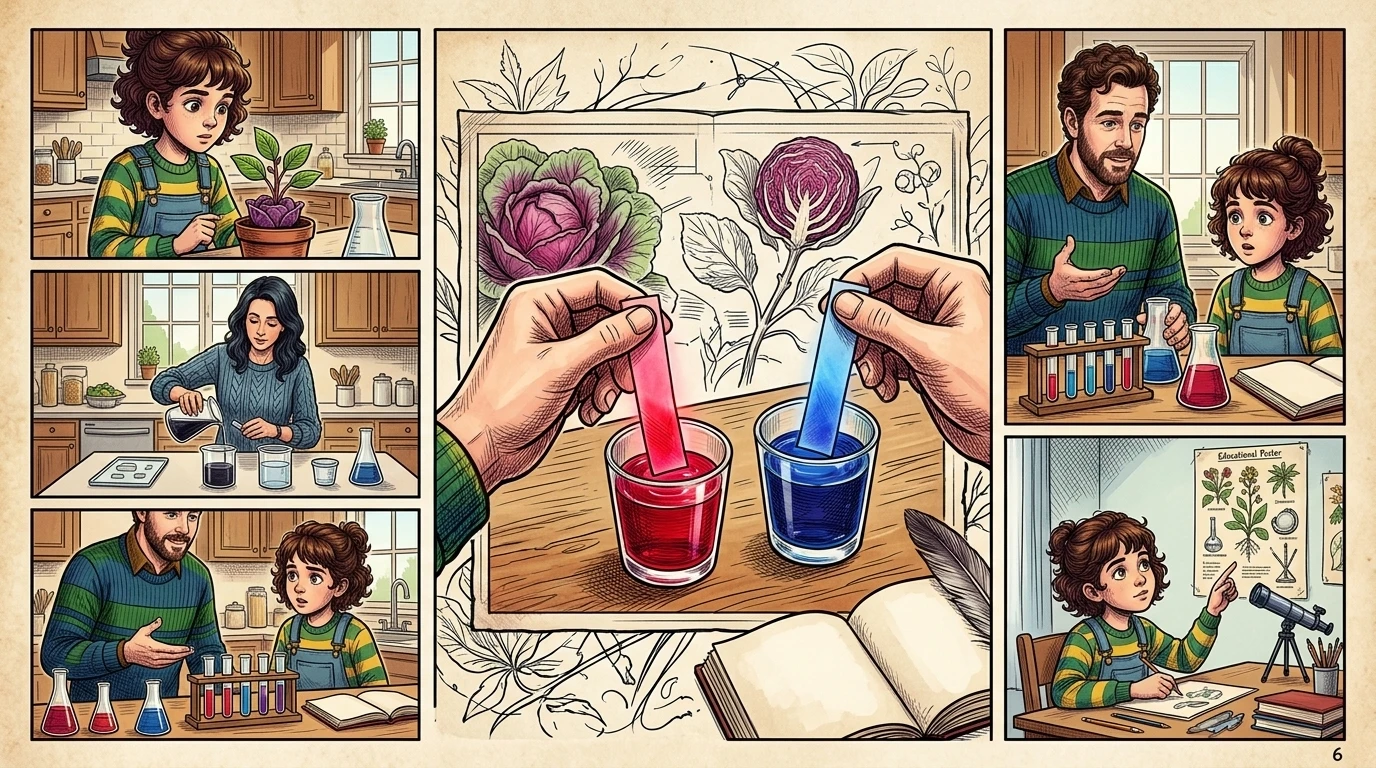
One day, Boyle noticed that certain plant extracts changed color when exposed to acids or bases. He called these extracts 'indicators.' By dipping paper strips into these extracts, he created a simple way to test if a substance was an acid or a base. He noted that acids turned the paper red and bases turned it blue. Boyle meticulously wrote down his observations in his journal.
Page 7
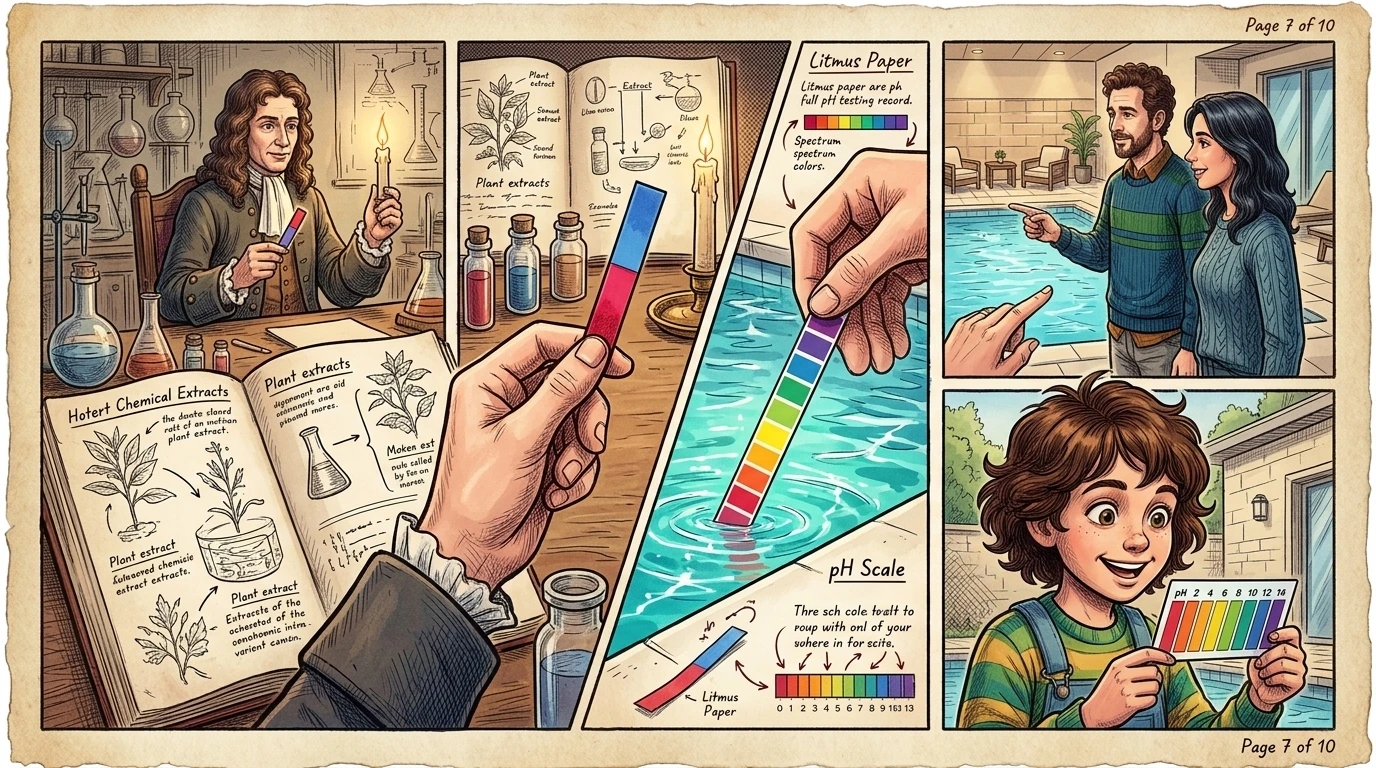
Boyle's discovery revolutionized chemistry! Now, scientists had a quick and easy way to identify acids and bases. Today, we still use indicators like litmus paper, based on Boyle's work, in laboratories and even at home. Think about testing the pH of your swimming pool - that's Boyle's legacy!
Page 8
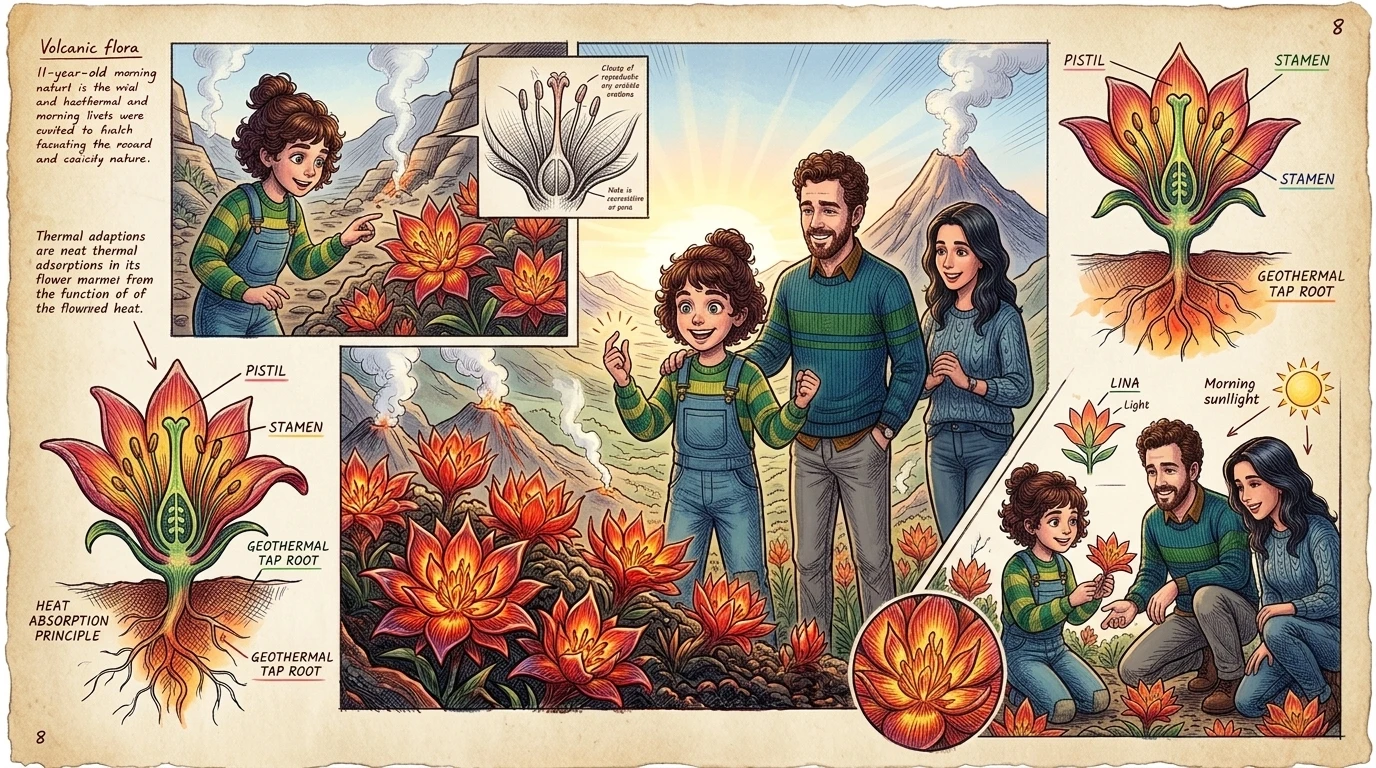
The scene shifted back to the volcanic island. "So, that's how they test if something is an acid or a base!" Lina exclaimed, snapping her fingers. "Exactly!" her dad replied with a smile. "Robert Boyle figured out that certain plant extracts can change color depending on whether they're exposed to acids or bases!" "Wow, science is so cool!" her mom added.
Page 9
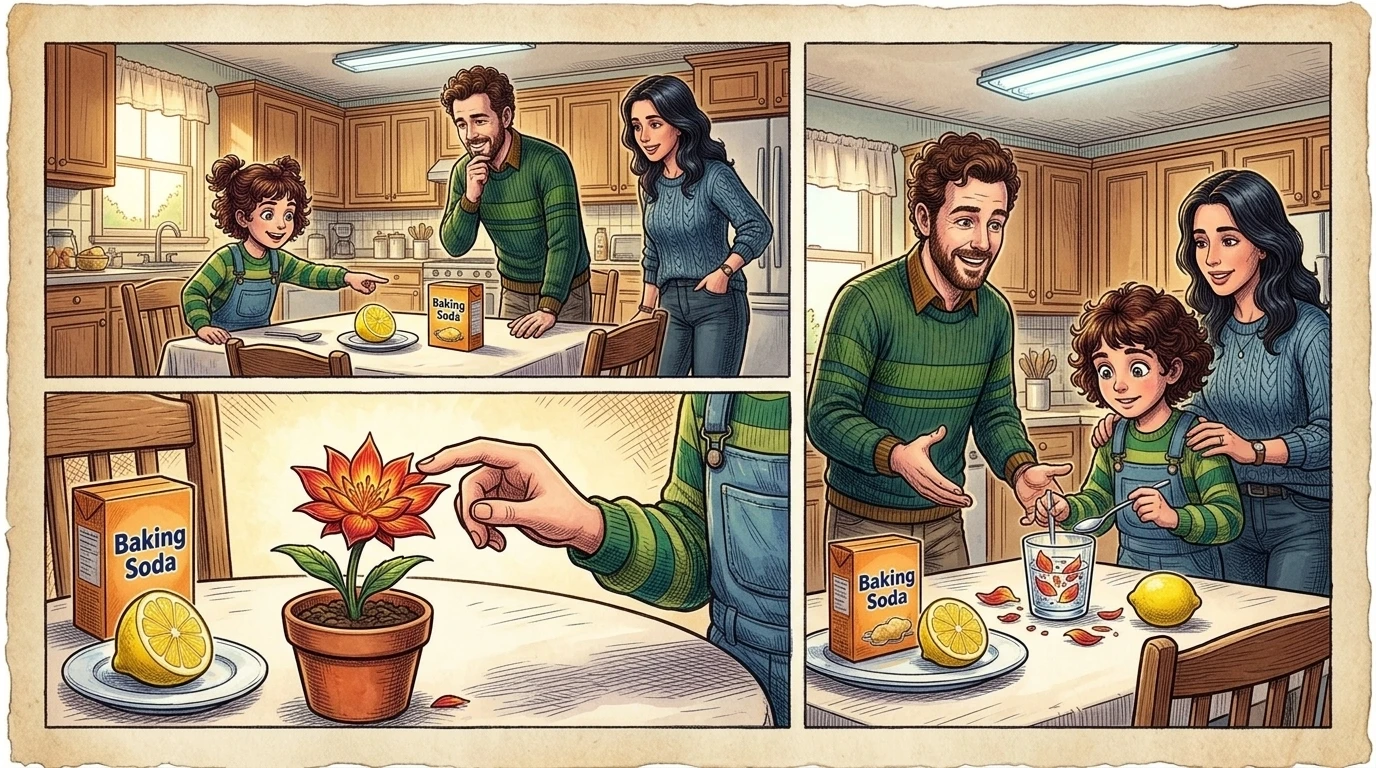
"I wonder if we can test these flowers?" Lina asked, pointing to the fiery blossoms. "That's a great idea!" her mom responded. "We could crush some petals and see how they react to different things in our kitchen!" "Like lemon juice, which is acidic, or baking soda, which is a base!" her dad added enthusiastically.
Page 10
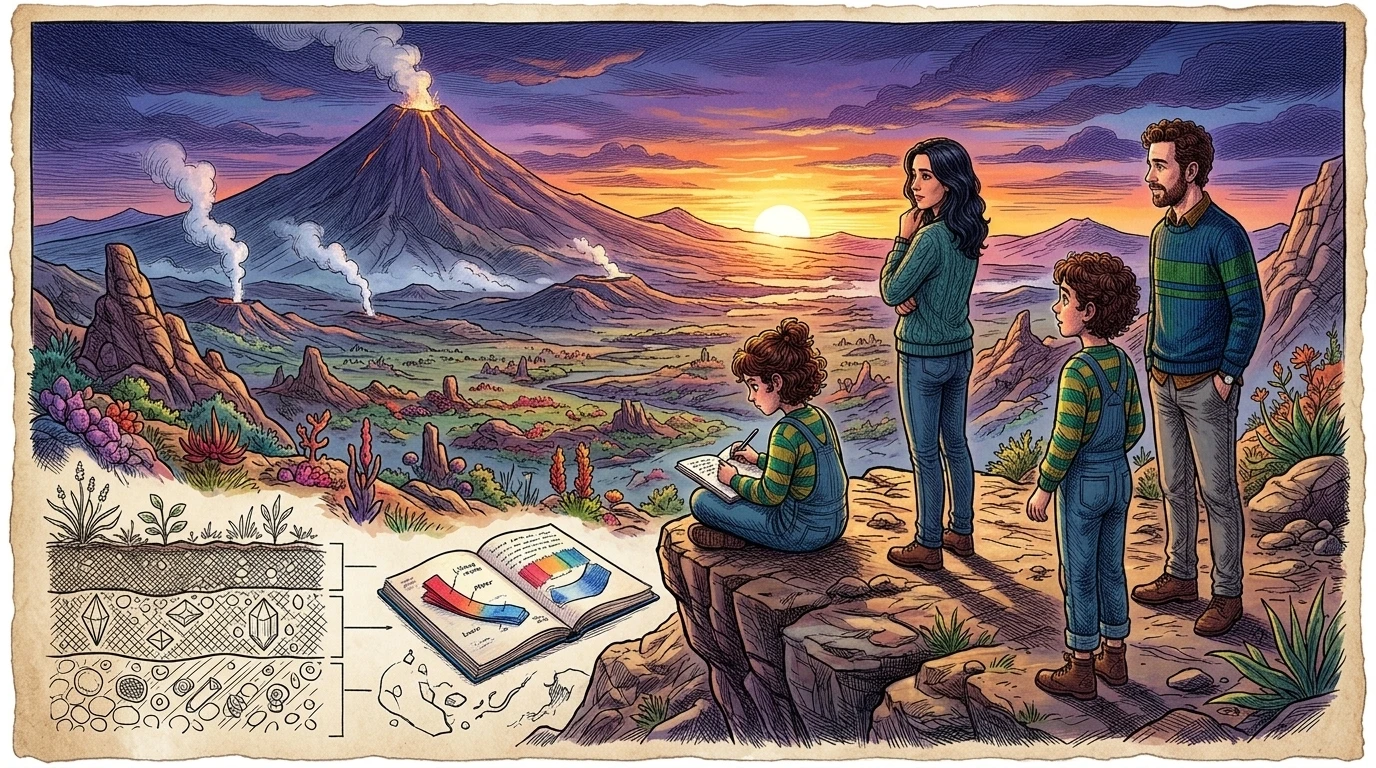
"So, indicators like litmus paper help us identify acids and bases all around us!" Lina concluded, writing in her notebook. Her mother looked towards the horizon. "I wonder, if litmus paper can tell us the pH of things, can it tell us if the soils has particular nutrients!" she pondered. Everyone turned to look at her curiously.
About this story
- Location: England
- Audience: kids (ages 6–12)
Questions and answers
Questions and answers about Acids, Bases, and the Litmus Test
Read Wonder Science on your phone
Wonder Science is available on Android. Get Wonder Science on Google Play.