Albert Einstein
Albert Einstein — an illustrated science story, set in Global. 10 illustrated pages, free to read on Wonder Science.

Page 1
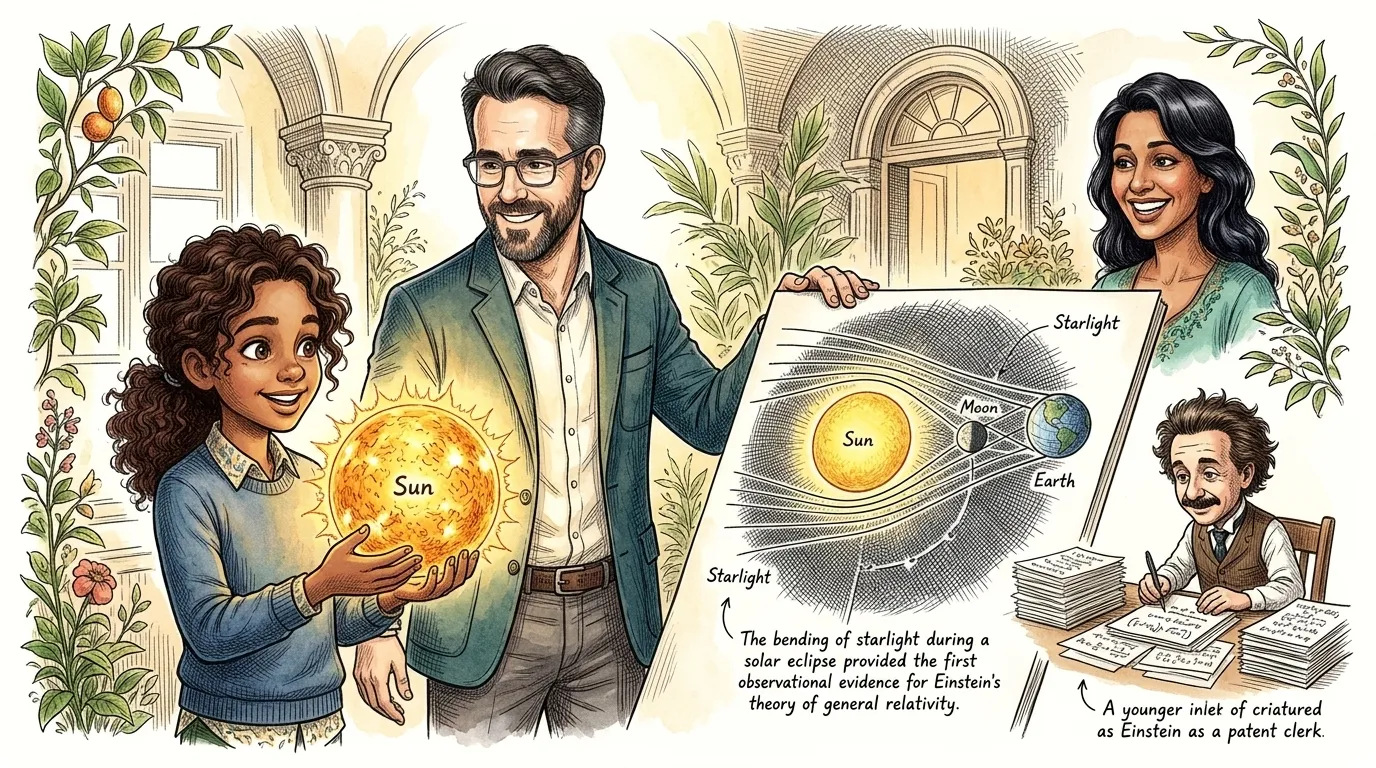
In 1919, the world watched as a solar eclipse confirmed a prediction Albert Einstein had made years before. The bending of starlight around the sun proved his theory of general relativity. It was a moment that launched him into superstardom. Before that? He was a patent clerk, working in relative obscurity, yet scribbling down equations that would change our understanding of the universe.\n\n Fact: The bending of starlight during a solar eclipse provided the first observational evidence for Einstein's theory of general relativity.
Page 2
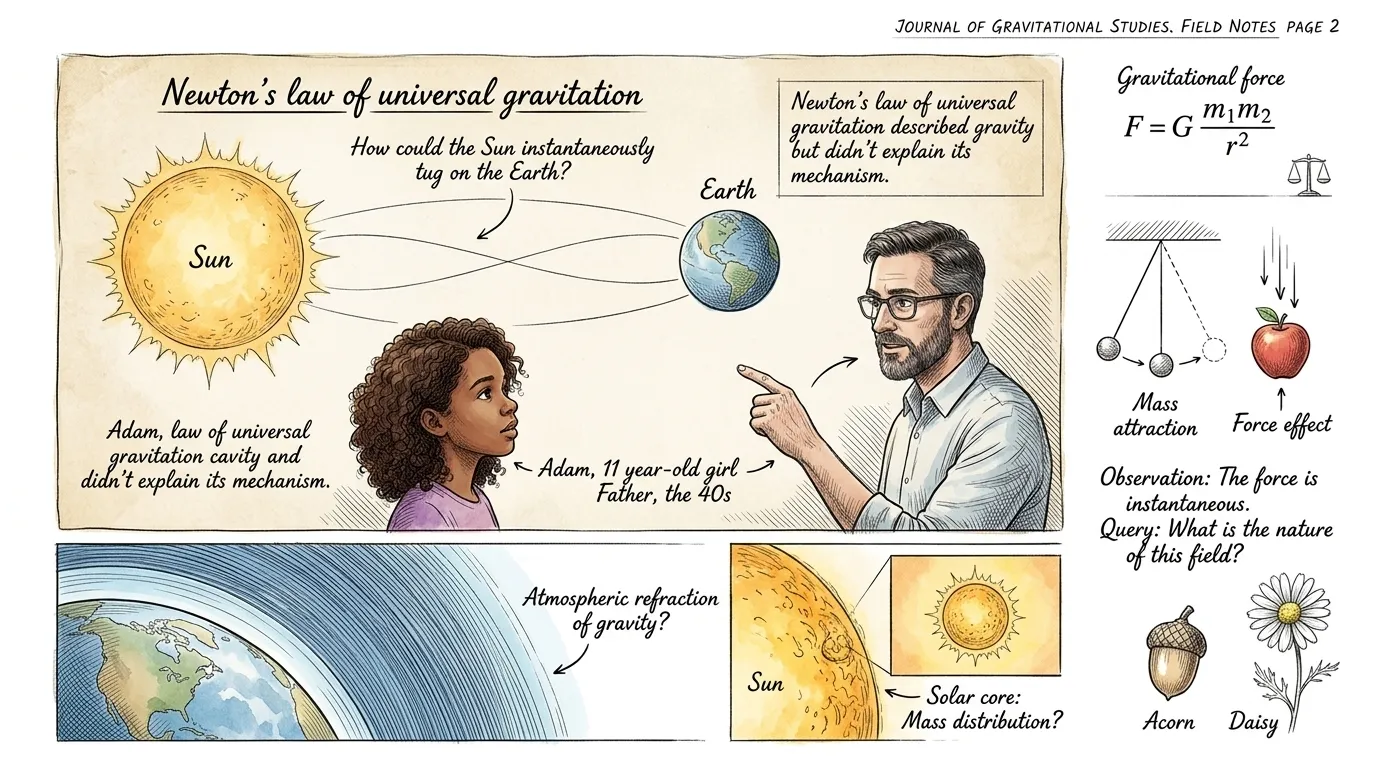
For centuries, Isaac Newton's law of universal gravitation reigned supreme. It described gravity as a force acting between objects with mass. But Newton couldn't explain how gravity worked. How could the Sun, millions of miles away, instantaneously tug on the Earth? This question bothered physicists for generations. It took Einstein to revolutionize our understanding.\n\n Fact: Newton's law of universal gravitation described gravity but didn't explain its mechanism.
Page 3
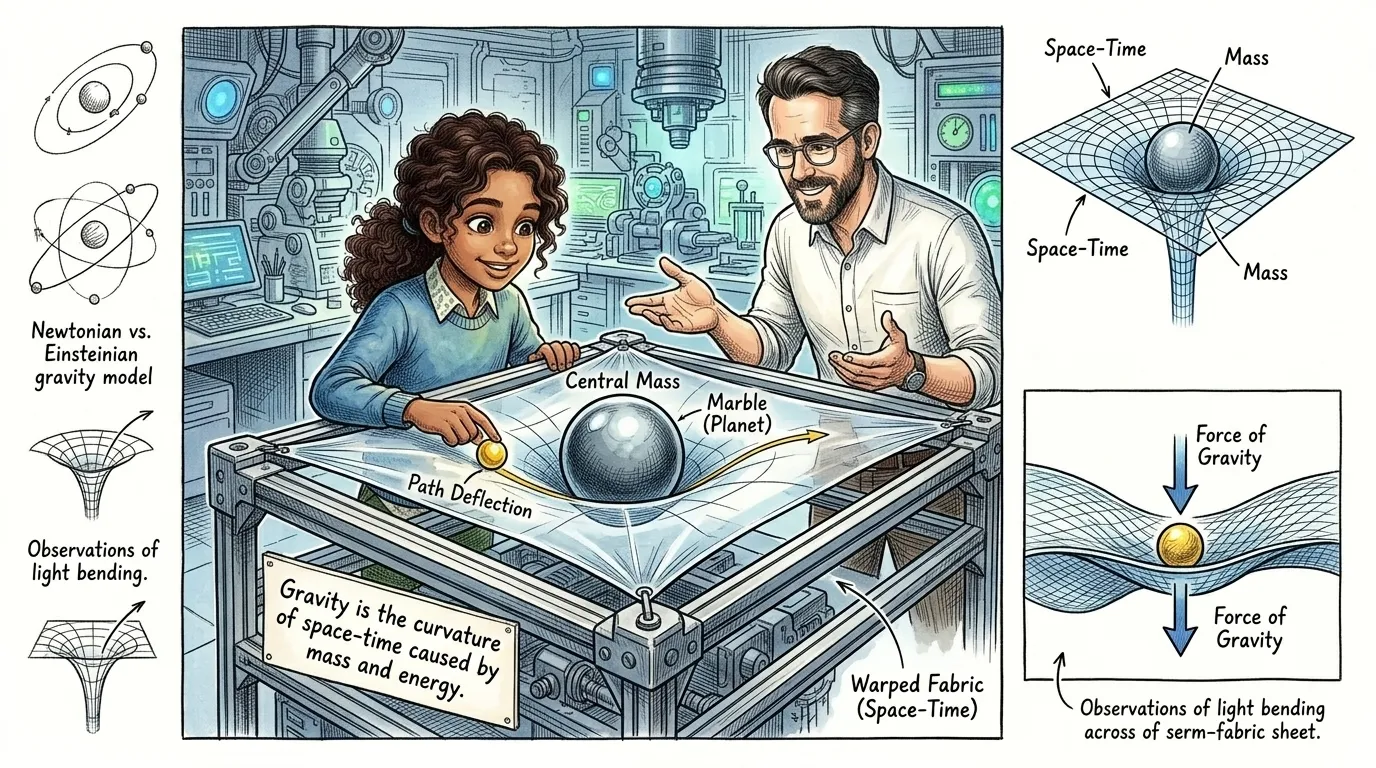
Einstein proposed a radical idea: gravity isn't a force at all. Instead, it's the curvature of space and time caused by mass and energy. Imagine a bowling ball placed on a stretched rubber sheet. It creates a dip, and if you roll a marble nearby, it will curve toward the bowling ball. That's how gravity works, according to Einstein. As Einstein himself said, 'The important thing is to not stop questioning,' so let's explore this.\n\n Fact: Einstein reimagined gravity as the curvature of space-time caused by mass and energy.
Page 4
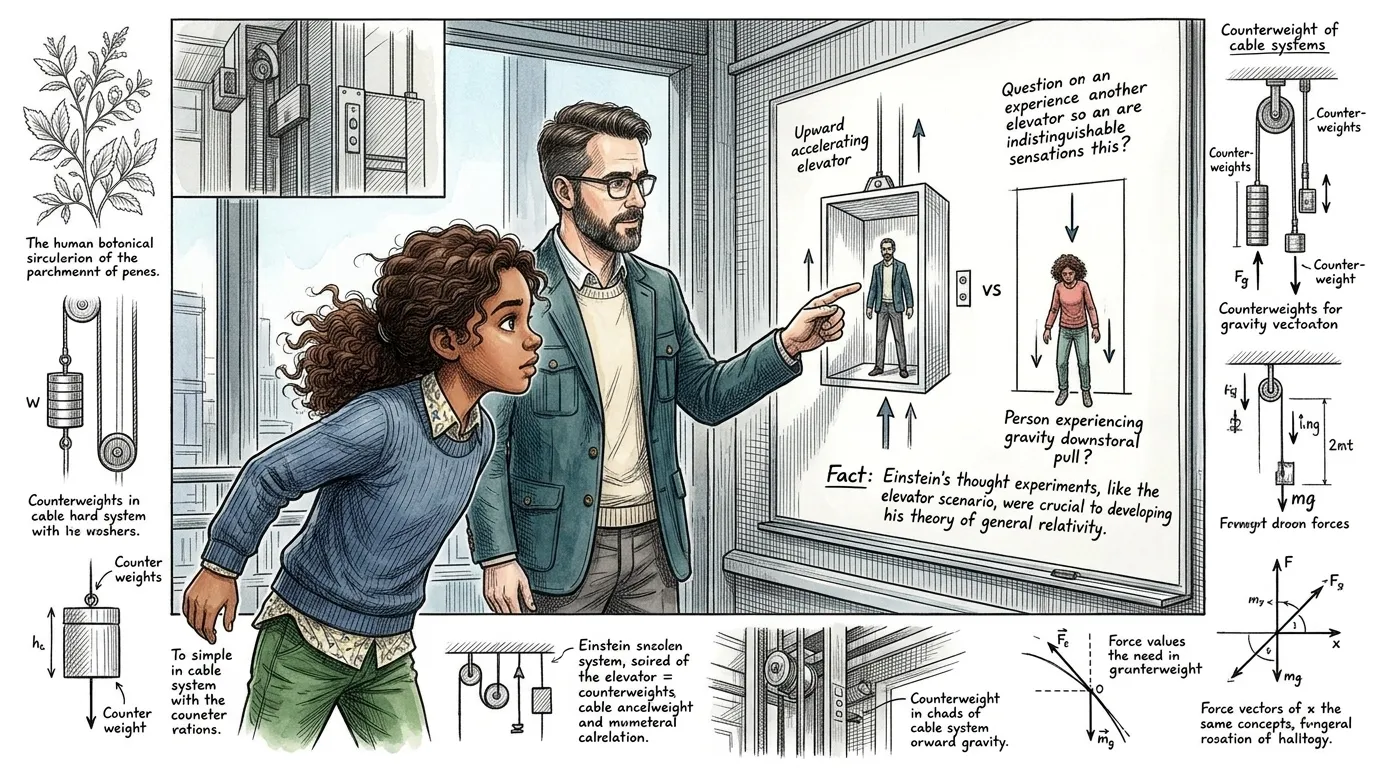
To arrive at this revolutionary concept, Einstein used what he called 'thought experiments.' One famous example involves imagining an elevator accelerating upwards. If you were inside, you'd feel a force pushing you down, just like gravity. Einstein realized that there was no way to distinguish between the feeling of gravity and the feeling of acceleration. This was a key insight.\n\n Fact: Einstein's thought experiments, like the elevator scenario, were crucial to developing his theory of general relativity.
Page 5
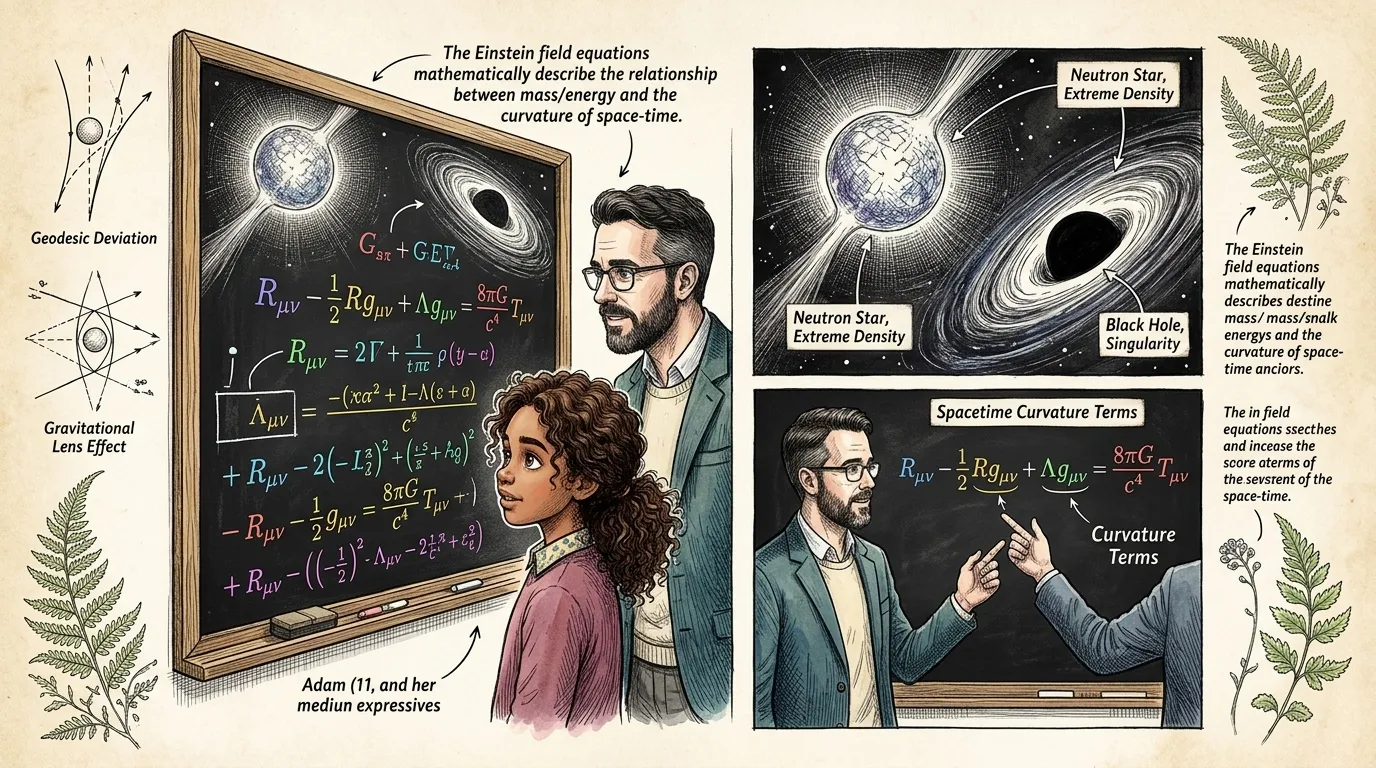
Einstein didn't just have a conceptual breakthrough. He also developed a set of equations, known as the Einstein field equations, that precisely describe how mass and energy curve space-time. These equations are incredibly complex, but they accurately predict the behavior of gravity in strong gravitational fields, where Newton's law fails. As Marie Curie said, 'Nothing in life is to be feared, it is only to be understood.'\n\n Fact: The Einstein field equations mathematically describe the relationship between mass/energy and the curvature of space-time.
Page 6
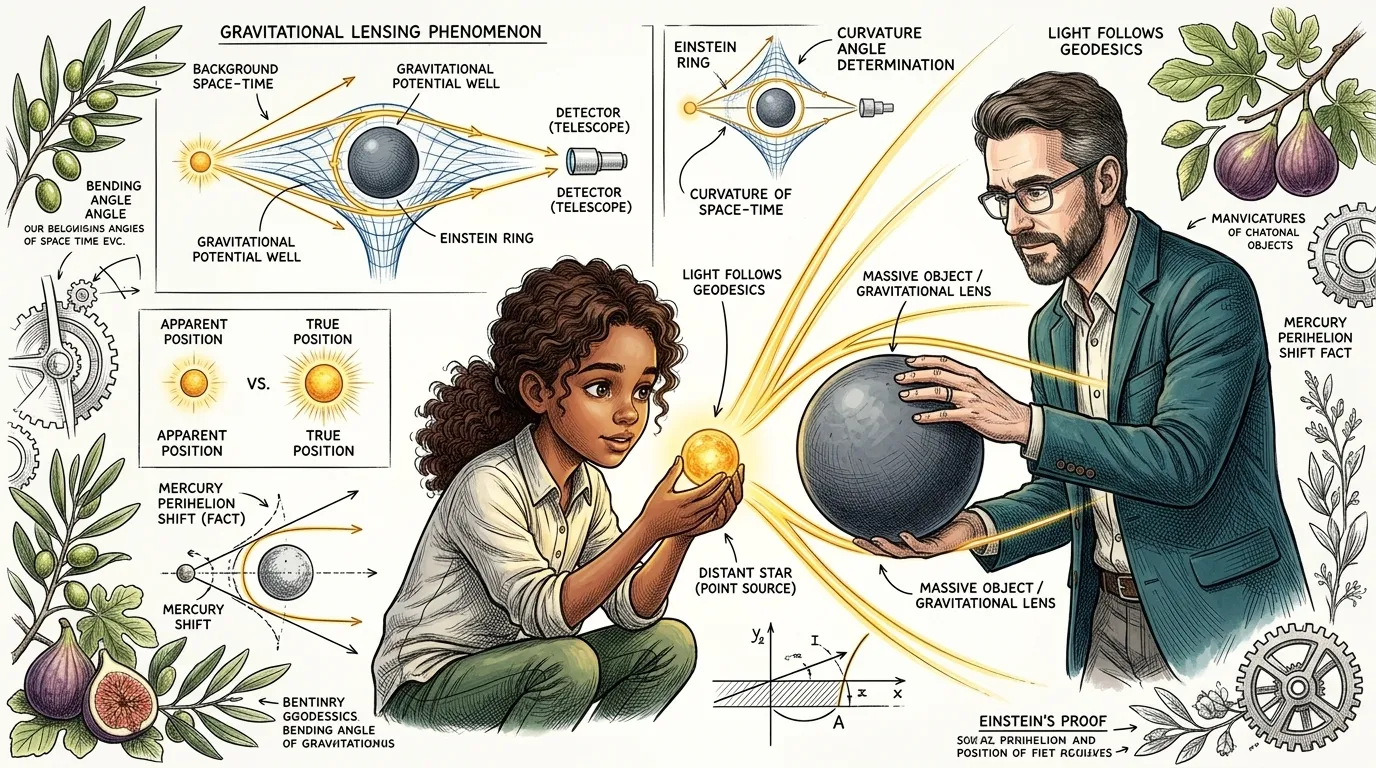
One of the most striking predictions of general relativity is that gravity can bend light. This happens because light follows the curves in space-time. A massive object, like the Sun, creates a significant curvature, causing light from distant stars to bend as it passes by. This bending is subtle but measurable.\n\n Fact: General relativity predicts that gravity can bend light, a phenomenon confirmed by observations during solar eclipses.
Page 7
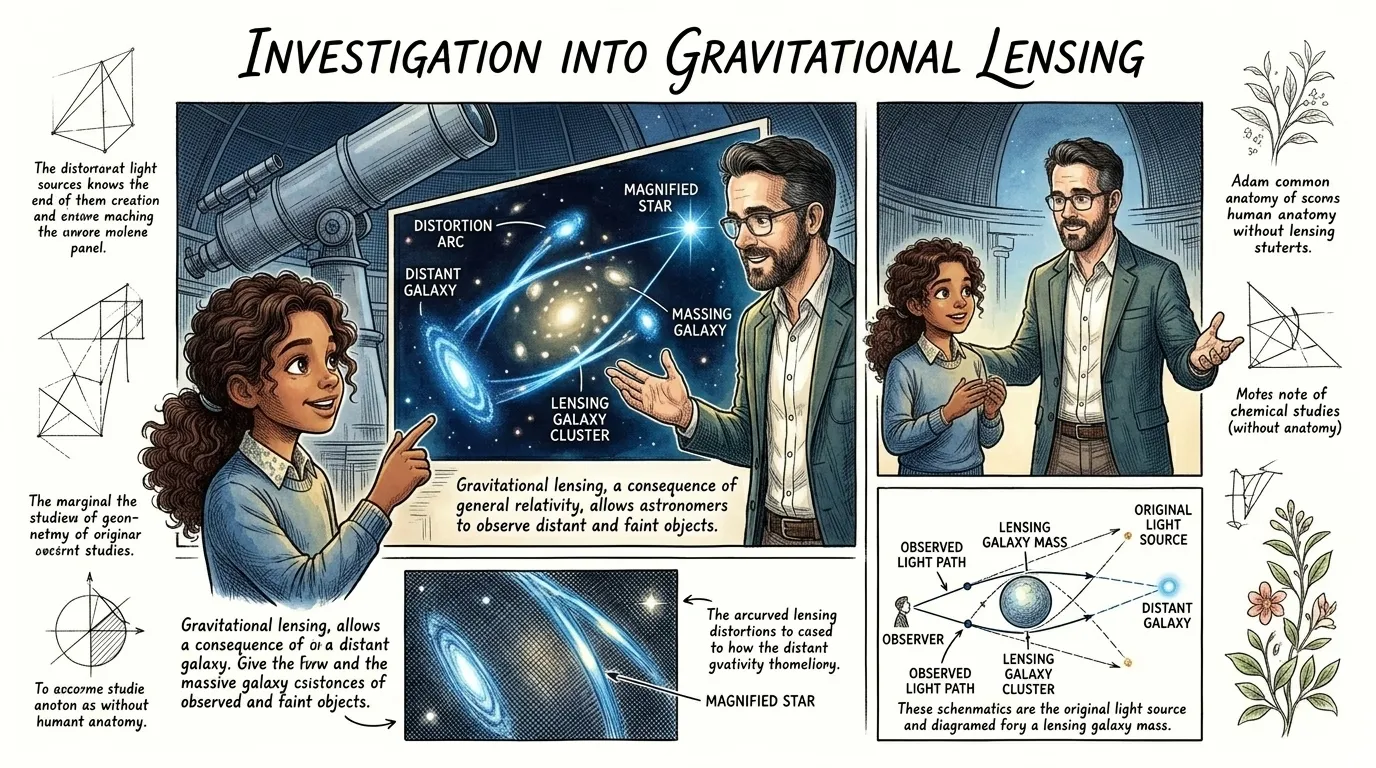
The bending of light can create 'gravitational lenses.' If a massive galaxy sits between us and a more distant object, the light from the distant object can be distorted and magnified, creating multiple images or arcs. This allows astronomers to see objects that would otherwise be too faint to observe. As Niels Bohr said, 'Every sentence I utter must be understood not as an affirmation, but as a question.'\n\n Fact: Gravitational lensing, a consequence of general relativity, allows astronomers to observe distant and faint objects.
Page 8
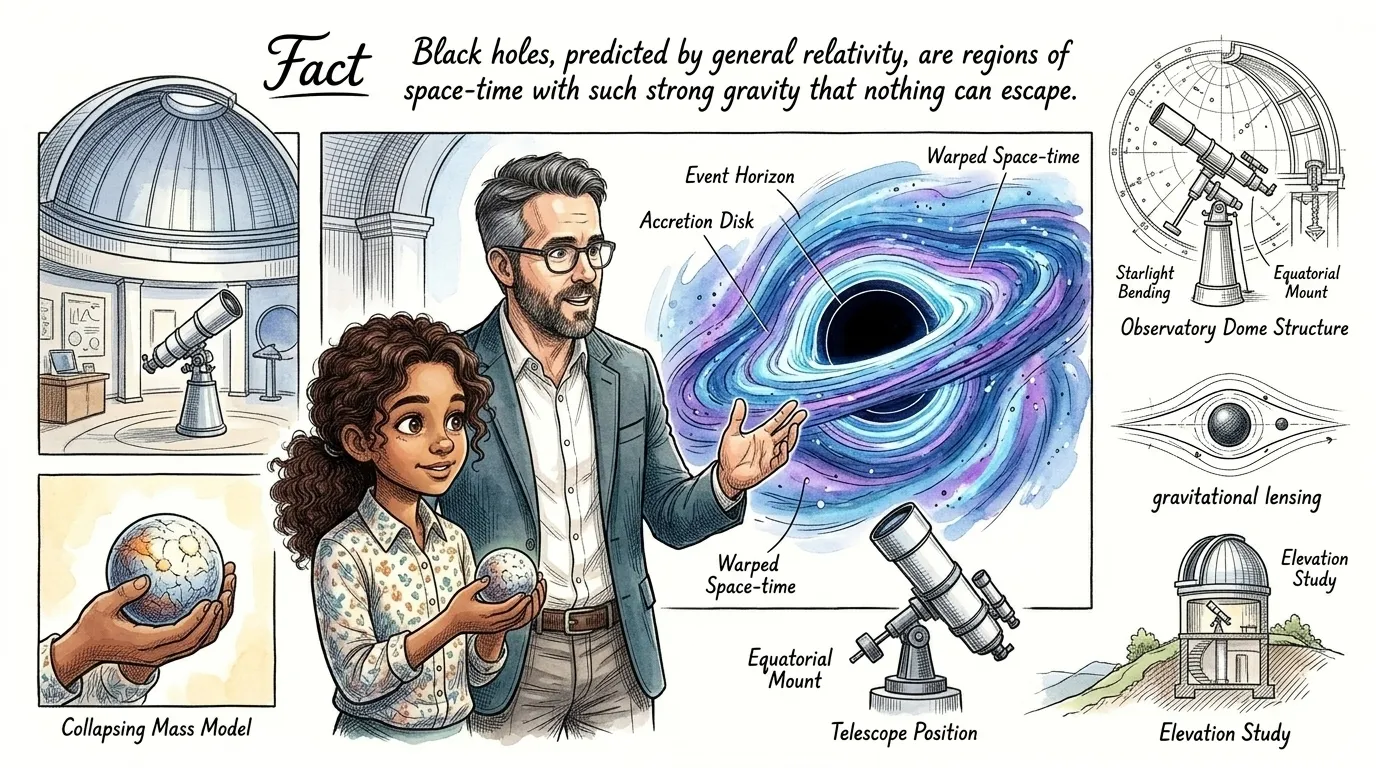
General relativity also predicts the existence of black holes – regions of space-time where gravity is so strong that nothing, not even light, can escape. These are formed when massive stars collapse at the end of their lives. Black holes are not just theoretical objects; we have observed them directly.\n\n Fact: Black holes, predicted by general relativity, are regions of space-time with such strong gravity that nothing can escape.
Page 9
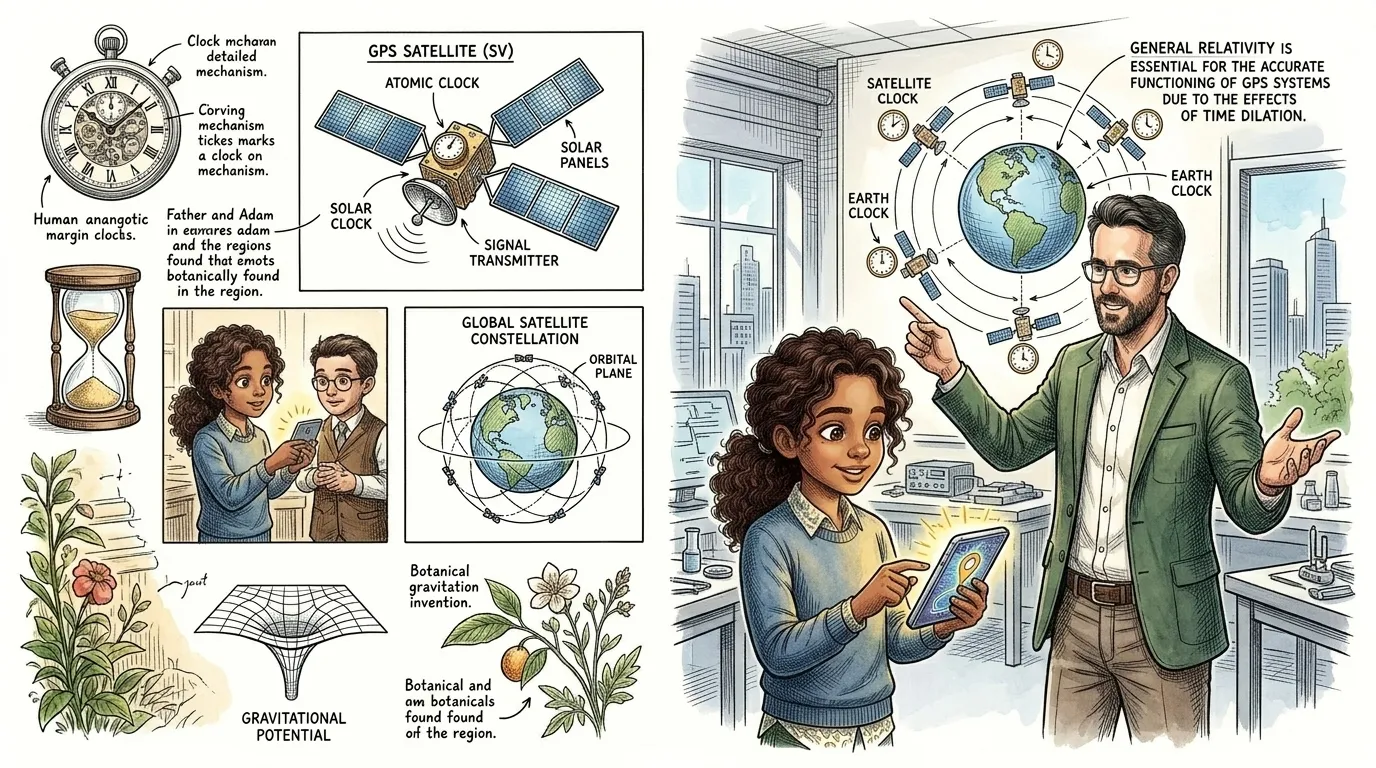
General relativity has practical applications in our everyday lives. The Global Positioning System (GPS) relies on incredibly precise time measurements from satellites orbiting the Earth. Because of the effects of gravity and their high speeds, time runs slightly differently on these satellites compared to on Earth. Without correcting for these relativistic effects, GPS would be useless within a few hours.\n\n Fact: General relativity is essential for the accurate functioning of GPS systems due to the effects of time dilation.
Page 10
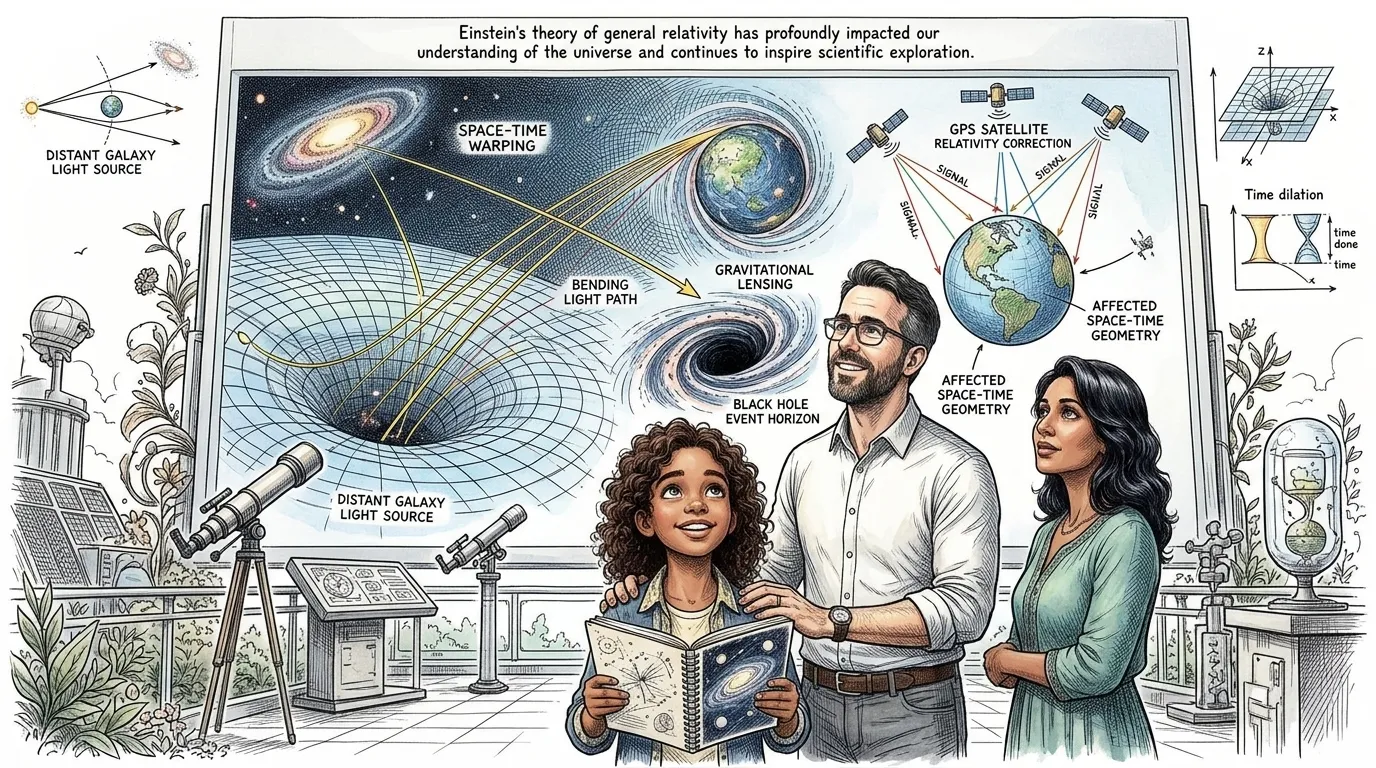
Albert Einstein's theory of general relativity revolutionized our understanding of gravity, space, and time. It has led to countless discoveries and technological advancements. While there are still mysteries to be solved, Einstein's work continues to inspire scientists and shape our view of the universe. 'Imagination is more important than knowledge,' Einstein famously said, and his own life proves it.\n\n Fact: Einstein's theory of general relativity has profoundly impacted our understanding of the universe and continues to inspire scientific exploration.
About this story
- Location: Global
- Audience: kids (ages 6–12)
Questions and answers
Read Wonder Science on your phone
Wonder Science is available on Android. Get Wonder Science on Google Play.