Albert Einstein
Albert Einstein — an illustrated science story, set in Global. 10 illustrated pages, free to read on Wonder Science.
Page 1
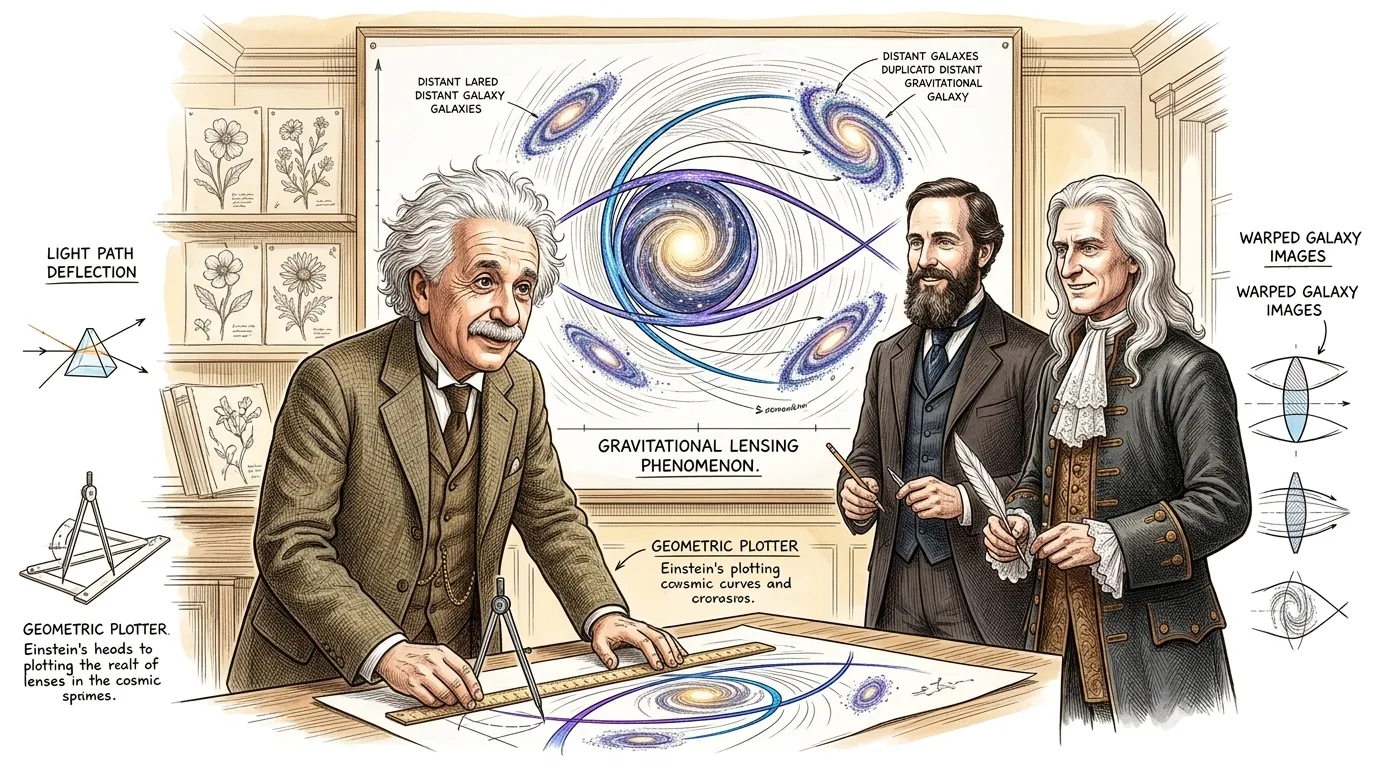
A shimmering distortion in the fabric of space-time reveals the profound legacy of a singular mind. Far across the cosmos, the path of ancient light bends around unseen giants, tracing lines of gravitational lensing, a cosmic optical illusion predicted by one man. This breathtaking phenomenon, where distant galaxies appear warped and duplicated, is a direct, observable consequence of Albert Einstein's revolutionary theory of General Relativity. His insights reshaped our understanding of gravity, not as a mysterious force, but as the very curvature of the universe itself.
Page 2
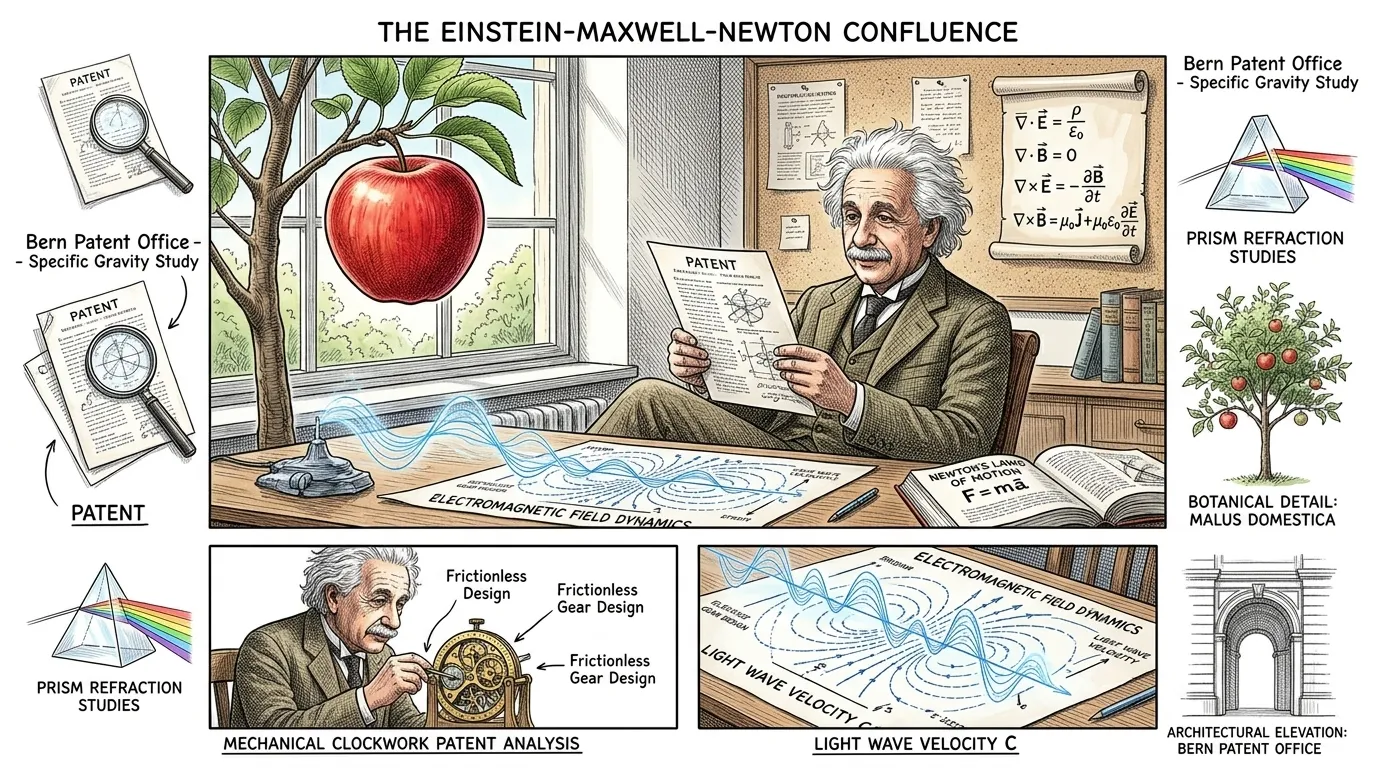
At the turn of the 20th century, physics faced a perplexing contradiction: Newtonian mechanics, which had brilliantly explained motion for centuries, clashed with James Clerk Maxwell's elegant equations describing light and electromagnetism. The speed of light, it seemed, was absolute, yet common sense suggested its measurement should depend on the observer's motion. This fundamental inconsistency created a crisis, challenging the very bedrock of scientific understanding and hinting at a deeper, hidden reality. It was into this intellectual landscape that a young Albert Einstein, working as a patent clerk in Bern, Switzerland, began to ponder the nature of light and motion, leading to what he called his 'happiest thought'.
Page 3
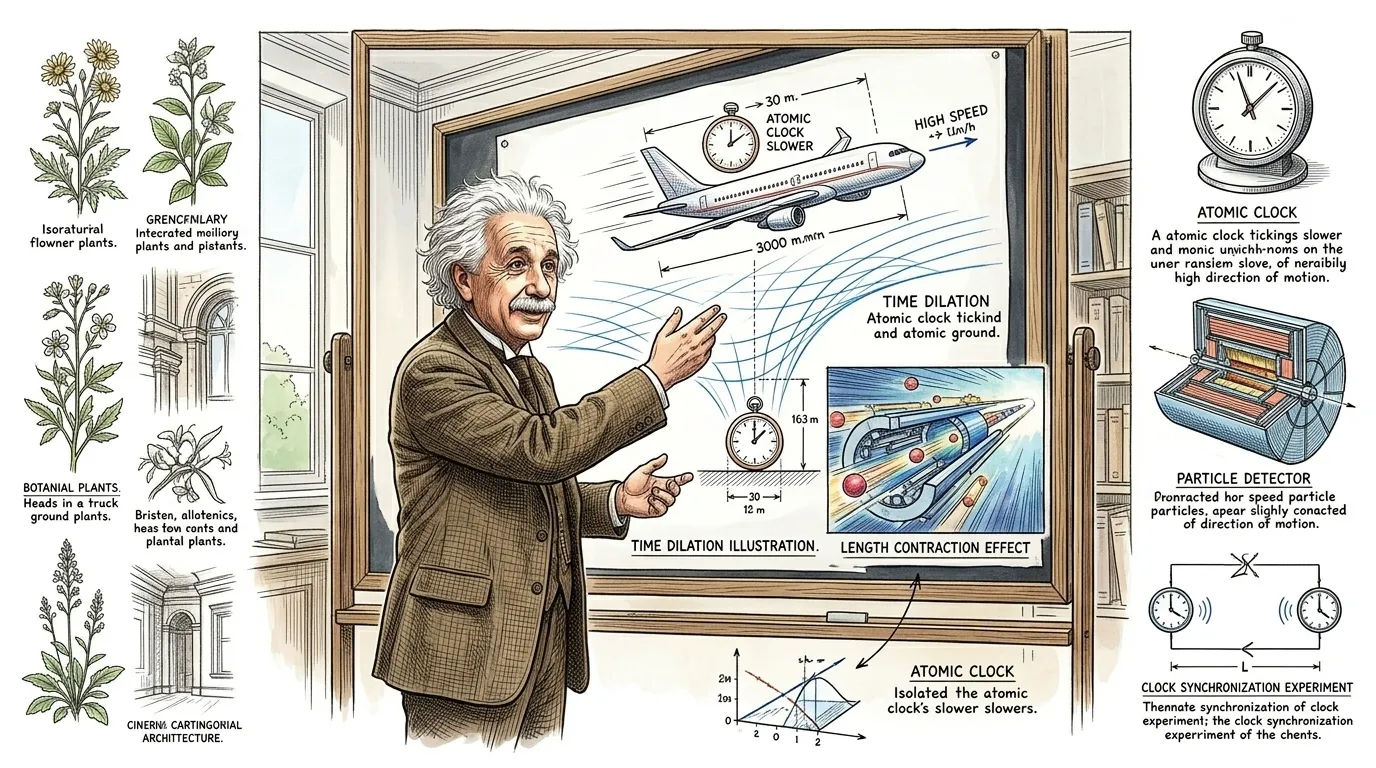
One of Einstein's most astounding deductions, arising from Special Relativity, was that time itself is not absolute but relative to an observer's motion. This phenomenon, known as time dilation, means that time slows down for objects moving at high speeds relative to a stationary observer. Likewise, objects moving rapidly experience length contraction, appearing shorter in their direction of motion. These counter-intuitive effects, experimentally verified with atomic clocks on airplanes and particles in accelerators, profoundly altered humanity's perception of space and time, revealing them as interconnected aspects of a single fabric, spacetime.
Page 4
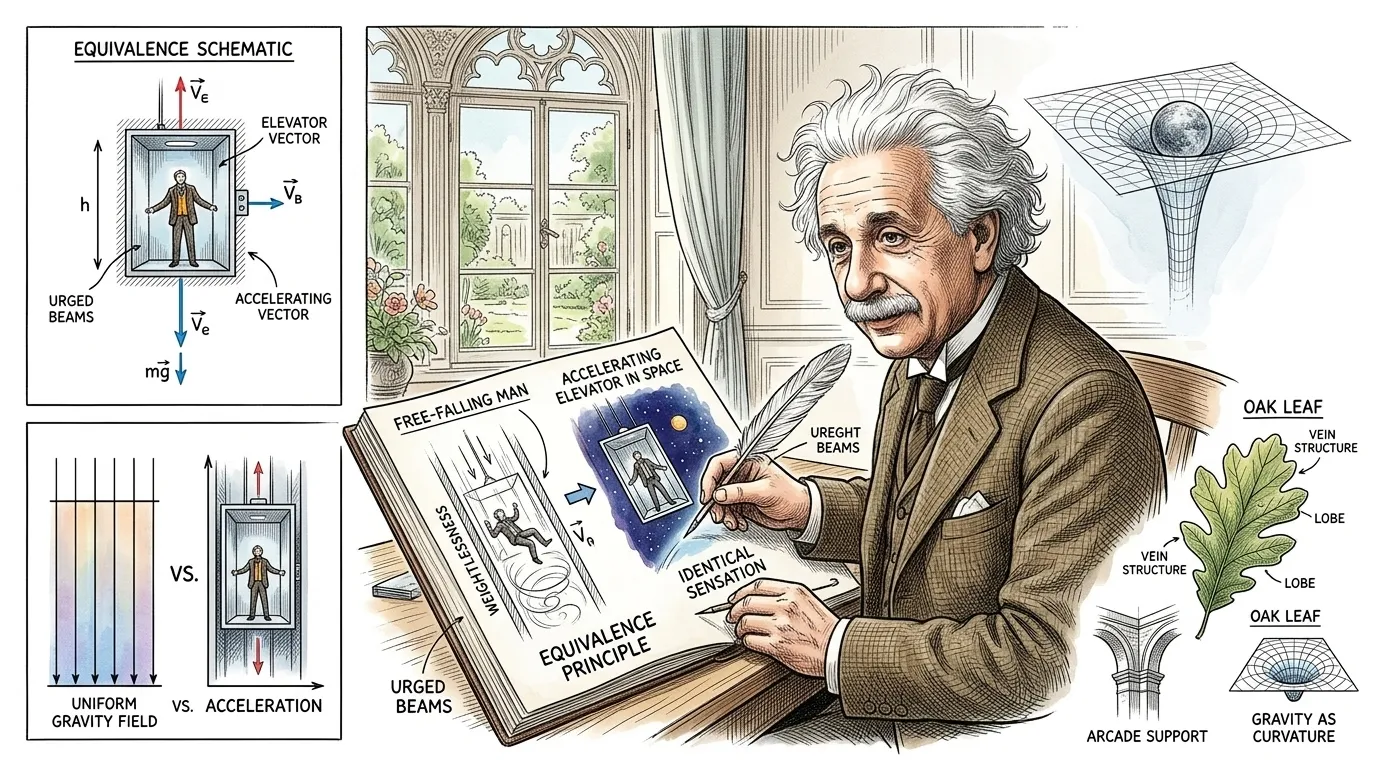
Einstein's 'happiest thought' arrived in 1907: if a person falls freely, they would not feel their own weight, meaning that gravity must be indistinguishable from acceleration. This 'Equivalence Principle' became the cornerstone of his next monumental leap: General Relativity. It suggested that gravity was not a force pulling objects together, but rather a manifestation of the curvature of spacetime caused by mass and energy. He understood that the traditional view of gravity was incomplete, and the universe's grandest force required a more profound, geometric explanation. Einstein once remarked, "The important thing is not to stop questioning. Curiosity has its own reason for existence." a sentiment that drove his relentless pursuit of truth.
Page 5
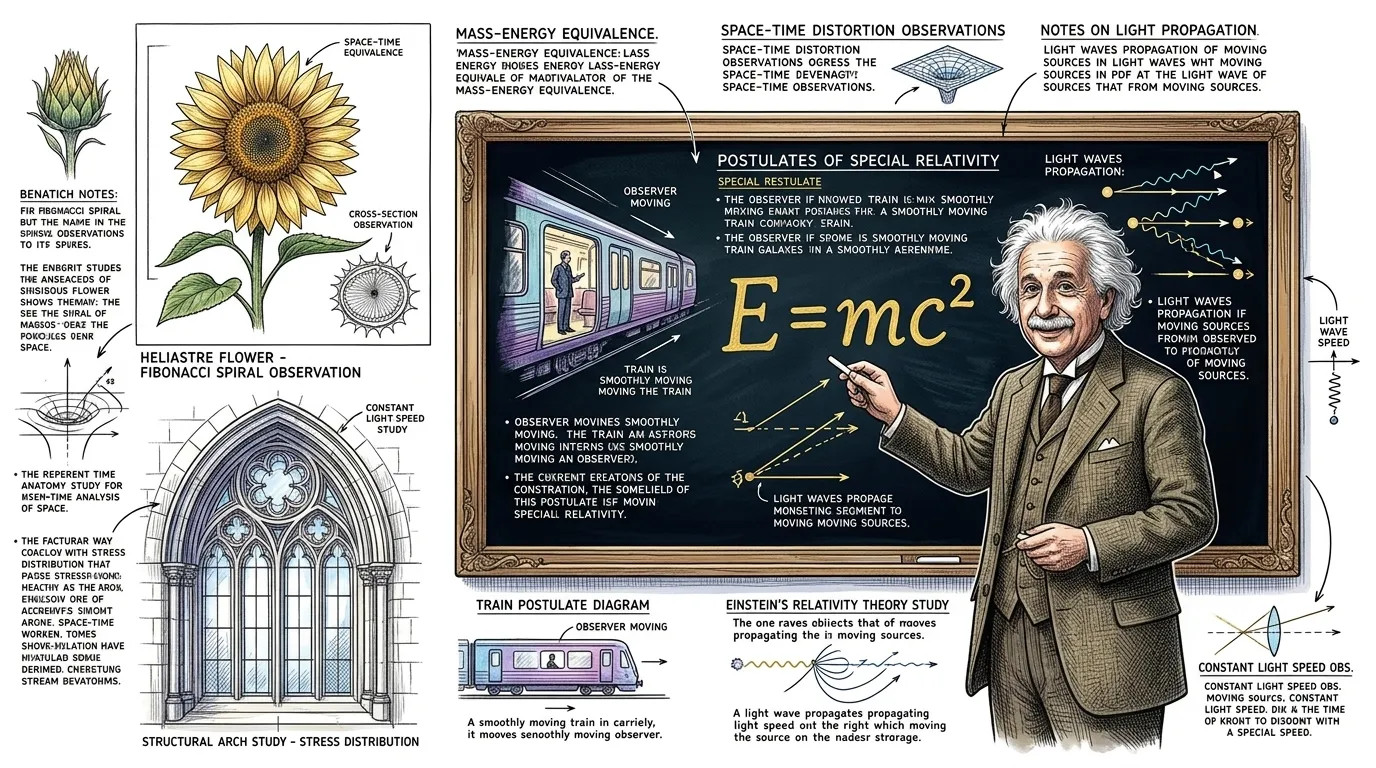
At the heart of Special Relativity lies two postulates: the laws of physics are the same for all observers in uniform motion, and the speed of light in a vacuum is the same for all inertial observers, regardless of the motion of the light source. These seemingly simple statements have radical implications. For instance, the famous equation E mc2 revealed that mass and energy are interchangeable, two forms of the same fundamental entity, where 'c' represents the immense constant speed of light. This equation unveiled the astonishing energy contained within even tiny amounts of matter, forever changing our understanding of the universe's fundamental constituents.
Page 6
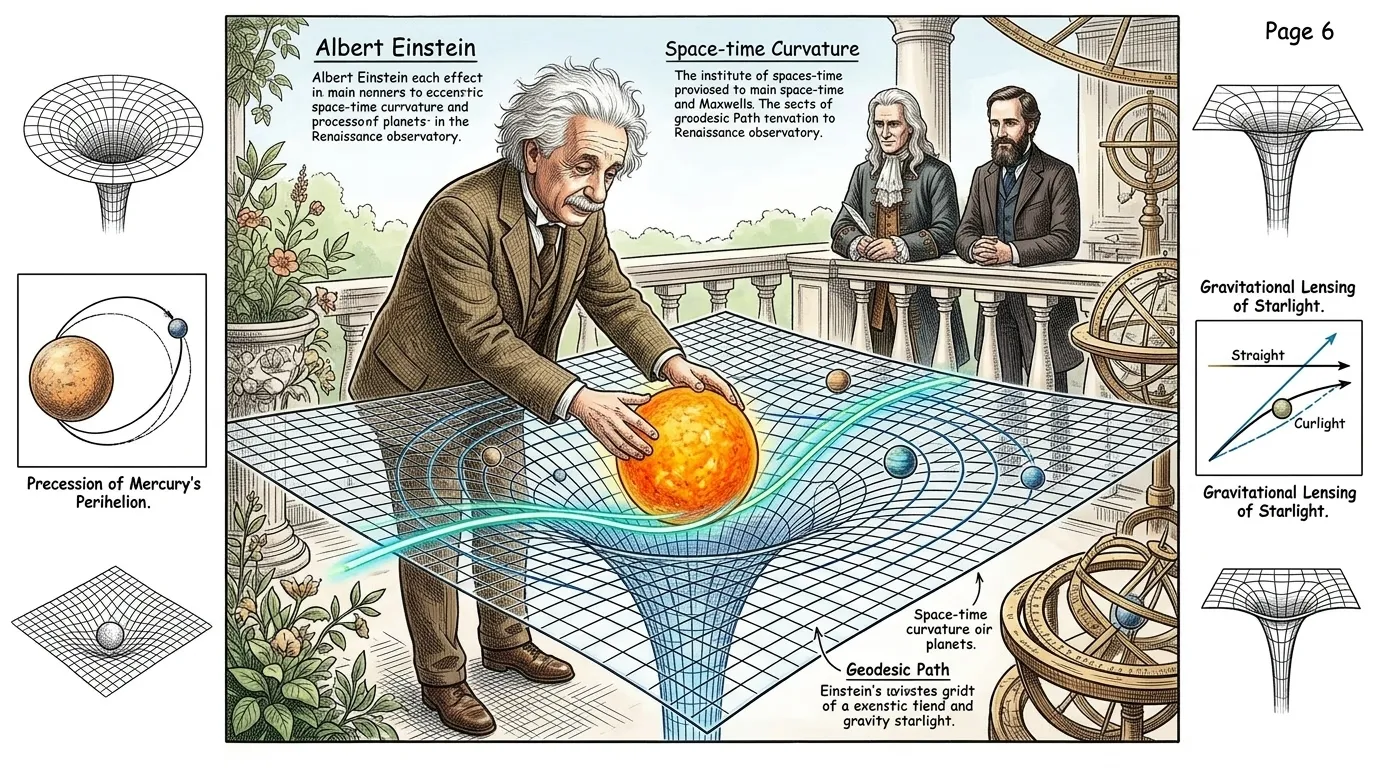
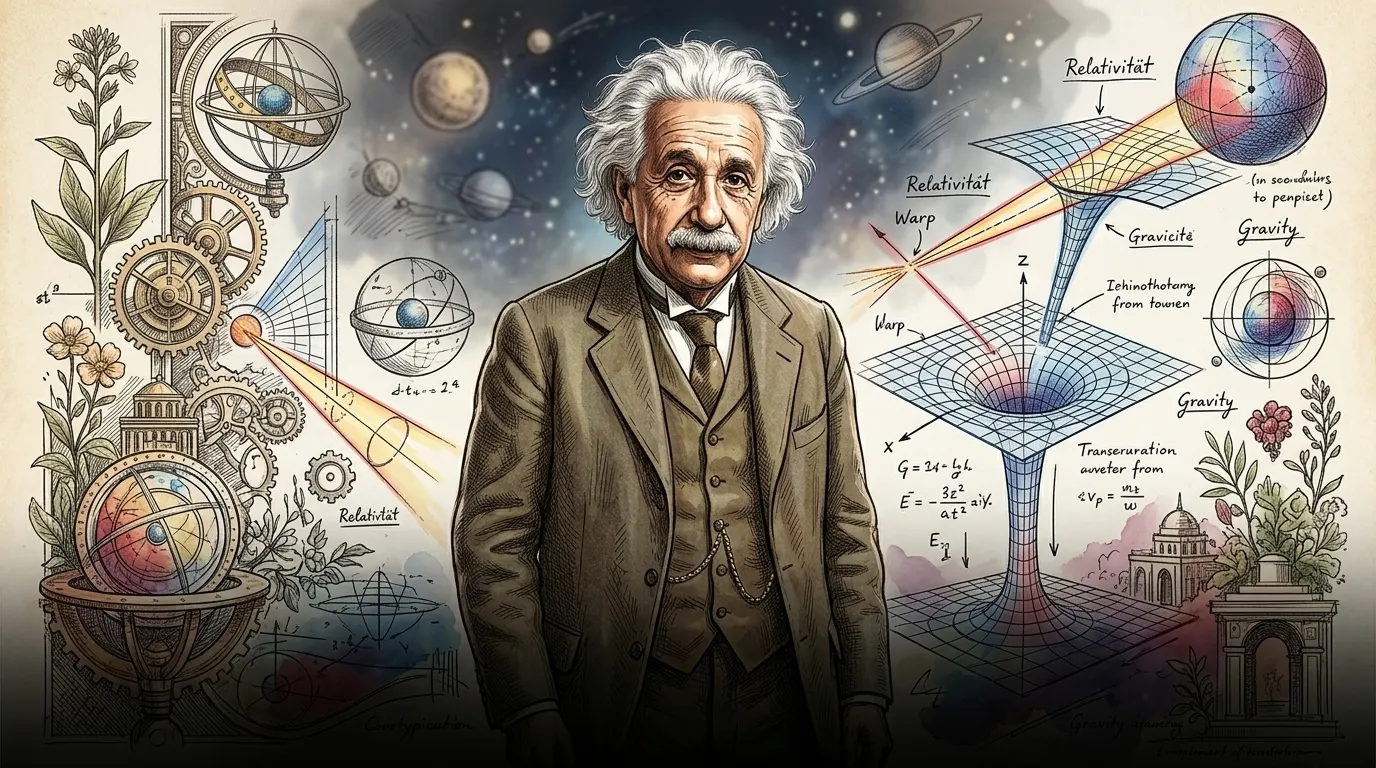
General Relativity provided a radical new framework for gravity, replacing Newton's instantaneous force with a geometric explanation. Imagine spacetime as a colossal, flexible fabric; massive objects like stars and planets create 'dips' or curvatures in this fabric. Smaller objects, or even light, don't so much get 'pulled' by gravity as they follow the contours of this warped spacetime. This elegant model explains not only the orbits of planets but also subtle phenomena like the precession of Mercury's orbit and, most spectacularly, the bending of light by massive celestial bodies, exactly as observed in gravitational lensing.
Page 7
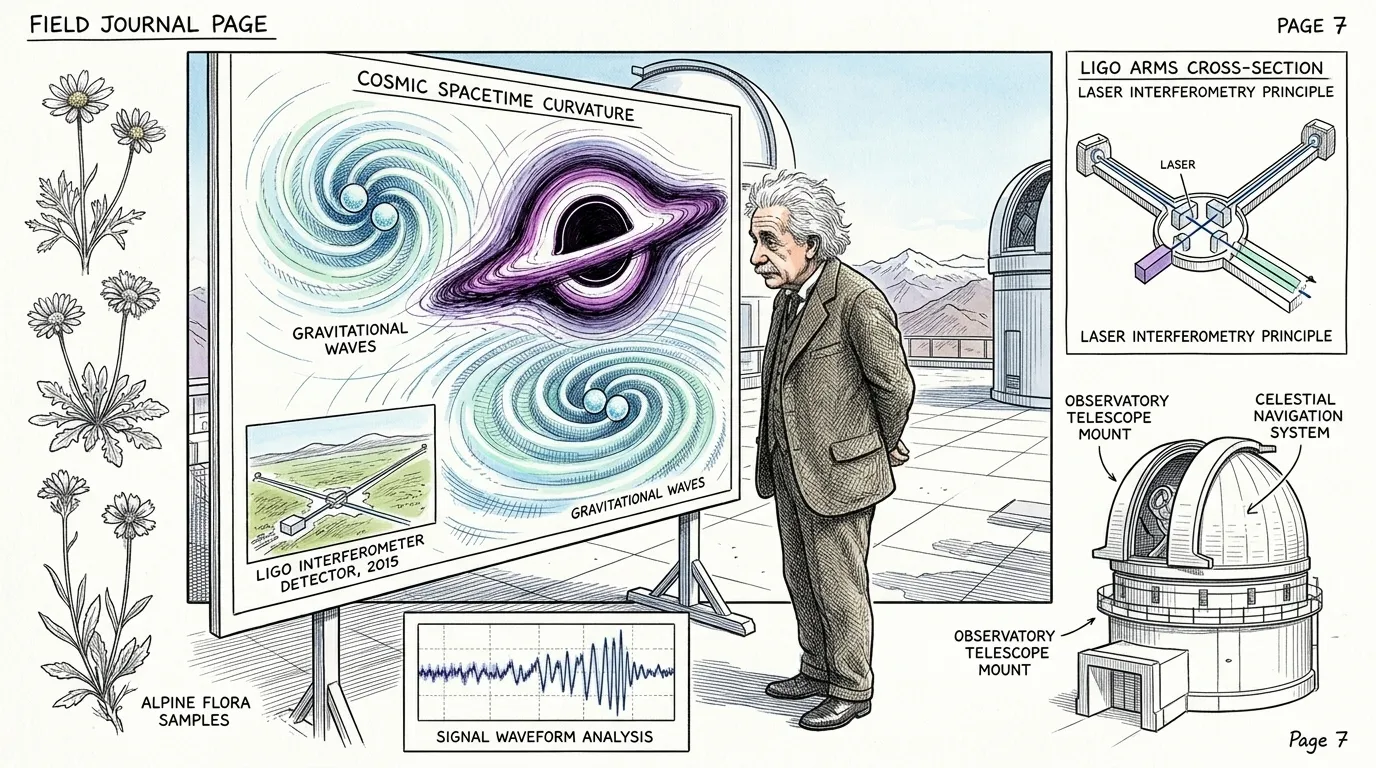
Einstein's theories not only explained existing astronomical observations but also made astonishing predictions, many of which have since been confirmed with remarkable precision. Black holes, regions where spacetime is so intensely curved that nothing, not even light, can escape, were a direct consequence of General Relativity. Furthermore, his equations predicted gravitational waves, ripples in spacetime generated by accelerating massive objects like merging black holes or neutron stars. The direct detection of these waves by observatories like LIGO (Laser Interferometer Gravitational-Wave Observatory) in 2015 provided powerful new evidence, opening an entirely new window into the universe.
Page 8
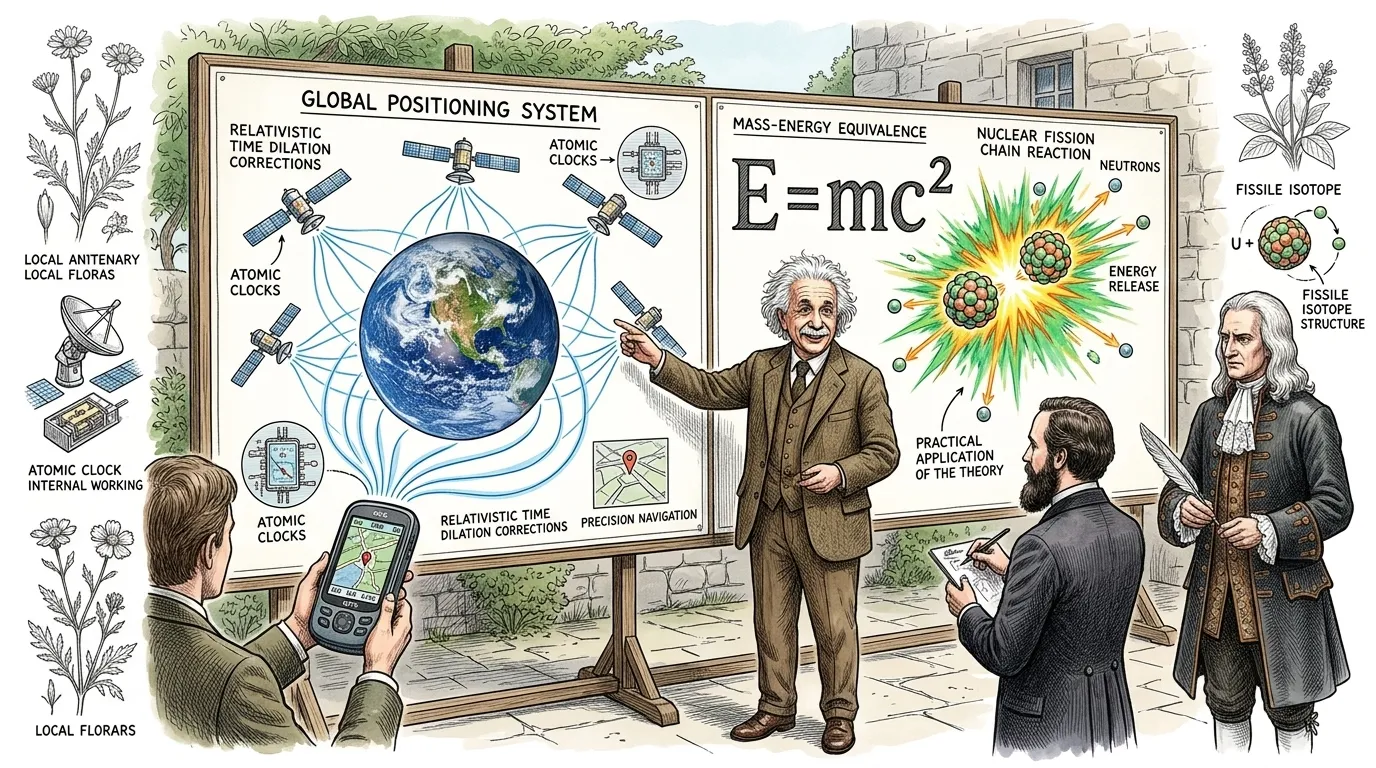
The practical applications of Einstein's theoretical physics are woven into the fabric of modern life, often in ways we take for granted. The Global Positioning System (GPS), for instance, relies heavily on both Special and General Relativity. Atomic clocks aboard satellites experience time dilation due to their high speed and gravitational potential, necessitating precise relativistic corrections to ensure the accuracy of location data on Earth. Beyond navigation, the understanding of mass-energy equivalence, E mc2, fundamentally underpins the principles of nuclear energy, harnessing the vast power locked within atomic nuclei, a profound and dual-edged consequence of his pure scientific inquiry.
Page 9
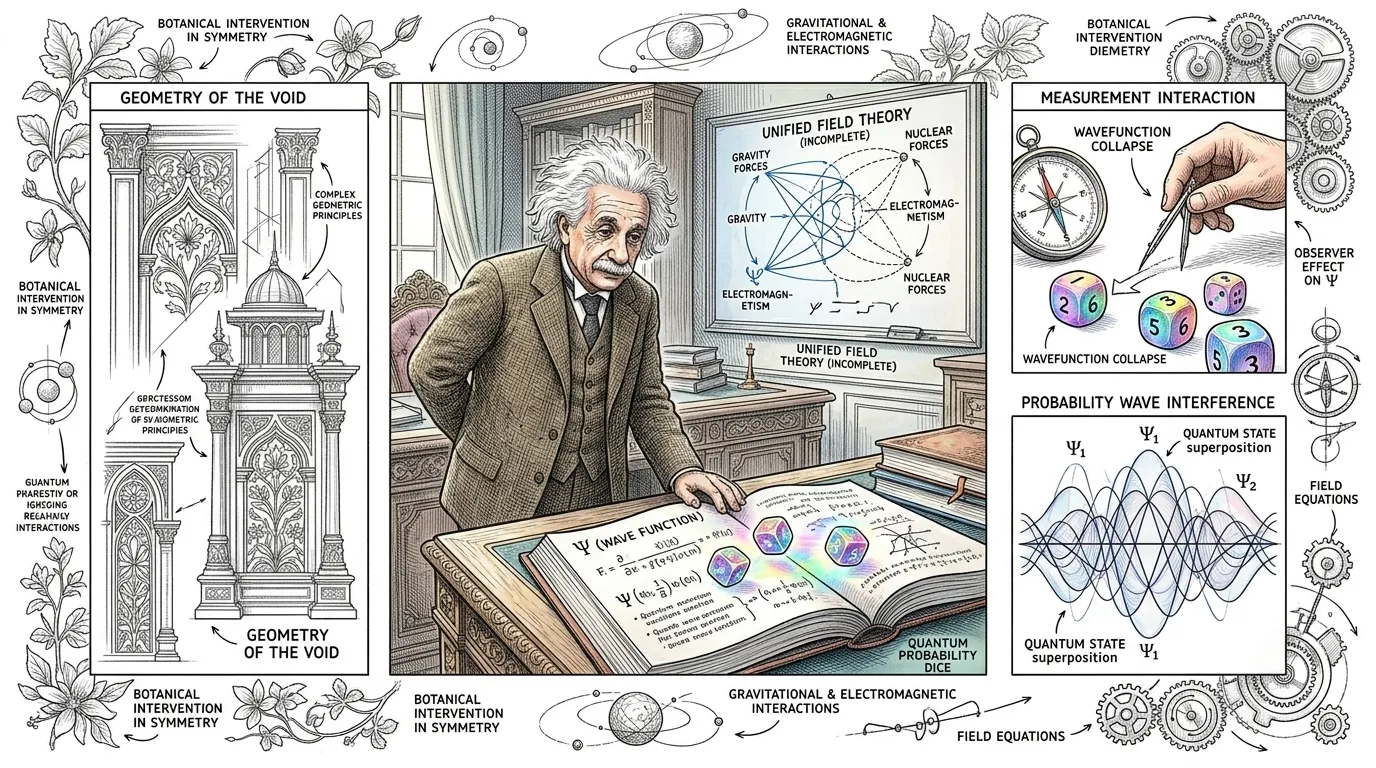
Despite his monumental achievements, Einstein spent his later years grappling with a new frontier: quantum mechanics. While his work initiated the quantum revolution with the photoelectric effect, he famously expressed discomfort with its probabilistic nature, stating, "God does not play dice with the universe." His relentless pursuit of a unified field theory, aiming to merge gravity with electromagnetism (and later, the strong and weak nuclear forces), remained incomplete. This ambitious quest, though ultimately unsuccessful in his lifetime, continues to inspire generations of physicists striving to reconcile the macroscopic realm of gravity with the subatomic world of quantum mechanics, a challenge that persists to this day.
Page 10
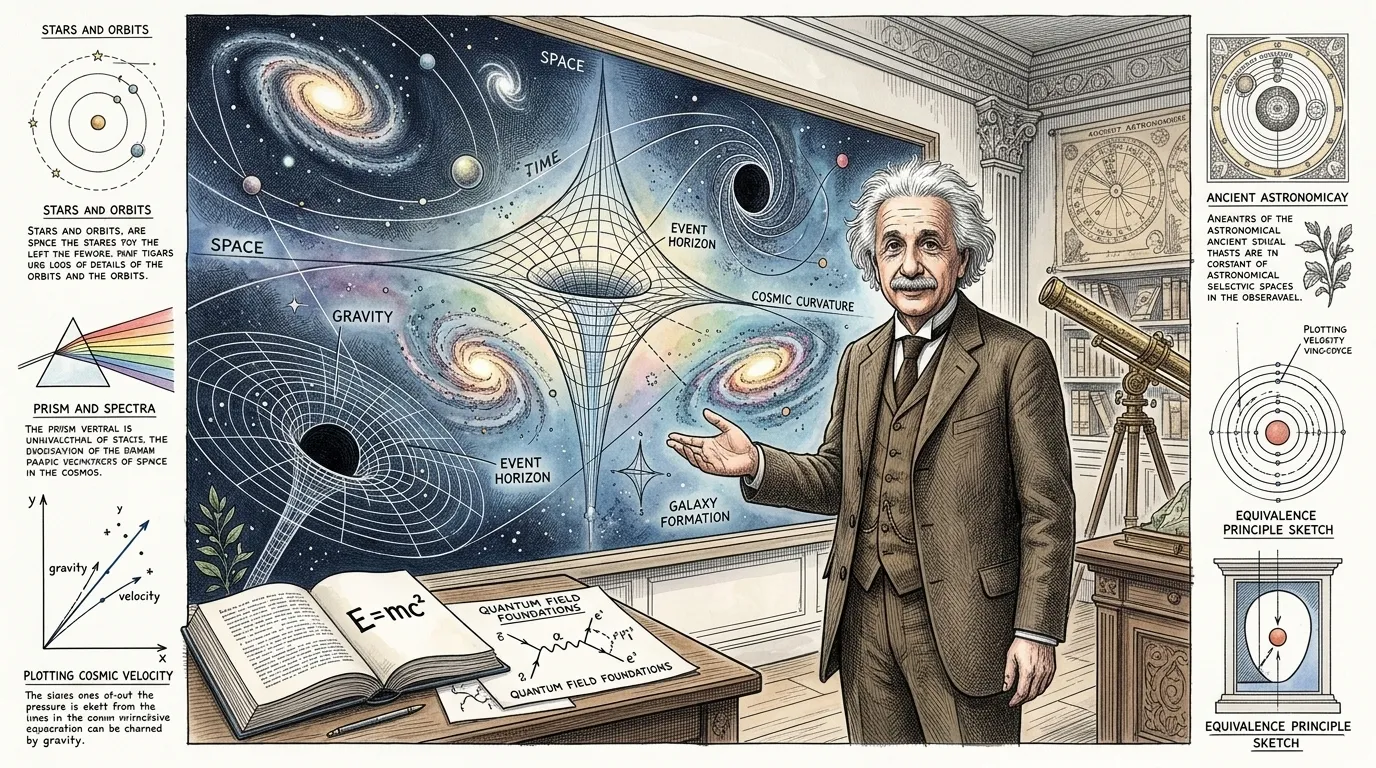
Albert Einstein's legacy extends far beyond his equations; it embodies a profound curiosity that challenged dogma and dared to reimagine reality. He provided the geometric language to describe the cosmos, from the bending of starlight to the birth of black holes, forever altering our perception of space, time, and gravity. While his dream of a unified field theory remains an unfinished symphony, his work laid the groundwork for modern cosmology and quantum field theory. The universe, in all its perplexing grandeur, continues to unveil its secrets through the lens of his extraordinary vision, reminding us that the greatest discoveries often begin with the simplest, yet most profound, questions.
About this story
- Location: Global
- Audience: general readers
Questions and answers
Read Wonder Science on your phone
Wonder Science is available on Android. Get Wonder Science on Google Play.