Andrea Ghez
Andrea Ghez — an illustrated science story, set in Global. 10 illustrated pages, free to read on Wonder Science.

Page 1
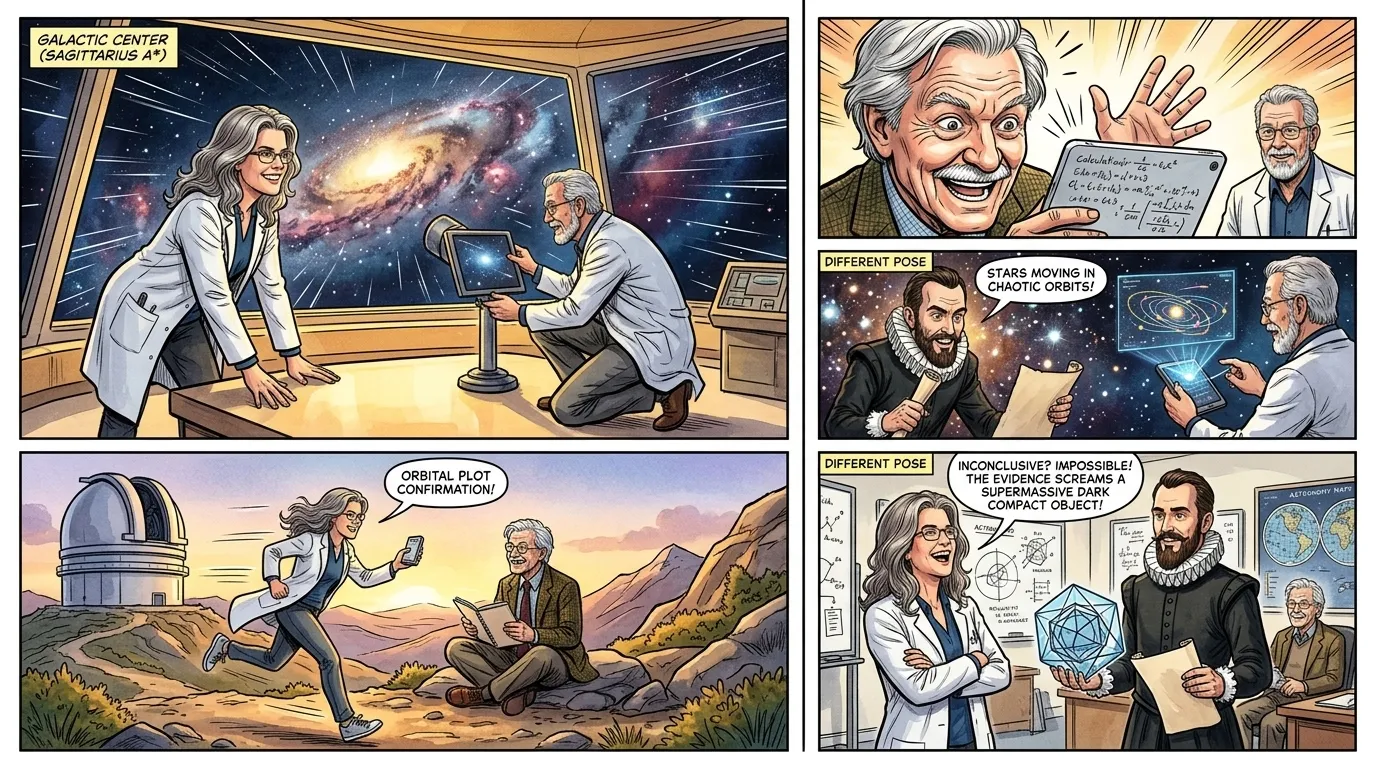
At the heart of our Milky Way galaxy, an immense gravitational force holds sway, an invisible behemoth dictating the chaotic dance of stars. For decades, its true nature remained shrouded in cosmic dust and theoretical conjecture. The challenge was profound: to penetrate light-years of obscuring gas and definitively identify the engine driving the galaxy's central dynamics.
Page 2
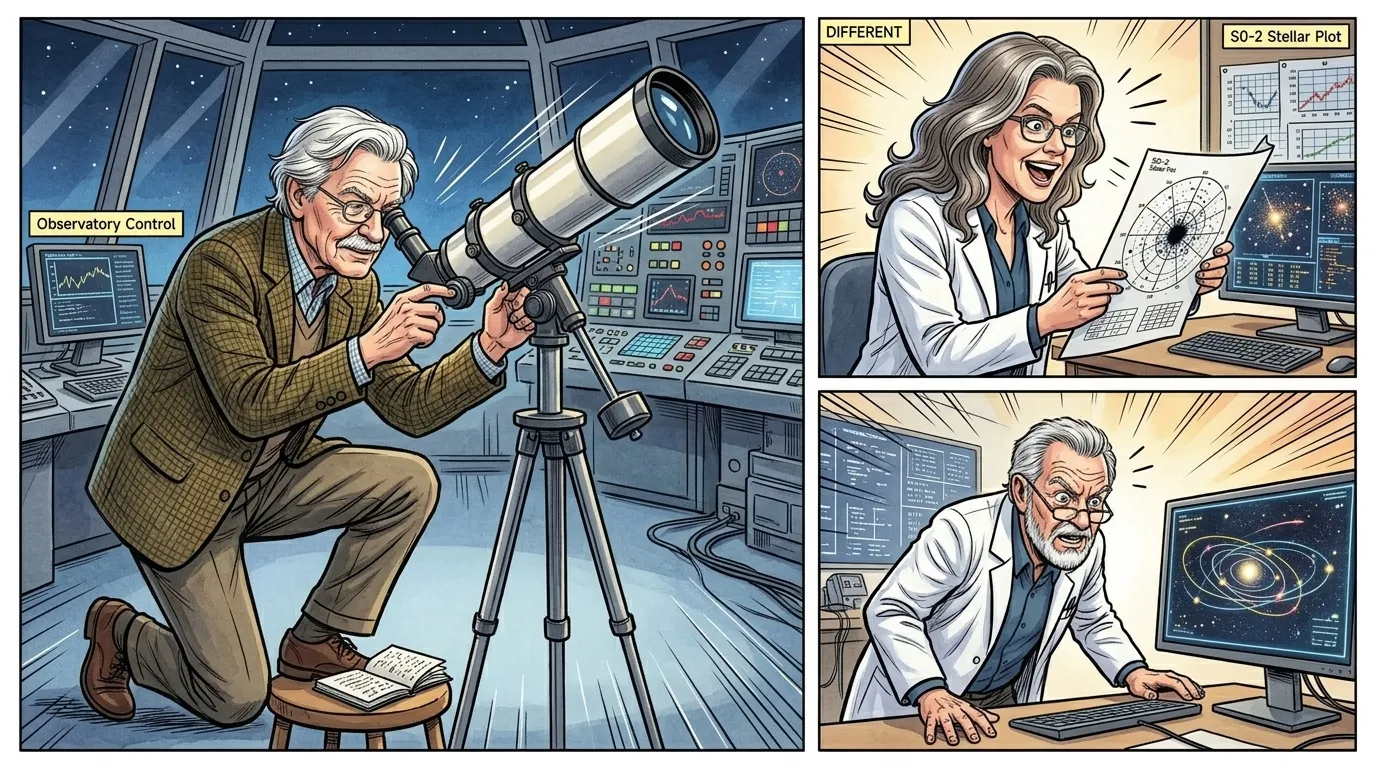
Across the vast cosmos, observations had hinted at extreme phenomena at the cores of galaxies. Violent energy emissions, bizarre stellar motions, and colossal gravitational pulls suggested something far beyond ordinary star clusters. Early theoretical models proposed supermassive black holes – objects of unimaginable density, whose gravity was so intense that nothing, not even light, could escape. But how could one prove the existence of an object that, by definition, was invisible?
Page 3
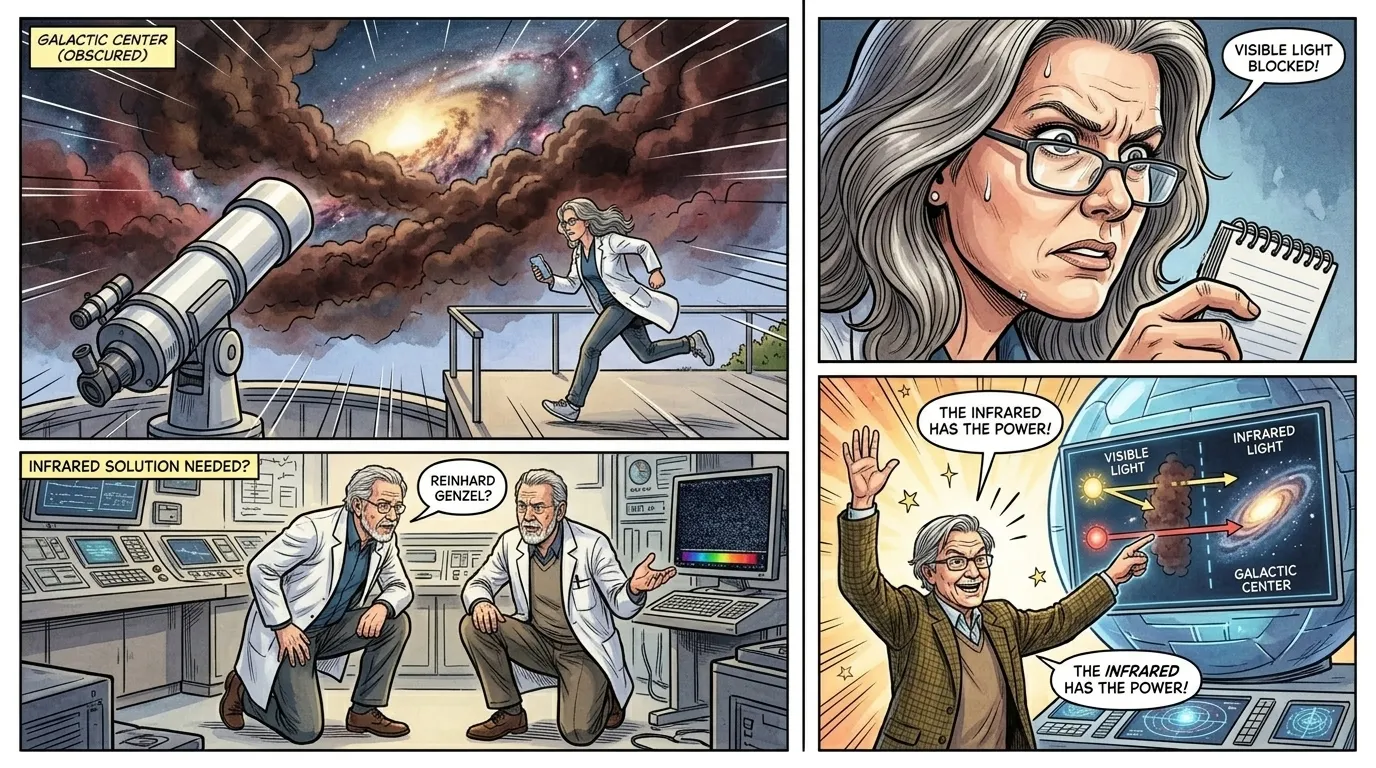
The Milky Way's center, located approximately 26,000 light-years from Earth, is perpetually obscured by thick curtains of interstellar gas and dust. These cosmic veils scatter and absorb visible light, rendering direct optical observation impossible. Imagine trying to see a light bulb across a city through a dense fog – that was the challenge facing astronomers. The solution lay in wavelengths beyond the visible spectrum, particularly infrared light, which could pierce through the obscuring material.
Page 4
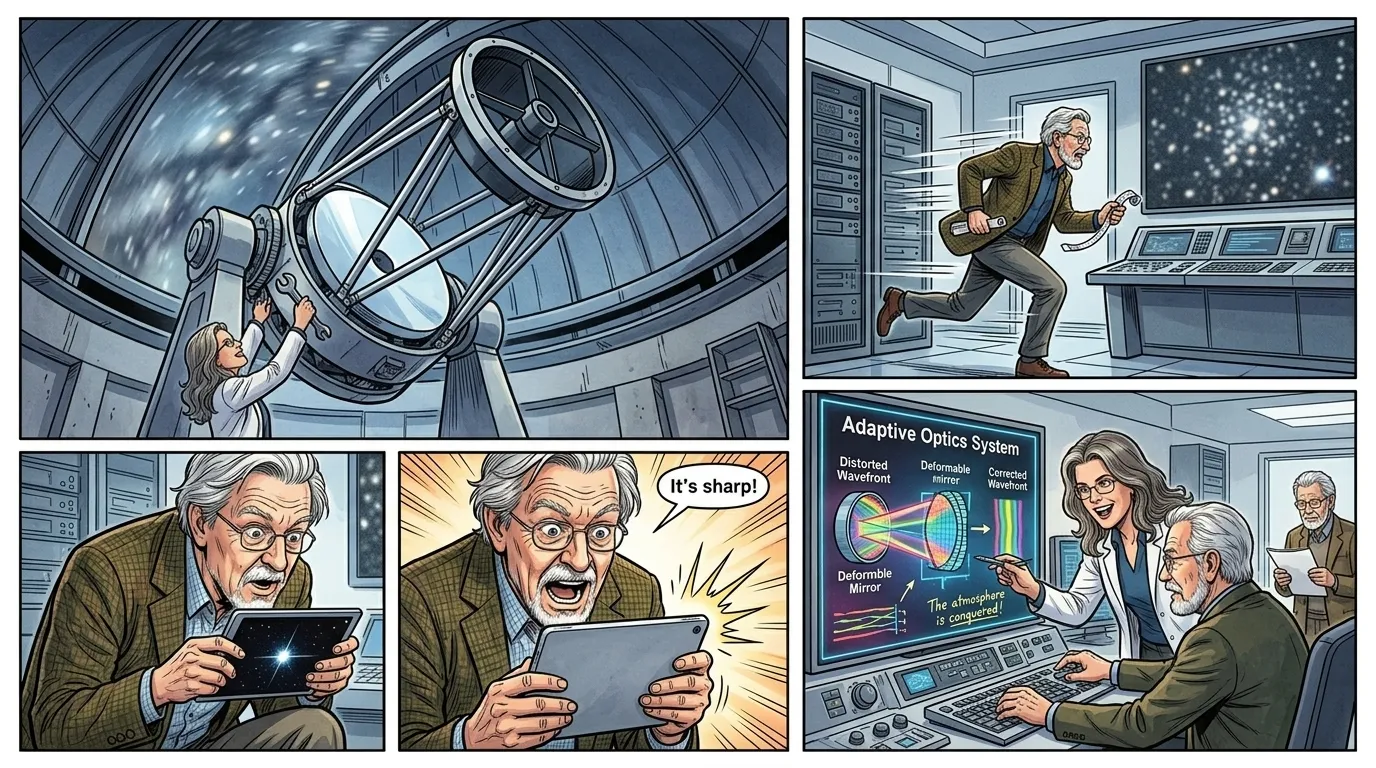
Even with infrared light, Earth's turbulent atmosphere distorts incoming celestial images, much like ripples on water blur reflections. This atmospheric blurring limited the resolution of ground-based telescopes. The groundbreaking innovation of adaptive optics provided a solution. By rapidly measuring atmospheric distortion and then deforming a telescope's mirror hundreds of times per second, astronomers could effectively 'undo' the blurring, achieving unprecedented clarity.
Page 5
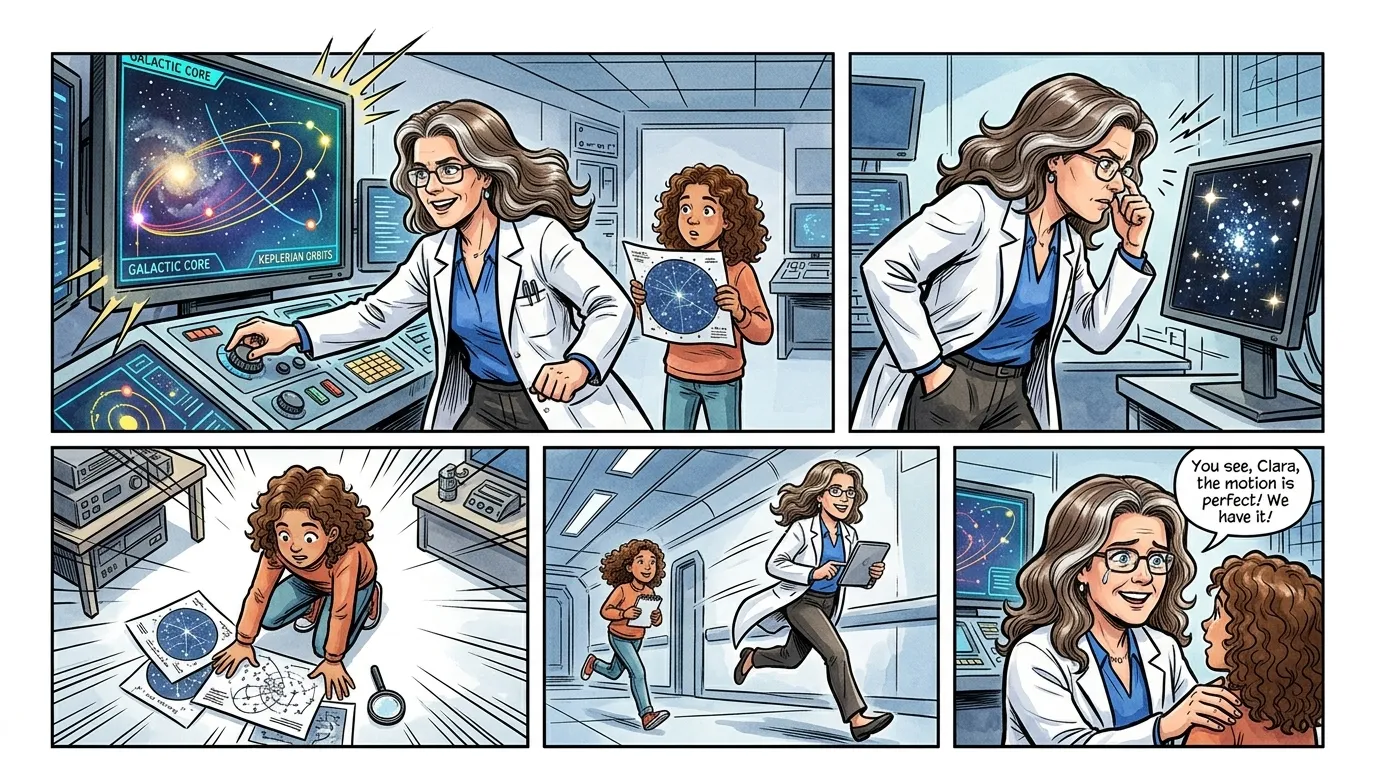
Armed with adaptive optics, Andrea Ghez and her team at UCLA began a painstaking, decades-long observation campaign using the Keck telescopes. Their target: the inner few light-months of the galactic center. They focused on tracking individual stars, charting their movements with unparalleled precision. Over years, these stars revealed distinct, elongated elliptical orbits, behaving as if they were tethered to an unseen, incredibly powerful gravitational anchor.
Page 6
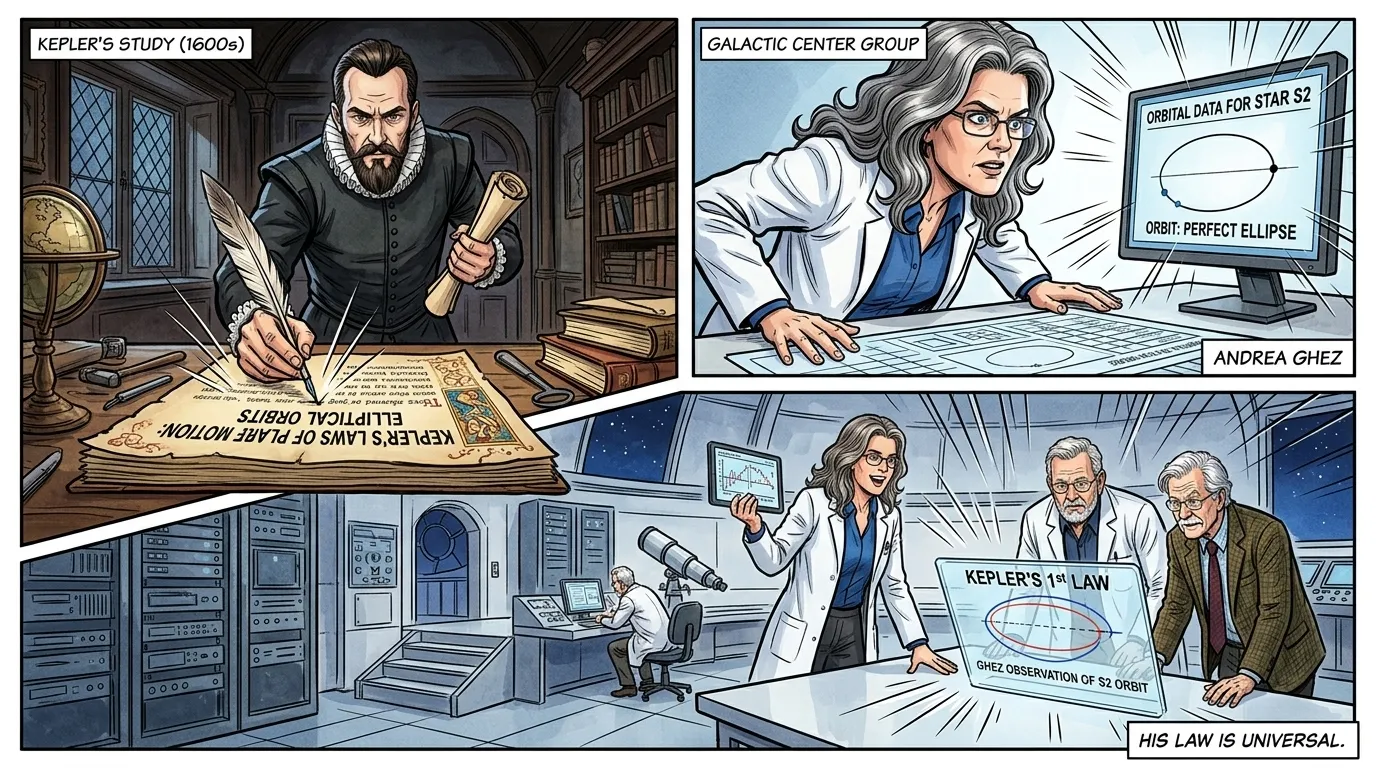
Johannes Kepler, in the early 17th century, formulated laws describing planetary motion around the Sun. Ghez's team applied these same principles to the stars orbiting Sagittarius A. The velocity and elliptical paths of stars like S2 precisely matched what would be expected if they were orbiting an object with the mass of four million Suns, concentrated into a region smaller than our solar system. This was the irrefutable evidence for an invisible, super-dense mass.
Page 7
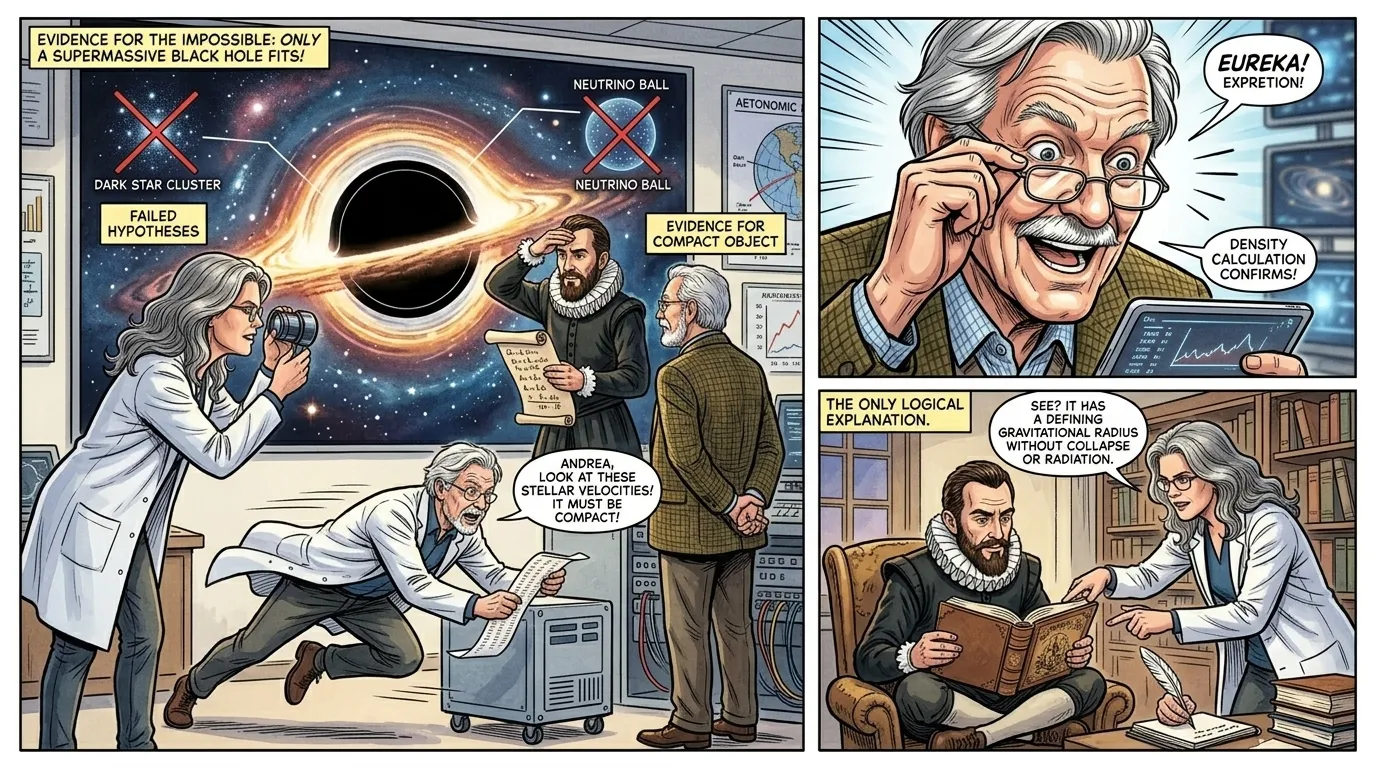
The sheer density required to pack four million solar masses into such a compact volume left only one plausible explanation: a supermassive black hole. No known conventional celestial object, such as a cluster of dark stars or a collection of neutrinos, could achieve such a mass concentration without collapsing or radiating detectable energy. The observational data rigorously excluded all alternatives, firmly establishing Sagittarius A as our galaxy's central supermassive black hole.
Page 8

Andrea Ghez's groundbreaking work, spanning decades of meticulous observation and data analysis, culminated in her being awarded the Nobel Prize in Physics in 2020, shared with Reinhard Genzel for similar independent research, and Roger Penrose for his theoretical work on black holes. This recognition underscored the profound impact of their empirical confirmation of a supermassive black hole, solidifying its place from theoretical construct to astronomical certainty.
Page 9
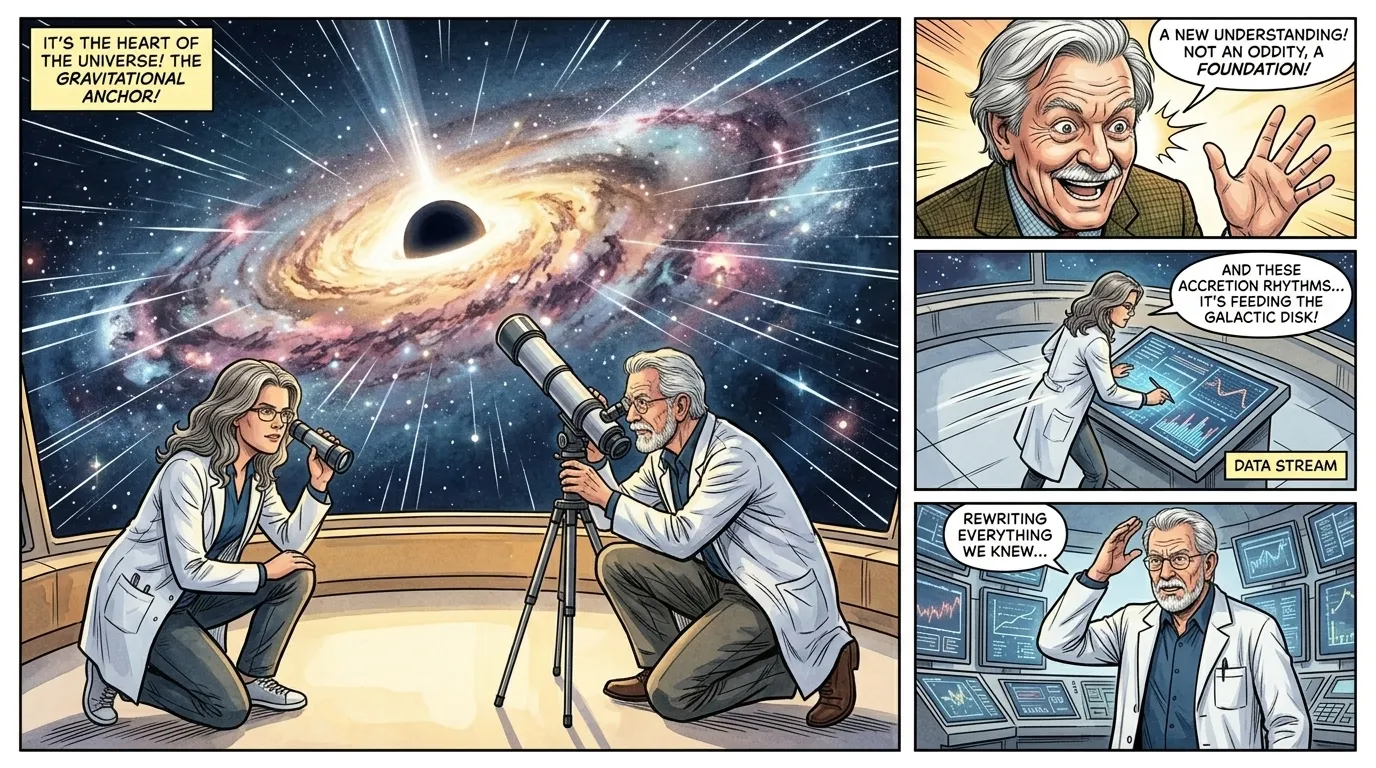
The definitive identification of Sagittarius A as a supermassive black hole profoundly reshaped our understanding of galactic evolution. It confirmed that these colossal gravitational wells are not rare oddities but fundamental components of galaxy formation, influencing the distribution of matter and energy across cosmic scales. This discovery provided a critical anchor for further research into the mysteries of active galactic nuclei and the co-evolution of black holes and their host galaxies.
Page 10
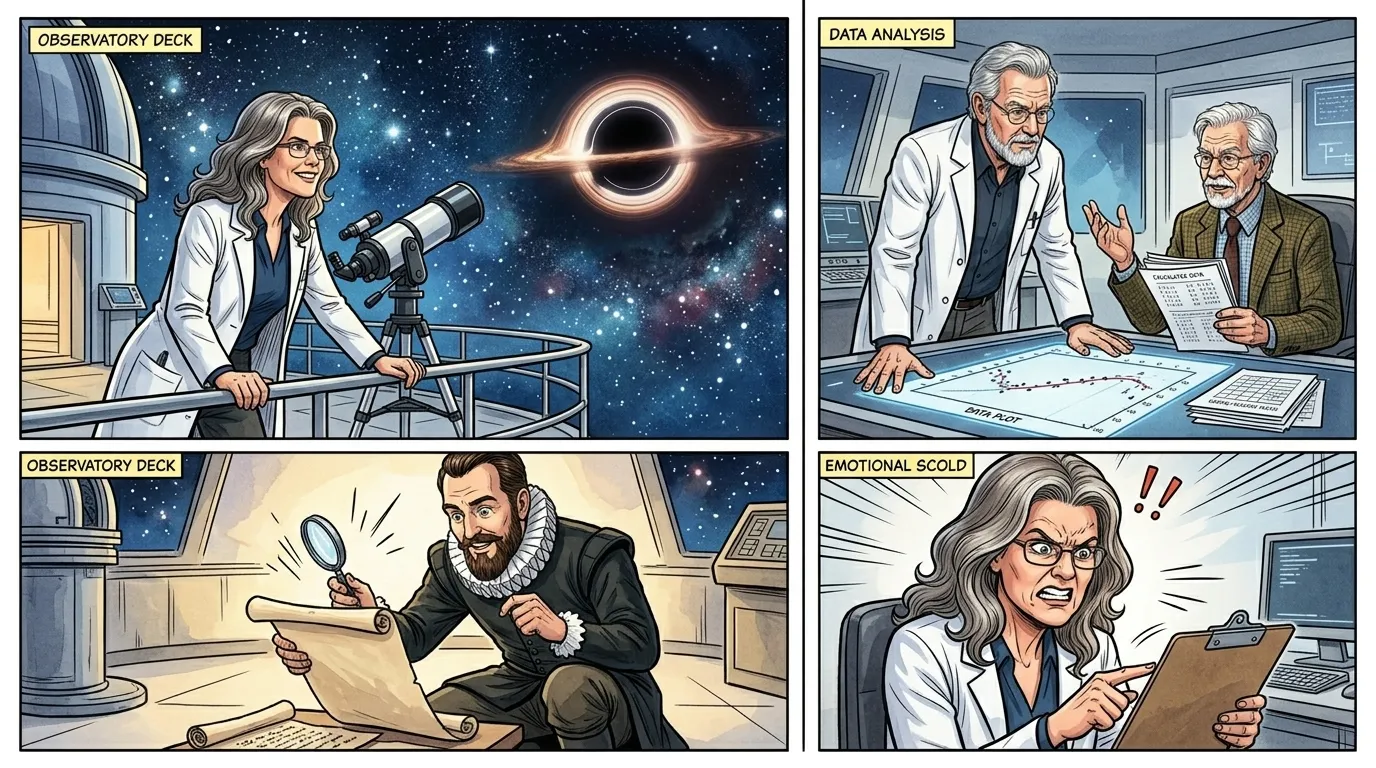
Andrea Ghez's work stands as a testament to scientific persistence and technological innovation, turning an elusive cosmic theory into an observable reality. Yet, the black hole at our galactic center continues to pose profound questions. How did it form? What happens when it consumes matter? What role do these behemoths play in the grander tapestry of the universe? Future observations, like those from the Event Horizon Telescope, promise to unveil even more intimate details of these gravitational titans, pushing the boundaries of our cosmic understanding.
About this story
- Location: Global
- Audience: general readers
Questions and answers
Read Wonder Science on your phone
Wonder Science is available on Android. Get Wonder Science on Google Play.