Antonie van Leeuwenhoek
Antonie van Leeuwenhoek — an illustrated science story, set in Global. 10 illustrated pages, free to read on Wonder Science.
Page 1
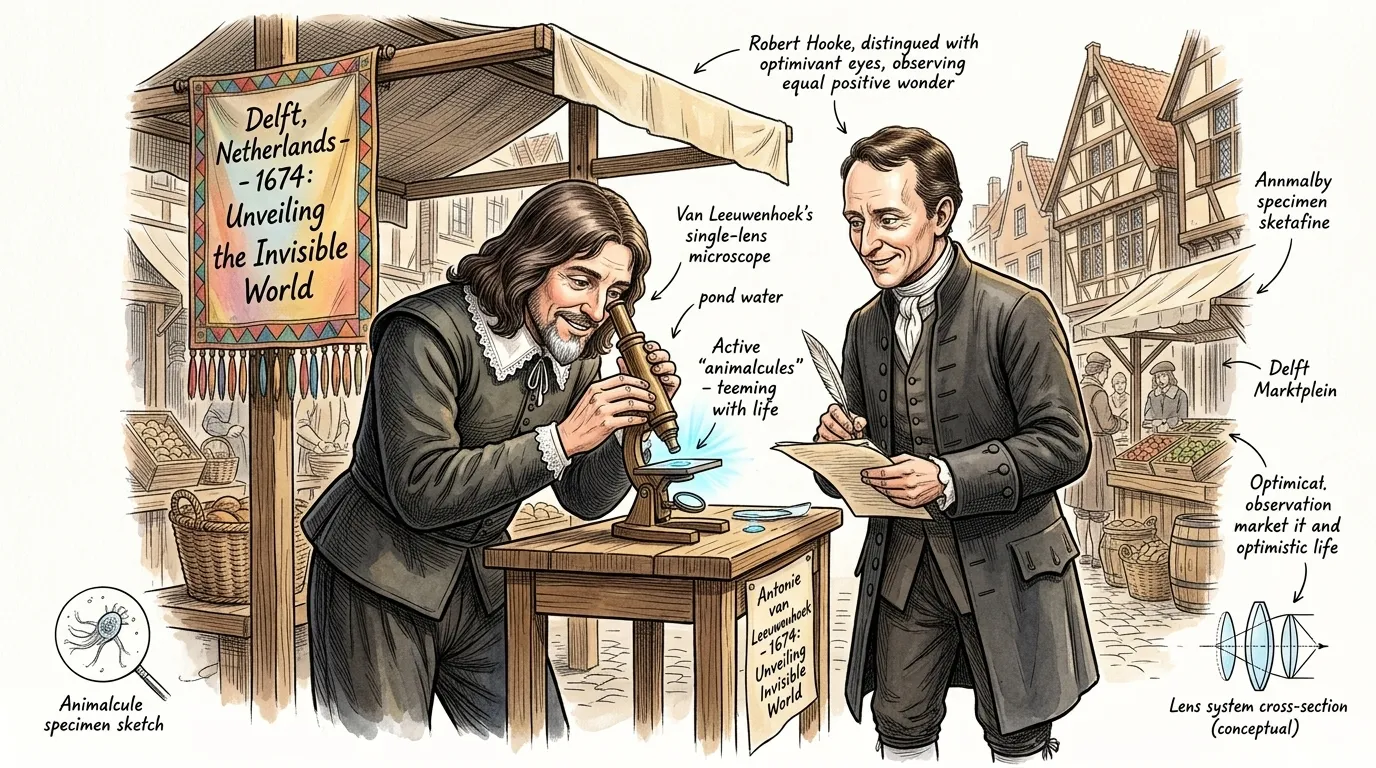
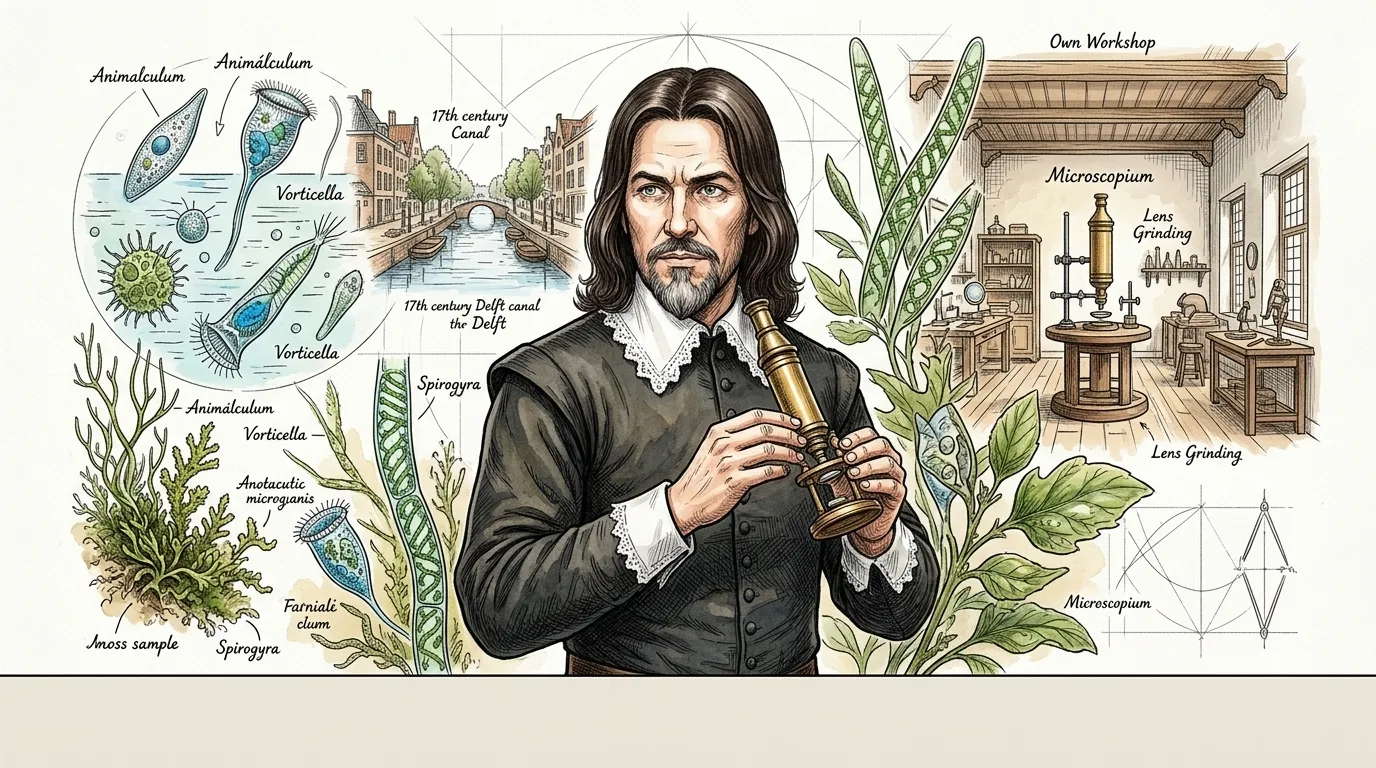
In the bustling city of Delft, Netherlands, during the late 17th century, a draper and local official embarked on a journey that would redefine the very nature of life. Antonie van Leeuwenhoek, driven by an insatiable curiosity and an unconventional skill for lens grinding, crafted microscopes far superior to any of his time. With these tiny instruments, he peered into droplets of water, seeking answers that lay hidden from the naked eye. What he discovered revolutionized human understanding, unveiling a universe of microscopic life previously beyond comprehension.\n\n Fact: Delft, Netherlands - 1674: Unveiling the Invisible World
Page 2
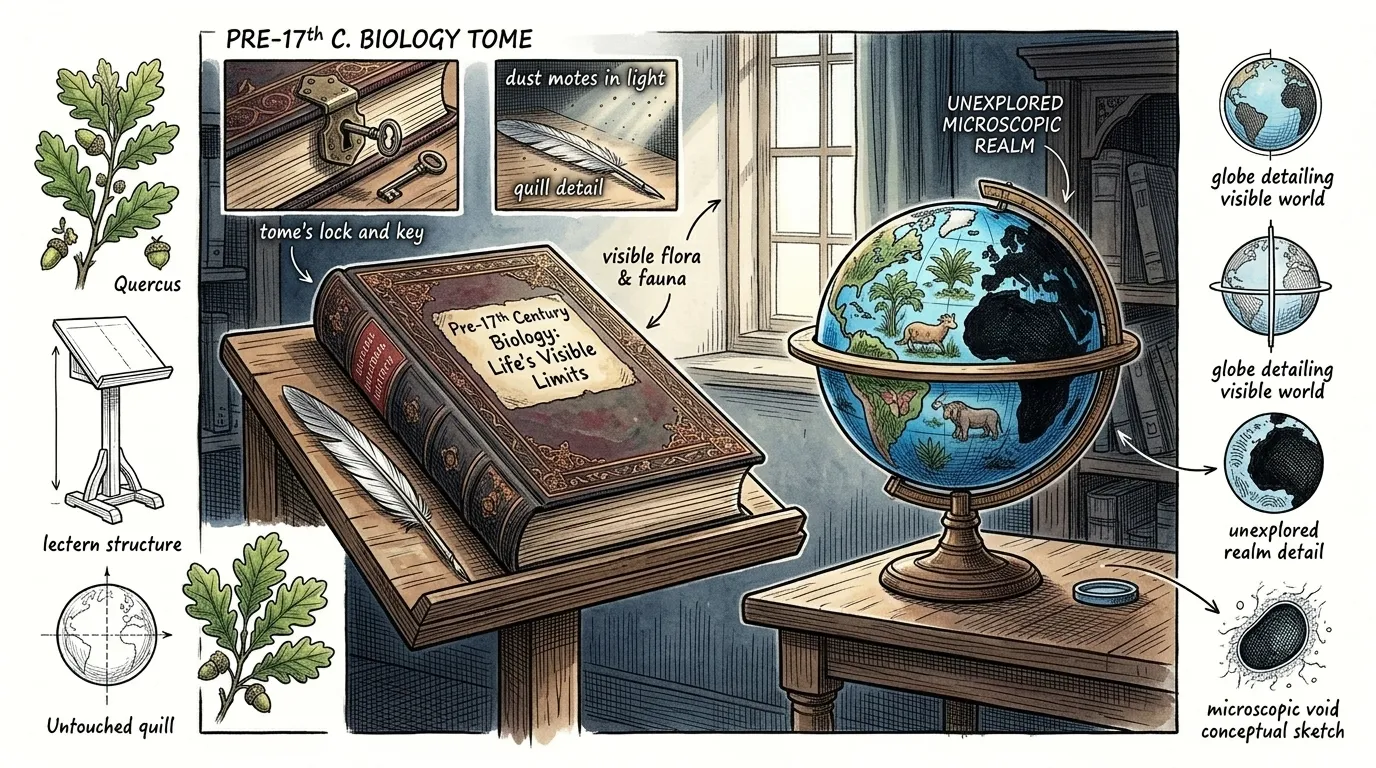
For millennia, human perception of life was limited to the macroscopic, the visible world of plants, animals, and fungi. Without tools to peer beyond the threshold of human vision, theories of existence and disease remained speculative, often rooted in superstition or observable but misinterpreted phenomena. The vast realm of organisms too small to be seen persisted as a profound mystery, a fundamental gap in humanity's biological understanding. This unchallenged view shaped medical practices and agricultural methods, hindering progress in understanding the true causes of many afflictions.\n\n Fact: Pre-17th Century Biology: Life's Visible Limits
Page 3
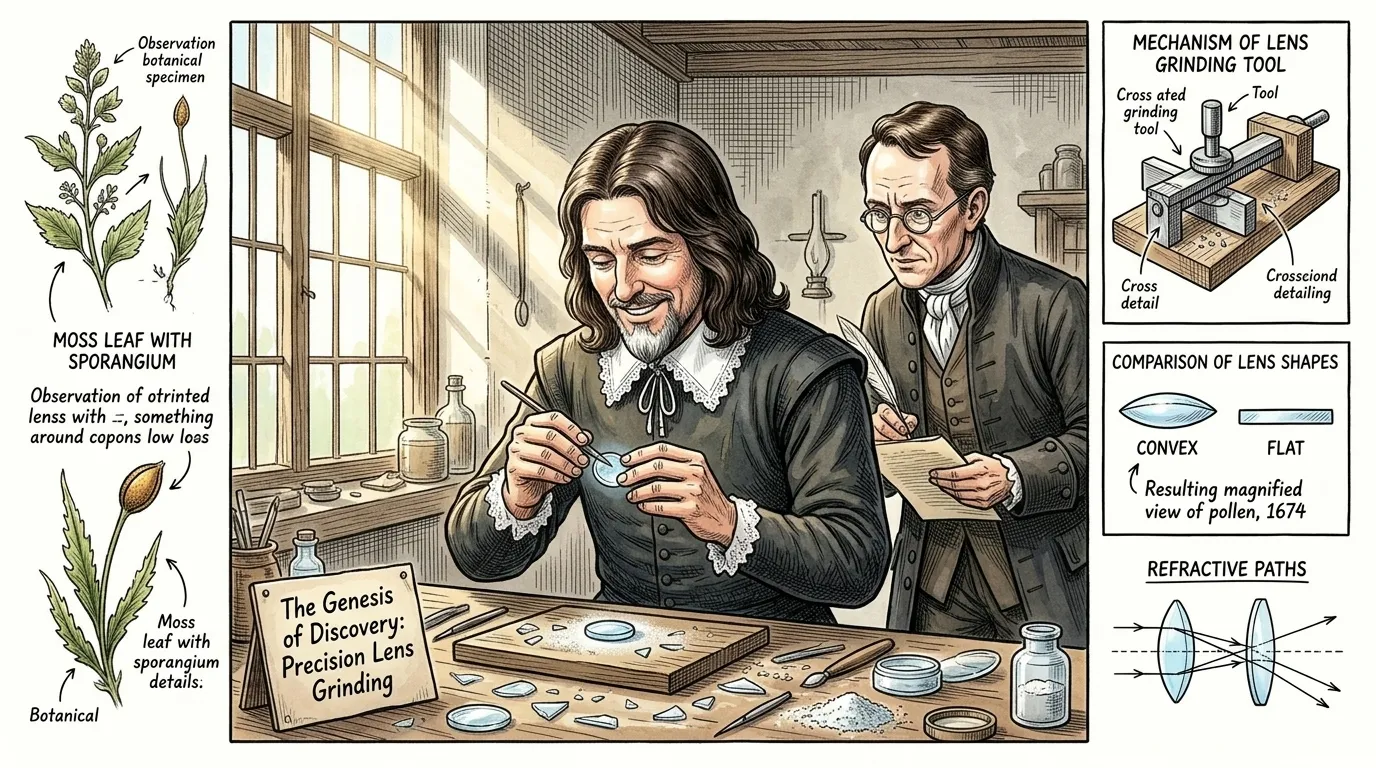
Leeuwenhoek, unlike the formally trained scientists of his era, was a prosperous textile merchant, his initial interest in lenses spurred by a desire to inspect cloth quality. However, this practical pursuit quickly transformed into an intense personal obsession, leading him to grind hundreds of tiny, extraordinarily powerful lenses from glass. Eschewing the complex compound microscopes of the time, which offered poor resolution, Leeuwenhoek championed the simple, single-lens design, meticulously crafting each instrument with unprecedented precision. This solitary dedication, far from academic circles, fostered an independent spirit of inquiry.\n\n Fact: The Genesis of Discovery: Precision Lens Grinding
Page 4
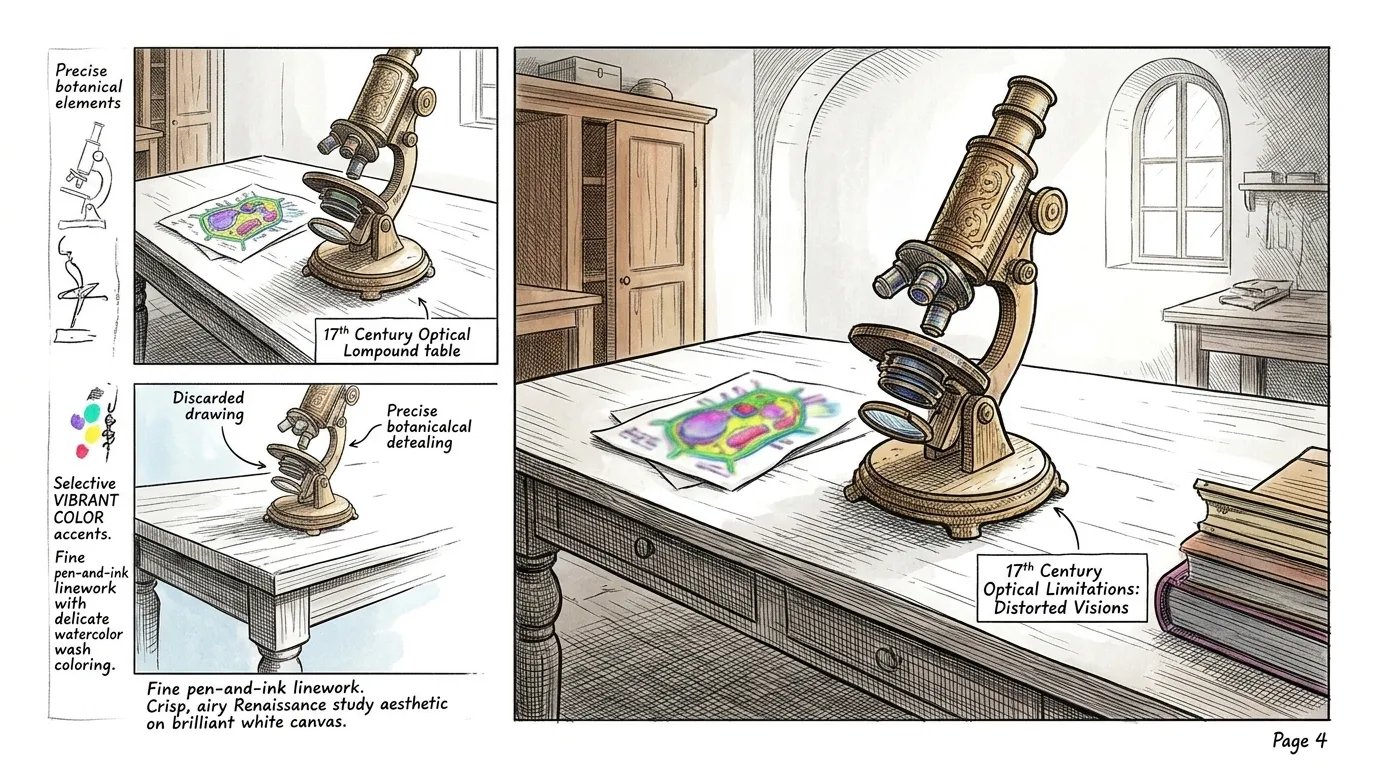
Prior to Leeuwenhoek's innovations, the few available microscopes were cumbersome compound devices, often plagued by severe optical aberrations, particularly chromatic and spherical distortions. These flaws blurred images, introduced false colors, and made it nearly impossible to discern fine details, rendering them more curiosities than scientific instruments. Such limitations meant that any truly microscopic life remained elusive, its existence undetectable amidst the murky, distorted views offered by contemporary technology. The scientific community, therefore, largely dismissed the possibility of an unseen biological realm, hindered by the very tools meant to reveal it.\n\n Fact: 17th Century Optical Limitations: Distorted Visions
Page 5
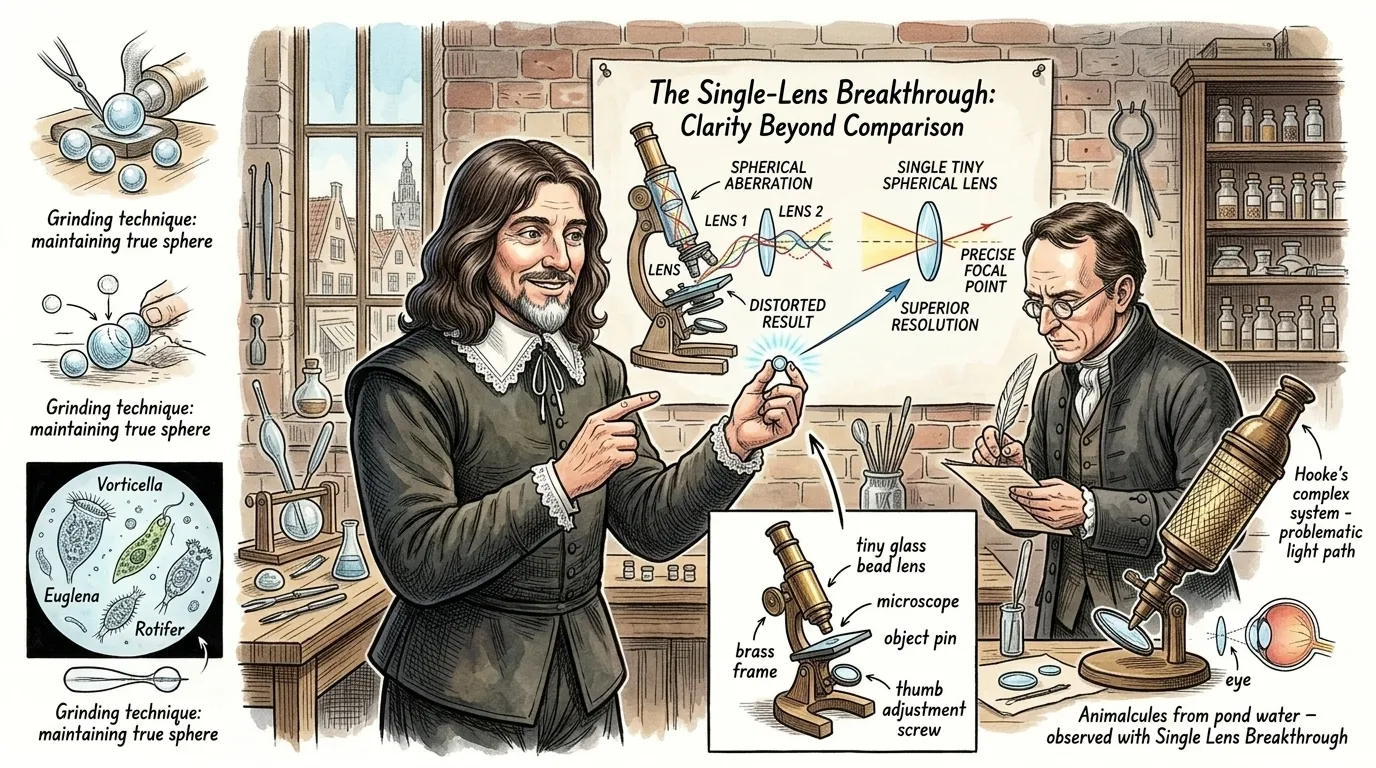
Leeuwenhoek's brilliance lay in his rejection of the prevailing, complex compound microscope design, opting instead for a deceptively simple yet profoundly effective single-lens instrument. By grinding incredibly small, near-spherical lenses, often no larger than a pinhead, he circumvented the inherent optical limitations of multi-lens systems. These miniature lenses, capable of magnifications up to 270 times, possessed a remarkably short focal length and minimized aberrations, allowing for unprecedented clarity and detail. This radical departure from conventional optics unlocked the true potential of magnification, transforming an artisan's craft into a tool for scientific revelation.\n\n Fact: The Single-Lens Breakthrough: Clarity Beyond Comparison
Page 6
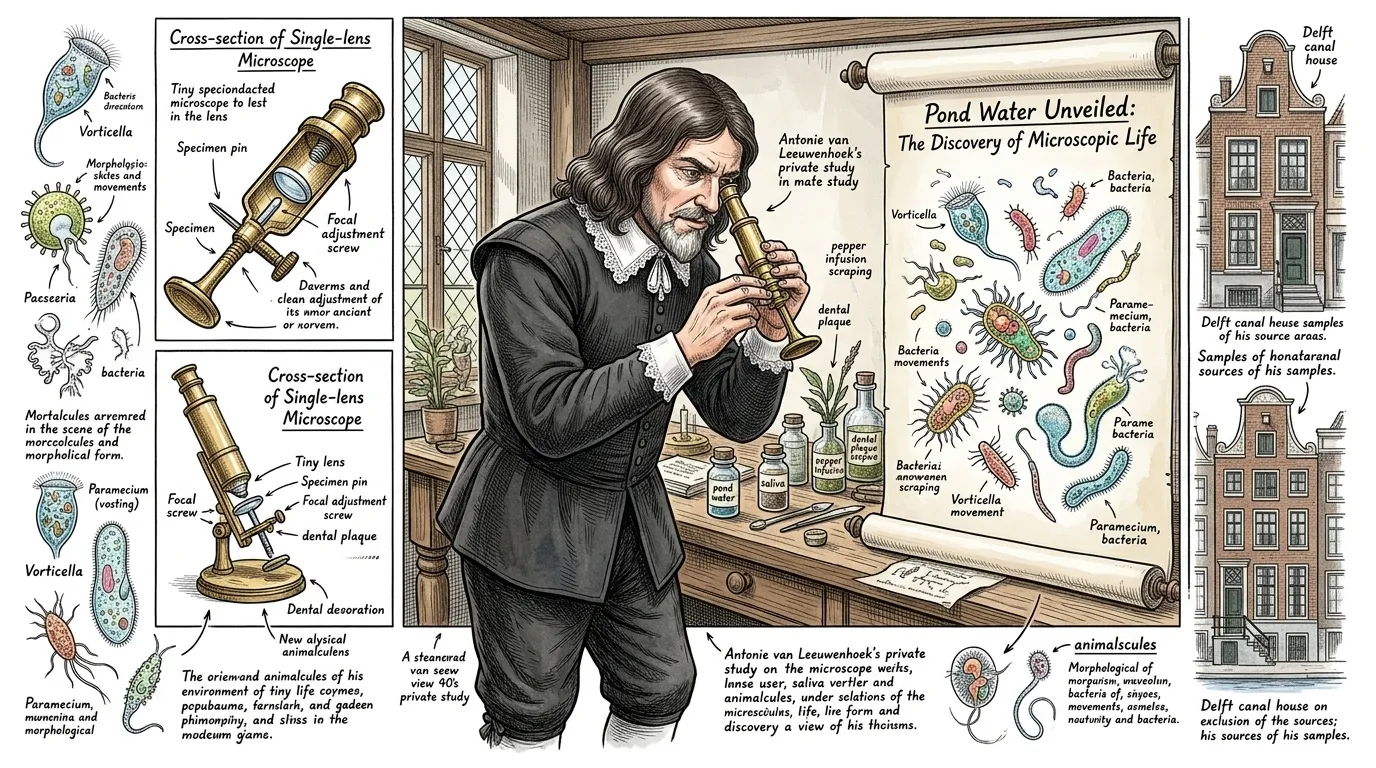
Driven by an insatiable curiosity, Leeuwenhoek turned his powerful new lenses onto everything imaginable: pond water, saliva, pepper infusions, even dental plaque. His meticulous observations, recorded in painstaking detail, consistently revealed a bewildering array of minuscule, independently moving creatures. He called them 'animalcules' – tiny animals – describing their diverse shapes, their bustling movements, and their astonishing abundance. This moment marked humanity's first direct confrontation with the microbial world, a realm teeming with life invisible to the unaided eye, challenging centuries of biological assumptions.\n\n Fact: Pond Water Unveiled: The Discovery of Microscopic Life
Page 7
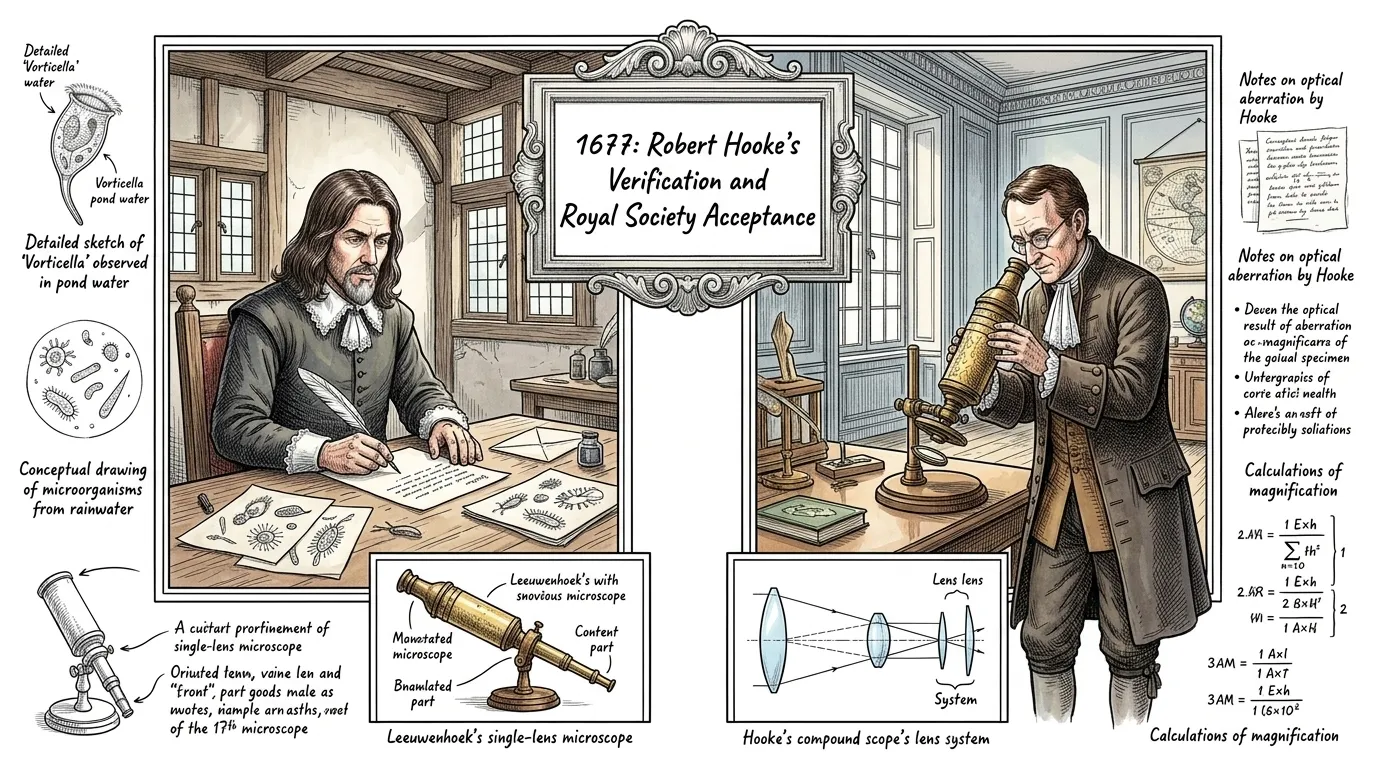
Leeuwenhoek, without formal scientific training, struggled to gain immediate acceptance for his radical findings among established academics. He communicated his discoveries through a series of vivid letters to the Royal Society of London, detailing his observations and providing exquisite drawings. Initially, the Society expressed skepticism, unable to replicate his astonishing results with their inferior instruments. However, after repeated challenges, the renowned polymath Robert Hooke, utilizing a specially commissioned microscope, finally corroborated Leeuwenhoek's observations in 1677, confirming the existence of the microbial world and validating his extraordinary claims. This validation was a critical turning point for modern science.\n\n Fact: 1677: Robert Hooke's Verification and Royal Society Acceptance
Page 8
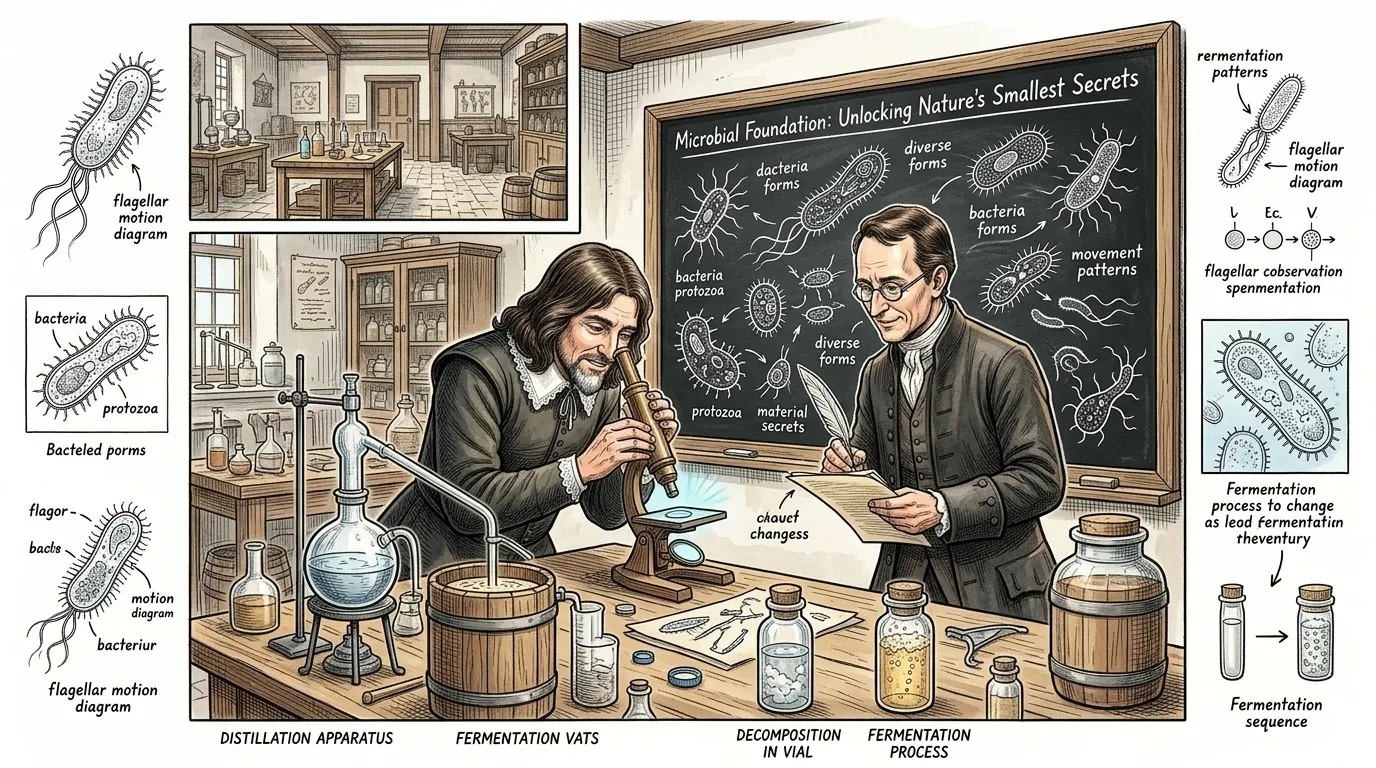
Leeuwenhoek's groundbreaking observations heralded the birth of microbiology, a completely new frontier in biological science. His 'animalcules' were later identified as bacteria and protozoa, forms of life that fundamentally underpin all ecosystems and play critical roles in health and disease. This shift from a purely macroscopic understanding to one that embraced the microscopic realm profoundly impacted subsequent scientific inquiry. It opened avenues for understanding decomposition, fermentation, and eventually, the germ theory of disease, demonstrating that invisible agents could have profound, visible effects on the world.\n\n Fact: Microbial Foundation: Unlocking Nature's Smallest Secrets
Page 9
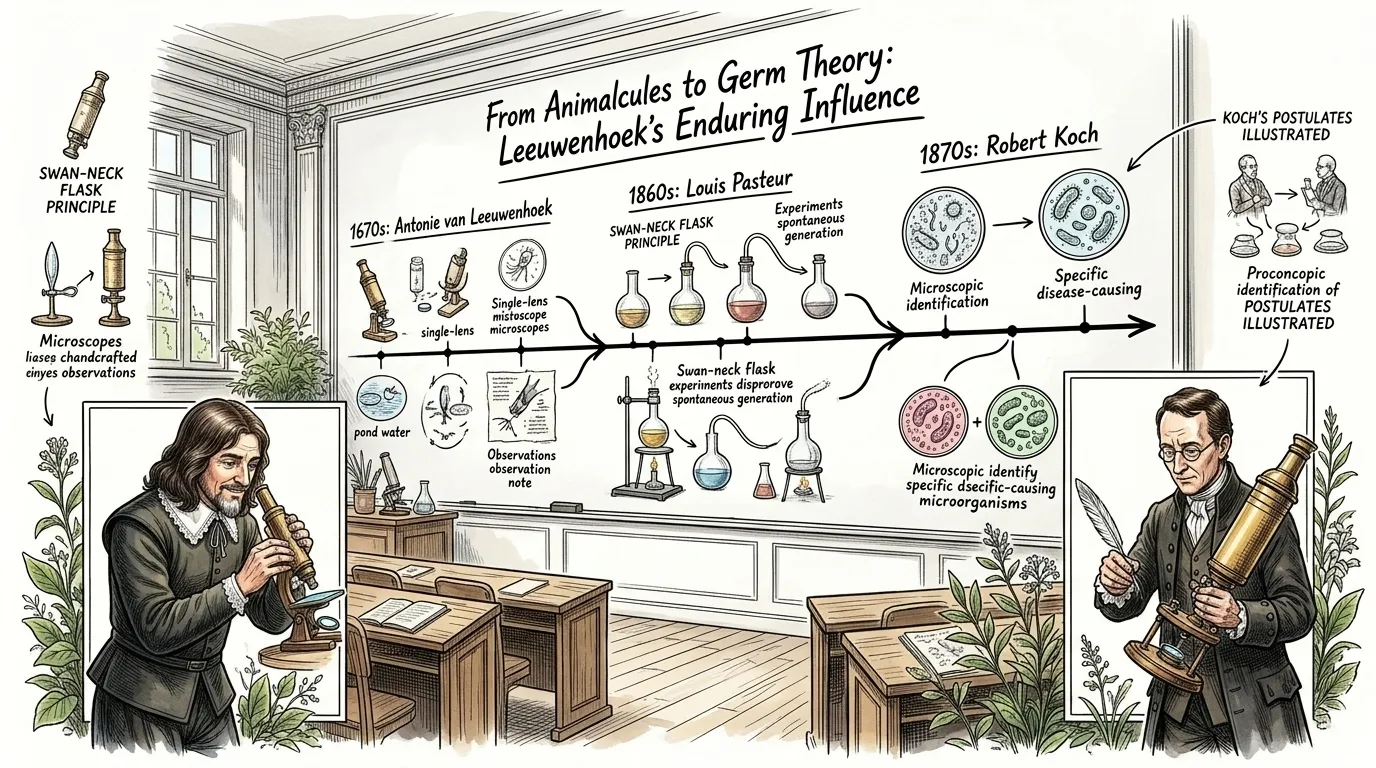
The seeds planted by Leeuwenhoek's observations blossomed centuries later into foundational scientific breakthroughs. His work provided an essential precursor to Louis Pasteur's revolutionary experiments in the 19th century, which definitively disproved spontaneous generation and established the germ theory of disease. Robert Koch further built upon this, identifying specific microorganisms as the causative agents of diseases like anthrax and tuberculosis, fundamentally transforming medicine and public health. Leeuwenhoek's raw discoveries, driven by sheer curiosity, laid the indelible groundwork for modern bacteriology, immunology, and infectious disease control, saving countless lives.\n\n Fact: From Animalcules to Germ Theory: Leeuwenhoek's Enduring Influence
Page 10
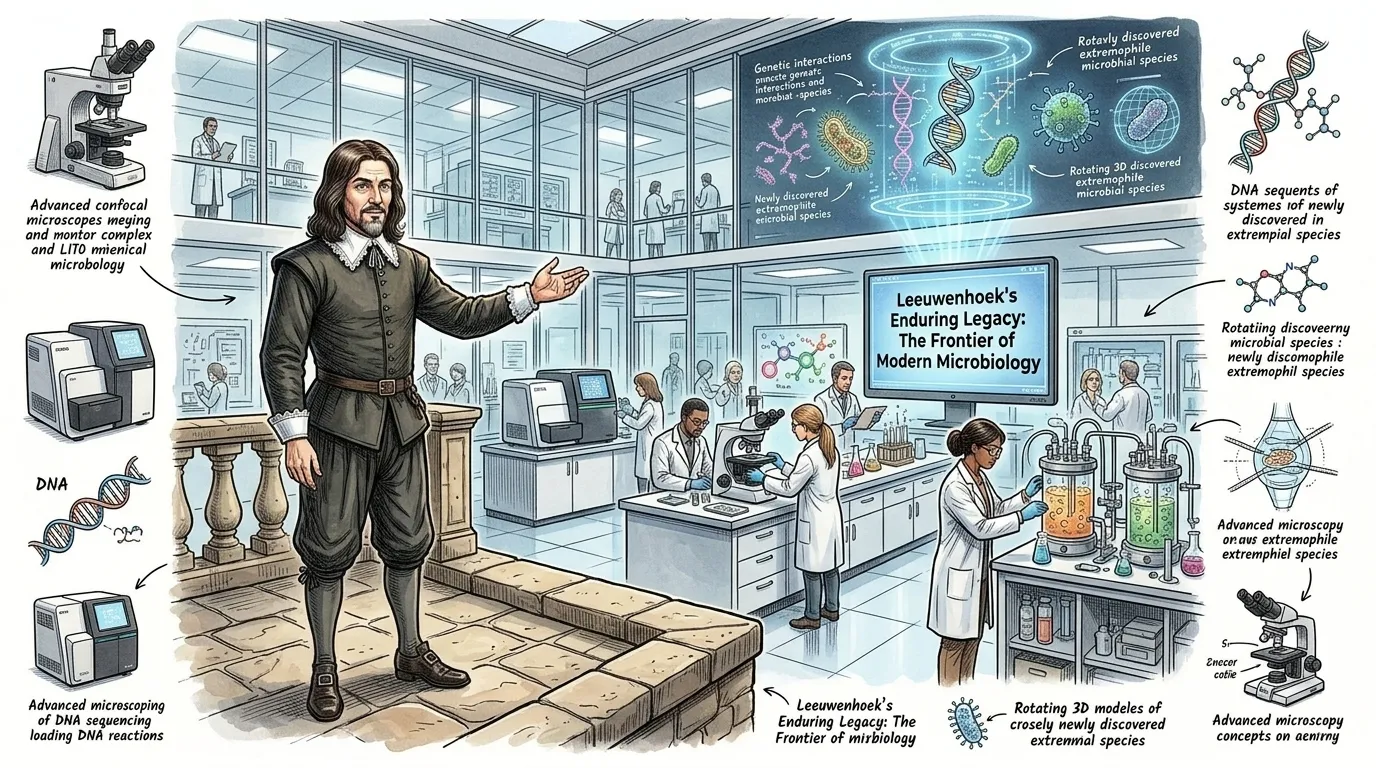
Antonie van Leeuwenhoek's audacious leap into the microscopic realm fundamentally expanded humanity's self-perception, revealing that life was far more diverse and ubiquitous than ever imagined. His legacy extends beyond historical discovery; it is a testament to the power of meticulous observation and unbridled curiosity. Today, the field of microbiology continues to evolve, constantly uncovering new microbial species, understanding their complex genetic interactions, and harnessing their potential in medicine, biotechnology, and environmental science. Leeuwenhoek's pioneering spirit remains a guiding light, reminding us that even in the smallest corners, boundless wonders await discovery.\n\n Fact: Leeuwenhoek's Enduring Legacy: The Frontier of Modern Microbiology
About this story
- Location: Global
- Audience: general readers
Questions and answers
Read Wonder Science on your phone
Wonder Science is available on Android. Get Wonder Science on Google Play.