Brian Cox
Brian Cox — an illustrated science story, set in Global. 10 illustrated pages, free to read on Wonder Science.
Page 1
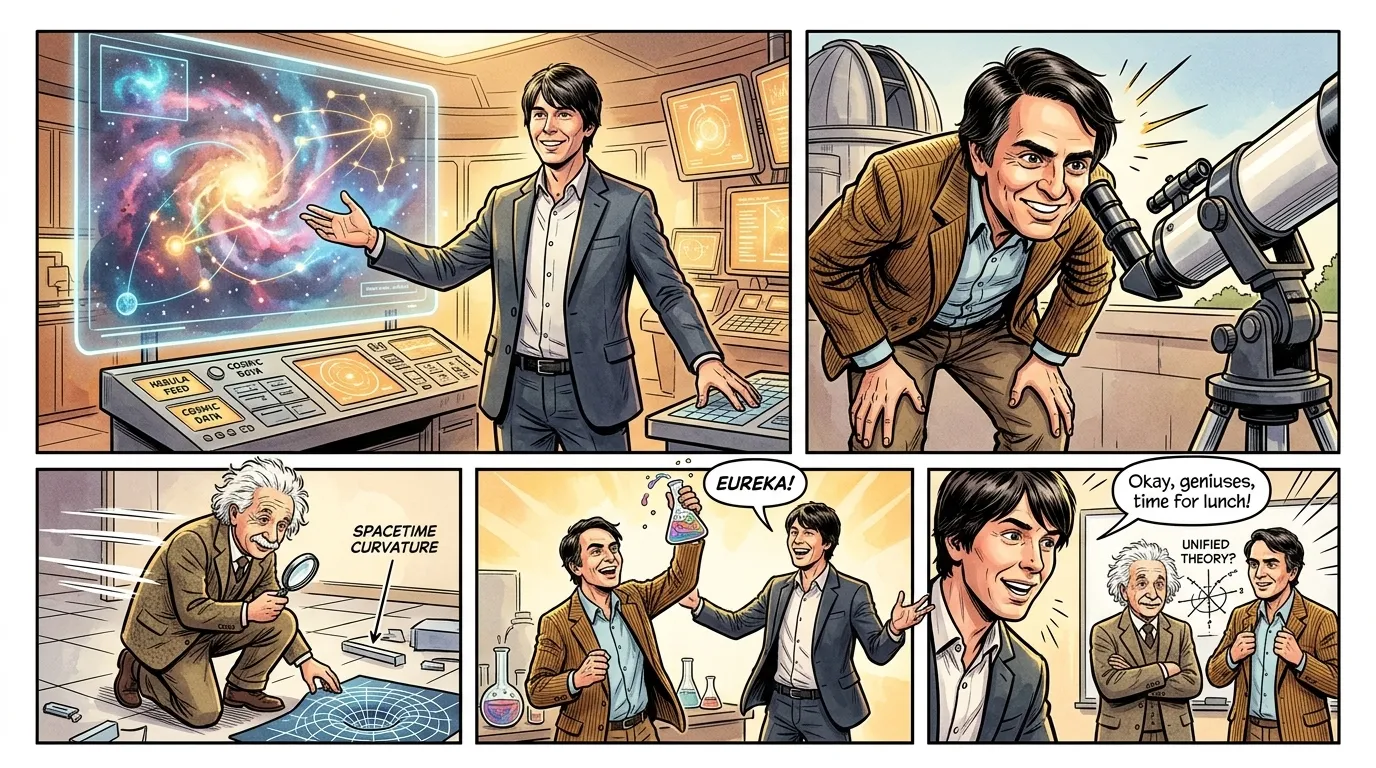
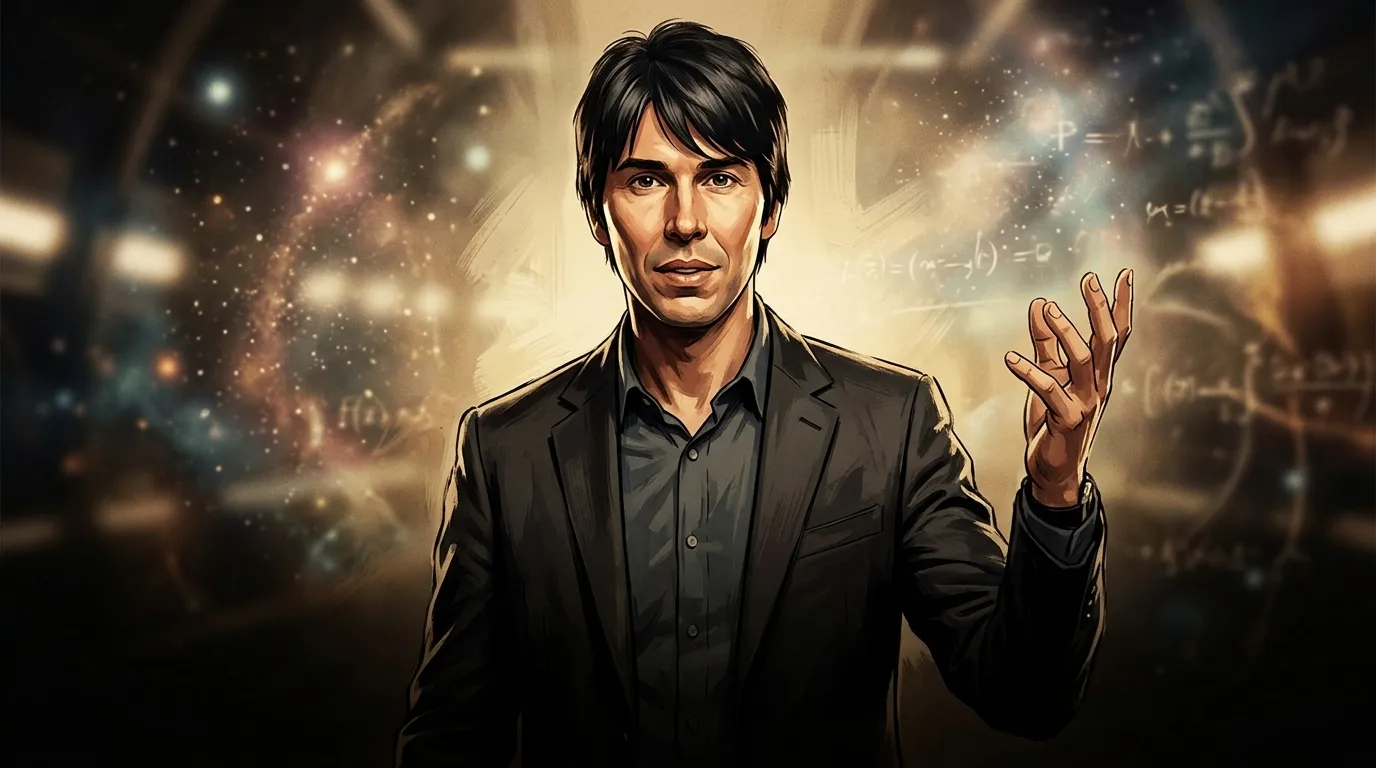
At the heart of the 21st century's scientific landscape stands Professor Brian Cox, a physicist whose unique gift for bridging the profound with the poetic has captivated a global audience. From the colossal experiments at CERN to the farthest reaches of observable space, Cox unpacks the universe's most perplexing questions. He invites us to confront our cosmic insignificance and, paradoxically, our profound connection to the very fabric of existence, demonstrating how our curiosity propels the enduring quest for knowledge across space and time.
Page 2
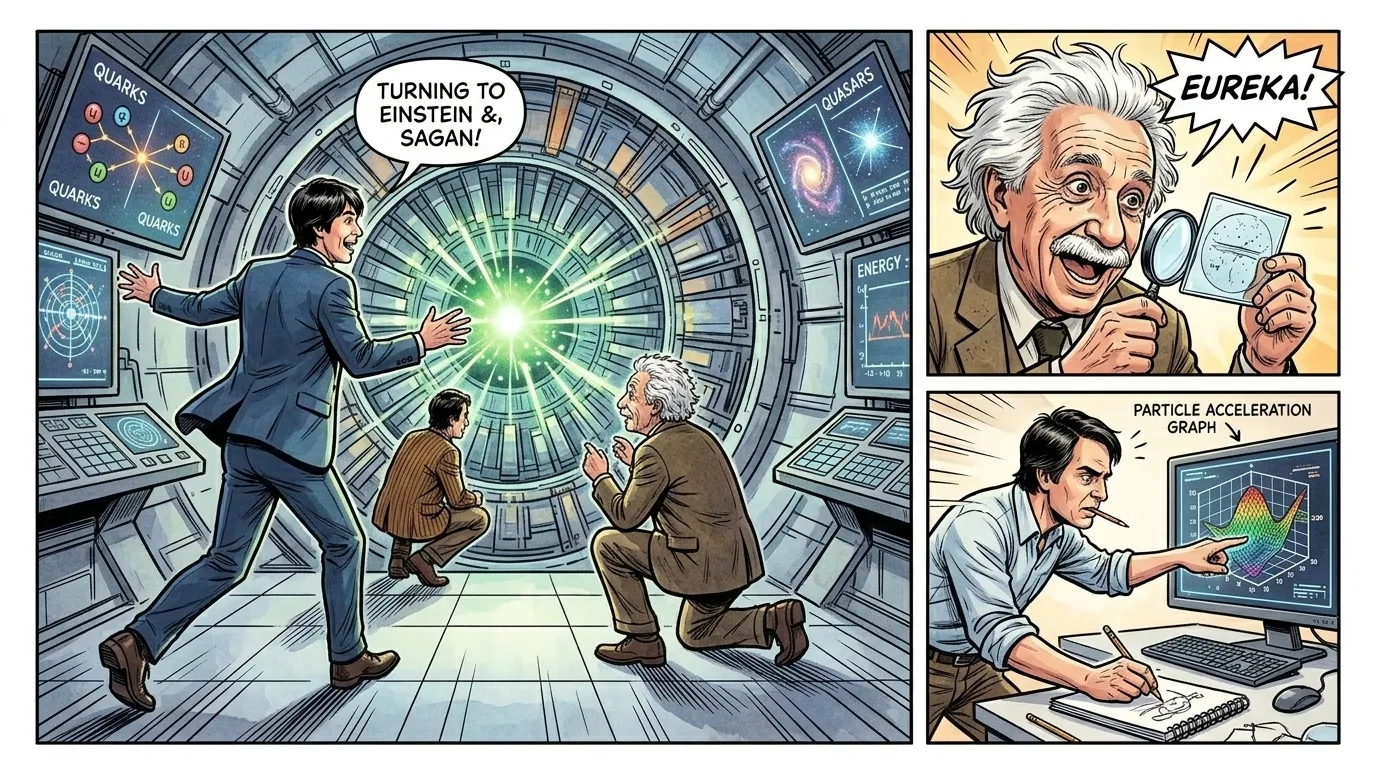
Before enchanting millions with cosmology, Brian Cox was immersed in the microscopic violence of particle physics. His work as a research fellow at CERN, the European Organization for Nuclear Research, positioned him at the vanguard of humanity's deepest probe into matter itself. Here, in the colossal tunnels of the Large Hadron Collider, particles are accelerated to nearly the speed of light, crashing into one another in controlled explosions. This allows physicists to recreate the conditions of the early universe, uncovering the fundamental constituents and forces that govern everything we observe, from quarks to distant quasars.
Page 3
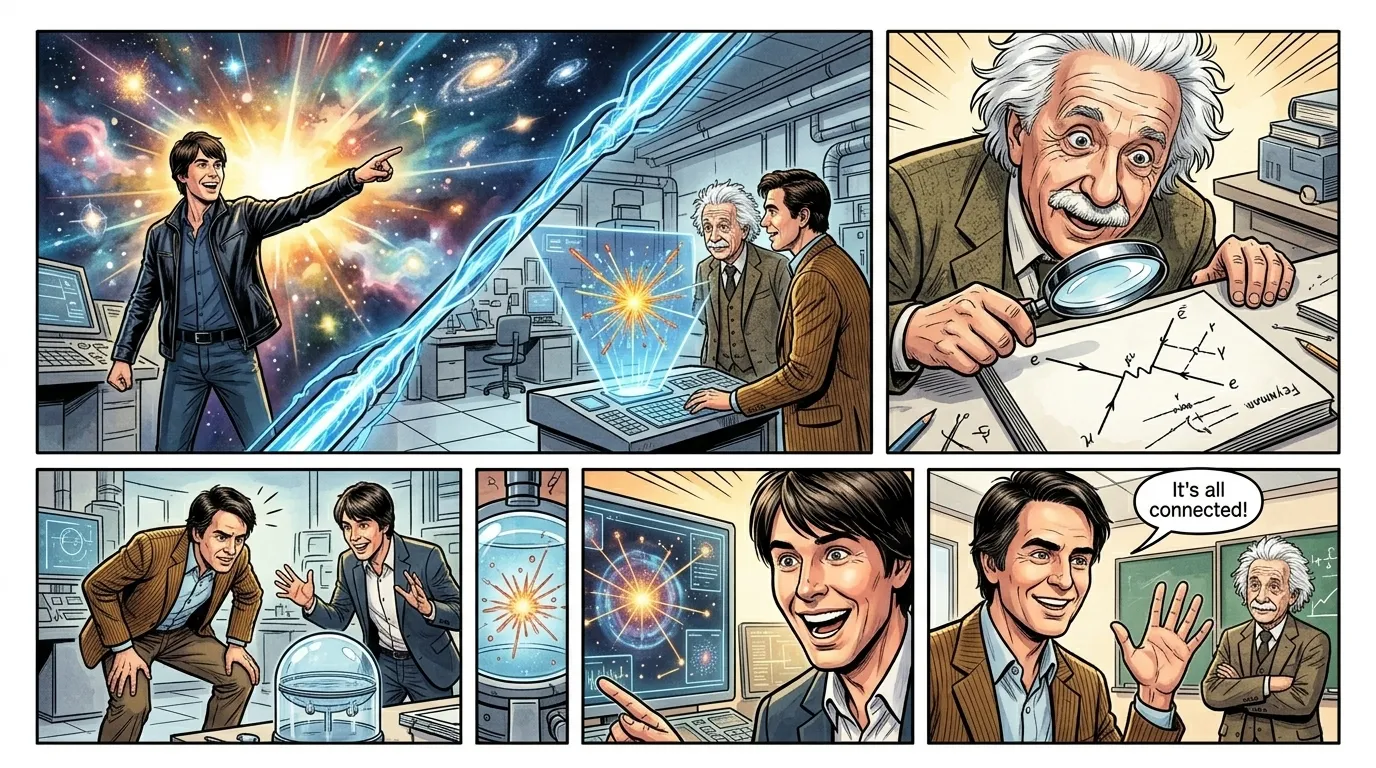
The insights gleaned from particle accelerators are not merely academic; they are the bedrock for understanding the cosmos. The Big Bang theory posits an incredibly hot, dense state from which the universe expanded, cooling and allowing fundamental particles to coalesce. Brian Cox has masterfully articulated how the ephemeral, short-lived particles produced in the LHC mirror the fleeting moments after the Big Bang. This connection reveals how the properties of these tiny particles ultimately dictated the formation of stars, galaxies, and the large-scale structures we see in the universe today.
Page 4
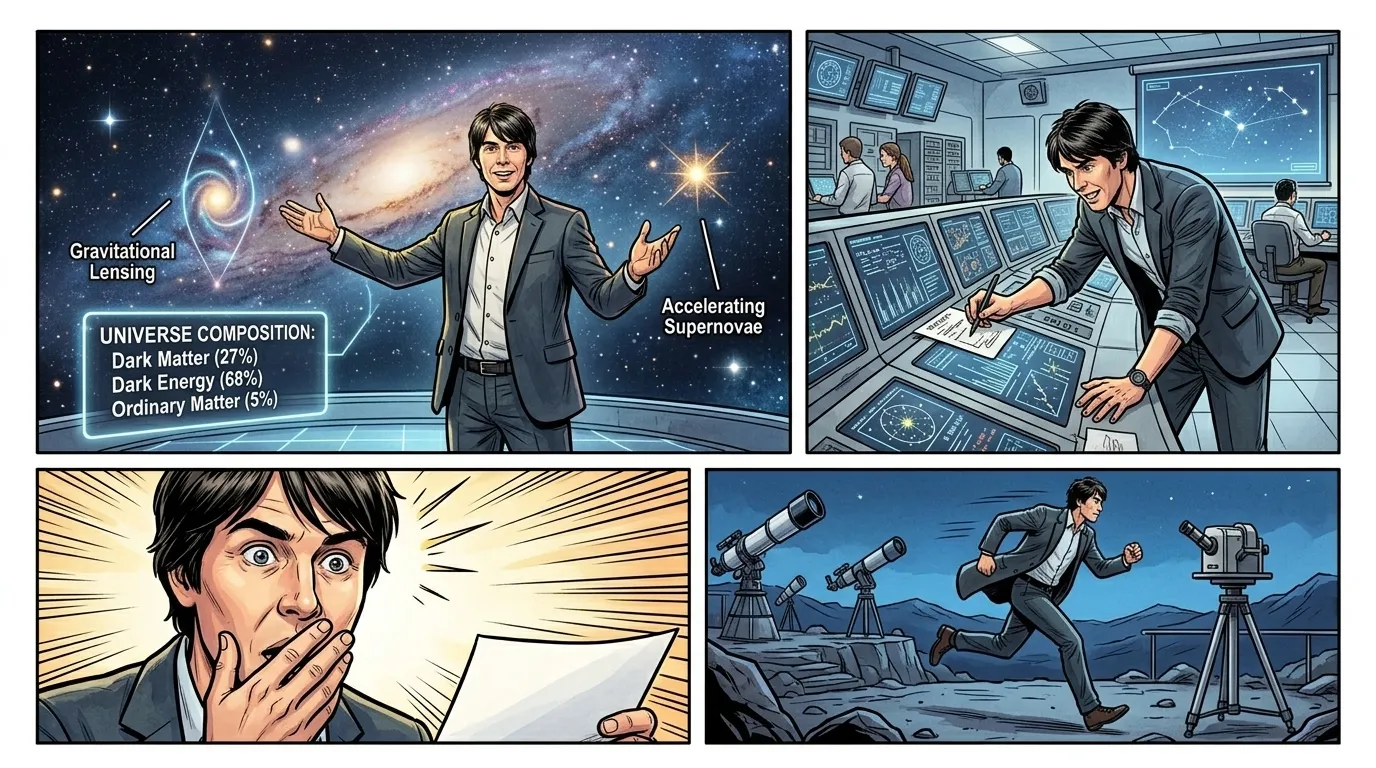
Despite significant progress, most of the universe remains a profound enigma. Over 95% of its total mass-energy is composed of dark matter and dark energy, invisible forces that dictate galactic rotation and cosmic acceleration. Brian Cox often highlights this humbling reality: that our universe is far stranger than our everyday senses perceive. He guides audiences through the observational evidence for these mysterious components, from gravitational lensing that warps light around unseen masses to the accelerating expansion detected by distant supernovae, underscoring the vastness of what we still don't comprehend.
Page 5
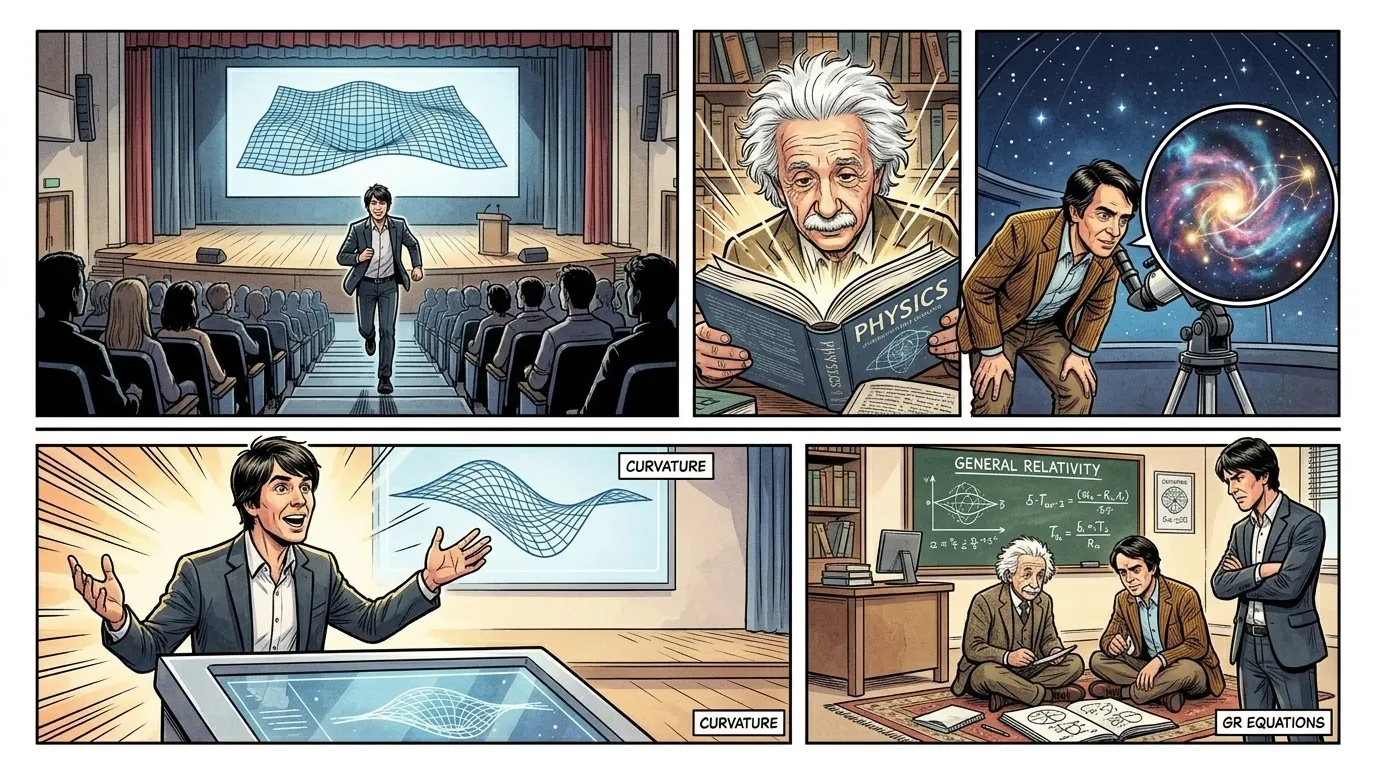
Central to modern cosmology is Albert Einstein's General Theory of Relativity, which revolutionized our understanding of gravity. Far from a mere force, gravity, in Einstein's view, is the curvature of spacetime itself, warped by mass and energy. Brian Cox often uses accessible analogies to explain this complex concept, illustrating how massive objects like planets and stars create 'dips' in the cosmic fabric, guiding the paths of everything around them. This elegant theory underpins our understanding of black holes, neutron stars, and the very geometry of the universe, shaping the course of space exploration and observation.
Page 6
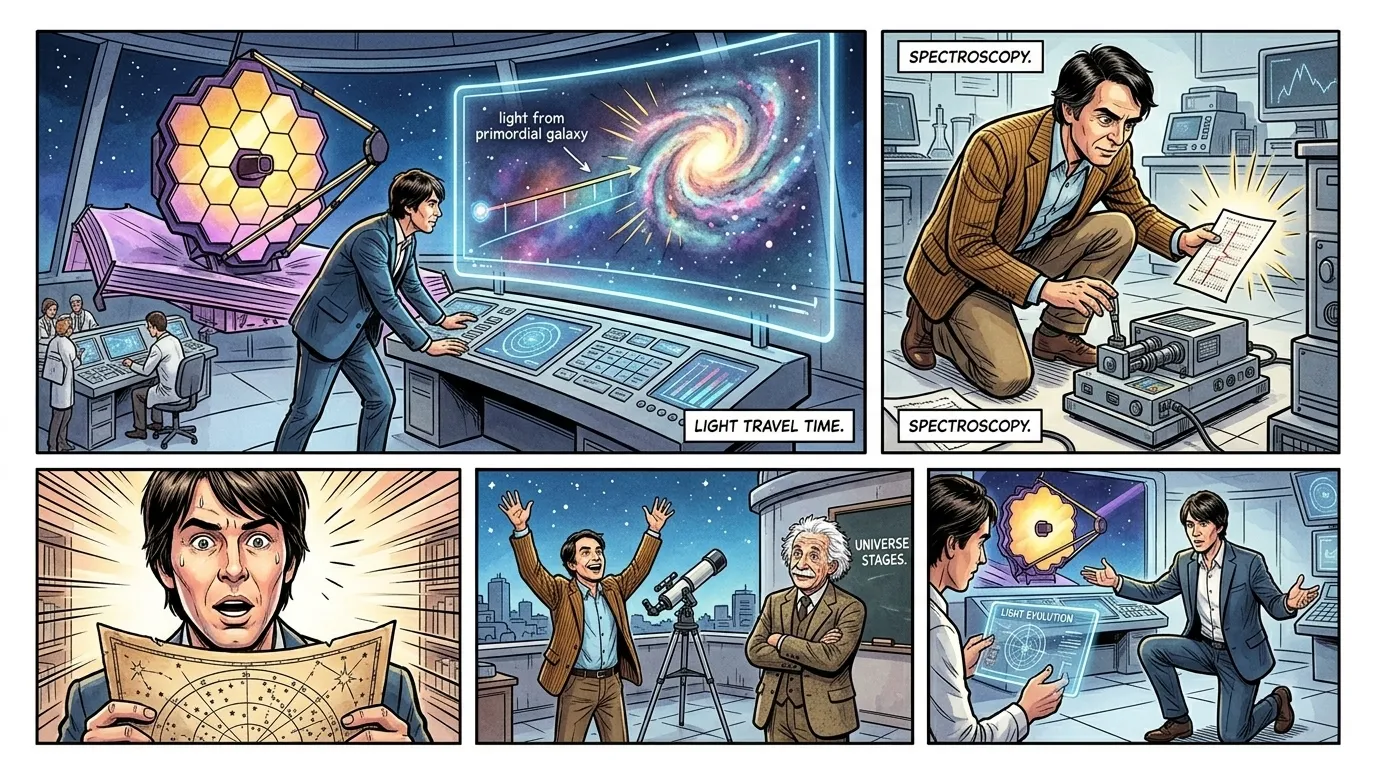
One of the most mind-bending aspects of astronomy is that looking into deep space is inherently looking back in time. Because light travels at a finite speed—approximately 299,792 kilometers per second—the light from a galaxy millions of light-years away has taken millions of years to reach us. Brian Cox frequently emphasizes this incredible reality: every star we see, every distant nebula, is a snapshot from the past. This cosmic time machine allows scientists to observe the universe at different evolutionary stages, from its fiery infancy to the formation of its most ancient structures.
Page 7
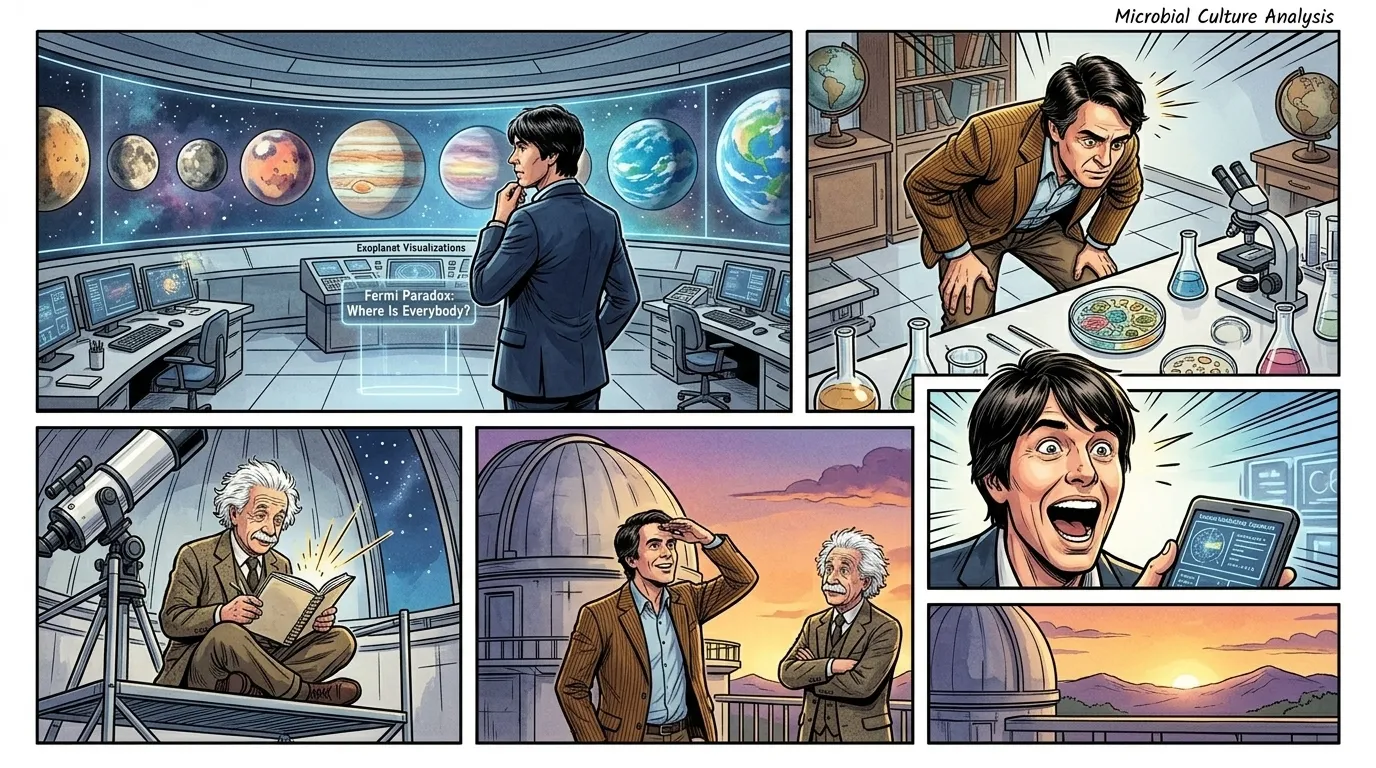
Perhaps the most compelling question for space exploration is whether we are alone in the universe. Astrobiology, the study of life's origins and existence beyond Earth, seeks to answer this. Brian Cox has passionately explored the implications of exoplanet discoveries by missions like Kepler and the detailed observations of the James Webb Space Telescope. He challenges us to consider the vastness of potentially habitable worlds, discussing the 'Fermi Paradox' – the contradiction between the high probability of extraterrestrial life and the lack of observable evidence, pushing us to refine our search and re-evaluate what 'life' might truly entail.
Page 8
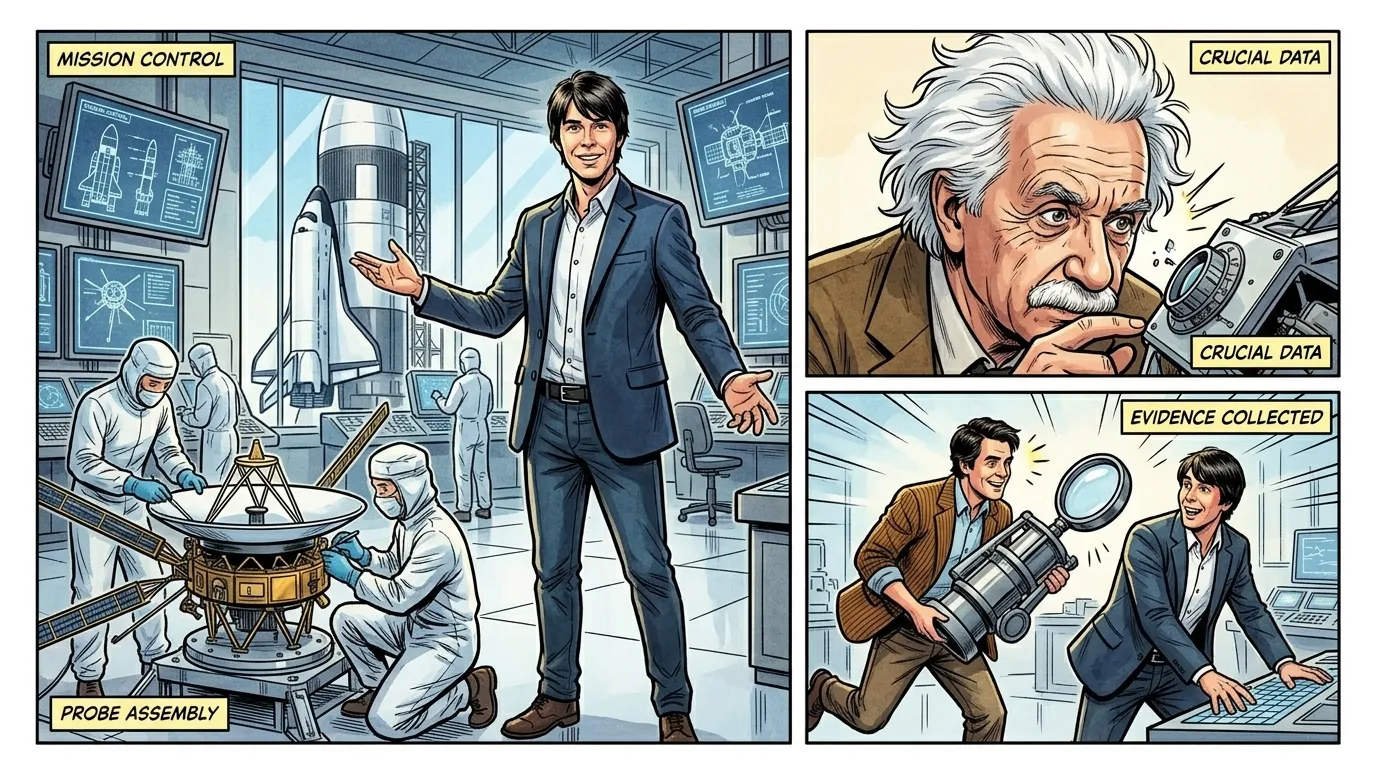
The audacious pursuit of cosmic knowledge is inseparable from the incredible feats of engineering that make it possible. From the colossal rockets that propel payloads beyond Earth's gravity to the precision instruments on distant probes like Voyager and Perseverance, technology is our bridge to the unknown. Brian Cox frequently emphasizes that theoretical physics and observational astronomy rely entirely on human ingenuity, on the thousands of engineers and technicians who transform abstract ideas into tangible machines. These tools are not just extensions of our senses; they are the physical manifestation of our insatiable desire to answer those profound questions about the universe we first encountered.
Page 9
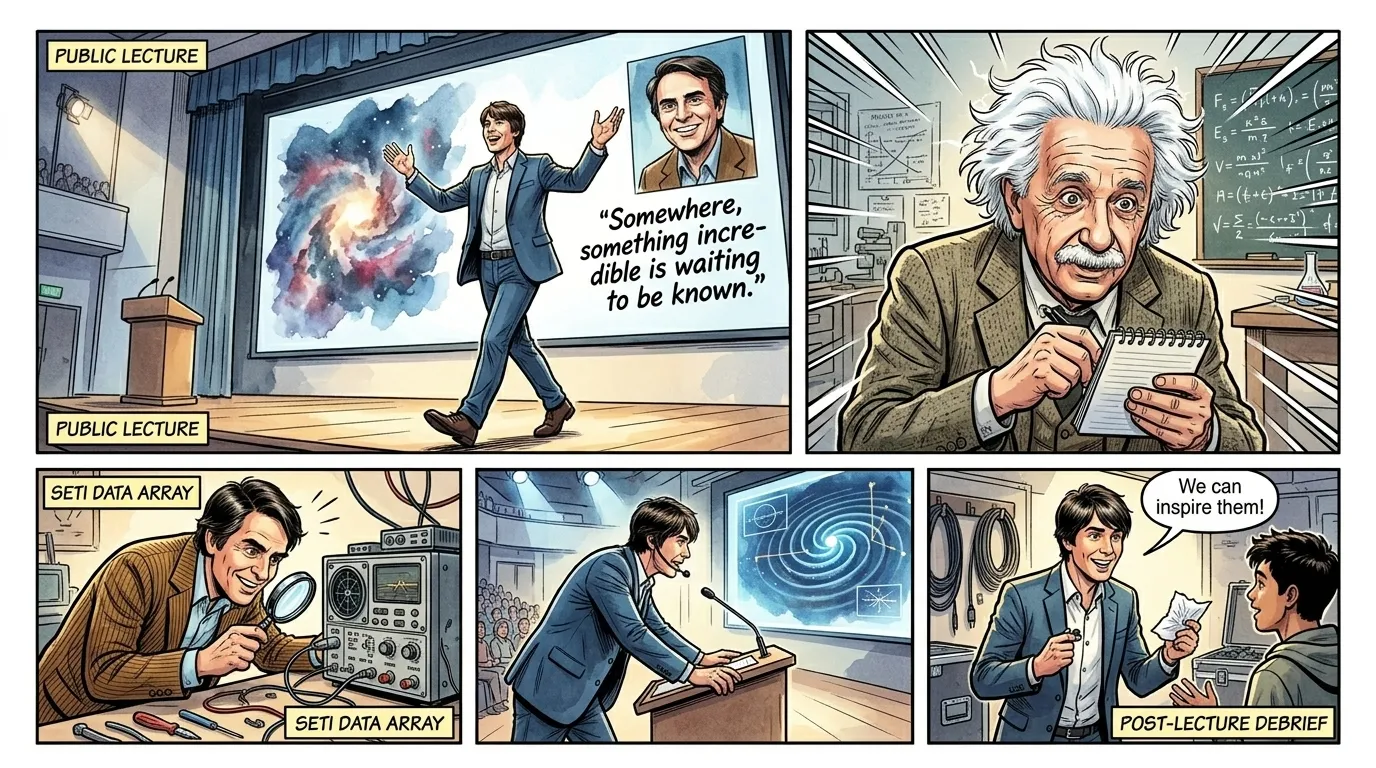
Beyond his scientific research, Brian Cox's most significant contribution might be his unparalleled ability to inspire. Through his groundbreaking BBC documentaries and public lectures, he translates the most abstract concepts of physics and cosmology into vivid, emotionally resonant narratives. He often reminds us that science is not a niche pursuit but a universal human endeavor. As Carl Sagan, another titan of science communication, famously articulated, "Somewhere, something incredible is waiting to be known." Cox embodies this very spirit, igniting curiosity in millions and motivating a new generation to pursue scientific careers and embrace the wonder of discovery.
Page 10
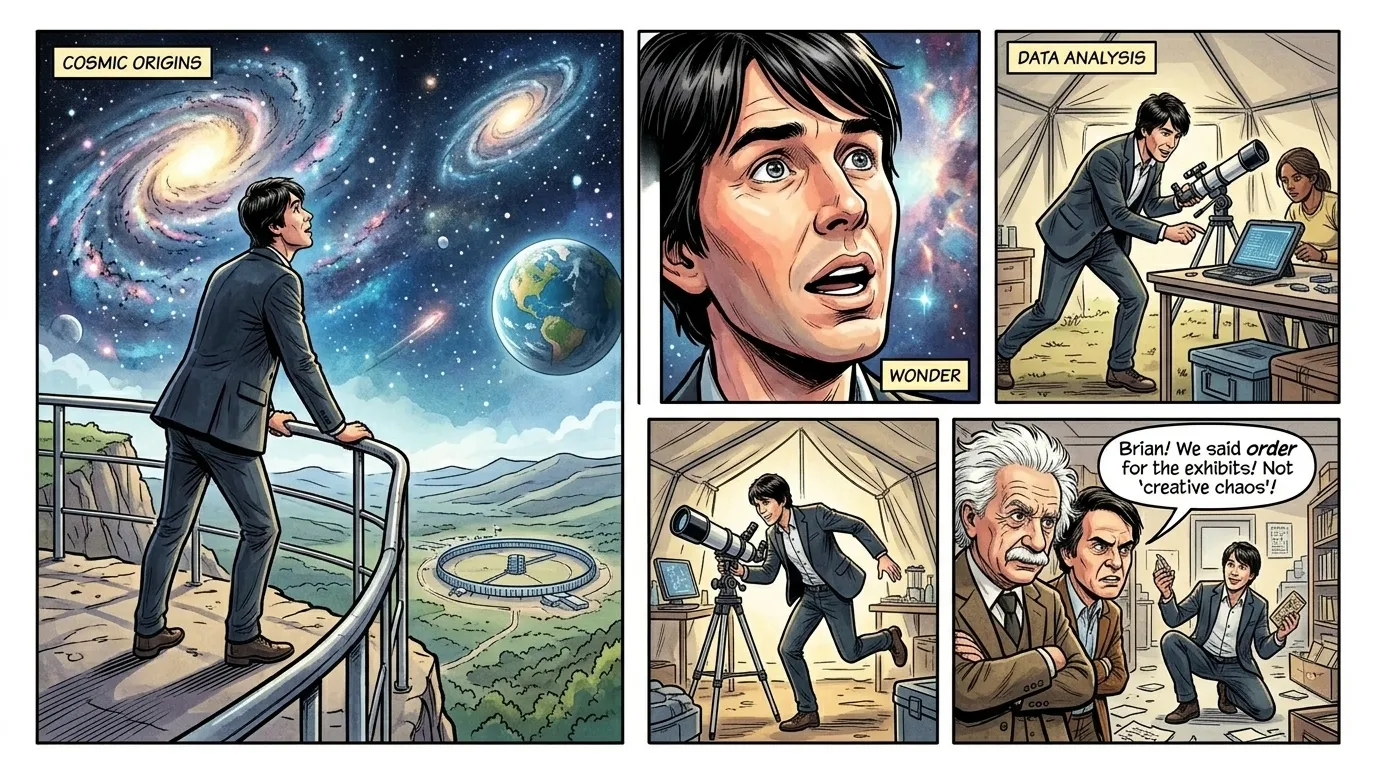
Brian Cox's legacy extends far beyond his direct scientific contributions, weaving together the profound with the accessible. He has firmly cemented the idea that an understanding of physics and astronomy is not just for specialists, but for everyone seeking to comprehend their place in the universe. His work underscores that while humanity has uncovered astonishing truths about cosmic origins, dark matter, and the search for extraterrestrial life, the most compelling questions remain unanswered. The journey of exploration, fueled by relentless curiosity and powered by human ingenuity, continues, with countless wonders still unfolding in the vast cosmic tapestry.
About this story
- Location: Global
- Audience: general readers
Questions and answers
Read Wonder Science on your phone
Wonder Science is available on Android. Get Wonder Science on Google Play.