Buzz Aldrin
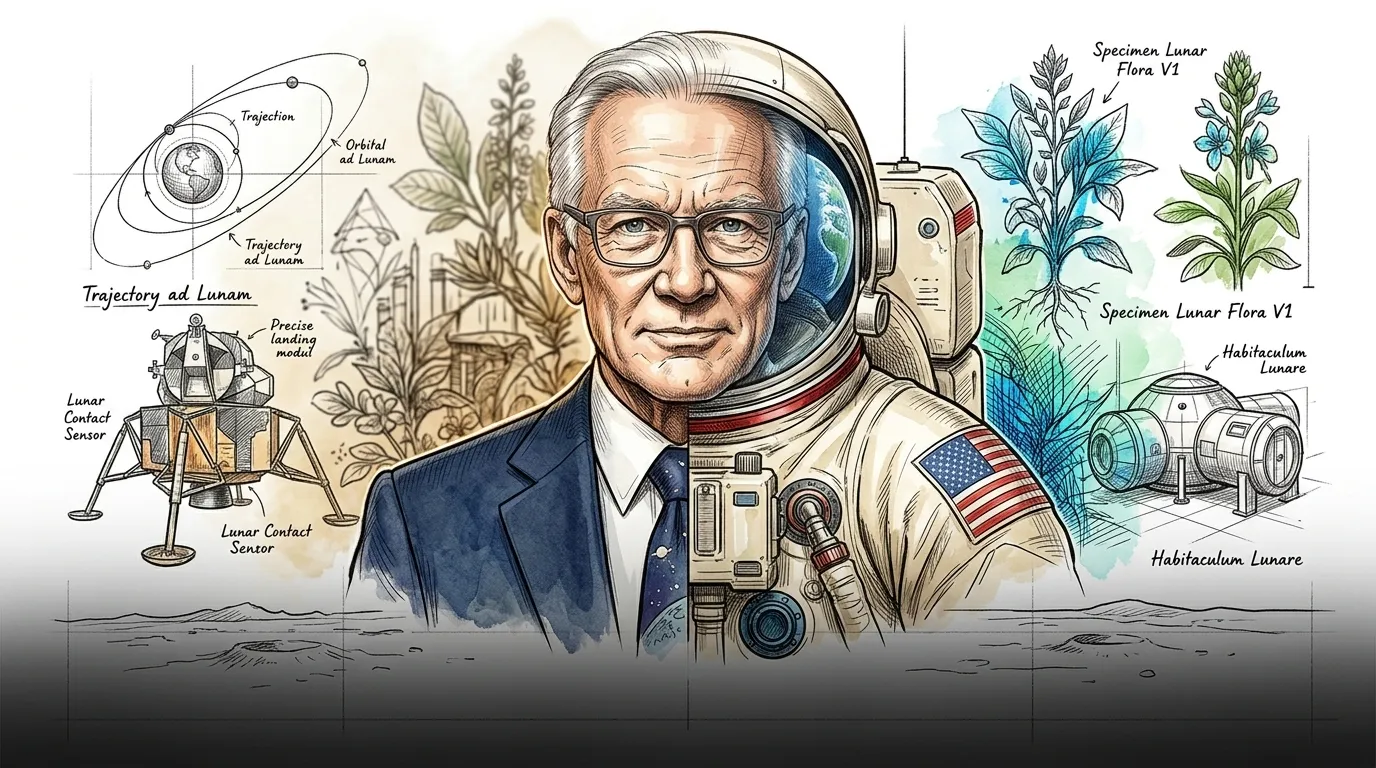
Buzz Aldrin — an illustrated science story, set in Global. 10 illustrated pages, free to read on Wonder Science.
Page 1
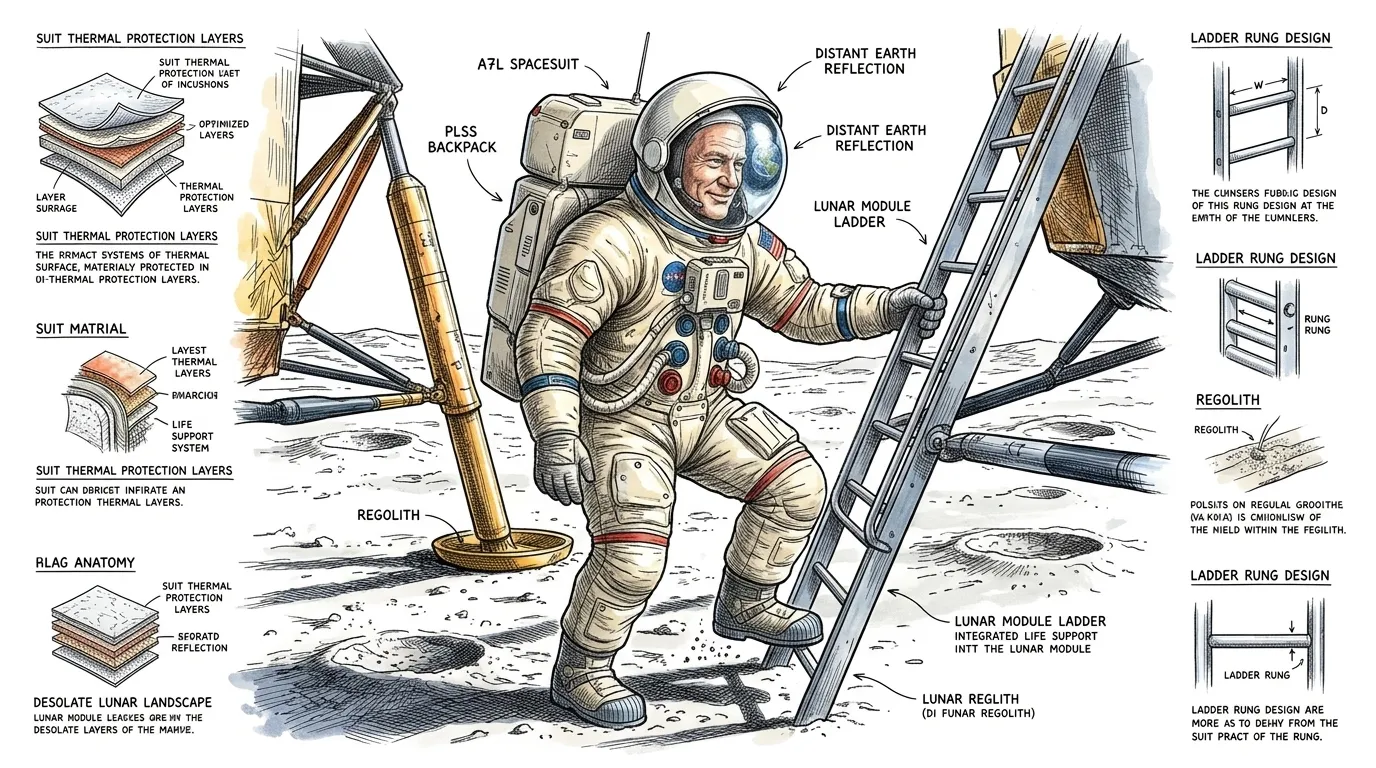
On July 20, 1969, a human foot first touched the lunar regolith. Just moments later, Edwin "Buzz" Aldrin Jr., Lunar Module pilot of Apollo 11, descended the ladder, becoming the second person to walk on the Moon. This extraordinary feat, witnessed by millions across a tense Cold War world, transcended national boundaries, marking a pivotal moment in human exploration. Aldrin's methodical movements in the stark, alien landscape symbolized humanity's audacious leap beyond Earth's cradle, fundamentally altering our perception of what was possible.
Page 2
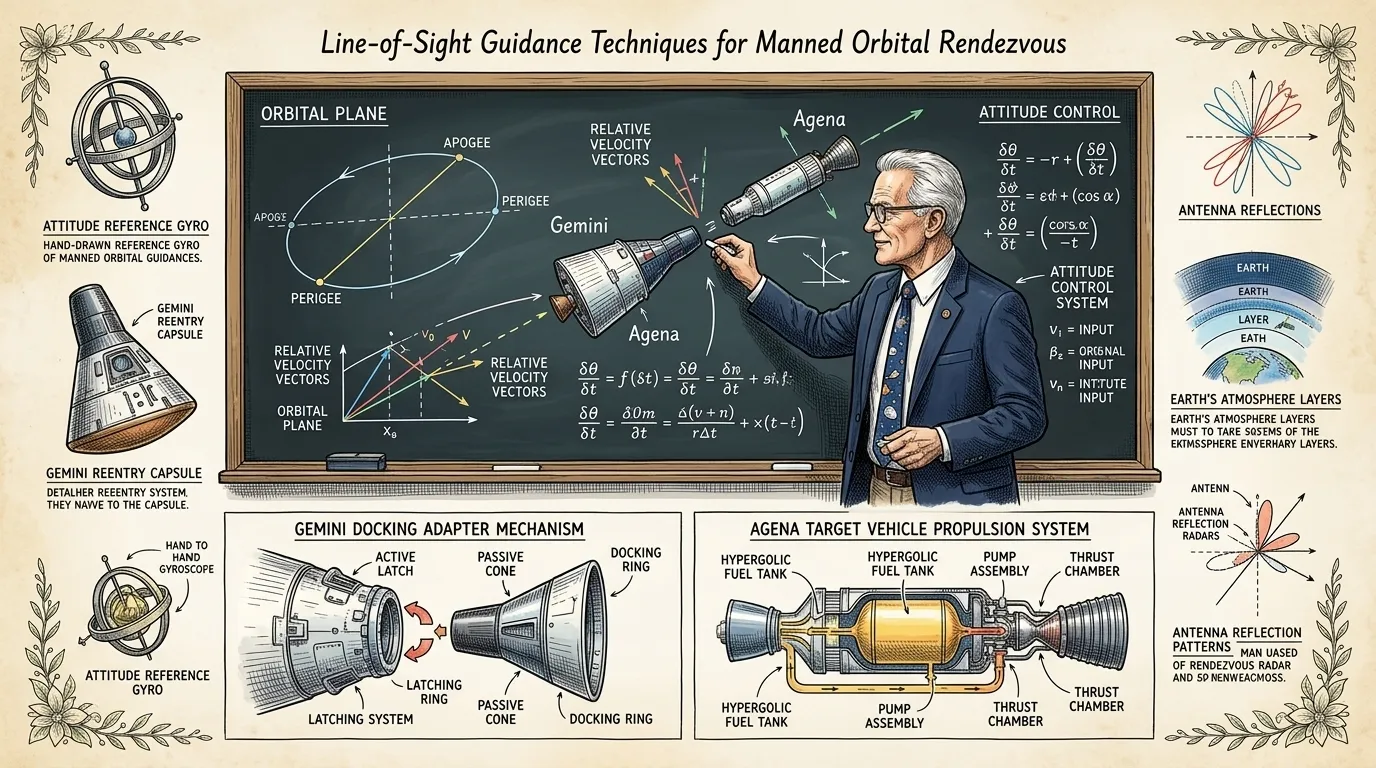
Before his historic lunar walk, Aldrin's profound contributions to spaceflight were rooted in the complex mathematics of orbital mechanics. His doctoral thesis at MIT, titled "Line-of-Sight Guidance Techniques for Manned Orbital Rendezvous," explored how spacecraft could meet and dock in orbit. This theoretical work, initially dismissed by some, became the bedrock for crucial maneuvers in Project Gemini and the Apollo program, demonstrating the precision required to navigate the vacuum of space.
Page 3
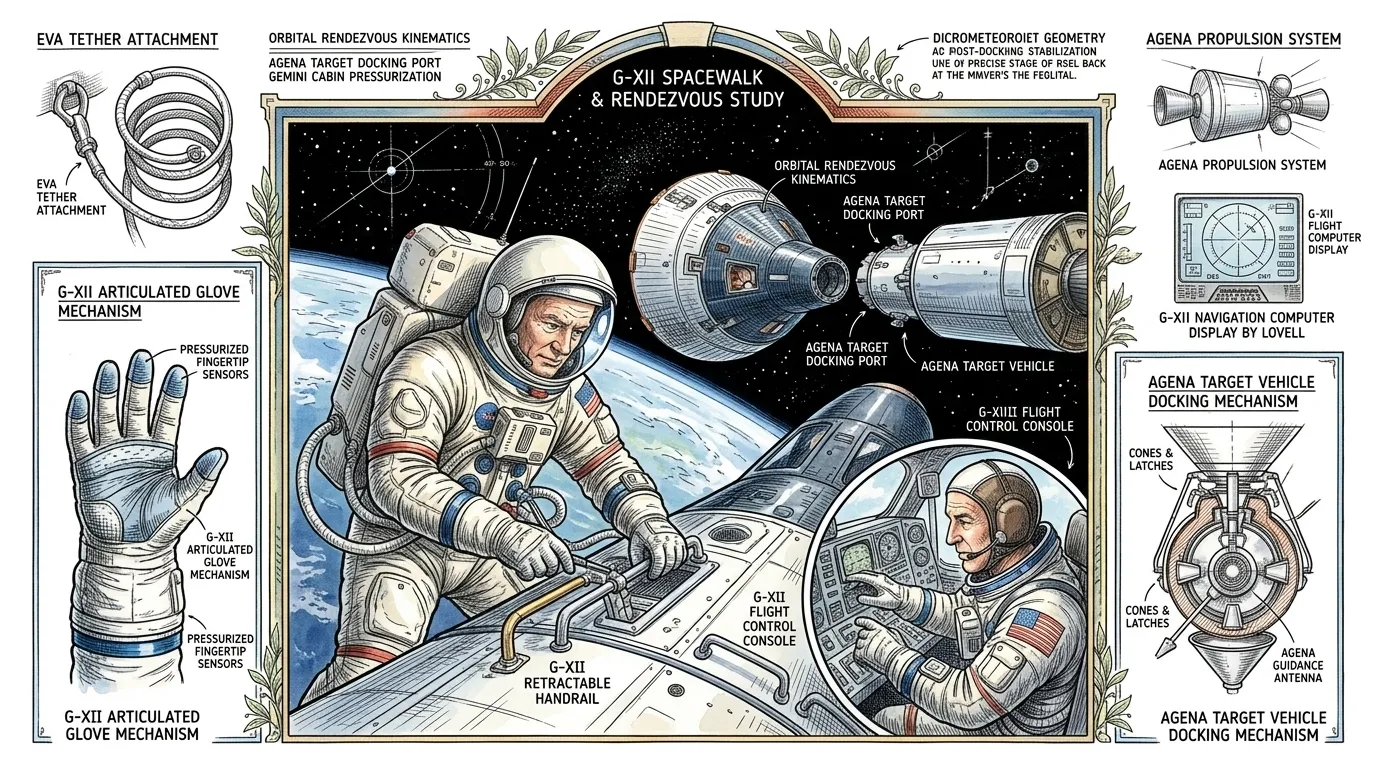
Aldrin's theories found their practical application in the Gemini program, designed to perfect the techniques essential for a lunar mission. On Gemini 12, in November 1966, Aldrin and James Lovell performed the first successful manual rendezvous, precisely matching orbits with an Agena target vehicle. He also conducted a record-setting five-and-a-half-hour spacewalk, proving that astronauts could perform complex tasks outside the spacecraft, dispelling earlier doubts and refining extravehicular activity (EVA) procedures.
Page 4
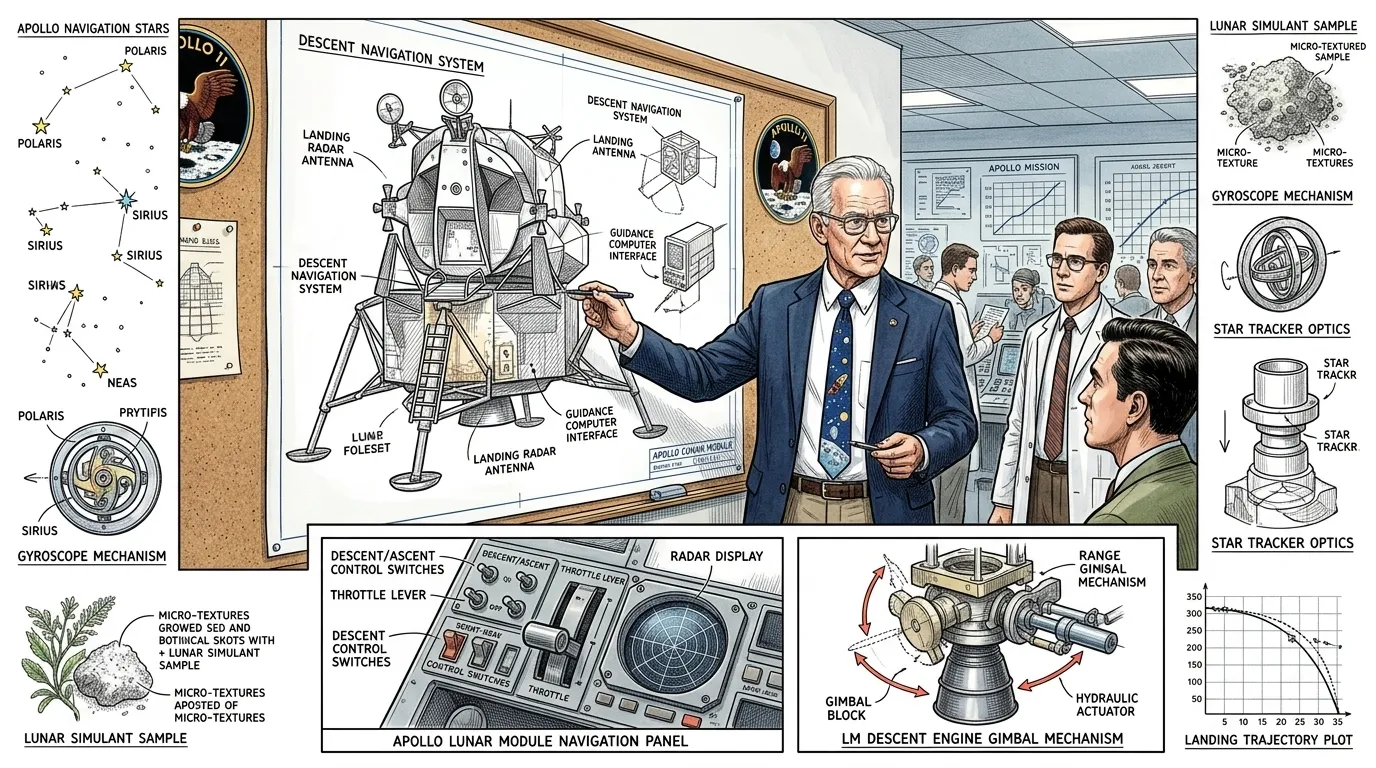
The successes of Gemini directly paved the way for Apollo, an ambitious endeavor to land humans on the Moon before the decade's end. This monumental undertaking involved unprecedented collaboration between scientists, engineers, and astronauts. Buzz Aldrin, with his deep understanding of orbital mechanics and his hands-on Gemini experience, became an indispensable member of the Apollo 11 crew, assigned the critical role of Lunar Module Pilot, responsible for the descent and ascent navigation to and from the Moon's surface.
Page 5
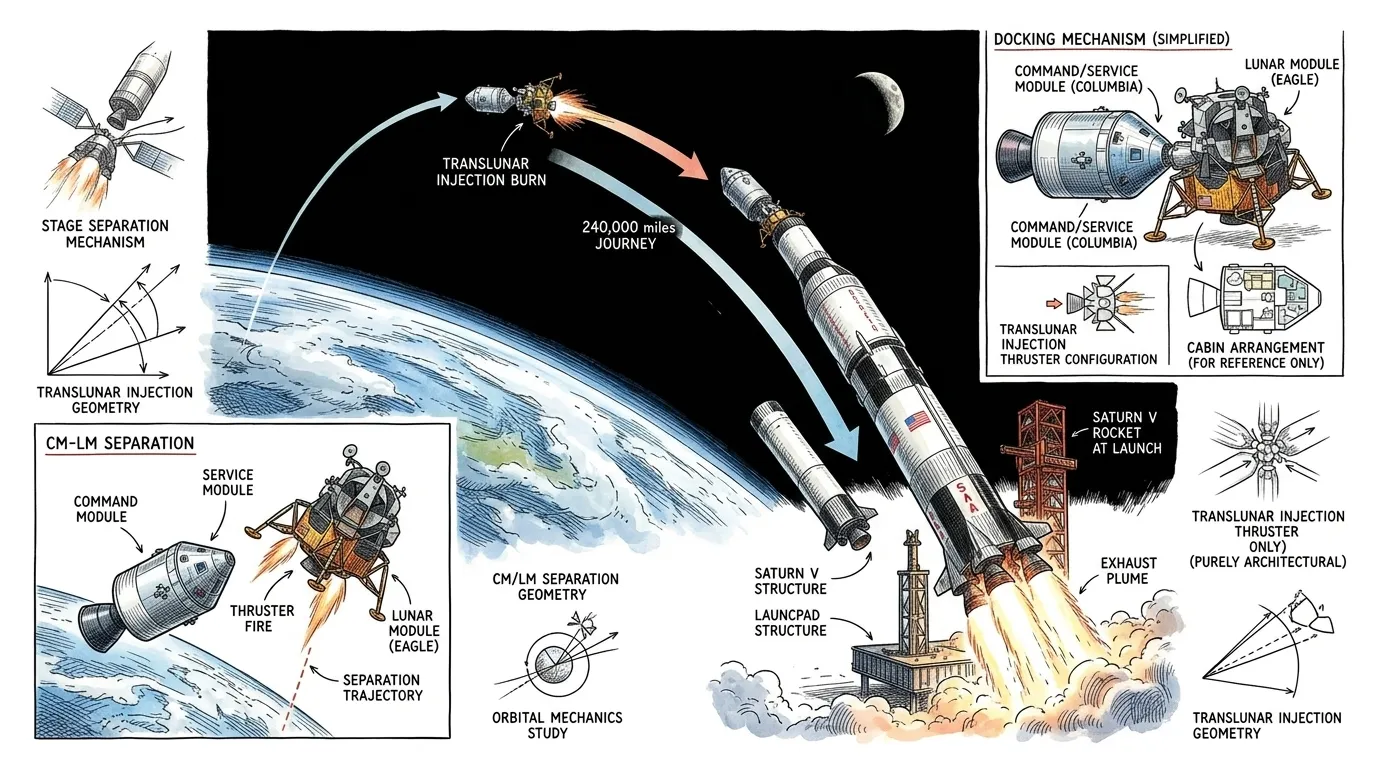
The voyage to the Moon began with the immense power of the Saturn V rocket, a three-stage marvel of engineering capable of generating 7.6 million pounds of thrust. After launch, the first two stages separated, propelling the Command/Service Module (Columbia) and the Lunar Module (Eagle) into Earth orbit. A precise translunar injection burn then slingshotted the craft towards the Moon, a three-day journey across 240,000 miles, showcasing humanity's mastery over gravitational forces.
Page 6
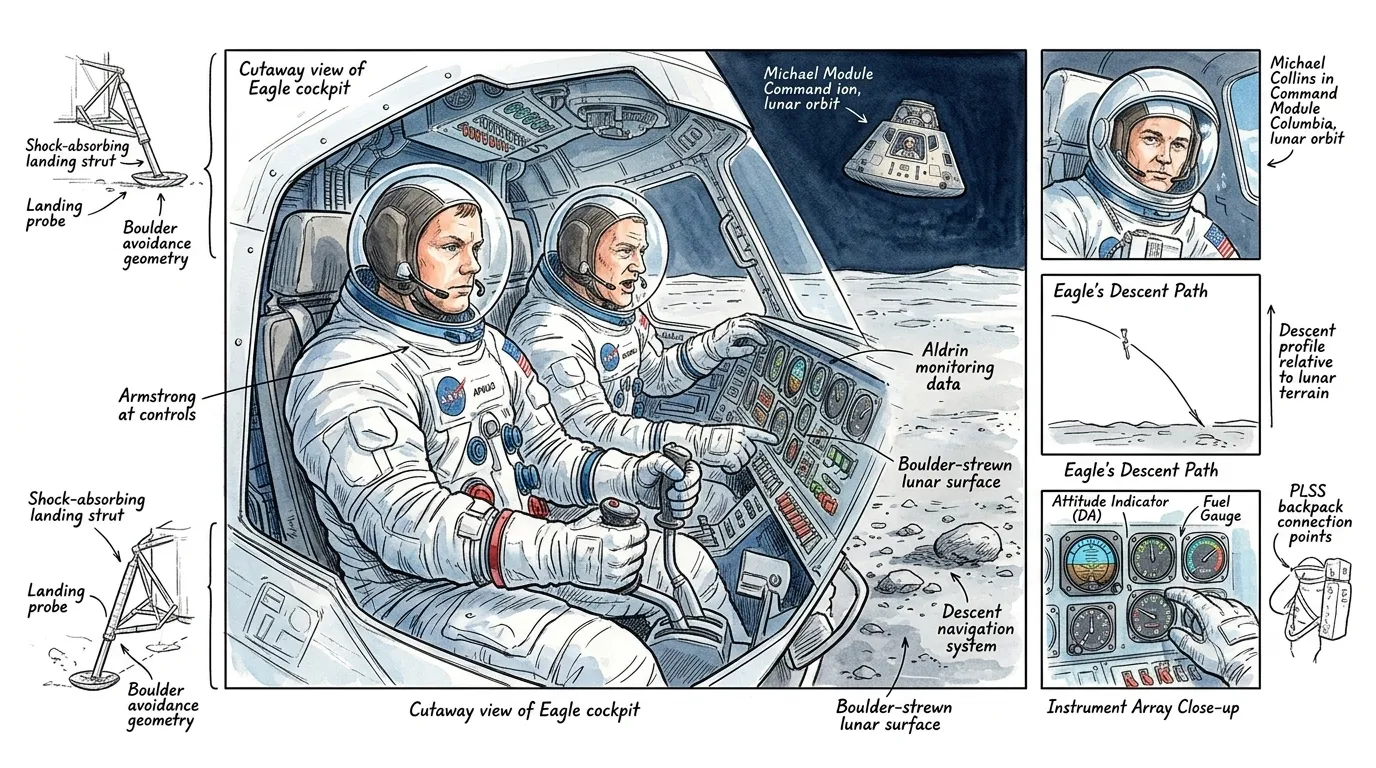
Upon reaching lunar orbit, the Apollo 11 mission entered its most critical phase: the separation of the Lunar Module, 'Eagle', from the Command Module, 'Columbia'. While Michael Collins piloted Columbia in lunar orbit, Neil Armstrong and Buzz Aldrin boarded Eagle. Aldrin meticulously monitored the guidance systems and flight instruments, calling out critical data as Armstrong manually navigated Eagle through unexpected boulder fields during the final, harrowing moments of powered descent to Tranquility Base. Every second demanded absolute precision.
Page 7
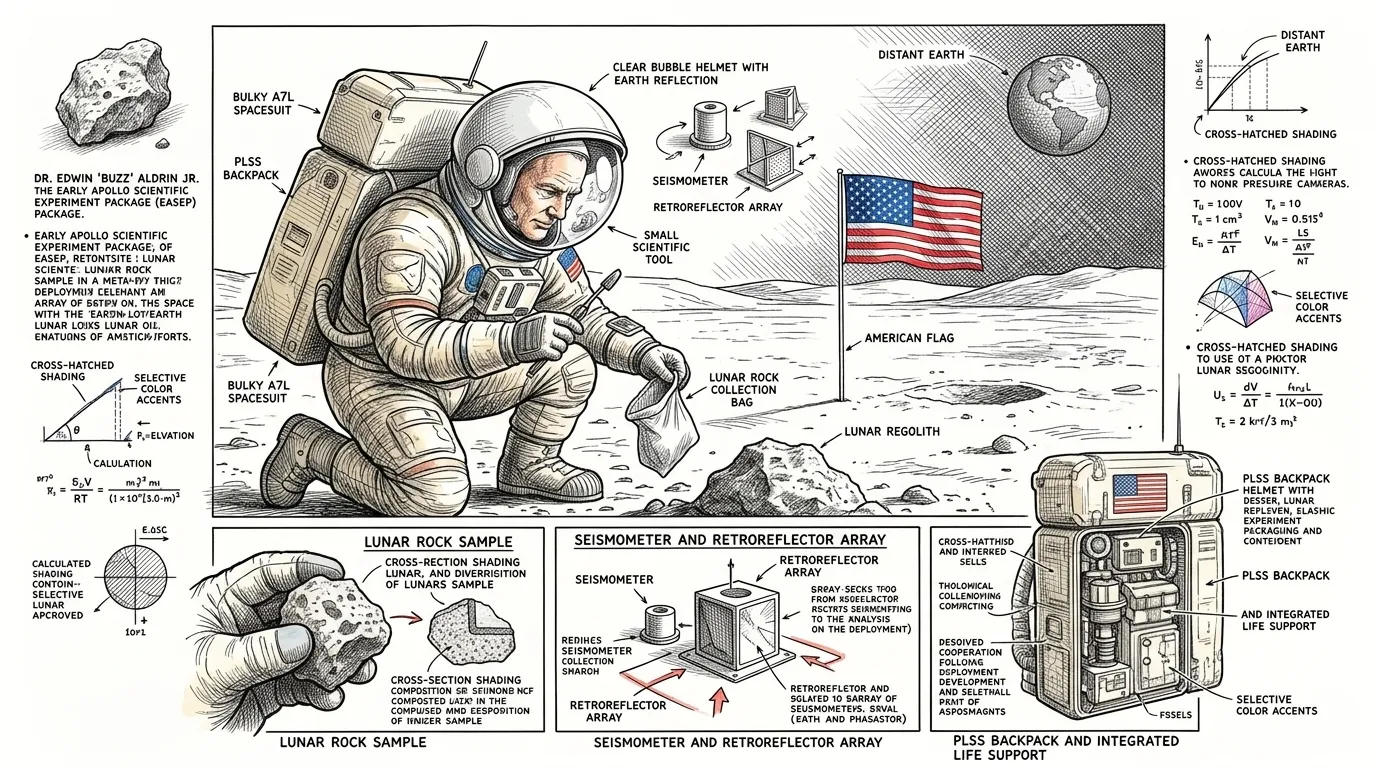
Stepping onto the Moon, Aldrin described the landscape as a 'magnificent desolation.' Beyond the iconic flag planting, the astronauts immediately set about their scientific objectives. They deployed the Early Apollo Scientific Experiment Package (EASEP), which included a seismometer to detect moonquakes and a retroreflector array for precise Earth-Moon distance measurements. Aldrin's training as a scientist ensured meticulous attention to collecting lunar soil and rock samples, invaluable treasures for understanding the Moon's geological history.
Page 8
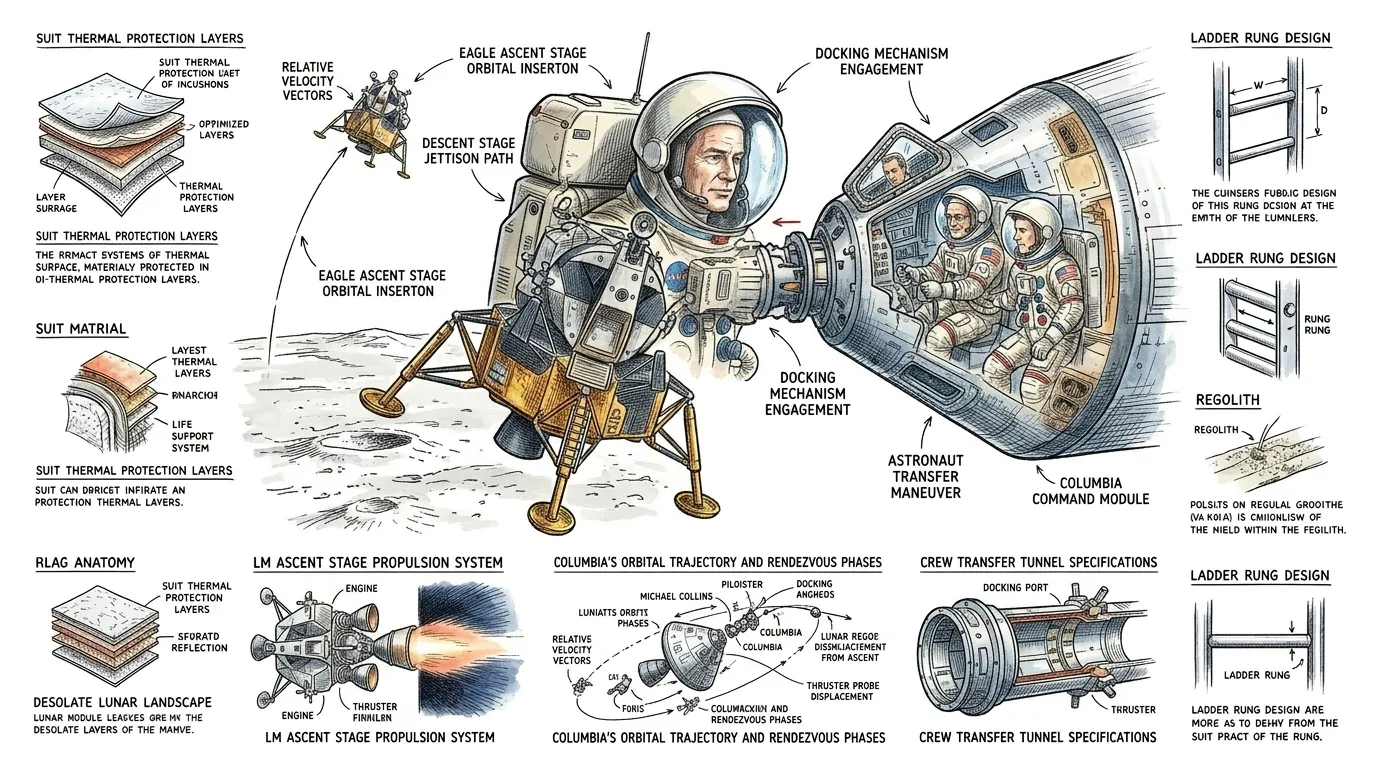
After their historic EVA, the return journey presented another series of high-stakes maneuvers. The Eagle's ascent stage blasted off from the lunar surface, a critical propulsion event, to rendezvous with Michael Collins aboard Columbia in lunar orbit. This required impeccable timing and navigation, bringing the two spacecraft together at orbital velocities. Once docked, Aldrin and Armstrong transferred back to Columbia, jettisoning the Eagle, leaving it to eventually crash onto the Moon.
Page 9
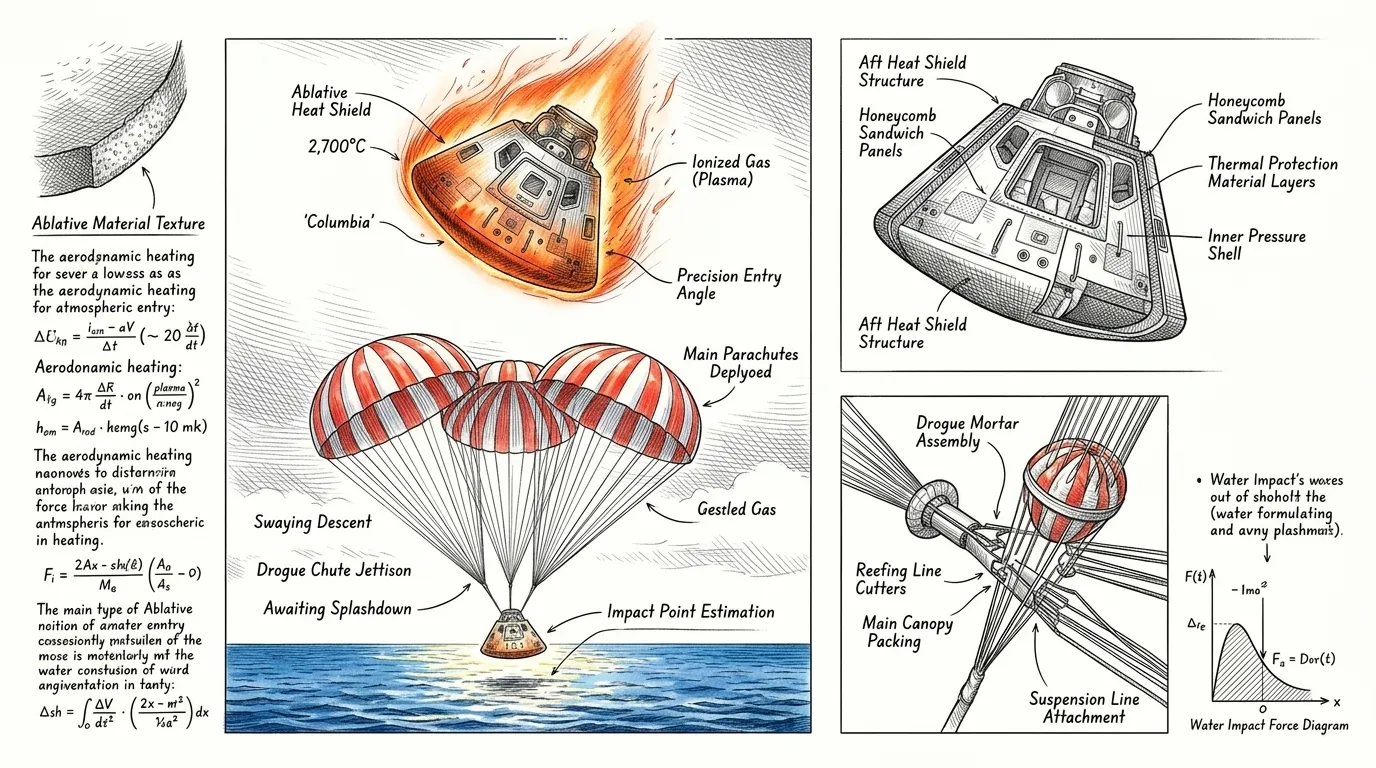
The final leg of the journey involved the perilous re-entry into Earth's atmosphere. Columbia, shielded by its ablative heat shield, endured scorching temperatures up to 2,700 C as it decelerated from thousands of miles per hour. Precision was paramount to ensure the correct entry angle: too shallow, and it would skip off the atmosphere; too steep, and it would burn up. Finally, after deploying its massive parachutes, the module splashed down safely in the Pacific Ocean, completing an unprecedented voyage.
Page 10
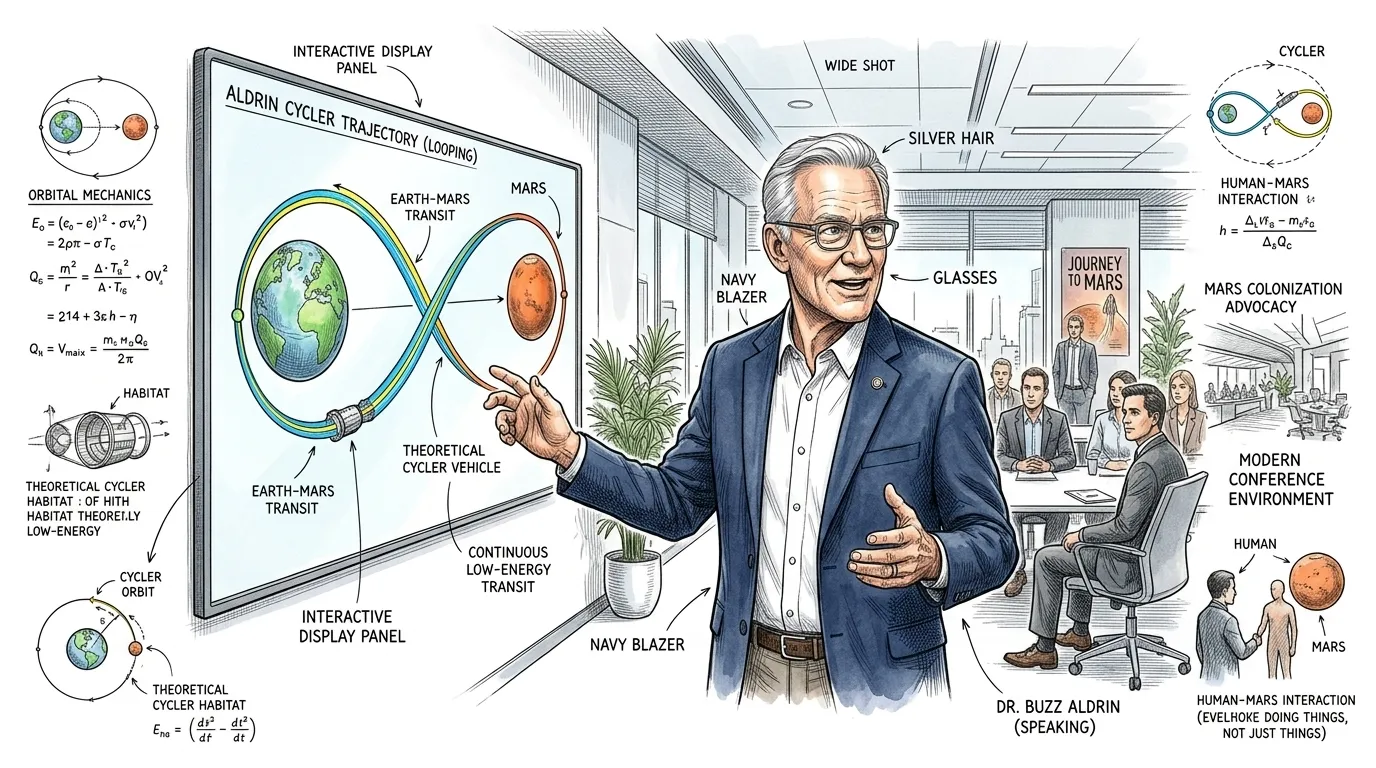
Buzz Aldrin's journey to the Moon cemented his place in history, yet his influence extends far beyond that single moment. He has become a tireless advocate for future human spaceflight, particularly championing the colonization of Mars. His concept of the 'Aldrin Cycler,' a spacecraft trajectory that could provide continuous, low-energy transit between Earth and Mars, remains a visionary pathway for interplanetary travel. Aldrin's dedication exemplifies the enduring human quest for knowledge and exploration, inspiring generations to reach further into the cosmos and continually redefine the boundaries of possibility.
About this story
- Location: Global
- Audience: general readers
Questions and answers
Read Wonder Science on your phone
Wonder Science is available on Android. Get Wonder Science on Google Play.