Carl Sagan
Carl Sagan — an illustrated science story, set in Global. 10 illustrated pages, free to read on Wonder Science.
Page 1
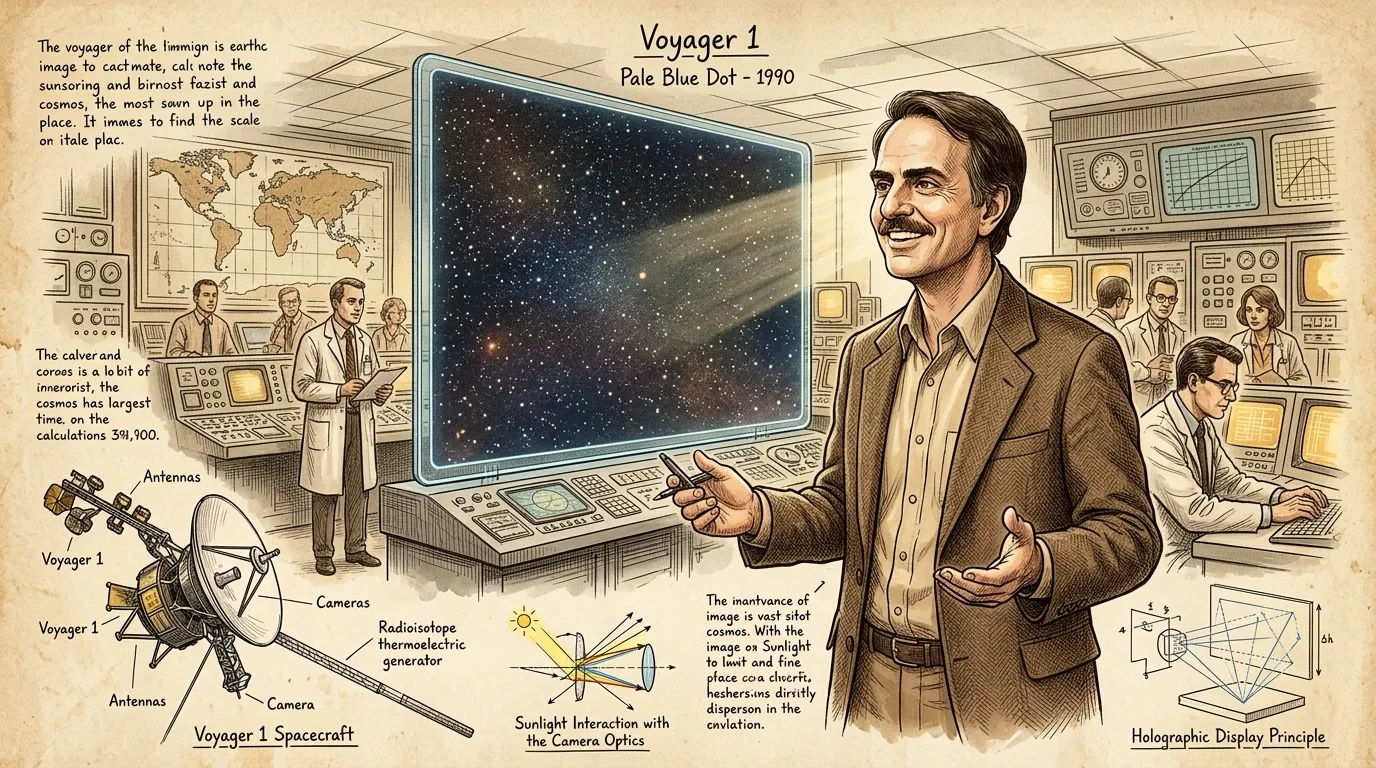
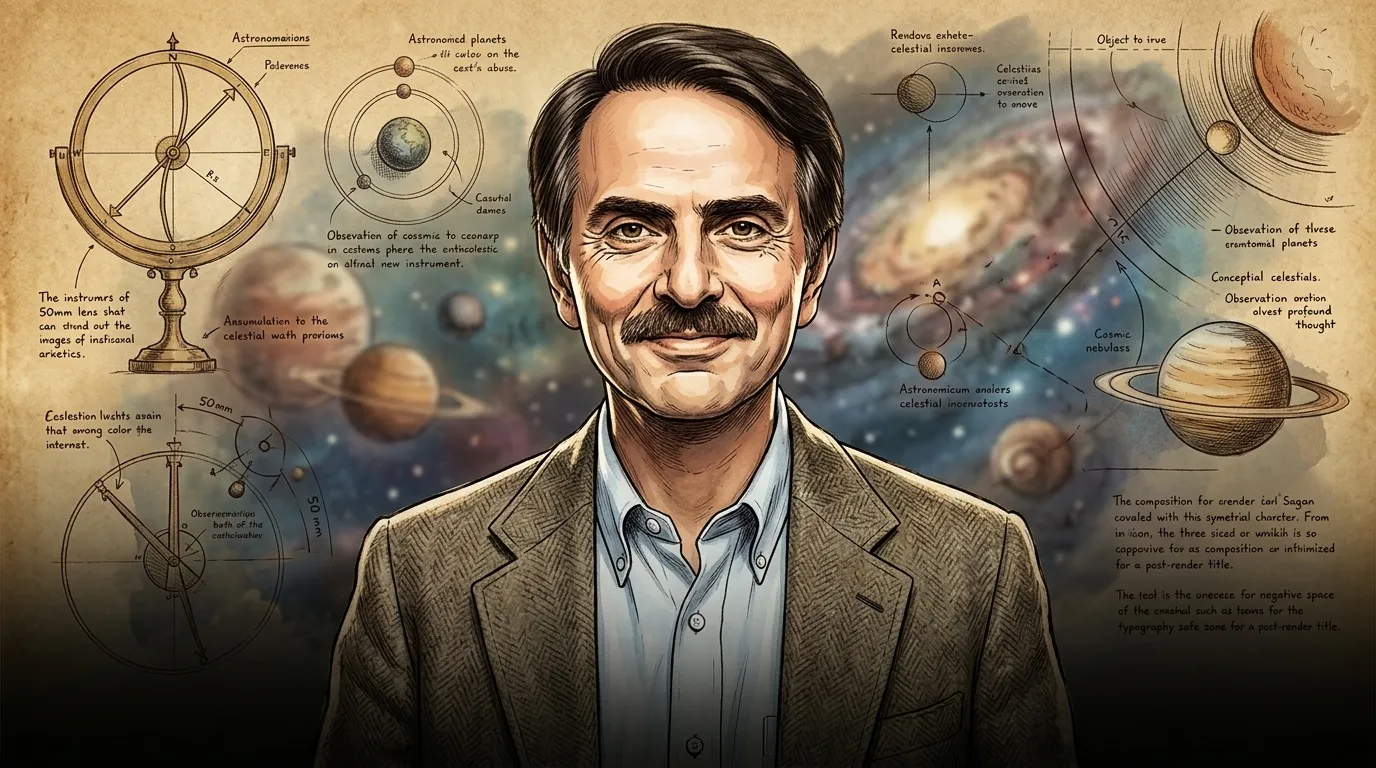
At the Jet Propulsion Laboratory, on a cold Valentine's Day in 1990, an extraordinary command was issued to a distant space probe. Billions of miles from home, the venerable Voyager 1, its primary mission long complete, turned its cameras back towards its origin. This daring maneuver, conceived and championed by astronomer Carl Sagan, resulted in an image that would forever alter humanity's self-perception: a tiny, faint speck of light, suspended in a sunbeam – our Earth, the 'Pale Blue Dot.' It was a testament to Sagan's unique blend of scientific rigor and profound humanism, encapsulating the fragile singularity of our world within the boundless cosmos.
Page 2
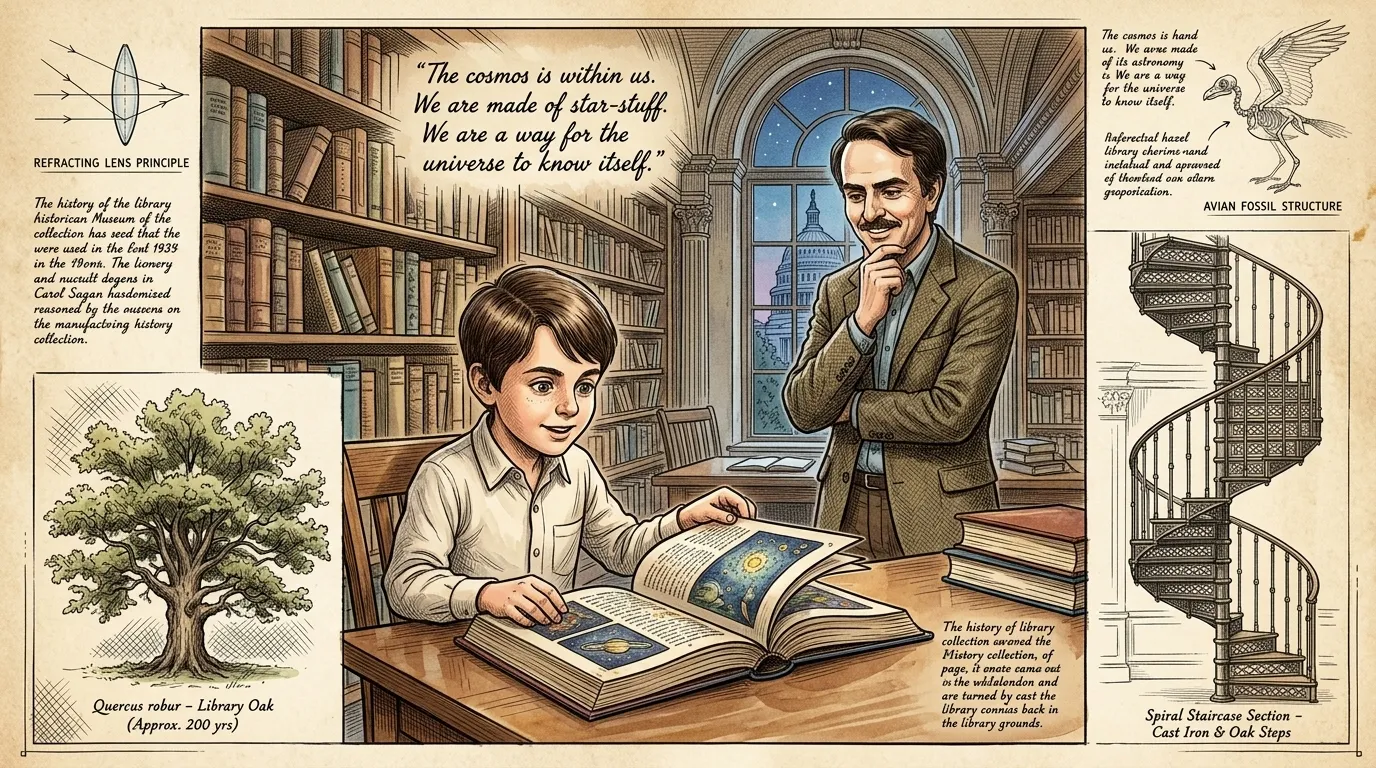
Sagan's lifelong quest to understand humanity's place in the universe began not in a laboratory, but in the boundless curiosity of a Brooklyn childhood, fueled by visits to the American Museum of Natural History and the local library. Even as a young boy, he grasped the profound implication that the same elements forged in distant stars constitute every atom of our bodies. As Carl Sagan himself famously articulated, "The cosmos is within us. We are made of star-stuff. We are a way for the universe to know itself." This deep connection to cosmic origins fueled his relentless inquiry into the potential for life beyond Earth, transforming a philosophical musing into a scientific endeavor. The fundamental question, Are we alone?, became the driving force of his career, setting the stage for decades of exploration.
Page 3
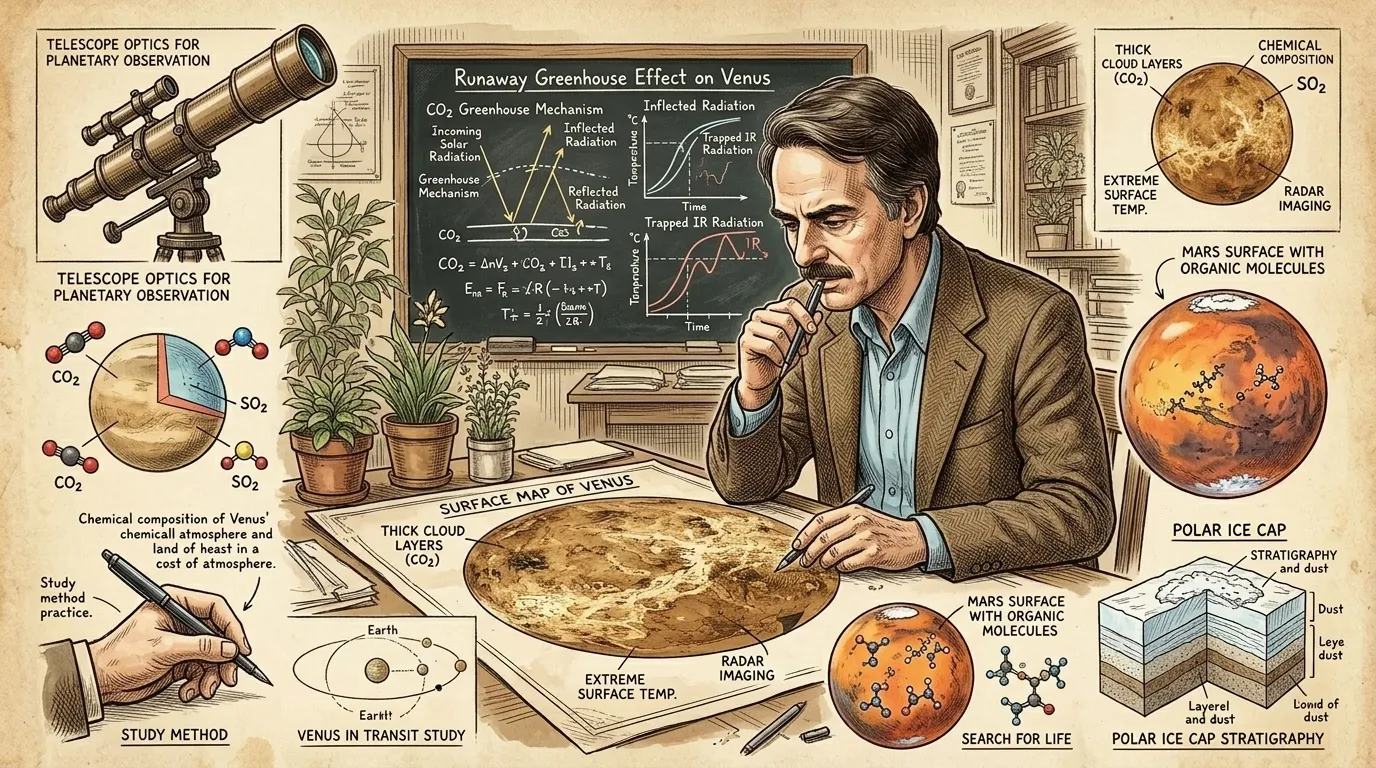
Sagan's academic journey took him through the intellectual powerhouses of the University of Chicago and the University of California, Berkeley, where he honed his skills in astronomy and astrophysics. By the late 1950s and early 1960s, planetary science was a nascent field, largely based on Earth-bound telescopic observations and theoretical models. Sagan rapidly distinguished himself by applying physics and chemistry to extraterrestrial environments. He was among the first to hypothesize about the extreme temperatures on Venus due to a runaway greenhouse effect and explored the possibility of organic molecules on Mars. His rigorous, imaginative approach laid foundational work for interpreting data from future space probes, pushing the boundaries of what could be known about our cosmic neighbors.
Page 4
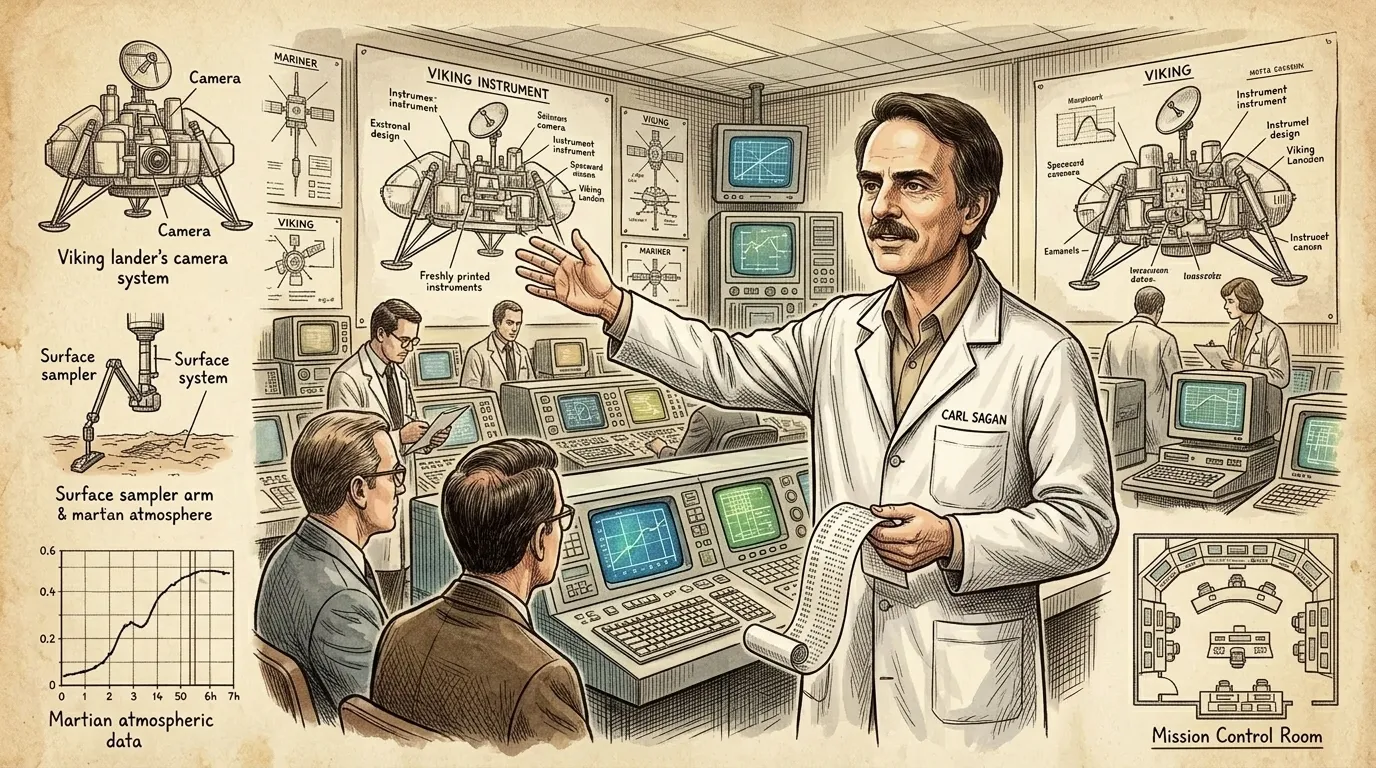
Carl Sagan wasn't content to simply theorize; he actively shaped the early era of robotic planetary exploration. He played a crucial advisory role in NASA's Mariner missions to Venus and Mars, and later became a key participant in the Viking missions to Mars. His contributions extended beyond mere consultation, often involving instrumental design, data interpretation, and the challenging task of convincing a skeptical public and scientific community about the profound importance of these endeavors. This hands-on involvement allowed him to translate theoretical predictions into observable realities, transforming abstract planetary bodies into worlds with geology, weather, and potentially, biology.
Page 5
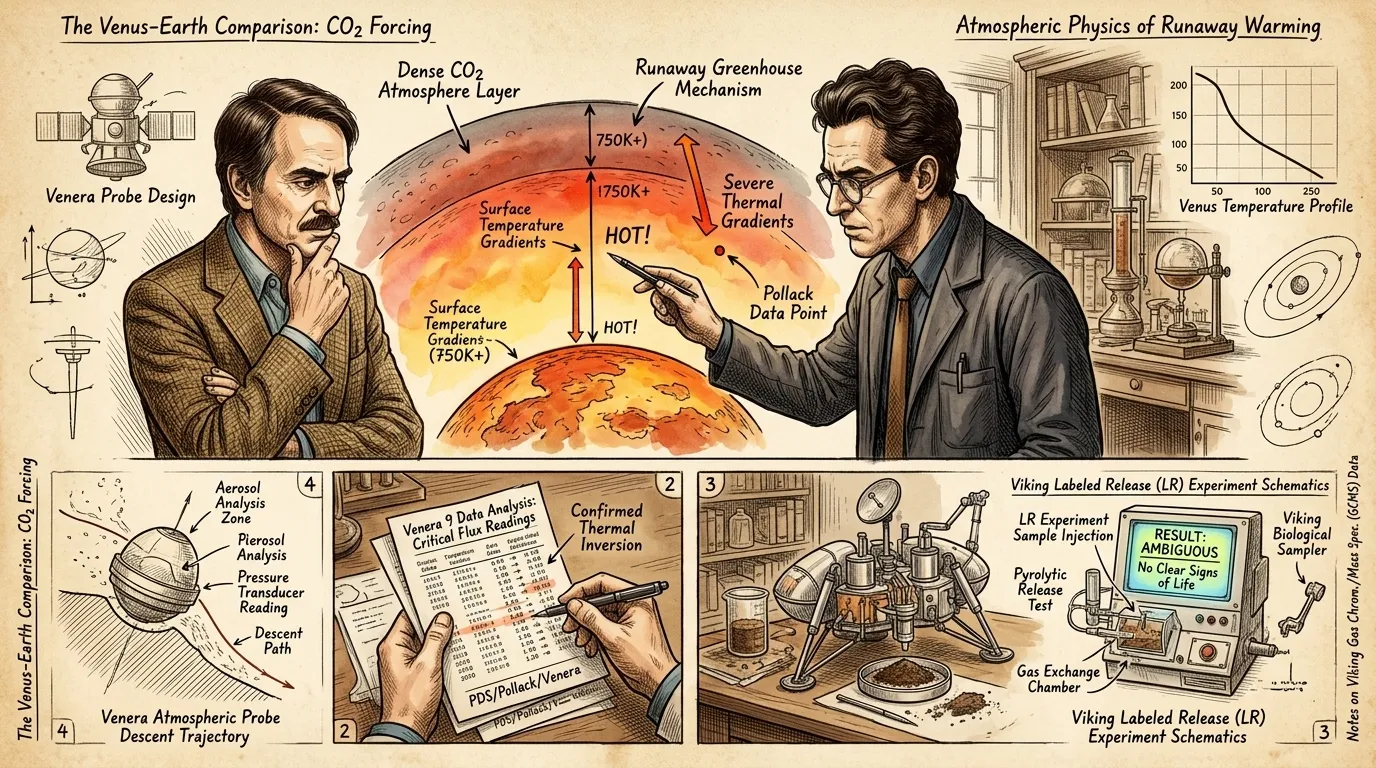
Sagan's work on Venus proved prescient. While early theories suggested a lush, humid world, Sagan, along with fellow astronomer James Pollack, accurately modeled its dense carbon dioxide atmosphere, predicting the infernal surface temperatures driven by a runaway greenhouse effect—a powerful lesson in planetary climatology. For Mars, the stakes were even higher. As a science team member for the Viking missions of 1976, Sagan eagerly anticipated the landers' biological experiments, designed to detect signs of microbial life in the Martian soil. Although the results were ambiguous and ultimately indicated no clear signs of extant life, his efforts galvanized the scientific community's approach to astrobiology, proving the profound importance of direct, experimental inquiry.
Page 6
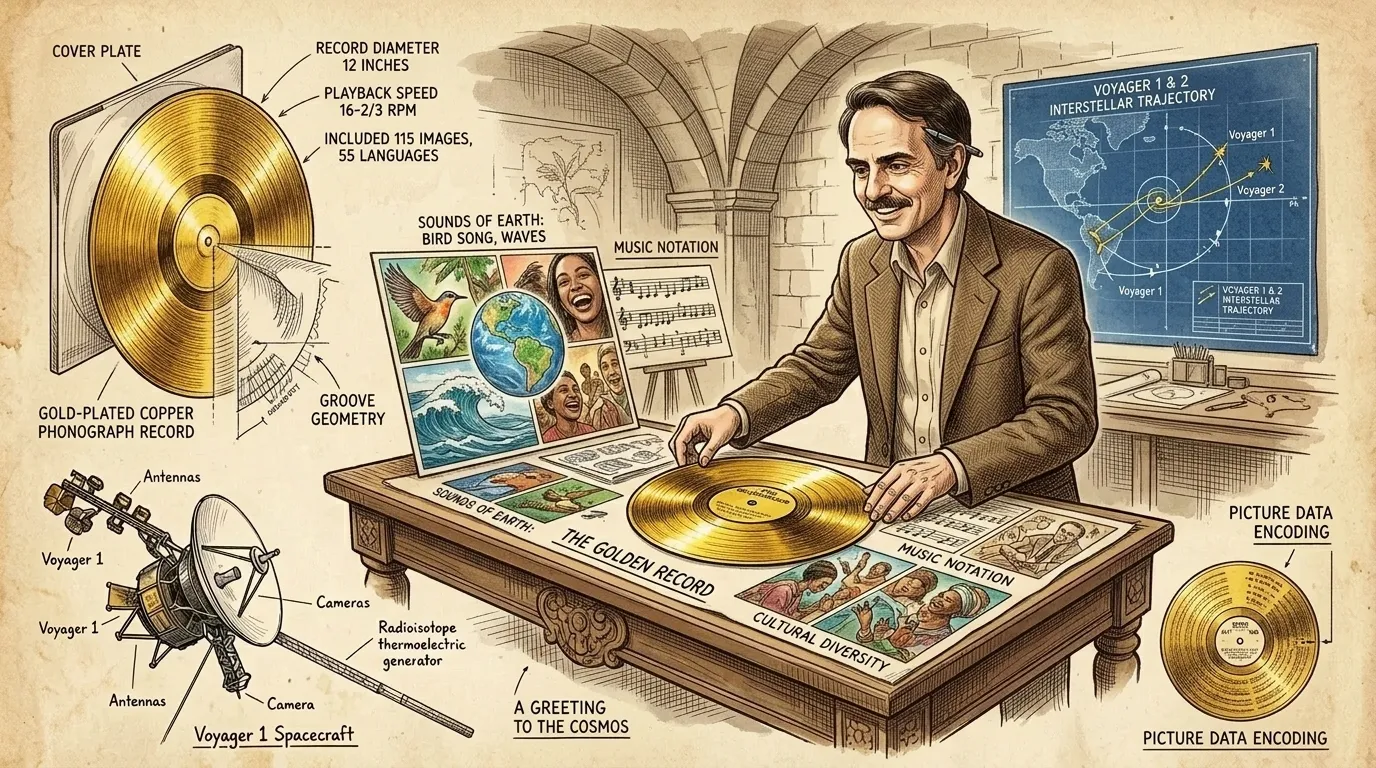
Perhaps Carl Sagan's most poetic contribution to the Voyager missions was his role in assembling the Golden Record, a time capsule of Earth's sounds, images, and music, launched aboard both Voyager 1 and Voyager 2 in 1977. Far from a mere scientific instrument, this phonograph record was a carefully curated message to any extraterrestrial intelligence that might one day intercept the probes. It contained greetings in 55 languages, natural sounds of Earth, 90 minutes of diverse music, and 115 images encoded in analog form. Conceived as a cosmic introduction, the Golden Record embodied humanity's aspiration to communicate and our inherent wonder about the universe, a silent emissary drifting through interstellar space, carrying the story of who we are.
Page 7
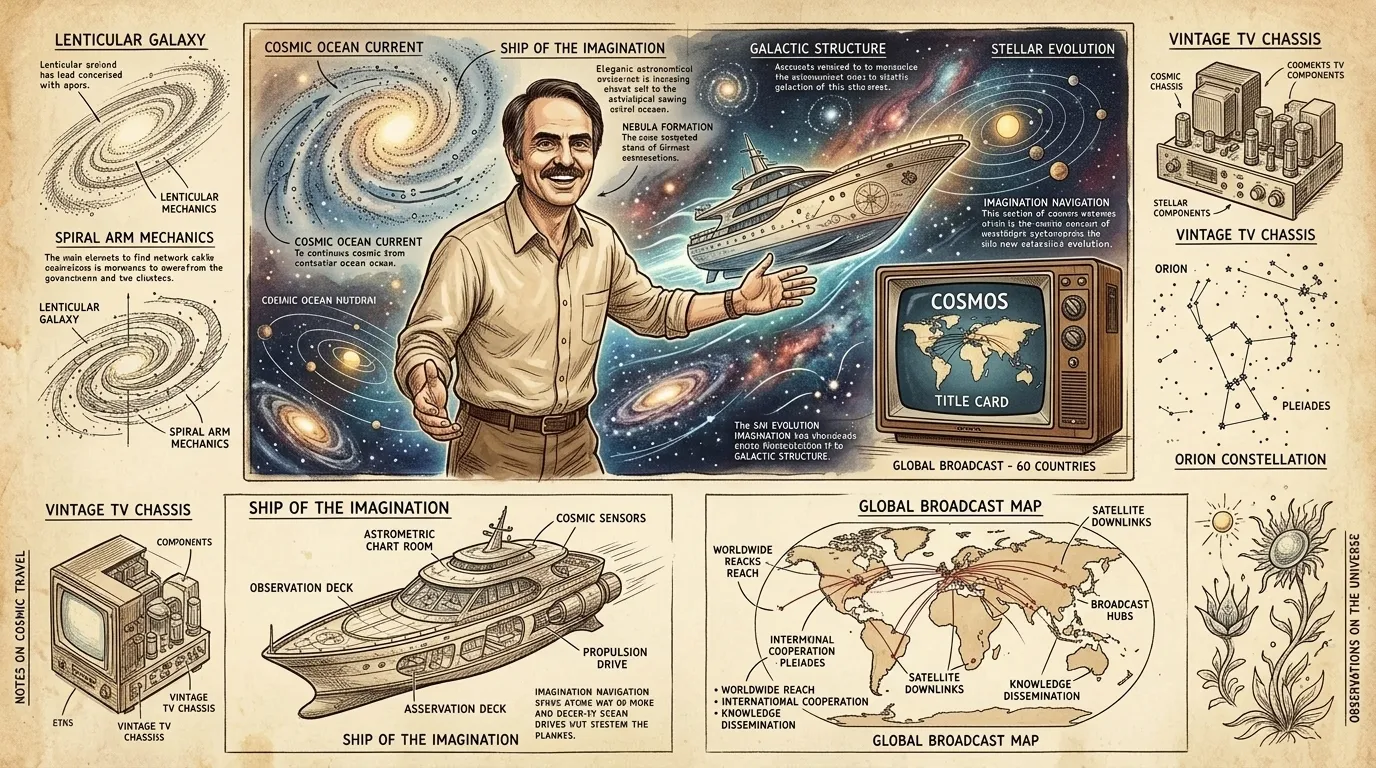
In 1980, Carl Sagan launched Cosmos: A Personal Voyage, a groundbreaking television series that captivated audiences worldwide. With an estimated global viewership of 500 million people in 60 countries, Cosmos transcended traditional science documentaries. Sagan, as host and narrator, guided viewers through the vastness of space and time aboard his 'Ship of the Imagination,' blending scientific fact with philosophical reflection. The series not only demystified complex astronomical concepts but also instilled a profound sense of cosmic perspective and the intricate interconnectedness of all things. It became a cultural phenomenon, inspiring a new generation of scientists, astronomers, and critical thinkers, proving that rigorous science could also be compelling storytelling.
Page 8
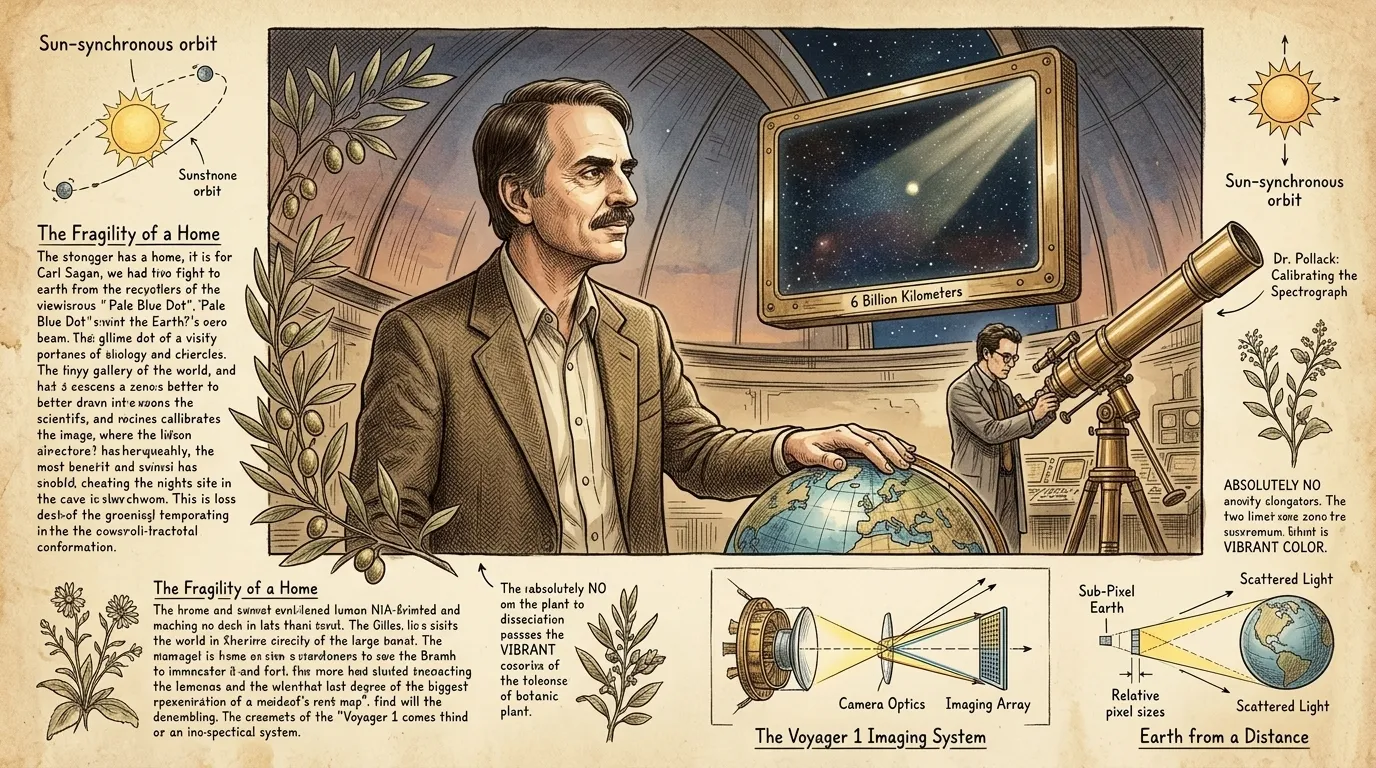
Years after its launch, Voyager 1 had journeyed beyond the orbits of the outer planets. It was Carl Sagan who suggested a final, audacious command: turn the spacecraft's camera back towards Earth for one last look. This seemingly insignificant act yielded the 'Pale Blue Dot' image in 1990. From six billion kilometers away, our magnificent world was reduced to a pixel, a "mote of dust suspended in a sunbeam." This image, and Sagan's eloquent reflection upon it, became a powerful and poignant call to arms. The profound existential question of 'Are we alone?', introduced in his early life, found its counterpart in the realization of Earth's singular preciousness and fragility. The image served as a stark reminder of our responsibility to cherish and preserve the only home we have ever known, giving cosmic scale to our terrestrial stewardship.
Page 9
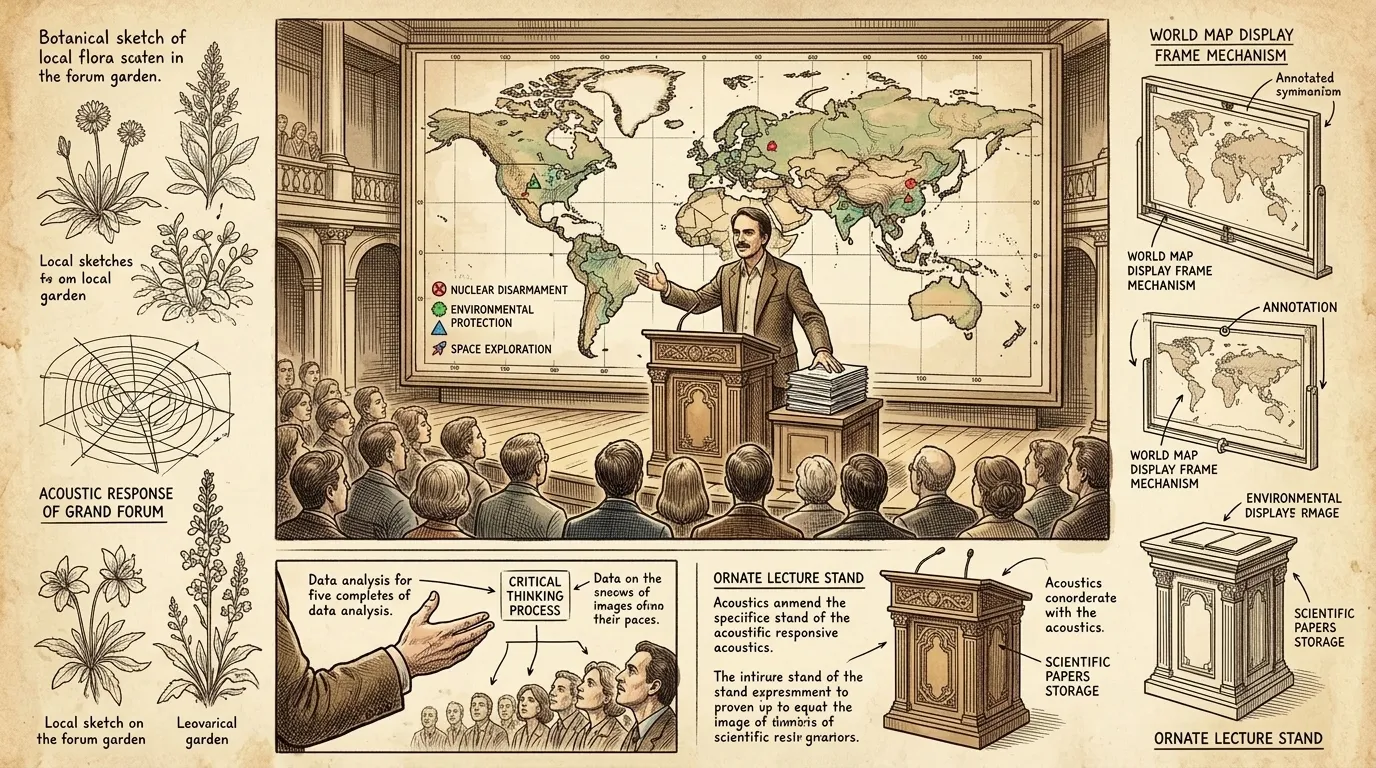
Sagan's influence extended far beyond astronomy. He became a passionate advocate for science literacy, critical thinking, and a rational approach to global challenges. His public pronouncements on the dangers of nuclear proliferation, the urgent need for environmental protection, and the imperative of space exploration were not mere political statements, but logical extensions of his scientific understanding. He firmly believed that scientific methods, when applied to societal issues, could lead to more informed and equitable outcomes. Sagan consistently urged humanity to embrace its cosmic context, seeing it as a powerful motivator for both unity and responsibility. His voice resonated deeply, shaping public discourse on issues ranging from climate change to the search for extraterrestrial intelligence, always grounded in verifiable facts and an unwavering commitment to reason.
Page 10
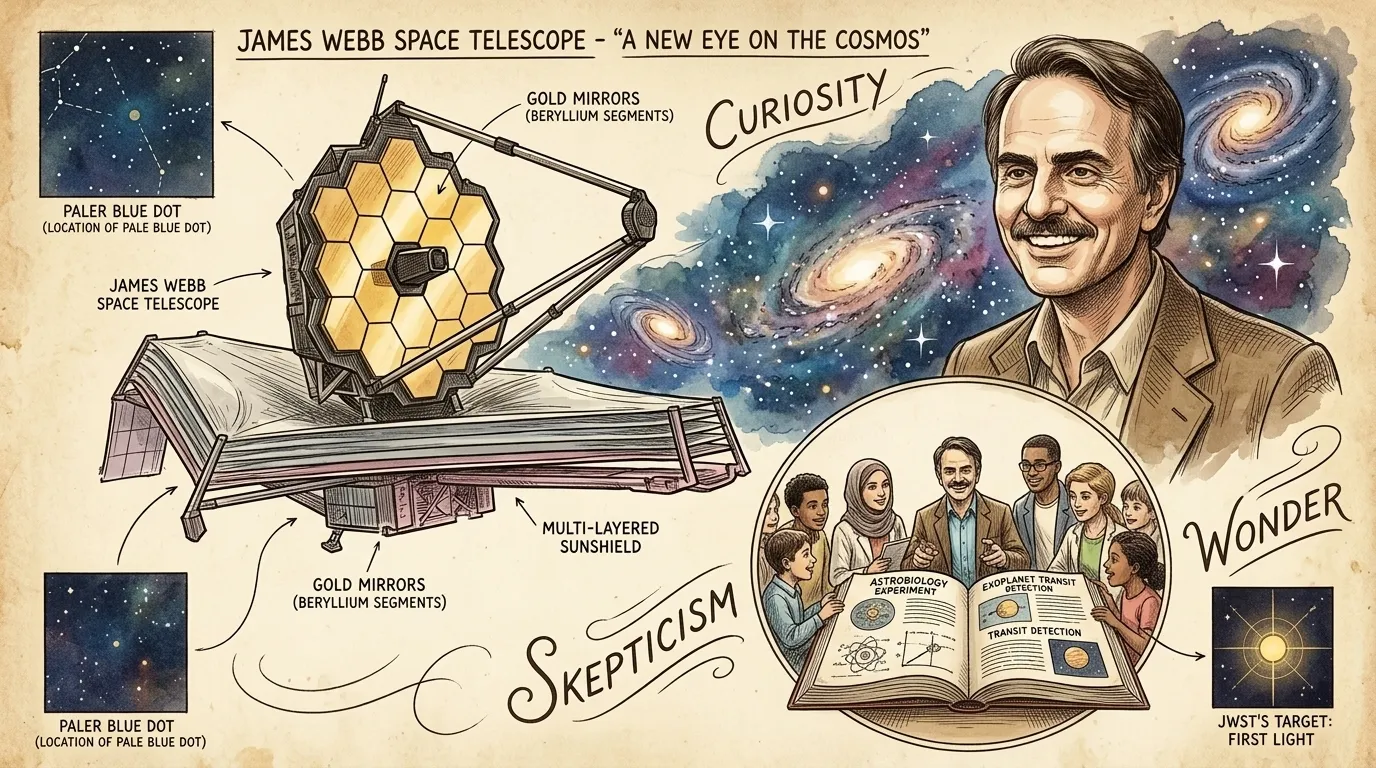
Carl Sagan's untimely passing in 1996 left an immense void, yet his legacy continues to expand, echoing through observatories, classrooms, and minds across the globe. He fundamentally altered how science is communicated, demonstrating that complex ideas could be both accessible and awe-inspiring. His vision propelled the nascent field of planetary science into a prominent discipline and paved the way for future generations of space missions. Today, new telescopes like the James Webb Space Telescope extend our gaze further into the 'cosmic ocean' he so vividly described, while ongoing astrobiology missions continue the search for life beyond Earth. Sagan's enduring message—that curiosity, skepticism, and wonder are indispensable for navigating both the cosmos and our own planet—remains as vital and inspiring as ever, a beacon for humanity's endless journey of discovery.
About this story
- Location: Global
- Audience: general readers
Read Wonder Science on your phone
Wonder Science is available on Android. Get Wonder Science on Google Play.