Cecilia Payne-Gaposchkin
Cecilia Payne-Gaposchkin — an illustrated science story, set in Global. 10 illustrated pages, free to read on Wonder Science.
Page 1
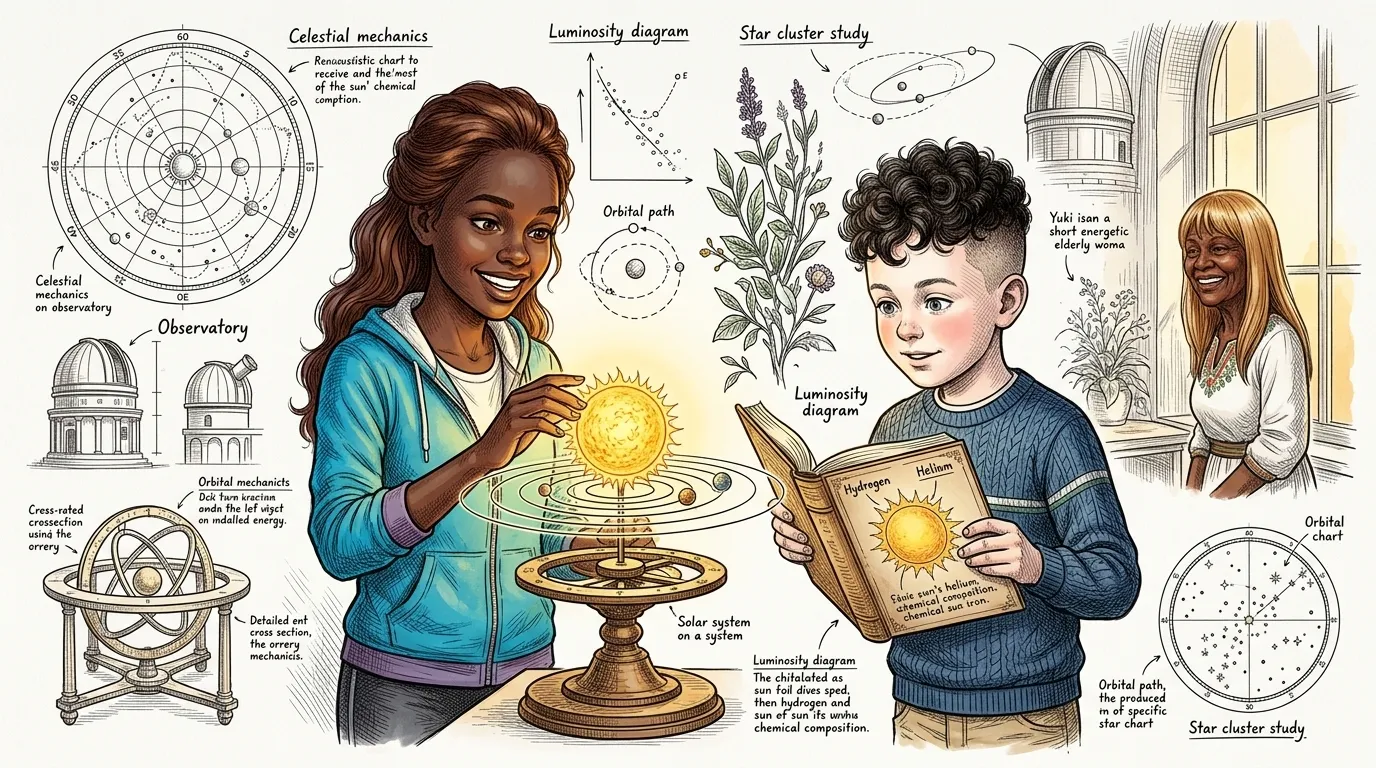
Cecilia Payne-Gaposchkin revolutionized our understanding of the universe, but her journey began with a simple question: What are stars made of? Today, we know that the sun is overwhelmingly hydrogen and helium. This wasn't always accepted. She used spectra to unlock the secrets of starlight, but this discovery was initially dismissed.\n\n Fact: Cecilia Payne-Gaposchkin's early career was marked by skepticism of her findings.
Page 2
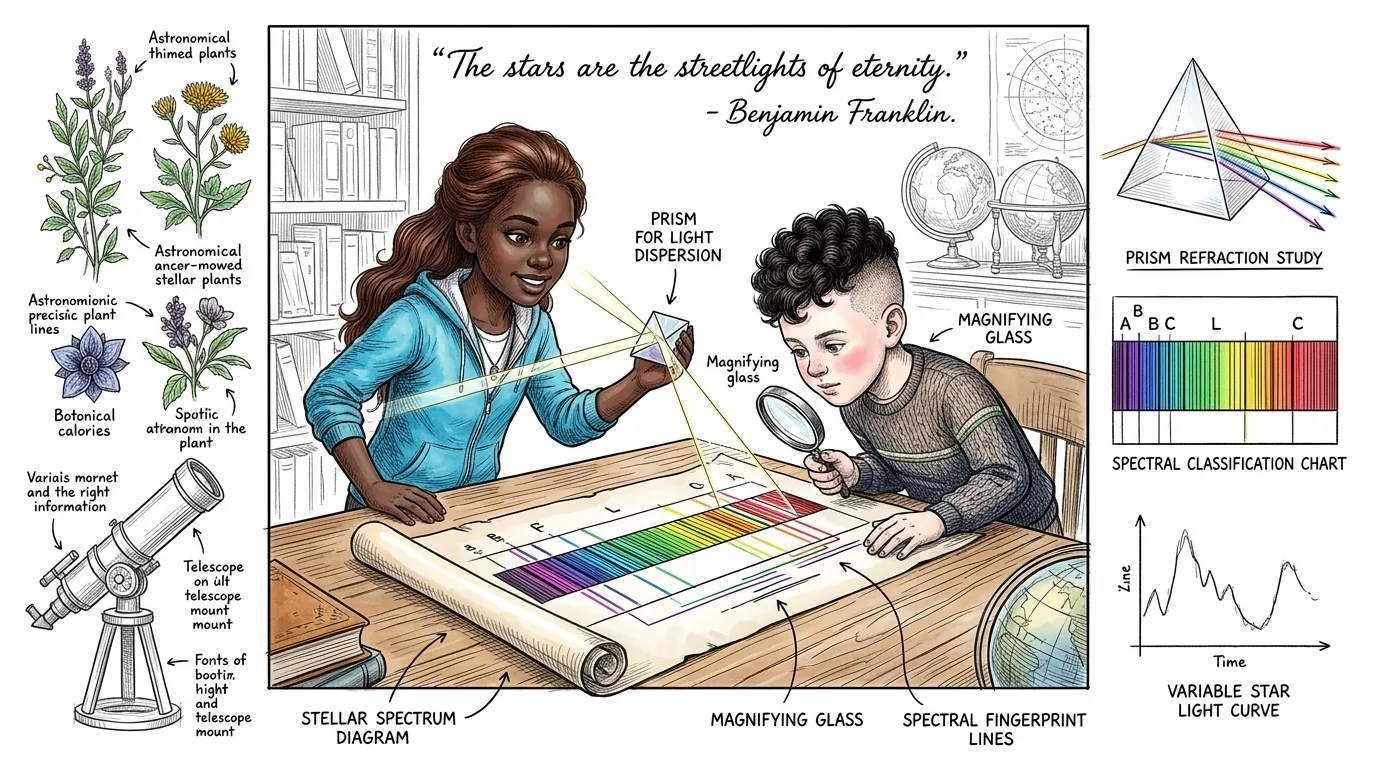
Payne-Gaposchkin's work centered on stellar spectra—the unique patterns of light emitted by stars. Each element, when heated, emits light at specific wavelengths, creating a distinct 'fingerprint.' By analyzing these fingerprints in starlight, scientists could identify the elements present in distant stars.\n\n"My father always said, 'The stars are the streetlights of eternity.' I never understood that until I became an astrophysicist. That was his favorite quote from Benjamin Franklin."\n\n Fact: Stellar spectra are like fingerprints, unique to each element.
Page 3
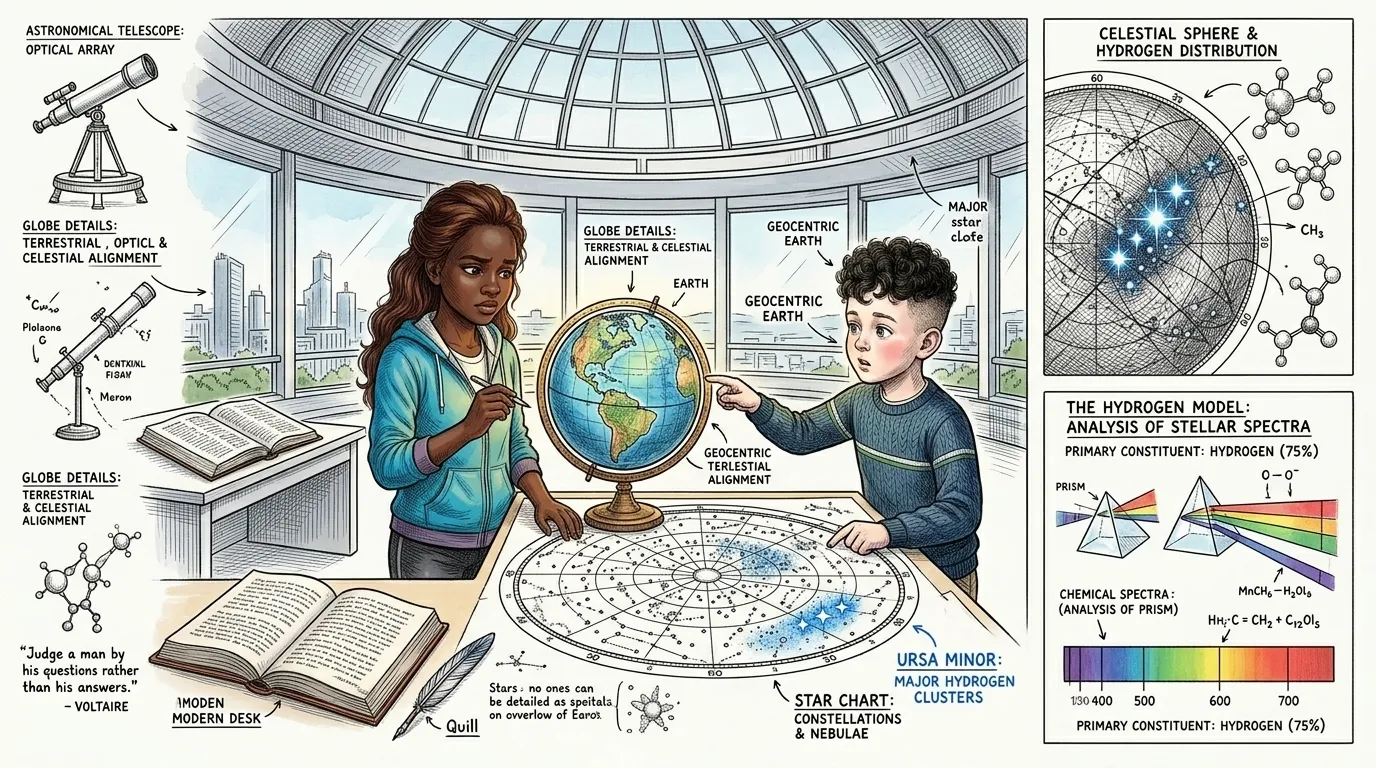
Using data from the most recent star charts of the time, Cecilia noted that hydrogen appeared to be far more abundant than any other element. This contradicted the prevailing belief that stars had similar compositions to Earth. Initially, she hesitated to publish such a radical idea. "Doubt is not a pleasant condition, but certainty is absurd," she mumbled. "As Voltaire said."\n\n Fact: The abundance of hydrogen in stars was a revolutionary idea.
Page 4
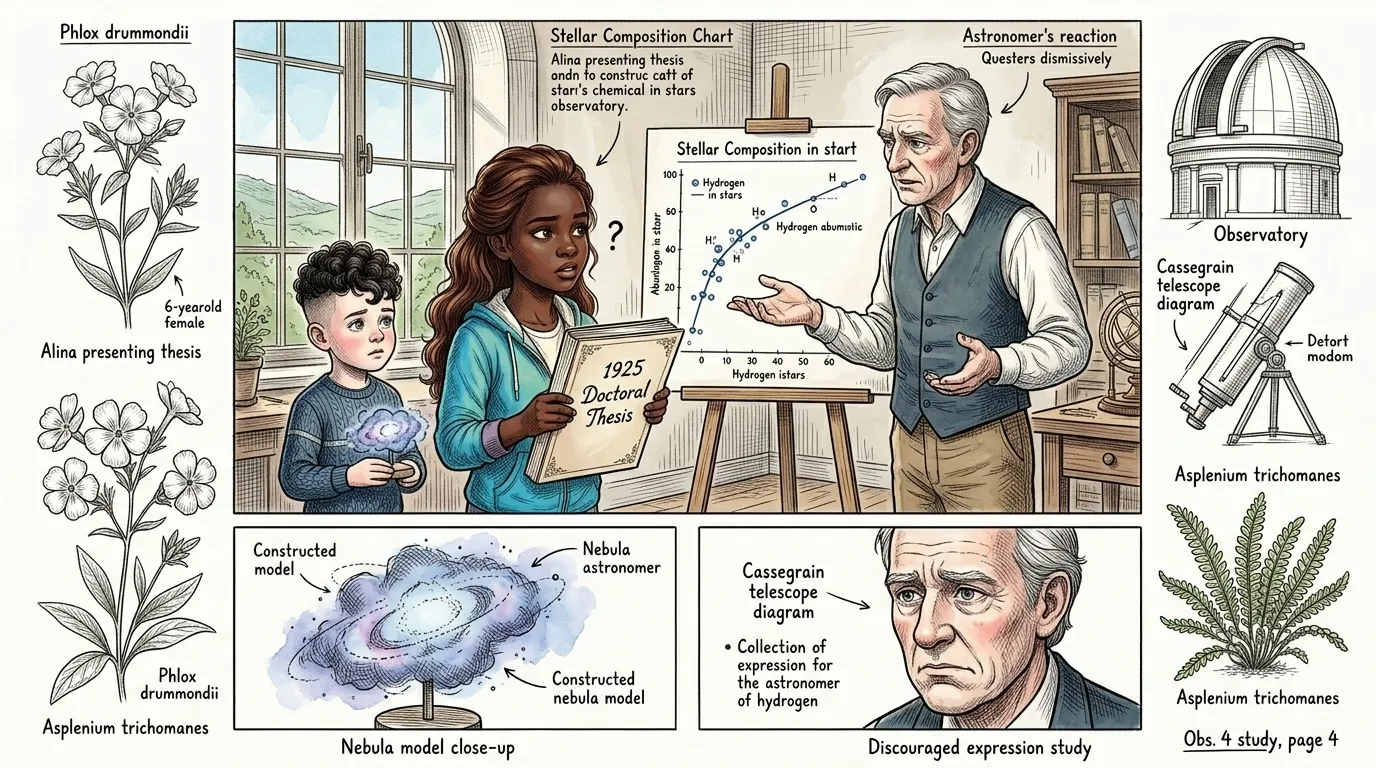
When Payne-Gaposchkin presented her findings to her mentor, astronomer Harlow Shapley, he strongly discouraged her from concluding that hydrogen was so abundant. He urged her to state that the high abundance was 'certainly not real.' This pressure led her to temper her conclusion in her 1925 doctoral thesis.\n\n Fact: Mentors can sometimes hinder progress with conventional thinking.
Page 5
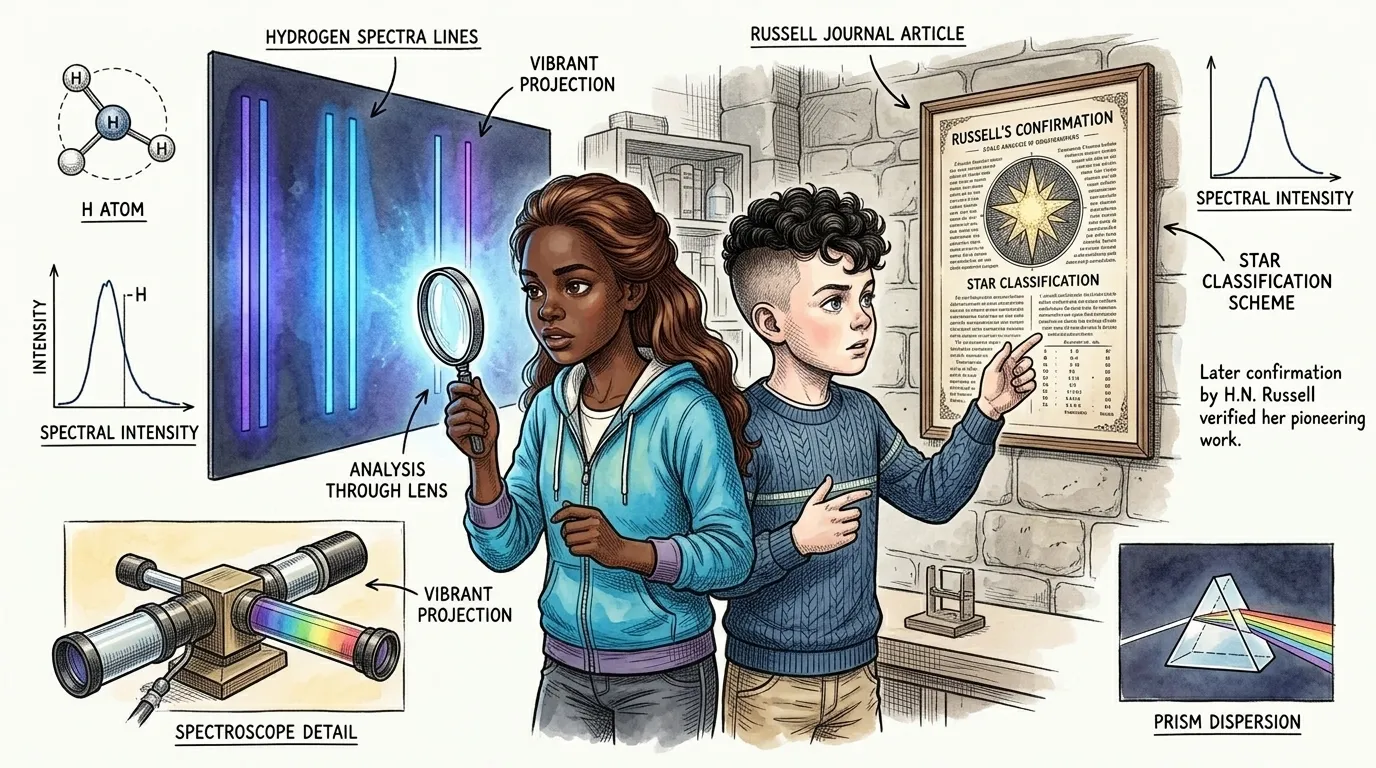
Despite the pressure, Payne-Gaposchkin's data was undeniable. The spectral lines of hydrogen were simply too strong to ignore. Later, other astronomers, including Henry Norris Russell, independently confirmed her findings. Russell, in fact, published similar results a few years later, receiving much of the initial credit.\n\n Fact: Data, when undeniable, will eventually change minds.
Page 6
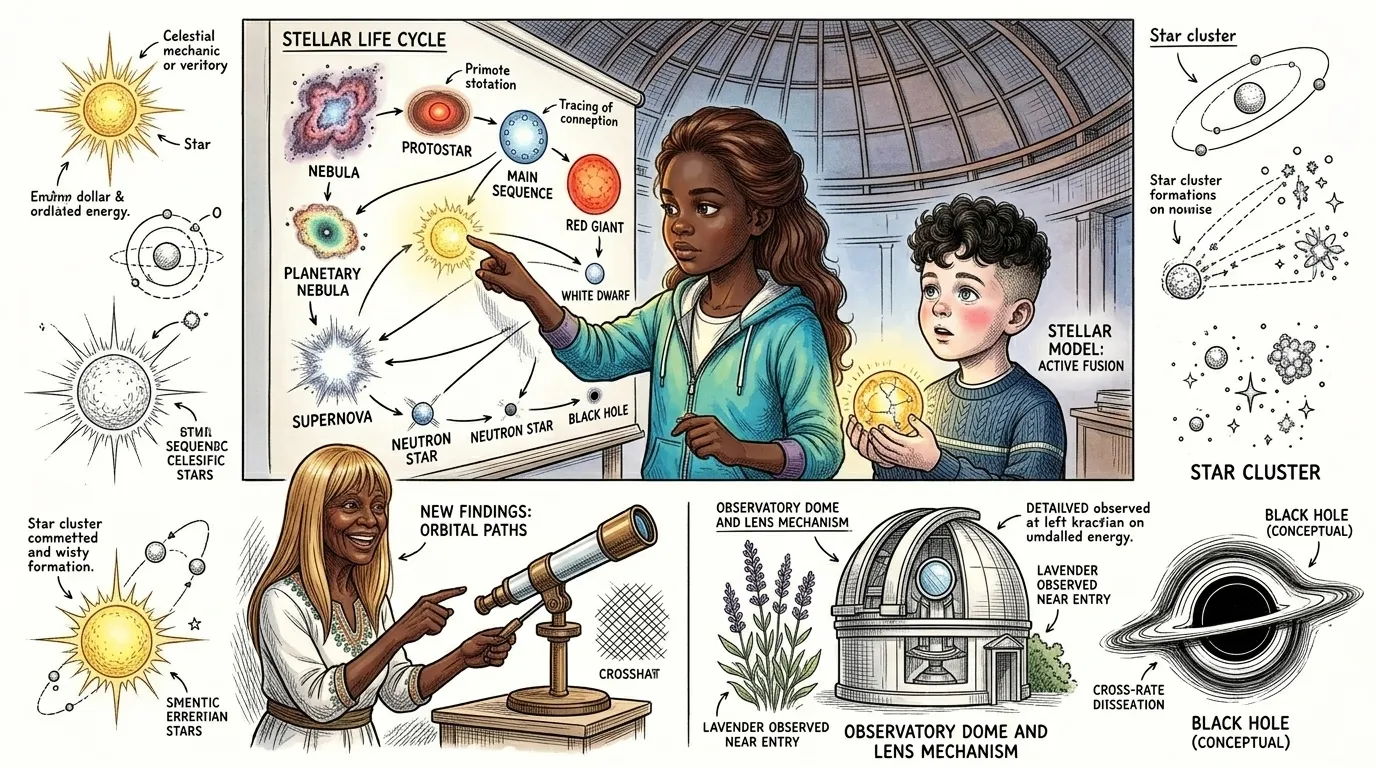
Payne-Gaposchkin's work revolutionized the understanding of stellar evolution. Knowing the primary components of stars allowed astronomers to develop models of how stars are born, live, and die. These models continue to be refined, but the foundational work was hers.\n\n Fact: Understanding stellar composition unlocks secrets of stellar life cycles.
Page 7
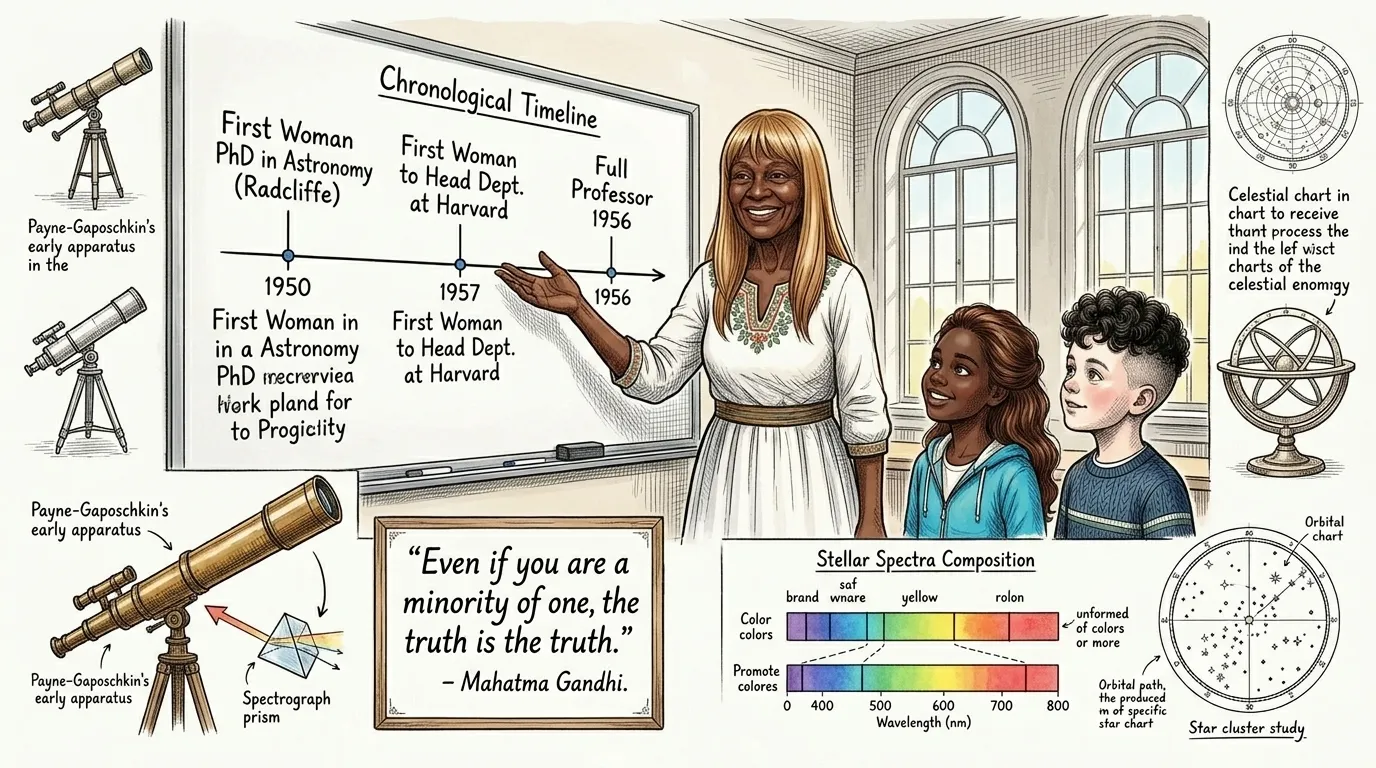
Cecilia Payne-Gaposchkin faced many obstacles as a woman in science. Despite these challenges, she persevered, becoming the first woman to earn a Ph.D. in astronomy from Radcliffe College (later part of Harvard) and the first woman to head a department at Harvard. In 1956, she became a full professor, finally receiving the recognition she deserved.\n\n"I think, like Marie Curie, Cecilia Payne-Gaposchkin was a scientist who knew that, as Gandhi said, 'Even if you are a minority of one, the truth is the truth.' That is something to remember!"\n\n Fact: Payne-Gaposchkin's accomplishments paved the way for women in science.
Page 8
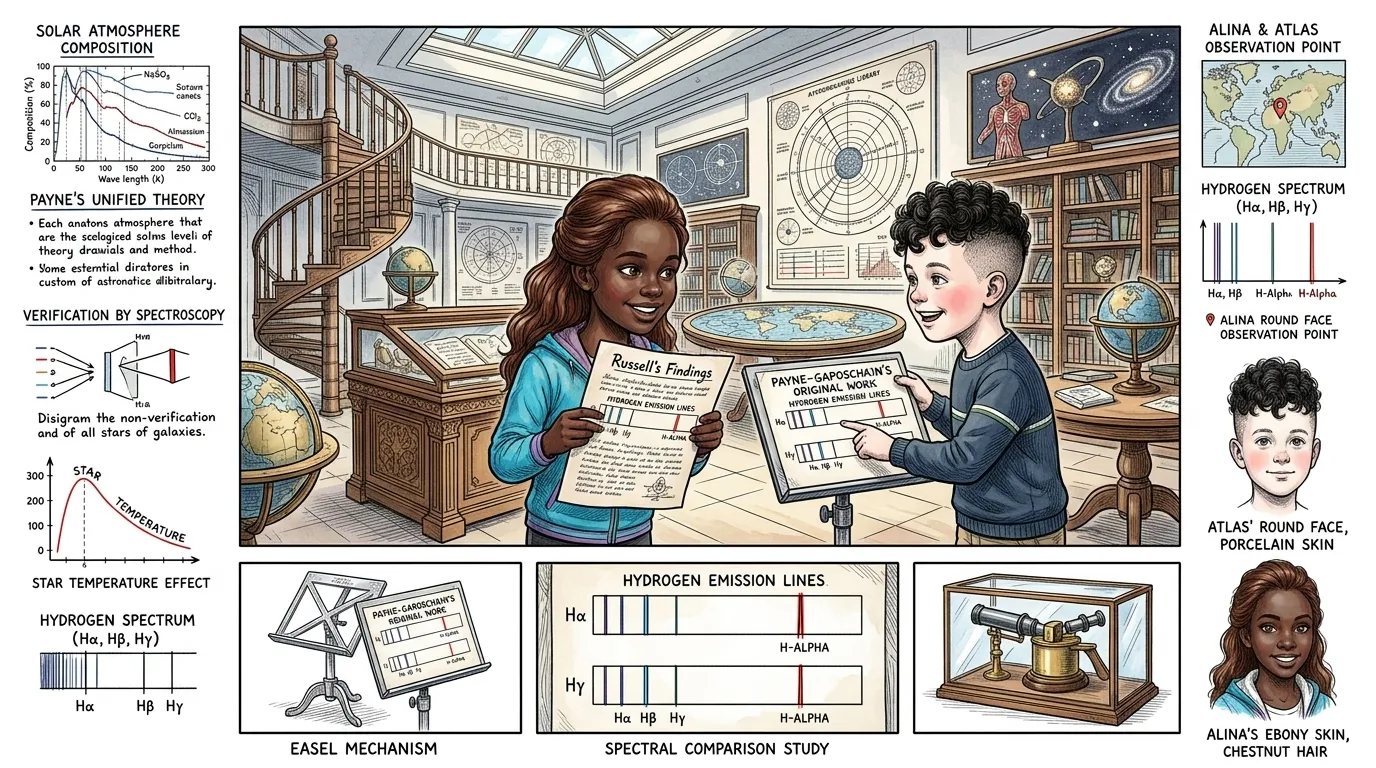
Henry Norris Russell, a respected astronomer, later independently came to the same conclusions about hydrogen abundance. This confirmation helped solidify Payne-Gaposchkin's findings in the scientific community. This confirmation highlights the importance of independent verification.\n\n Fact: Confirmation by peers is a critical step in scientific acceptance.
Page 9
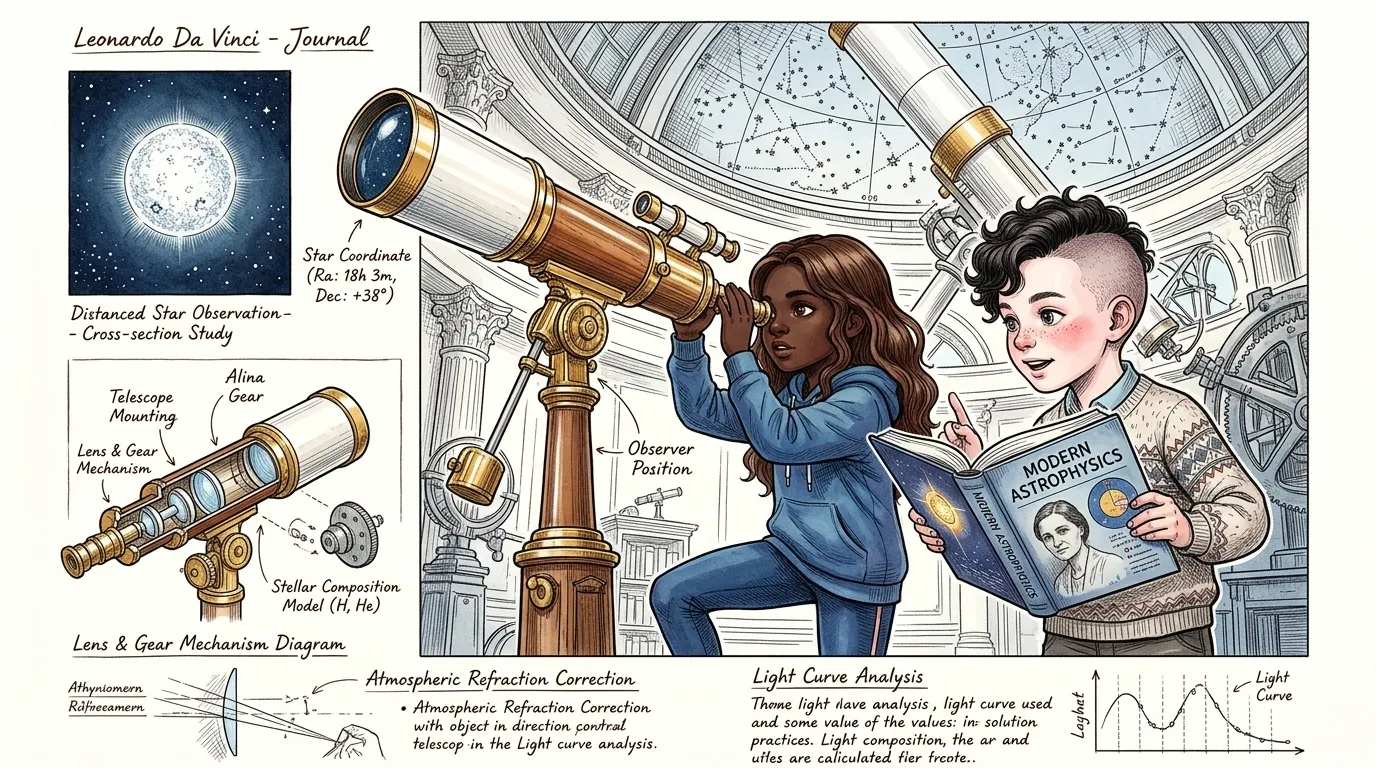
Though she wasn't immediately credited, Payne-Gaposchkin's meticulous research changed astronomy. Her findings became central to understanding stars. Though delayed, her legacy as a pioneering astrophysicist is secure. The impact of her work is still visible today.\n\n Fact: Cecilia Payne-Gaposchkin's legacy continues to inspire astronomers today.
Page 10
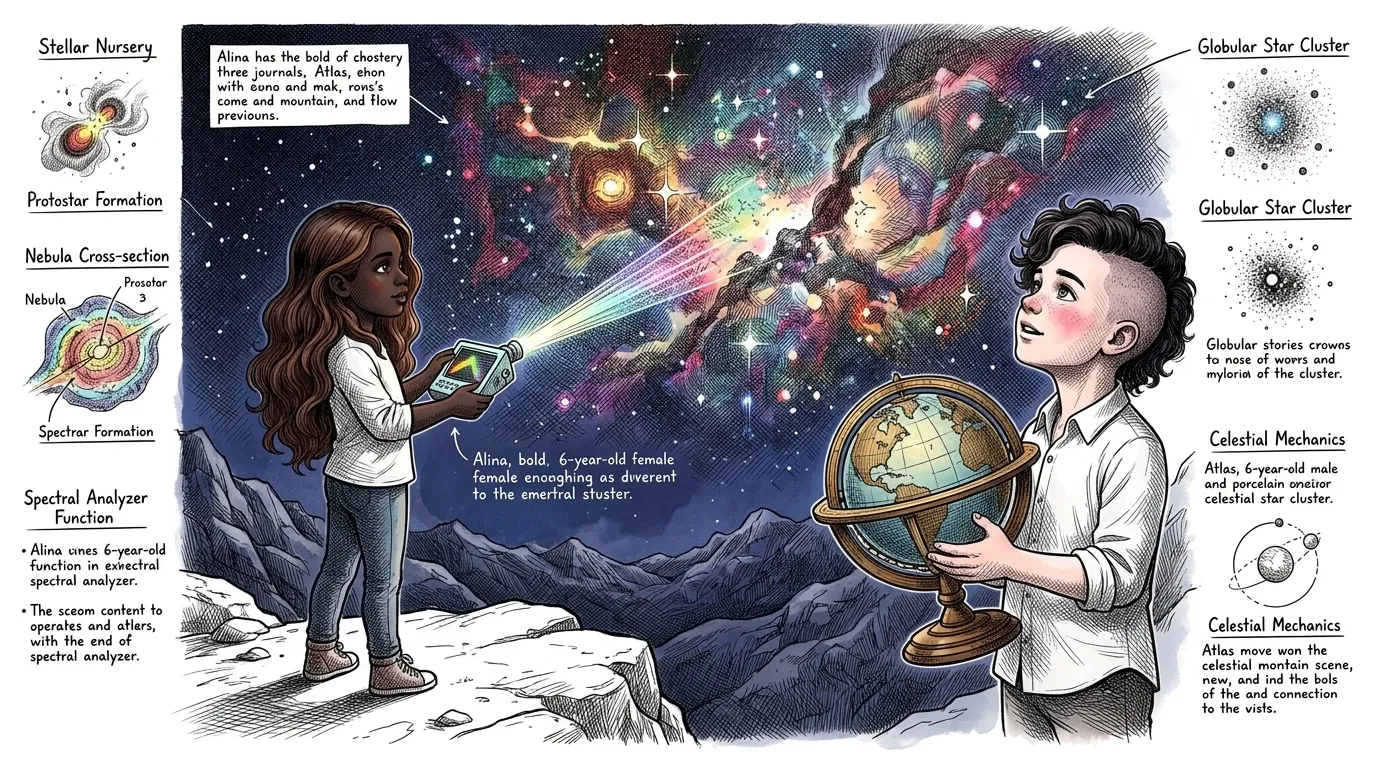
Cecilia Payne-Gaposchkin's journey reminds us that even revolutionary ideas can face resistance. However, meticulous work and solid data will eventually prevail, illuminating the universe's secrets, one spectrum at a time. Her quest to understand the stars continues to inspire future generations.\n\n Fact: Payne-Gaposchkin's legacy: unlocking the universe's secrets.
About this story
- Location: Global
- Audience: kids (ages 6–12)
Questions and answers
Read Wonder Science on your phone
Wonder Science is available on Android. Get Wonder Science on Google Play.