Charles Townes
Charles Townes — an illustrated science story, set in Global. 10 illustrated pages, free to read on Wonder Science.
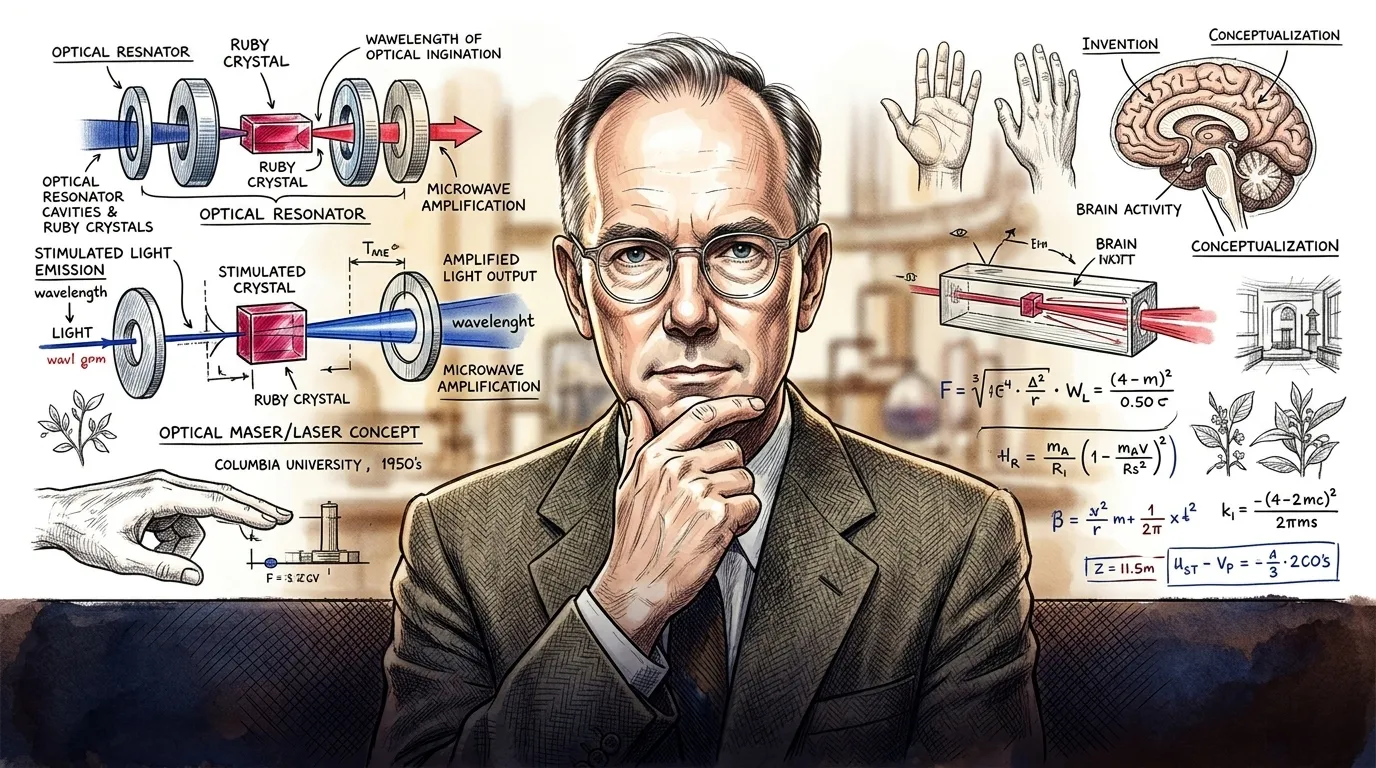
Page 1
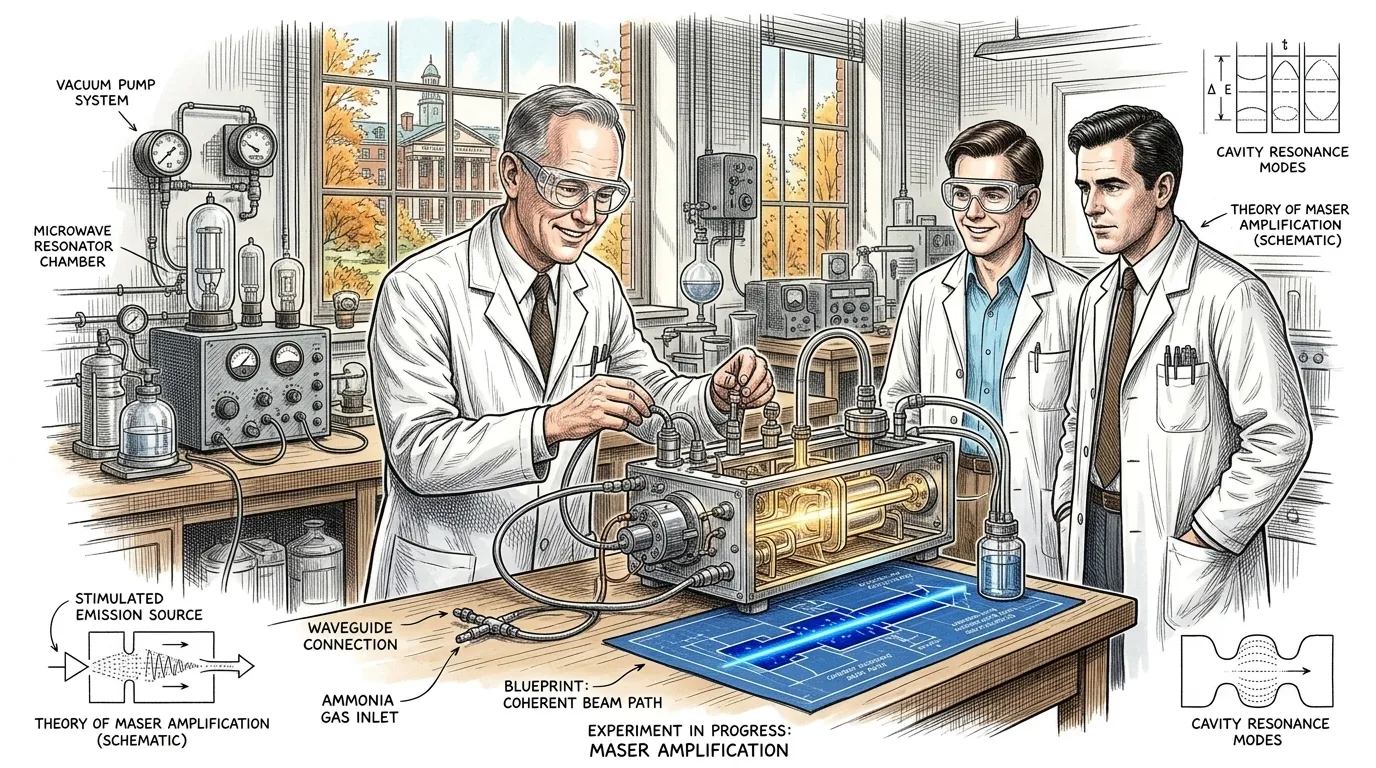
In the cold, late autumn of 1953, within the bustling laboratories of Columbia University, a quiet revolution was about to unfold. Physicist Charles Townes, alongside his dedicated team, was meticulously assembling a device that promised to unlock a fundamentally new form of electromagnetic radiation. This wasn't merely another experiment; it was a daring leap, an attempt to coax atoms into performing a synchronized dance, a phenomenon long theorized but never practically realized. Their goal: to generate a beam of coherent microwaves, a feat that would forever alter our understanding and manipulation of light itself.
Page 2
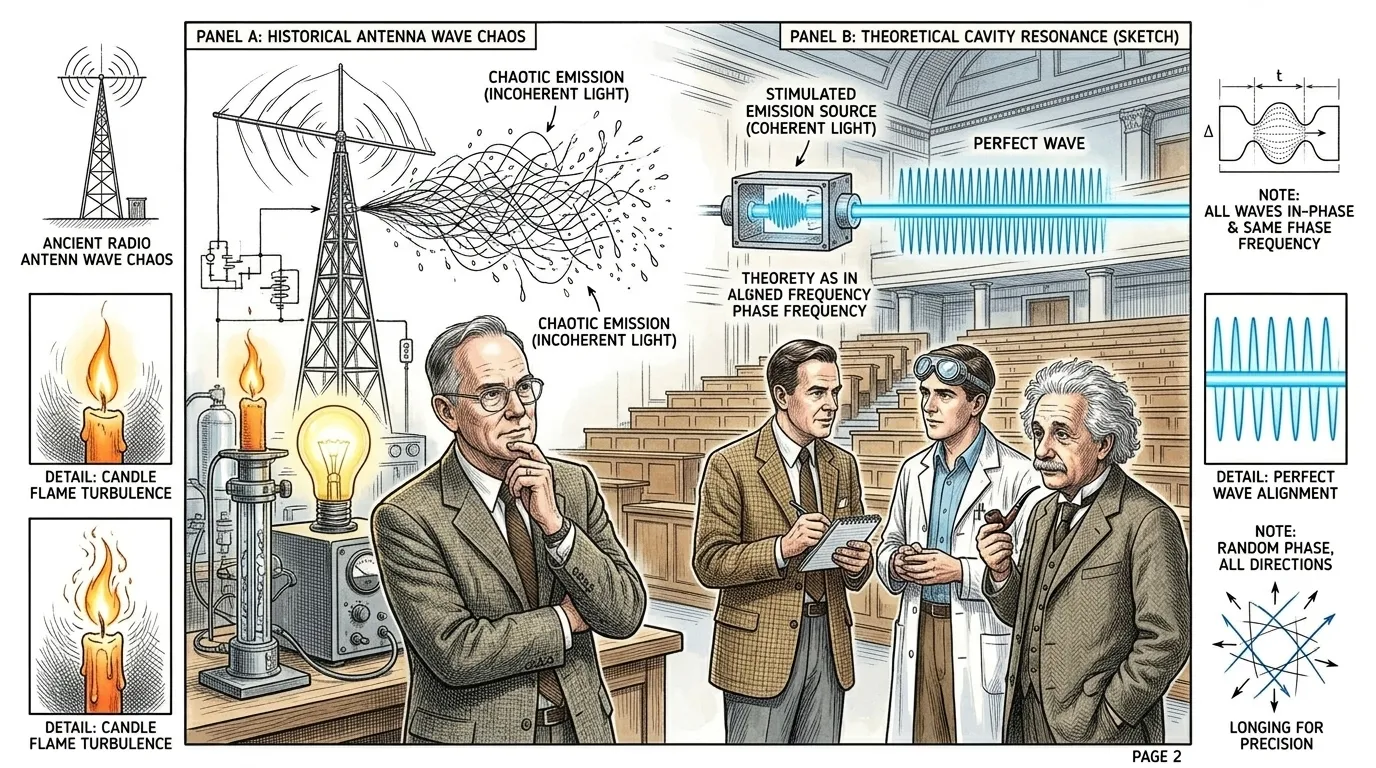
For centuries, humanity's interaction with light primarily involved incoherent sources: the flickering flame, the diffuse glow of an incandescent bulb, or even the broad spectrum of a radio antenna. These sources emit light or radiation in all directions, with waves utterly out of sync, like countless individual raindrops falling randomly. While incredibly useful, this fundamental incoherence presented a formidable barrier to precision. Scientists and engineers yearned for a way to generate electromagnetic waves that were perfectly aligned, traveling in the same direction, with identical frequency and phase – a 'perfect wave' that could carry information with unprecedented clarity or deliver energy with surgical accuracy. But how could such a thing be achieved at a practical scale?
Page 3
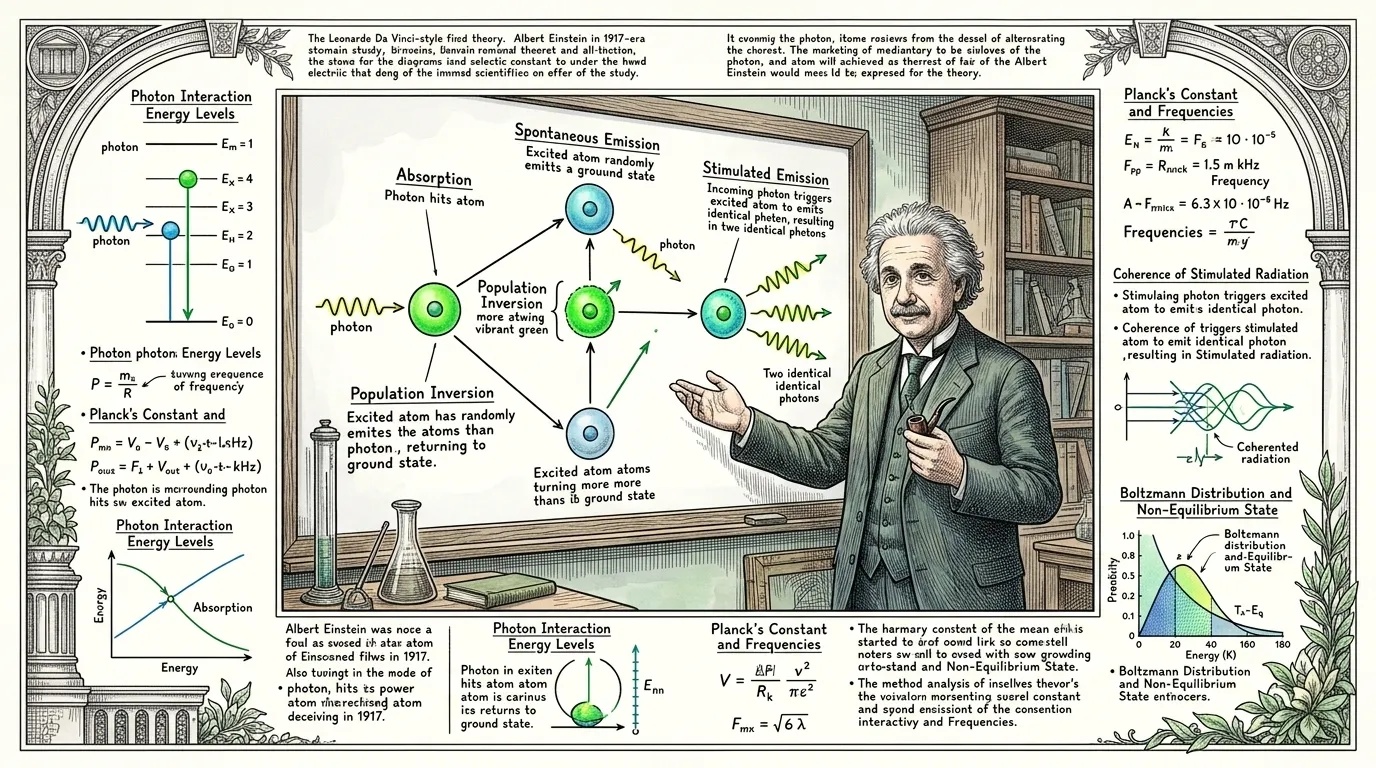
The theoretical groundwork for coherent light was laid decades earlier, by none other than Albert Einstein in 1917. Analyzing the interaction of radiation and matter, Einstein predicted three fundamental processes: absorption, spontaneous emission, and crucially, stimulated emission. He proposed that an excited atom, upon encountering a photon of precisely the right energy, could be 'stimulated' to emit an identical photon, effectively cloning the incoming light. This was a profound insight: one photon could trigger a cascade of identical photons, leading to an amplification of light. The challenge, however, lay in achieving a 'population inversion' – a state where more atoms were in an excited state than in their ground state – making stimulated emission dominant over absorption.
Page 4
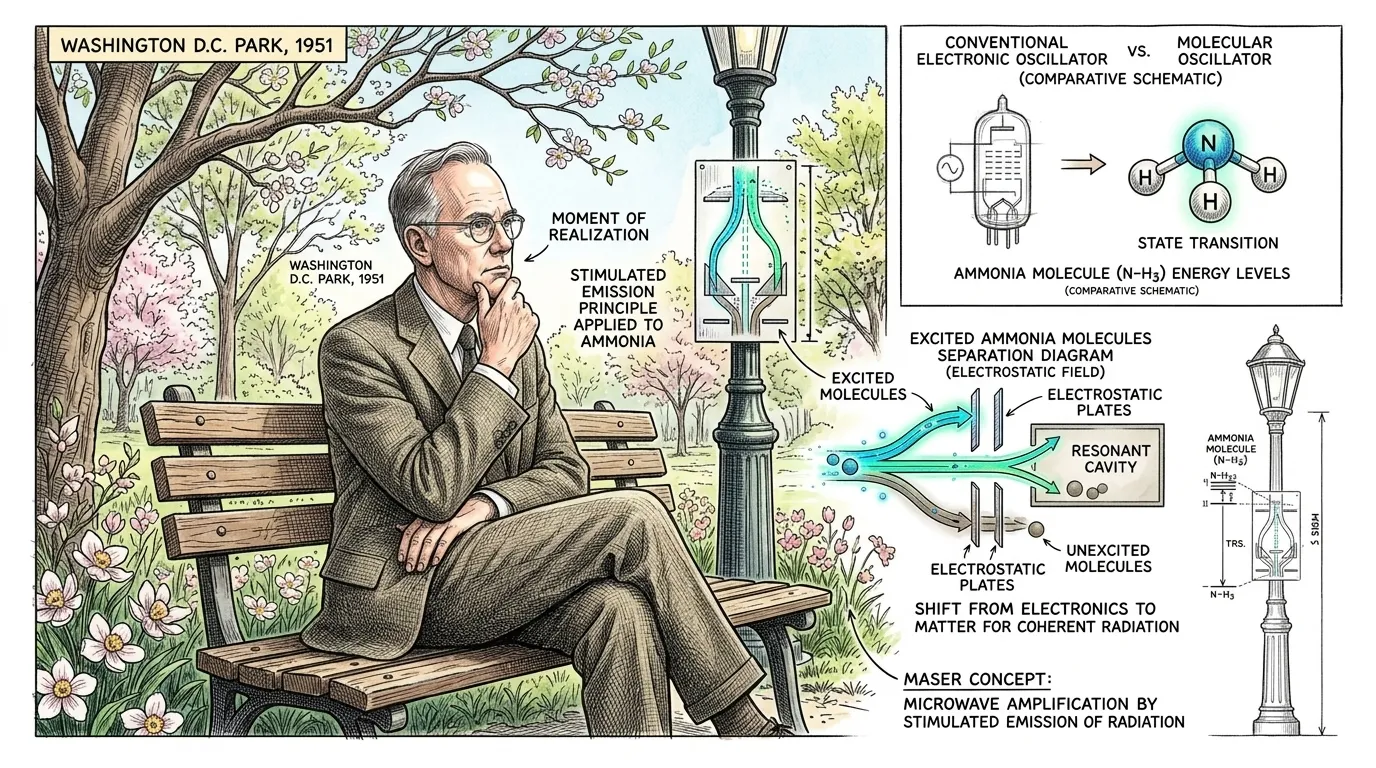
The pursuit of population inversion plagued physicists for years. Then, one spring morning in 1951, Charles Townes found himself pondering the problem on a park bench in Washington D.C., awaiting a breakfast meeting. Frustrated by the limitations of conventional electronics at microwave frequencies, a radical idea sparked: what if, instead of struggling with electronic circuits, atoms themselves could be made to generate the desired waves? He envisioned a system where excited ammonia molecules could be precisely separated from unexcited ones, and then channeled into a resonant cavity where they would be stimulated to emit their stored energy. This wasn't just a modification of existing tech; it was a paradigm shift, a realization that matter, not circuits, could be the key to coherent radiation.
Page 5
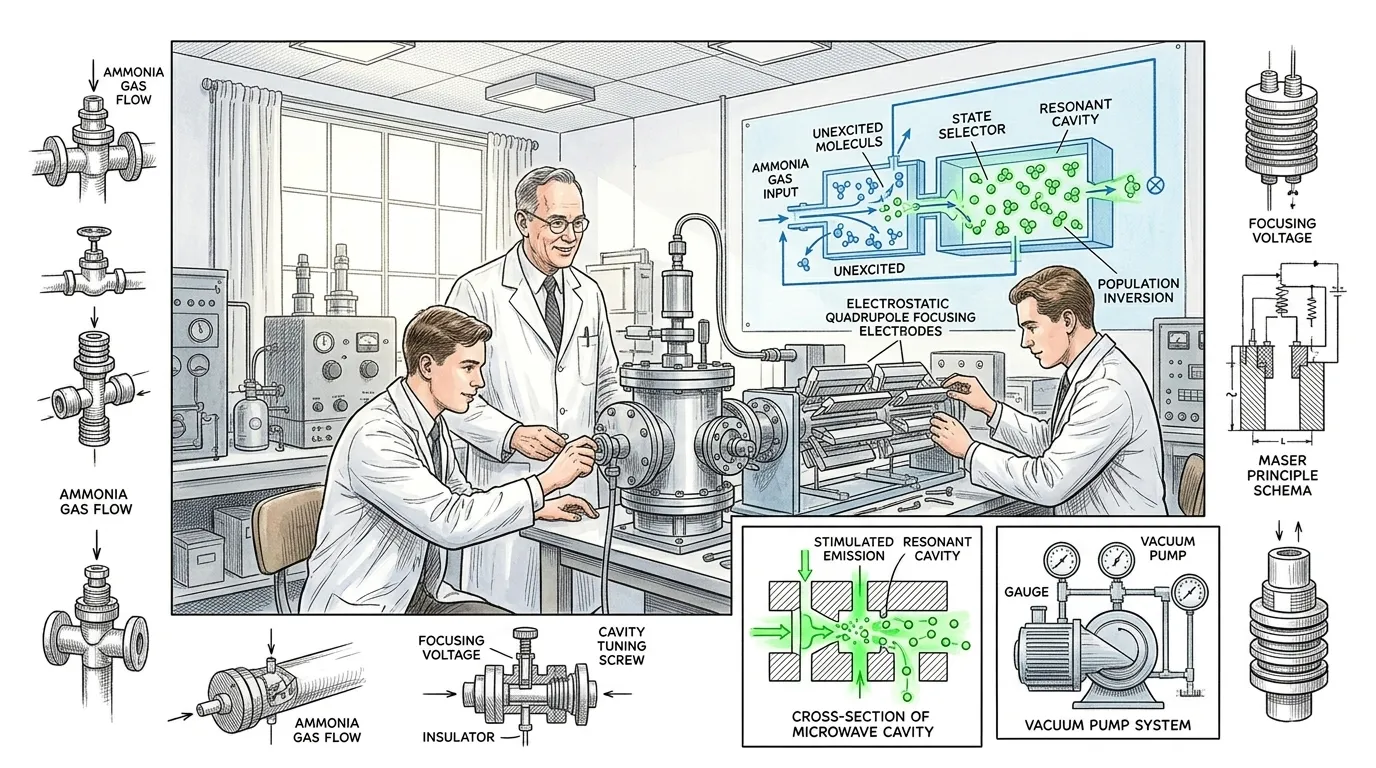
Townes and his students, Herbert Zeiger and James Gordon, immediately set to work. Their design, christened the 'maser' (Microwave Amplification by Stimulated Emission of Radiation), was ingenious. It began with a stream of ammonia gas molecules, pumped into a vacuum chamber. These molecules were then passed through a precisely designed 'state selector' – a set of electrostatic quadrupole focusing electrodes. The magic happened here: unexcited ammonia molecules, lacking a dipole moment, were deflected away, while the excited molecules, possessing a dipole moment, were funneled directly into a resonant microwave cavity. This precise separation was the critical step, achieving the coveted population inversion necessary for amplification.
Page 6
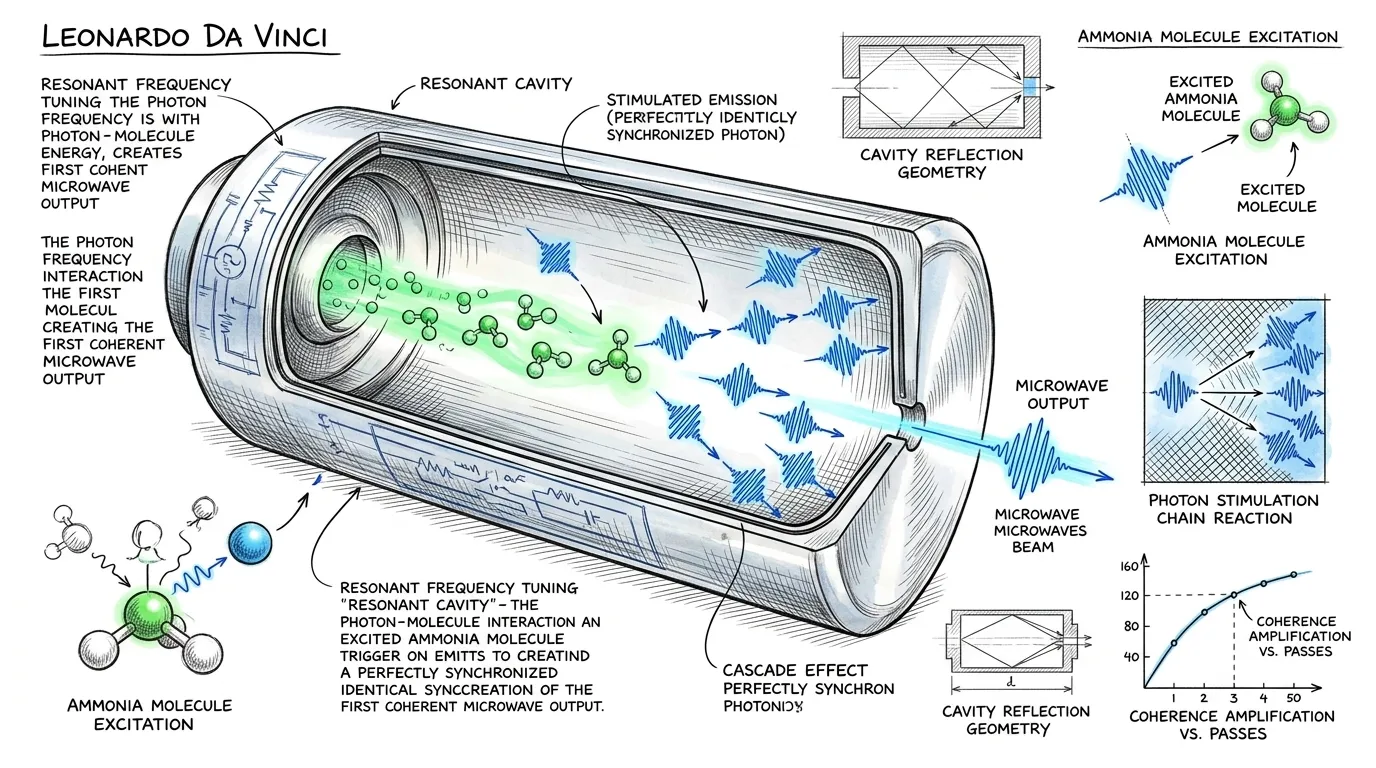
Once inside the resonant cavity, the excited ammonia molecules faced a new challenge: how to stimulate emission. The cavity was tuned to resonate at the specific microwave frequency that matched the energy difference between the excited and ground states of ammonia. A small, initial microwave photon, either from spontaneous emission or background noise, would bounce within this cavity, encountering an excited ammonia molecule. This photon would then 'stimulate' the molecule to emit an identical photon. This newly created photon, in turn, would stimulate another, and so on, creating an avalanche of perfectly synchronized microwaves. The cavity's reflective walls ensured these photons continued to interact, building an intense, coherent beam that escaped through a small aperture – the first truly coherent microwave output.
Page 7
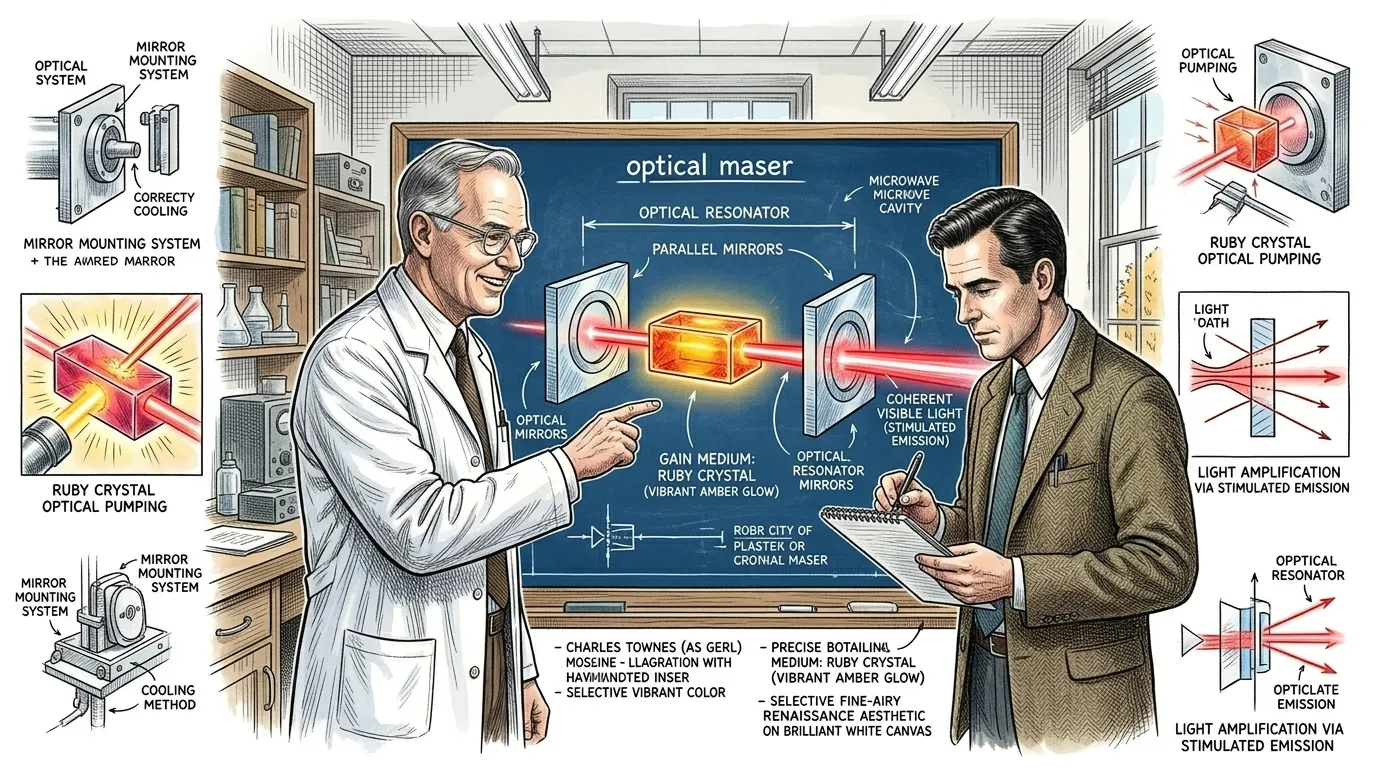
The maser was a breakthrough, but Townes and his brother-in-law, Arthur Schawlow, soon realized its principles could be extended beyond microwaves to visible light. The challenge was immense: light waves are far shorter and faster than microwaves, requiring a different resonant structure and an even more energetic means of achieving population inversion. Their 1958 theoretical paper, 'Infrared and Optical Masers,' outlined how a similar process could produce coherent light, using an optical resonator (like two parallel mirrors) and a suitable 'gain medium' (like a ruby crystal) instead of a microwave cavity and gas. This theoretical blueprint paved the way for the invention of the 'optical maser,' quickly dubbed the 'laser,' by Theodore Maiman in 1960. The era of coherent light had truly begun.
Page 8
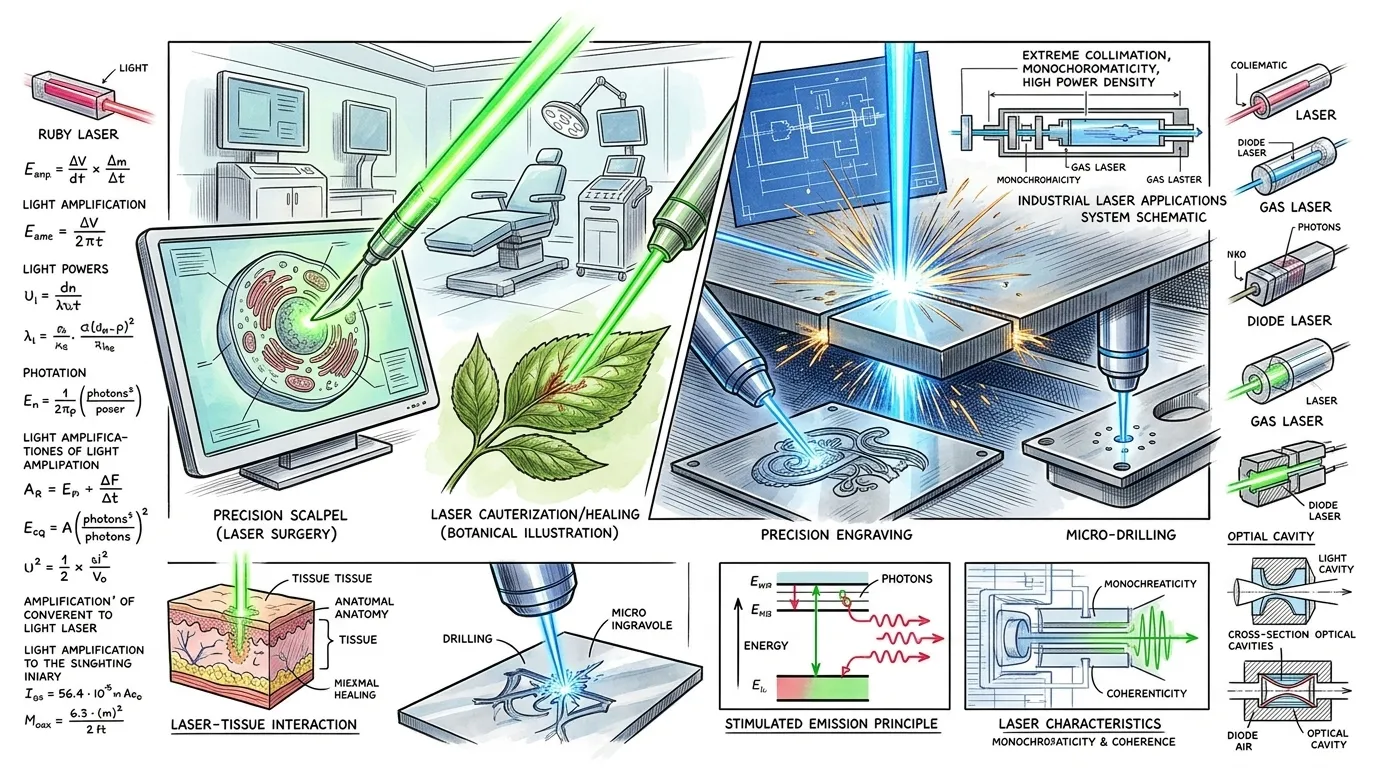
The practical applications of the laser were initially hard to foresee, famously described as 'a solution looking for a problem.' Yet, the laser's unique properties – its extreme collimation, monochromaticity, and high power density – rapidly found indispensable roles. In medicine, lasers became precision scalpels, enabling delicate eye surgeries, removing tumors with minimal invasiveness, and sealing wounds. Industrially, lasers revolutionized manufacturing: cutting and welding metals with unmatched accuracy, engraving intricate designs, and drilling microscopic holes. These technologies, once science fiction, became cornerstones of modern healthcare and production, driven by the principles Townes had elucidated.
Page 9
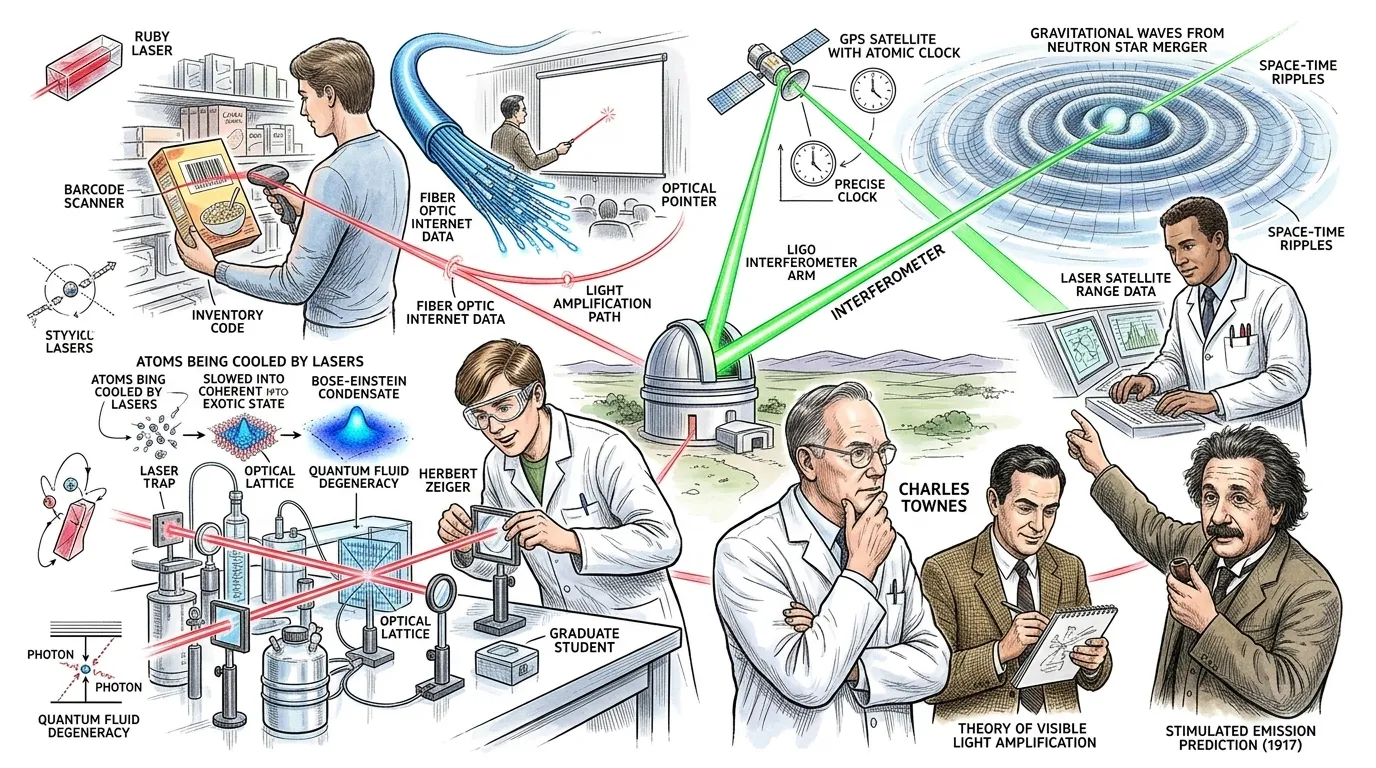
Beyond their immediate practical uses, lasers became essential tools for fundamental scientific research. They allowed physicists to cool atoms to temperatures barely above absolute zero, enabling the creation of exotic new states of matter. Astronomical observations now rely on maser and laser technology, from highly precise atomic clocks that underpin GPS to the monumental Laser Interferometer Gravitational-Wave Observatory (LIGO), which uses lasers to detect ripples in spacetime. Lasers permeate daily life, from barcode scanners and fiber optic internet to Blu-ray players and laser pointers. Charles Townes's vision didn't just amplify microwaves; it amplified our capacity to measure, understand, and interact with the universe at its most fundamental levels.
Page 10
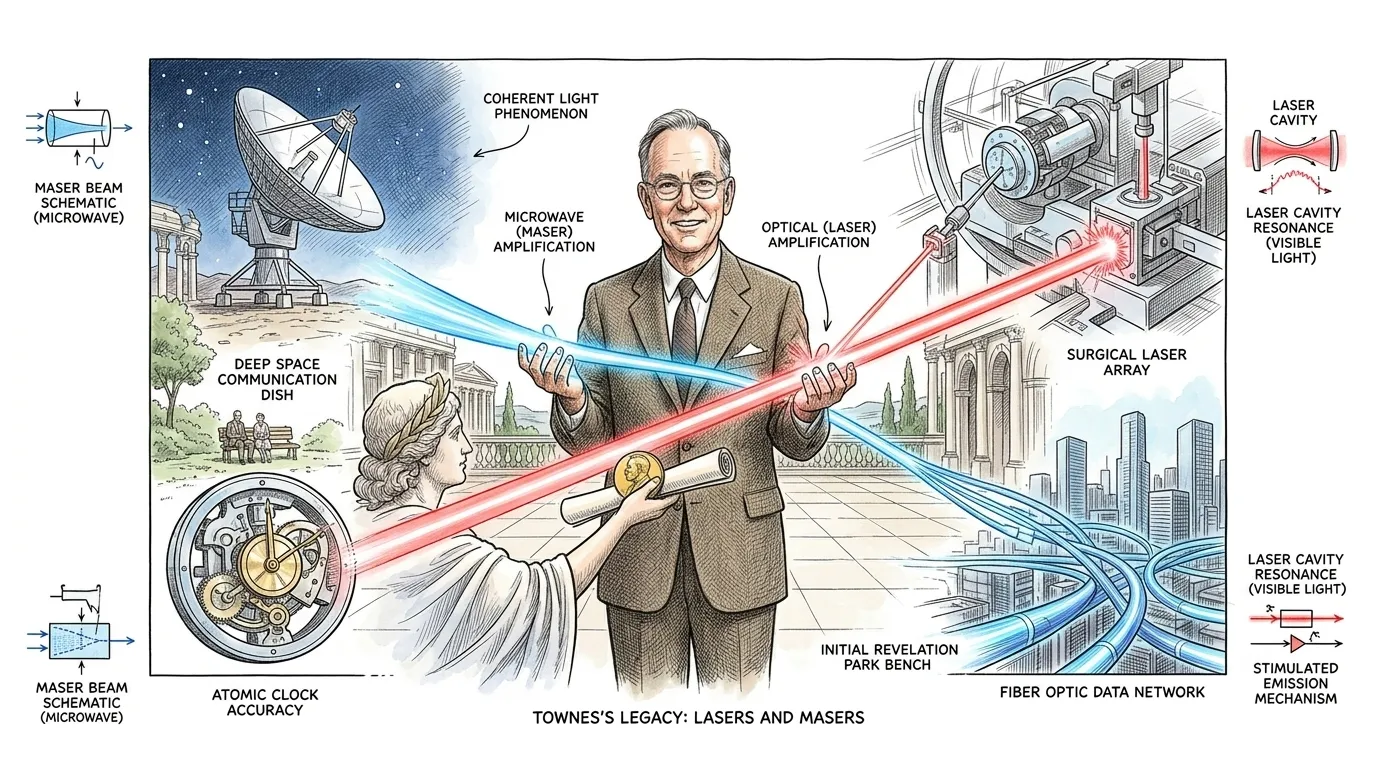
Charles Townes's revolutionary work on the maser, and its subsequent extension to the laser, earned him the Nobel Prize in Physics in 1964, shared with Nicolaas Bloembergen and Alfred Kastler for their fundamental work in quantum electronics. His journey from a park bench revelation to the creation of instruments that could amplify light demonstrated a profound grasp of quantum mechanics and an unwavering vision. Today, masers continue to play vital roles in deep space communication and ultra-sensitive radio astronomy, while lasers, born from the same principles, are ubiquitous. From the most intricate surgical procedures to the fiber optic cables carrying the internet, Townes's legacy shines brightly, a testament to how fundamental scientific insight can illuminate and transform the entire modern world, fostering continuous wonder and discovery.
About this story
- Location: Global
- Audience: general readers
Questions and answers
Read Wonder Science on your phone
Wonder Science is available on Android. Get Wonder Science on Google Play.