Chemistry in the Ocean

Chemistry in the Ocean — an illustrated science story. 10 illustrated pages, free to read on Wonder Science.
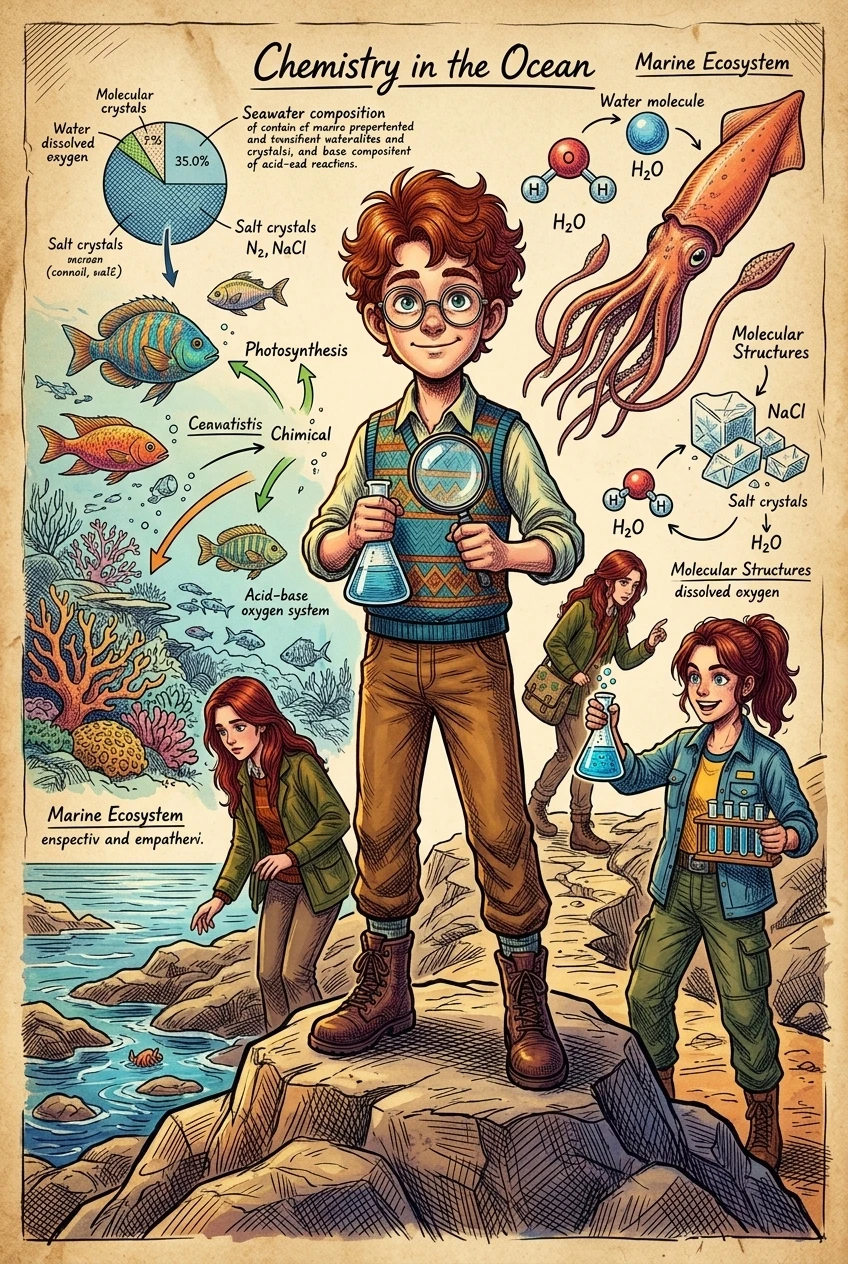
Chemistry in the Ocean — book cover — Wonder Science
Chemistry in the Ocean — an illustrated science story. 10 illustrated pages, free to read on Wonder Science.

Page 1
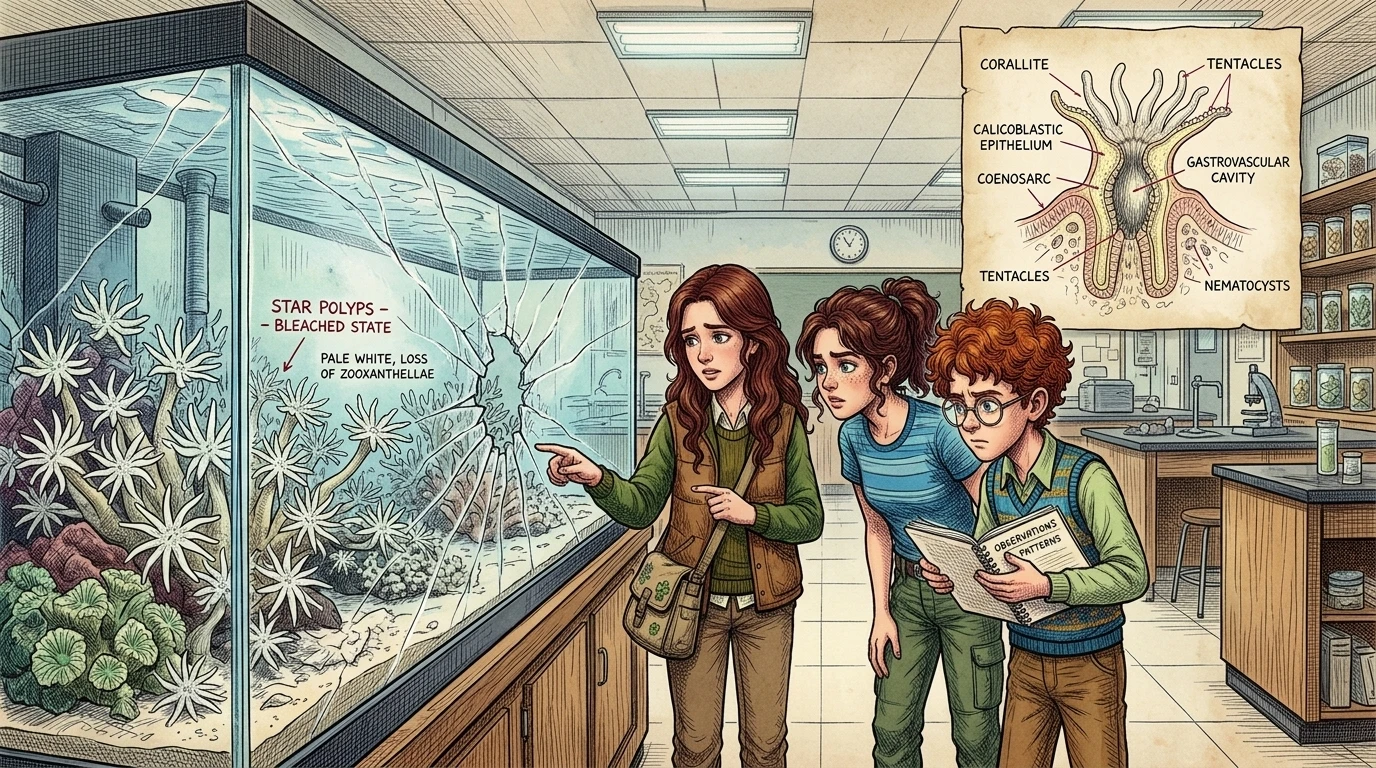
'Something's wrong with our coral,' Winona whispered, pointing a worried finger at the classroom's large marine tank. Tara leaned closer, her nose almost…
'Something's wrong with our coral,' Winona whispered, pointing a worried finger at the classroom's large marine tank. Tara leaned closer, her nose almost touching the glass. 'Look, the star polyps have lost their bright green color—they look pale and sad!' Atlas squinted, seeing a pattern not of sickness, but of change. 'It's like their inner light has gone out,' he murmured, pulling out his small discovery notebook.

'Something's wrong with our coral,' Winona whispered, pointing a worried finger at the classroom's large marine tank. Tara leaned closer, her nose almost touching the glass. 'Look, the star polyps have lost their bright green color—they look pale and sad!' Atlas squinted, seeing a pattern not of sickness, but of change. 'It's like their inner light has gone out,' he murmured, pulling out his small discovery notebook.

Page 2
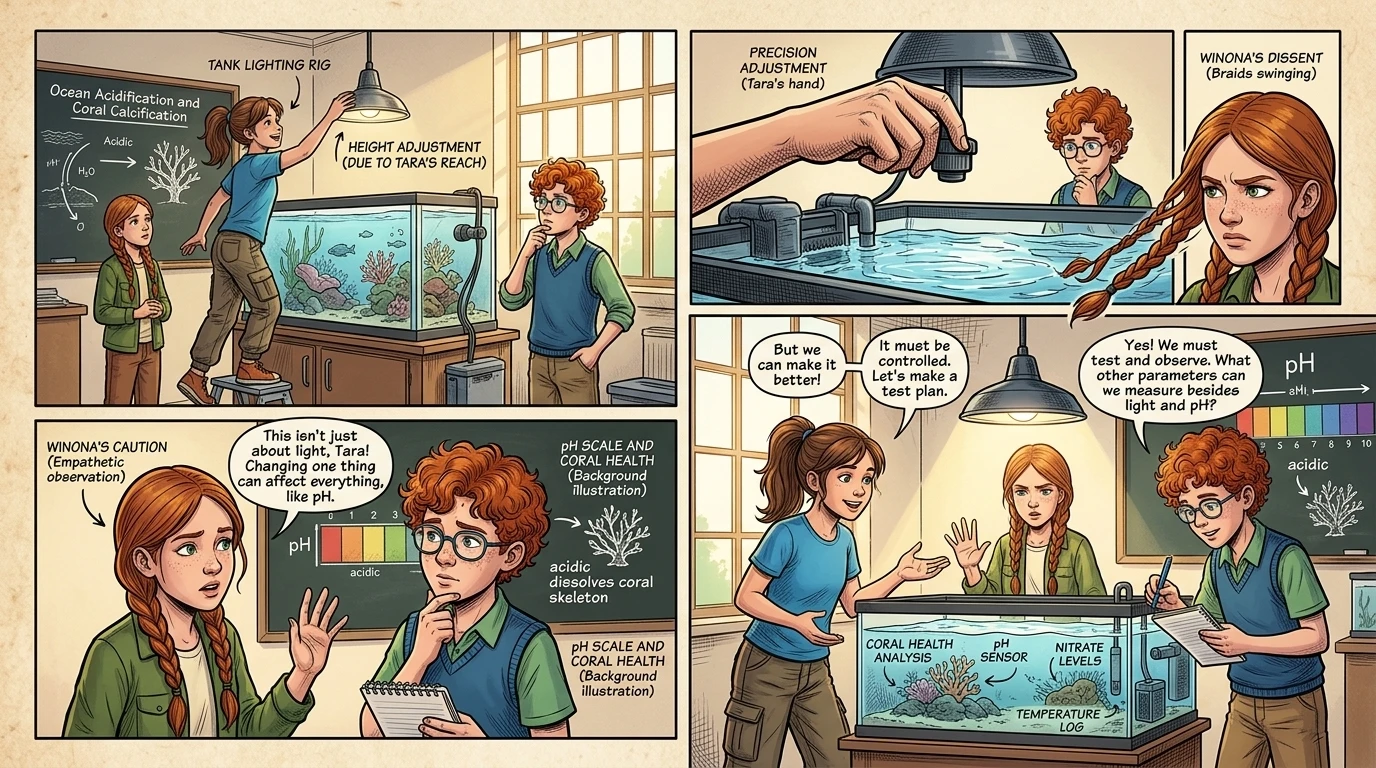
'Maybe they need more light?' Tara suggested, adjusting the lamp above the tank. Winona shook her head, her braids swinging.
'Maybe they need more light?' Tara suggested, adjusting the lamp above the tank. Winona shook her head, her braids swinging. 'The light is the same as always, but what if the water chemistry is off?' Atlas tapped his chin thoughtfully. 'You mean the pH balance could be wrong? That could cause acidification, making it hard for the coral to build their skeletons.'

'Maybe they need more light?' Tara suggested, adjusting the lamp above the tank. Winona shook her head, her braids swinging. 'The light is the same as always, but what if the water chemistry is off?' Atlas tapped his chin thoughtfully. 'You mean the pH balance could be wrong? That could cause acidification, making it hard for the coral to build their skeletons.'

Page 3
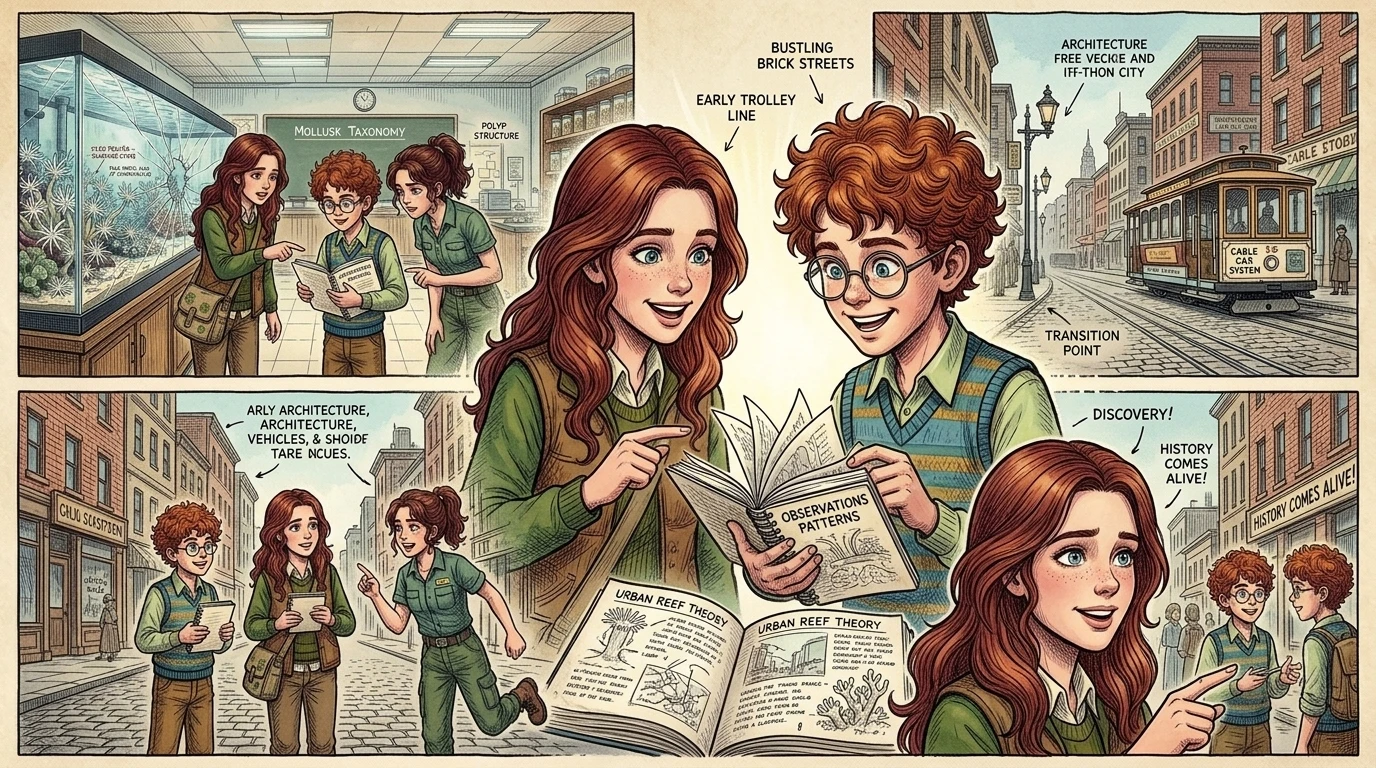
'But how would we even measure something like that?' asked Winona. Atlas flipped through his notebook. 'To understand our small ocean, maybe we need to see how…
'But how would we even measure something like that?' asked Winona. Atlas flipped through his notebook. 'To understand our small ocean, maybe we need to see how scientists first learned to understand the big one.' The world around them seemed to shimmer and dissolve, the wooden classroom fading into the brick-lined streets of a bustling city from a century ago.

'But how would we even measure something like that?' asked Winona. Atlas flipped through his notebook. 'To understand our small ocean, maybe we need to see how scientists first learned to understand the big one.' The world around them seemed to shimmer and dissolve, the wooden classroom fading into the brick-lined streets of a bustling city from a century ago.

Page 4
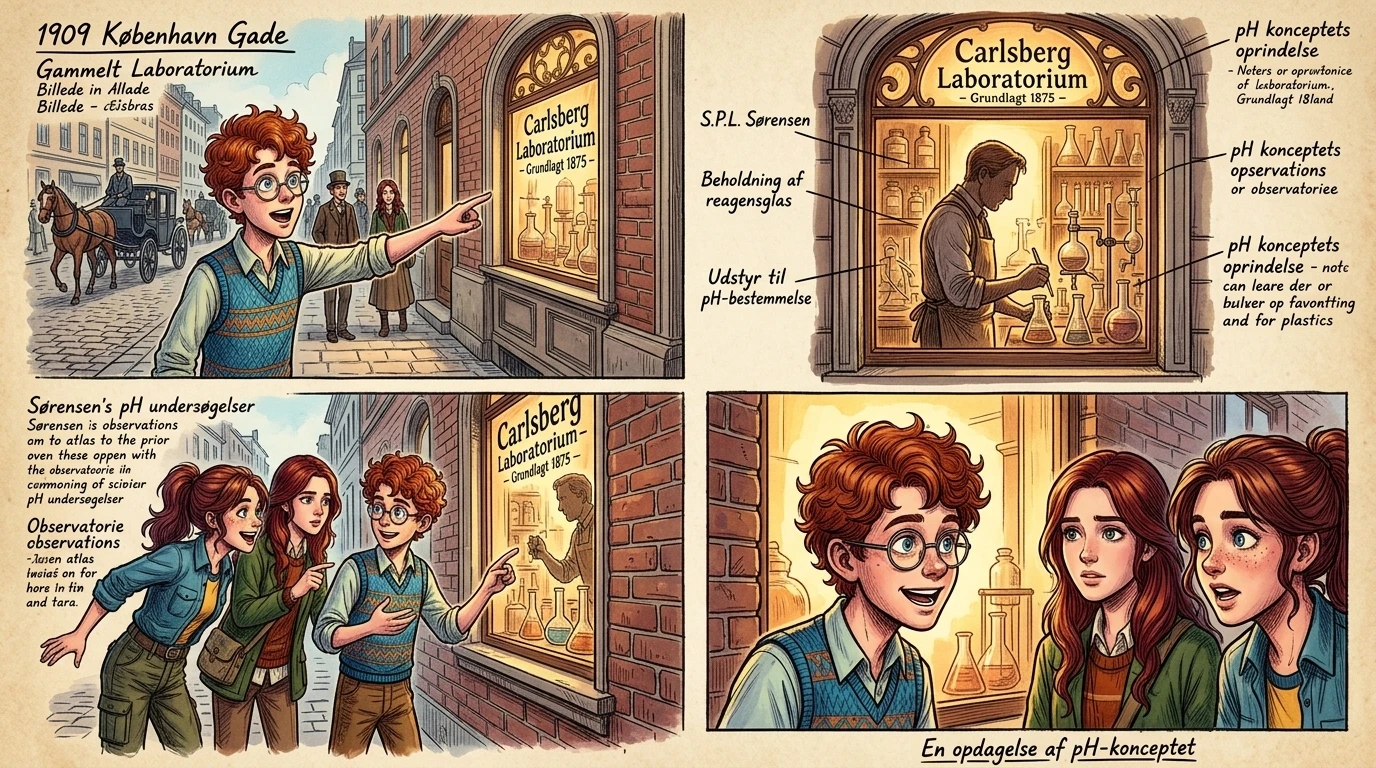
'This is the Carlsberg Laboratory in Denmark, around 1909,' Atlas explained, his voice filled with awe. 'A chemist named Søren Peder Lauritz Sørensen worked…
'This is the Carlsberg Laboratory in Denmark, around 1909,' Atlas explained, his voice filled with awe. 'A chemist named Søren Peder Lauritz Sørensen worked here.' He pointed towards a brightly lit window. 'He wasn't studying oceans, but beer! He needed a precise way to measure acidity to make the perfect brew.'

'This is the Carlsberg Laboratory in Denmark, around 1909,' Atlas explained, his voice filled with awe. 'A chemist named Søren Peder Lauritz Sørensen worked here.' He pointed towards a brightly lit window. 'He wasn't studying oceans, but beer! He needed a precise way to measure acidity to make the perfect brew.'

Page 5
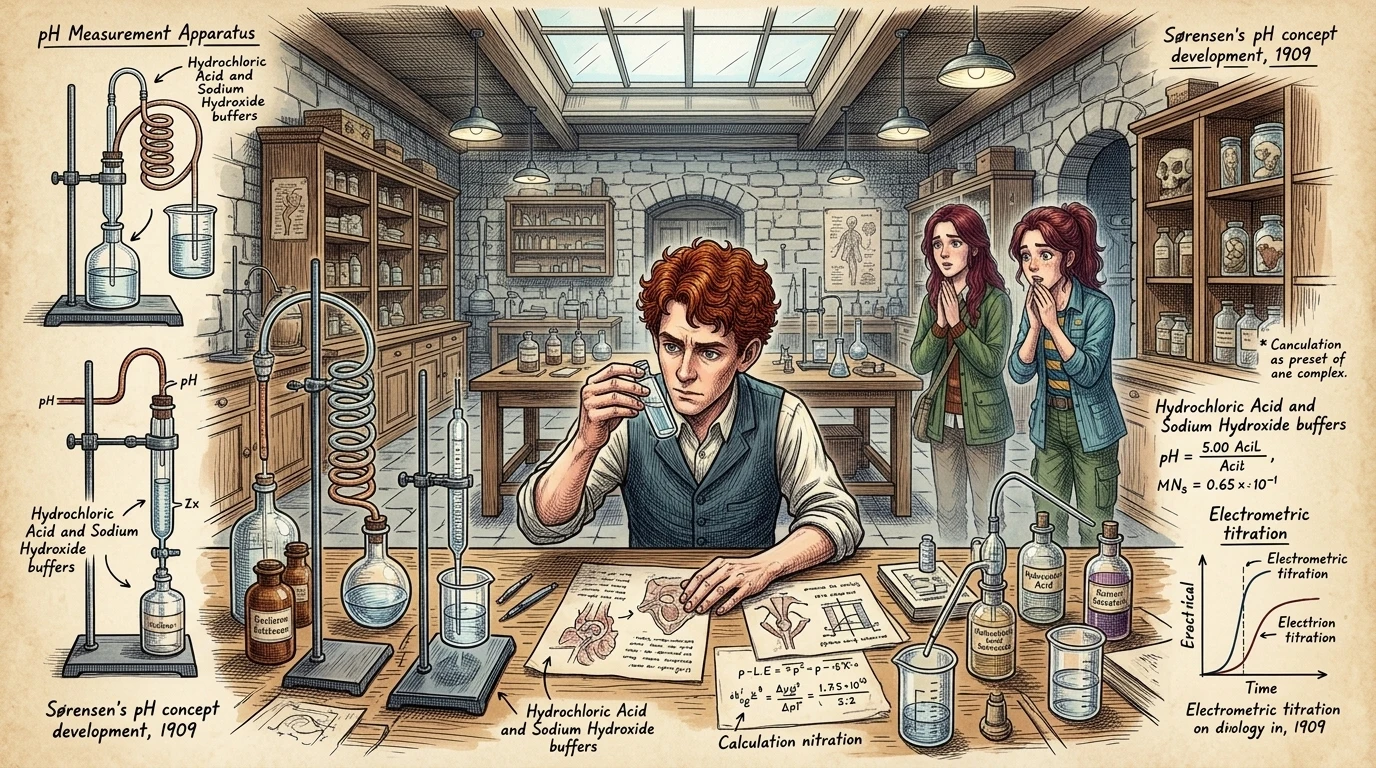
Sørensen was famously meticulous, repeating his experiments dozens of times to ensure they were perfect. 'He believed that tiny, invisible changes could have…
Sørensen was famously meticulous, repeating his experiments dozens of times to ensure they were perfect. 'He believed that tiny, invisible changes could have huge effects on the final product,' Tara whispered, watching him work. 'Just like with our coral,' Winona added softly. They watched as he held up a small glass vial, examining the liquid inside with intense concentration.

Sørensen was famously meticulous, repeating his experiments dozens of times to ensure they were perfect. 'He believed that tiny, invisible changes could have huge effects on the final product,' Tara whispered, watching him work. 'Just like with our coral,' Winona added softly. They watched as he held up a small glass vial, examining the liquid inside with intense concentration.

Page 6
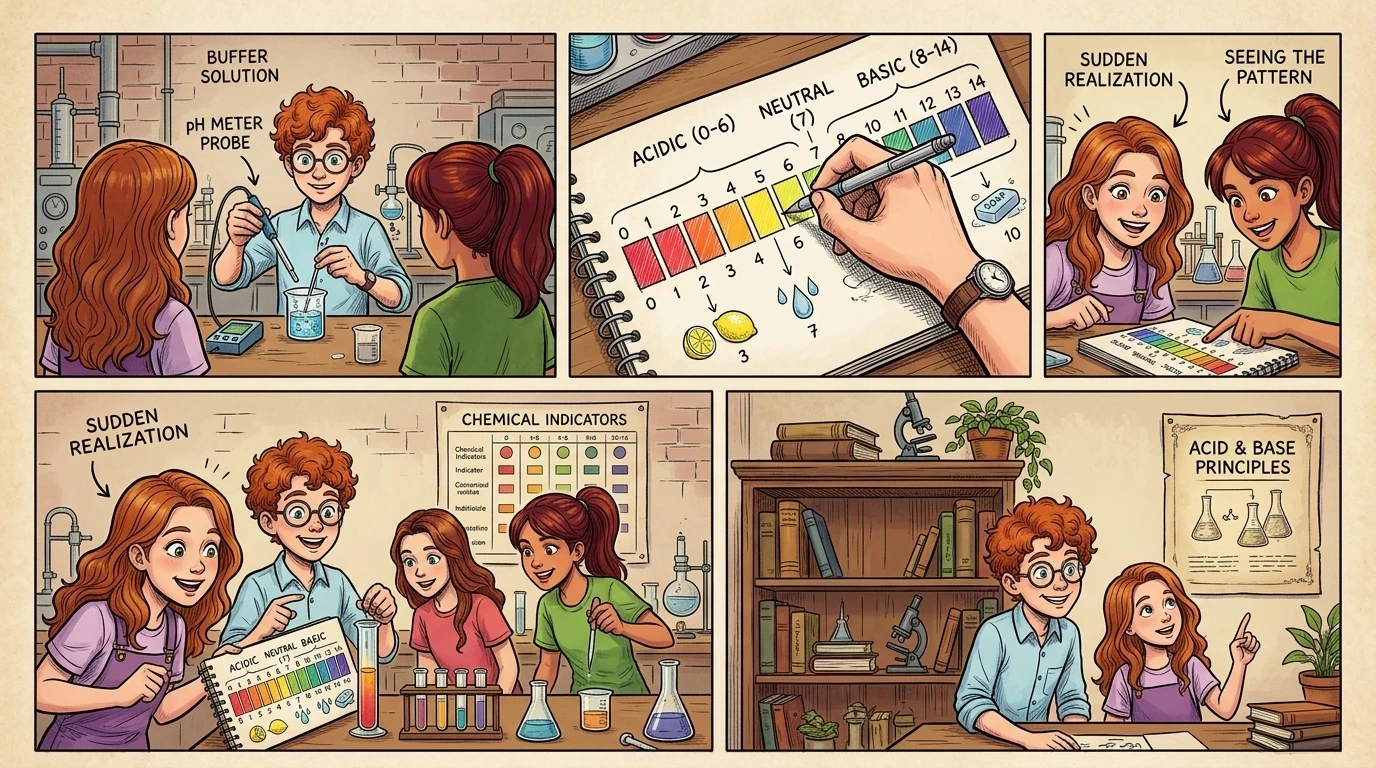
'So he invented a simple system to measure it all,' Atlas continued, sketching in his notebook. 'He called it the pH scale, a ruler for acidity from 0 to 14!'…
'So he invented a simple system to measure it all,' Atlas continued, sketching in his notebook. 'He called it the pH scale, a ruler for acidity from 0 to 14!' Winona's eyes lit up. 'So it's like a secret code for water chemistry!' 'Exactly,' Atlas grinned, 'and he gave us the key to understand it.'

'So he invented a simple system to measure it all,' Atlas continued, sketching in his notebook. 'He called it the pH scale, a ruler for acidity from 0 to 14!' Winona's eyes lit up. 'So it's like a secret code for water chemistry!' 'Exactly,' Atlas grinned, 'and he gave us the key to understand it.'

Page 7
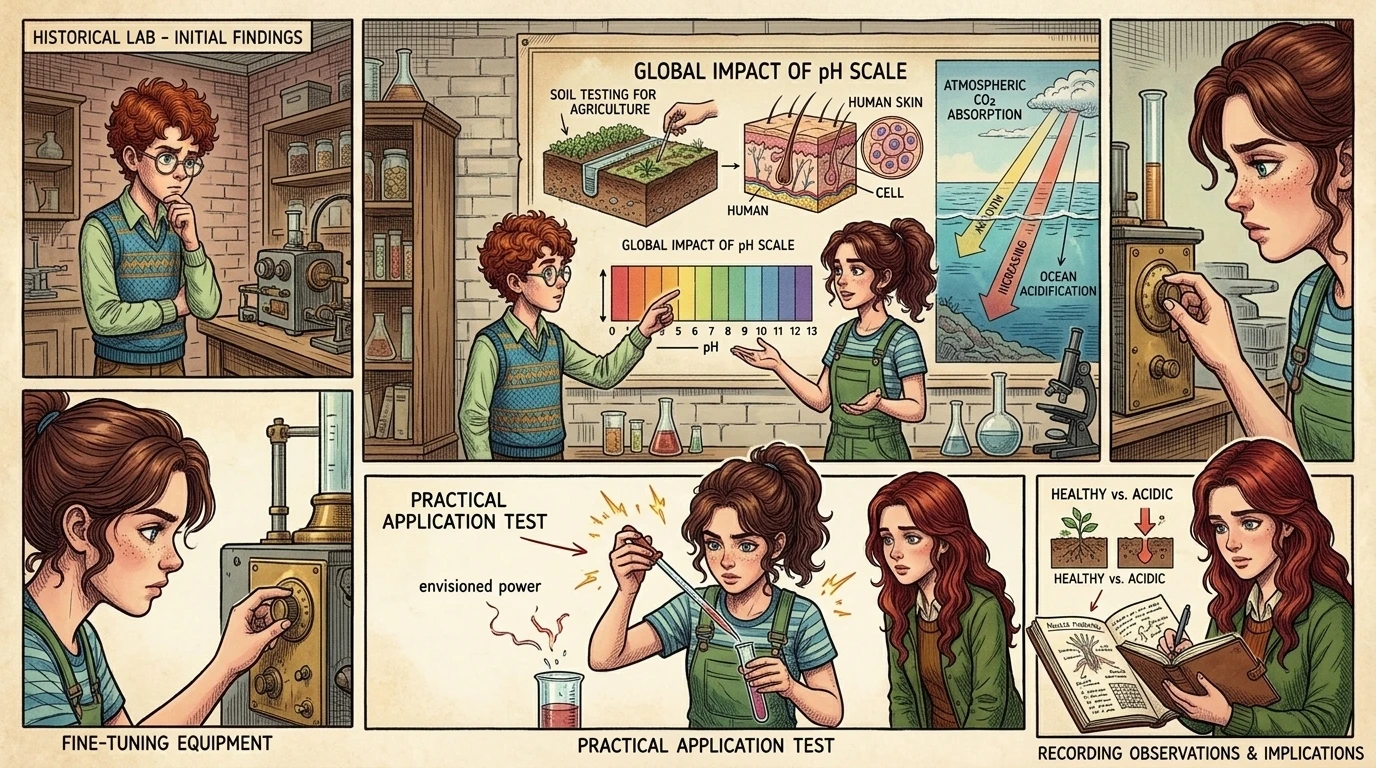
'That scale changed everything,' Tara said, looking around at the imagined lab. 'Now we use it to test soil for farming, our health, and the health of the whole…
'That scale changed everything,' Tara said, looking around at the imagined lab. 'Now we use it to test soil for farming, our health, and the health of the whole planet!' Atlas nodded, adding a crucial fact. 'And it's super important for the ocean, because the ocean absorbs about 30% of the carbon dioxide we release, which can slowly make it more acidic.'

'That scale changed everything,' Tara said, looking around at the imagined lab. 'Now we use it to test soil for farming, our health, and the health of the whole planet!' Atlas nodded, adding a crucial fact. 'And it's super important for the ocean, because the ocean absorbs about 30% of the carbon dioxide we release, which can slowly make it more acidic.'

Page 8
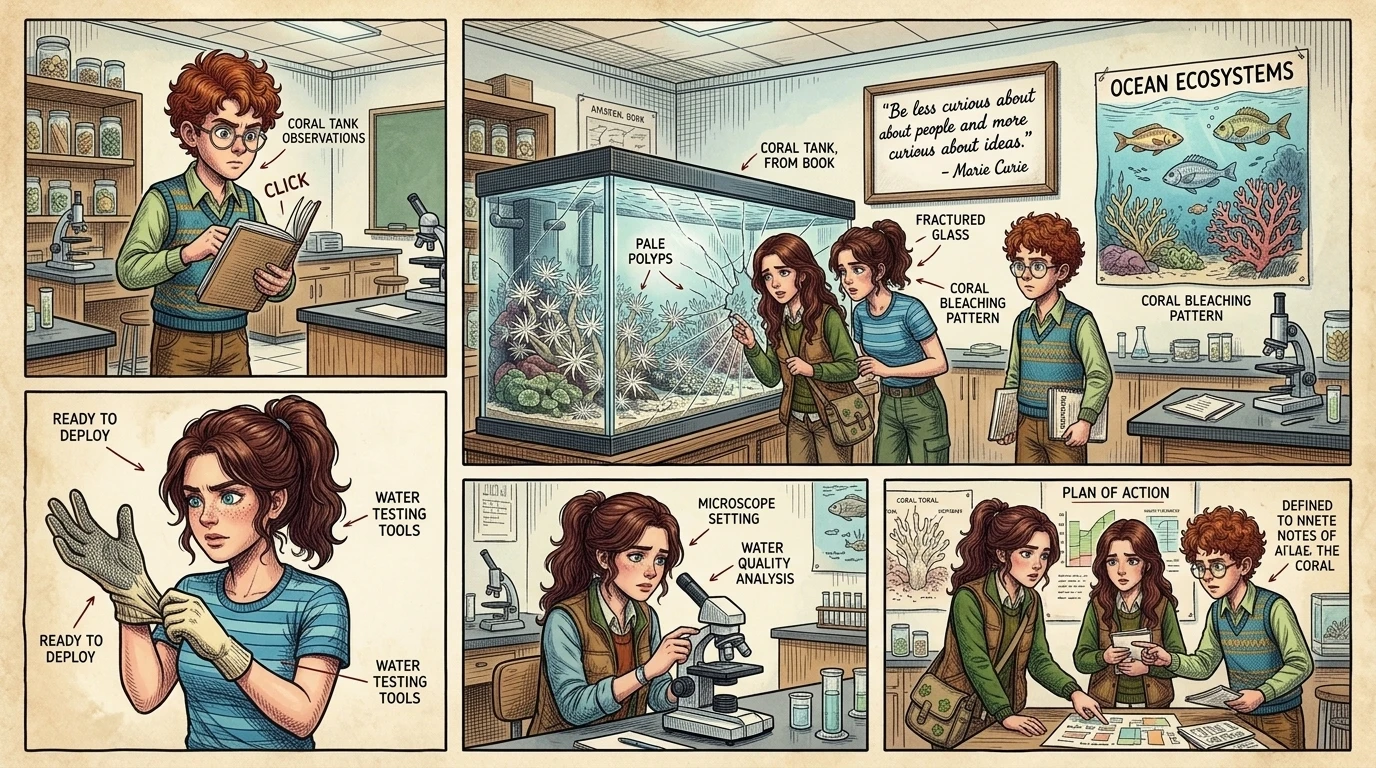
The brick walls of the lab dissolved, and they were back in their classroom, standing before the pale coral. Atlas shut his notebook with a snap.
The brick walls of the lab dissolved, and they were back in their classroom, standing before the pale coral. Atlas shut his notebook with a snap. 'I was thinking of what the scientist Marie Curie said: 'Nothing in life is to be feared, it is only to be understood.'' He looked at his friends with new resolve. 'We don't need to be worried about the coral, we just need to understand the water. Let's test the pH!'

The brick walls of the lab dissolved, and they were back in their classroom, standing before the pale coral. Atlas shut his notebook with a snap. 'I was thinking of what the scientist Marie Curie said: 'Nothing in life is to be feared, it is only to be understood.'' He looked at his friends with new resolve. 'We don't need to be worried about the coral, we just need to understand the water. Let's test the pH!'

Page 9
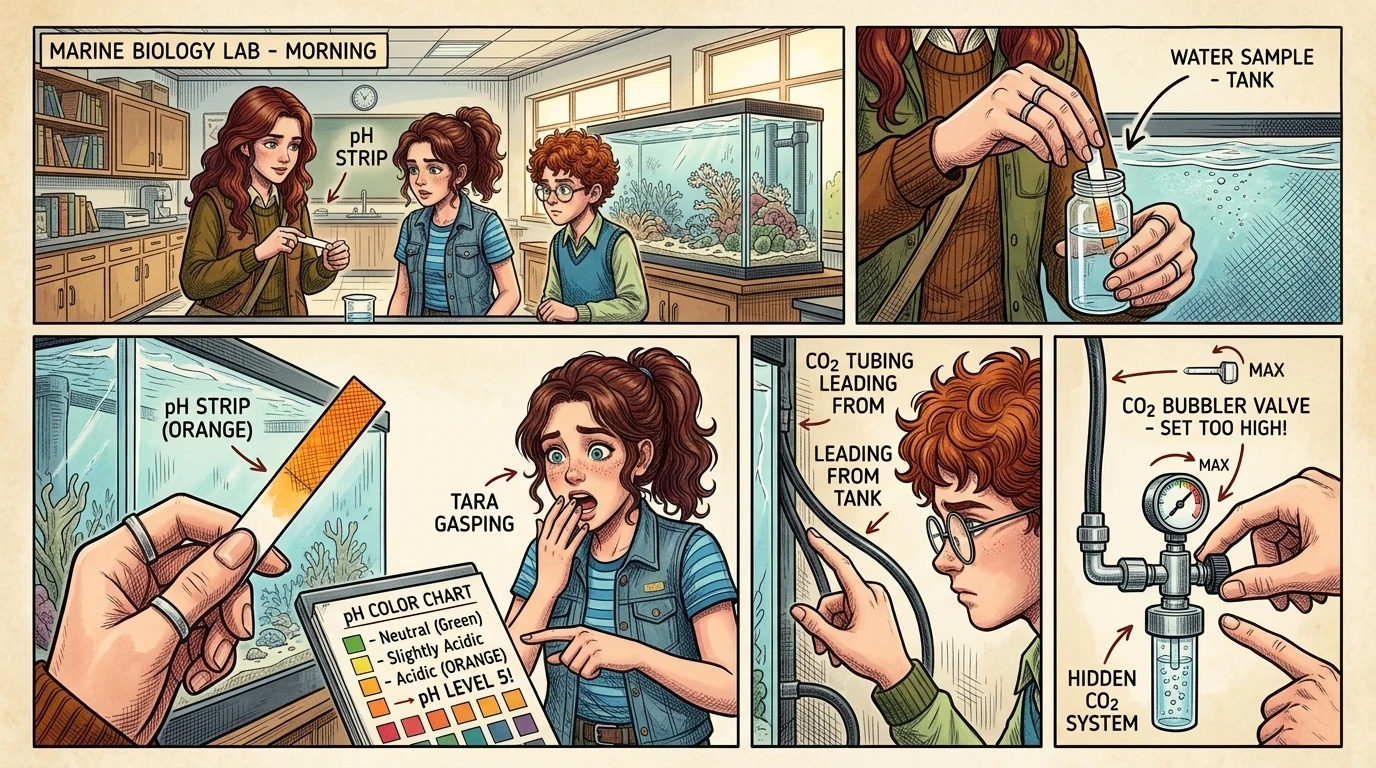
Winona carefully dipped a small paper strip from their science kit into the tank. They all leaned in, holding their breath as the paper changed color.
Winona carefully dipped a small paper strip from their science kit into the tank. They all leaned in, holding their breath as the paper changed color. 'It's orange!' Tara gasped, comparing it to the chart. 'That means it's too acidic!' Atlas followed the tubing from the filter and found the problem. 'Look! The carbon dioxide bubbler is set way too high!'

Winona carefully dipped a small paper strip from their science kit into the tank. They all leaned in, holding their breath as the paper changed color. 'It's orange!' Tara gasped, comparing it to the chart. 'That means it's too acidic!' Atlas followed the tubing from the filter and found the problem. 'Look! The carbon dioxide bubbler is set way too high!'

Page 10
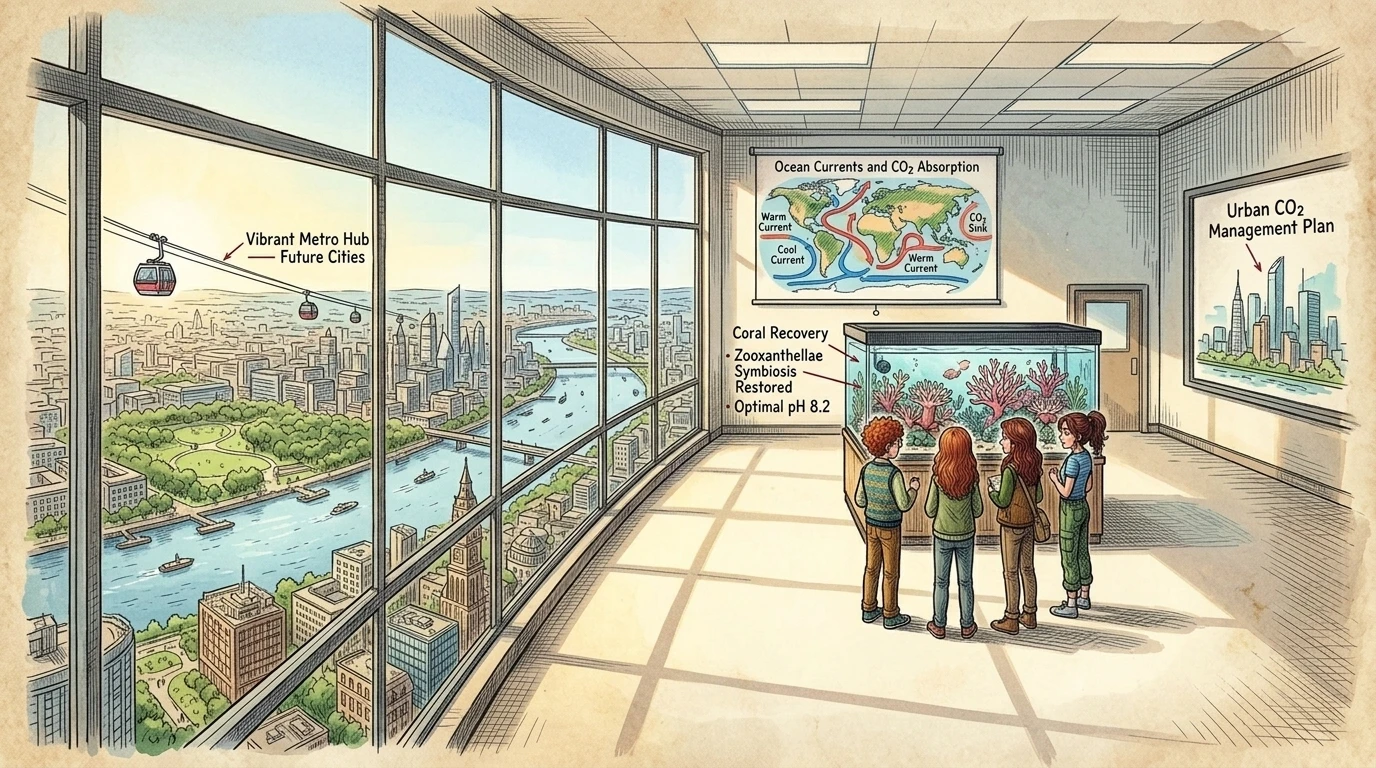
After adjusting the valve, the three friends watched the tank, knowing it would take time to recover. 'Everything in nature is about balance,' Winona said…
After adjusting the valve, the three friends watched the tank, knowing it would take time to recover. 'Everything in nature is about balance,' Winona said softly. Tara looked out the classroom's huge, curved window at the sprawling world below. 'If a tiny chemical change can do this to our small ocean,' she wondered aloud, 'what's happening to the real one?'

After adjusting the valve, the three friends watched the tank, knowing it would take time to recover. 'Everything in nature is about balance,' Winona said softly. Tara looked out the classroom's huge, curved window at the sprawling world below. 'If a tiny chemical change can do this to our small ocean,' she wondered aloud, 'what's happening to the real one?'

About this story

  • Audience: kids (ages 6–12)

Read Wonder Science on your phone

Wonder Science is available on Android. Get Wonder Science on Google Play.

More Wonder Science stories

All Wonder Science stories · Open the library