Chen Ning Yang

Chen Ning Yang — an illustrated science story, set in Global. 10 illustrated pages, free to read on Wonder Science.
Chen Ning Yang — book cover — Wonder Science
Chen Ning Yang — an illustrated science story, set in Global. 10 illustrated pages, free to read on Wonder Science.

Page 1
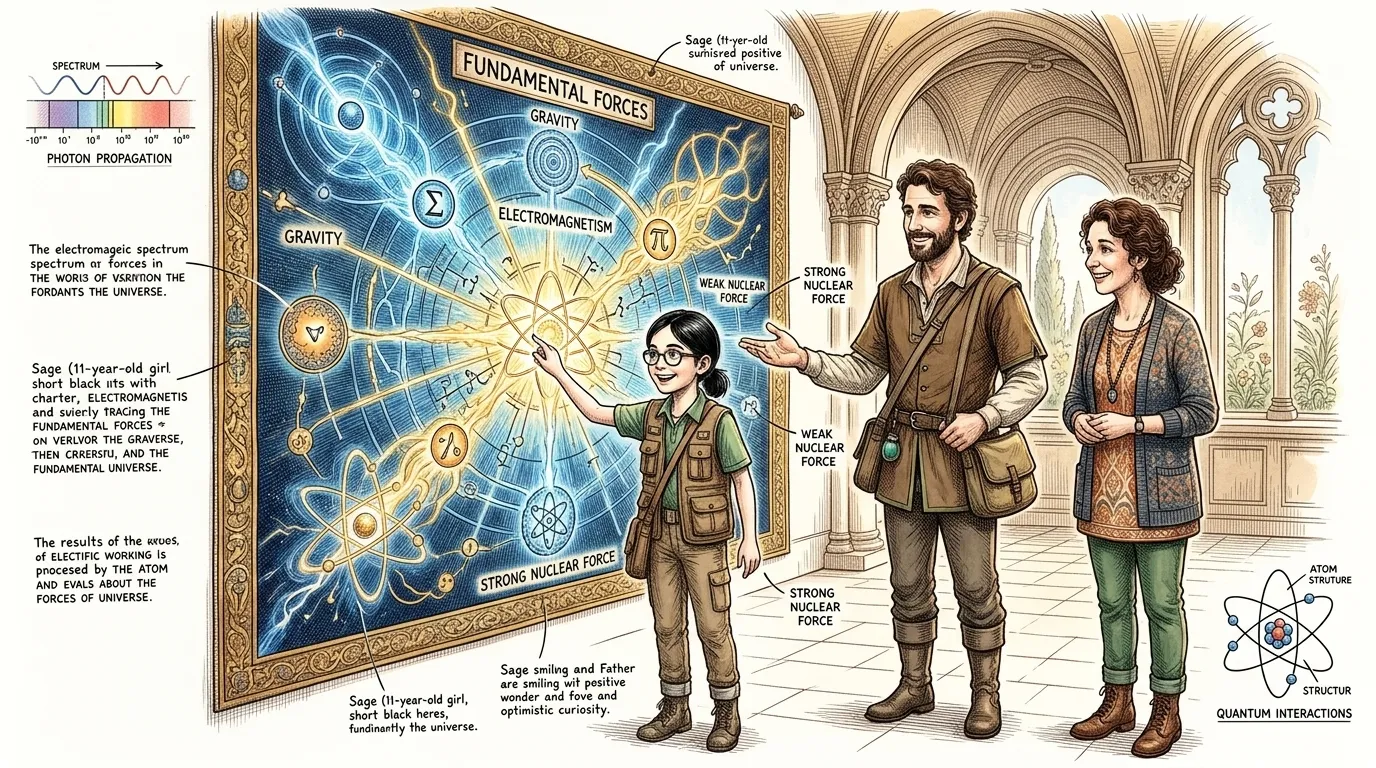
Imagine a world where the very fabric of reality, the fundamental forces that govern everything, are laid bare. Chen Ning Yang, a brilliant physicist, dedicated…
Imagine a world where the very fabric of reality, the fundamental forces that govern everything, are laid bare. Chen Ning Yang, a brilliant physicist, dedicated his life to unraveling these mysteries. His work didn't just win him a Nobel Prize; it reshaped our understanding of the universe.\n\n Fact: Introduction to Chen Ning Yang and his work.

Imagine a world where the very fabric of reality, the fundamental forces that govern everything, are laid bare. Chen Ning Yang, a brilliant physicist, dedicated his life to unraveling these mysteries. His work didn't just win him a Nobel Prize; it reshaped our understanding of the universe.\n\n Fact: Introduction to Chen Ning Yang and his work.

Page 2
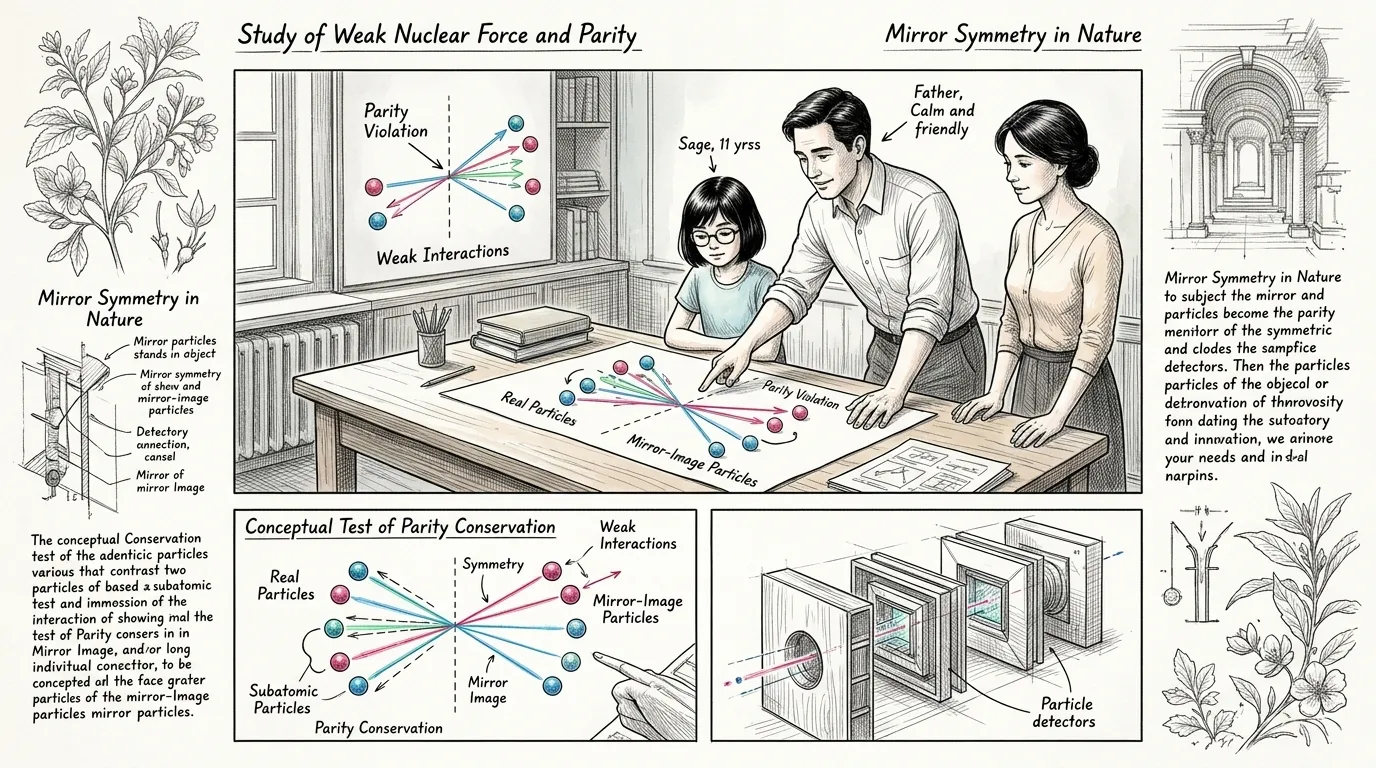
Yang's Nobel Prize-winning work, done in collaboration with Tsung-Dao Lee, challenged a long-held belief in physics: parity conservation.
Yang's Nobel Prize-winning work, done in collaboration with Tsung-Dao Lee, challenged a long-held belief in physics: parity conservation. This principle stated that nature behaves the same way whether viewed directly or in a mirror. But Yang and Lee suspected this wasn't always true, especially in the realm of weak interactions.\n\n Fact: Introduction to parity and its symmetry in physics.

Yang's Nobel Prize-winning work, done in collaboration with Tsung-Dao Lee, challenged a long-held belief in physics: parity conservation. This principle stated that nature behaves the same way whether viewed directly or in a mirror. But Yang and Lee suspected this wasn't always true, especially in the realm of weak interactions.\n\n Fact: Introduction to parity and its symmetry in physics.

Page 3
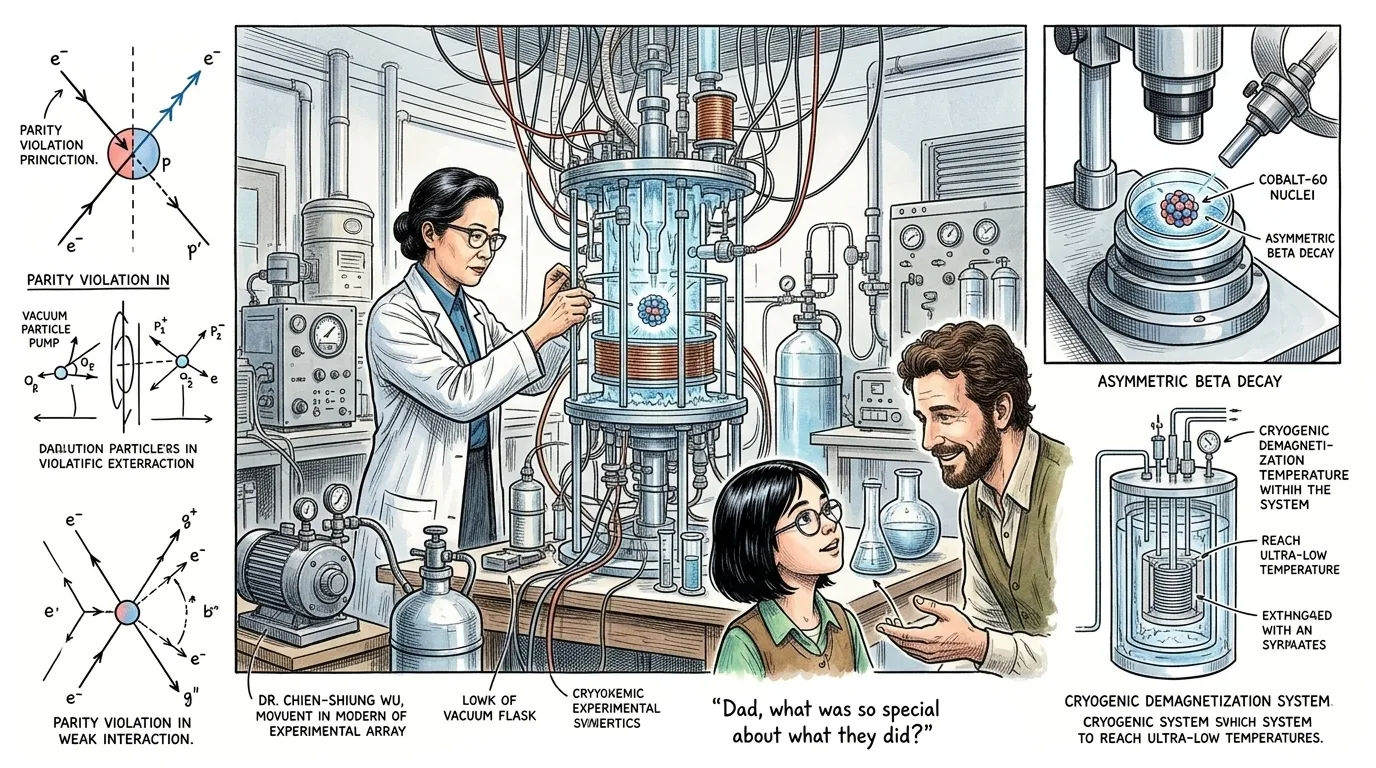
To test their hypothesis, Yang and Lee proposed a daring experiment, one that Chien-Shiung Wu, a brilliant experimental physicist, took on.
To test their hypothesis, Yang and Lee proposed a daring experiment, one that Chien-Shiung Wu, a brilliant experimental physicist, took on. Wu meticulously aligned radioactive cobalt-60 atoms in a magnetic field at extremely low temperatures. What she observed shocked the scientific community.\n\n"Sage asks, 'Dad, what was so special about what they did?' Her father replies, 'Well, Sage, like Albert Einstein once said, 'The important thing is to never stop questioning.' They…

To test their hypothesis, Yang and Lee proposed a daring experiment, one that Chien-Shiung Wu, a brilliant experimental physicist, took on. Wu meticulously aligned radioactive cobalt-60 atoms in a magnetic field at extremely low temperatures. What she observed shocked the scientific community.\n\n"Sage asks, 'Dad, what was so special about what they did?' Her father replies, 'Well, Sage, like Albert Einstein once said, 'The important thing is to never stop questioning.' They questioned something everyone thought was true!'"\n\n Fact: Visualization of the Wu experiment setup.

Page 4
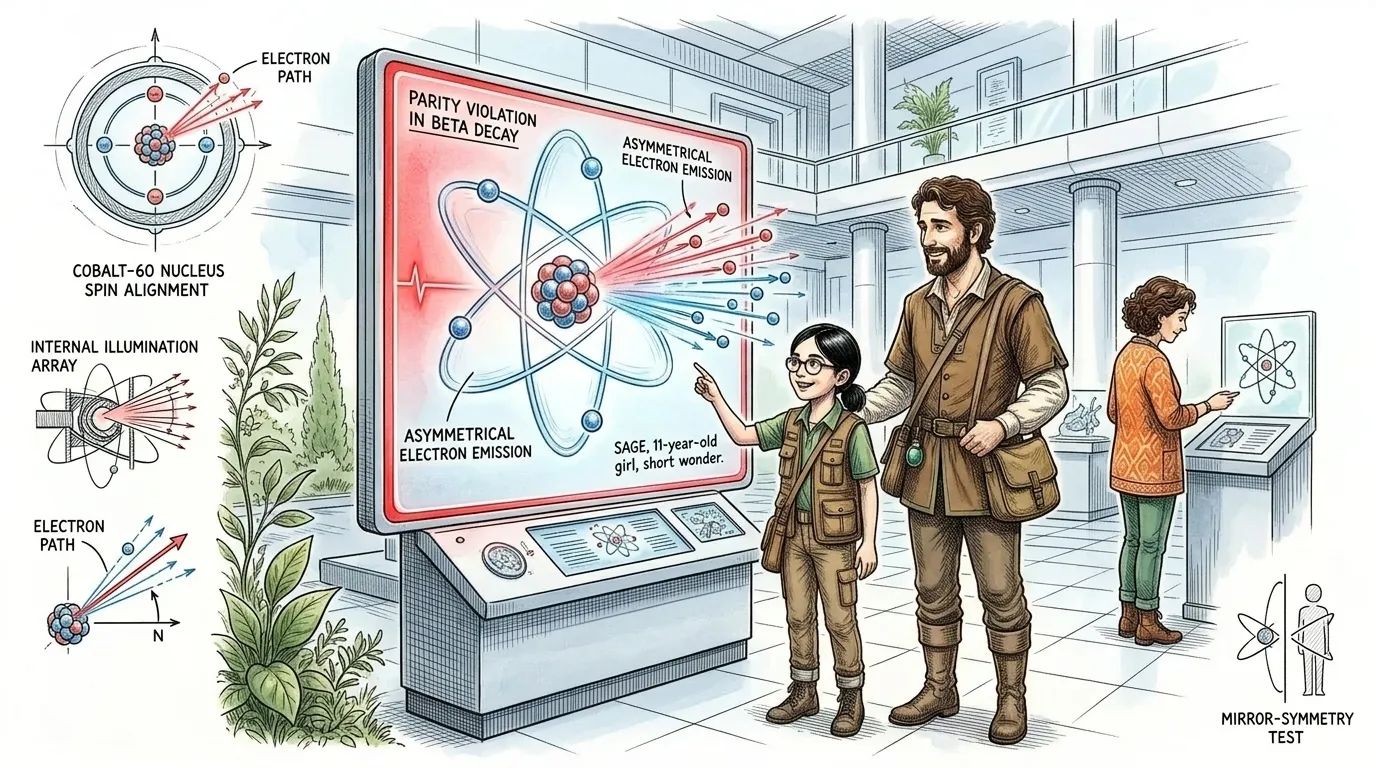
Wu discovered that the electrons emitted from the cobalt-60 atoms were not symmetrical. More electrons were emitted in one direction than the other, violating…
Wu discovered that the electrons emitted from the cobalt-60 atoms were not symmetrical. More electrons were emitted in one direction than the other, violating parity conservation. This groundbreaking result sent shockwaves through the physics world, forcing a re-evaluation of fundamental principles.\n\n Fact: Explanation of parity violation with a visual diagram.

Wu discovered that the electrons emitted from the cobalt-60 atoms were not symmetrical. More electrons were emitted in one direction than the other, violating parity conservation. This groundbreaking result sent shockwaves through the physics world, forcing a re-evaluation of fundamental principles.\n\n Fact: Explanation of parity violation with a visual diagram.

Page 5
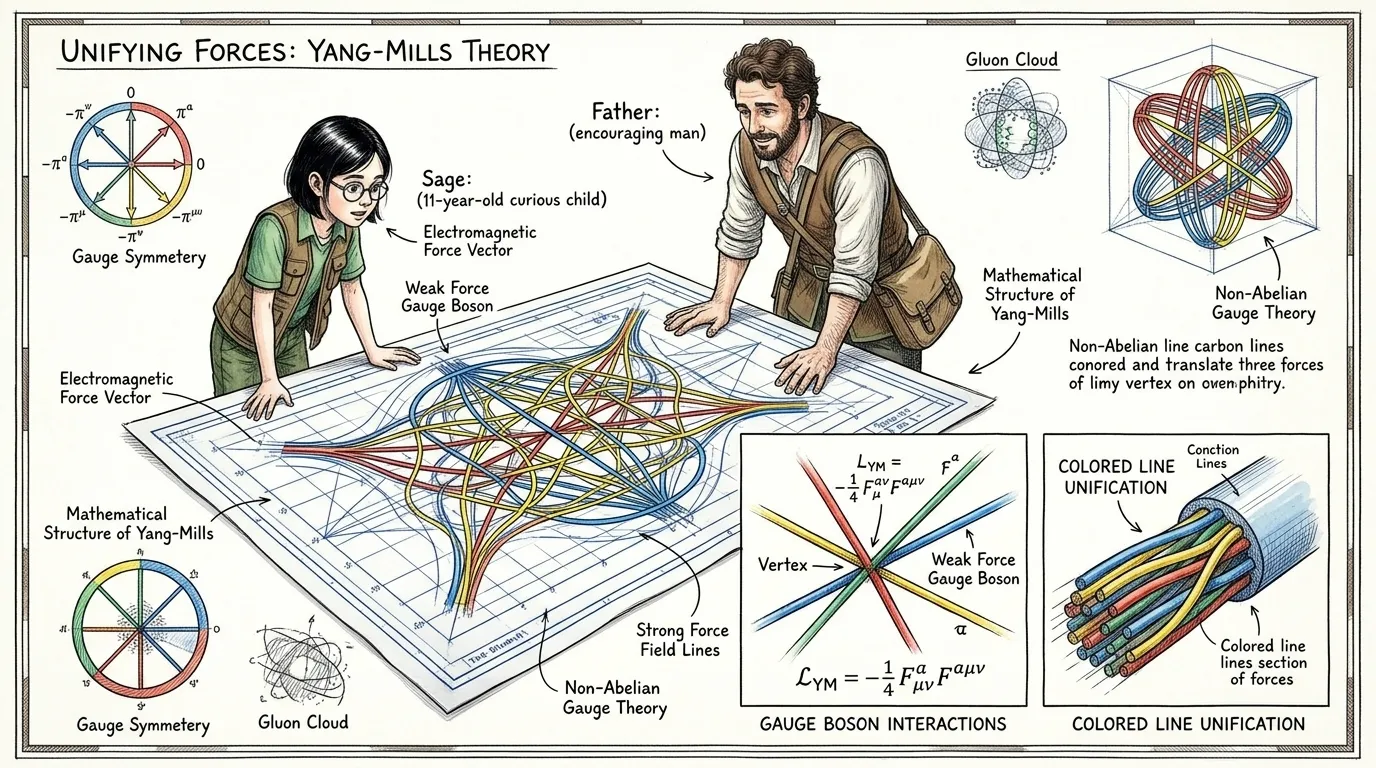
Beyond parity violation, Yang made significant contributions to the development of the Yang-Mills theory, a cornerstone of the Standard Model of particle…
Beyond parity violation, Yang made significant contributions to the development of the Yang-Mills theory, a cornerstone of the Standard Model of particle physics. This theory describes the fundamental forces of nature, including the electromagnetic, weak, and strong forces. It's a mathematical framework that unifies these forces under a single set of principles.\n\n Fact: Visual representation of the Yang-Mills theory.

Beyond parity violation, Yang made significant contributions to the development of the Yang-Mills theory, a cornerstone of the Standard Model of particle physics. This theory describes the fundamental forces of nature, including the electromagnetic, weak, and strong forces. It's a mathematical framework that unifies these forces under a single set of principles.\n\n Fact: Visual representation of the Yang-Mills theory.

Page 6
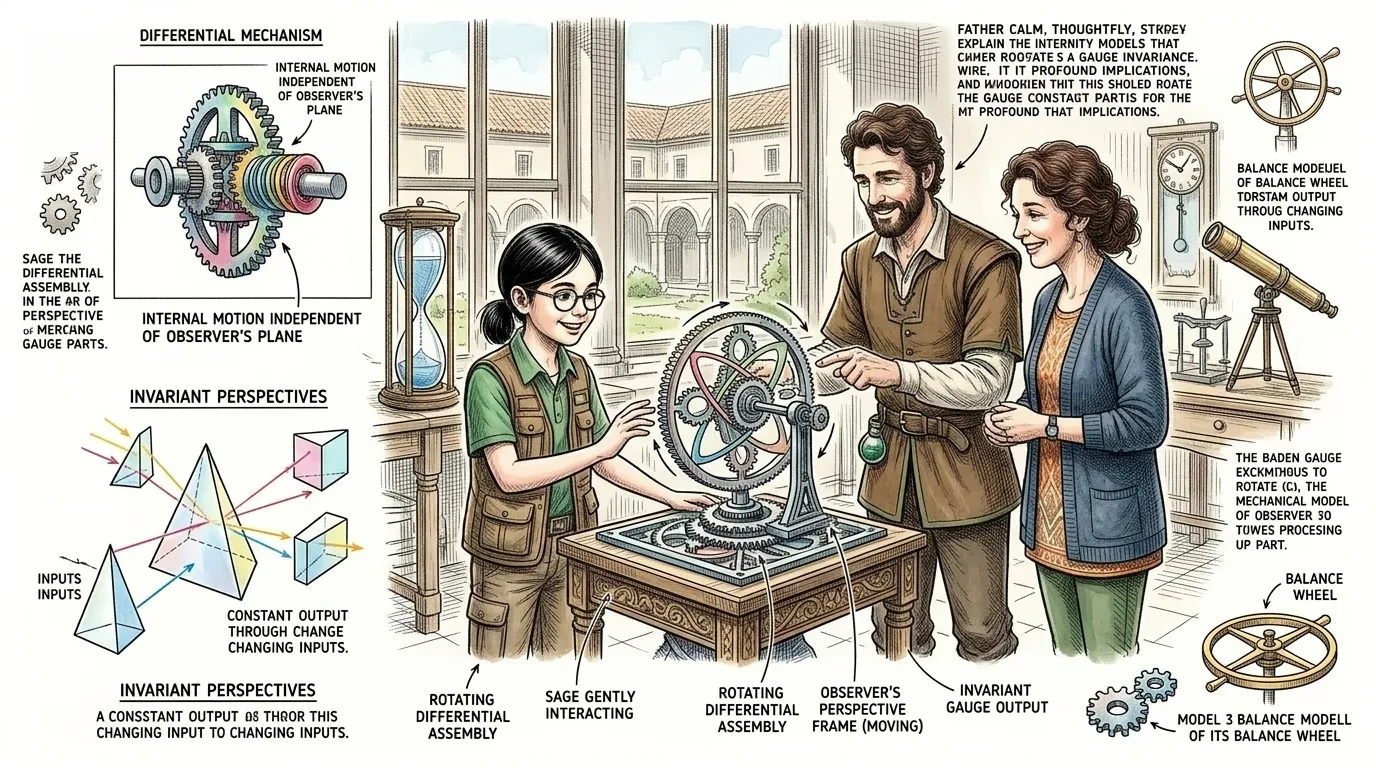
At the heart of the Yang-Mills theory is the concept of gauge invariance, a principle that dictates that the laws of physics remain the same regardless of how…
At the heart of the Yang-Mills theory is the concept of gauge invariance, a principle that dictates that the laws of physics remain the same regardless of how we choose to measure them. This seemingly abstract idea has profound implications for understanding the fundamental forces and the particles that mediate them.\n\n Fact: A visual diagram explaining gauge invariance.

At the heart of the Yang-Mills theory is the concept of gauge invariance, a principle that dictates that the laws of physics remain the same regardless of how we choose to measure them. This seemingly abstract idea has profound implications for understanding the fundamental forces and the particles that mediate them.\n\n Fact: A visual diagram explaining gauge invariance.

Page 7
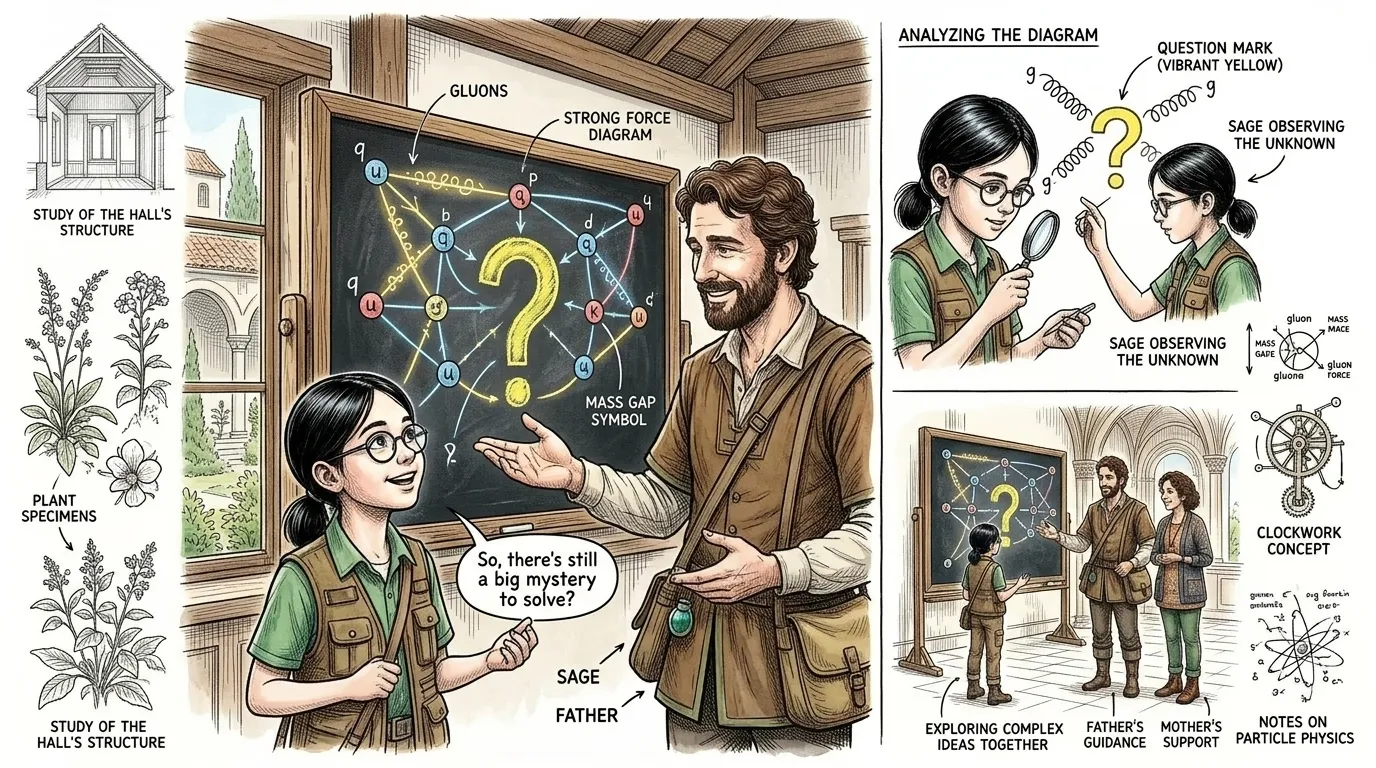
One of the biggest unsolved problems in physics is the mass gap problem, which relates to the Yang-Mills theory. It asks why the particles that mediate the…
One of the biggest unsolved problems in physics is the mass gap problem, which relates to the Yang-Mills theory. It asks why the particles that mediate the strong force, gluons, are massless, while other particles have mass. Solving this problem could revolutionize our understanding of the strong force and the structure of matter.\n\n"Sage asks, 'So, there's still a big mystery to solve?' Her father replies, 'Absolutely, Sage.

One of the biggest unsolved problems in physics is the mass gap problem, which relates to the Yang-Mills theory. It asks why the particles that mediate the strong force, gluons, are massless, while other particles have mass. Solving this problem could revolutionize our understanding of the strong force and the structure of matter.\n\n"Sage asks, 'So, there's still a big mystery to solve?' Her father replies, 'Absolutely, Sage. As Niels Bohr said, 'Every sentence I utter must be understood not as an assertion, but as a question.' There's always more to learn!'"\n\n Fact: The mass gap problem, visualizing the unsolved mystery.

Page 8
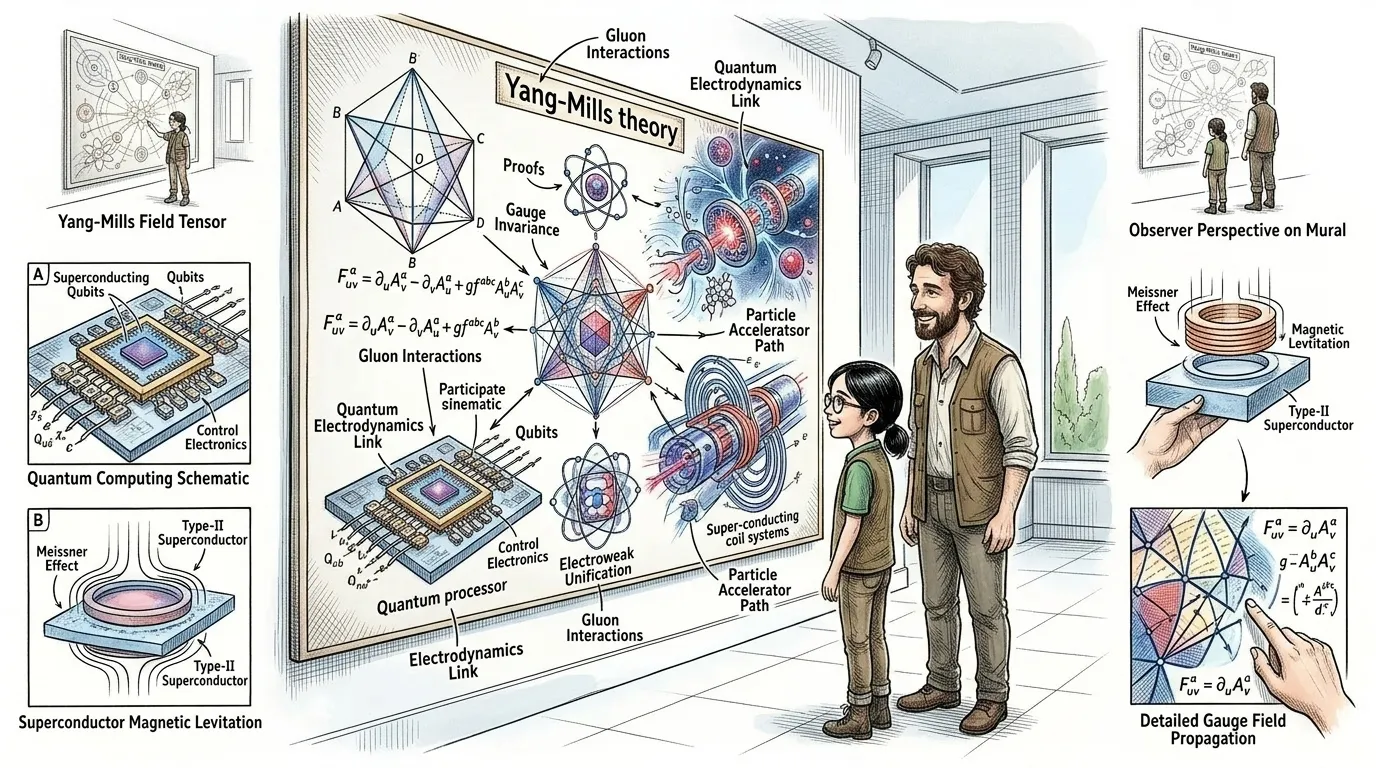
Yang's work has had a profound impact on modern physics, influencing fields ranging from particle physics to condensed matter physics.
Yang's work has had a profound impact on modern physics, influencing fields ranging from particle physics to condensed matter physics. His contributions have led to a deeper understanding of the fundamental laws of nature and have paved the way for new technologies and discoveries.\n\n Fact: The impact of Yang's work on modern particle physics.

Yang's work has had a profound impact on modern physics, influencing fields ranging from particle physics to condensed matter physics. His contributions have led to a deeper understanding of the fundamental laws of nature and have paved the way for new technologies and discoveries.\n\n Fact: The impact of Yang's work on modern particle physics.

Page 9
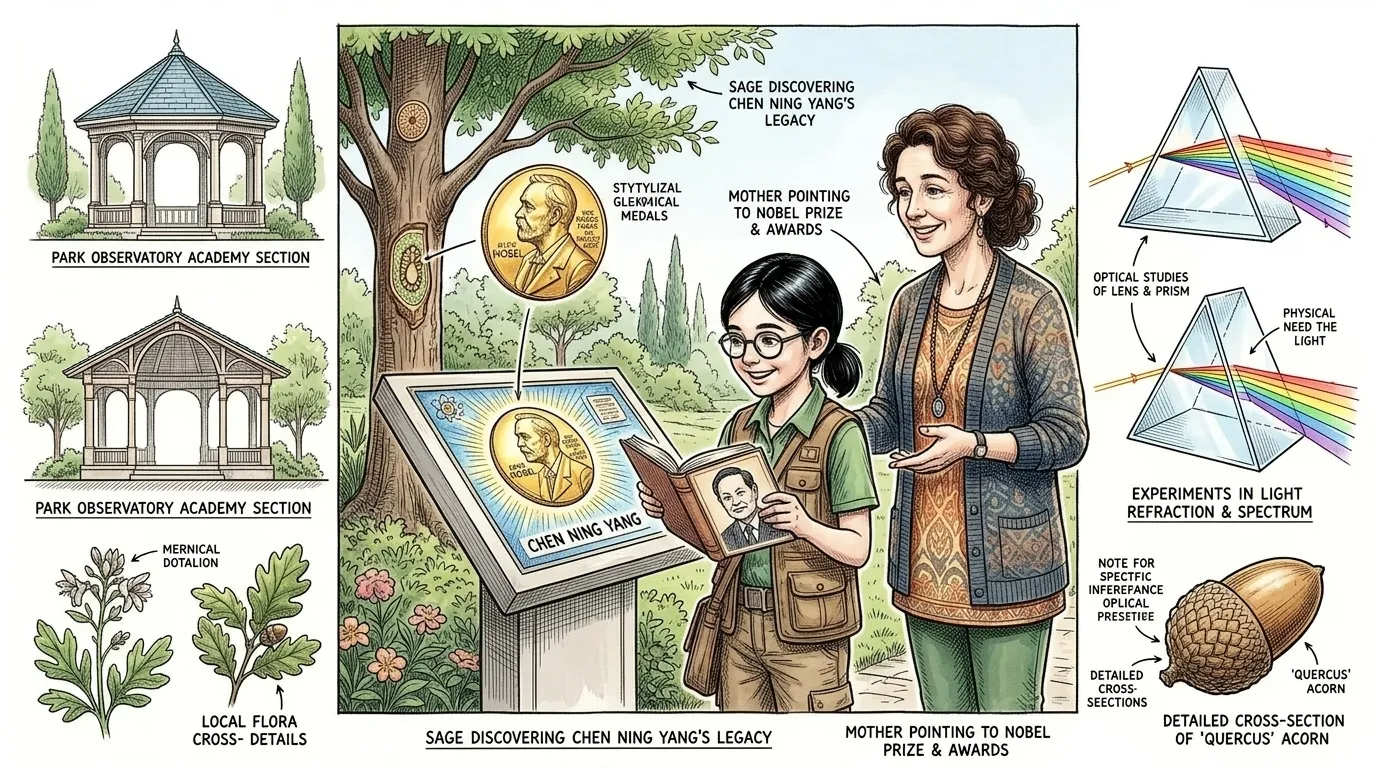
Chen Ning Yang's intellectual curiosity and willingness to challenge established ideas made him a giant in the field of physics.
Chen Ning Yang's intellectual curiosity and willingness to challenge established ideas made him a giant in the field of physics. His legacy continues to inspire scientists around the world to push the boundaries of knowledge and explore the deepest mysteries of the universe. Yang's lasting impact will resonate for generations.\n\n Fact: Chen Ning Yang's Nobel Prize and lasting legacy.

Chen Ning Yang's intellectual curiosity and willingness to challenge established ideas made him a giant in the field of physics. His legacy continues to inspire scientists around the world to push the boundaries of knowledge and explore the deepest mysteries of the universe. Yang's lasting impact will resonate for generations.\n\n Fact: Chen Ning Yang's Nobel Prize and lasting legacy.

Page 10
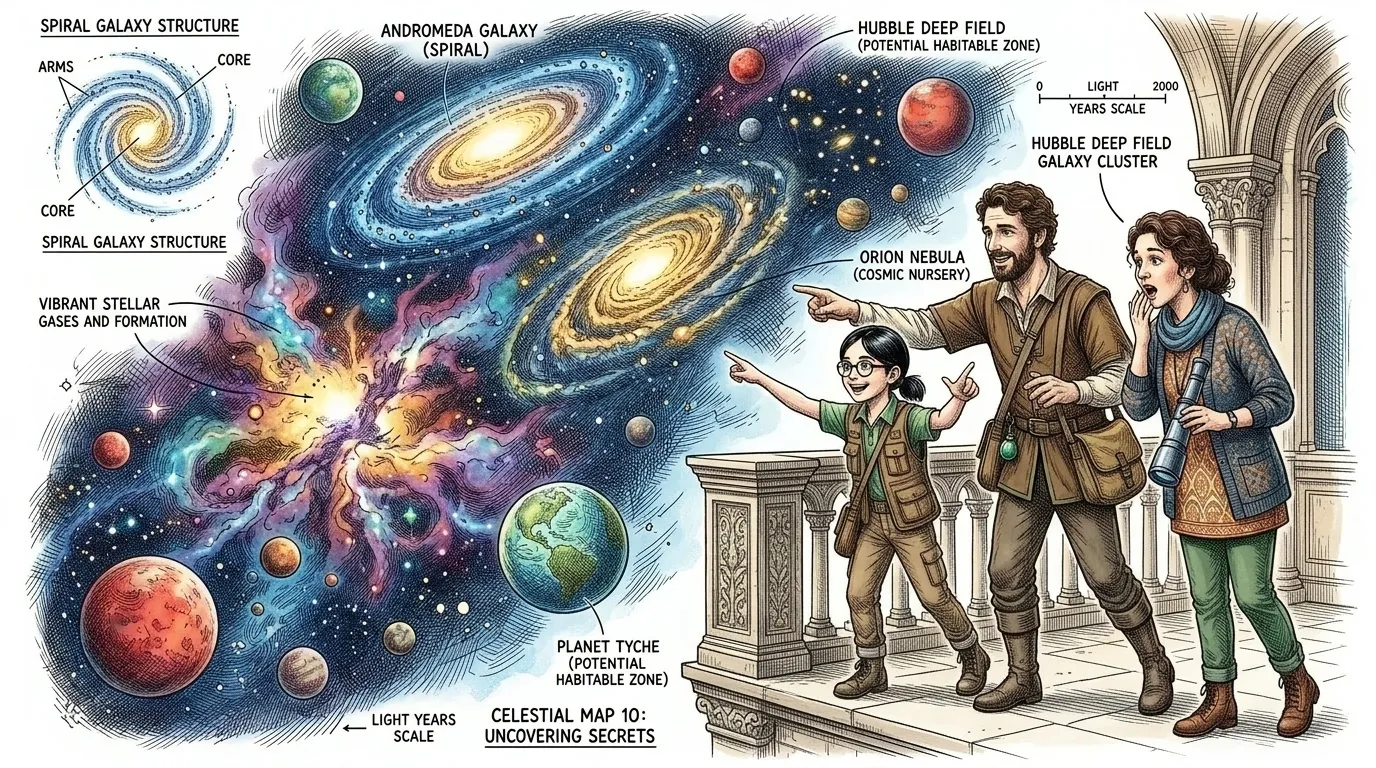
The universe holds countless secrets, waiting to be uncovered. As we continue to explore the cosmos, we stand on the shoulders of giants like Chen Ning Yang…
The universe holds countless secrets, waiting to be uncovered. As we continue to explore the cosmos, we stand on the shoulders of giants like Chen Ning Yang, whose brilliance illuminated the path forward. The quest for knowledge is never-ending.\n\n Fact: Concluding scene showcasing the mysteries of the universe.

The universe holds countless secrets, waiting to be uncovered. As we continue to explore the cosmos, we stand on the shoulders of giants like Chen Ning Yang, whose brilliance illuminated the path forward. The quest for knowledge is never-ending.\n\n Fact: Concluding scene showcasing the mysteries of the universe.

About this story

  • Location: Global
  • Audience: kids (ages 6–12)

Questions and answers

Questions and answers about Chen Ning Yang

Read Wonder Science on your phone

Wonder Science is available on Android. Get Wonder Science on Google Play.

More Wonder Science stories

All Wonder Science stories · Open the library