Clyde Tombaugh
Clyde Tombaugh — an illustrated science story, set in Global. 10 illustrated pages, free to read on Wonder Science.

Page 1
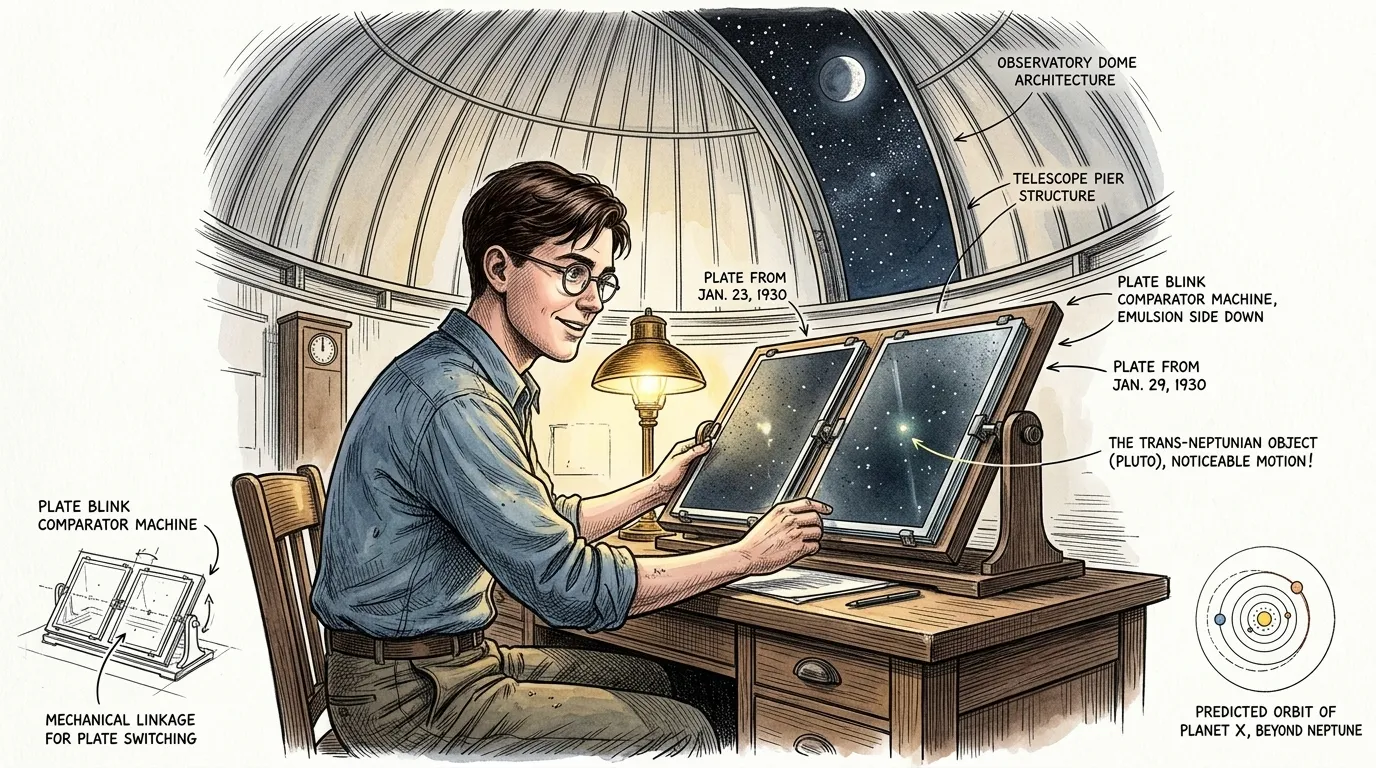
February 18, 1930, at the frigid Lowell Observatory in Flagstaff, Arizona, marked a pivotal moment in astronomical history. A young, self-taught astronomer, Clyde Tombaugh, meticulously comparing photographic plates, detected a faint, moving speck against the countless fixed stars. This tiny displacement represented a celestial body long theorized but never seen: 'Planet X,' which would soon be known to the world as Pluto. Tombaugh's painstaking vigilance, a testament to scientific perseverance, expanded humanity's known solar system, revealing a new frontier at its icy edge.
Page 2
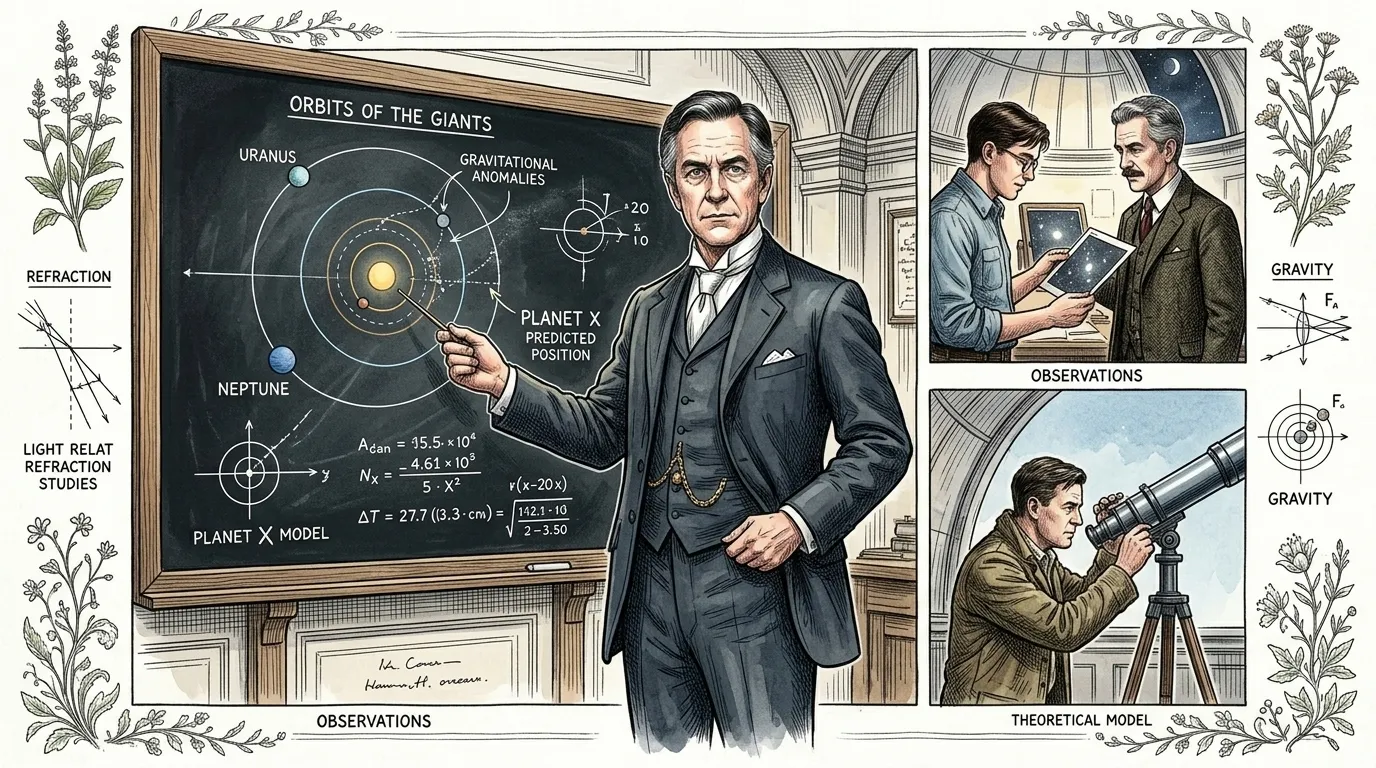
The hunt for a ninth planet, dubbed 'Planet X,' began decades earlier, driven by persistent gravitational anomalies in the orbits of Uranus and Neptune. Pioneering astronomer Percival Lowell, known for his controversial Mars observations, theorized the existence of such a body. His detailed calculations and relentless observations from his observatory at Flagstaff fueled the quest, despite his death years before the eventual discovery. The subtle perturbations suggested an unseen gravitational influence, a phantom tug in the distant cosmic ballet, urging astronomers to peer deeper into the dark. As the physicist Richard Feynman famously remarked about the nature of discovery, 'The imagination of nature is greater than the imagination of man.'
Page 3
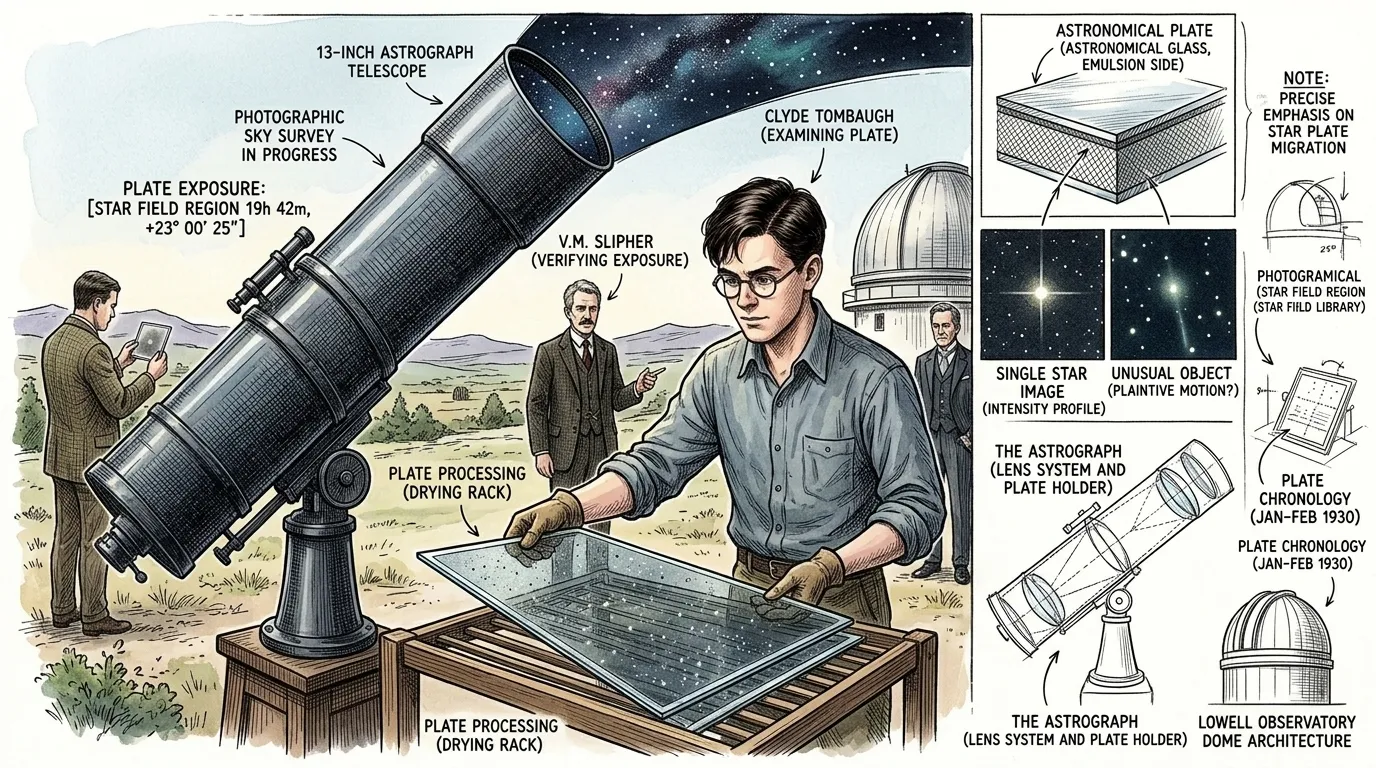
The technology of the early 20th century dictated a laborious method: the photographic survey. The Lowell Observatory's state-of-the-art 13-inch astrograph telescope captured wide swaths of the night sky onto large, sensitive glass photographic plates. Each plate, a snapshot of millions of stars, required hours of exposure. This process generated an immense archive of celestial data, a vast library of the universe, waiting for a human eye to discern the anomaly. The sheer scale of this endeavor highlights the dedication required, a meticulous sifting through stellar dust for a hidden gem.
Page 4
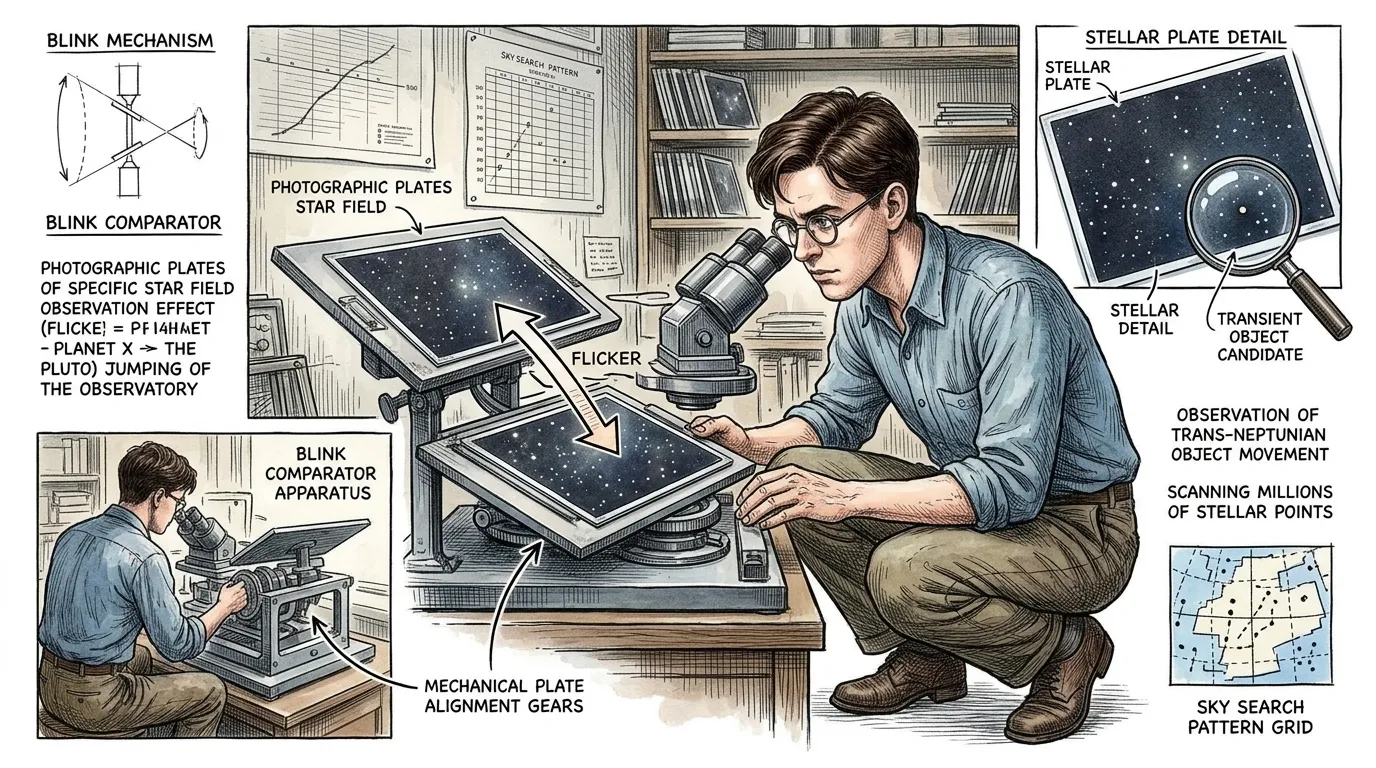
Enter the blink comparator, a marvel of early 20th-century optical engineering. This device allowed astronomers to rapidly switch views between two photographic plates of the same region of the sky, taken days or weeks apart. While stationary stars would appear unchanging, a planet, having moved against the background, would 'blink' or jump between the two images. Tombaugh spent thousands of hours staring into its eyepieces, his eyes scanning millions of stellar points, searching for this tell-tale flicker. It was a task demanding unwavering focus, resilience, and an almost superhuman attention to detail.
Page 5
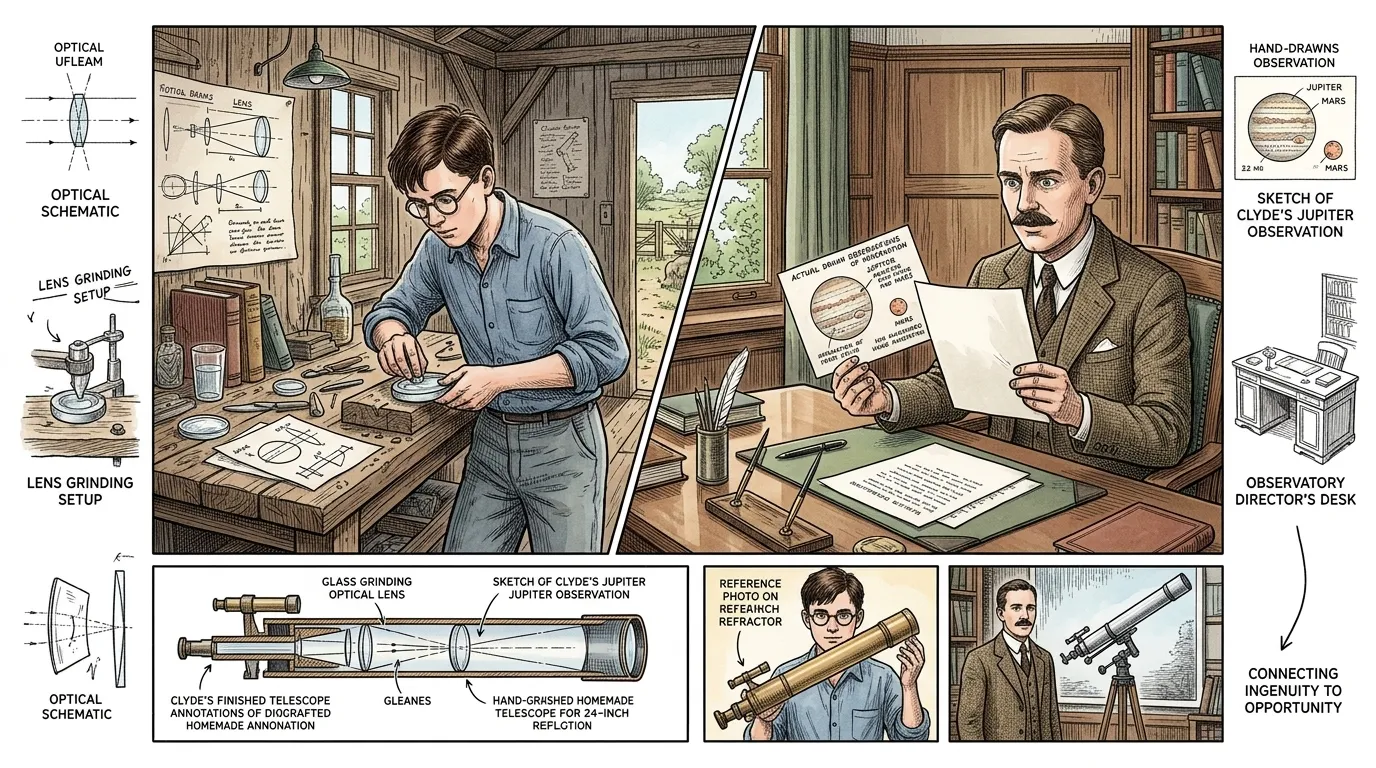
Clyde Tombaugh's journey to planetary discovery was far from conventional. Raised on a farm in Illinois, a lack of formal education in advanced astronomy didn't deter his fervent passion for the stars. He taught himself through books and built his own telescopes from scratch, meticulously grinding his own lenses and mirrors. His detailed, hand-drawn observations of Jupiter and Mars, sent to the Lowell Observatory, ultimately caught the attention of its director, V.M. Slipher, leading to his unexpected recruitment. His story is a powerful reminder that curiosity and ingenuity can overcome traditional barriers.
Page 6
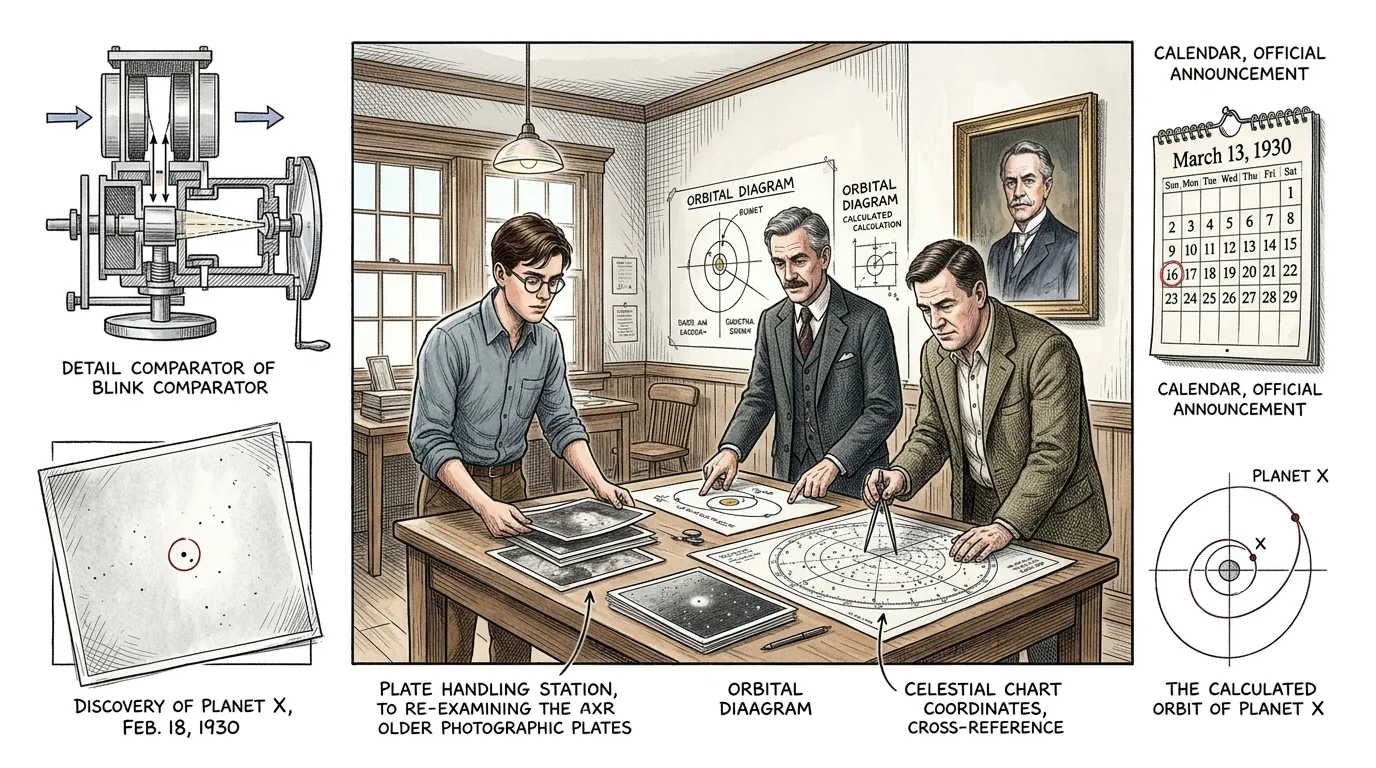
The initial sighting on February 18th was just the beginning. Tombaugh carefully re-examined older plates, confirming the object's movement over a period of weeks. The magnitude of the discovery required rigorous verification before any public announcement. Other astronomers at Lowell, notably Carl Otto Lampland and V.M. Slipher, cross-referenced the coordinates, calculated its orbital path, and confirmed its planetary nature. It was a triumph of collaborative effort, culminating in the official announcement on March 13, 1930, Percival Lowell's birthday, honoring the man whose vision initiated the quest.
Page 7

The task of naming the new planet fell to the Lowell Observatory, and suggestions poured in from around the world. However, it was an eleven-year-old schoolgirl from Oxford, England, Venetia Burney, who proposed 'Pluto.' She suggested the name, derived from the Roman god of the underworld, seemed fitting for such a dark, distant world. The name was officially adopted on May 1, 1930, after a vote by the observatory staff. This decision underscored the romantic and mythological dimension of astronomical discovery, connecting the newest celestial body to ancient narratives, a tradition established since antiquity.
Page 8
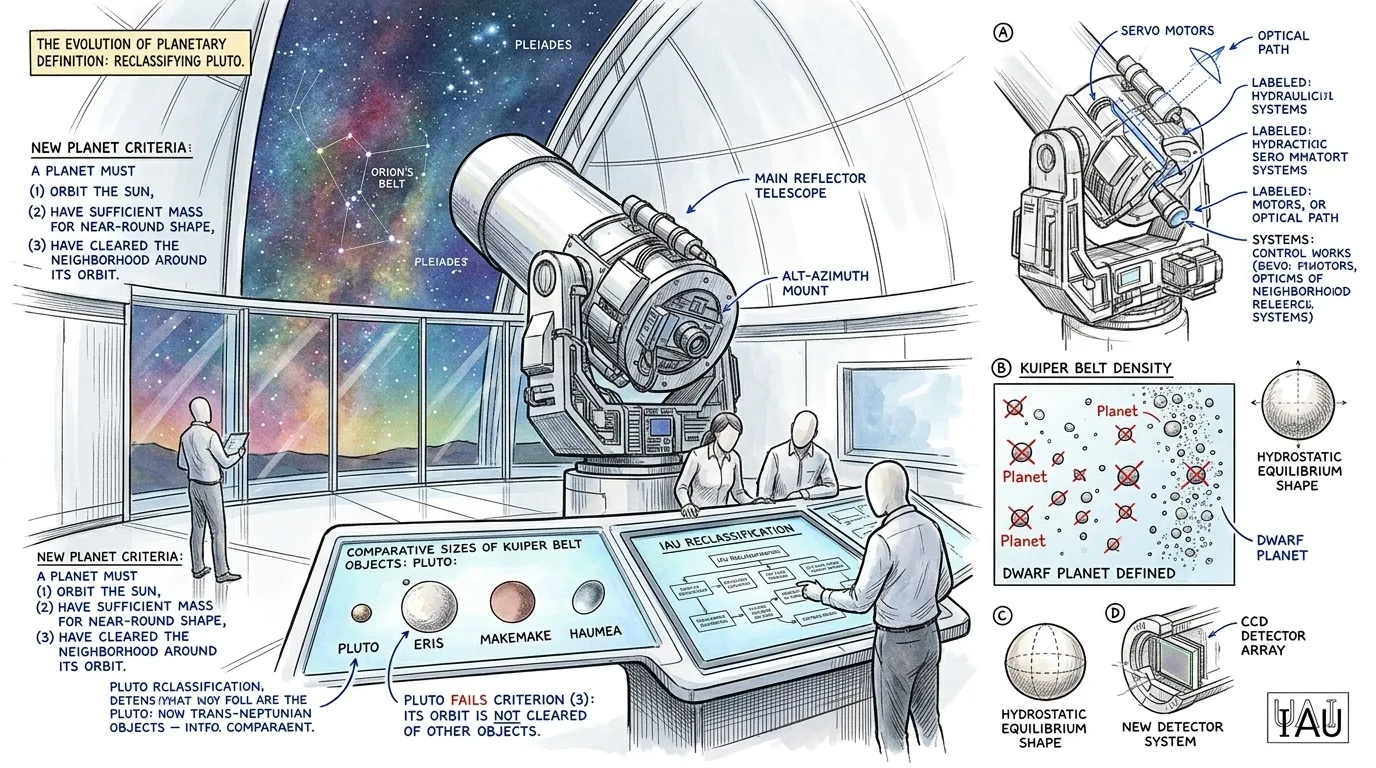
For over 75 years, Pluto reigned as the ninth planet, a remote outpost. However, later telescopic advancements and subsequent discoveries, particularly of other large, icy bodies beyond Neptune in what became known as the Kuiper Belt, challenged its status. The discovery of Eris, a Kuiper Belt object larger than Pluto, forced a re-evaluation of what constituted a 'planet.' In 2006, the International Astronomical Union established new criteria, leading to Pluto's reclassification as a 'dwarf planet.' This scientific refinement, though initially controversial, expanded our understanding of planetary diversity beyond the traditional eight.
Page 9
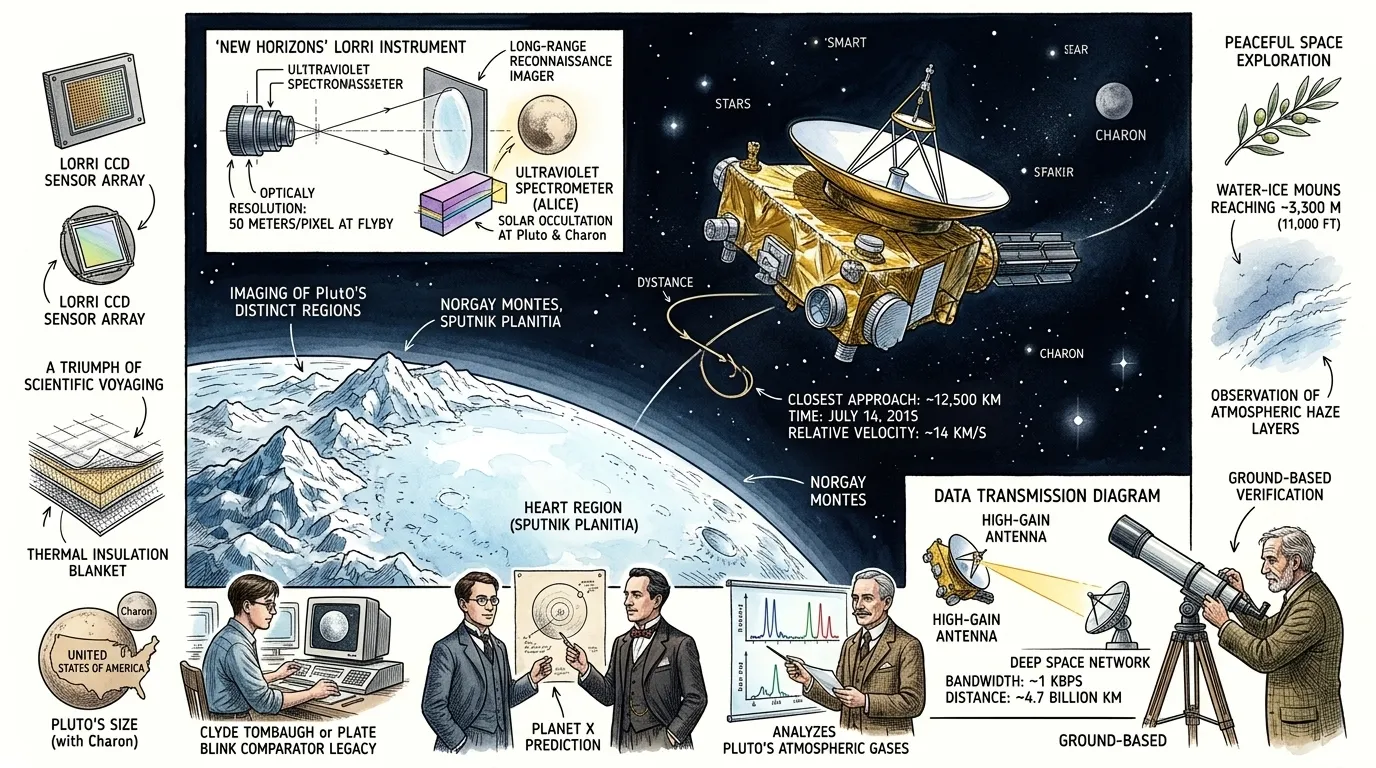
Clyde Tombaugh's discovery sparked a deeper curiosity about the outermost reaches of our solar system. Decades later, this curiosity culminated in NASA's New Horizons mission, launched in 2006. After a nine-year journey spanning billions of kilometers, the spacecraft made its historic flyby of Pluto in July 2015, capturing the first-ever close-up images and data. These breathtaking visuals revealed a world of surprising geological activity, including vast ice plains and towering water-ice mountains, transforming our understanding of this distant dwarf planet from a fuzzy dot to a complex, dynamic body. The mission was a direct descendant of Tombaugh's initial meticulous search.
Page 10
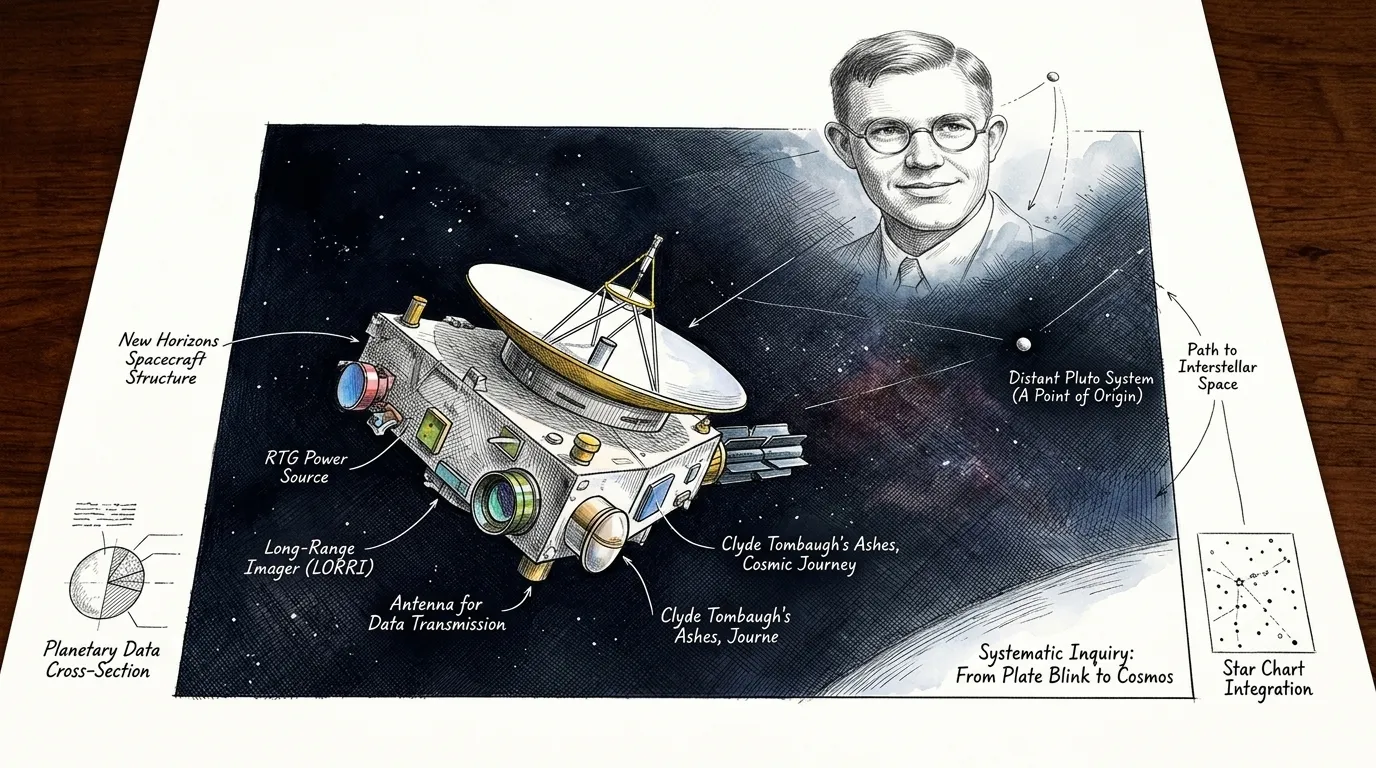
Clyde Tombaugh passed away in 1997, but his legacy endures. A small portion of his ashes, fittingly, was carried aboard the New Horizons spacecraft, destined to travel beyond Pluto and into interstellar space—a poignant tribute to the man who first opened our eyes to that distant realm. His life's work underscored the power of observation, the value of systematic inquiry, and the profound impact a single individual can have on our cosmic perspective. The quest for understanding our universe continues, driven by the same spirit of wonder and meticulous dedication that defined Tombaugh's remarkable career.
About this story
- Location: Global
- Audience: general readers
Questions and answers
Read Wonder Science on your phone
Wonder Science is available on Android. Get Wonder Science on Google Play.