Chris Hadfield
Chris Hadfield — an illustrated science story, set in Global. 10 illustrated pages, free to read on Wonder Science.
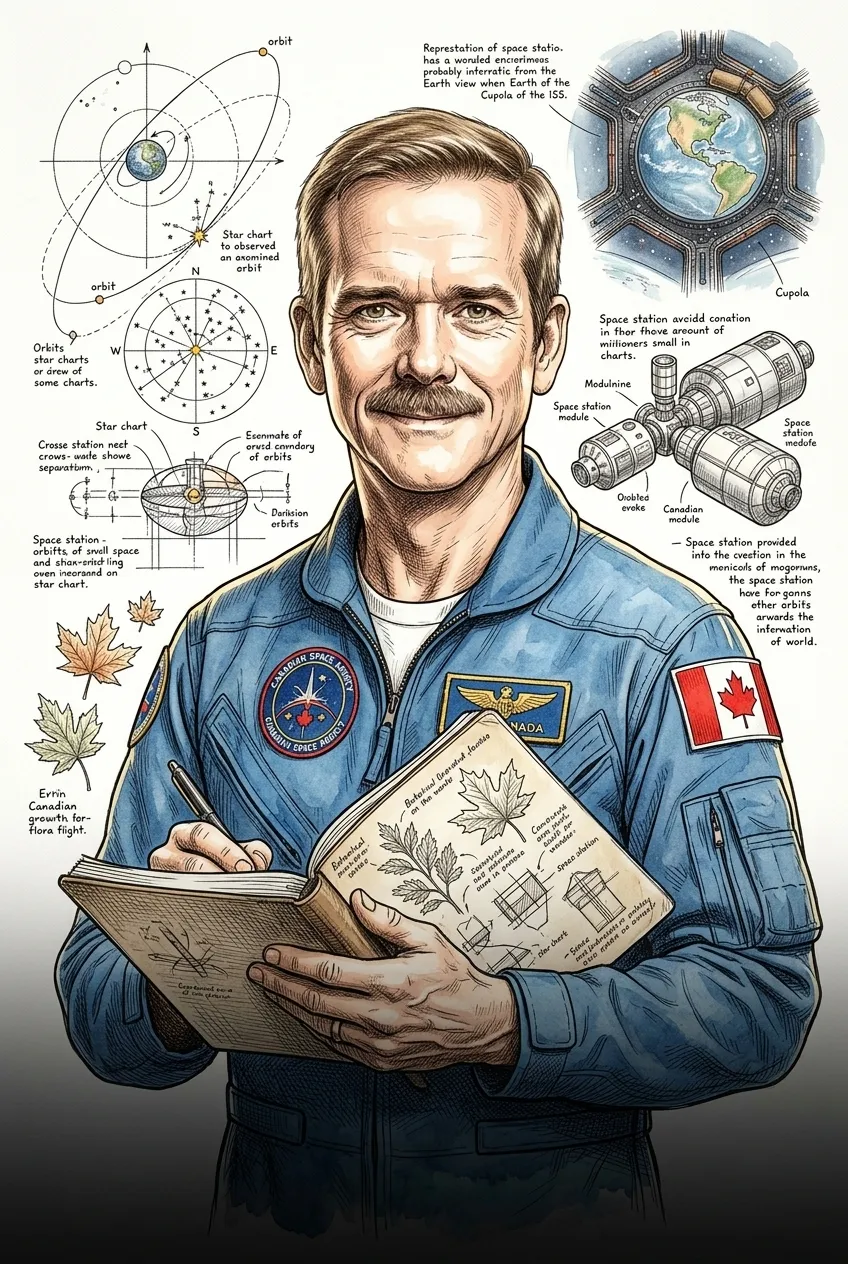
Page 1
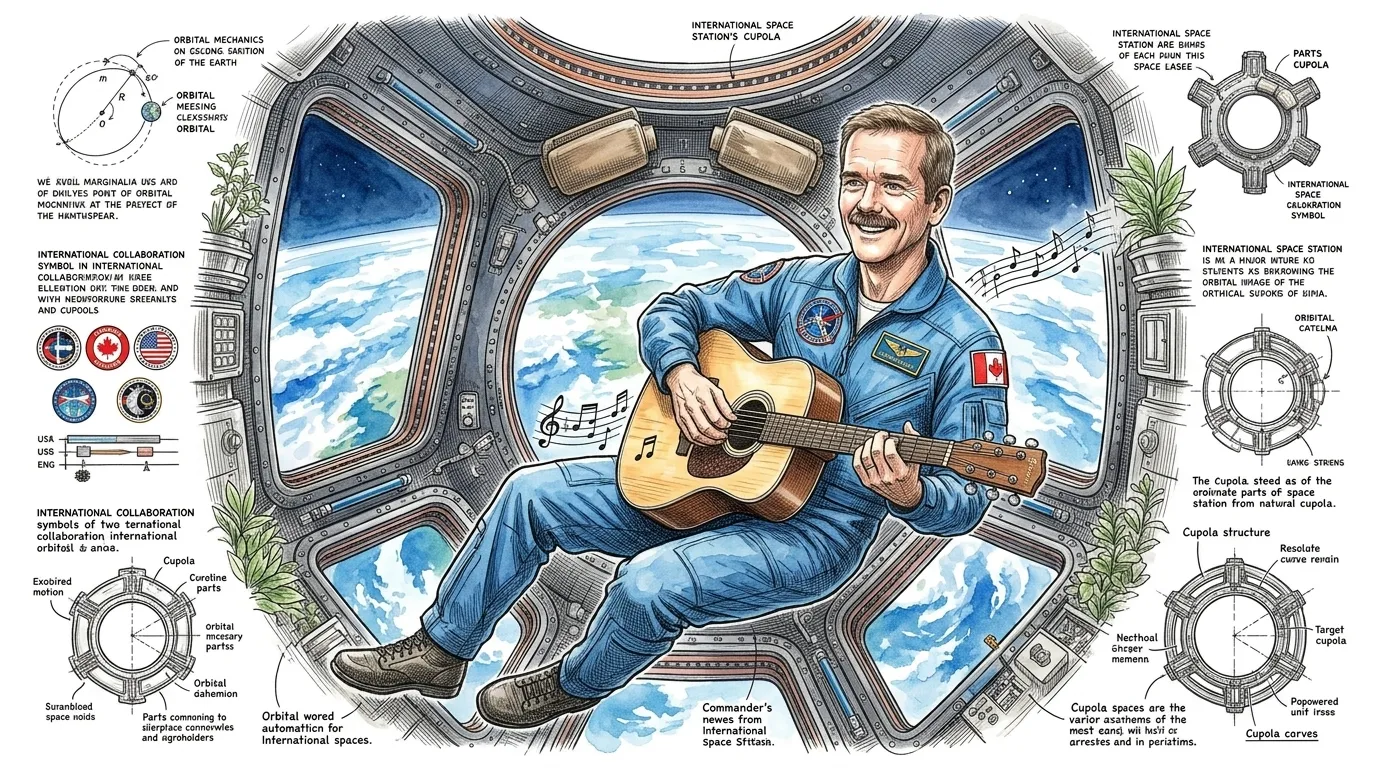
From the International Space Station, orbiting 400 kilometers above Earth, Commander Chris Hadfield transcended the traditional role of an astronaut. In May 2013, he recorded a rendition of David Bowie's 'Space Oddity', transforming the complex machinery of human spaceflight into a poignant, globally resonant performance. This single act, witnessed by hundreds of millions, underscored humanity's enduring fascination with the cosmos and the profound emotional impact of observing our planet from afar. It solidified Hadfield's legacy not just as an accomplished engineer and pilot, but as a pioneer in communicating the human experience of space.\n\n Fact: Space travel, orbital mechanics, human exploration, international collaboration.
Page 2
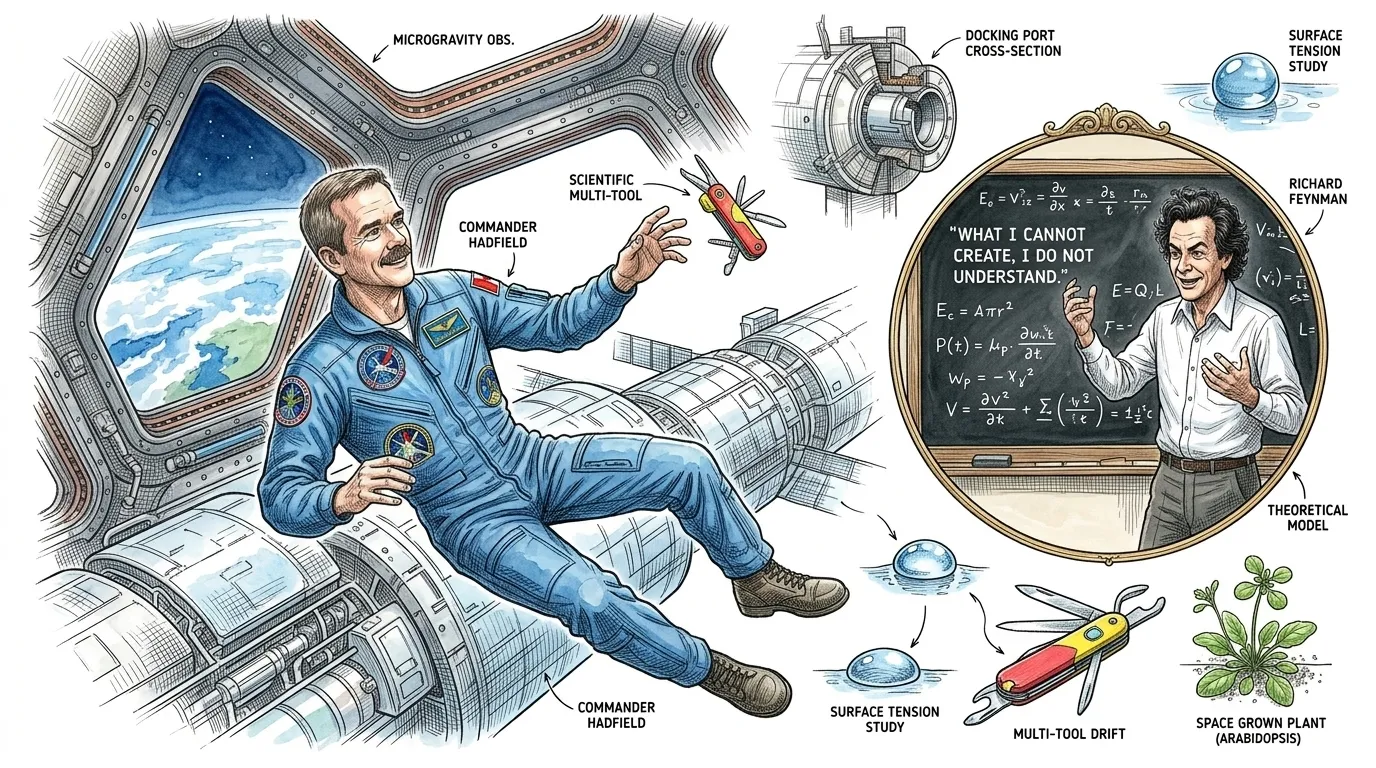
Beyond the poetic imagery, Hadfield's missions, like all human spaceflight, confronted fundamental physical realities. Every object in orbit, including the International Space Station, is in a perpetual state of freefall around Earth. This continuous 'falling' produces microgravity, a condition where the sensation of weight disappears, fundamentally altering human physiology. Astronauts must contend with bone density loss, muscle atrophy, fluid shifts, and the profound disorientation of an environment without a consistent 'up' or 'down.' It's a testament to engineering and biological adaptation that humans can endure such a radical departure from terrestrial existence. As the American theoretical physicist Richard Feynman once observed, 'What I cannot create, I do not understand,' reflecting the deep iterative process of understanding by designing systems to counter these cosmic challenges.\n\n Fact: Microgravity effects, human physiology in space, orbital mechanics.
Page 3

The International Space Station, a monumental feat of international engineering, is essentially a self-sustaining microcosm against the lethal vacuum of space. Its Environmental Control and Life Support System (ECLSS) meticulously recycles water, generates oxygen, and removes carbon dioxide. This closed-loop system is critical: every drop of water, including astronaut perspiration and urine, is filtered and purified for reuse. The air itself is continuously scrubbed and replenished, maintaining a breathable atmosphere. Such technological solutions are not merely about survival; they represent a profound challenge to engineering principles, demanding systems capable of extreme reliability and efficiency far from any repair shop. The journey from a fluid drop to potable water, or exhaled carbon dioxide to breathable oxygen, highlights the ingenuity required to sustain prolonged human presence off-world.\n\n Fact: ISS life support, water recycling, air purification, closed-loop systems.
Page 4
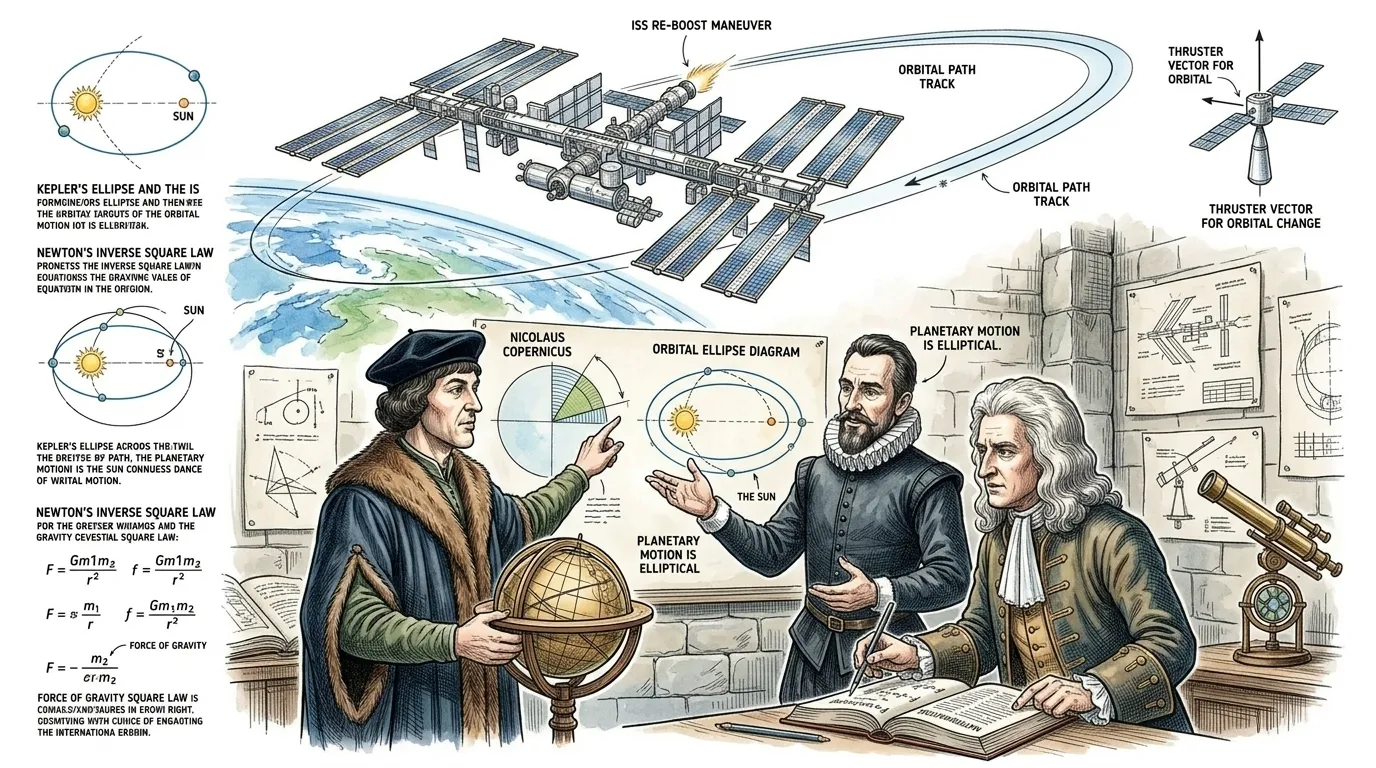
Maintaining a stable orbit for the ISS requires a precise and continuous orbital dance, a testament to the laws of celestial mechanics first elucidated by Nicolaus Copernicus, Johannes Kepler, and Isaac Newton. At roughly 28,000 kilometers per hour, the station completes an orbit in about 90 minutes, experiencing 16 sunrises and sunsets daily. This speed is crucial; it generates sufficient centrifugal force to balance Earth's gravitational pull, preventing the station from plummeting back to the surface. However, constant atmospheric drag, albeit minimal, causes the ISS to slowly lose altitude. Regular re-boost maneuvers, using onboard thrusters or visiting spacecraft, are essential to counteract this decay, ensuring the station remains a viable platform for science and exploration. The elegance of its trajectory belies the energetic inputs required to sustain it.\n\n Fact: Orbital mechanics, atmospheric drag, re-boost maneuvers, gravitational force, Newton's laws.
Page 5
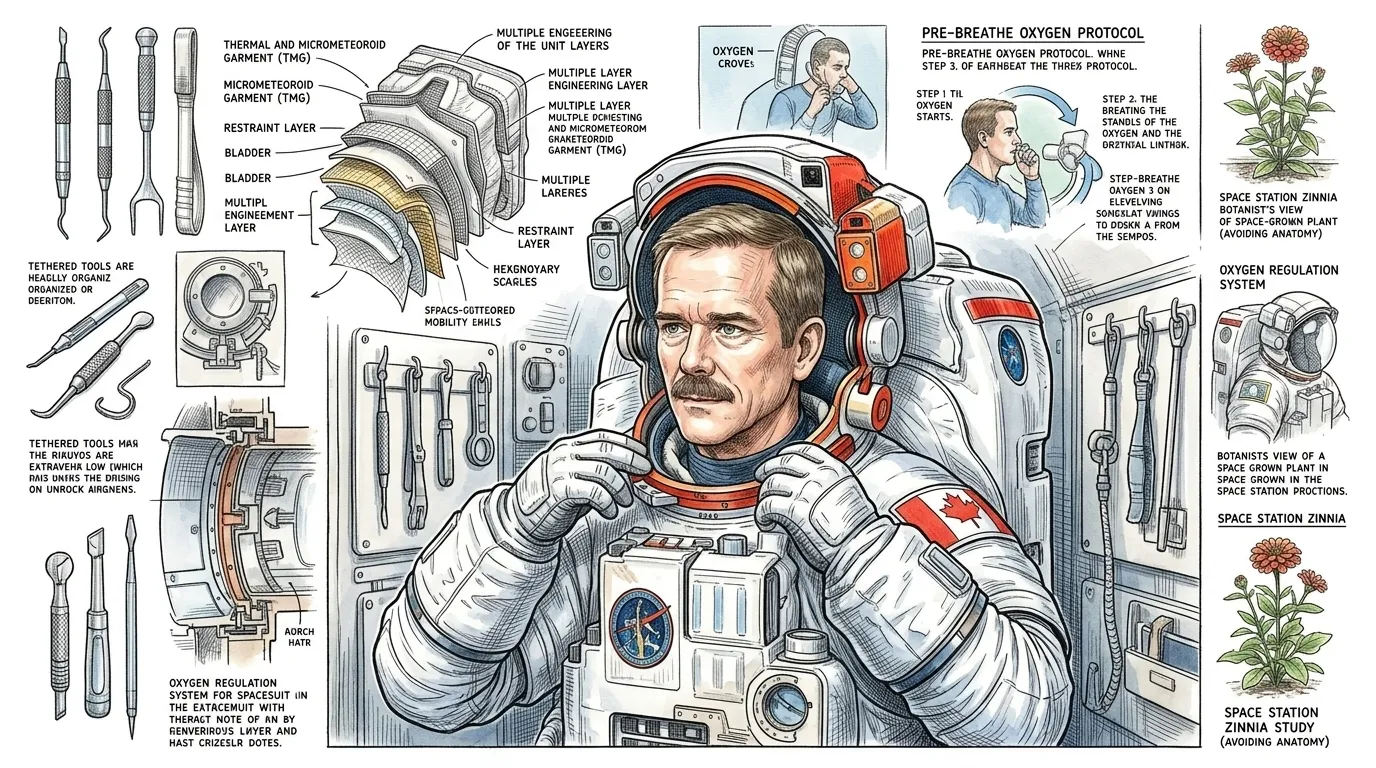
Spacewalks, or Extravehicular Activities (EVAs), are among the most hazardous and meticulously planned operations in human spaceflight. Chris Hadfield, having performed two EVAs, experienced firsthand the extreme environment outside the station. Each spacewalk demands hours of preparation: astronauts must pre-breathe pure oxygen for several hours to purge nitrogen from their bloodstreams, preventing decompression sickness—a modern equivalent of 'the bends.' Donning the Extravehicular Mobility Unit (EMU), a complex, self-contained miniature spacecraft, is a multi-hour process. Every tool is tethered, every movement practiced in simulators. This rigorous protocol underscores the profound risk and the precision engineering embedded in every aspect of EVA, where a single mistake can be catastrophic. The sheer scale of preparation required highlights the unforgiving nature of the vacuum.\n\n Fact: Spacewalk, EVA, Extravehicular Mobility Unit (EMU), decompression sickness, pre-breathe protocol.
Page 6
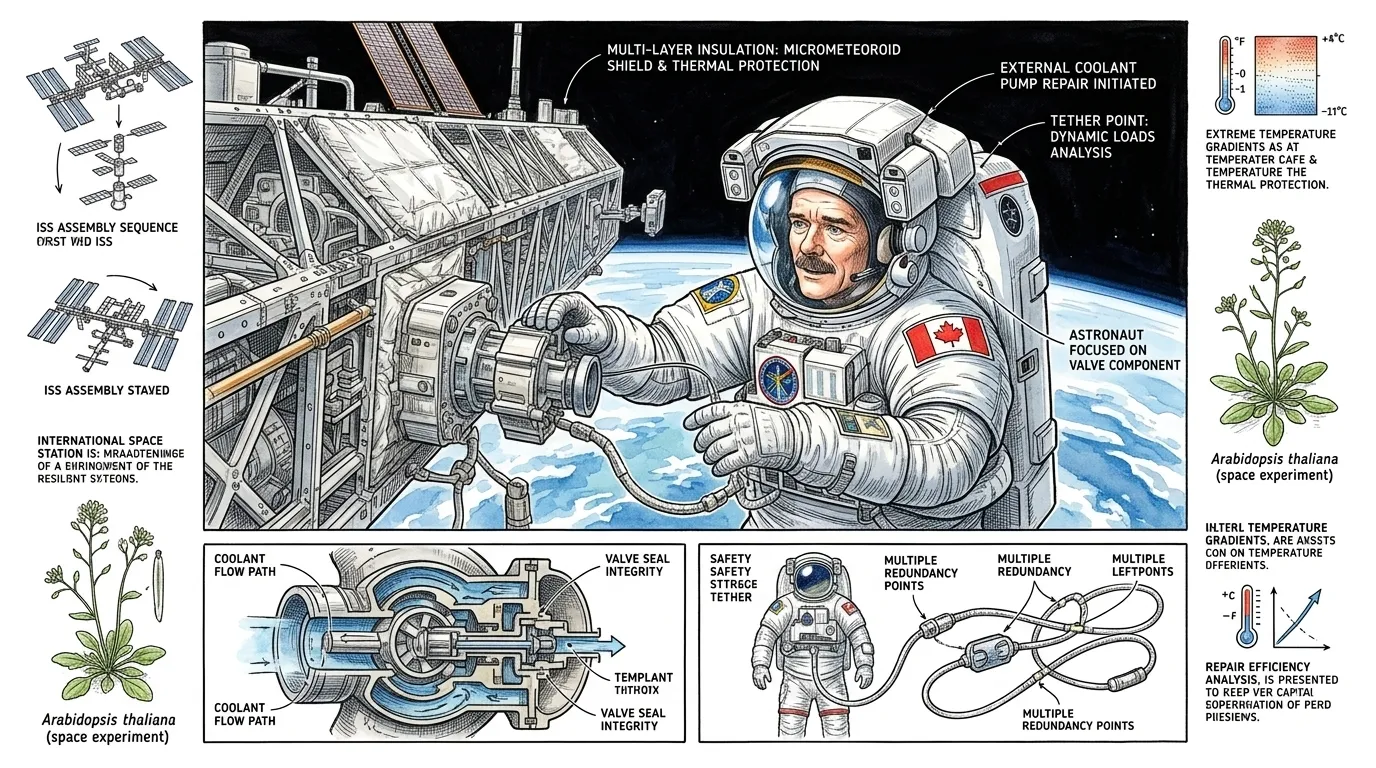
Once outside, a spacewalker becomes a human satellite, tethered to the vast structure of the ISS, traversing the Earth's orbit at incredible speeds. The view is unparalleled, yet the focus is absolute: repairs, installations, and scientific experiments demand unwavering concentration. Hadfield described the experience as both awe-inspiring and terrifying, a ballet of precision and strength against the ultimate backdrop. The sun's unfiltered radiation, extreme temperature fluctuations from -120 C to 120 C, and the omnipresent threat of micrometeoroids make every moment critical. The astronaut's visor reflects the endless blackness and the distant Earth, a stark reminder of the isolation. Each successful spacewalk is a testament not only to human courage but to the intricate design of the EMU, which protects and sustains life against forces alien to our terrestrial existence.\n\n Fact: Spacewalk hazards, micrometeoroids, extreme temperatures, solar radiation, EMU functionality.
Page 7
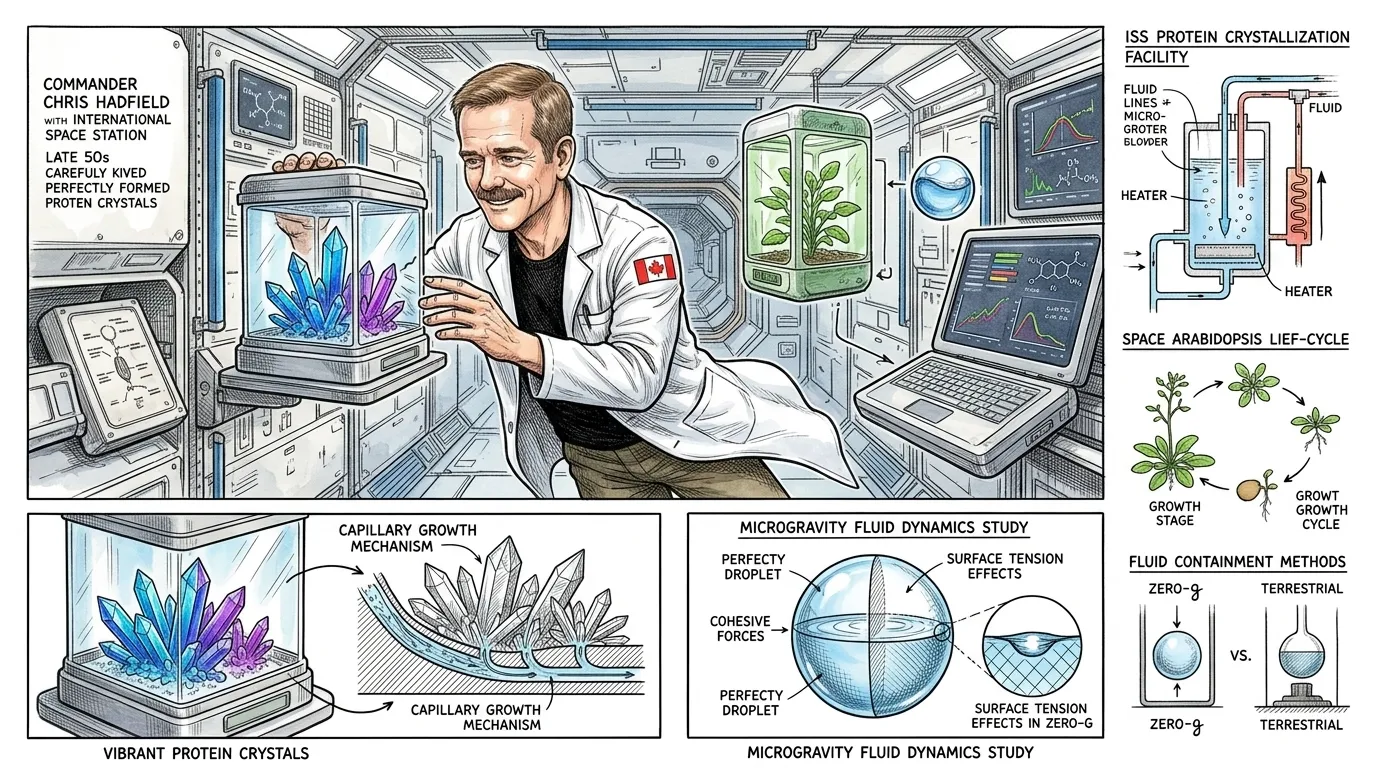
The ISS is more than an orbital outpost; it is an unparalleled microgravity laboratory, enabling research impossible on Earth. Scientists across the globe, including those whose work Chris Hadfield supported, leverage this unique environment to study crystal growth, fluid dynamics, human physiology, and advanced materials. Experiments range from burning flames in novel ways to understanding how plants grow without gravity. For example, protein crystallization experiments can yield larger, more perfect crystals in microgravity, vital for drug discovery. Astronauts become both researchers and subjects, contributing to a vast dataset on long-duration spaceflight's impact. Every observation, every data point, pushes the boundaries of our understanding, providing insights that directly benefit life on Earth and prepare humanity for future deep-space missions.\n\n Fact: Microgravity research, protein crystallization, fluid dynamics, plant growth, drug discovery.
Page 8
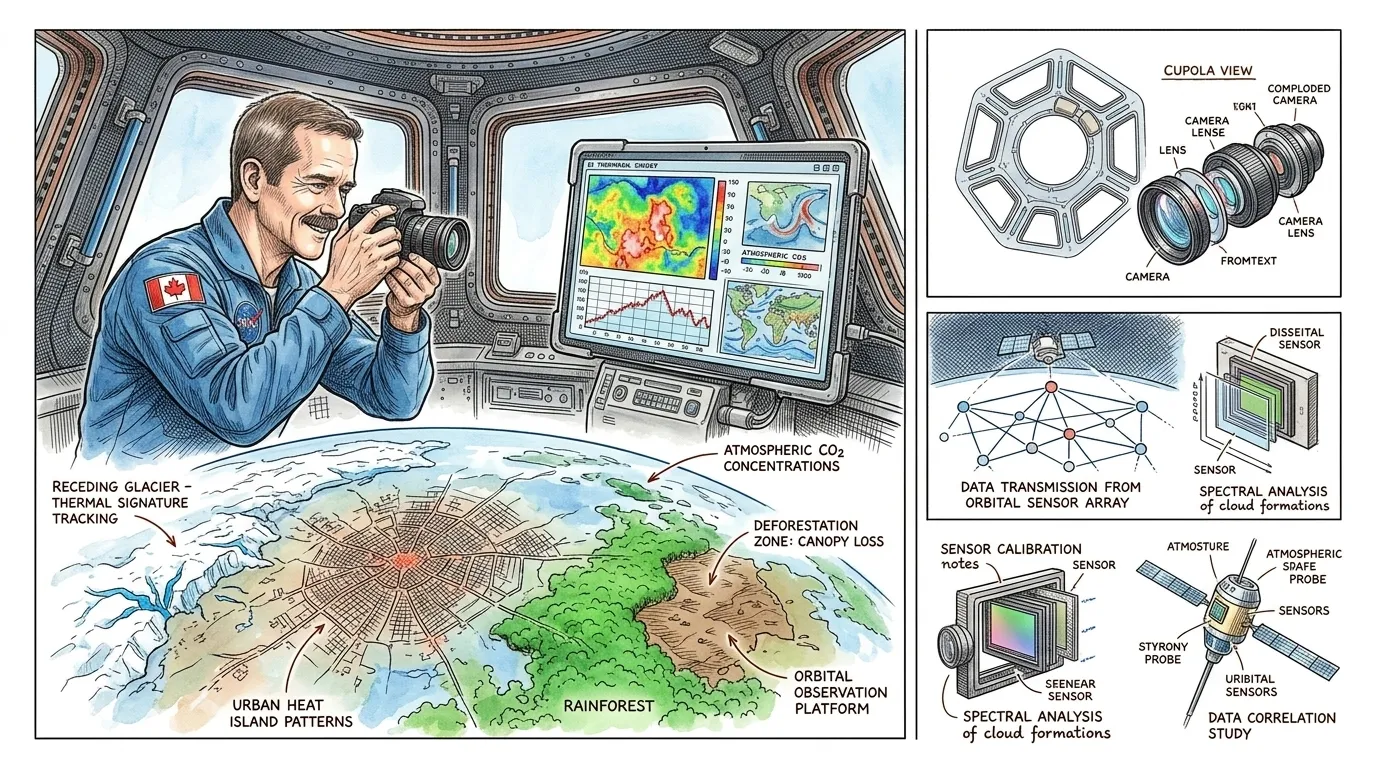
From its orbital vantage point, the ISS also serves as a vital platform for Earth observation, a critical application of space science. Hadfield often shared stunning photographs of Earth, revealing the planet's dynamic systems from a unique perspective. These images, alongside data from sophisticated instruments, provide crucial information for monitoring climate change, tracking environmental shifts, and responding to natural disasters. Scientists study everything from glacier melt to urban sprawl, ocean currents to deforestation, contributing to a holistic understanding of our complex home. The ability to observe large-scale phenomena over extended periods offers invaluable insights for environmental policy and sustainable development. This constant vigilance from above reinforces humanity's interconnectedness and our responsibility to the planet.\n\n Fact: Earth observation, climate change monitoring, disaster response, environmental science, remote sensing.
Page 9
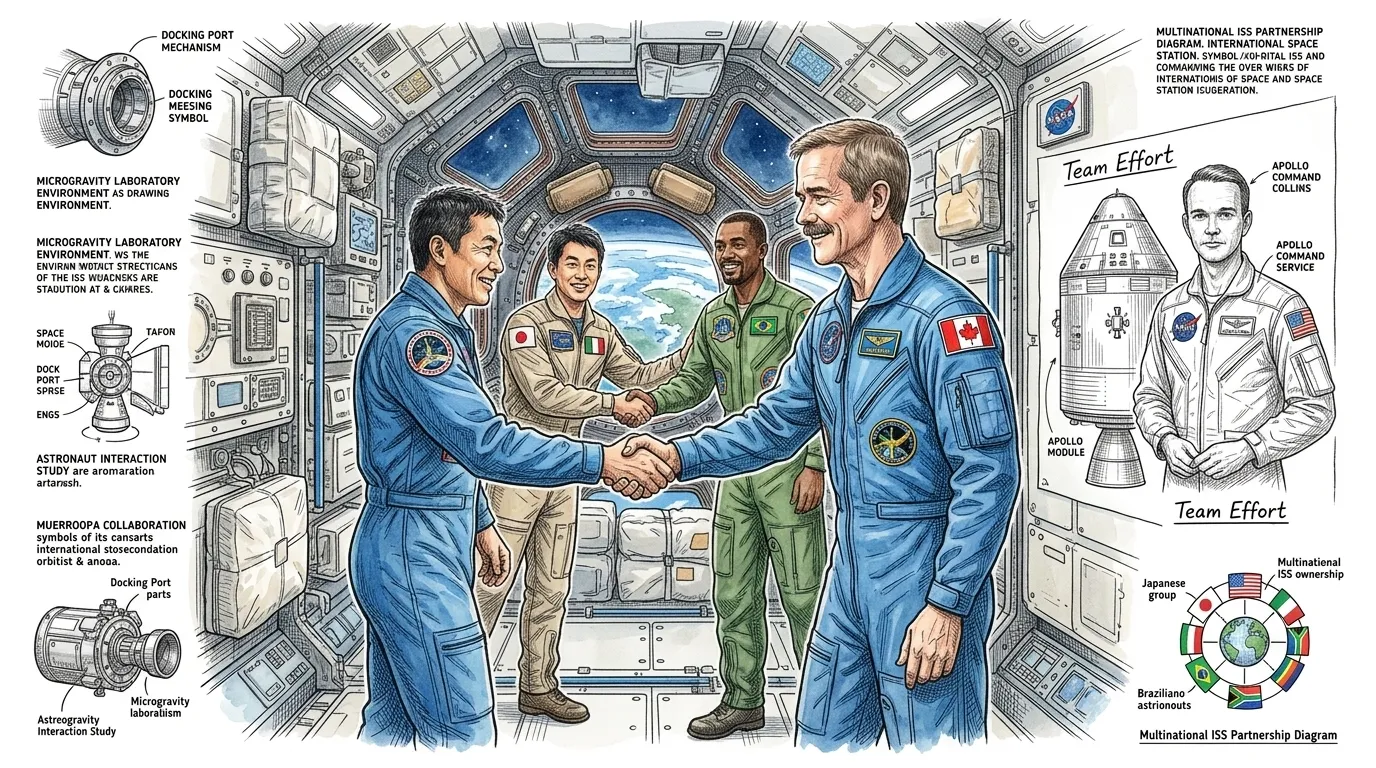
The International Space Station stands as the largest peaceful international collaboration in human history, a testament to what nations can achieve when united by a common scientific purpose. Astronauts from various countries live and work side-by-side, overcoming linguistic, cultural, and political differences for the advancement of knowledge. This model of cooperation, refined over decades, is a direct outcome of the pioneering spirit of figures like Michael Collins, a key figure in Apollo 11, who emphasized the team effort behind individual feats. Hadfield's own command of Expedition 35 exemplified this global partnership, showcasing effective leadership in a multinational environment. The ISS is not just a scientific outpost; it's a living, breathing blueprint for future international endeavors, perhaps on the Moon or Mars, proving that our aspirations can transcend terrestrial boundaries.\n\n Fact: International collaboration, space diplomacy, multinational crews, future space missions, Apollo program.
Page 10
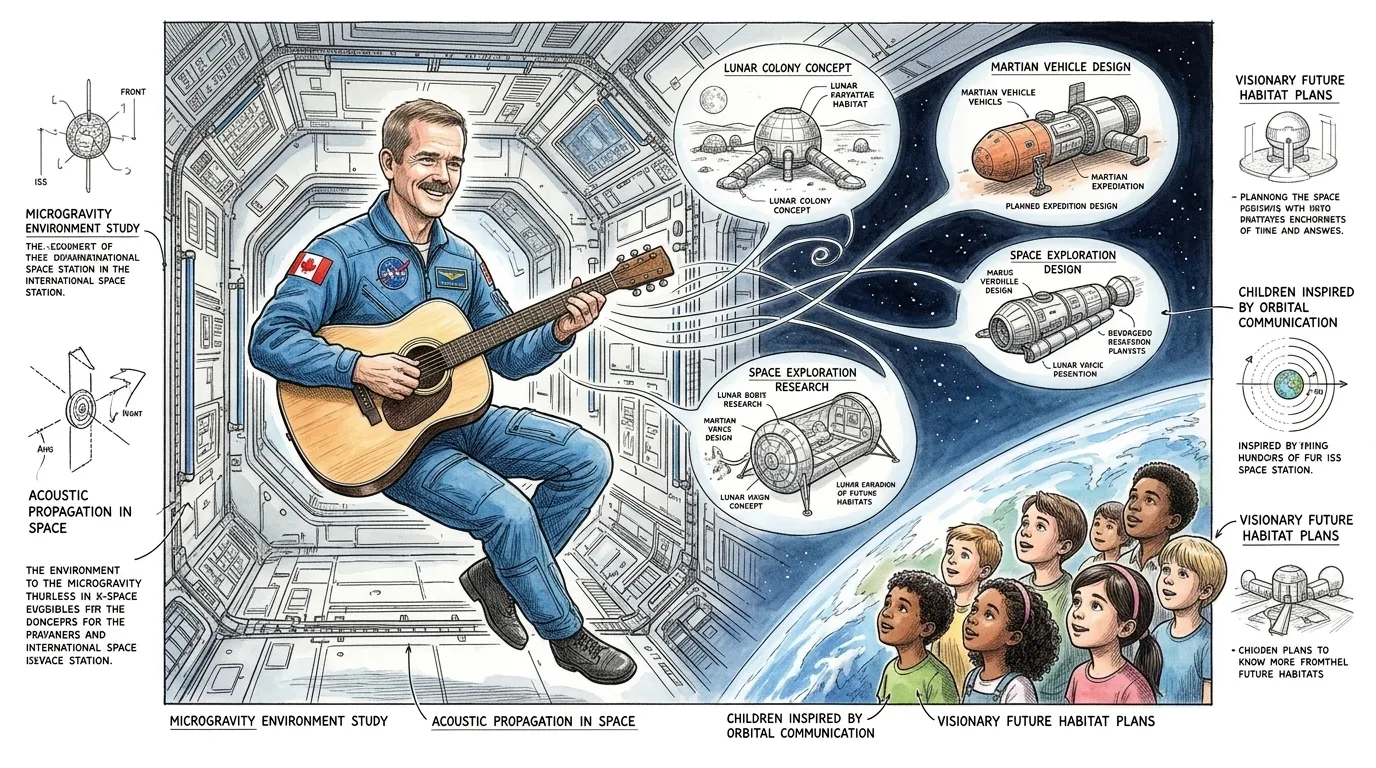
Chris Hadfield's legacy extends far beyond his orbital accomplishments. Through his unique communication style, blending scientific rigor with personal narrative, he brought space exploration into millions of homes, fostering a new generation's curiosity about science, engineering, and the universe. His ability to demystify life in space, from brushing teeth to playing guitar, made the inaccessible tangible and exciting. The impact of his outreach is reflected in renewed public interest in STEM fields and the ongoing drive towards lunar habitats and Martian expeditions. As humanity looks towards new frontiers, Hadfield's approach exemplifies the critical role of accessible science communication in galvanizing support and inspiring the minds that will take the next giant leaps. His work underscores that true exploration encompasses not just reaching new places, but sharing the journey with everyone on Earth.\n\n Fact: Science communication, STEM inspiration, public engagement, future space exploration, lunar missions, Mars missions.
About this story
- Location: Global
- Audience: general readers
Questions and answers
Read Wonder Science on your phone
Wonder Science is available on Android. Get Wonder Science on Google Play.