Chemistry in the Ocean

Chemistry in the Ocean — an illustrated science story, set in France. 10 illustrated pages, free to read on Wonder Science.
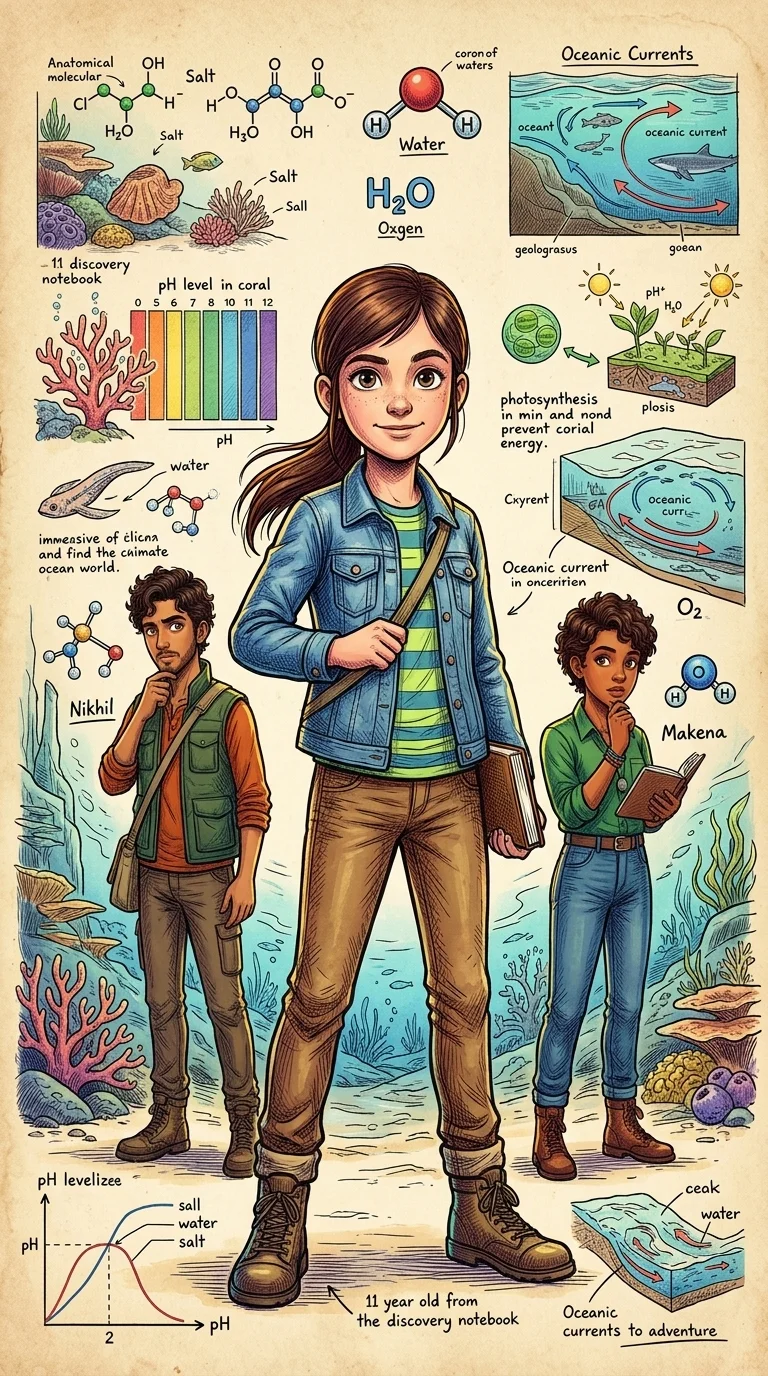
Chemistry in the Ocean — book cover — Wonder Science
Chemistry in the Ocean — an illustrated science story, set in France. 10 illustrated pages, free to read on Wonder Science.

Page 1
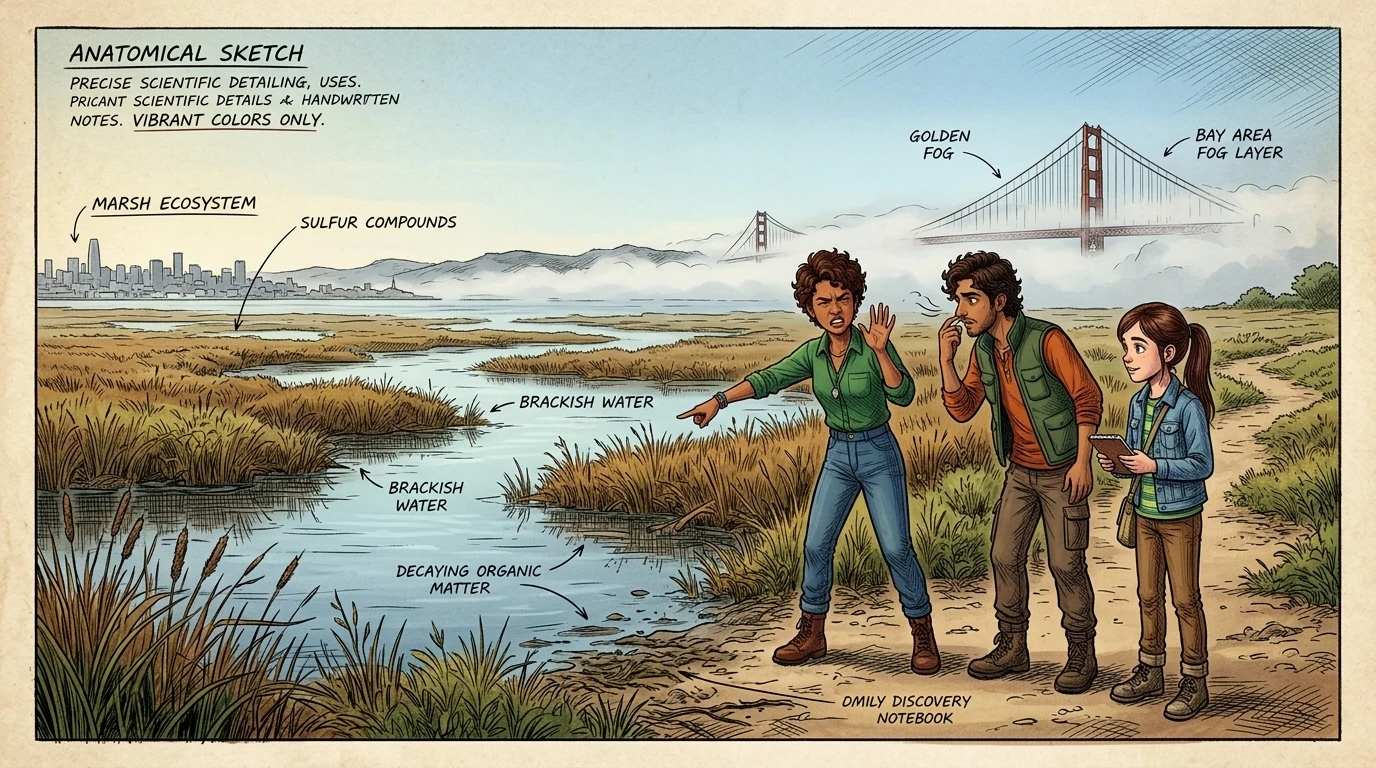
Valentina and her friends Nikhil and Makena walked along the path at Crissy Field as fog crept over the Golden Gate Bridge.
Valentina and her friends Nikhil and Makena walked along the path at Crissy Field as fog crept over the Golden Gate Bridge. Makena scrunched her nose and waved a hand in front of her face. "Phew, what is that smell?" she asked, pointing toward the marshy shoreline where the water was still. Nikhil sniffed the air. "It smells like rotten eggs!"

Valentina and her friends Nikhil and Makena walked along the path at Crissy Field as fog crept over the Golden Gate Bridge. Makena scrunched her nose and waved a hand in front of her face. "Phew, what is that smell?" she asked, pointing toward the marshy shoreline where the water was still. Nikhil sniffed the air. "It smells like rotten eggs!"

Page 2
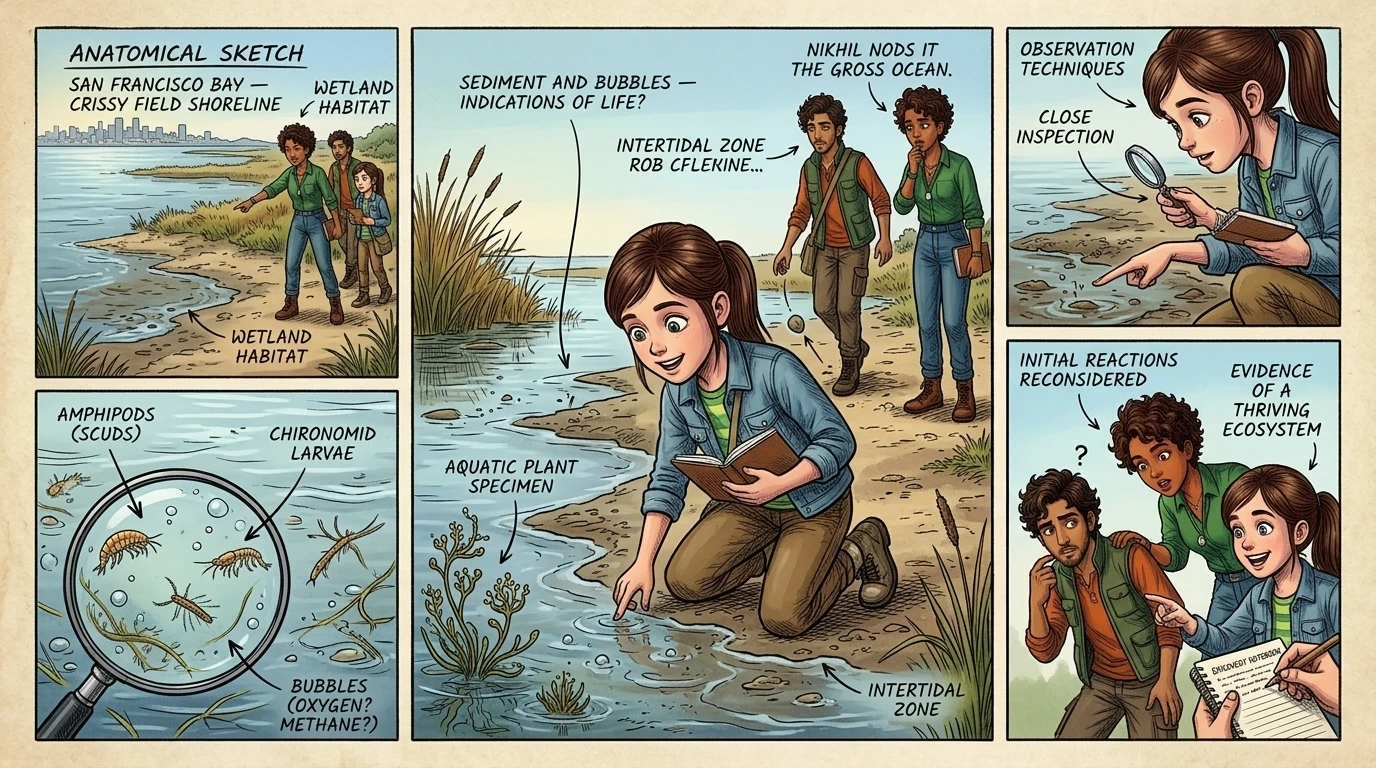
"It's probably just the gross ocean," Nikhil said, kicking a loose pebble. "It's only a bunch of salty water, right?" Makena nodded in agreement, but Valentina…
"It's probably just the gross ocean," Nikhil said, kicking a loose pebble. "It's only a bunch of salty water, right?" Makena nodded in agreement, but Valentina tilted her head, her curiosity sparked. "I don't think it's that simple; the ocean is huge," she replied, kneeling down to look closer at the water's edge. "That specific smell means there must be other chemicals in the water, like dissolved gases."

"It's probably just the gross ocean," Nikhil said, kicking a loose pebble. "It's only a bunch of salty water, right?" Makena nodded in agreement, but Valentina tilted her head, her curiosity sparked. "I don't think it's that simple; the ocean is huge," she replied, kneeling down to look closer at the water's edge. "That specific smell means there must be other chemicals in the water, like dissolved gases."

Page 3
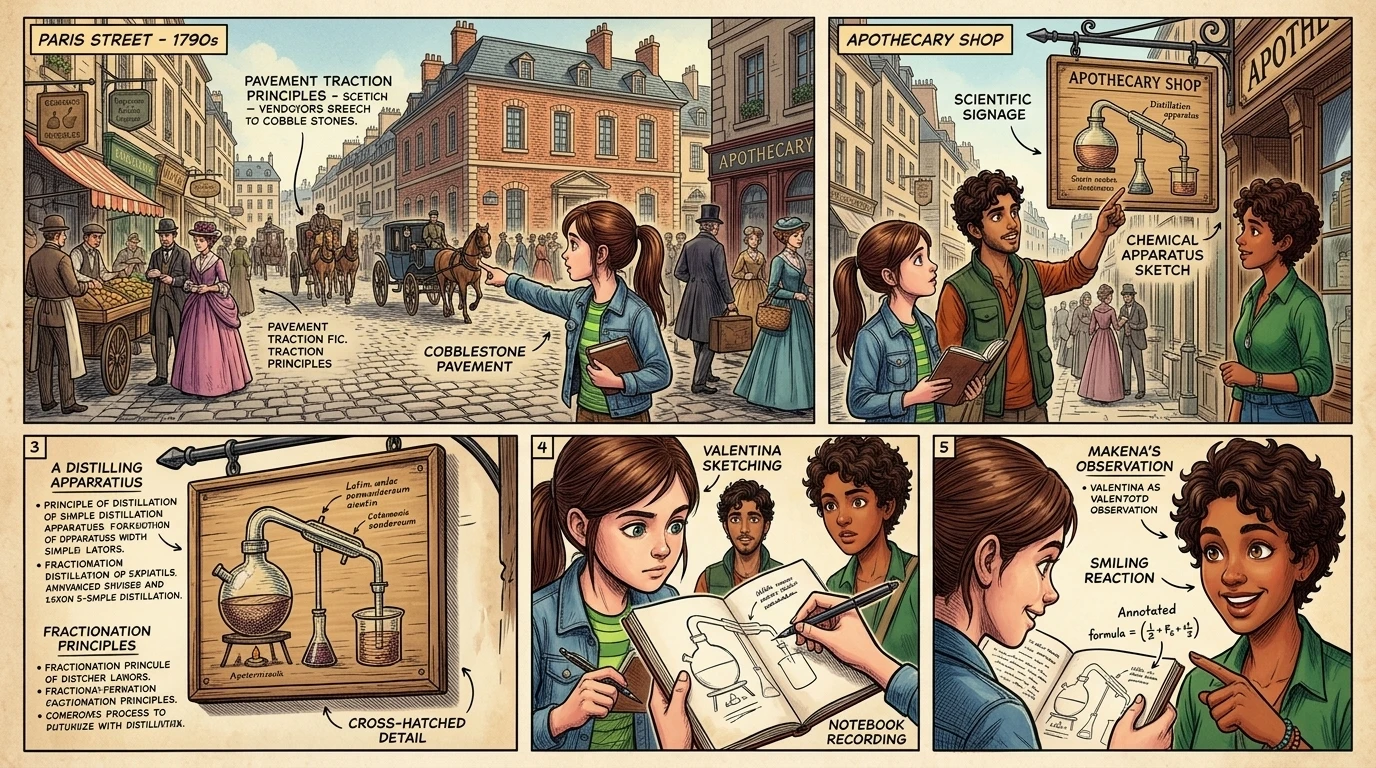
That very idea—that invisible things could be hiding in plain sight—had puzzled thinkers for centuries. To find the answer, we have to travel back in time to…
That very idea—that invisible things could be hiding in plain sight—had puzzled thinkers for centuries. To find the answer, we have to travel back in time to Paris, France, in the late 1700s. The city was a noisy, bustling place filled with new ideas and revolutionary questions, not just about society, but about the very materials that made up the world.

That very idea—that invisible things could be hiding in plain sight—had puzzled thinkers for centuries. To find the answer, we have to travel back in time to Paris, France, in the late 1700s. The city was a noisy, bustling place filled with new ideas and revolutionary questions, not just about society, but about the very materials that made up the world.

Page 4
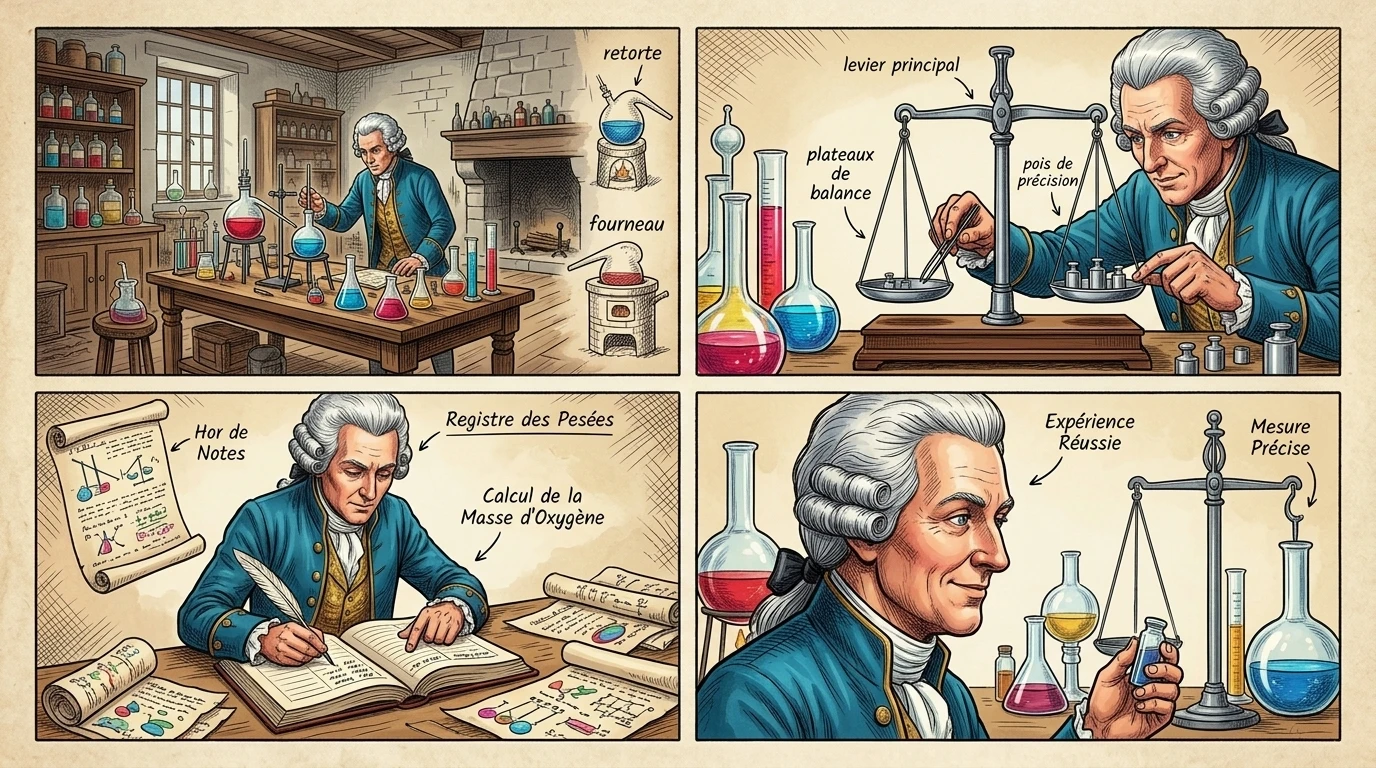
This was the world of Antoine Lavoisier, often called the father of modern chemistry. He was a brilliant scientist who wasn't satisfied with old explanations.
This was the world of Antoine Lavoisier, often called the father of modern chemistry. He was a brilliant scientist who wasn't satisfied with old explanations. Lavoisier's great passion was measurement; he believed that to truly understand something, you had to weigh it, measure it, and account for every last particle.

This was the world of Antoine Lavoisier, often called the father of modern chemistry. He was a brilliant scientist who wasn't satisfied with old explanations. Lavoisier's great passion was measurement; he believed that to truly understand something, you had to weigh it, measure it, and account for every last particle.

Page 5
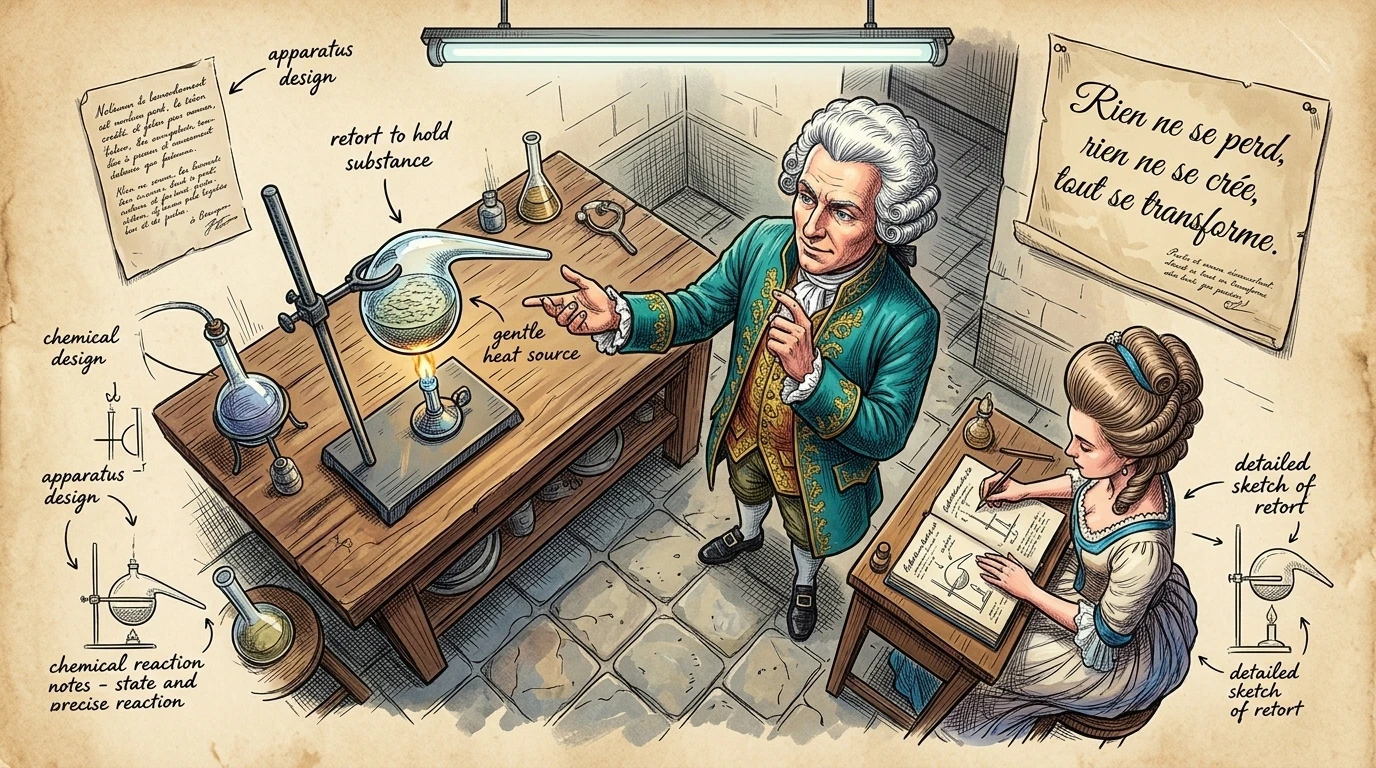
His wife and collaborator, Marie-Anne, sketched his experiments while he worked. One day, while heating a substance in a sealed jar, he turned to her and…
His wife and collaborator, Marie-Anne, sketched his experiments while he worked. One day, while heating a substance in a sealed jar, he turned to her and explained his most fundamental idea. "Remember, my dear," he said, gesturing with his hands, "As the great thinker Anaxagoras suspected, and I have proven: 'Nothing is lost, nothing is created, everything is transformed.'"

His wife and collaborator, Marie-Anne, sketched his experiments while he worked. One day, while heating a substance in a sealed jar, he turned to her and explained his most fundamental idea. "Remember, my dear," he said, gesturing with his hands, "As the great thinker Anaxagoras suspected, and I have proven: 'Nothing is lost, nothing is created, everything is transformed.'"

Page 6
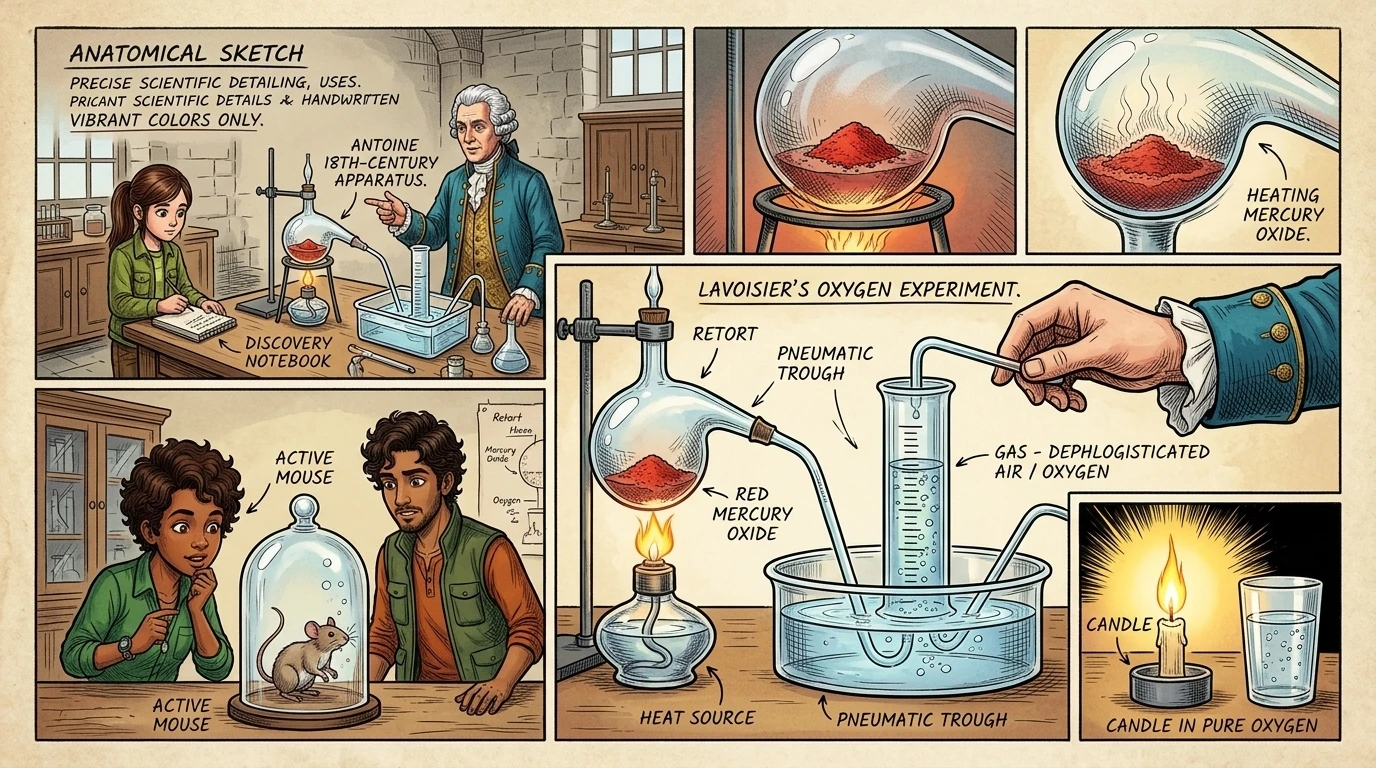
Lavoisier proved this by carefully heating mercury oxide, a red powder, in a sealed container. It transformed, releasing a gas that he collected and measured…
Lavoisier proved this by carefully heating mercury oxide, a red powder, in a sealed container. It transformed, releasing a gas that he collected and measured precisely. He discovered this gas was what allowed a candle to burn brighter and a mouse to breathe, and he named it oxygen. This was a revolutionary discovery: air itself was not one thing, but a mixture of invisible gases!

Lavoisier proved this by carefully heating mercury oxide, a red powder, in a sealed container. It transformed, releasing a gas that he collected and measured precisely. He discovered this gas was what allowed a candle to burn brighter and a mouse to breathe, and he named it oxygen. This was a revolutionary discovery: air itself was not one thing, but a mixture of invisible gases!

Page 7
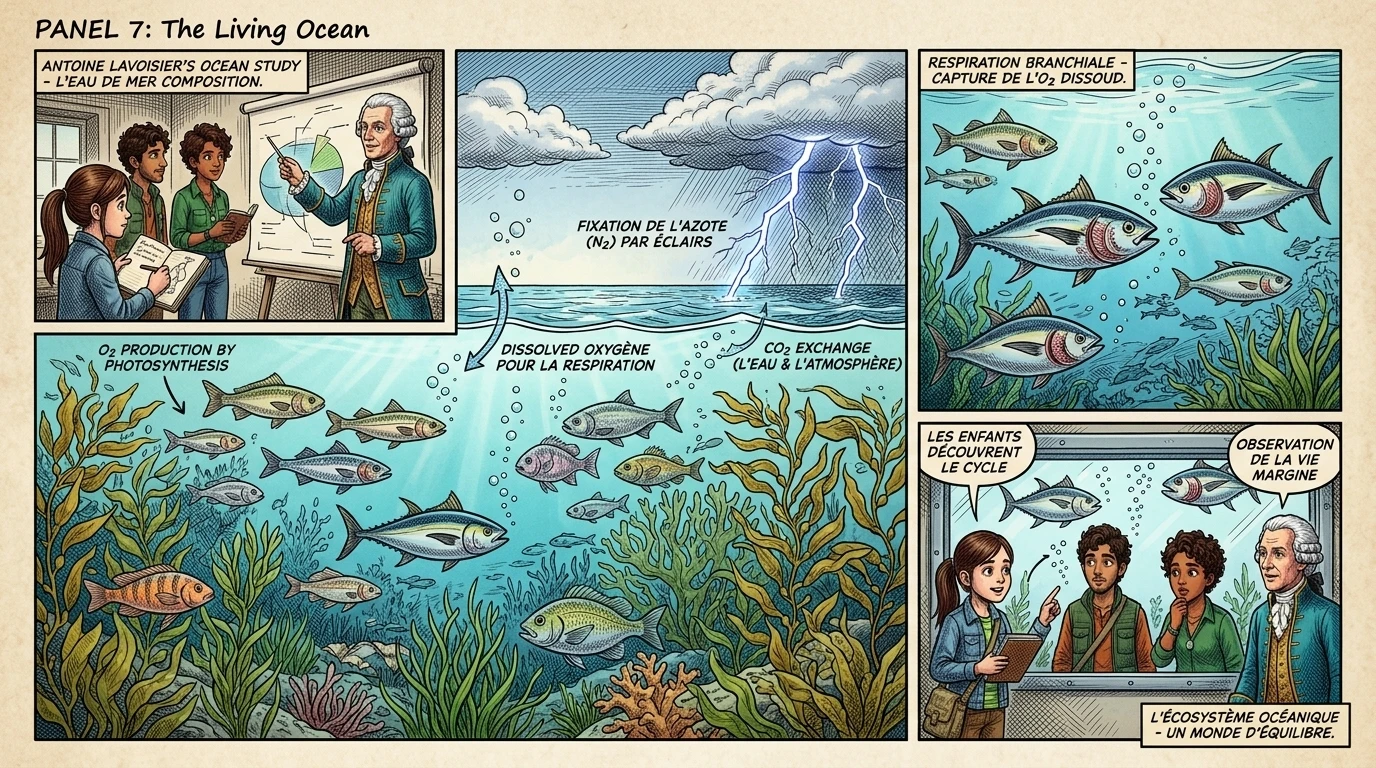
This single discovery changed everything, unlocking the secrets of chemistry. Scientists realized that the ocean, just like the air, wasn't simple at all.
This single discovery changed everything, unlocking the secrets of chemistry. Scientists realized that the ocean, just like the air, wasn't simple at all. It was a complex solution, holding dissolved oxygen for fish to breathe, carbon dioxide from the atmosphere, and nitrogen created by lightning bolts five times hotter than the sun. The ocean was a massive chemical reactor.

This single discovery changed everything, unlocking the secrets of chemistry. Scientists realized that the ocean, just like the air, wasn't simple at all. It was a complex solution, holding dissolved oxygen for fish to breathe, carbon dioxide from the atmosphere, and nitrogen created by lightning bolts five times hotter than the sun. The ocean was a massive chemical reactor.

Page 8
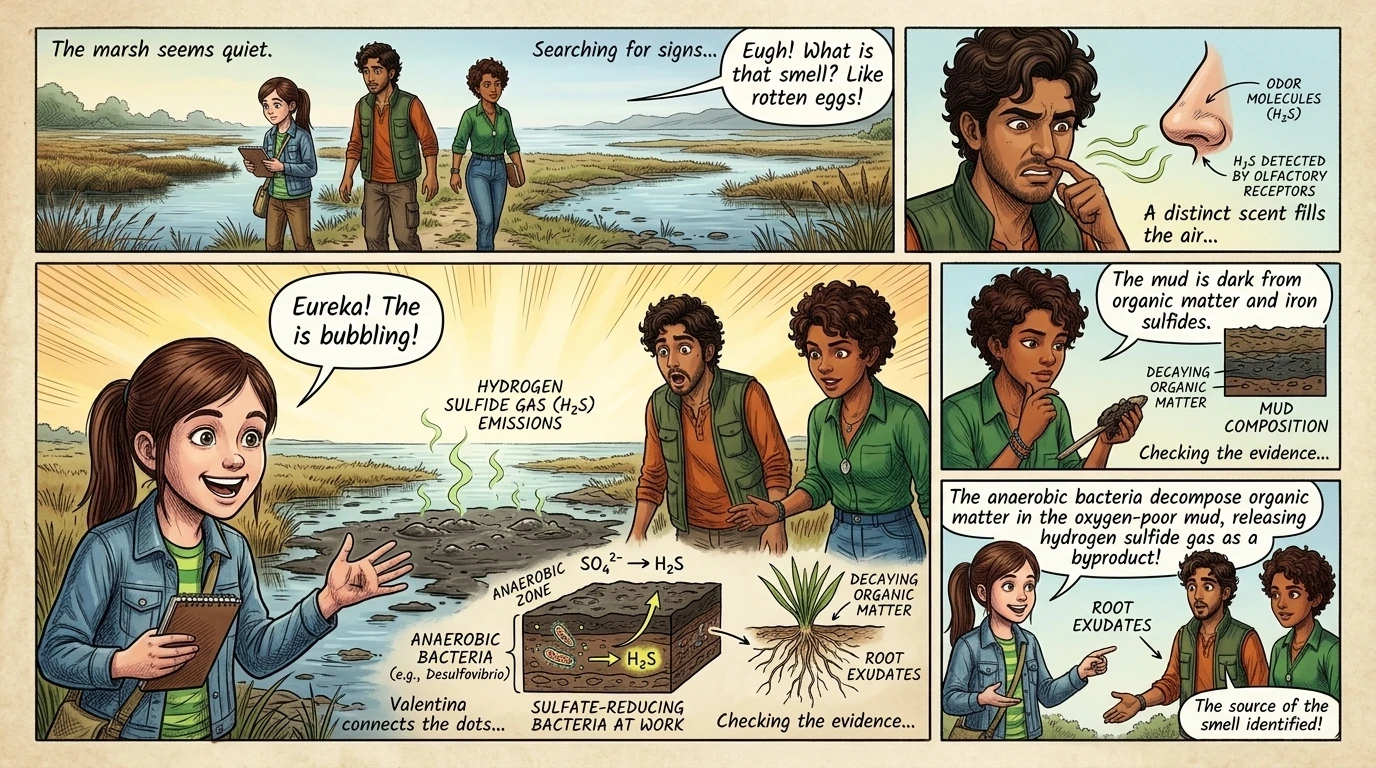
Back at Crissy Field, the pieces clicked into place for Valentina. "That's it!" she exclaimed, turning to her friends. "That smell is hydrogen sulfide, a gas…
Back at Crissy Field, the pieces clicked into place for Valentina. "That's it!" she exclaimed, turning to her friends. "That smell is hydrogen sulfide, a gas made by bacteria in the mud where there's no oxygen. It proves the ocean is a giant chemical soup, just like Lavoisier proved air was a mix of gases!" Nikhil's eyes went wide. "Whoa, so the air we breathe is actually in the water?"

Back at Crissy Field, the pieces clicked into place for Valentina. "That's it!" she exclaimed, turning to her friends. "That smell is hydrogen sulfide, a gas made by bacteria in the mud where there's no oxygen. It proves the ocean is a giant chemical soup, just like Lavoisier proved air was a mix of gases!" Nikhil's eyes went wide. "Whoa, so the air we breathe is actually in the water?"

Page 9
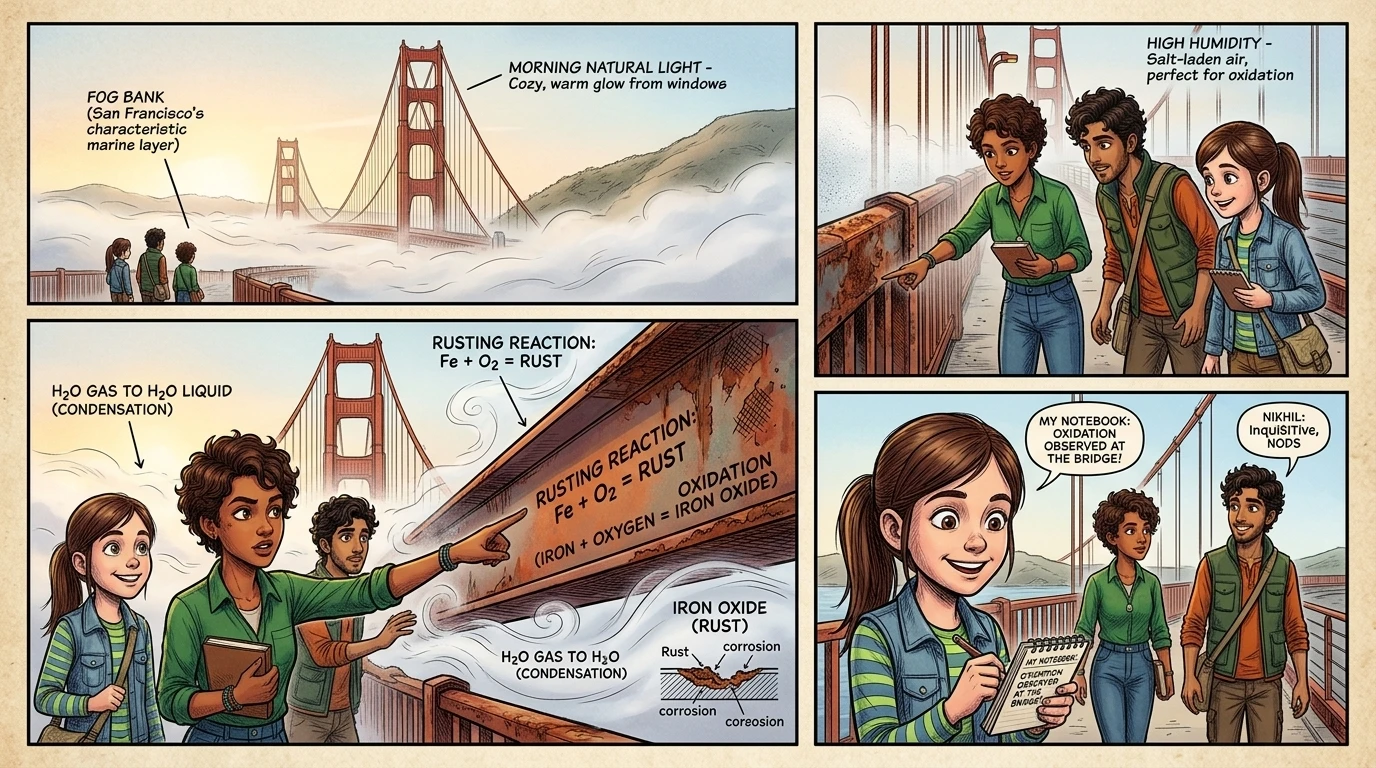
"Exactly!" Valentina beamed. Makena pointed a finger toward the Golden Gate Bridge, now more visible through the thinning fog.
"Exactly!" Valentina beamed. Makena pointed a finger toward the Golden Gate Bridge, now more visible through the thinning fog. "Wait, so is the rust on the bridge a chemical reaction with the salty air?" Nikhil looked at the heavy mist around them. "And the fog itself must be chemistry too, right? Water transforming from a gas to a liquid."

"Exactly!" Valentina beamed. Makena pointed a finger toward the Golden Gate Bridge, now more visible through the thinning fog. "Wait, so is the rust on the bridge a chemical reaction with the salty air?" Nikhil looked at the heavy mist around them. "And the fog itself must be chemistry too, right? Water transforming from a gas to a liquid."

Page 10
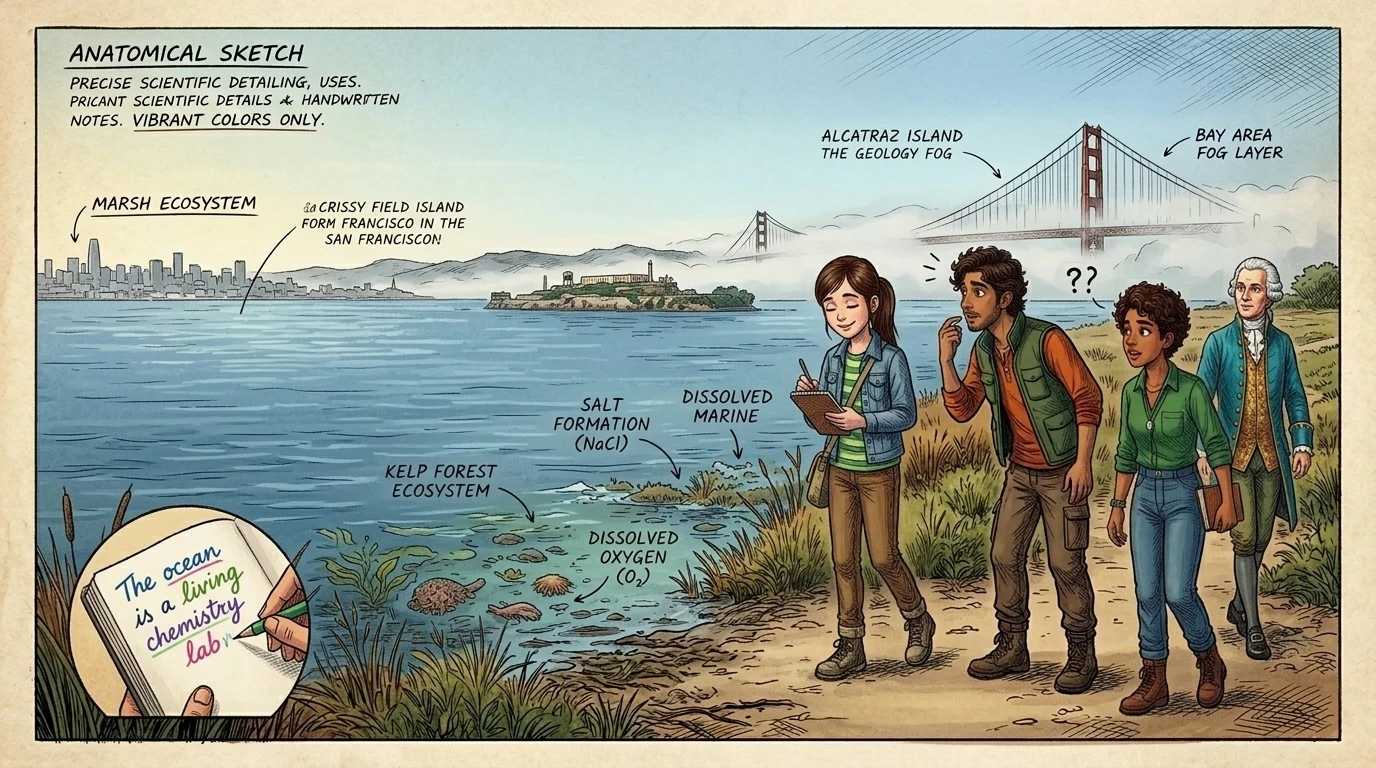
As they headed home, Valentina jotted in her notebook: The ocean is a living chemistry lab. Her friends were buzzing with questions, no longer seeing just a…
As they headed home, Valentina jotted in her notebook: The ocean is a living chemistry lab. Her friends were buzzing with questions, no longer seeing just a boring patch of water. "Okay, I get it, the water is full of chemicals," Makena said, looking out toward Alcatraz Island. "But how do fish, and sharks, and giant whales actually survive in it?"

As they headed home, Valentina jotted in her notebook: The ocean is a living chemistry lab. Her friends were buzzing with questions, no longer seeing just a boring patch of water. "Okay, I get it, the water is full of chemicals," Makena said, looking out toward Alcatraz Island. "But how do fish, and sharks, and giant whales actually survive in it?"

About this story

  • Location: France
  • Audience: kids (ages 6–12)

Questions and answers

Questions and answers about Chemistry in the Ocean

Read Wonder Science on your phone

Wonder Science is available on Android. Get Wonder Science on Google Play.

More Wonder Science stories

All Wonder Science stories · Open the library