Charles Darwin's Voyage
Charles Darwin's Voyage — an illustrated science story, set in Global. 10 illustrated pages, free to read on Wonder Science.
Page 1

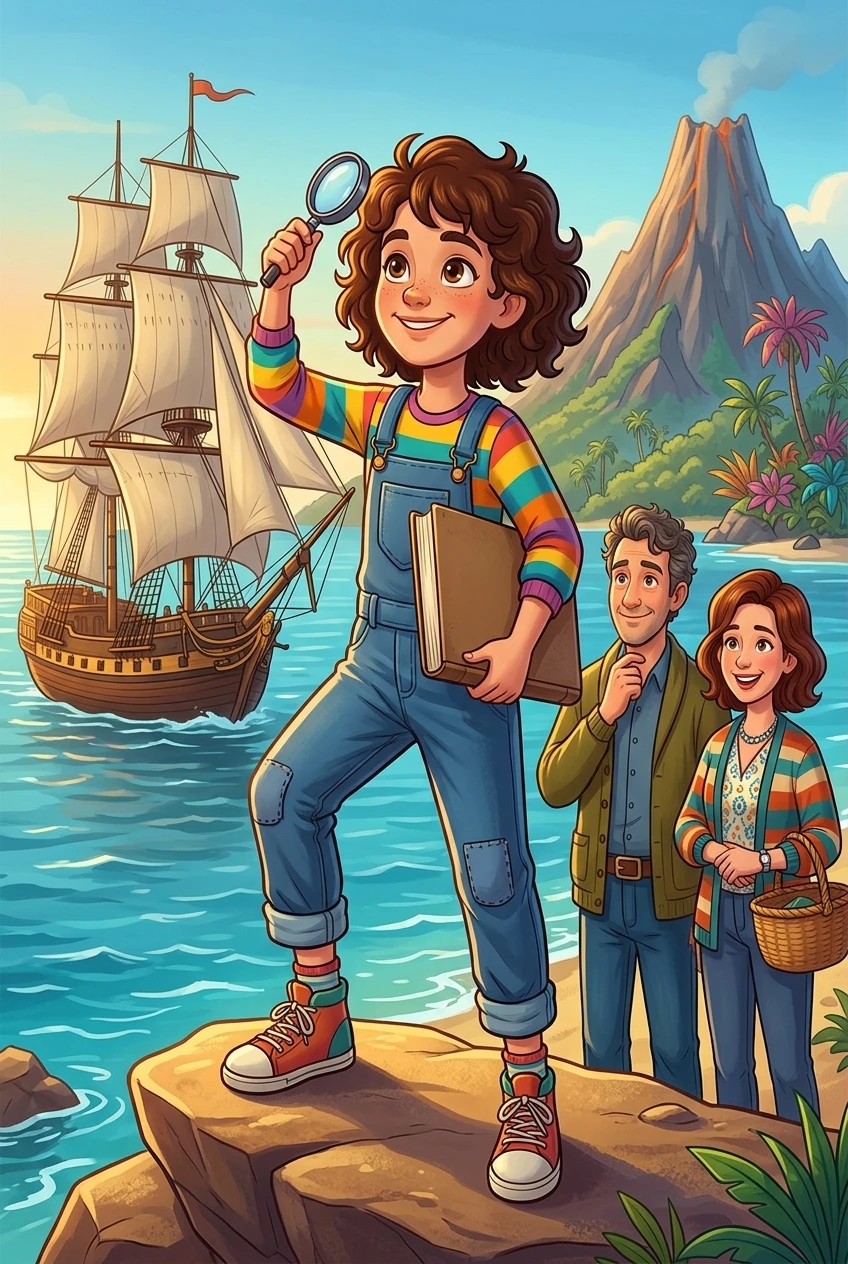
Sami sat on the edge of a fountain in Golden Gate Park, watching the ships sail on the rivers of starlight in the harbor. Her friend, Sofia, pointed towards a large container ship. "Look how big that ship is! How do they know where to go?" Sami shrugged, "I wonder if there was ever a time before all this technology and equipment that ships use to navigate."
Page 2
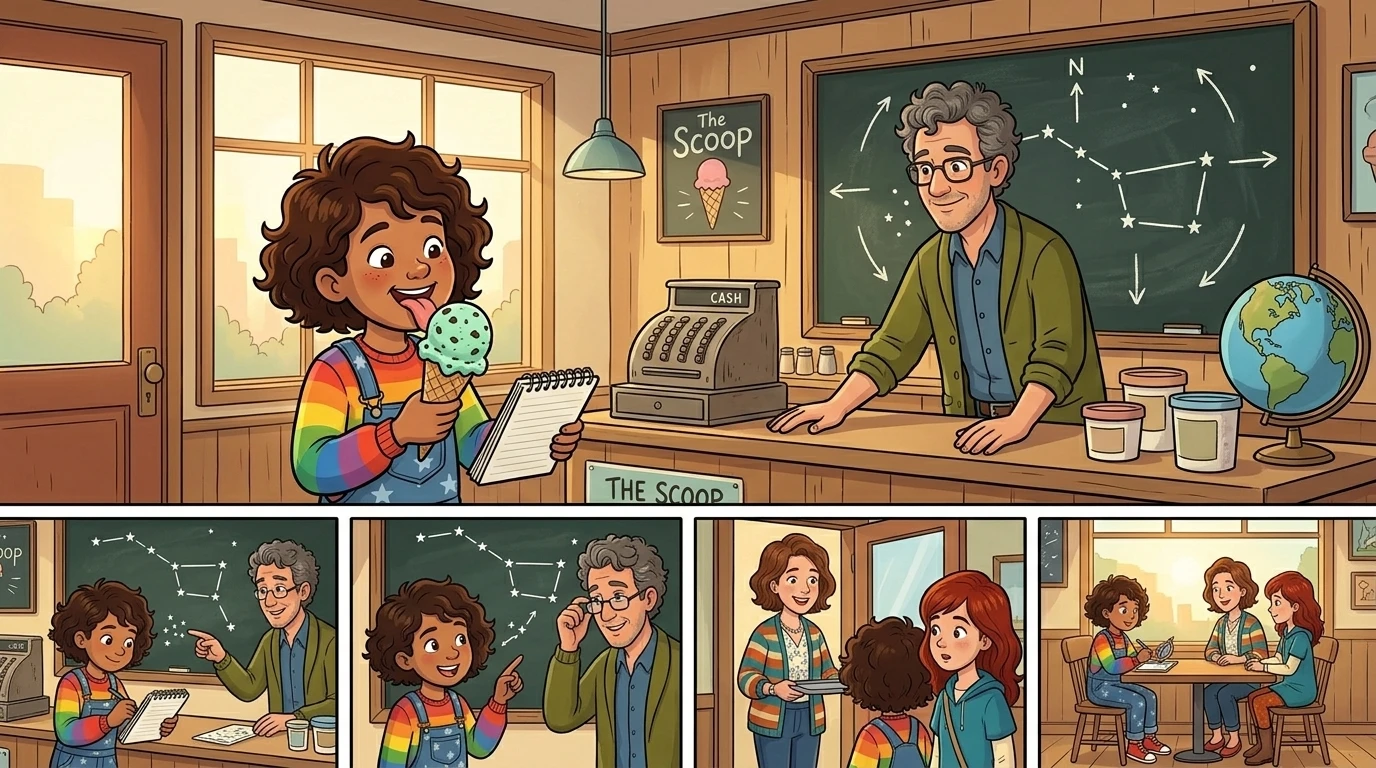
Later, at The Scoop ice cream shop in Noe Valley, Sami, notebook in hand, discussed Sofia's question with her father. "So, how did sailors navigate before GPS?" Sami asked, licking her mint chocolate chip ice cream. Her father smiled, adjusting his glasses. "That's a great question, Sami. It involves a lot of observation, knowledge of the stars, and some very brave people! It's called celestial navigation — using the stars to guide you — but I wonder, who figured all of that out?"
Page 3

Sami closed her eyes and imagined a different time. The narrator's voice echoed in her mind: "England, 1831. A small ship, the HMS Beagle, sets sail from Plymouth. On board is a young naturalist, eager to explore the world."
Page 4

The young naturalist was Charles Darwin. Born in 1809, Darwin had always been fascinated by nature. He collected beetles as a child and loved exploring the countryside. He even dropped out of medical school because it bored him! His real passion was understanding the natural world. When offered a spot on the Beagle, he jumped at the chance.
Page 5
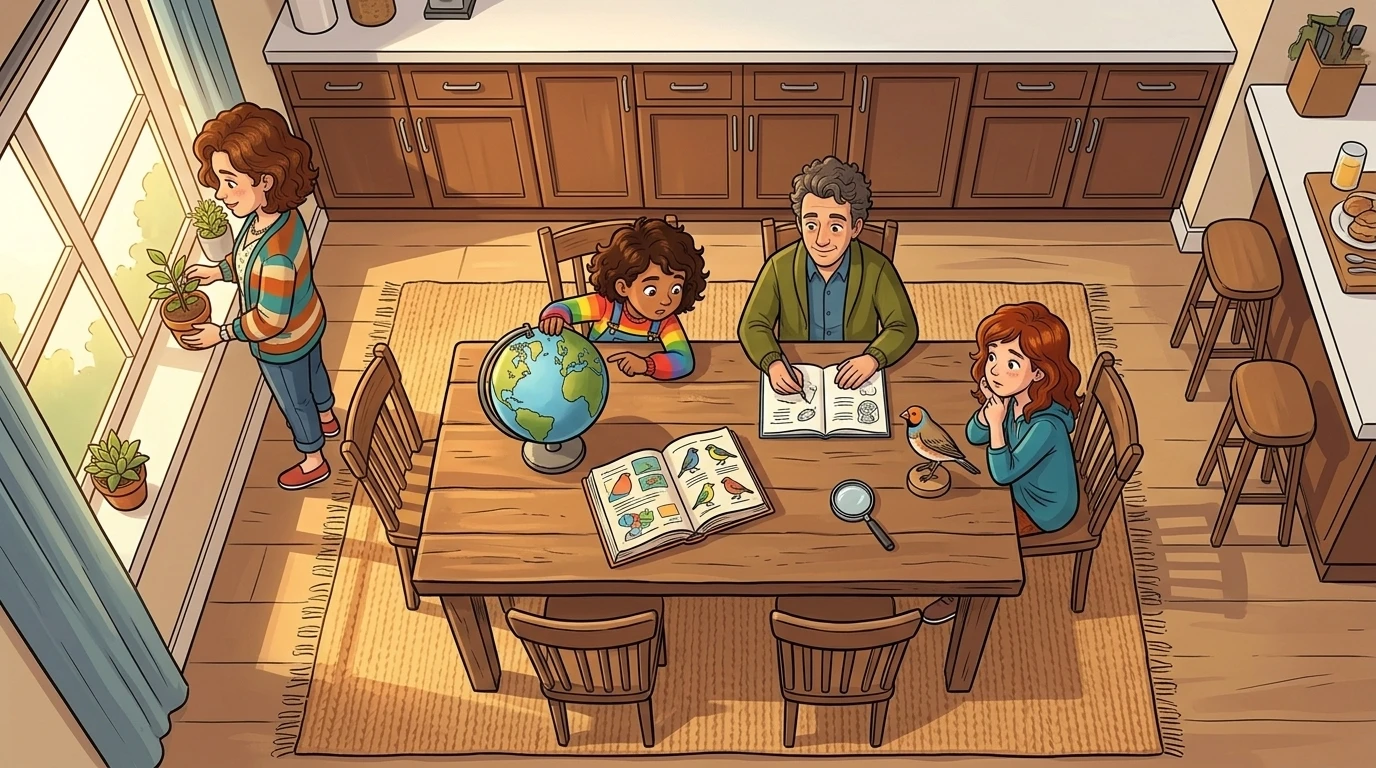
Darwin spent his days on the Beagle collecting specimens and taking notes. He meticulously documented every plant, animal, and geological formation he encountered. One evening, while gazing at the starlit sky, Darwin thought to himself, "'I have called this principle, by which each slight variation, if useful, is preserved, by the term Natural Selection,' as I wrote in my journal. Indeed, nature is a grand, interconnected web."
Page 6

Darwin's most famous observations came from the Galapagos Islands. He noticed that the finches on different islands had beaks adapted to their specific food sources. Some had thick beaks for cracking seeds, while others had long, thin beaks for probing flowers. He realized that these differences were due to natural selection. Over generations, finches with advantageous traits survived and reproduced, passing those traits onto their offspring.
Page 7

Darwin's voyage on the Beagle led to his groundbreaking theory of evolution by natural selection. This theory revolutionized our understanding of life on Earth. It explained how species change over time and how all living things are related. Without it, we wouldn't understand genetics, medicine, or the interconnectedness of ecosystems. A teaspoon of neutron star material would weigh about 6 billion tons!
Page 8

Back in Noe Valley, Sami explained Darwin's discoveries to Sofia, while they ate ice cream. "So, Darwin's observations helped us understand how species adapt and change over time?" Sofia asked. "Exactly!" Sami replied. "It's like the ships. Over time, sailors learned to use the stars better and better, adapting to the challenges of navigating the sea!"
Page 9

Her father added, "It's like how we've learned to make better ice cream over time. We started with simple recipes, and now we have all sorts of flavors and techniques!" Sami's mother chimed in. "Or how our house is built to withstand earthquakes. The engineers learned from past mistakes and made it stronger. In fact, honey never spoils – 3,000-year-old honey found in Egyptian tombs was still edible!"
Page 10

Sami smiled. "So, evolution by natural selection is how living things change and adapt over time!" Just then, Sofia asked, "If evolution explains how animals change over time, what makes some animals similar to each other?"
About this story
- Location: Global
- Audience: kids (ages 6–12)
Questions and answers
Read Wonder Science on your phone
Wonder Science is available on Android. Get Wonder Science on Google Play.