Carolyn Porco
Carolyn Porco — an illustrated science story, set in Global. 10 illustrated pages, free to read on Wonder Science.

Page 1
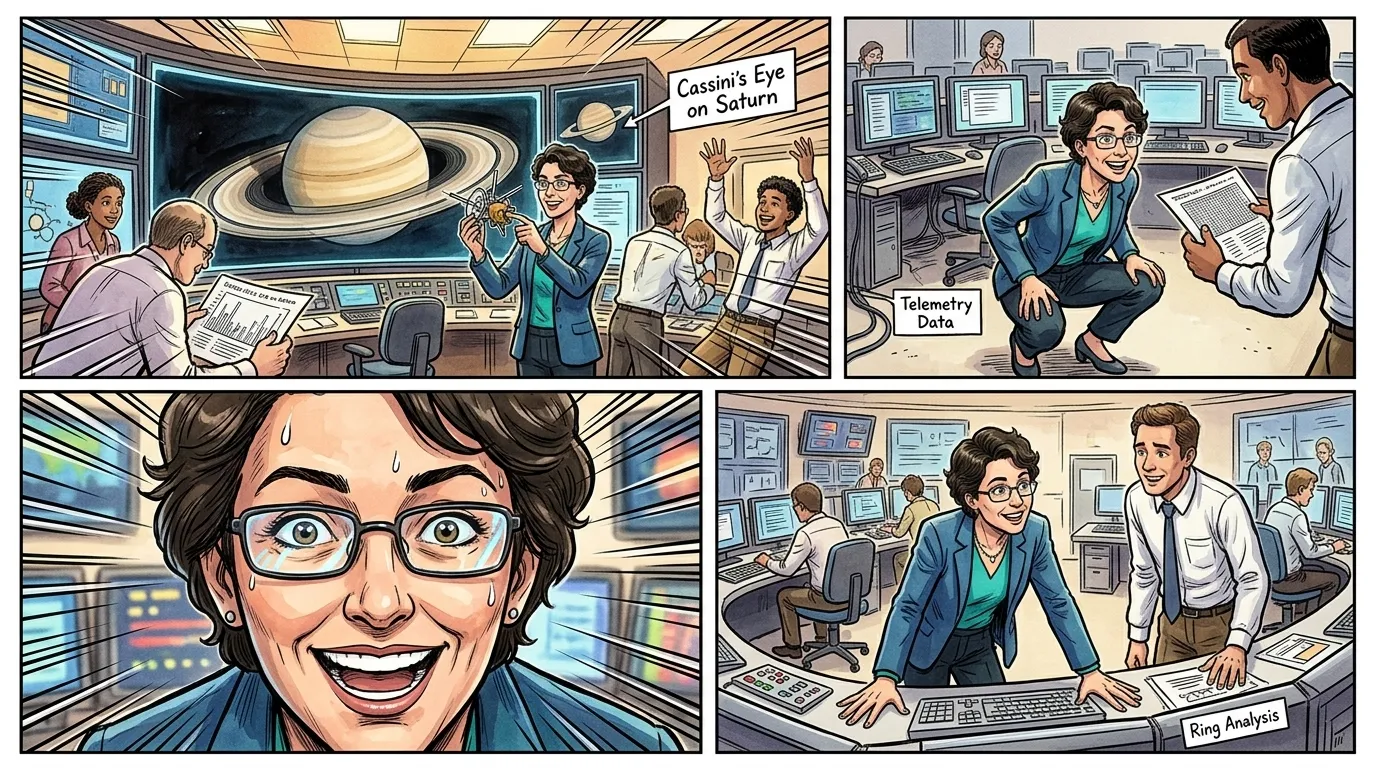
On July 1, 2004, after a seven-year voyage across the solar system, the Cassini spacecraft executed its critical Saturn orbit insertion burn. Aboard the mission, planetary scientist Carolyn Porco, as the leader of the Imaging Science team, awaited the unprecedented close-up views that would redefine our understanding of the ringed giant. From the Jet Propulsion Laboratory in Pasadena, California, Porco and her colleagues would soon witness Saturn's intricate beauty and dynamic activity with a clarity unimaginable to previous generations.\n\n Fact: Cassini's Eye on Saturn
Page 2
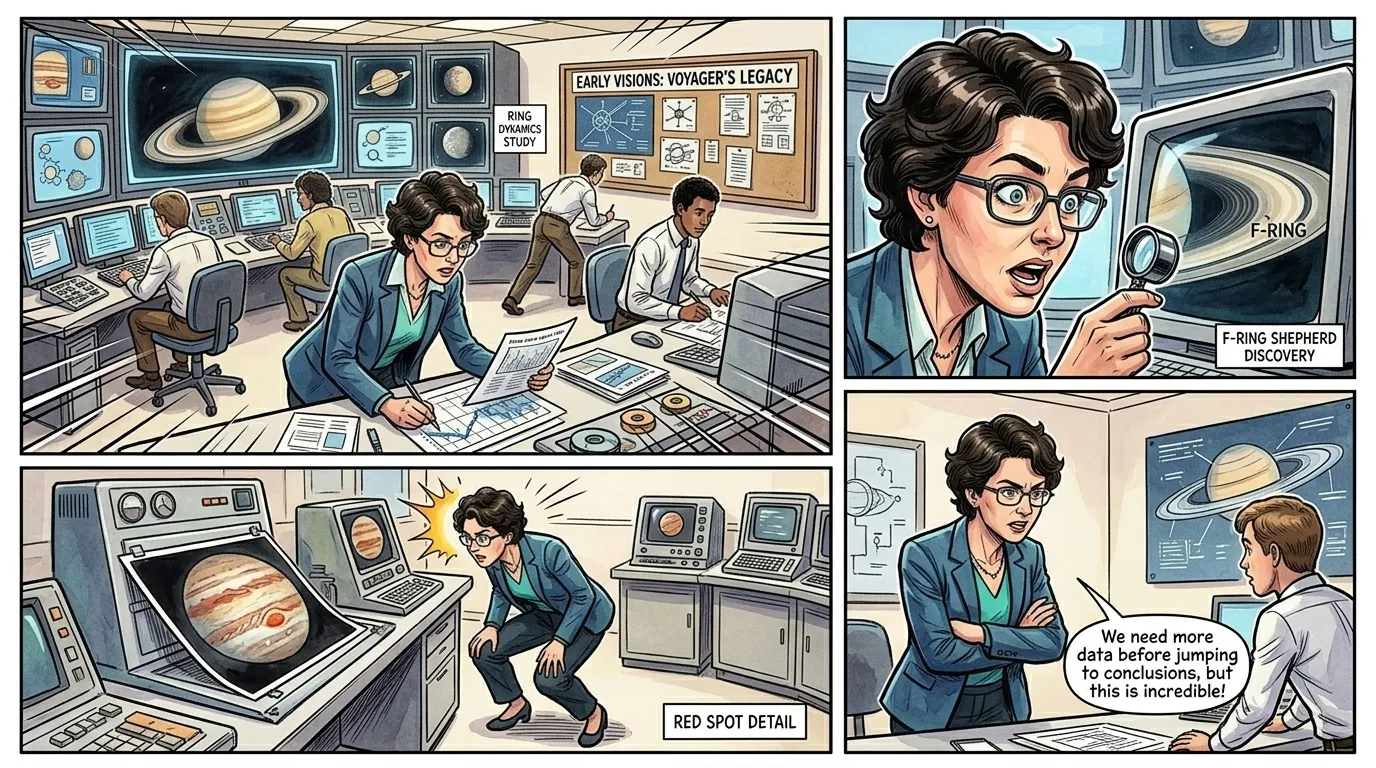
Carolyn Porco's journey into the heart of planetary exploration began long before Cassini, rooted in the groundbreaking Voyager missions. As a junior member of the Voyager imaging team in the late 1970s and early 1980s, she analyzed the first close-up images of the outer solar system. Voyager 1 and 2 provided humanity with its initial detailed portraits of Jupiter, Saturn, Uranus, and Neptune, revealing previously unseen moons, complex ring systems, and atmospheric phenomena that revolutionized comparative planetology.\n\n Fact: Early Visions: Voyager's Legacy
Page 3
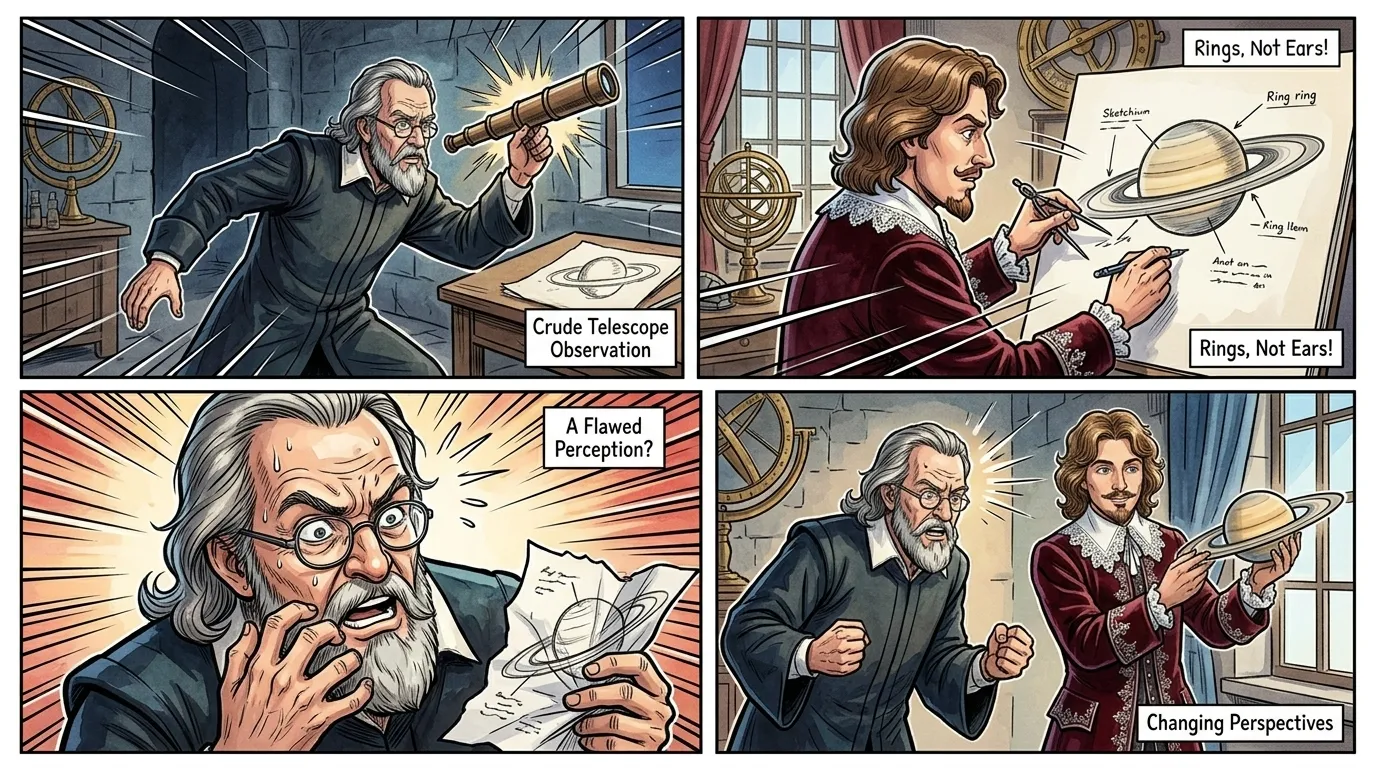
Saturn's rings have captivated observers for centuries, ever since Galileo Galilei first glimpsed their elusive structure through his crude telescope in 1610, misinterpreting them as 'ears' or companion planets. Christiaan Huygens later correctly identified them as a flat ring in 1655. The fundamental questions—their composition, age, and dynamic stability—persisted. Subsequent observations, even from Earth's most powerful telescopes, offered only limited clues, leaving vast gaps in our understanding of these celestial wonders.\n\n Fact: The Ring Enigma
Page 4
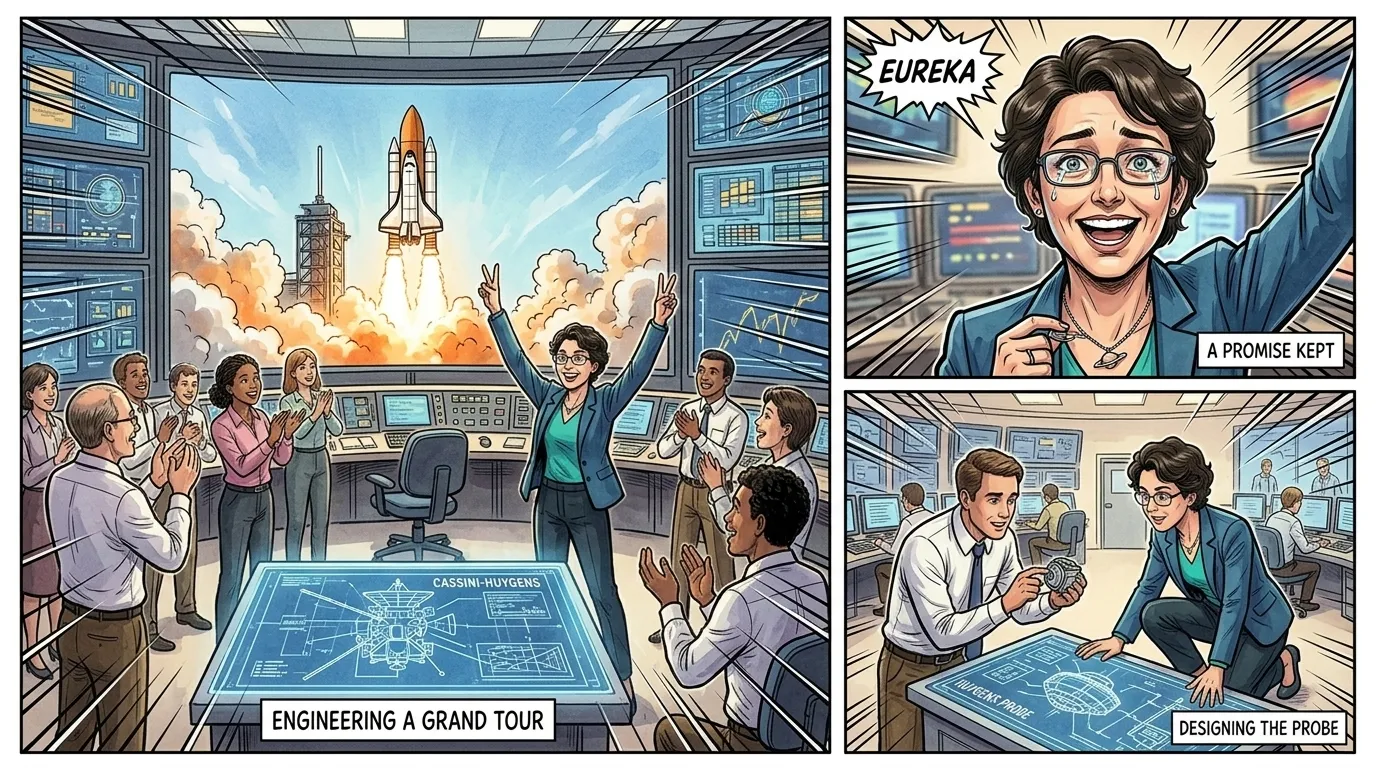
The Cassini-Huygens mission, a collaborative effort between NASA, ESA, and ASI, represented a monumental leap in space engineering and international scientific cooperation. Launched in 1997, it comprised an orbiter, Cassini, designed to study Saturn and its rings, and a probe, Huygens, destined for Titan's atmosphere. The mission carried a suite of sophisticated instruments, including the Imaging Science Subsystem (ISS) led by Porco, each meticulously designed to operate in the harsh environment of the outer solar system, promising unprecedented data return.\n\n Fact: Engineering a Grand Tour
Page 5
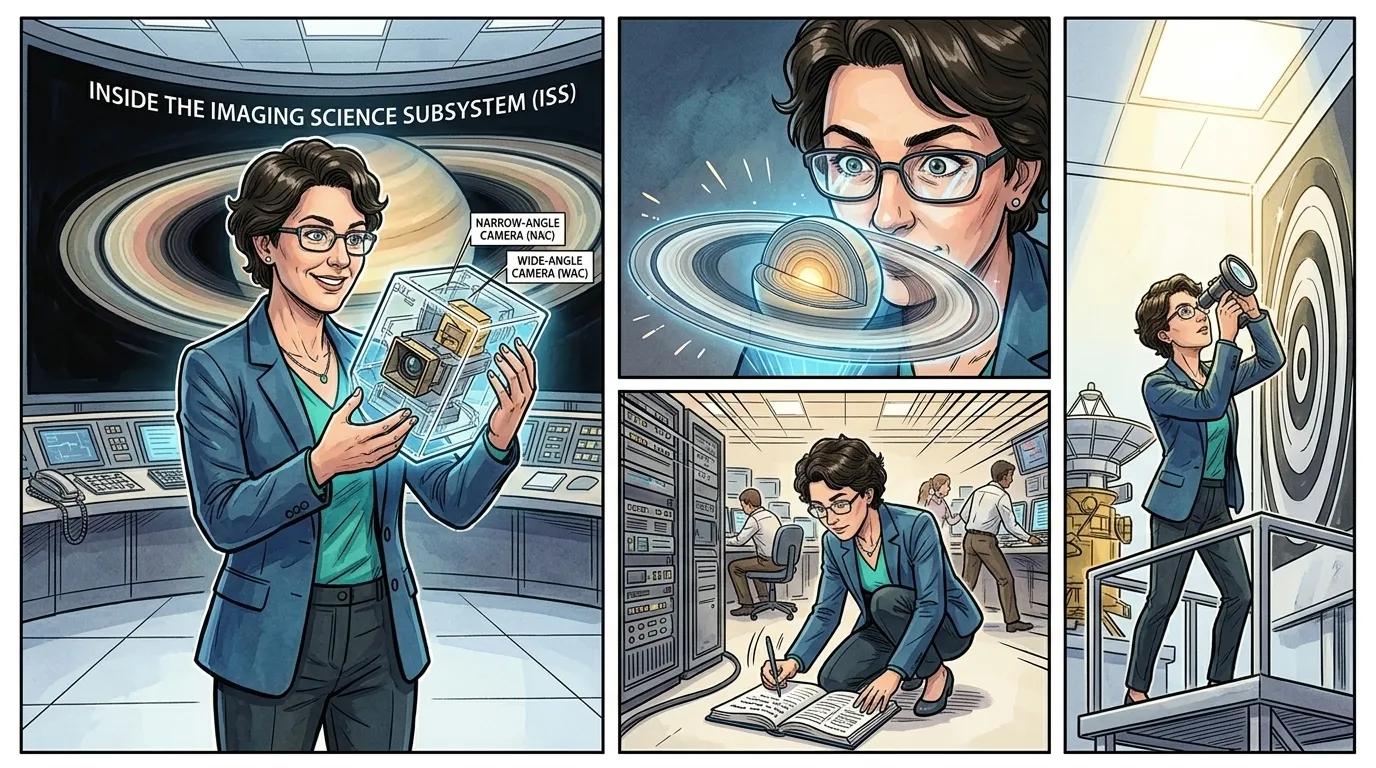
At the heart of Cassini's visual revelations was the Imaging Science Subsystem (ISS), a sophisticated camera system designed to capture images across a wide range of the electromagnetic spectrum. It consisted of two cameras: a narrow-angle camera (NAC) for high-resolution imaging of specific targets, and a wide-angle camera (WAC) for broader views. Each camera was equipped with multiple spectral filters, allowing scientists like Porco to observe features in visible, ultraviolet, and infrared light, discerning details about atmospheric composition, surface features, and ring particle properties invisible to the human eye.\n\n Fact: Inside the Imaging Science Subsystem
Page 6
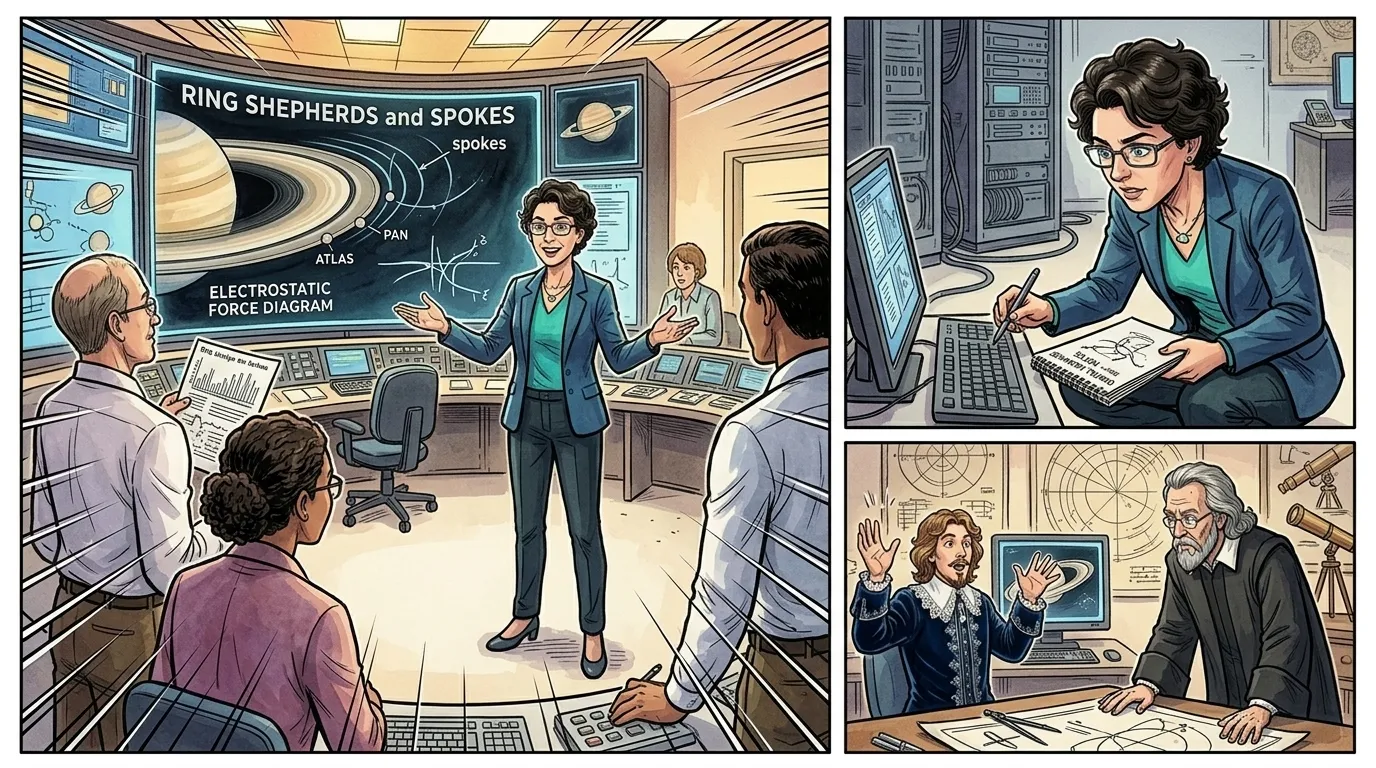
Cassini's ISS, under Porco's direction, offered unprecedented insights into the dynamic, ever-changing nature of Saturn's rings. Scientists meticulously tracked 'shepherd moons' like Pan and Atlas, whose gravitational influence sculpted the sharp edges of the rings and created gaps. More surprisingly, the mission observed transient 'spokes' – dark, radial features appearing and disappearing within the B ring. These phenomena, likely caused by micron-sized dust particles levitated by electrostatic forces, revealed a ring system far more active and complex than previously imagined, challenging established models of planetary ring evolution.\n\n Fact: Ring Shepherds and Spokes
Page 7
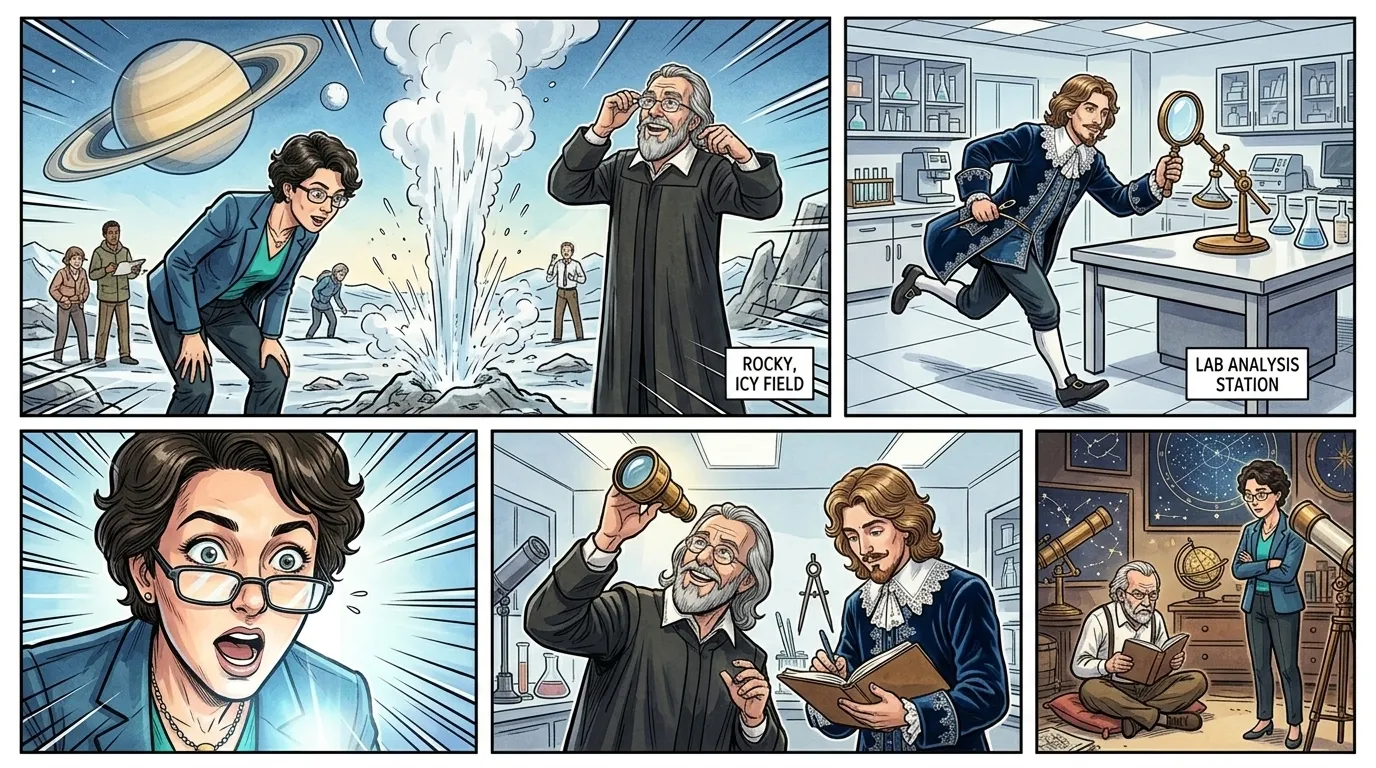
One of Cassini's most profound discoveries, heavily influenced by Porco's advocacy for specific observation targets, was the geologically active moon Enceladus. The ISS captured spectacular images of massive plumes of water vapor and ice particles erupting from 'tiger stripe' fractures near its south pole. Subsequent data from other Cassini instruments confirmed these plumes originated from a vast subsurface ocean of liquid water, interacting with a rocky core. This astonishing revelation instantly elevated Enceladus to a prime candidate for astrobiological investigation, changing our perception of potential habitable environments within our own solar system.\n\n Fact: The Plumes of Enceladus
Page 8
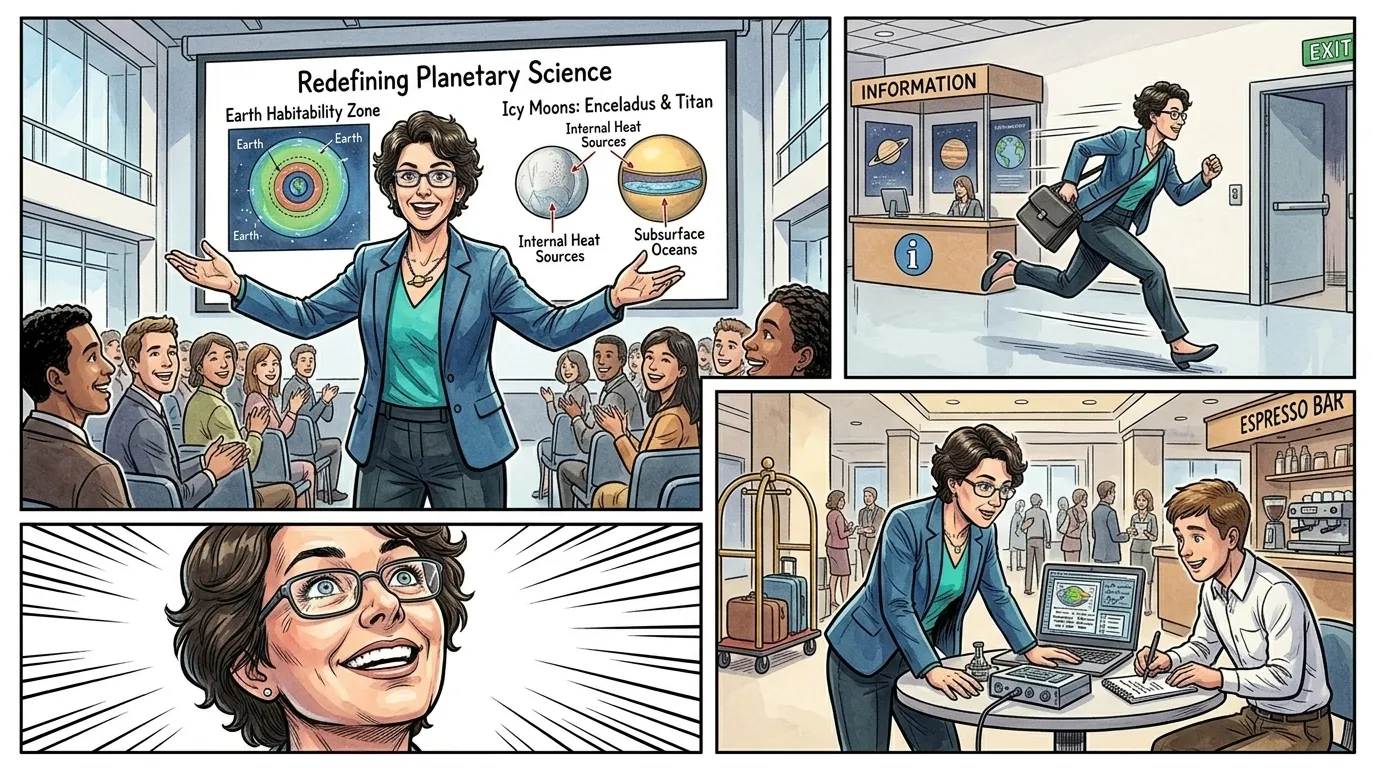
The Cassini mission's discoveries, particularly the evidence of a subsurface ocean on Enceladus and the complex chemistry of Titan, profoundly reshaped astrobiology. The identification of active ocean worlds, previously thought to be rare, expanded the search for extraterrestrial life beyond Earth-like planets, fostering a new focus on icy moons with internal heat sources. Carolyn Porco's persistent advocacy for these observations, coupled with her team's meticulous analysis of the imaging data, directly contributed to this paradigm shift, driving future mission concepts targeting ocean worlds.\n\n Fact: Redefining Planetary Science
Page 9
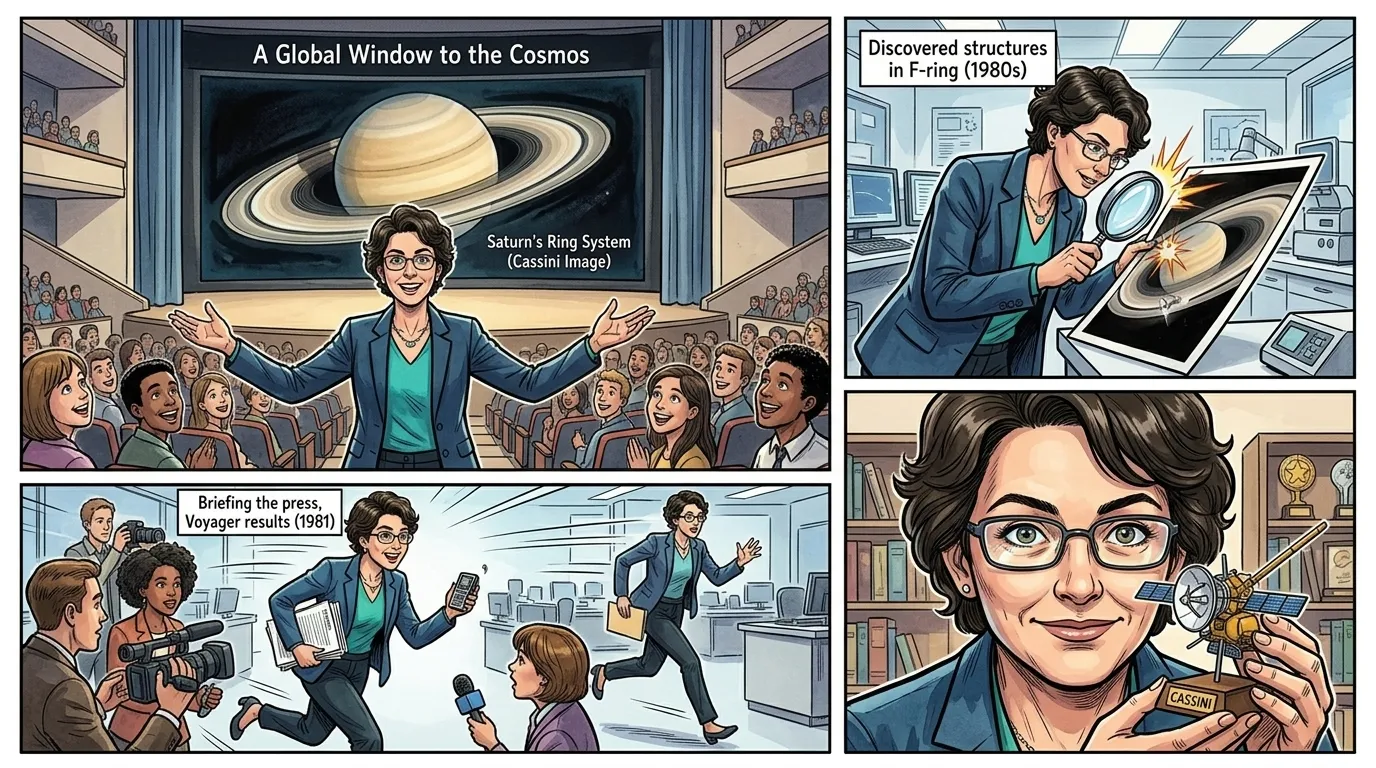
Beyond the scientific papers and technical analyses, Carolyn Porco understood the profound power of Cassini's images to inspire. She became a prominent voice in science communication, transforming complex data into accessible narratives for a global public. Through lectures, documentaries, and social media, she shared the breathtaking beauty and groundbreaking discoveries of Saturn and its moons. Her efforts ensured that Cassini's legacy extended beyond the scientific community, igniting curiosity and wonder in millions, and demonstrating the profound value of space exploration for all of humanity.\n\n Fact: A Global Window to the Cosmos
Page 10
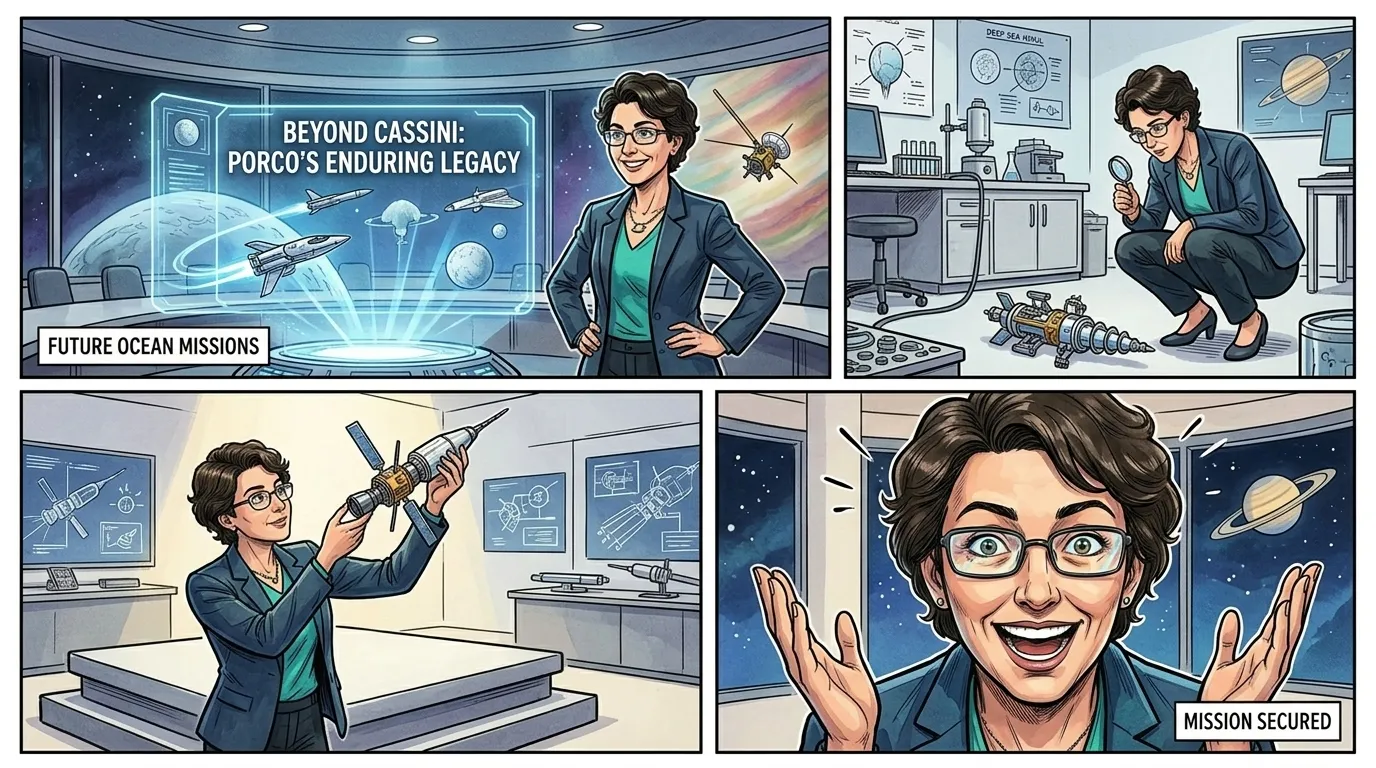
The Cassini mission concluded its extraordinary journey in 2017 with a spectacular plunge into Saturn's atmosphere, but Carolyn Porco's legacy endures. Her visionary leadership of the ISS team yielded an unparalleled photographic archive, transforming our understanding of planetary ring dynamics, the diversity of moons, and the potential for life beyond Earth. From advocating for critical observations to inspiring millions with cosmic vistas, Porco's work solidified her place among the pioneers of space exploration, leaving behind a wealth of data and a heightened sense of wonder that continues to fuel the quest for knowledge in the cosmos.\n\n Fact: Beyond Cassini: Porco's Enduring Legacy
About this story
- Location: Global
- Audience: general readers
Questions and answers
Read Wonder Science on your phone
Wonder Science is available on Android. Get Wonder Science on Google Play.