Brian Josephson
Brian Josephson — an illustrated science story, set in Global. 10 illustrated pages, free to read on Wonder Science.
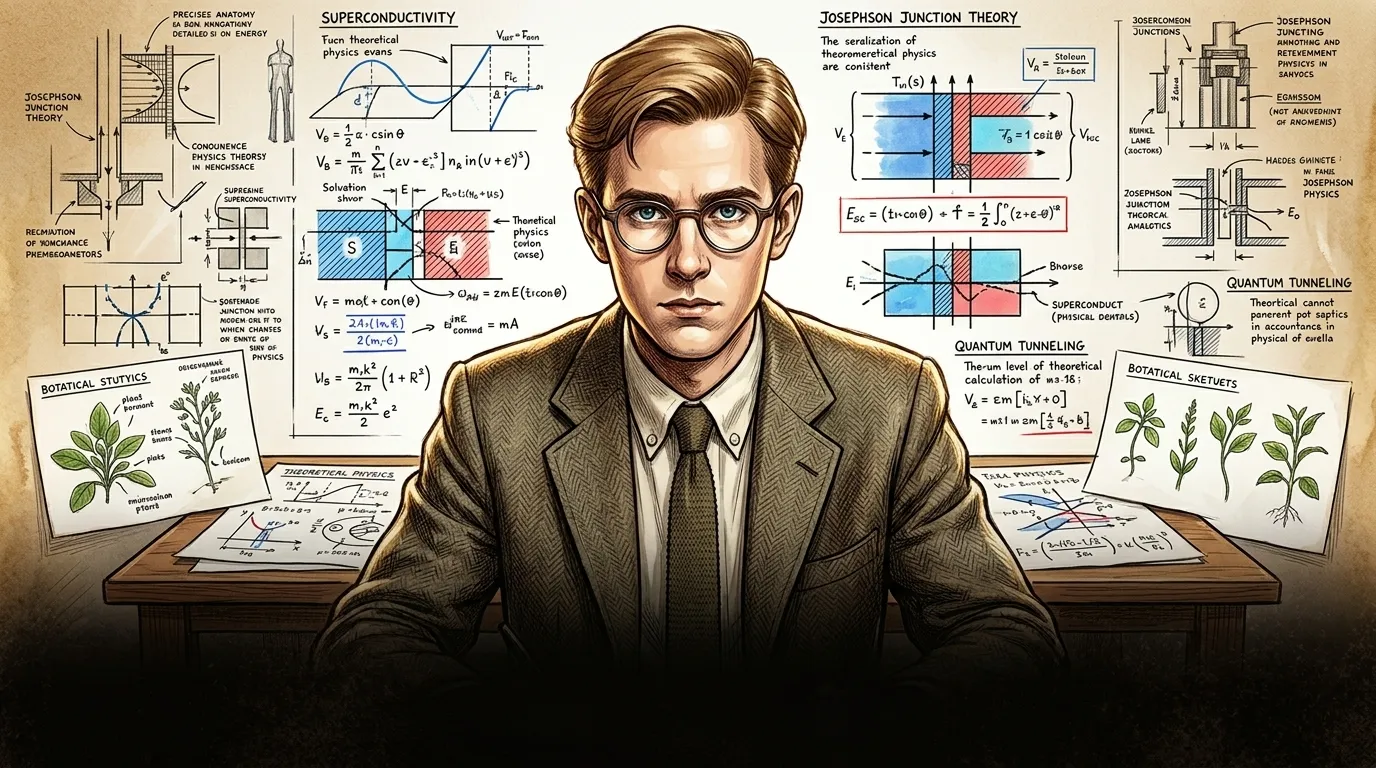
Page 1
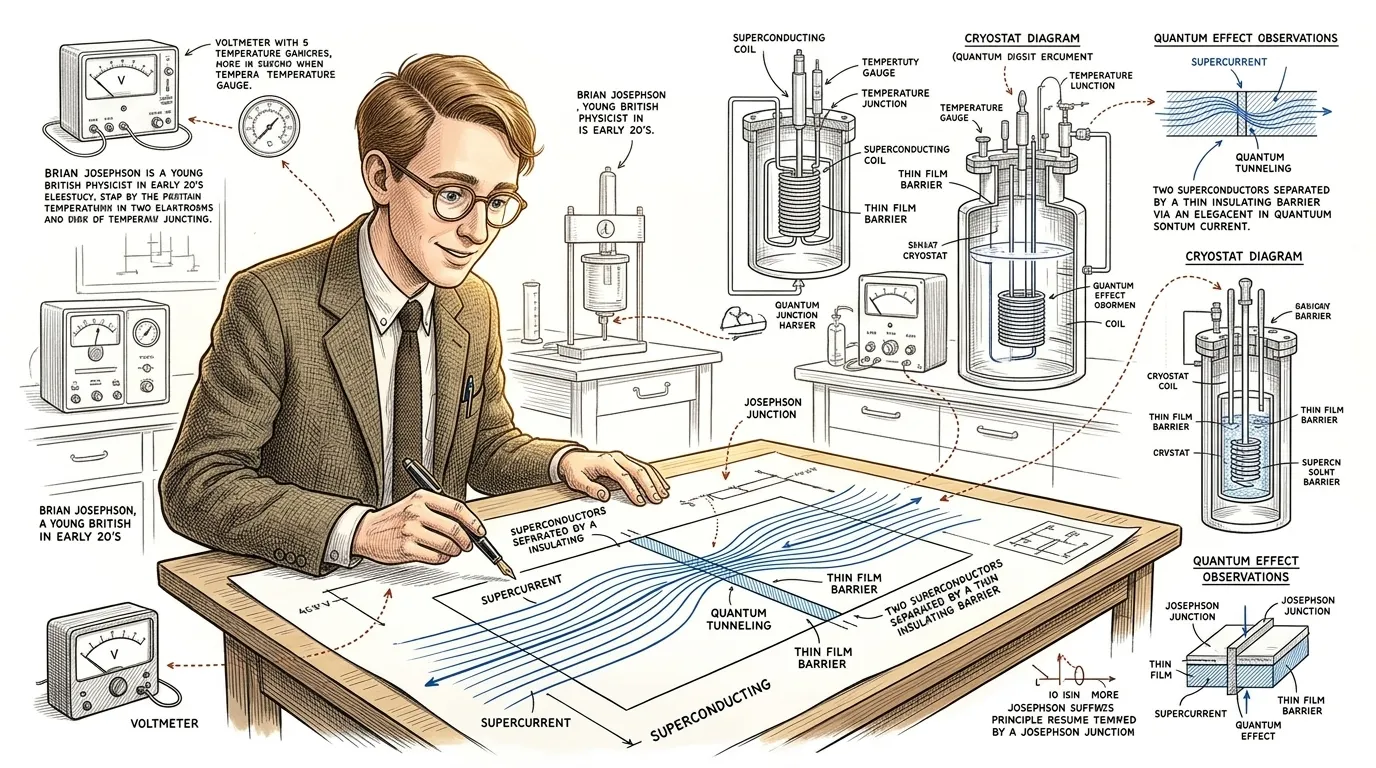
In the cold embrace of liquid helium, a seemingly impossible phenomenon unfolds: an electrical current flows effortlessly, unhindered by resistance. This is superconductivity, a quantum state where electrons move in perfect unison. But in 1962, a young British physicist, Brian Josephson, predicted something even more extraordinary. He proposed that this 'supercurrent' could quantum tunnel across a thin insulating barrier separating two superconductors, a feat classical physics deemed impossible.
Page 2
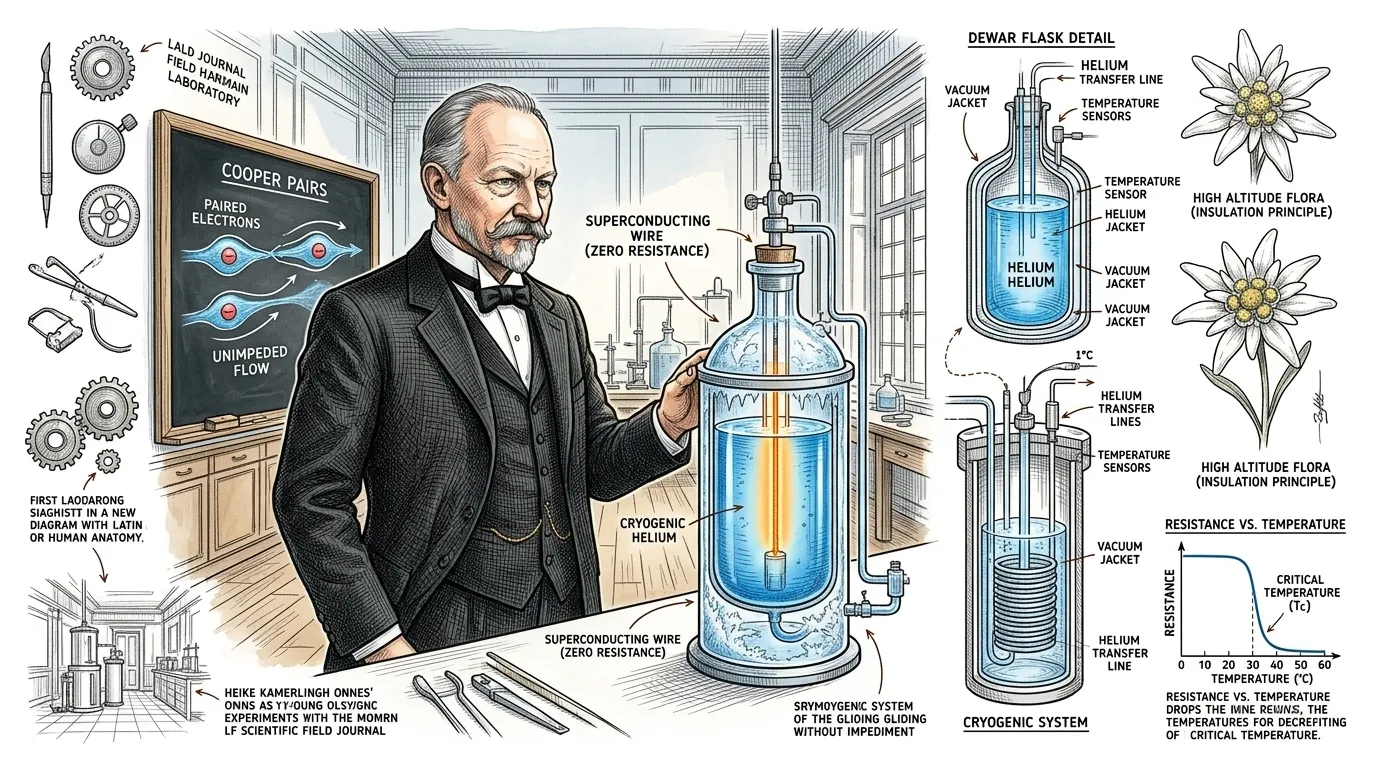
To grasp Josephson's insight, we must first understand superconductivity. Discovered by Heike Kamerlingh Onnes in 1911, this state allows certain materials, cooled to near absolute zero, to conduct electricity with zero resistance. Electrons, instead of scattering, pair up into 'Cooper pairs'—a delicate quantum dance allowing them to glide through the material unimpeded, carrying current indefinitely. This macroscopic quantum phenomenon laid the groundwork for future breakthroughs.
Page 3
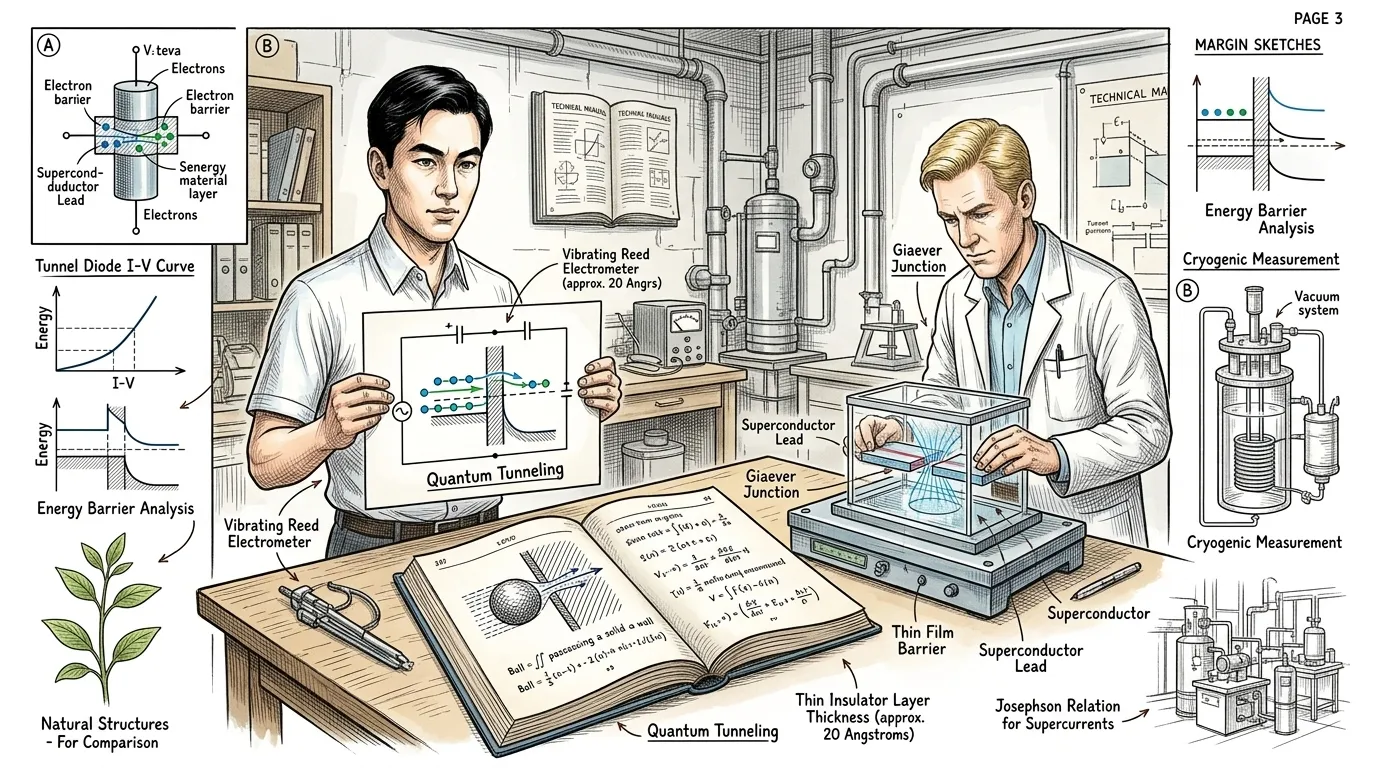
Before Josephson, the idea of electrons moving through an insulator seemed contradictory. However, the principles of quantum mechanics allow for 'tunneling.' In this counter-intuitive effect, a particle can pass through an energy barrier, even if it doesn't possess enough classical energy to surmount it. It's as if a ball could pass through a wall without a hole, a purely quantum mechanical probability. This phenomenon was already observed in semiconductors by Leo Esaki and in superconductors by Ivar Giaever.
Page 4
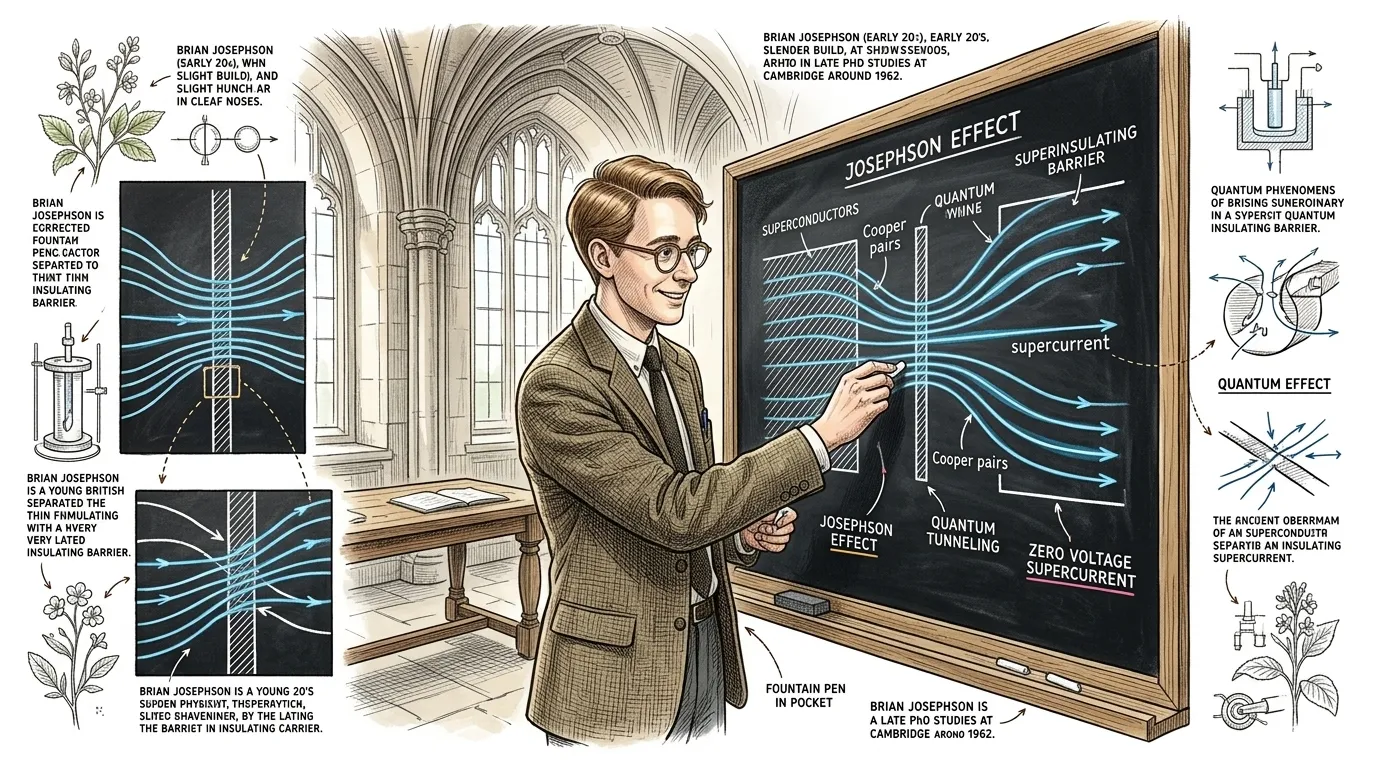
Building on the concept of quantum tunneling, Brian Josephson, then a PhD student at Cambridge, made a profound theoretical leap. While previous work showed individual electrons tunneling, Josephson dared to ask: could Cooper pairs tunnel? More critically, could a supercurrent—a flow of paired electrons—tunnel through a thin insulating layer between two superconductors without any voltage being applied? This was a radical departure, predicting a macroscopic quantum effect.
Page 5
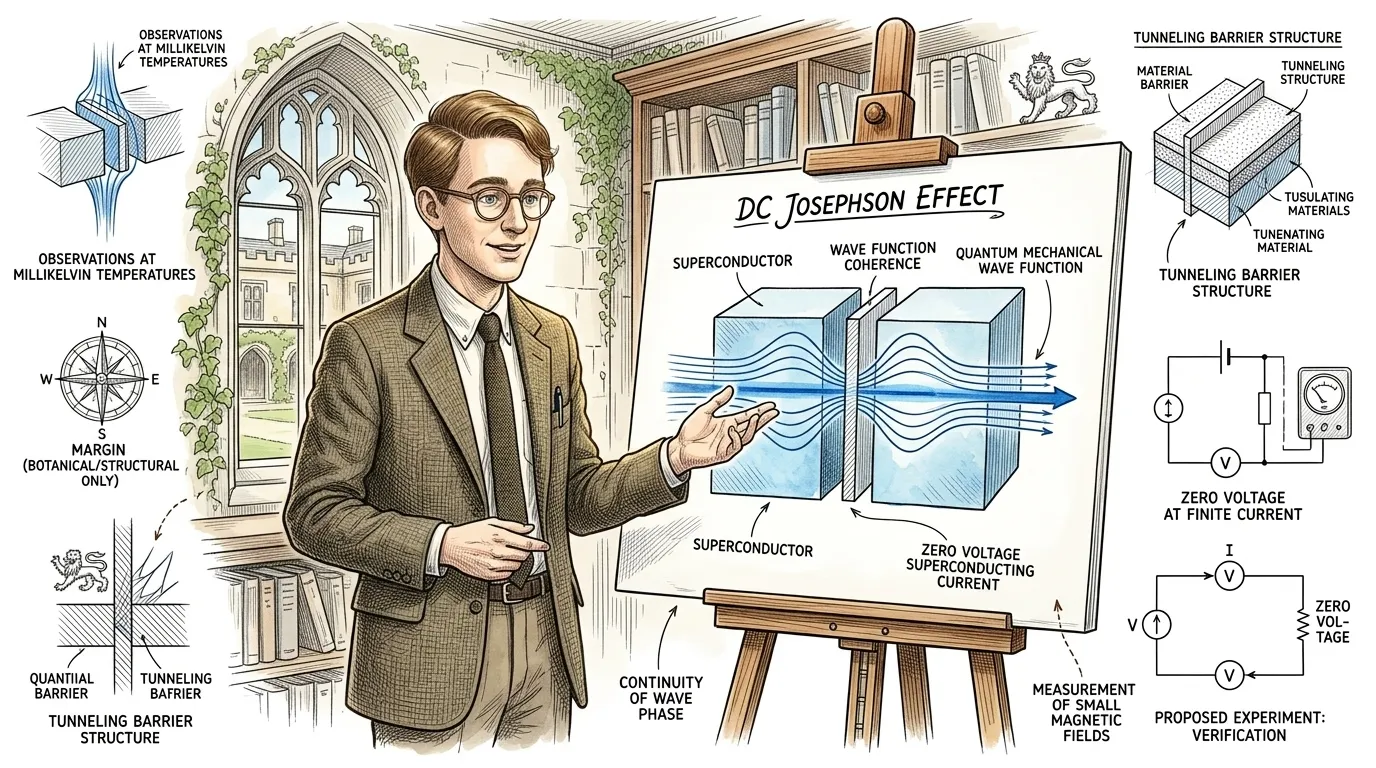
Josephson's prediction, now known as the DC Josephson effect, stated that a supercurrent could indeed flow across such a 'junction' even without an applied voltage, up to a critical current. This meant the quantum mechanical wave function describing the Cooper pairs maintained its coherence, or 'phase,' across the insulating barrier. It was a direct manifestation of quantum mechanics at a macroscopic scale, something truly astonishing.
Page 6
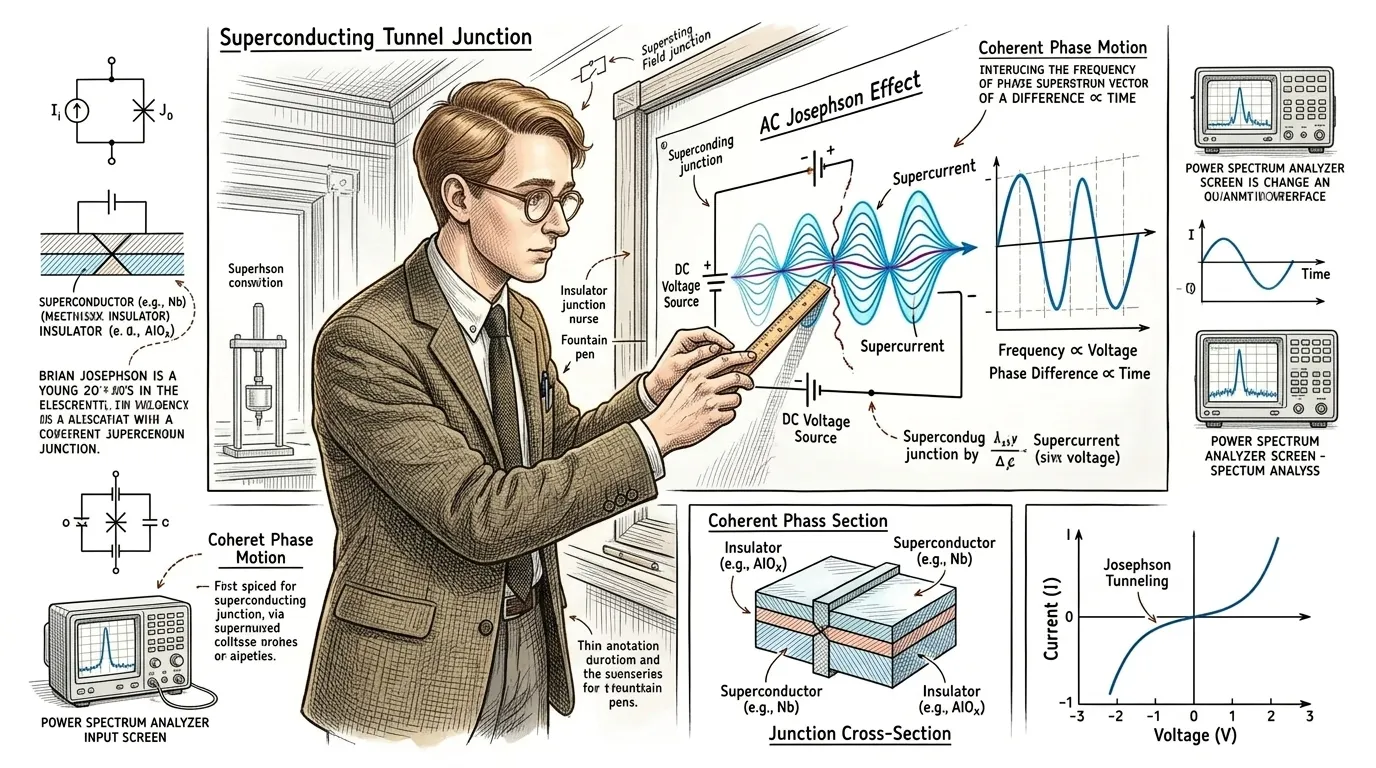
Beyond the DC supercurrent, Josephson also predicted the AC Josephson effect: if a voltage is applied across the junction, the supercurrent would oscillate at an incredibly precise frequency proportional to that voltage. This groundbreaking prediction meant a voltage could be converted into a frequency, and vice-versa, with unparalleled accuracy. This fundamental relationship has become a cornerstone for high-precision metrology.
Page 7
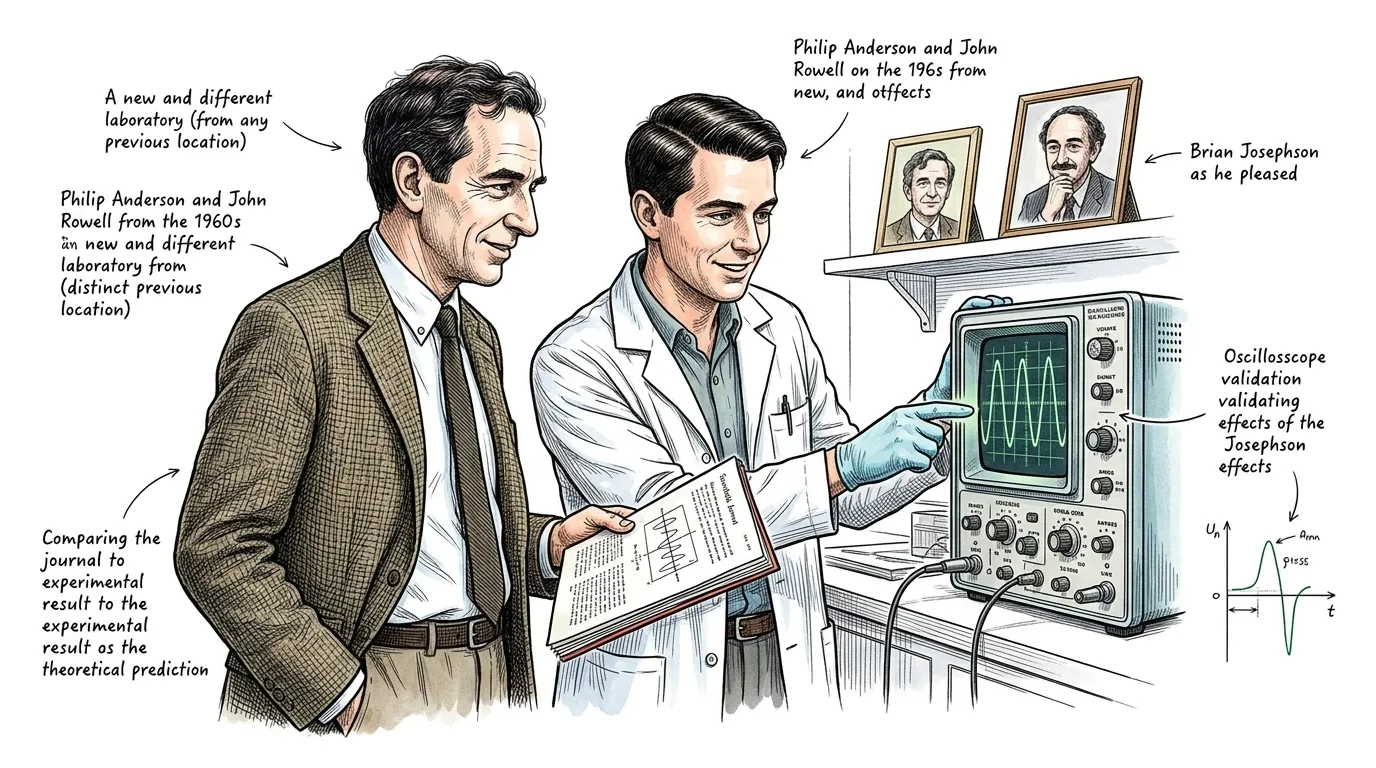
Josephson's theoretical predictions were quickly confirmed experimentally in 1962-63 by Philip Anderson and John Rowell at Bell Labs. The clarity and profundity of his work, developed during his PhD, earned him a share of the Nobel Prize in Physics in 1973, making him one of the youngest ever laureates at 33 years old. His work, alongside Esaki and Giaever, demonstrated the power of quantum mechanics in explaining macroscopic phenomena.
Page 8
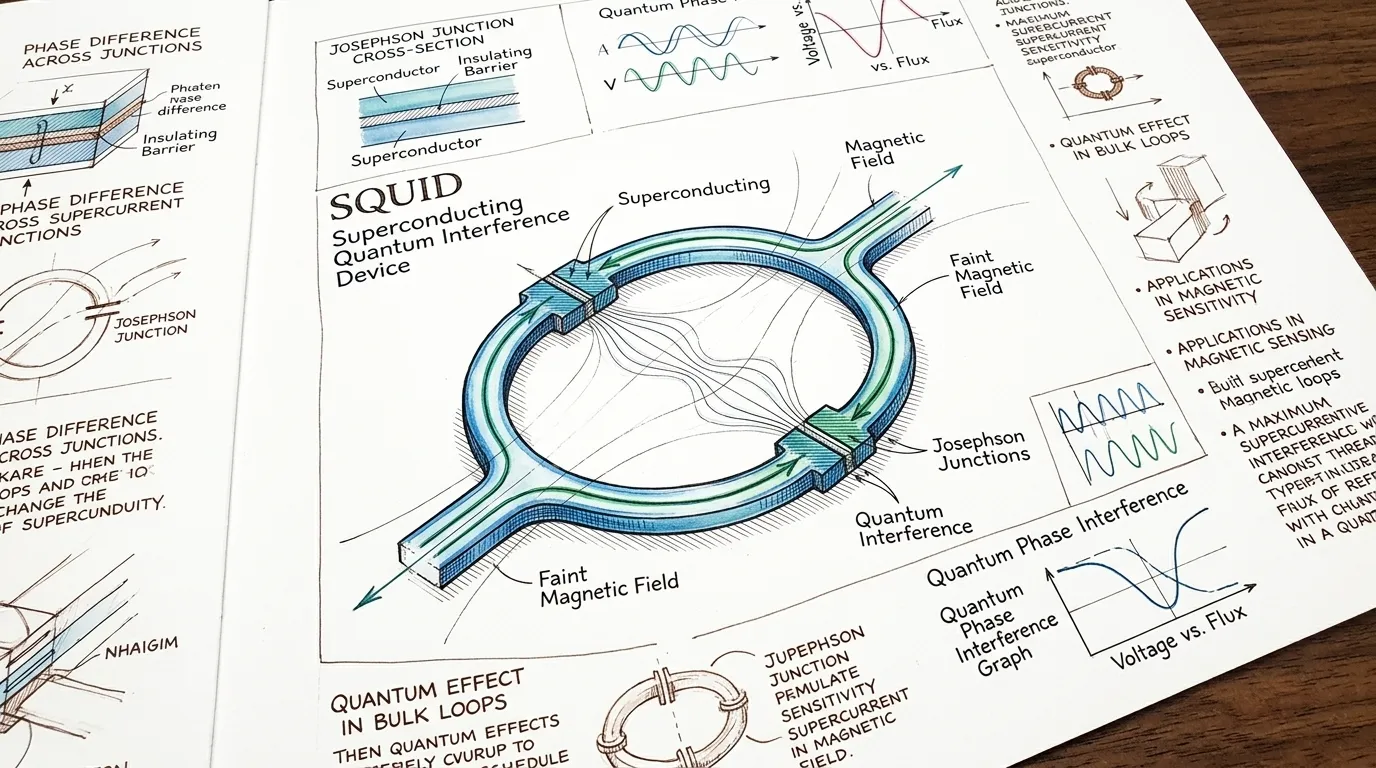
One of the most remarkable applications of the Josephson effect is the Superconducting QUantum Interference Device, or SQUID. These incredibly sensitive magnetometers can detect magnetic fields millions of times weaker than the Earth's magnetic field. SQUIDs exploit the quantum interference of supercurrents tunneling through two parallel Josephson junctions, creating a highly sensitive magnetic field detector.
Page 9
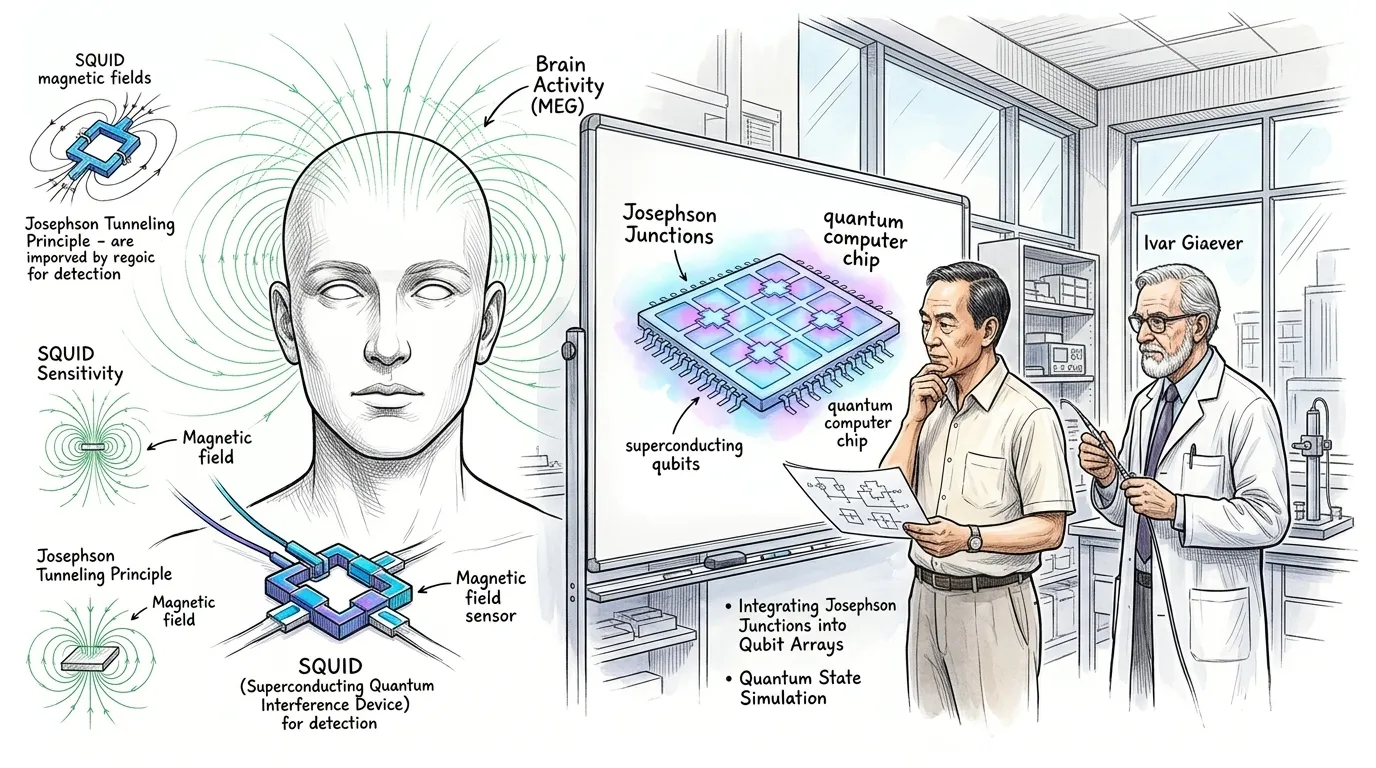
SQUIDs have revolutionized fields from medicine, mapping the incredibly faint magnetic fields produced by brain activity (magnetoencephalography, MEG), to geology, detecting subtle magnetic anomalies deep underground. Beyond SQUIDs, Josephson junctions are fundamental components in quantum computing, acting as superconducting qubits. Their precise quantum behavior, predicted by Josephson, offers a path to unlocking unparalleled computational power.
Page 10
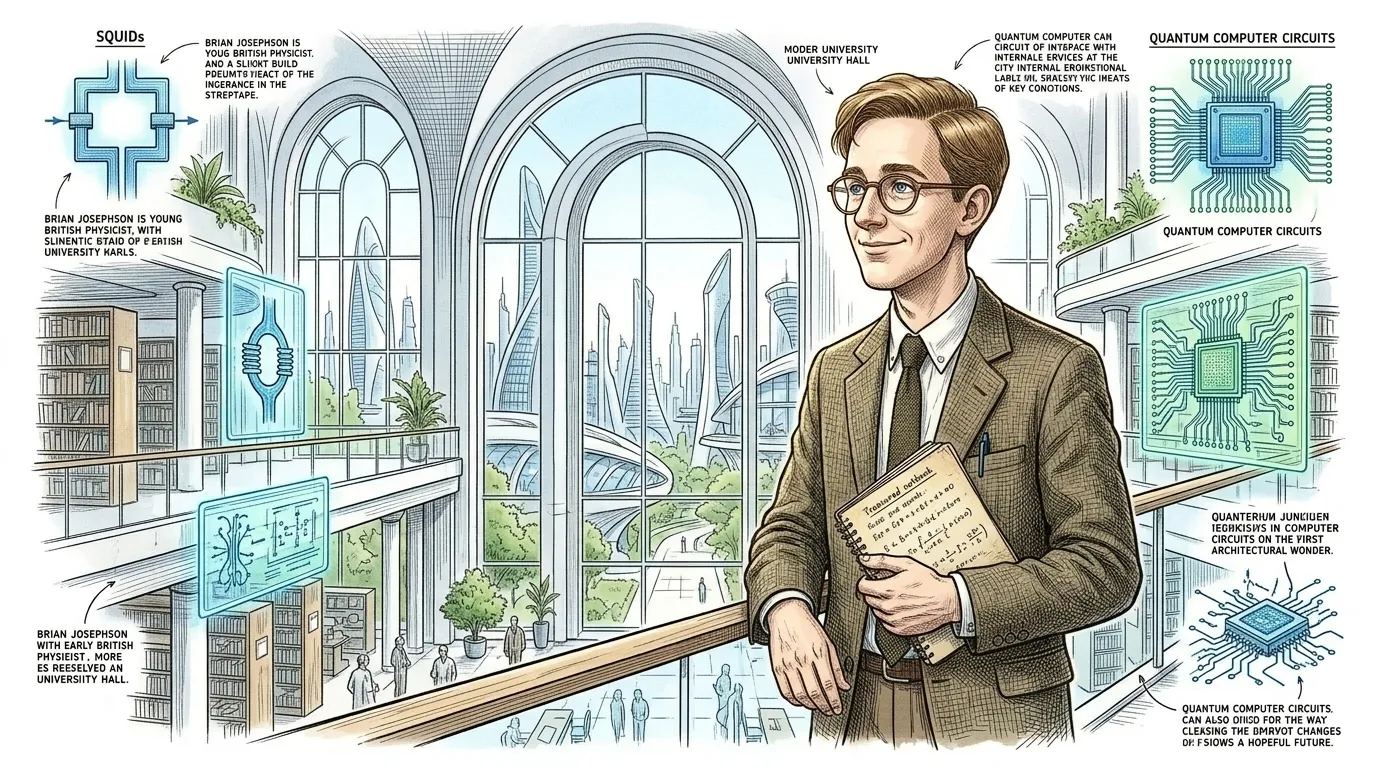
Brian Josephson's pioneering work bridged the microscopic world of quantum mechanics with macroscopic observable phenomena. His equations, derived as a student, not only unveiled a new quantum effect but also spawned a generation of ultra-sensitive sensors and laid foundational elements for future quantum technologies. His legacy reminds us that even the most abstract theoretical predictions can dramatically reshape our understanding of physics and power the innovations of tomorrow.
About this story
- Location: Global
- Audience: general readers
Questions and answers
Read Wonder Science on your phone
Wonder Science is available on Android. Get Wonder Science on Google Play.