Arthur Ashkin
Arthur Ashkin — an illustrated science story, set in Global. 10 illustrated pages, free to read on Wonder Science.
Page 1
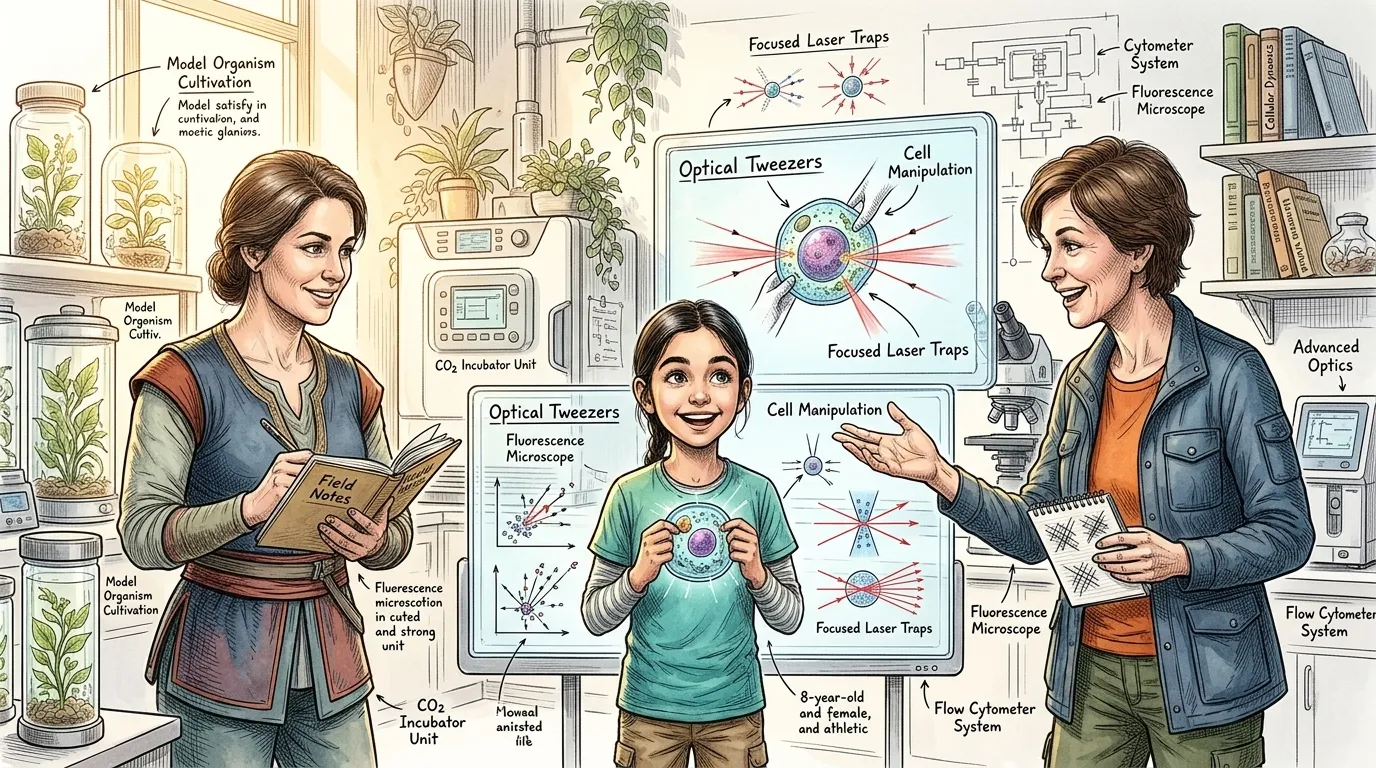
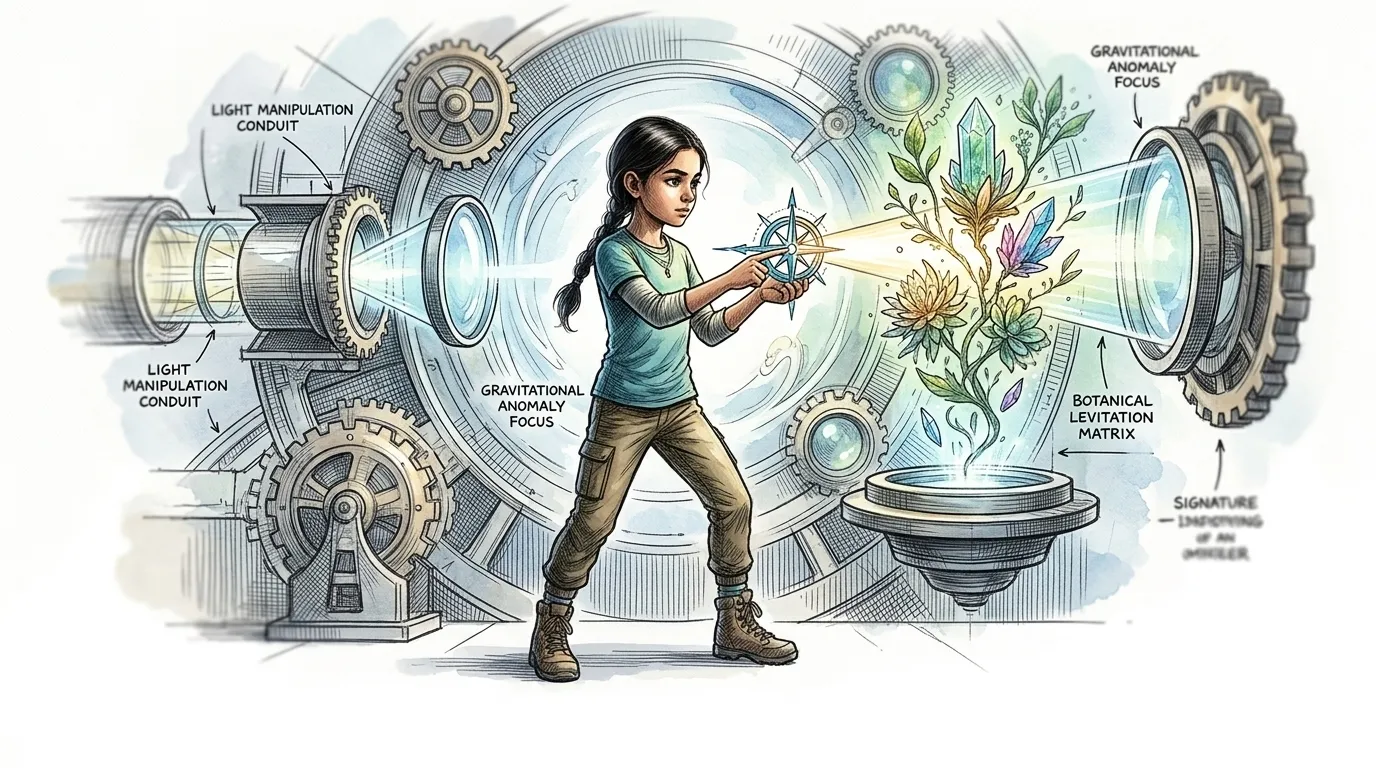
Arthur Ashkin's Nobel Prize in Physics recognized a revolutionary technique: optical tweezers. These aren't your ordinary tweezers; they use the force of light to manipulate tiny objects, like cells and even individual atoms! It's like having a microscopic tractor beam. The implications are enormous.\n\n Fact: Initial visualization: Microscopic manipulation of a cell using a light beam.
Page 2
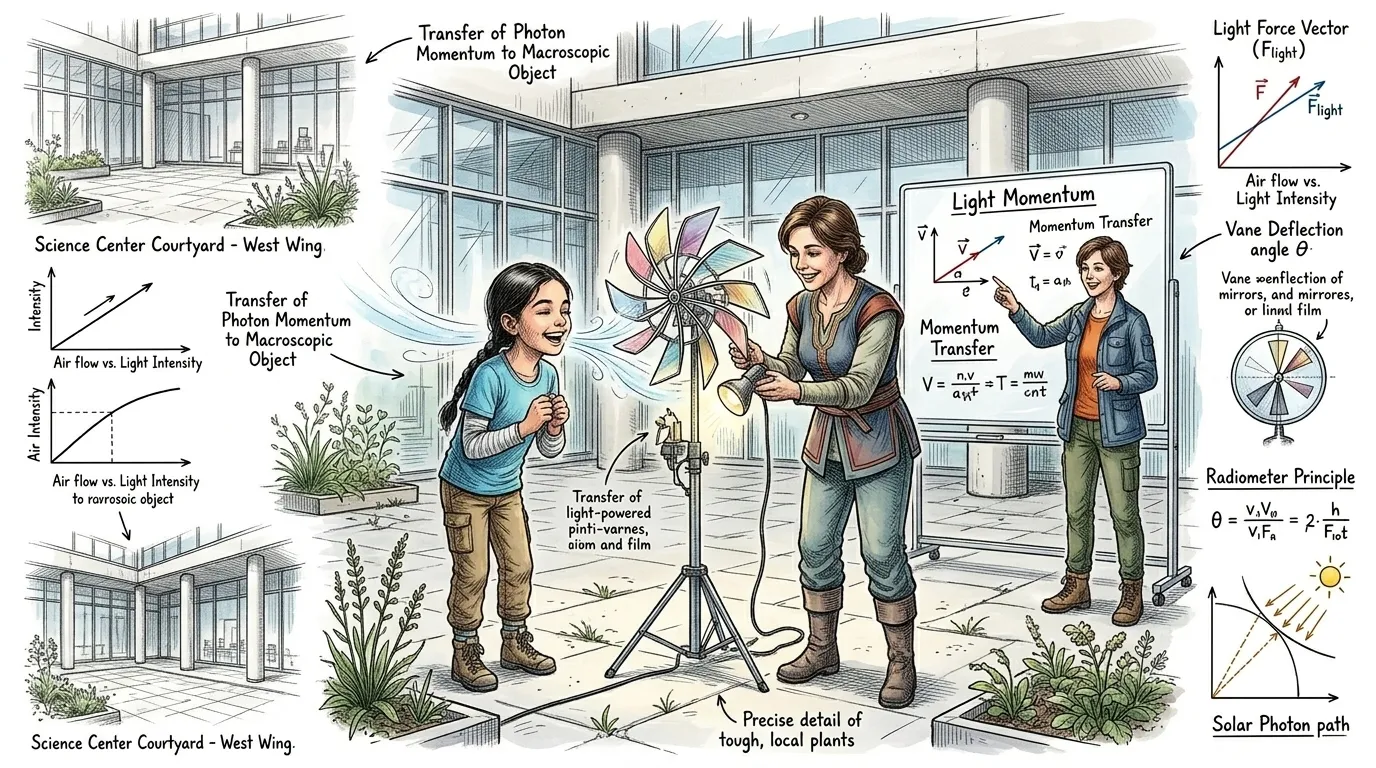
The concept sounds like science fiction, but it's based on the real pressure that light exerts. Light, while massless, carries momentum. When light interacts with an object, it can transfer some of that momentum, creating a force. This force, though incredibly small, is enough to trap and move microscopic particles.\n\n Fact: Connecting momentum transfer to a real-world analogy: the light-powered pinwheel.
Page 3
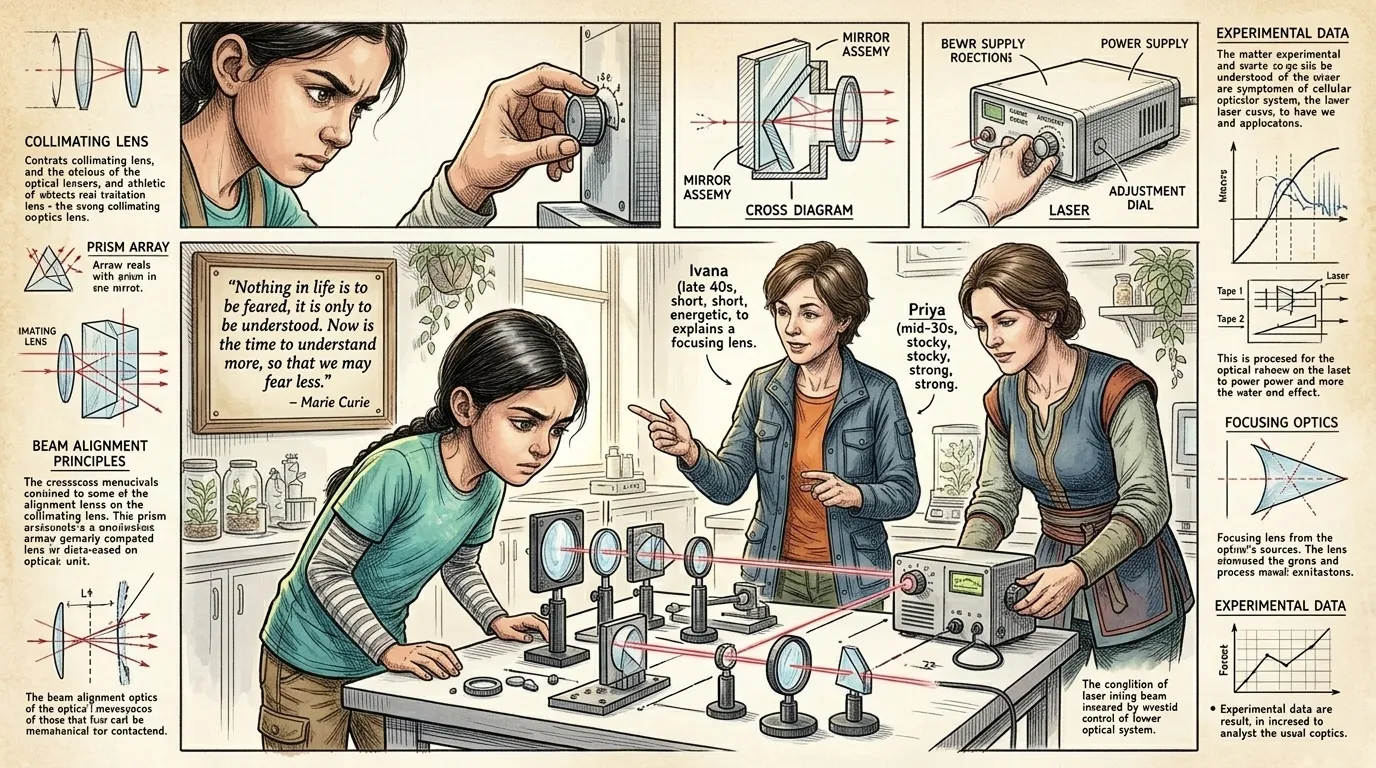
This phenomenon wasn't immediately obvious. Scientists initially struggled to observe and control these forces. Overcoming this challenge required ingenious experimental design and a deep understanding of optics and material science. Like Marie Curie said, 'Nothing in life is to be feared, it is only to be understood. Now is the time to understand more, so that we may fear less.'\n\n Fact: Showing a close-up view of an optical setup, highlighting the complexity and precision involved in manipulating light.
Page 4
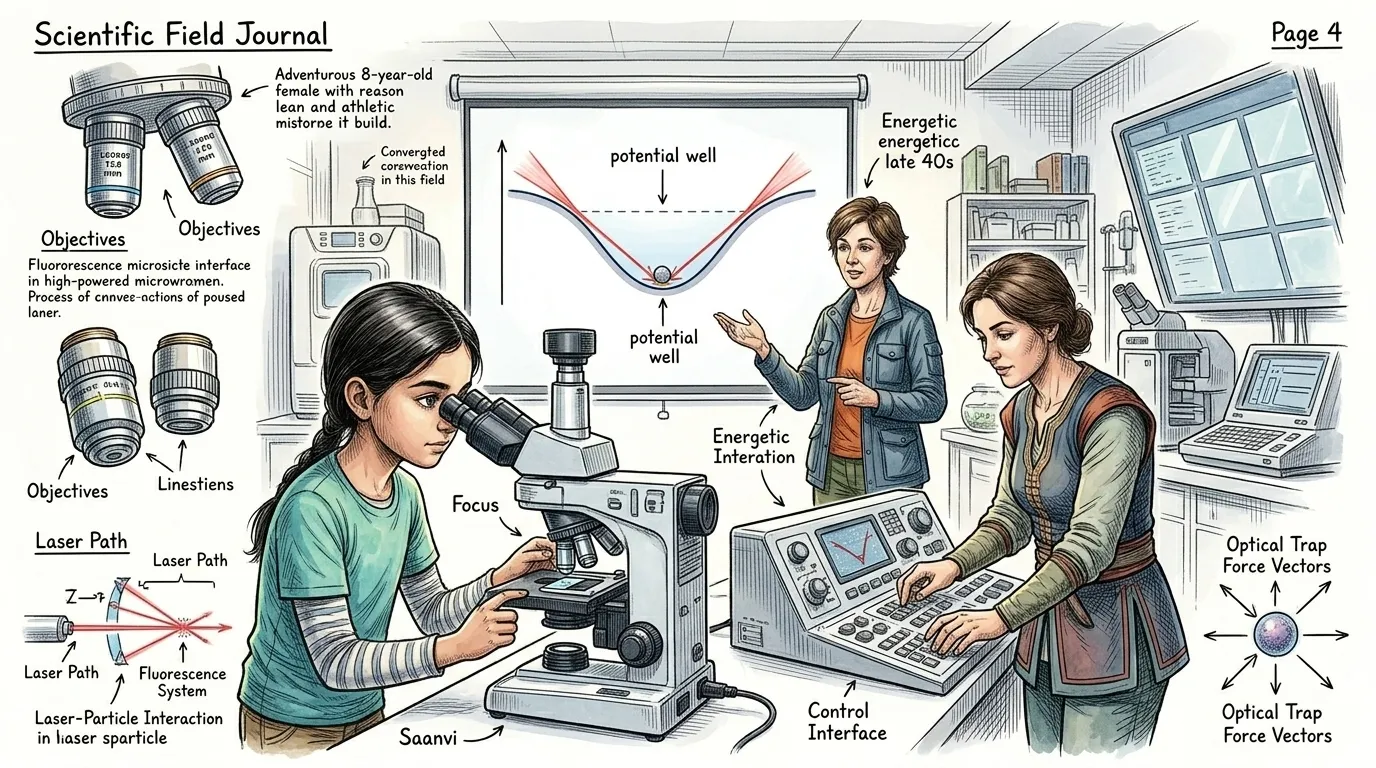
Ashkin's crucial insight was to use highly focused laser beams. By carefully shaping and directing these beams, he could create a potential well that would trap tiny particles. Think of it like a valley where objects naturally roll to the lowest point—except, in this case, the 'valley' is created by light.\n\n Fact: Demonstrating the focus of laser beams to create potential wells.
Page 5
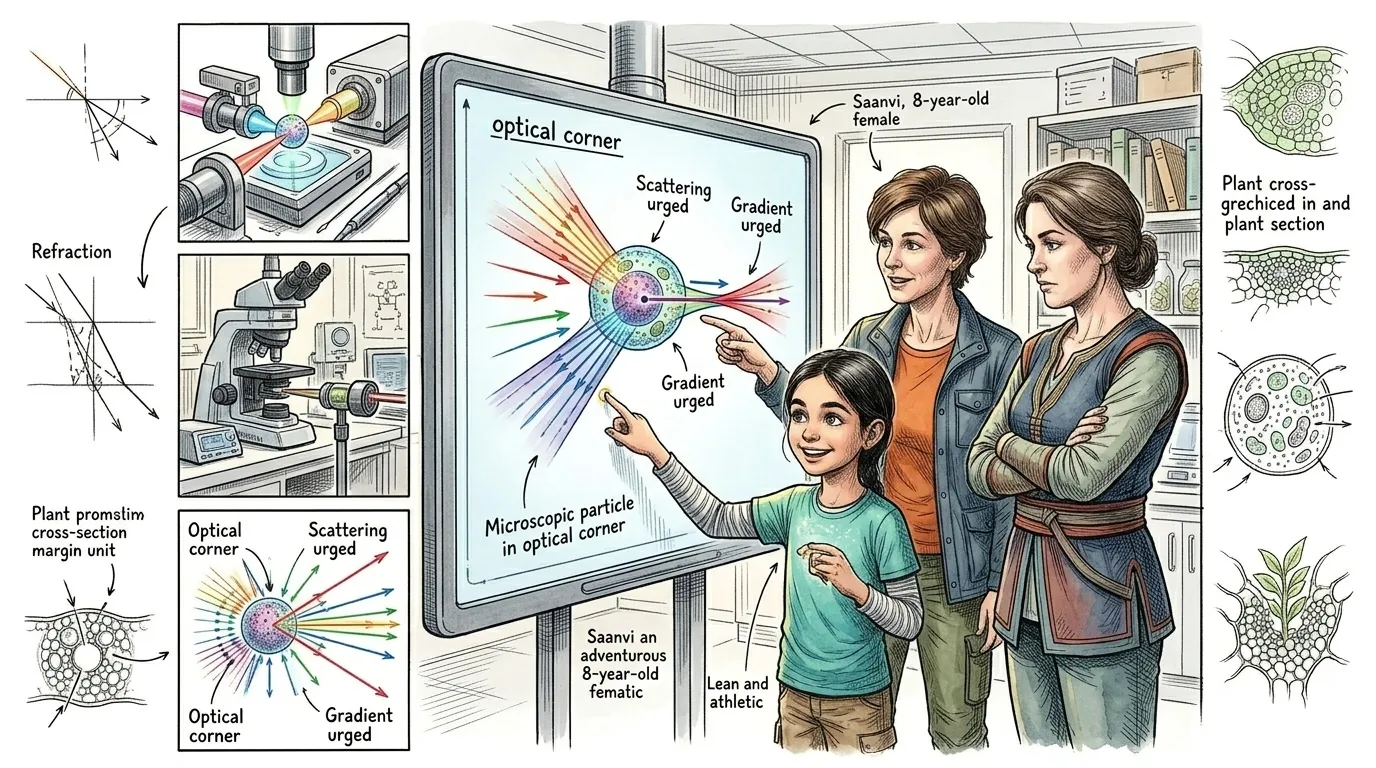
The mechanism relies on two primary forces: scattering force and gradient force. The scattering force pushes the particle along the direction of the beam, while the gradient force pulls it towards the region of highest intensity, the beam's focus. The balance of these forces creates the 'optical trap'.\n\n Fact: Scientific visualization of the scattering and gradient forces acting on a trapped particle.
Page 6
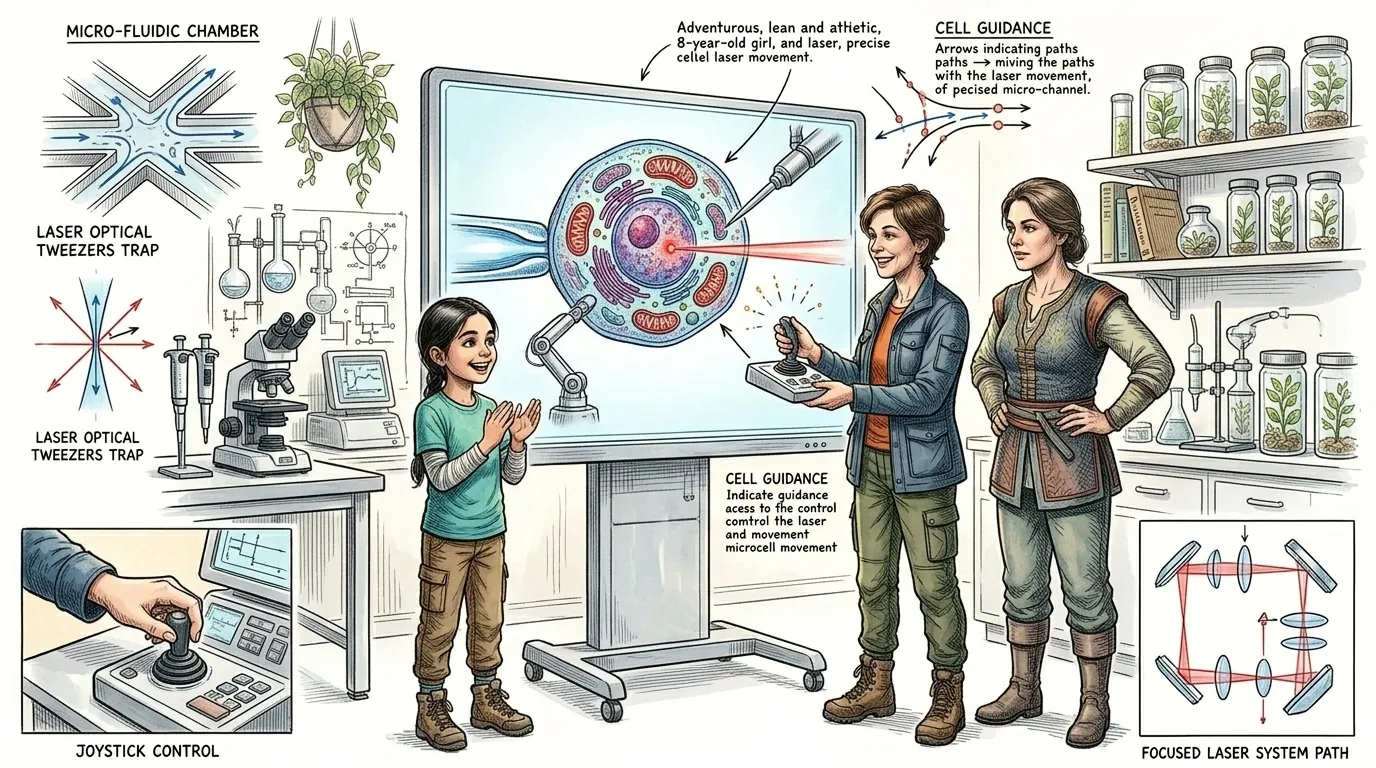
Ashkin didn't stop there. He realized that by manipulating the laser beams, he could not only trap but also move the particles with incredible precision. This opened the door to a whole new field of research: using light to manipulate the microscopic world.\n\n Fact: Showing the manipulation of microscopic cells via laser beam.
Page 7
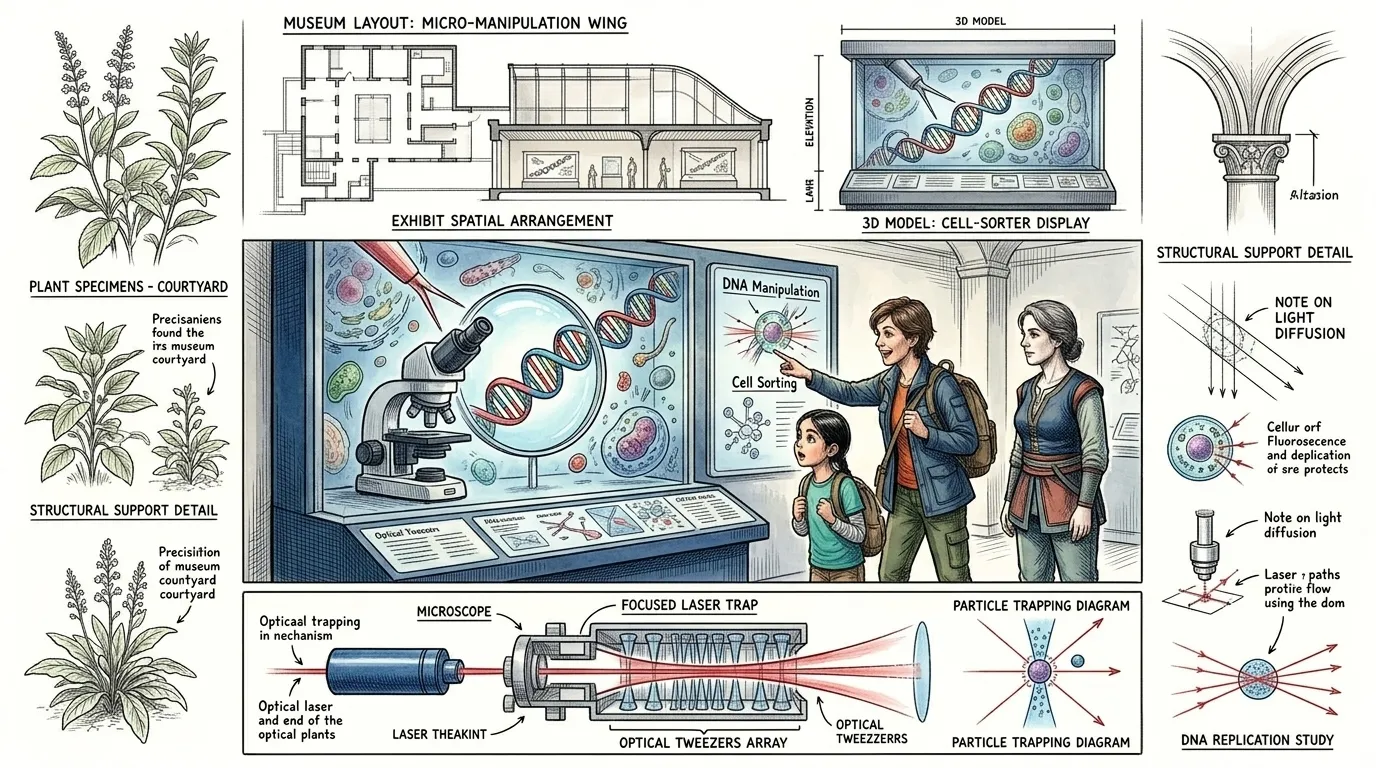
One of the most remarkable applications is in biology. Scientists can now use optical tweezers to study the mechanical properties of cells, manipulate DNA molecules, and even sort different types of cells. It's a powerful tool for understanding the inner workings of life.\n\n Fact: Highlighting the manipulation of DNA via optical tweezers within a museum setting.
Page 8
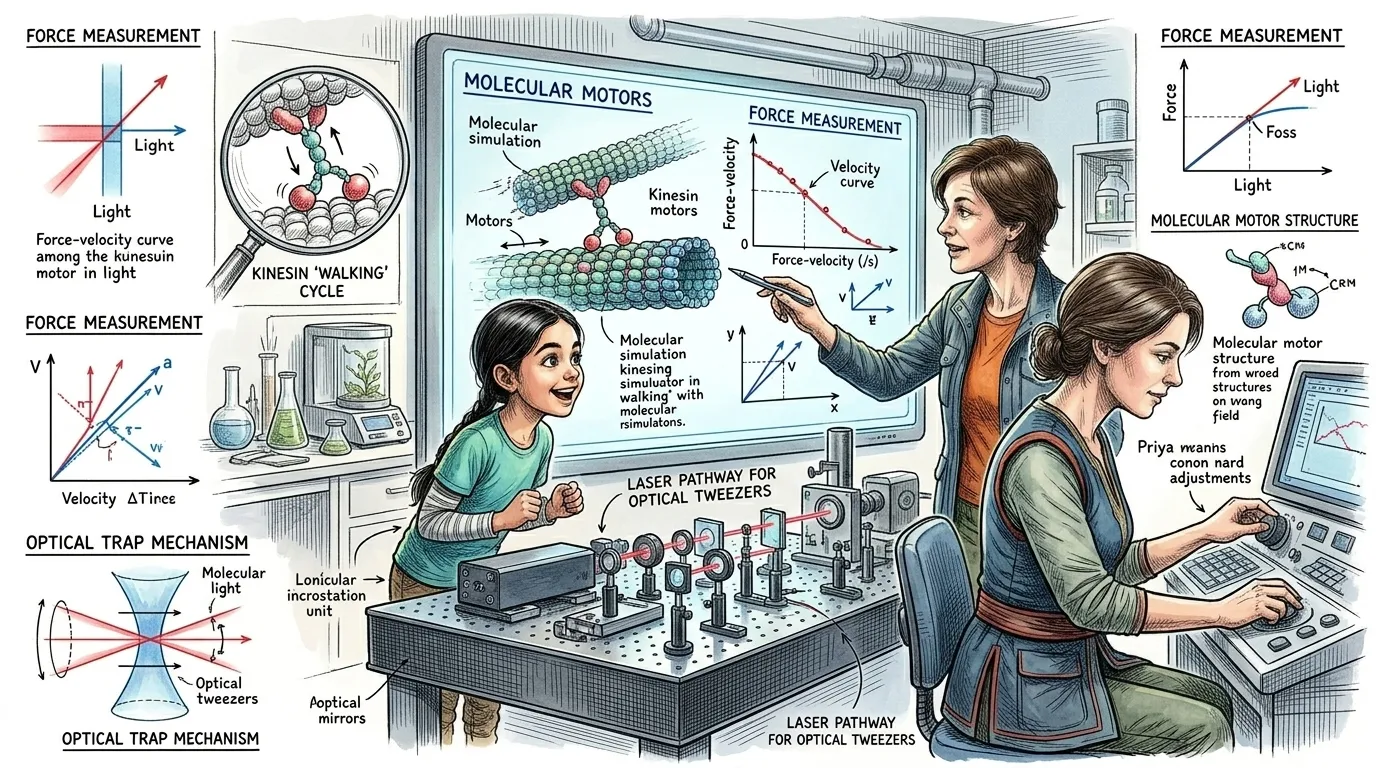
Optical tweezers have revolutionized single-molecule biophysics, allowing researchers to directly measure the forces exerted by molecular motors, like kinesin and myosin. These measurements provide crucial insights into how these motors drive cellular processes.\n\n Fact: Illustrating optical tweezers used to measure the forces exerted by molecular motors.
Page 9
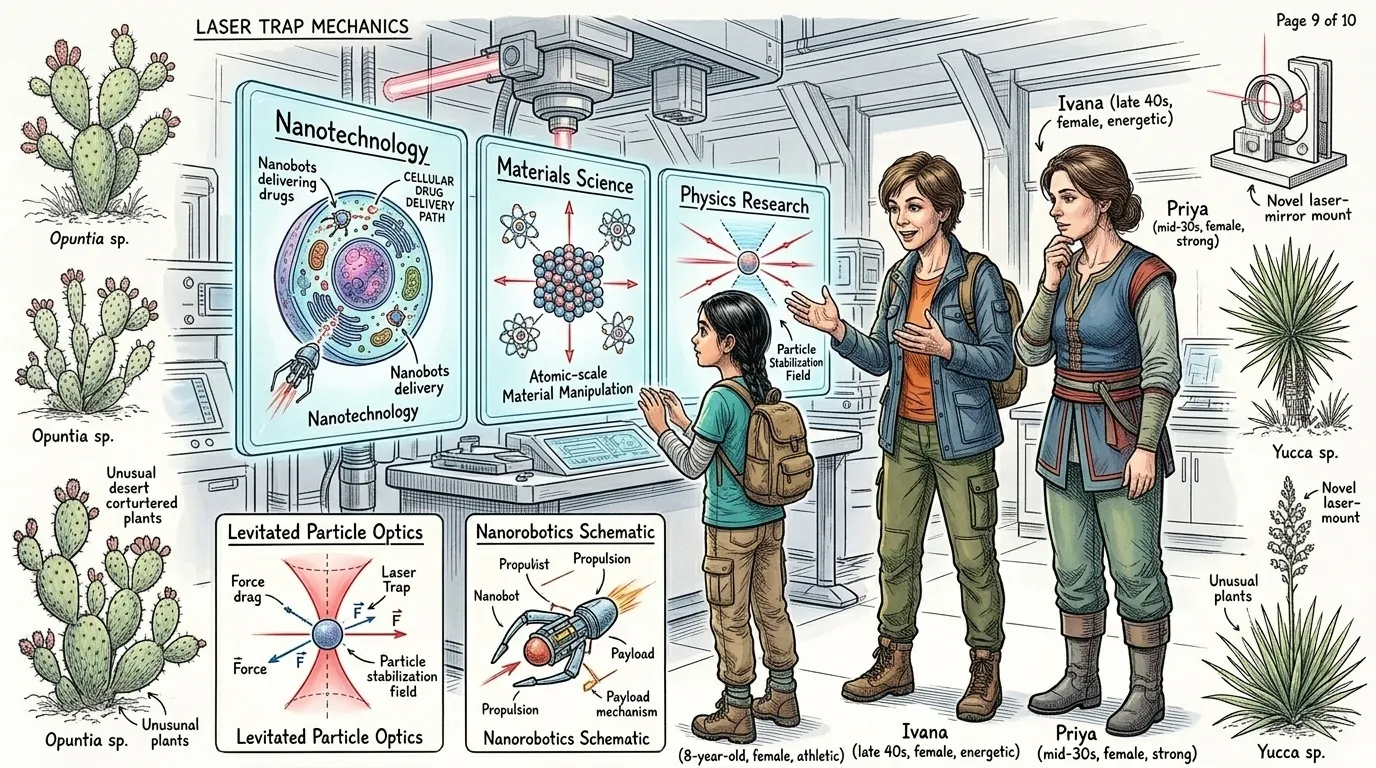
Beyond biology, optical tweezers are used in nanotechnology, materials science, and even fundamental physics research. The ability to precisely control matter at the microscopic level has countless applications we are only beginning to explore. Ashkin's invention has opened an entirely new frontier.\n\n Fact: Showing the various applications of optical tweezers, with nano robots delivering medication.
Page 10
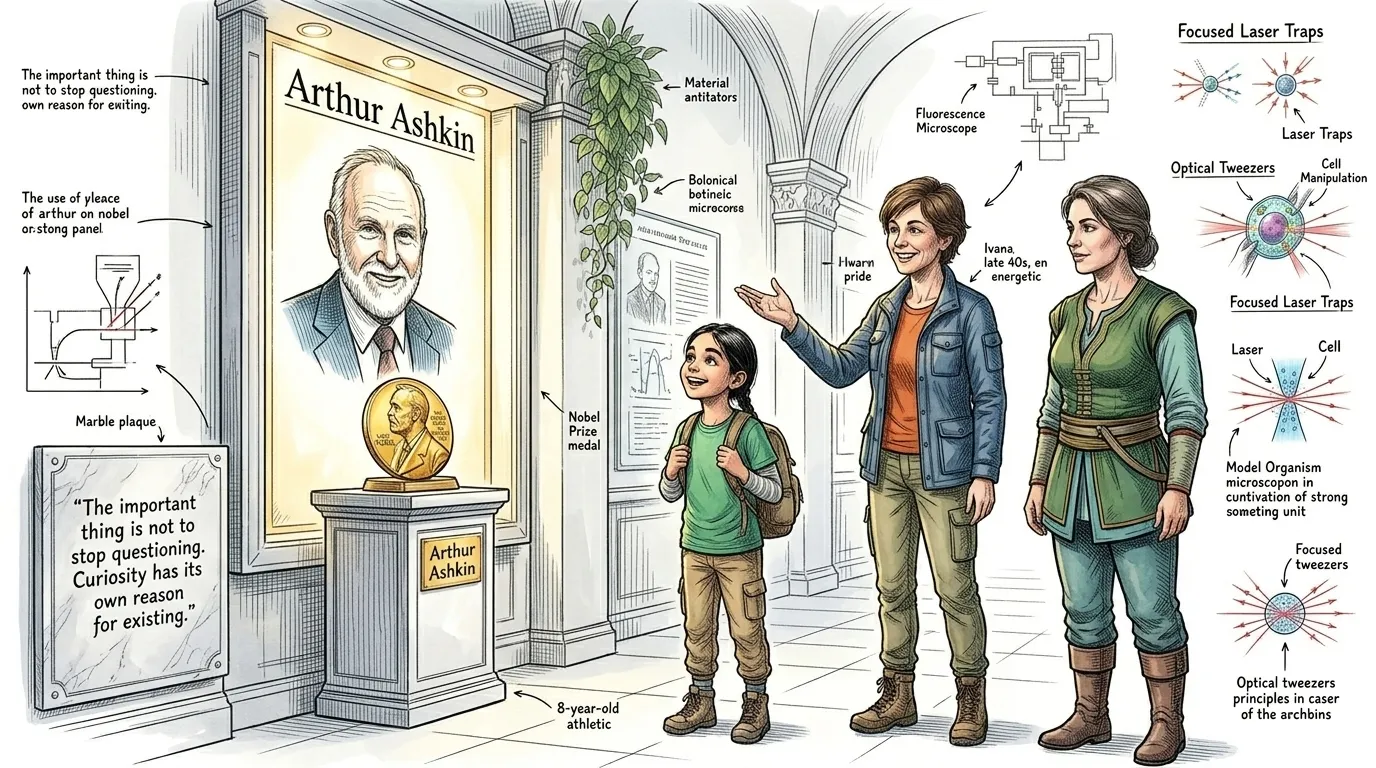
Arthur Ashkin's work reminds us that even the most seemingly insignificant forces, like the pressure of light, can have profound and transformative effects. His Nobel Prize is a testament to the power of curiosity, ingenuity, and the relentless pursuit of understanding the world around us. As Albert Einstein said, 'The important thing is not to stop questioning. Curiosity has its own reason for existing.'\n\n Fact: Visualizing the award of the Nobel Prize to Arthur Ashkin, highlighting the historical significance of his work.
About this story
- Location: Global
- Audience: kids (ages 6–12)
Questions and answers
Read Wonder Science on your phone
Wonder Science is available on Android. Get Wonder Science on Google Play.