Alan Shepard
Alan Shepard — an illustrated science story, set in Global. 10 illustrated pages, free to read on Wonder Science.
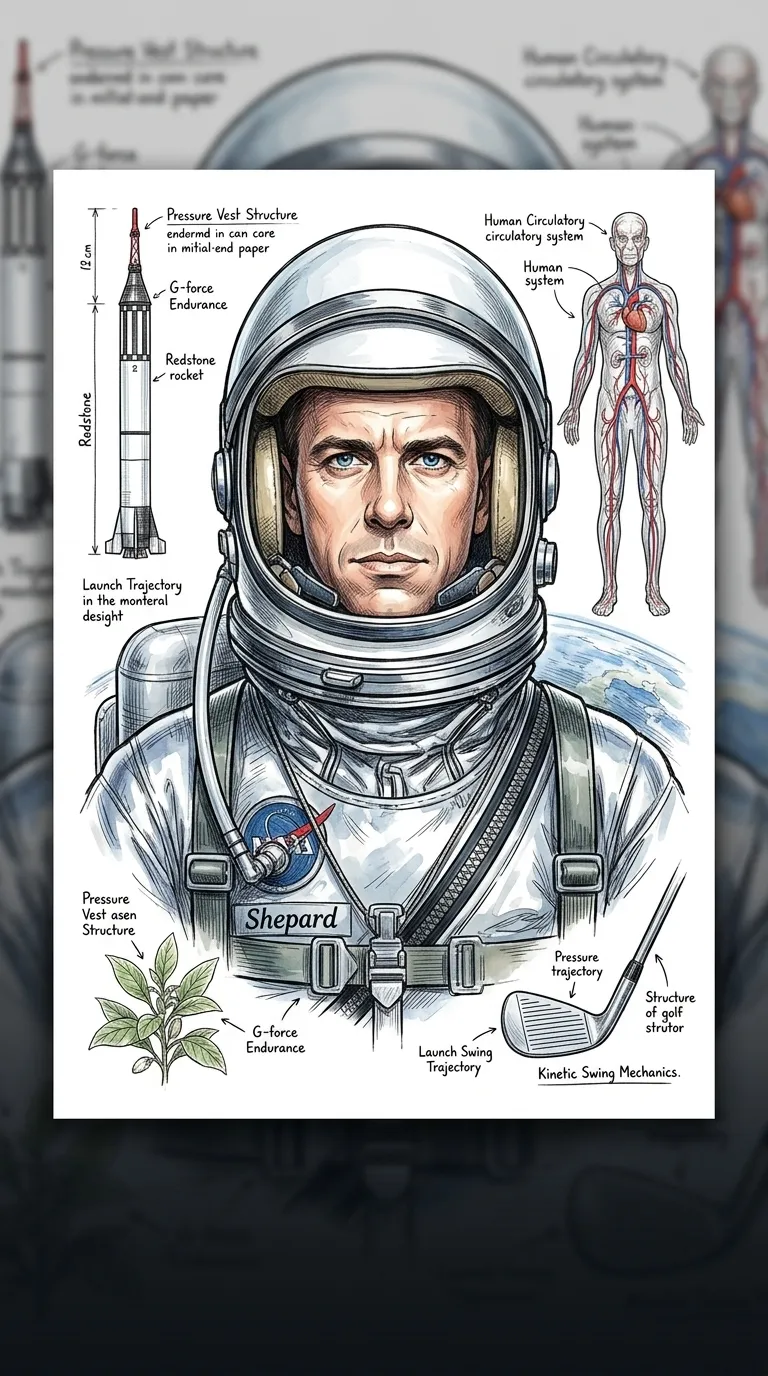
Page 1
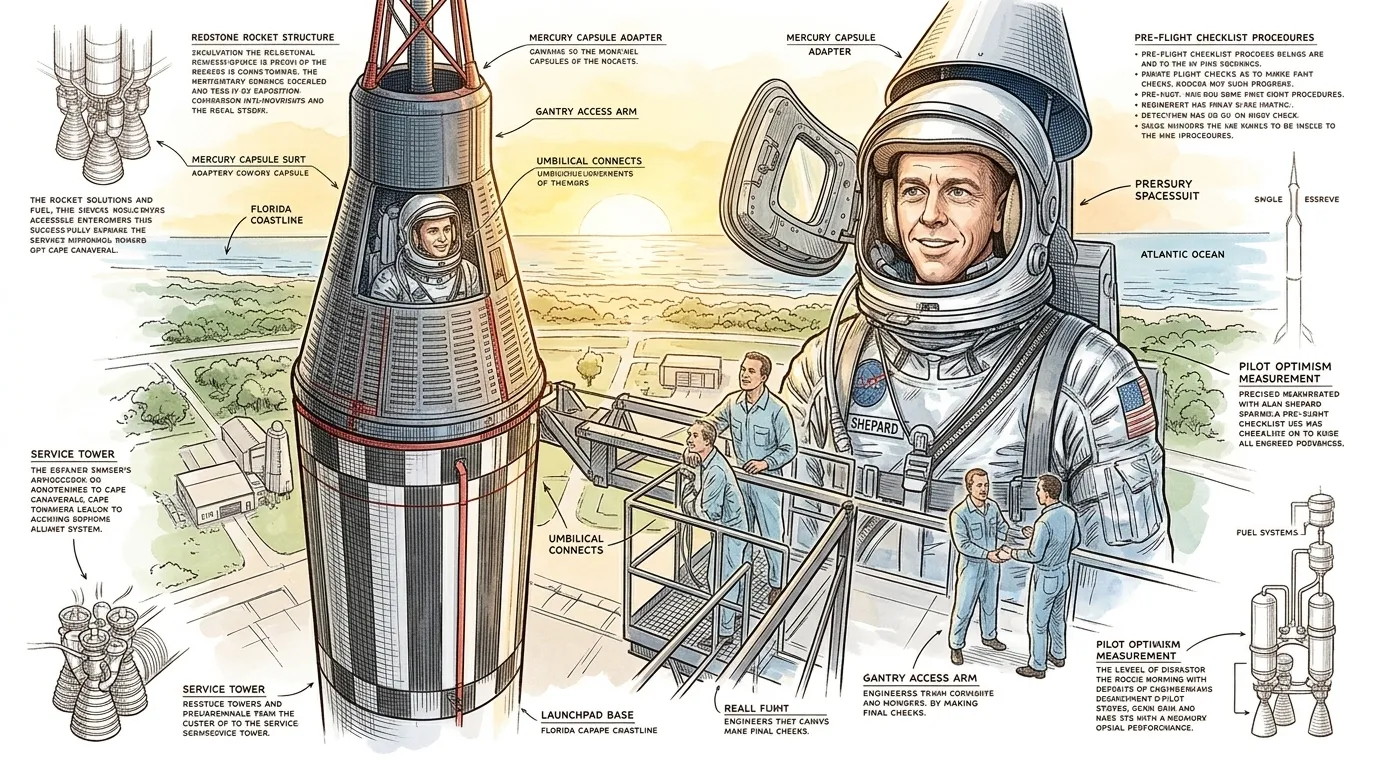
On May 5, 1961, at Cape Canaveral, Florida, the United States stood poised at a pivotal moment in the nascent Space Race. Inside the cramped Mercury capsule atop a Redstone rocket, Navy Commander Alan Shepard prepared for a fifteen-minute suborbital flight that would redefine human capability. His mission, dubbed Freedom 7, aimed to propel an American into the unforgiving vacuum of space, a critical response to the Soviet Union's recent orbital triumph. The successful launch ignited national confidence, proving that America could send a man beyond Earth's atmosphere and recover him safely.
Page 2
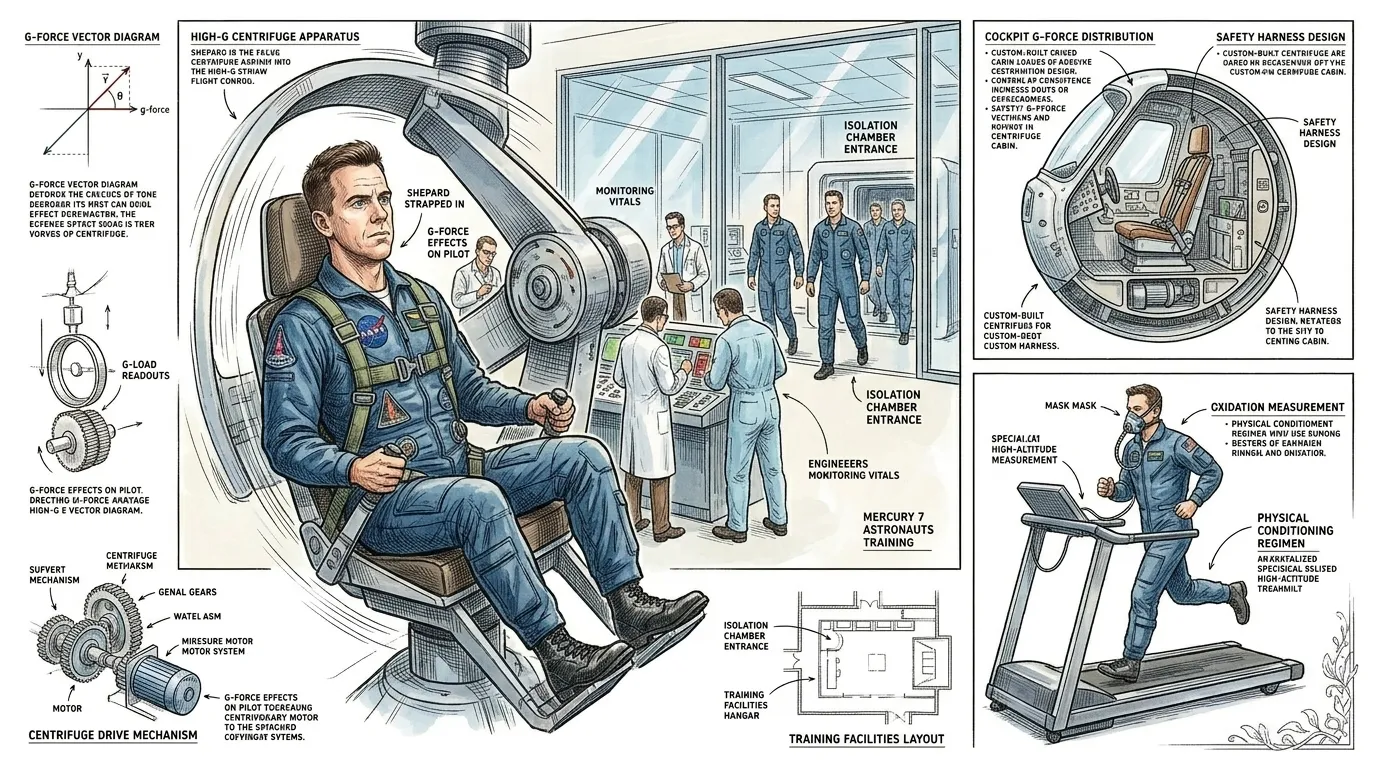
Shepard was part of an elite group known as the Mercury Seven, America's first astronauts, selected in 1959. These seven test pilots, drawn from military ranks, embodied courage and engineering prowess, tasked with pioneering human spaceflight for Project Mercury. Their rigorous training involved pushing the limits of human endurance, from high-G centrifuges simulating launch forces to isolation chambers testing psychological resilience. The ultimate goal was not merely to send a man into space, but to understand if humans could survive, function, and contribute to a mission beyond Earth's protective embrace.
Page 3
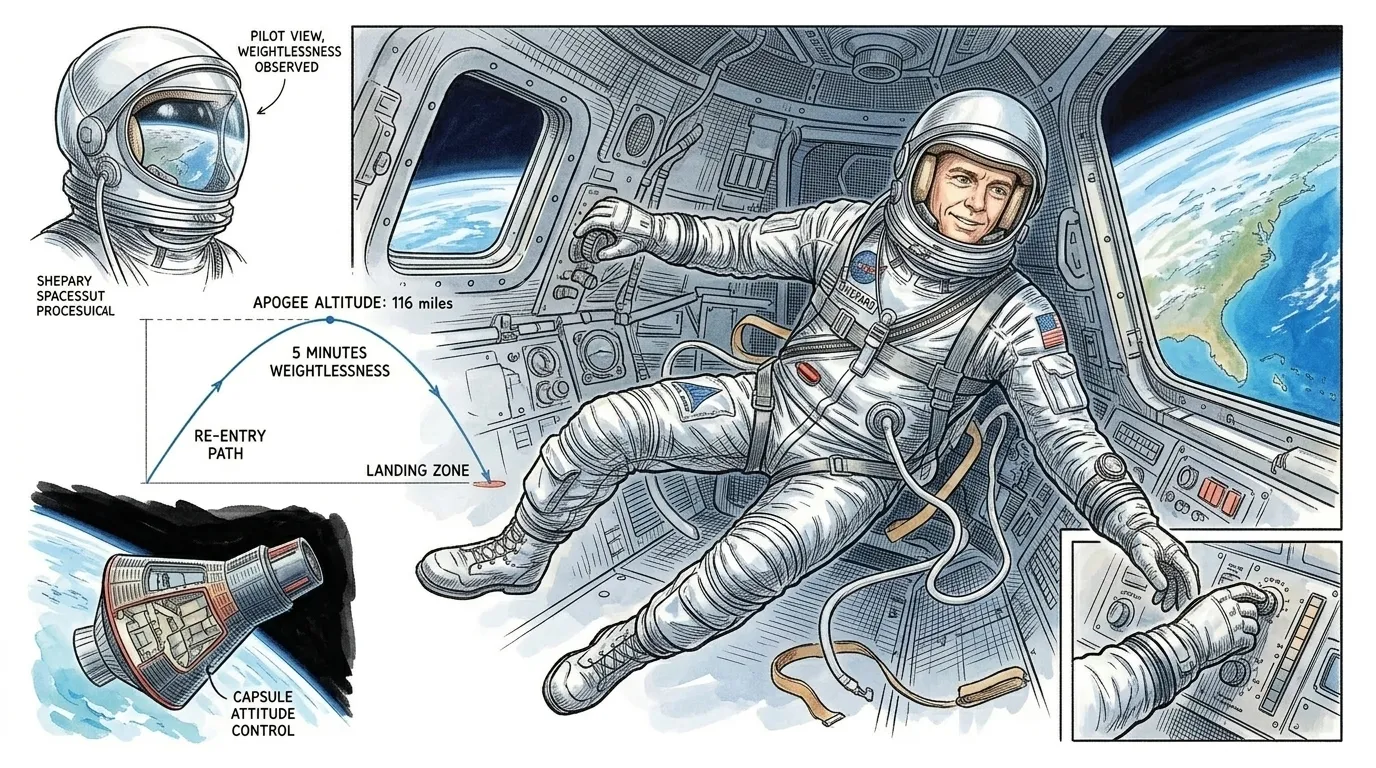
Unlike the longer orbital flights that encircled the Earth, Shepard's mission was designed as a suborbital trajectory—a parabolic arc into space and back down, similar to launching a ballistic missile. This shorter flight profile allowed engineers to test vital spacecraft systems, astronaut performance, and re-entry procedures with fewer variables. Although brief, reaching an altitude of 116 miles and experiencing five minutes of weightlessness provided invaluable data for future, more ambitious orbital missions. It was a calculated, deliberate step to incrementally master the complexities of space travel.
Page 4
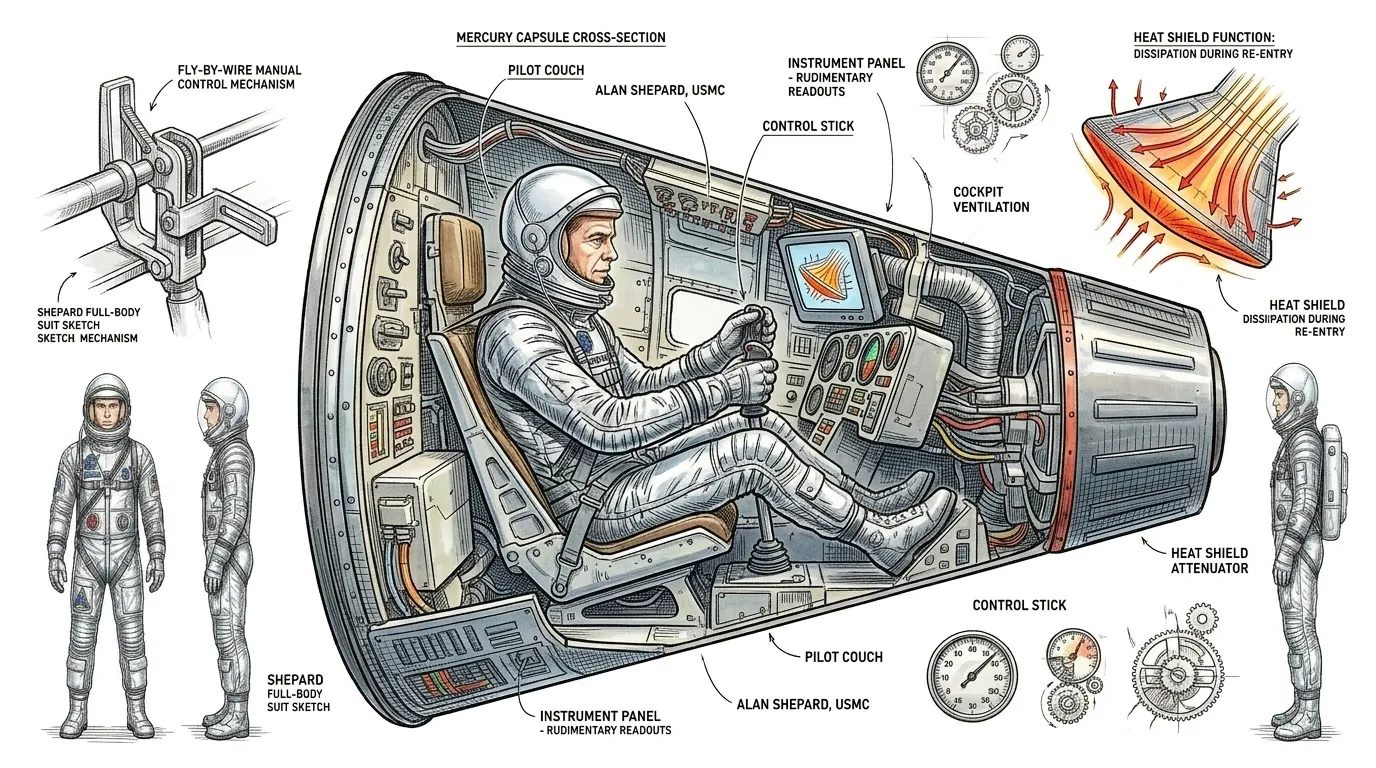
The Mercury capsule, a marvel of 1960s engineering, was a cramped, conical vessel designed to protect its single occupant from the vacuum and extreme temperatures of space. Its heat shield, a crucial innovation, would absorb and dissipate the immense friction heat generated during atmospheric re-entry, preventing the capsule from burning up. Inside, Shepard manually controlled the craft's attitude using a fly-by-wire system, demonstrating the vital role of the astronaut as a pilot, not just a passenger. The capsule's systems were rudimentary by modern standards, but represented the pinnacle of contemporary technology.
Page 5
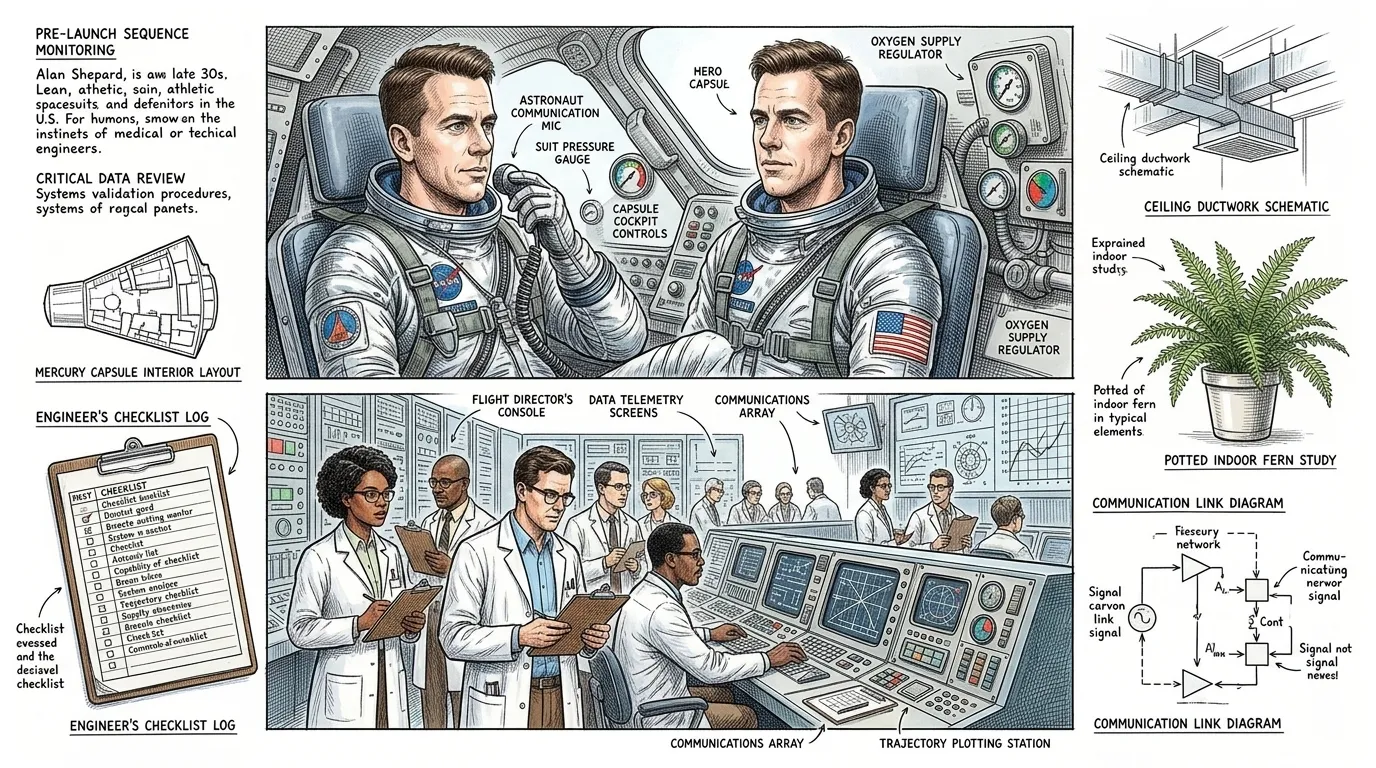
The morning of May 5, 1961, was fraught with tension and repeated delays as engineers meticulously checked every system, from the Redstone rocket's propulsion to the capsule's environmental controls. Alan Shepard, already in his suit, waited patiently for hours inside the capsule, communicating with launch control. This painstaking, real-time problem-solving was characteristic of early spaceflight, where every anomaly could lead to catastrophic failure. The dedication of hundreds of engineers and technicians ensured that when the final 'T-minus zero' arrived, all systems were as ready as humanly possible.
Page 6
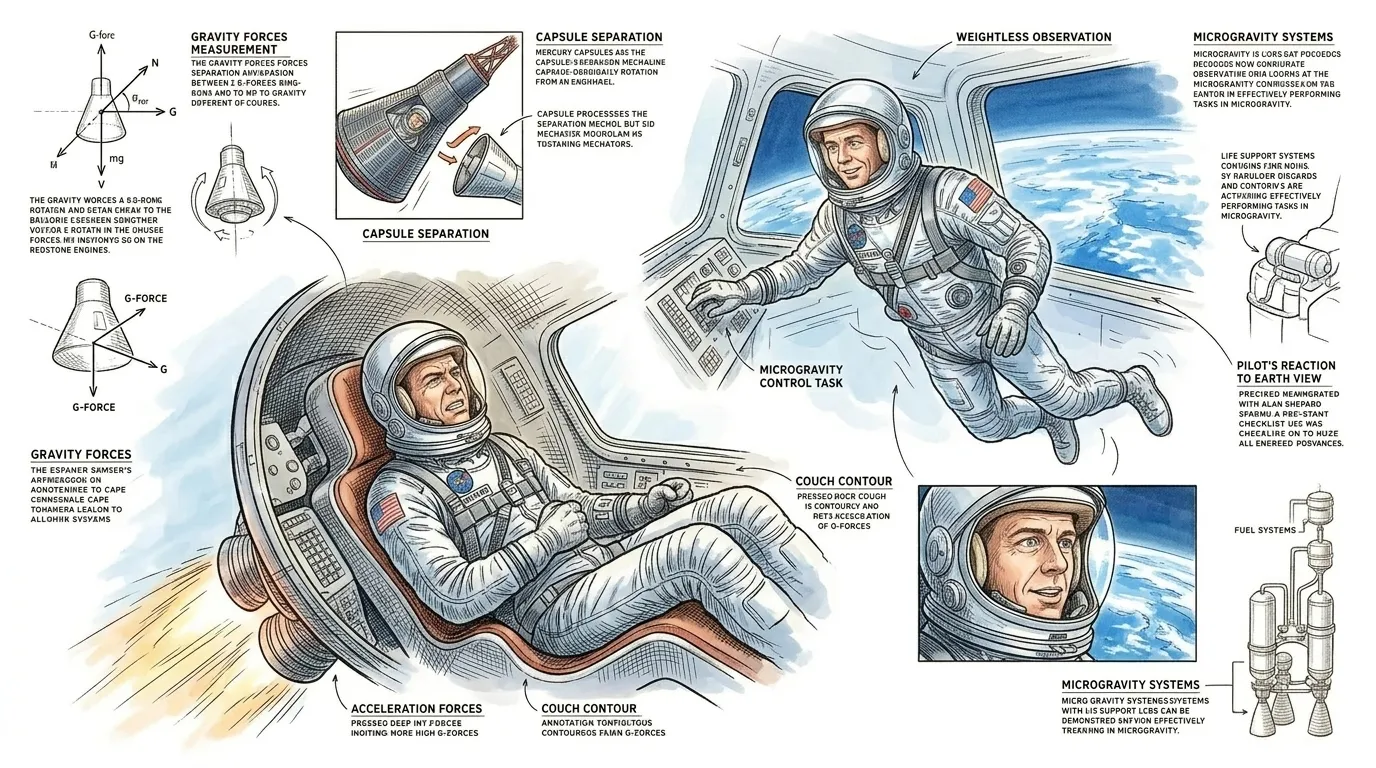
At 9:34 AM EDT, the Redstone engine ignited, generating 78,000 pounds of thrust, sending Freedom 7 skyward. Shepard experienced intense G-forces during ascent, pushing him deep into his contoured couch. Once the rocket cut off and the capsule separated, he was suddenly free, observing Earth from a breathtaking altitude. For five precious minutes, he floated in true weightlessness, manipulating the capsule's controls and offering observations, proving a human could indeed perform tasks effectively in microgravity. This firsthand account was invaluable, far surpassing any simulated experience.
Page 7
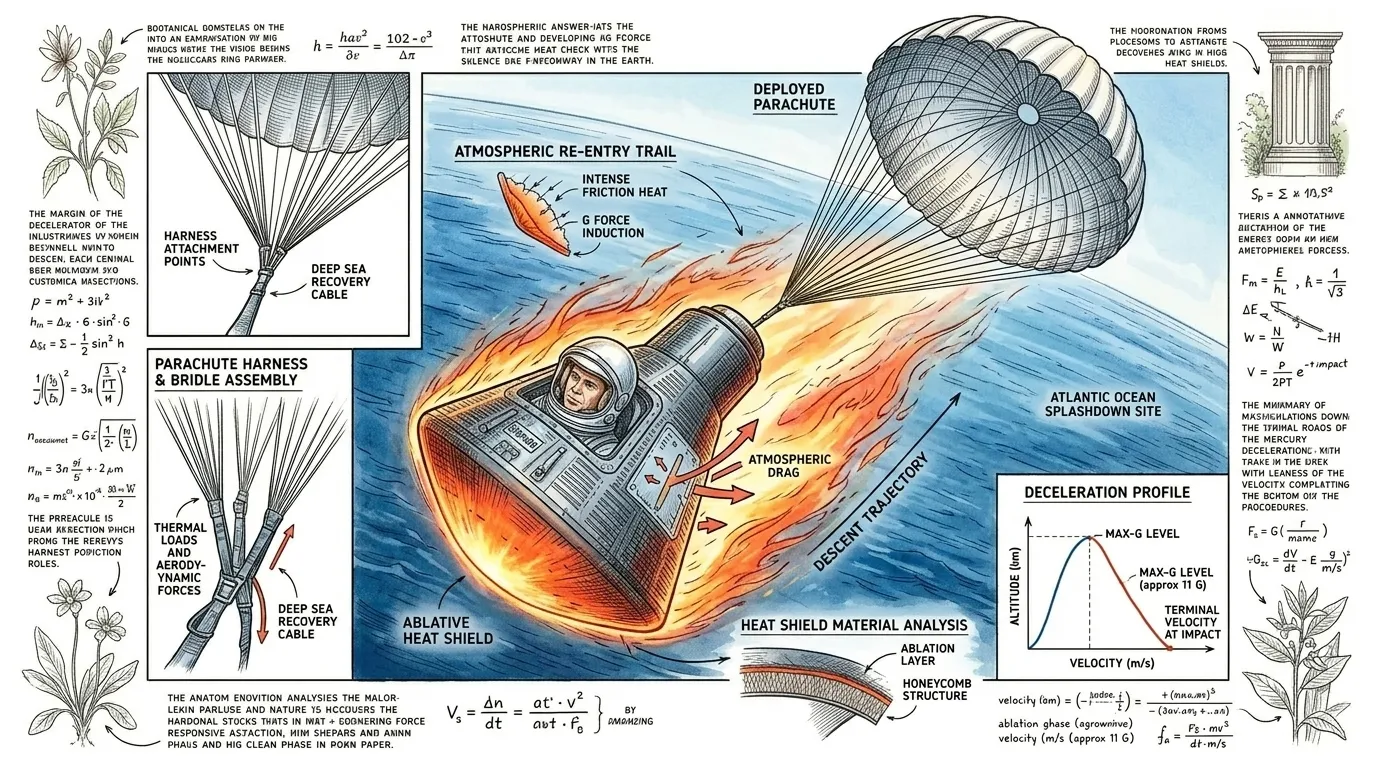
The exhilarating period of weightlessness quickly ended as the retro-rockets fired, initiating the re-entry sequence. The capsule plunged back into Earth's atmosphere, its heat shield glowing intensely from the friction, subjecting Shepard to significant deceleration forces. The capsule's instruments captured critical data on atmospheric drag and thermal loads, verifying engineering models. Finally, a parachute deployed, gently lowering the Freedom 7 capsule towards the Atlantic Ocean. The journey, while brief, demonstrated the entire operational sequence for human spaceflight, from launch to splashdown and recovery.
Page 8
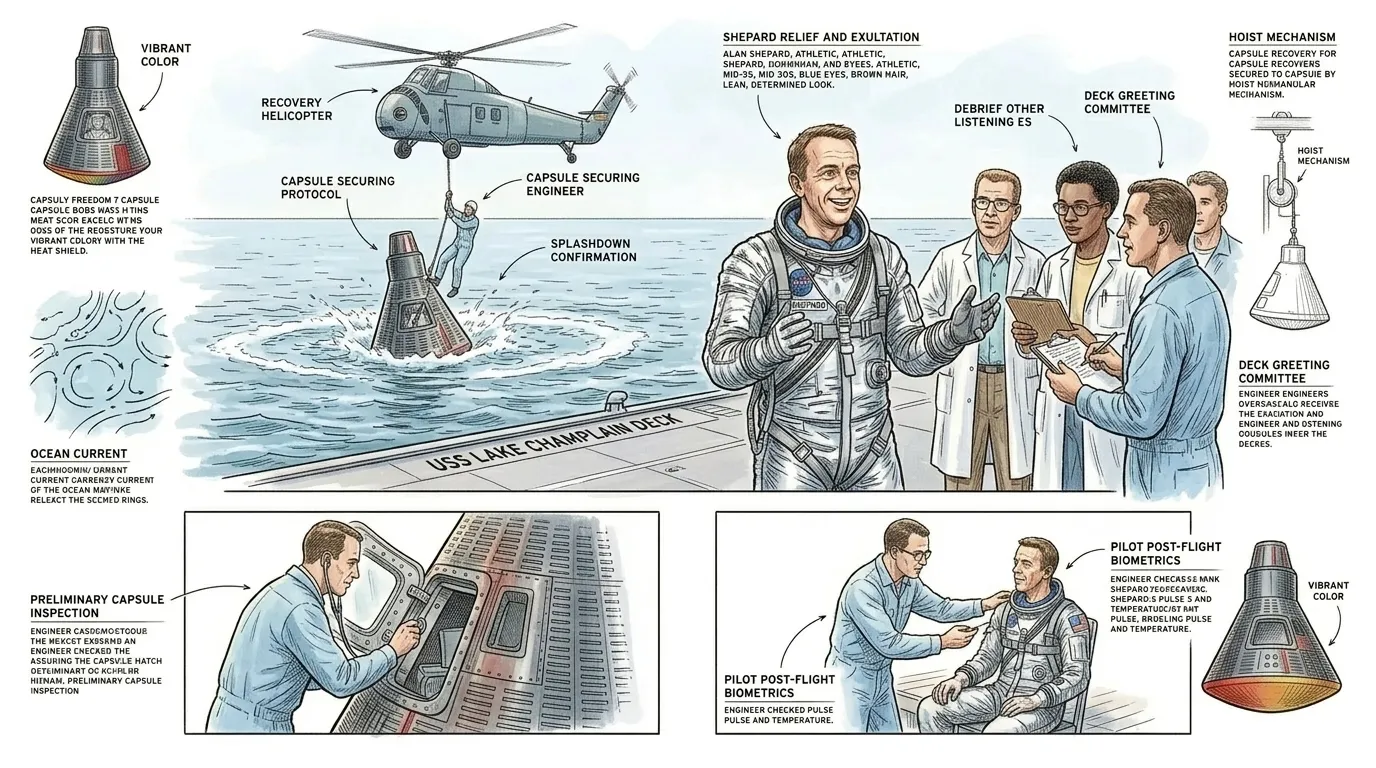
Shepard's capsule splashed down safely in the Atlantic Ocean, approximately 300 miles southeast of Cape Canaveral, just fifteen minutes after launch. Recovery teams, deployed by helicopter from the waiting USS Lake Champlain, quickly secured the capsule and extracted Shepard. Stepping onto the deck of the aircraft carrier, a visibly relieved Alan Shepard debriefed his experiences, confirming the feasibility of human spaceflight and validating years of intensive research and development. This successful mission, though suborbital, was a profound psychological and technical victory for the United States in the escalating Cold War space rivalry.
Page 9
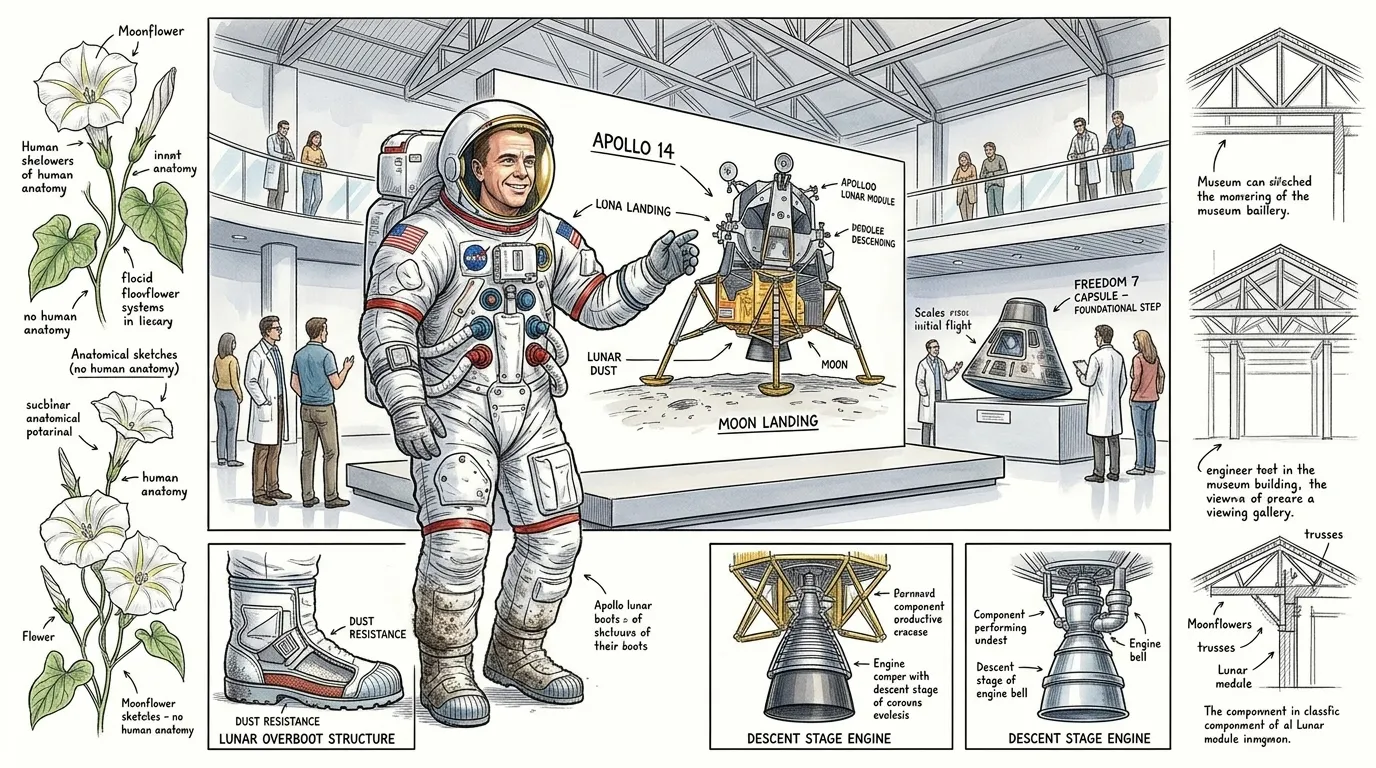
Alan Shepard's brief journey laid essential groundwork for Project Mercury's orbital flights and the subsequent Apollo program. His precise control of the capsule's attitude proved that astronauts were not merely passengers but critical components of a mission, providing invaluable feedback and even troubleshooting in real-time. This early success built crucial public support and political will for the ambitious goal of reaching the Moon. Shepard himself would later command Apollo 14 in 1971, becoming the fifth person to walk on the Moon, a testament to the enduring spirit of exploration he helped ignite.
Page 10
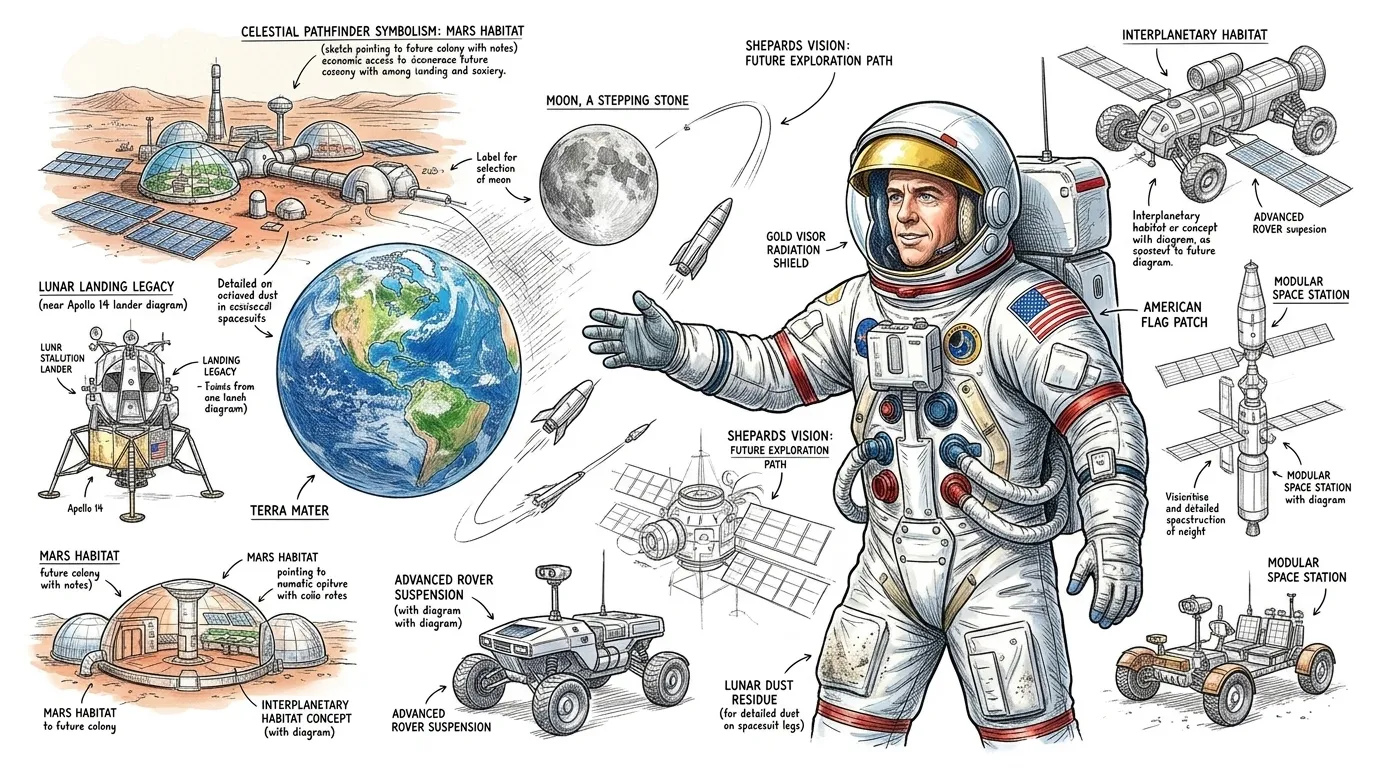
Alan Shepard's pioneering flight was far more than a technical achievement; it was a profound declaration of human aspiration and ingenuity. His journey into space, though short, propelled the United States into a new era of exploration, solidifying the resolve to meet President Kennedy's challenge of landing a man on the Moon. The courage and meticulous engineering demonstrated by Shepard and the entire NASA team continue to inspire generations, reinforcing the enduring human drive to push boundaries, understand the cosmos, and explore the unknown, a legacy that propels future endeavors to Mars and beyond.
About this story
- Location: Global
- Audience: general readers
Questions and answers
Read Wonder Science on your phone
Wonder Science is available on Android. Get Wonder Science on Google Play.