Abdul Qadeer Khan
Abdul Qadeer Khan — an illustrated science story, set in Global. 10 illustrated pages, free to read on Wonder Science.
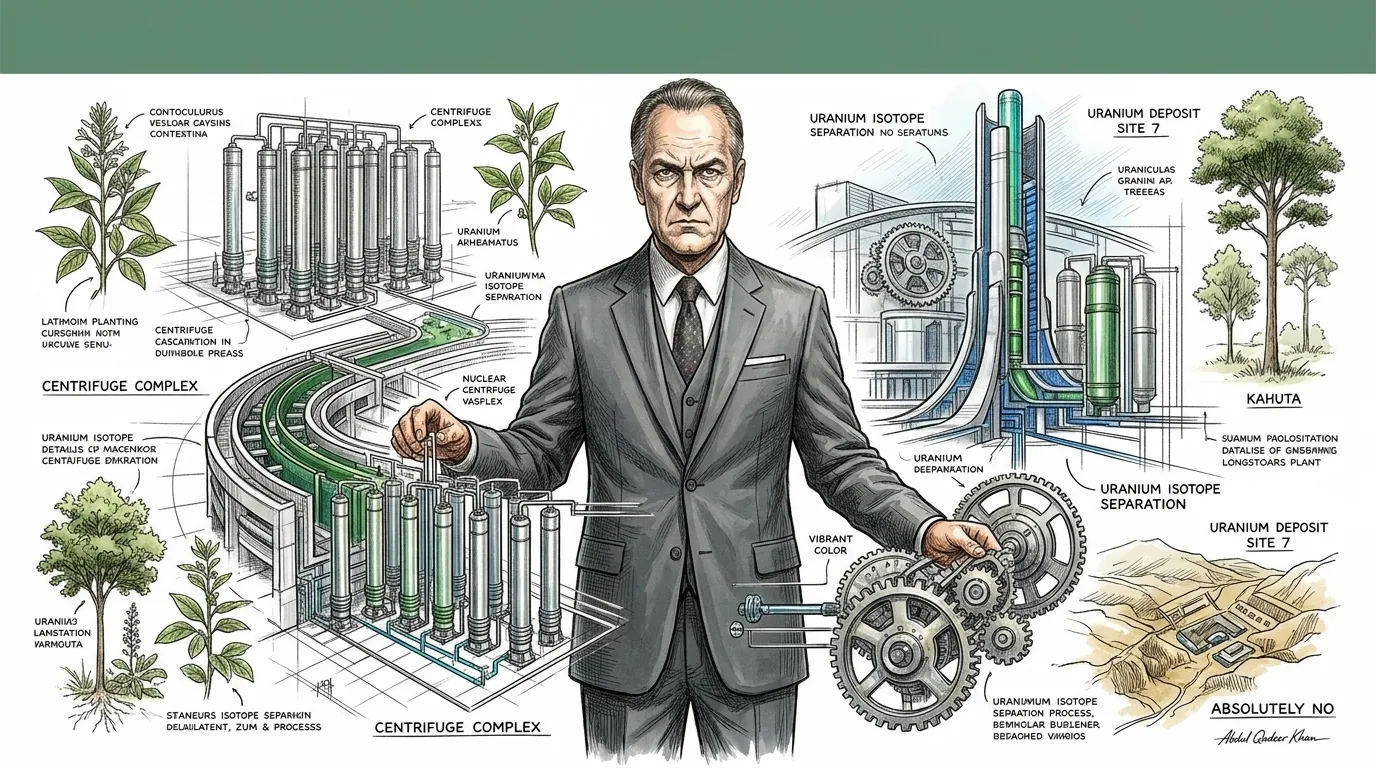
Page 1
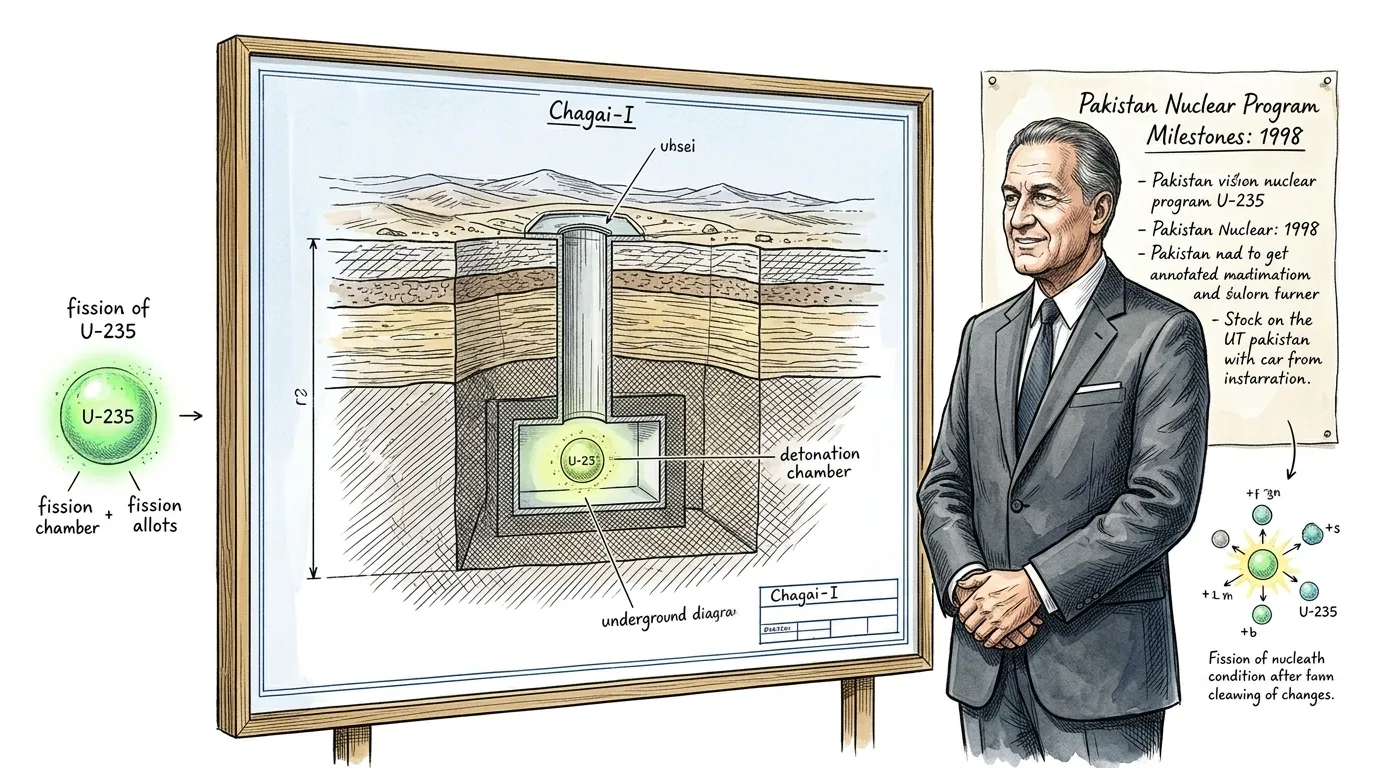
On May 28, 1998, a series of underground nuclear tests in the remote Chagai Hills of Balochistan, Pakistan, irrevocably altered the nation's strategic standing. Codenamed Chagai-I, these detonations marked Pakistan's successful entry into the exclusive club of nuclear powers. At the heart of this monumental scientific and geopolitical endeavor stood Abdul Qadeer Khan, a metallurgist whose relentless pursuit of uranium enrichment technology propelled Pakistan's clandestine nuclear program from ambition to reality. His work, steeped in the complex physics of isotope separation and materials science, culminated in a pivotal moment for a nation seeking to establish a credible deterrent.\n\n Fact: The Chagai-I nuclear test in 1998 established Pakistan as a nuclear weapons state, a culmination of decades of scientific and engineering effort led by Abdul Qadeer Khan. This event reshaped regional security dynamics and marked a significant moment in nuclear proliferation history.
Page 2
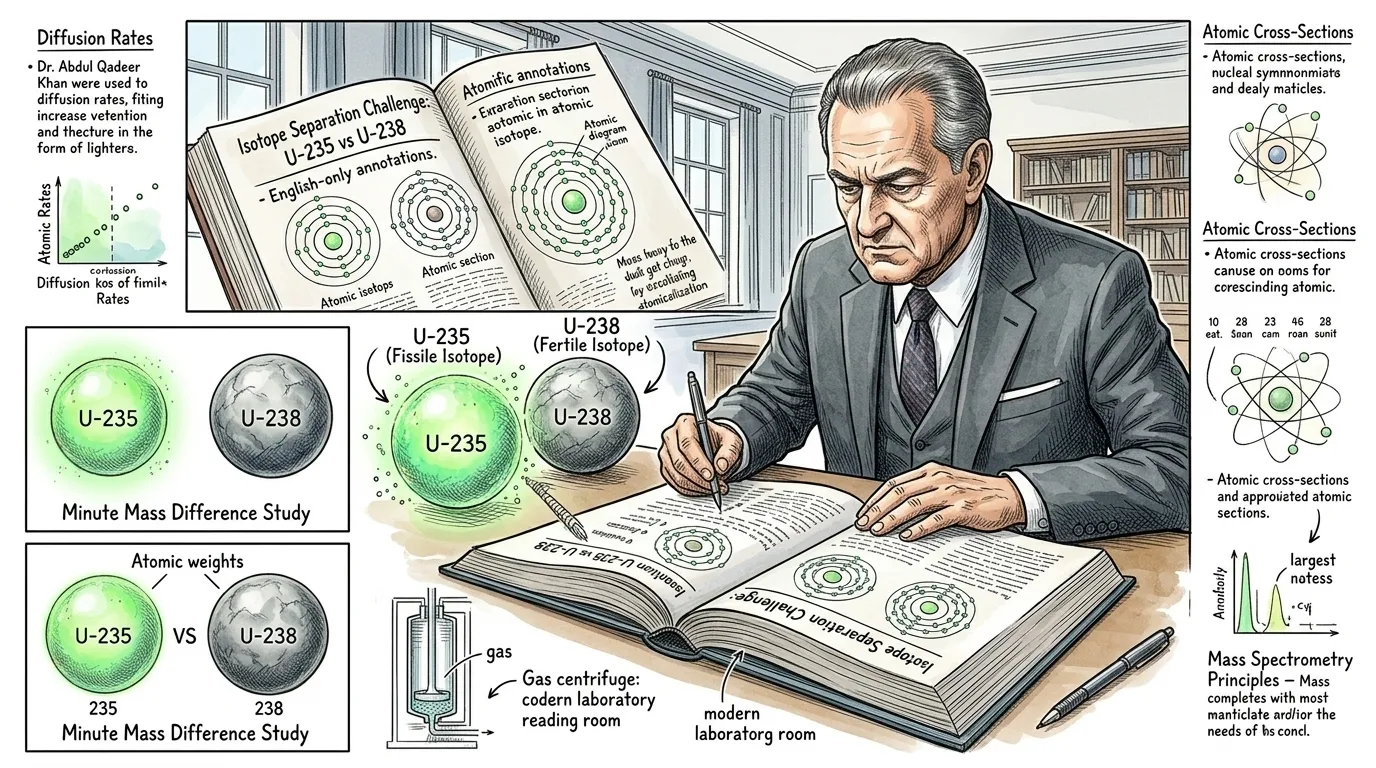
The foundation of nuclear weapons and certain power reactors lies in enriched uranium, a material with a higher concentration of the fissile isotope Uranium-235 (U-235) than naturally occurs. Natural uranium consists mostly of U-238, which is not fissile. The challenge, therefore, is to separate these isotopes, which are chemically identical and differ only minutely in mass. This seemingly subtle difference requires highly sophisticated and energy-intensive processes, a scientific and engineering hurdle that defined the early nuclear age.\n\n Fact: Uranium enrichment is the process of increasing the proportion of Uranium-235, the fissile isotope, relative to the more common Uranium-238. This process is critical for both nuclear weapons and certain types of nuclear power generation.
Page 3
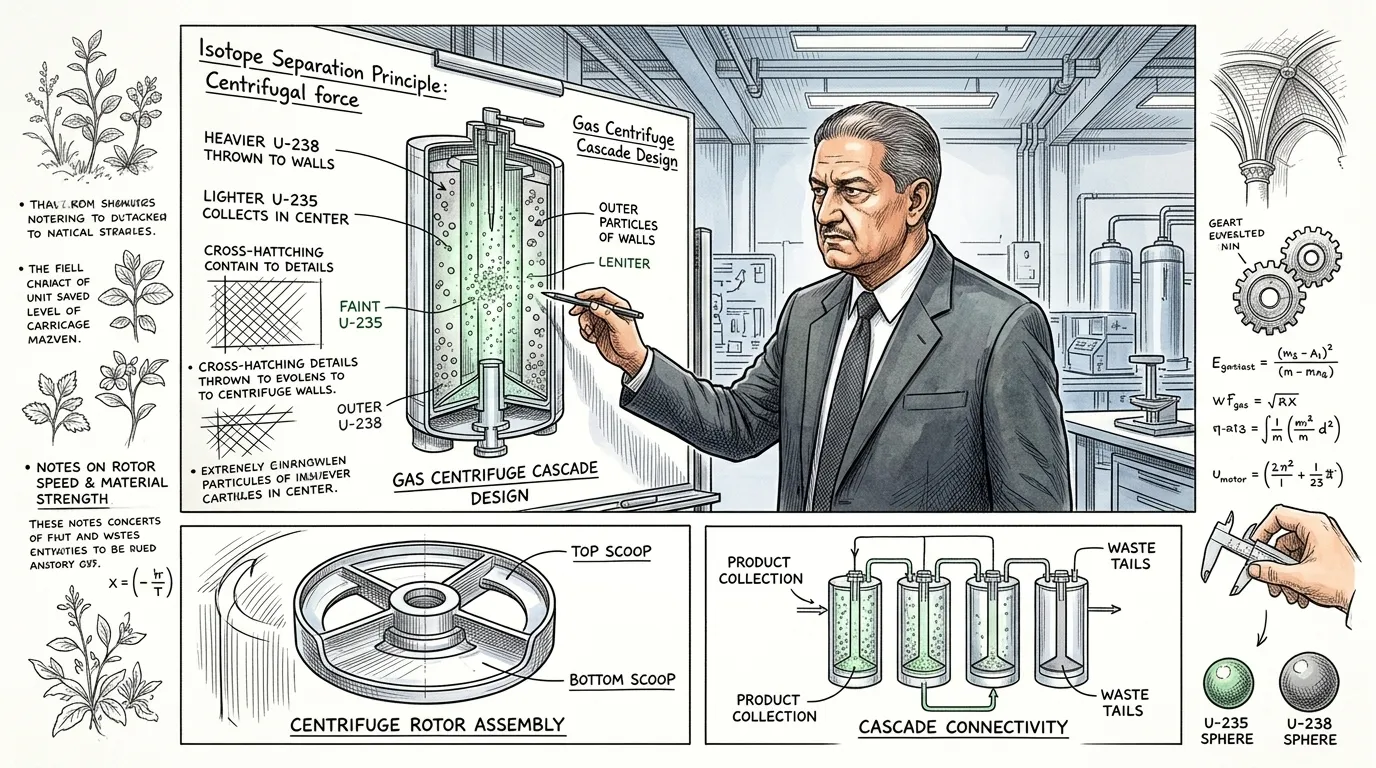
The most effective method for isotope separation proved to be gas centrifuges. These machines spin uranium hexafluoride gas at incredibly high speeds, often tens of thousands of revolutions per minute. The slightly heavier U-238 molecules are flung outwards by centrifugal force, accumulating closer to the centrifuge walls, while the lighter U-235 molecules remain nearer the center. This minute separation is then repeated across thousands of centrifuges arranged in cascades, progressively concentrating the U-235 until weapons-grade enrichment is achieved. The engineering precision required for these high-speed rotors is astounding, demanding specialized alloys and manufacturing techniques.\n\n Fact: Gas centrifuges spin uranium hexafluoride at extreme speeds, leveraging centrifugal force to separate the slightly heavier U-238 isotopes from the lighter U-235. This iterative process, conducted in cascades, produces enriched uranium.
Page 4
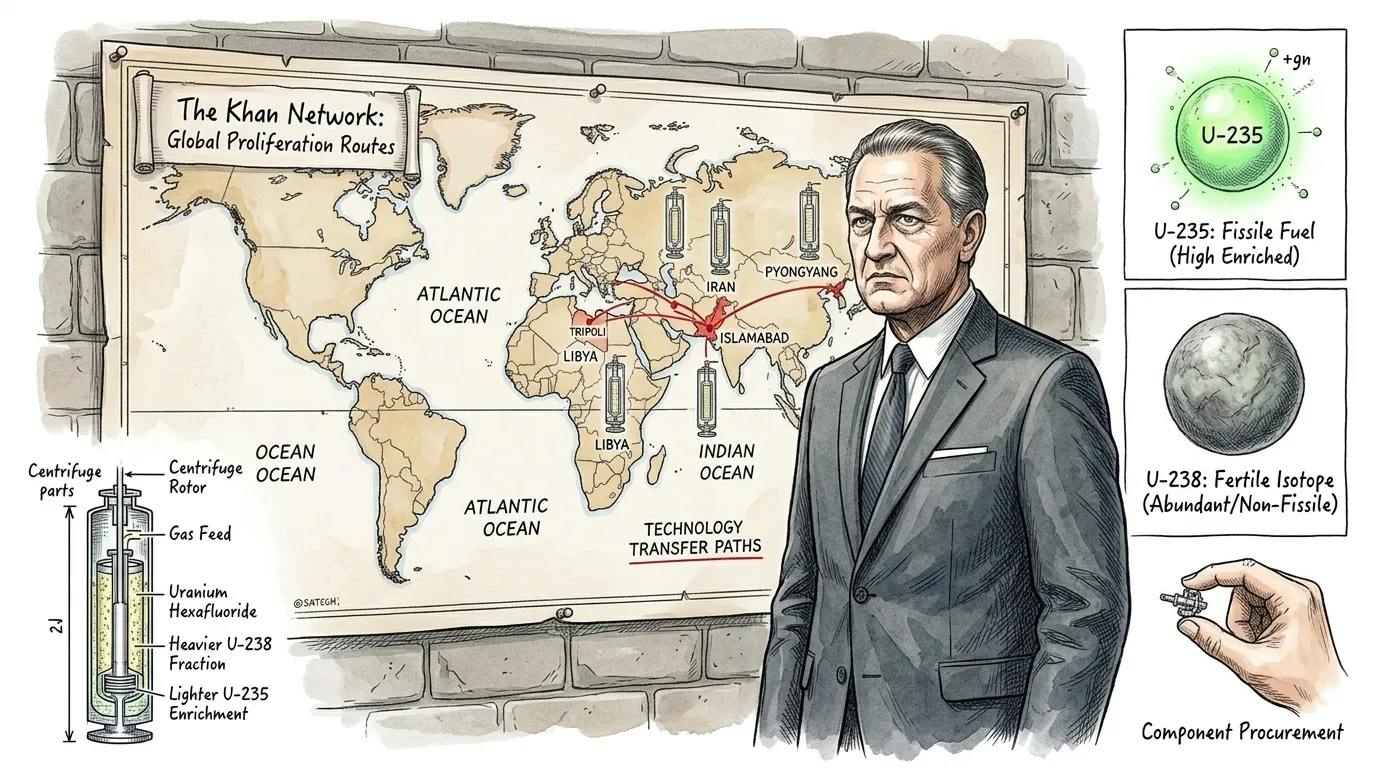
Abdul Qadeer Khan's unique position at the nexus of nuclear technology, global clandestine networks, and state sponsorship led to the creation of what became known as the 'Khan Network.' From the 1970s through the early 2000s, this illicit organization facilitated the transfer of highly sensitive nuclear technology, including centrifuge designs and components, to nations like Libya, Iran, and North Korea. This unprecedented act of private proliferation circumvented international non-proliferation efforts, making nuclear weapons technology accessible to states outside established frameworks and dramatically altering the global security landscape.\n\n Fact: The 'Khan Network' was an illicit global proliferation ring, led by Abdul Qadeer Khan, that supplied nuclear technology and expertise to several nations, fundamentally challenging the international non-proliferation regime.
Page 5
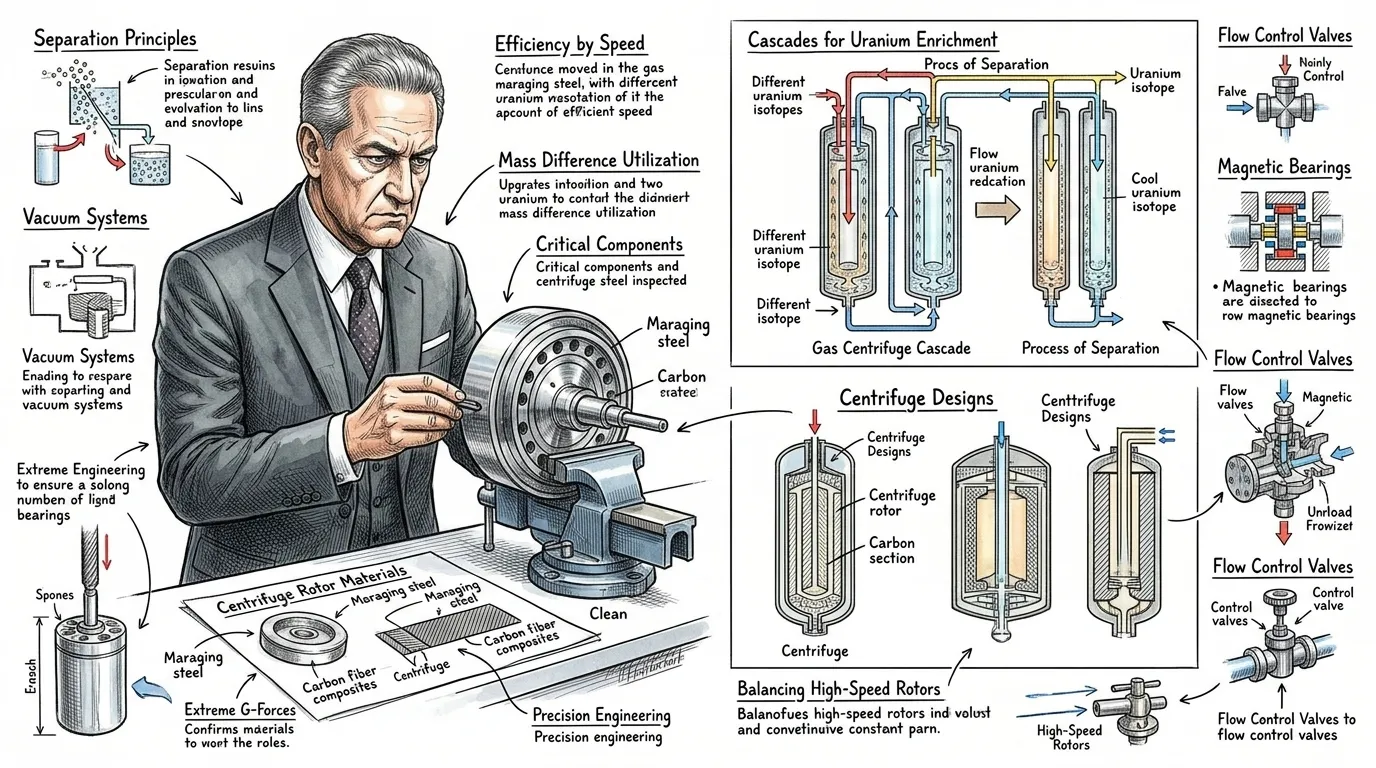
Beyond the conceptual physics of isotope separation, the practical realization of centrifuge technology demanded mastery of advanced metallurgy and precision engineering. The rotors, often made of maraging steel or carbon fiber composites, had to withstand immense G-forces without buckling or fracturing. Bearings needed to be virtually frictionless, and the vacuum systems meticulously maintained. Khan's expertise in materials science, particularly metallurgy, was instrumental in overcoming these formidable technical hurdles, allowing Pakistan to indigenously develop and manufacture the critical components necessary for a functioning enrichment cascade.\n\n Fact: The development of reliable gas centrifuges relied heavily on breakthroughs in metallurgy and precision engineering, particularly for creating robust rotors capable of enduring extreme rotational forces.
Page 6
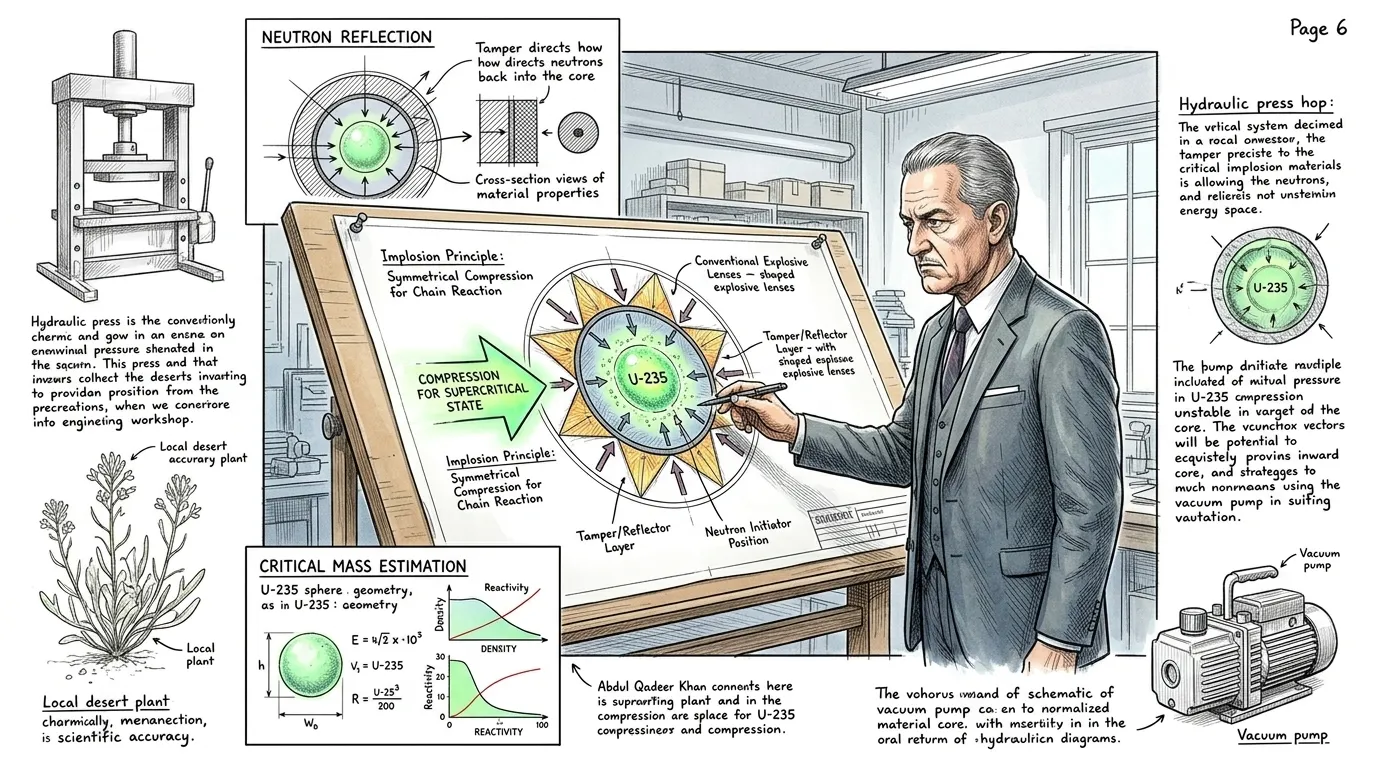
While uranium enrichment provides the fissile material, transforming it into a functional weapon requires mastering the implosion principle. This involves symmetrically compressing a subcritical mass of fissile material using precisely shaped conventional explosives. The rapid, inward force compresses the fissile core to a supercritical state, initiating a chain reaction. This intricate design demands exceptional precision in explosive lens manufacturing and timing, often considered the most technically challenging aspect of nuclear weapons design. Abdul Qadeer Khan's work, while focused on enrichment, was a critical enabler for the subsequent engineering of such complex warheads.\n\n Fact: The implosion principle, crucial for nuclear weapons, involves using precise conventional explosives to symmetrically compress fissile material into a supercritical state, initiating a chain reaction.
Page 7
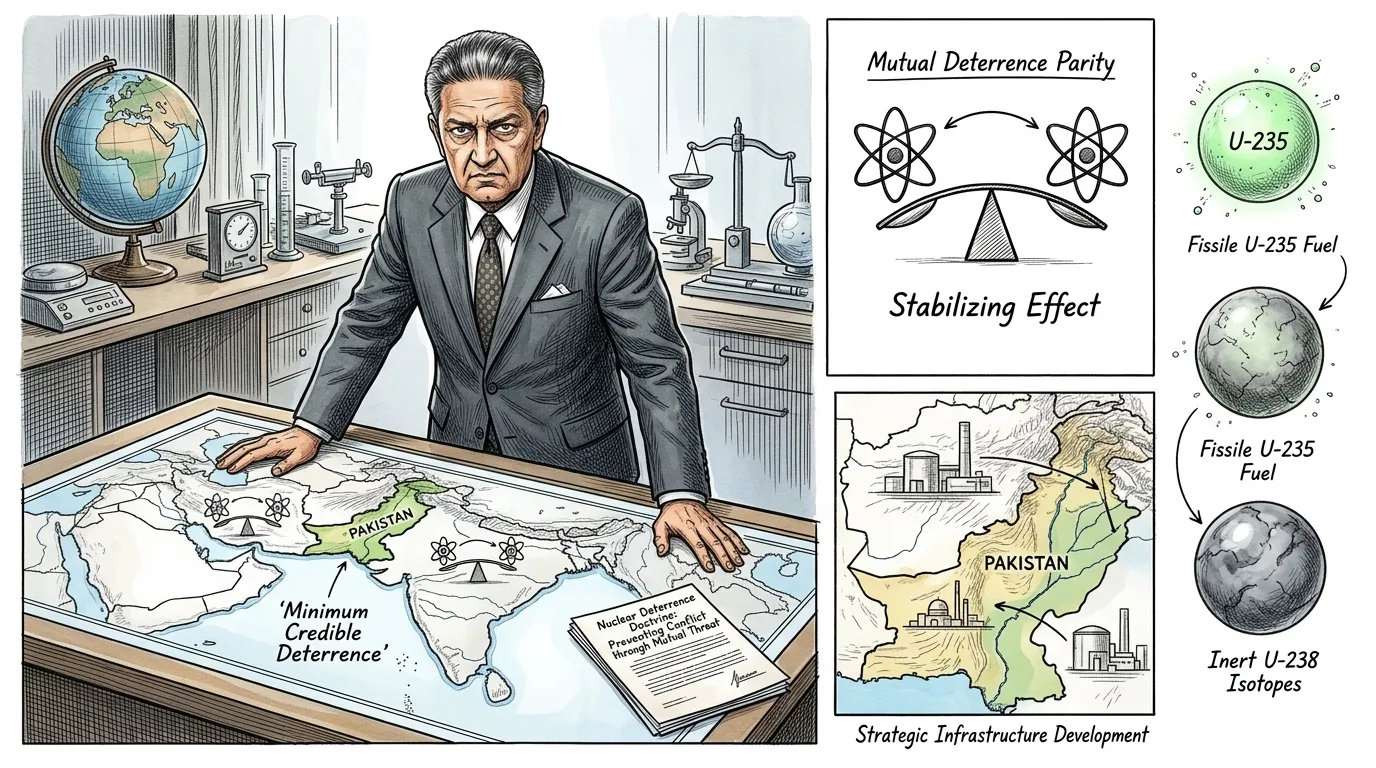
Pakistan's nuclear program, largely realized through the contributions of figures like Abdul Qadeer Khan, fundamentally reshaped the strategic calculus in South Asia. The stated purpose of its nuclear arsenal was to establish 'minimum credible deterrence' against perceived threats. This doctrine posits that possession of nuclear weapons by multiple states prevents full-scale conventional warfare between them, as the catastrophic consequences of nuclear exchange would outweigh any potential gains. However, this delicate balance also introduces new risks of miscalculation and escalation, creating a complex and ever-present tension in international relations.\n\n Fact: The doctrine of nuclear deterrence posits that the mutual possession of nuclear weapons by adversarial states prevents conventional conflict due to the catastrophic consequences of nuclear escalation.
Page 8
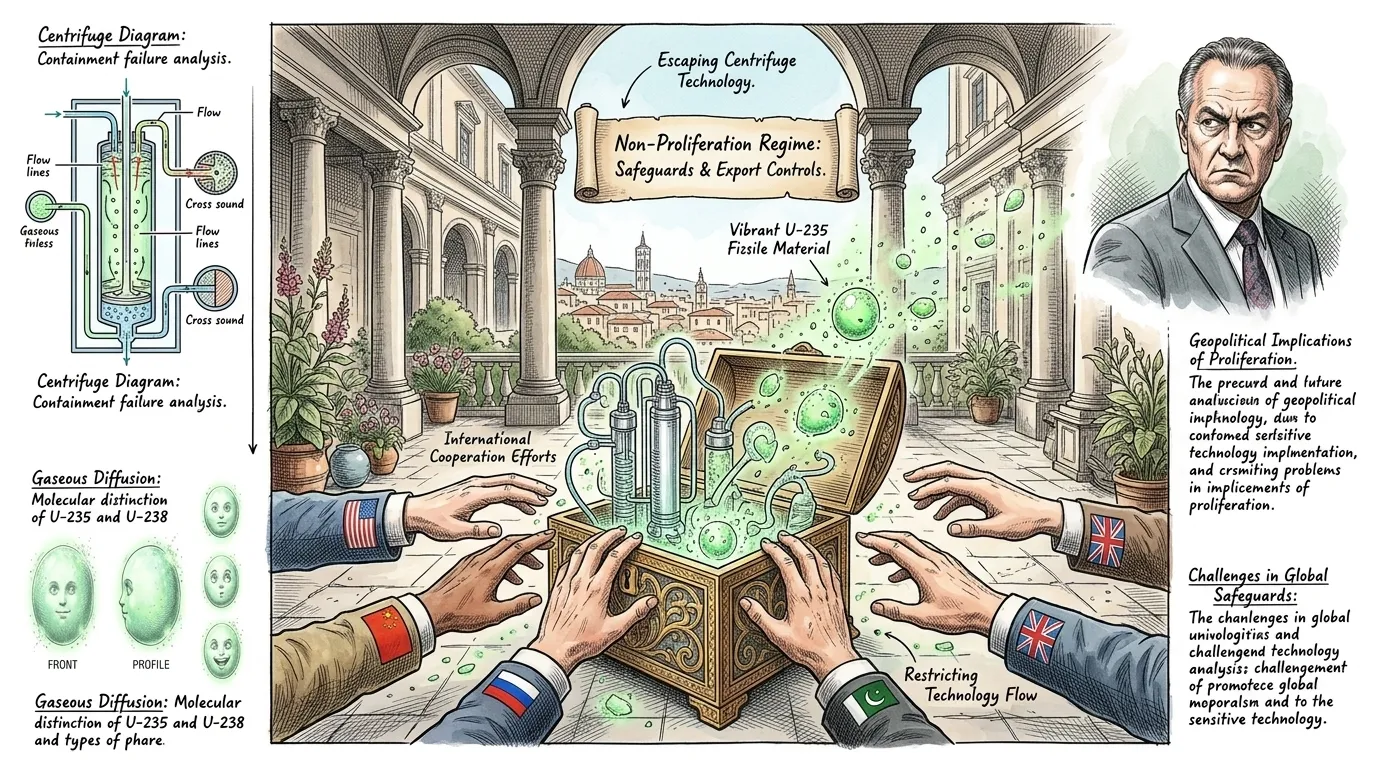
The activities of the Khan Network exposed critical vulnerabilities in the global non-proliferation regime. The clandestine transfer of nuclear blueprints, components, and even fully assembled centrifuges highlighted the ease with which sensitive technology could be illicitly acquired. This revelation prompted intensified international efforts to bolster safeguards, strengthen export controls, and enhance intelligence gathering to prevent future proliferation. Organizations like the International Atomic Energy Agency (IAEA) redoubled their efforts, yet the genie of proliferation, once out of the bottle, proved immensely difficult to contain, demonstrating the enduring challenge of controlling dual-use technologies.\n\n Fact: The 'Khan Network' underscored the urgent need for robust international non-proliferation measures, leading to strengthened safeguards and export controls aimed at preventing the illicit transfer of nuclear technology.
Page 9
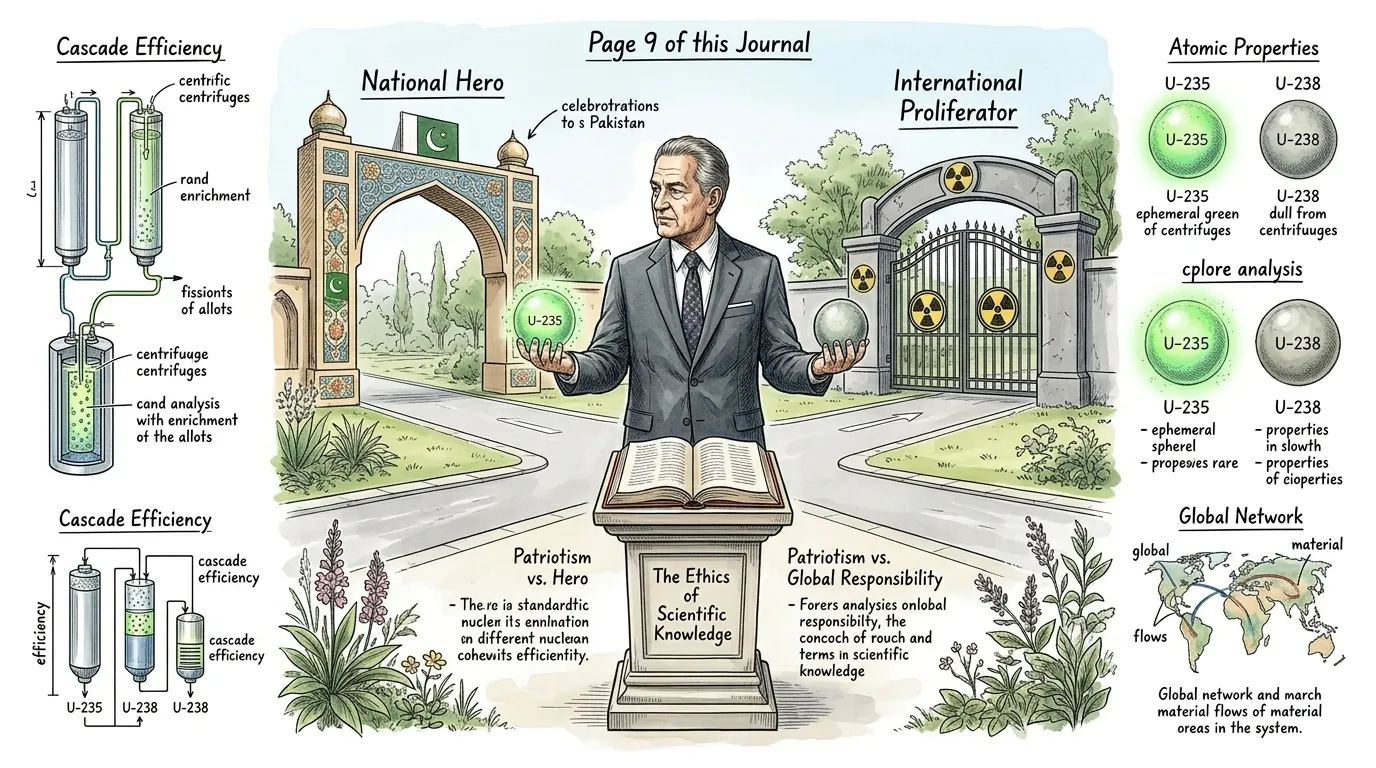
Abdul Qadeer Khan's story poses profound ethical questions about the responsibility of scientists and the control of dangerous knowledge. While lauded as a national hero in Pakistan for his pivotal role in achieving nuclear deterrence, he was also condemned internationally as a dangerous proliferator. This duality highlights the ethical tightrope walked by scientists whose work can have both perceived national security benefits and destabilizing global consequences. It forces a contemplation of where the line lies between patriotic duty, personal ambition, and universal moral obligations in the age of weapons of mass destruction.\n\n Fact: Abdul Qadeer Khan's dual legacy as a national hero and an international proliferator raises complex ethical questions about scientific responsibility, patriotism, and the control of hazardous knowledge.
Page 10
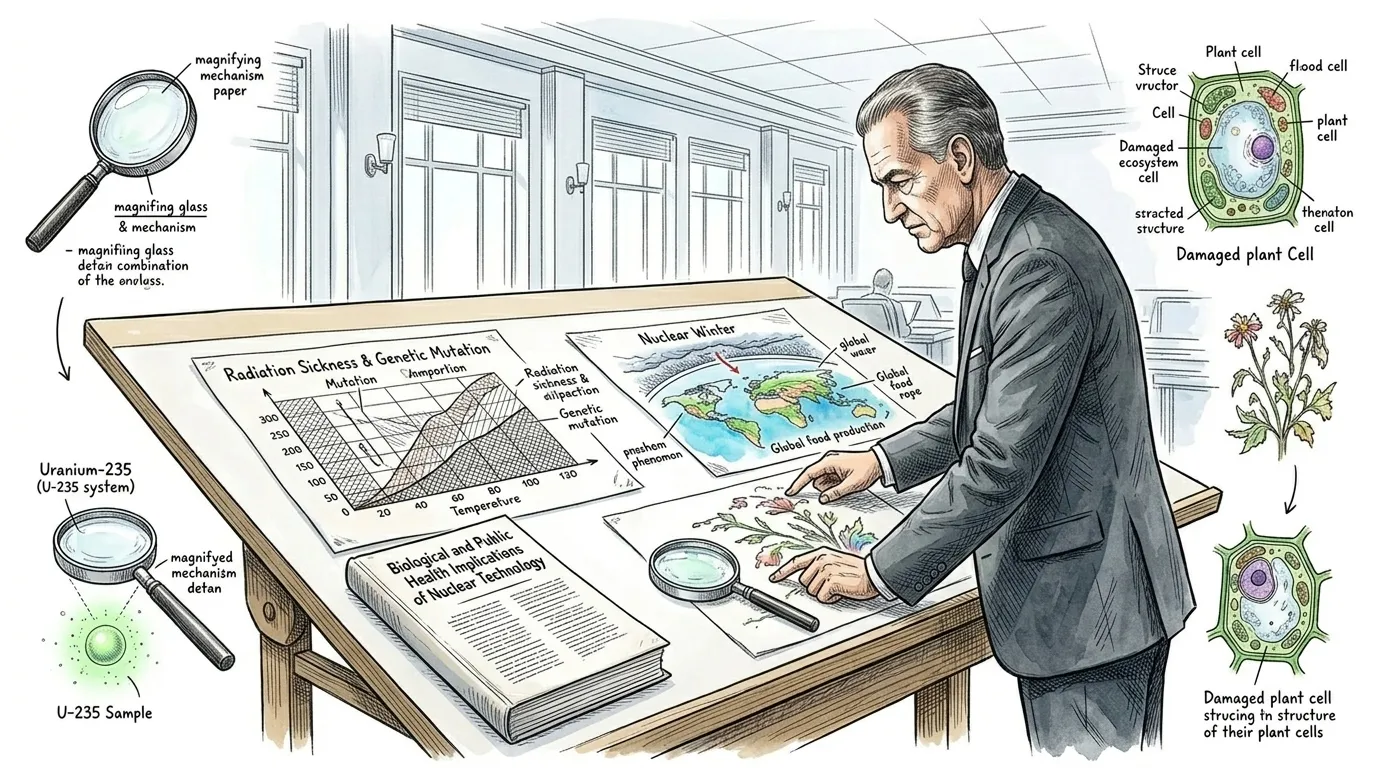
The legacy of nuclear technology, epitomized by figures like Abdul Qadeer Khan, extends far beyond geopolitics into the very fabric of life sciences and public health. Nuclear weapons, should they ever be deployed, would unleash catastrophic biological consequences: widespread radiation sickness, genetic mutations across generations, massive ecological disruption, and a potential 'nuclear winter' impacting global food chains. Understanding these profound biological and environmental impacts has become a critical field of study, linking physics and engineering to medicine, genetics, and public health. Scientists today continue to research the long-term effects of radiation exposure, develop countermeasures, and advocate for non-proliferation, recognizing that the power unleashed by the atom holds an unparalleled capacity to both alter and devastate life on Earth.\n\n Fact: Nuclear technology carries profound biological and public health implications, ranging from radiation sickness and genetic damage to ecological devastation, underscoring the vital intersection of physics, engineering, medicine, and public health in understanding and mitigating these risks.
About this story
- Location: Global
- Audience: general readers
Questions and answers
Read Wonder Science on your phone
Wonder Science is available on Android. Get Wonder Science on Google Play.