Wolfgang Pauli

Wolfgang Pauli — an illustrated science story, set in Global. 10 illustrated pages, free to read on Wonder Science.

Wolfgang Pauli — book cover — Wonder Science
Wolfgang Pauli — an illustrated science story, set in Global. 10 illustrated pages, free to read on Wonder Science.

Page 1
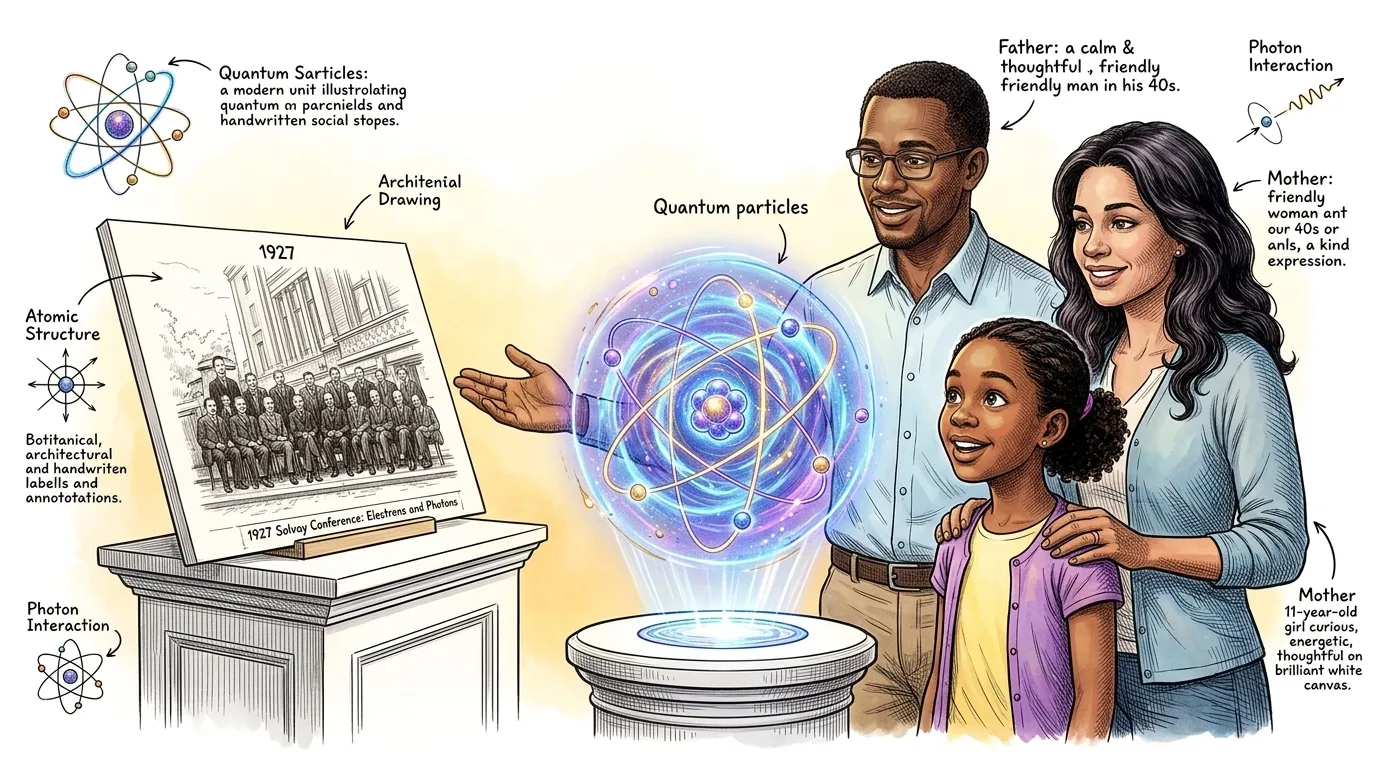
In the heart of 20th-century physics, a storm of revolutionary ideas raged. One figure stood out as both a brilliant mind and a sharp critic: Wolfgang Pauli.
In the heart of 20th-century physics, a storm of revolutionary ideas raged. One figure stood out as both a brilliant mind and a sharp critic: Wolfgang Pauli. His work reshaped our understanding of quantum mechanics, revealing hidden symmetries and fundamental laws governing the universe. Let's explore how Pauli helped unlock the secrets of the atom and beyond. Fact: The Solvay Conference: a meeting of the minds that shaped modern physics.

In the heart of 20th-century physics, a storm of revolutionary ideas raged. One figure stood out as both a brilliant mind and a sharp critic: Wolfgang Pauli. His work reshaped our understanding of quantum mechanics, revealing hidden symmetries and fundamental laws governing the universe. Let's explore how Pauli helped unlock the secrets of the atom and beyond.

Fact: The Solvay Conference: a meeting of the minds that shaped modern physics.

Page 2
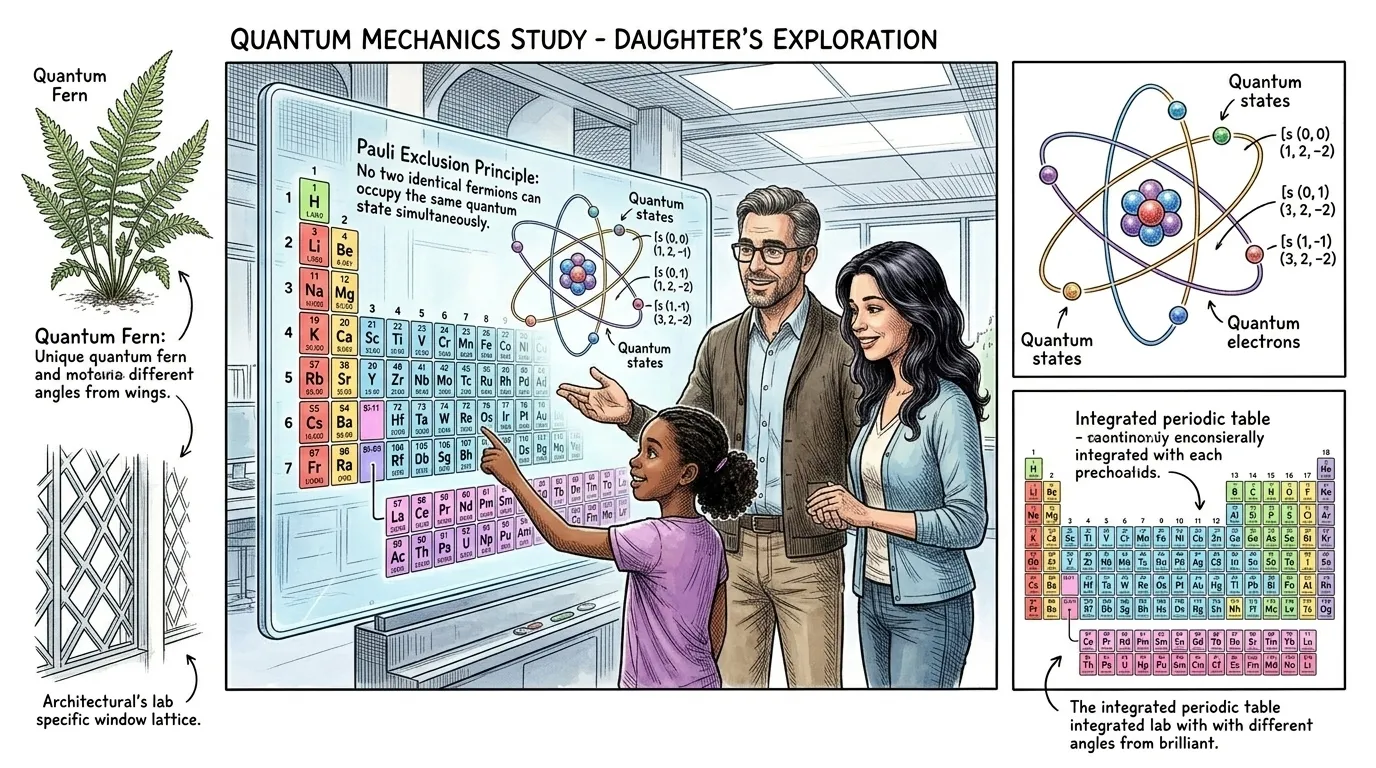
In 1925, Pauli formulated the Exclusion Principle, a cornerstone of quantum mechanics. It states that no two identical fermions (particles with half-integer…
In 1925, Pauli formulated the Exclusion Principle, a cornerstone of quantum mechanics. It states that no two identical fermions (particles with half-integer spin, like electrons) can occupy the same quantum state simultaneously. This principle explained the structure of the atom and the organization of the periodic table. It's the reason matter takes up space! Fact: The Exclusion Principle dictates the architecture of the periodic table.

In 1925, Pauli formulated the Exclusion Principle, a cornerstone of quantum mechanics. It states that no two identical fermions (particles with half-integer spin, like electrons) can occupy the same quantum state simultaneously. This principle explained the structure of the atom and the organization of the periodic table. It's the reason matter takes up space!

Fact: The Exclusion Principle dictates the architecture of the periodic table.

Page 3
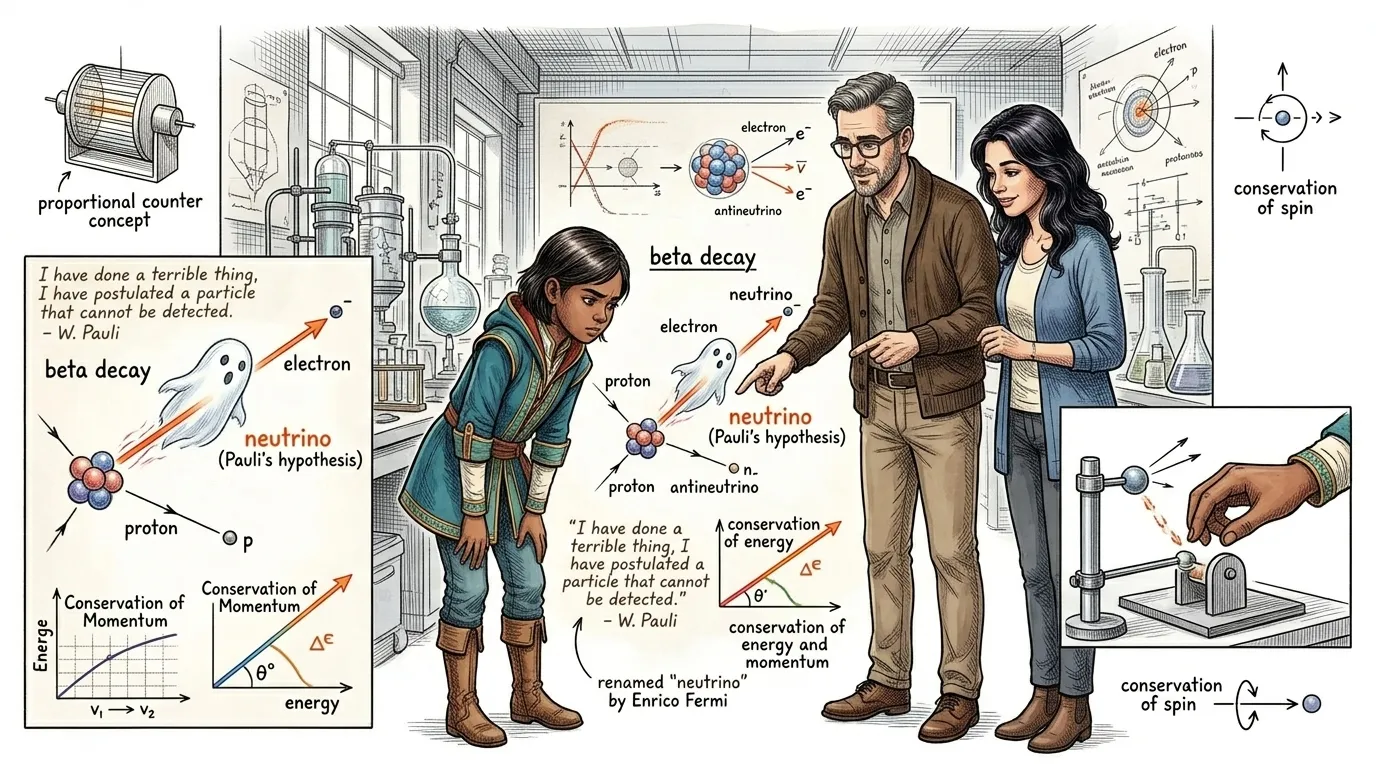
Before the neutron was discovered, physicists struggled to explain the continuous spectrum of beta decay. Pauli proposed the existence of a neutral, nearly…
Before the neutron was discovered, physicists struggled to explain the continuous spectrum of beta decay. Pauli proposed the existence of a neutral, nearly massless particle to account for the missing energy and momentum. He called it a 'neutron,' but Enrico Fermi later renamed it the 'neutrino.' Pauli famously said about his own hypothesis, 'I have done a terrible thing, I have postulated a particle that cannot be detected.' He was wrong, of course!

Before the neutron was discovered, physicists struggled to explain the continuous spectrum of beta decay. Pauli proposed the existence of a neutral, nearly massless particle to account for the missing energy and momentum. He called it a 'neutron,' but Enrico Fermi later renamed it the 'neutrino.' Pauli famously said about his own hypothesis, 'I have done a terrible thing, I have postulated a particle that cannot be detected.' He was wrong, of course!

Fact: Pauli's neutrino hypothesis: a bold prediction that saved the law of conservation of energy.

Page 4
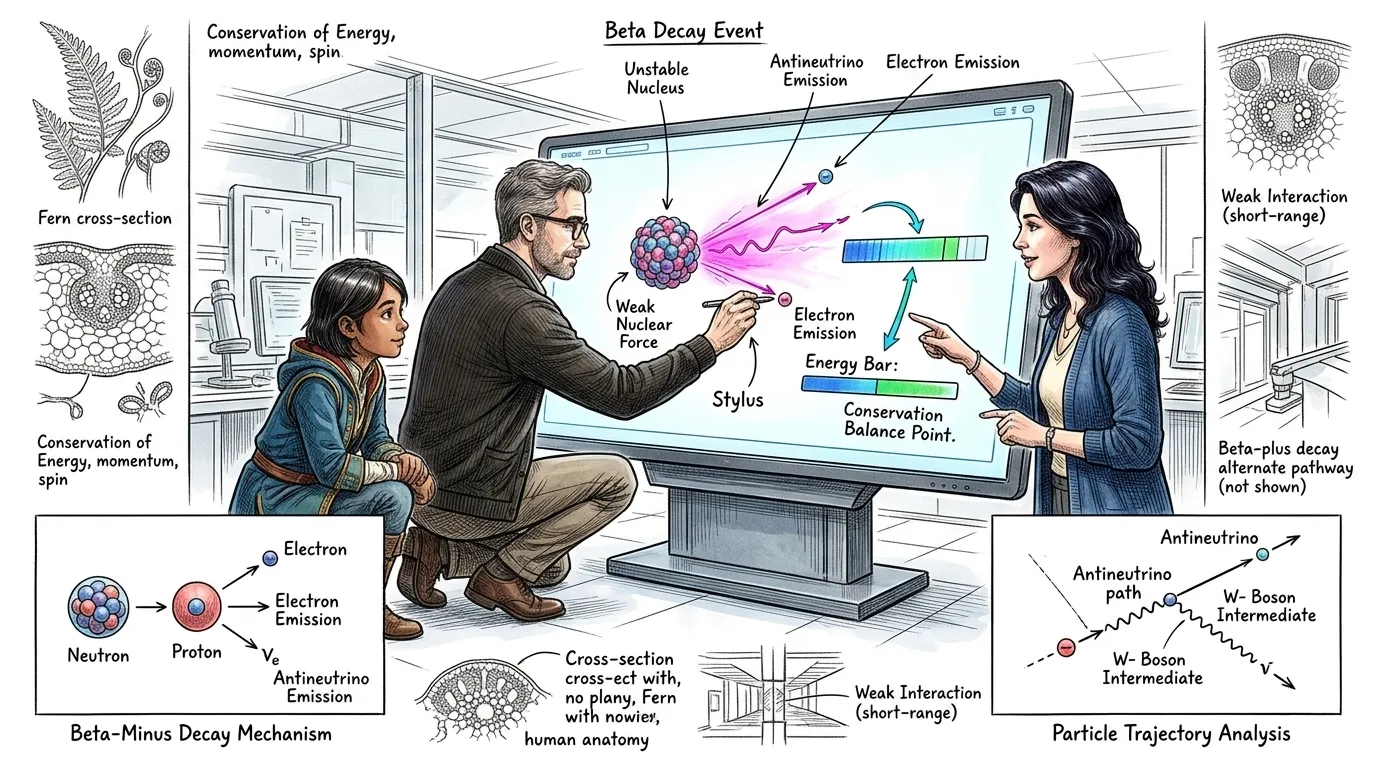
Beta decay is a type of radioactive decay where an unstable atomic nucleus emits a beta particle (an electron or a positron) and a neutrino (or antineutrino).
Beta decay is a type of radioactive decay where an unstable atomic nucleus emits a beta particle (an electron or a positron) and a neutrino (or antineutrino). Pauli's neutrino hypothesis explained the previously mysterious energy distribution of the emitted electrons, thus preserving the law of energy conservation. His revolutionary concept paved the way for the discovery of the weak nuclear force.

Beta decay is a type of radioactive decay where an unstable atomic nucleus emits a beta particle (an electron or a positron) and a neutrino (or antineutrino). Pauli's neutrino hypothesis explained the previously mysterious energy distribution of the emitted electrons, thus preserving the law of energy conservation. His revolutionary concept paved the way for the discovery of the weak nuclear force.

Fact: Neutron decay explained by the emission of an electron and an antineutrino.

Page 5

In 1945, Wolfgang Pauli was awarded the Nobel Prize in Physics for the discovery of the Exclusion Principle. The Swedish Academy recognized the profound impact…
In 1945, Wolfgang Pauli was awarded the Nobel Prize in Physics for the discovery of the Exclusion Principle. The Swedish Academy recognized the profound impact of his work on understanding the structure of matter. At the ceremony, Pauli acknowledged the importance of both theoretical insight and experimental verification in advancing scientific knowledge. Fact: Recognition of a revolutionary theory.

In 1945, Wolfgang Pauli was awarded the Nobel Prize in Physics for the discovery of the Exclusion Principle. The Swedish Academy recognized the profound impact of his work on understanding the structure of matter. At the ceremony, Pauli acknowledged the importance of both theoretical insight and experimental verification in advancing scientific knowledge.

Fact: Recognition of a revolutionary theory.

Page 6
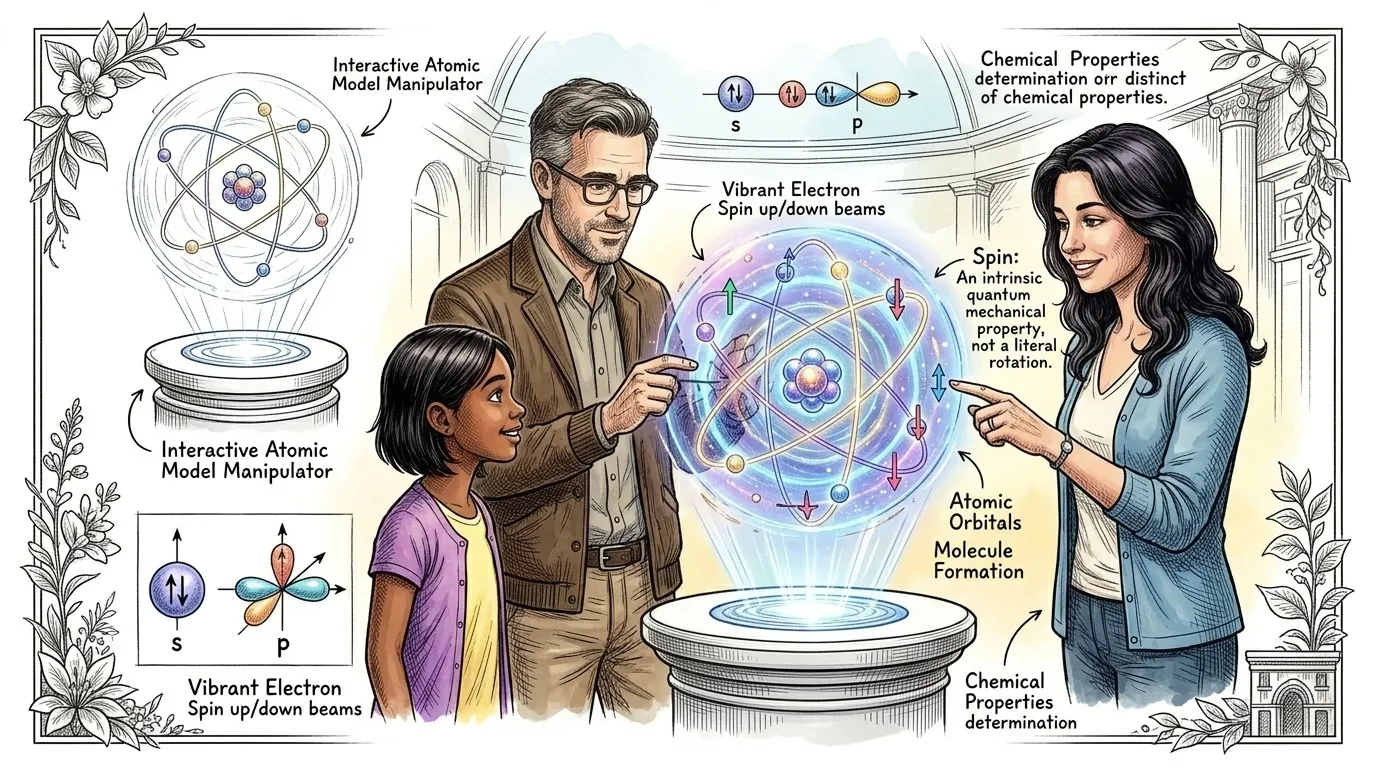
Pauli's work on spin, an intrinsic form of angular momentum carried by elementary particles, was crucial for understanding atomic spectra.
Pauli's work on spin, an intrinsic form of angular momentum carried by elementary particles, was crucial for understanding atomic spectra. Spin is a quantum mechanical property that has no classical analog. Particles behave as if they are spinning, but this is not a literal rotation. Spin, combined with the Exclusion Principle, dictates how electrons fill atomic orbitals and determines the chemical properties of elements.

Pauli's work on spin, an intrinsic form of angular momentum carried by elementary particles, was crucial for understanding atomic spectra. Spin is a quantum mechanical property that has no classical analog. Particles behave as if they are spinning, but this is not a literal rotation. Spin, combined with the Exclusion Principle, dictates how electrons fill atomic orbitals and determines the chemical properties of elements.

Fact: Electrons possess intrinsic angular momentum known as spin.

Page 7

Beyond his scientific contributions, Pauli was known for the 'Pauli effect,' a humorous anecdote referring to his supposed ability to cause equipment failures…
Beyond his scientific contributions, Pauli was known for the 'Pauli effect,' a humorous anecdote referring to his supposed ability to cause equipment failures simply by being present in the laboratory. While purely anecdotal, the 'Pauli effect' reflects his deep, critical engagement with experimental physics. Fact: The 'Pauli Effect': A legend of physics.

Beyond his scientific contributions, Pauli was known for the 'Pauli effect,' a humorous anecdote referring to his supposed ability to cause equipment failures simply by being present in the laboratory. While purely anecdotal, the 'Pauli effect' reflects his deep, critical engagement with experimental physics.

Fact: The 'Pauli Effect': A legend of physics.

Page 8

The Exclusion Principle has far-reaching consequences. It's responsible for the stability of white dwarf stars, preventing them from collapsing under their own…
The Exclusion Principle has far-reaching consequences. It's responsible for the stability of white dwarf stars, preventing them from collapsing under their own gravity. It also explains the behavior of electrons in metals, leading to our understanding of electrical conductivity and the development of semiconductors. Without the Exclusion Principle, much of modern technology would be impossible.

The Exclusion Principle has far-reaching consequences. It's responsible for the stability of white dwarf stars, preventing them from collapsing under their own gravity. It also explains the behavior of electrons in metals, leading to our understanding of electrical conductivity and the development of semiconductors. Without the Exclusion Principle, much of modern technology would be impossible.

Fact: The Exclusion Principle underpins both stellar stability and modern electronics.

Page 9
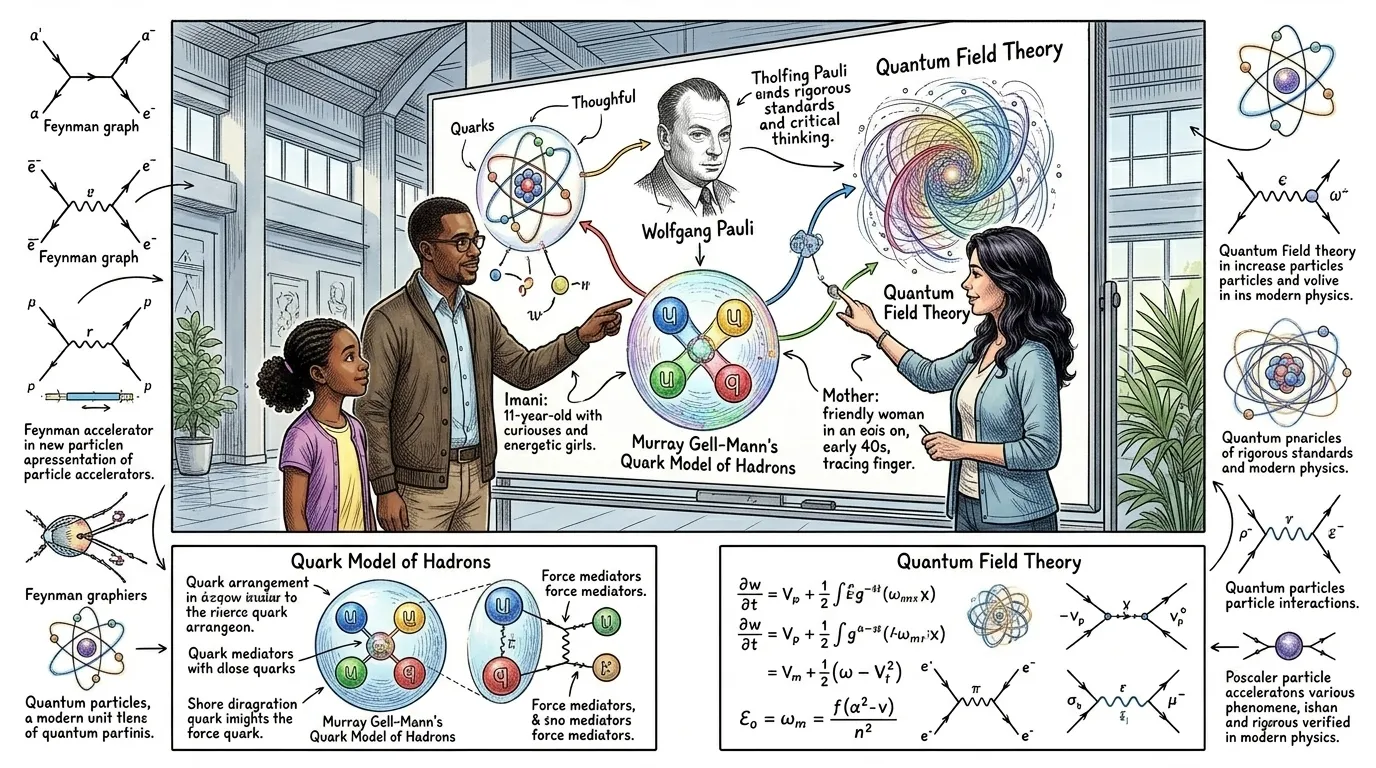
Wolfgang Pauli's influence extends far beyond his direct discoveries. He was a mentor to many young physicists, including Murray Gell-Mann, who later proposed…
Wolfgang Pauli's influence extends far beyond his direct discoveries. He was a mentor to many young physicists, including Murray Gell-Mann, who later proposed the quark model of hadrons. Pauli's rigorous standards and critical thinking helped shape the development of quantum field theory, a central framework in modern physics.

Wolfgang Pauli's influence extends far beyond his direct discoveries. He was a mentor to many young physicists, including Murray Gell-Mann, who later proposed the quark model of hadrons. Pauli's rigorous standards and critical thinking helped shape the development of quantum field theory, a central framework in modern physics. As Nobel laureate Roger Penrose said, 'Pauli was one of the great figures of 20th-century physics.'

Fact: Pauli's influence on the development of quantum field theory and particle physics.

Page 10
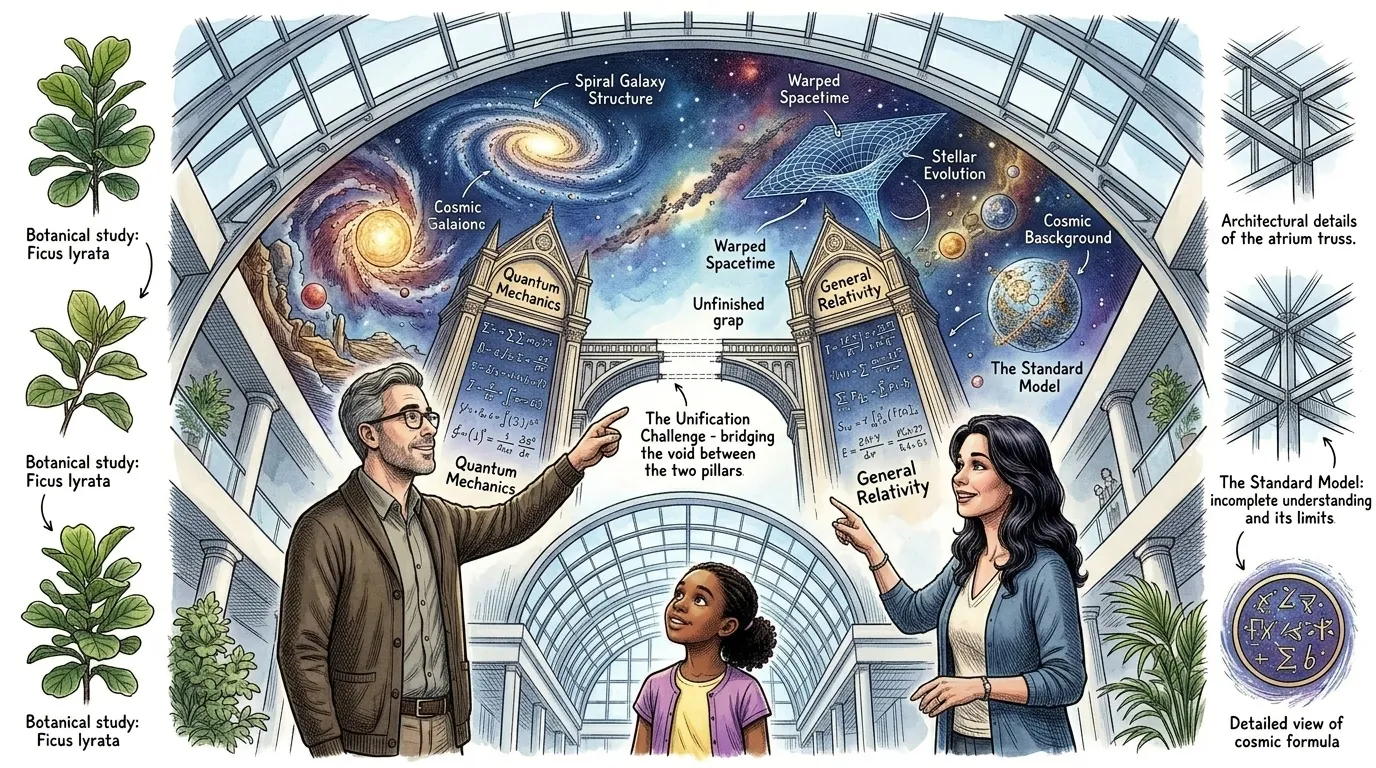
Despite his many achievements, Pauli remained deeply troubled by unresolved problems in physics, particularly the unification of quantum mechanics and general…
Despite his many achievements, Pauli remained deeply troubled by unresolved problems in physics, particularly the unification of quantum mechanics and general relativity. The quest to understand the fundamental nature of space, time, and matter continues to inspire physicists today. The Standard Model still has limitations. Fact: The universe: an endless source of mystery and inspiration.

Despite his many achievements, Pauli remained deeply troubled by unresolved problems in physics, particularly the unification of quantum mechanics and general relativity. The quest to understand the fundamental nature of space, time, and matter continues to inspire physicists today. The Standard Model still has limitations.

Fact: The universe: an endless source of mystery and inspiration.

About this story

  • Location: Global
  • Audience: kids (ages 6–12)

Questions and answers

Questions and answers about Wolfgang Pauli

Read Wonder Science on your phone

Wonder Science is available on Android. Get Wonder Science on Google Play.

More Wonder Science stories

All Wonder Science stories · Open the library