William Harvey
William Harvey — an illustrated science story, set in Global. 10 illustrated pages, free to read on Wonder Science.
Page 1
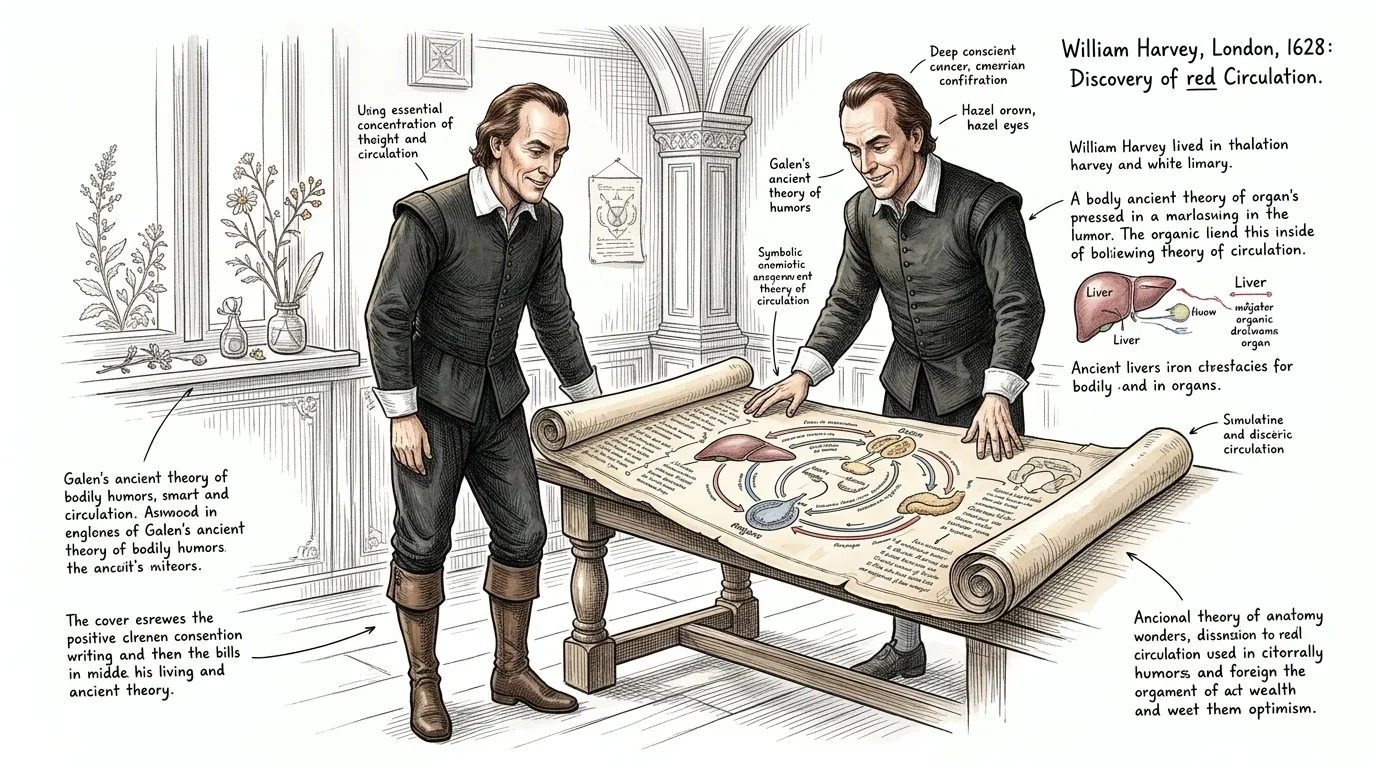
For nearly 1,400 years, the understanding of the human body's most vital fluid, blood, was largely governed by the teachings of the ancient Greek physician Galen. His intricate yet flawed model described blood being continuously created in the liver, then consumed by the tissues, a system without true circulation. It was a paradigm that confined medical thought and practice for centuries, deeply influencing diagnosis, treatment, and anatomical study. The notion of a closed, recycling system for blood was unimaginable, a concept that defied the established wisdom of the ages and limited the very potential of medical science. This deeply entrenched dogma presented a formidable barrier to true physiological understanding, until one extraordinary mind dared to look closer, to question everything, and to fundamentally rewrite the very blueprint of human life.
Fact: William Harvey's name, location, date, and key discovery are explicitly labeled within the scene, making them central to the composition. The historical setting and period attire are accurate. The diagram visually explains the core concept.
Page 2
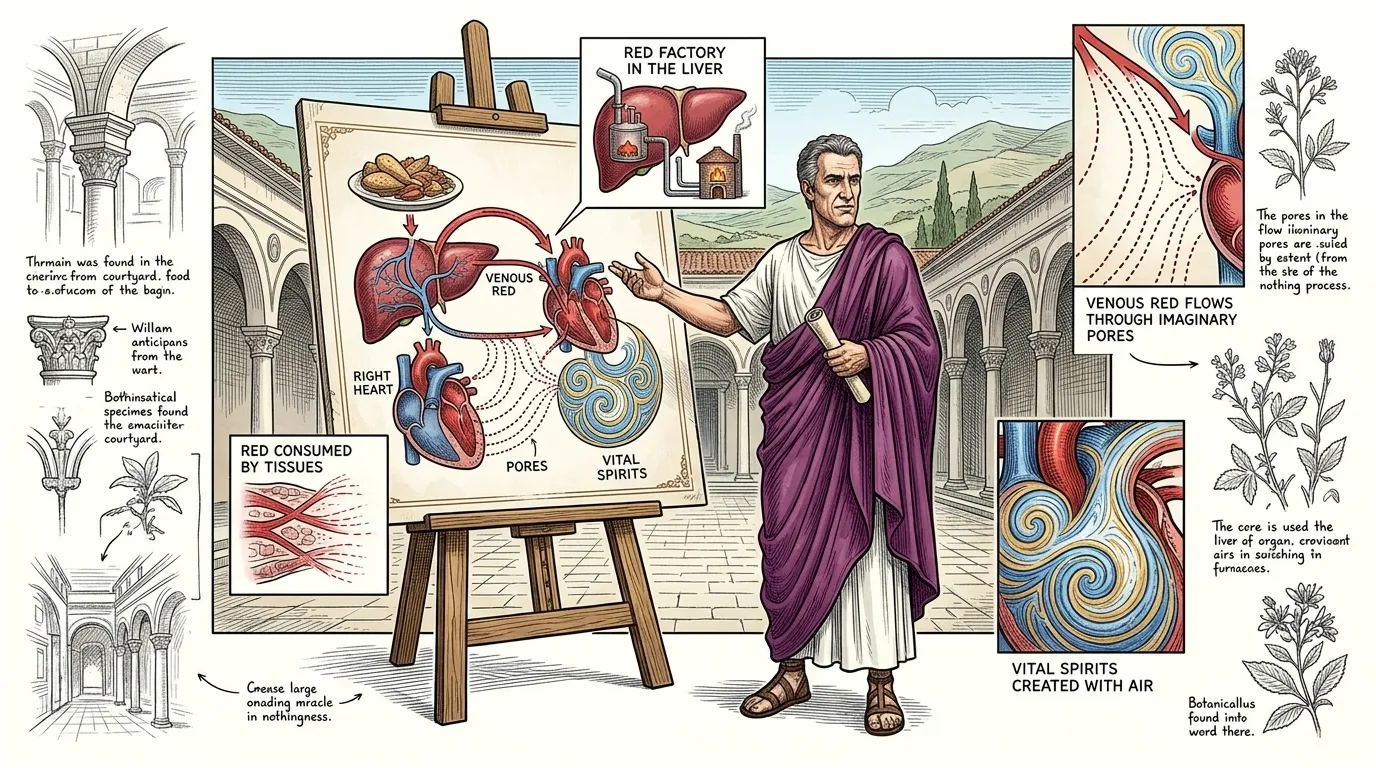
Before William Harvey, the prevailing anatomical and physiological doctrines were rooted firmly in the work of Galen of Pergamon, dating back to the 2nd century CE. Galen's intricate system posited that food was transformed into venous blood in the liver, which then flowed through veins to the right side of the heart. From there, a portion seeped through invisible pores in the interventricular septum to the left side, mixing with air from the lungs to create 'vital spirits' which were then distributed by arteries. The blood was thought to be continually consumed by the tissues, demanding constant replenishment from the liver, an open-ended system with no return. This schema, deeply logical within the limitations of ancient observation, dominated Western medicine for well over a millennium, forming an intellectual labyrinth from which few dared to deviate.
Fact: The Galenic model is visually represented as an antique illustration, with inset diagrams clarifying the 'blood factory' and 'consumption' concepts. This makes the flawed ancient understanding visually clear.
Page 3
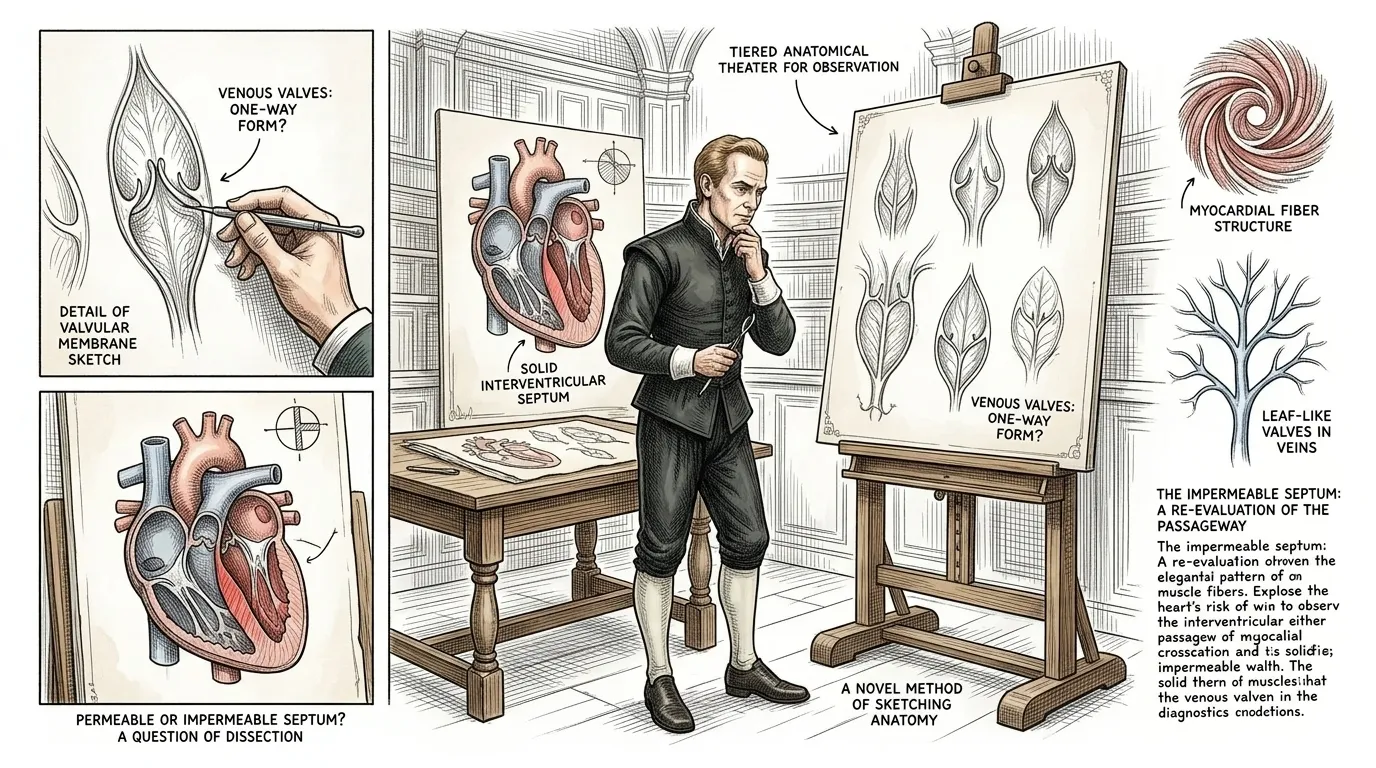
Despite Galen's formidable influence, cracks in his monolithic theory began to appear centuries before Harvey. Andreas Vesalius, in the mid-16th century, meticulously dissected human cadavers, publishing 'De humani corporis fabrica' in 1543. His anatomical atlases vividly demonstrated that the interventricular septum of the heart, far from being porous, was a solid, impermeable wall. This observation directly contradicted Galen's mechanism for blood transfer between the heart's ventricles, yet Vesalius himself could not fully reconcile this discrepancy with a new functional model. Furthermore, early anatomists observed the numerous valves in veins, structures that seemed designed to prevent backflow, a curious feature if blood merely flowed outwards from the liver. These were significant anatomical challenges, but the functional explanation for them remained elusive, awaiting a bold new synthesis.
Fact: Vesalius's anatomical work and the observation of venous valves are visually represented as detailed historical drawings and sketches, emphasizing the empirical challenges to Galen's theory.
Page 4
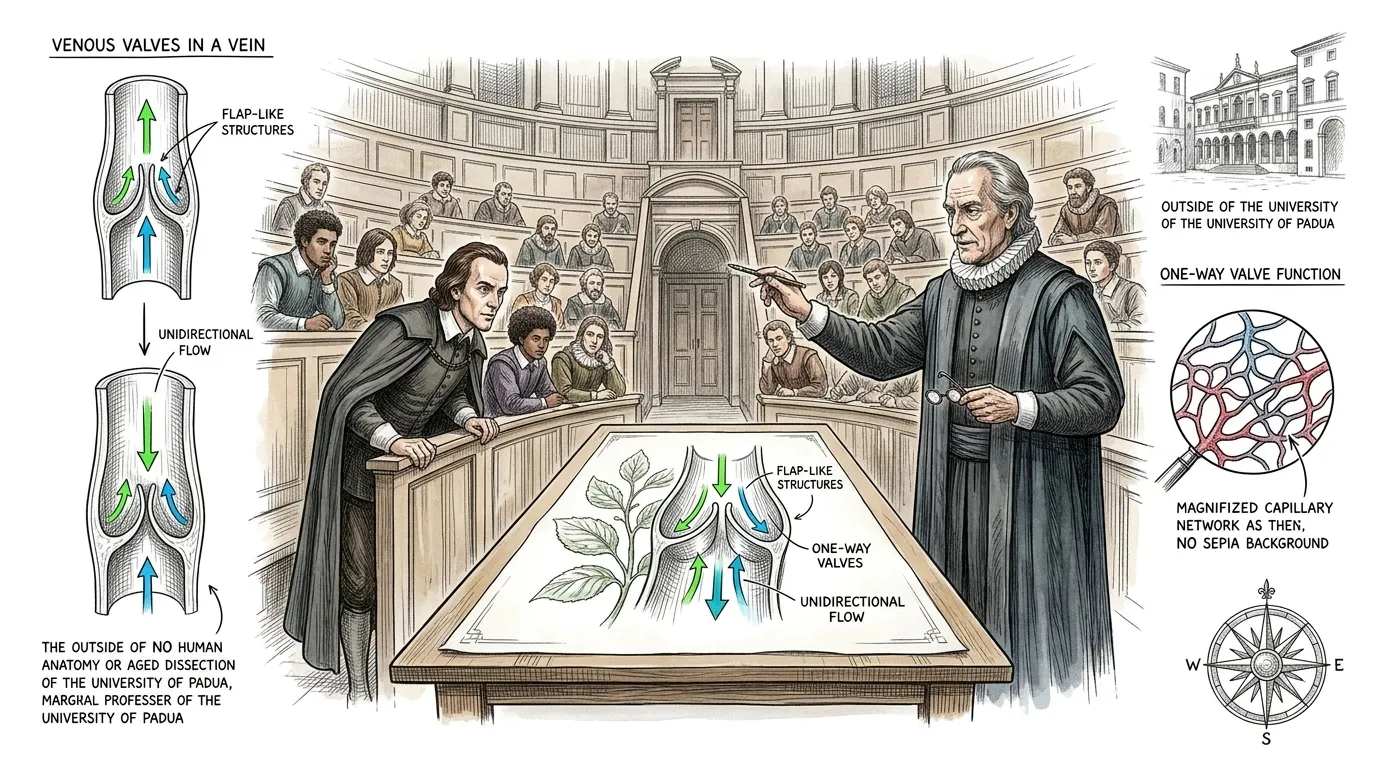
William Harvey, born in 1578, received an exceptional education that prepared him to challenge centuries of dogma. After studies at King's School, Canterbury, he matriculated at Gonville and Caius College, Cambridge, a hub of Renaissance humanism. Crucially, he then journeyed to the University of Padua, Italy, a preeminent center for anatomical study under the renowned anatomist Hieronymus Fabricius. Fabricius, known for his detailed work on the venous valves, demonstrated their presence and structure to Harvey, though he, like others, failed to grasp their true function. This exposure to rigorous dissection, empirical observation, and direct anatomical investigation, rather than purely theoretical adherence, instilled in Harvey a critical and experimental approach. He would not just read ancient texts; he would observe, measure, and dissect, letting the body itself reveal its secrets, laying the foundation for a truly scientific approach to physiology.
Fact: Harvey's education at Padua and the influence of Fabricius are shown through a dynamic lecture scene, highlighting the focus on anatomical observation and the presence of venous valves.
Page 5
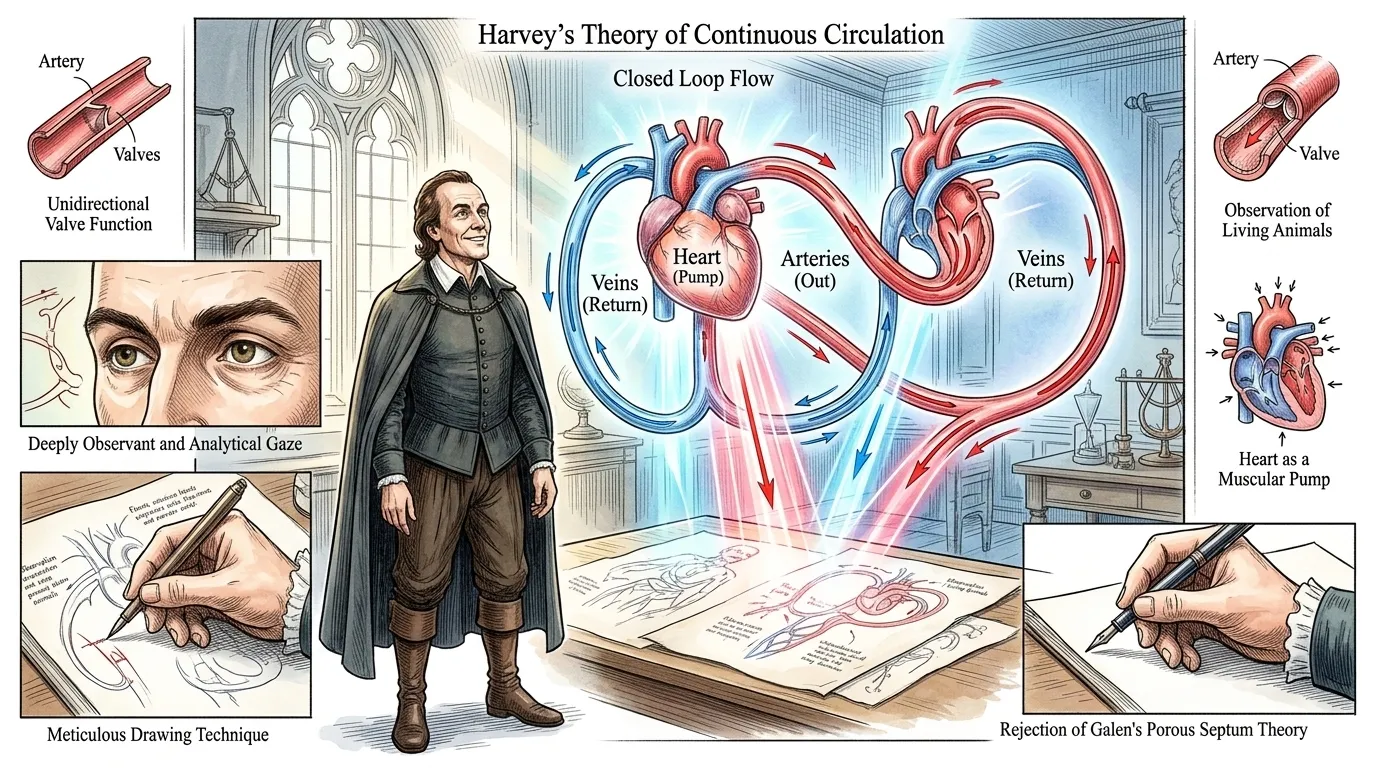
Armed with precise anatomical observations and an inquiring mind, Harvey began to formulate a radical hypothesis: that blood did not ebb and flow, created and consumed, but rather circulated in a continuous, closed loop. He realized the heart was not merely a passive organ into which blood flowed, but a powerful muscular pump, actively driving blood throughout the body and back again. The sheer quantity of blood expelled with each heartbeat, combined with the estimated total volume of blood in the body, made a 'consumption' model logically impossible. Instead, a continuous, unidirectional flow, driven by the heart, made perfect sense. This was a monumental cognitive leap, transforming blood from a transient, consumable substance into a dynamic, constantly recycling life force, and the heart from a mystical seat of spirits to a precisely engineered mechanical pump. He would spend years meticulously proving this audacious claim.
Fact: The concept of a closed circulatory loop is visualized through a glowing, diagrammatic representation of the heart and vessels, with arrows indicating continuous, unidirectional flow. Harvey's own anatomical sketches are subtly integrated.
Page 6
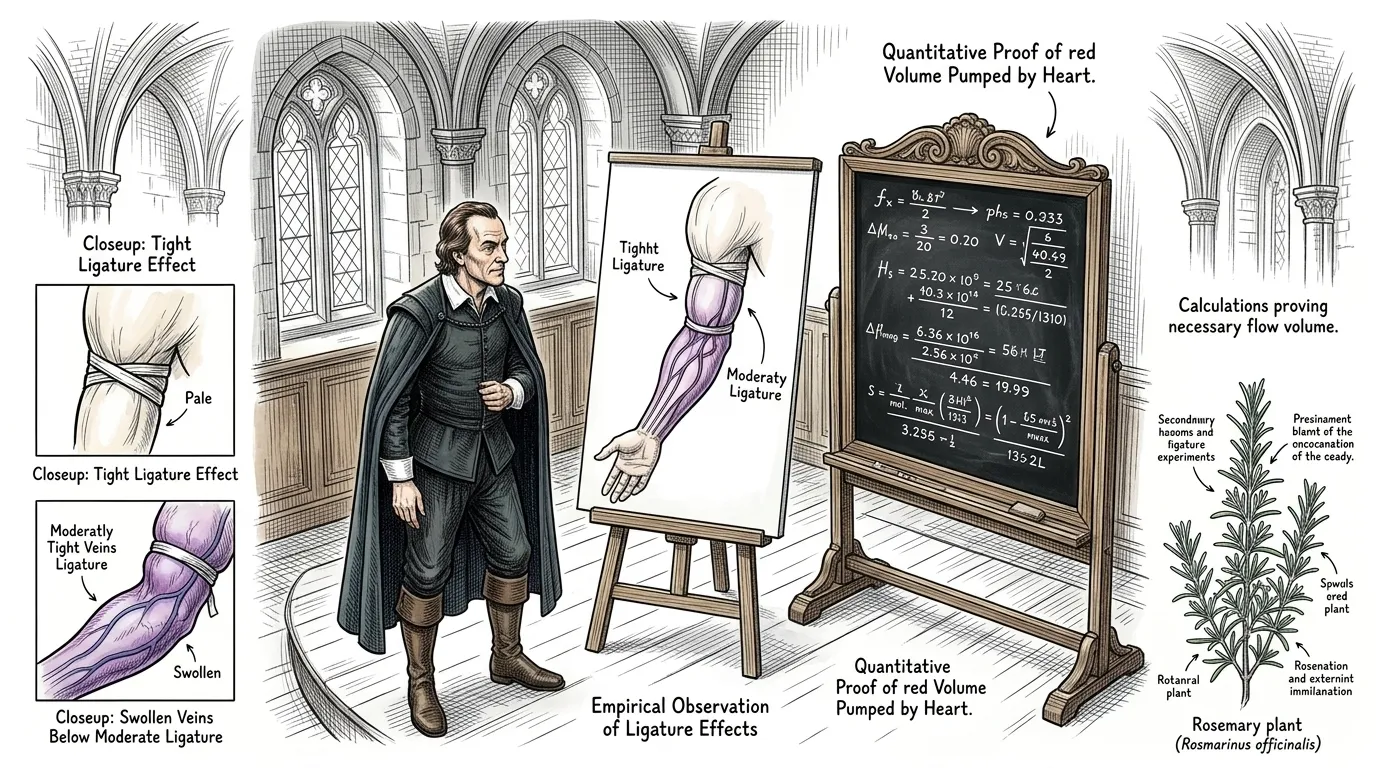
Harvey wasn't content with theoretical elegance; he demanded empirical proof. One of his most compelling demonstrations involved applying ligatures to a person's arm, observations he shared in 'De Motu Cordis' (1628). A tight ligature, cutting off arterial flow, would render the arm pale. A moderately tight ligature, constricting only the veins, would cause the arm to swell and turn purplish as arterial blood flowed in but could not return. These simple yet profound experiments visibly demonstrated that blood flowed from arteries to veins, and that veins indeed carried blood back to the heart, confirming their one-way valve function. Further, by estimating the volume of blood ejected by the heart with each beat, and multiplying it by the number of beats per hour, Harvey calculated that the heart pumped a quantity of blood far exceeding the body's total volume in a short time, rendering the 'consumption' model utterly untenable. The evidence was irrefutable.
Fact: The ligature experiment is vividly shown on a human arm, supported by clear inset diagrams explaining the different ligature effects. A chalkboard with calculations visually demonstrates Harvey's quantitative argument, making the empirical proof evident.
Page 7
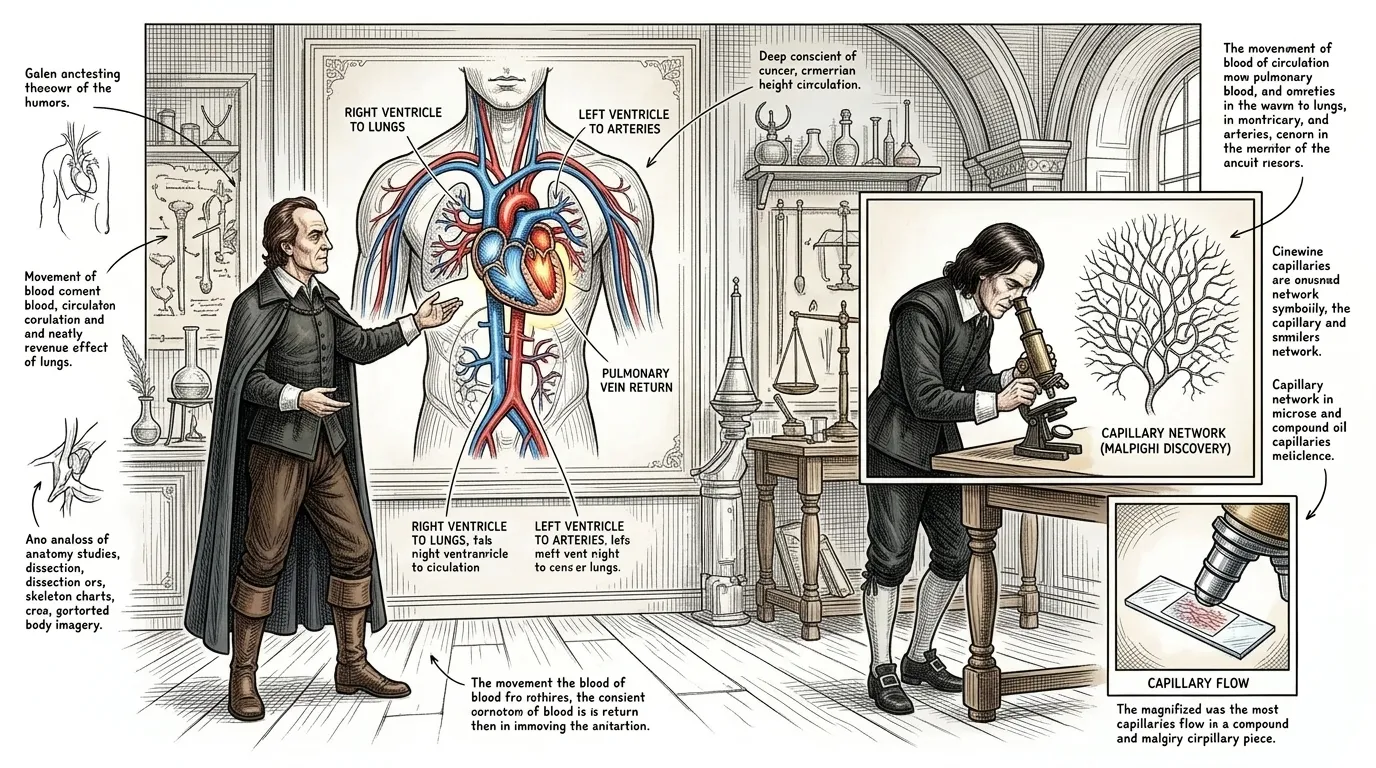
Harvey's work conclusively established the heart as a muscular pump, rather than a mere 'furnace' or source of vital heat as previously believed. He described how the left ventricle forcefully propelled oxygenated blood into the aorta and arteries, distributing it throughout the body. Simultaneously, the right ventricle pumped deoxygenated blood into the pulmonary artery, sending it to the lungs for gaseous exchange. The blood then returned via the pulmonary veins to the left atrium, completing the pulmonary circuit, before being driven out again. What Harvey could not directly observe, due to the limitations of 17th-century microscopy, was the capillary network – the tiny vessels connecting arteries to veins. It would take Marcello Malpighi, using a microscope in 1661, to finally visualize these microscopic bridges, completing Harvey's circulatory model and solidifying the concept of a truly closed system. Yet, even without this final piece, Harvey's deductions were remarkably prescient and fundamentally correct.
Fact: A detailed cross-section of the human torso with a glowing heart and labeled vessels visually explains the heart's pumping action and the two circulatory circuits. An inset shows Malpighi's later discovery of capillaries, providing crucial context.
Page 8
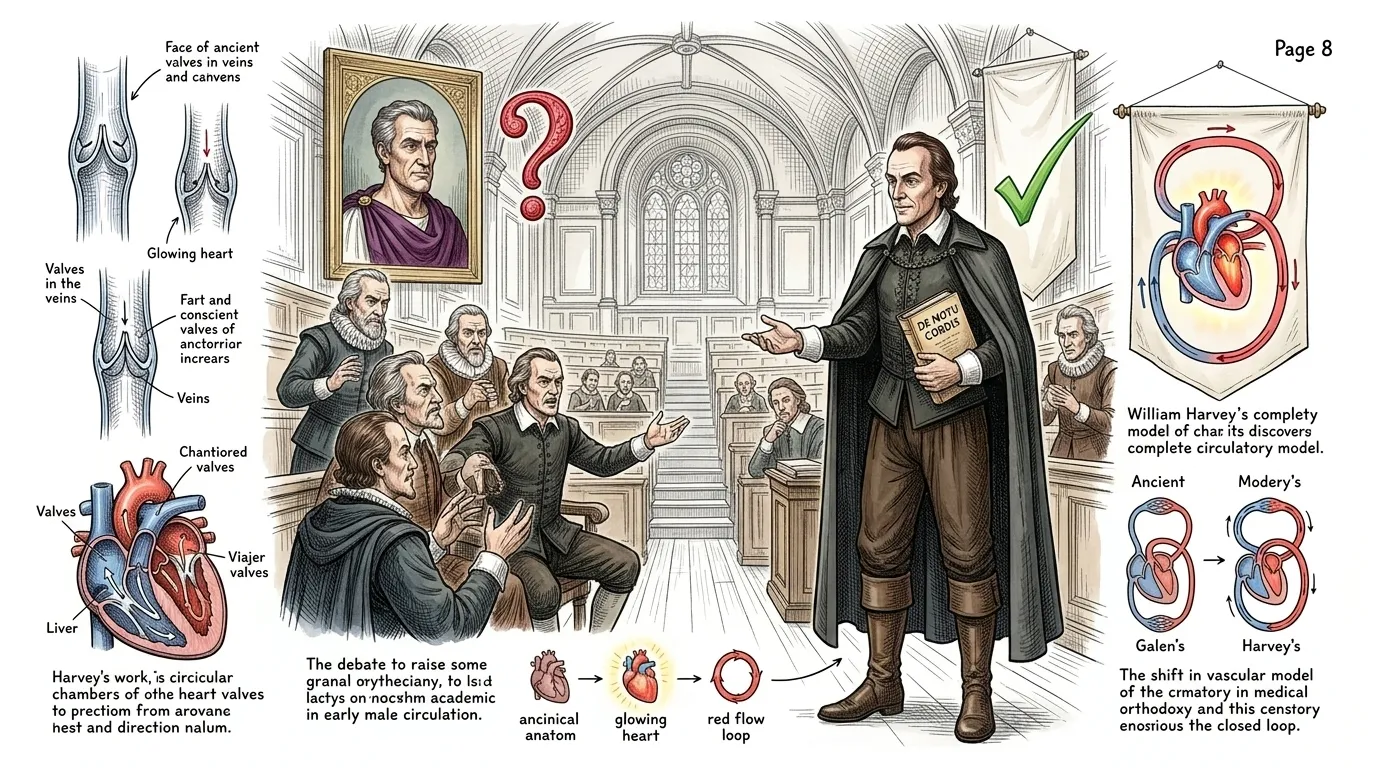
Harvey's revolutionary theory was not immediately embraced. Challenging nearly 14 centuries of Galenic doctrine incurred significant opposition, particularly from conservative physicians and academics who found it difficult to abandon established wisdom. His groundbreaking work, 'Exercitatio Anatomica De Motu Cordis et Sanguinis in Animalibus' (Anatomical Exercise on the Motion of the Heart and Blood in Living Beings), published in 1628, was initially met with skepticism and even ridicule. Critics, often adhering to the 'authority of the ancients,' dismissed his empirical evidence. However, the sheer weight of his meticulous dissections, observations, and logical deductions slowly began to turn the tide. Over the course of the next few decades, particularly as his demonstrations were repeated and verified by others, the compelling evidence proved undeniable. By the late 17th century, Harvey's theory of blood circulation had largely become the accepted physiological orthodoxy throughout Europe, fundamentally altering the understanding of the human body and paving the way for modern medicine.
Fact: The initial resistance to Harvey's ideas is shown through a vivid debate scene, with skeptics opposing him. Overlaid diagrams of question marks over Galen's theory and checkmarks over Harvey's illustrate the shift in acceptance.
Page 9
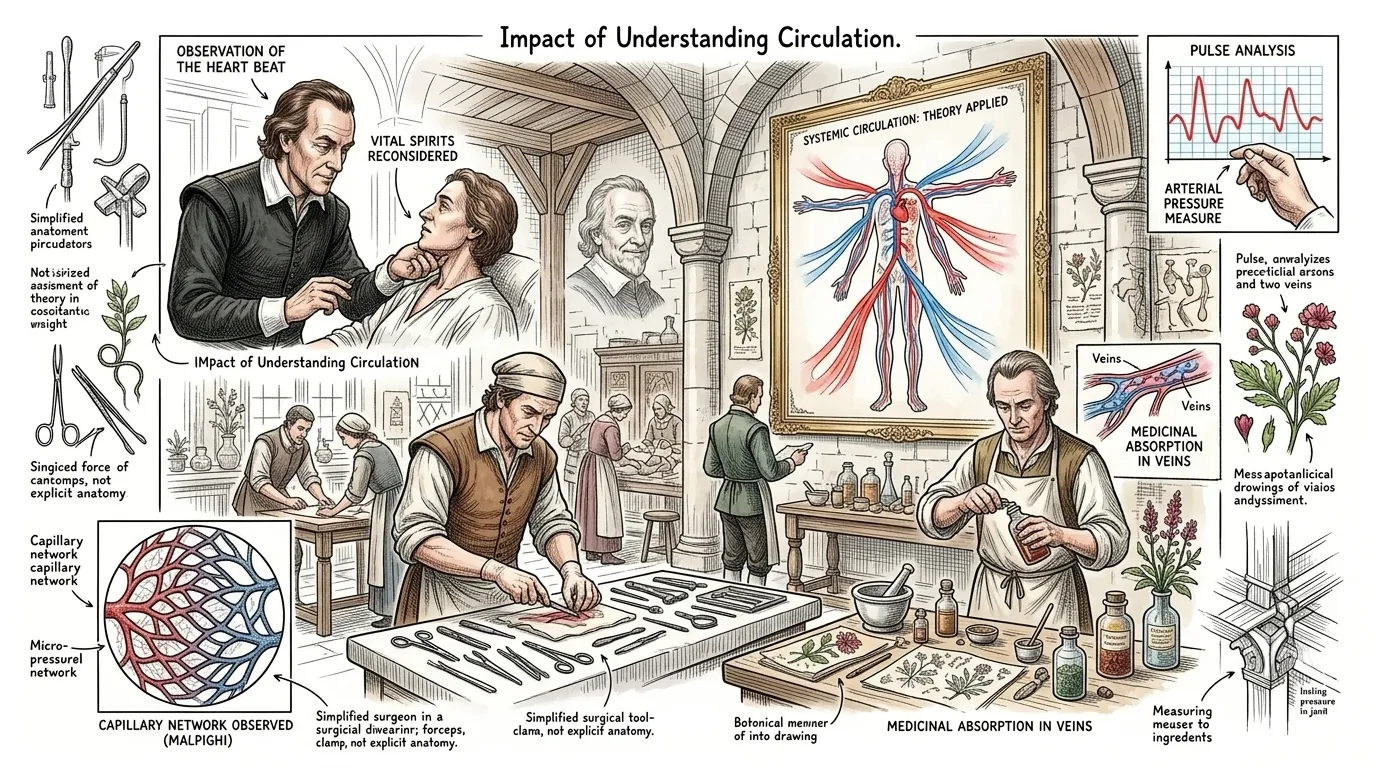
The acceptance of blood circulation transformed medicine from a static, humoral science into a dynamic, mechanistic discipline. With the body now understood as a complex machine with a continuous, recycling fluid system, physicians could begin to conceptualize disease and intervention in entirely new ways. The old practice of extensive bloodletting, based on balancing 'humors' or draining 'excess' blood, began its slow decline as the vital importance of every drop of blood became evident. New diagnostic techniques, such as pulse assessment, gained a deeper physiological meaning. The path was cleared for understanding cardiovascular disease, the effects of poisons, the distribution of medicines throughout the body, and even the basic mechanics of surgery. Harvey's work was not just an anatomical revelation; it provided the foundational engine model upon which virtually all subsequent medical progress would be built, from understanding shock to developing resuscitation techniques, and eventually, to the miracles of modern cardiac surgery and pharmacology. His legacy is etched into every pulse taken, every injection given, and every life saved by understanding the body's magnificent internal river.
Fact: A montage of historical medical scenes (pulse-taking, surgery, early pharmacology) illustrates the direct impact of circulatory understanding on practice. An integrated diagram shows systemic drug distribution, connecting theory to application.
Page 10
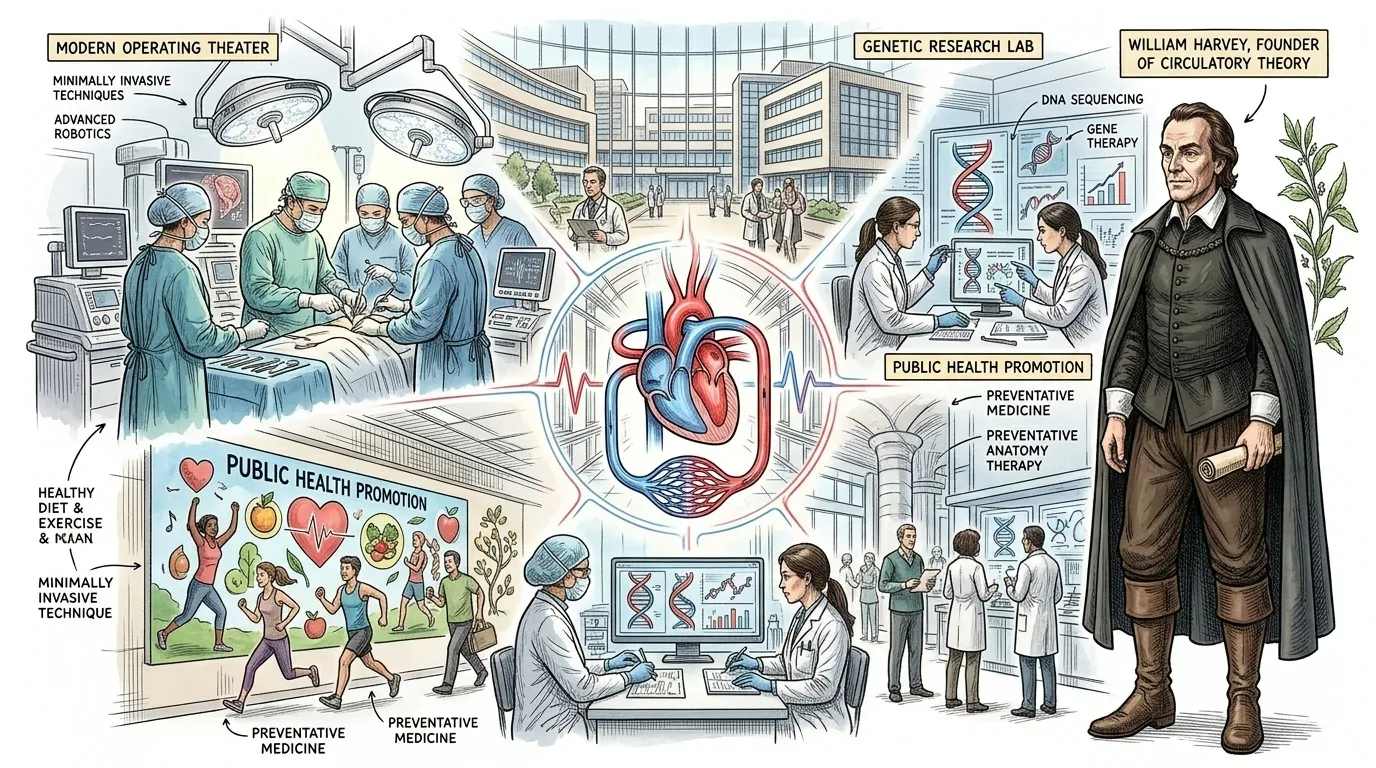
William Harvey's discovery stands as one of the most profound breakthroughs in the history of biology and medicine. By meticulously observing, dissecting, and quantifying, he dismantled centuries of error and established the modern understanding of the cardiovascular system. His work exemplified the power of empirical science, demonstrating that direct observation and experimentation could overturn even the most deeply entrenched dogmas. Harvey's legacy extends far beyond physiology; his method inspired a new era of scientific inquiry, influencing figures from Robert Boyle to Isaac Newton. Today, his principles underpin fields as diverse as cardiology, immunology, and pharmacology. From advanced surgical techniques to the development of new drugs, from understanding genetic predispositions to cardiovascular disease to public health campaigns for heart wellness, every aspect of modern medicine relies on the truth Harvey unveiled: that life's very essence flows in a ceaseless, wondrous loop.
Fact: This final page is a comprehensive impact montage, featuring modern medical advancements (surgery, genetics, public health) directly stemming from Harvey's work, alongside historical preservation. The central, pulsating heart reinforces the core discovery.
About this story
- Location: Global
- Audience: general readers
Questions and answers
Read Wonder Science on your phone
Wonder Science is available on Android. Get Wonder Science on Google Play.