Wilhelm Rontgen
Wilhelm Rontgen — an illustrated science story, set in Global. 10 illustrated pages, free to read on Wonder Science.
Page 1
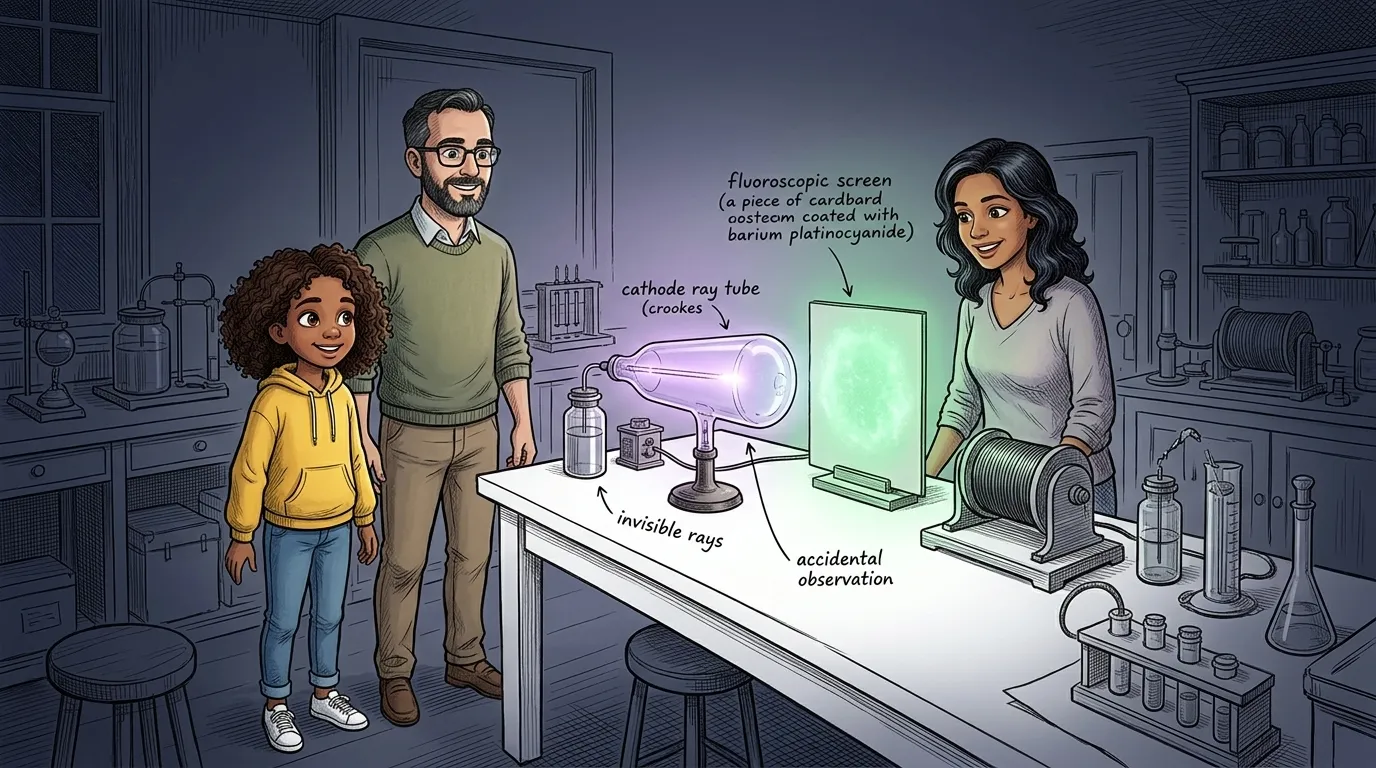
Imagine a world without X-rays: no broken bone diagnoses, no airport security scanners, no cancer radiation therapy. This life-changing discovery began with Wilhelm Rontgen's curiosity and a darkened room. One evening, he noticed a screen glowing faintly when a nearby tube emitted invisible rays. This accidental observation would revolutionize medicine and earn him the first Nobel Prize in Physics.
Page 2
"What are those strange rays?" Greta asked, tilting her head. Her father smiled. "Wilhelm Rontgen called them 'X-rays' because their nature was unknown at the time. He didn't know what they were, but he knew they could pass through things that ordinary light could not."
""What are those strange rays?" Greta asked, tilting her head."
Page 3
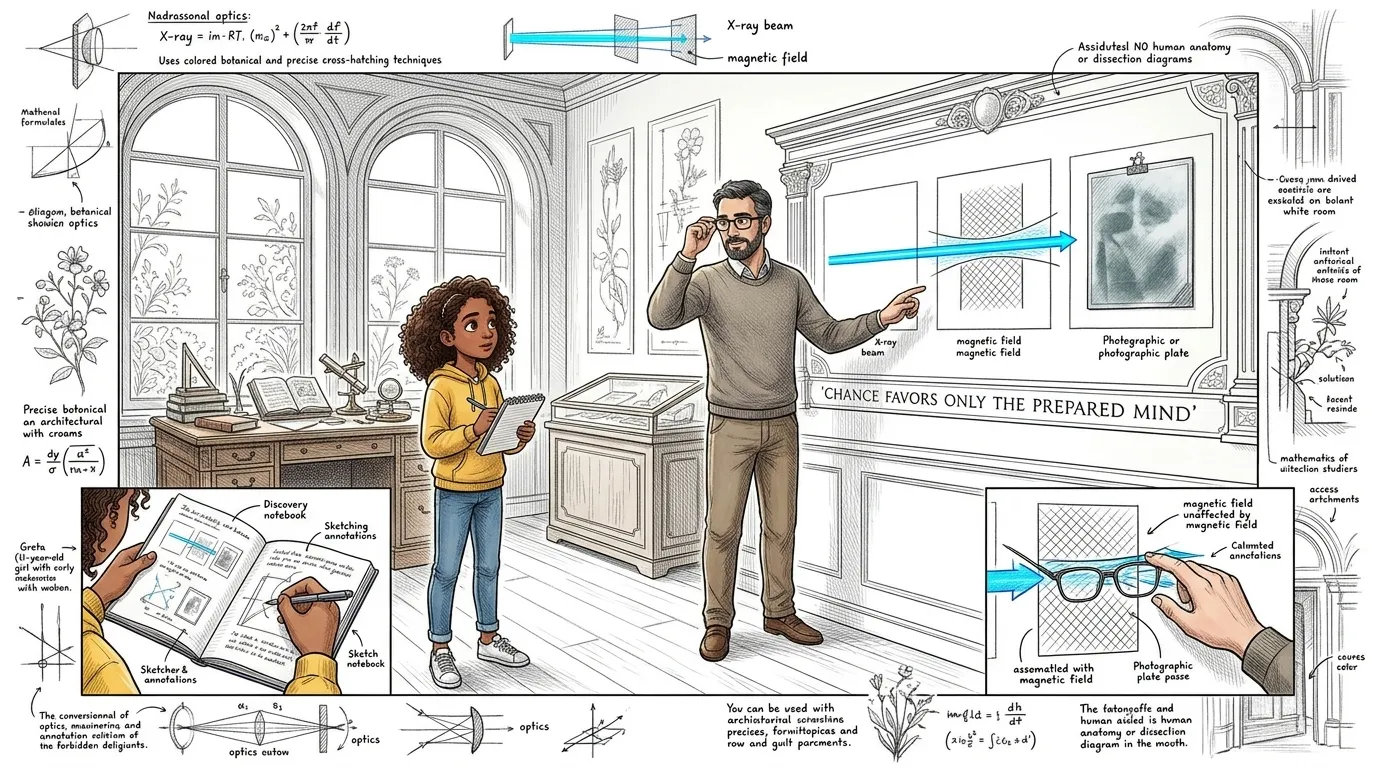
Greta asked, "If he didn't know what they were, how did he know they were important?" Her father adjusted his glasses. "Rontgen meticulously documented their properties," he explained. "He found they traveled in straight lines, weren't deflected by magnetic fields, and could expose photographic plates. It was painstaking work, but as Louis Pasteur said, 'chance favors only the prepared mind.'"
""If he didn't know what they were, how did he know they were important?""
Page 4
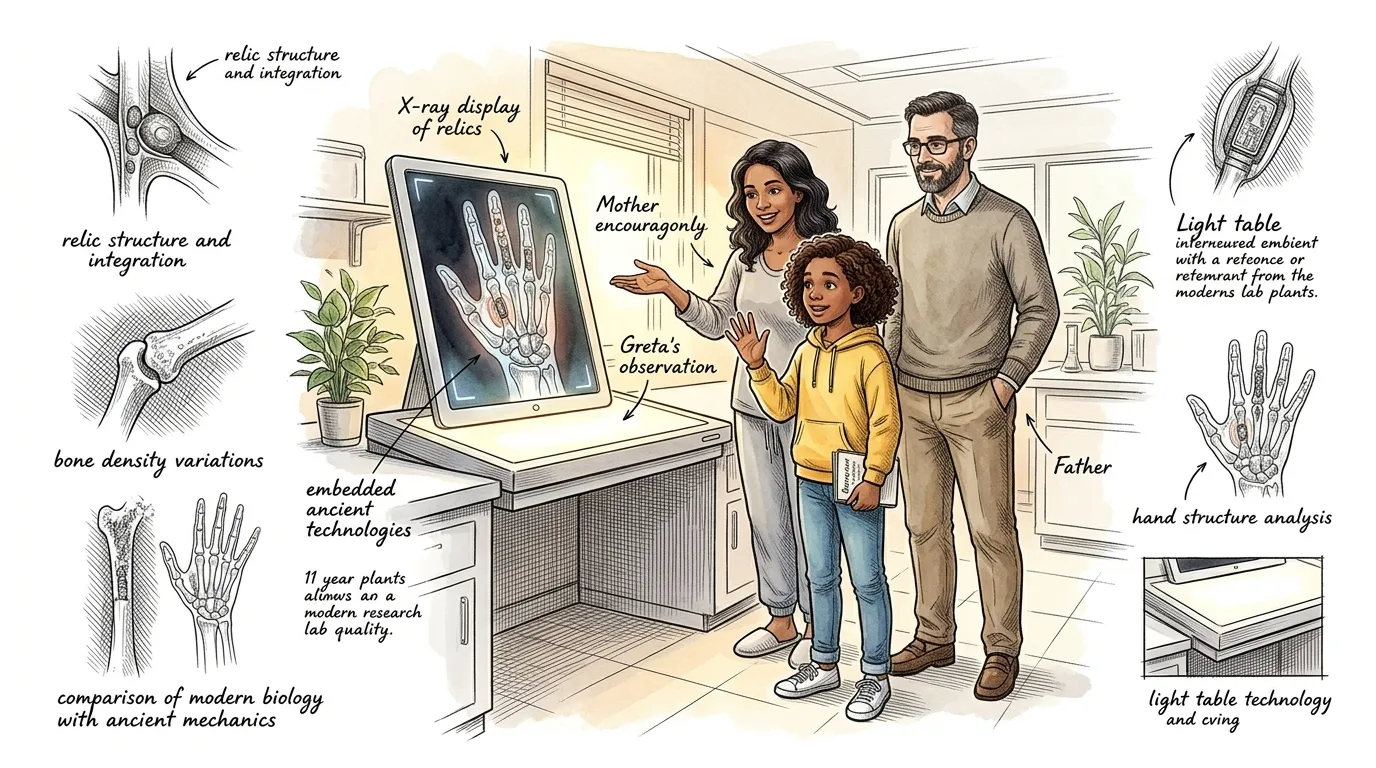
One of the most striking properties was their ability to penetrate matter. "Imagine seeing the bones in your own hand without cutting it open!" her mother exclaimed, joining the conversation. "That's what Rontgen's first X-ray image, taken of his wife Anna Bertha's hand, showed the world."
""Imagine seeing the bones in your own hand without cutting it open!""
Page 5
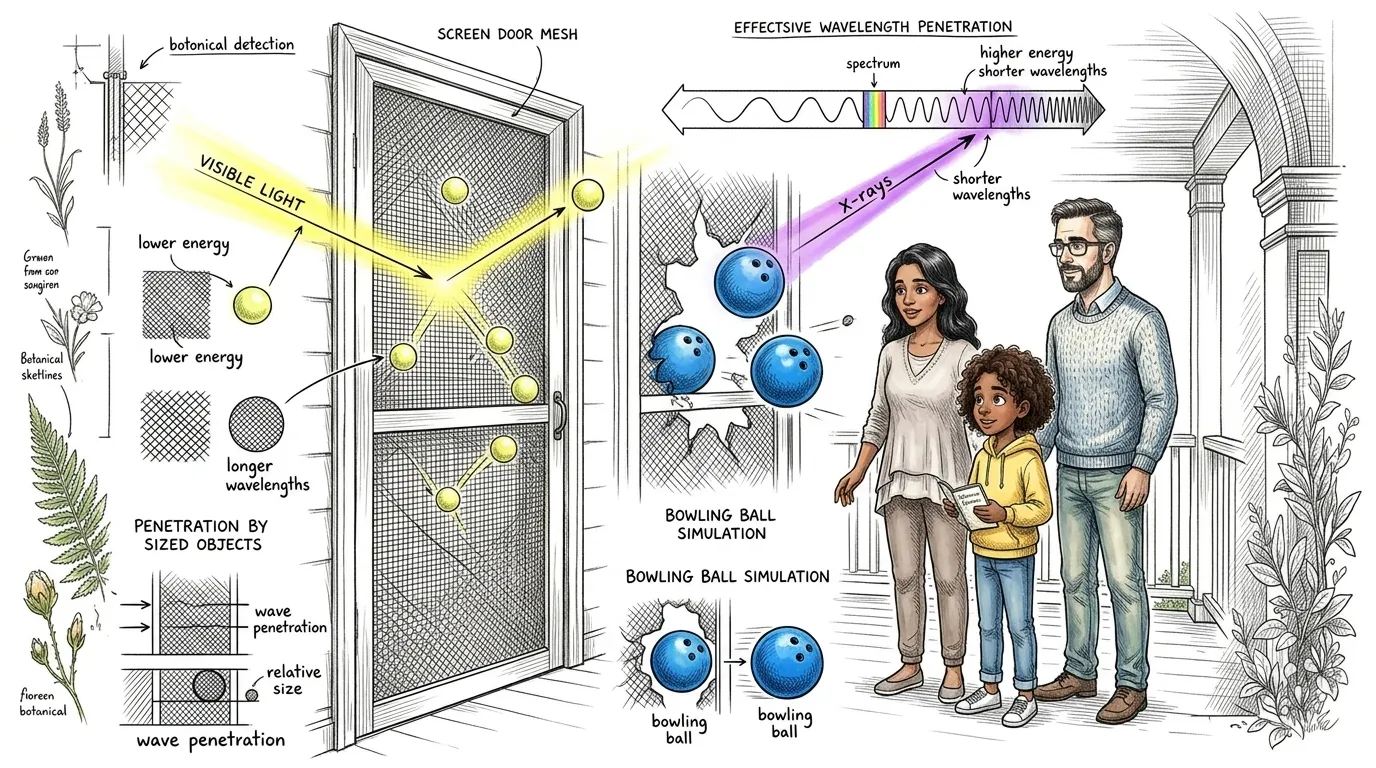
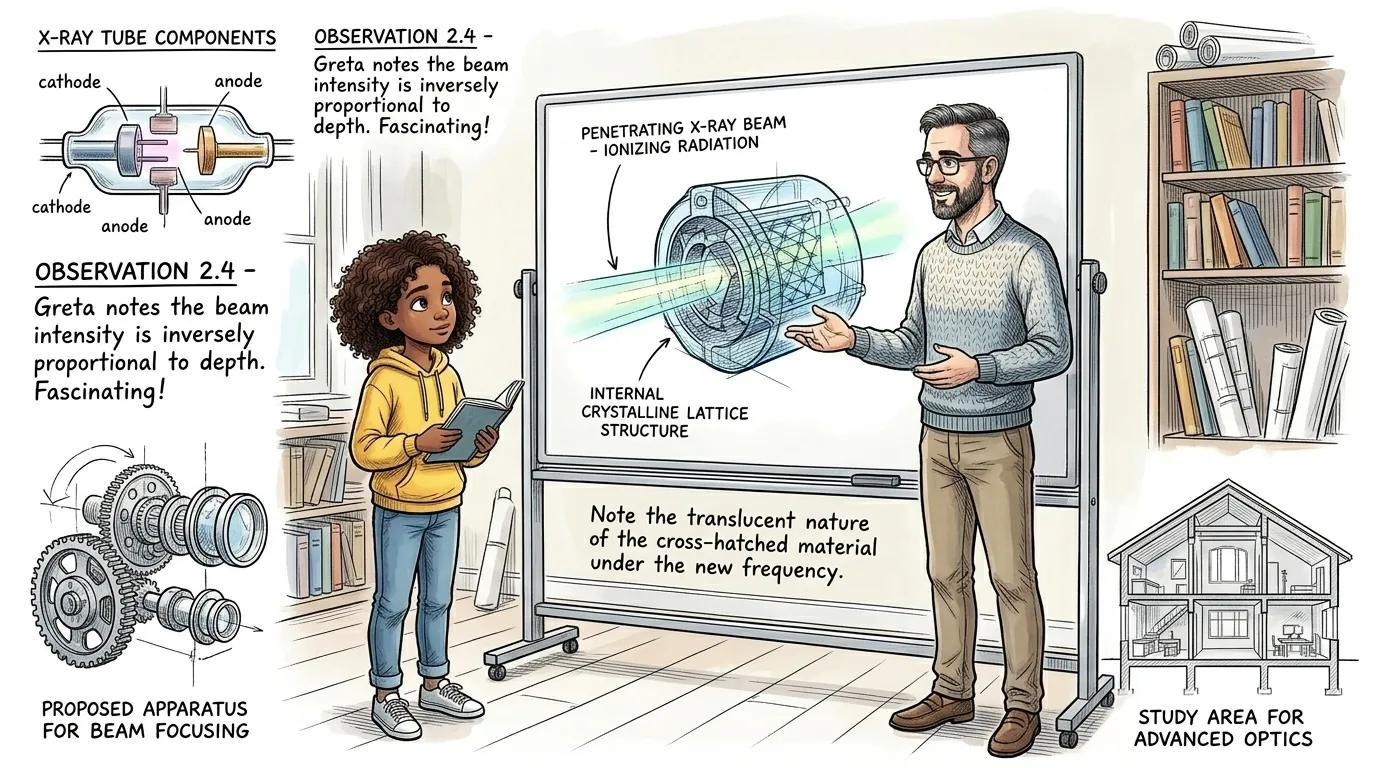
How did these rays penetrate matter? X-rays are a form of electromagnetic radiation, like light, but with much higher energy and shorter wavelengths. This allows them to pass through soft tissues but be absorbed by denser materials like bone and metal. To visualize this, imagine throwing ping pong balls (light) and bowling balls (X-rays) at a screen door.
Page 6
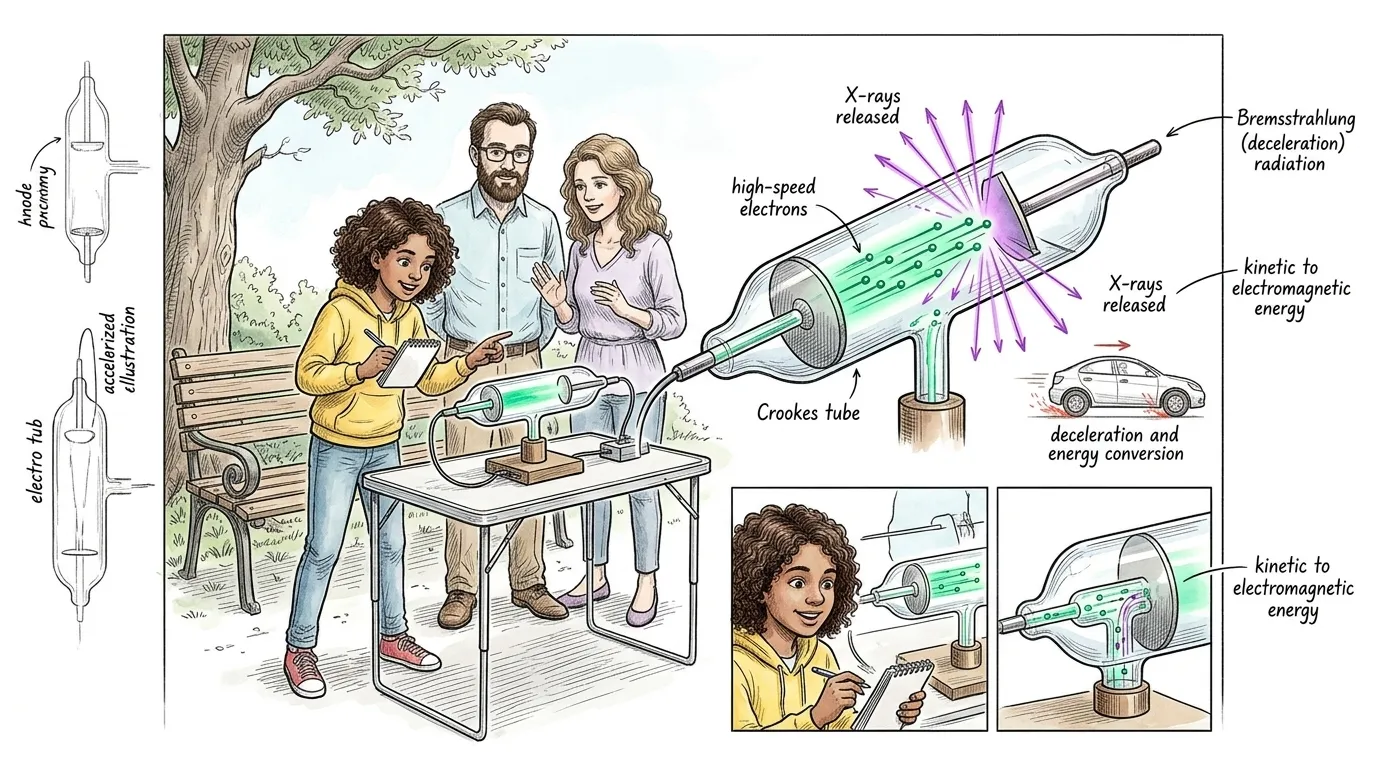
The Crookes tube Rontgen used was key. When high-speed electrons strike the glass, they decelerate rapidly, releasing energy in the form of X-rays. Think of it like slamming on the brakes in a car: the sudden stop generates heat. Similarly, the electrons generate X-rays.
Page 7
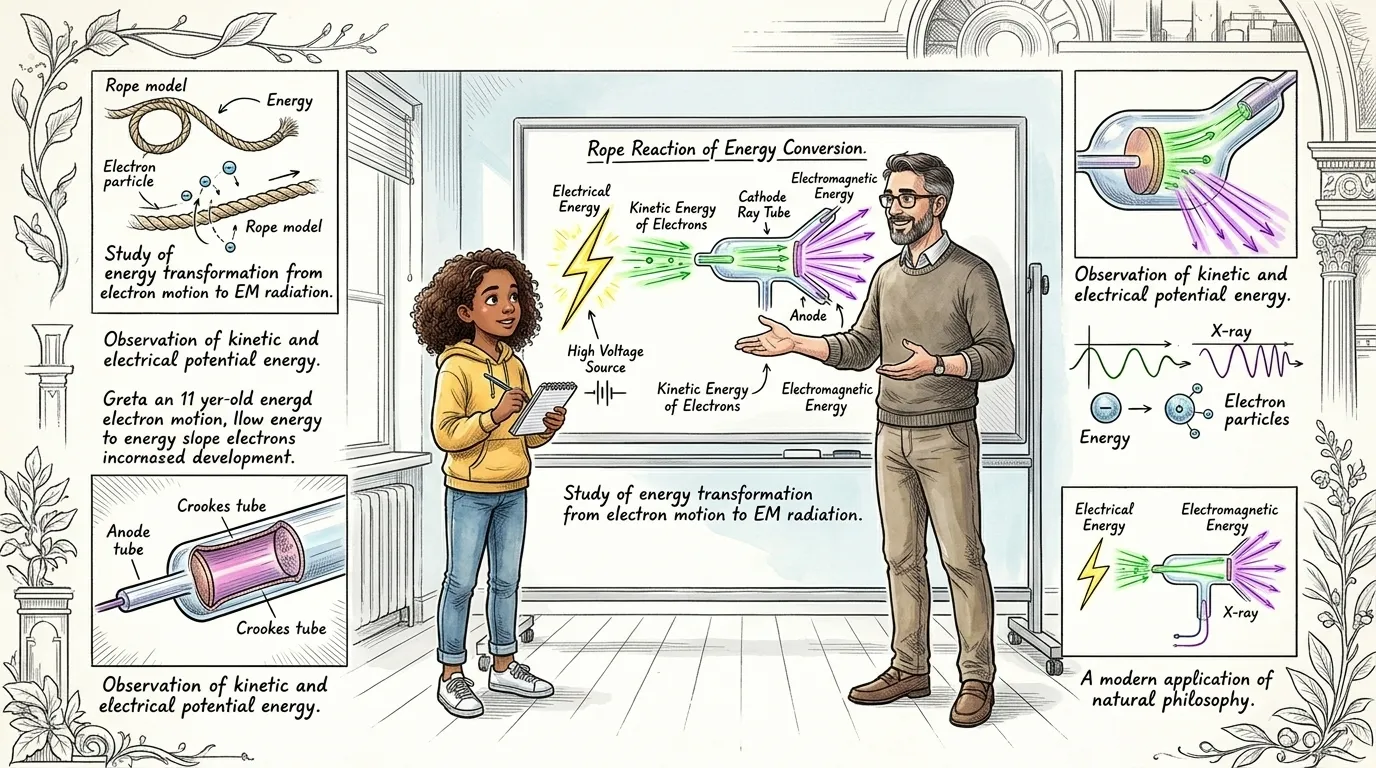
"So, it's like transforming energy from one form to another?" Greta asked. "Exactly!" her father replied. "Electrical energy is converted into kinetic energy of electrons, which is then converted into electromagnetic energy in the form of X-rays. That's the core principle."
""So, it's like transforming energy from one form to another?""
Page 8
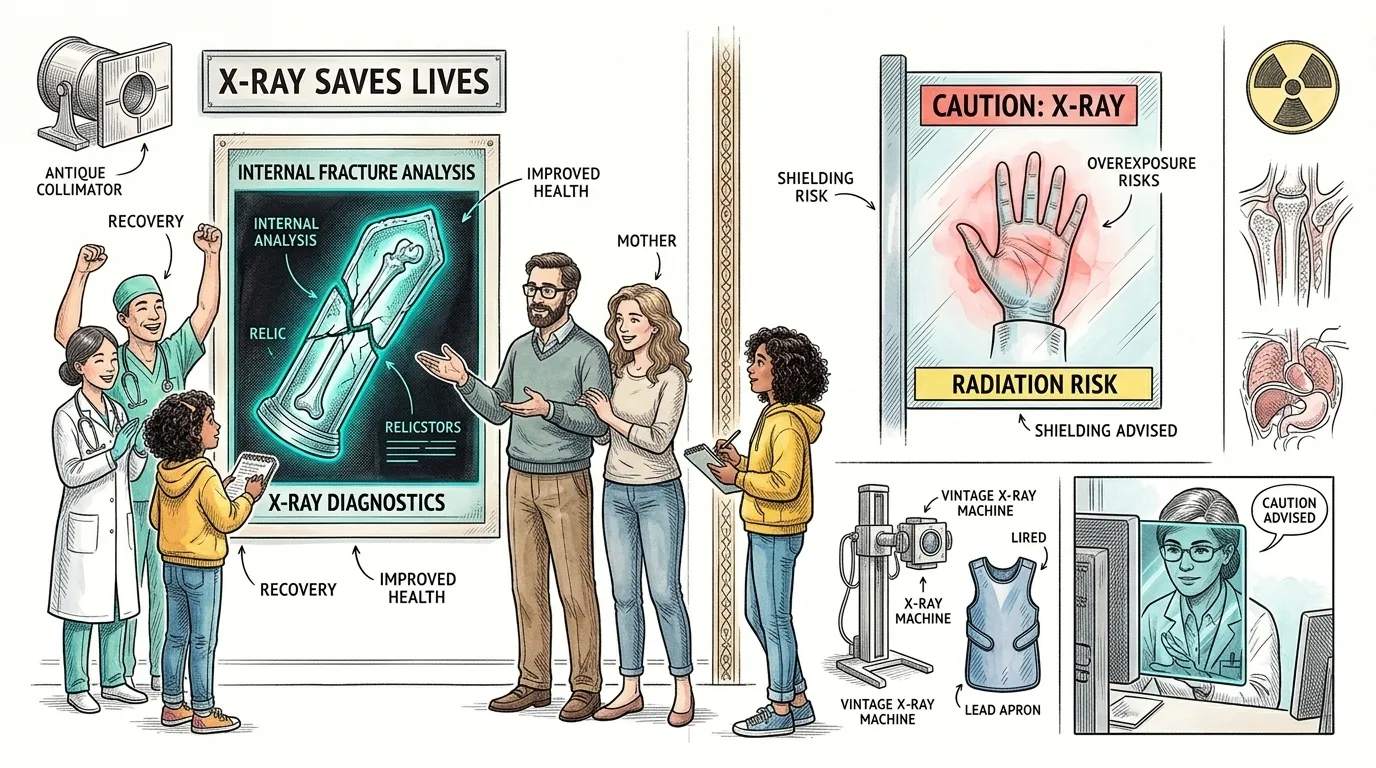
The impact was immediate. Doctors quickly adopted X-rays for diagnosing bone fractures, locating foreign objects, and even detecting diseases like tuberculosis. The technology saved countless lives and revolutionized medical practice. Rontgen's discovery was truly groundbreaking and changed medicine forever. It also came with a risk: overexposure to X-rays can be harmful.
Page 9
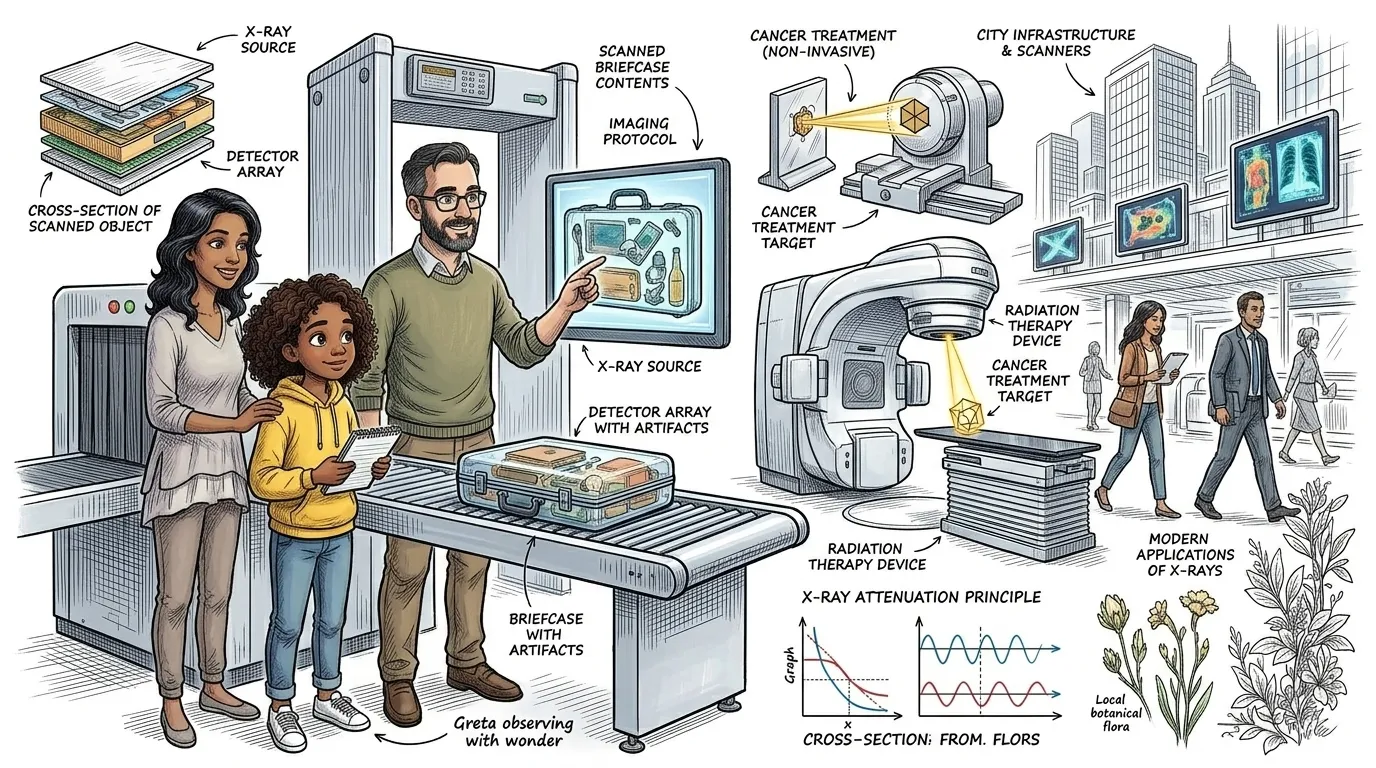
Today, X-rays are used everywhere, from airport security to cancer treatment. The technology has advanced significantly, with digital imaging and more precise radiation control. The core principle, however, remains the same: using high-energy electromagnetic radiation to see what's hidden beneath the surface. Scientists and engineers are constantly developing and improving X-ray technology.
Page 10
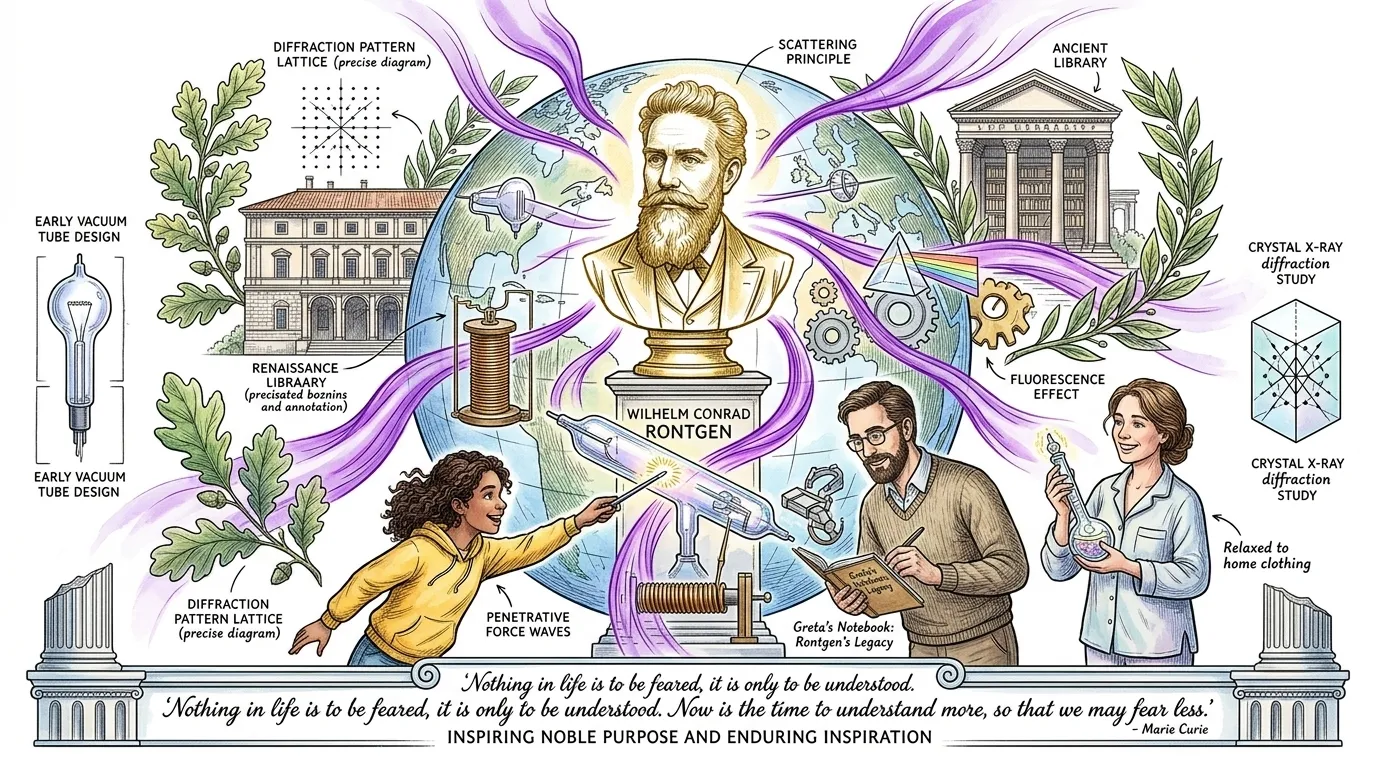
Wilhelm Rontgen's discovery was more than just a scientific breakthrough; it was a gift to humanity. He refused to patent his invention, believing it should be freely available for the benefit of all. His legacy continues to inspire scientists and reminds us that curiosity and careful observation can change the world. As Marie Curie said, "Nothing in life is to be feared, it is only to be understood. Now is the time to understand more, so that we may fear less."
About this story
- Location: Global
- Audience: kids (ages 6–12)
Questions and answers
Read Wonder Science on your phone
Wonder Science is available on Android. Get Wonder Science on Google Play.