Why We Dream

Why We Dream — an illustrated science story. 10 illustrated pages, free to read on Wonder Science.
Why We Dream — book cover — Wonder Science
Why We Dream — an illustrated science story. 10 illustrated pages, free to read on Wonder Science.

Page 1
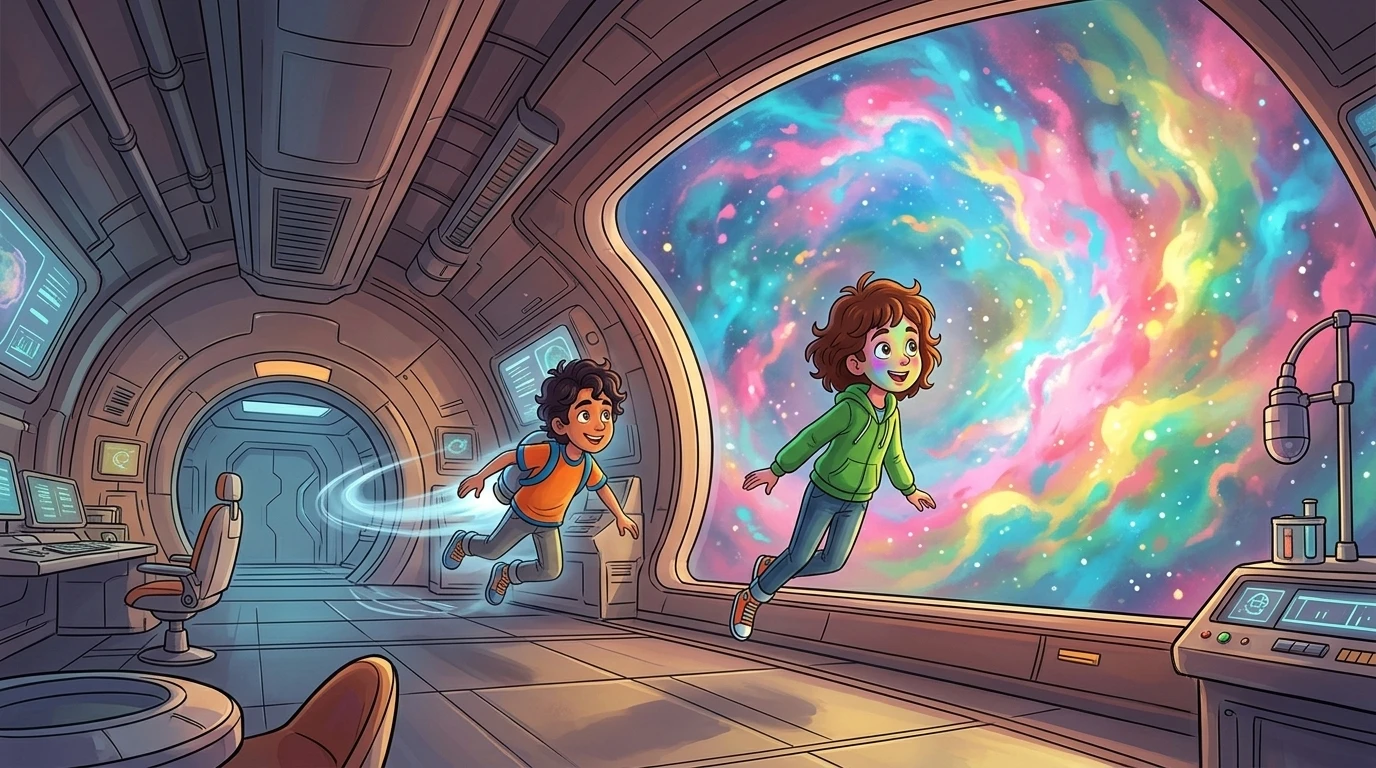
Lucia floated near a panoramic window on the space station, gazing at the swirling candy-colored nebula outside. "Wow," she breathed, her eyes wide with wonder.
Lucia floated near a panoramic window on the space station, gazing at the swirling candy-colored nebula outside. "Wow," she breathed, her eyes wide with wonder. Her friend Rohan zoomed by on a small propulsion pack, narrowly missing her. "Careful, Rohan!" she exclaimed. "I wonder," she mused, turning back to the nebula, "why those colors seem to shift and change when I blink?

Lucia floated near a panoramic window on the space station, gazing at the swirling candy-colored nebula outside. "Wow," she breathed, her eyes wide with wonder. Her friend Rohan zoomed by on a small propulsion pack, narrowly missing her. "Careful, Rohan!" she exclaimed. "I wonder," she mused, turning back to the nebula, "why those colors seem to shift and change when I blink?

Page 2
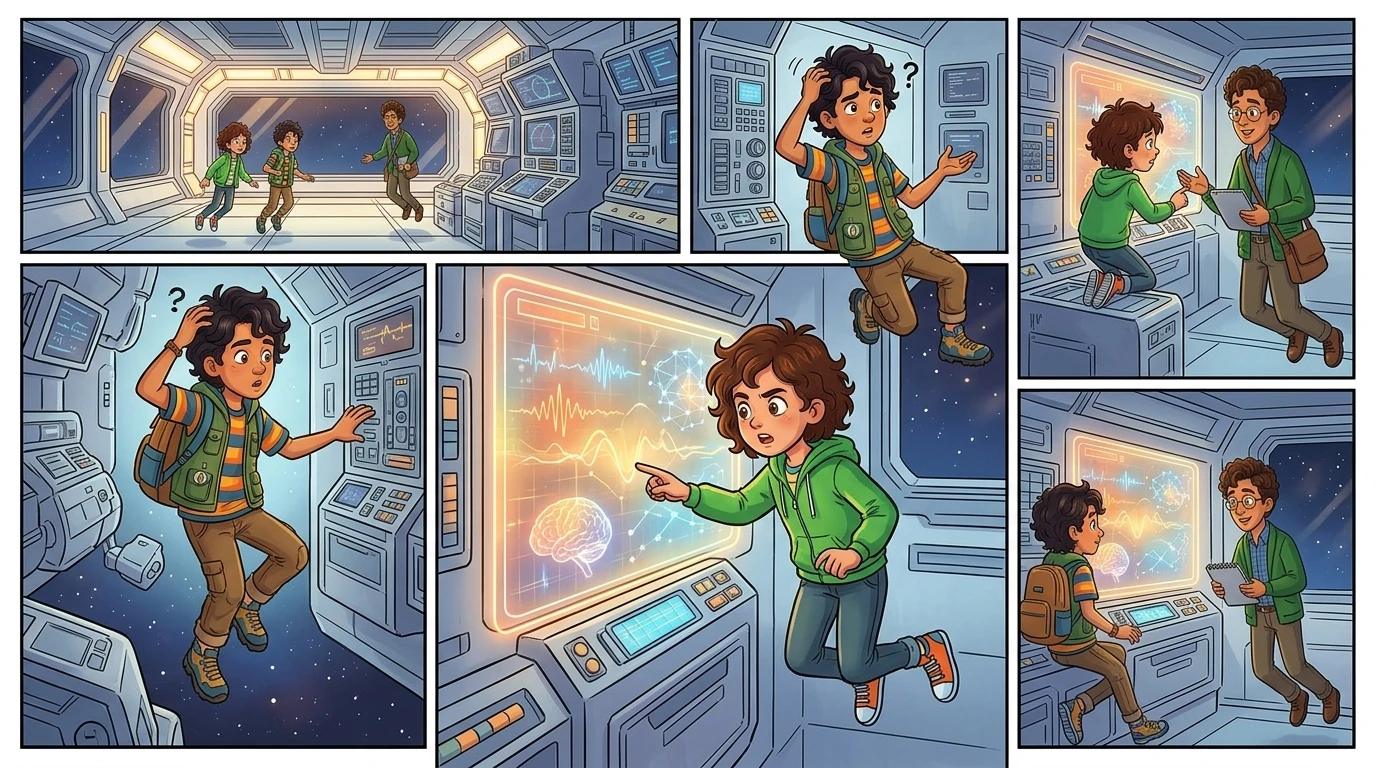
Rohan stopped beside her, scratching his head. "Maybe it's some kind of optical illusion?" he asked, tilting his head. Lucia shook her head, unconvinced.
Rohan stopped beside her, scratching his head. "Maybe it's some kind of optical illusion?" he asked, tilting his head. Lucia shook her head, unconvinced. "Optical illusions are usually tricks your brain plays, not something actually changing," she said thoughtfully. "It's like when my vision blurs for a second when I wake up from a nap. What's really happening in my brain when I sleep and dream?"

Rohan stopped beside her, scratching his head. "Maybe it's some kind of optical illusion?" he asked, tilting his head. Lucia shook her head, unconvinced. "Optical illusions are usually tricks your brain plays, not something actually changing," she said thoughtfully. "It's like when my vision blurs for a second when I wake up from a nap. What's really happening in my brain when I sleep and dream?"

Page 3
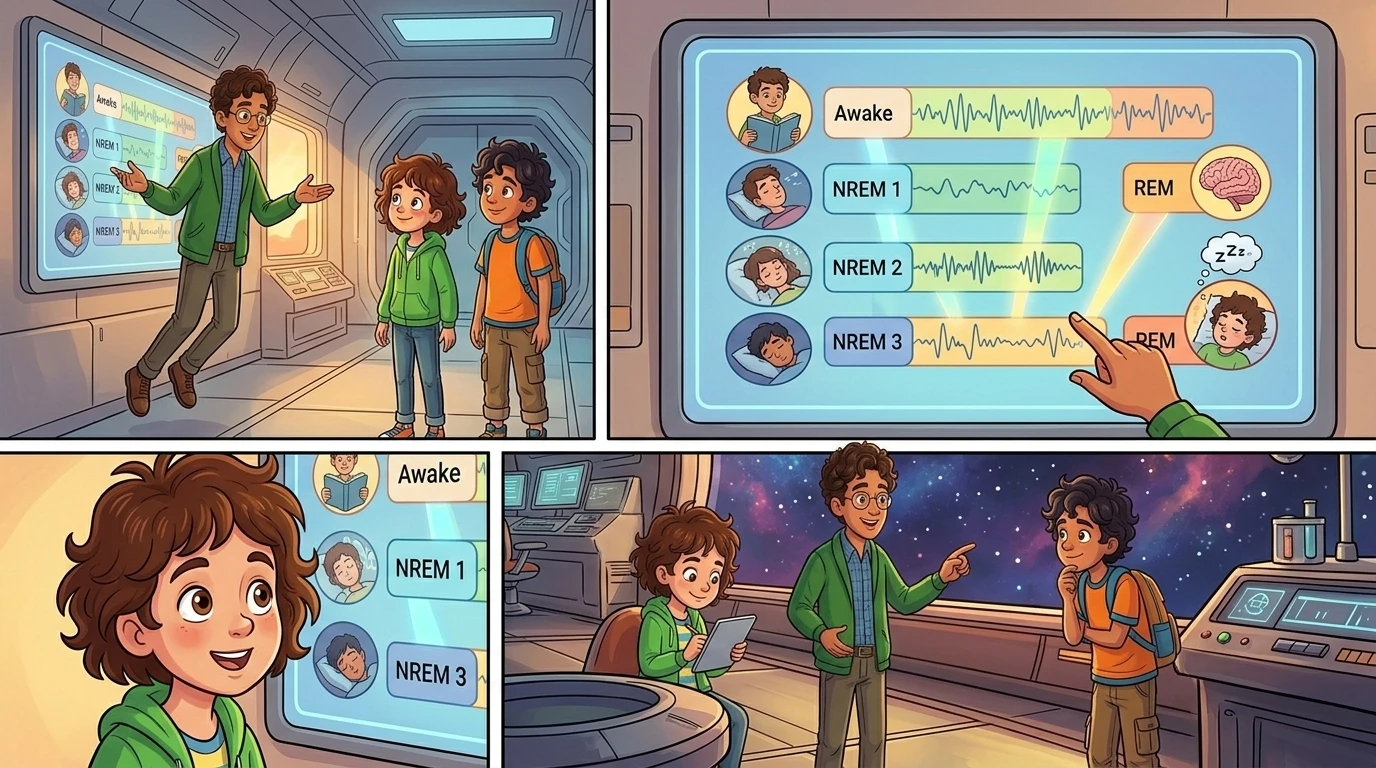
"That's a great question, Lucia!" a voice called out. Santiago, a taller student with neatly combed dark brown hair and kind eyes, floated over to them.
"That's a great question, Lucia!" a voice called out. Santiago, a taller student with neatly combed dark brown hair and kind eyes, floated over to them. "Scientists have been trying to figure out dreams for centuries. Did you know that as we sleep, our brains go through different stages?"

"That's a great question, Lucia!" a voice called out. Santiago, a taller student with neatly combed dark brown hair and kind eyes, floated over to them. "Scientists have been trying to figure out dreams for centuries. Did you know that as we sleep, our brains go through different stages?"

Page 4
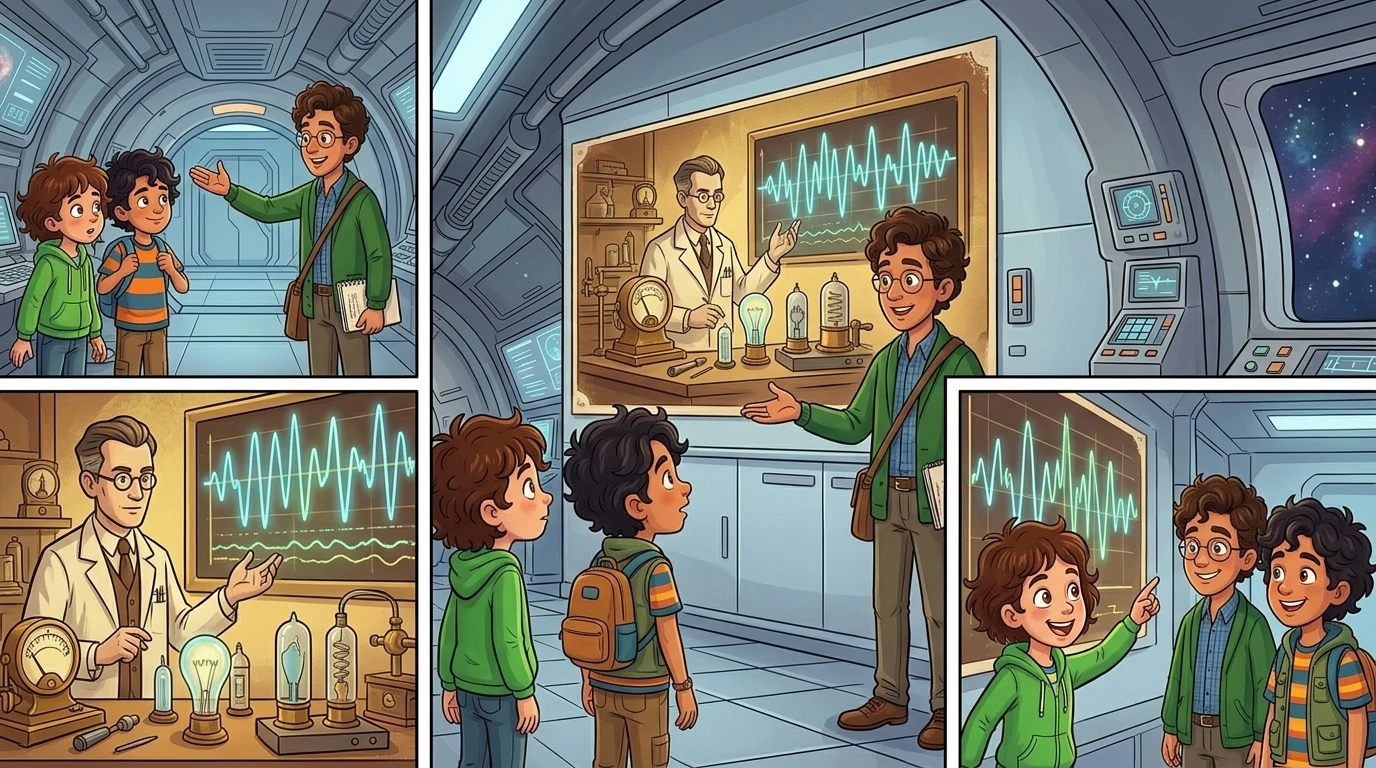
"One of the most important researchers into sleep was Alfred Lee Loomis," Santiago continued, "He wasn't actually a neuroscientist.
"One of the most important researchers into sleep was Alfred Lee Loomis," Santiago continued, "He wasn't actually a neuroscientist. He was a wealthy physicist who became obsessed with understanding sleep. Loomis even built his own private sleep lab to study how the brain changes when we drift off!" He gestured down the corridor. "He didn't go to space, but he may as well have. He dove into the unknown.

"One of the most important researchers into sleep was Alfred Lee Loomis," Santiago continued, "He wasn't actually a neuroscientist. He was a wealthy physicist who became obsessed with understanding sleep. Loomis even built his own private sleep lab to study how the brain changes when we drift off!" He gestured down the corridor. "He didn't go to space, but he may as well have. He dove into the unknown.

Page 5
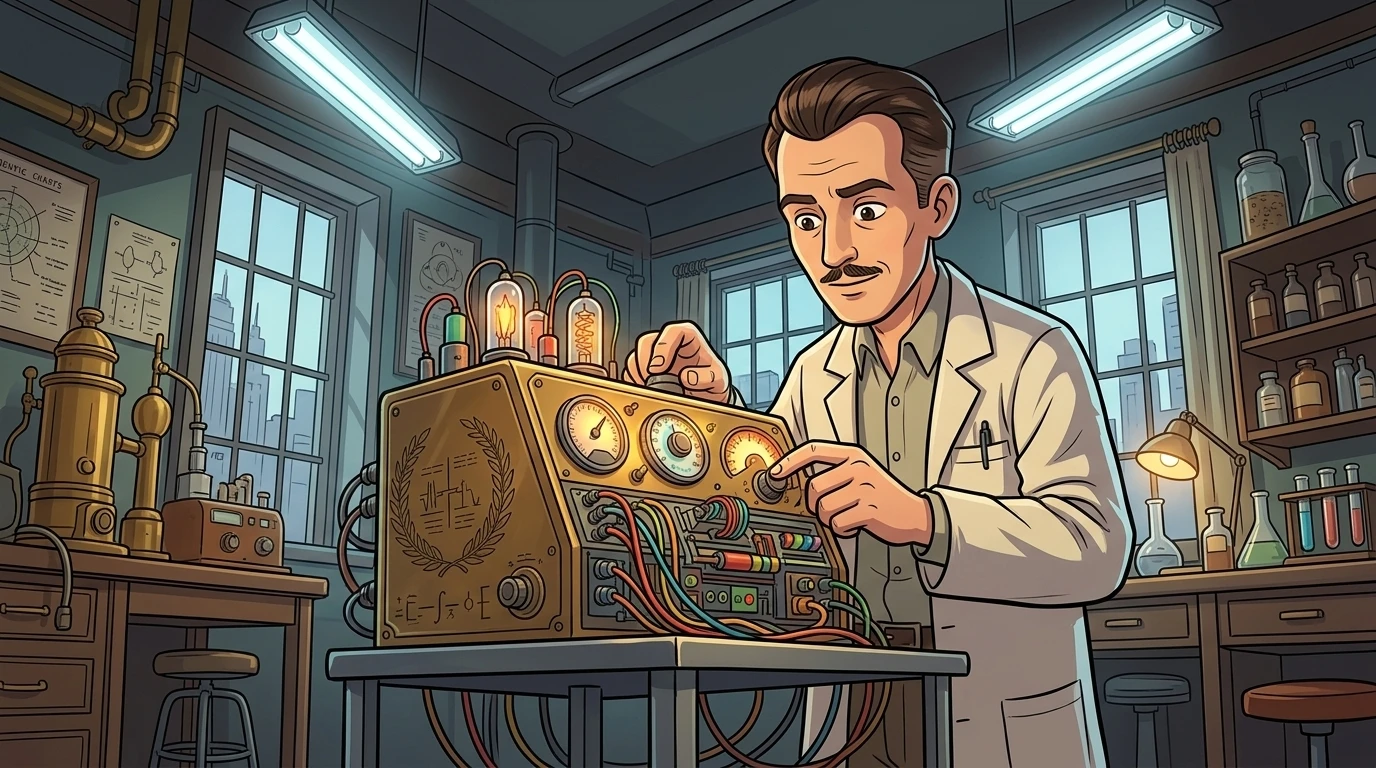
Lucia's imagination sparked. In her mind, she saw Alfred Lee Loomis in his laboratory in the 1930s. He was a stern man with a thin mustache and slicked-back…
Lucia's imagination sparked. In her mind, she saw Alfred Lee Loomis in his laboratory in the 1930s. He was a stern man with a thin mustache and slicked-back dark hair. Loomis meticulously adjusted the dials on a complex machine. As Loomis himself said, 'The best way to predict the future is to invent it,' I want to create my future by understanding sleep.

Lucia's imagination sparked. In her mind, she saw Alfred Lee Loomis in his laboratory in the 1930s. He was a stern man with a thin mustache and slicked-back dark hair. Loomis meticulously adjusted the dials on a complex machine. As Loomis himself said, 'The best way to predict the future is to invent it,' I want to create my future by understanding sleep.

Page 6

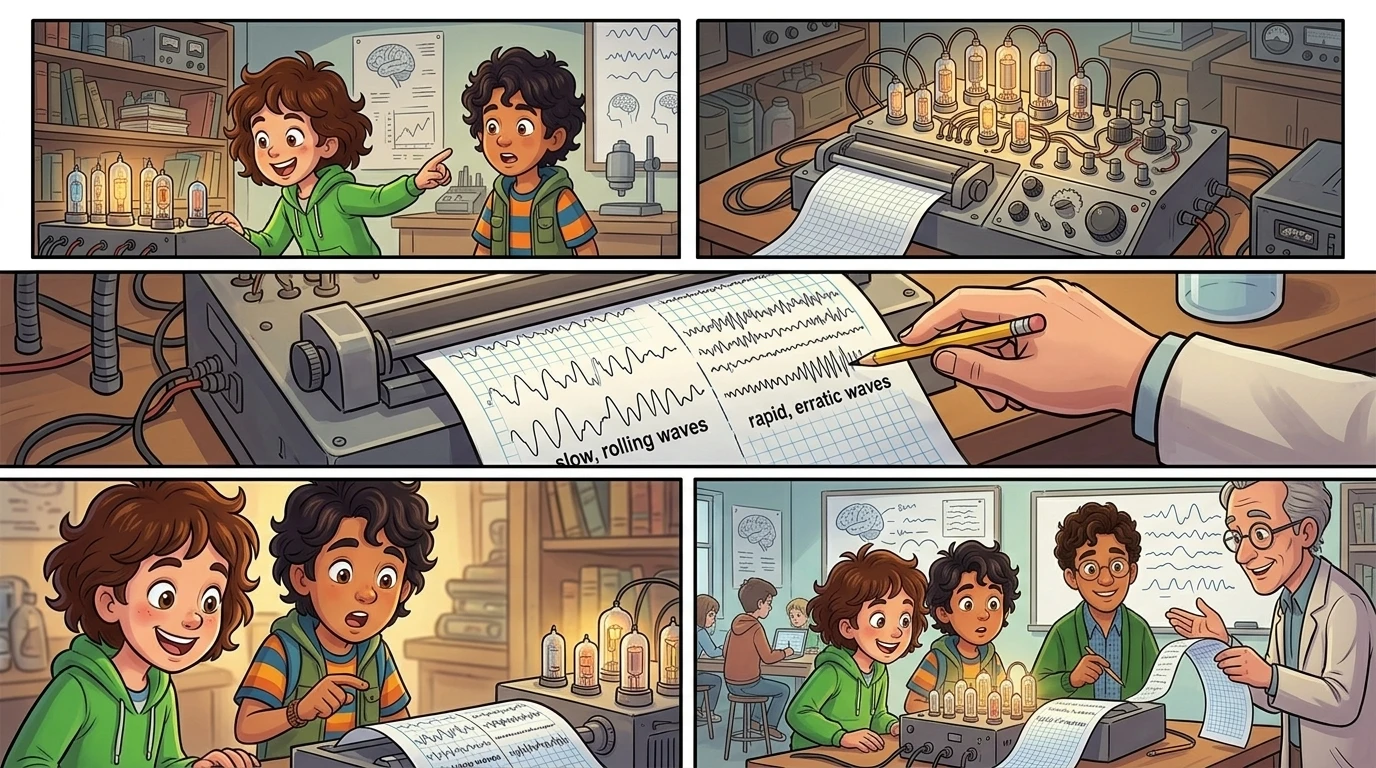
Loomis painstakingly recorded the brainwaves of sleeping subjects using a new device called an electroencephalograph, or EEG.
Loomis painstakingly recorded the brainwaves of sleeping subjects using a new device called an electroencephalograph, or EEG. He discovered distinct patterns: slow, rolling waves when deeply asleep, and rapid, erratic waves during dreaming. This erratic stage, called REM sleep, showed the brain was highly active! He figured that the brain was working even harder while we are unconscious!

Loomis painstakingly recorded the brainwaves of sleeping subjects using a new device called an electroencephalograph, or EEG. He discovered distinct patterns: slow, rolling waves when deeply asleep, and rapid, erratic waves during dreaming. This erratic stage, called REM sleep, showed the brain was highly active! He figured that the brain was working even harder while we are unconscious!

Page 7
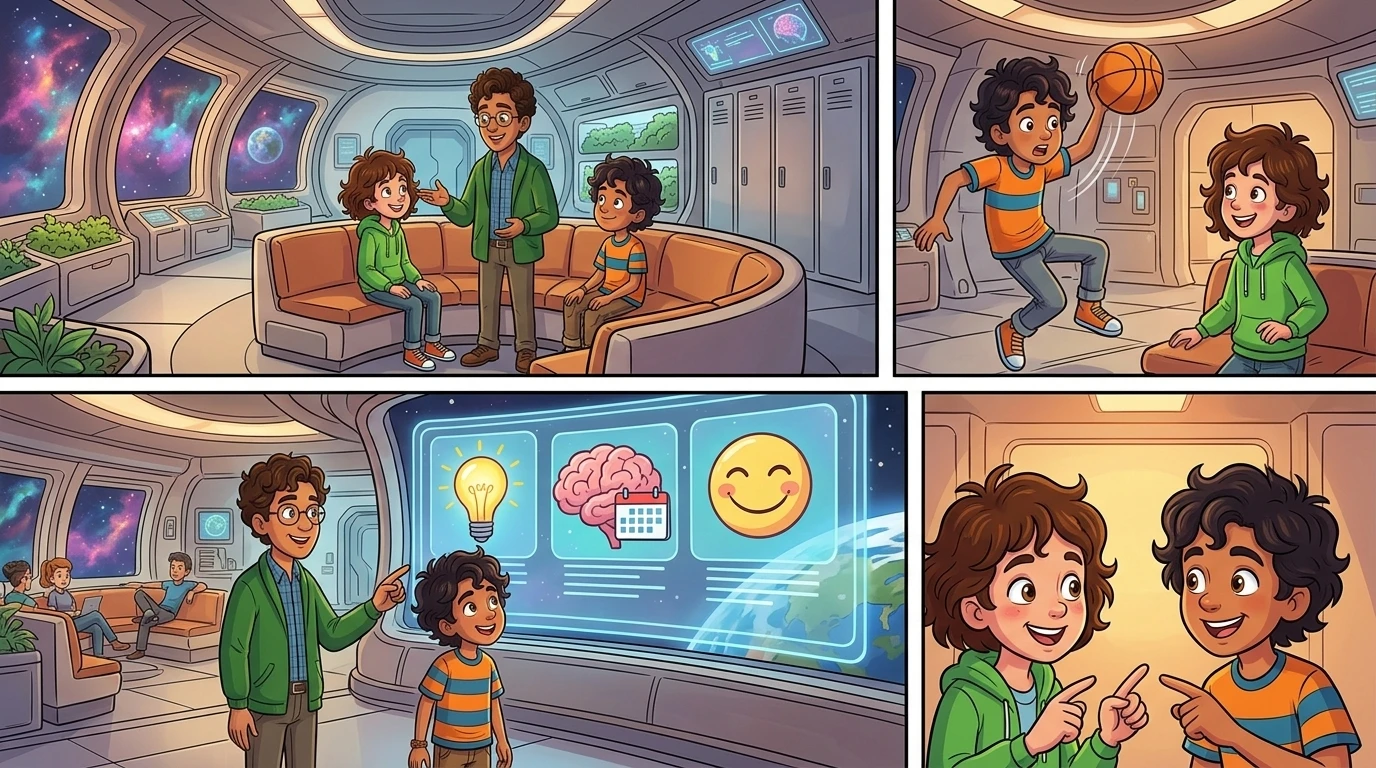
"Loomis's work paved the way for modern sleep science," Santiago explained. "Now we know sleep and dreams help with memory, learning, and even emotional…
"Loomis's work paved the way for modern sleep science," Santiago explained. "Now we know sleep and dreams help with memory, learning, and even emotional regulation!" Rohan looked surprised. "So, my dreams about zero-gravity basketball practice are actually helping me get better?" he wondered. Lucia grinned. "Maybe! And understanding those stages helps astronauts get the best rest possible on long missions!"

"Loomis's work paved the way for modern sleep science," Santiago explained. "Now we know sleep and dreams help with memory, learning, and even emotional regulation!" Rohan looked surprised. "So, my dreams about zero-gravity basketball practice are actually helping me get better?" he wondered. Lucia grinned. "Maybe! And understanding those stages helps astronauts get the best rest possible on long missions!"

Page 8
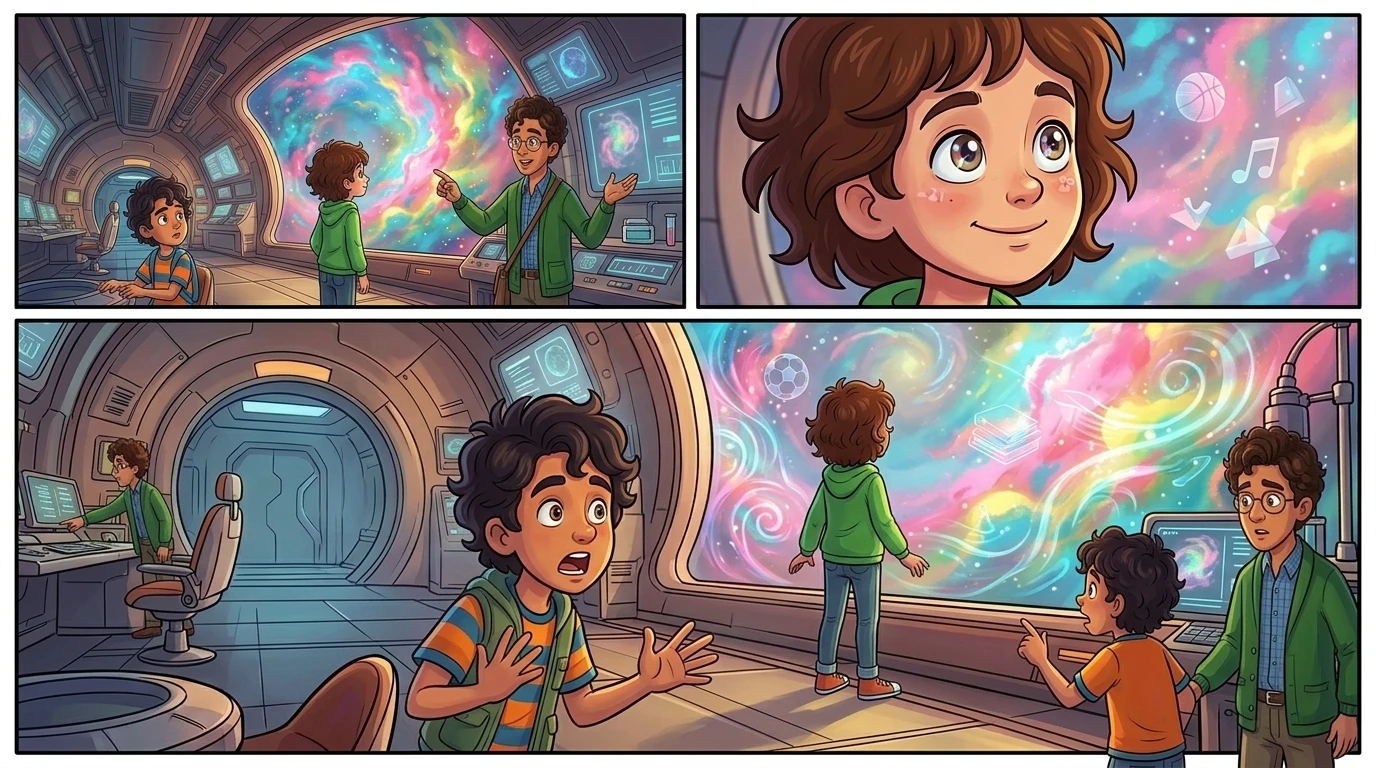
Back near the panoramic window, Lucia blinked again, focusing on the nebula. The colors still seemed to shift slightly. "So," she said slowly, "maybe the colors…
Back near the panoramic window, Lucia blinked again, focusing on the nebula. The colors still seemed to shift slightly. "So," she said slowly, "maybe the colors changing isn't just my eyes. Maybe it's my brain still adjusting from the last dream I had right before looking out the window. And it is not playing tricks on me but working with me!" Rohan looked at her, astonished. "Whoa," he said, shaking his head. "That's actually kinda mind-blowing."

Back near the panoramic window, Lucia blinked again, focusing on the nebula. The colors still seemed to shift slightly. "So," she said slowly, "maybe the colors changing isn't just my eyes. Maybe it's my brain still adjusting from the last dream I had right before looking out the window. And it is not playing tricks on me but working with me!" Rohan looked at her, astonished. "Whoa," he said, shaking his head. "That's actually kinda mind-blowing."

Page 9
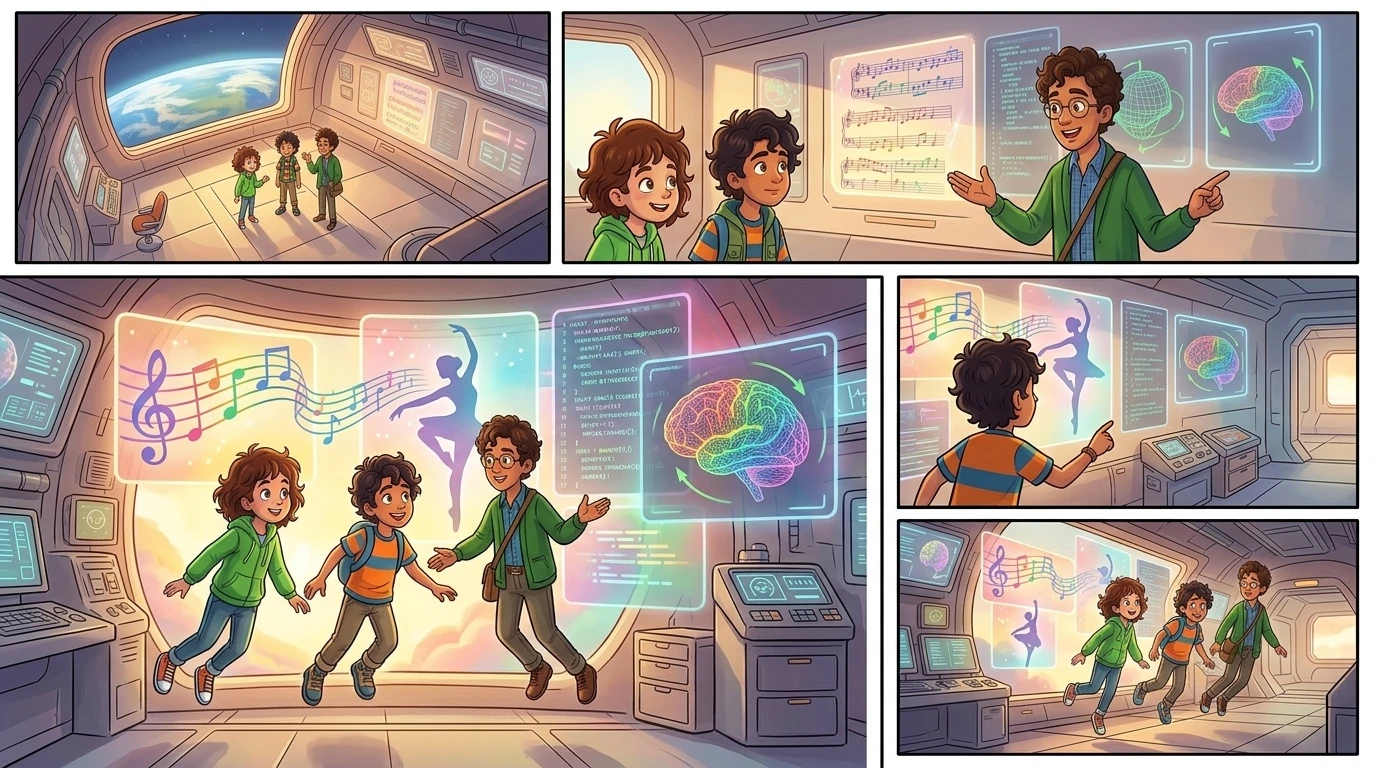
Santiago nodded thoughtfully. "It's like when you're learning a new song on the synthesizer," he said. "Your brain replays it even when you're not playing.
Santiago nodded thoughtfully. "It's like when you're learning a new song on the synthesizer," he said. "Your brain replays it even when you're not playing. Or when you're coding, your brain keeps running through the algorithm in the background. It also affects vision when you're practicing 3-D drawing, your brain gets stuck in the dimension!". Rohan chimed in, "Or when you're imagining a new dance routine, your body keeps wanting to move to the rhythm!" Lucia smiled.

Santiago nodded thoughtfully. "It's like when you're learning a new song on the synthesizer," he said. "Your brain replays it even when you're not playing. Or when you're coding, your brain keeps running through the algorithm in the background. It also affects vision when you're practicing 3-D drawing, your brain gets stuck in the dimension!". Rohan chimed in, "Or when you're imagining a new dance routine, your body keeps wanting to move to the rhythm!" Lucia smiled. "It's like our brains are always working, even when we don't realize it."

Page 10
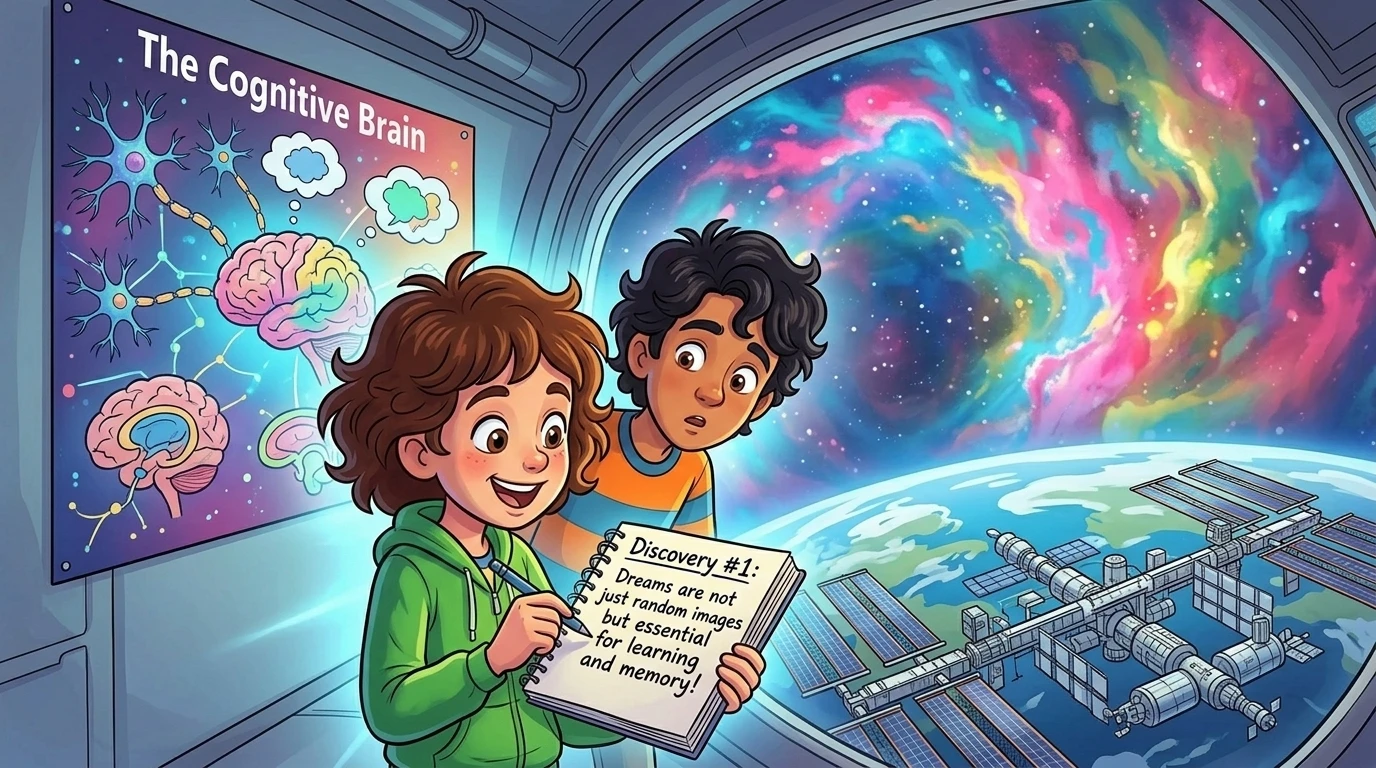
"So, dreaming is one way our brain helps us remember and learn, even when we don't know it," Lucia concluded. Rohan scratched his head. "That's amazing!
"So, dreaming is one way our brain helps us remember and learn, even when we don't know it," Lucia concluded. Rohan scratched his head. "That's amazing! So, if dreams help us learn... I wonder what happens if we never dream at all?" Lucia opened her notebook, ready to explore another scientific mystery. "Discovery #1: Dreams are not just random images but essential for learning and memory!"

"So, dreaming is one way our brain helps us remember and learn, even when we don't know it," Lucia concluded. Rohan scratched his head. "That's amazing! So, if dreams help us learn... I wonder what happens if we never dream at all?" Lucia opened her notebook, ready to explore another scientific mystery. "Discovery #1: Dreams are not just random images but essential for learning and memory!"

About this story

  • Audience: kids (ages 6–12)

Questions and answers

Questions and answers about Why We Dream

Read Wonder Science on your phone

Wonder Science is available on Android. Get Wonder Science on Google Play.

More Wonder Science stories

All Wonder Science stories · Open the library