Why the Sky Is Blue

Why the Sky Is Blue — an illustrated science story, set in Egypt. 10 illustrated pages, free to read on Wonder Science.
Why the Sky Is Blue — book cover — Wonder Science
Why the Sky Is Blue — an illustrated science story, set in Egypt. 10 illustrated pages, free to read on Wonder Science.

Page 1
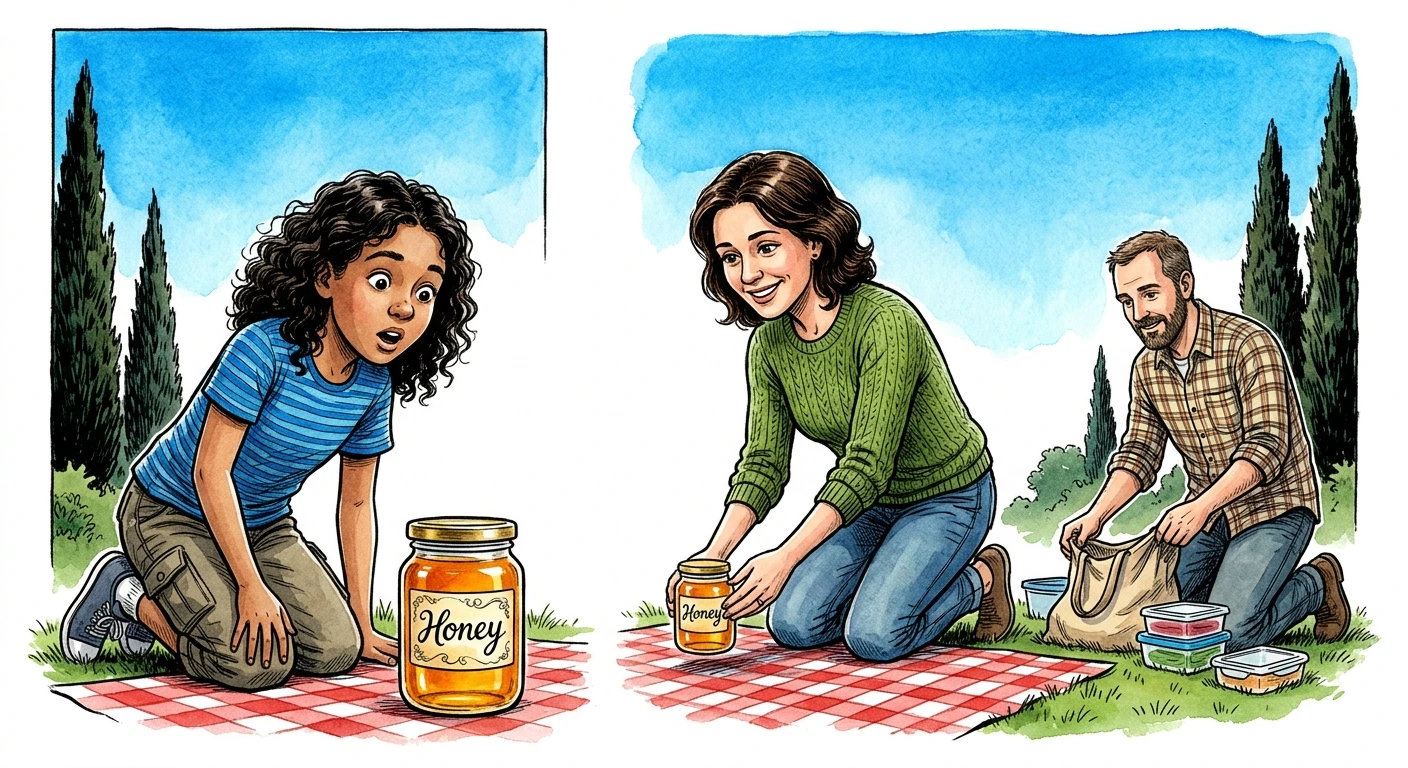
In San Francisco's Golden Gate Park, Lina and her parents spread a picnic blanket on the grass. Her mother placed a small jar on the blanket.
In San Francisco's Golden Gate Park, Lina and her parents spread a picnic blanket on the grass. Her mother placed a small jar on the blanket. "Careful with that honey, sweetie," she said with a smile. "Did you know archaeologists found 3,000-year-old honey in Egyptian tombs, and it was still edible?" Lina looked up from the jar, past the cypress trees, and into the vast, brilliant blue sky. "Wow! But Mama... why is the sky so blue?"

In San Francisco's Golden Gate Park, Lina and her parents spread a picnic blanket on the grass. Her mother placed a small jar on the blanket. "Careful with that honey, sweetie," she said with a smile. "Did you know archaeologists found 3,000-year-old honey in Egyptian tombs, and it was still edible?" Lina looked up from the jar, past the cypress trees, and into the vast, brilliant blue sky. "Wow! But Mama... why is the sky so blue?"

Page 2

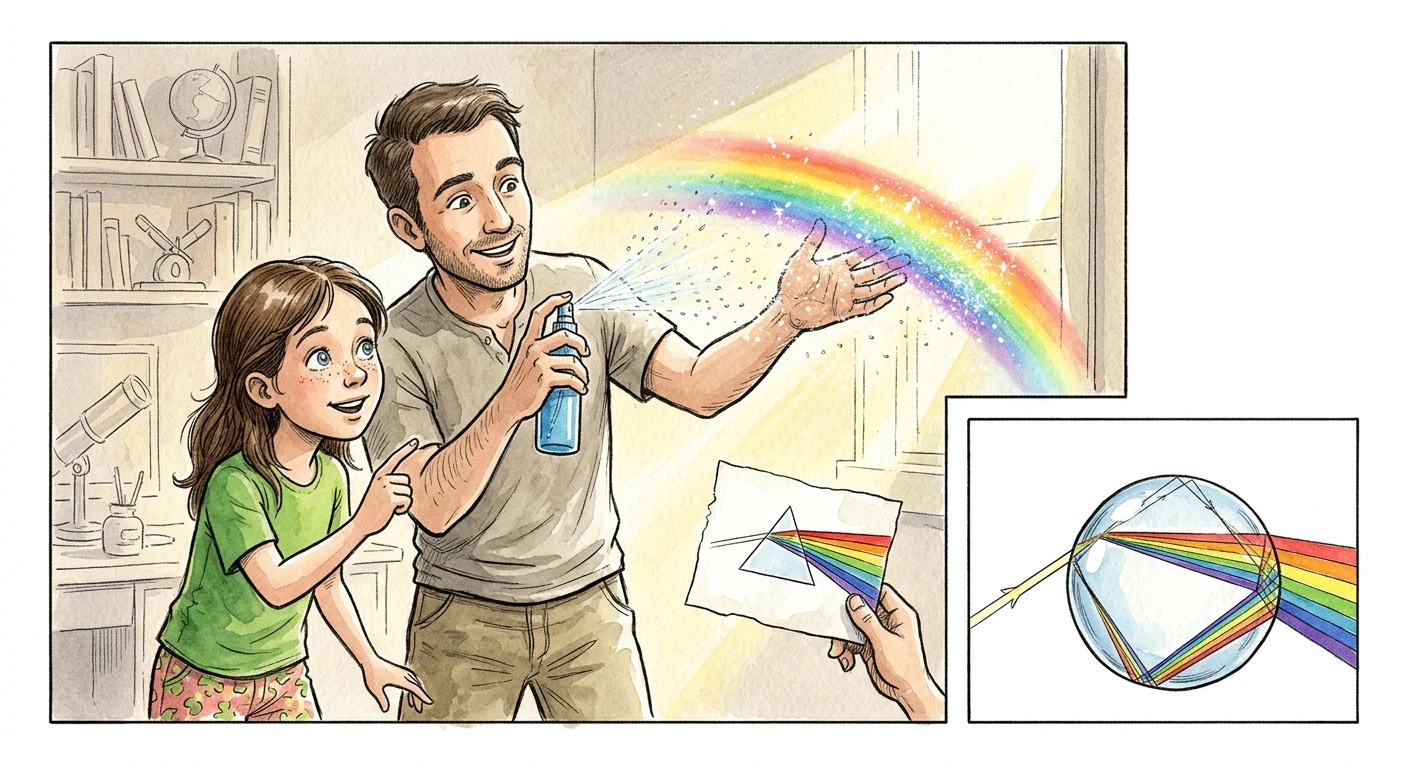
"That's a fantastic question!" her father said, picking up a small spray bottle of water. He misted the air in a sunbeam, creating a tiny, shimmering rainbow.
"That's a fantastic question!" her father said, picking up a small spray bottle of water. He misted the air in a sunbeam, creating a tiny, shimmering rainbow. "Sunlight looks white, but it's really made of all these colors, like a rainbow hiding in plain sight. To get a blue sky, the air has to do something special with that light—it's called scattering."

"That's a fantastic question!" her father said, picking up a small spray bottle of water. He misted the air in a sunbeam, creating a tiny, shimmering rainbow. "Sunlight looks white, but it's really made of all these colors, like a rainbow hiding in plain sight. To get a blue sky, the air has to do something special with that light—it's called scattering."

Page 3
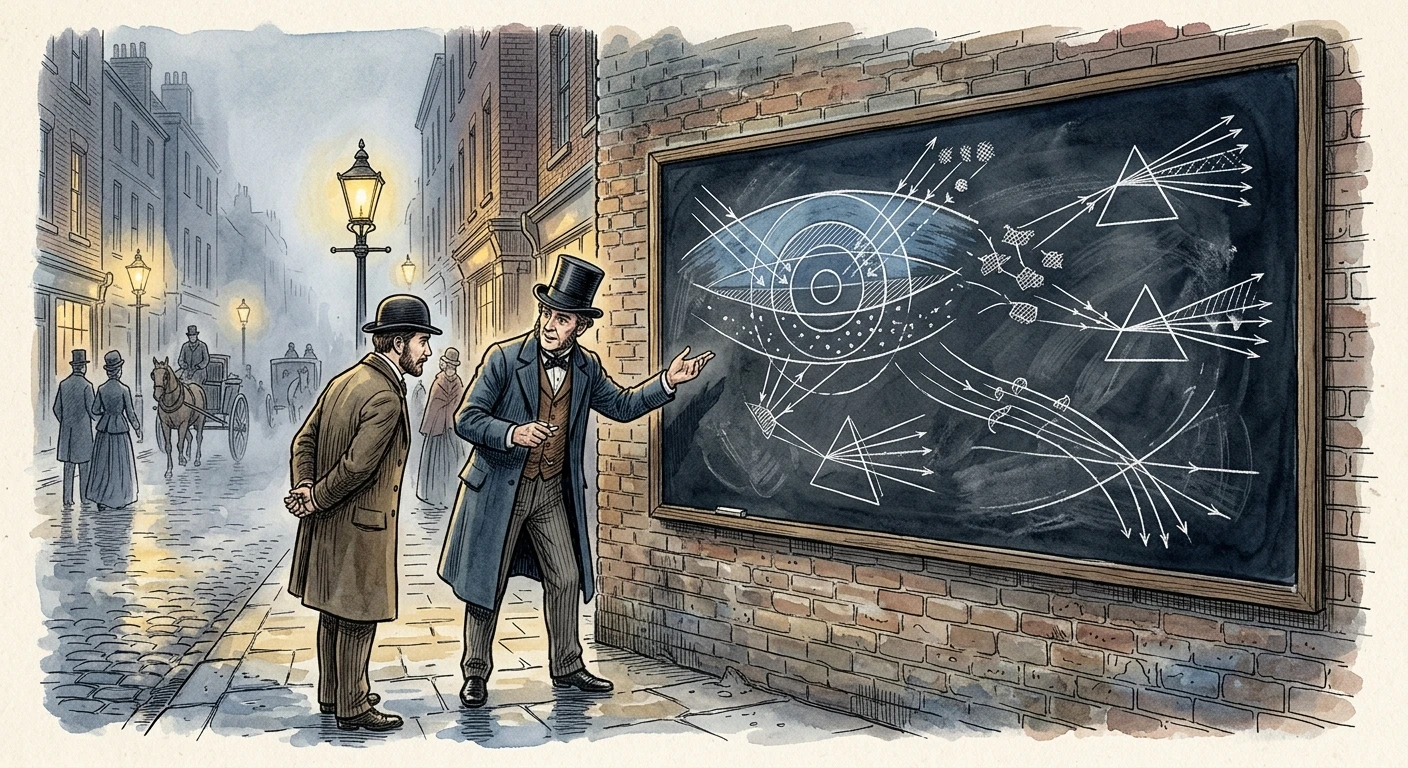
The secret to that scattering wasn't discovered in a park, but over 150 years ago in the foggy, gaslit streets of London.
The secret to that scattering wasn't discovered in a park, but over 150 years ago in the foggy, gaslit streets of London. Back then, the color of the sky was one of the greatest scientific puzzles. People had ideas about glowing vapors or reflections from the sea, but no one could prove how it worked. The world was waiting for a scientist who loved to experiment with light.

The secret to that scattering wasn't discovered in a park, but over 150 years ago in the foggy, gaslit streets of London. Back then, the color of the sky was one of the greatest scientific puzzles. People had ideas about glowing vapors or reflections from the sea, but no one could prove how it worked. The world was waiting for a scientist who loved to experiment with light.

Page 4
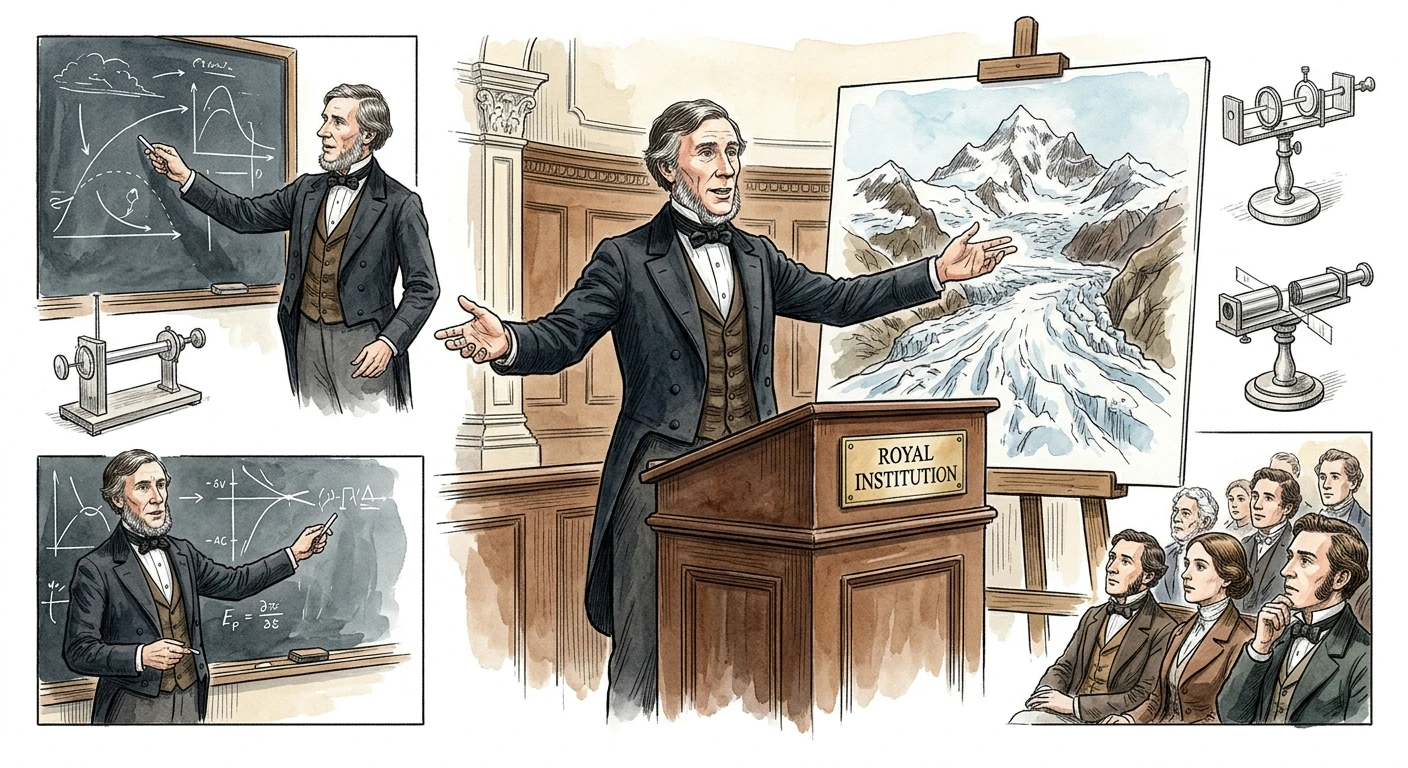
That scientist was an Irishman named John Tyndall, a brilliant physicist and an amazing public speaker at London's Royal Institution.
That scientist was an Irishman named John Tyndall, a brilliant physicist and an amazing public speaker at London's Royal Institution. He was a passionate mountaineer who loved studying glaciers, but the mystery of the sky's color fascinated him most of all. He didn't just want to know the answer; he wanted to be able to show it to everyone. He believed science was a story that belonged to the world.

That scientist was an Irishman named John Tyndall, a brilliant physicist and an amazing public speaker at London's Royal Institution. He was a passionate mountaineer who loved studying glaciers, but the mystery of the sky's color fascinated him most of all. He didn't just want to know the answer; he wanted to be able to show it to everyone. He believed science was a story that belonged to the world.

Page 5
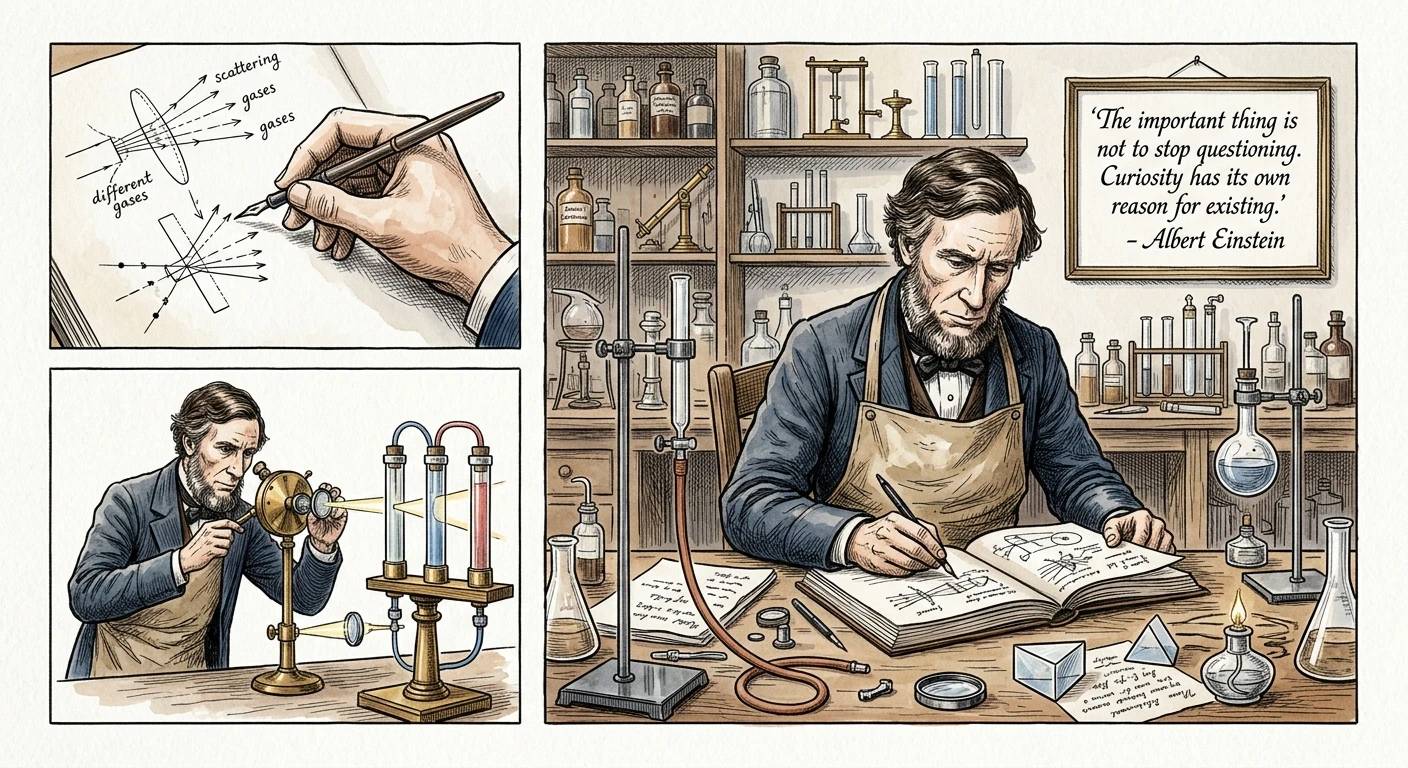
John Tyndall spent countless hours in his lab, trying to replicate the sky in a box. It reminds me of what the great scientist Albert Einstein said, 'The…
John Tyndall spent countless hours in his lab, trying to replicate the sky in a box. It reminds me of what the great scientist Albert Einstein said, 'The important thing is not to stop questioning. Curiosity has its own reason for existing.' Tyndall was filled with that curiosity, sketching designs for experiments in his notebook, convinced he could capture a piece of the sky.

John Tyndall spent countless hours in his lab, trying to replicate the sky in a box. It reminds me of what the great scientist Albert Einstein said, 'The important thing is not to stop questioning. Curiosity has its own reason for existing.' Tyndall was filled with that curiosity, sketching designs for experiments in his notebook, convinced he could capture a piece of the sky.

Page 6
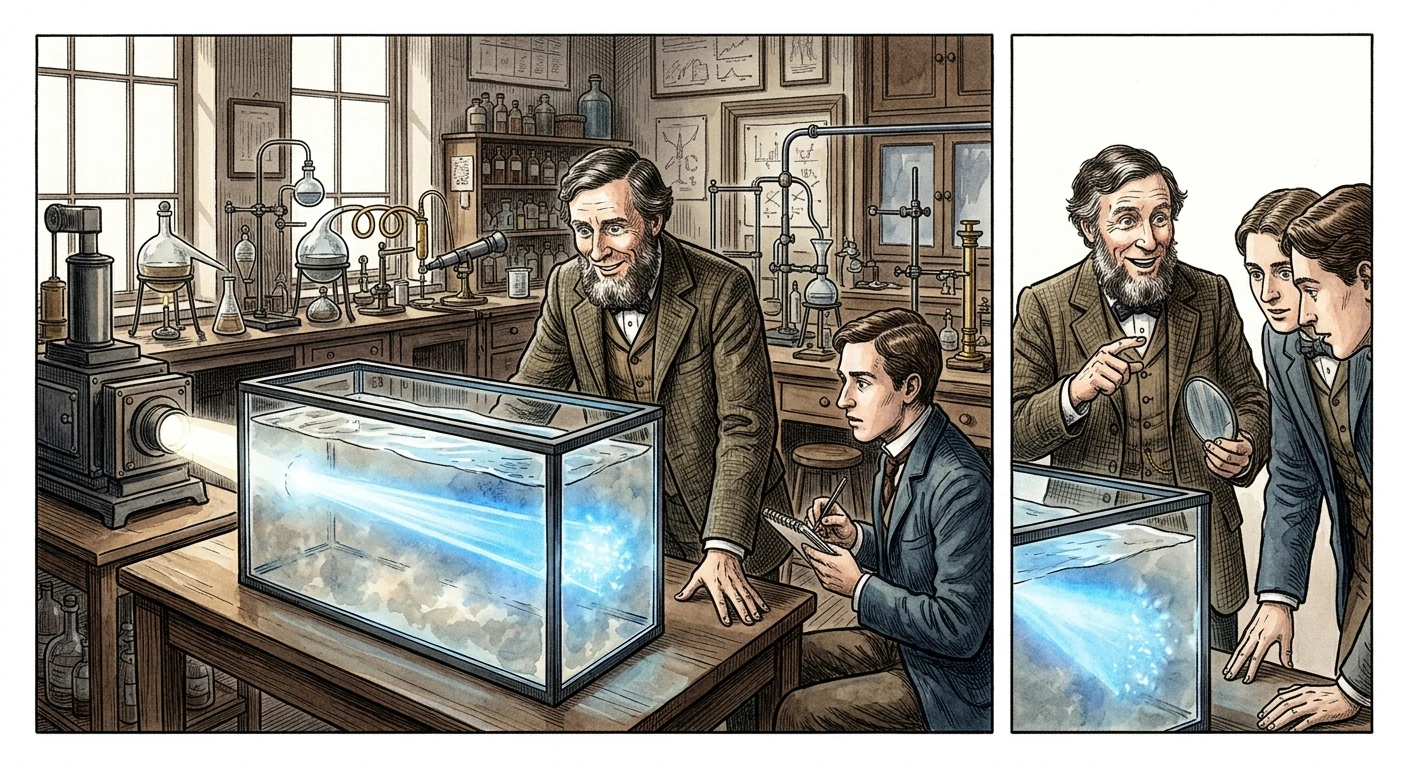
Finally, in 1869, he found the answer! He filled a glass tank with water and mixed in a few drops of milk, creating tiny particles suspended in the liquid, just…
Finally, in 1869, he found the answer! He filled a glass tank with water and mixed in a few drops of milk, creating tiny particles suspended in the liquid, just like the dust and molecules in our atmosphere. When he shined a bright, white light through the tank, something amazing happened. From the side, the beam of light inside the water glowed a brilliant blue!

Finally, in 1869, he found the answer! He filled a glass tank with water and mixed in a few drops of milk, creating tiny particles suspended in the liquid, just like the dust and molecules in our atmosphere. When he shined a bright, white light through the tank, something amazing happened. From the side, the beam of light inside the water glowed a brilliant blue!

Page 7
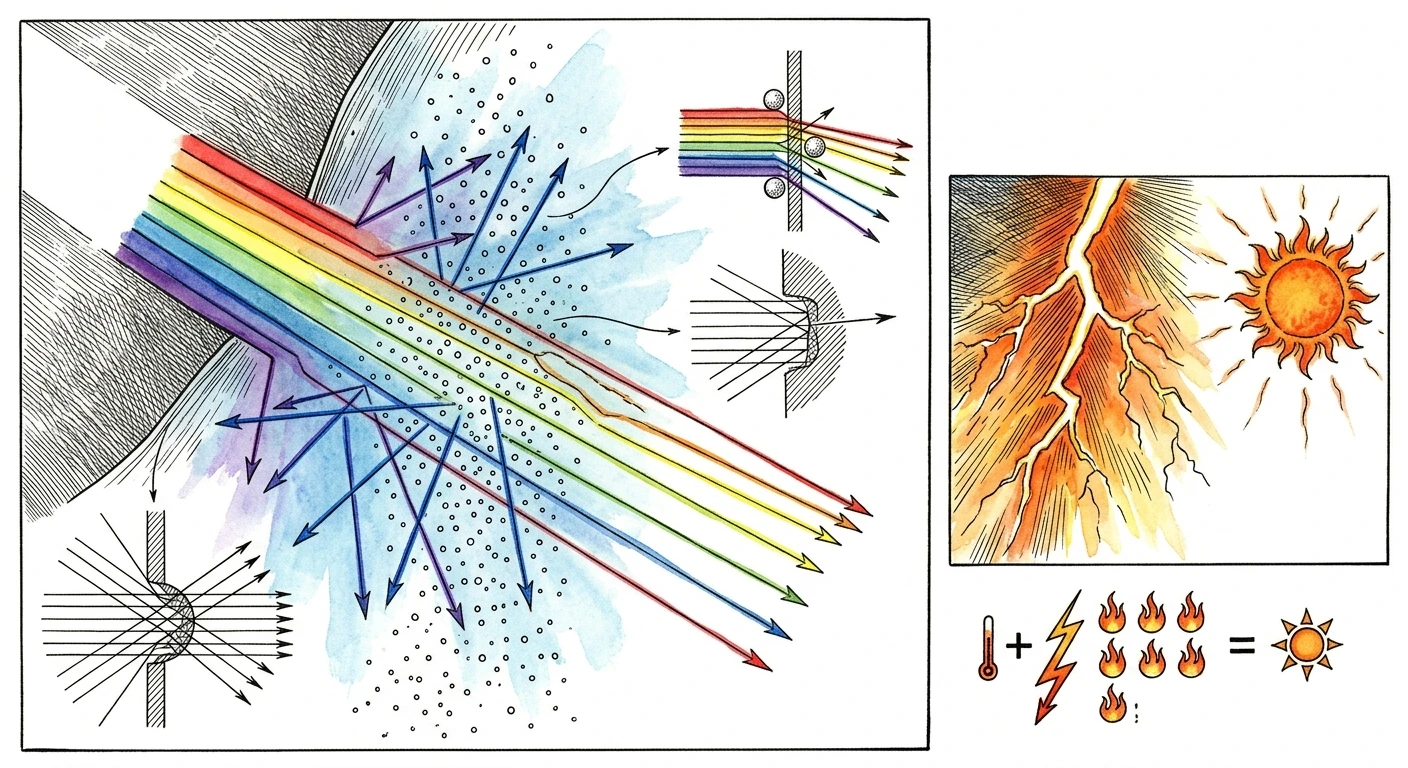
Tyndall had proved it: the tiny particles were scattering the blue light waves out to the sides, while the longer red and yellow waves passed straight through.
Tyndall had proved it: the tiny particles were scattering the blue light waves out to the sides, while the longer red and yellow waves passed straight through. Another scientist, Lord Rayleigh, later did the math to prove blue light scatters best. This discovery explains not just the blue sky, but also why sunsets are red—you're seeing the leftover light that didn't scatter!

Tyndall had proved it: the tiny particles were scattering the blue light waves out to the sides, while the longer red and yellow waves passed straight through. Another scientist, Lord Rayleigh, later did the math to prove blue light scatters best. This discovery explains not just the blue sky, but also why sunsets are red—you're seeing the leftover light that didn't scatter! It's all about light's energy, and speaking of energy, did you know a lightning bolt is five times hotter than the surface of the sun?

Page 8

Back in the park, Lina jumped to her feet, her eyes sparkling with understanding. "I get it now!" she exclaimed to her parents.
Back in the park, Lina jumped to her feet, her eyes sparkling with understanding. "I get it now!" she exclaimed to her parents. "The air is like the water in John Tyndall's tank! Remember the rainbow colors in the sunlight? The air molecules grab the short, blue parts of that light and throw them all over the place, so we see blue everywhere!"

Back in the park, Lina jumped to her feet, her eyes sparkling with understanding. "I get it now!" she exclaimed to her parents. "The air is like the water in John Tyndall's tank! Remember the rainbow colors in the sunlight? The air molecules grab the short, blue parts of that light and throw them all over the place, so we see blue everywhere!"

Page 9
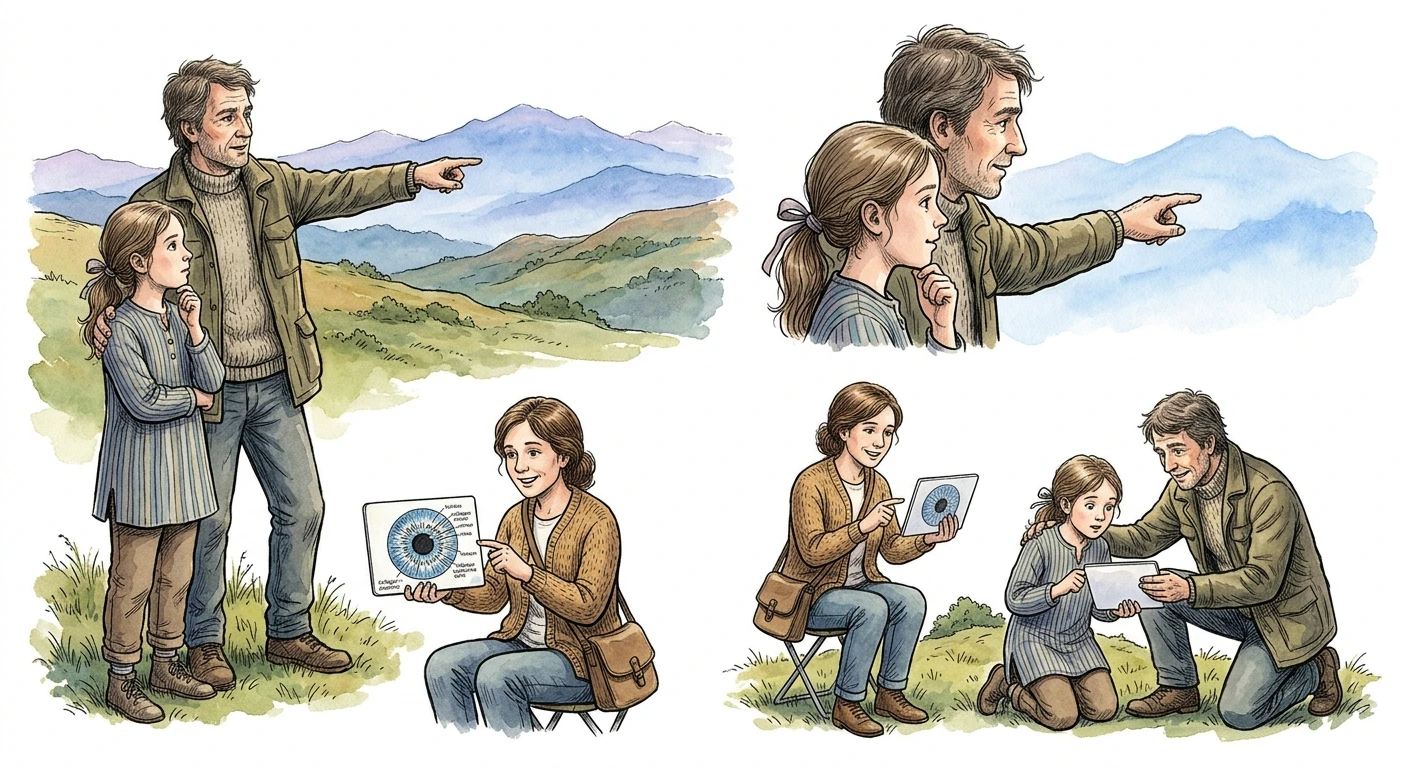
"Exactly!" her father said. "And that's also why distant mountains sometimes look hazy and blue—you're seeing all the scattered blue light between you and the…
"Exactly!" her father said. "And that's also why distant mountains sometimes look hazy and blue—you're seeing all the scattered blue light between you and the mountain." Her mother added, "It's even connected to why some people have blue eyes. It's not a blue pigment, but tiny fibers in the iris scattering light, just like the sky!"

"Exactly!" her father said. "And that's also why distant mountains sometimes look hazy and blue—you're seeing all the scattered blue light between you and the mountain." Her mother added, "It's even connected to why some people have blue eyes. It's not a blue pigment, but tiny fibers in the iris scattering light, just like the sky!"

Page 10
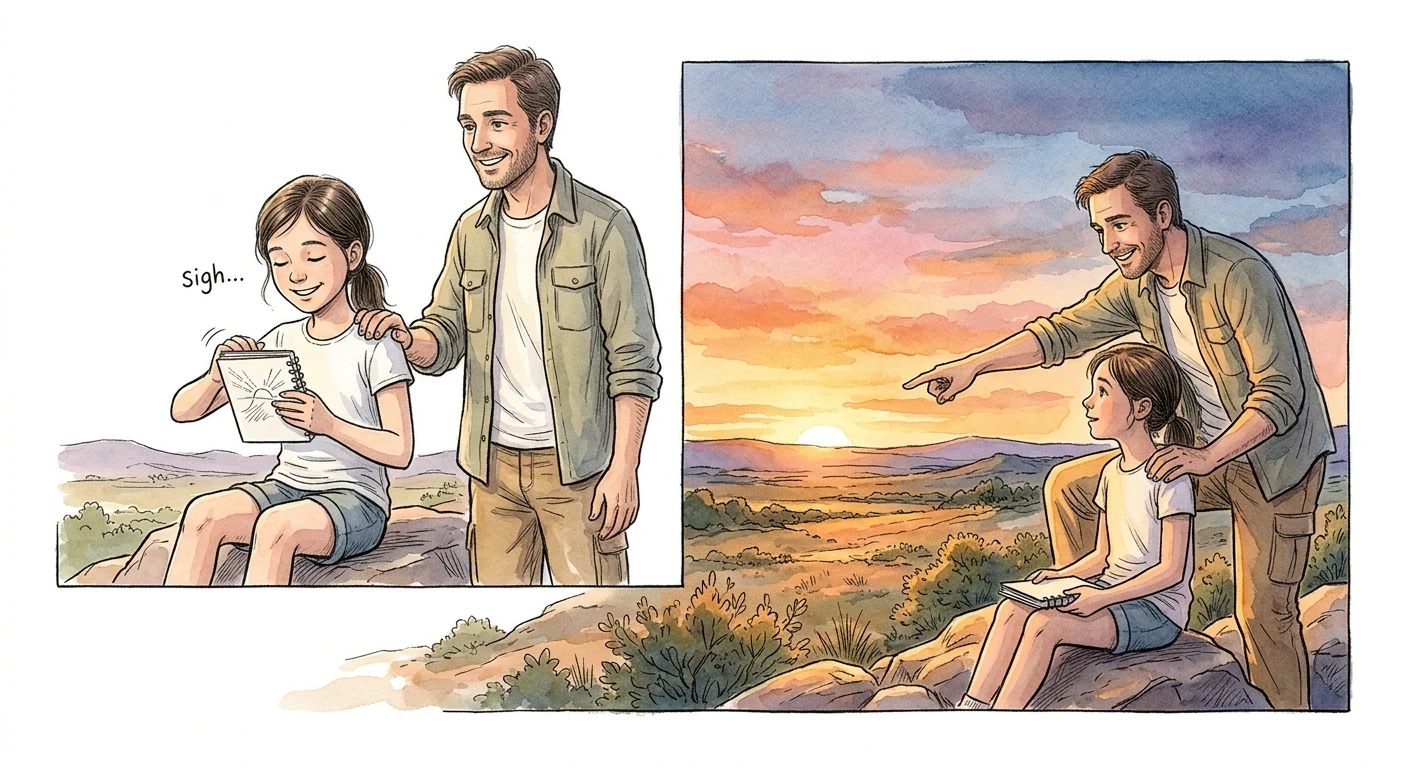
Lina nodded, closing her notebook with a happy sigh. "So, the sky is blue because Earth's atmosphere is a better scatterer of blue light than any other color."…
Lina nodded, closing her notebook with a happy sigh. "So, the sky is blue because Earth's atmosphere is a better scatterer of blue light than any other color." As the sun began to dip lower, painting the edges of the sky orange and pink, her father smiled. "That's right," he said, looking towards the sunset. "But if our air is so good at scattering blue light... why are sunsets red?"

Lina nodded, closing her notebook with a happy sigh. "So, the sky is blue because Earth's atmosphere is a better scatterer of blue light than any other color." As the sun began to dip lower, painting the edges of the sky orange and pink, her father smiled. "That's right," he said, looking towards the sunset. "But if our air is so good at scattering blue light... why are sunsets red?"

About this story

  • Location: Egypt
  • Audience: kids (ages 6–12)

Questions and answers

Questions and answers about Why the Sky Is Blue

Read Wonder Science on your phone

Wonder Science is available on Android. Get Wonder Science on Google Play.

More Wonder Science stories

All Wonder Science stories · Open the library