Why Planets Orbit
Why Planets Orbit — an illustrated science story, set in United States. 10 illustrated pages, free to read on Wonder Science.
Page 1
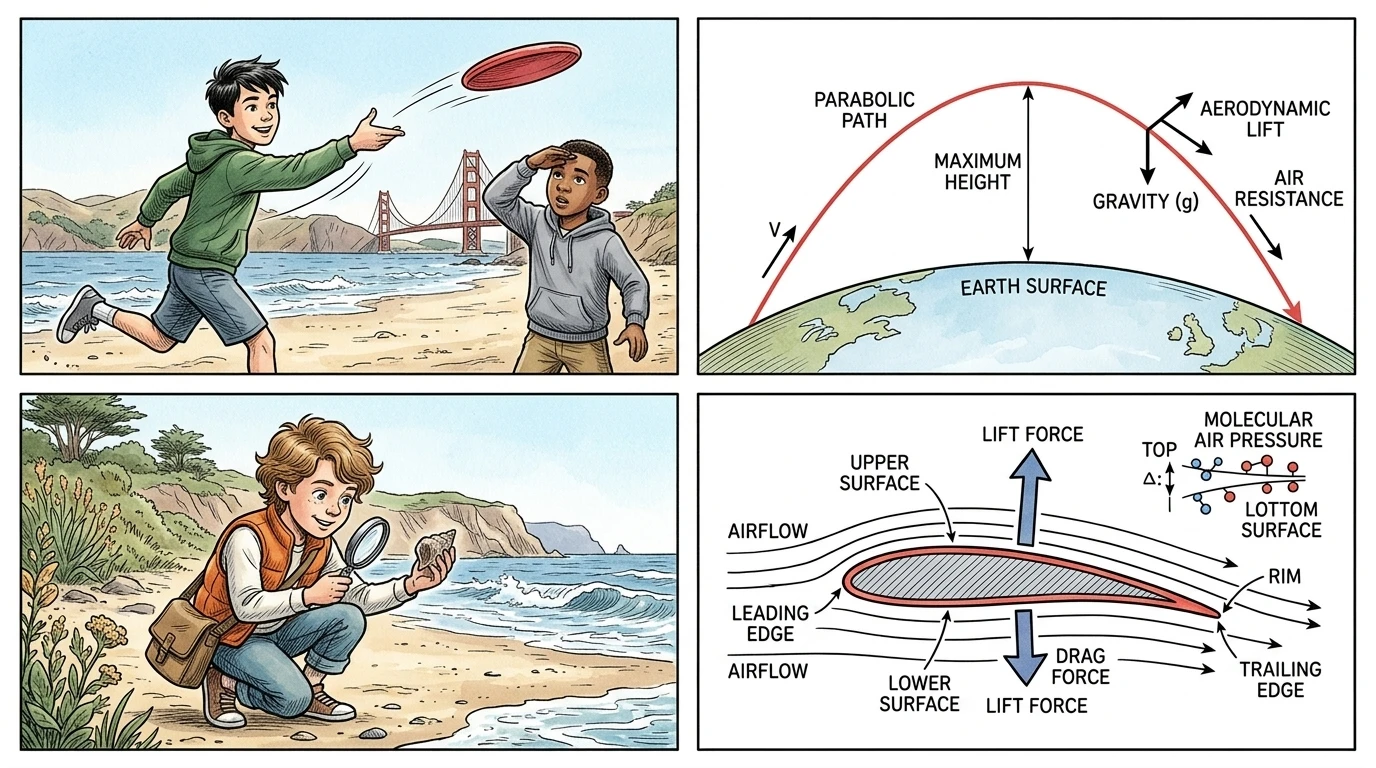
On the windy expanse of Baker Beach, Jake launched a red frisbee with a powerful flick of his wrist. It soared high against the backdrop of the Golden Gate Bridge before curving back down. "Why doesn't it just fly away forever?" asked Sophie, shielding her eyes as she watched it land. "What keeps it from just going straight up into space?"
Page 2
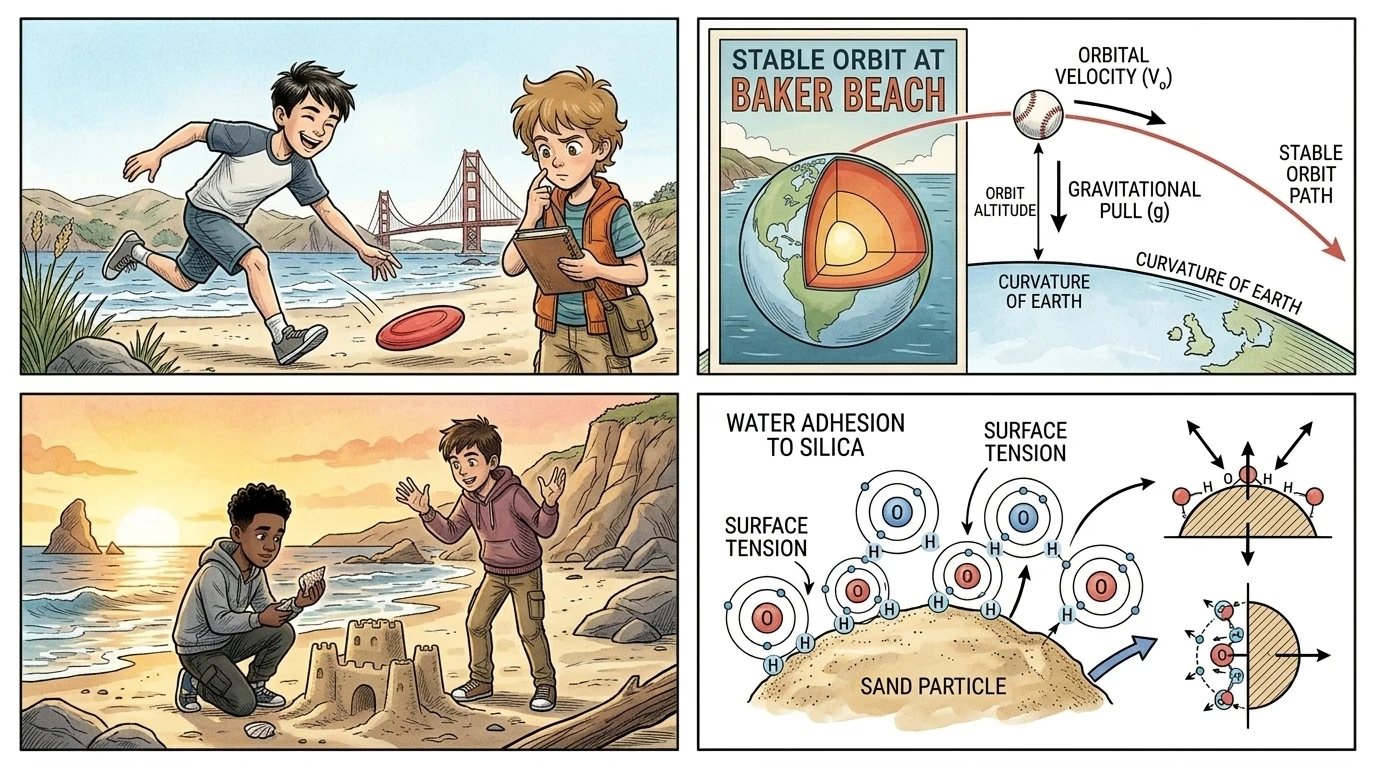
"Gravity, Soph!" Jake laughed, jogging to get the frisbee. "But if I could throw a baseball fast enough, I bet I could get it to circle the whole Earth!" Pavel tapped the worn leather notebook at her side. "You're actually closer than you think, Jake. That idea is the key to everything we call an orbit."
Page 3
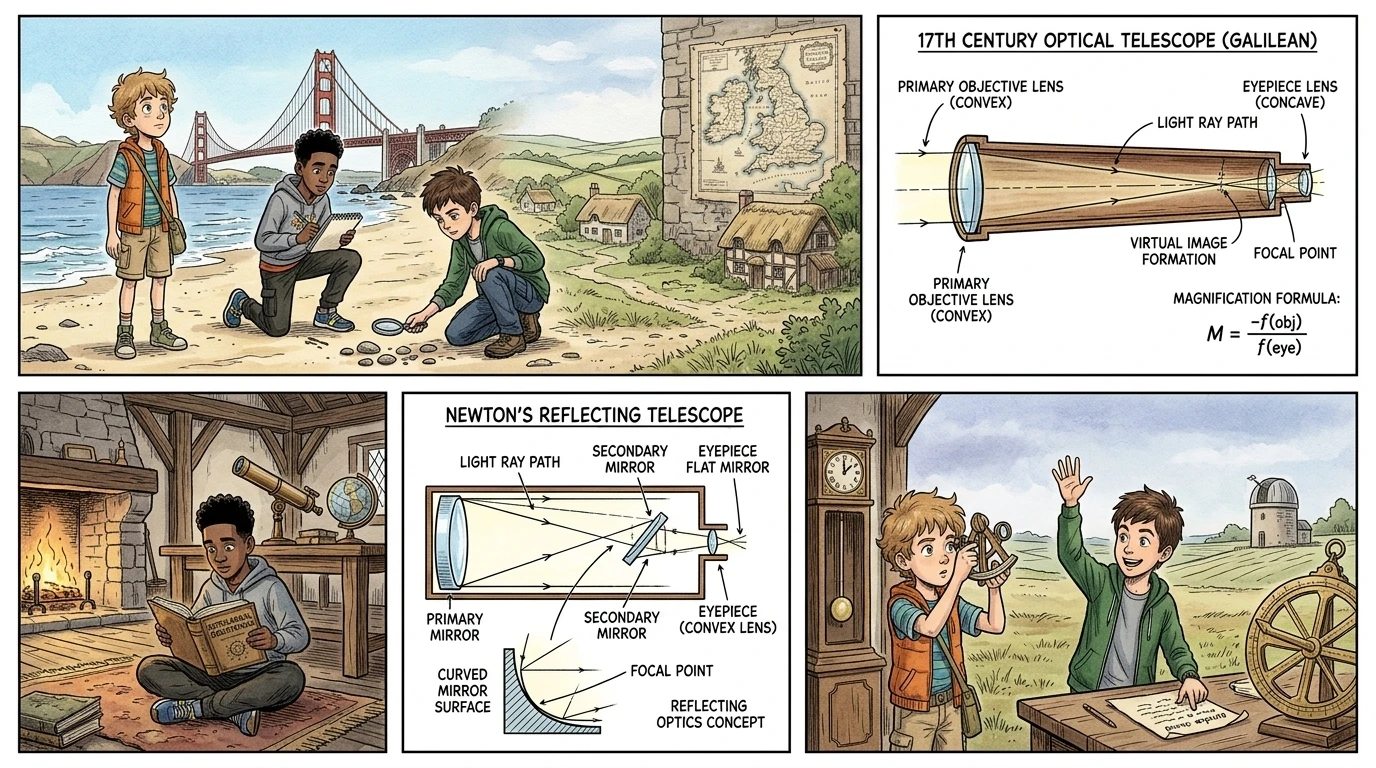
Pavel's eyes unfocused for a moment as she imagined a different time. "To understand that, you have to go back to England in the 1660s," she began. "It was a time of great plagues and great ideas, where one man was thinking about the same questions we are." The sunny beach seemed to fade away, replaced by the quiet English countryside.
Page 4
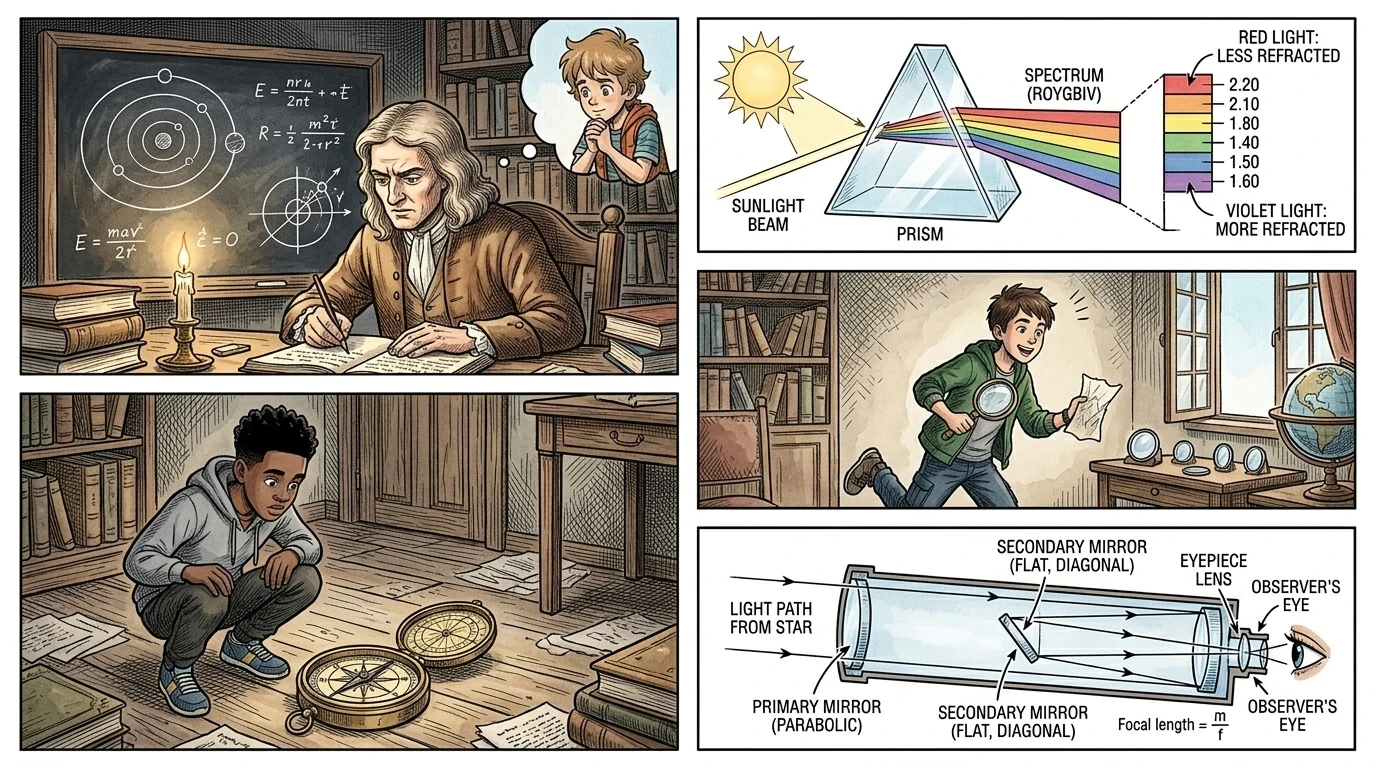
"His name was Isaac Newton," Pavel continued, her voice soft. "He wasn't just some old man who sat under a tree. He was a brilliant, difficult, and incredibly focused scientist who wanted to figure out the universe's rules." In her mind's eye, she saw him, not in a garden, but hard at work inside his study.
Page 5
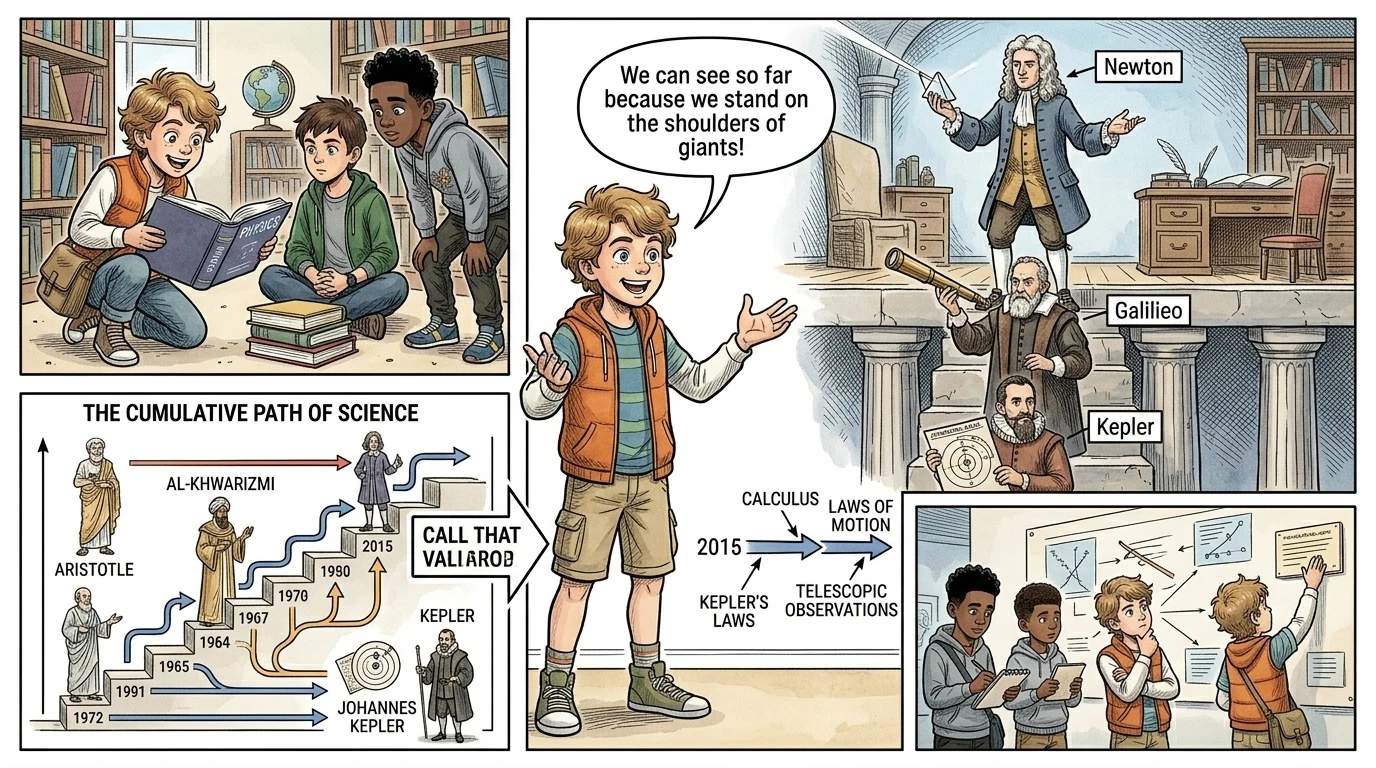
"He knew he was building on the work of others, like Galileo and Kepler," Pavel explained. "He even wrote to a rival, saying, 'If I have seen further it is by standing on the shoulders of Giants.' He understood that science is a team sport played across centuries."
Page 6
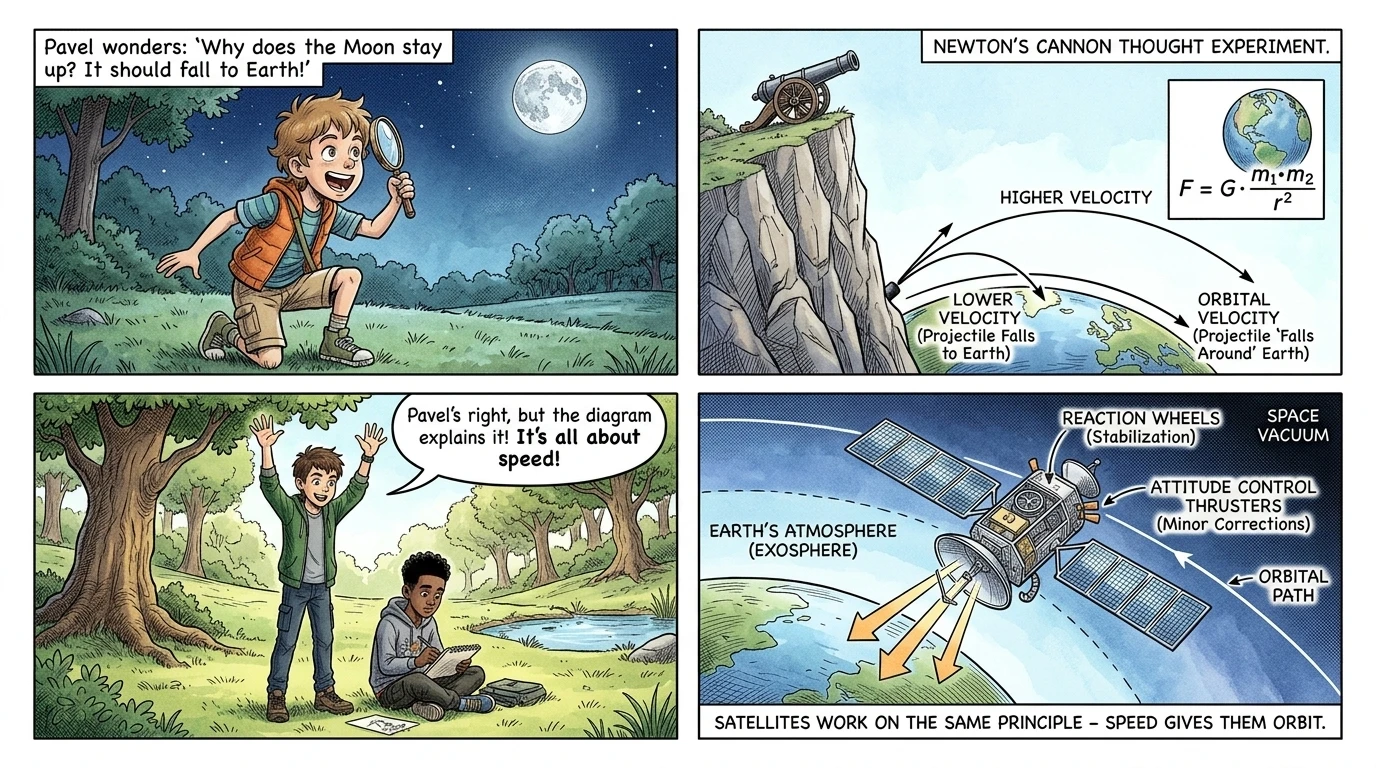
"Newton came up with an amazing thought experiment," Pavel said, her voice filled with excitement. "He imagined a cannon on the tallest mountain on Earth. If you fire a cannonball, it falls back to the ground. But what if you fire it faster... and faster... and faster?"
Page 7
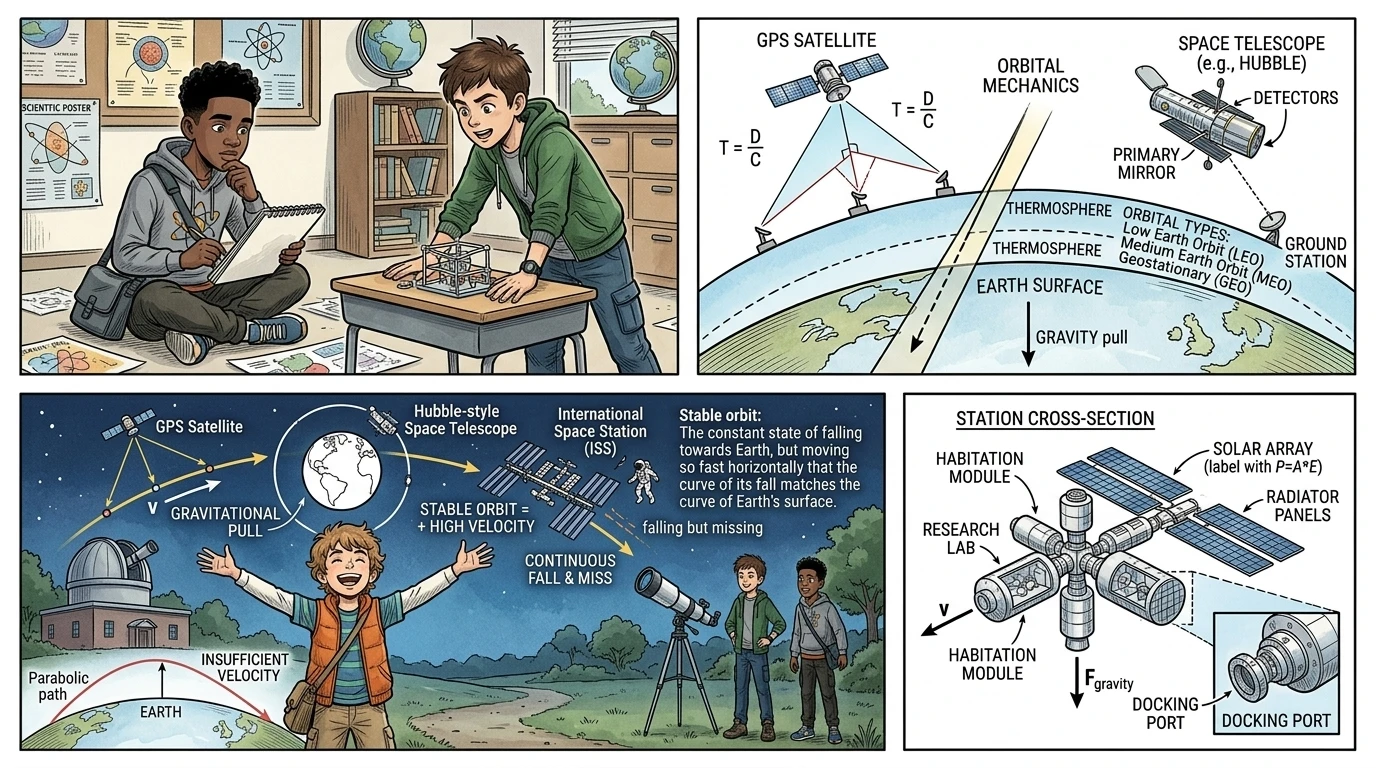
"Eventually, you fire it so fast that it's constantly falling, but it keeps missing the Earth!" Pavel exclaimed. "That's what an orbit is! This one idea unlocked everything—it's why we have satellites for GPS, space telescopes, and even the International Space Station flying overhead right now."
Page 8
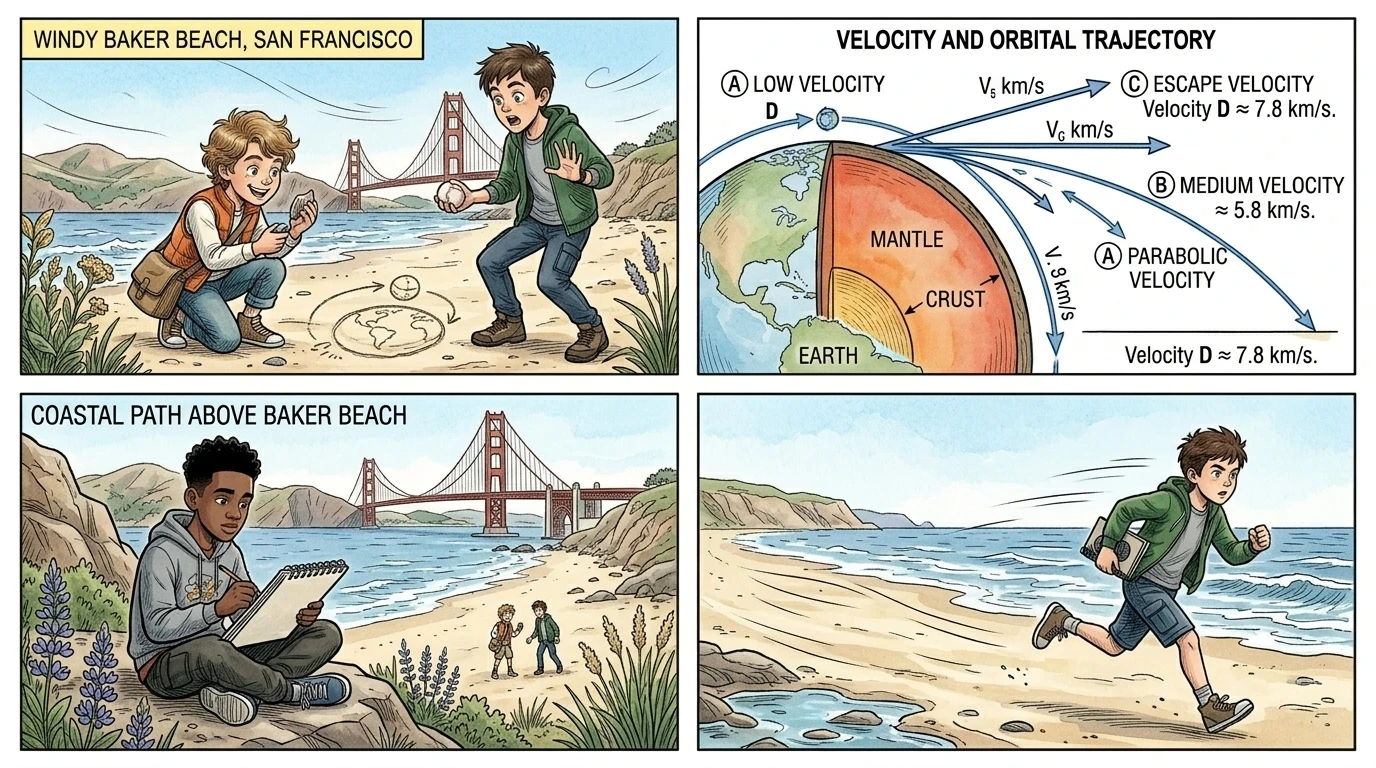
The vision faded, and they were back on Baker Beach, the salty wind blowing through their hair. "So you see, Jake?" Pavel said, grinning at her brother. "If you threw your baseball at seventeen thousand miles per hour, it would do exactly what Newton's cannonball did—it would fall and miss, forever!" Jake's jaw dropped in understanding.
Page 9
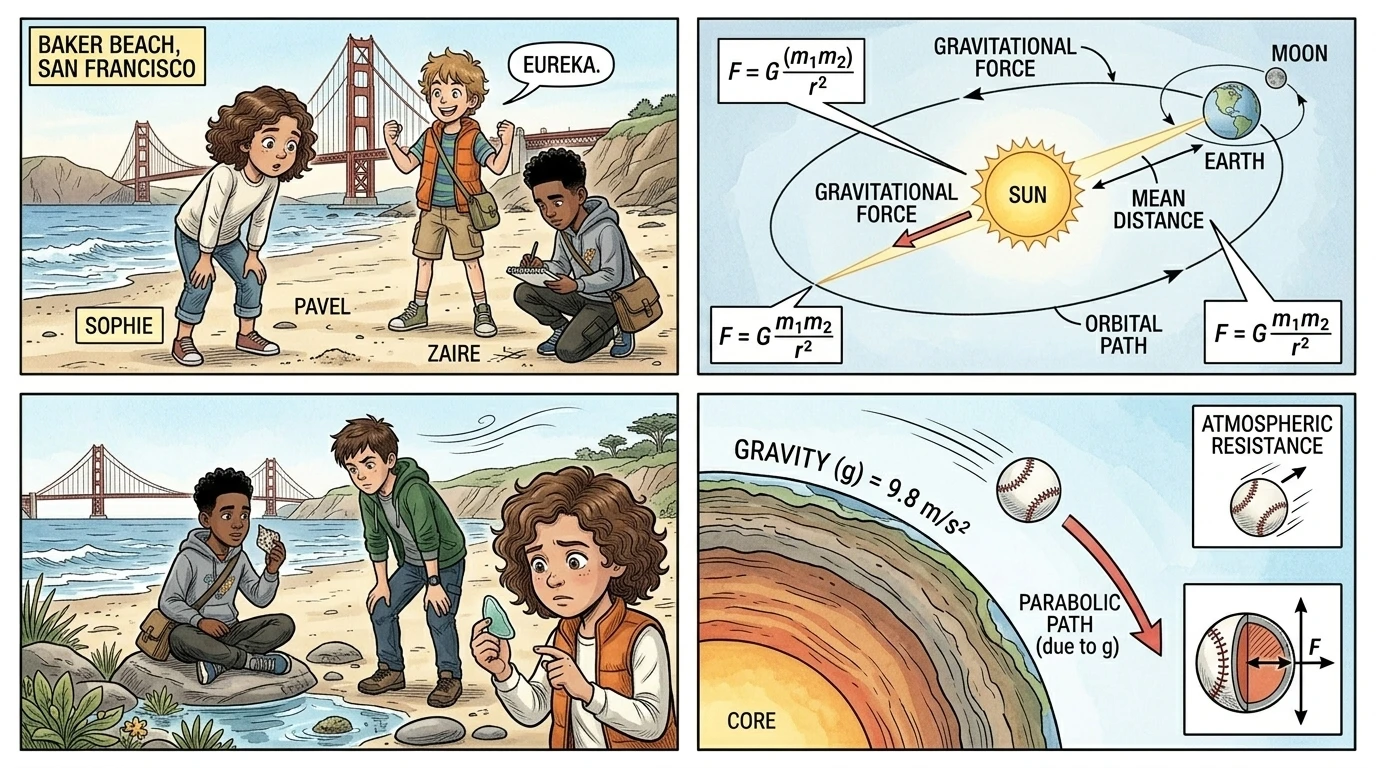
"Whoa! So the moon is just... falling too?" Sophie asked, her eyes wide. "Exactly!" Pavel confirmed. "And so is the Earth around the sun, even though it takes eight minutes and twenty seconds for its light to even reach us!" Jake shook his head in disbelief, "And all that is held together by the same gravity that makes my curveball drop."
Page 10
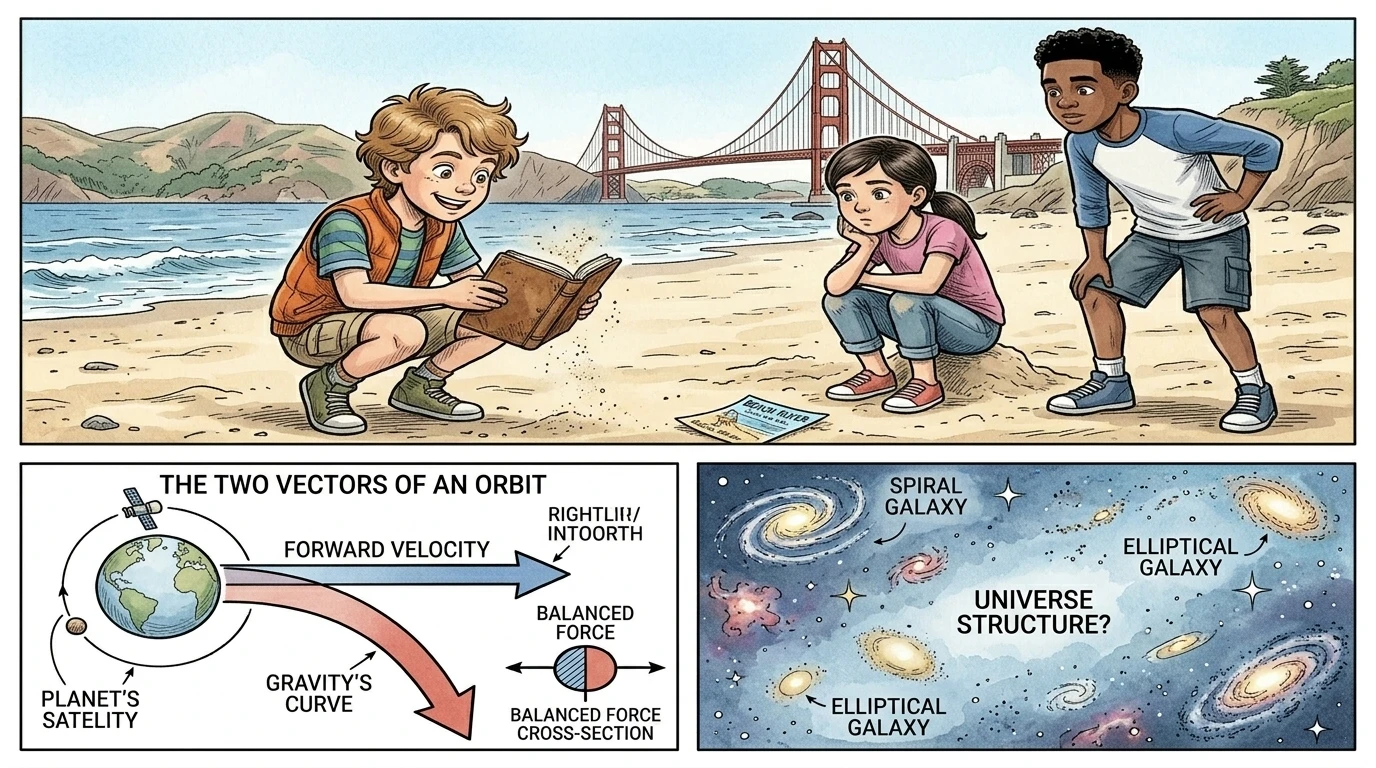
Pavel closed her notebook with a smile. "So, an orbit is simply the perfect balance between moving forward very fast and falling down." Sophie sat up, a new thought already forming. "Okay, but if gravity is always pulling everything together," she asked, "why isn't the whole universe just one giant, squished-up ball?"
About this story
- Location: United States
- Audience: kids (ages 6–12)
Questions and answers
Read Wonder Science on your phone
Wonder Science is available on Android. Get Wonder Science on Google Play.