Why Earthquakes Happen
Why Earthquakes Happen — an illustrated science story, set in Germany. 10 illustrated pages, free to read on Wonder Science.
Page 1
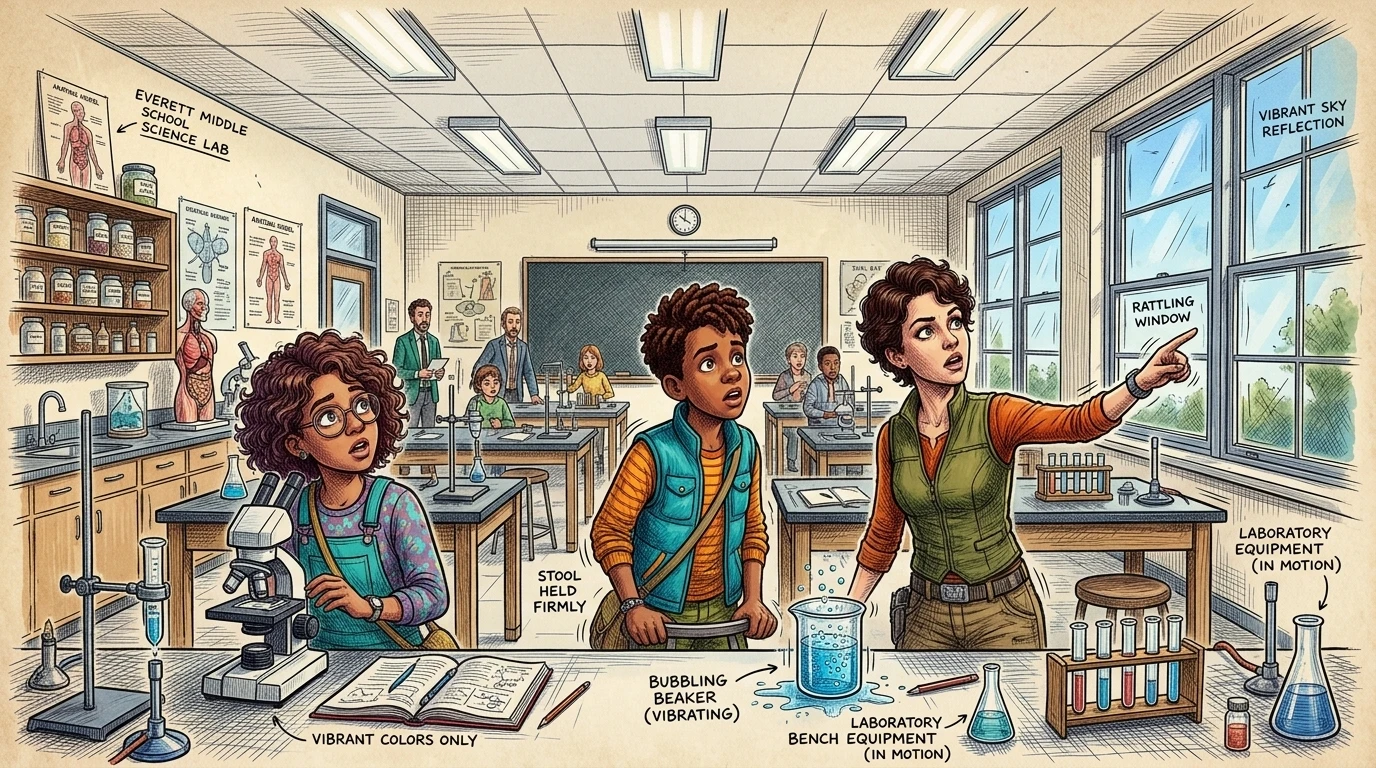
Inside the science lab at Everett Middle School, a beaker of blue liquid trembled on the lab bench. Taj, Koa, and Nia all looked up as a gentle, rolling jolt shook the classroom for a few seconds. "Whoa, did you guys feel that?" Koa asked, grabbing the edge of his stool. Nia's eyes were wide as she pointed at the rattling windowpane. "What was that, Mr. Harris?"
Page 2
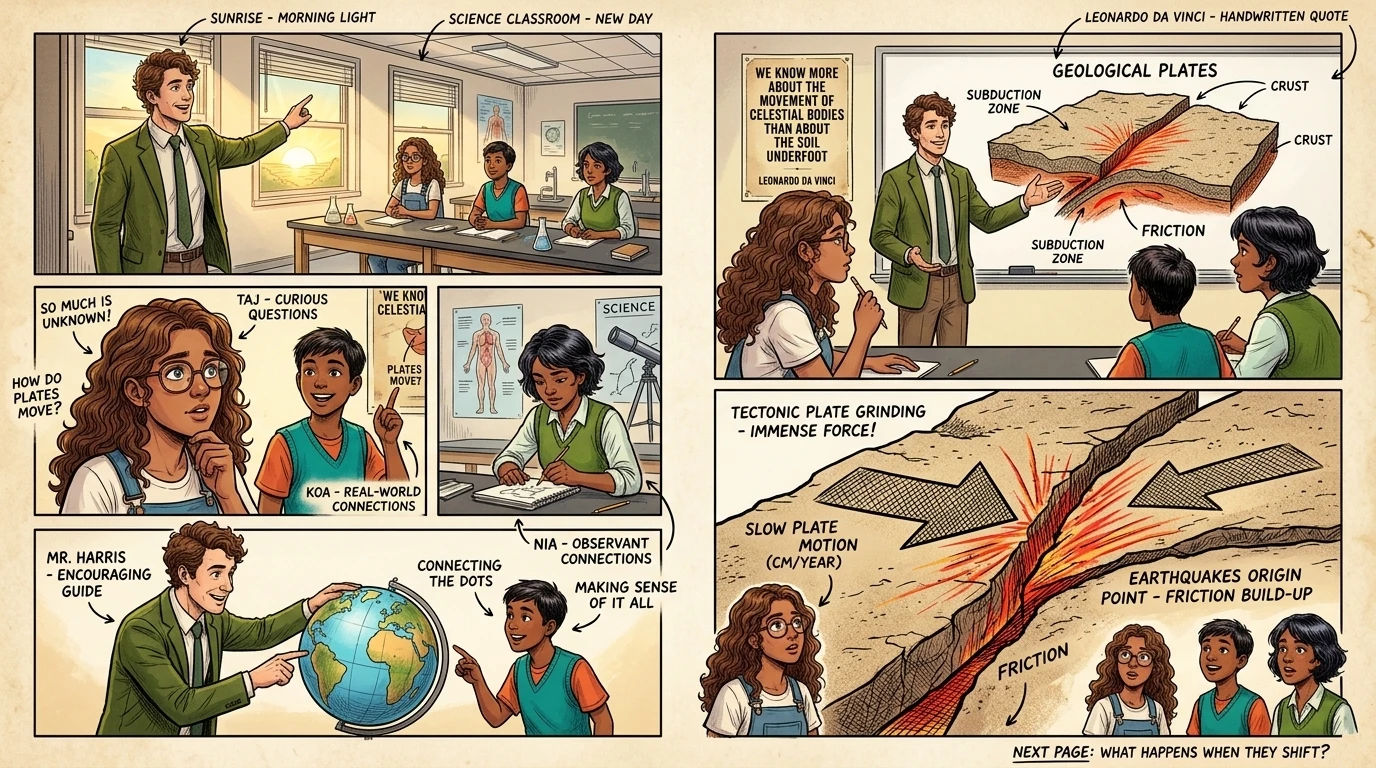
"That, class, was a tiny earthquake," Mr. Harris explained calmly. "Our city sits where two of Earth's tectonic plates meet, and they're constantly scraping past each other like giant pieces of sandpaper." He paused, looking at his curious students. "As the great artist and scientist Leonardo da Vinci said, 'We know more about the movement of celestial bodies than about the soil underfoot.' Isn't that a puzzle?"
Page 3
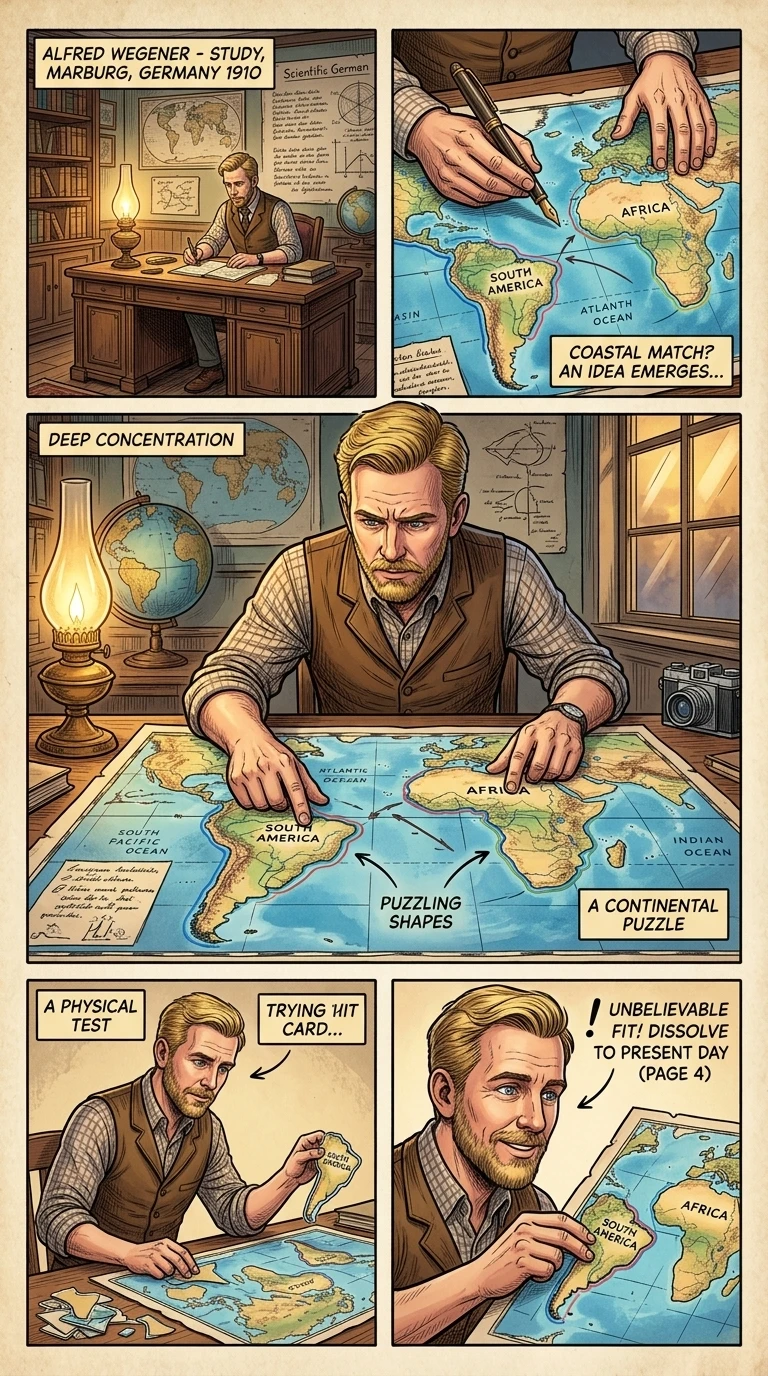
Taj imagined what it must have been like before anyone knew about plates. The scene dissolved to a quiet, lamp-lit study over a century ago in Germany. A man with a thick mustache hunched over a huge world map, his brow furrowed in concentration. He wasn't just looking at the map; he was seeing a secret hidden in the shapes of the continents themselves.
Page 4
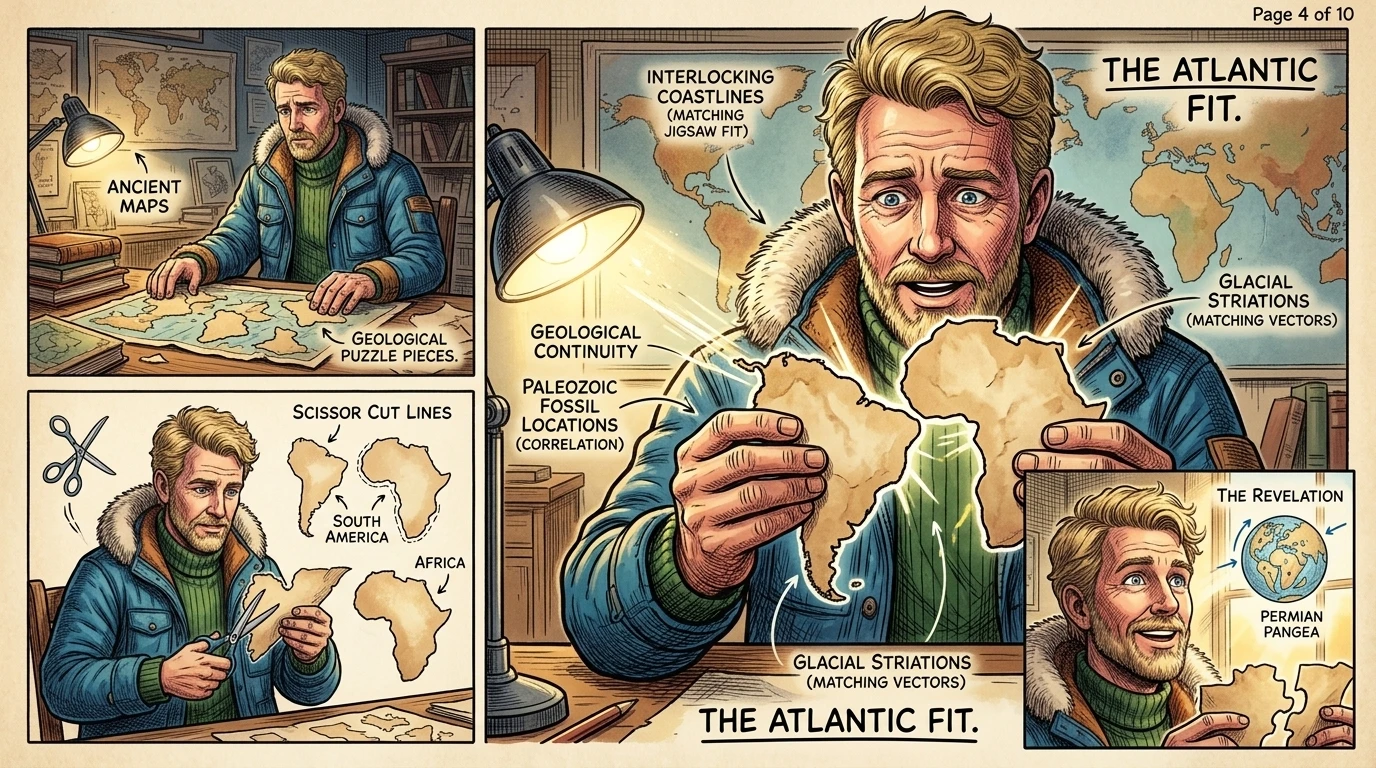
"That was Alfred Wegener, a German meteorologist and polar explorer," Mr. Harris's voice narrated. "In 1912, he proposed a wild idea called Continental Drift. He suggested that all the continents were once connected in a supercontinent he named Pangea." Wegener held up the paper shapes of South America and Africa, a look of dawning realization on his face.
Page 5
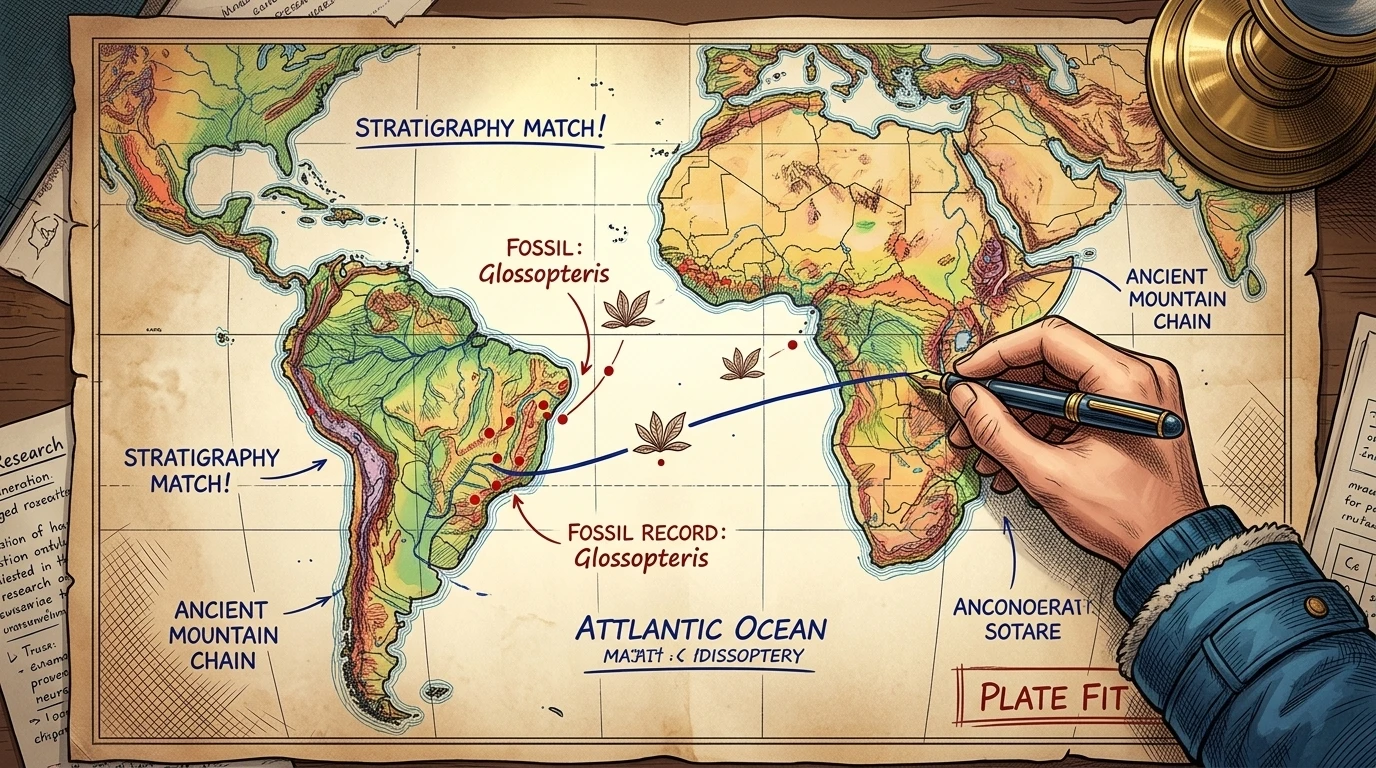
"It's more than a coincidence," Wegener murmured to himself, pointing to his notes. "The same plant fossils in Brazil are found in West Africa... and the rock layers match, too!" He traced the lines on the map, connecting ancient mountain ranges that were now separated by an entire ocean. It was like finding two halves of a torn photograph.
Page 6
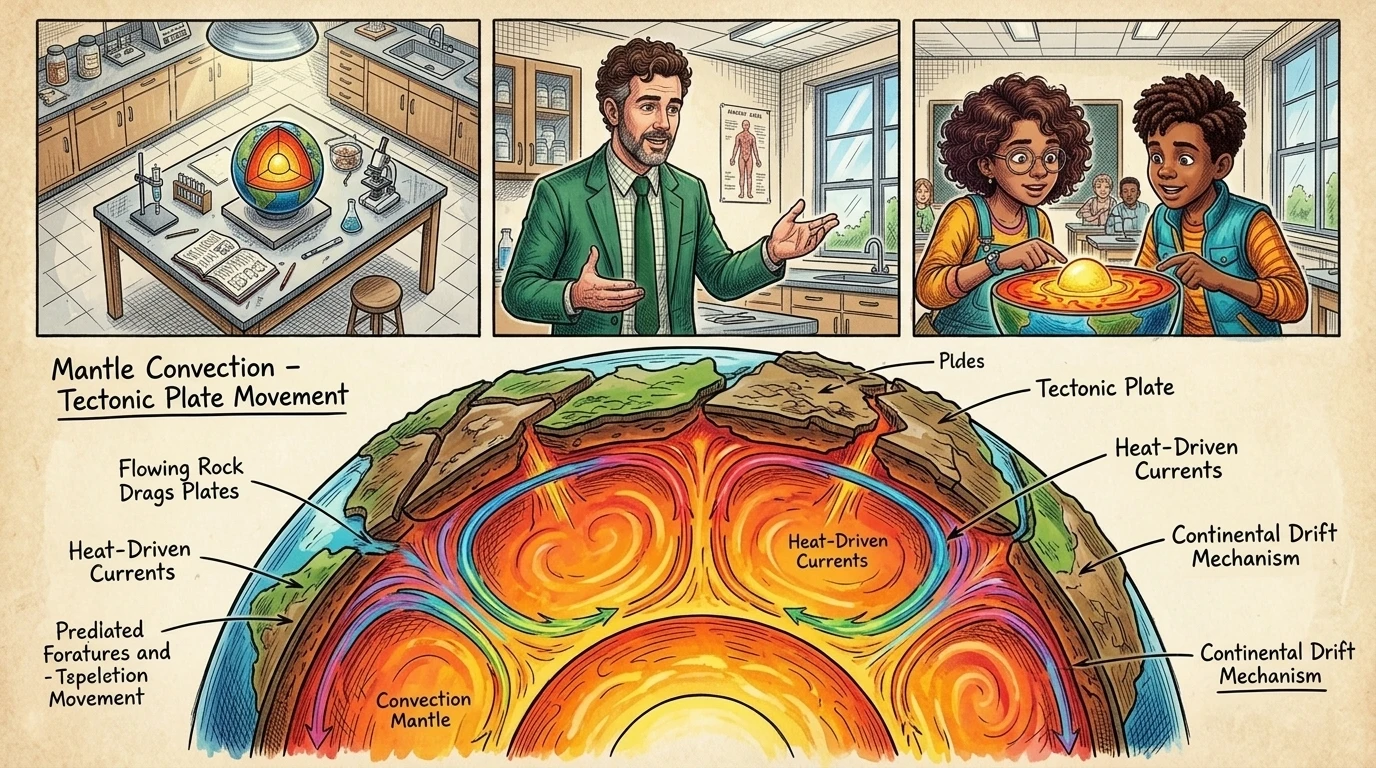
Wegener was right, but he couldn't explain how the continents moved. Decades later, scientists discovered the answer deep within the Earth. The planet's crust is broken into giant tectonic plates that float on a sea of hot, flowing rock called the mantle. Slow, powerful currents within the mantle push and pull the plates above, carrying the continents with them.
Page 7
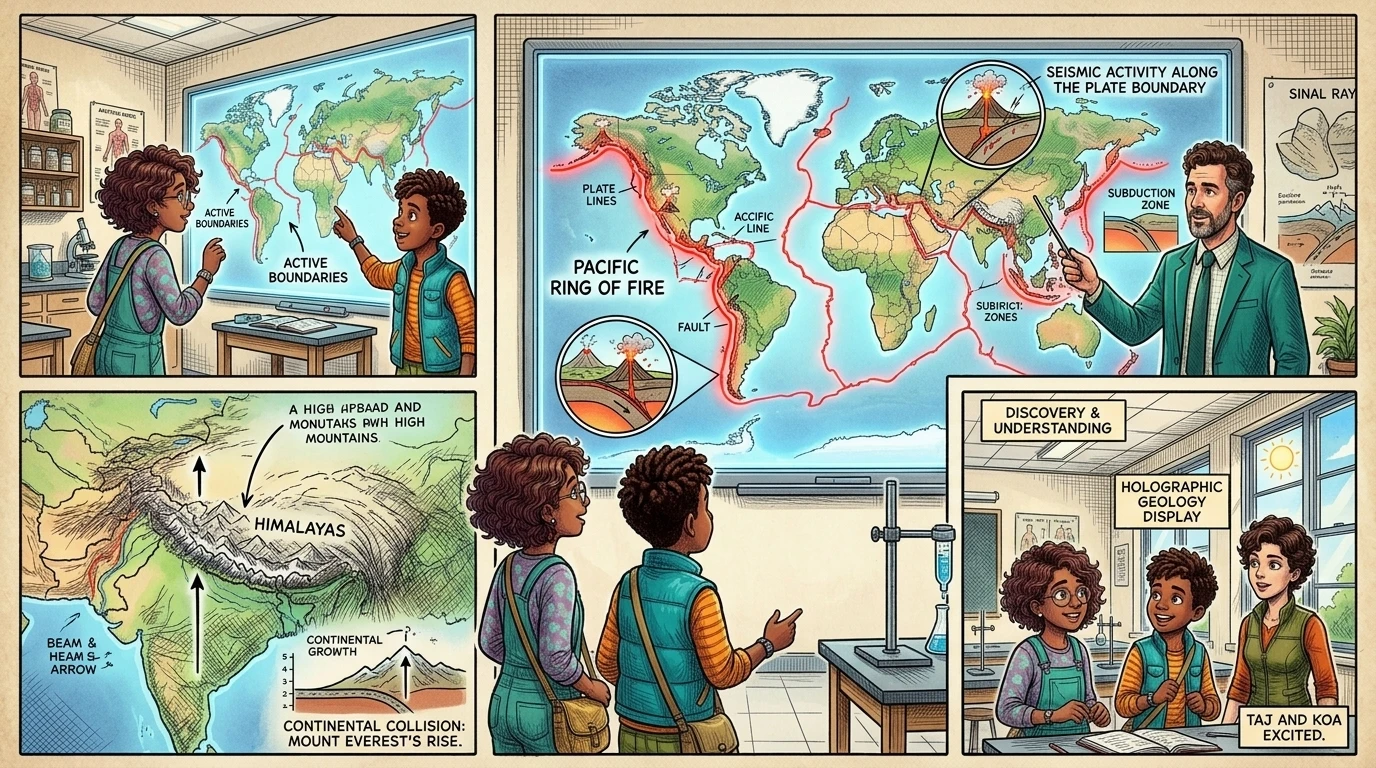
"This discovery of plate tectonics explained everything!" Mr. Harris's voice continued. "It explains how mountains like the Himalayas are formed, with Mount Everest growing about four millimeters taller every year." A map lit up, showing a bright red line of volcanoes and earthquake zones around the Pacific Ocean. "And it's why we have the 'Ring of Fire,' where most of the world's earthquakes and volcanic eruptions happen."
Page 8
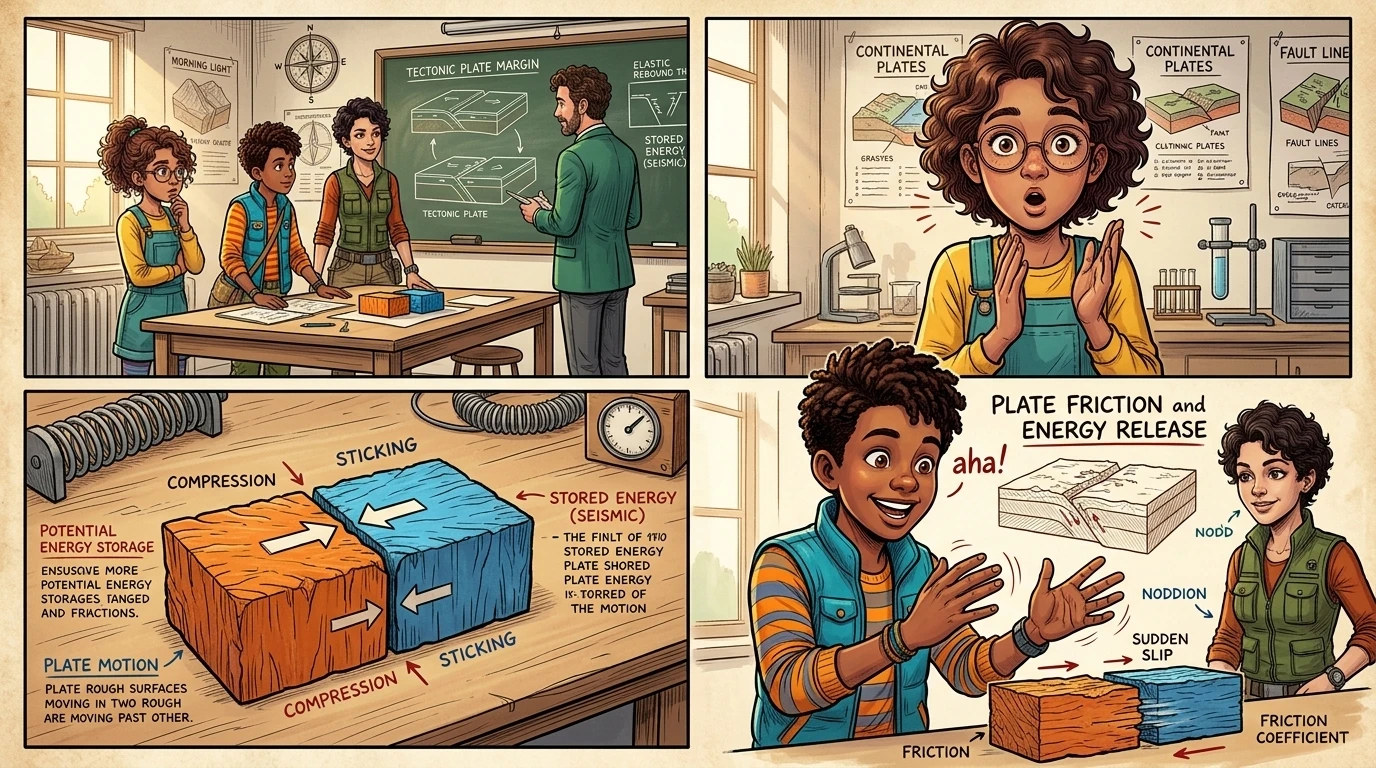
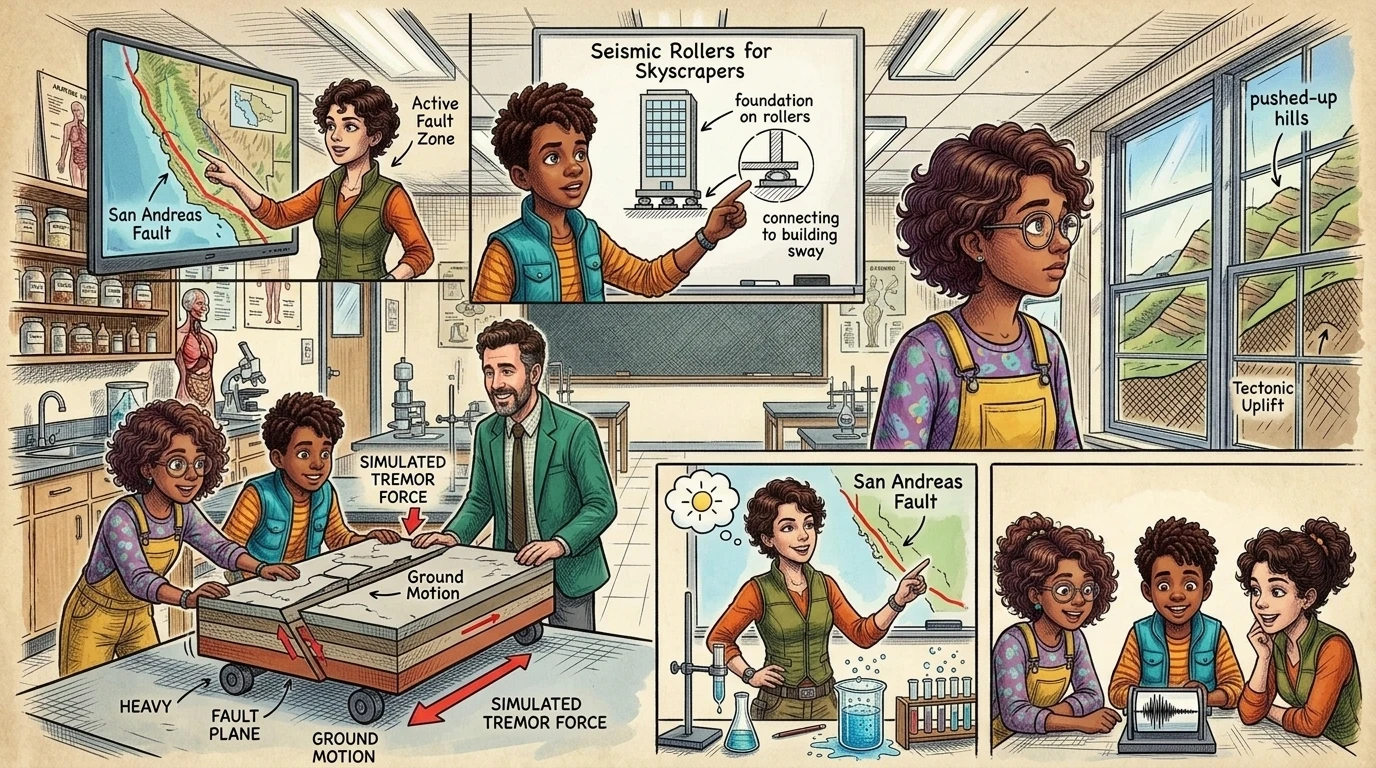
Back in the classroom, the pieces clicked together for Taj. "So, the sandpaper!" she exclaimed, turning to her friends. "The plates are always trying to move, but they get stuck because of friction!" Koa's face lit up. "And when the pressure builds up too much, they suddenly slip, and that's the earthquake!"
Page 9
"Exactly!" Nia added, pointing to a map of their city. "The San Andreas Fault is right here—it's the 'sandpaper' edge for our part of California." Taj looked out the window at the steep city streets. "And all these hills were pushed up over millions of years by the same forces." Koa chimed in, "That's also why our skyscrapers are built on special rollers, so they can sway when the ground shakes."
Page 10
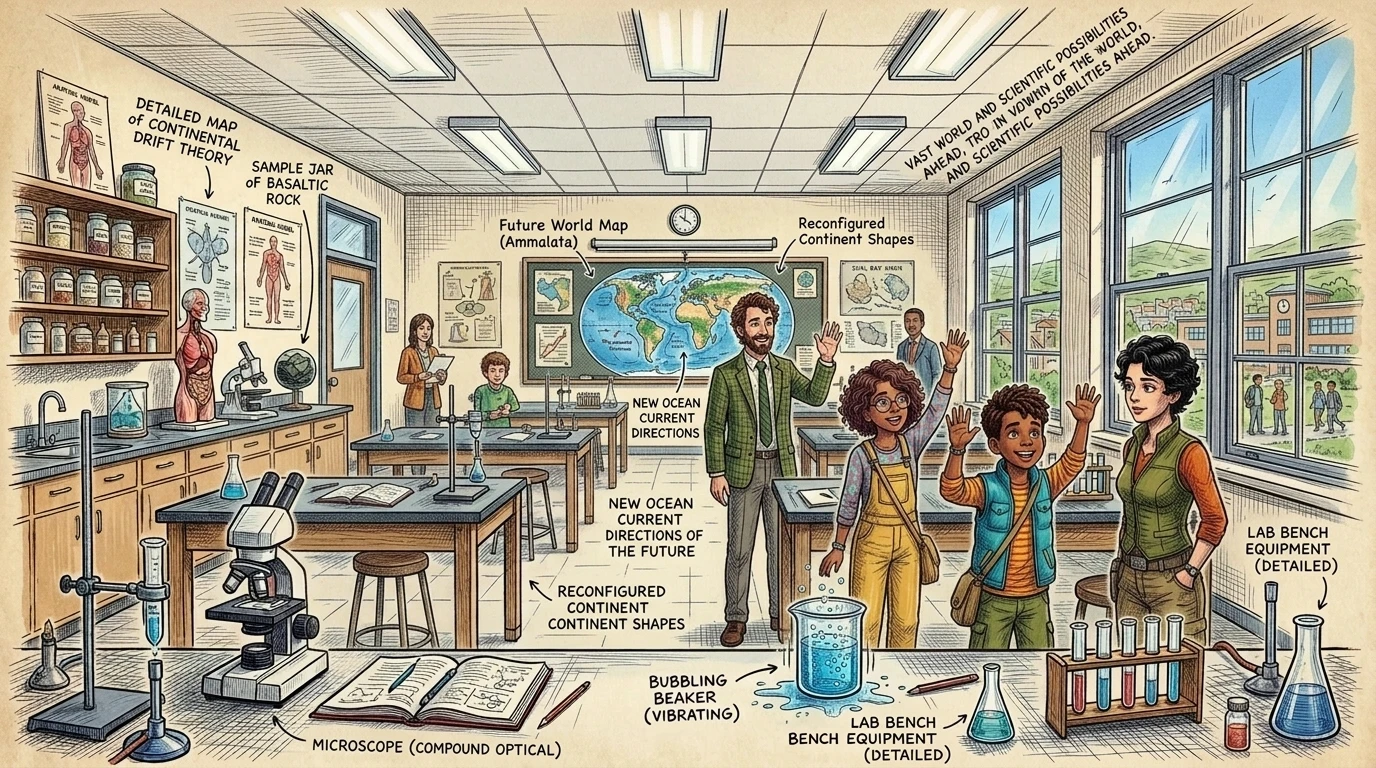
Taj smiled, feeling the solid ground beneath her feet in a whole new way. "The Earth feels still, but it's actually a giant, moving puzzle," she said, jotting it down in her notebook. Nia looked up, a new thought sparking in her eyes. "So if the plates are still moving... does that mean the map of the world will look completely different millions of years from now?"
About this story
- Location: Germany
- Audience: kids (ages 6–12)
Questions and answers
Read Wonder Science on your phone
Wonder Science is available on Android. Get Wonder Science on Google Play.