Why Fire Burns

Why Fire Burns — an illustrated science story. 10 illustrated pages, free to read on Wonder Science.
Why Fire Burns — book cover — Wonder Science
Why Fire Burns — an illustrated science story. 10 illustrated pages, free to read on Wonder Science.

Page 1
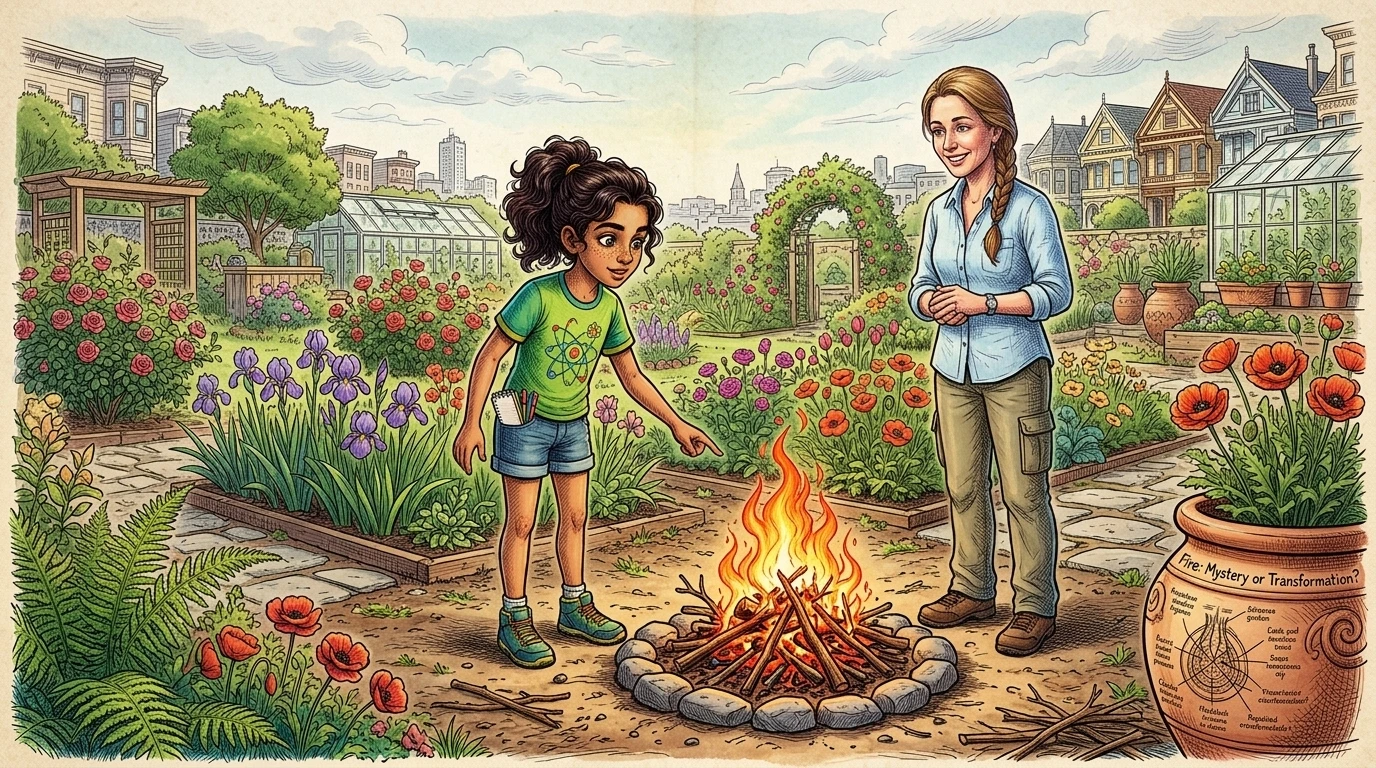
Meera and her mom were tending their miniature garden, nestled amongst the flowerbeds of a larger San Francisco garden. "Mom, why does the fire burn the wood…
Meera and her mom were tending their miniature garden, nestled amongst the flowerbeds of a larger San Francisco garden. "Mom, why does the fire burn the wood but then disappear? Where does it go?" Meera asked, pointing to a small controlled campfire she had constructed from twigs. Her mom smiled, "That's a fantastic question, Meera, and one that even great scientists have explored!"

Meera and her mom were tending their miniature garden, nestled amongst the flowerbeds of a larger San Francisco garden. "Mom, why does the fire burn the wood but then disappear? Where does it go?" Meera asked, pointing to a small controlled campfire she had constructed from twigs. Her mom smiled, "That's a fantastic question, Meera, and one that even great scientists have explored!"

Page 2
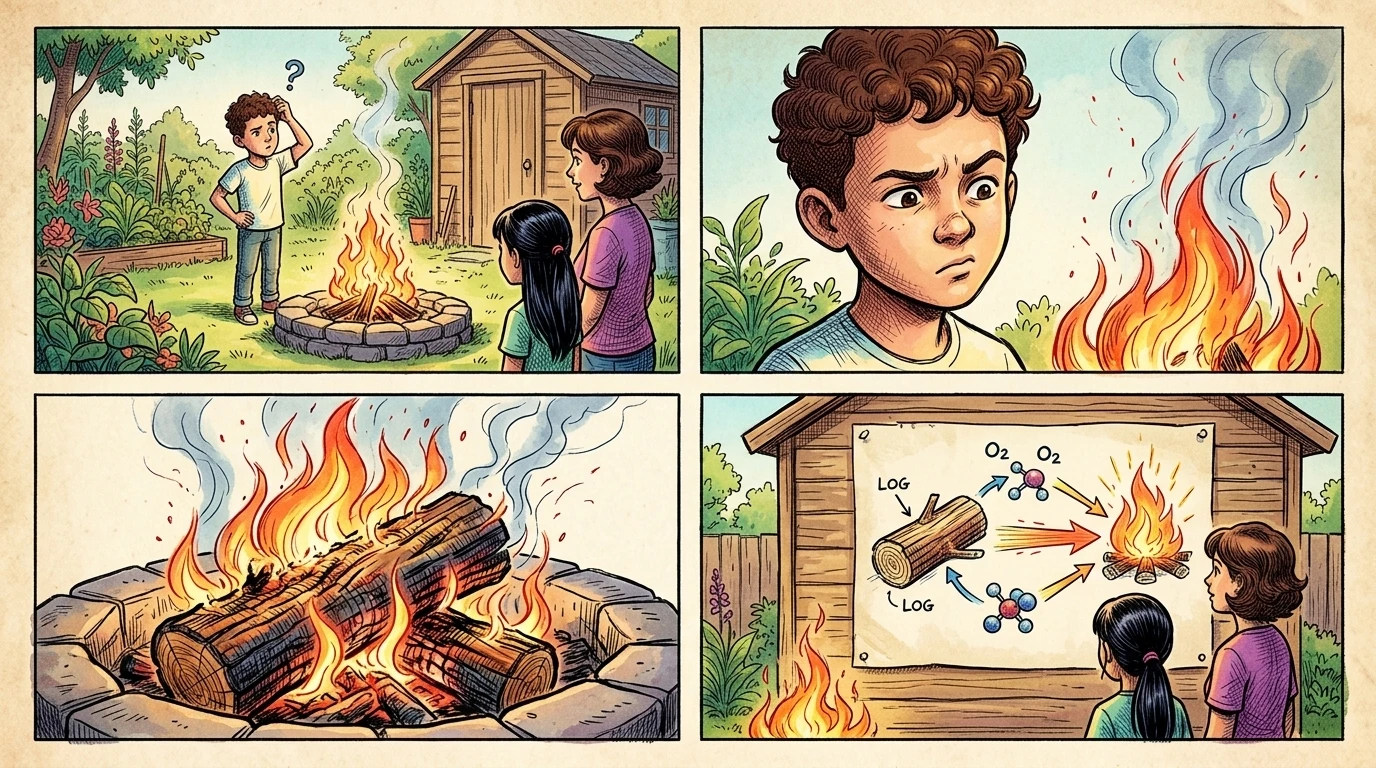
Just then, Teodoro, a neighbor boy with medium-length wavy sandy-brown hair, wandered over. "Yeah, like, when a log burns, it turns into ash, but there's also…
Just then, Teodoro, a neighbor boy with medium-length wavy sandy-brown hair, wandered over. "Yeah, like, when a log burns, it turns into ash, but there's also heat and light! Where did that energy come from?" He asked, scratching his head. Meera's mom explained, "That, my friends, is combustion. It's a chemical process where a substance reacts rapidly with an oxidant, usually oxygen, to produce heat and light."

Just then, Teodoro, a neighbor boy with medium-length wavy sandy-brown hair, wandered over. "Yeah, like, when a log burns, it turns into ash, but there's also heat and light! Where did that energy come from?" He asked, scratching his head. Meera's mom explained, "That, my friends, is combustion. It's a chemical process where a substance reacts rapidly with an oxidant, usually oxygen, to produce heat and light."

Page 3
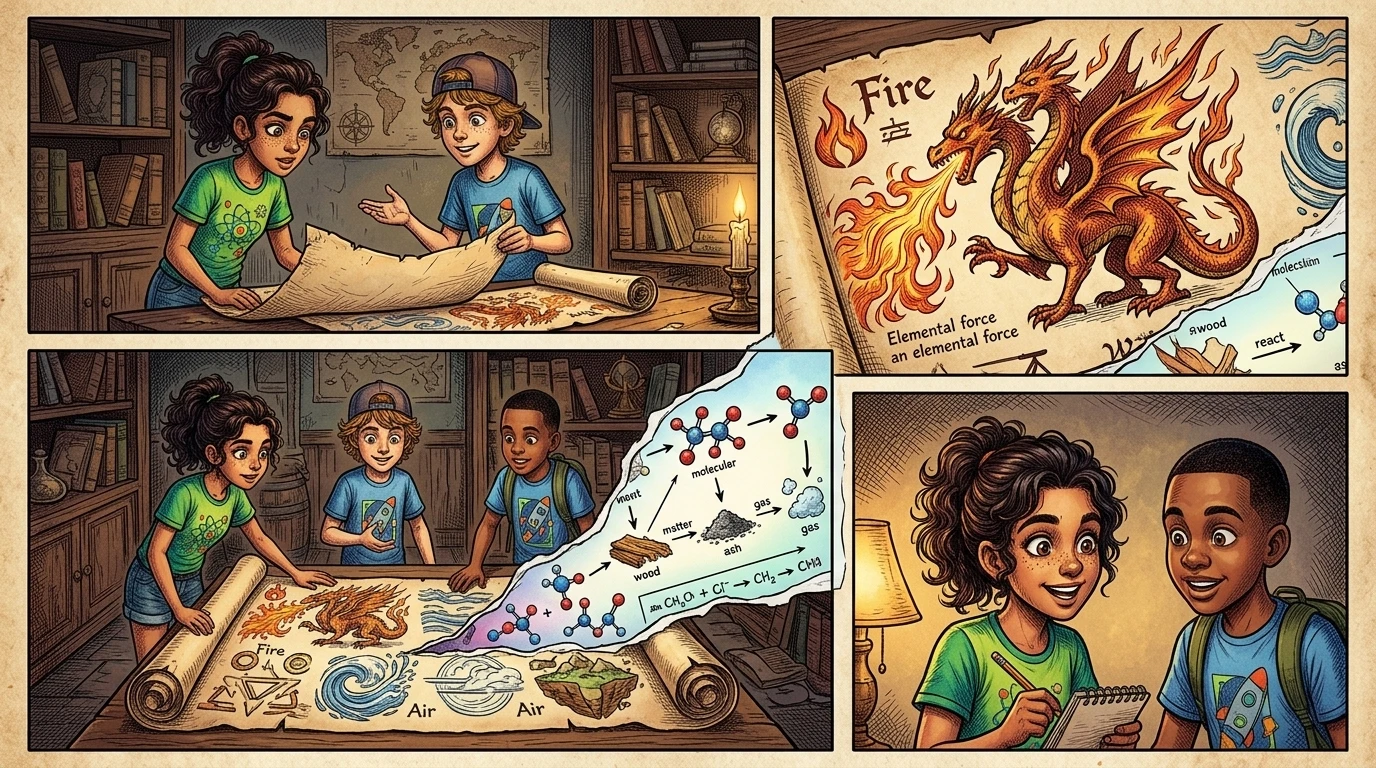
Tendai, who had been quietly observing, piped up, “So, it’s not magic? It’s… science?” Meera's mom smiled. "Exactly! For a long time, people *thought* fire was…
Tendai, who had been quietly observing, piped up, “So, it’s not magic? It’s… science?” Meera's mom smiled. "Exactly! For a long time, people *thought* fire was magical, but clever thinkers started asking ‘why?’ and looking for answers.” She gestured towards a worn book on the porch table. “One of those thinkers lived quite a while ago, and his name might sound familiar if you’ve ever studied chemistry."

Tendai, who had been quietly observing, piped up, “So, it’s not magic? It’s… science?” Meera's mom smiled. "Exactly! For a long time, people *thought* fire was magical, but clever thinkers started asking ‘why?’ and looking for answers.” She gestured towards a worn book on the porch table. “One of those thinkers lived quite a while ago, and his name might sound familiar if you’ve ever studied chemistry."

Page 4
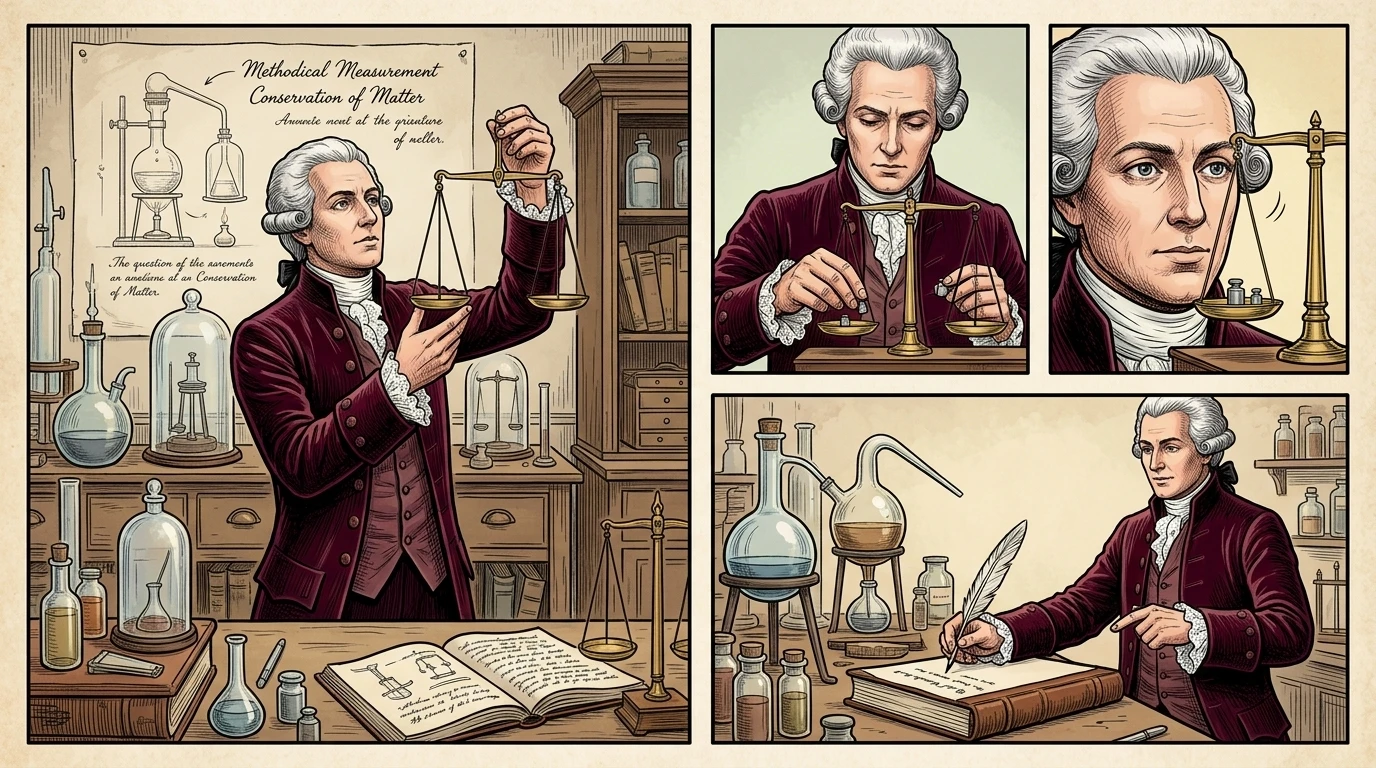
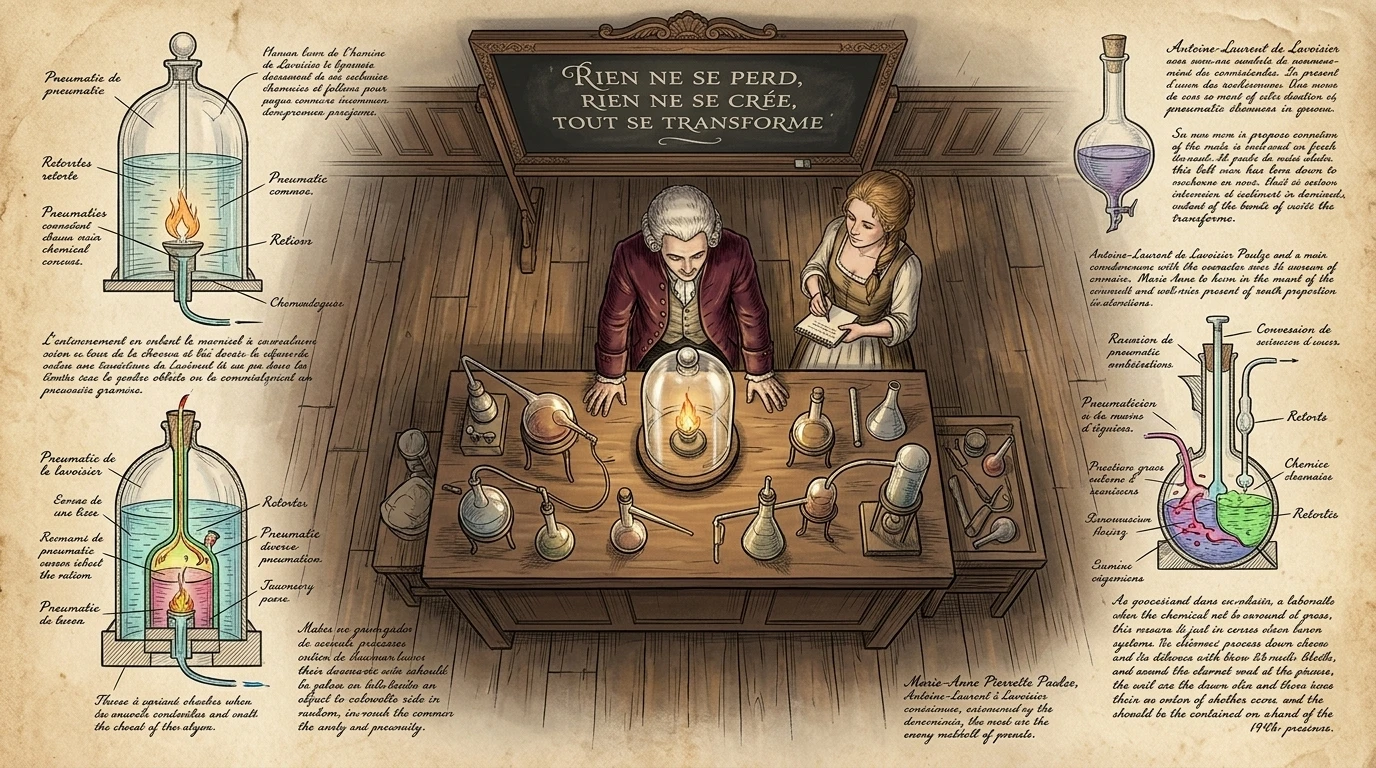
It was a time of incredible progress, but also of great mystery. Enter Antoine-Laurent de Lavoisier, a French chemist, born in 1743.
It was a time of incredible progress, but also of great mystery. Enter Antoine-Laurent de Lavoisier, a French chemist, born in 1743. Lavoisier, often called the 'father of modern chemistry,' wasn't content with just using fire; he wanted to understand it. He was a tax collector, too, which made him unpopular during the revolution, but he was also incredibly precise and methodical in his scientific work.

It was a time of incredible progress, but also of great mystery. Enter Antoine-Laurent de Lavoisier, a French chemist, born in 1743. Lavoisier, often called the 'father of modern chemistry,' wasn't content with just using fire; he wanted to understand it. He was a tax collector, too, which made him unpopular during the revolution, but he was also incredibly precise and methodical in his scientific work.

Page 5

One evening, while working late in his laboratory, Lavoisier turned to his wife, Marie-Anne Pierrette Paulze, who was also his lab assistant, "Marie, do you…
One evening, while working late in his laboratory, Lavoisier turned to his wife, Marie-Anne Pierrette Paulze, who was also his lab assistant, "Marie, do you ever wonder what connects the flame with the air we breathe? Everything seems to disappear into nothingness." It is said that Lavoisier himself once declared, "Nothing is lost, nothing is created, everything is transformed."

One evening, while working late in his laboratory, Lavoisier turned to his wife, Marie-Anne Pierrette Paulze, who was also his lab assistant, "Marie, do you ever wonder what connects the flame with the air we breathe? Everything seems to disappear into nothingness." It is said that Lavoisier himself once declared, "Nothing is lost, nothing is created, everything is transformed."

Page 6
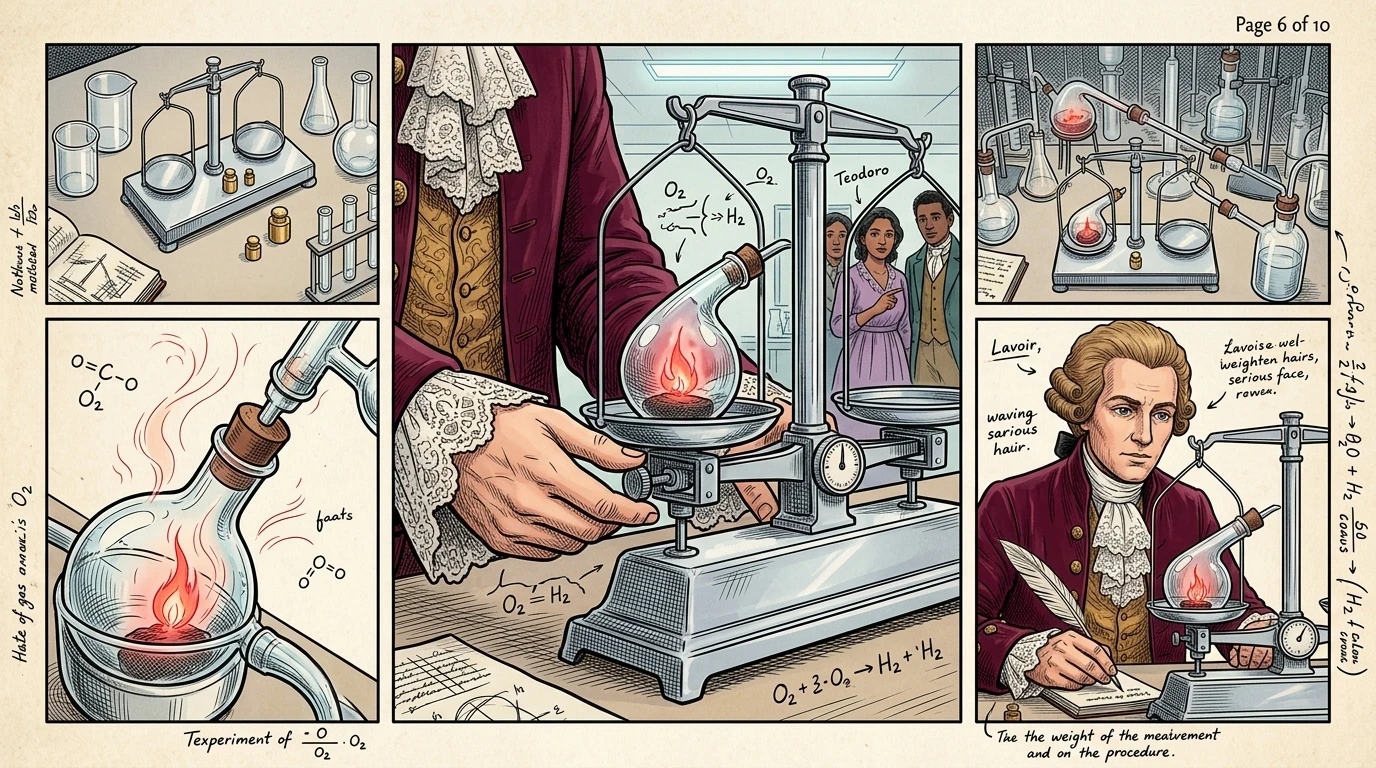
Lavoisier carefully measured the mass of objects before and after burning them. He discovered that when something burns, it combines with oxygen from the air.
Lavoisier carefully measured the mass of objects before and after burning them. He discovered that when something burns, it combines with oxygen from the air. This combination doesn't make things disappear; instead, it transforms them! Fire isn't an element; it's a chemical reaction! He also identified oxygen and hydrogen, revolutionizing our understanding of chemistry.

Lavoisier carefully measured the mass of objects before and after burning them. He discovered that when something burns, it combines with oxygen from the air. This combination doesn't make things disappear; instead, it transforms them! Fire isn't an element; it's a chemical reaction! He also identified oxygen and hydrogen, revolutionizing our understanding of chemistry.

Page 7
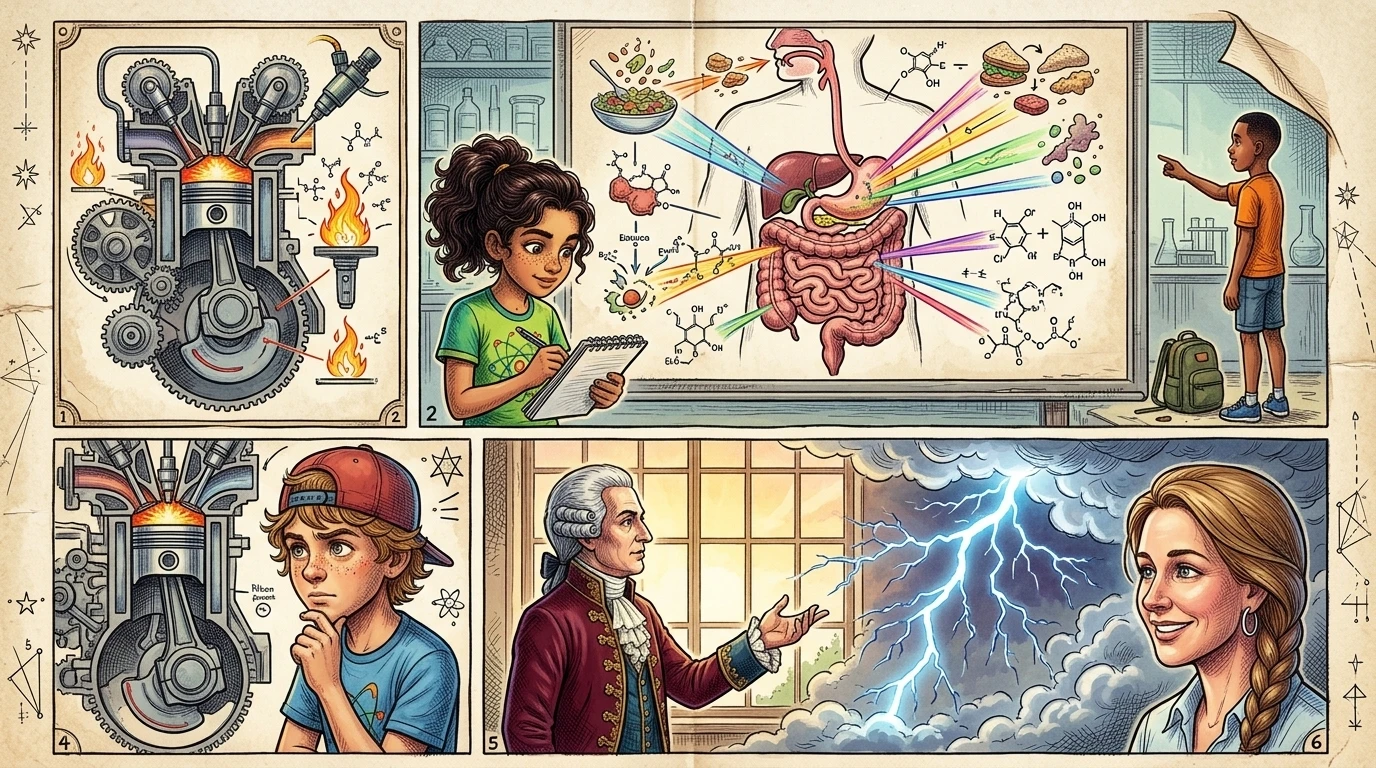
Lavoisier's discovery changed how we understand everything from engines to cooking! It led to the development of internal combustion engines, which power most…
Lavoisier's discovery changed how we understand everything from engines to cooking! It led to the development of internal combustion engines, which power most cars and trucks today. It helped us understand how our bodies use food for energy – also a form of combustion! Did you know that the energy released by a single lightning bolt can reach up to 1 billion joules? That's enough to power a small town for a short time!

Lavoisier's discovery changed how we understand everything from engines to cooking! It led to the development of internal combustion engines, which power most cars and trucks today. It helped us understand how our bodies use food for energy – also a form of combustion! Did you know that the energy released by a single lightning bolt can reach up to 1 billion joules? That's enough to power a small town for a short time!

Page 8
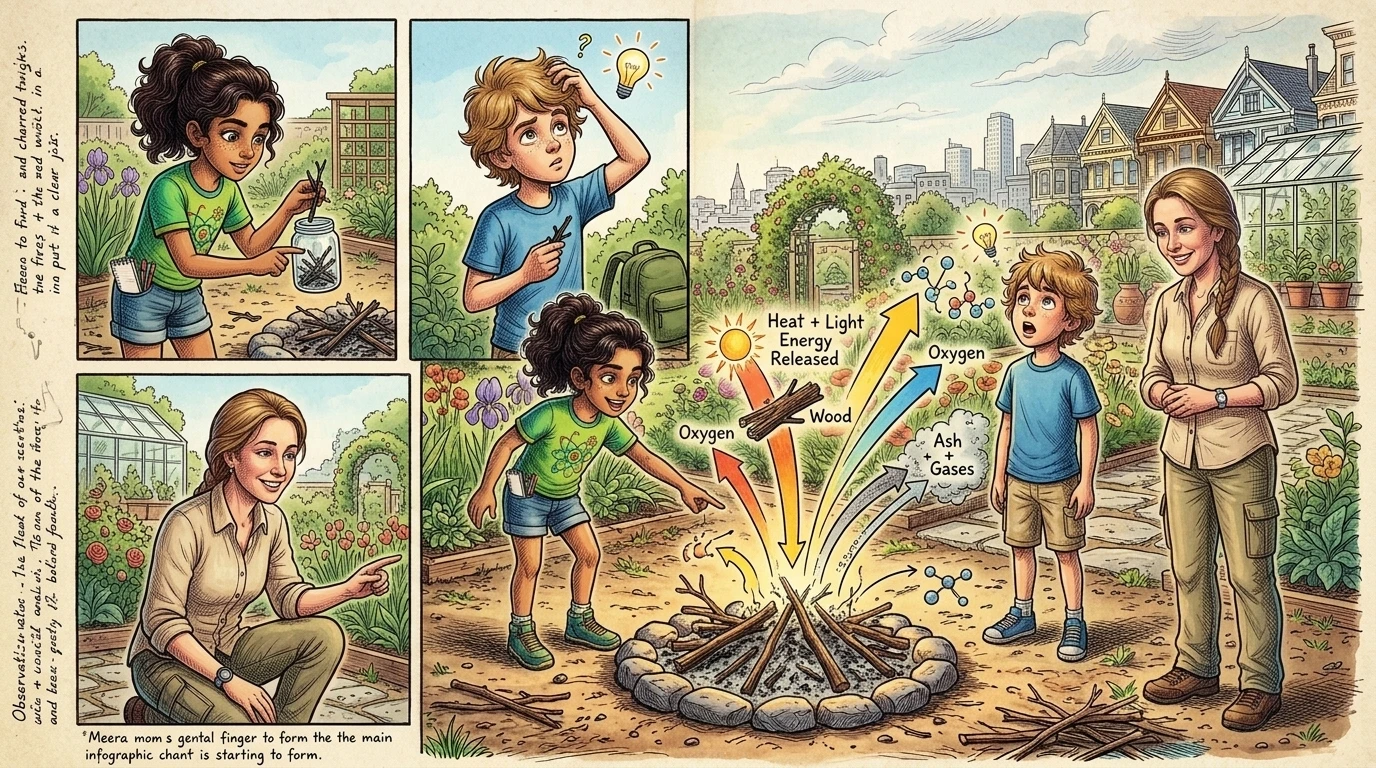
Back in the miniature garden, Meera exclaimed, "So, the wood isn't disappearing, it's just turning into different stuff, like ash and gases that mix with the…
Back in the miniature garden, Meera exclaimed, "So, the wood isn't disappearing, it's just turning into different stuff, like ash and gases that mix with the air!" Teodoro added, "And the heat and light are just energy being released when the wood combines with oxygen! Wow!" Her mom smiled, "Exactly! Lavoisier helped us understand that matter changes form but doesn't vanish."

Back in the miniature garden, Meera exclaimed, "So, the wood isn't disappearing, it's just turning into different stuff, like ash and gases that mix with the air!" Teodoro added, "And the heat and light are just energy being released when the wood combines with oxygen! Wow!" Her mom smiled, "Exactly! Lavoisier helped us understand that matter changes form but doesn't vanish."

Page 9
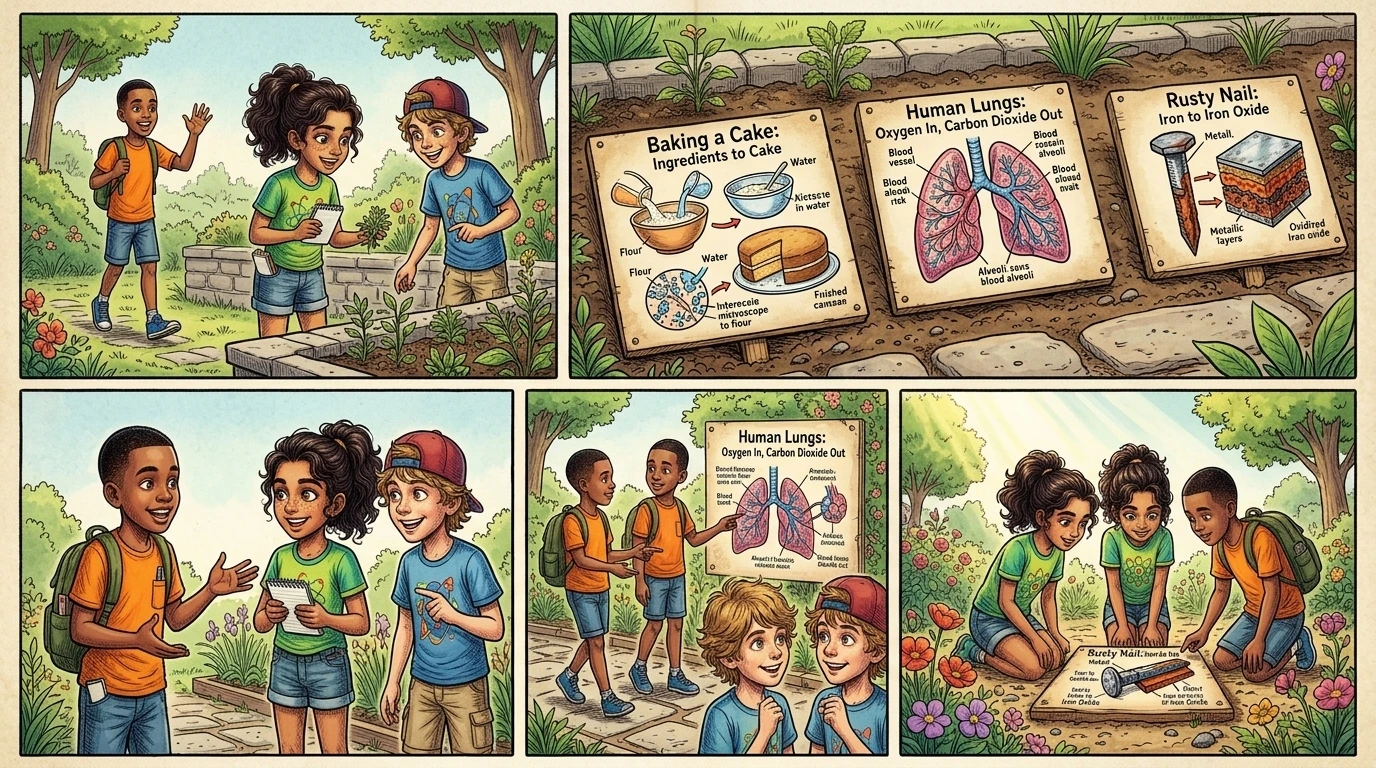
Tendai, who just arrived, said, "That's like when you bake a cake! The ingredients change, but they're still there, just in a different form." Meera added, "Or…
Tendai, who just arrived, said, "That's like when you bake a cake! The ingredients change, but they're still there, just in a different form." Meera added, "Or when you breathe! You take in oxygen and breathe out carbon dioxide, a totally different gas!" Teodoro chimed in, "It's like rust forming on metal. The metal is still there, but now it's combined with oxygen, making rust!

Tendai, who just arrived, said, "That's like when you bake a cake! The ingredients change, but they're still there, just in a different form." Meera added, "Or when you breathe! You take in oxygen and breathe out carbon dioxide, a totally different gas!" Teodoro chimed in, "It's like rust forming on metal. The metal is still there, but now it's combined with oxygen, making rust!

Page 10
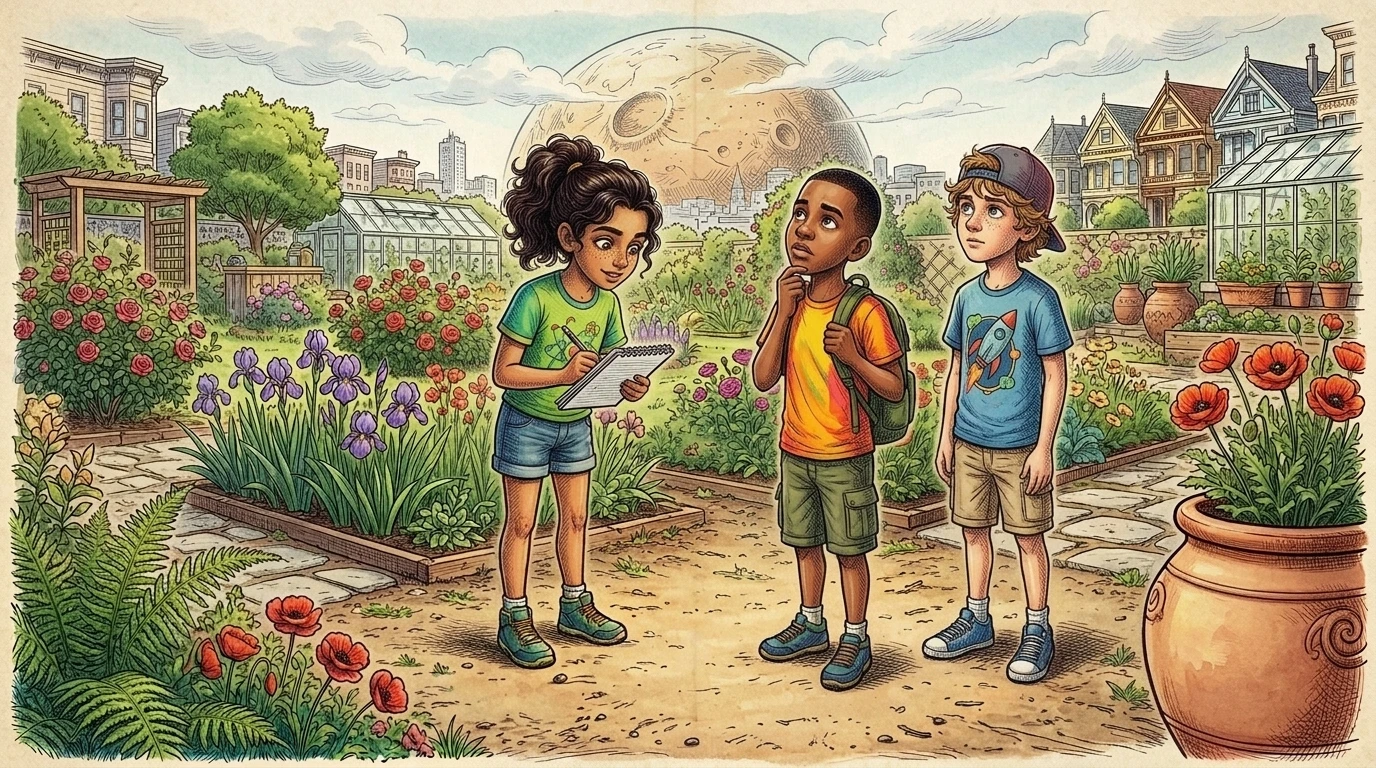
"Combustion is a chemical reaction that transforms matter and releases energy!" Meera declared, writing in her notebook.
"Combustion is a chemical reaction that transforms matter and releases energy!" Meera declared, writing in her notebook. Tendai then wondered, "If combustion needs oxygen, what happens on planets that don't have it?" The three friends pondered that mystery, their curiosity sparked for a whole new scientific exploration!

"Combustion is a chemical reaction that transforms matter and releases energy!" Meera declared, writing in her notebook. Tendai then wondered, "If combustion needs oxygen, what happens on planets that don't have it?" The three friends pondered that mystery, their curiosity sparked for a whole new scientific exploration!

About this story

  • Audience: kids (ages 6–12)

Read Wonder Science on your phone

Wonder Science is available on Android. Get Wonder Science on Google Play.

More Wonder Science stories

All Wonder Science stories · Open the library