What Is the Ozone Layer?
What Is the Ozone Layer? — an illustrated science story, set in France. 10 illustrated pages, free to read on Wonder Science.
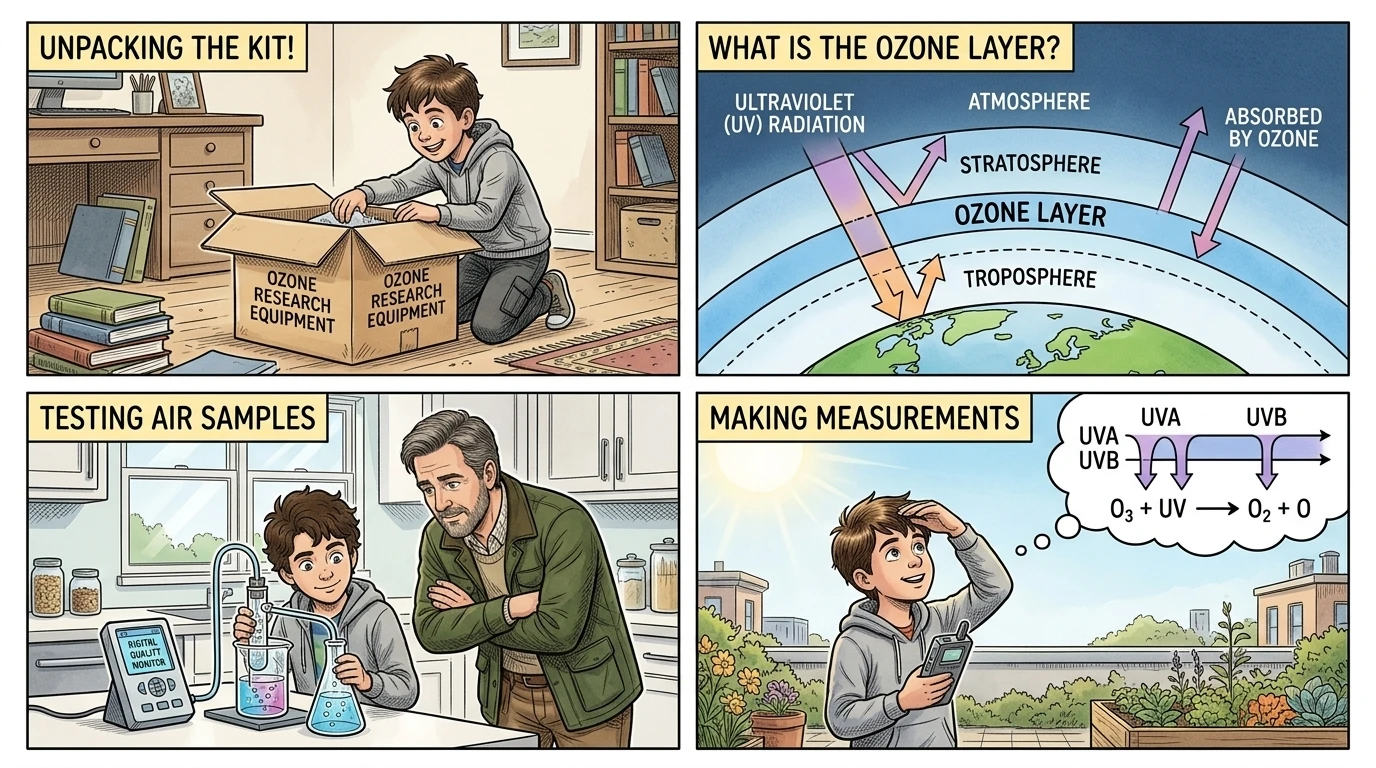
Page 1
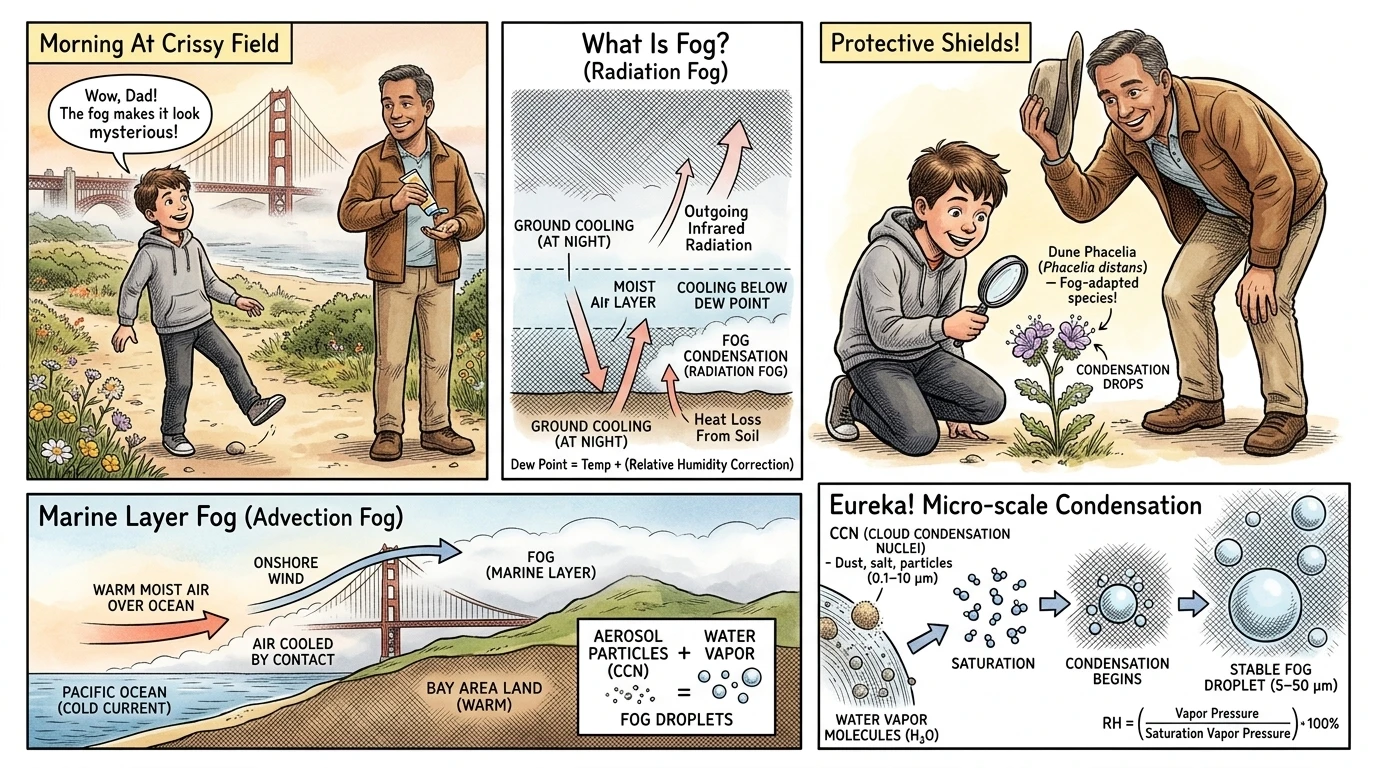
At Crissy Field, Nolan squinted as the Golden Gate Bridge peeked through the fog. His father unscrewed a bottle of sunscreen. "Time for our shield, Nolan!" he said, squeezing a white dollop onto his hand. "But Dad, it's not even sunny," Nolan replied, kicking at a loose pebble on the path. "Why do we need this stuff on a foggy day?"
Page 2
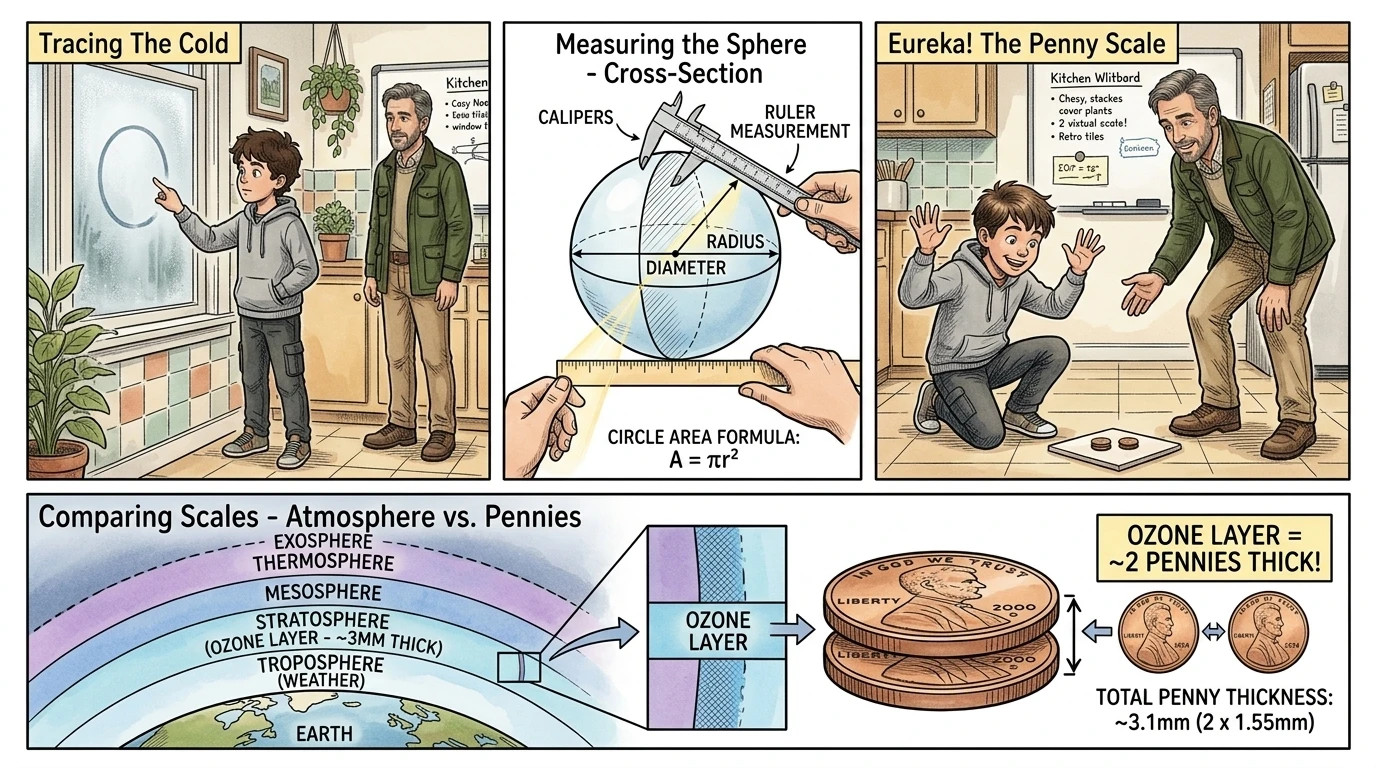
Back home in their cozy Noe Valley kitchen, Nolan traced a circle on the fogged-up window. "I'm still thinking about the sunscreen, Dad," he said thoughtfully. His father smiled and explained, "It protects us from invisible sunlight, thanks to a special shield high in the sky called the ozone layer. The crazy part is, if you squished the whole thing down, it would only be as thick as two pennies stacked together!"
Page 3
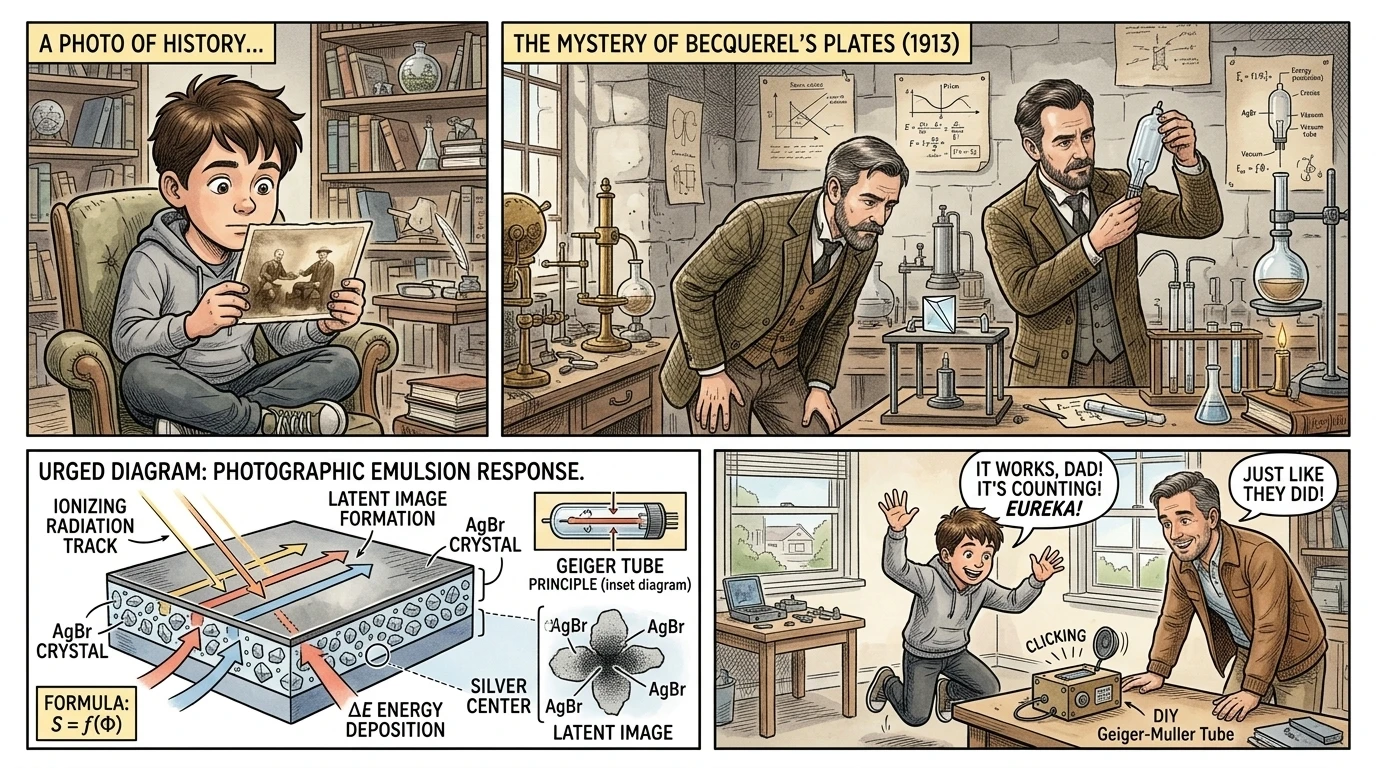
Nolan imagined what it was like to first find that invisible shield. His thoughts drifted back over a hundred years to France, in 1913. In a dusty laboratory filled with brass and glass instruments, two scientists were studying sunlight in a way no one had ever done before. They were looking for something they couldn't see, but they knew something important was there.
Page 4
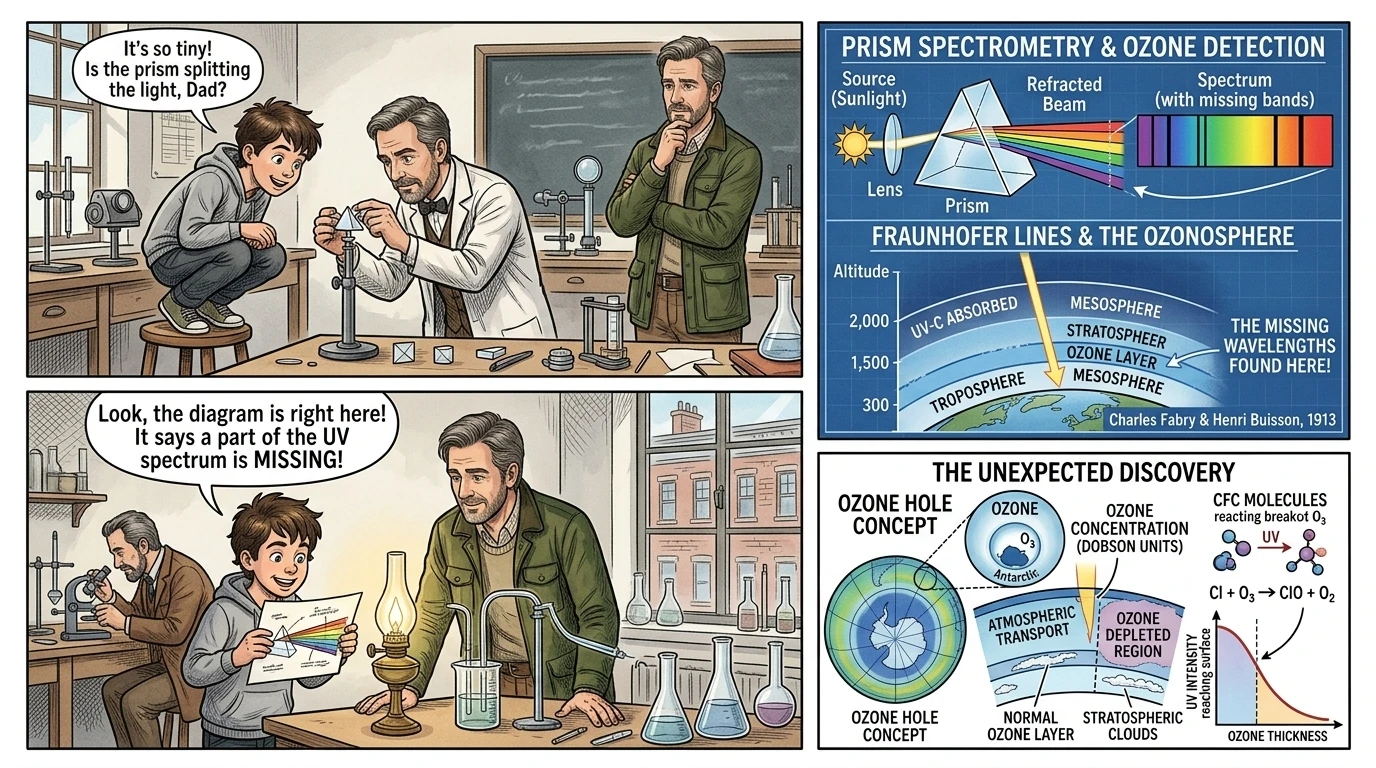
"Look at this, Henri," said Charles Fabry, adjusting a small prism. "The measurements are consistent—something is missing from the sunlight before it reaches us." His partner, Henri Buisson, leaned in closer, his brow furrowed in concentration. The two French physicists were pioneers, using their own invention to carefully map the light spectrum.
Page 5
On their photographic plates, the rainbow of sunlight had a mysterious gap in the ultraviolet section. "It's as if a filter exists somewhere high above us," Henri murmured, tapping the plate. It was a scientific puzzle, a shadow in the light that hinted at a vast, invisible process happening miles above their heads. They had discovered Earth's planetary shield without ever leaving their laboratory.
Page 6
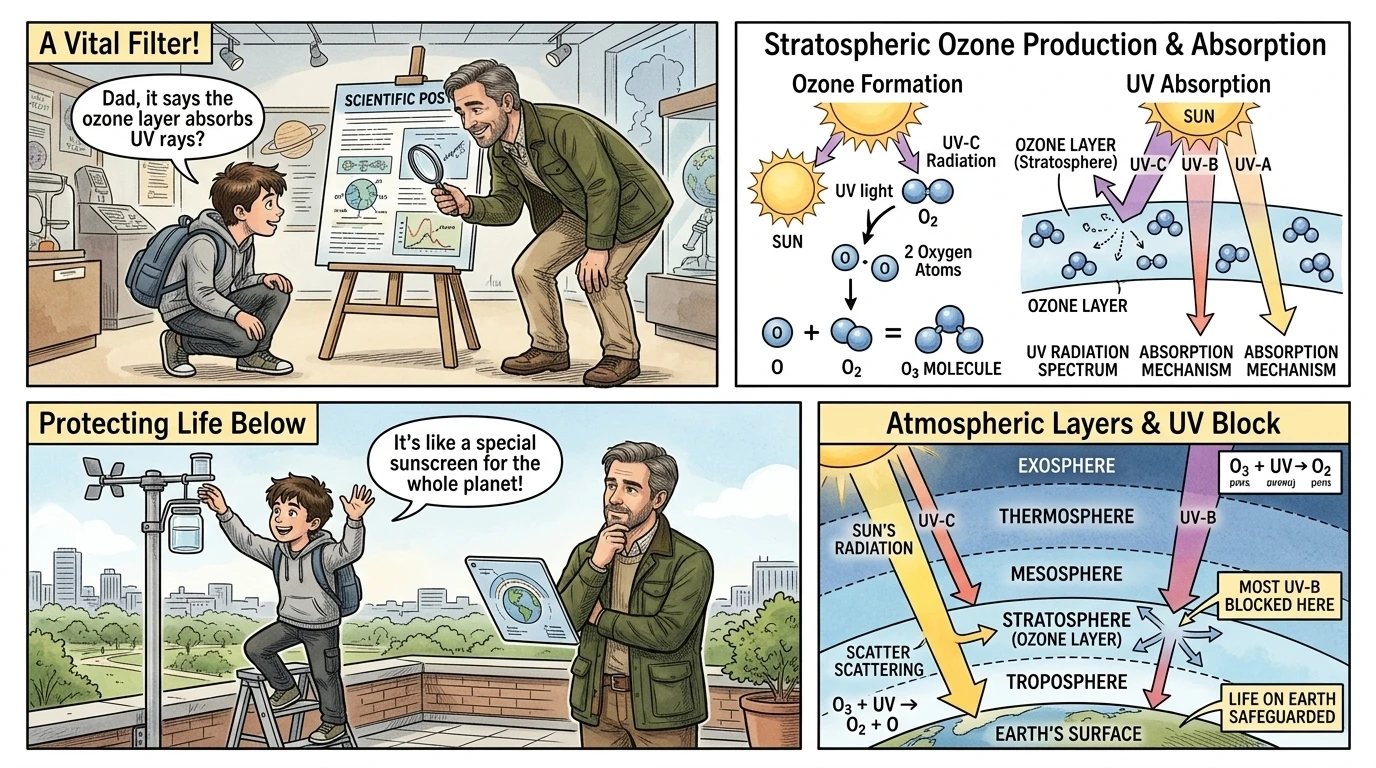
The gap was caused by a special kind of oxygen molecule called ozone, made of three oxygen atoms instead of the usual two. High in the stratosphere, these molecules form a thin layer that absorbs the most harmful type of ultraviolet light, called UVC and most UVB. This layer, discovered by Fabry and Buisson, was our planet's invisible sunscreen.
Page 7
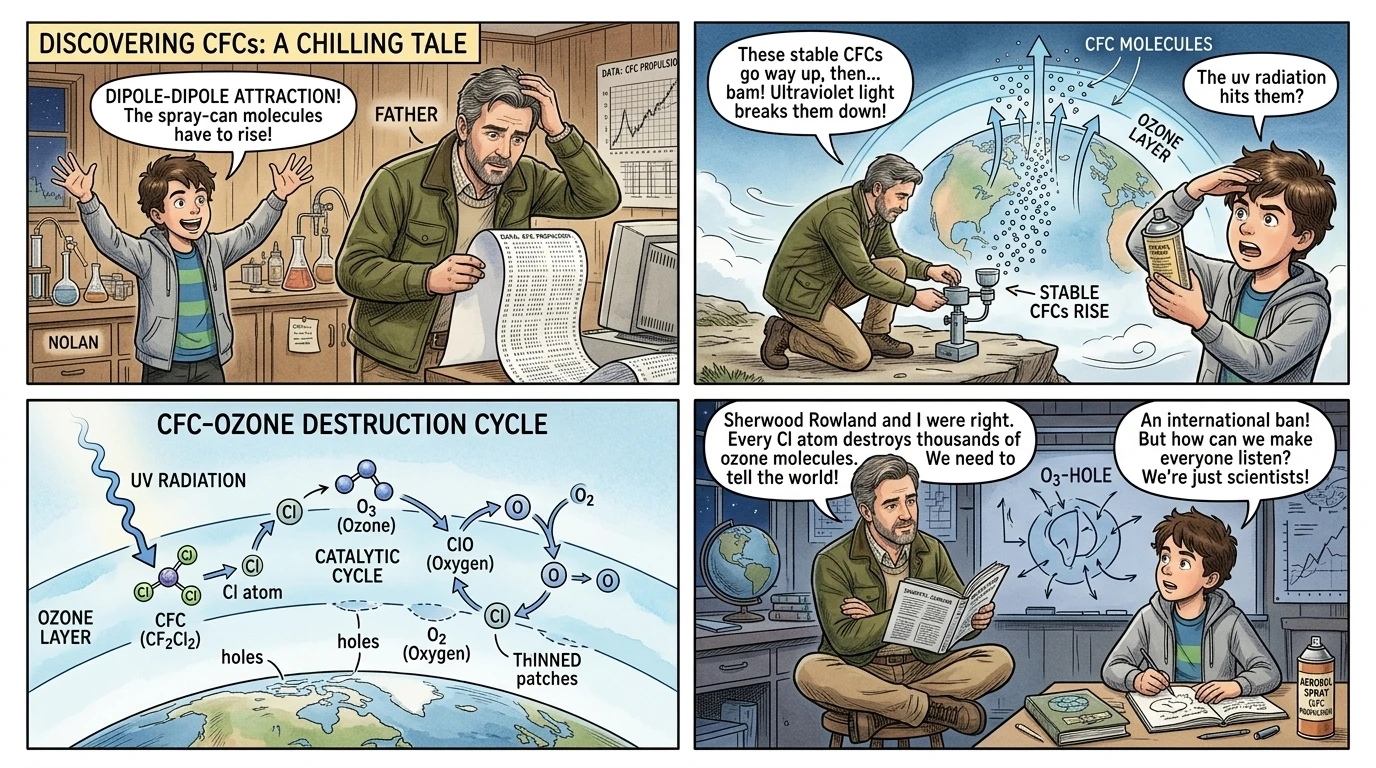
But in 1974, scientists Mario Molina and Sherwood Rowland made a shocking discovery. Chemicals called CFCs, used in spray cans and refrigerators, were floating up into the stratosphere and destroying the ozone layer. Their work was so important in saving the planet's shield that it won them the Nobel Prize in Chemistry.
Page 8
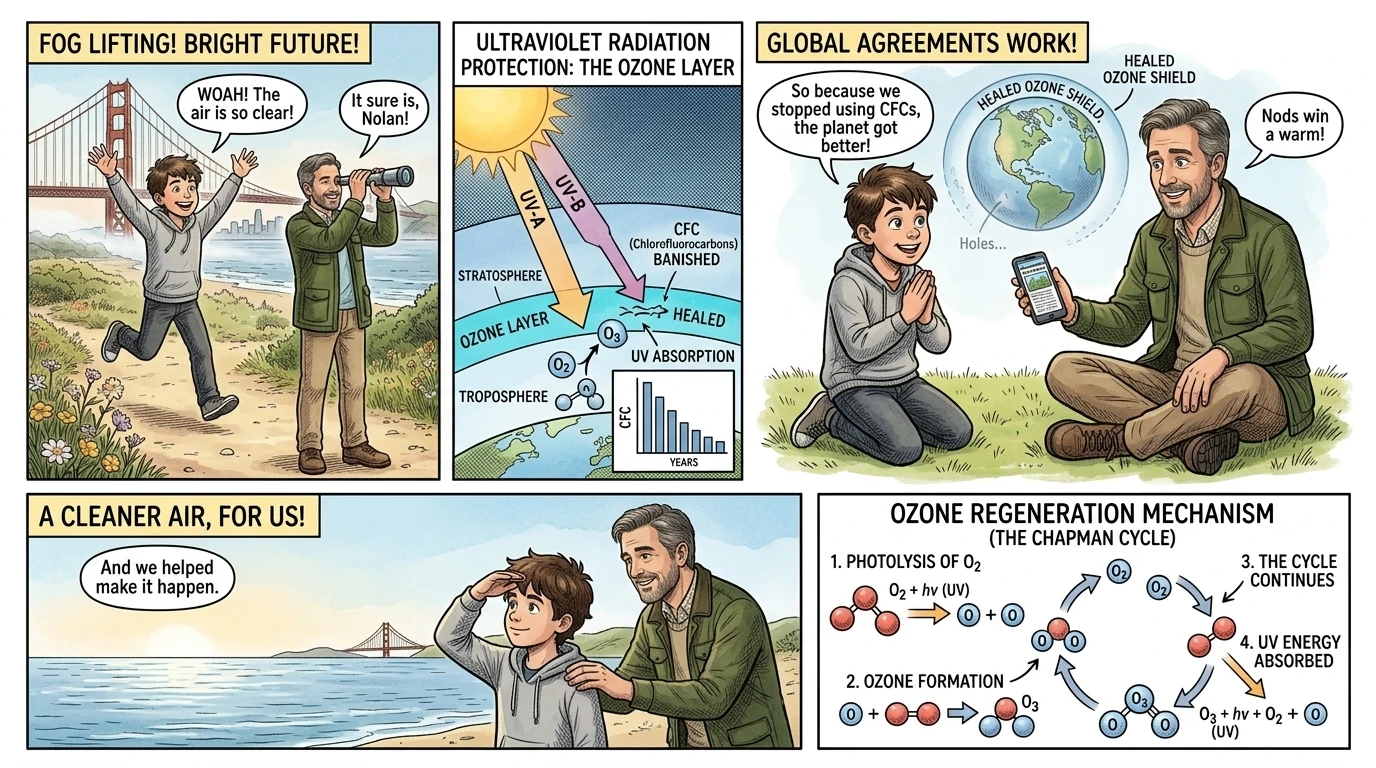
Back at Crissy Field, the fog was beginning to lift. "So that's it!" Nolan exclaimed, looking at his father. "The ozone layer is a super thin, super important shield, and those CFC chemicals were like tiny little holes poking through it." His dad nodded, his eyes wide with understanding. "And that's why the whole world worked together to ban them and let the shield heal."
Page 9
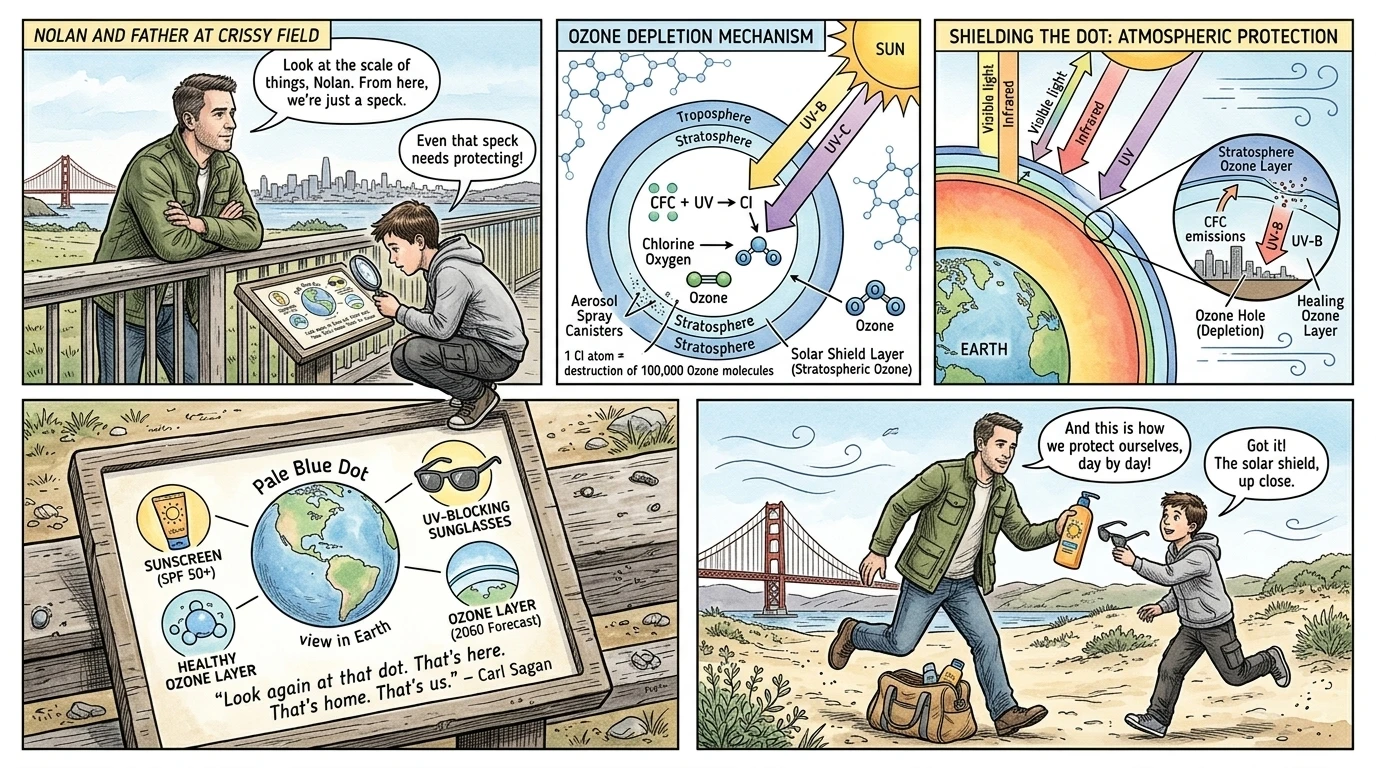
"That reminds me of what the scientist Carl Sagan said," his father mused, gazing at the city skyline. "He said, 'The Earth is the only world known so far to harbor life.' It's our job to protect it." Nolan nodded seriously. "So wearing sunscreen, sunglasses, and fixing the ozone layer are all ways we help protect our only home."
Page 10
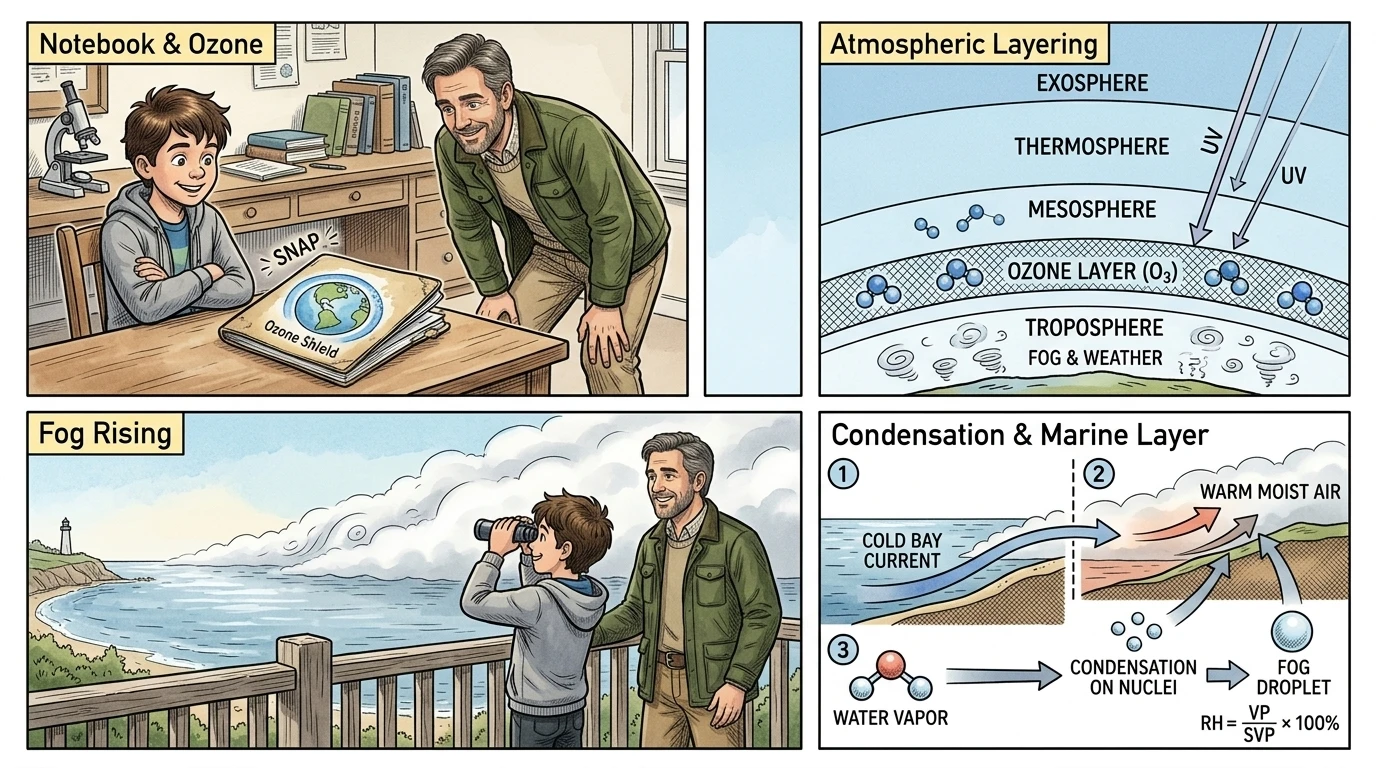
Nolan closed his notebook with a satisfying snap. "The ozone layer is our planet's thin but mighty shield against the sun's most powerful rays," he said, summarizing his adventure. His father smiled, pointing toward the bay where thick fog was once again rolling in over the water. "If the ozone layer protects us from invisible light, what makes the fog that we can see?"
About this story
- Location: France
- Audience: kids (ages 6–12)
Questions and answers
Read Wonder Science on your phone
Wonder Science is available on Android. Get Wonder Science on Google Play.