What Is Plastic Made Of?
What Is Plastic Made Of? — an illustrated science story. 10 illustrated pages, free to read on Wonder Science.
Page 1
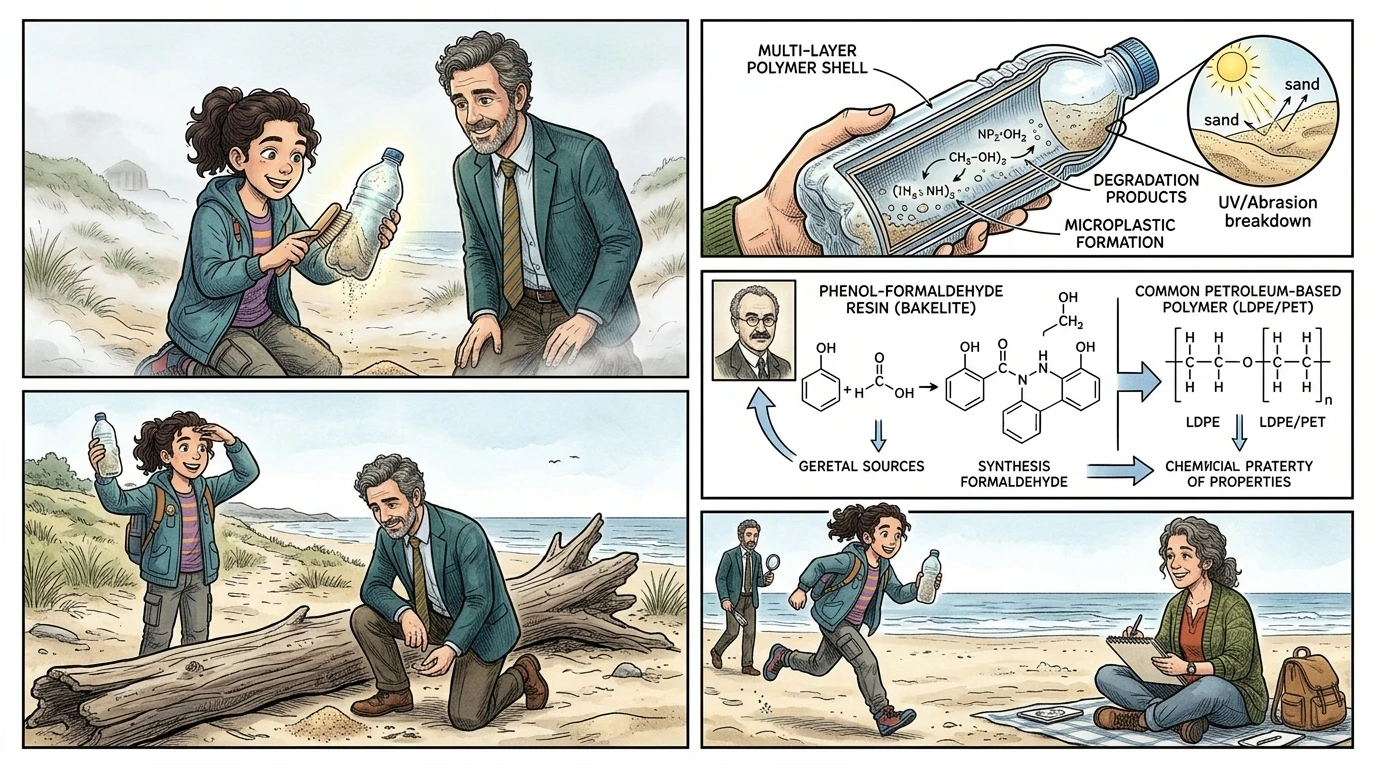
The chilly San Francisco fog drifted over Ocean Beach as Olive and her father hunted for sea glass. Olive knelt down, brushing sand off a strange, smooth object. "Dad, this isn't glass or a shell," she said, holding up a cloudy plastic bottle. "It feels so light and weird; what is plastic even made of?"
Page 2
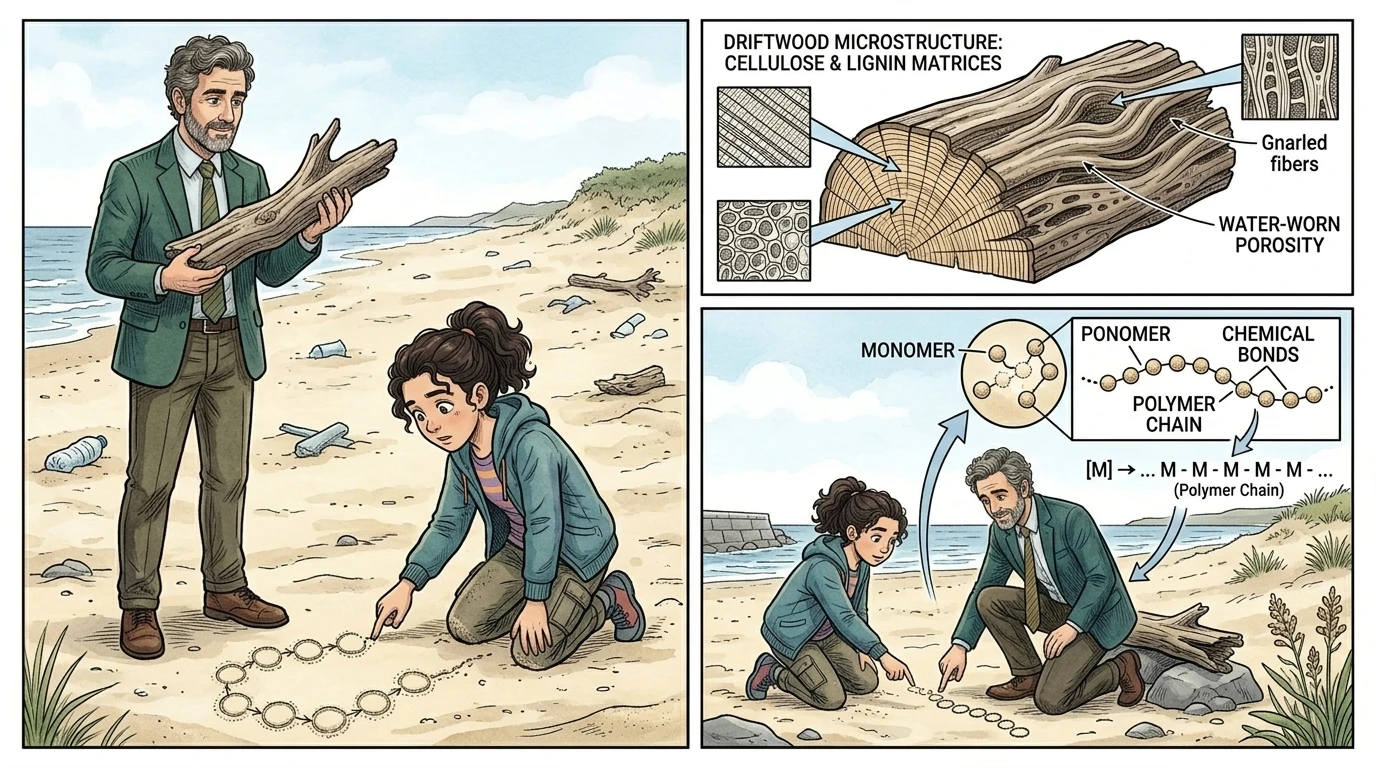
Her father picked up a gnarled piece of driftwood, weighing it in his hand. "This wood grew on a tree, but plastic is something people invent," he explained, drawing a long chain of circles in the sand with his finger. "It's a polymer, a super-long chain of molecules linked together like beads on a string, all made from smaller building blocks called monomers."
Page 3
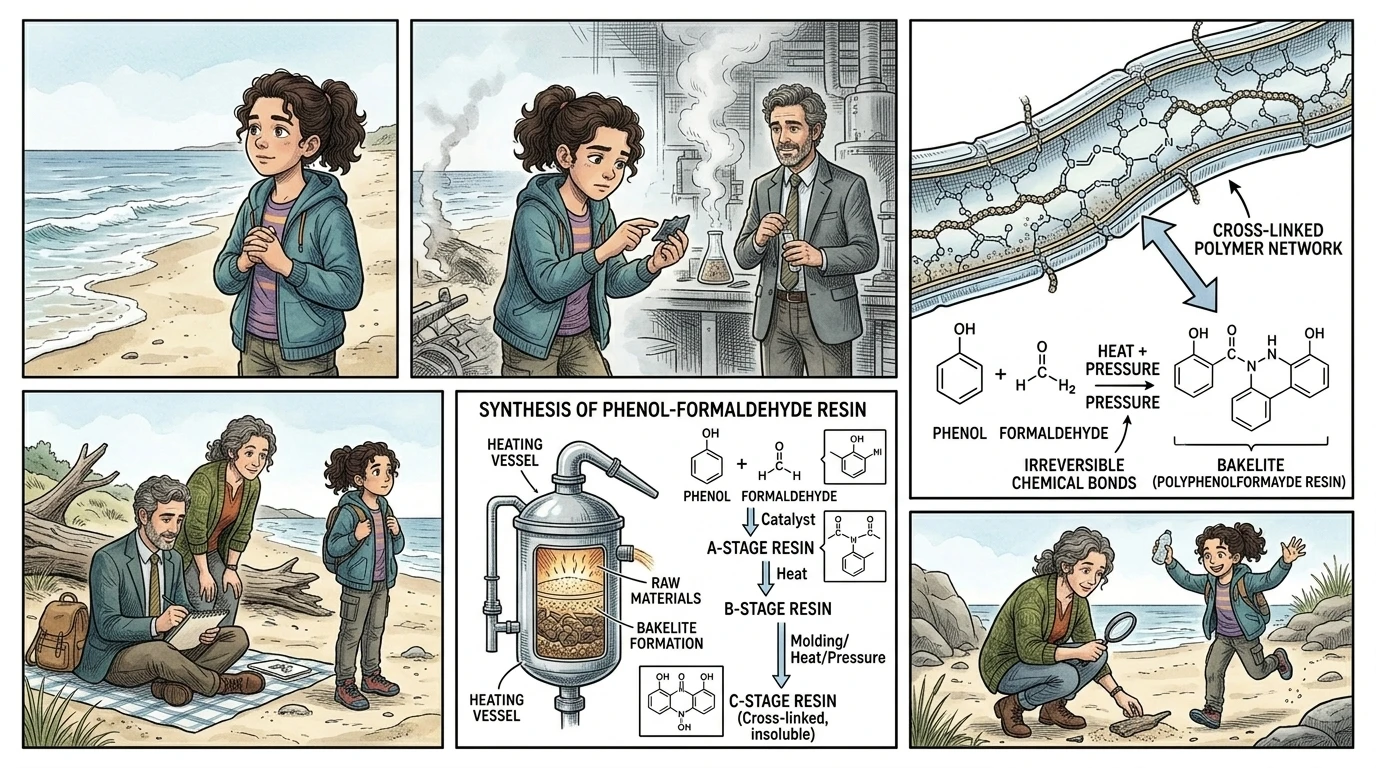
Olive imagined those tiny chains linking together, a journey that didn't start on a beach, but in a noisy workshop. The world faded from the gentle roar of the ocean to the hiss of steam and the clang of machinery. To understand that plastic bottle, the story had to travel back over a hundred years to a time of bold new inventions.
Page 4
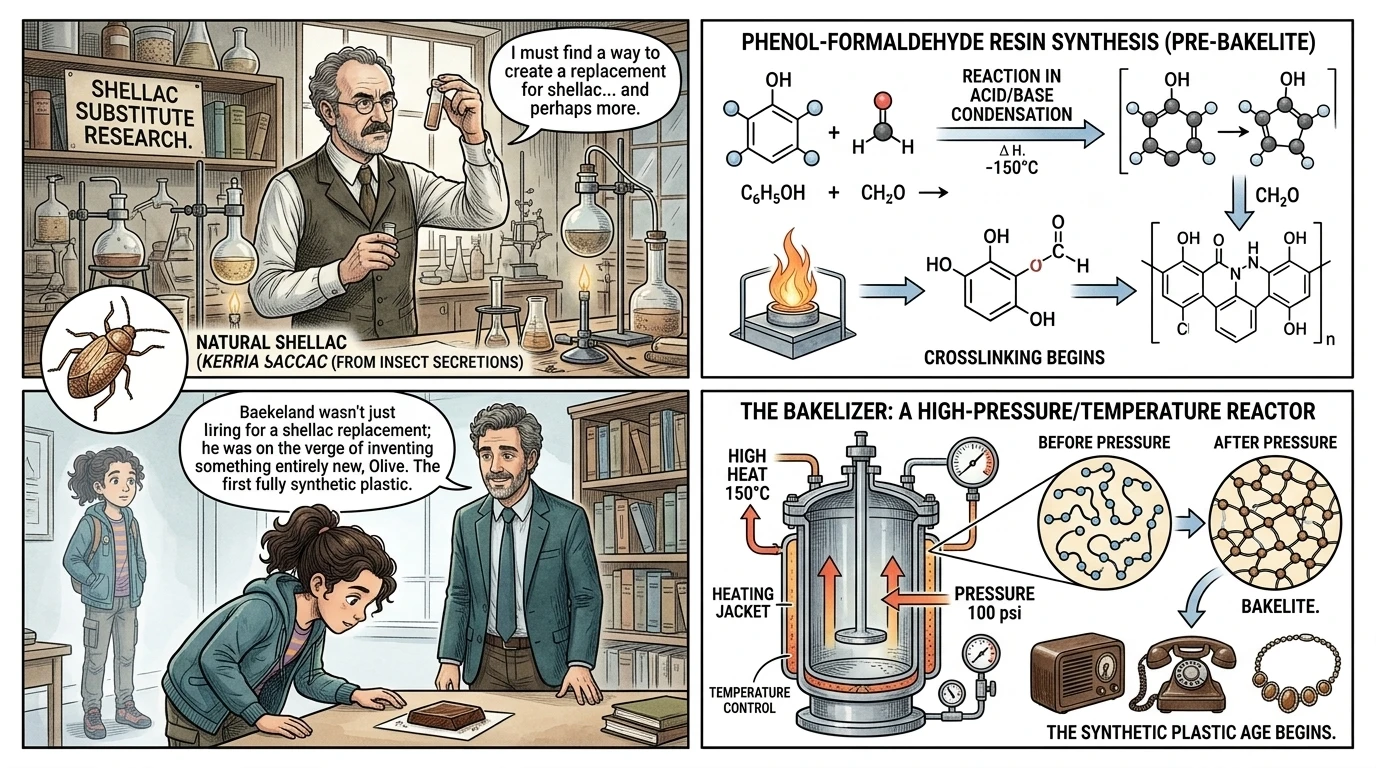
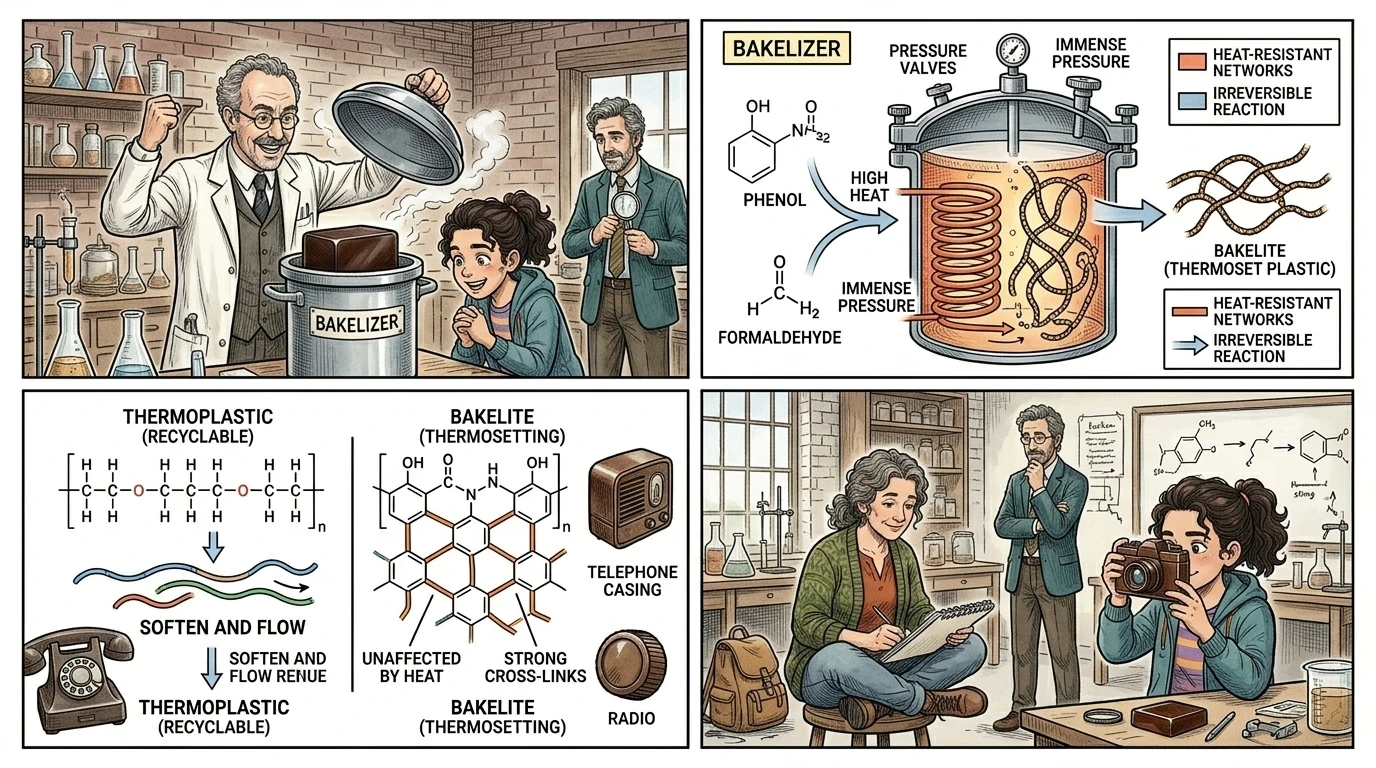
"Our story's inventor is a Belgian-American chemist named Leo Baekeland," her dad's voice narrated in her mind. In 1907, Baekeland wasn't trying to make plastic; he was searching for a synthetic replacement for shellac, a resin made from bug secretions! He was already a famous inventor, but this next challenge would change the world forever.
Page 5
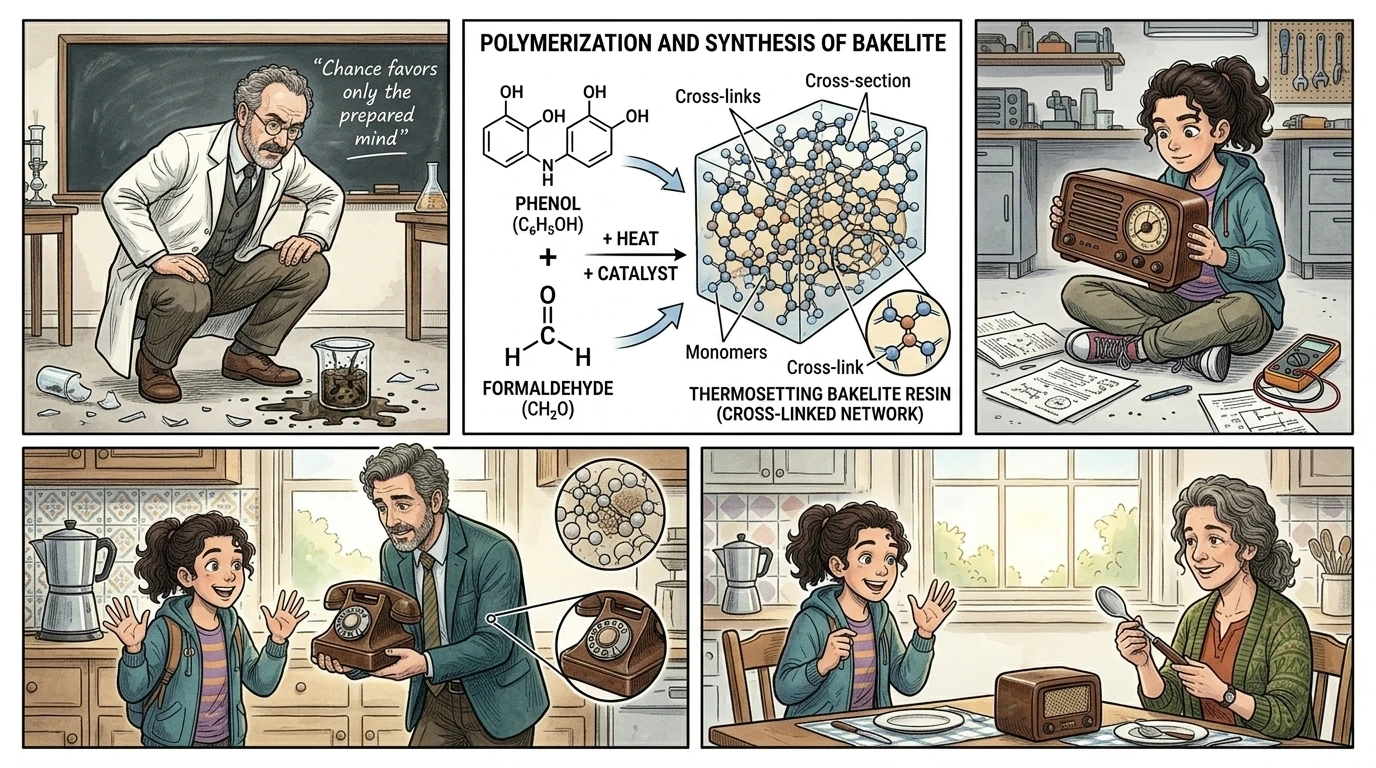
He mixed two chemicals, phenol and formaldehyde, but kept getting a hard, useless gunk that ruined his glassware. One evening, staring at another failed experiment, he remembered the words of the great scientist Louis Pasteur: 'Chance favors only the prepared mind.' Baekeland realized this messy gunk wasn't a failure; it was a discovery waiting to be understood.
Page 6
Instead of throwing the gunk away, he built a heavy steel pressure cooker he called a 'Bakelizer.' He cooked the chemicals under immense heat and pressure, forcing the small monomer molecules to link up into massive polymer chains. When he opened the vessel, he found a hard, smooth, and heat-resistant material: the world's first fully synthetic plastic, which he named Bakelite.
Page 7
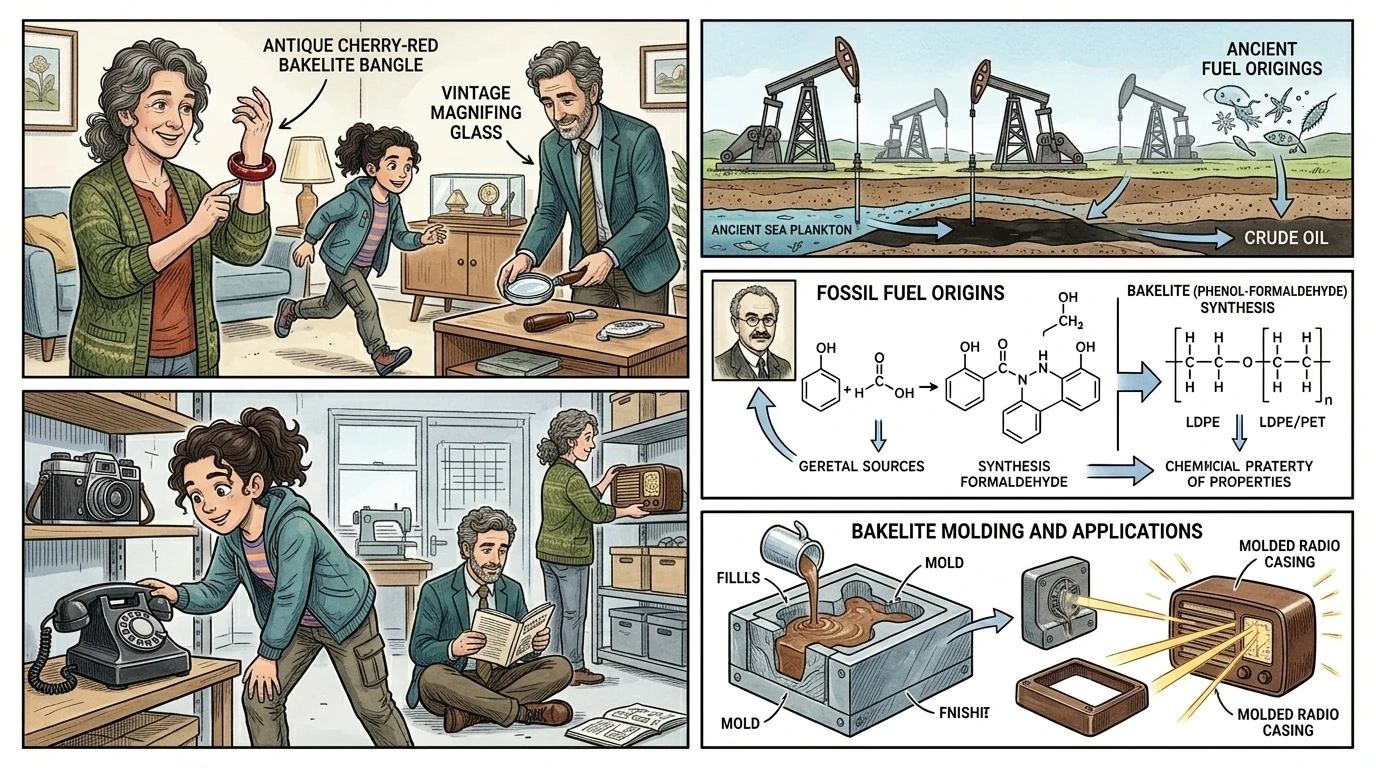
Bakelite was a sensation, used for making everything from radios and telephones to colorful jewelry. Baekeland's invention kicked off the modern age of plastics. Most plastics today are still made with the same basic idea, using crude oil, which itself comes from the remains of ancient sea life that lived millions of years ago.
Page 8
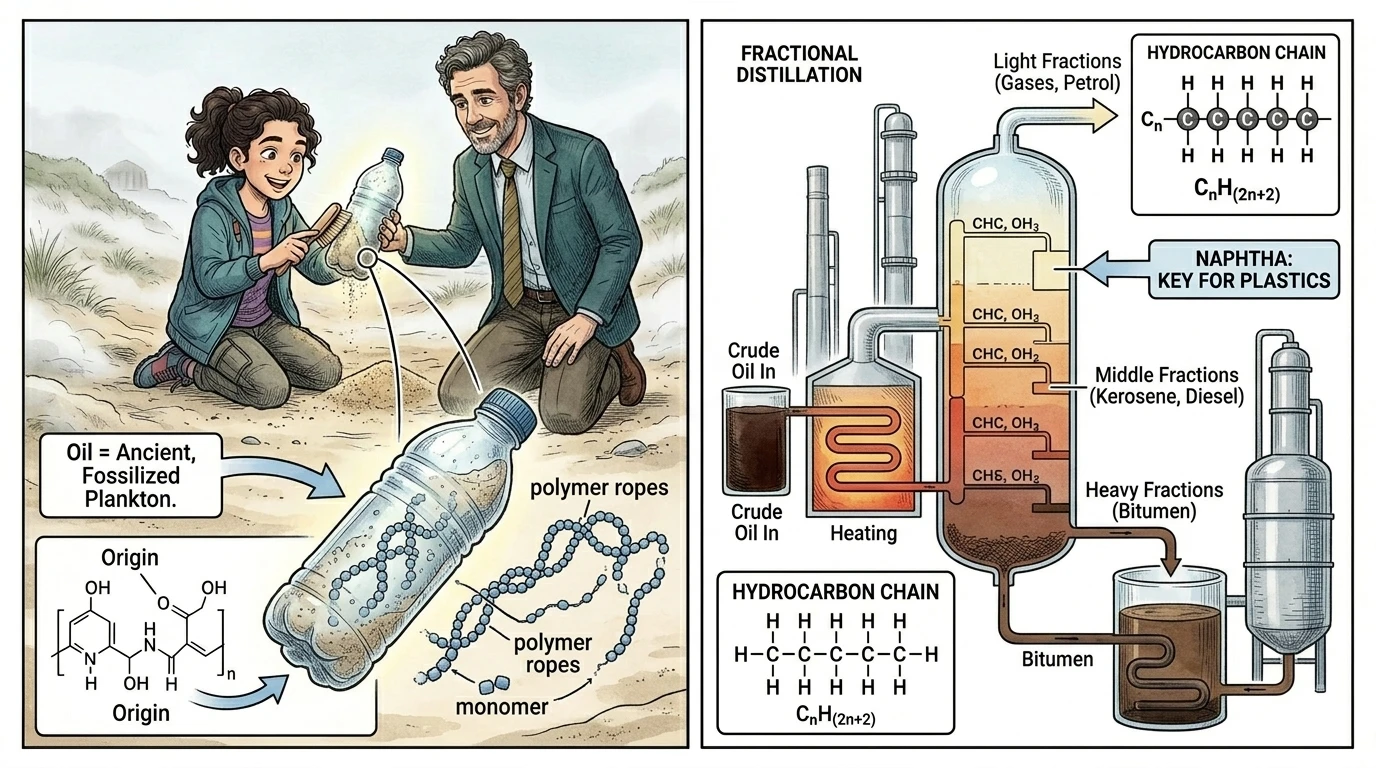
Back on the foggy beach, Olive held the plastic bottle with new understanding. "Whoa! So this bottle is made of long polymer chains, and those chains are built from the tiny 'monomer' building blocks you drew!" she exclaimed. Her dad smiled. "Exactly! And those monomers came from oil, which is basically ancient, fossilized plankton."
Page 9
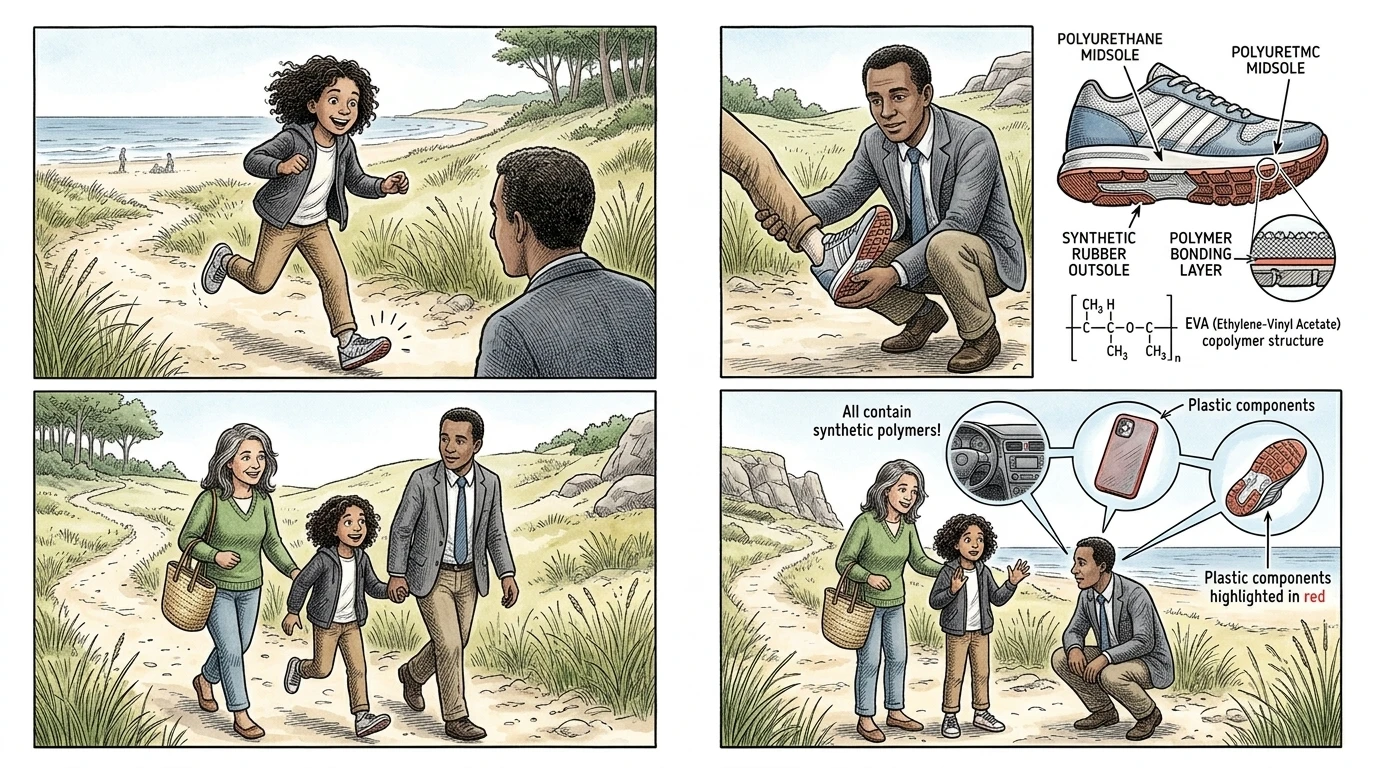
As they reached the path, Olive's mom walked over to join them. "So my phone case is made from ancient sea goo?" she laughed, after Olive explained everything. "And the dashboard of our car!" her dad added. Olive looked down at her feet and gasped, "Even the soles of my sneakers! It really is everywhere."
Page 10
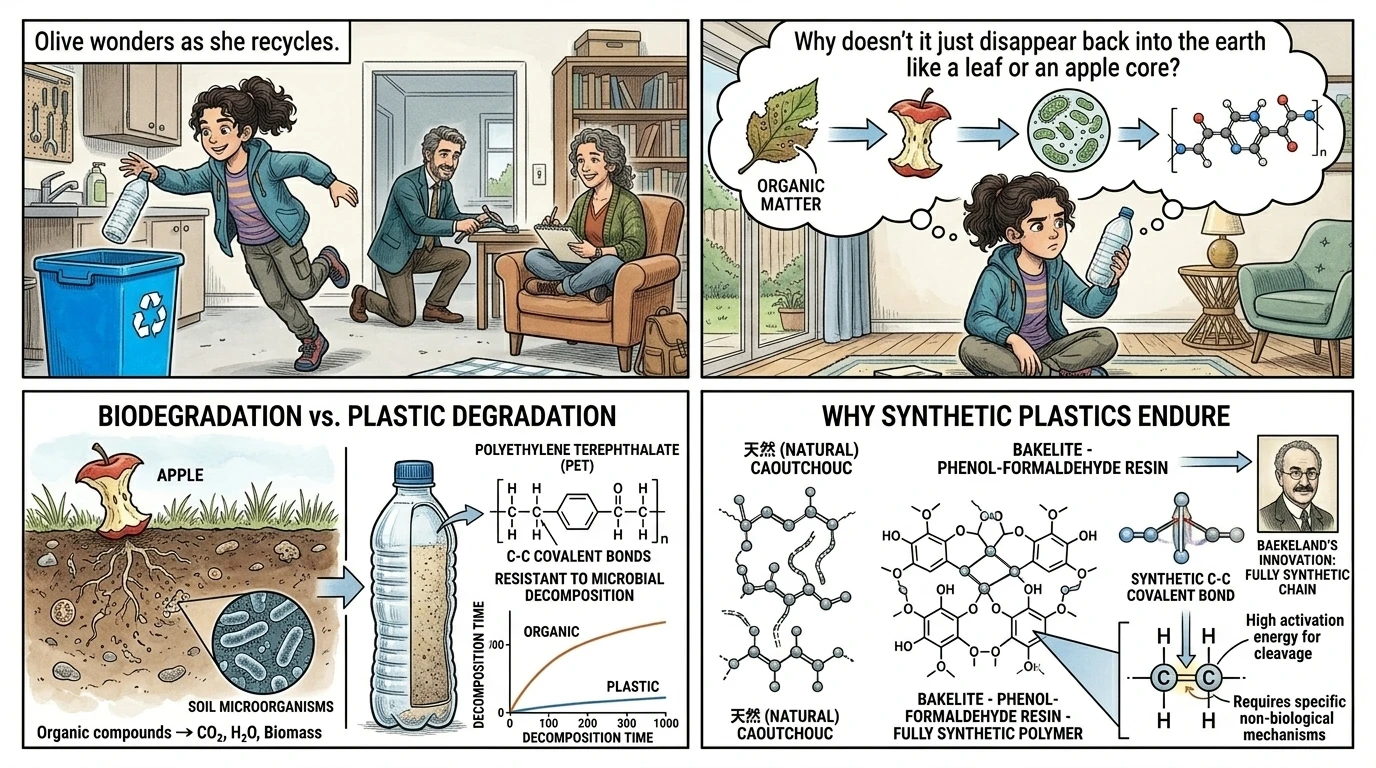
Olive tossed the bottle perfectly into a blue recycling bin. "So, plastic is an amazing material made from ancient life, transformed by chemistry!" she summarized. She then paused, her brow furrowed in thought. "But if it's strong enough to last this long... why doesn't it just disappear back into the earth like a leaf or an apple core?"
About this story
- Audience: kids (ages 6–12)
Questions and answers
Read Wonder Science on your phone
Wonder Science is available on Android. Get Wonder Science on Google Play.