Volcano's Breath: Earth's Fiery Plume
Volcano's Breath: Earth's Fiery Plume — an illustrated science story, set in United States. 10 illustrated pages, free to read on Wonder Science.
Page 1
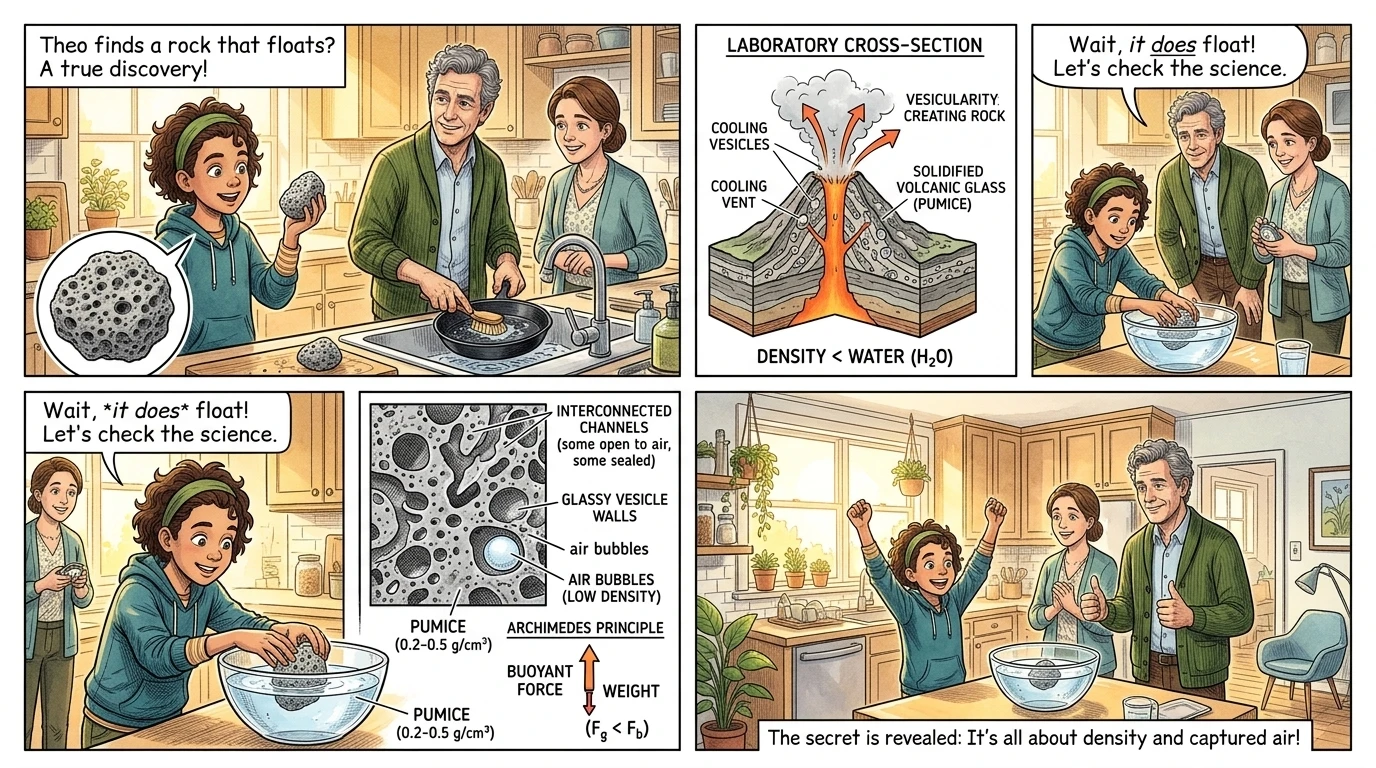
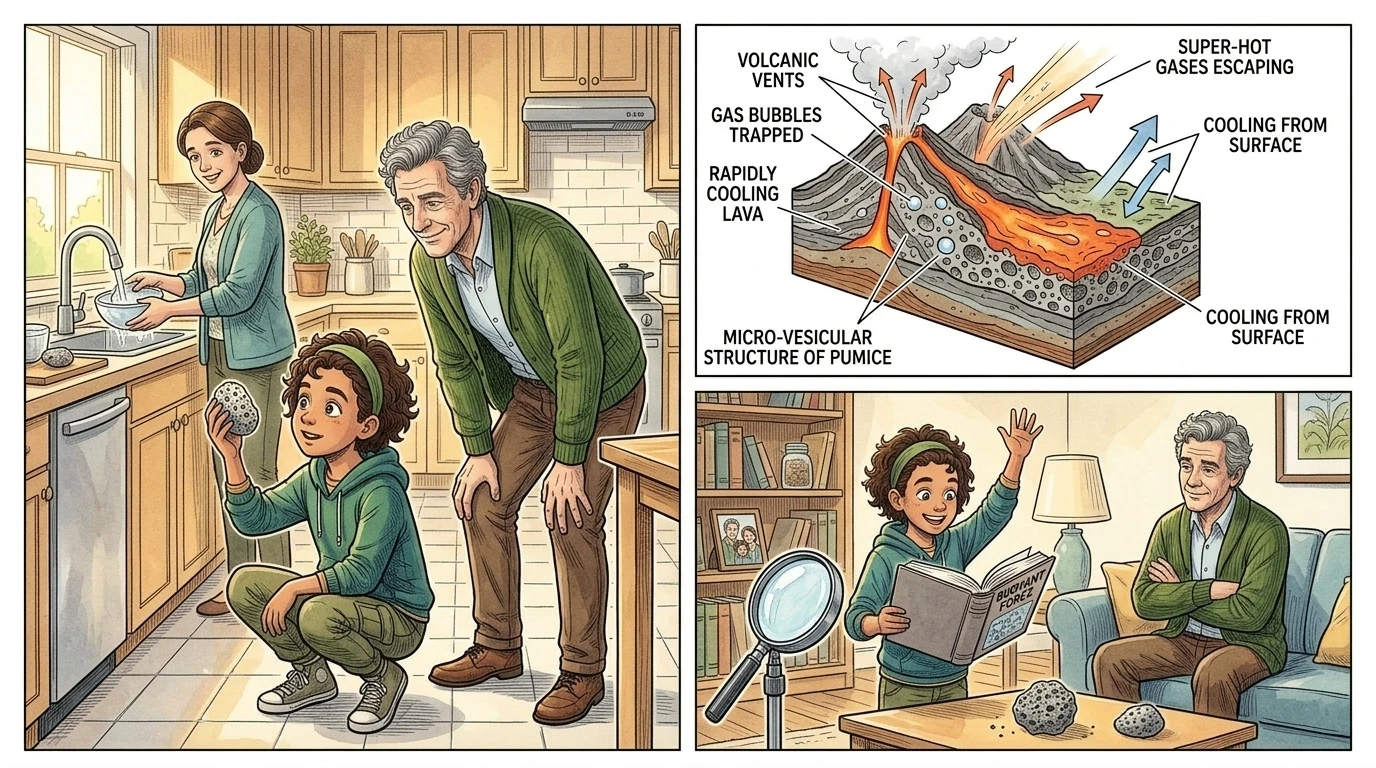
In their sunny Noe Valley kitchen, Theo watched her father scrub a cast-iron pan with a strange, bubbly grey rock. "Dad, what is that?" she asked, picking it up from the sink's edge. It was surprisingly light, almost weightless in her small hands. "How can a rock be so light it could almost float?"
Page 2
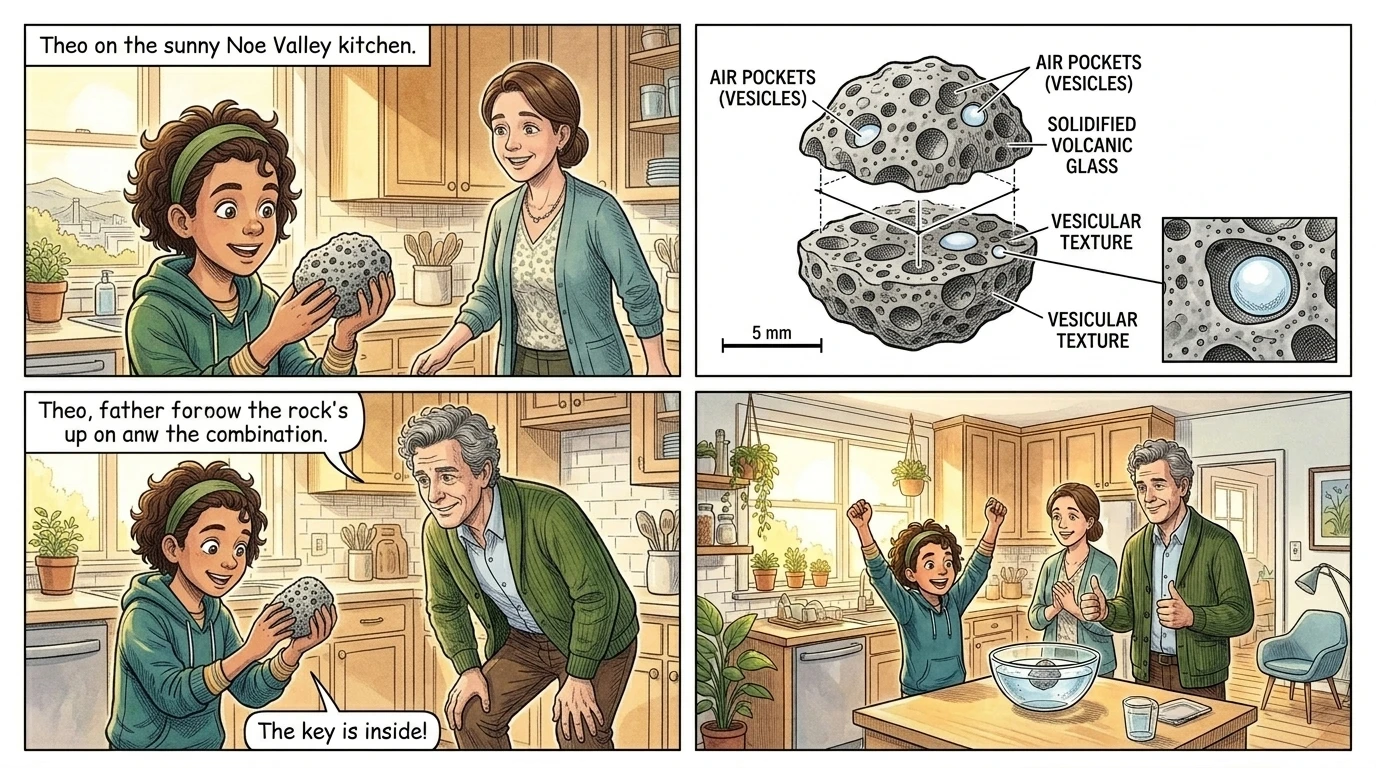
Theo's mother walked in, smiling as she saw the rock. "That's a pumice stone, sweetie," she said, her voice warm. Her father added, "It's a volcanic rock, which is why it's full of air pockets." Theo's eyes widened. "A volcano made this? What exactly is a volcano, and how does it make a rock full of air?"
Page 3
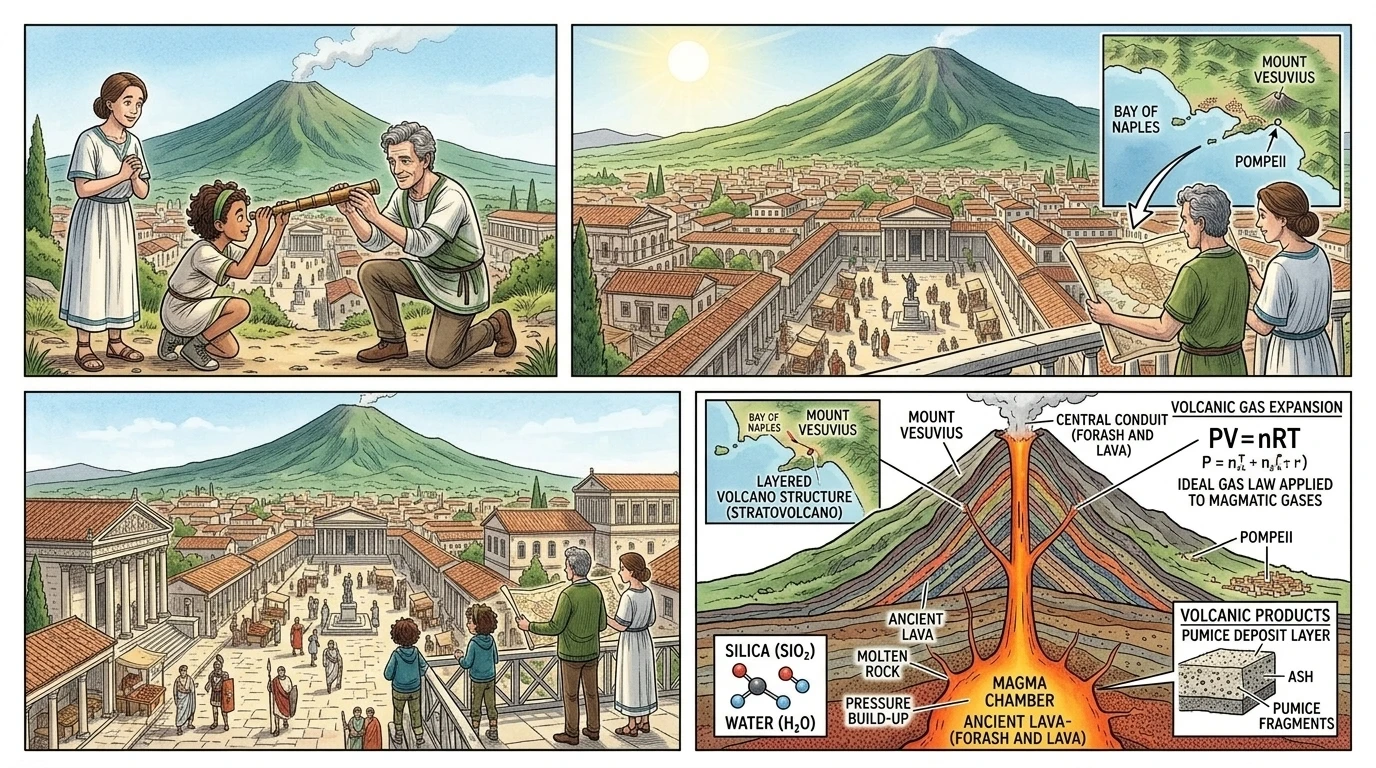
To understand, we have to travel back in time, to the Bay of Naples in Italy, almost two thousand years ago. The Roman city of Pompeii thrived at the base of a tall, green mountain. People went about their day, shopping in the forum and relaxing in their villas, unaware the mountain was actually a sleeping giant.
Page 4
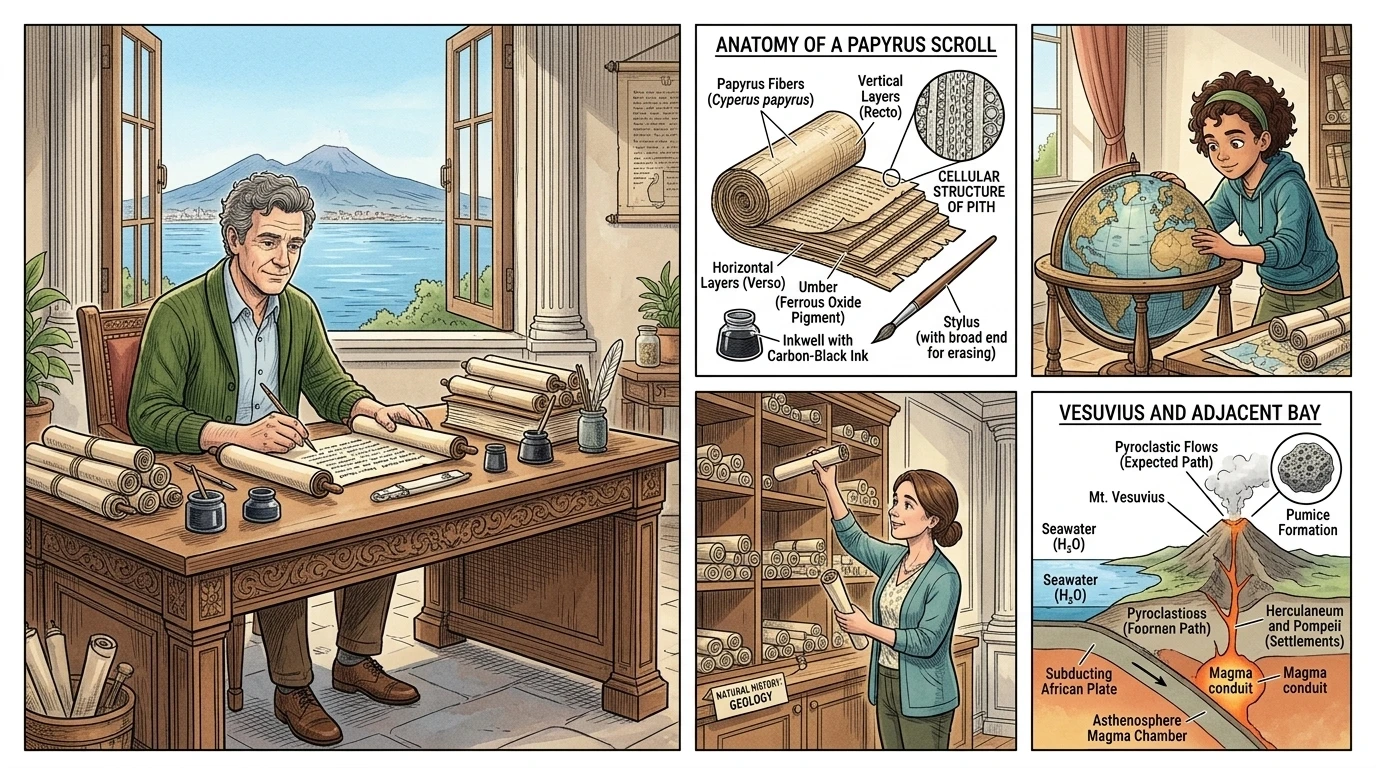
Across the bay lived a Roman author and administrator named Pliny the Younger. He wasn't a scientist like we think of them today, but he was a dedicated and meticulous observer. He kept detailed records of everything he saw, from government affairs to the natural world around him.
Page 5
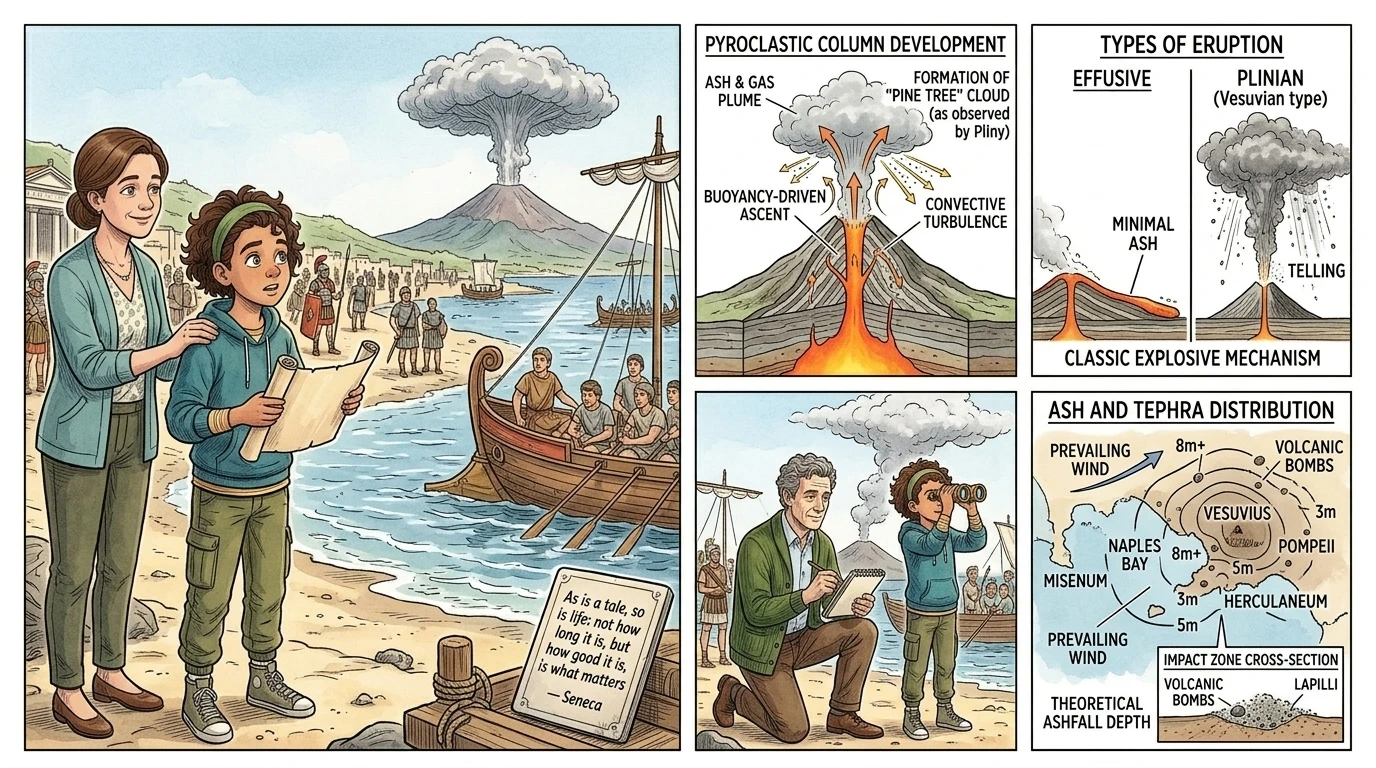
One afternoon, Pliny noticed a strange cloud rising from the mountain, shaped like a giant pine tree. Instead of feeling fear, his curiosity took over, and he immediately ordered a boat to get a closer look. He might have recalled the philosopher Seneca, who said, 'As is a tale, so is life: not how long it is, but how good it is, is what matters,' knowing this incredible event had to be recorded for history.
Page 6
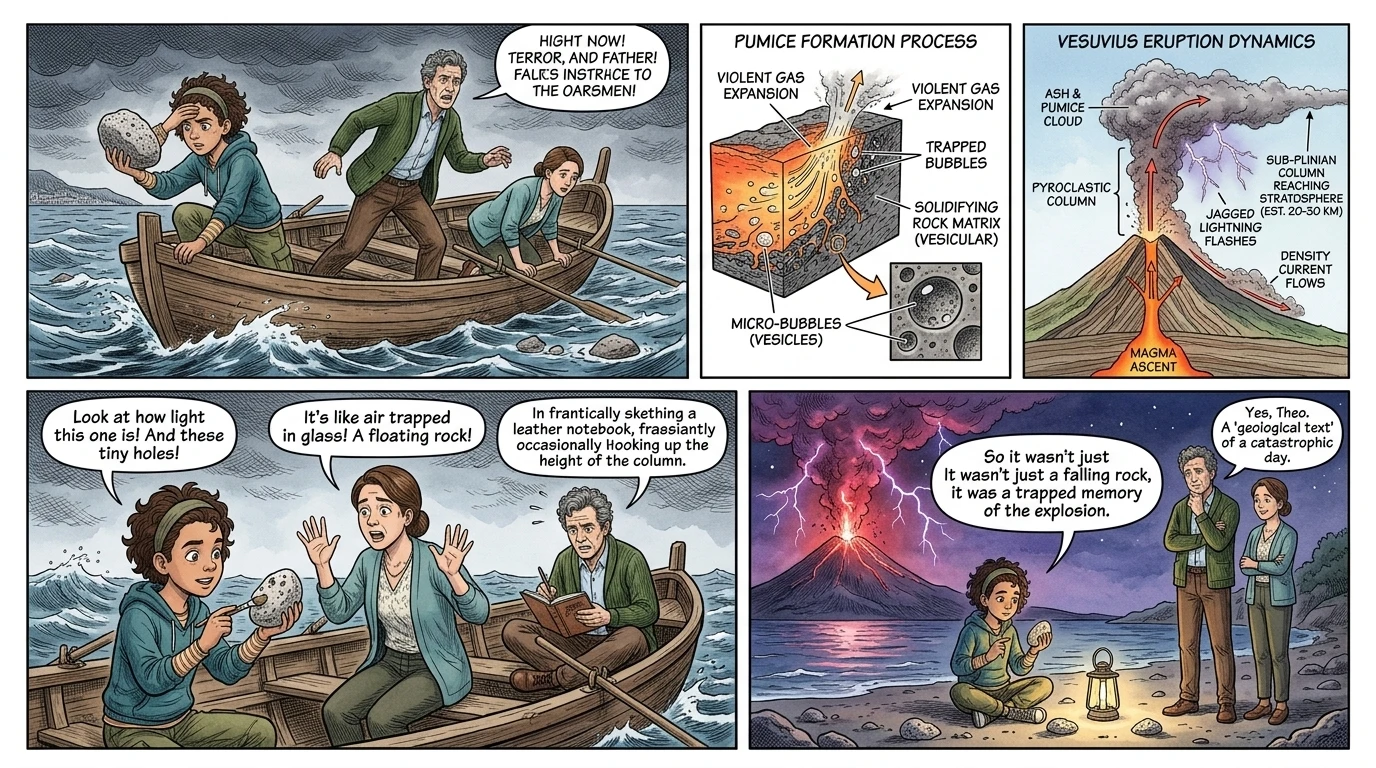
From his boat, Pliny witnessed the terrifying power of the eruption as a column of superheated gas, ash, and pumice shot miles into the sky. Sometimes, lightning even flashed within the cloud, a bolt five times hotter than the surface of the sun! The gas expanded so violently that when the molten rock cooled, it trapped billions of tiny bubbles inside, creating the floating pumice stones.
Page 7
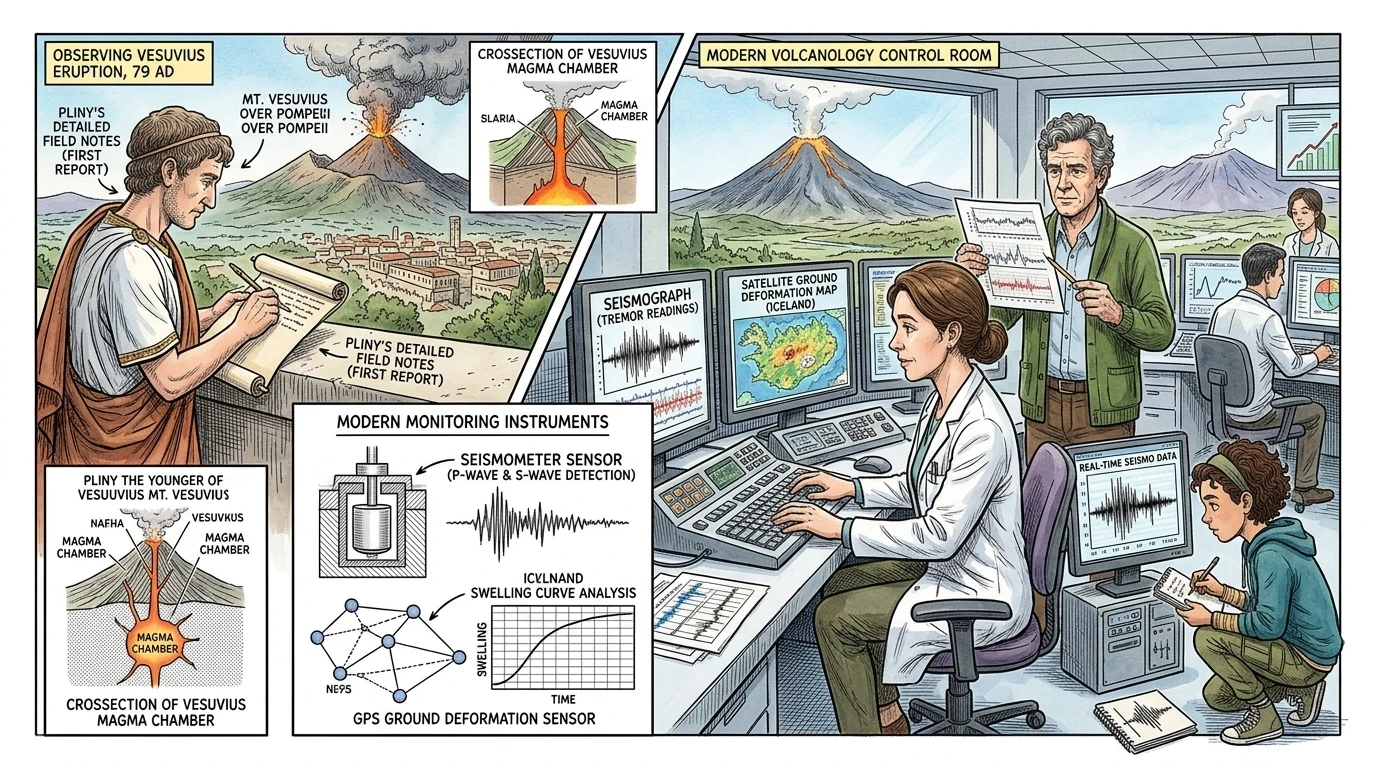
Pliny the Younger's detailed account became one of history's first volcanology reports, and it helps scientists understand eruptions today. Now, we use seismographs to listen for earth tremors and satellites to watch for ground swelling near volcanoes. This modern observation saves thousands of lives in places like Iceland, Japan, and Hawaii by giving people time to evacuate.
Page 8
Back in their Noe Valley kitchen, Theo held the pumice stone with a new understanding. "So this rock is filled with tiny bubbles because super hot gas was trying to escape when the lava cooled really fast!" she exclaimed. Her father smiled, "Exactly! You've solved the mystery of the floating rock."
Page 9
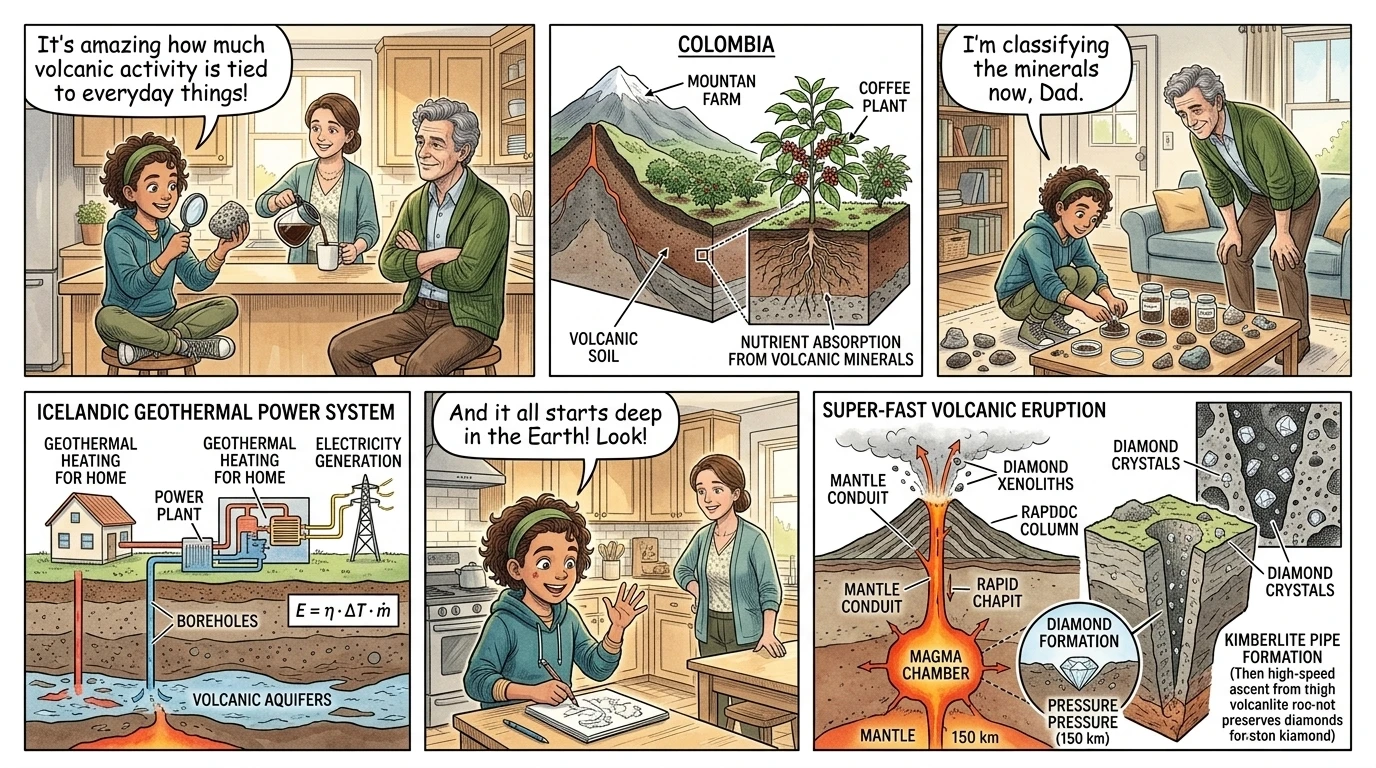
"Volcanoes are part of so many things," her mother said, pouring some coffee. "The rich soil that grows these coffee beans in Colombia comes from ancient volcanic ash." Her father added, "And in Iceland, they use geothermal energy from volcanic heat to power their homes!" Theo suddenly remembered something else she'd read. "Even diamonds are brought up from deep inside the Earth by a special, super-fast kind of volcanic eruption!"
Page 10
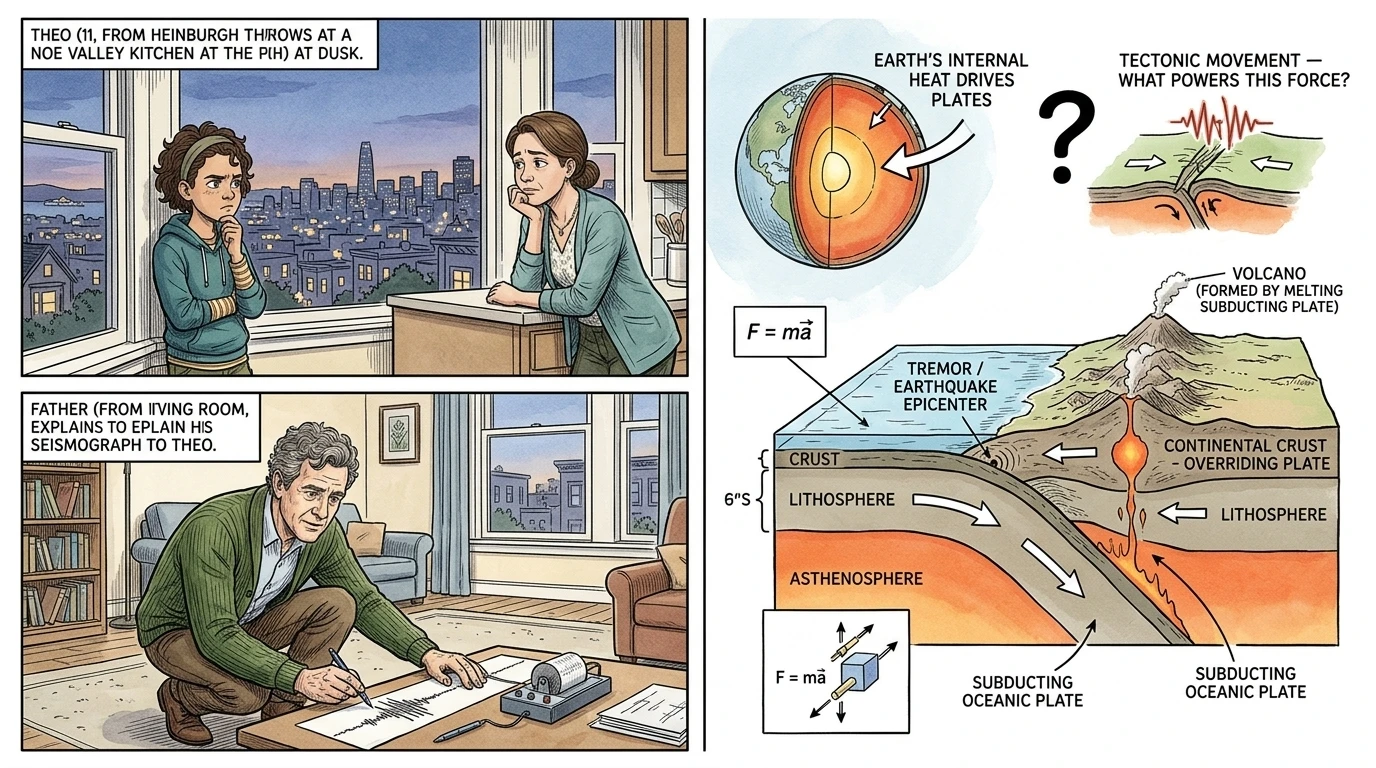
Theo looked out the window at the twinkling city lights of San Francisco. "So, volcanoes are like Earth's fiery breath, shaping the land and even giving us treasures," she summarized thoughtfully. Her mother gazed out the window with her. "If volcanoes are powered by heat from inside the Earth... what makes the whole ground move, causing earthquakes like we get here?"
About this story
- Location: United States
- Audience: kids (ages 6–12)
Read Wonder Science on your phone
Wonder Science is available on Android. Get Wonder Science on Google Play.