Victor Hess
Victor Hess — an illustrated science story, set in Global. 10 illustrated pages, free to read on Wonder Science.
Page 1
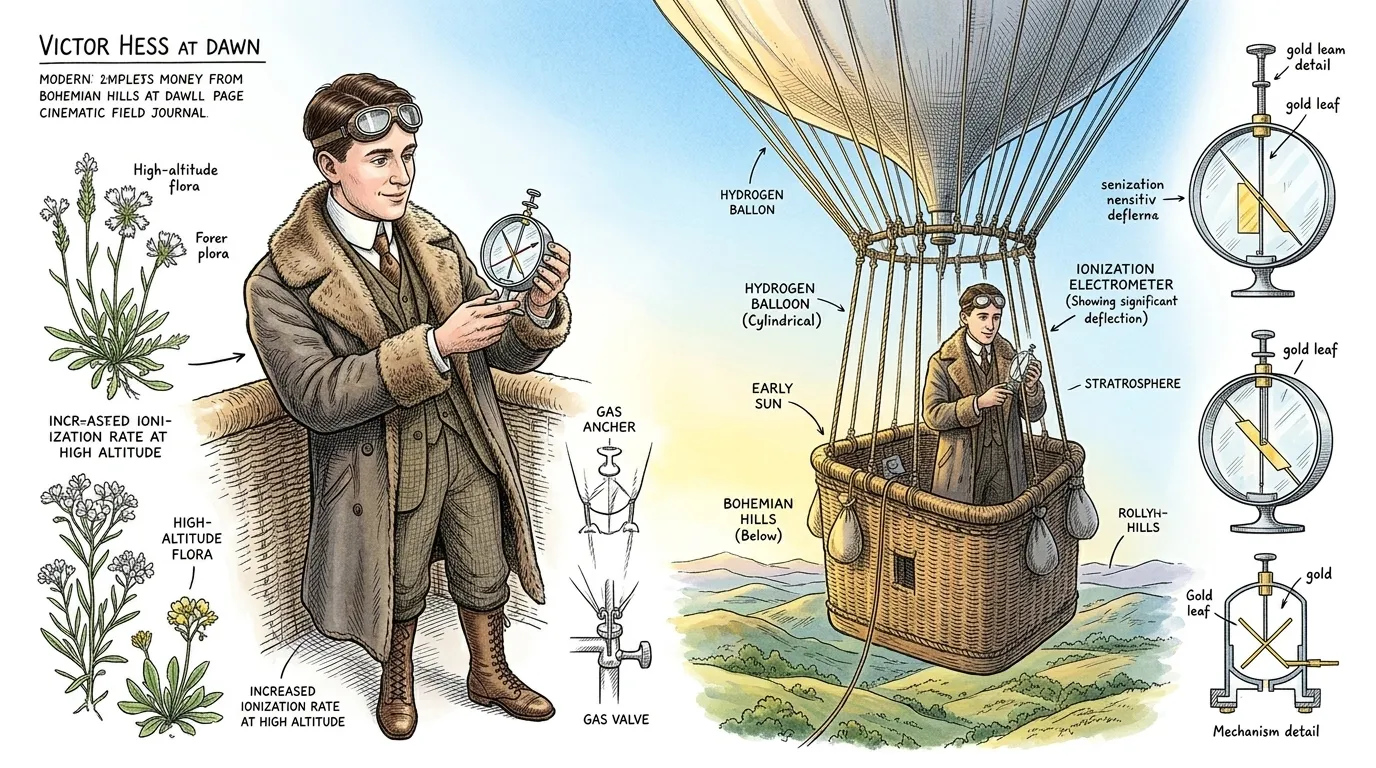
At dawn on August 7, 1912, Austrian physicist Victor Hess ascended into the silent stratosphere above Bohemia, then part of Austria-Hungary, in a hydrogen-filled balloon. His mission was to solve a perplexing scientific mystery: the persistent ionization of air, an enigma that suggested an unknown source of radiation pervading Earth's atmosphere. As his balloon climbed, sensitive electrometers, carefully calibrated to measure electrical charge, registered a startling and unexpected increase in ionization, directly contradicting the prevailing scientific assumptions of the era. This daring flight, reaching an altitude of 5,300 meters, revealed a phenomenon of profound significance, shifting our understanding of the cosmos.
Page 2
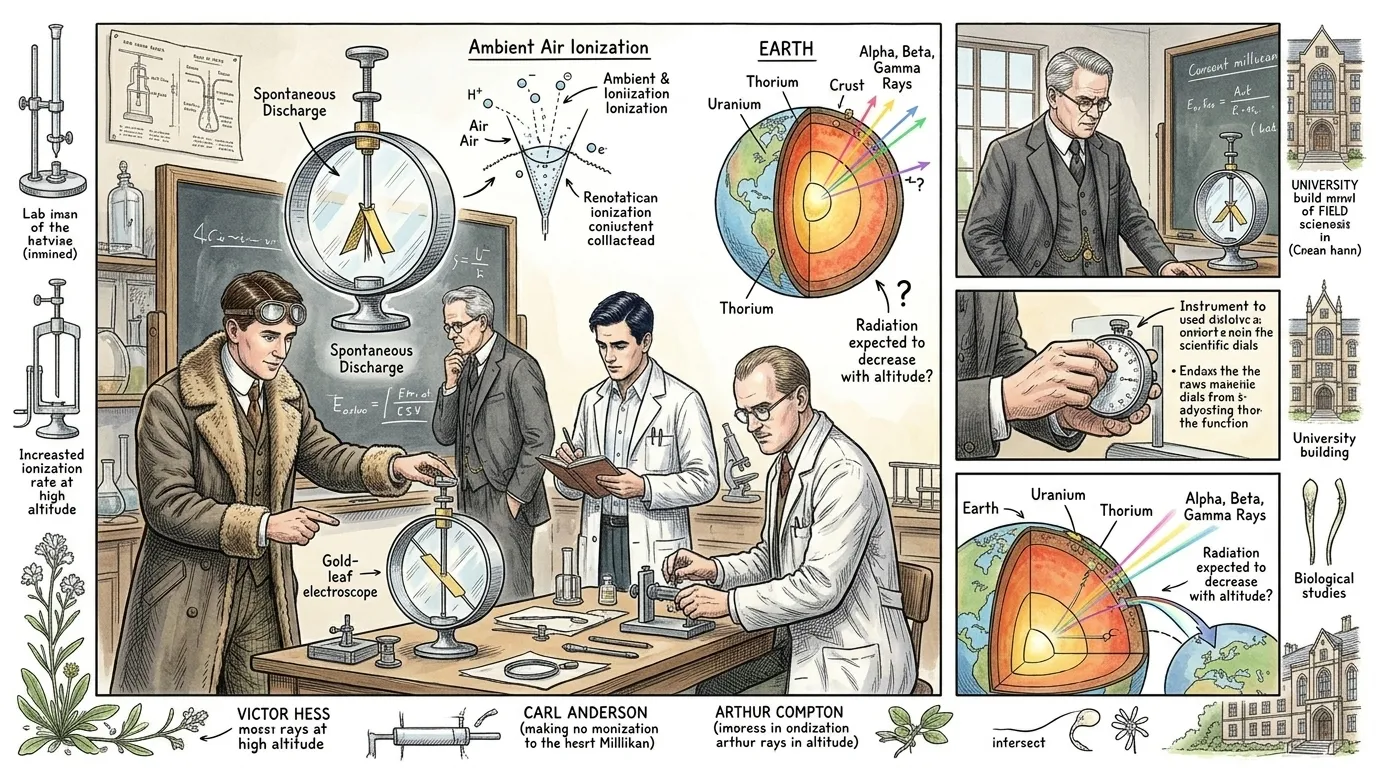
For decades, scientists observed that electroscopes, devices designed to detect electric charge, would spontaneously discharge even when perfectly insulated. This suggested that ambient air was constantly being ionized, or electrically charged, by some unseen force. The prevailing hypothesis attributed this ionization primarily to natural radioactivity emanating from Earth's crust, from elements like uranium and thorium, which were known to emit alpha, beta, and gamma rays. Based on this, it was logically assumed that as one ascended higher, moving away from this terrestrial source, the intensity of this natural radiation, and thus the rate of electroscope discharge, should steadily decrease.
Page 3
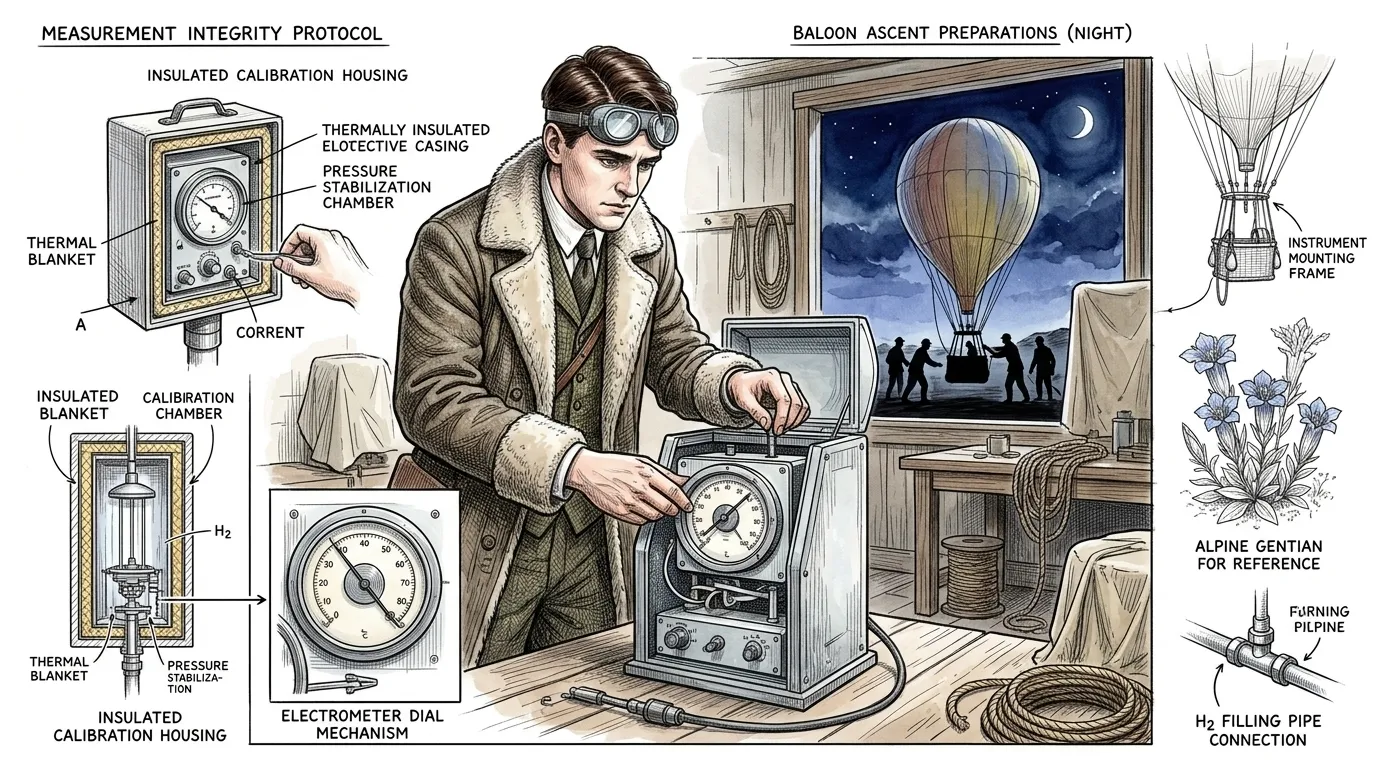
To definitively test this hypothesis, Victor Hess embarked on a series of unprecedented balloon ascents between 1911 and 1912. Understanding the limitations of ground-based measurements, he personally undertook the perilous journeys, often at night or during a solar eclipse, to minimize interference from sunlight or other known atmospheric effects. His specially designed, highly sensitive electroscopes were meticulously protected against temperature changes and air pressure fluctuations, ensuring the integrity of his critical measurements. These were not mere rides; they were precision expeditions into the unknown upper atmosphere, pushing the boundaries of experimental physics and personal courage.
Page 4
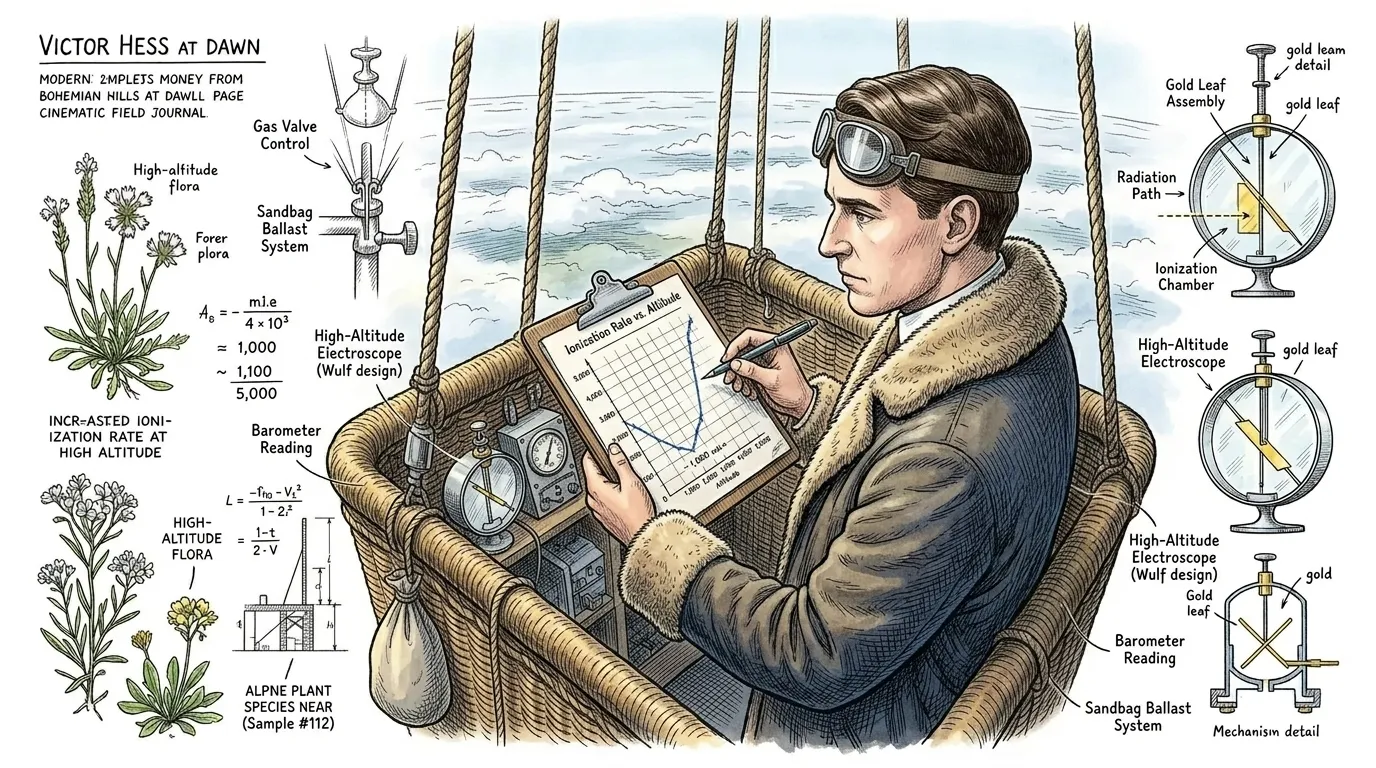
The data collected by Hess on these high-altitude flights delivered a revolutionary shock to the scientific community. While ionization rates initially decreased as expected up to about 1,000 meters, above that altitude, the discharge rate of his electroscopes began to steadily and undeniably increase. By 5,000 meters, the ionization was several times stronger than at sea level. This pivotal observation, meticulously documented and reproduced across multiple flights, conclusively refuted the idea that all background radiation originated from Earth. An unknown, highly penetrating radiation was entering our atmosphere from above.
Page 5
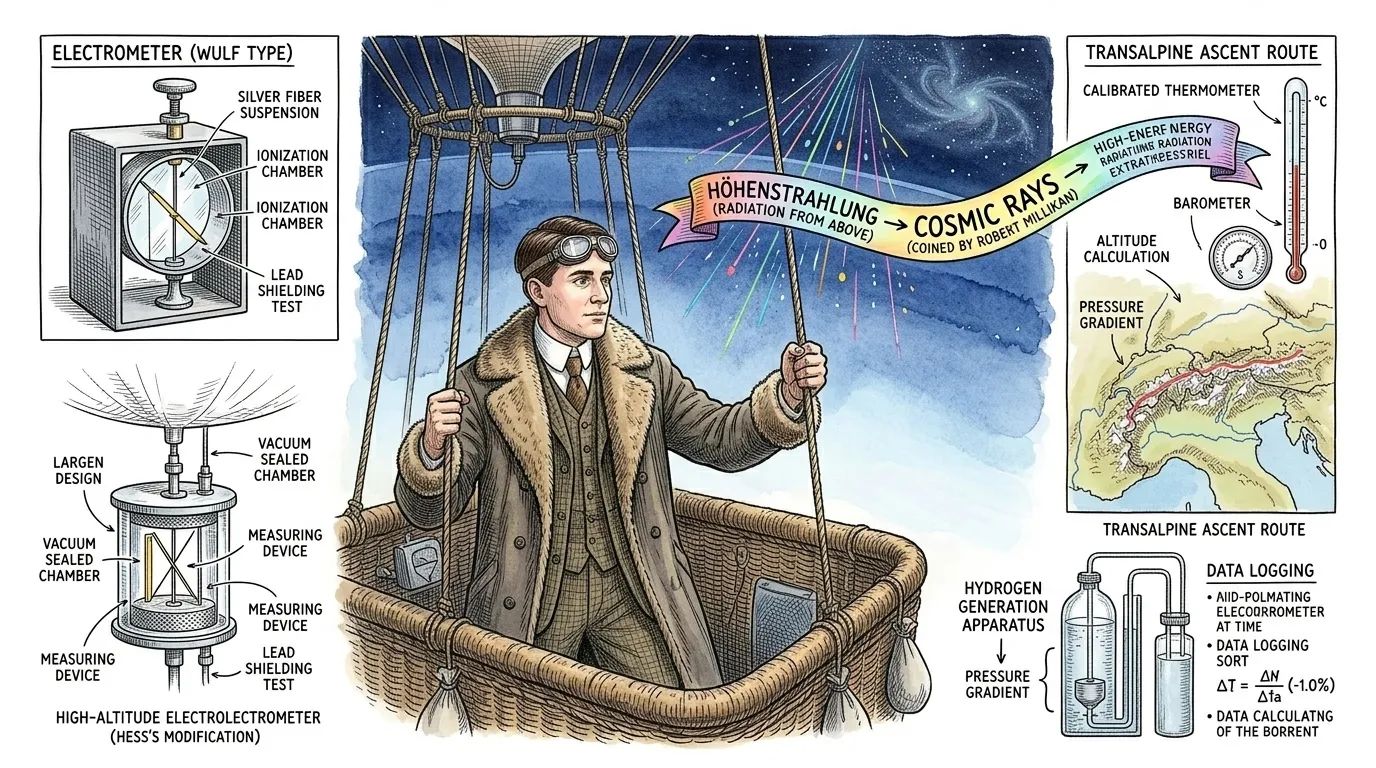
Victor Hess named this mysterious cosmic influx "Höhenstrahlung," or "radiation from above," a term that would later be superseded by "cosmic rays," coined by American physicist Robert Millikan. Hess's meticulous experiments provided the first conclusive evidence of this extraterrestrial radiation, identifying its exceptional penetrating power and confirming its celestial origin. This wasn't merely a minor adjustment to existing theories; it was a fundamental shift, opening a completely new window into the universe. It revealed that Earth was constantly bathed in energetic particles originating far beyond its protective atmosphere, challenging conventional physics and hinting at extraordinary cosmic processes.
Page 6
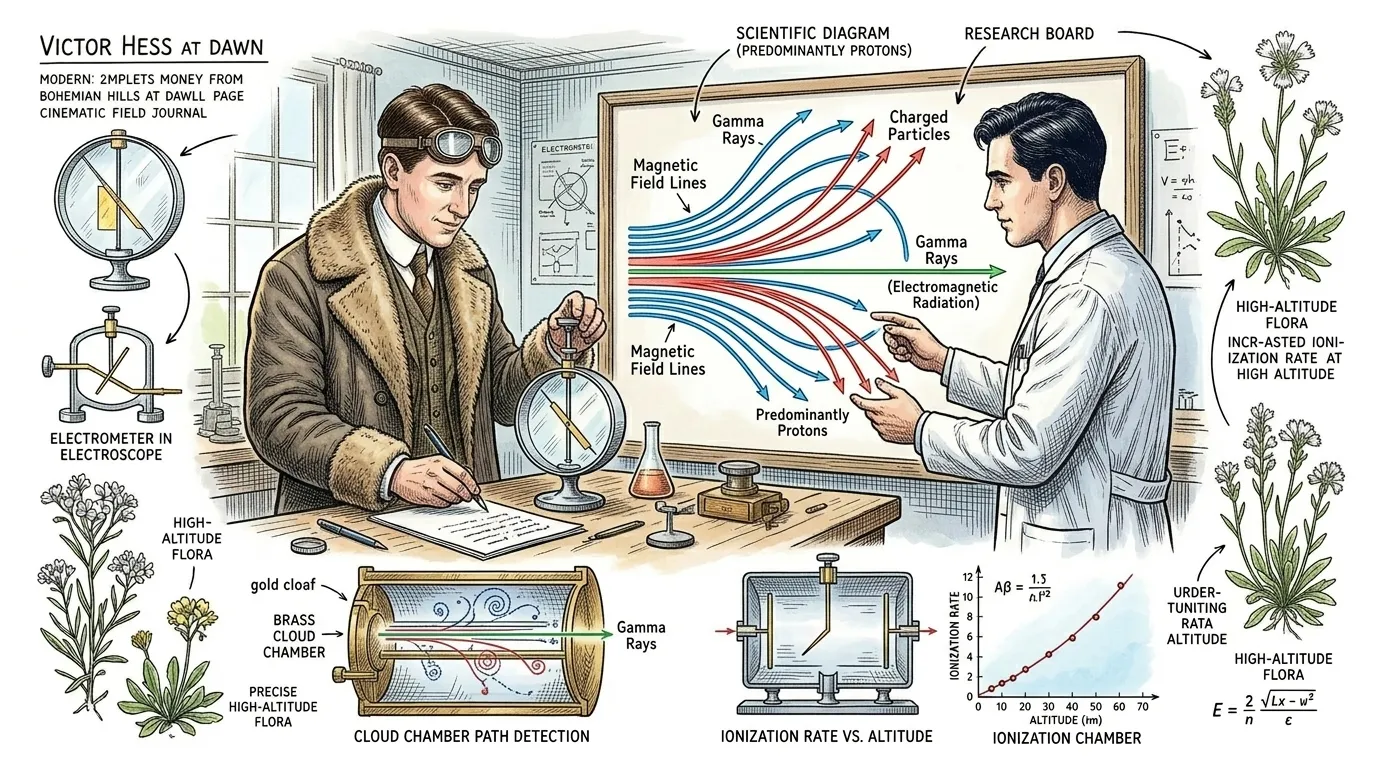
Initial assumptions debated whether Höhenstrahlung comprised high-energy gamma rays, similar to X-rays, or actual charged particles. Early experiments, including those by Hess and later by others, began to suggest the latter. Cosmic rays were found to interact with magnetic fields, indicating they carried an electric charge—a property not possessed by electromagnetic radiation like gamma rays. This crucial distinction paved the way for understanding cosmic rays not as waves, but as extremely energetic subatomic particles, predominantly protons, accelerated to incredible speeds by astrophysical phenomena across the universe. This understanding transformed our view of radiation.
Page 7
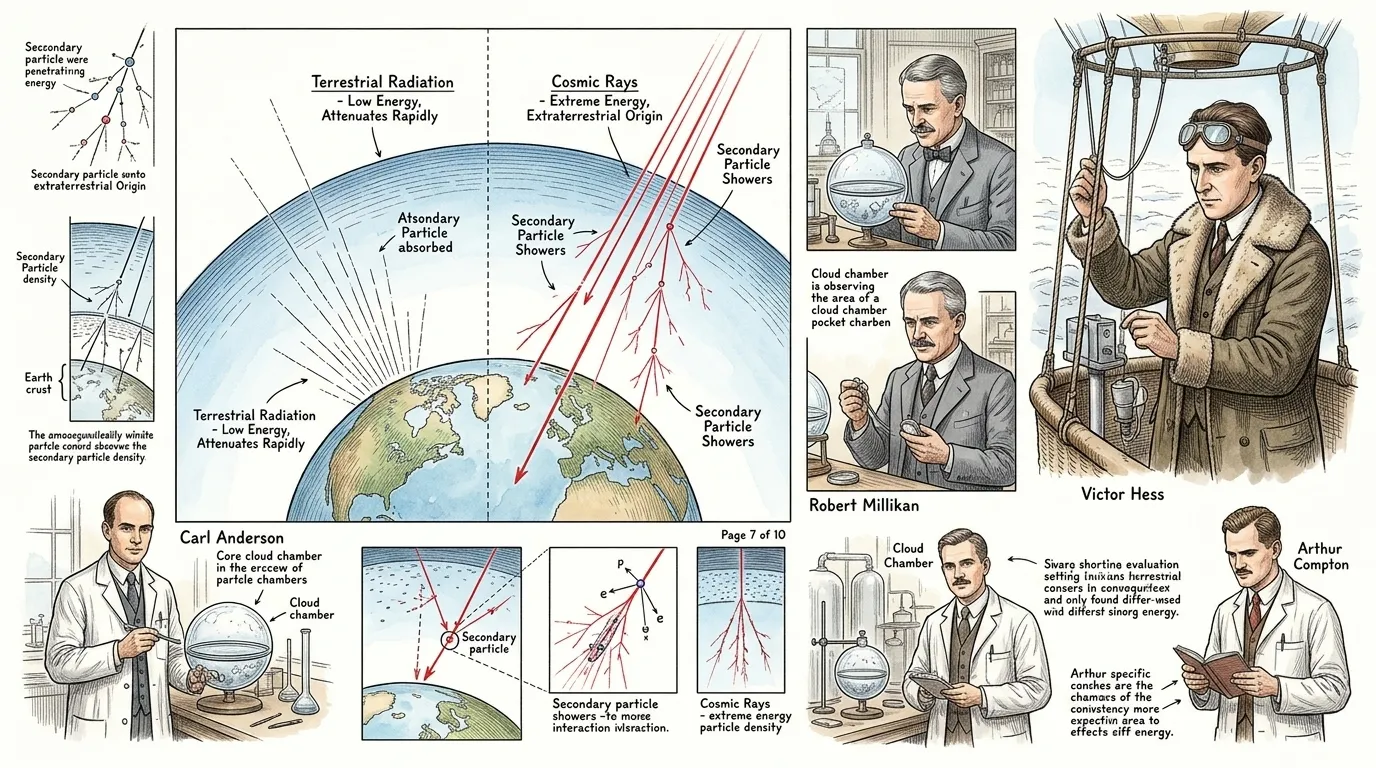
Hess's discovery provided a clear distinction between the pervasive, yet relatively low-energy, radiation originating from radioactive elements within Earth's crust and the immensely powerful, extraterrestrial cosmic rays. Terrestrial radiation attenuates rapidly with distance, largely absorbed by the atmosphere. Cosmic rays, however, possess such extreme energy that they can penetrate deep into our atmosphere, causing showers of secondary particles upon impact. This profound difference in origin and energy levels was critical, reshaping our understanding of background radiation and laying the groundwork for all subsequent particle physics. It was like realizing the gentle hum of a nearby lamp was distinct from the distant roar of a supernova.
Page 8
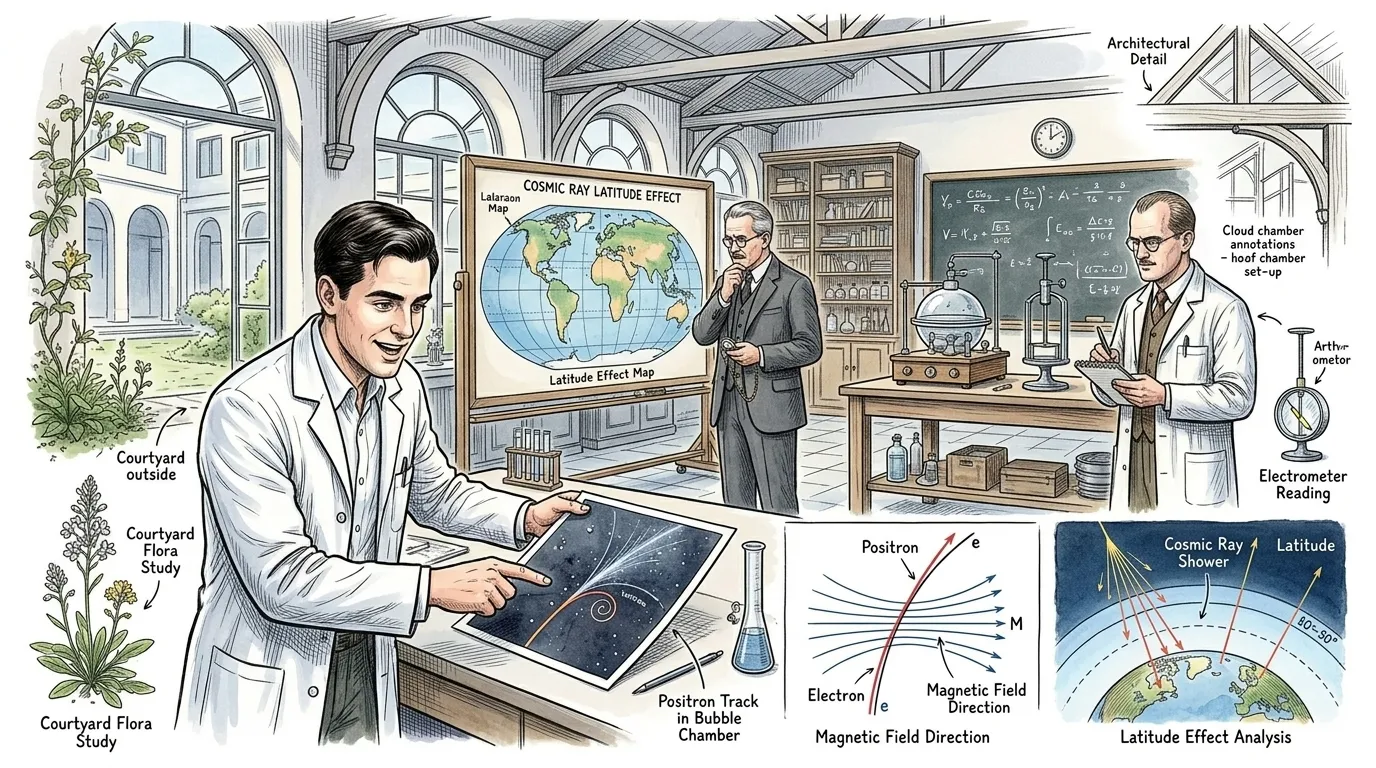
The confirmation of cosmic rays ignited a new era of particle physics, transforming remote balloon flights into indispensable observatories. Scientists like Robert Millikan, who later coined the term 'cosmic rays,' and Arthur Compton, who studied their latitude effect, expanded on Hess's initial findings. This research eventually led to the discovery of fundamental particles such as the positron (by Carl Anderson in 1932) and the muon (also by Anderson in 1936), initially observed within cosmic ray showers. Hess's groundbreaking work thus became the genesis of an entire field dedicated to understanding the most energetic phenomena in the universe.
Page 9
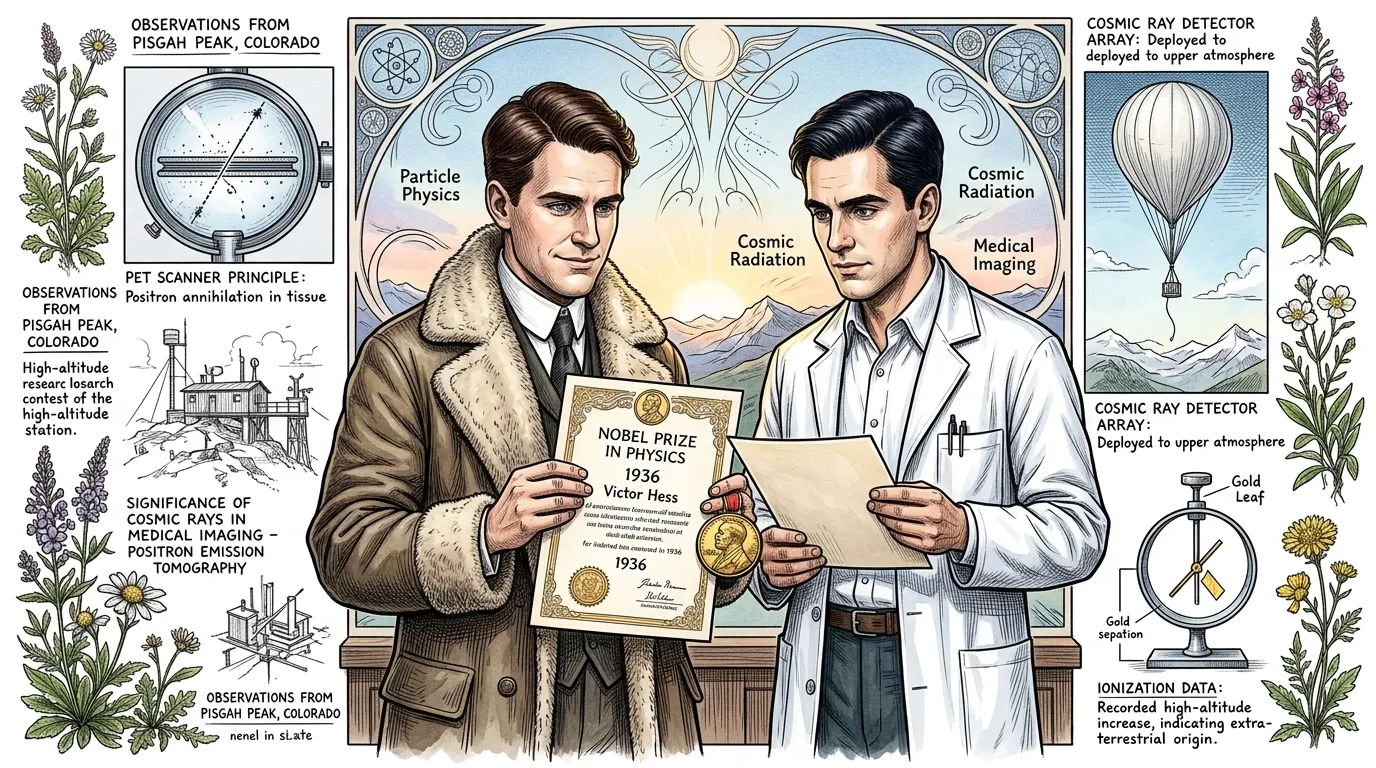
In recognition of his revolutionary discovery, Victor Hess was awarded the Nobel Prize in Physics in 1936, sharing it with Carl D. Anderson for his discovery of the positron. Hess's work fundamentally changed our understanding of radiation, revealing a universe far more active and energetic than previously imagined. His meticulous, courageous experiments, conducted high above the Earth, laid the essential groundwork for fields as diverse as particle physics, astrophysics, and medical imaging. The persistent riddle of the electroscope, once an annoyance, became a gateway to profound cosmic truths, a testament to the power of observation and daring inquiry.
Page 10
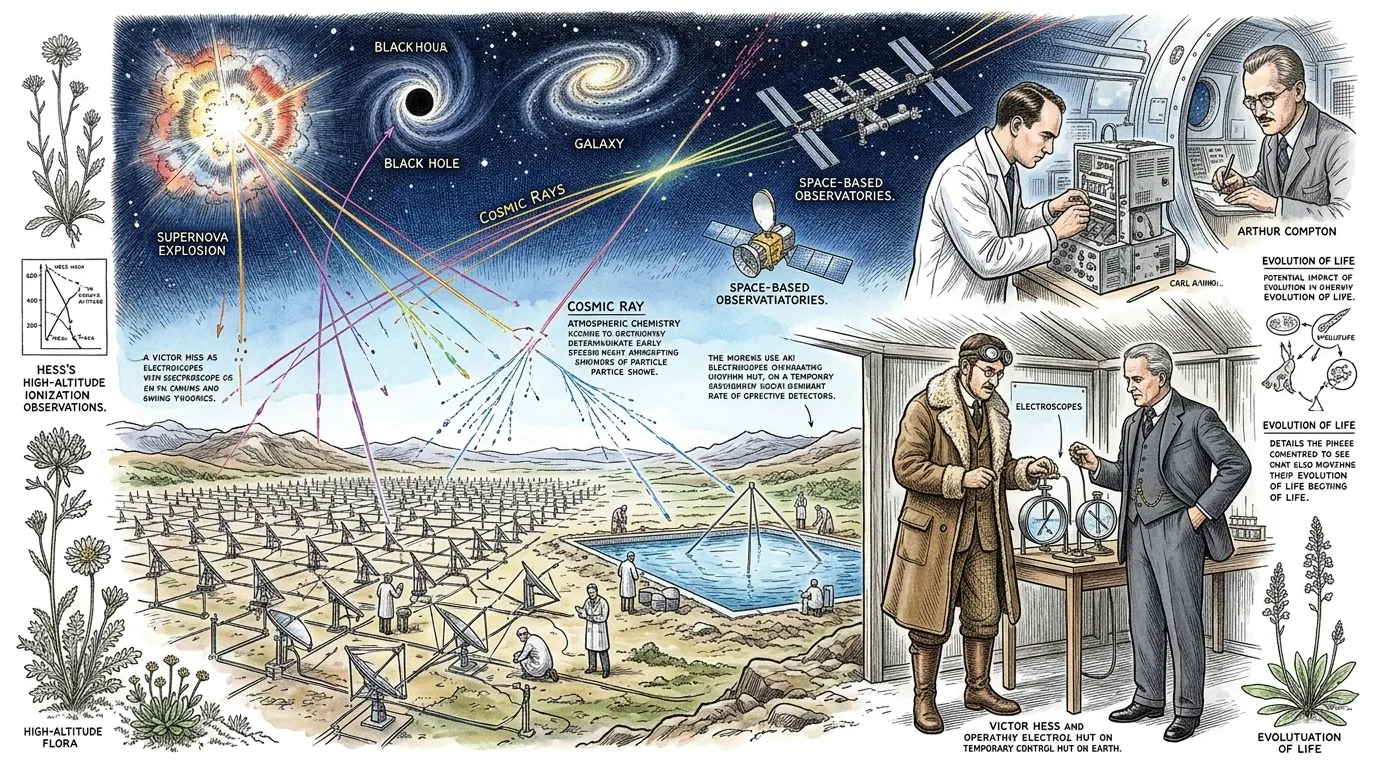
Today, the study of cosmic rays continues to be a vibrant frontier in physics, utilizing vast observatories on Earth and sophisticated detectors in space. These high-energy particles carry crucial information about extreme astrophysical phenomena: supernovae, black holes, and the origins of galaxies. They are not merely a curiosity but a fundamental component of the universe, influencing everything from atmospheric chemistry to potentially even the evolution of life. Victor Hess's pioneering flights over a century ago initiated a journey into the cosmos that continues to inspire awe and fuel our relentless quest to comprehend the universe's deepest secrets.
About this story
- Location: Global
- Audience: general readers
Questions and answers
Read Wonder Science on your phone
Wonder Science is available on Android. Get Wonder Science on Google Play.