Valentina Tereshkova
Valentina Tereshkova — an illustrated science story, set in Global. 10 illustrated pages, free to read on Wonder Science.
Page 1
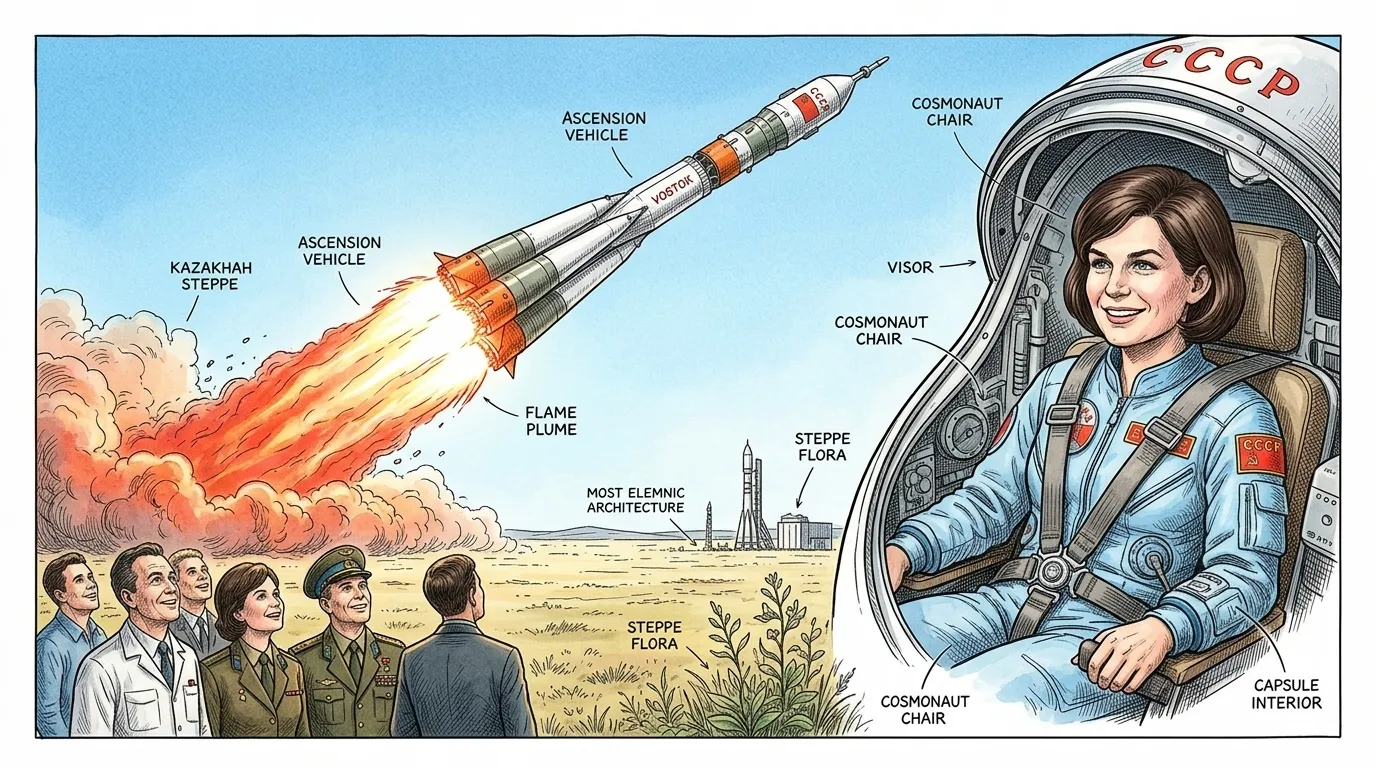
At precisely 09:29 UTC on June 16, 1963, a thunderous roar ripped through the Kazakh steppe as the Vostok 6 rocket ignited its engines. Thousands of engineers, military personnel, and curious onlookers watched from a distance, their faces illuminated by the colossal flame, as the towering rocket ascended, carrying a single cosmonaut into the uncharted vacuum beyond Earth. Valentina Tereshkova, a 26-year-old textile worker turned sky-diver, was on board, poised to etch her name into history as the first woman to journey into space.
Page 2
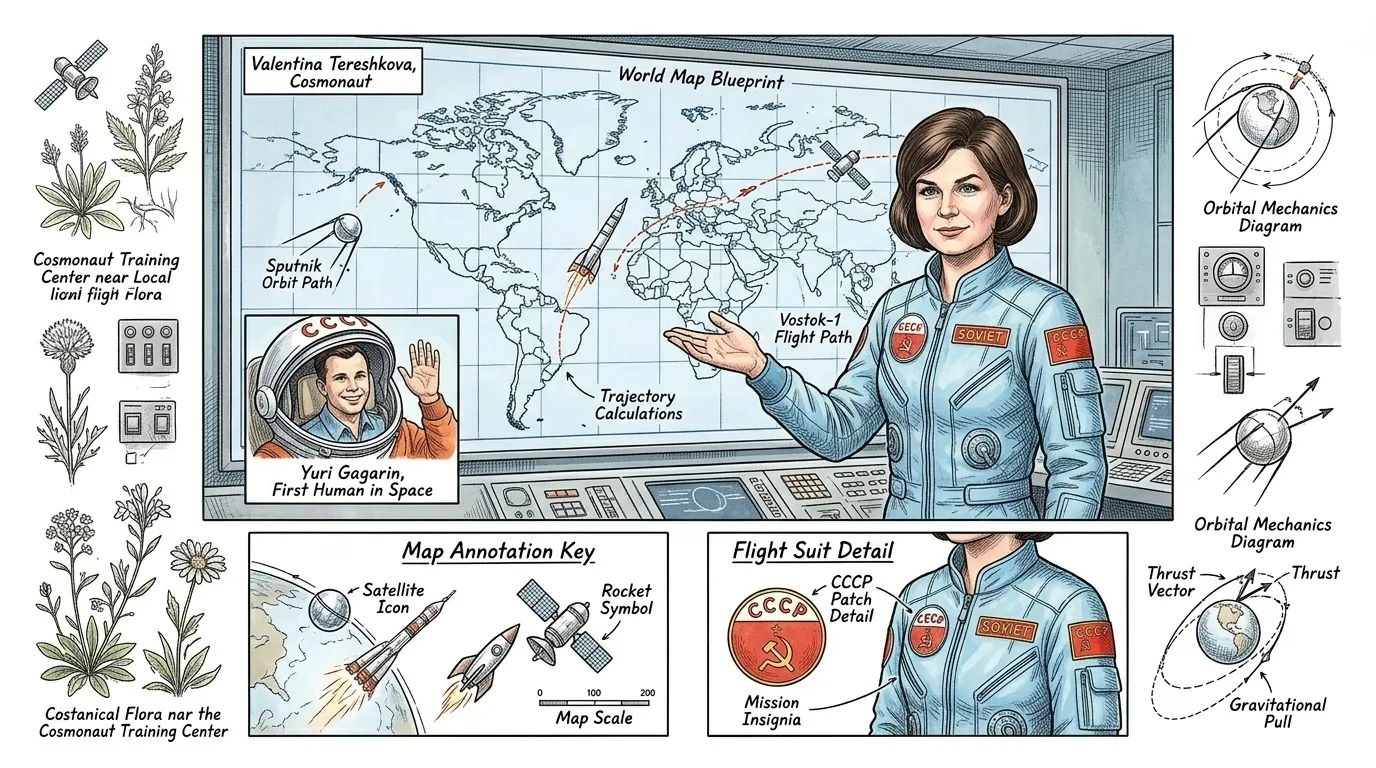
Tereshkova's flight was not merely a scientific endeavor; it was a potent maneuver in the Cold War's fiercest theater: the Space Race. Following Sputnik and Yuri Gagarin's orbital triumph, the Soviet Union relentlessly pursued 'firsts' to demonstrate technological superiority and a progressive social ideology. The decision to send a woman into space was a deliberate statement, showcasing a society where gender ostensibly posed no barrier to the highest achievements, even as both superpowers pushed the very limits of human endurance.
Page 3
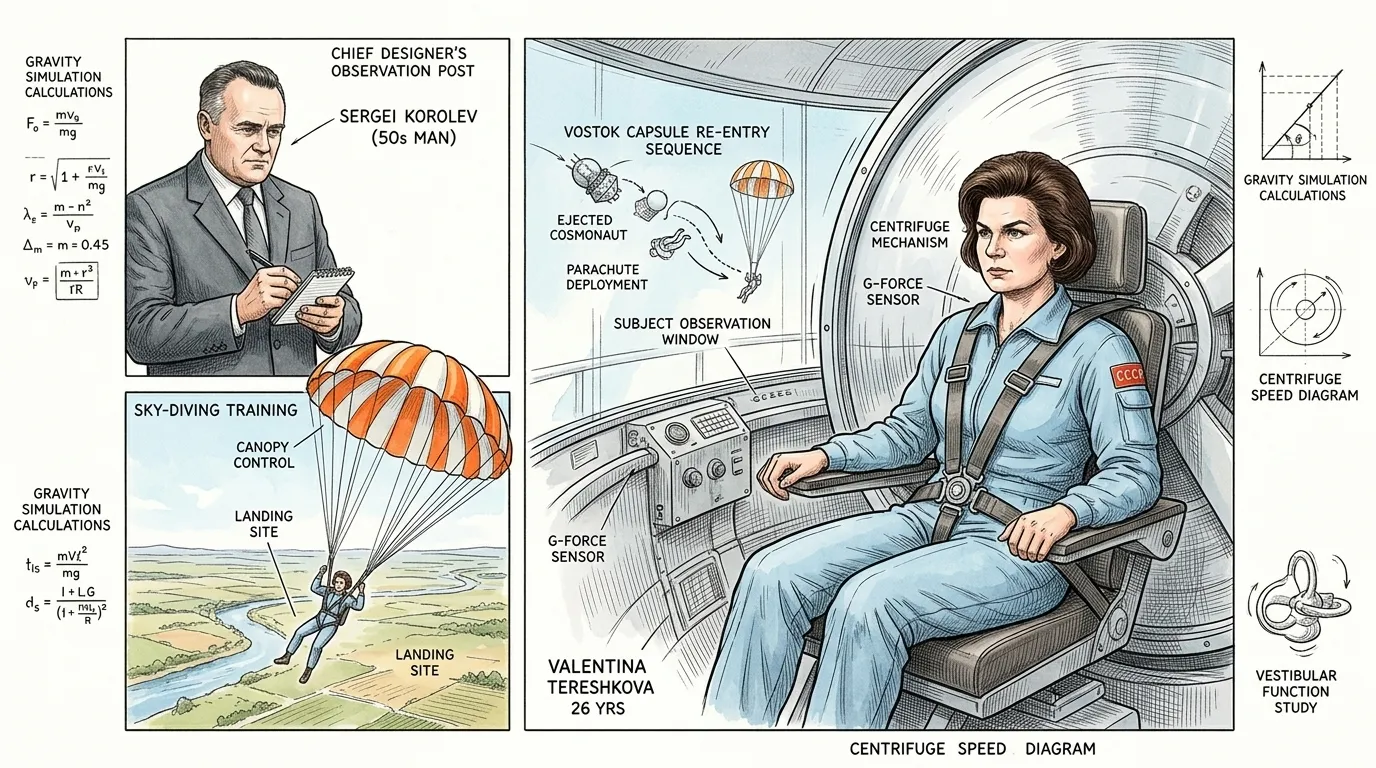
The criteria for the first female cosmonauts were exceptionally demanding, focusing on physical resilience, psychological stability, and a background in parachuting—a critical skill for Vostok capsule re-entry, where cosmonauts ejected and landed separately. Tereshkova, with her extensive sky-diving experience, stood out among over 400 applicants. Her training involved grueling physical conditioning, isolation tests, and centrifuge runs simulating the intense G-forces of launch and re-entry, pushing her body and mind to their absolute limits in preparation for the unforgiving void.
Page 4
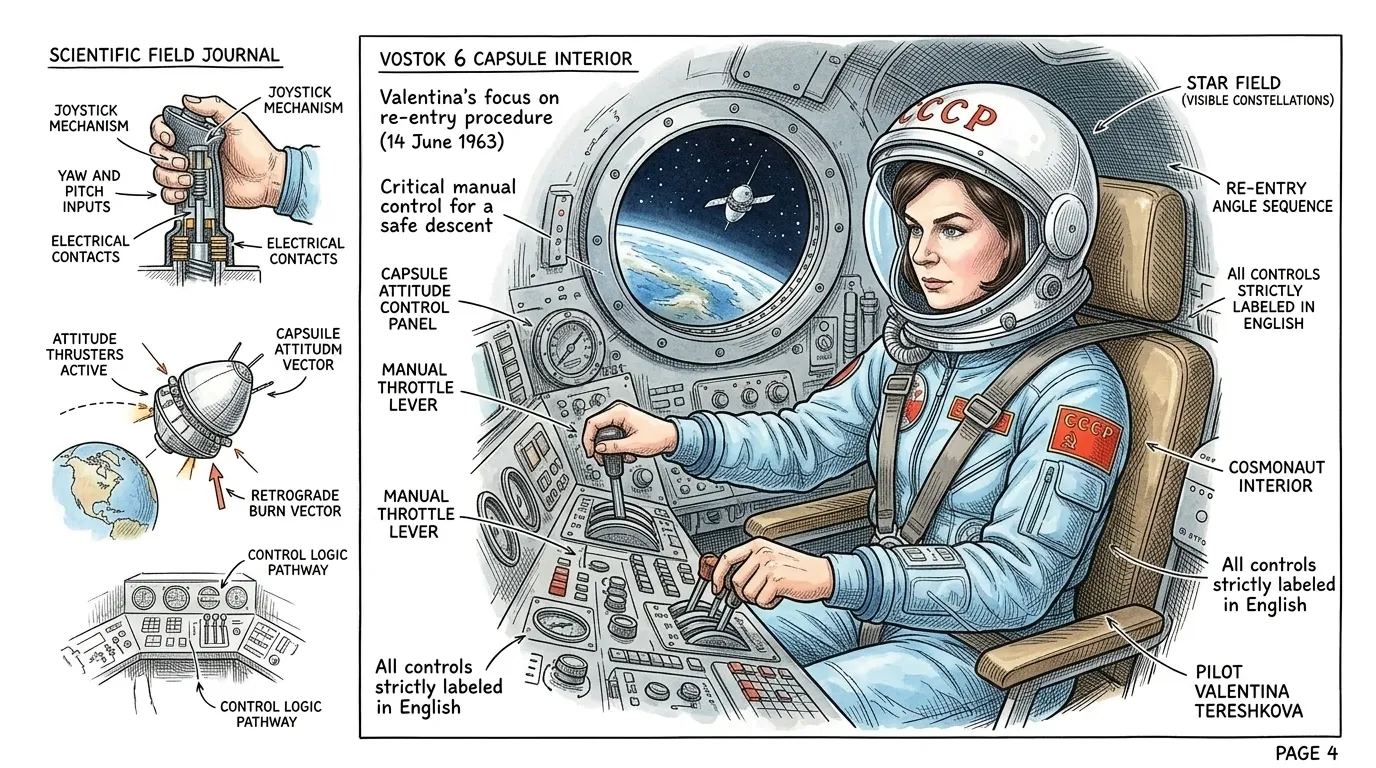
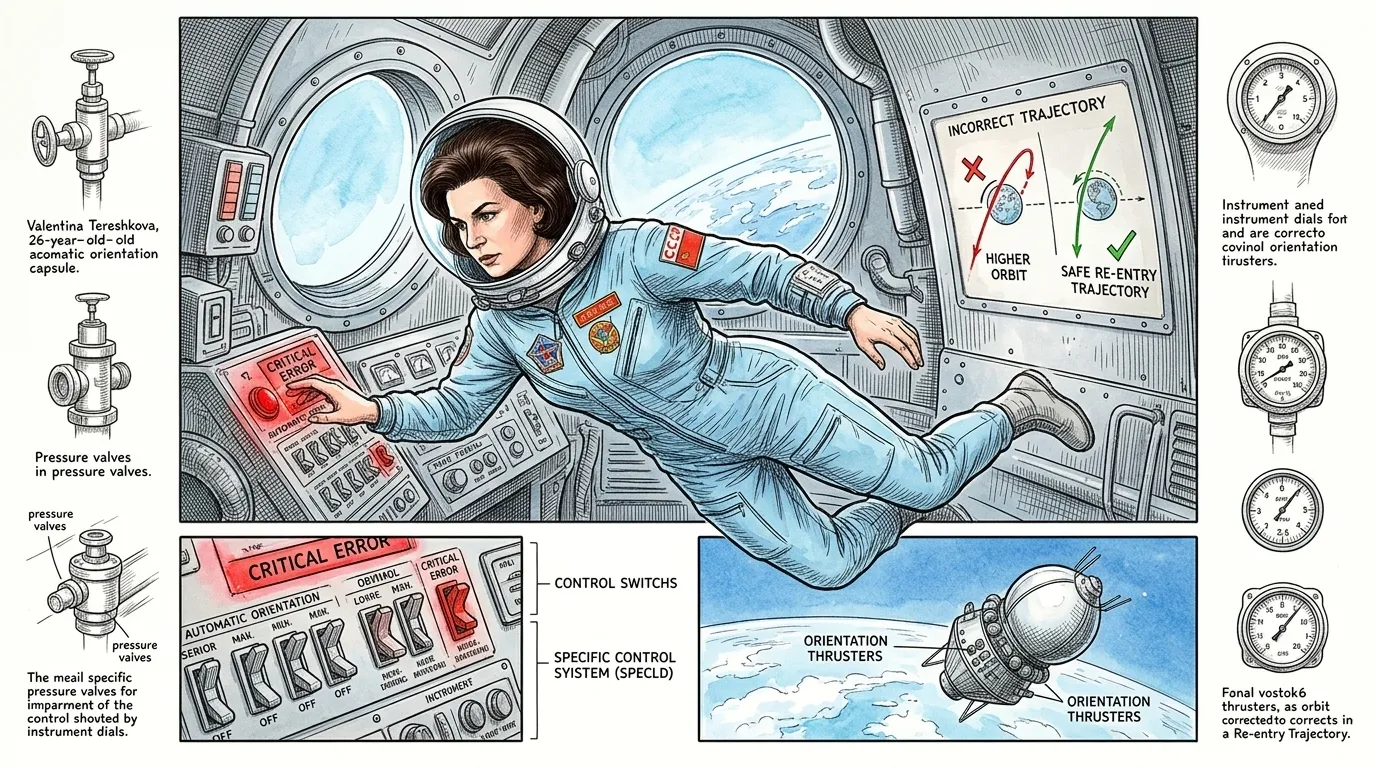
The Vostok 6 capsule, while a marvel of engineering for its time, was designed with a significant manual override capability. In the event of an automatic system failure, the cosmonaut would have to manually orient the spacecraft using a complex set of controls—a critical skill requiring immense precision, particularly for the perilous re-entry phase. This reliance on manual control meant that Tereshkova was not merely a passenger but an active pilot, a testament to the Soviet Union's confidence in their cosmonauts' training and ingenuity.
Page 5
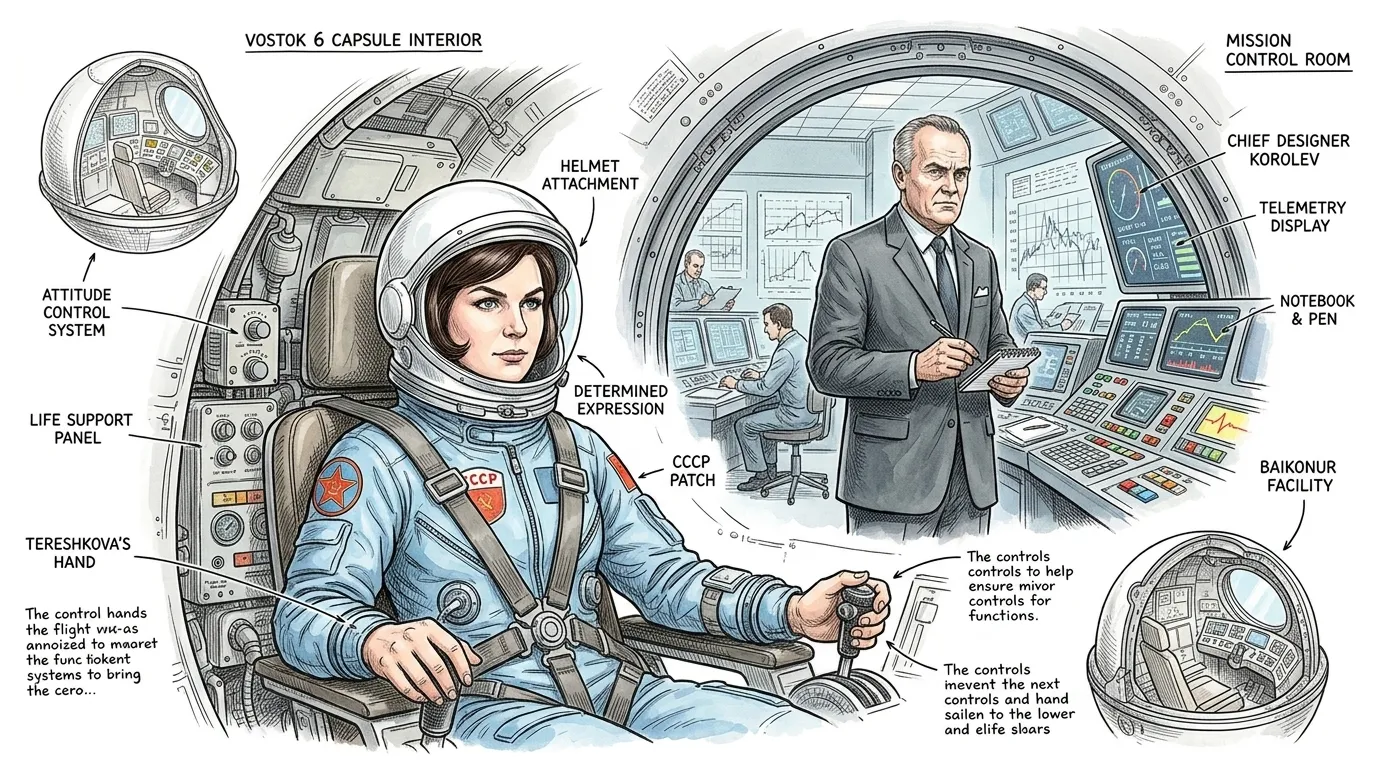
Before launch, the atmospheric tension at Baikonur's Mission Control was palpable. Sergei Korolev, the visionary Chief Designer of the Soviet space program, oversaw every detail with meticulous precision. He exchanged last words with Tereshkova, a moment heavy with the weight of national pride and extraordinary risk. The complex choreography of pre-flight checks, weather monitoring, and communication protocols all hinged on the unwavering focus of hundreds of dedicated professionals, each playing a vital role in propelling 'Chaika'—Tereshkova's call sign, meaning 'Seagull'—towards the stars.
"'All systems nominal. Chaika, are you ready?' a voice echoed. Tereshkova, strapped into her seat, replied firmly, 'I am ready. Let's go.'"
Page 6
Orbiting Earth, Tereshkova experienced profound weightlessness, a sensation of both freedom and disorientation. While her official reports painted a picture of seamless success, later declassified records revealed a critical early challenge: the Vostok 6 module's automatic orientation system was incorrectly configured, threatening to send her into a higher orbit. It was Tereshkova's quick thinking and rigorous manual control training, which she had learned with such dedication, that allowed her to use a backup system to correct the spacecraft's attitude, ensuring a safe re-entry trajectory.
Page 7
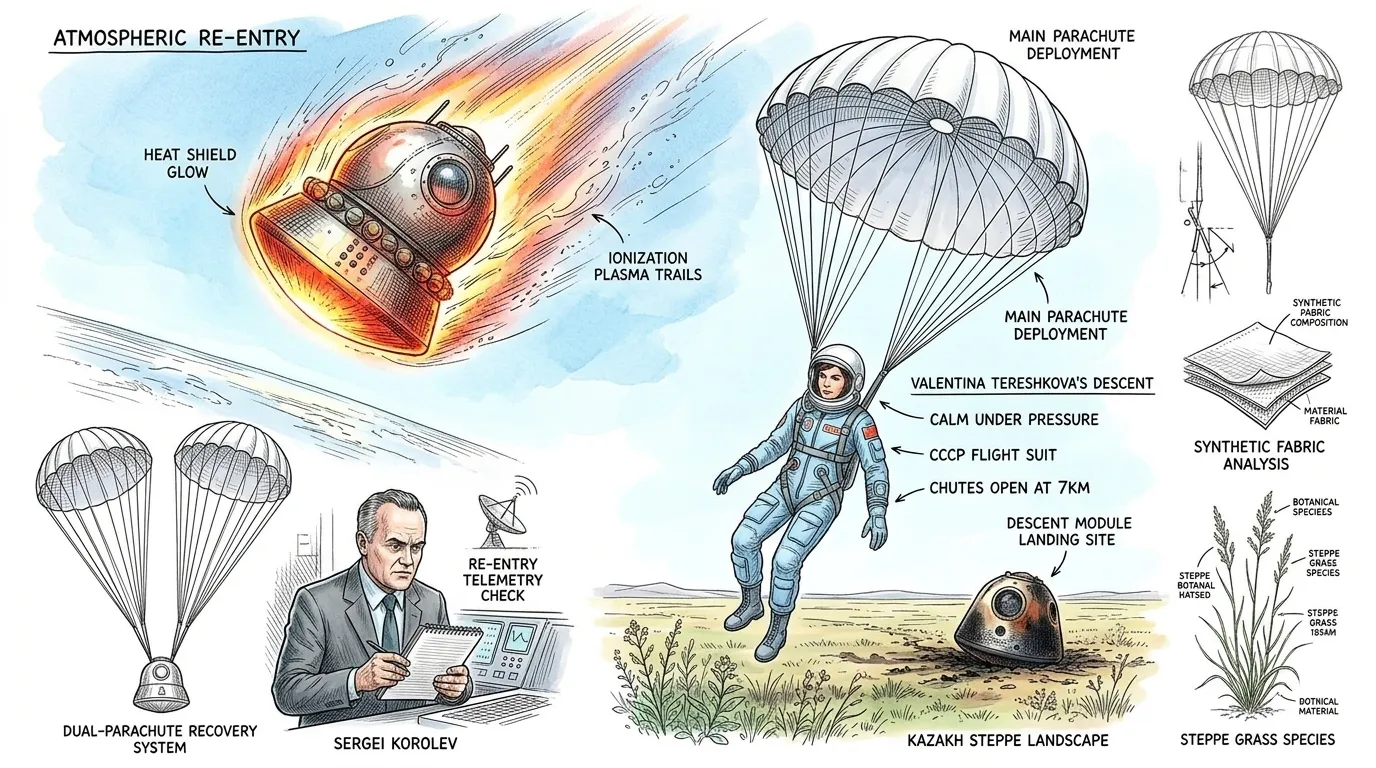
After 48 orbits and nearly three days in space, the moment of truth arrived: re-entry. The Vostok 6 module separated, its heat shield glowing incandescently as it plunged through Earth's atmosphere, enduring temperatures reaching thousands of degrees. At an altitude of 7,000 meters, Tereshkova ejected from the capsule and parachuted independently to the ground, landing in a remote field in Kazakhstan. Her descent, a stark contrast to the fiery re-entry of her spacecraft, marked the successful conclusion of a monumental journey, reaffirming humanity's capacity to return from the void.
Page 8
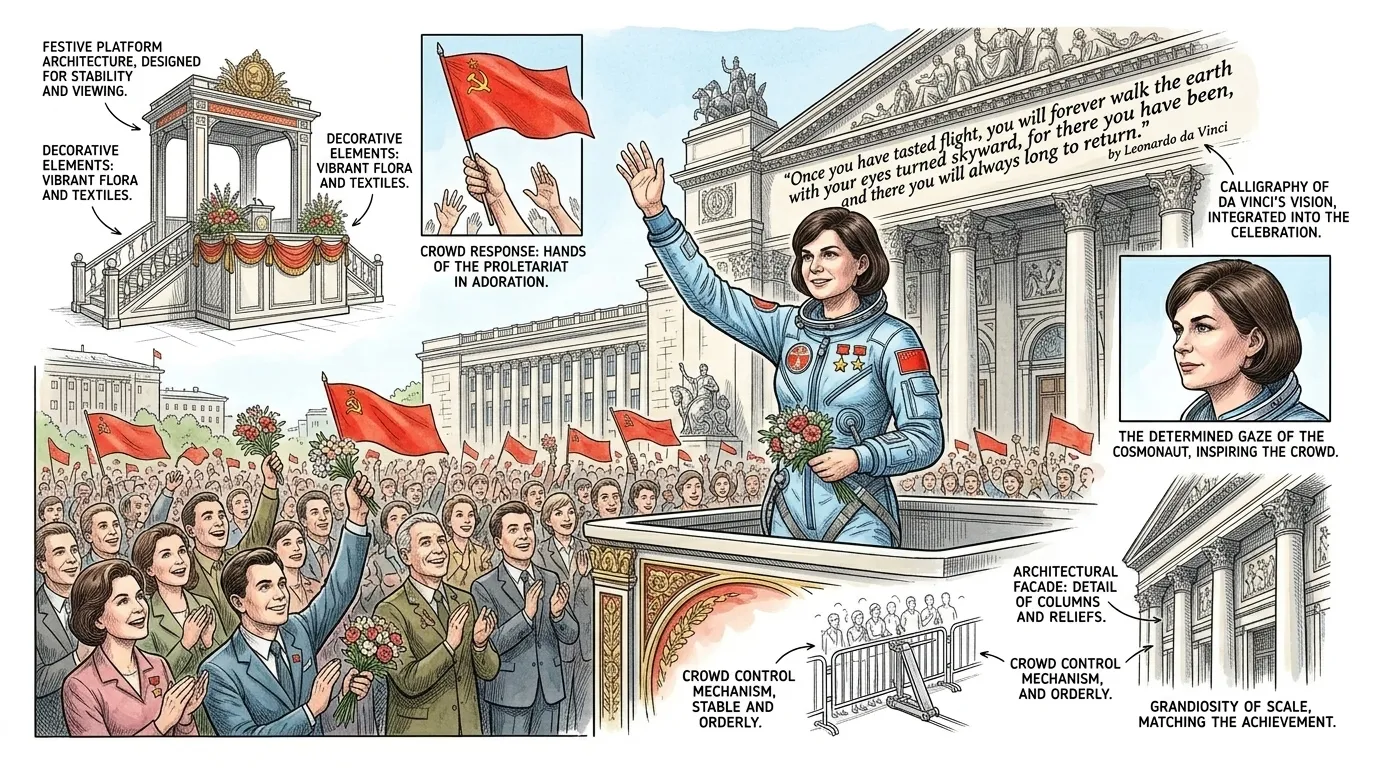
Valentina Tereshkova's safe return was met with rapturous celebration across the Soviet Union and garnered global headlines, cementing her status as an international hero and a symbol of Soviet achievement. She was awarded the title Hero of the Soviet Union and embarked on a worldwide tour, meeting heads of state and inspiring millions. Her feat challenged preconceptions about women's roles in science and exploration, echoing Leonardo da Vinci's timeless observation: 'Once you have tasted flight, you will forever walk the earth with your eyes turned skyward, for there you have been, and there you will always long to return.'
Page 9
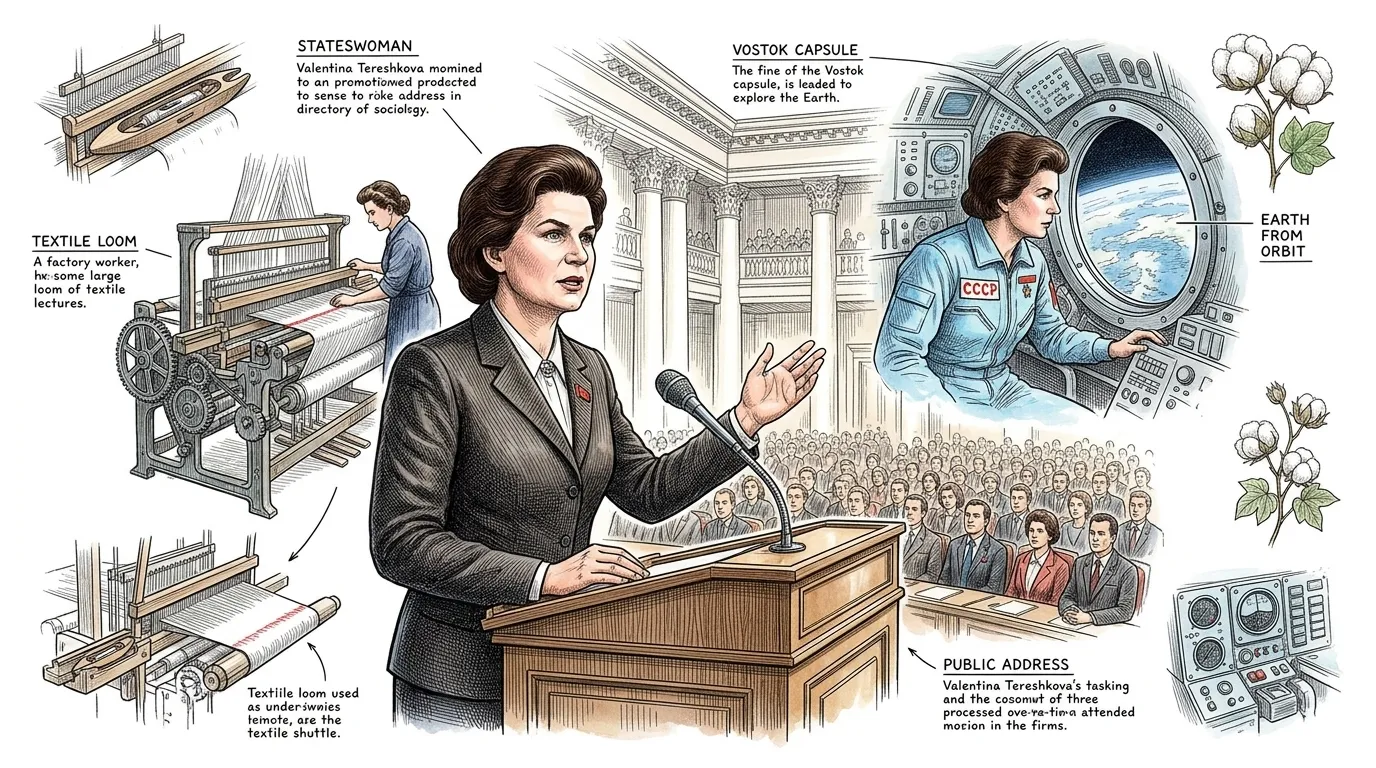
Following her historic flight, Tereshkova never returned to space but dedicated her life to public service, becoming a prominent political figure in the Soviet Union and later in Russia. She served in the Supreme Soviet and championed women's rights and scientific causes, traveling the world as an ambassador for peace and space exploration. Her journey from factory worker to cosmonaut to stateswoman underscored a powerful narrative of opportunity and determination, demonstrating that the ambition cultivated on the factory floor could reach the highest echelons of human endeavor and governance.
Page 10
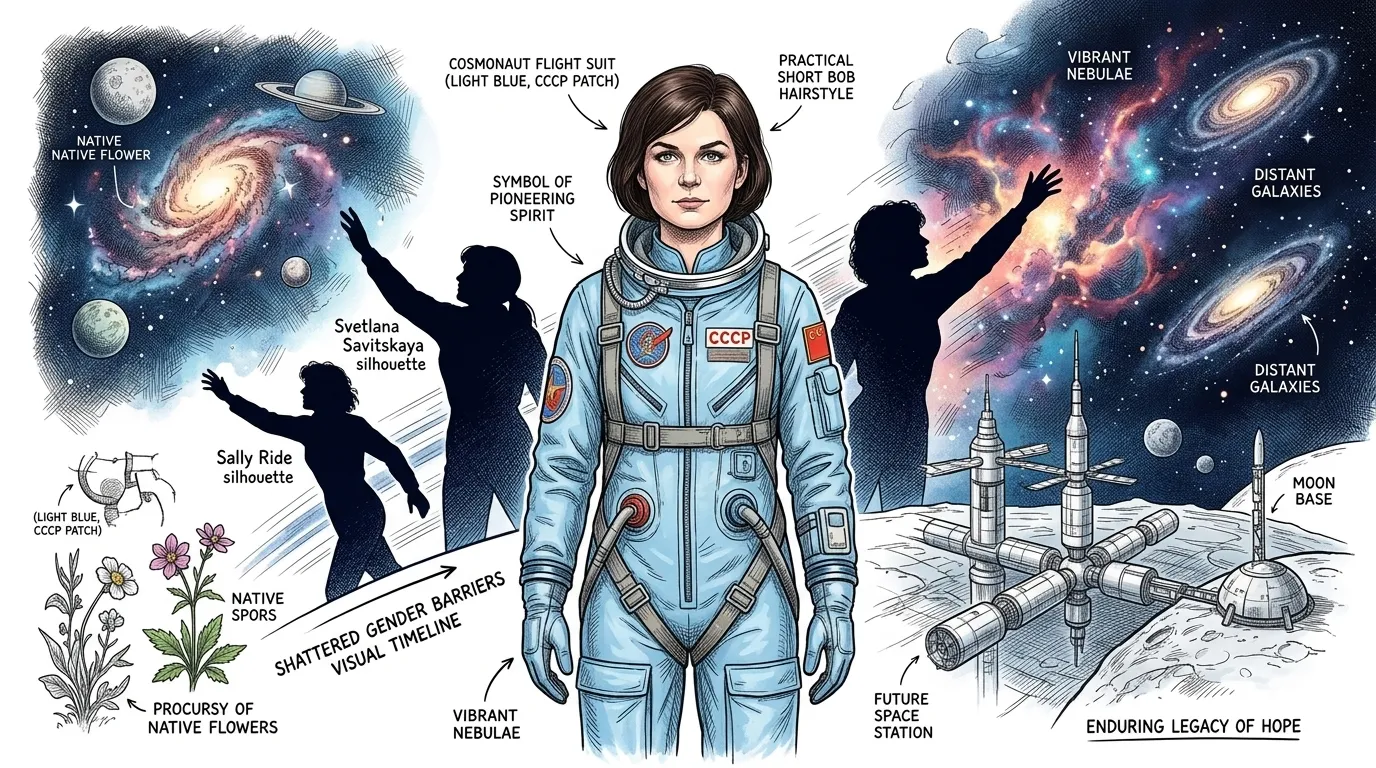
Valentina Tereshkova's flight remains a pivotal moment in human history, shattering gender barriers in the ultimate frontier. Although it took nearly two decades for another woman to fly in space (Svetlana Savitskaya in 1982, followed by Sally Ride in 1983), her pioneering journey irrevocably altered perceptions of what women could achieve. Today, her legacy continues to inspire generations, reminding us that the quest for knowledge and exploration knows no boundaries, propelling humanity towards an inclusive future among the stars.
About this story
- Location: Global
- Audience: general readers
Questions and answers
Read Wonder Science on your phone
Wonder Science is available on Android. Get Wonder Science on Google Play.