Vandana Shiva
Vandana Shiva — an illustrated science story, set in Global. 10 illustrated pages, free to read on Wonder Science.
Page 1
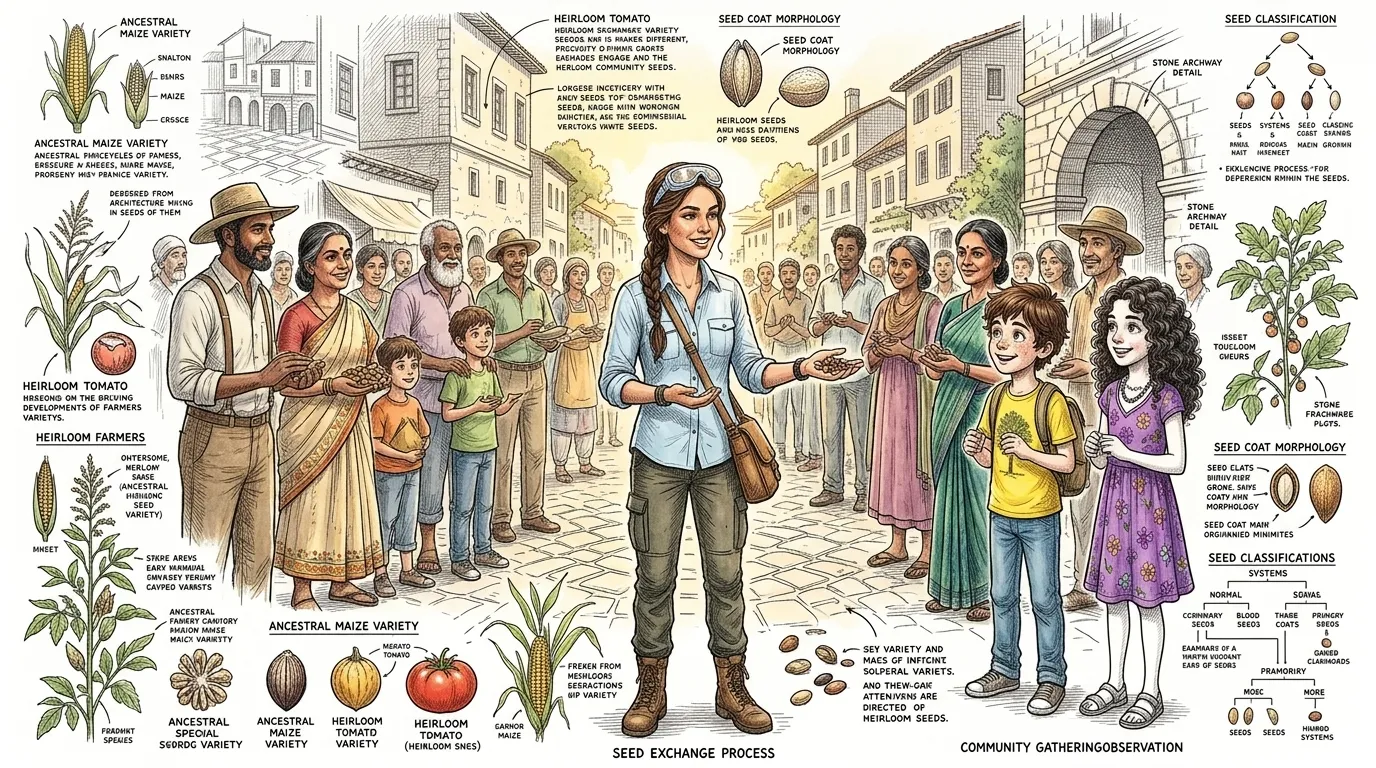
A vibrant energy pulsed through the crowded village square, a tapestry of colors and sounds. Farmers, families, and activists from across the region had gathered, their voices a powerful chorus advocating for a future rooted in ecological justice. At the heart of the bustling assembly, surrounded by thousands, stood Valentina, her expression resolute as she spoke of resilience. Leandro and Solana, wide-eyed, listened intently from the edge of the crowd, observing the passionate exchange of heirloom seeds—a living testament to biodiversity.
Page 2
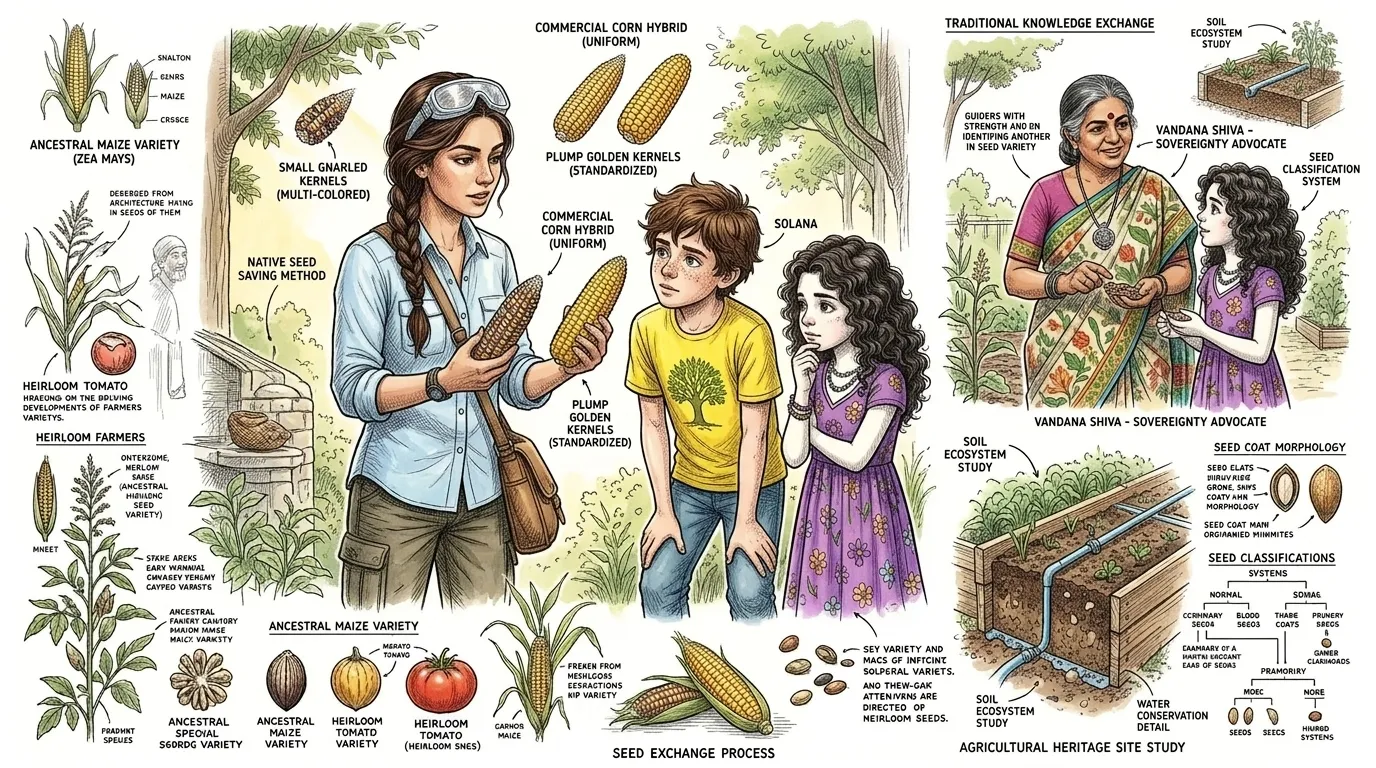
Valentina led Leandro and Solana away from the main gathering, towards a quiet corner where she could illustrate the silent crisis facing their land. She picked up two ears of corn, one small and gnarled, the other plump and genetically uniform. She explained how, for generations, farmers had nurtured countless varieties of crops, each adapted to local conditions and rich in unique traits. This diverse agricultural heritage, however, was rapidly disappearing, replaced by a few high-yielding, industrially produced strains.
"'Do you see the difference, Leandro?' Valentina asked, holding up the two corn ears. 'This small one represents the richness of generations, adapted to our soil, while this uniform one promises high yield but hides a deeper problem. We are losing not just plants, but entire histories of resilience.'"
Page 3
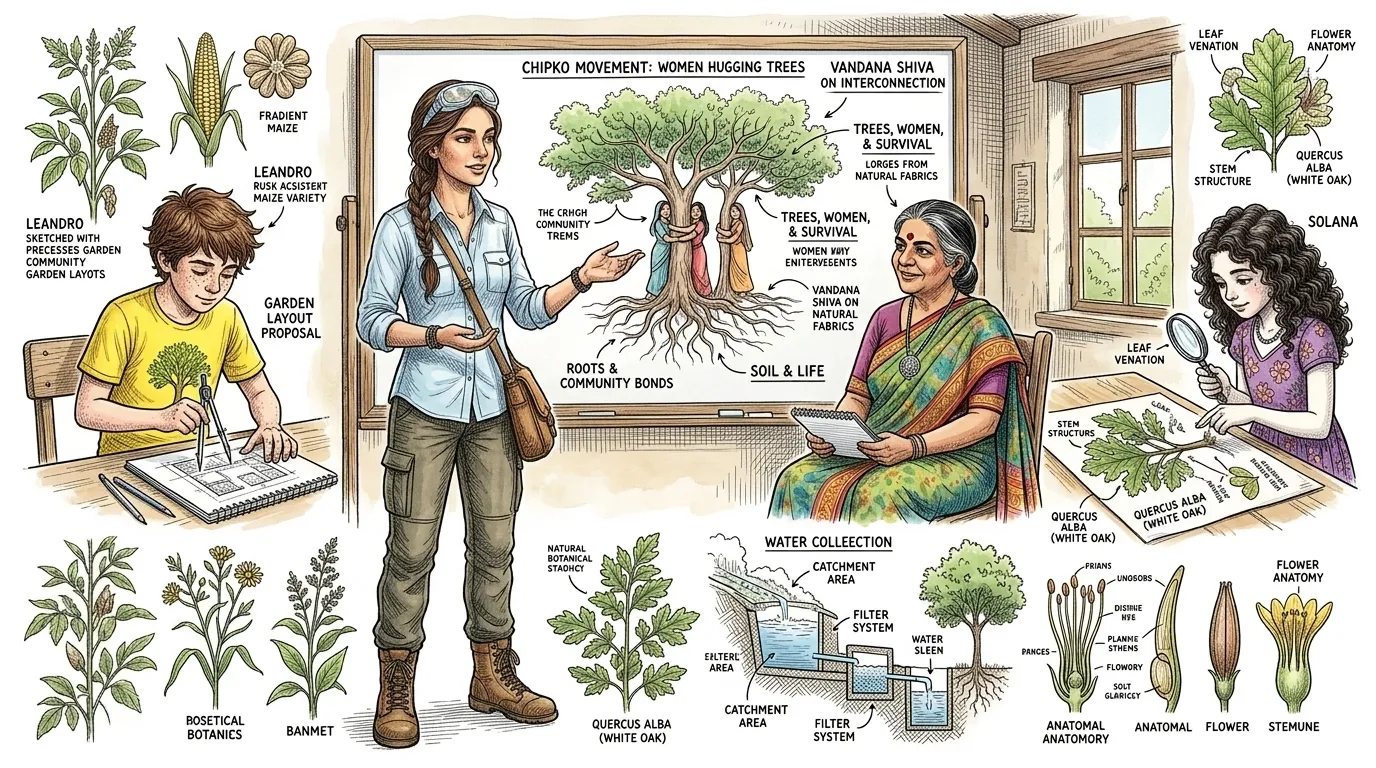
Valentina described Vandana Shiva's extraordinary journey, a brilliant mind trained in quantum physics who redirected her focus towards the planet's ecological struggles. It was the Chipko movement in the Himalayas, where women bravely embraced trees to prevent logging, that deeply influenced Shiva. Valentina explained how this powerful act of non-violent resistance made Shiva realize the profound connection between women, nature, and the battle for survival. It ignited her resolve to protect the Earth's living systems.
"'Vandana Shiva, a physicist, saw what others missed,' Valentina explained, gesturing towards a hand-drawn diagram on a nearby chalkboard showing intertwined trees and human figures. 'She realized that science isn't just about particles, but about life itself. As Mahatma Gandhi famously said, 'The future depends on what you do today.' Shiva embodied that, showing us that our actions now shape generations to come, especially in protecting our natural world.'"
Page 4
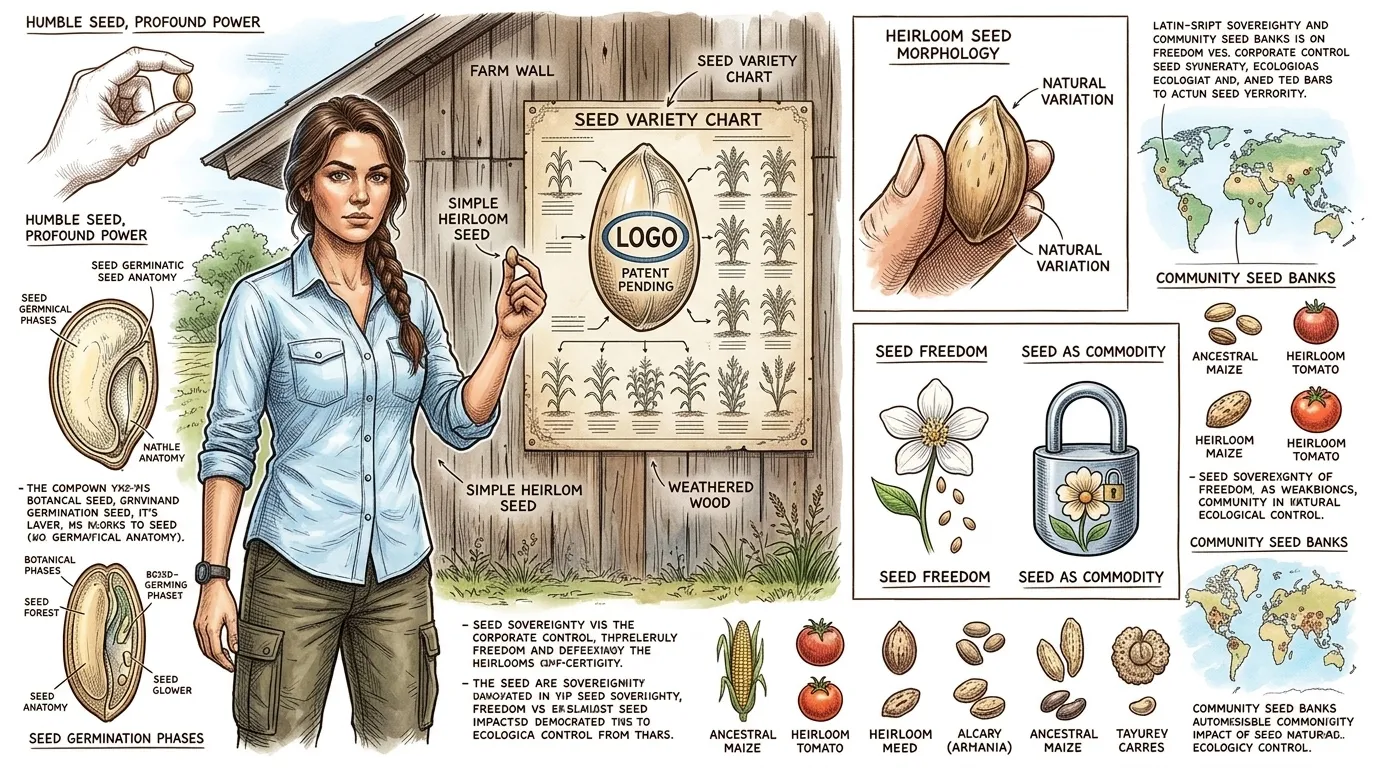
Valentina revealed the stark reality: seeds, once freely shared among farmers, had become commodities controlled by a few powerful corporations. These companies patented genetically modified seeds, compelling farmers to buy new seeds each year, often along with specific pesticides and fertilizers. This created a cycle of debt and dependency, eroding traditional farming practices and threatening food security. Vandana Shiva championed 'seed freedom,' arguing that seeds are the collective heritage of humanity, not corporate property.
"'Imagine a world where you couldn't plant a tree unless you bought a special license for its seeds,' Valentina explained, her voice serious. 'That's what happened with many crops. Farmers lost the right to save their own seeds, a right that sustained them for centuries. It's not just about farming; it's about freedom and survival.'"
Page 5
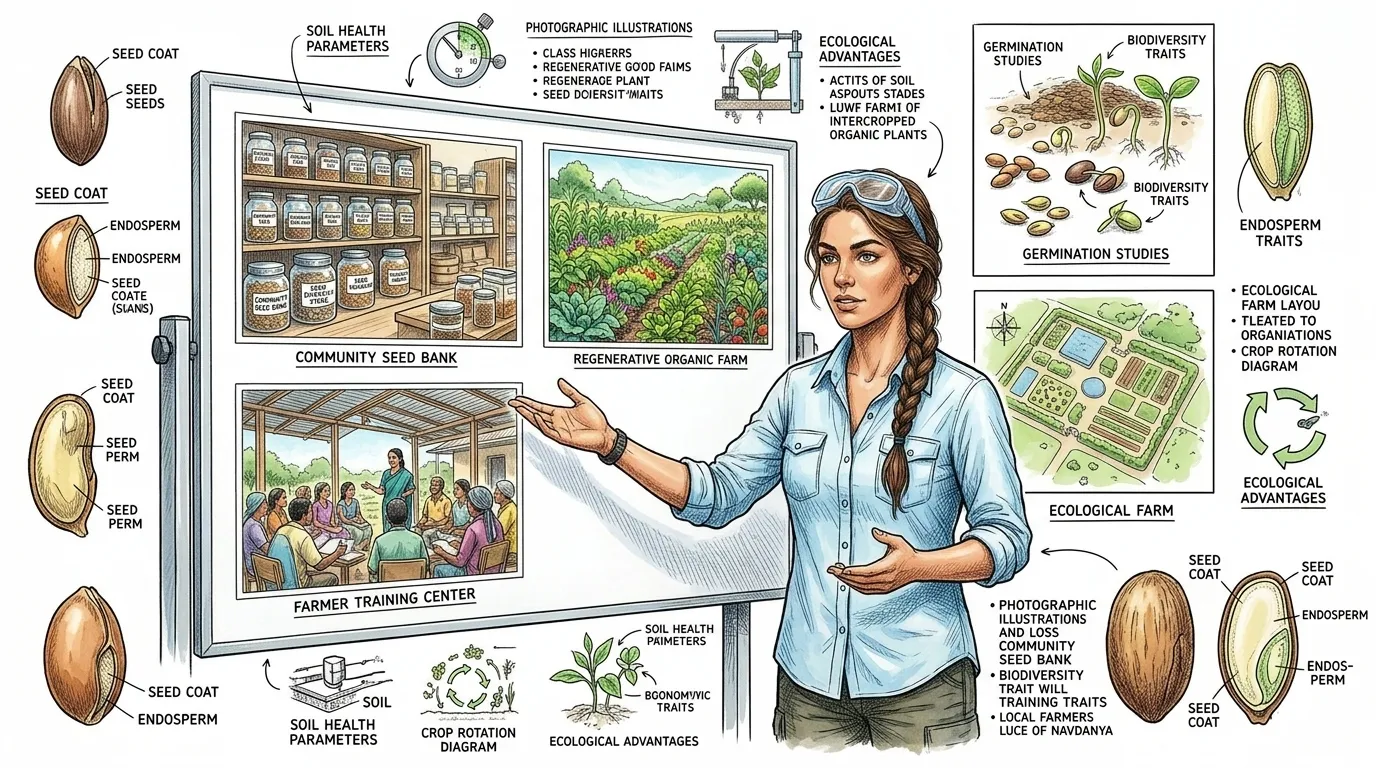
To counter the industrial agricultural system, Vandana Shiva founded Navdanya, an initiative dedicated to biodiversity conservation, organic farming, and seed saving. Valentina showed them images of bustling community seed banks, vibrant farms where countless varieties thrived, and training centers empowering farmers with ecological knowledge. Navdanya became a living model of sustainable agriculture, proving that food could be grown abundantly and ethically, without reliance on harmful chemicals or corporate control.
"'Navdanya isn't just a place; it's a promise,' Valentina declared, showing them a series of photographs displayed on a board. 'It means 'nine seeds' in Hindi, symbolizing diversity and new beginnings. Here, seeds are cared for like precious jewels, ensuring they continue to grow for everyone, not just for profit. It's a place where old wisdom meets new science to protect our future.'"
Page 6
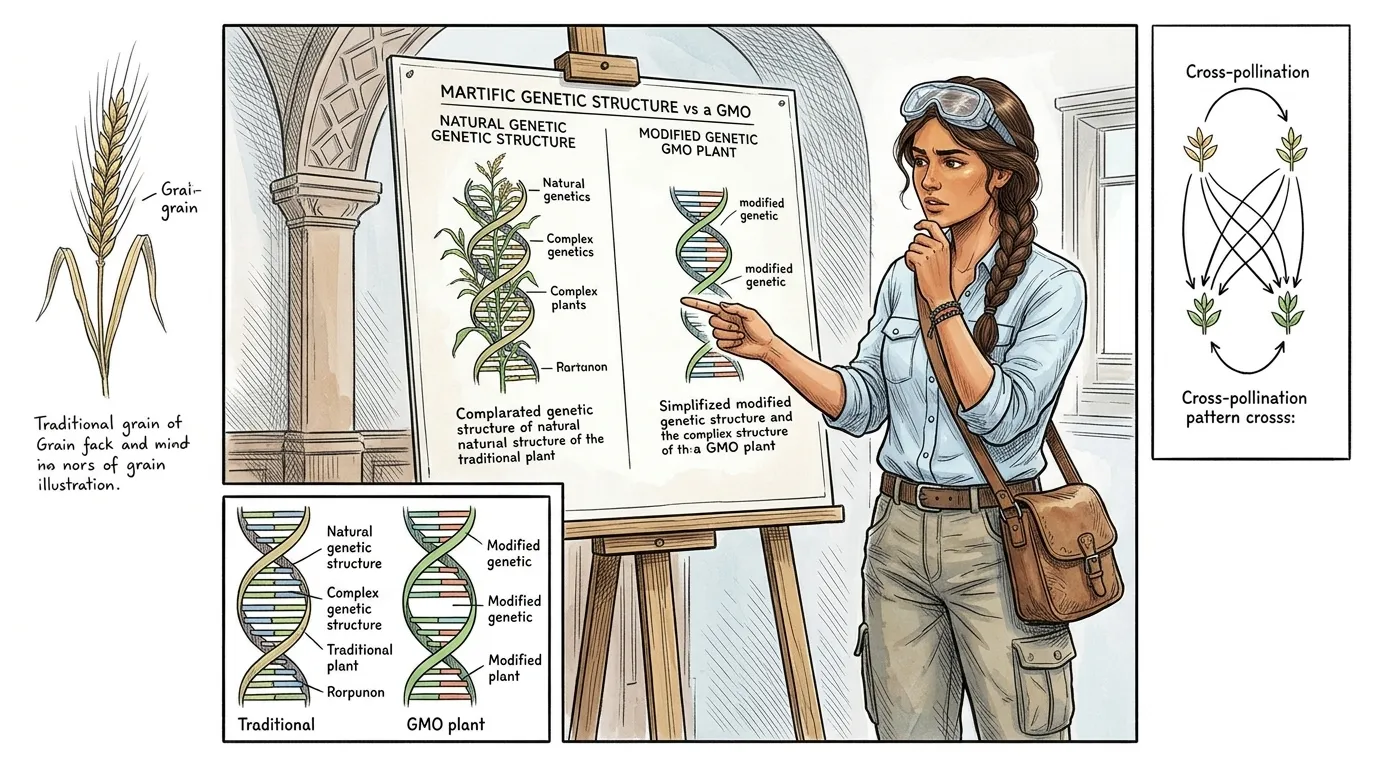
Valentina explained the controversy surrounding genetically modified organisms, or GMOs. She described how Vandana Shiva raised crucial questions about their safety, their long-term impact on health and the environment, and the ethical implications of patenting life. Shiva argued that GMOs often led to increased pesticide use, threatened native biodiversity through cross-pollination, and concentrated power in the hands of a few corporations, rather than truly addressing global hunger.
"'Some say GMOs are the answer to feeding the world,' Valentina stated, pointing to a diagram comparing a natural plant's genetic structure to a modified one. 'But Shiva asked: at what cost? Do they really help the poorest farmers, or do they create new problems? She pushed us to look beyond simple promises and see the whole ecological picture.'"
Page 7
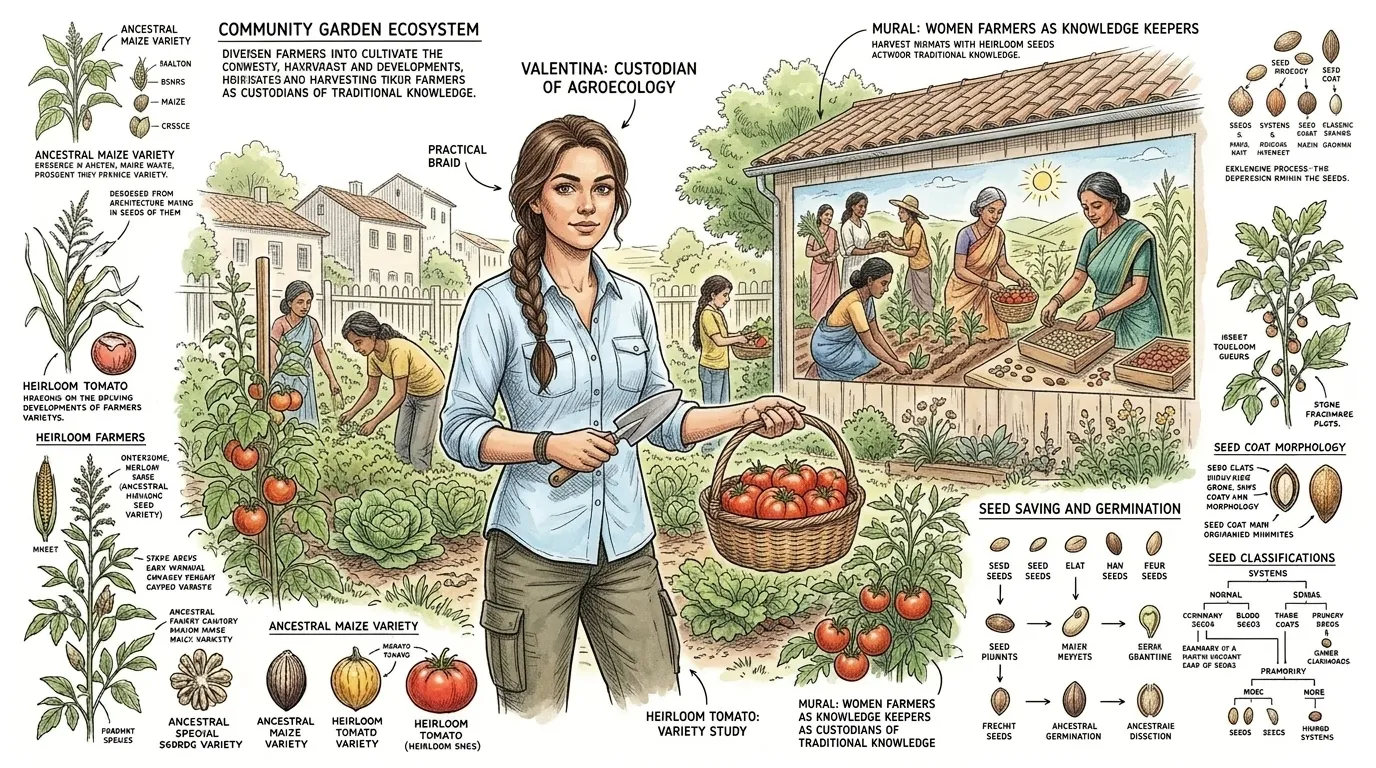
Vandana Shiva consistently highlighted the vital role of women in sustainable agriculture and food systems, often overlooked in mainstream development discussions. Valentina explained that women are frequently the primary growers, seed savers, and custodians of traditional knowledge, especially in rural communities. Shiva emphasized that empowering women farmers, recognizing their wisdom, and protecting their access to diverse seeds were essential steps towards creating equitable and resilient food systems globally.
"'Who often holds the deepest knowledge of the land, the seeds, and how to feed families?' Valentina asked, looking at them thoughtfully. 'In many cultures, it's women. Shiva showed the world that supporting women farmers isn't just fair; it's the smartest way to ensure food security and protect our planet for everyone.'"
Page 8
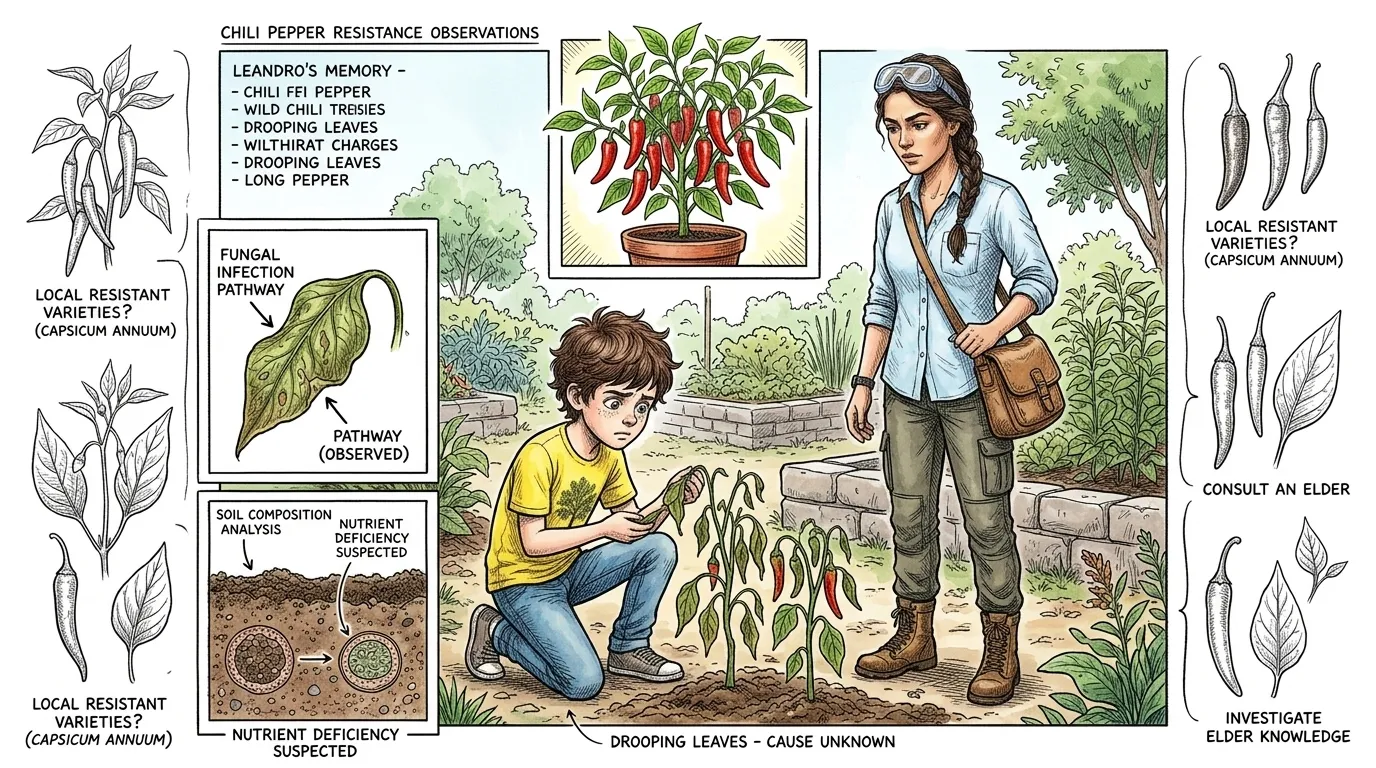
Inspired by Vandana Shiva's philosophy, Valentina had helped establish a small community garden, a 'living seed bank' where local families could grow and share heirloom varieties. One afternoon, they faced a challenge: a patch of chili peppers was struggling. Recalling Valentina's earlier lesson about a specific resilient variety, Leandro carefully examined the dying plants. He remembered the vibrant pot of chili peppers from the community center and suggested seeking advice from an elder known for cultivating that hardy strain, believing its resilience could offer a solution.
"'These chilies look weak, Valentina,' Leandro observed, his brow furrowed, inspecting a drooping chili plant. 'But remember that strong, bright chili plant we saw at the center? You said it was super resilient! Maybe if we talk to the elder who grows it, we can learn her secret to saving these ones.'"
Page 9
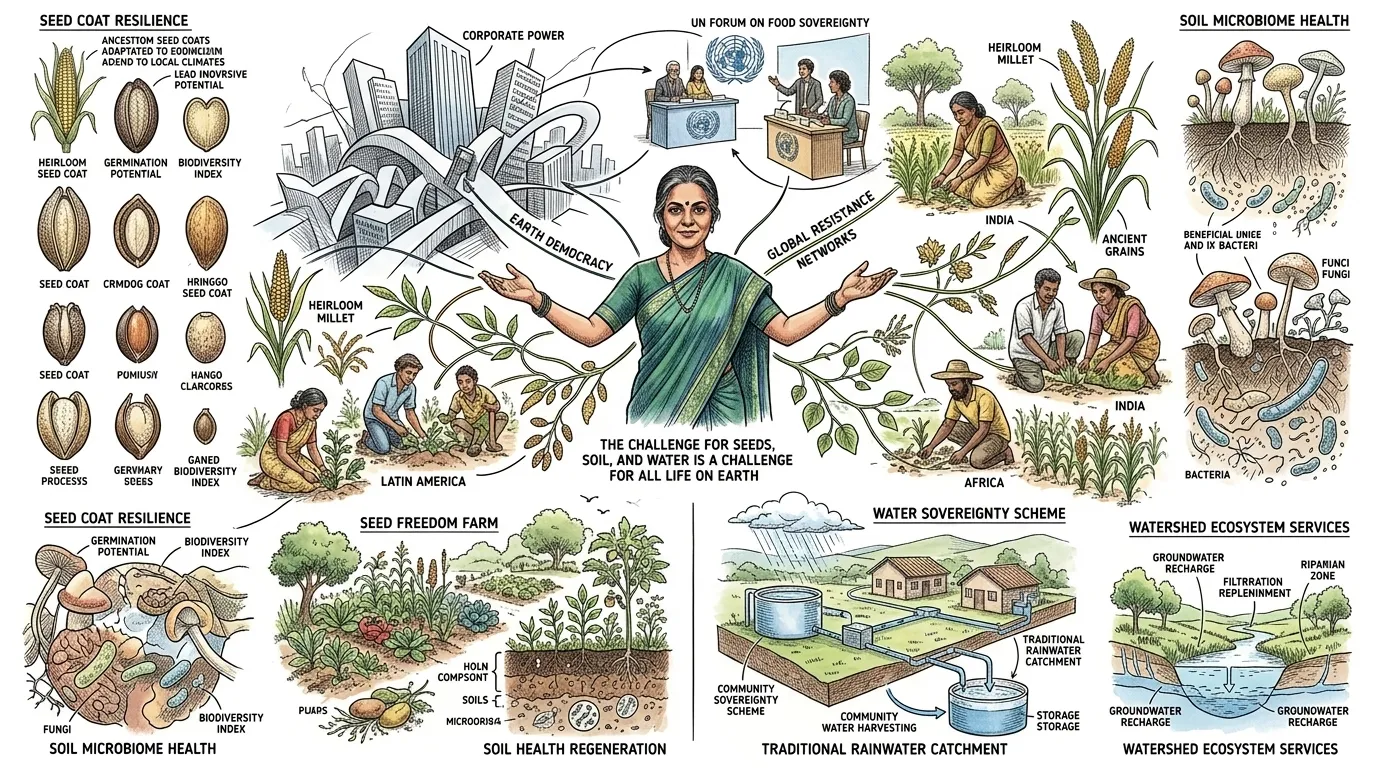
Vandana Shiva's influence extended far beyond local gardens, inspiring a global movement for 'Earth Democracy' – a call for justice, sustainability, and peace based on ecological principles. She challenged powerful corporations at international forums, advocated for small-scale farmers, and connected environmental issues with human rights. Her work demonstrated that the fight for seeds, soil, and water was fundamentally a fight for the future of all life on Earth, uniting diverse voices in a common cause.
Page 10
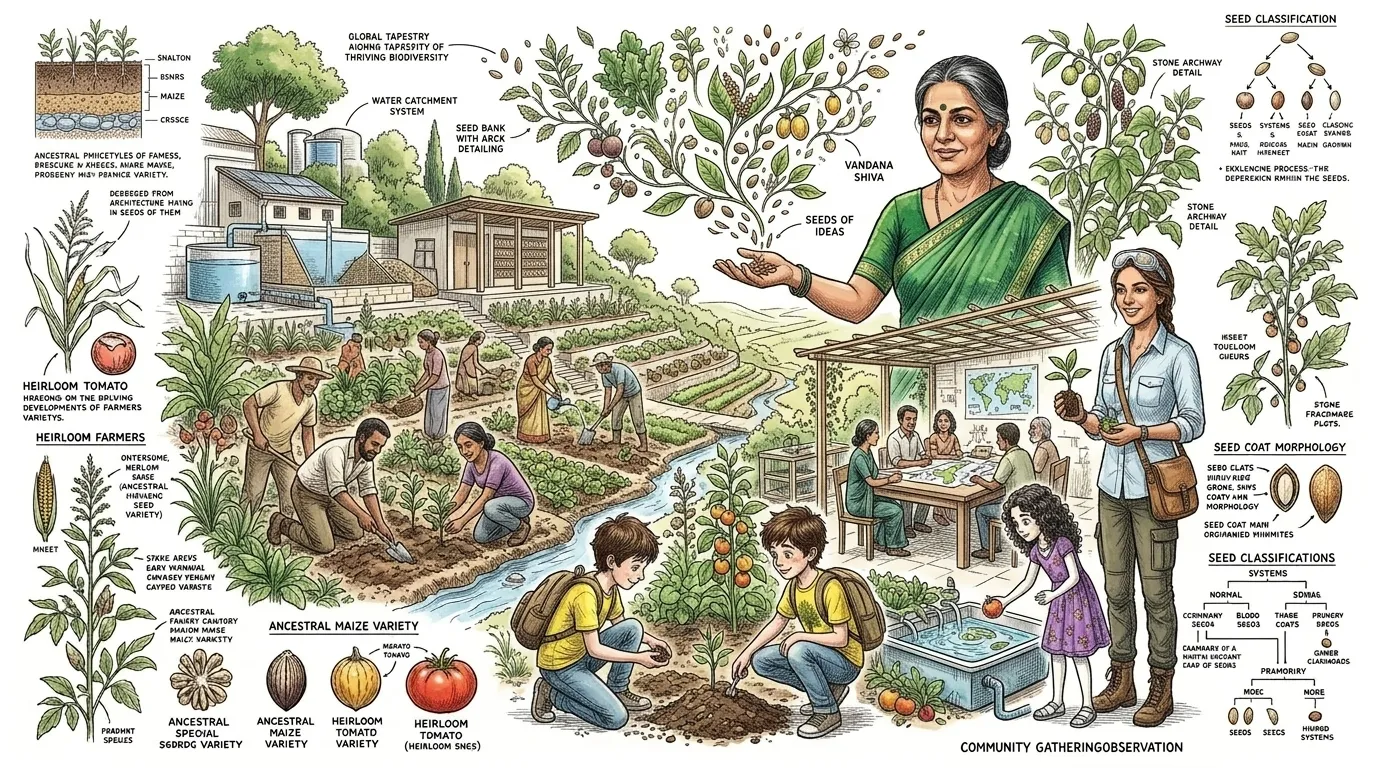
Vandana Shiva's enduring legacy is a powerful call to action: to protect biodiversity, empower local communities, and reimagine a food system that nourishes both people and the planet. Her work continues to inspire countless individuals and movements around the world, urging a shift from industrial exploitation to ecological harmony. The seeds of her ideas, once planted in small communities, have blossomed into a global recognition that the health of our Earth and the freedom of its people are inextricably linked, shaping a more conscious and sustainable future.
About this story
- Location: Global
- Audience: kids (ages 6–12)
Questions and answers
Read Wonder Science on your phone
Wonder Science is available on Android. Get Wonder Science on Google Play.