Tsung-Dao Lee

Tsung-Dao Lee — an illustrated science story, set in Global. 10 illustrated pages, free to read on Wonder Science.
Tsung-Dao Lee — book cover — Wonder Science
Tsung-Dao Lee — an illustrated science story, set in Global. 10 illustrated pages, free to read on Wonder Science.

Page 1
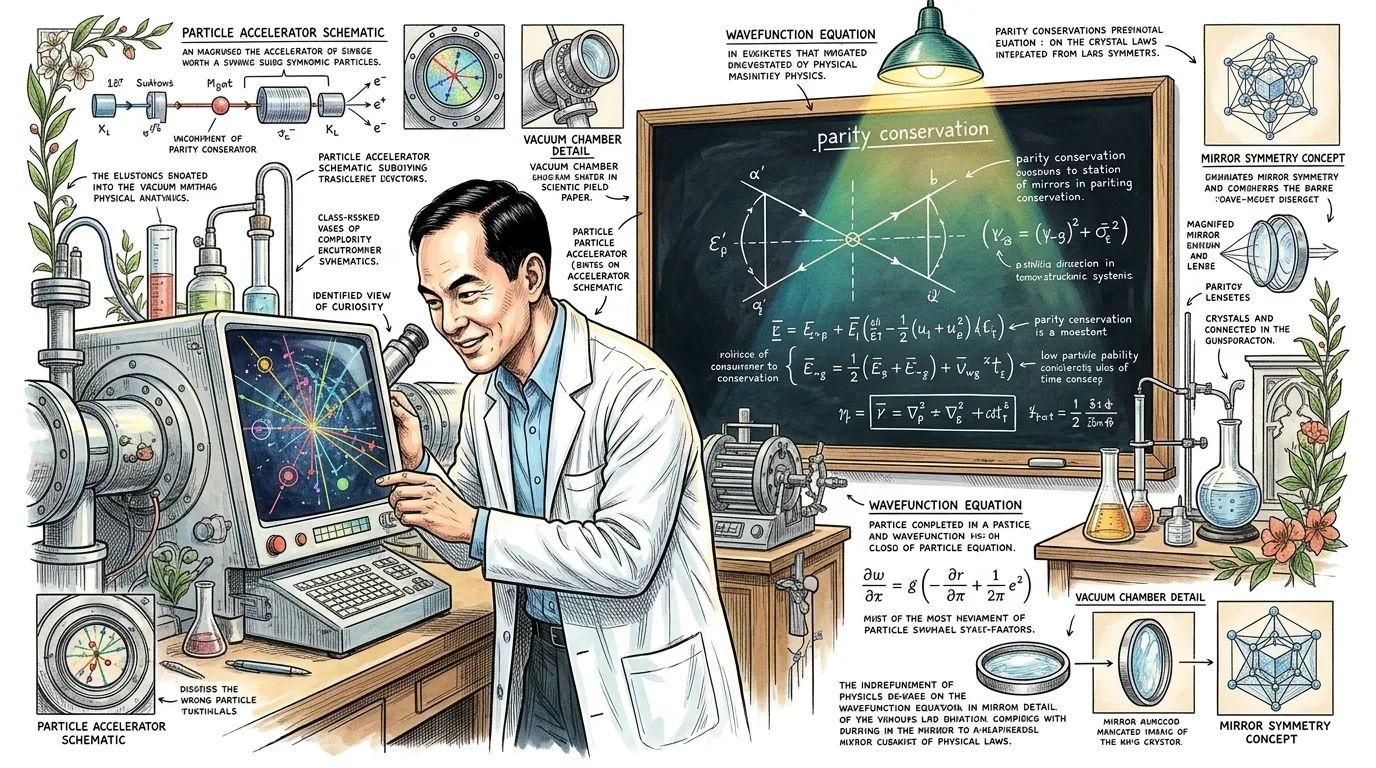
In the heart of a bustling university laboratory, a groundbreaking experiment unfolded. Physicists meticulously examined subatomic particles, searching for a…
In the heart of a bustling university laboratory, a groundbreaking experiment unfolded. Physicists meticulously examined subatomic particles, searching for a violation of a fundamental principle: parity conservation. This principle, long held as immutable, stated that the laws of physics should remain the same whether viewed directly or through a mirror.

In the heart of a bustling university laboratory, a groundbreaking experiment unfolded. Physicists meticulously examined subatomic particles, searching for a violation of a fundamental principle: parity conservation. This principle, long held as immutable, stated that the laws of physics should remain the same whether viewed directly or through a mirror. The stakes were high, the implications profound, and the lead scientist, Tsung-Dao Lee, knew their work could redefine our understanding of the universe.

Fact: Setting the scene: a high-stakes physics experiment.

Page 2
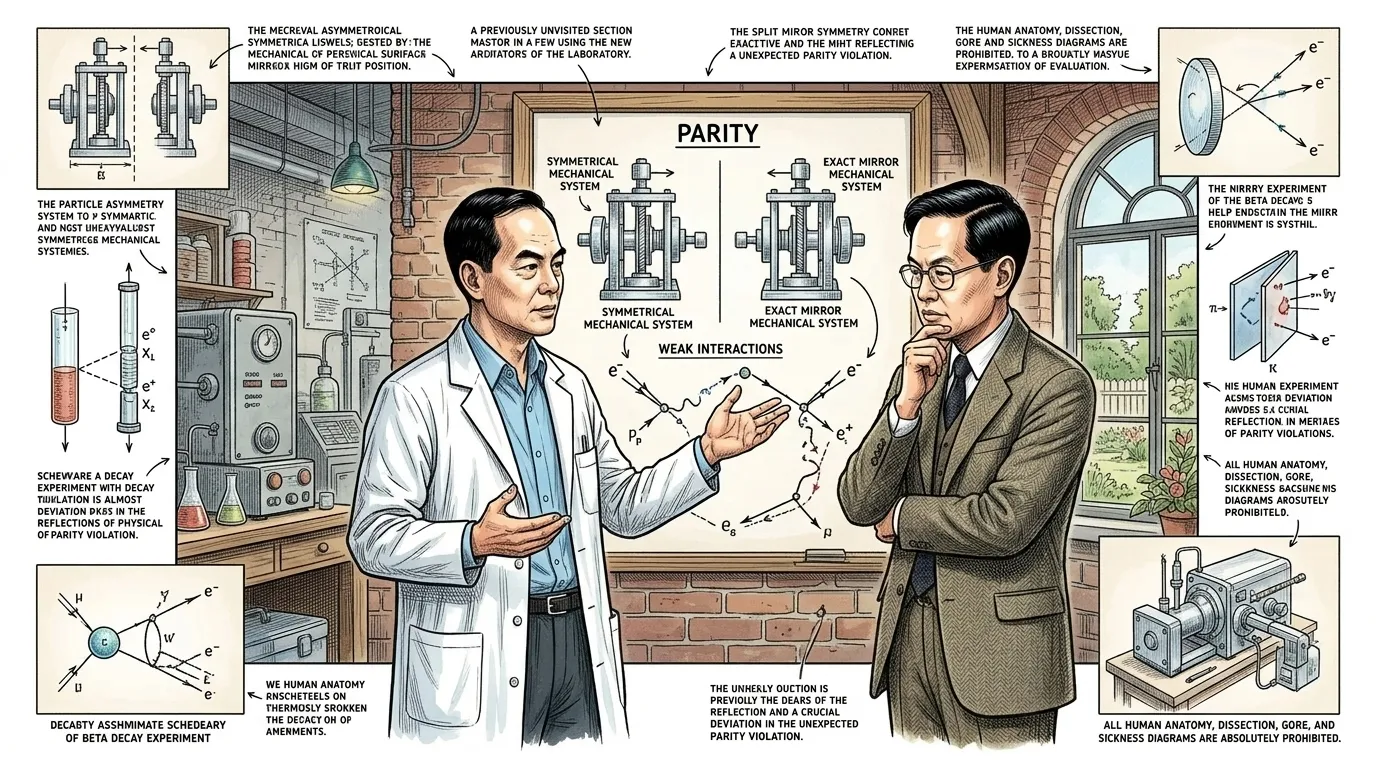
What is parity, and why was it so important? Imagine looking in a mirror. Objects and events appear reversed, left becomes right.
What is parity, and why was it so important? Imagine looking in a mirror. Objects and events appear reversed, left becomes right. Parity conservation suggested that if a physical process occurred, its mirror image should also be possible and follow the same laws. However, certain experimental observations in the realm of weak interactions, the force responsible for radioactive decay, hinted at something amiss.

What is parity, and why was it so important? Imagine looking in a mirror. Objects and events appear reversed, left becomes right. Parity conservation suggested that if a physical process occurred, its mirror image should also be possible and follow the same laws. However, certain experimental observations in the realm of weak interactions, the force responsible for radioactive decay, hinted at something amiss. Tsung-Dao Lee, along with his colleague Chen Ning Yang, recognized the inconsistencies and dared to question a cornerstone of physics.

Page 3
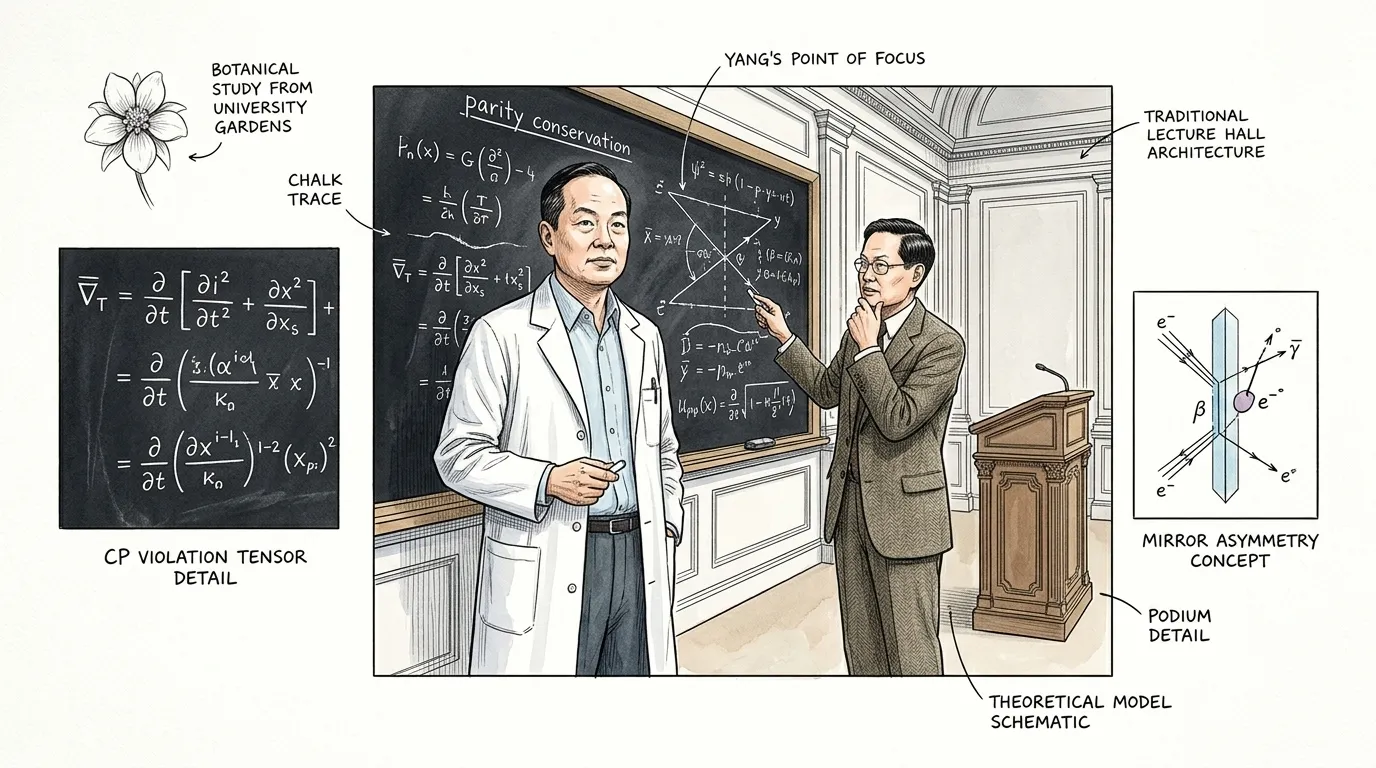
The idea that parity might not be conserved was met with skepticism. Many physicists considered it unthinkable, a challenge to the very foundations of their…
The idea that parity might not be conserved was met with skepticism. Many physicists considered it unthinkable, a challenge to the very foundations of their understanding. As Tsung-Dao Lee later recalled, "When you are too far ahead, sometimes people misunderstand you." But Lee and Yang were undeterred. They meticulously analyzed existing experimental data, identifying crucial gaps and proposing specific experiments to test parity conservation in weak interactions.

The idea that parity might not be conserved was met with skepticism. Many physicists considered it unthinkable, a challenge to the very foundations of their understanding. As Tsung-Dao Lee later recalled, "When you are too far ahead, sometimes people misunderstand you." But Lee and Yang were undeterred. They meticulously analyzed existing experimental data, identifying crucial gaps and proposing specific experiments to test parity conservation in weak interactions.

Fact: Imagining the skeptical reception at the physics conference.

Page 4
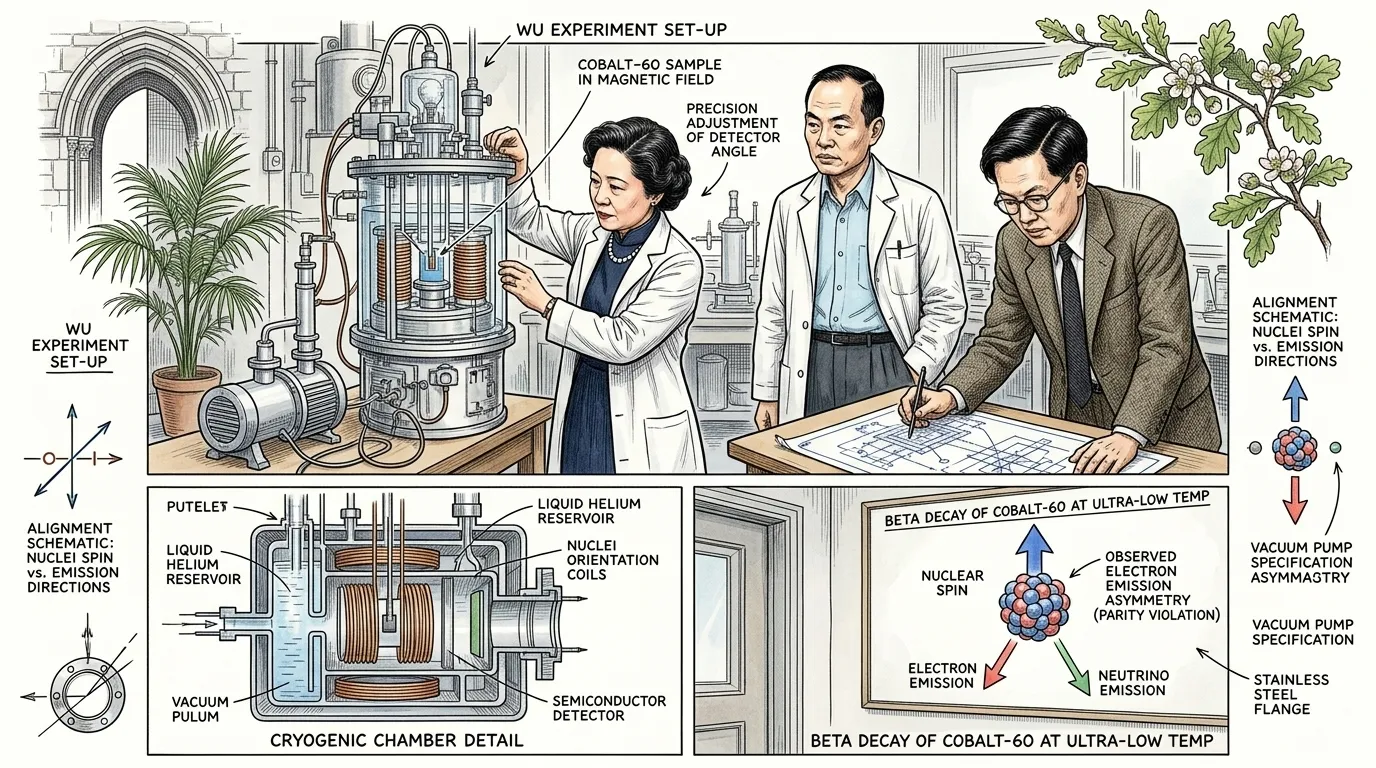
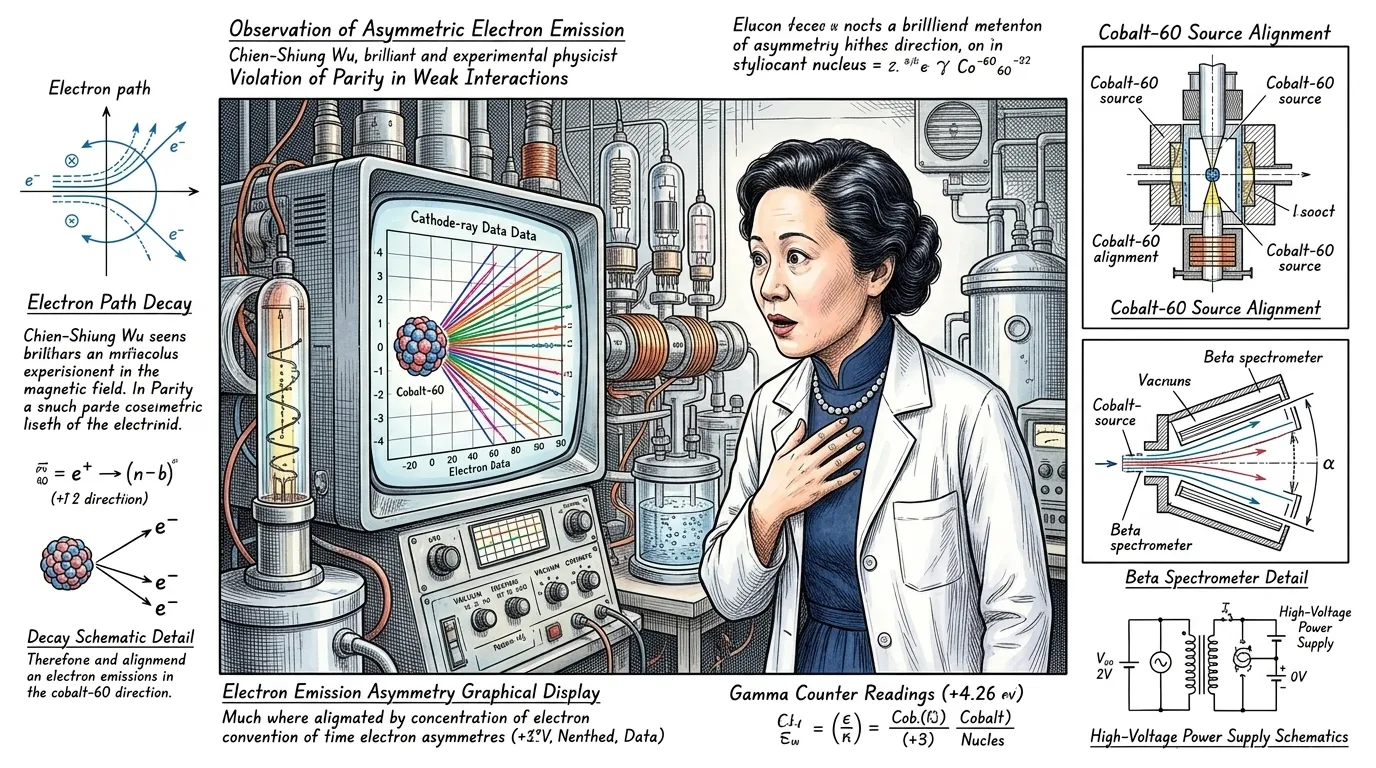
To test their hypothesis, Lee and Yang turned to Chien-Shiung Wu, an experimental physicist at Columbia University. Wu designed an experiment to observe the…
To test their hypothesis, Lee and Yang turned to Chien-Shiung Wu, an experimental physicist at Columbia University. Wu designed an experiment to observe the beta decay of cobalt-60 atoms at extremely low temperatures. The key was to align the spins of the cobalt-60 nuclei using a strong magnetic field and then observe the direction of the emitted electrons. If parity were conserved, the electrons should be emitted equally in both directions relative to the nuclear spin.

To test their hypothesis, Lee and Yang turned to Chien-Shiung Wu, an experimental physicist at Columbia University. Wu designed an experiment to observe the beta decay of cobalt-60 atoms at extremely low temperatures. The key was to align the spins of the cobalt-60 nuclei using a strong magnetic field and then observe the direction of the emitted electrons. If parity were conserved, the electrons should be emitted equally in both directions relative to the nuclear spin. But Wu and her team discovered something astonishing.

Page 5

The experiment revealed a clear asymmetry. More electrons were emitted in one direction than the other, violating parity conservation.
The experiment revealed a clear asymmetry. More electrons were emitted in one direction than the other, violating parity conservation. It was a revolutionary finding. The universe, at least in the realm of weak interactions, was not ambidextrous. The laws of physics did indeed distinguish between left and right. This discovery shattered a long-held belief and opened new avenues for understanding the fundamental forces of nature.

The experiment revealed a clear asymmetry. More electrons were emitted in one direction than the other, violating parity conservation. It was a revolutionary finding. The universe, at least in the realm of weak interactions, was not ambidextrous. The laws of physics did indeed distinguish between left and right. This discovery shattered a long-held belief and opened new avenues for understanding the fundamental forces of nature.

Page 6
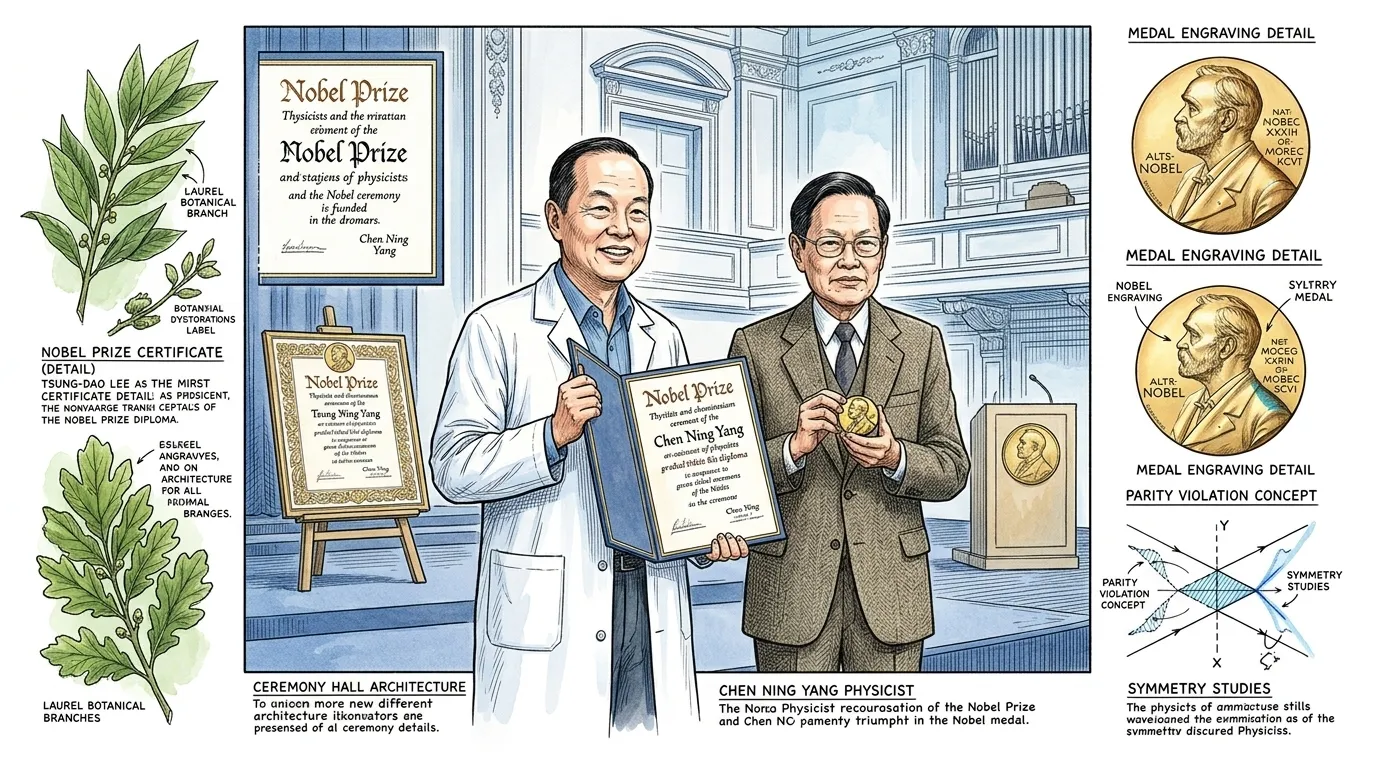
In 1957, just a year after the groundbreaking experiment, Tsung-Dao Lee and Chen Ning Yang were awarded the Nobel Prize in Physics.
In 1957, just a year after the groundbreaking experiment, Tsung-Dao Lee and Chen Ning Yang were awarded the Nobel Prize in Physics. Their theoretical work and Wu's experimental confirmation revolutionized the field. The Nobel committee recognized the profound implications of their discovery, highlighting its impact on the understanding of fundamental symmetries in nature. This recognition solidified Lee and Yang's place among the giants of physics.

In 1957, just a year after the groundbreaking experiment, Tsung-Dao Lee and Chen Ning Yang were awarded the Nobel Prize in Physics. Their theoretical work and Wu's experimental confirmation revolutionized the field. The Nobel committee recognized the profound implications of their discovery, highlighting its impact on the understanding of fundamental symmetries in nature. This recognition solidified Lee and Yang's place among the giants of physics.

Fact: Imagining the Nobel Prize ceremony.

Page 7
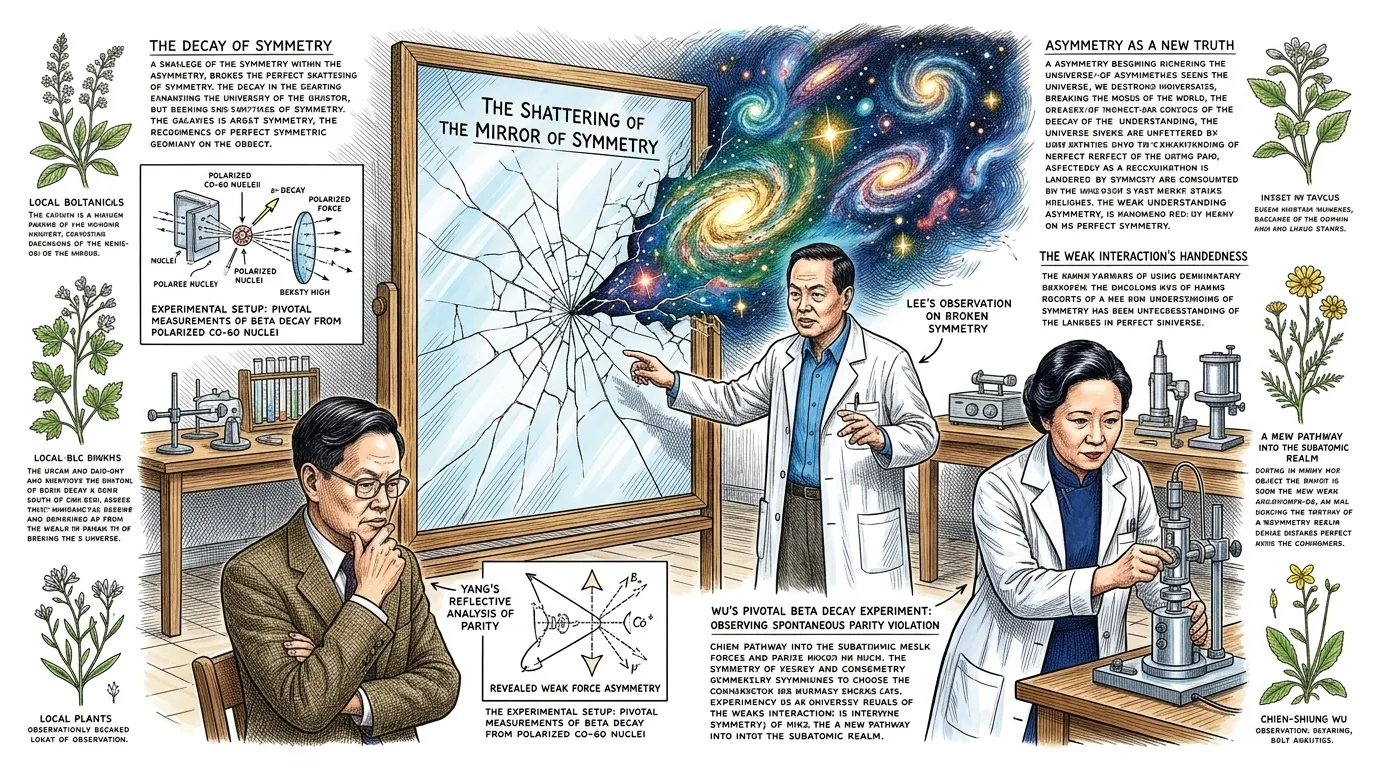
But Chien-Shiung Wu did not share in the prize. This omission sparked controversy within the scientific community, as many believed her experimental work was…
But Chien-Shiung Wu did not share in the prize. This omission sparked controversy within the scientific community, as many believed her experimental work was crucial to validating Lee and Yang’s theory. Despite receiving nominations, the committee adhered to its rule limiting awards to three individuals. Wu continued her groundbreaking research, earning numerous accolades for her contributions to physics, though the shadow of that Nobel decision lingered.

But Chien-Shiung Wu did not share in the prize. This omission sparked controversy within the scientific community, as many believed her experimental work was crucial to validating Lee and Yang’s theory. Despite receiving nominations, the committee adhered to its rule limiting awards to three individuals. Wu continued her groundbreaking research, earning numerous accolades for her contributions to physics, though the shadow of that Nobel decision lingered. Her dedication proved that true recognition comes not just from prizes, but from lasting impact on science itself.

Fact: Considering how history remembers unsung heroes.

Page 8
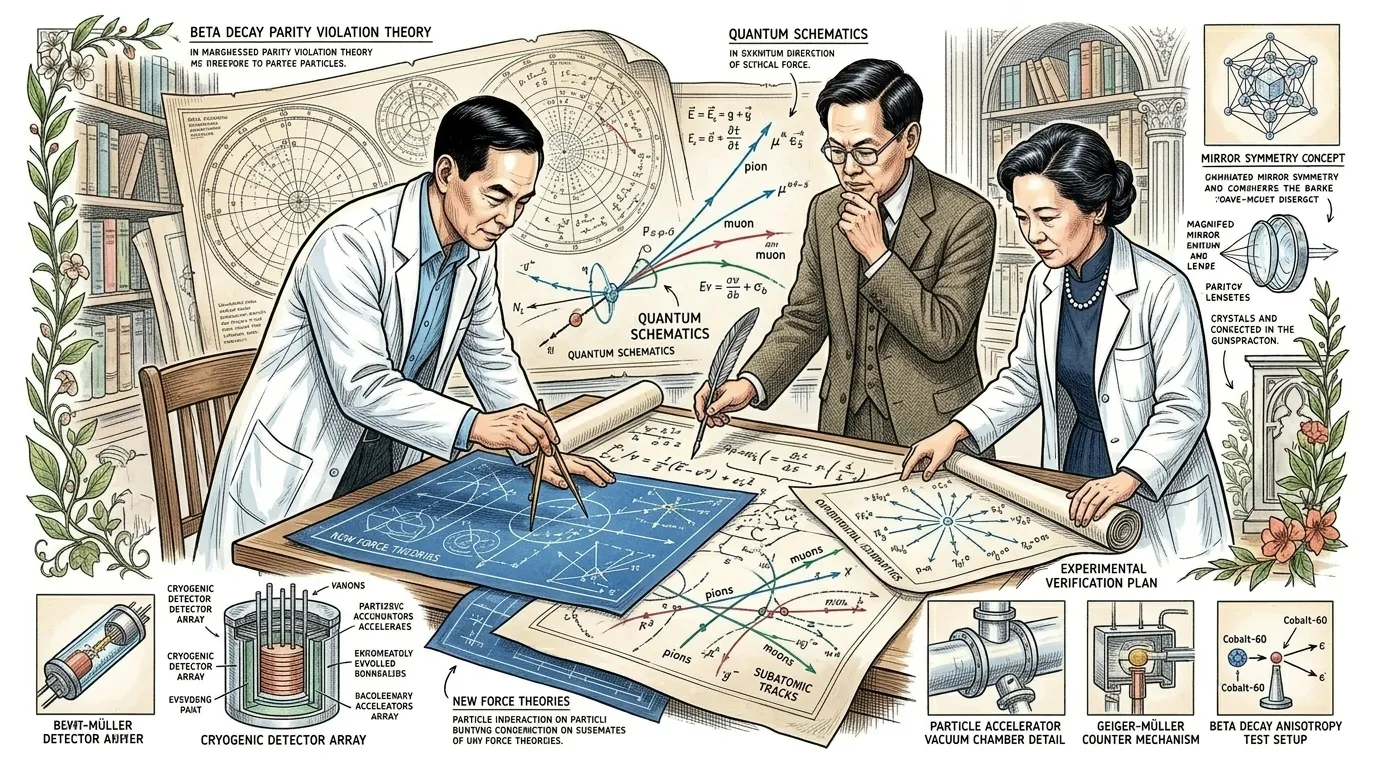
The fall of parity did more than settle one argument. If the weak interaction could tell left from right, no symmetry was beyond question, and physicists began…
The fall of parity did more than settle one argument. If the weak interaction could tell left from right, no symmetry was beyond question, and physicists began testing them all. Within seven years, James Cronin and Val Fitch found that CP — mirror reflection combined with swapping matter for antimatter — also breaks, in the decay of neutral kaons: a crack that still underlies the question of why the universe contains matter at all.

The fall of parity did more than settle one argument. If the weak interaction could tell left from right, no symmetry was beyond question, and physicists began testing them all. Within seven years, James Cronin and Val Fitch found that CP — mirror reflection combined with swapping matter for antimatter — also breaks, in the decay of neutral kaons: a crack that still underlies the question of why the universe contains matter at all. Lee, Columbia’s youngest full professor at twenty-nine, spent the decades after the prize inside that opened territory — the weak interaction, quantum field theory, and matter at enormous density.

Page 9
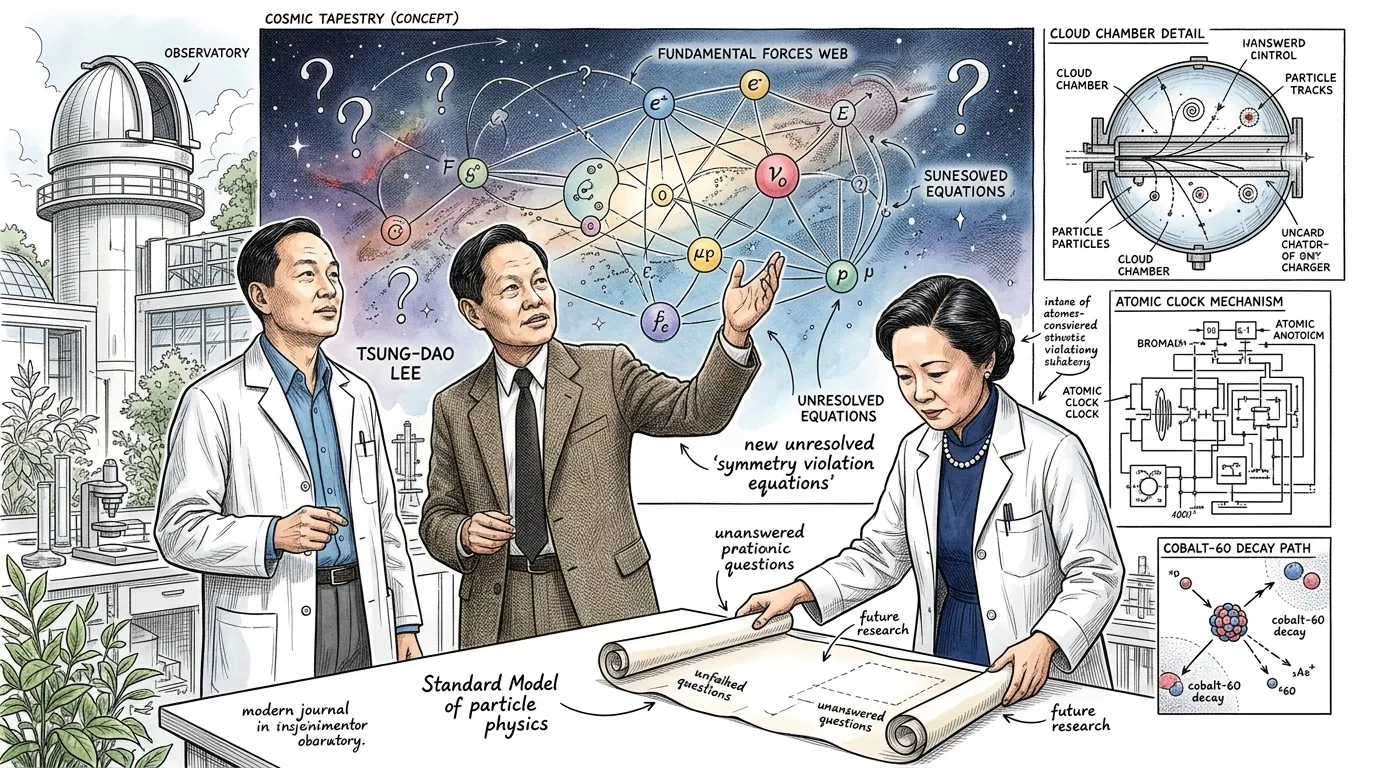
While the violation of parity helped to solve some mysteries, it also opened new questions. What other fundamental symmetries might be violated in nature?
While the violation of parity helped to solve some mysteries, it also opened new questions. What other fundamental symmetries might be violated in nature? How do these violations relate to the fundamental forces and particles? The quest to understand the universe is an ongoing process, with each discovery leading to new avenues of exploration. The universe continues to offer more surprises, inviting curious minds to explore its deepest secrets.

While the violation of parity helped to solve some mysteries, it also opened new questions. What other fundamental symmetries might be violated in nature? How do these violations relate to the fundamental forces and particles? The quest to understand the universe is an ongoing process, with each discovery leading to new avenues of exploration. The universe continues to offer more surprises, inviting curious minds to explore its deepest secrets.

Page 10
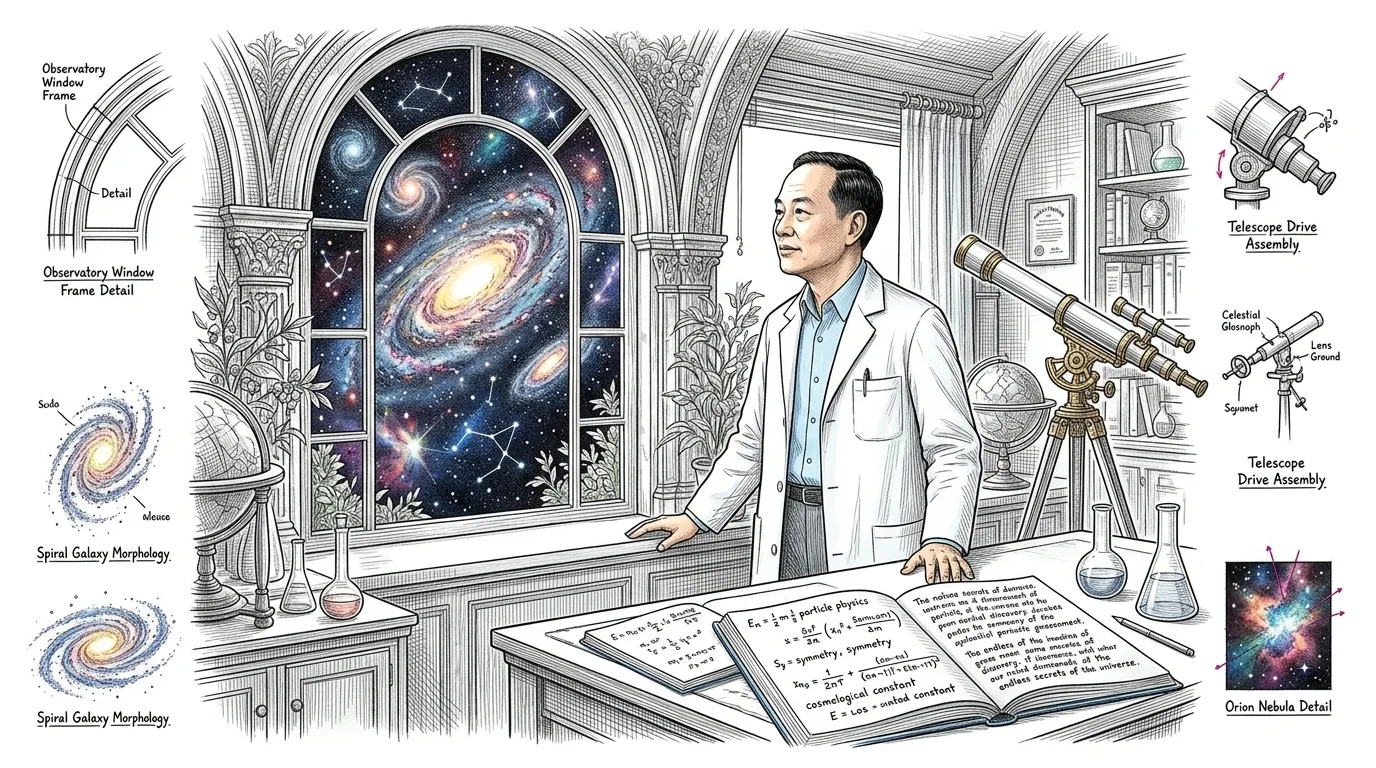
Tsung-Dao Lee's journey exemplifies the spirit of scientific inquiry. By daring to question established beliefs and rigorously testing new ideas, he and his…
Tsung-Dao Lee's journey exemplifies the spirit of scientific inquiry. By daring to question established beliefs and rigorously testing new ideas, he and his colleagues transformed our understanding of the universe. Their work serves as a reminder that the pursuit of knowledge is a continuous adventure, filled with challenges, surprises, and the endless possibility of discovery. The universe holds endless secrets to be revealed.

Tsung-Dao Lee's journey exemplifies the spirit of scientific inquiry. By daring to question established beliefs and rigorously testing new ideas, he and his colleagues transformed our understanding of the universe. Their work serves as a reminder that the pursuit of knowledge is a continuous adventure, filled with challenges, surprises, and the endless possibility of discovery. The universe holds endless secrets to be revealed.

Fact: A grand finale: gazing at the universe with wonder.

About this story

  • Location: Global
  • Audience: general readers

Questions and answers

Questions and answers about Tsung-Dao Lee

Read Wonder Science on your phone

Wonder Science is available on Android. Get Wonder Science on Google Play.

More Wonder Science stories

All Wonder Science stories · Open the library