The Science of Sugar
The Science of Sugar — an illustrated science story, set in Germany. 10 illustrated pages, free to read on Wonder Science.
Page 1
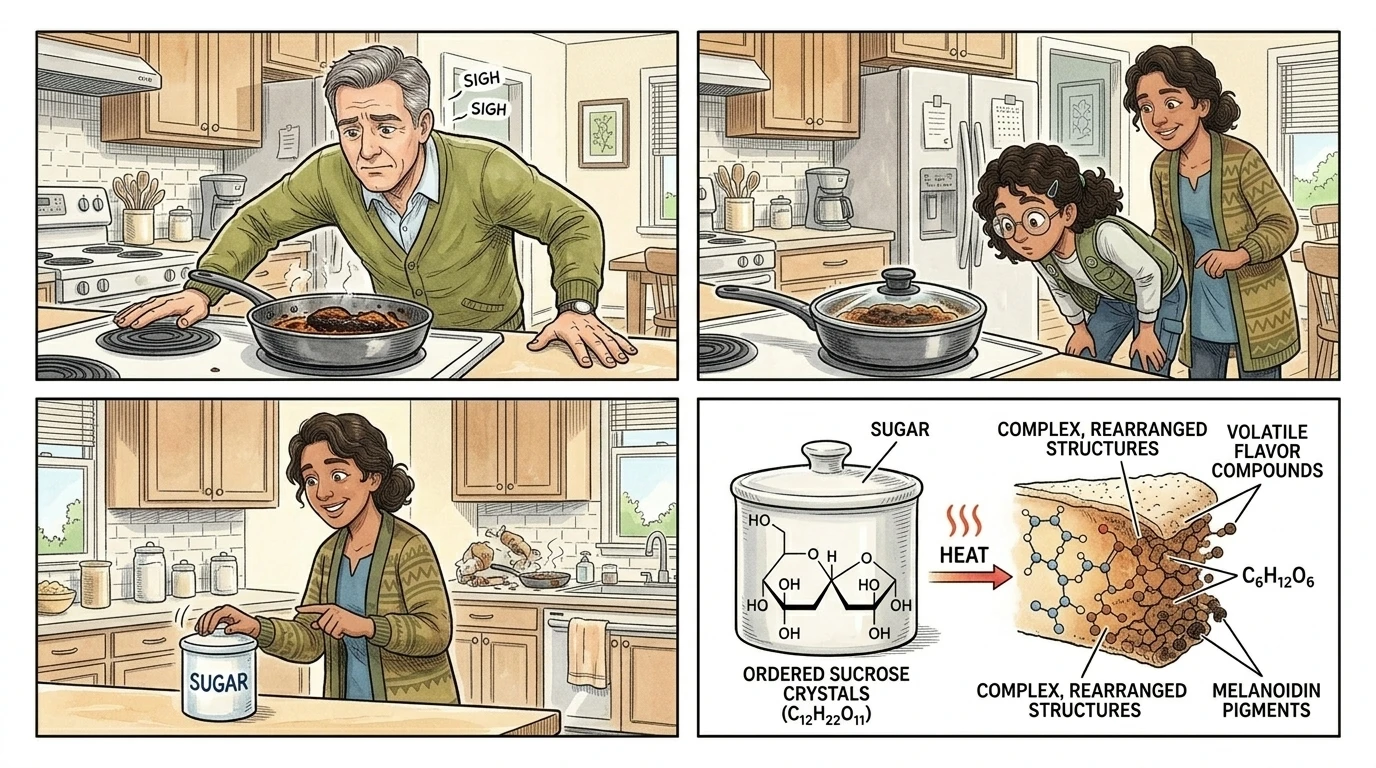
In their sunny Noe Valley kitchen, Salma's father groaned, staring into a smoking pot. "Oh no, not again!" he exclaimed, poking at a dark, lumpy mess. Salma peered over the counter next to her mother, wrinkling her nose at the bitter smell. "Dad, what happened? It was just tiny white crystals a minute ago!"
Page 2
"It's my caramel curse," her father sighed, turning off the heat. "It's supposed to be smooth and golden, not a black rock." Her mother smiled, tapping a sugar canister on the counter. "It's all about chemistry, sweetie; the process is called caramelization, a transformation of the sugar molecule itself."
Page 3
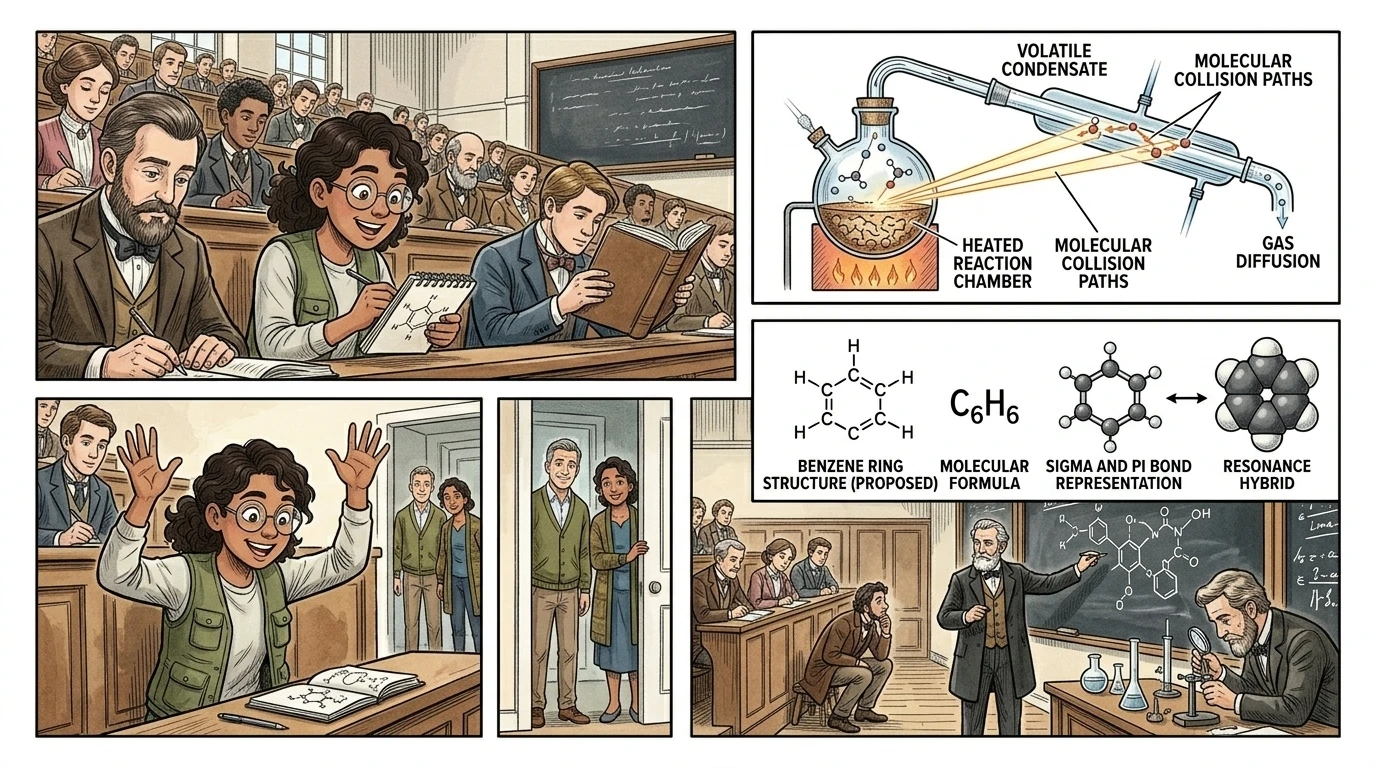
To understand that transformation, we have to travel back to Germany in the late 1800s. Universities were buzzing with new ideas as chemists raced to uncover the secrets of the tiny molecules that build our world. In a crowded lecture hall, a young Salma imagines herself sitting amongst the students, eager to learn what they knew.
Page 4
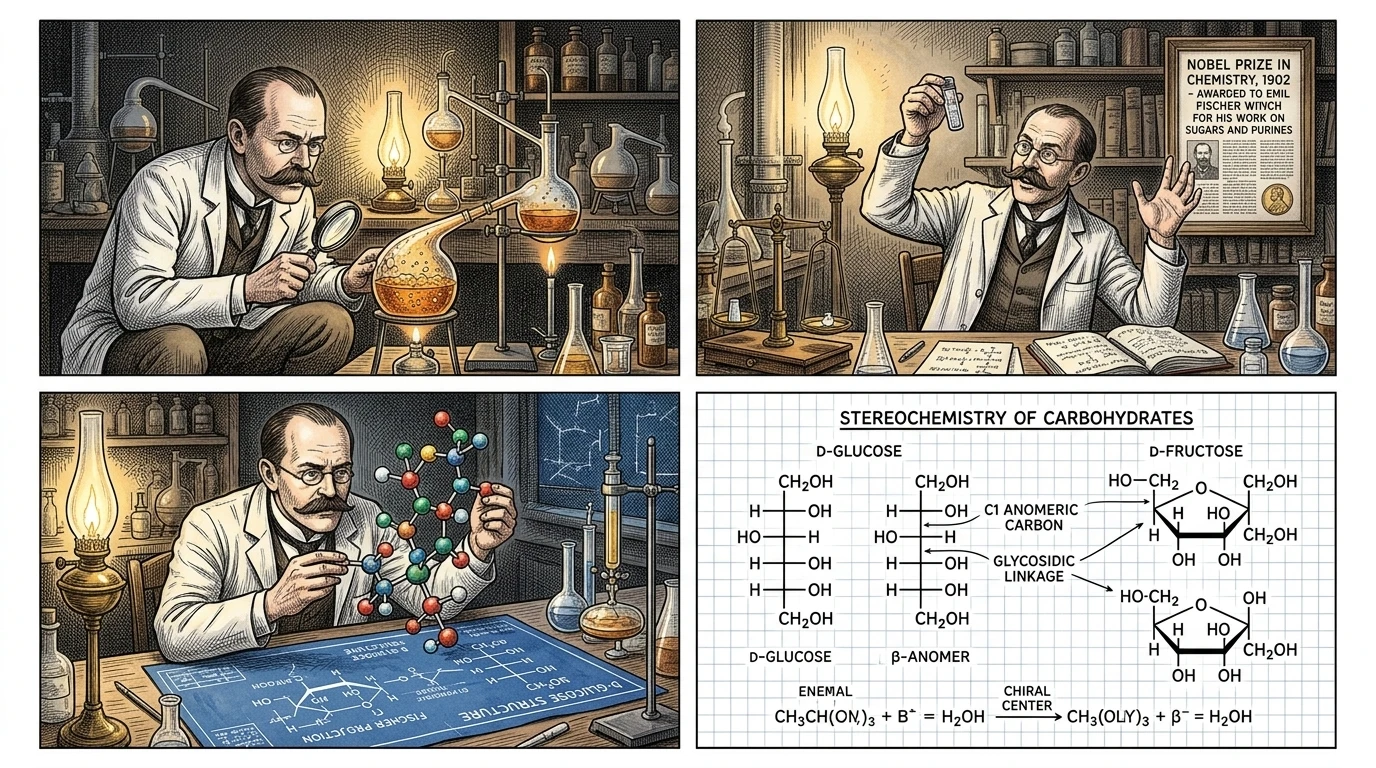
One of the greatest minds of that time was a German chemist named Emil Fischer. He was obsessed with figuring out the exact shape and structure of sugars, something no one had ever done. His incredible work was so important that he won the Nobel Prize in Chemistry for it in 1902.
Page 5
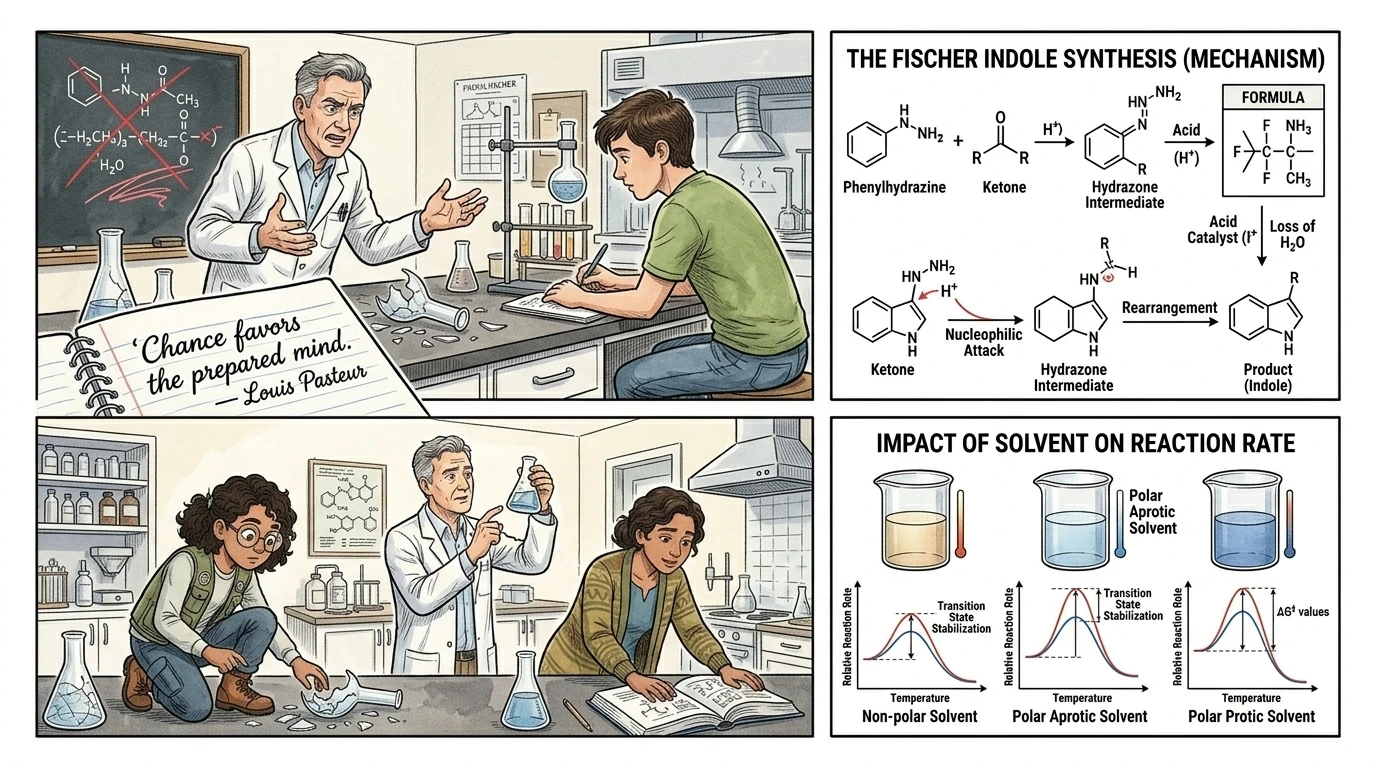
Fischer worked tirelessly, often getting frustrated when his experiments failed. He once reminded a student of the words of the great scientist Louis Pasteur: "'Chance favors the prepared mind.'" Fischer knew that discovery required not just luck, but endless preparation and persistence.
Page 6
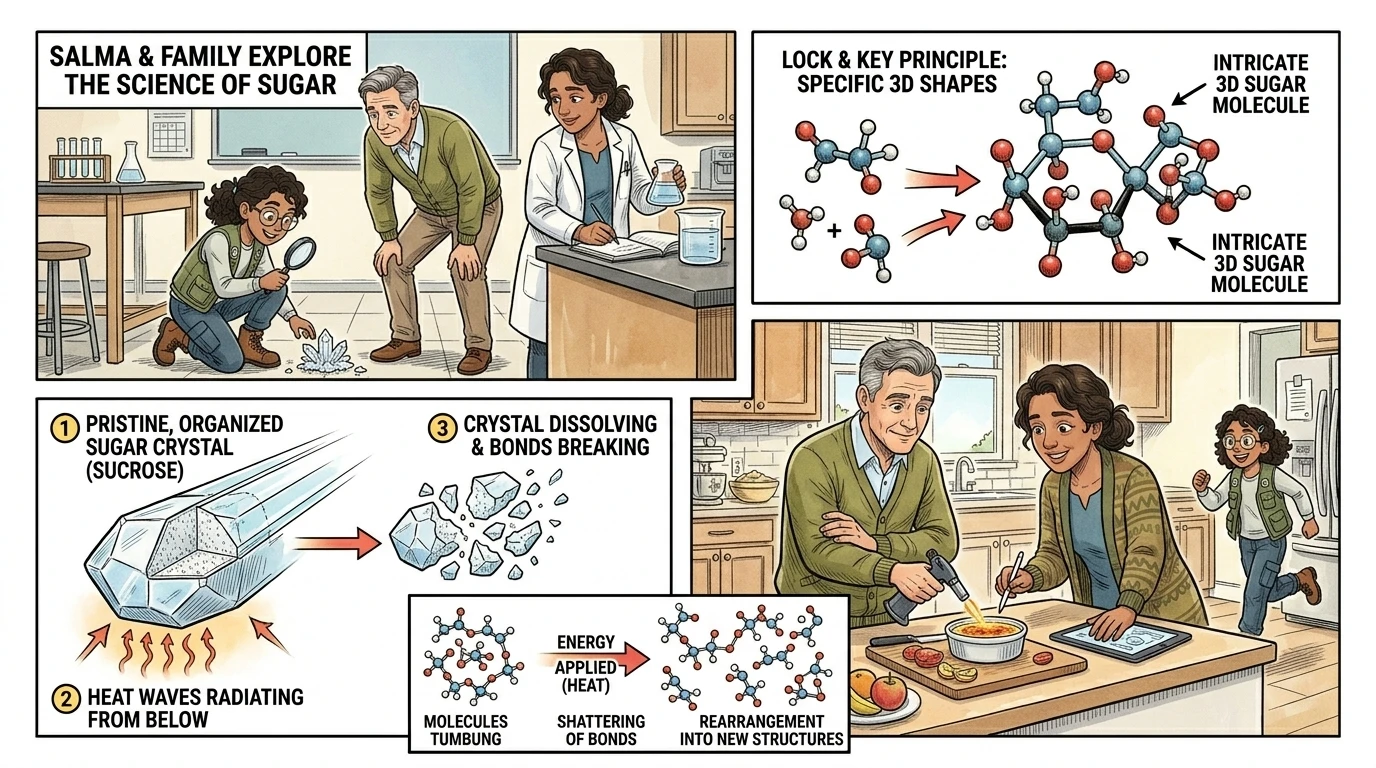
His big breakthrough was realizing sugar molecules have a specific 3D shape, like a lock that only a specific key can open. When you add heat, you're not just melting the crystal; you're giving the molecules energy to break their bonds. The organized structure shatters, and the molecules start to tumble and recombine.
Page 7
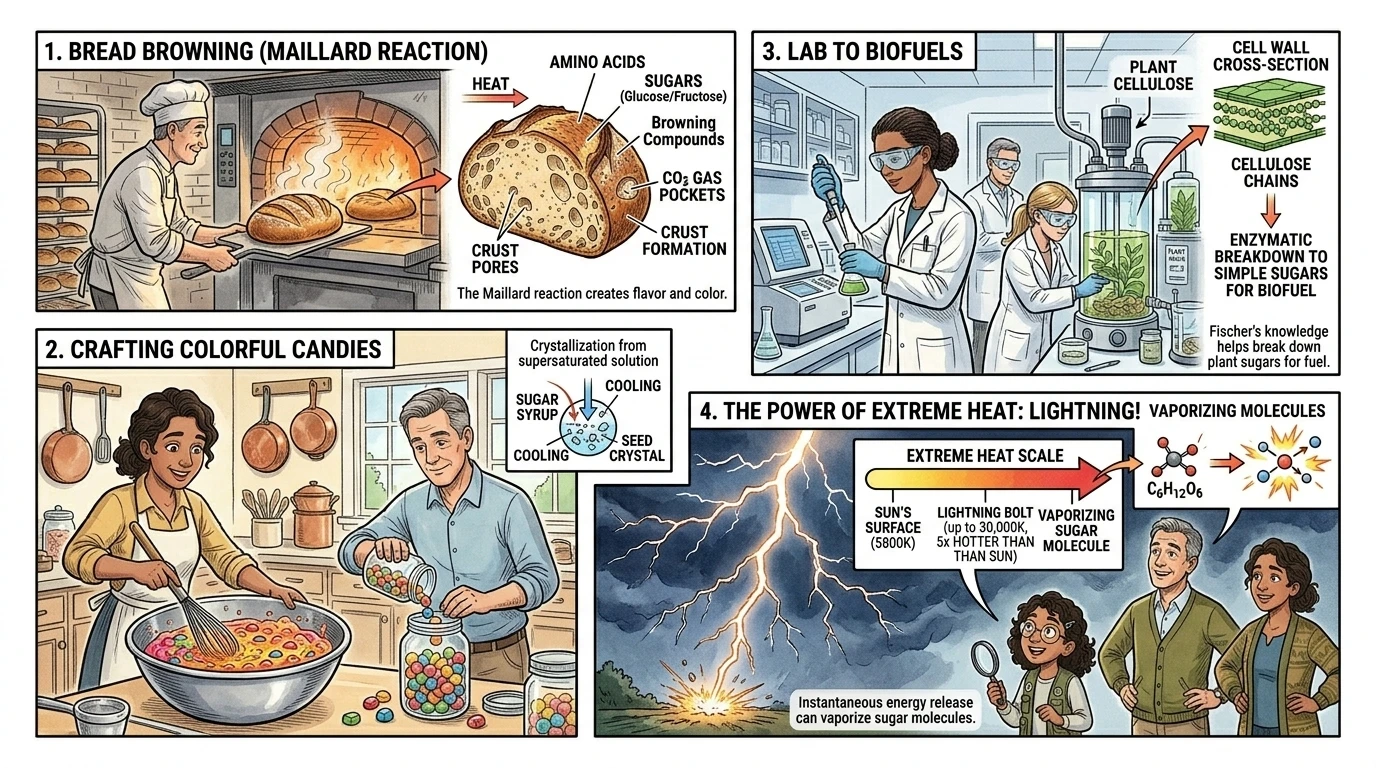
Fischer's discovery unlocked the science of food! It explained how bread gets its brown crust and how we create hundreds of different candies. His work even helps scientists today turn sugars from plants into biofuels. A lightning bolt is five times hotter than the sun's surface—that's enough energy to instantly vaporize any sugar molecule!
Page 8
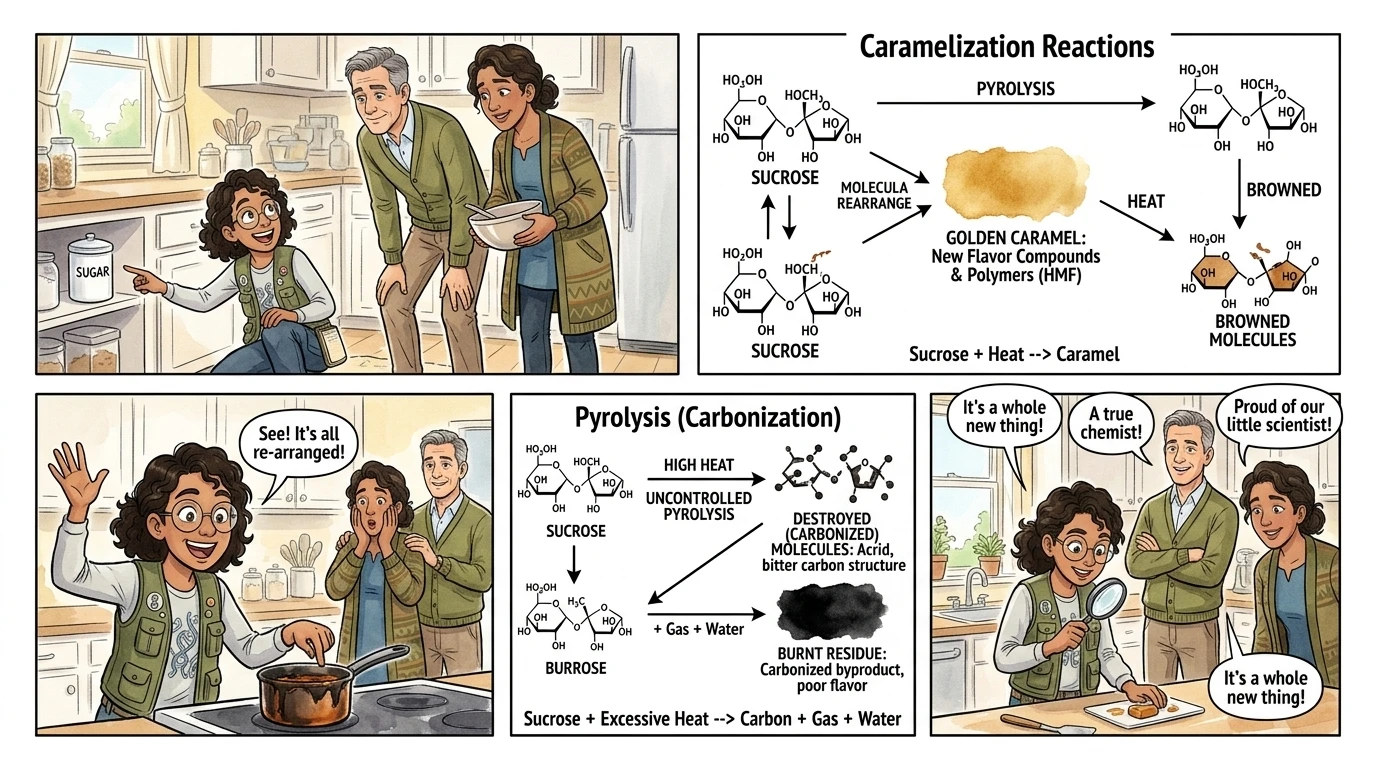
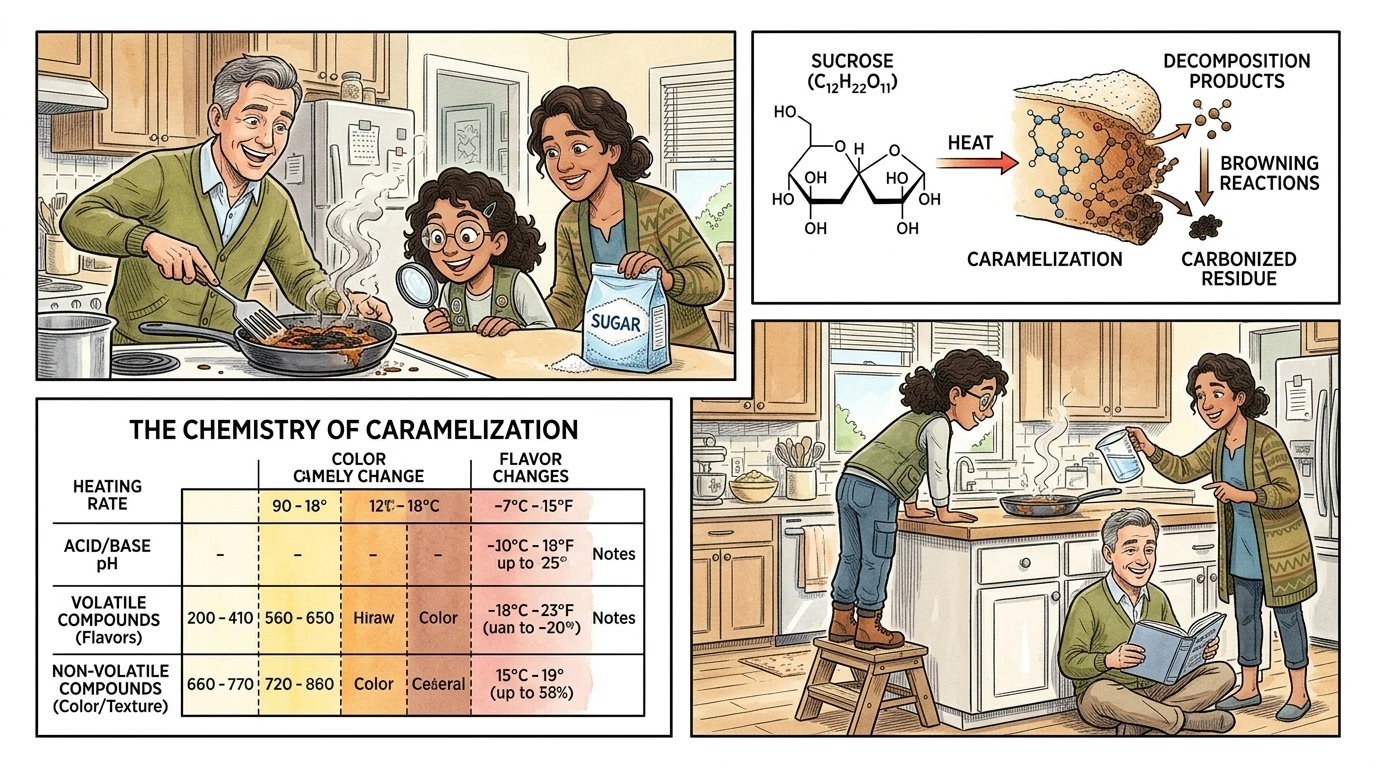
Back in the kitchen, Salma's eyes lit up. "I get it! We didn't just melt it, we burned it!" she explained, pointing from the sugar canister to the burnt pot. "We added the heat too fast and destroyed the molecules instead of just rearranging them into that beautiful, clear caramel!"
Page 9
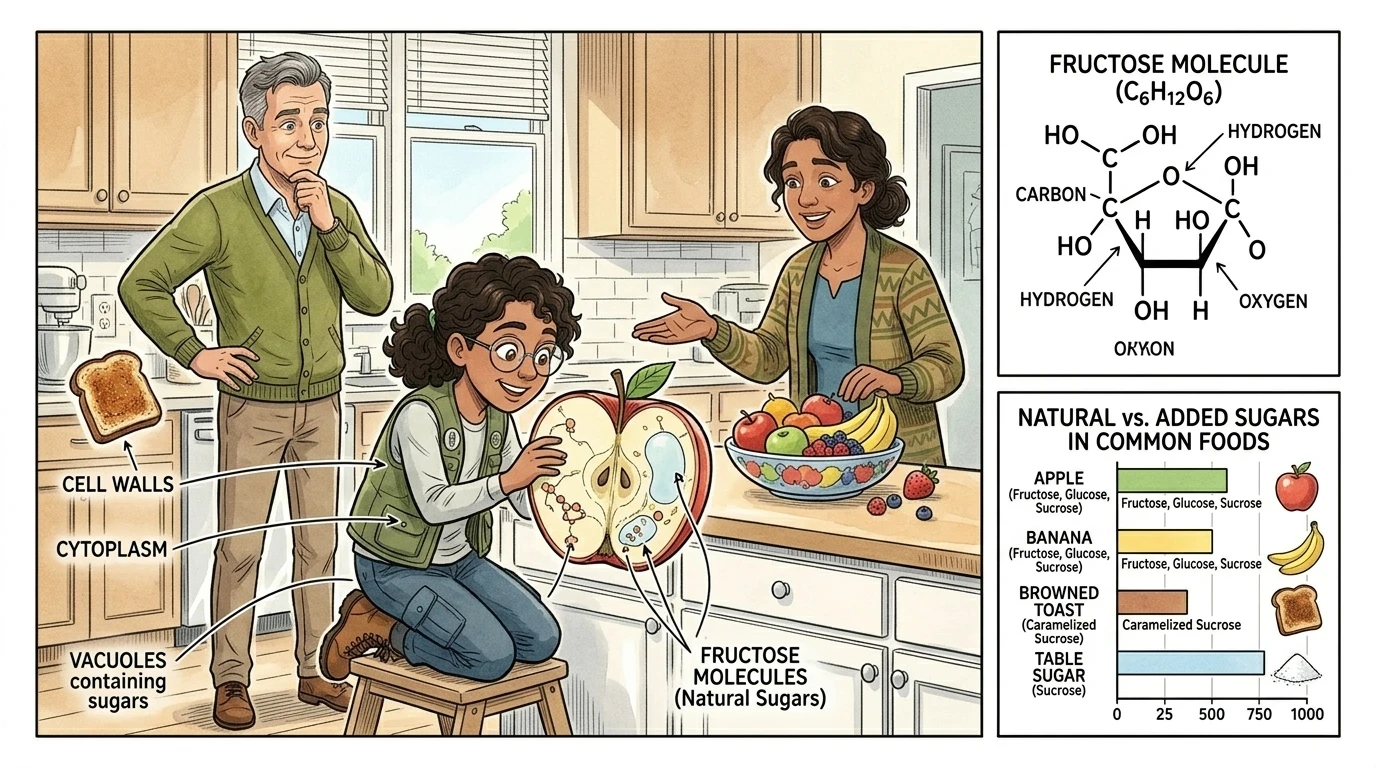
Her father nodded, finally understanding. "So, when toast gets brown, that's also a sugar reaction?" he asked. Salma's mother pointed to the fruit bowl. "Exactly! And all of these fruits have their own natural sugars, like fructose, that give them their sweet taste."
Page 10
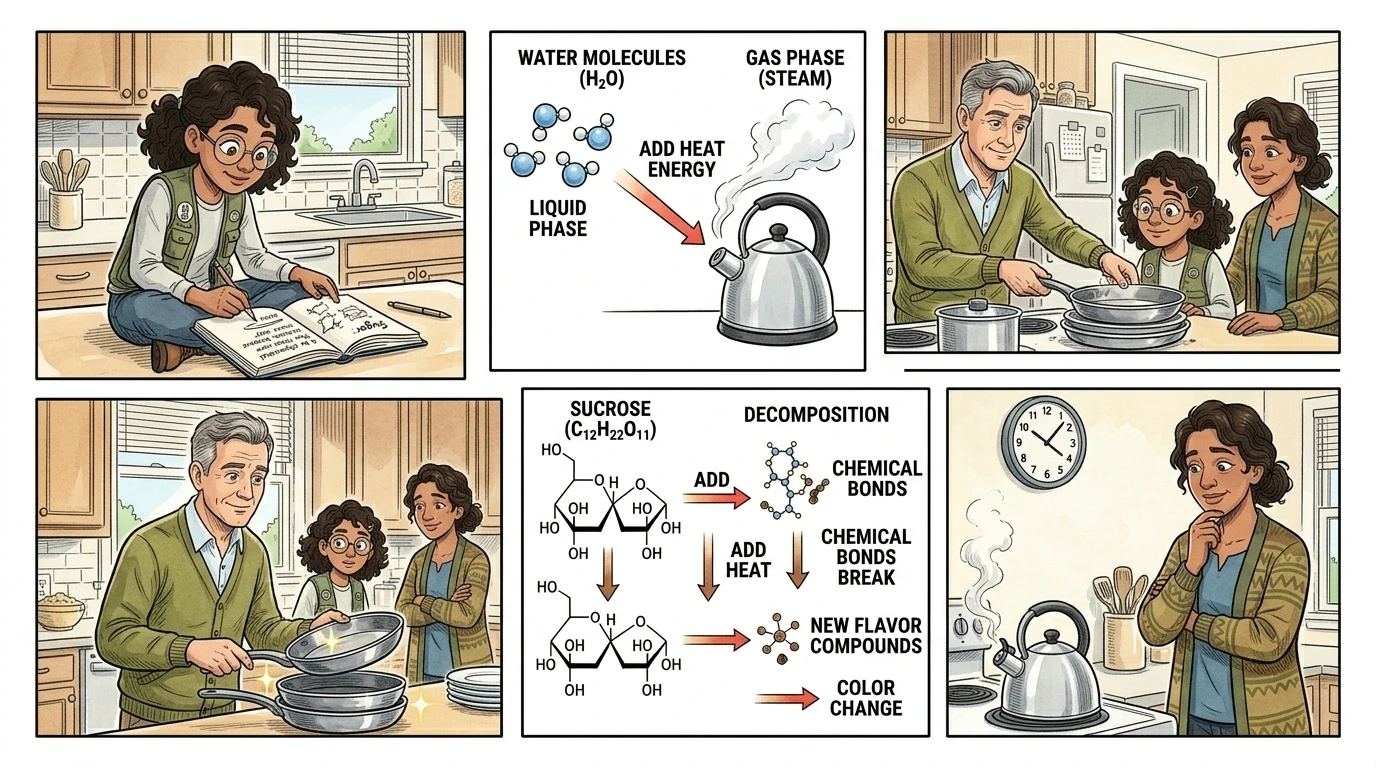
"Sugar isn't just sweet stuff," Salma declared, writing in her notebook, "It's a chemical key that unlocks new flavors and textures when you apply energy!" Her father smiled, picking up a clean pan to try again. Looking at the steam rising from the kettle, her mother asked, "So if heat changes a solid to a liquid... what's happening when it changes a liquid into a gas like steam?"
About this story
- Location: Germany
- Audience: kids (ages 6–12)
Questions and answers
Read Wonder Science on your phone
Wonder Science is available on Android. Get Wonder Science on Google Play.