The Science of Earthquakes
The Science of Earthquakes — an illustrated science story, set in India. 10 illustrated pages, free to read on Wonder Science.
Page 1
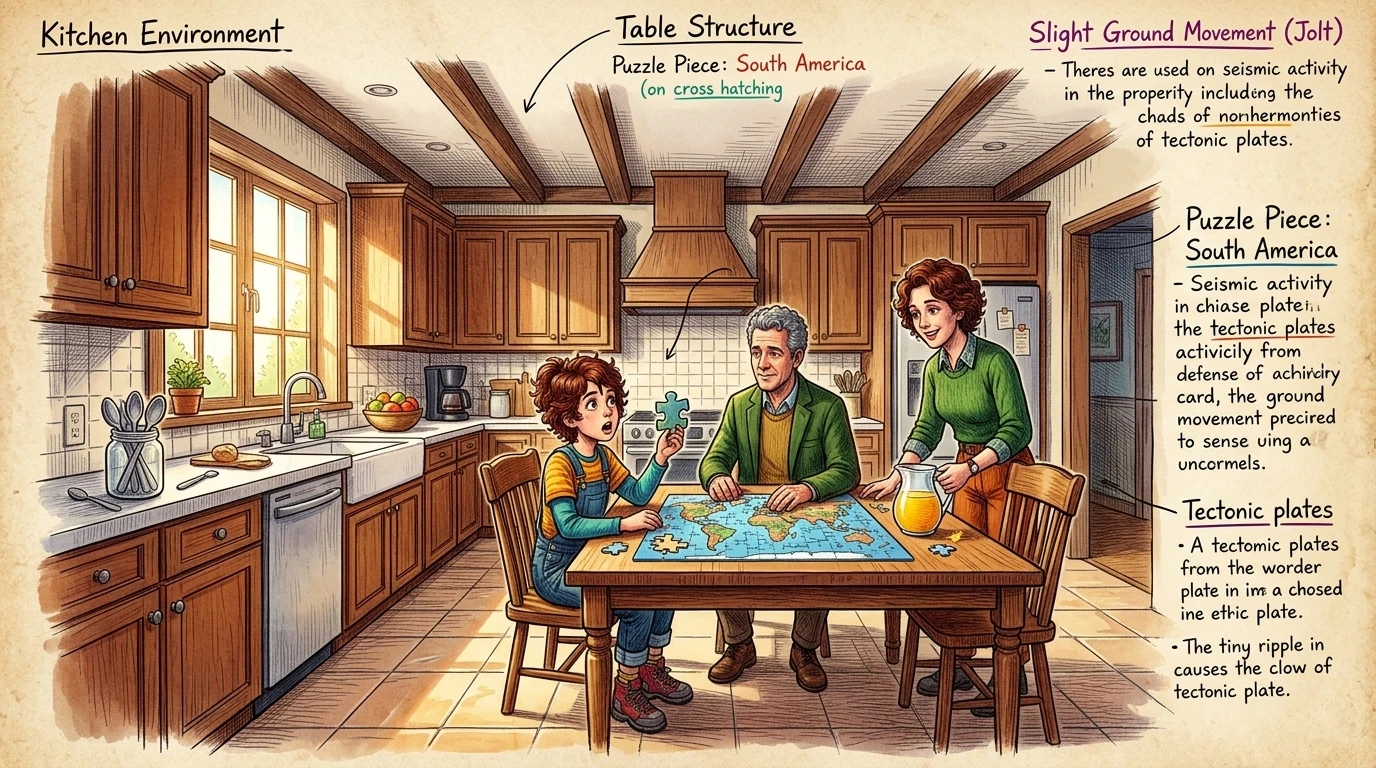
Inside their colorful Noe Valley home, the whole kitchen gave a sudden, gentle jolt, rattling the spoons in their jar. Greta's father steadied the world map jigsaw puzzle they were assembling on the big wooden table. "Whoa, did you feel that?" Greta asked, her eyes wide as she looked up from a piece shaped like South America. Her mother, placing a pitcher of orange juice down, smiled reassuringly and replied, "Just a little San Francisco hello shake."
Page 2
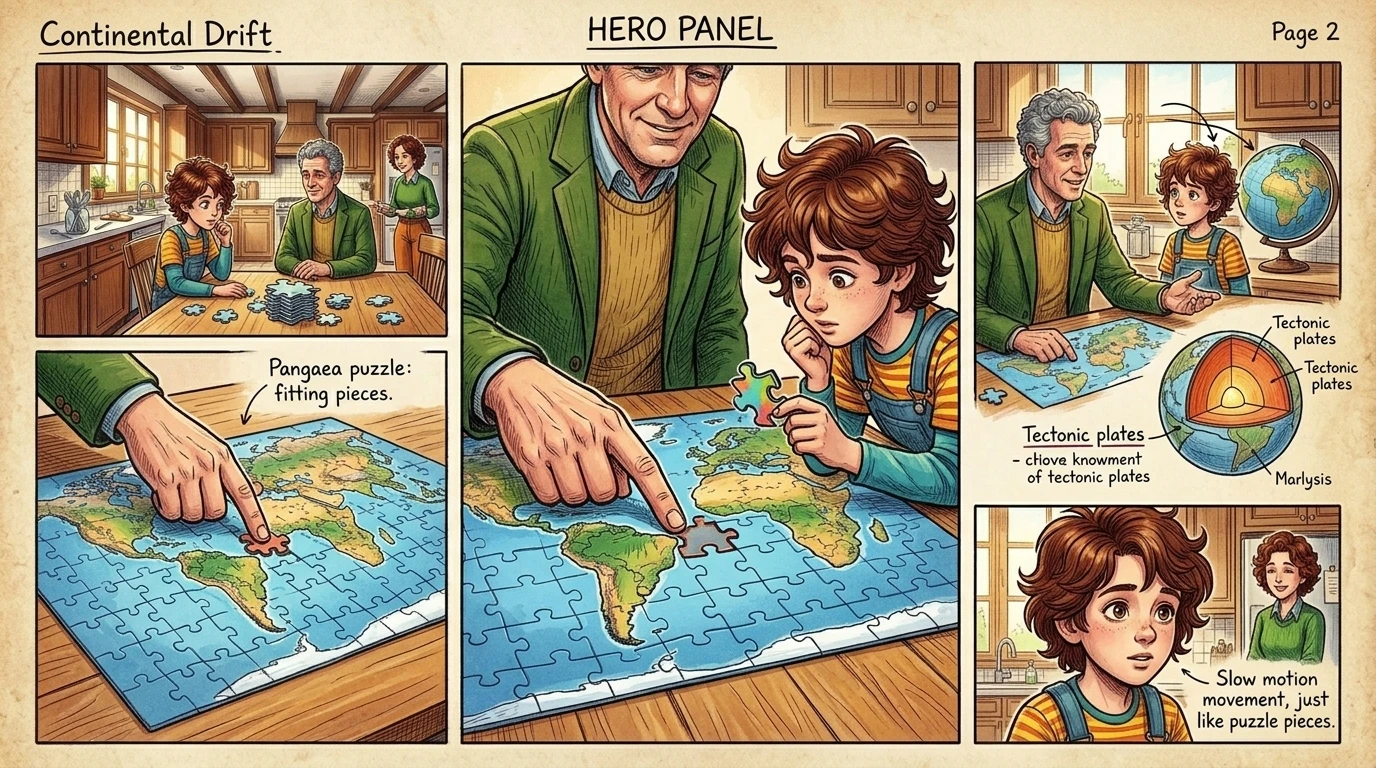
"But what makes the ground shake like that?" Greta asked, picking up the puzzle piece again. Her father tapped the spot on the map where the coasts of Africa and South America almost touched. "Well, the ground we live on is broken into giant pieces, kind of like this puzzle," he explained, "and here in California, the piece we're on is always slowly sliding past another one." He added with a grin, "The San Andreas Fault moves about as fast as your fingernails grow."
Page 3
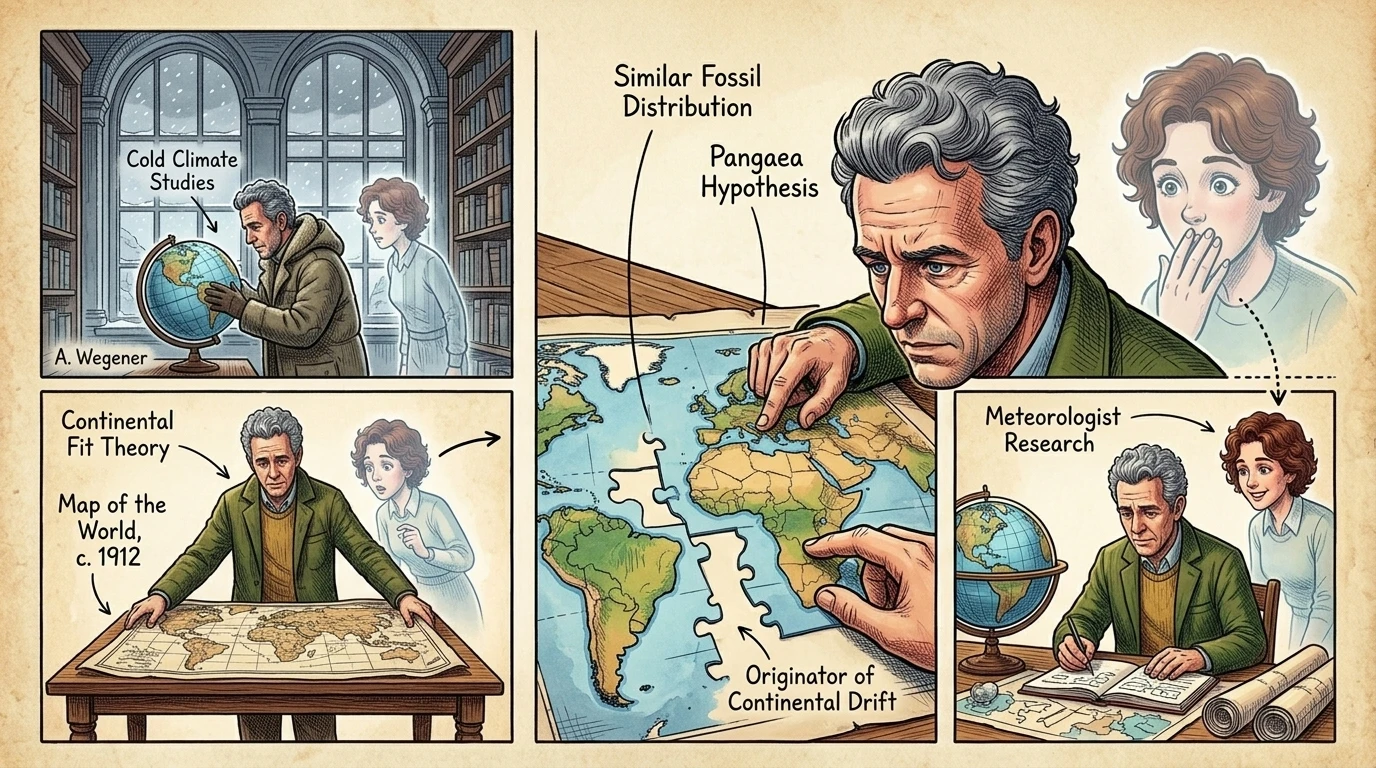
Greta imagined those giant puzzle pieces moving, and the whole world shifted. Suddenly, she was standing unseen in a library filled with towering shelves of books and maps, the air smelling of old paper and leather. The world outside the tall windows was gray and cold, a stark contrast to her sunny kitchen. A man in a thick woolen coat was hunched over a large map, tracing the same coastlines her father had just pointed to.
Page 4
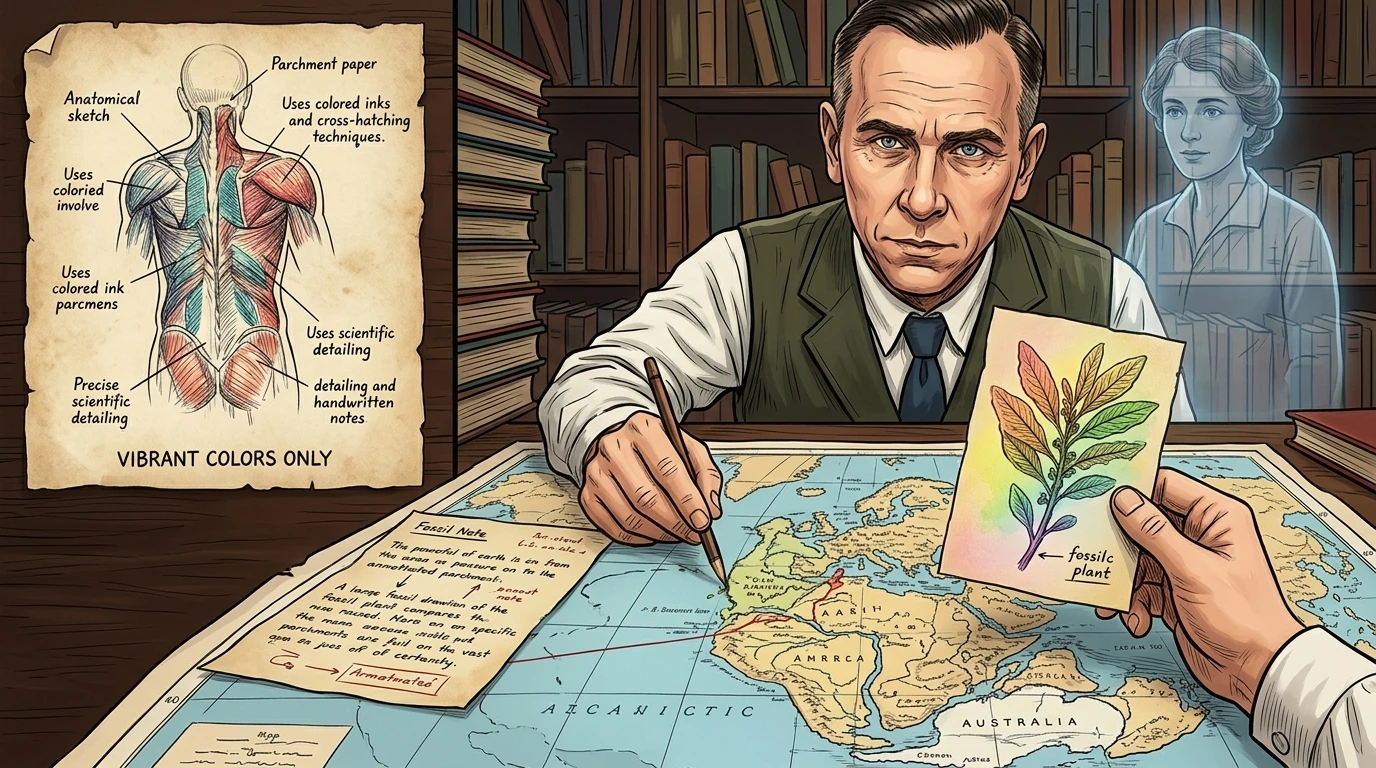
This was Alfred Wegener, a German meteorologist and arctic explorer from over a hundred years ago. He wasn't a geologist, so when he proposed that the continents themselves drifted across the planet, other scientists just laughed. "He looks so determined," Greta whispered to herself, watching him compare a drawing of a fossil to a location on the map. He was a weatherman telling geologists that their maps were wrong!
Page 5
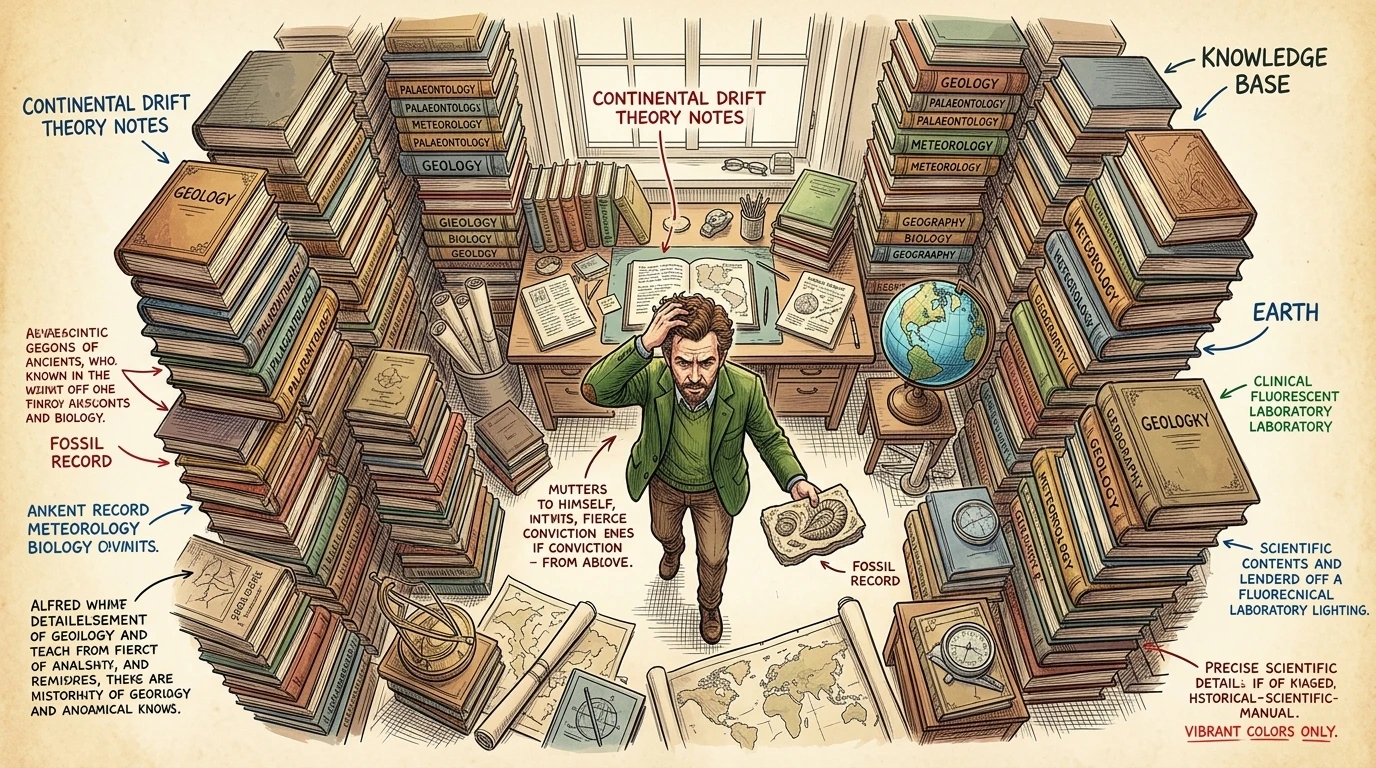
Wegener paced his study, surrounded by stacks of books on geology, biology, and geography. He knew he was onto something huge, but no one would listen because he was crossing into their territory. He muttered to himself, remembering his own words, "'The truth of the matter can only be reached by combining all this evidence.' I must show them how all the sciences point to one truth!" Greta saw the fire in his eyes as he grabbed another fossil record.
Page 6
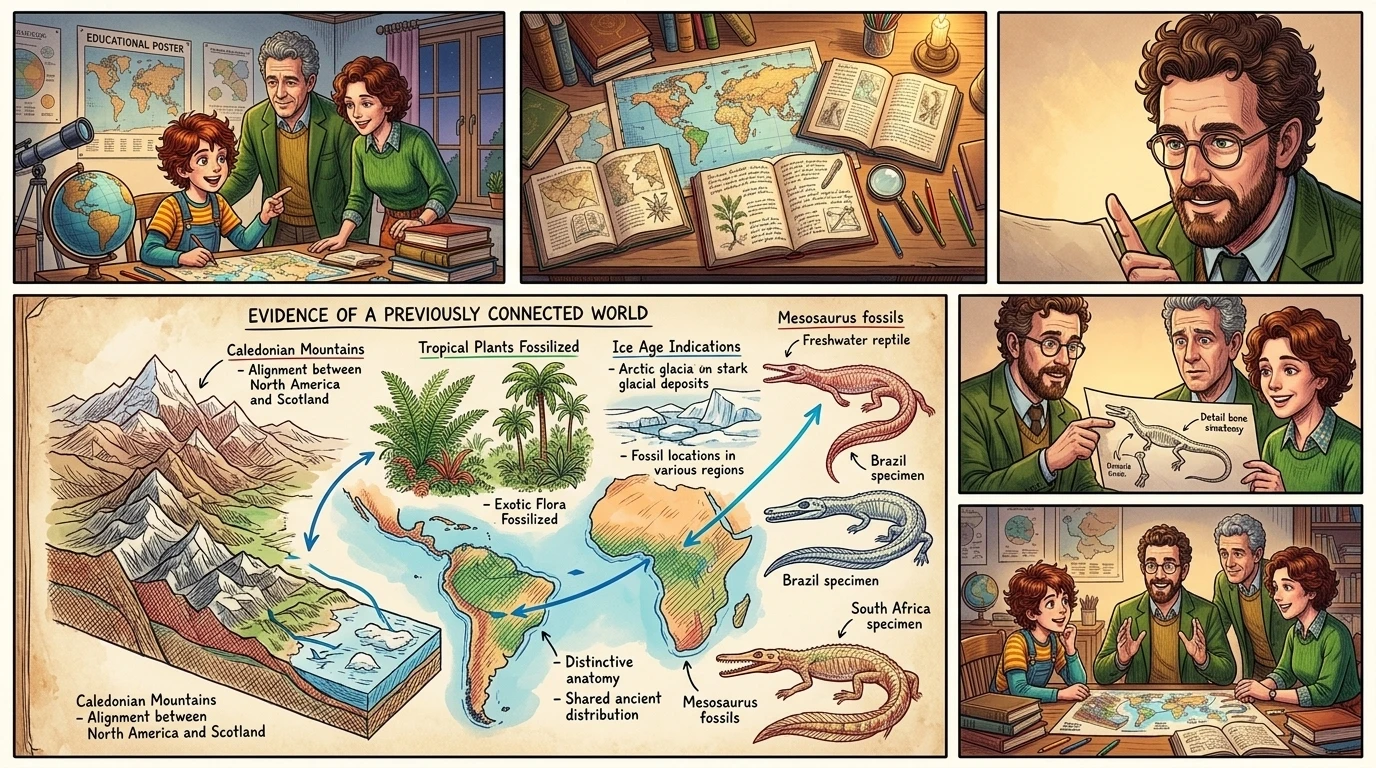
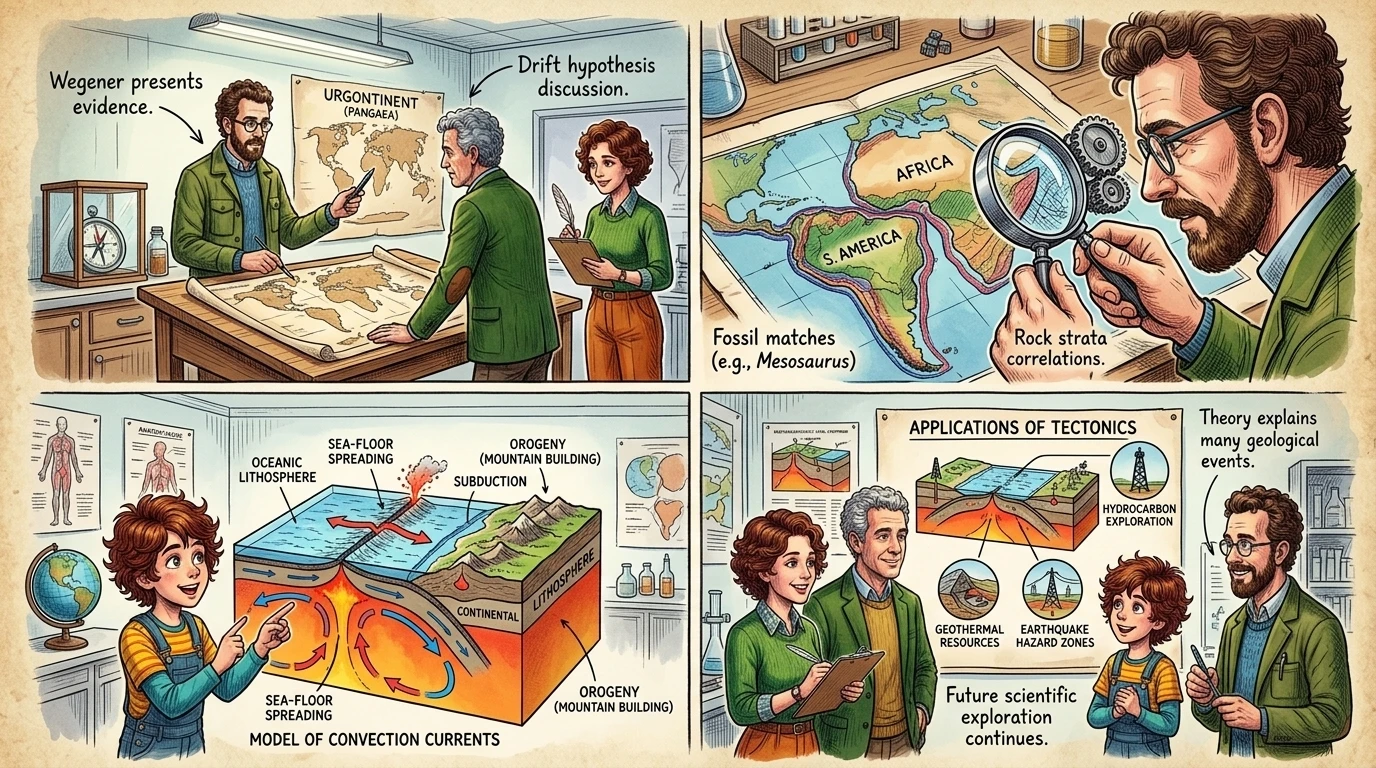
Wegener laid out all his clues, and Greta saw it clearly. He showed how ancient mountain ranges in North America lined up perfectly with mountains in Scotland. He pointed to fossils of the same tropical plants found in the frozen arctic. And he showed how fossils of a freshwater reptile, Mesosaurus, were found on the coasts of both Brazil and South Africa, with a giant ocean in between!
Page 7
Though he didn't live to see it, Wegener's wild idea of 'continental drift' became the foundation for the Theory of Plate Tectonics. His creativity changed everything, giving us a unified way to understand how mountains are born, volcanoes erupt, and why earthquakes happen. This theory is now essential for everything from predicting volcanic eruptions to finding natural resources deep within the Earth.
Page 8
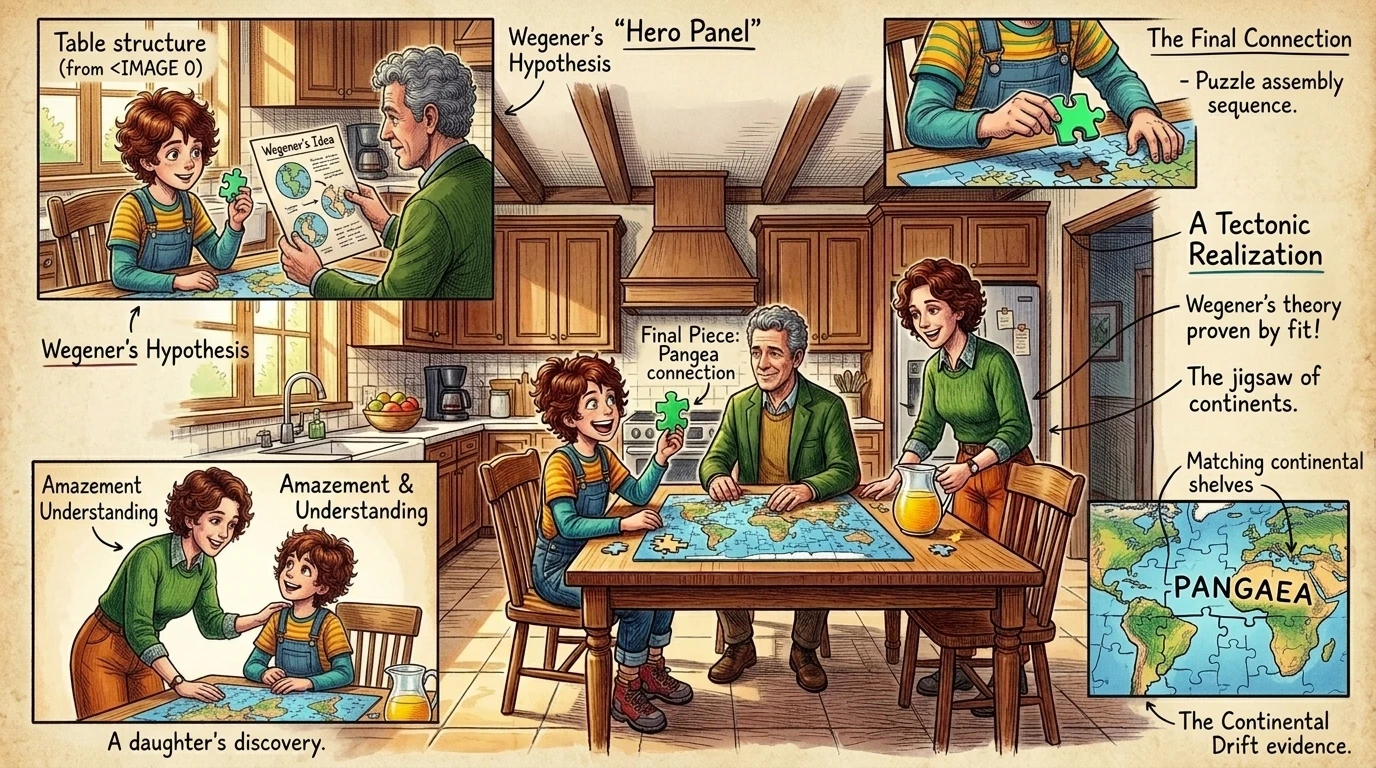
Greta blinked, and she was back in her sunny kitchen, the final piece of the puzzle held tightly in her hand. "That's it!" she exclaimed, slamming the piece into place. "The continents really are giant puzzle pieces! Alfred Wegener saw that they all used to be connected!" Her mother looked amazed. "So earthquakes are the sound of the puzzle pieces scraping against each other?"
Page 9
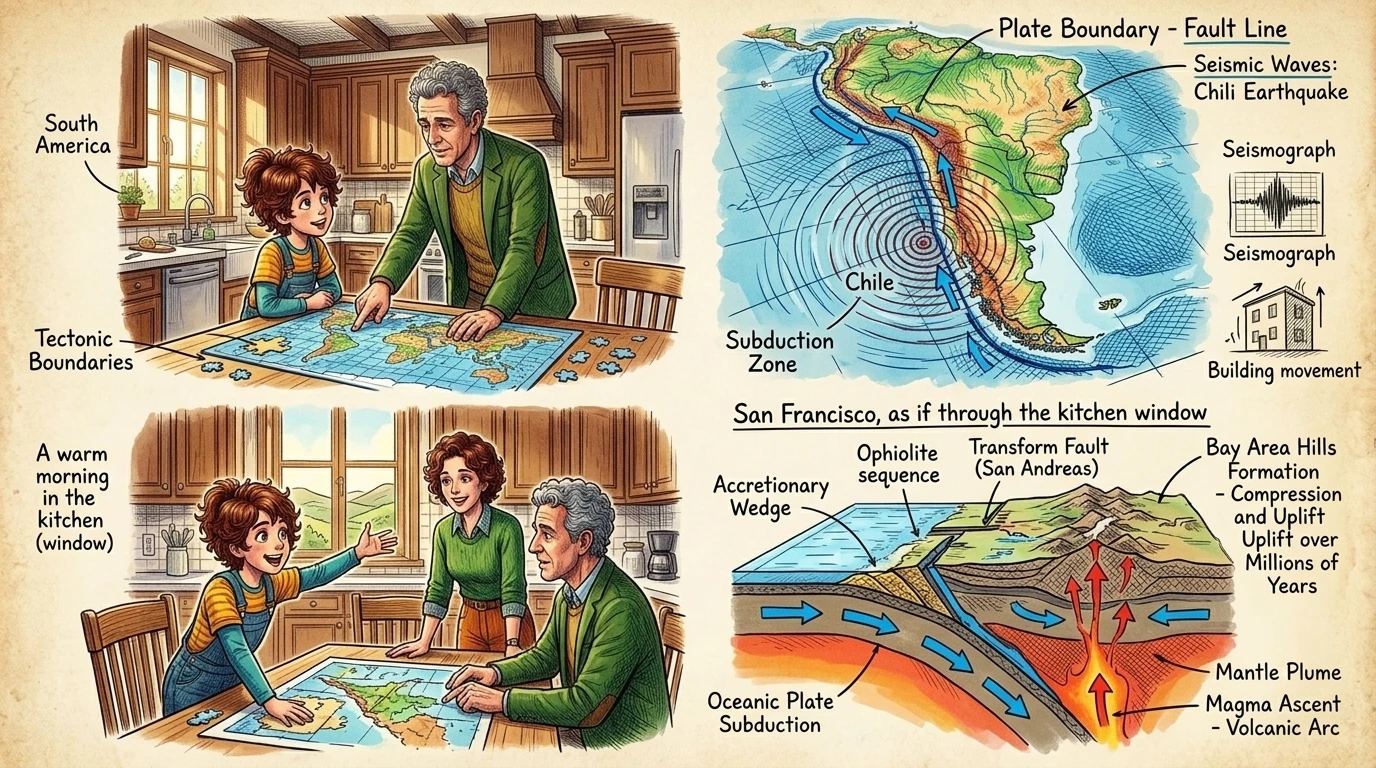
"Exactly!" Greta beamed. "And some are so powerful—the biggest one ever, in Chile, was so strong it made the whole planet vibrate!" Her father added, "And it's why the Himalayas get a tiny bit taller every year—the Indian plate is still crashing into Asia." Her mom pointed out the window. "So all these hills in San Francisco were pushed up by those same forces over millions of years."
Page 10
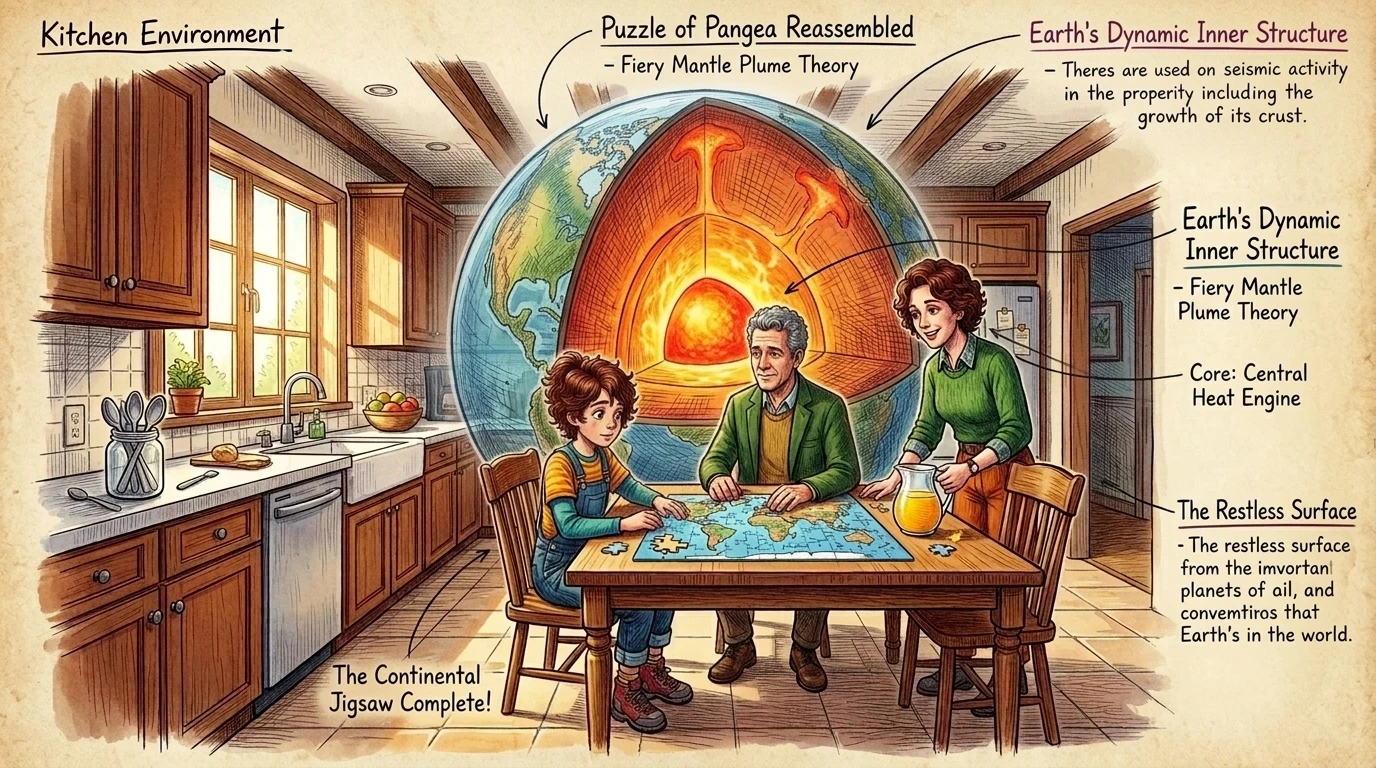
Greta looked at the finished puzzle, a perfect map of a restless, living world. "So the whole surface of the Earth is a giant, moving puzzle," she summarized, a feeling of wonder washing over her. Her father nodded, a curious glint in his eye. "It sure is. Which makes you wonder... if the surface is moving, what's going on deep down in the Earth's fiery core?"
About this story
- Location: India
- Audience: kids (ages 6–12)
Questions and answers
Read Wonder Science on your phone
Wonder Science is available on Android. Get Wonder Science on Google Play.