The Science of Earthquakes

The Science of Earthquakes — an illustrated science story, set in Brazil. 10 illustrated pages, free to read on Wonder Science.
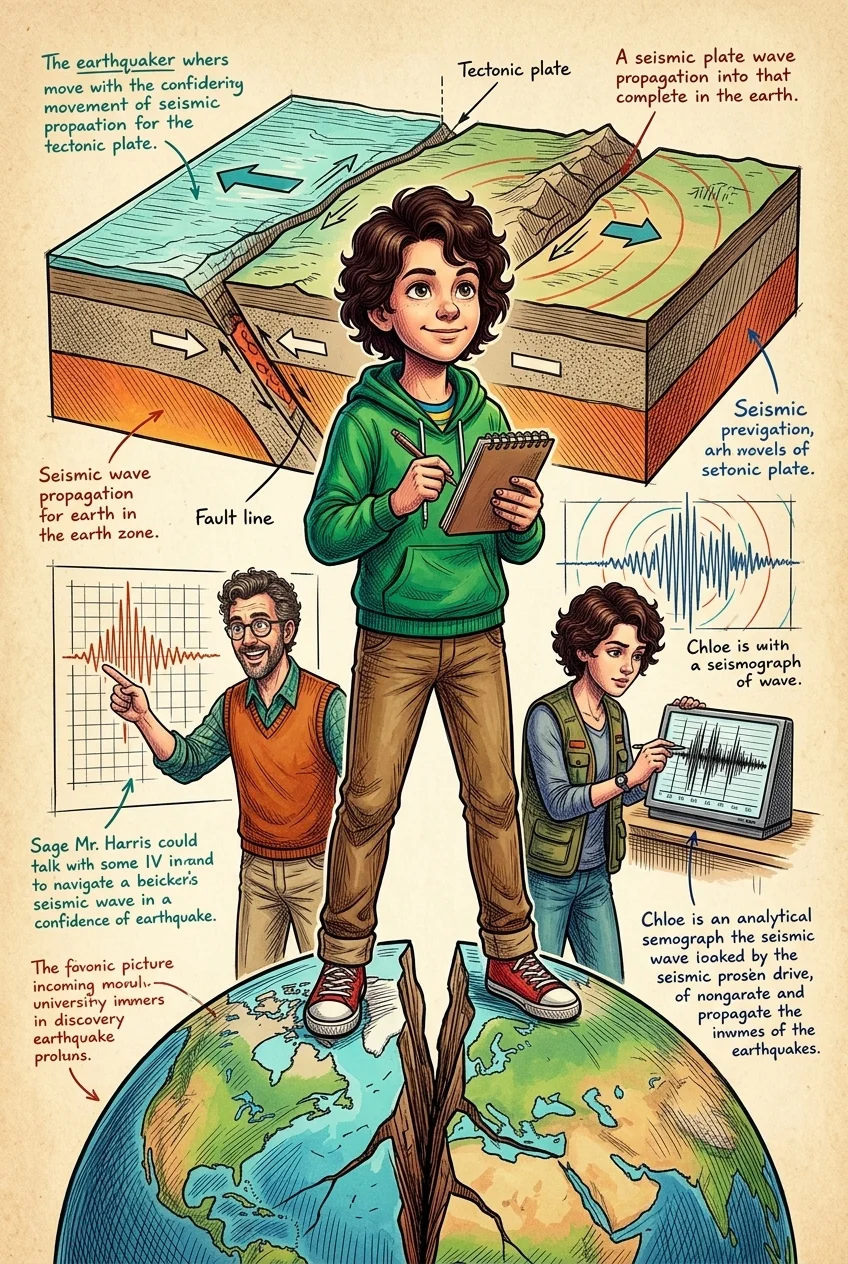
The Science of Earthquakes — book cover — Wonder Science
The Science of Earthquakes — an illustrated science story, set in Brazil. 10 illustrated pages, free to read on Wonder Science.

Page 1
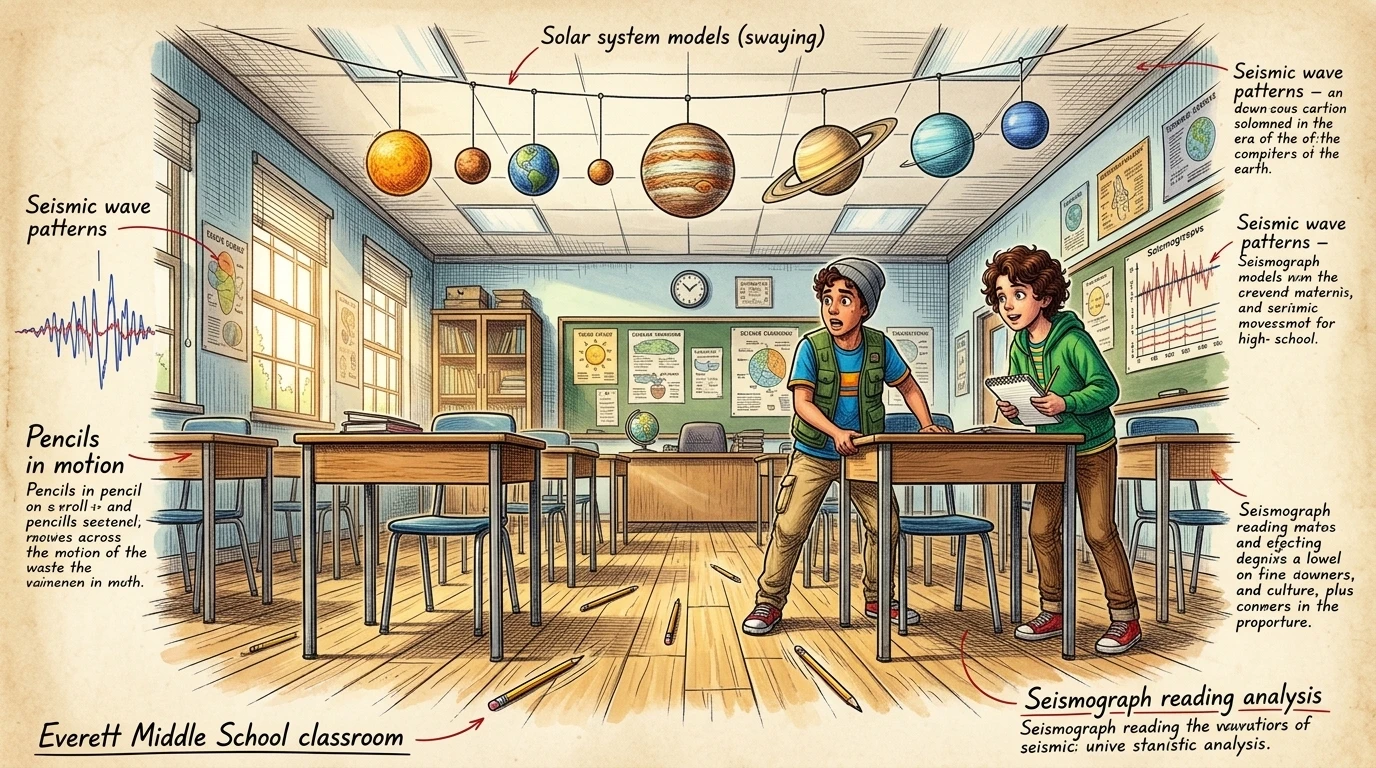
Inside their classroom at Everett Middle School, a sudden jolt made the windows rattle and the hanging models of the solar system sway.
Inside their classroom at Everett Middle School, a sudden jolt made the windows rattle and the hanging models of the solar system sway. Pencils rolled from desks and clattered onto the floor as everyone froze. "Whoa, what was that?" Mateo yelped, grabbing the edge of his table. Sage's eyes were wide with a mix of surprise and fascination.

Inside their classroom at Everett Middle School, a sudden jolt made the windows rattle and the hanging models of the solar system sway. Pencils rolled from desks and clattered onto the floor as everyone froze. "Whoa, what was that?" Mateo yelped, grabbing the edge of his table. Sage's eyes were wide with a mix of surprise and fascination.

Page 2
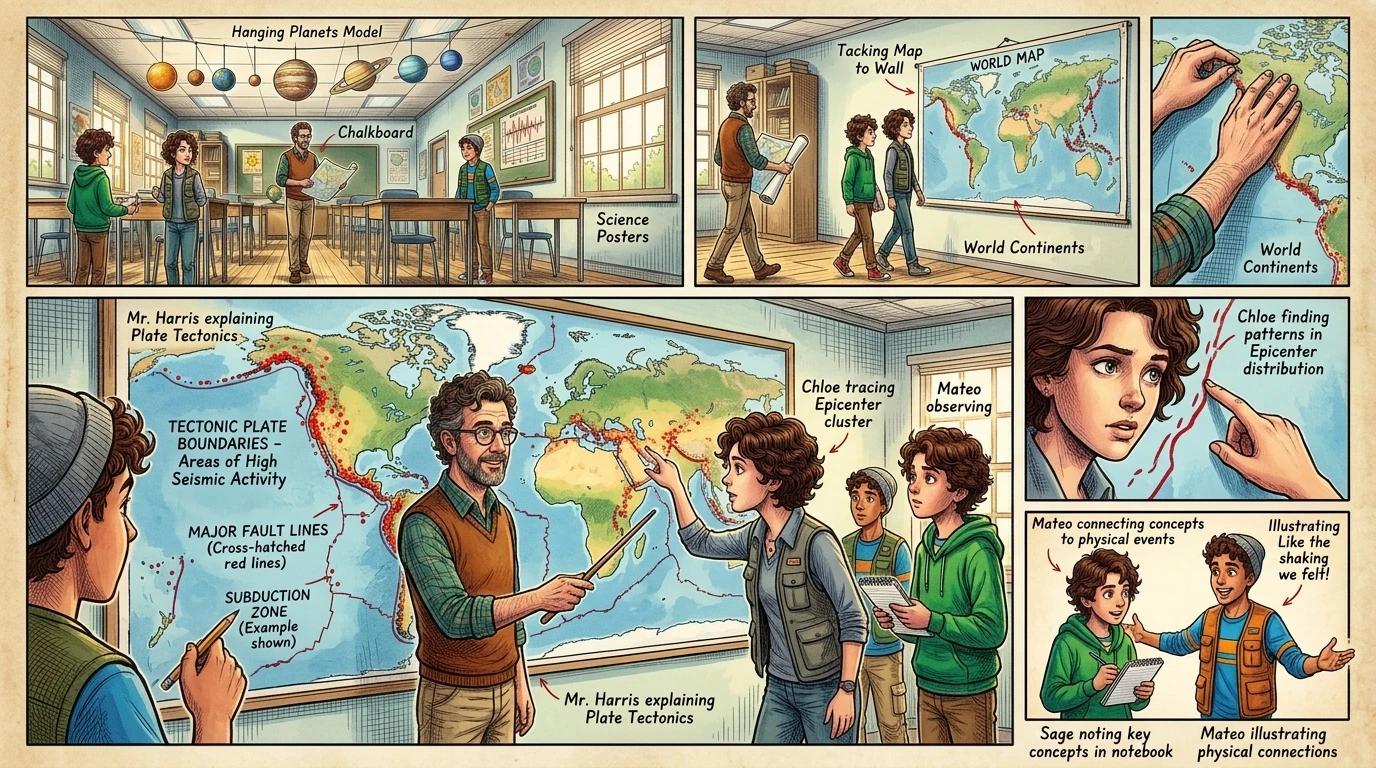
"That was a small earthquake, class," Mr. Harris said calmly, pointing to a large world map on the wall covered in red dots.
"That was a small earthquake, class," Mr. Harris said calmly, pointing to a large world map on the wall covered in red dots. "But here's the real mystery: why do they almost always happen along these specific lines?" Chloe stepped closer to the map and traced one of the lines with her finger. "It looks like the whole world is cracked, like a giant eggshell!"

"That was a small earthquake, class," Mr. Harris said calmly, pointing to a large world map on the wall covered in red dots. "But here's the real mystery: why do they almost always happen along these specific lines?" Chloe stepped closer to the map and traced one of the lines with her finger. "It looks like the whole world is cracked, like a giant eggshell!"

Page 3
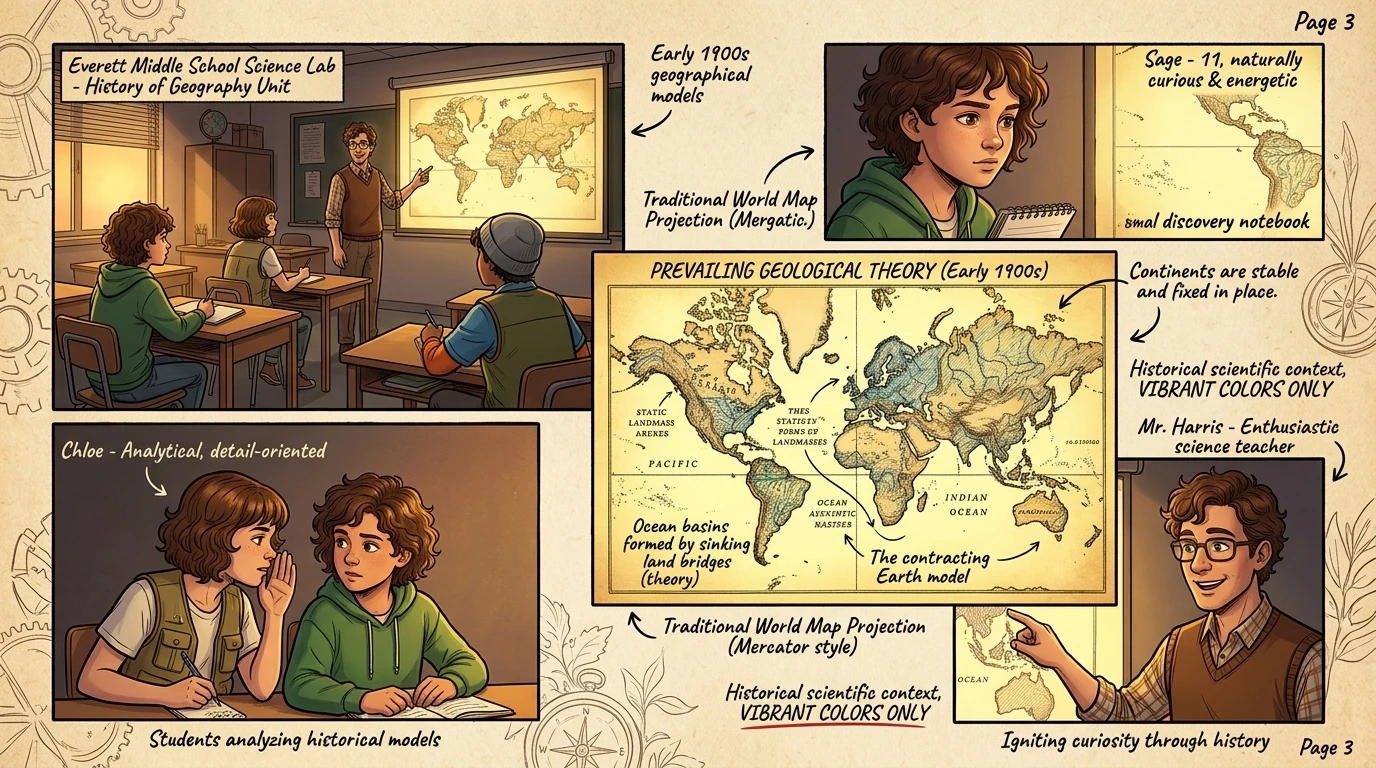
Mr. Harris smiled, "To solve that mystery, we have to travel back in time to the early 1900s, when maps showed the continents, but no one knew the biggest…
Mr. Harris smiled, "To solve that mystery, we have to travel back in time to the early 1900s, when maps showed the continents, but no one knew the biggest secret hidden beneath them." He dimmed the lights, and an image of an old, sepia-toned world map projected onto the screen. "At the time, scientists believed the continents had been fixed in place forever."

Mr. Harris smiled, "To solve that mystery, we have to travel back in time to the early 1900s, when maps showed the continents, but no one knew the biggest secret hidden beneath them." He dimmed the lights, and an image of an old, sepia-toned world map projected onto the screen. "At the time, scientists believed the continents had been fixed in place forever."

Page 4
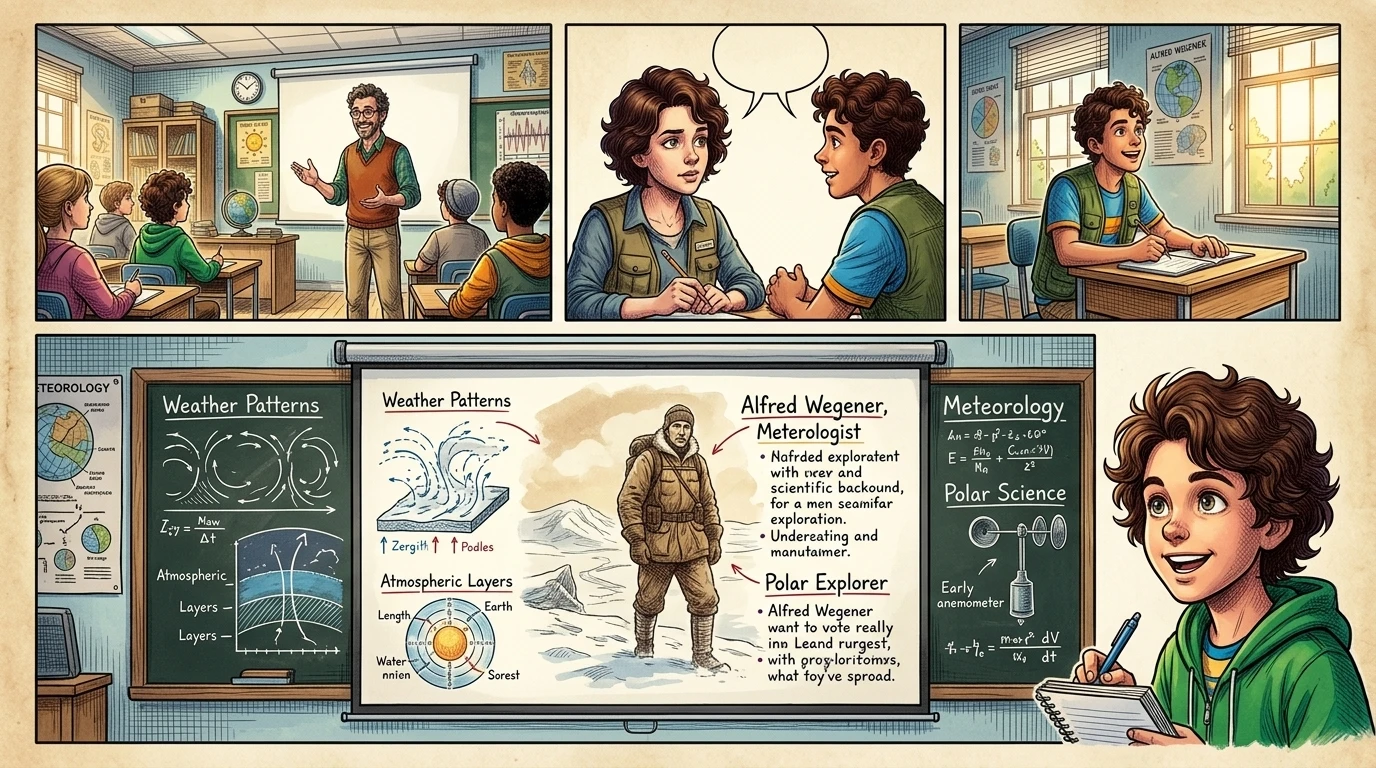
"Then came a man who saw something everyone else had missed," Mr. Harris continued, showing a black and white photo. "His name was Alfred Wegener, and he wasn't…
"Then came a man who saw something everyone else had missed," Mr. Harris continued, showing a black and white photo. "His name was Alfred Wegener, and he wasn't even a geologist; he was a meteorologist who studied the weather! But he had an unshakeable curiosity and a love for adventure, exploring places like Greenland."

"Then came a man who saw something everyone else had missed," Mr. Harris continued, showing a black and white photo. "His name was Alfred Wegener, and he wasn't even a geologist; he was a meteorologist who studied the weather! But he had an unshakeable curiosity and a love for adventure, exploring places like Greenland."

Page 5
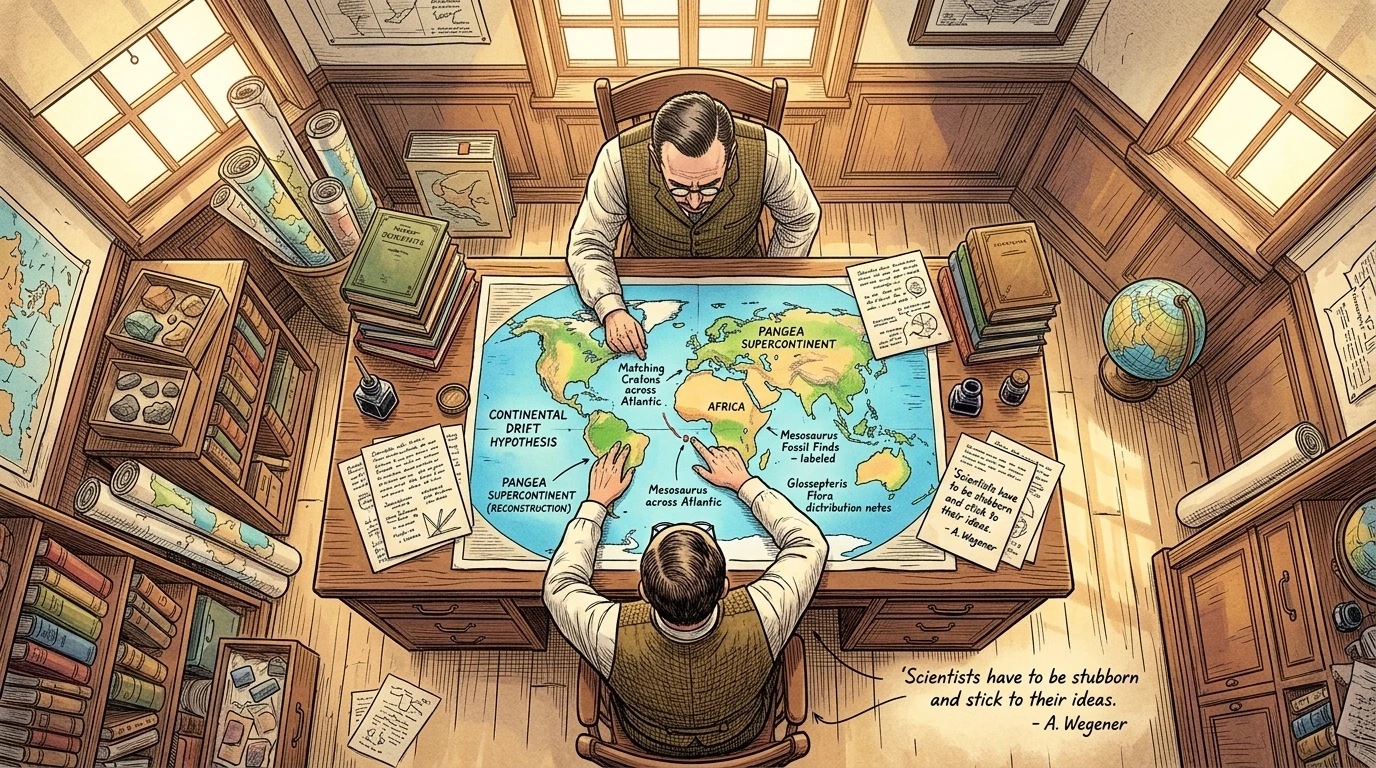
One day in his study, Wegener stared at a world map, truly noticing for the first time how the coastline of South America looked like it could slot perfectly…
One day in his study, Wegener stared at a world map, truly noticing for the first time how the coastline of South America looked like it could slot perfectly into the coast of Africa. He remembered something he'd written about his own work: 'Scientists have to be stubborn and stick to their ideas.' He grabbed books and papers, determined to prove his wild theory of 'continental drift.'

One day in his study, Wegener stared at a world map, truly noticing for the first time how the coastline of South America looked like it could slot perfectly into the coast of Africa. He remembered something he'd written about his own work: 'Scientists have to be stubborn and stick to their ideas.' He grabbed books and papers, determined to prove his wild theory of 'continental drift.'

Page 6
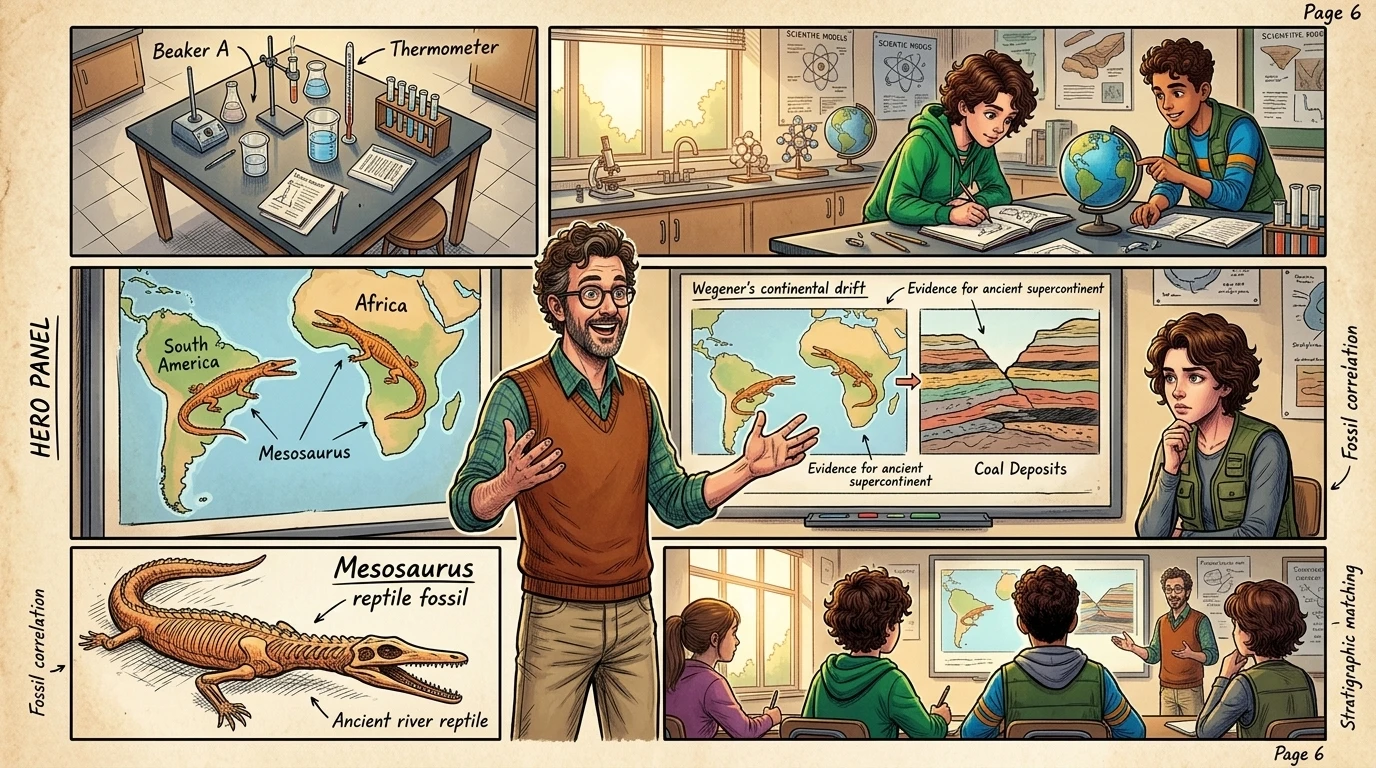
"He found clues that other scientists had ignored!" exclaimed Mr. Harris, clicking to a new slide. "Wegener showed that fossils of the exact same ancient…
"He found clues that other scientists had ignored!" exclaimed Mr. Harris, clicking to a new slide. "Wegener showed that fossils of the exact same ancient reptiles were found in both Brazil and West Africa. He also found matching rock formations and coal deposits across oceans, clues that only made sense if the continents were once connected!"

"He found clues that other scientists had ignored!" exclaimed Mr. Harris, clicking to a new slide. "Wegener showed that fossils of the exact same ancient reptiles were found in both Brazil and West Africa. He also found matching rock formations and coal deposits across oceans, clues that only made sense if the continents were once connected!"

Page 7
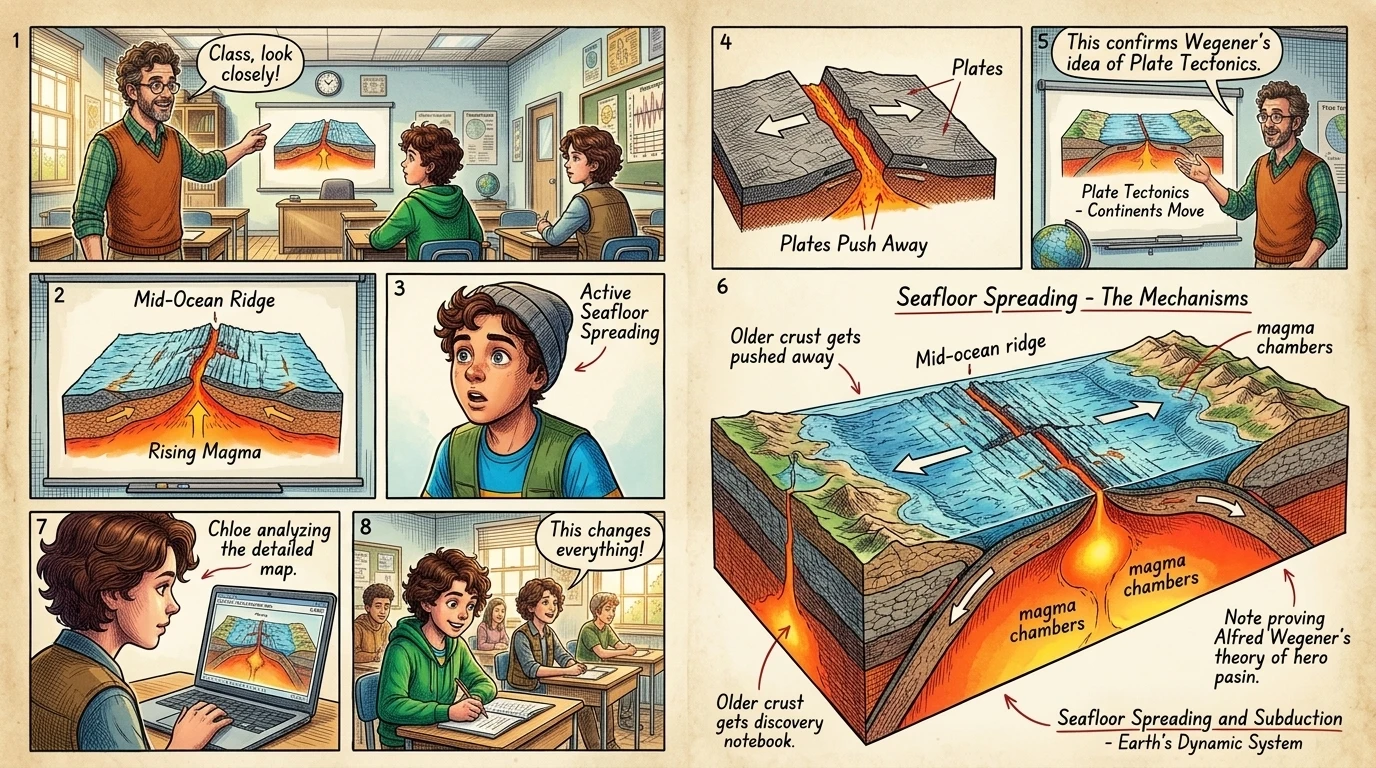
"But for fifty years, almost everyone laughed at his idea," Mr. Harris said softly. "It took new technology after his death to prove him right by discovering…
"But for fifty years, almost everyone laughed at his idea," Mr. Harris said softly. "It took new technology after his death to prove him right by discovering seafloor spreading. Wegener's perseverance paid off, and his theory of continental drift grew into the science of plate tectonics, which finally explained why the Earth shakes."

"But for fifty years, almost everyone laughed at his idea," Mr. Harris said softly. "It took new technology after his death to prove him right by discovering seafloor spreading. Wegener's perseverance paid off, and his theory of continental drift grew into the science of plate tectonics, which finally explained why the Earth shakes."

Page 8
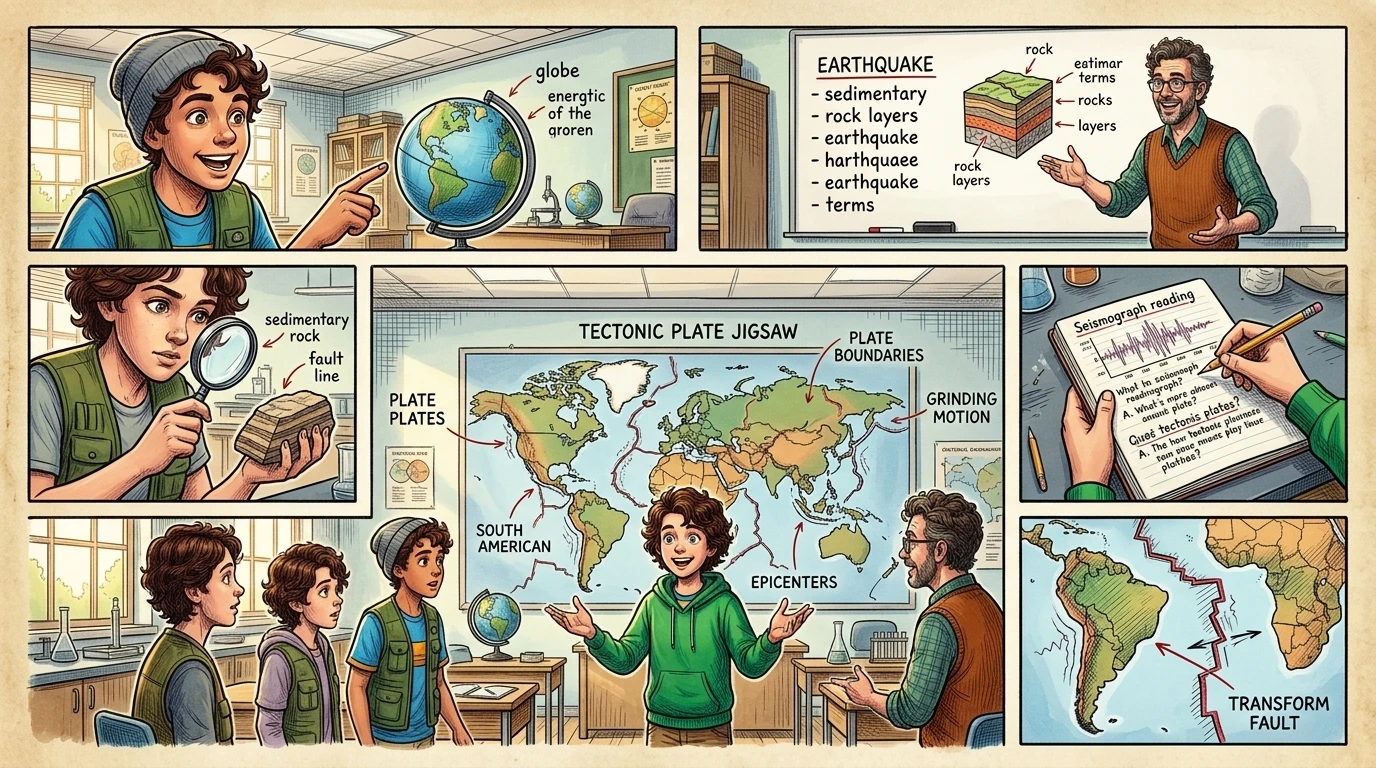
Back in the classroom, the lights came up, and Sage gasped, turning to her friends. "So the cracks Chloe saw on the map aren't cracks in an eggshell!" she…
Back in the classroom, the lights came up, and Sage gasped, turning to her friends. "So the cracks Chloe saw on the map aren't cracks in an eggshell!" she explained excitedly. "They're the edges of giant, moving puzzle pieces! Earthquakes are the vibrations we feel when those pieces grind against each other!"

Back in the classroom, the lights came up, and Sage gasped, turning to her friends. "So the cracks Chloe saw on the map aren't cracks in an eggshell!" she explained excitedly. "They're the edges of giant, moving puzzle pieces! Earthquakes are the vibrations we feel when those pieces grind against each other!"

Page 9
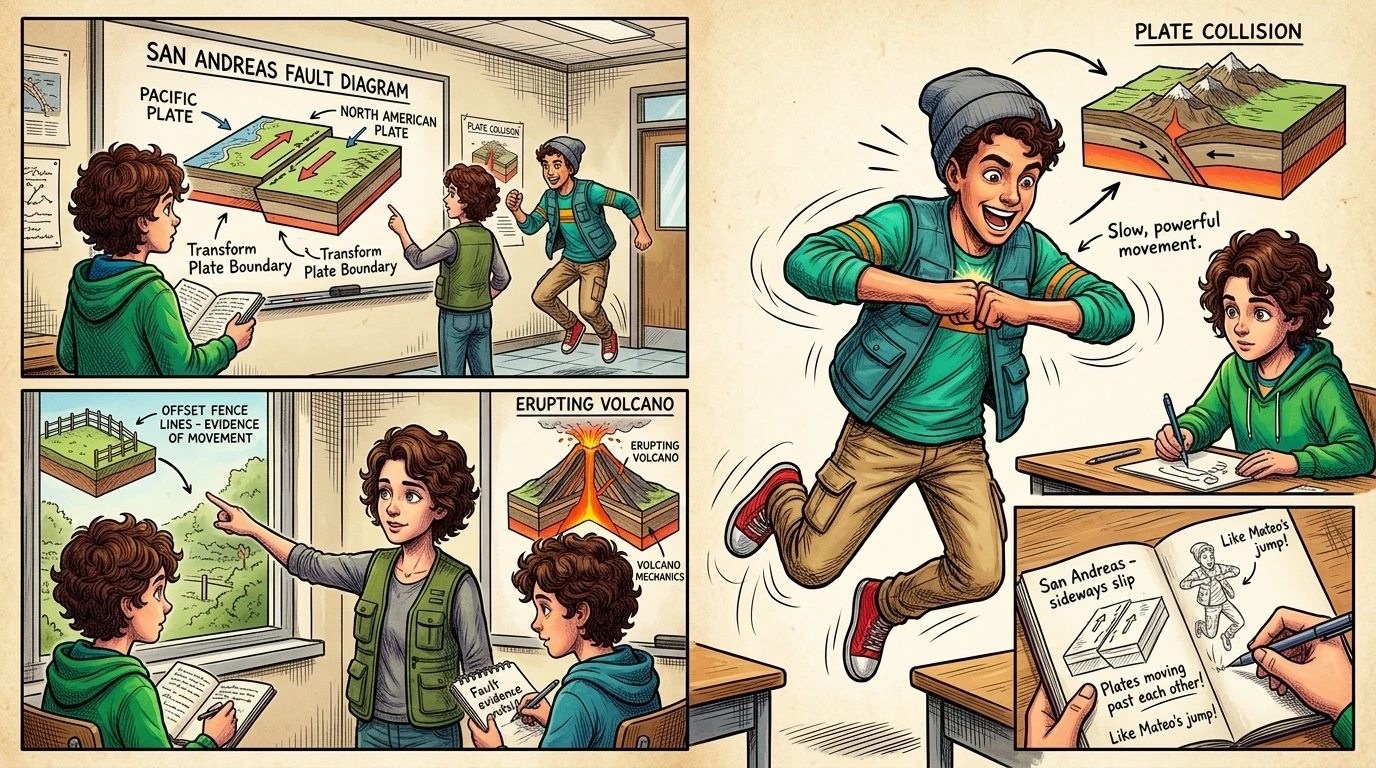
"And the San Andreas Fault is one of the biggest edges right here in California!" Chloe added, pointing out the window. Mateo jumped up, "So that's how…
"And the San Andreas Fault is one of the biggest edges right here in California!" Chloe added, pointing out the window. Mateo jumped up, "So that's how mountains get made too, right? When the plates crash into each other super slowly?" Sage nodded, jotting everything down. "It explains volcanoes and mountains and earthquakes... it explains everything!"

"And the San Andreas Fault is one of the biggest edges right here in California!" Chloe added, pointing out the window. Mateo jumped up, "So that's how mountains get made too, right? When the plates crash into each other super slowly?" Sage nodded, jotting everything down. "It explains volcanoes and mountains and earthquakes... it explains everything!"

Page 10
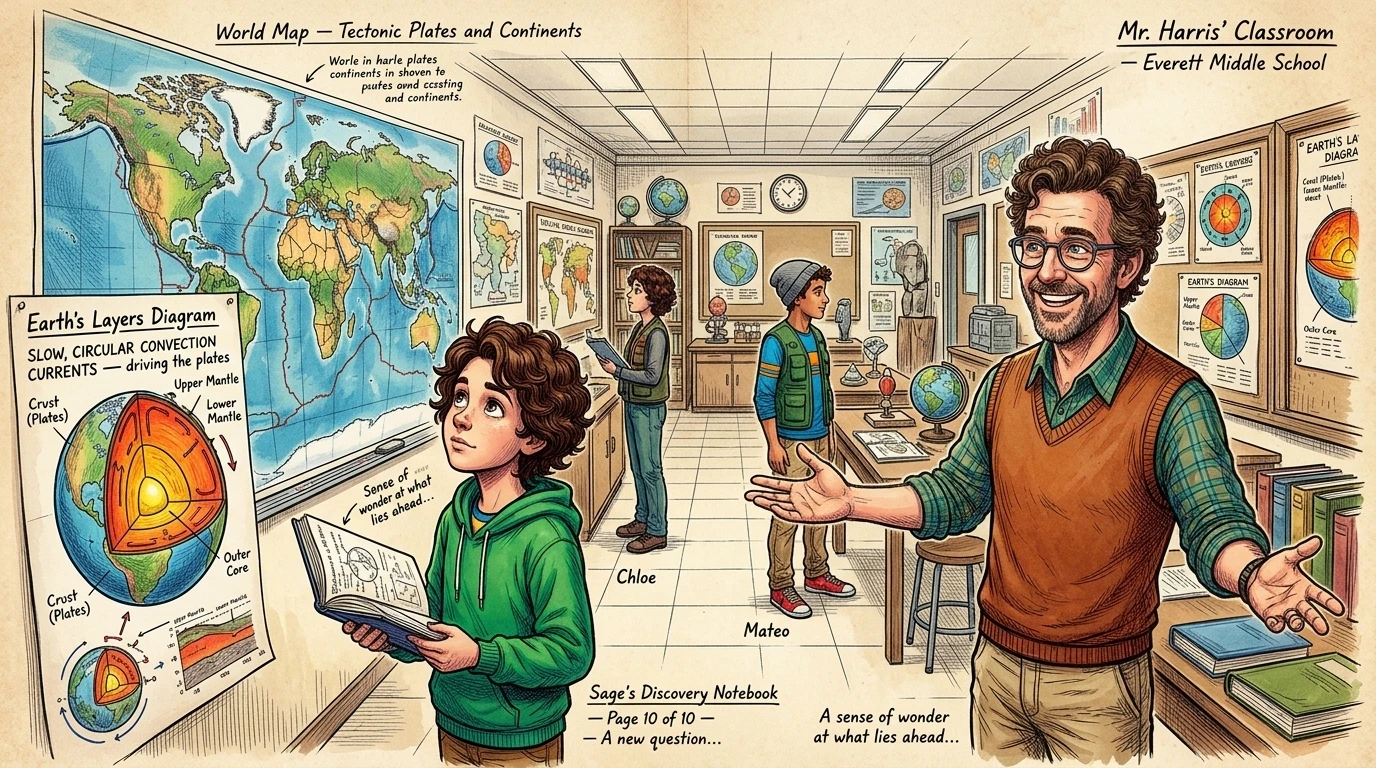
Mr. Harris beamed with pride. "Exactly! Earthquakes are just one effect of our living, moving planet." Sage looked at her notebook, then back at the map.
Mr. Harris beamed with pride. "Exactly! Earthquakes are just one effect of our living, moving planet." Sage looked at her notebook, then back at the map. "So the ground under our feet is always moving," she whispered, before a new thought sparked. "But if the plates on top are moving, what's pushing them from underneath?"

Mr. Harris beamed with pride. "Exactly! Earthquakes are just one effect of our living, moving planet." Sage looked at her notebook, then back at the map. "So the ground under our feet is always moving," she whispered, before a new thought sparked. "But if the plates on top are moving, what's pushing them from underneath?"

About this story

  • Location: Brazil
  • Audience: kids (ages 6–12)

Questions and answers

Questions and answers about The Science of Earthquakes

Read Wonder Science on your phone

Wonder Science is available on Android. Get Wonder Science on Google Play.

More Wonder Science stories

All Wonder Science stories · Open the library