The Rock Cycle
The Rock Cycle — an illustrated science story. 10 illustrated pages, free to read on Wonder Science.
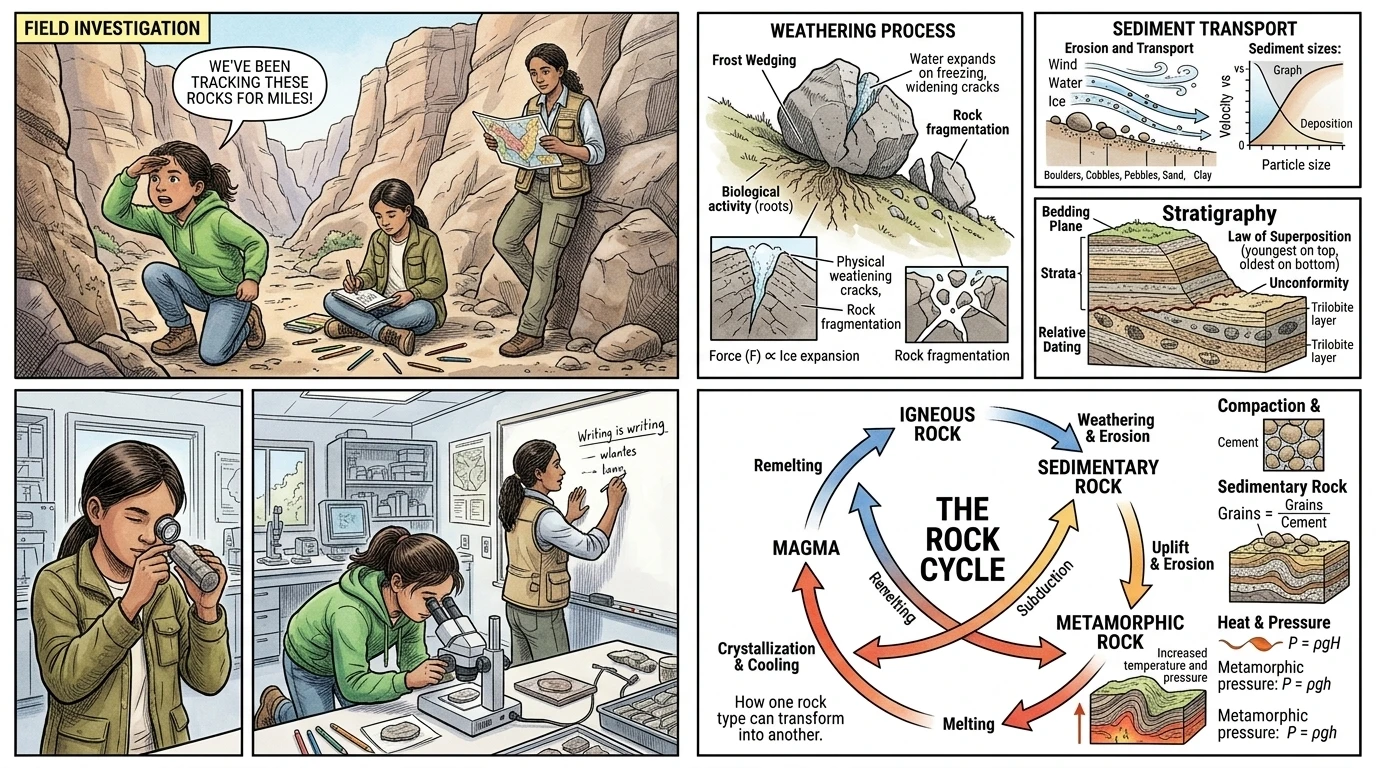
Page 1
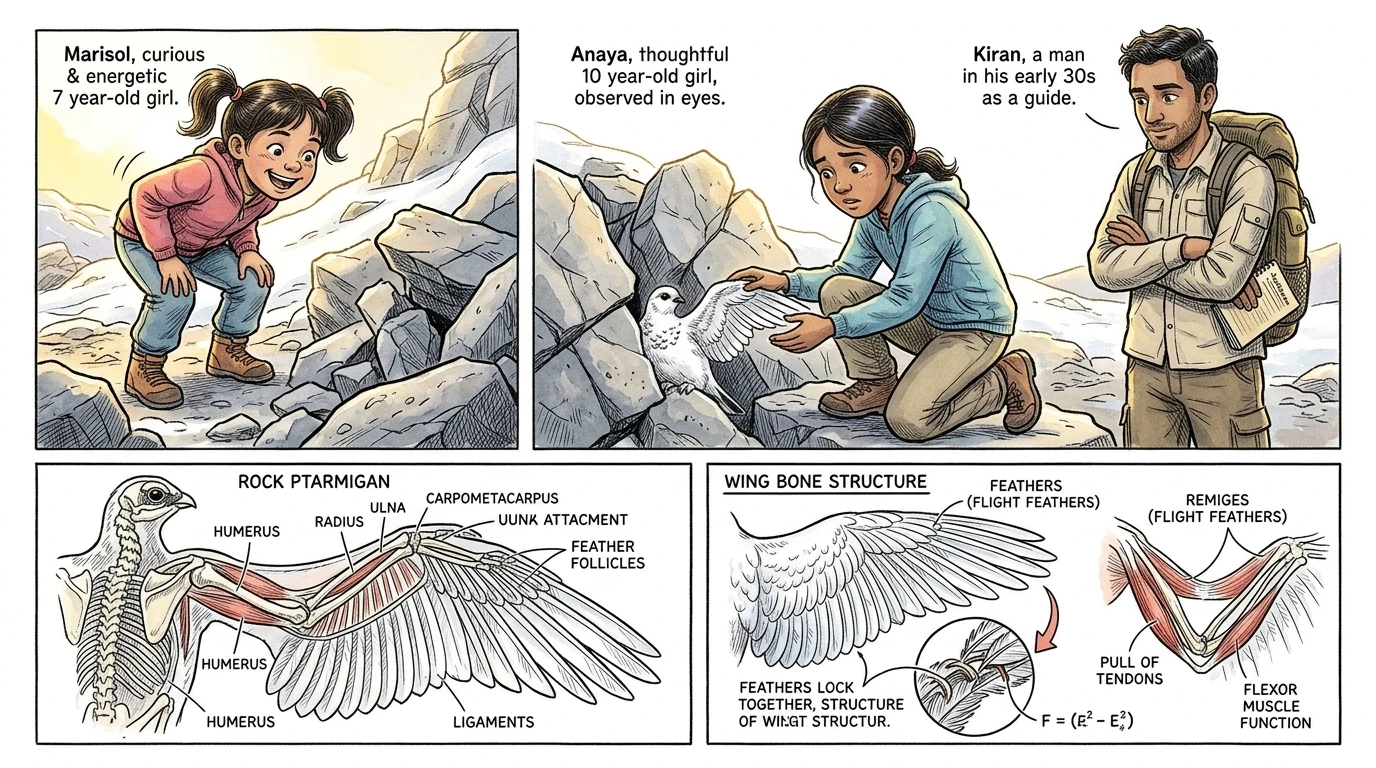
"Look! Over there!" cried Marisol, pointing toward a jumble of fractured grey rocks. A small, white bird, a rock ptarmigan, was fluttering helplessly, one of its wings wedged tightly in a narrow crack. "Oh, Kiran, it's stuck! We have to help it," Anaya said, her voice filled with concern as she knelt for a closer look.
Page 2
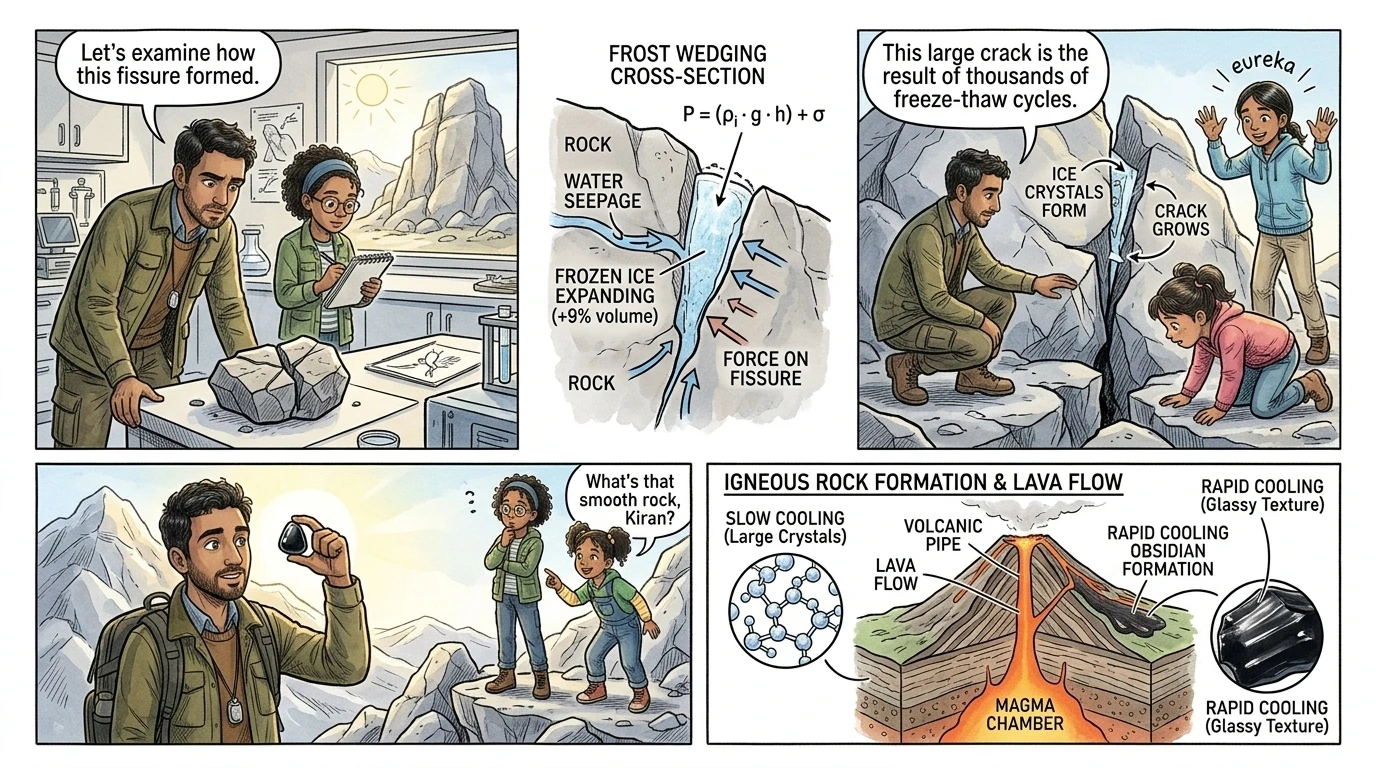
Kiran examined the crack, his brow furrowed in thought. "This is frost wedging," he explained, touching the sharp edge of the fissure. "Water seeps into cracks, freezes, expands, and splits the rock—that's what trapped our friend." He then noticed a small, glassy black rock nearby, perfectly smooth and out of place. "How strange," he murmured, picking it up.
Page 3
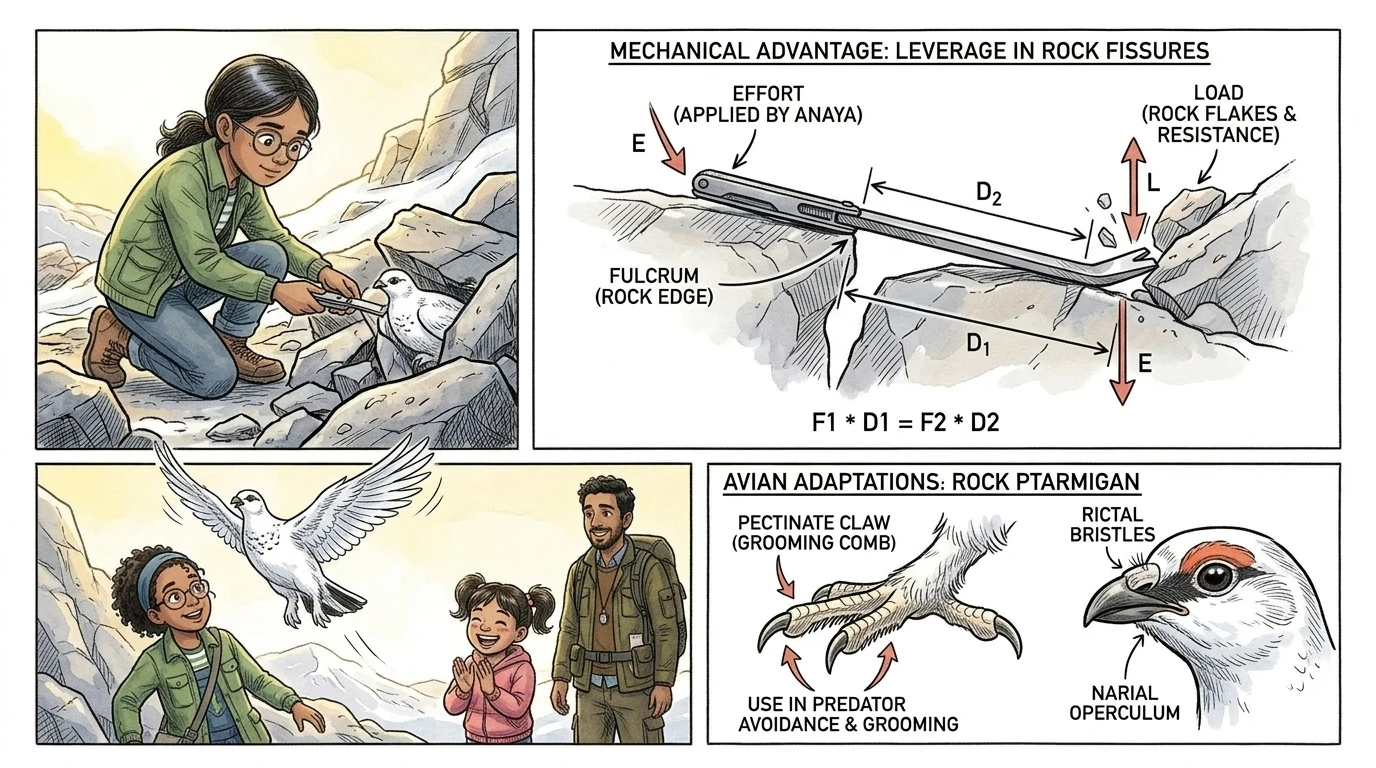
Anaya pulled a multi-tool from her pocket, unfolding a small, flat pry bar. "Let me try, gently," she whispered, sliding the metal tip into the crack just above the bird's wing. With a careful nudge, a sliver of rock flaked away, and the ptarmigan wriggled free, bursting into the air with a grateful cry. Marisol clapped her hands, her face beaming with relief.
Page 4
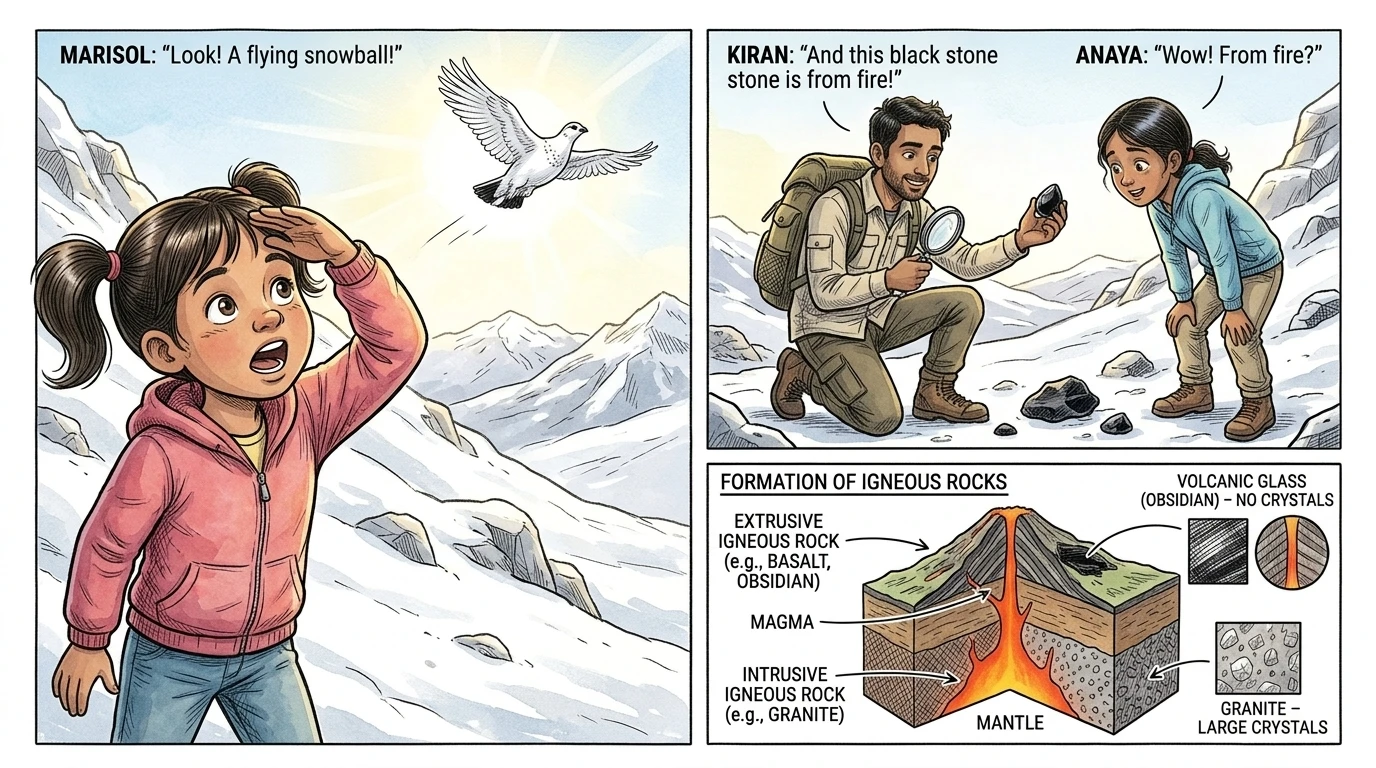
"Why do rocks break apart like that?" Marisol asked, watching the ptarmigan disappear. Kiran held out the smooth black stone he had found. "It's all part of a huge story called the rock cycle, and it starts with this: an igneous rock," he explained. "This is obsidian, and it was born in fire, deep inside the Earth."
Page 5
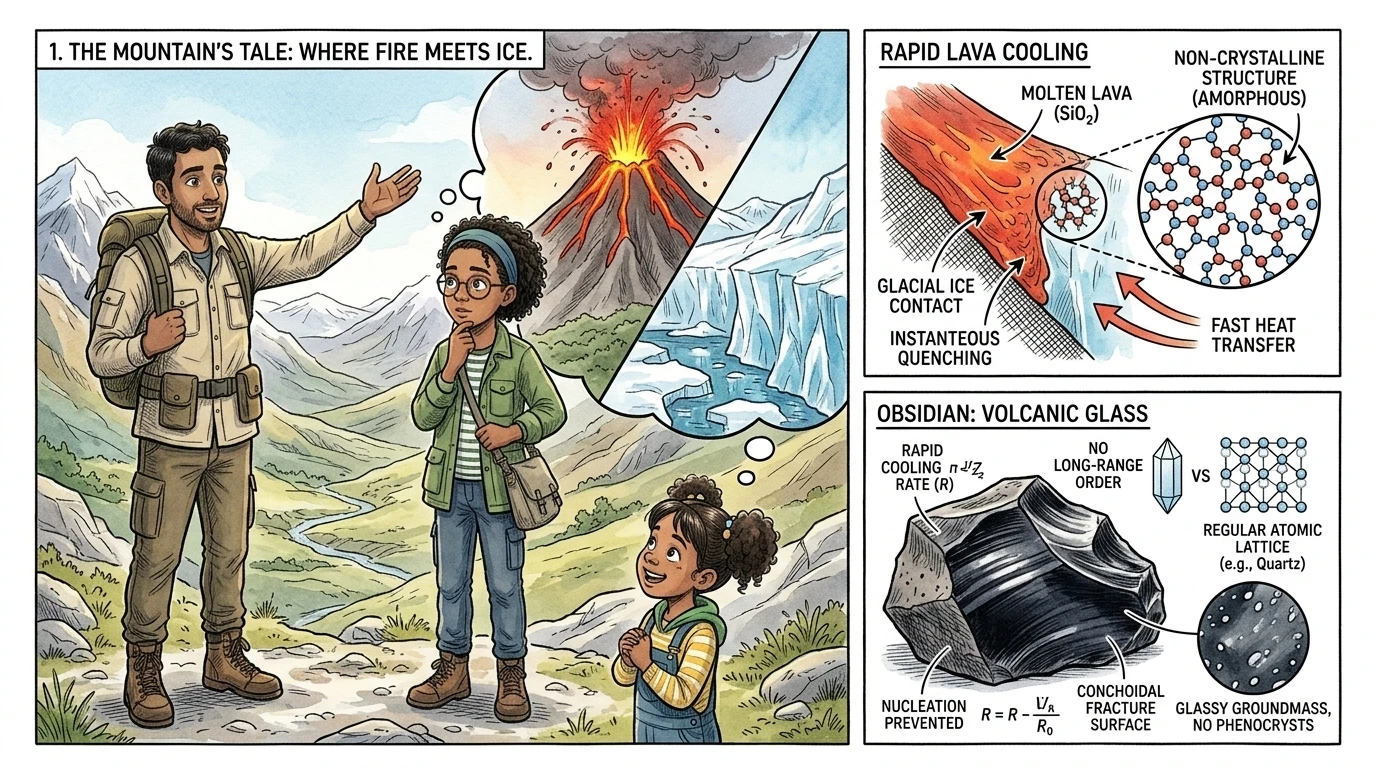
"A long, long time ago, a Scottish geologist named James Hutton realized the Earth was incredibly old," Kiran said, his voice full of awe. "He saw that the same slow processes happening today formed all the rocks we see." Anaya imagined a volcano erupting beneath a massive glacier, hot lava meeting ice. "So this obsidian cooled super-fast, before any crystals could even form!" she exclaimed.
Page 6
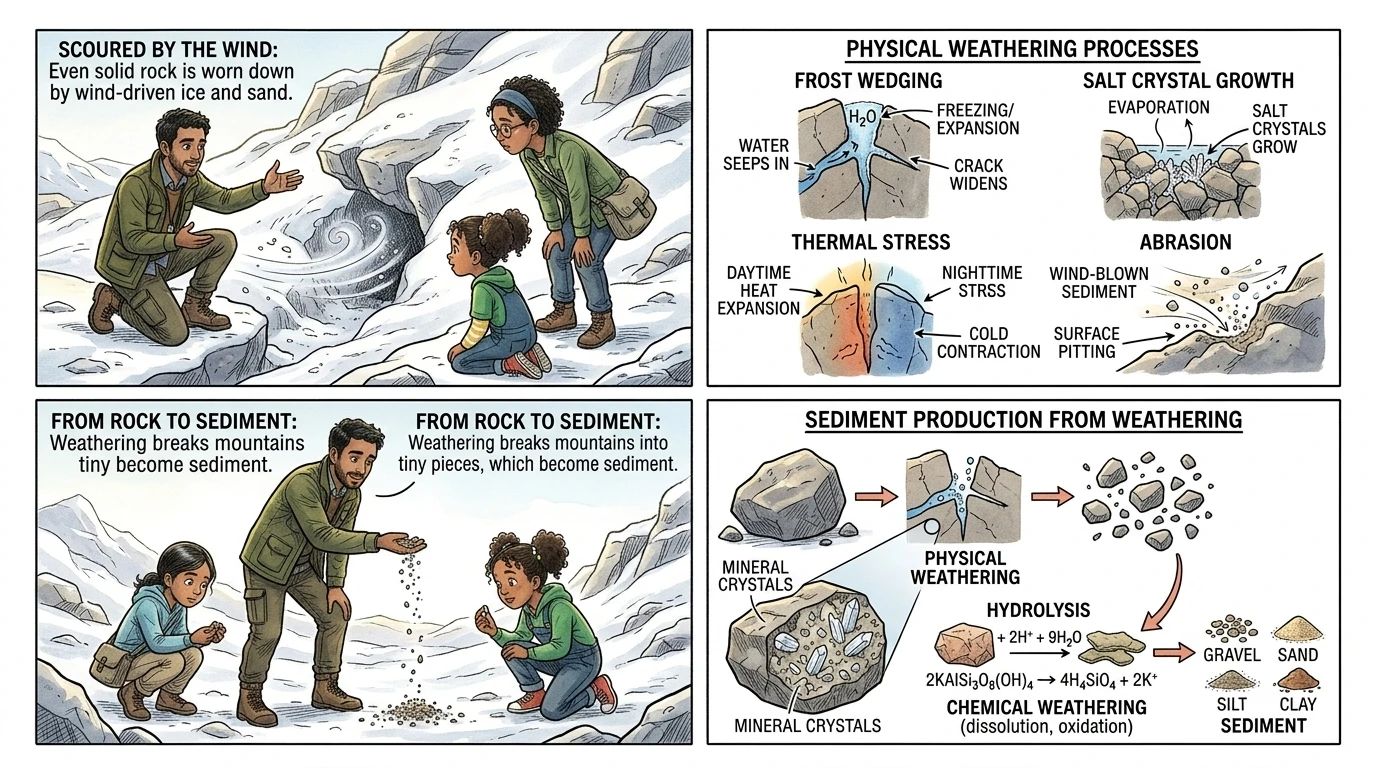
"Exactly! But that's just the beginning," Kiran continued, gesturing to the wind whipping snow across the ground. "Wind, water, and ice, like the frost wedging we saw, slowly break down those igneous rocks." He let a pinch of gravel slip through his fingers. "They become tiny pieces called sediment, which travel on amazing journeys."
Page 7
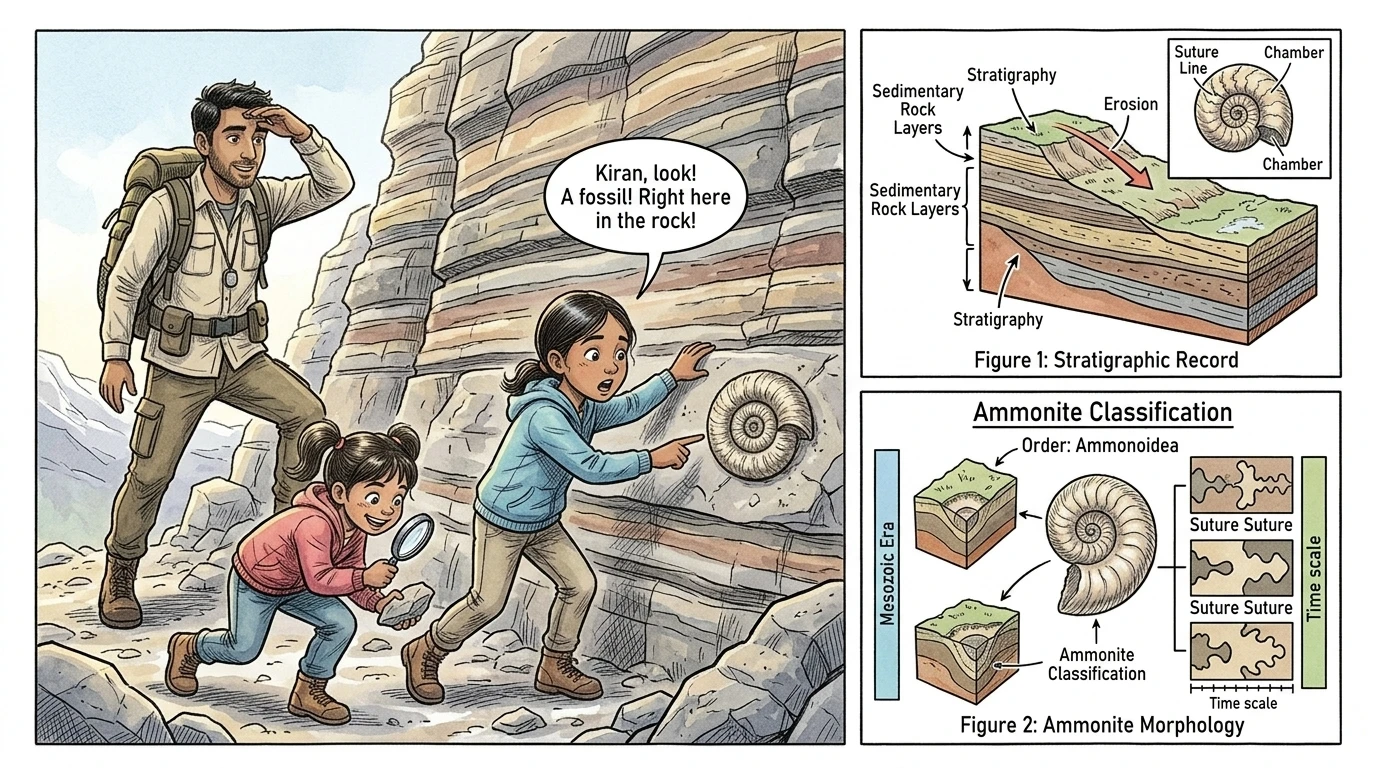
Kiran led them to a cliff face where different colored layers of rock were stacked like pancakes. "Over millions of years, layers of sediment get buried and squeezed together until they harden into a new rock: sedimentary!" he said. Anaya ran her fingers over the gritty surface and gasped, "Look! Is that a fossil?" a perfect spiral shell was embedded in the stone.
Page 8
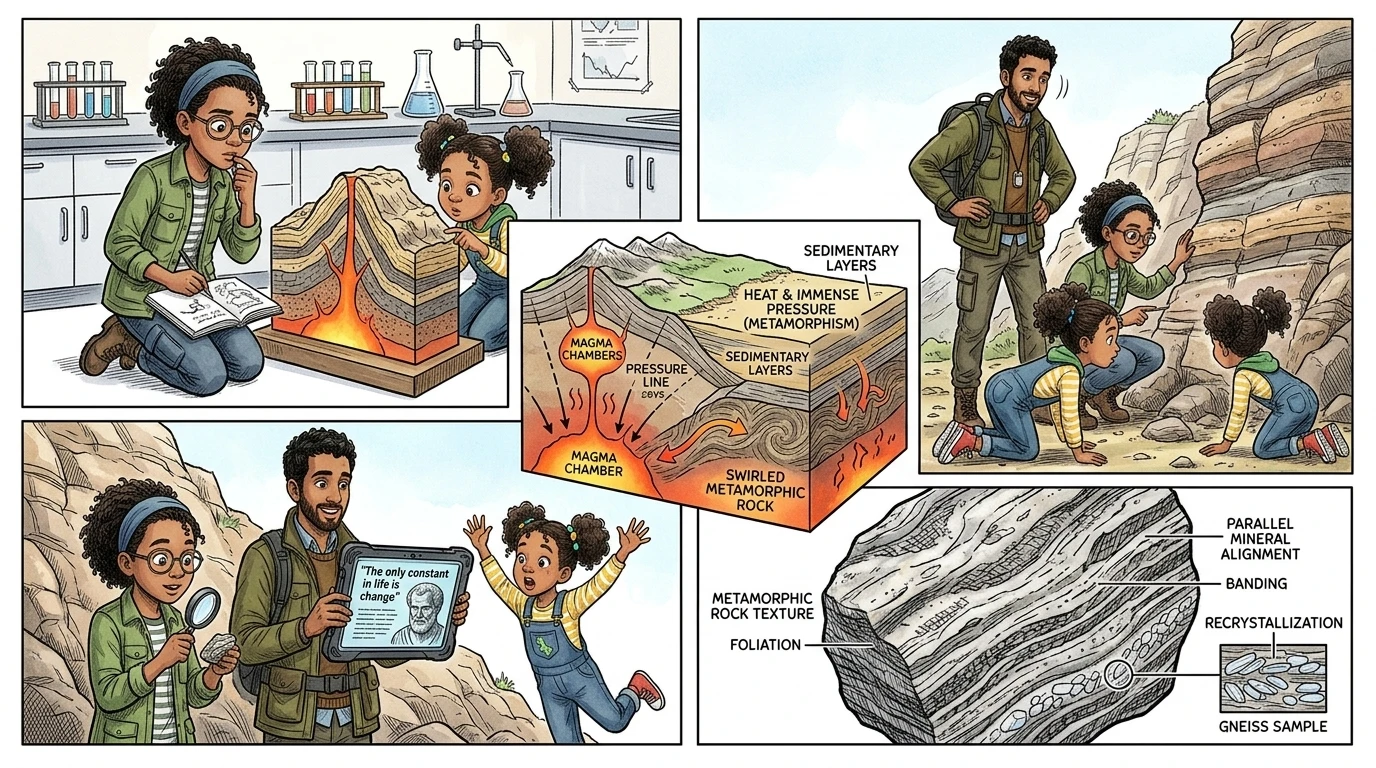
"It's like an optical illusion," Anaya said thoughtfully. "The rocks seem so still, but they're always changing." Kiran nodded, smiling. "The ancient philosopher Heraclitus said, 'The only constant in life is change,' and he was right! Add enough heat and pressure deep underground, and you can 'cook' that sedimentary rock into a third kind—metamorphic rock."
Page 9
"So the volcano rock became sand rock, and the sand rock became a squished rock?" asked Marisol, connecting the dots. "That's the cycle!" Anaya cheered. "And metamorphic rock can get pushed down so deep it melts back into magma, ready to become an igneous rock all over again!" Kiran beamed, "You've got it! It's the Earth's ultimate recycling program."
Page 10
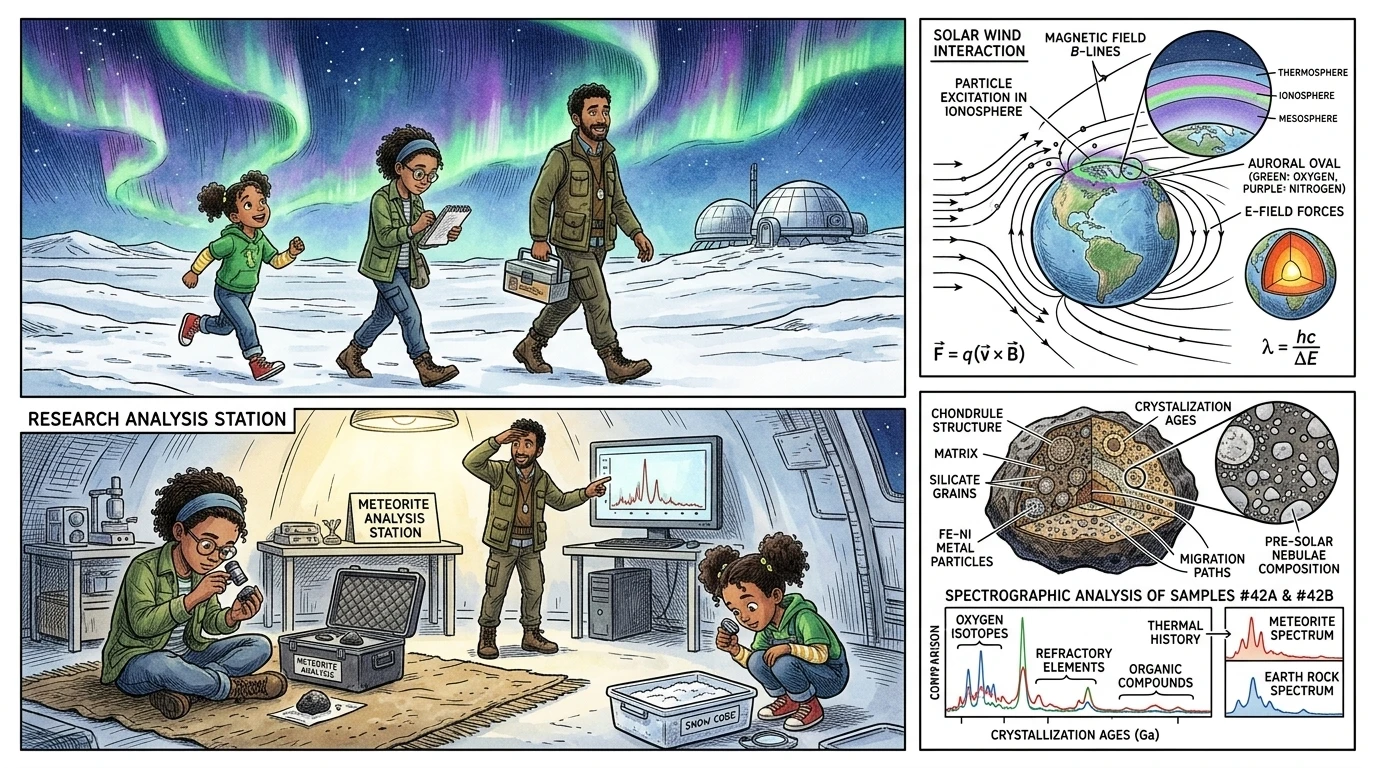
As they walked back toward their dome-shaped research station, the sky ignited with shimmering green and purple curtains of the aurora borealis. "I even feel bad for the rocks now, on their long, slow journey," Marisol said softly. Anaya opened her notebook and began to sketch, writing 'Discovery #42: Rocks are travelers in time.' Kiran smiled and asked, "If rocks move this slowly, what makes entire continents drift across the planet?"
About this story
- Audience: kids (ages 6–12)
Questions and answers
Read Wonder Science on your phone
Wonder Science is available on Android. Get Wonder Science on Google Play.