The Microscope Revolution
The Microscope Revolution — an illustrated science story, set in Egypt. 10 illustrated pages, free to read on Wonder Science.
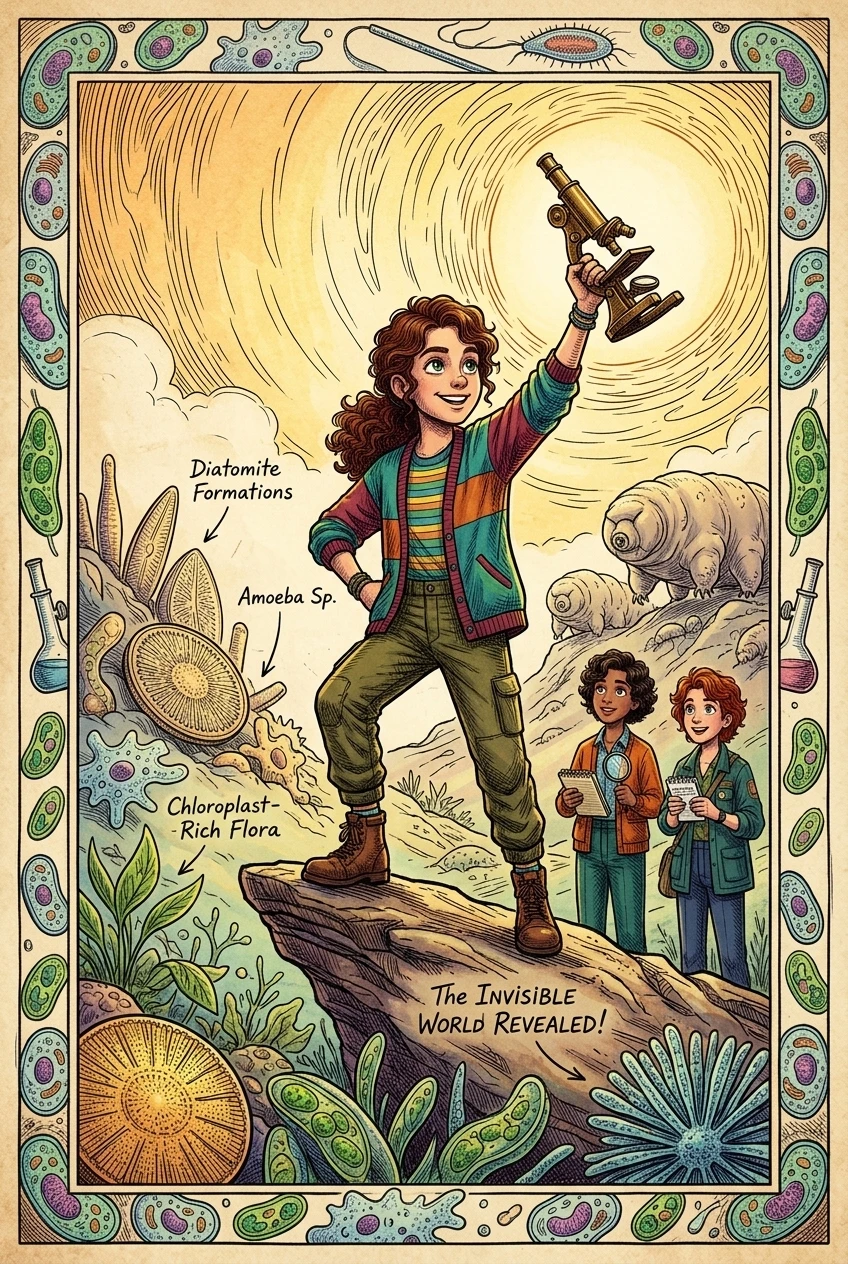
Page 1
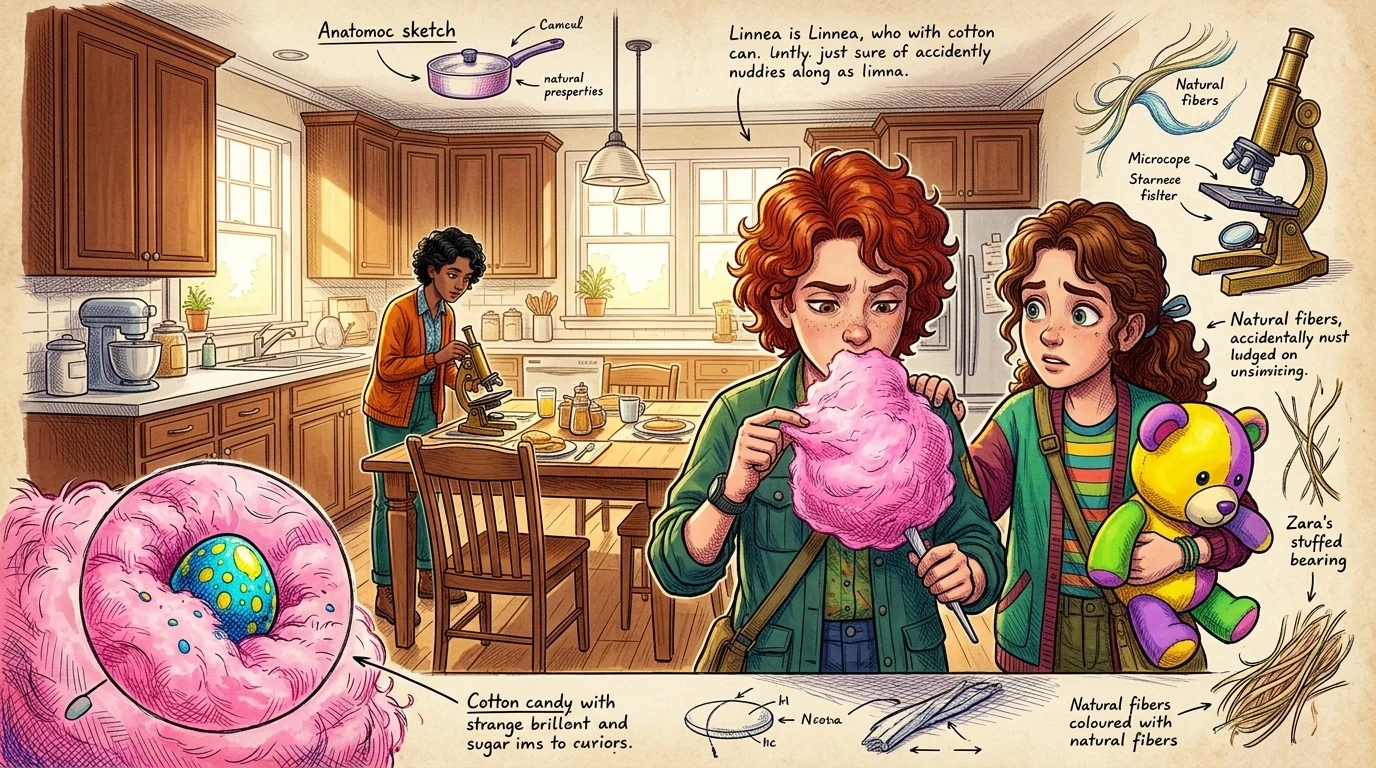
Zara, holding a large stuffed bear she won at a meteor shower carnival game, bumped into Linnea. "Oops, sorry!" she said. Linnea, peering closely at a strange speck on her cotton candy, wrinkled her nose. "What's that? Is my cotton candy...alive?"
Page 2
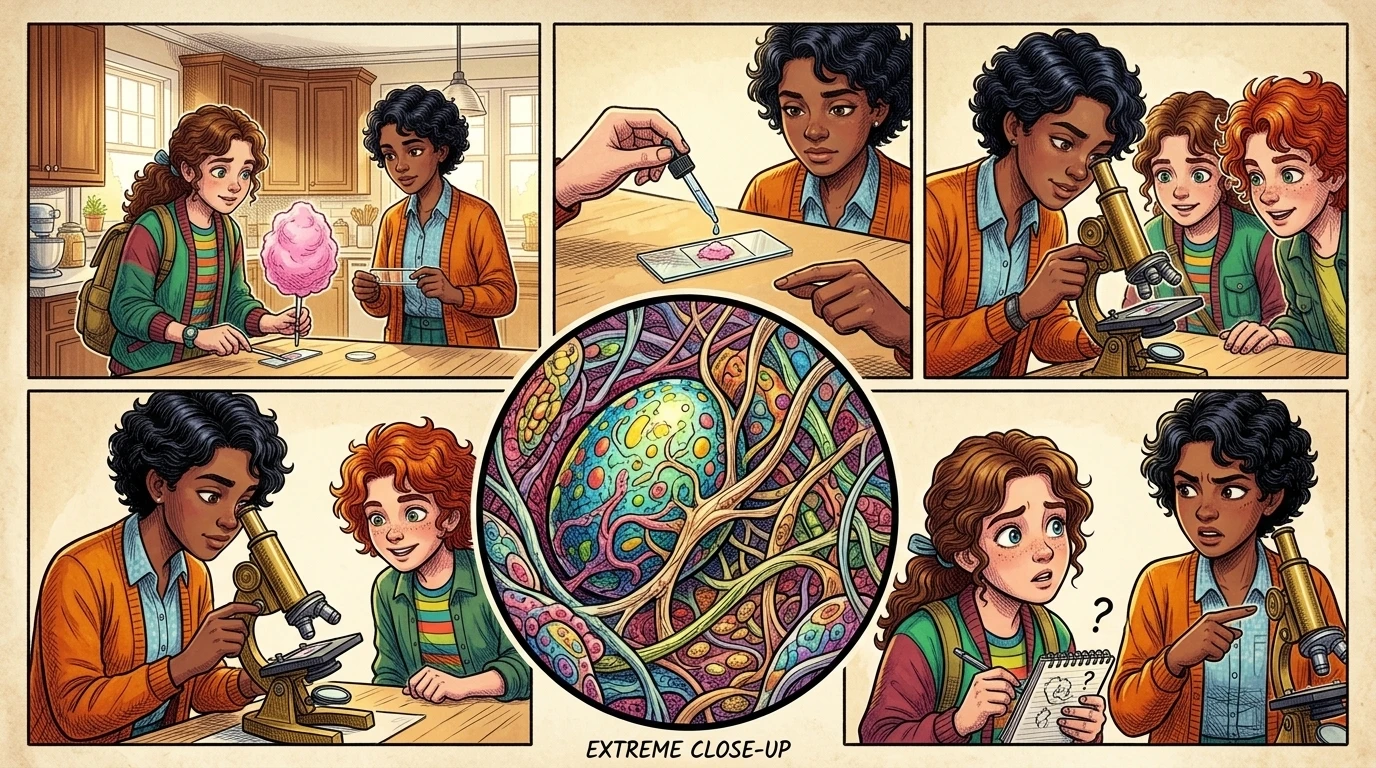
Zola, nearby, with her curly, dark hair pulled back in a messy bun, joined them. "Ew, that does look weird, Linnea!" she exclaimed. Zara peered closer. "Maybe it's just some colorful sprinkles that went wrong? Or... maybe it IS alive! What is the smallest thing that's alive anyway?" Zara said, scratching her chin with her discovery notebook in hand. "I wonder if even that could have even smaller creatures living on it?"
Page 3
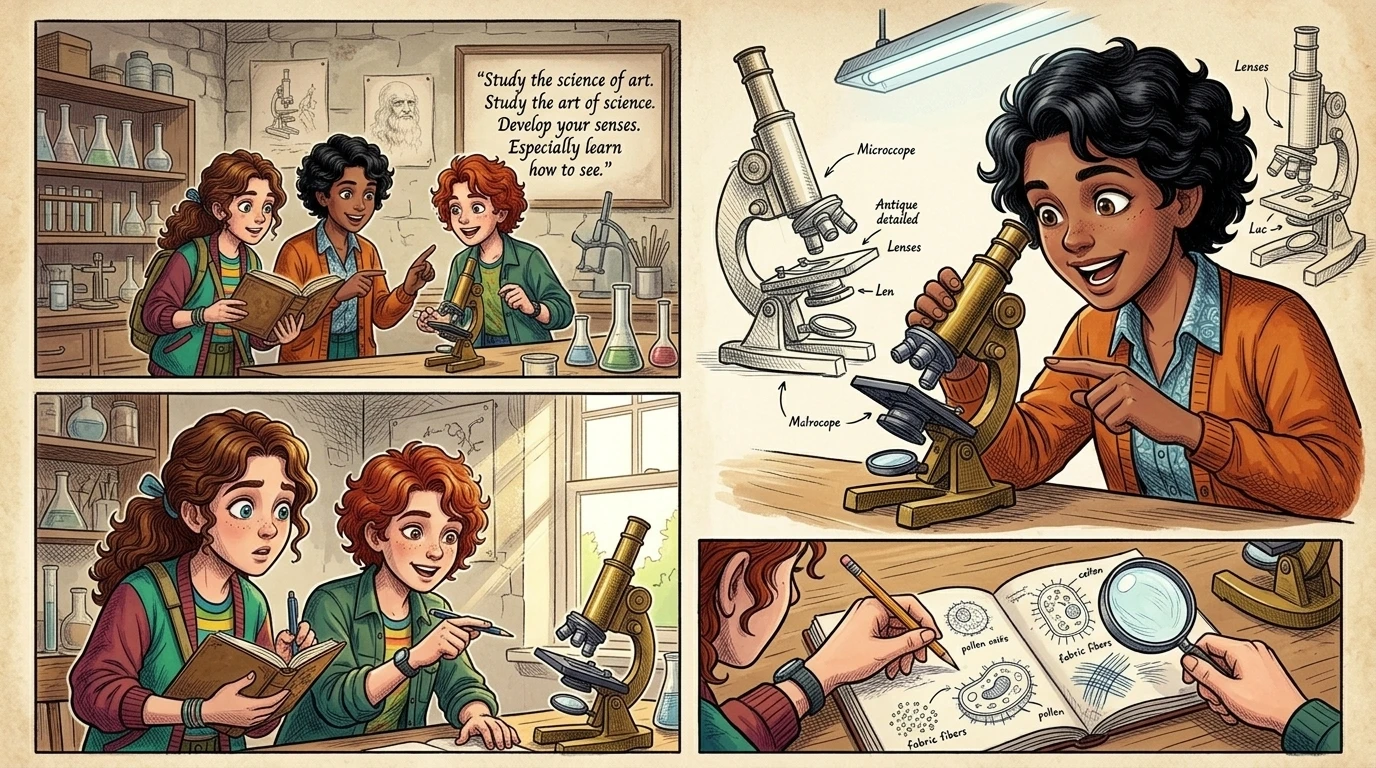
"That's a great question, Zara!" Zola exclaimed. "My grandpa has this old microscope... I wonder if we can look at some really tiny things with it? He keeps talking about some old scientist, something like 'Leeuwenhoek'?" Zara's eyes widened. "Let's go! This reminds me of what Leonardo da Vinci said: 'Study the science of art. Study the art of science. Develop your senses. Especially learn how to see.' That's exactly what we need to do!"
Page 4
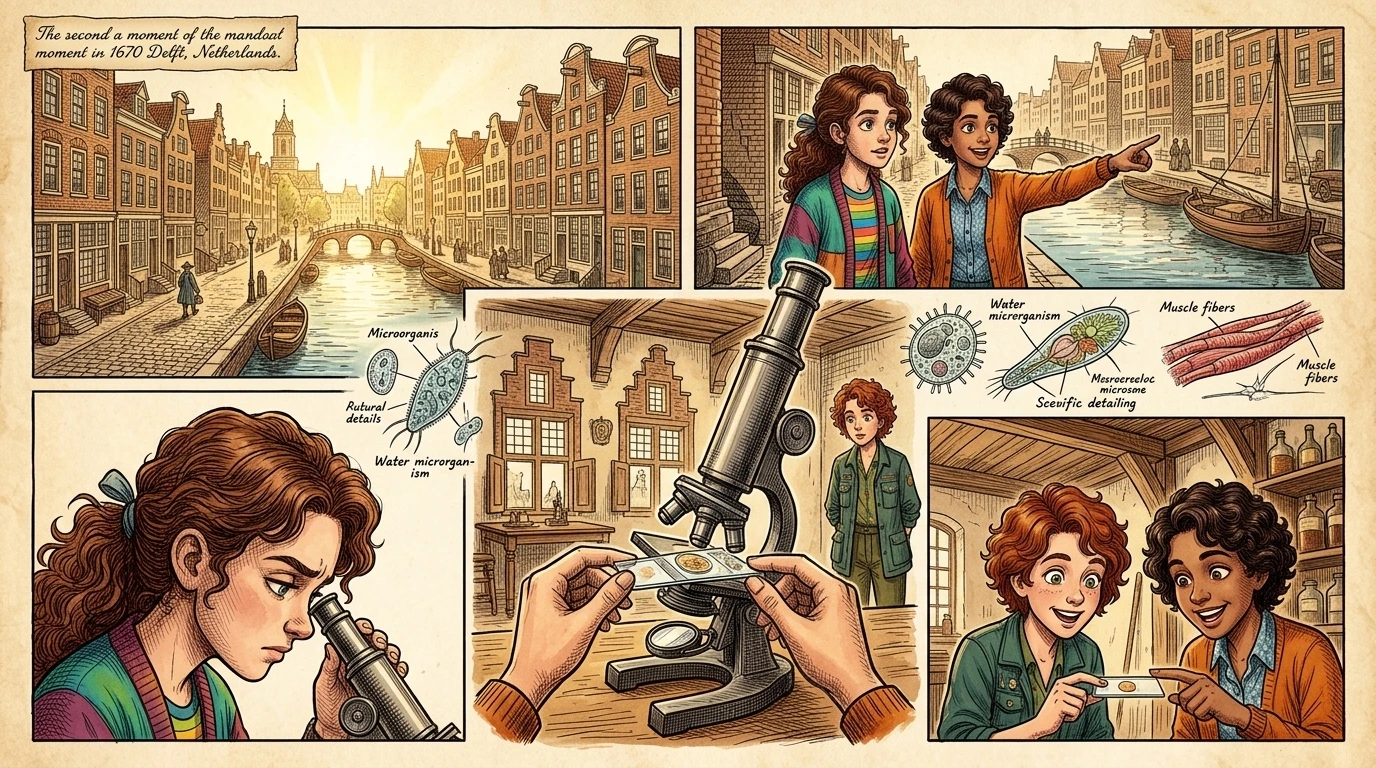
Suddenly, the scene dissolved into a simpler time. The year is 1670, Delft, Netherlands. A cobblestone street lined with tall, narrow houses with stepped gables. Sunlight glinted off the canals.
Page 5
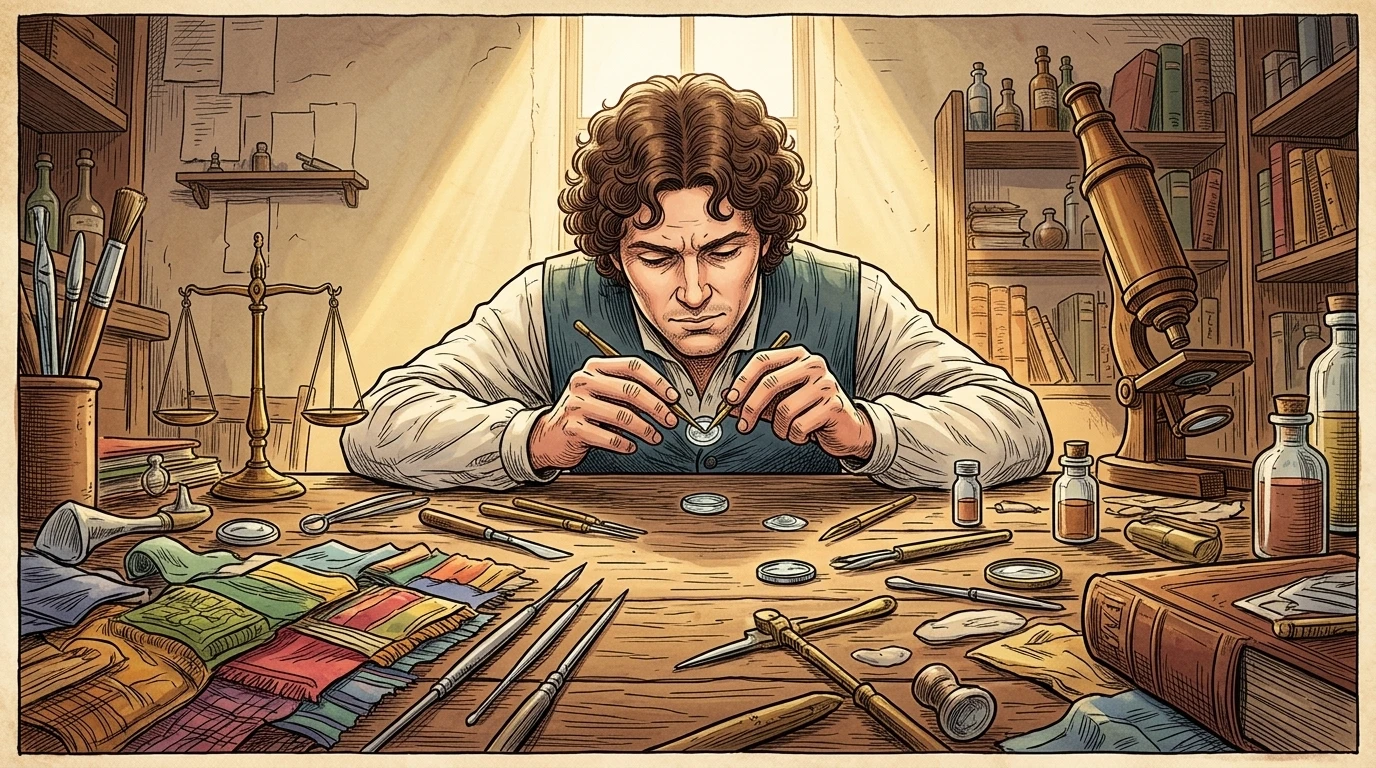
A lone figure, a man in his early thirties, hunched over a workbench in a dimly lit room. This was Antonie van Leeuwenhoek, a Dutch tradesman. Though he worked with fabrics, he was obsessed with lenses and grinding glass. He never went to university, but his curiosity was unmatched.
Page 6
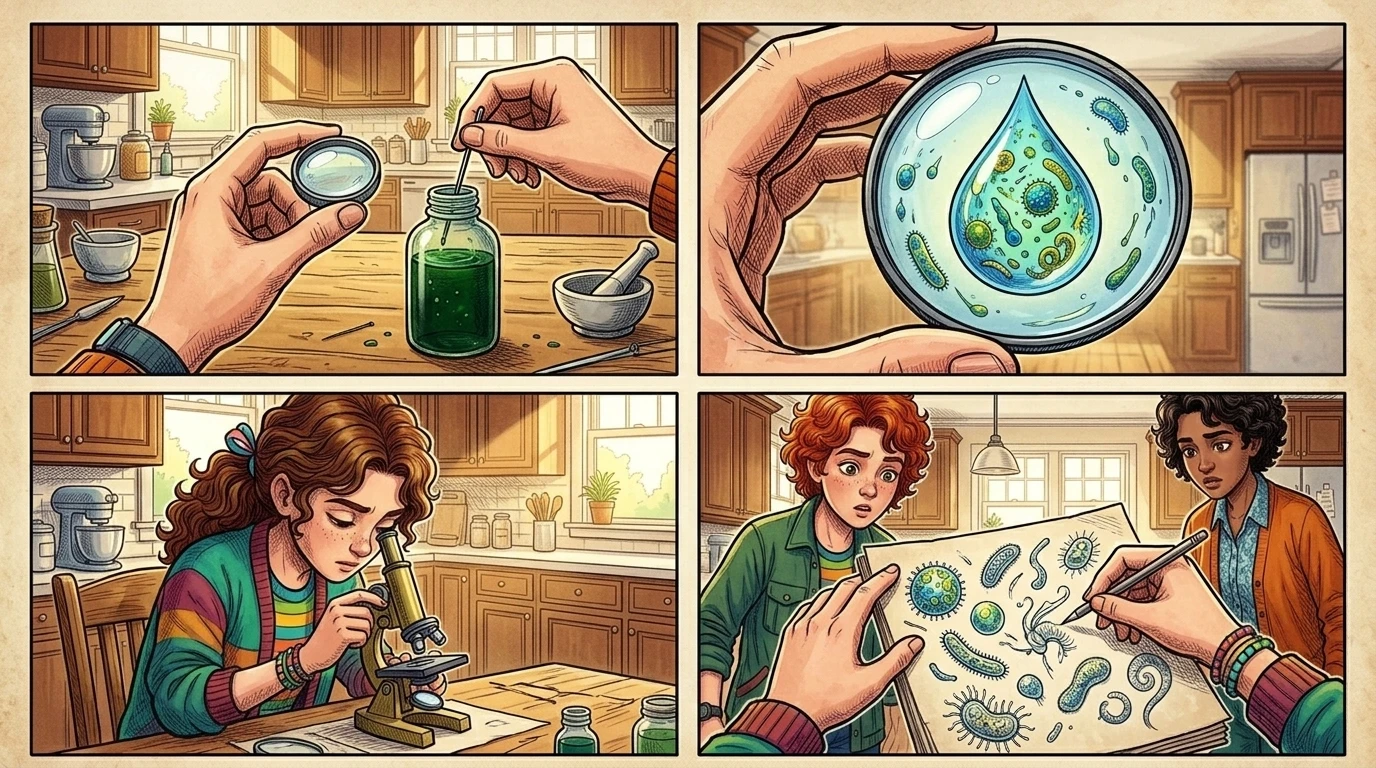
Antonie painstakingly polished a tiny lens. "If I can just get it clear enough..." he muttered. He placed a drop of pond water under the lens and peered through. "Incredible! Little animals!" he exclaimed, seeing microorganisms for the first time. He called them 'animalcules.' This was the start of microbiology! Antonie wrote meticulous notes and drew sketches of what he saw.
Page 7
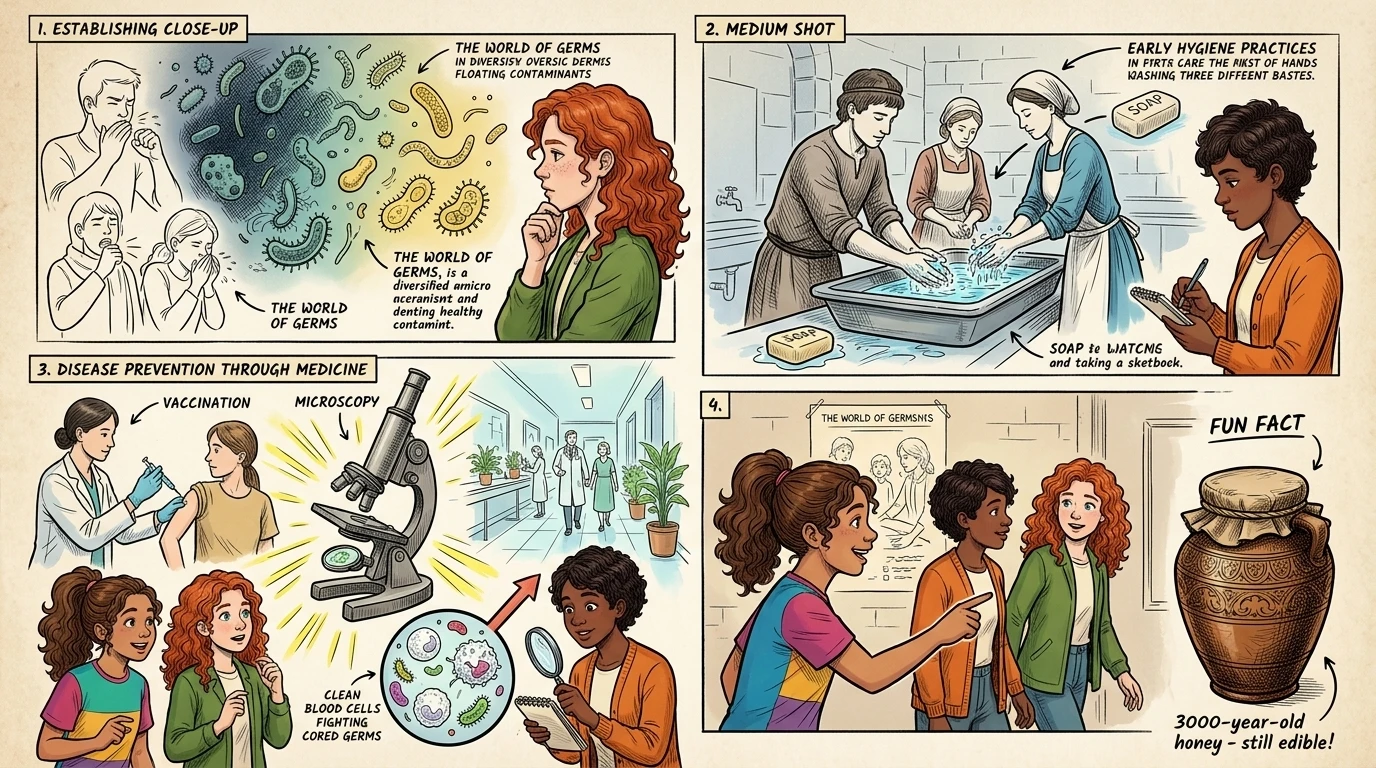
Leeuwenhoek's discovery opened up a whole new world. "He showed us," Mr. Harris explained later, "that there's an entire universe we can't see with our naked eyes." His work led to germ theory, understanding disease, and ultimately saving countless lives through better hygiene and medicine. Fun Fact: Honey never spoils, and that some 3,000-year-old honey found in Egyptian tombs was still edible!
Page 8
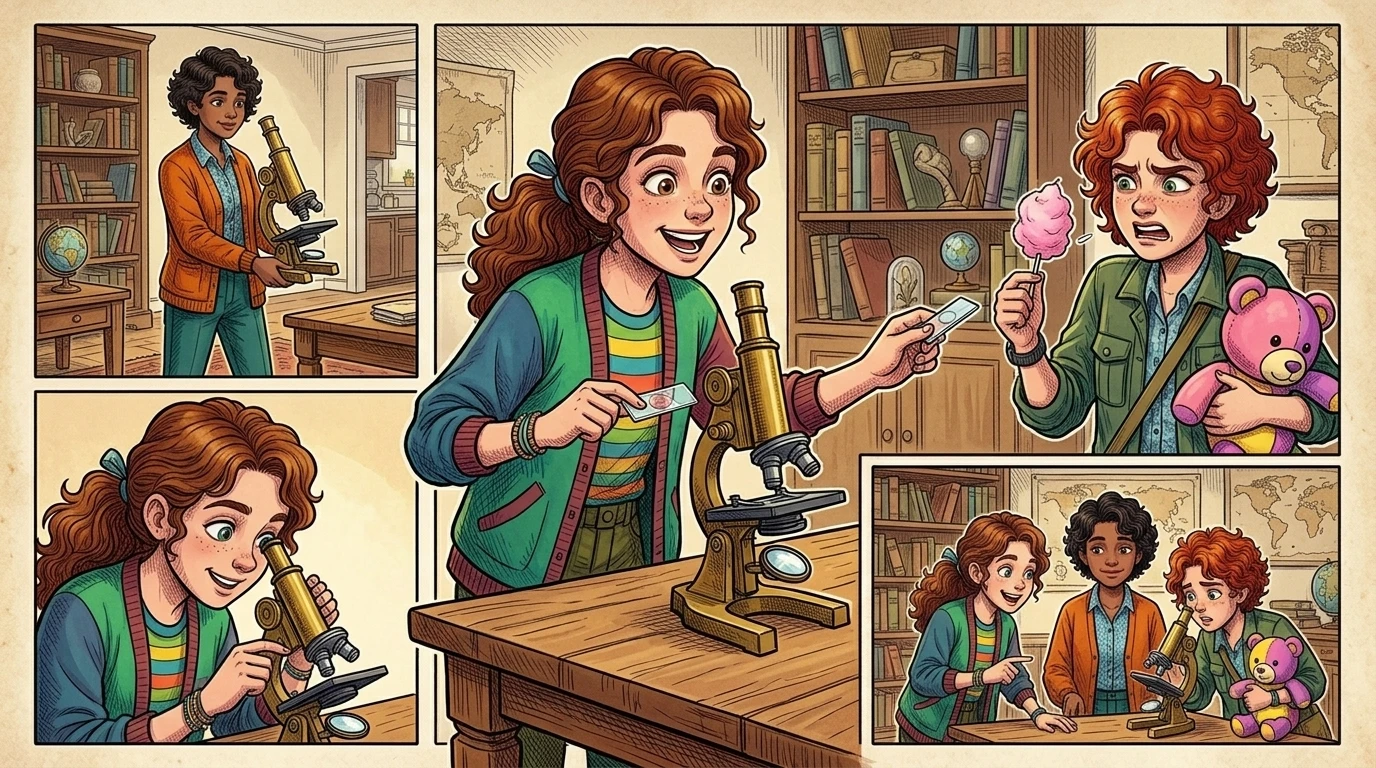
Back at Zola's grandpa's house, Zara, Linnea, and Zola gathered around the ancient microscope. "Okay, what should we look at first?" Zola asked. Zara grinned. "Let's start with Linnea's cotton candy!" Linnea made a face, but agreed. "Ew, I hope it's not contagious!" she exclaimed. "If it is, I hope we can use honey to make me feel better!"
Page 9
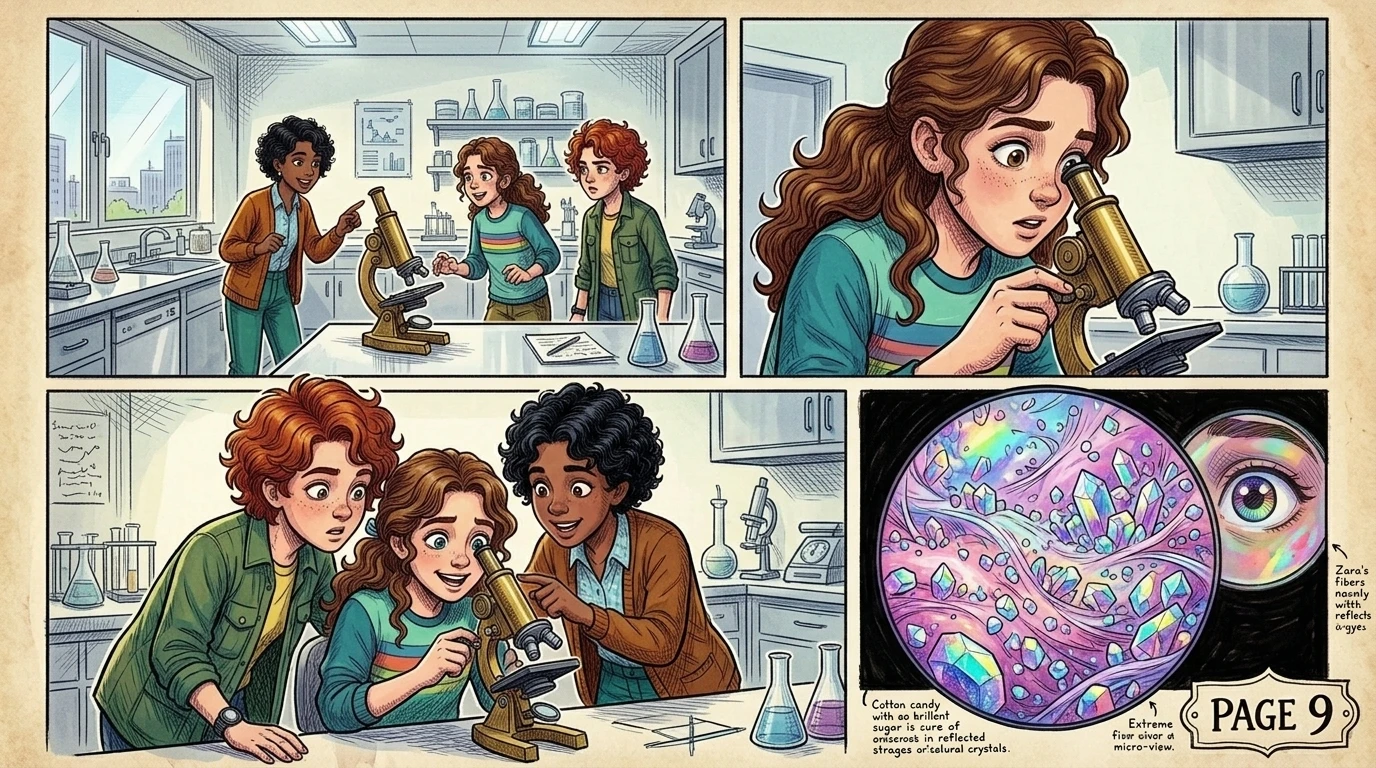
Looking through the microscope, Zara gasped. "Woah! It's...beautiful!" she exclaimed. "It's not just sprinkles, it's tiny crystals! Look at how they reflect the light!" Linnea peered in. "Okay, I admit, it's kind of pretty. And maybe I shouldn't be so quick to judge things I can't see!" Zola added, "Just because we can't see it, doesn't mean it's not important or beautiful!"
Page 10
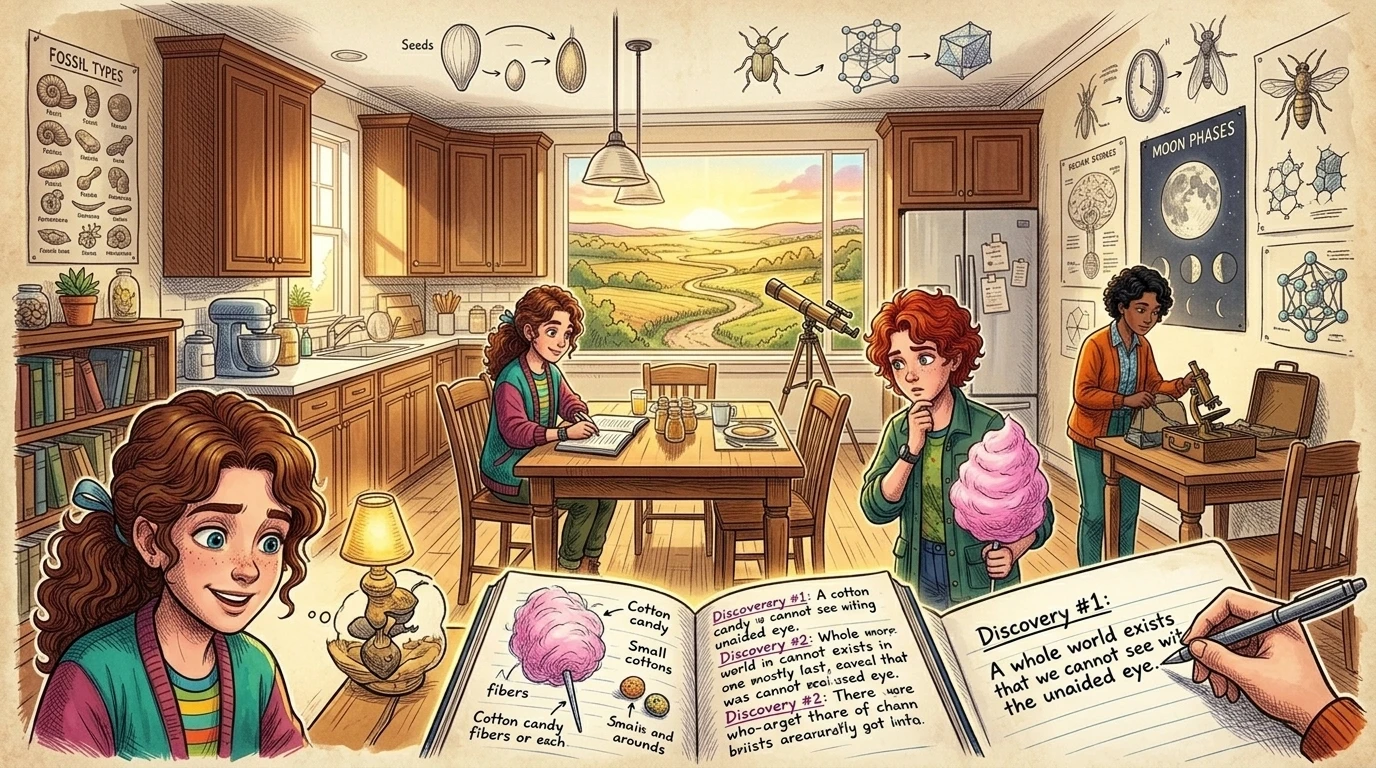
Zara smiled. "The microscope showed us that even the smallest things can be amazing!" she said. Linnea, holding a new piece of clean cotton candy, tilted her head. "If light is what lets us see these tiny things... what is light made of anyway?" Zara pulls out her notebook and writes: Discovery #1: A whole world exists that we cannot see with the unaided eye.
About this story
- Location: Egypt
- Audience: kids (ages 6–12)
Questions and answers
Read Wonder Science on your phone
Wonder Science is available on Android. Get Wonder Science on Google Play.