The Math Behind Snowflakes
The Math Behind Snowflakes — an illustrated science story. 10 illustrated pages, free to read on Wonder Science.
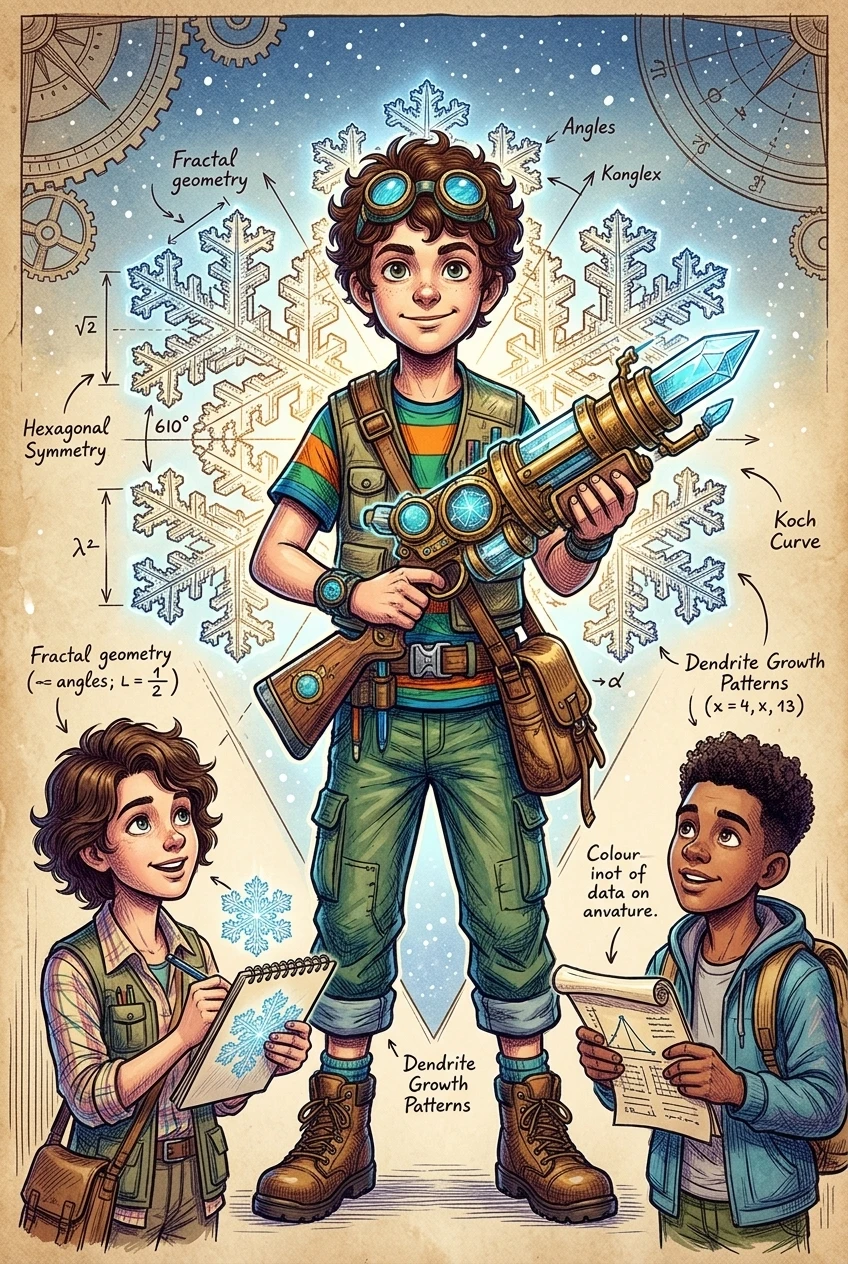
Page 1
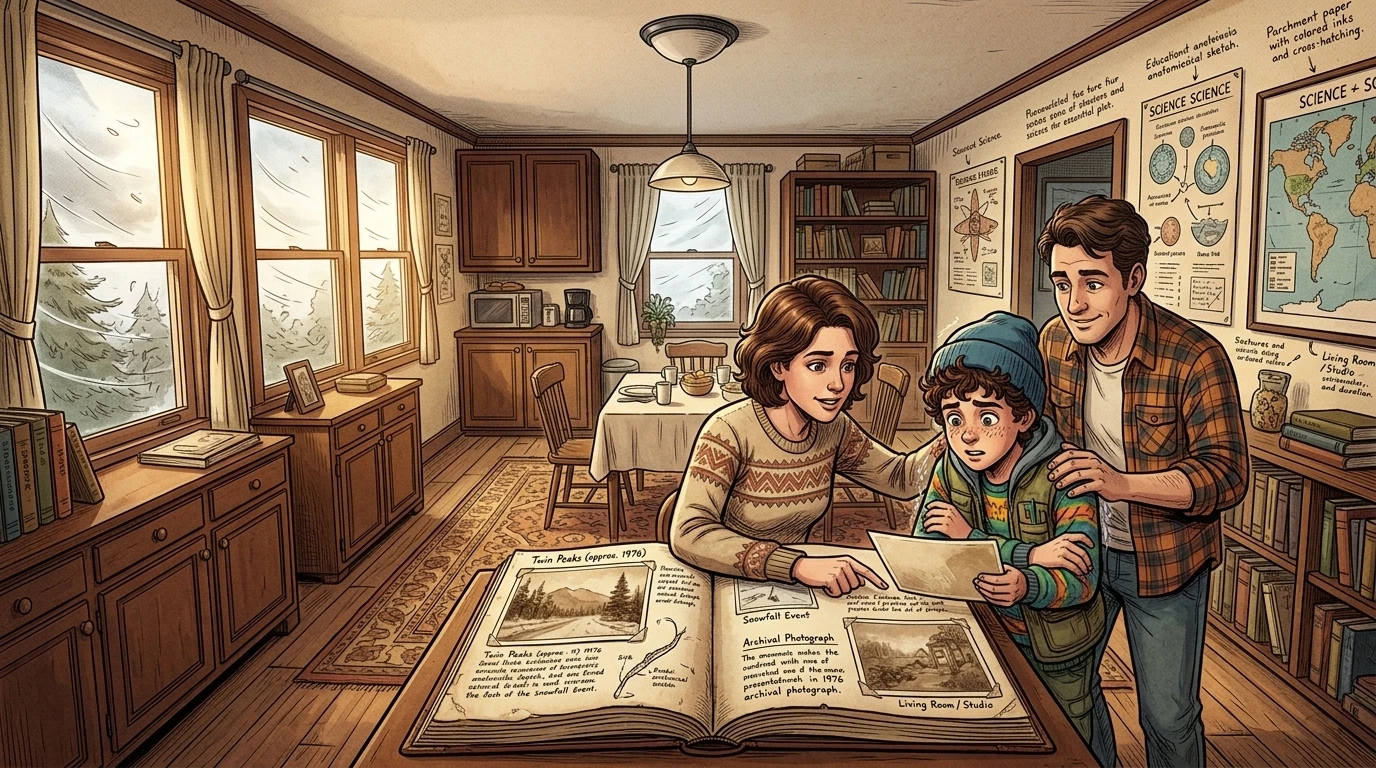
On a windy afternoon at Twin Peaks, Oscar shivered and pulled her hoodie tight. Her mother opened a worn photo album, pointing to a faded picture. "Look at this, from 1976! It's this exact spot, but covered in a dusting of snow." Oscar gasped, leaning in closer with her father to see the impossible sight. "Snow? In San Francisco? No way!"
Page 2
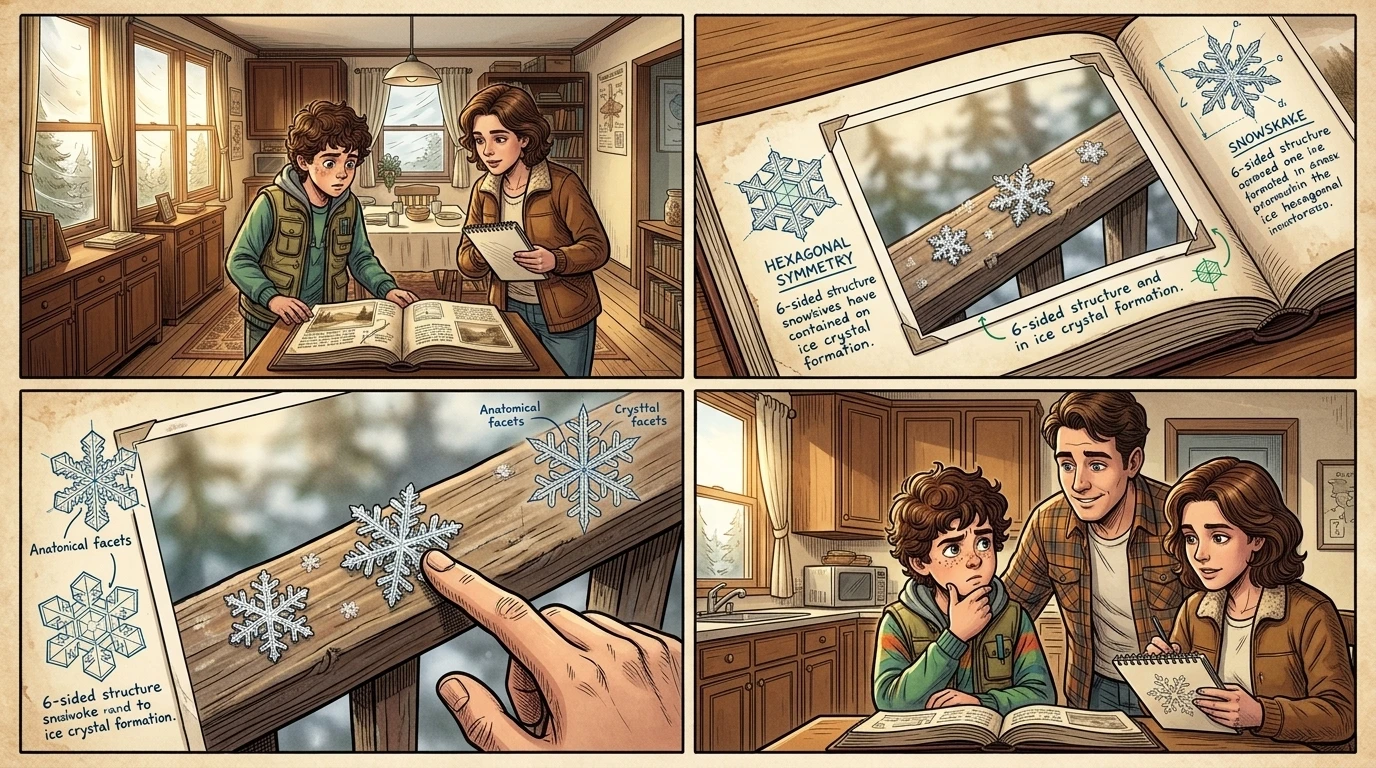
"Look at the tiny flakes on the railing in the picture!" Oscar exclaimed, tracing them with her finger. "They're all like little stars with six points, every single one." Her father nodded, smiling. "That's called hexagonal symmetry, and it's one of nature's biggest secrets." Oscar looked from the photo to her father, her brow furrowed in thought. "But why six? Why not five or eight?"
Page 3
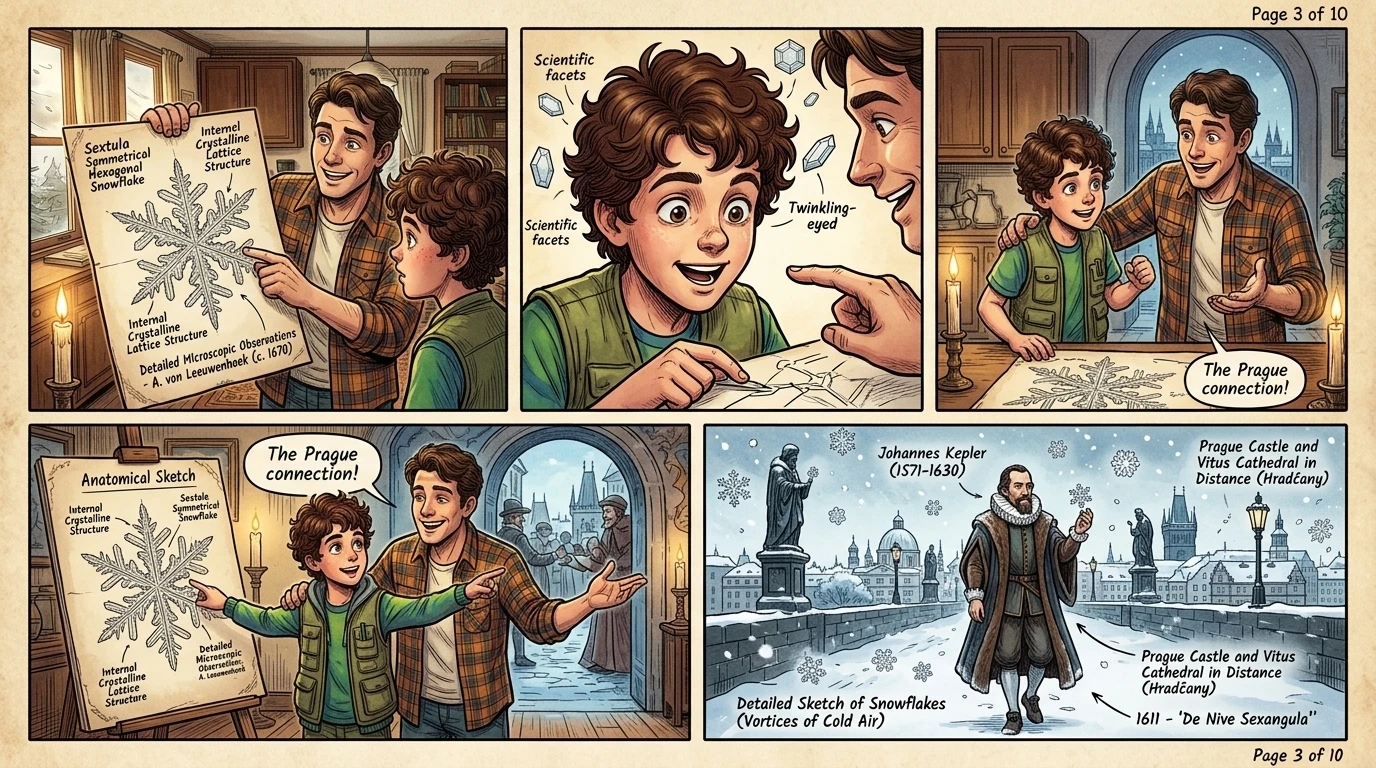
"That's the big question!" her father said, his eyes twinkling. "To answer it, we have to travel back in time, over four hundred years, to a cold winter in Prague." He gestured to the sky as if opening a history book. "A brilliant scientist was walking across a snowy bridge, thinking about the universe, when he noticed the same thing you did."
Page 4
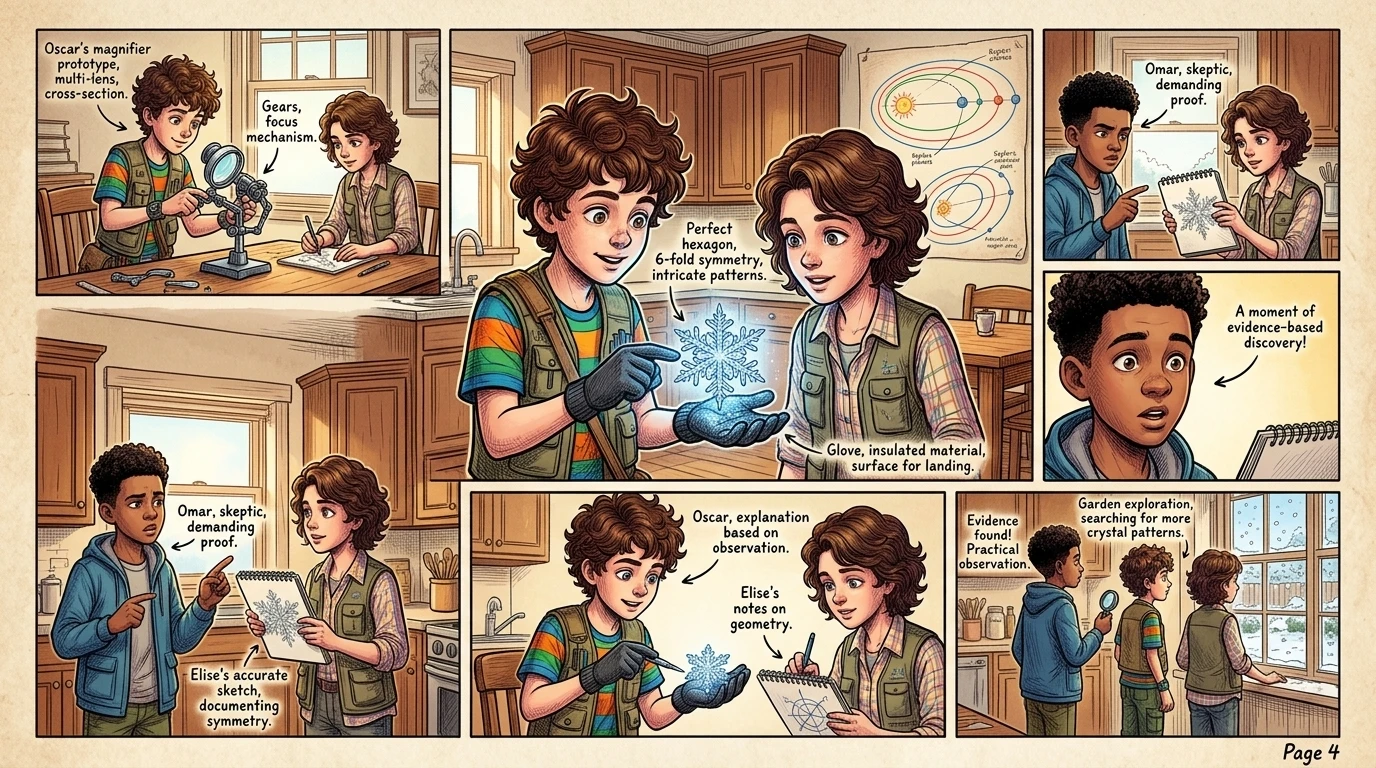
"His name was Johannes Kepler," her father continued. "He was a famous astronomer who figured out that planets move in ovals, not perfect circles. But on that day, he wasn't looking at the stars; he was trying to find a New Year's gift and became fascinated by the tiny, perfect crystals falling from the sky."
Page 5
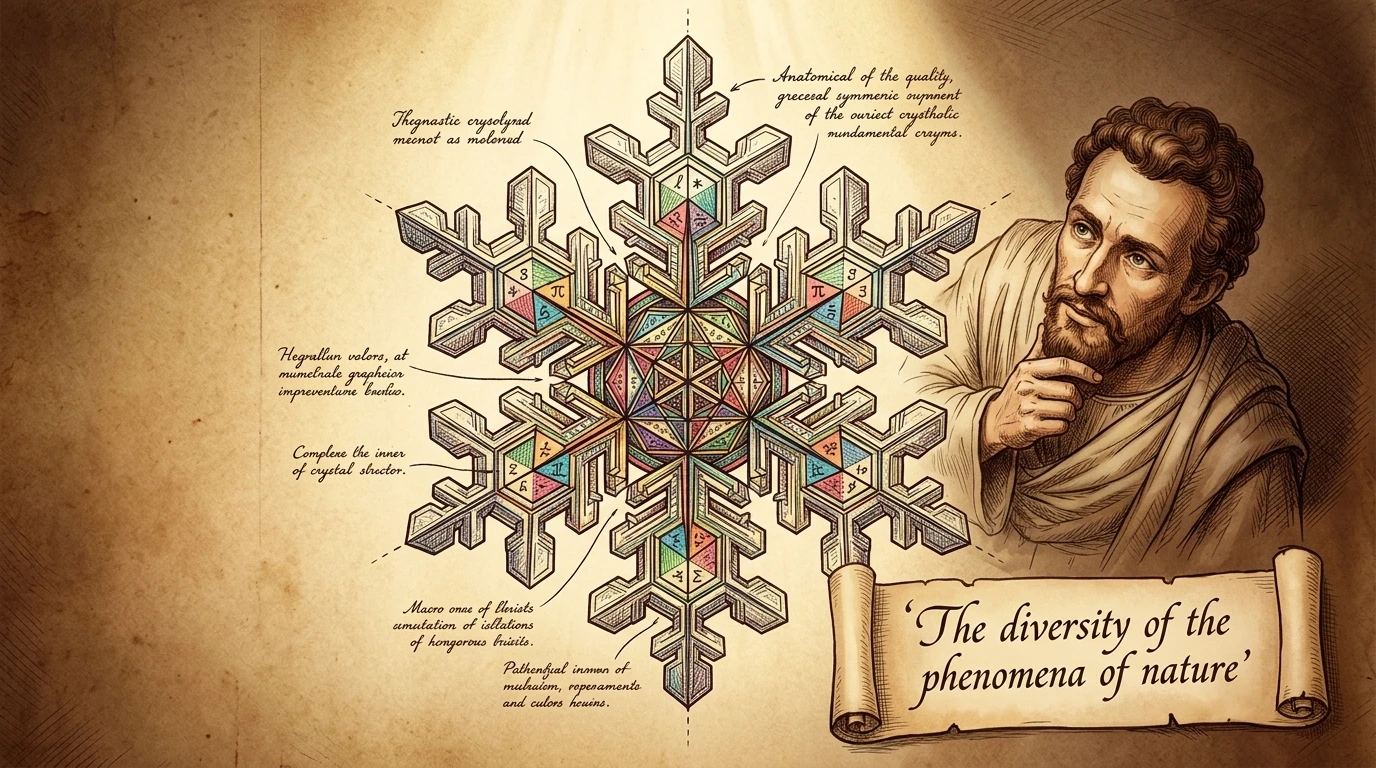
"Kepler believed that 'the diversity of the phenomena of nature is so great...precisely in order that the human mind shall never be lacking in fresh nourishment,'" her father quoted. "He saw the snowflake not just as ice, but as a mathematical puzzle. He wondered how such a perfect shape could form all by itself, over and over again."
Page 6
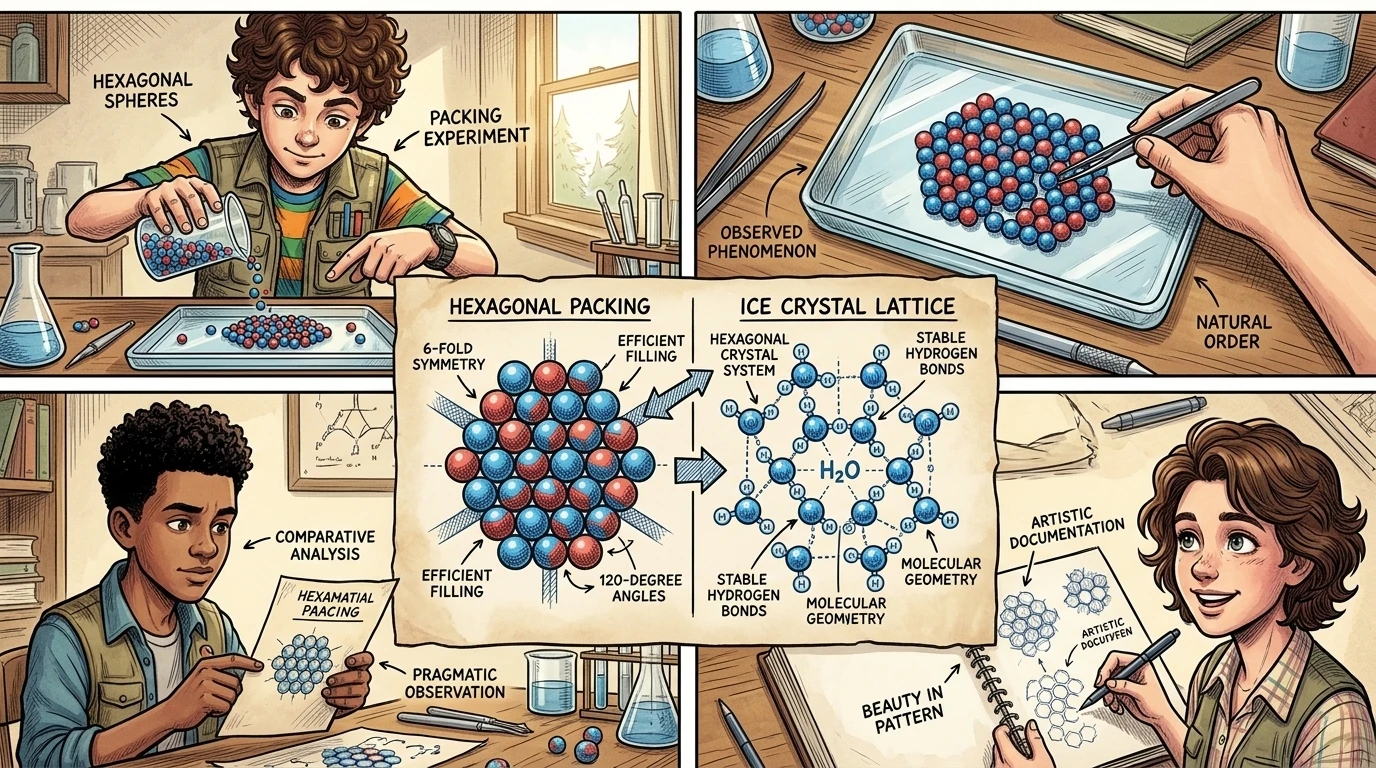
"He guessed that snowflakes were made of microscopic particles, like tiny balls, that packed together in the most efficient way," explained her father. "When you stack circles on a flat surface, a hexagonal pattern lets you fit the most in. It's the same reason water molecules, with their specific shape, bond together at 120-degree angles to form that six-sided crystal."
Page 7
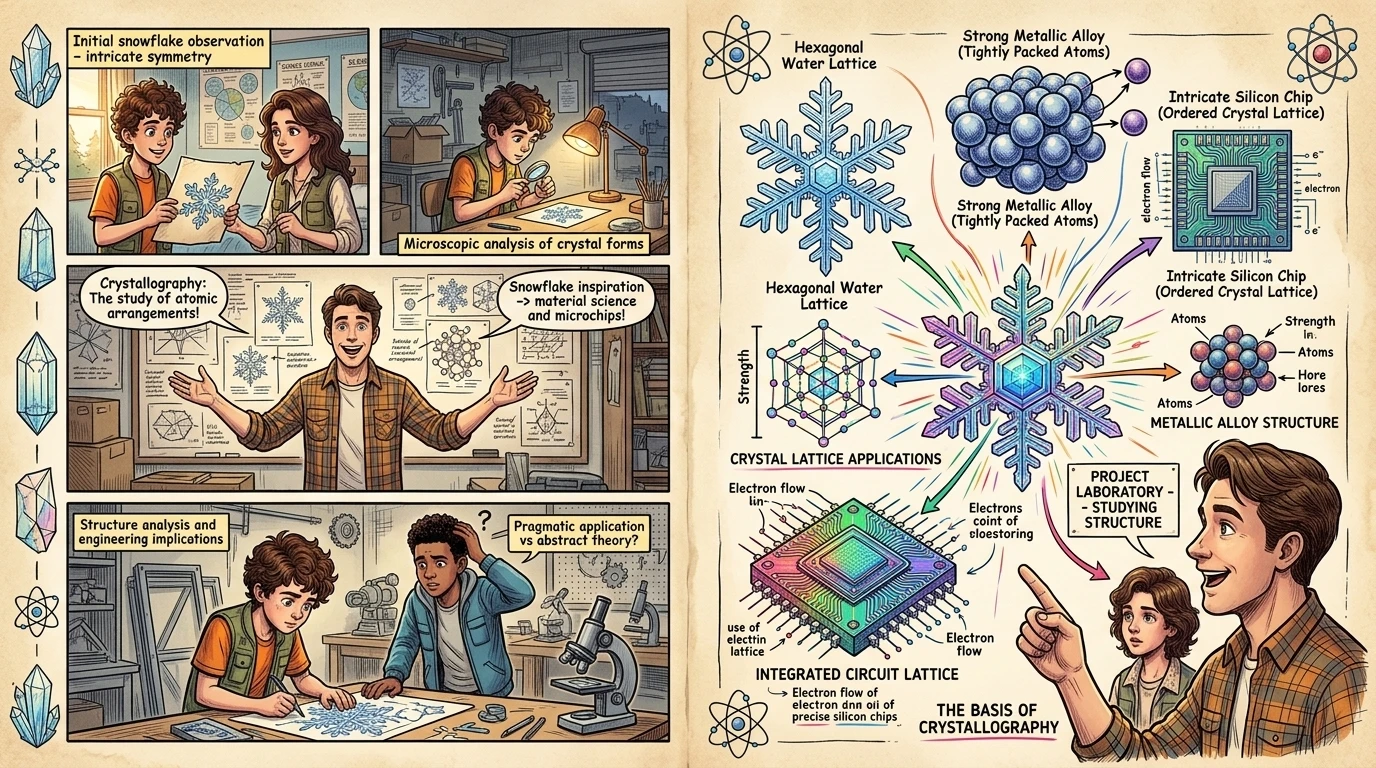
"That one idea started the whole science of crystallography!" her father said enthusiastically. "Understanding how atoms pack together is how we make everything from stronger metals to the silicon chips in our phones. It all started with someone asking 'why' about a tiny snowflake!"
Page 8
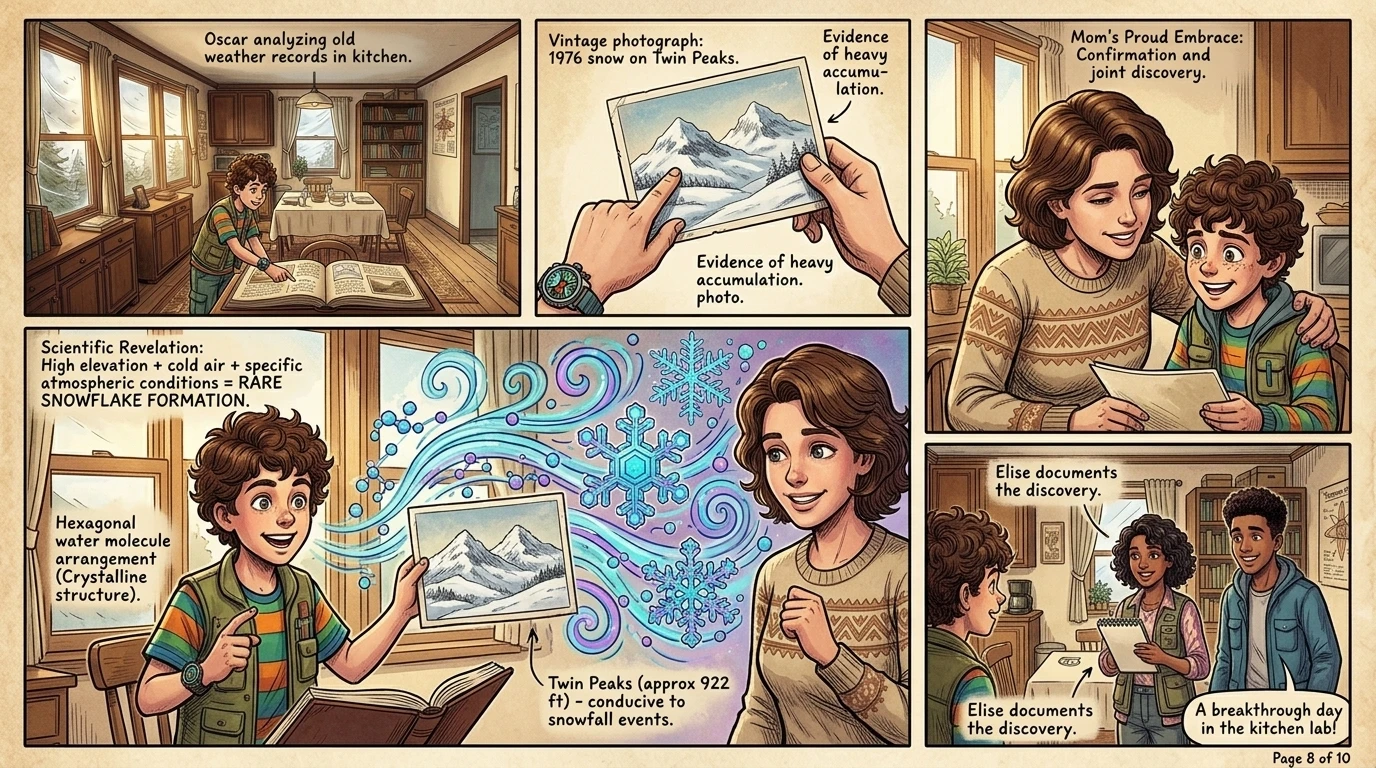
Back on Twin Peaks, the wind whipped around them as Oscar looked at the old photograph with new understanding. "So the water molecules in the air right here got just cold enough to lock together into hexagons!" she shouted over the wind. Her mother smiled and hugged her. "Exactly! That's why it was such a rare and special day."
Page 9
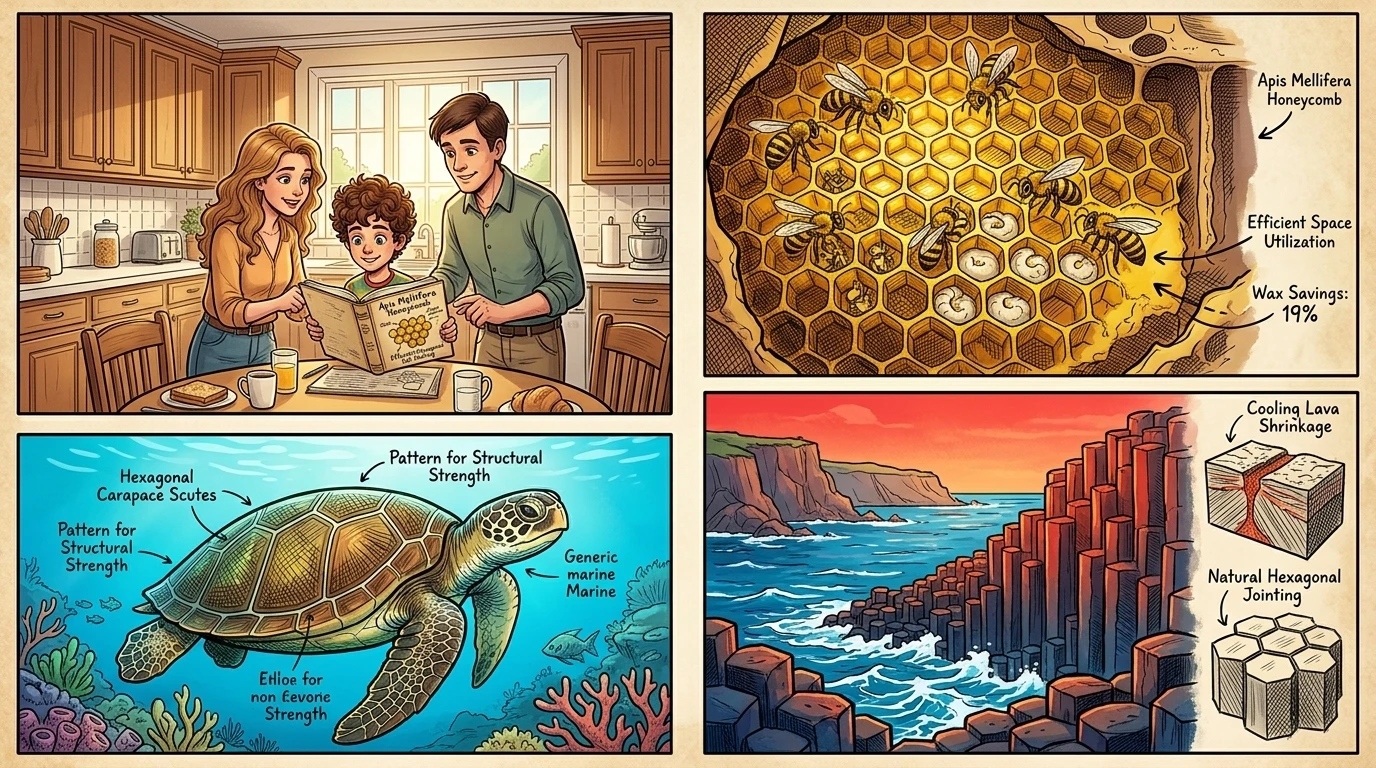
"It makes you see hexagons everywhere!" Oscar said, looking around. "Like in a bee's honeycomb!" Her mother nodded. "Or the patterns on some turtle shells." Her father added, "And in giant basalt columns, like the ones at the Giant's Causeway in Ireland, which formed as lava cooled slowly."
Page 10
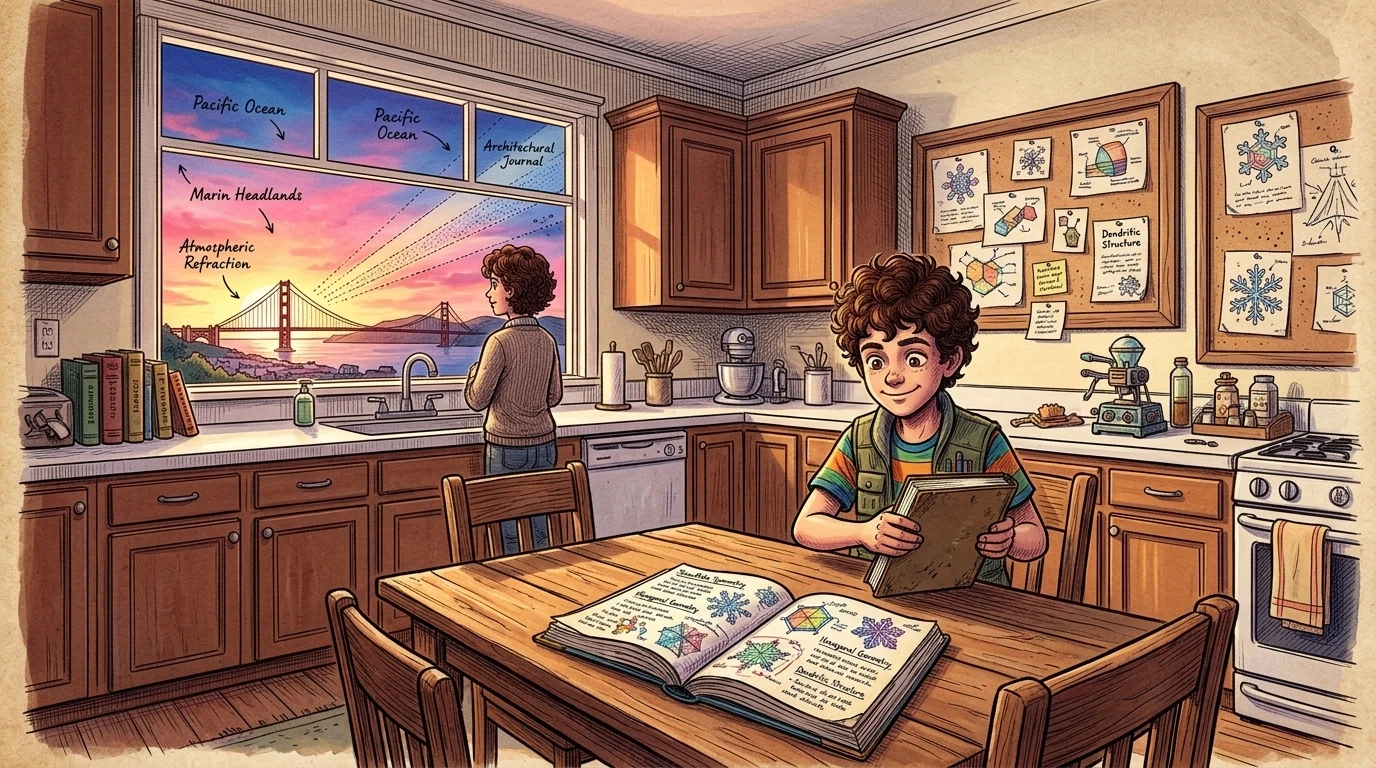
Oscar closed her notebook with a satisfied smile. "So, every snowflake is different, but they all secretly follow the same six-sided math!" Her mother looked out at the sun beginning to set over the Golden Gate Bridge. "It's amazing. By the way, how long does it take for that sunlight to travel all the way from the sun to us here?"
About this story
- Audience: kids (ages 6–12)
Questions and answers
Read Wonder Science on your phone
Wonder Science is available on Android. Get Wonder Science on Google Play.