The Crystal's Labyrinthine Light Spectrum
The Crystal's Labyrinthine Light Spectrum — an illustrated science story, set in United States. 10 illustrated pages, free to read on Wonder Science.
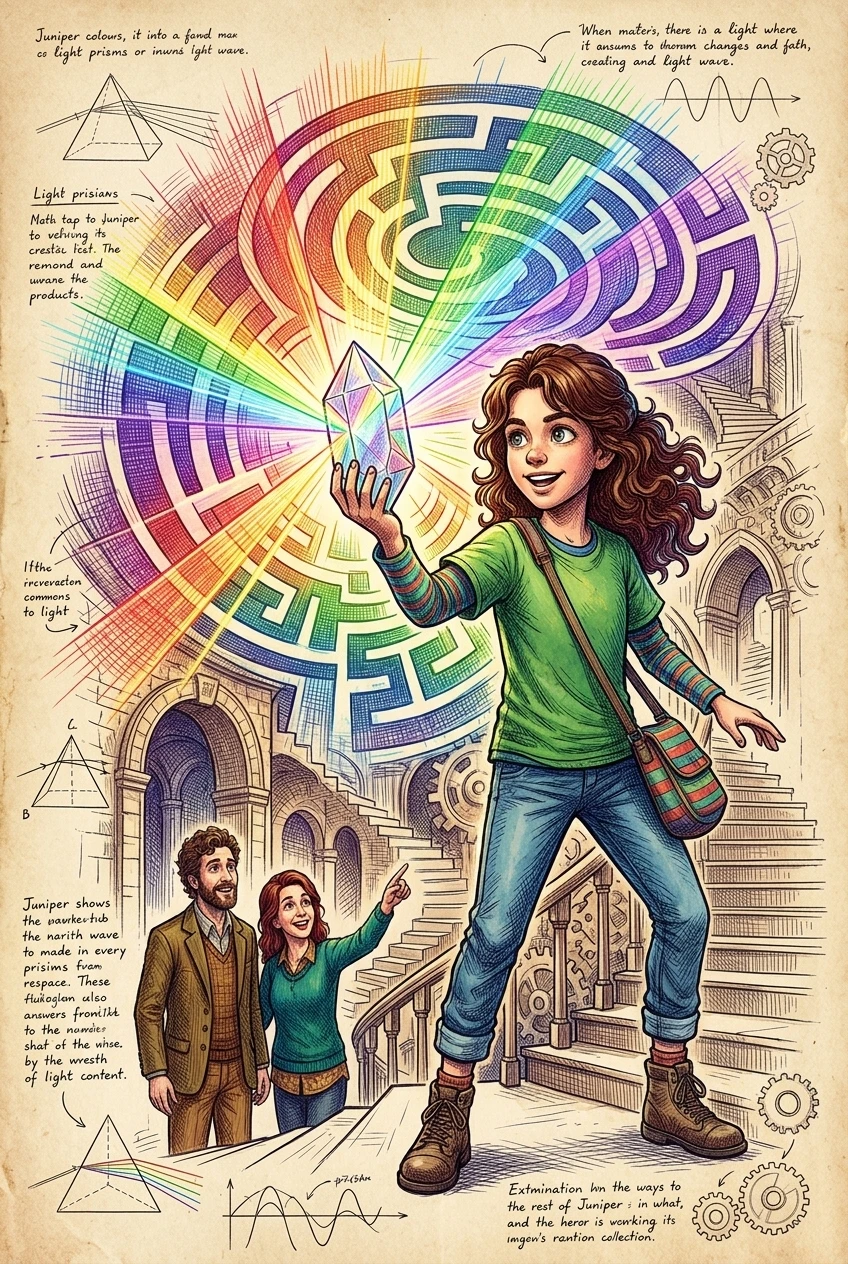
Page 1
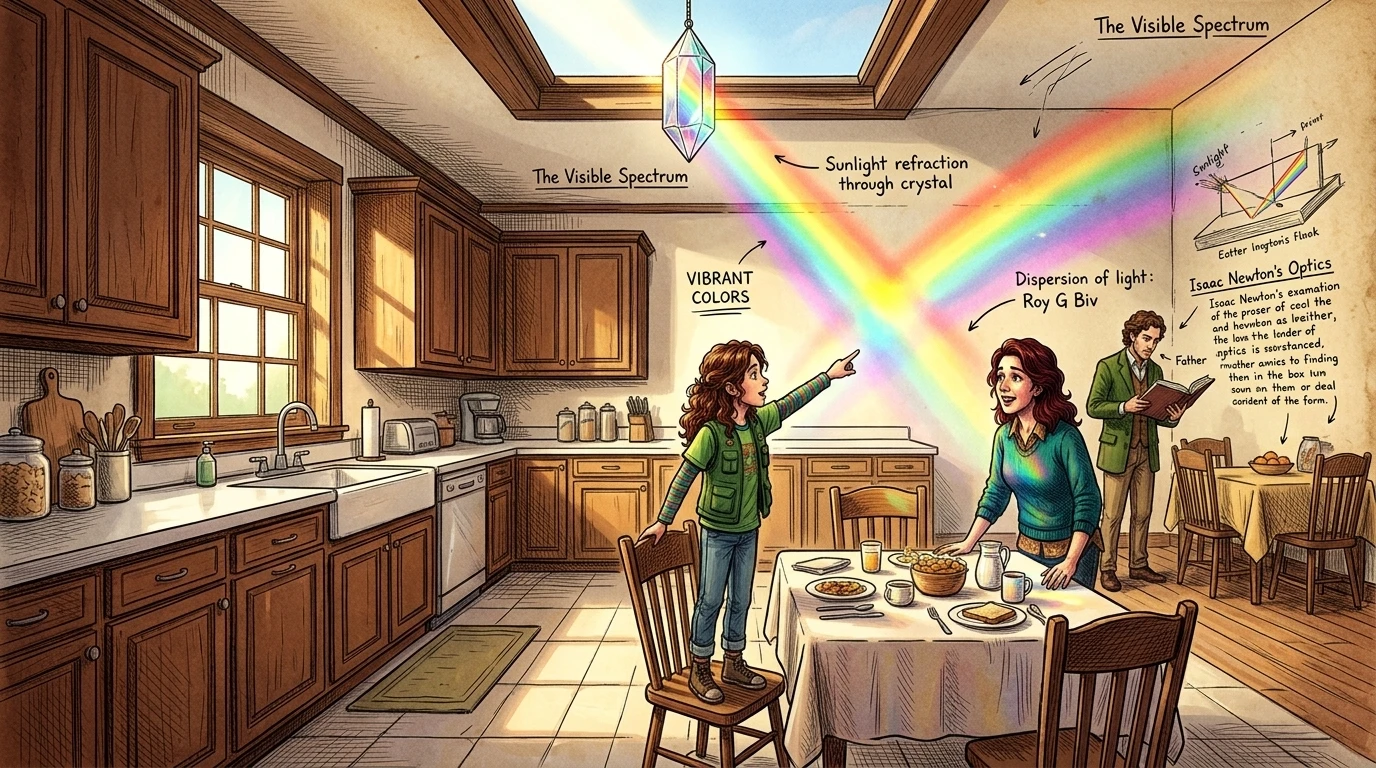
Juniper and her mother stood in their sunny Noe Valley kitchen, where a small crystal hung in the window. "Mom, look!" Juniper exclaimed, pointing at the wall. A brilliant rainbow shimmered across the painted surface, dancing as the crystal gently turned. "How does that little piece of glass make a giant rainbow?"
Page 2
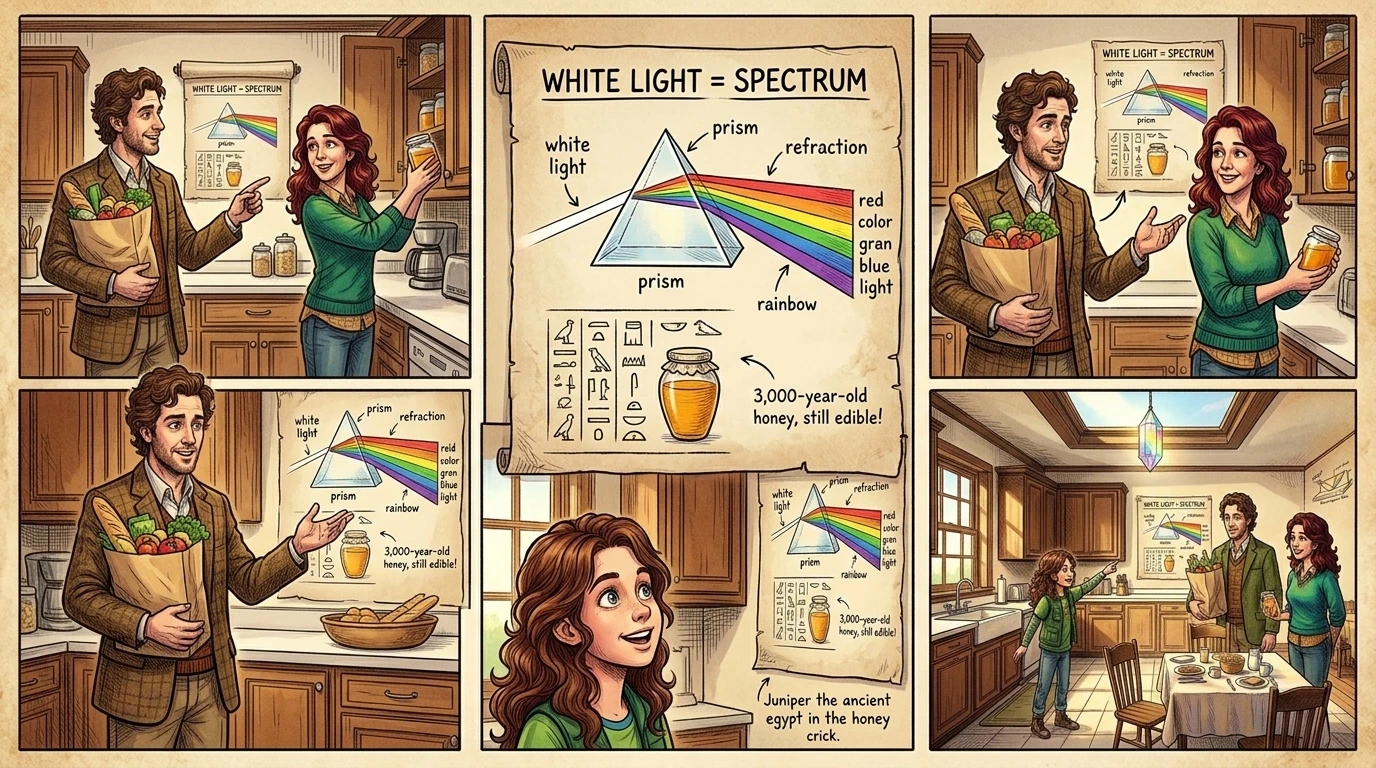
Her father walked in, smiling as he set down a grocery bag. "That's called a spectrum, sweetie! For thousands of years, everyone thought white light was just... white." He tapped the jar of honey his wife was putting away. "It was a total mystery, like how archaeologists found 3,000-year-old honey in Egyptian tombs that was still perfectly good to eat!"
Page 3
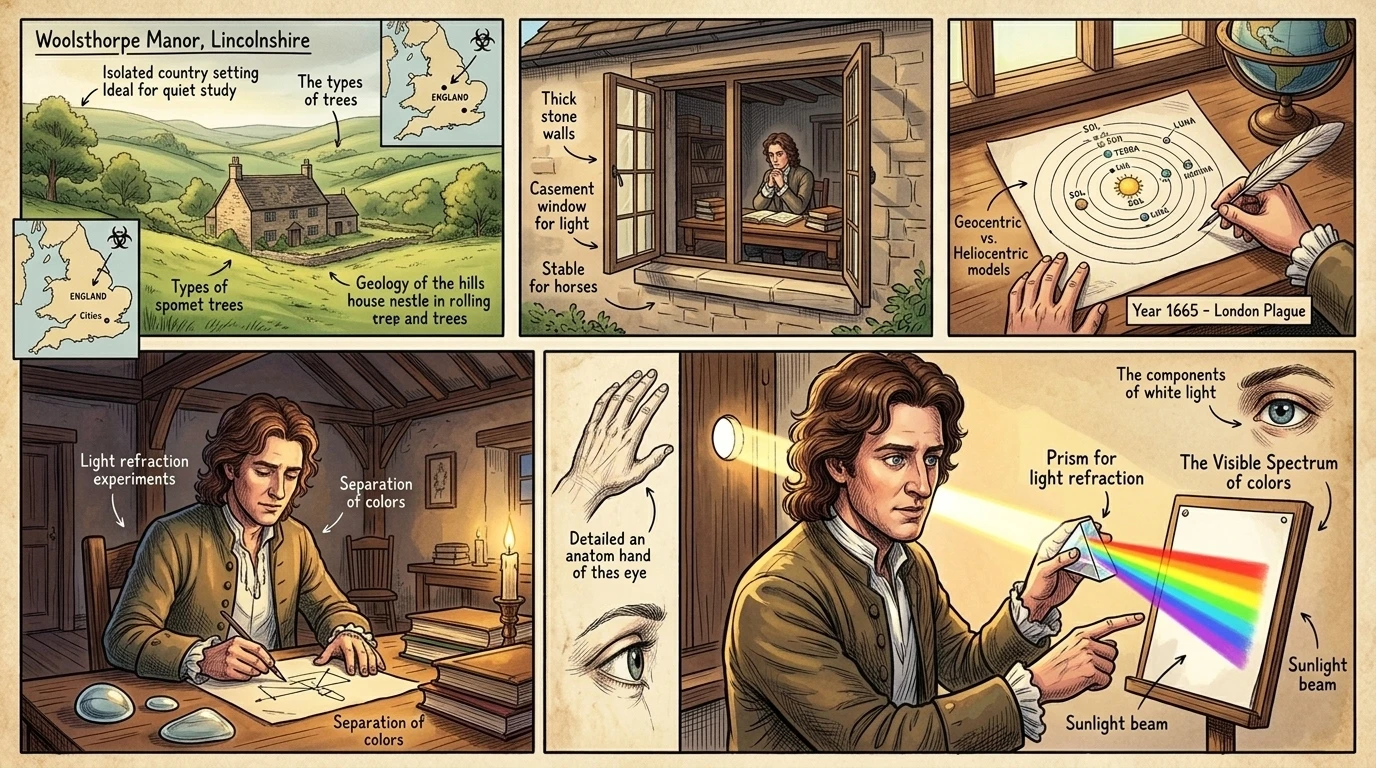
To find the answer, we have to travel back to England in 1665. The Great Plague had emptied the cities, forcing a young scientist to retreat to his family's quiet countryside home. In the stillness, with the whole world holding its breath, he turned his curious mind to the biggest questions he could imagine.
Page 4
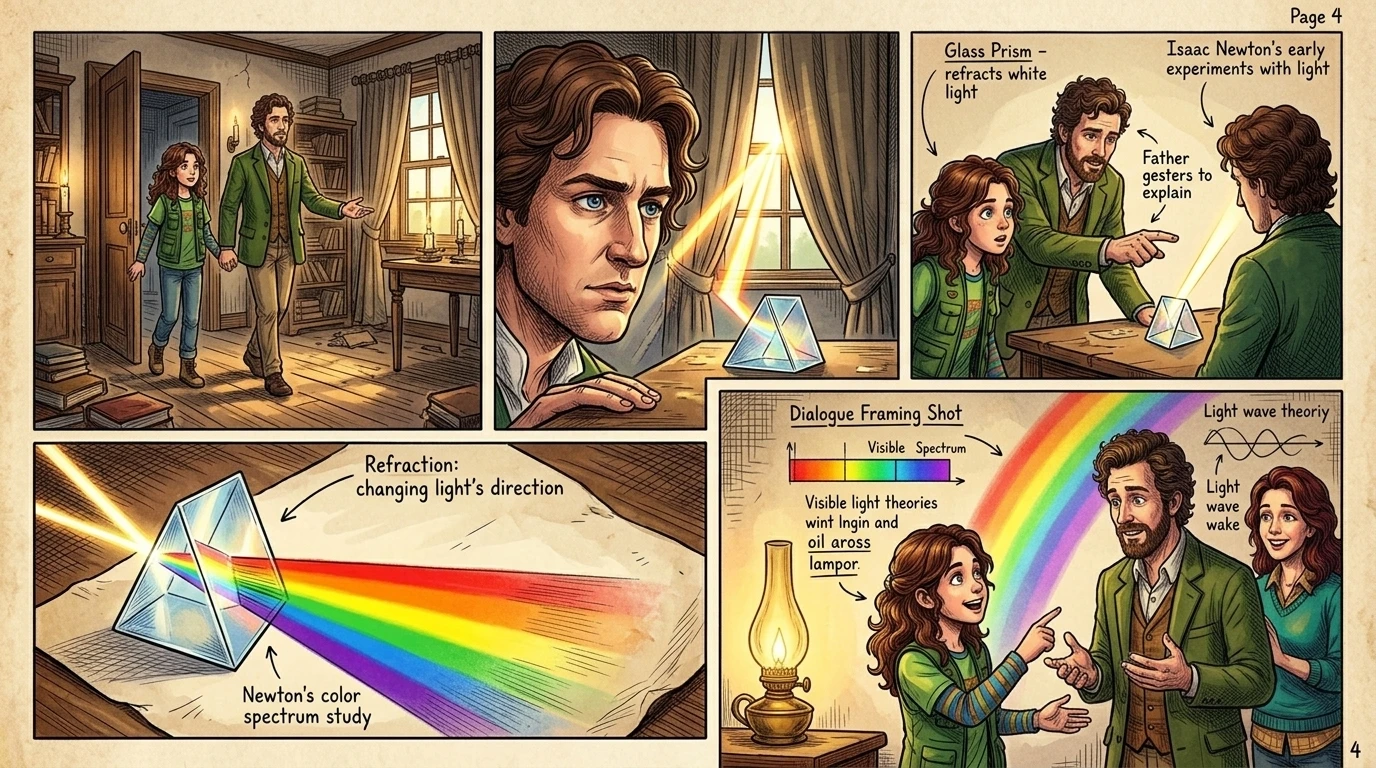
His name was Isaac Newton, and he was one of the most brilliant scientific minds in all of history. He had an intense and often difficult personality, but his curiosity was unstoppable. While everyone else was hiding from the plague, Newton was about to uncover a secret hidden in a simple sunbeam.
Page 5
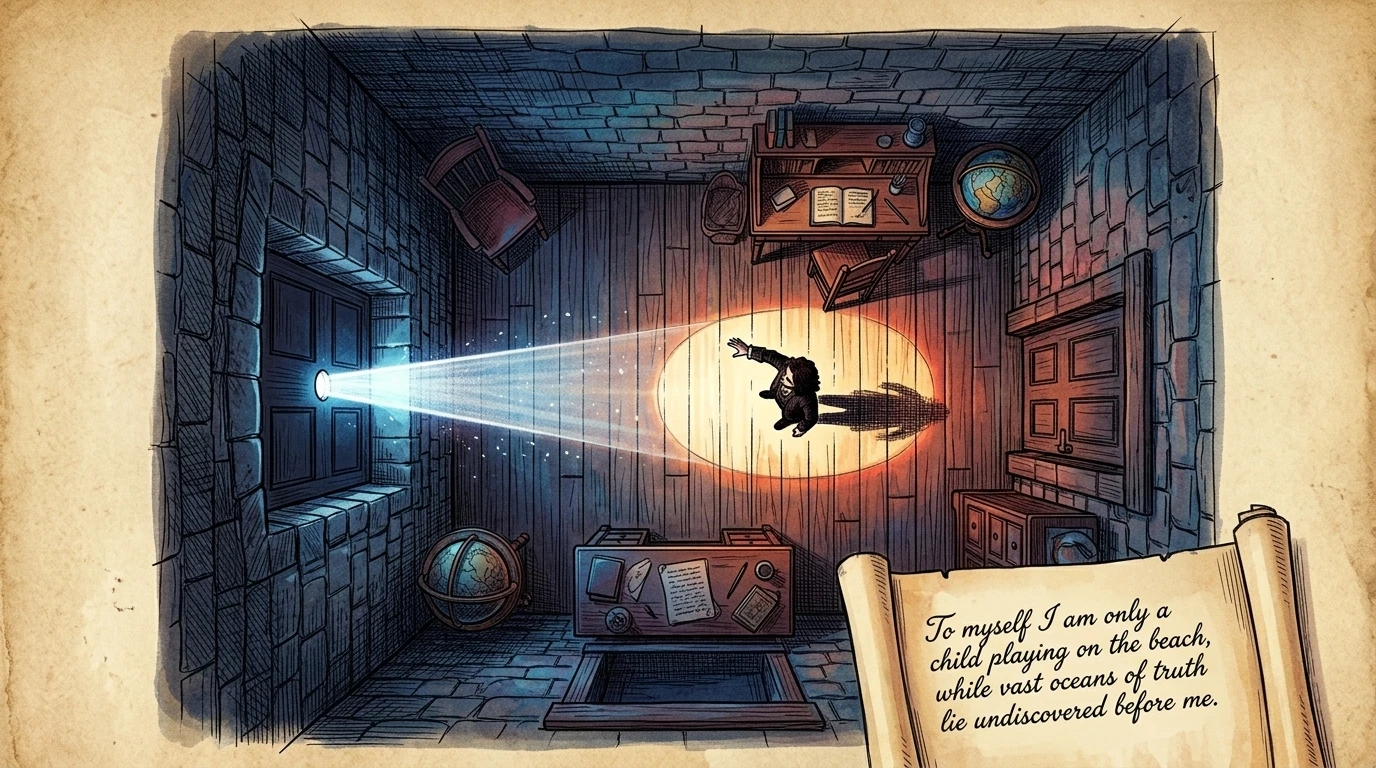
Newton would later say something that perfectly captured his sense of wonder. He said, 'To myself I am only a child playing on the beach, while vast oceans of truth lie undiscovered before me.' He felt that even his greatest discoveries were just small pebbles compared to the universe's mysteries. So he sealed his room in complete darkness, except for one tiny ray of light.
Page 6
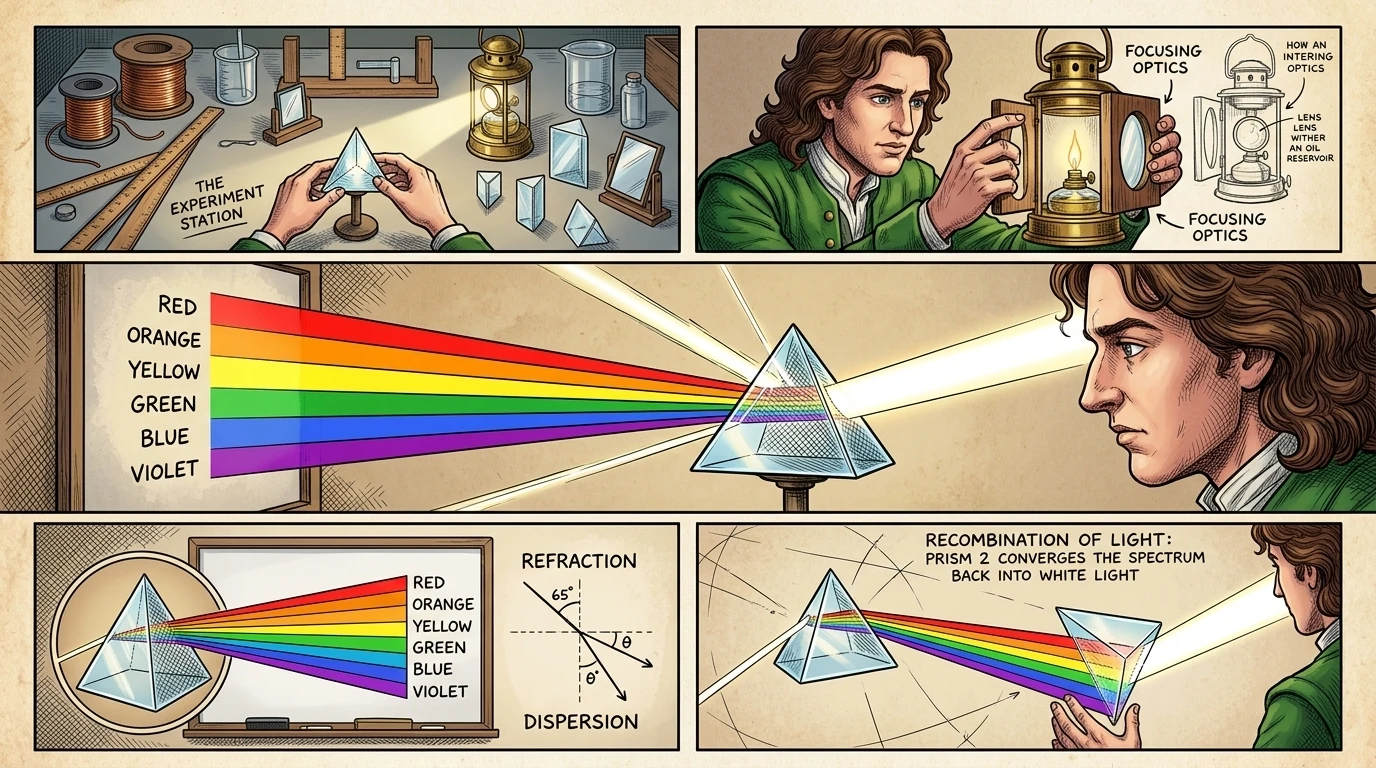
When he placed a glass prism in that single beam of light, something amazing happened. The white light hit the prism and exploded into a brilliant band of colors on the opposite wall—red, orange, yellow, green, blue, and violet. To prove it wasn't a trick of the glass, he used a second prism to capture the rainbow and merge it back into a single beam of white light!
Page 7
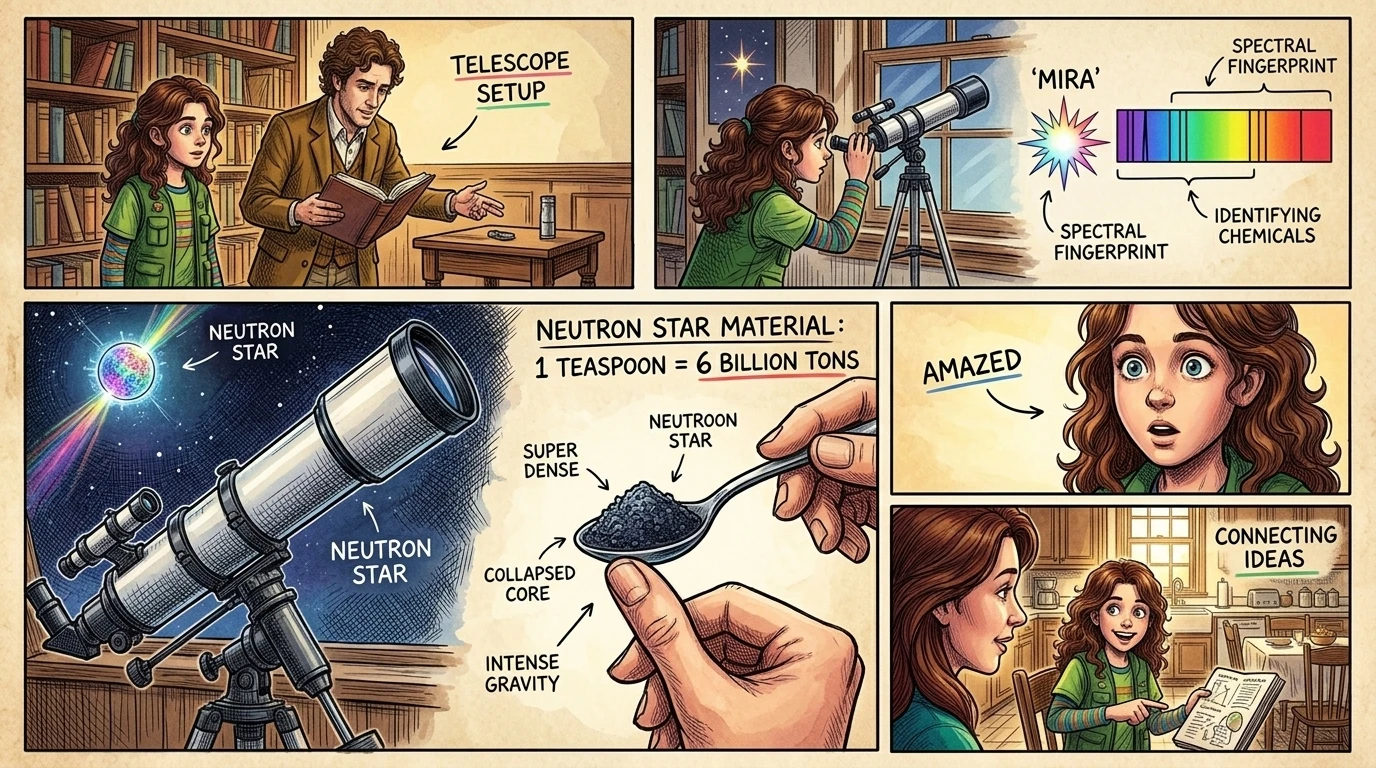
This discovery, called spectroscopy, changed everything! Scientists realized they could analyze the light from distant stars to find out exactly what they're made of. We can even identify a neutron star, where a single teaspoon of its material would weigh six billion tons, just by reading its light signature from millions of miles away!
Page 8
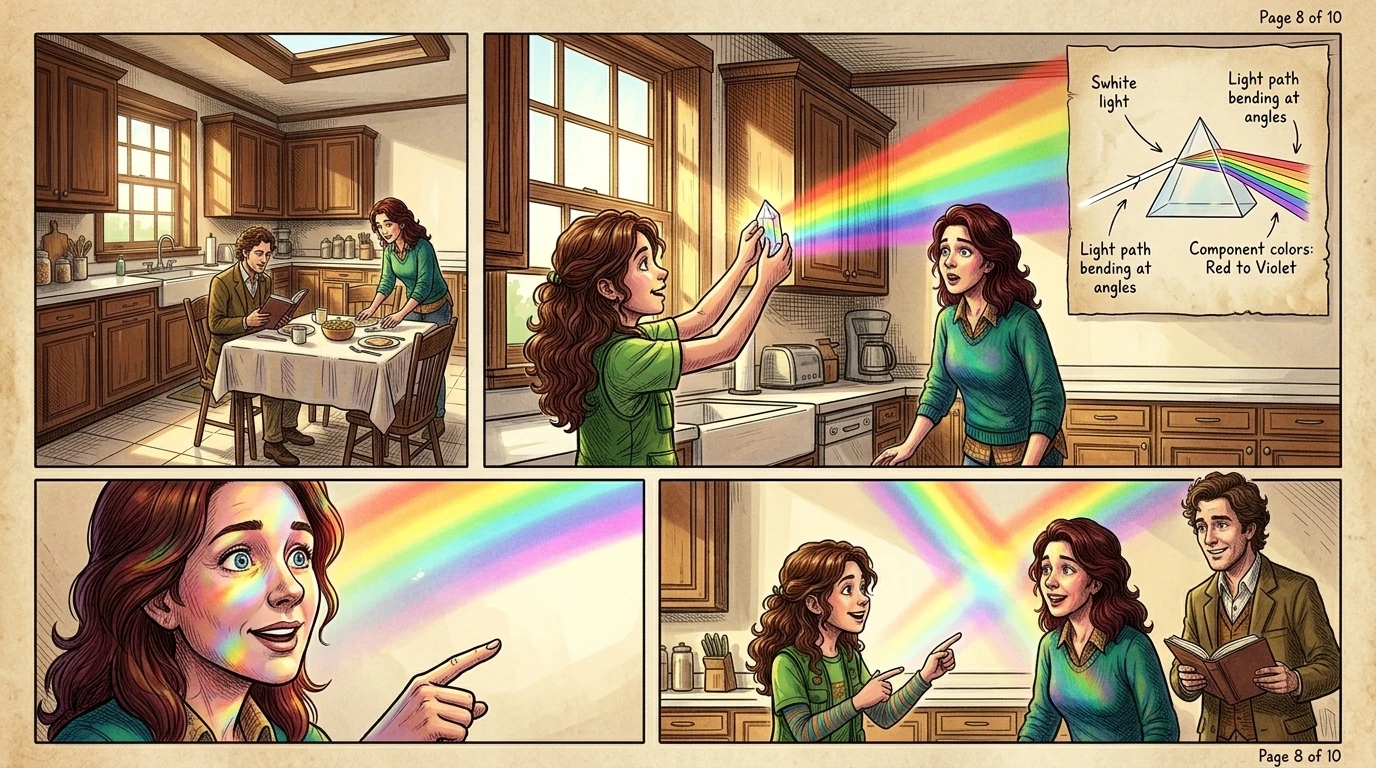
Back in her kitchen, Juniper held the crystal up to the sunlight again. "See?" she said to her parents. "The crystal is our prism! It bends each color in the sunlight at a different angle, so it spreads them all out for us to see." Her mom's eyes widened. "Oh, so the rainbow was hiding in the light the whole time!"
Page 9
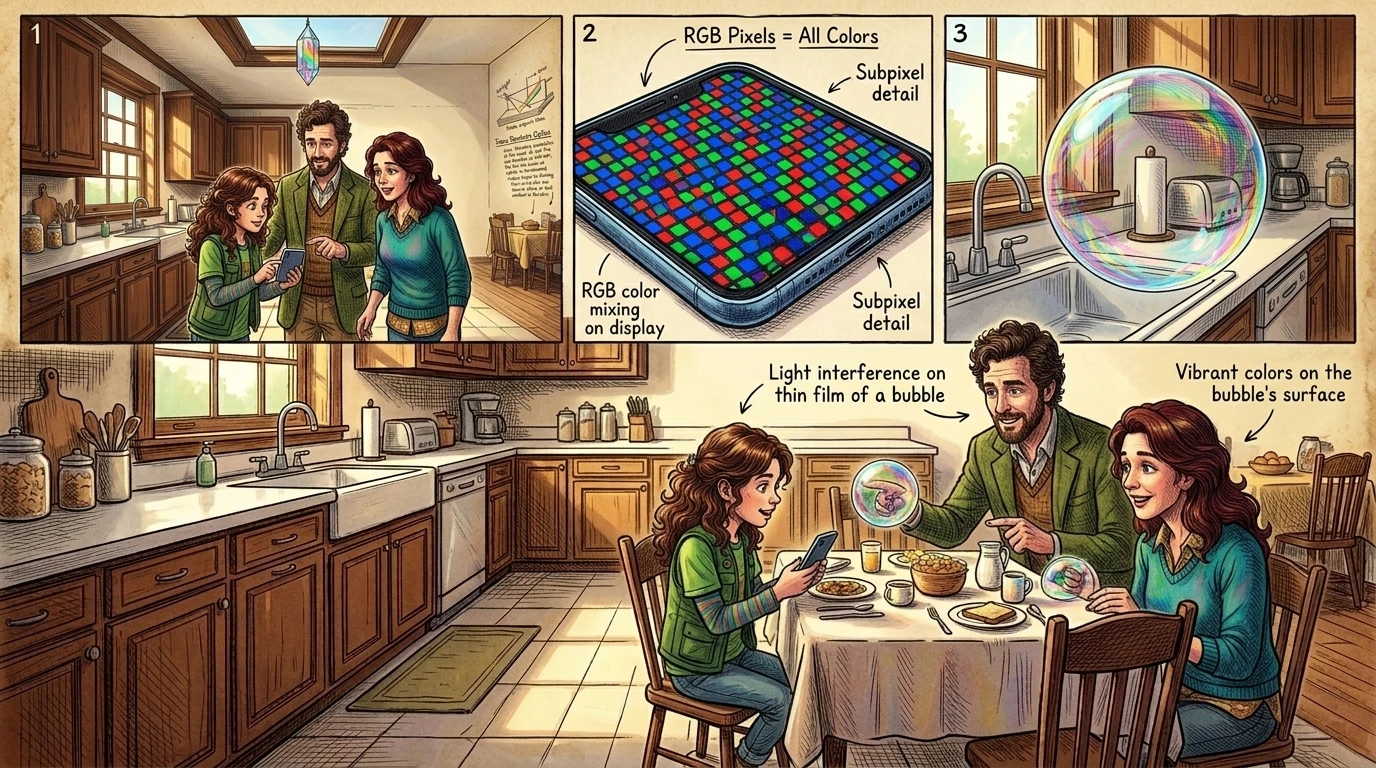
"It's everywhere!" her dad said, pointing to his phone screen. "The tiny pixels on this screen mix red, green, and blue light to make every other color you see." Juniper's mom noticed a soap bubble by the sink. "Look at the shimmering colors on this bubble—that's from light waves too!"
Page 10
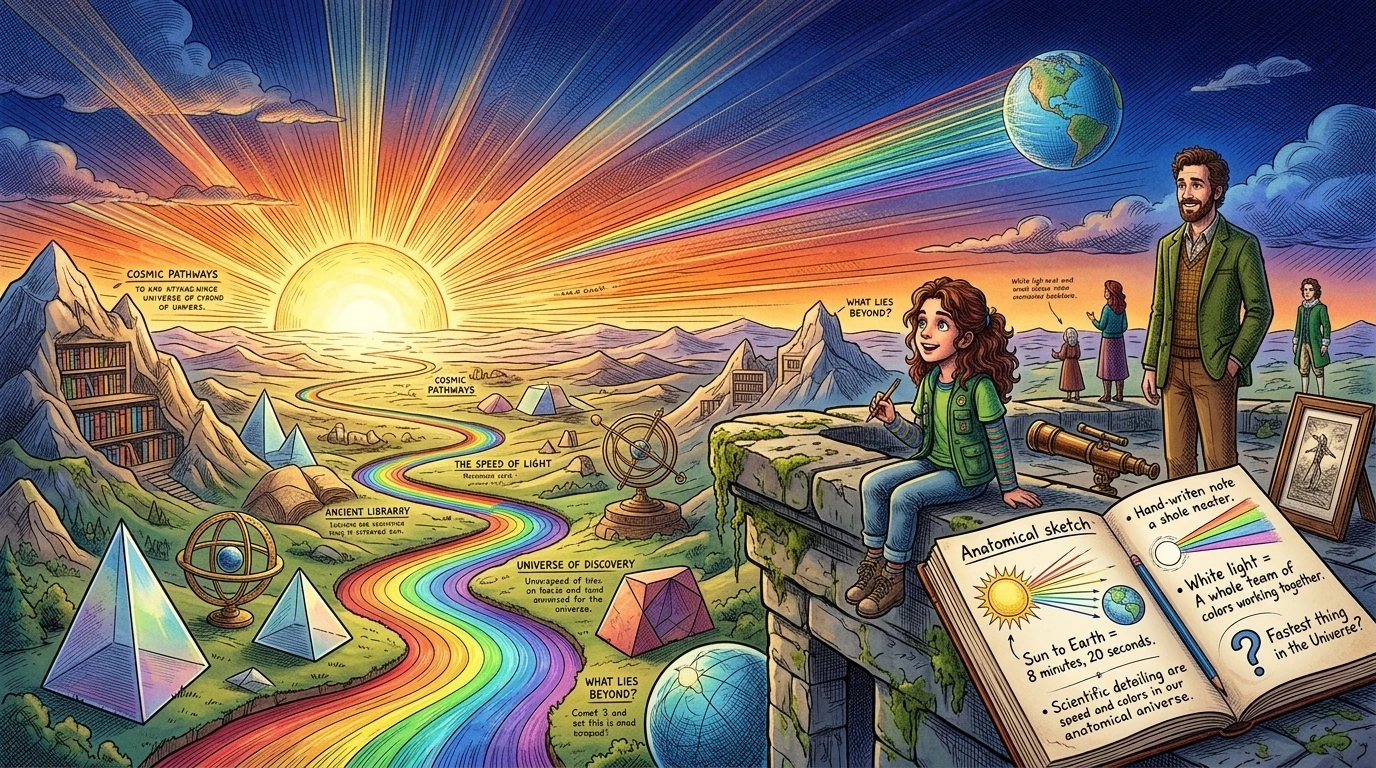
"So white light isn't plain at all," Juniper summarized, writing in her notebook. "It's really a whole team of colors working together." Her father nodded, adding, "And that team travels from the Sun to us in just 8 minutes and 20 seconds. It's incredibly fast, but is it the fastest thing in the universe?"
About this story
- Location: United States
- Audience: kids (ages 6–12)
Read Wonder Science on your phone
Wonder Science is available on Android. Get Wonder Science on Google Play.