The Connection Between Space and Earth

The Connection Between Space and Earth — an illustrated science story, set in England. 10 illustrated pages, free to read on Wonder Science.
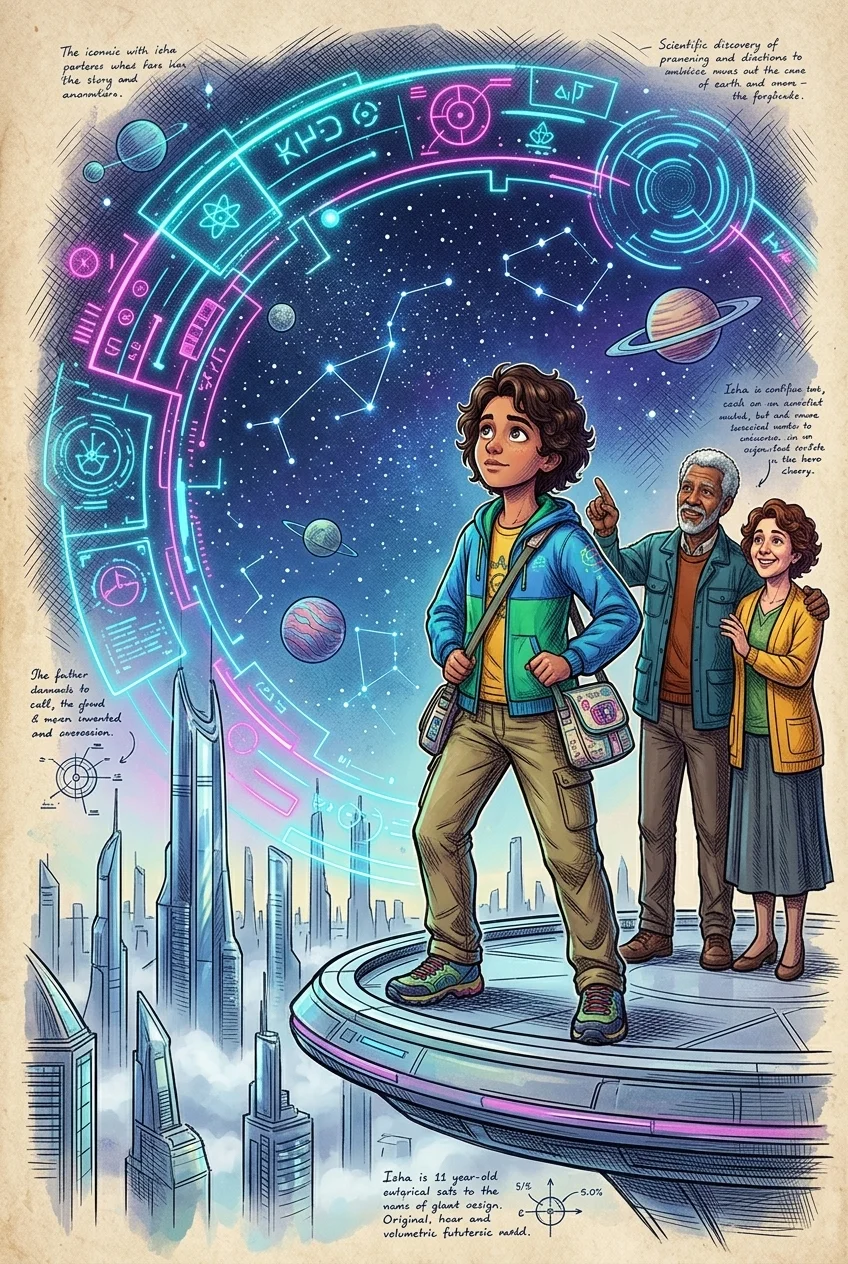
The Connection Between Space and Earth — book cover — Wonder Science
The Connection Between Space and Earth — an illustrated science story, set in England. 10 illustrated pages, free to read on Wonder Science.

Page 1
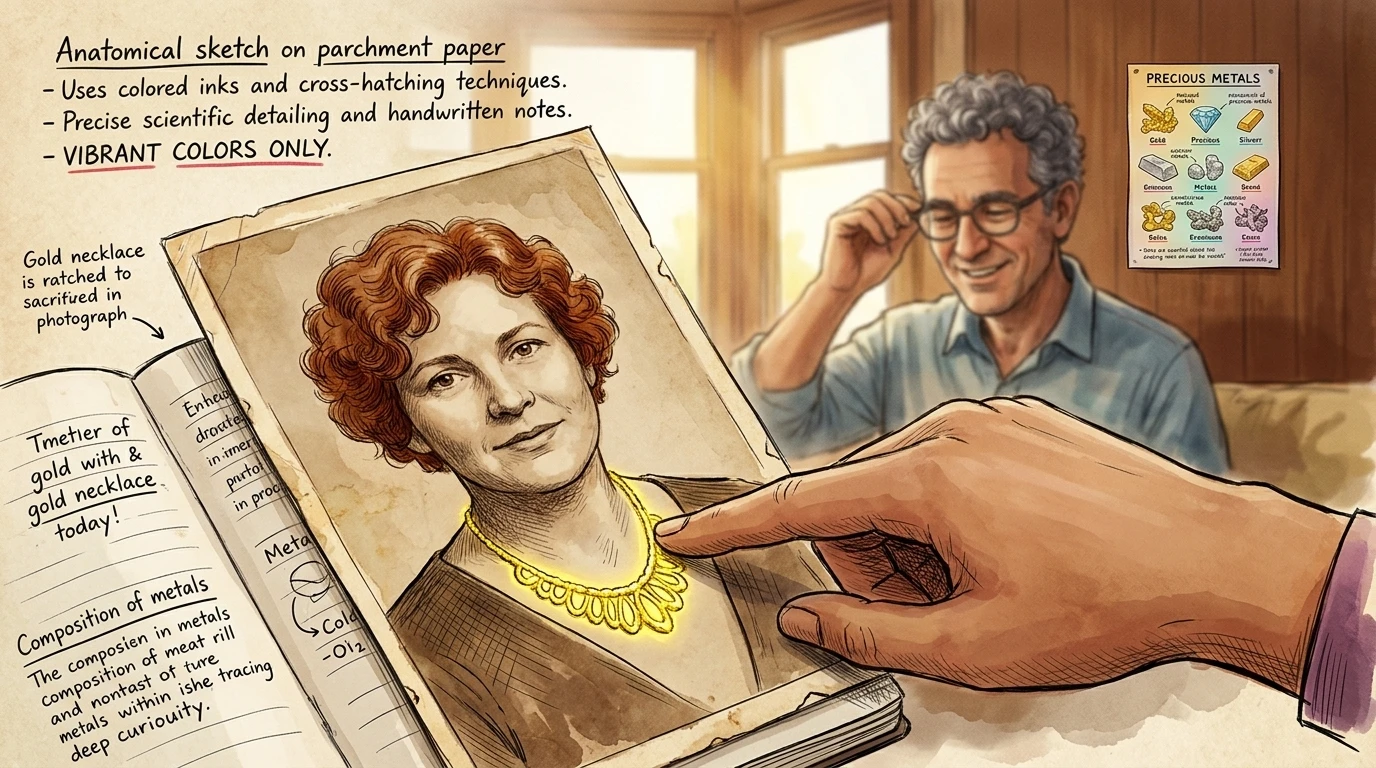
In their sunny Noe Valley living room, Isha pointed to an old photograph of her mother. "Dad, look how shiny Mom's gold necklace is in this picture!" Her father…
In their sunny Noe Valley living room, Isha pointed to an old photograph of her mother. "Dad, look how shiny Mom's gold necklace is in this picture!" Her father smiled, adjusting his glasses to get a better look. "It is beautiful, isn't it? Gold is a very special metal." Isha tilted her head, tracing the necklace in the photo with her finger. "Where does something so special and shiny actually come from?"

In their sunny Noe Valley living room, Isha pointed to an old photograph of her mother. "Dad, look how shiny Mom's gold necklace is in this picture!" Her father smiled, adjusting his glasses to get a better look. "It is beautiful, isn't it? Gold is a very special metal." Isha tilted her head, tracing the necklace in the photo with her finger. "Where does something so special and shiny actually come from?"

Page 2
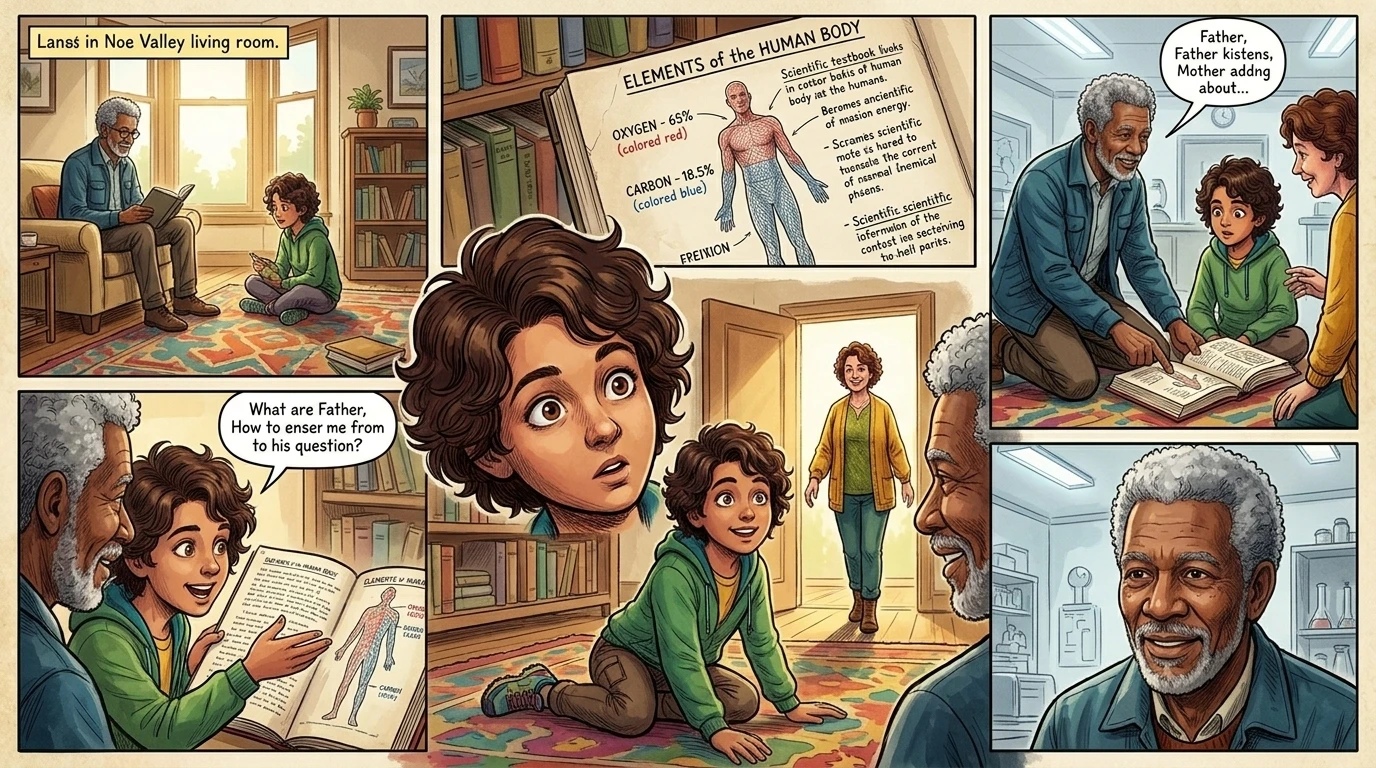
"Well, miners dig it out of the ground," her father explained, sitting back on the rug. But Isha wasn't satisfied and scrambled closer, her eyes full of…
"Well, miners dig it out of the ground," her father explained, sitting back on the rug. But Isha wasn't satisfied and scrambled closer, her eyes full of curiosity. "I know, but where did it come from before it was in the ground? Before the Earth was even here?" Her mother, a friendly woman in her early 40s with dark wavy shoulder-length hair, walked in and smiled. "That's the biggest question of all, sweetie: what are we, and the whole world, truly made of?"

"Well, miners dig it out of the ground," her father explained, sitting back on the rug. But Isha wasn't satisfied and scrambled closer, her eyes full of curiosity. "I know, but where did it come from before it was in the ground? Before the Earth was even here?" Her mother, a friendly woman in her early 40s with dark wavy shoulder-length hair, walked in and smiled. "That's the biggest question of all, sweetie: what are we, and the whole world, truly made of?"

Page 3
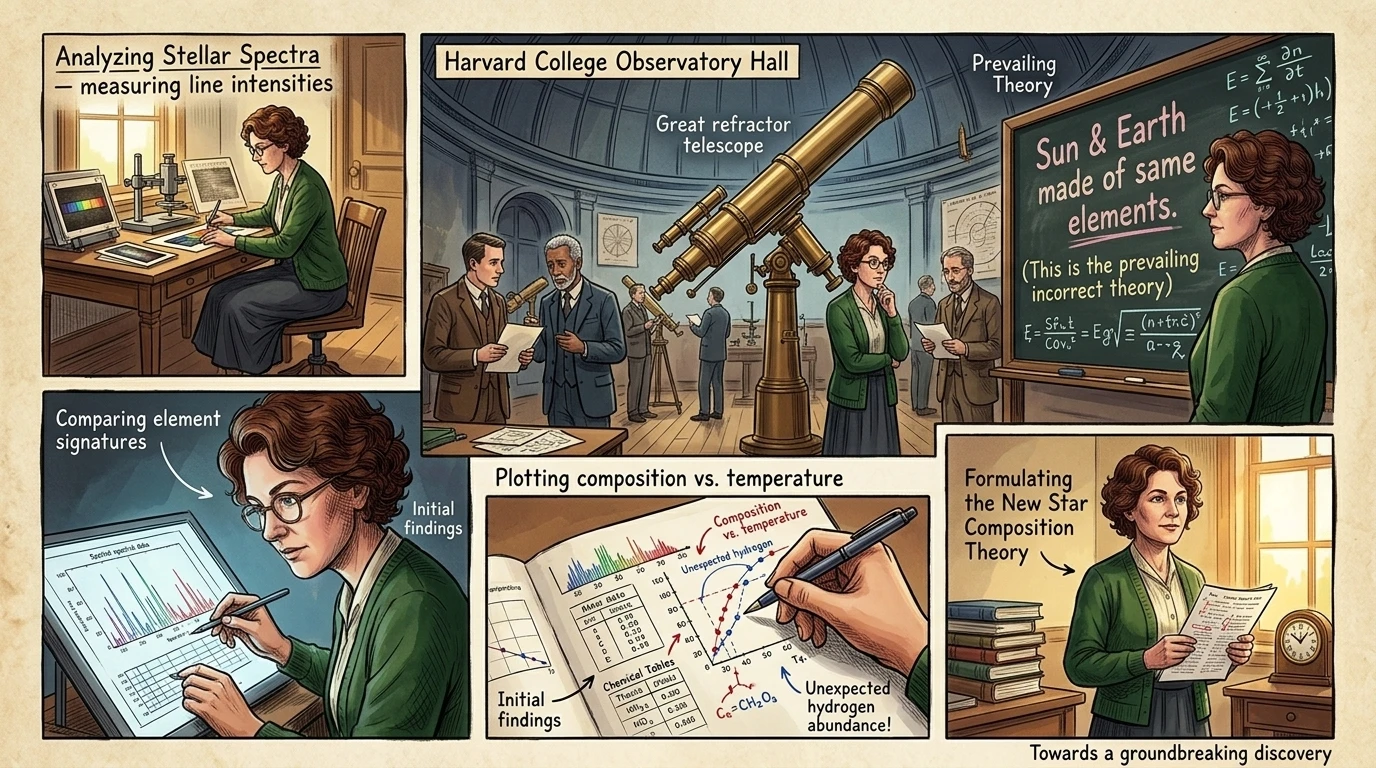
To answer that, you have to travel back in time to the 1920s, inside the Harvard College Observatory. Scientists at the time believed that the Sun and the Earth…
To answer that, you have to travel back in time to the 1920s, inside the Harvard College Observatory. Scientists at the time believed that the Sun and the Earth were made of the same elements, just at different temperatures. They looked at the stars through telescopes, but they couldn't quite understand the message the starlight was trying to send. A young astronomer, however, was about to change everything.

To answer that, you have to travel back in time to the 1920s, inside the Harvard College Observatory. Scientists at the time believed that the Sun and the Earth were made of the same elements, just at different temperatures. They looked at the stars through telescopes, but they couldn't quite understand the message the starlight was trying to send. A young astronomer, however, was about to change everything.

Page 4
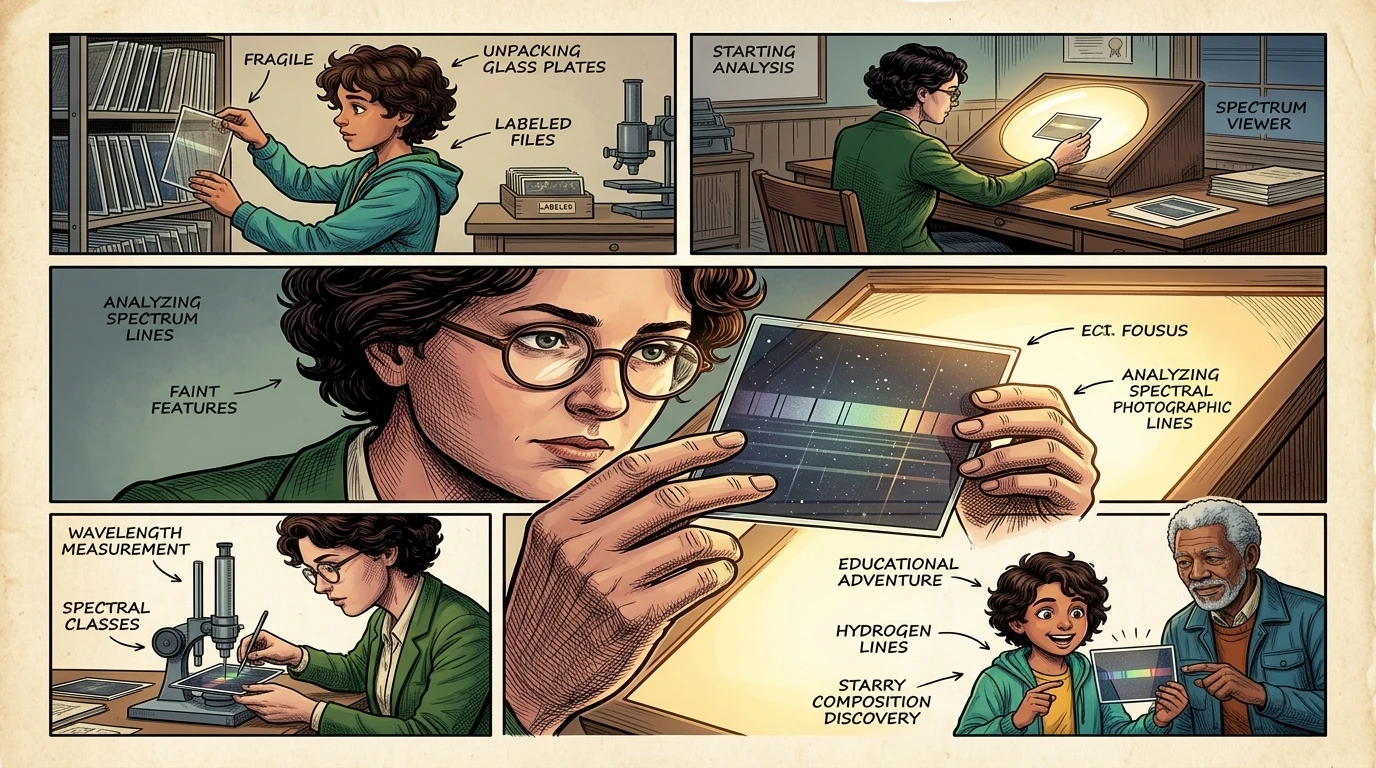
"Her name was Cecilia Payne-Gaposchkin," Isha's father's voice narrated, as the young scientist held a plate to the light.
"Her name was Cecilia Payne-Gaposchkin," Isha's father's voice narrated, as the young scientist held a plate to the light. "She was a brilliant astronomer from England who moved to America to study the stars. In a time when science was mostly for men, she was determined to solve the universe's greatest puzzles." Cecilia carefully placed the glass plate onto a light table, her focus intense.

"Her name was Cecilia Payne-Gaposchkin," Isha's father's voice narrated, as the young scientist held a plate to the light. "She was a brilliant astronomer from England who moved to America to study the stars. In a time when science was mostly for men, she was determined to solve the universe's greatest puzzles." Cecilia carefully placed the glass plate onto a light table, her focus intense.

Page 5
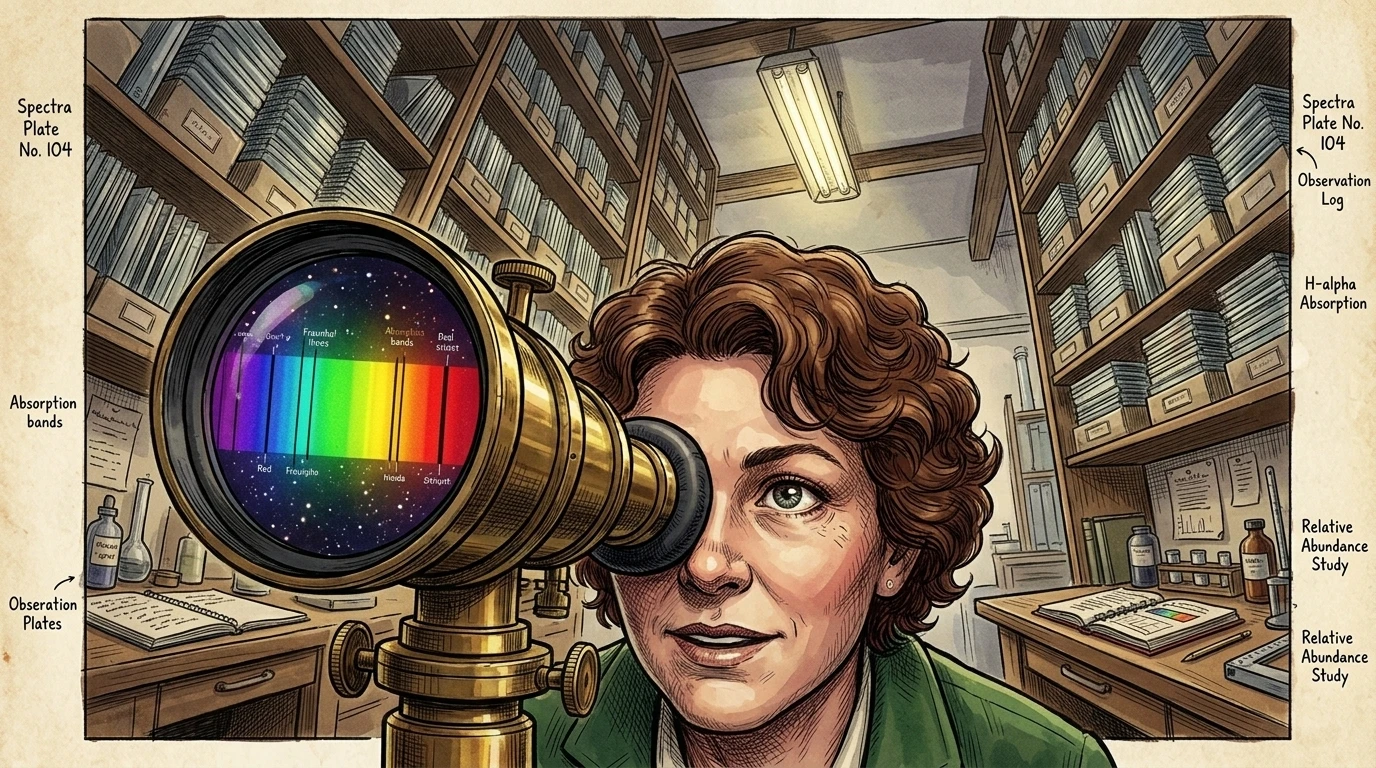
Surrounded by shelves of starlight captured on glass, Cecilia felt the excitement of discovery. She knew these weren't just pictures; they were coded messages…
Surrounded by shelves of starlight captured on glass, Cecilia felt the excitement of discovery. She knew these weren't just pictures; they were coded messages from deep space. "The reward of the young scientist," she once said, reflecting her approach, "is the emotional thrill of being the first person in the history of the world to see something or to understand something." She leaned closer to her spectroscope, ready to be the first.

Surrounded by shelves of starlight captured on glass, Cecilia felt the excitement of discovery. She knew these weren't just pictures; they were coded messages from deep space. "The reward of the young scientist," she once said, reflecting her approach, "is the emotional thrill of being the first person in the history of the world to see something or to understand something." She leaned closer to her spectroscope, ready to be the first.

Page 6
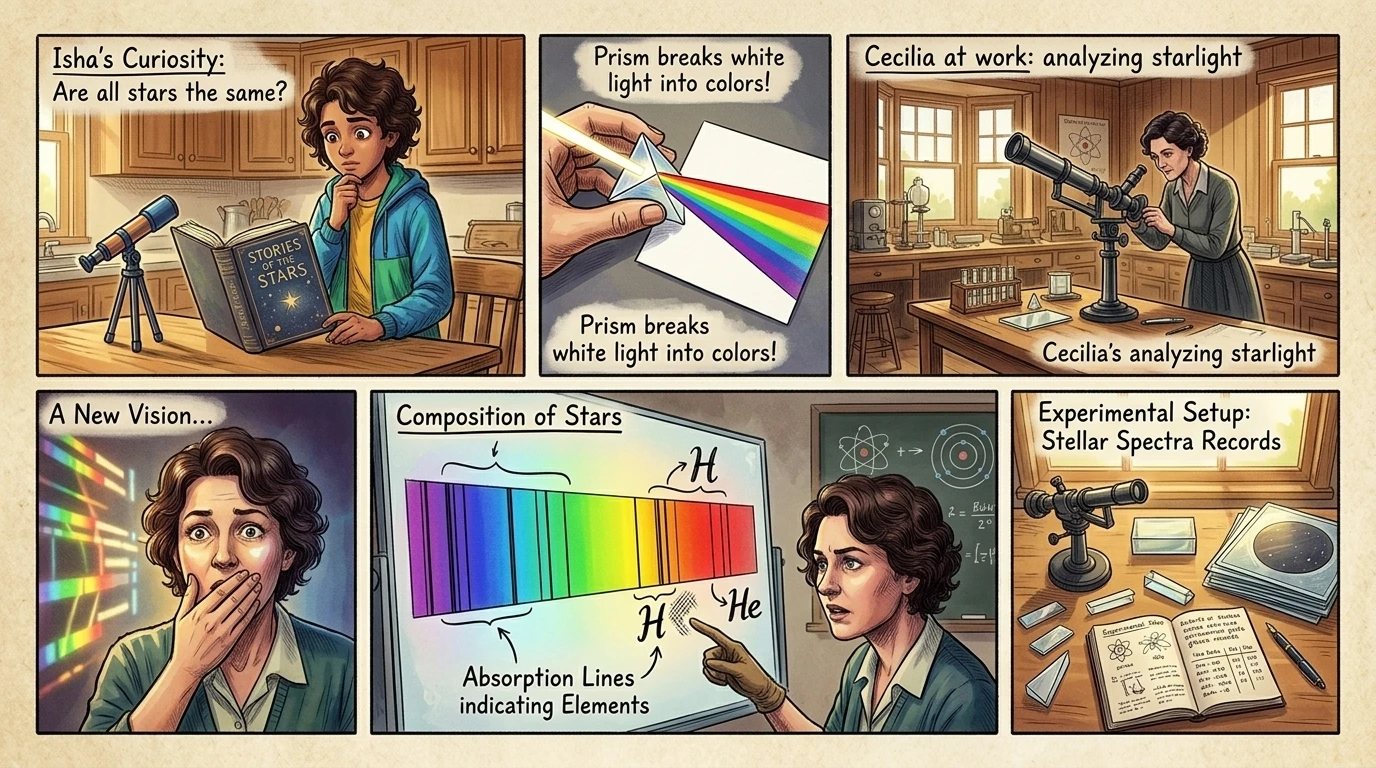
Using the new science of quantum mechanics, Cecilia decoded the dark lines in the stars' light spectrums. The evidence was unmistakable and shocking.
Using the new science of quantum mechanics, Cecilia decoded the dark lines in the stars' light spectrums. The evidence was unmistakable and shocking. "They're not like Earth at all!" she might have whispered, her heart racing. "The stars are almost entirely made of hydrogen and helium!" It was a discovery so radical that other scientists told her she must be wrong.

Using the new science of quantum mechanics, Cecilia decoded the dark lines in the stars' light spectrums. The evidence was unmistakable and shocking. "They're not like Earth at all!" she might have whispered, her heart racing. "The stars are almost entirely made of hydrogen and helium!" It was a discovery so radical that other scientists told her she must be wrong.

Page 7
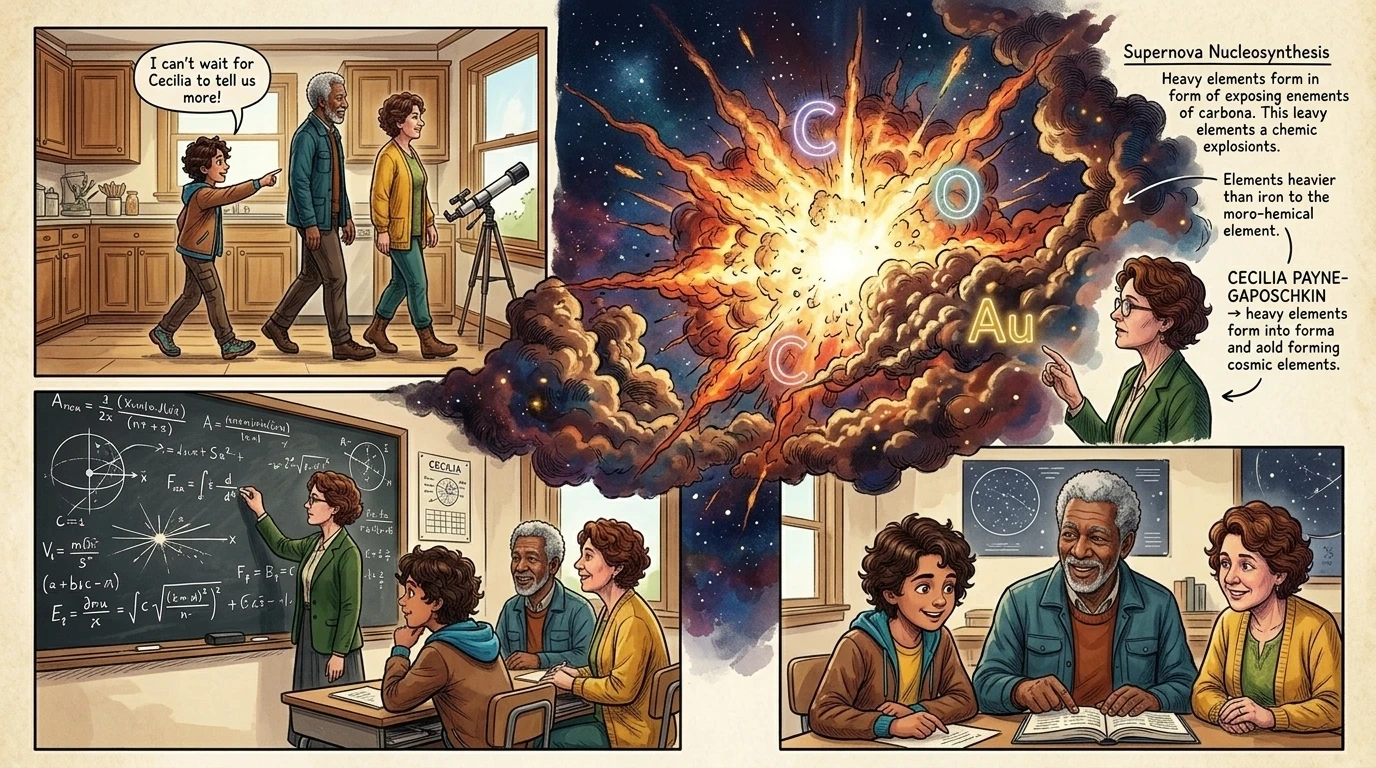
But Cecilia was right, and her discovery unlocked one of the universe's biggest secrets. If stars are mostly hydrogen, then the heavier elements—like carbon…
But Cecilia was right, and her discovery unlocked one of the universe's biggest secrets. If stars are mostly hydrogen, then the heavier elements—like carbon, oxygen, and gold—must be created inside them. Stars are giant cosmic forges, and when massive ones explode as supernovae, they seed the universe with the building blocks of life. Every heavy atom that makes up you, your home, and your entire planet was born in the heart of a star.

But Cecilia was right, and her discovery unlocked one of the universe's biggest secrets. If stars are mostly hydrogen, then the heavier elements—like carbon, oxygen, and gold—must be created inside them. Stars are giant cosmic forges, and when massive ones explode as supernovae, they seed the universe with the building blocks of life. Every heavy atom that makes up you, your home, and your entire planet was born in the heart of a star.

Page 8
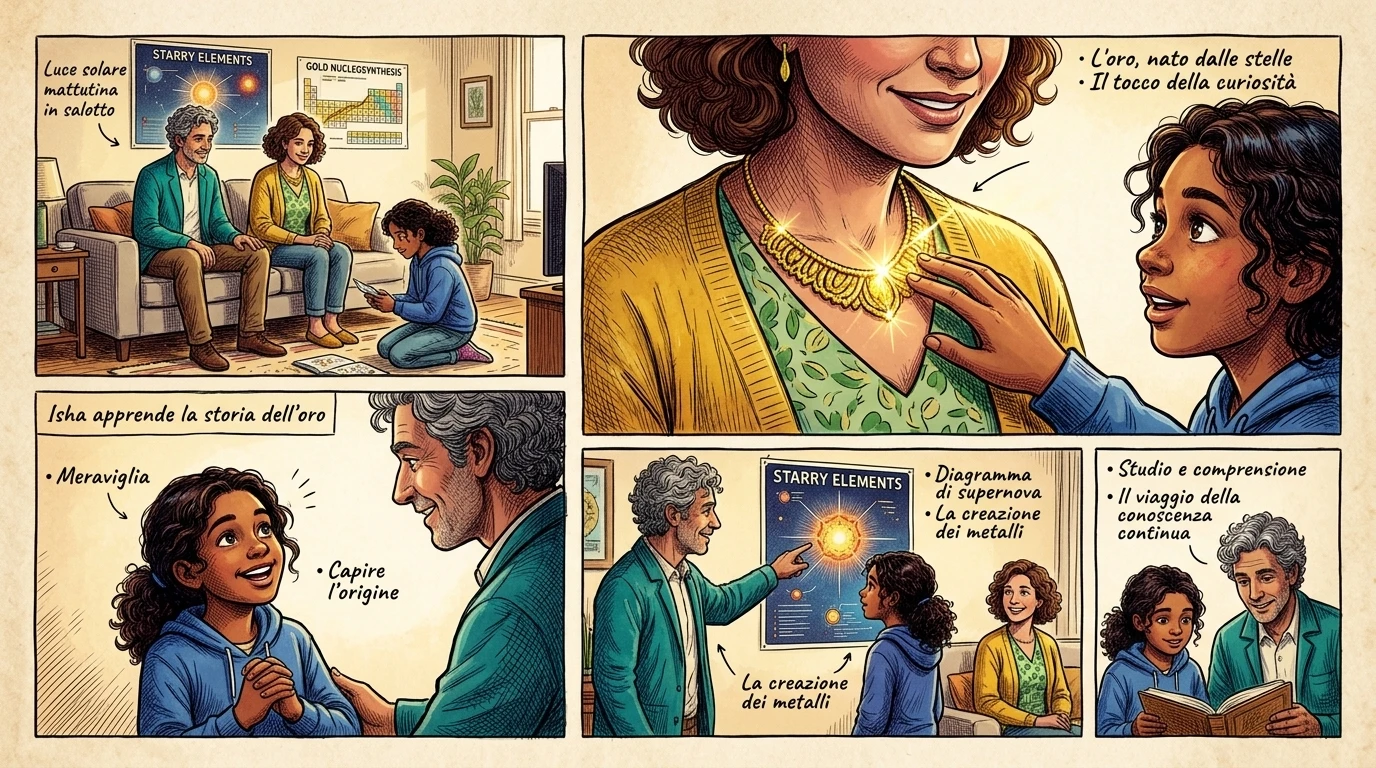
Back in the Noe Valley living room, Isha's eyes were wide with wonder. She gently touched her mom's actual gold necklace.
Back in the Noe Valley living room, Isha's eyes were wide with wonder. She gently touched her mom's actual gold necklace. "So this gold wasn't just made on Earth... it was forged in an exploding star!" Her father nodded, his voice filled with admiration for the idea. "Exactly. The famous astronomer Carl Sagan put it perfectly when he said, 'We are made of starstuff.'"

Back in the Noe Valley living room, Isha's eyes were wide with wonder. She gently touched her mom's actual gold necklace. "So this gold wasn't just made on Earth... it was forged in an exploding star!" Her father nodded, his voice filled with admiration for the idea. "Exactly. The famous astronomer Carl Sagan put it perfectly when he said, 'We are made of starstuff.'"

Page 9
The Connection Between Space and Earth — page 9 illustration — Wonder Science

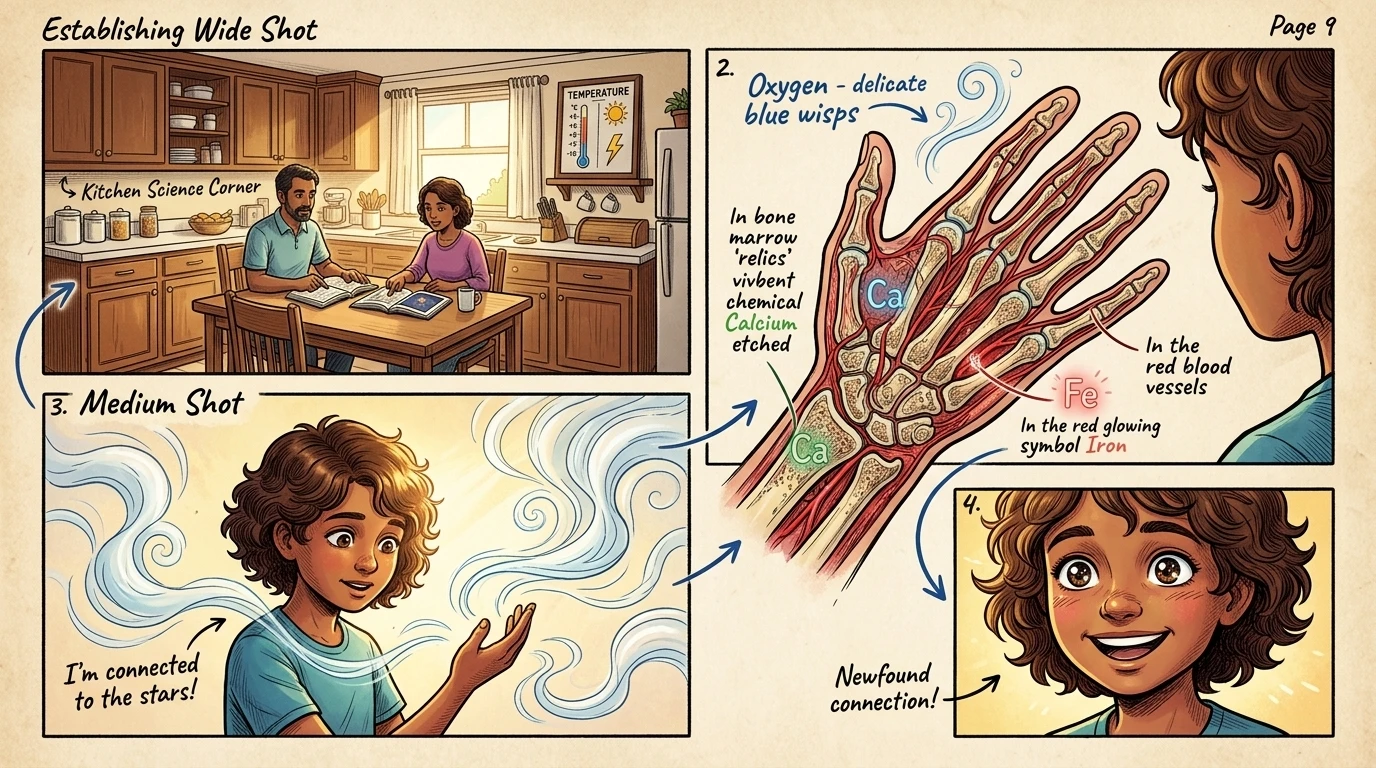
"So the iron in my blood is starstuff?" Isha asked, looking at her own hand. "And the calcium in my bones?" Her mother smiled, "And the oxygen we're breathing! It all came from stars that lived and died billions of years ago." Her dad added with a grin, "Those explosions are unbelievably hot. Did you know a single bolt of lightning on Earth is five times hotter than the surface of the Sun?"

Page 10
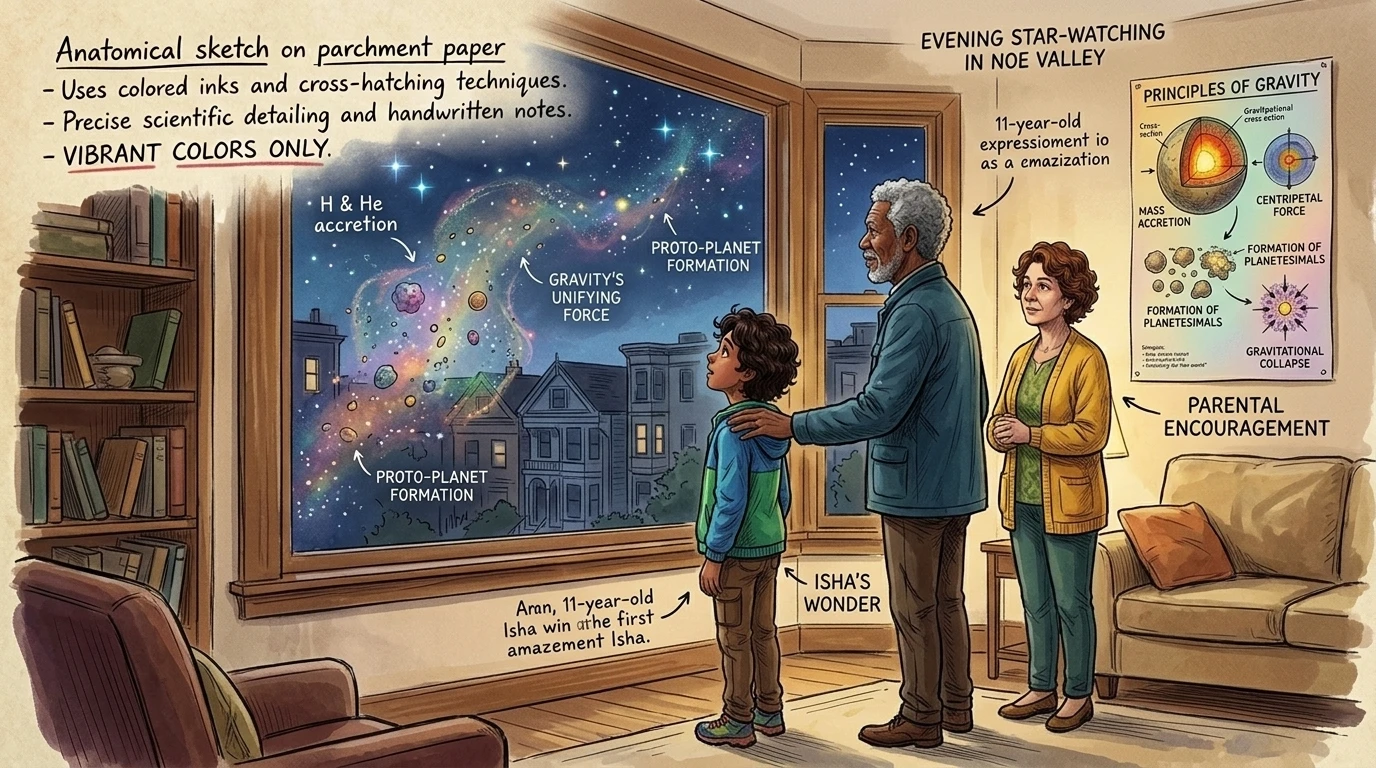
Isha ran to the window and looked up at the darkening sky, where the first evening stars were beginning to appear. "Everything on Earth is really a piece of…
Isha ran to the window and looked up at the darkening sky, where the first evening stars were beginning to appear. "Everything on Earth is really a piece of space," she whispered in amazement. Her father joined her, putting a hand on her shoulder. Her mother watched them and asked a new question. "It is. But if the stars are so far away, what powerful force pulled all that starstuff together to form our world in the first place?"

Isha ran to the window and looked up at the darkening sky, where the first evening stars were beginning to appear. "Everything on Earth is really a piece of space," she whispered in amazement. Her father joined her, putting a hand on her shoulder. Her mother watched them and asked a new question. "It is. But if the stars are so far away, what powerful force pulled all that starstuff together to form our world in the first place?"

About this story

  • Location: England
  • Audience: kids (ages 6–12)

Read Wonder Science on your phone

Wonder Science is available on Android. Get Wonder Science on Google Play.

More Wonder Science stories

All Wonder Science stories · Open the library