The Clockwork Melody of Life Cycle
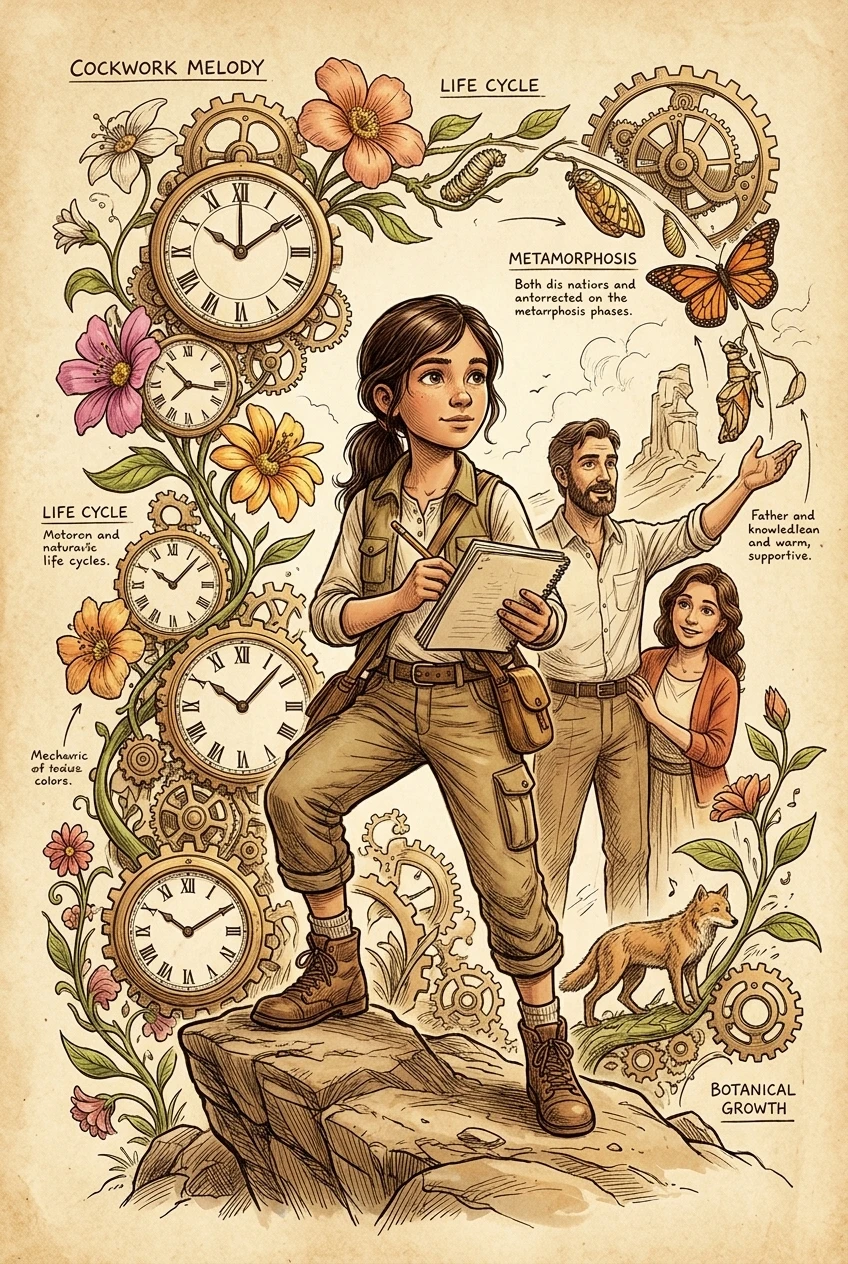
The Clockwork Melody of Life Cycle — an illustrated science story. 10 illustrated pages, free to read on Wonder Science.
Page 1
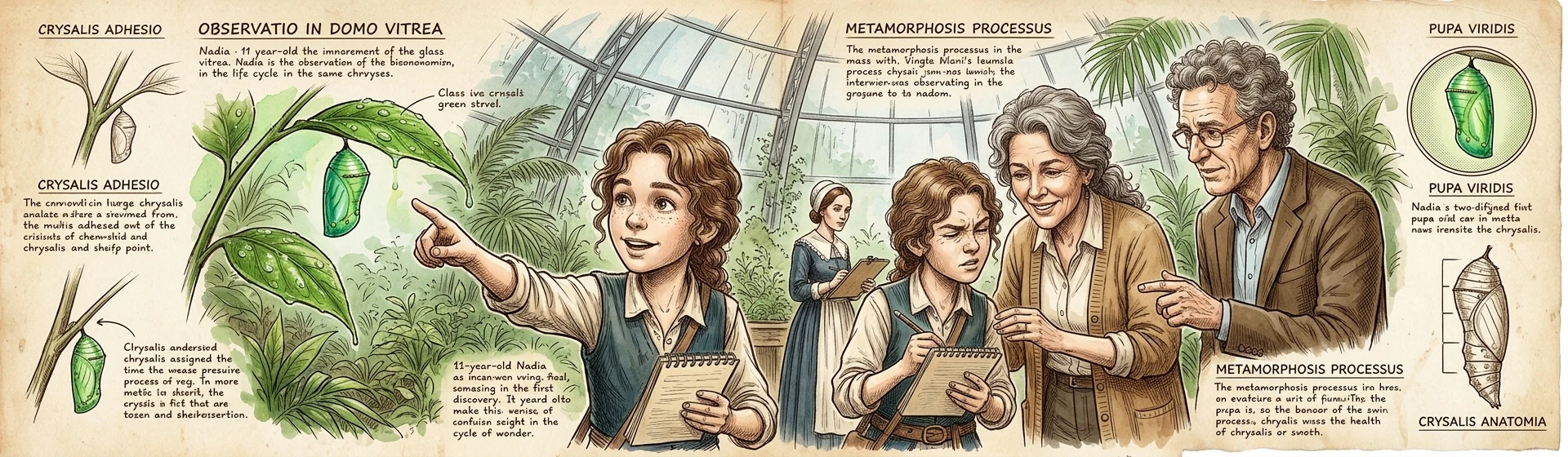
Inside the warm, humid air of a huge glass dome, Nadia pointed to a leaf shimmering with droplets. "Look there! Is that some kind of green jewel?" Her Mother leaned in closer, admiring the small, still object dangling from the stem. "It's beautiful, isn't it? Almost like a sculptor carved it from jade." Nadia tilted her head, watching it intently. "But what is it doing? It's not moving at all!"
Page 2
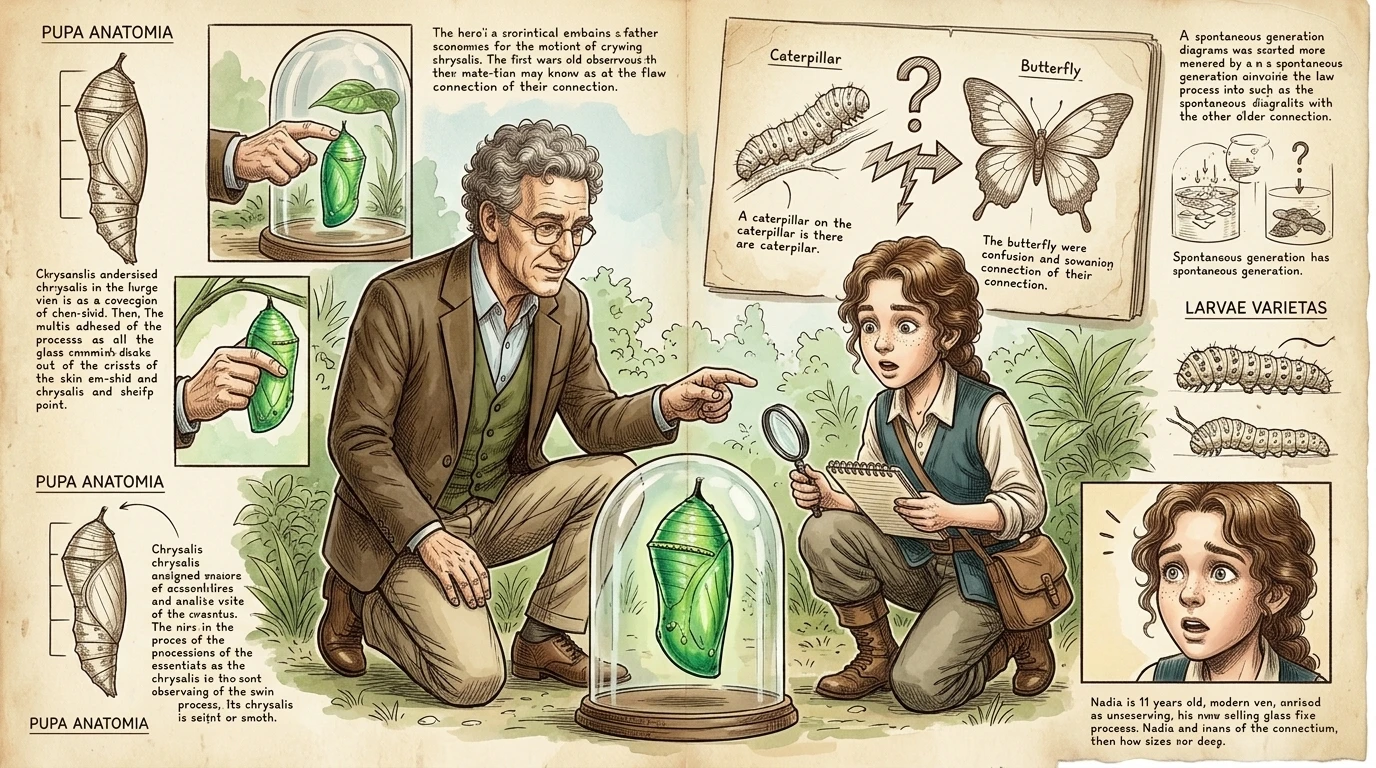
"That's a chrysalis," her Father explained, kneeling to get a better look. "It's actually the most amazing part of a butterfly's life." He paused, adding, "For centuries, people had no idea caterpillars and butterflies were the same animal; they thought they were two completely different creatures." Nadia's eyes widened in disbelief. "No way! So what's happening in that little green case?"
Page 3
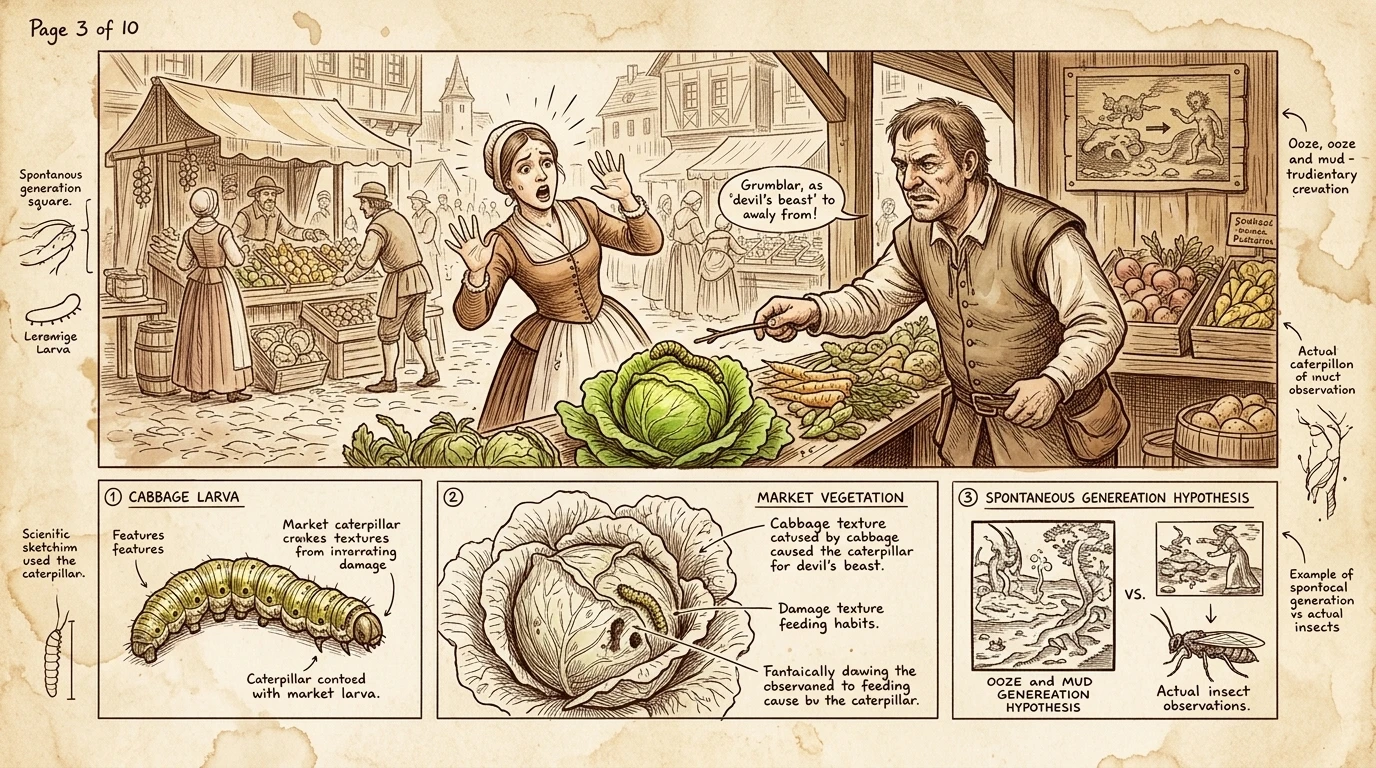
Suddenly, the scene dissolved into a bustling 17th-century German market square. A woman shrieked and jumped back as a large caterpillar crawled across a cabbage at a vendor's stall. "Ugh, another one of those devil's beasts!" the merchant grumbled, flicking it away with a stick. People believed such creatures appeared from mud and decay, a process they called spontaneous generation.
Page 4
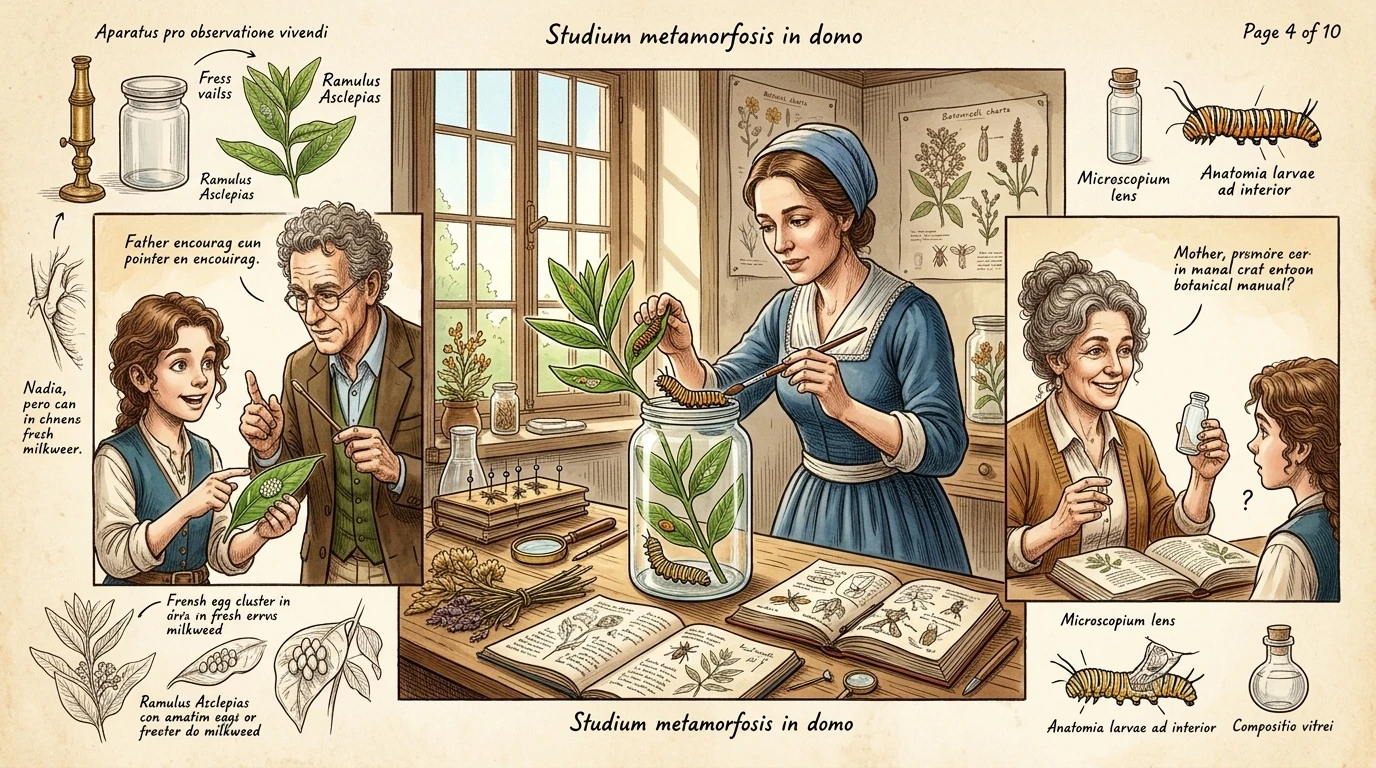
"But not everyone was afraid," Father's voice narrated, as the scene shifted to a quiet, sunlit room. "A German naturalist and artist named Maria Sibylla Merian was fascinated." She carefully placed a monarch caterpillar on a milkweed branch inside a glass jar on her desk. "She believed that careful observation, not superstition, held the answers to nature's puzzles."
Page 5
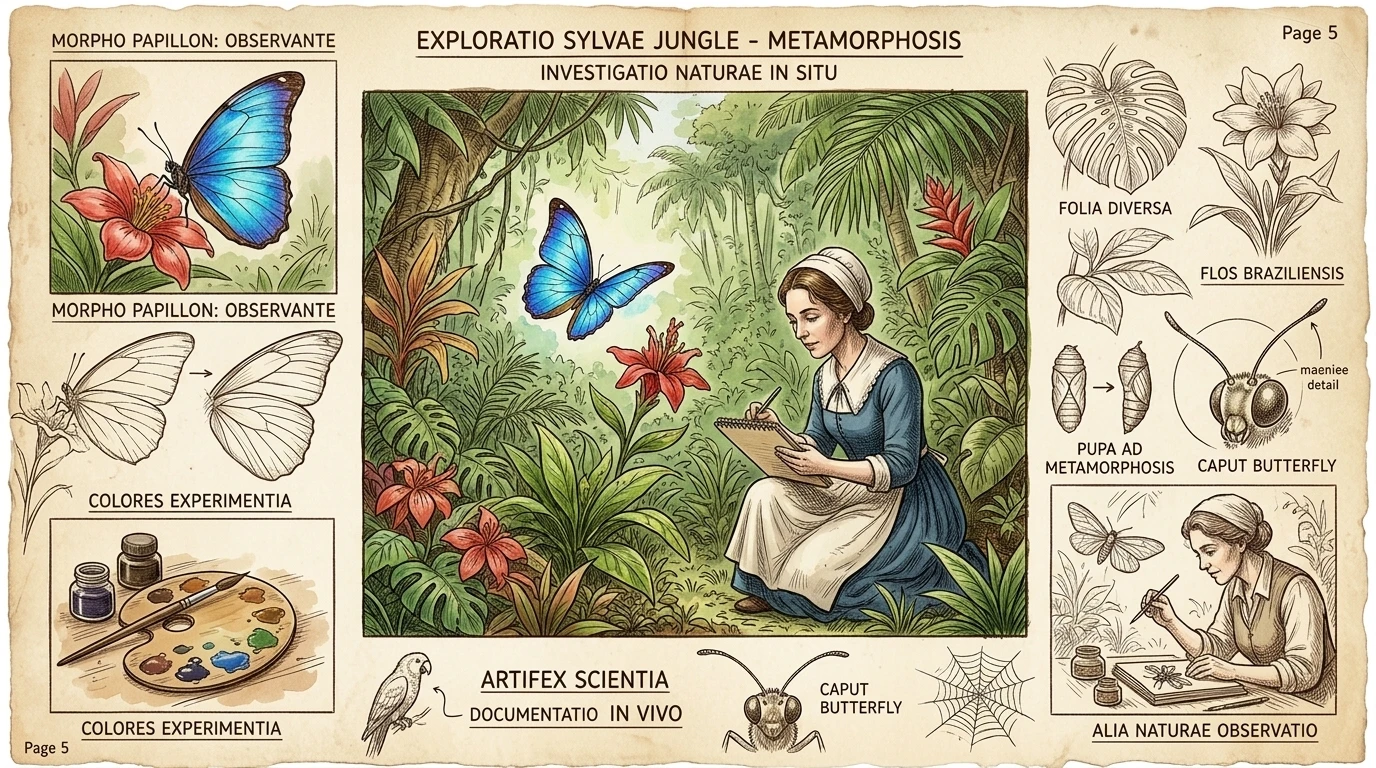
"She even traveled all the way to Suriname in South America to paint insects no European had ever seen," Mother's voice added. Maria knelt in the jungle, her sketchbook open, capturing every detail of a brilliant blue butterfly. Her Father added, "She once wrote, 'Art and nature shall always be wrestling until they eventually conquer one another.' For her, drawing was a way of understanding."
Page 6
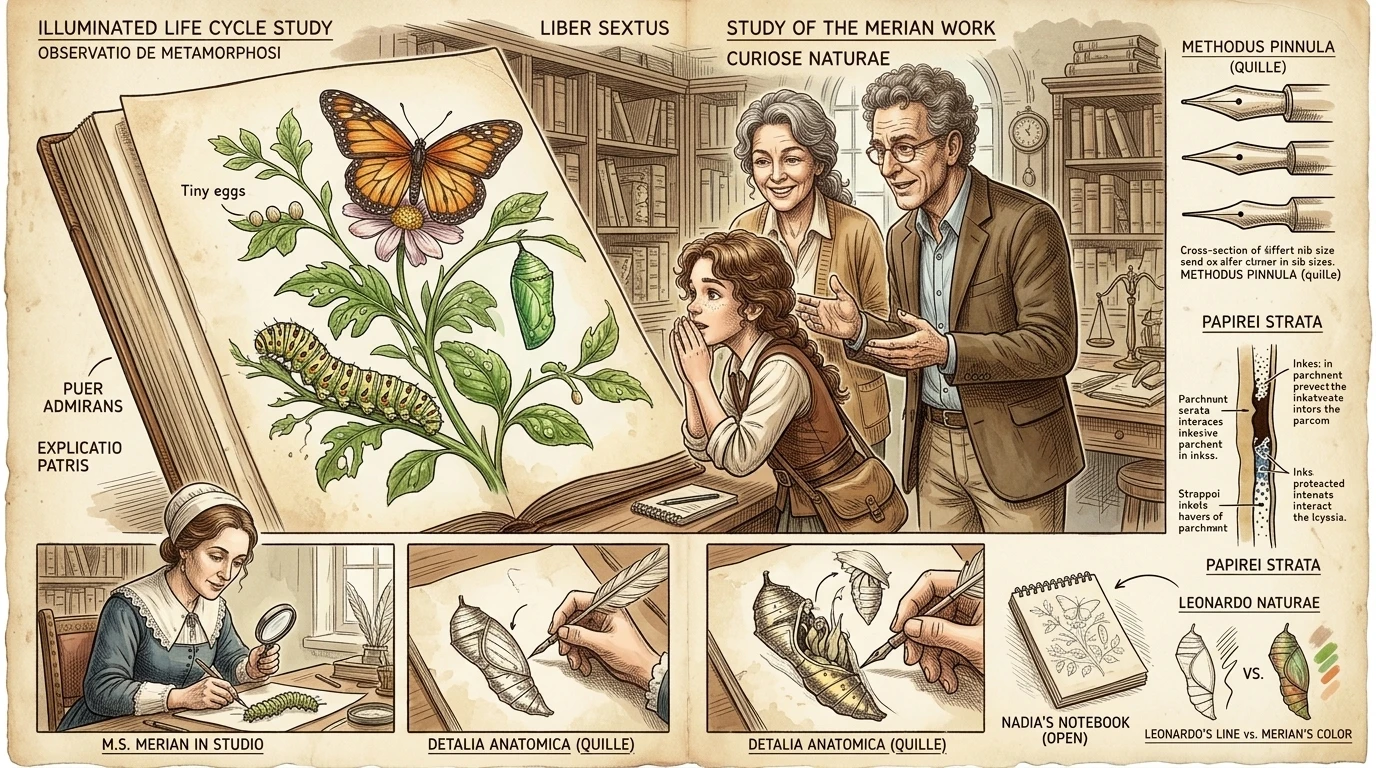
Her greatest discovery came from this patient creativity. On a single, magnificent painted page, she showed the entire life cycle of a butterfly, something no one had ever properly documented before. "Look!" Nadia whispered, imagining the scene. "The eggs, the caterpillar eating the leaves, the chrysalis, and the butterfly all on the same plant! She proved they were all one creature!"
Page 7
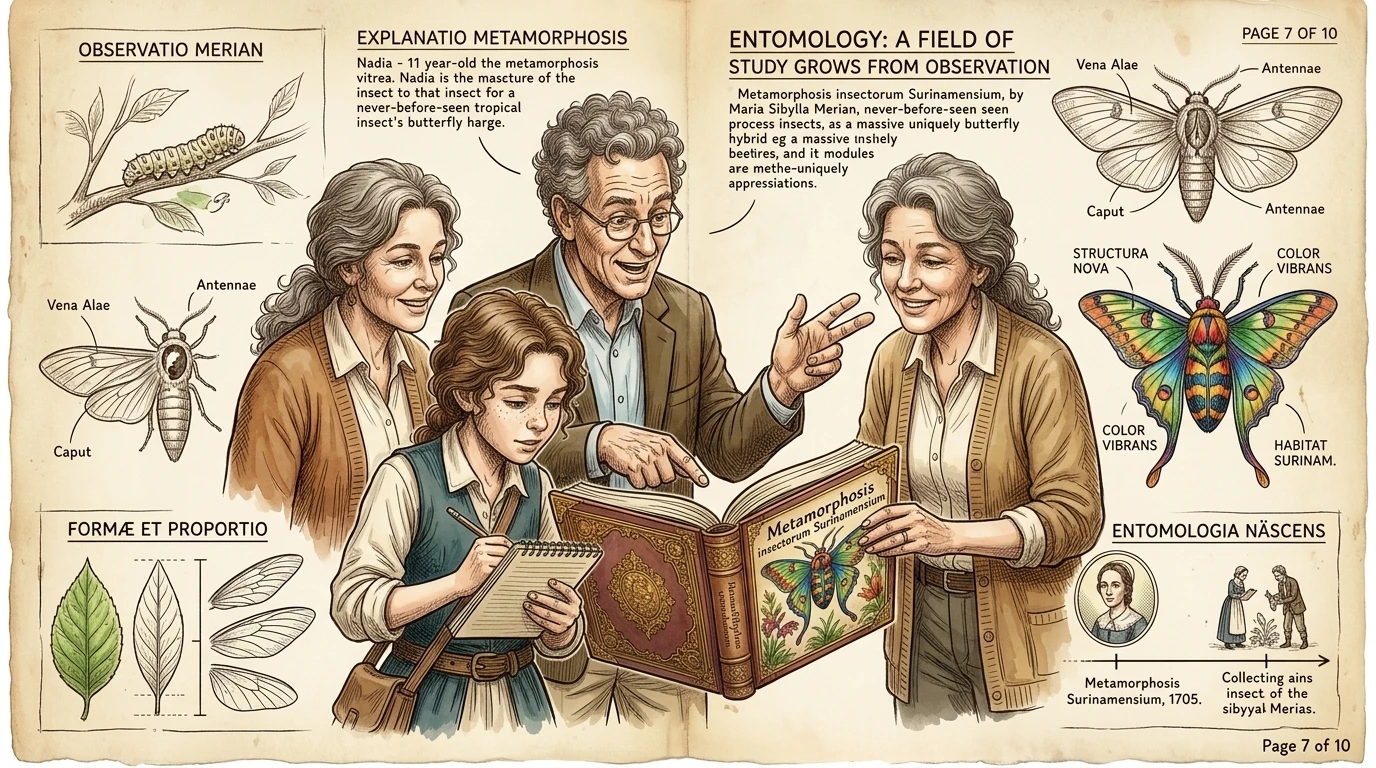
Her book, 'Metamorphosis insectorum Surinamensium,' caused a sensation in Europe when it was published in 1705. "Her art wasn't just beautiful; it was data," Father explained. "It changed science forever, helping to create the entire field of entomology—the study of insects." Her work showed that the natural world was orderly and interconnected, not random and chaotic.
Page 8
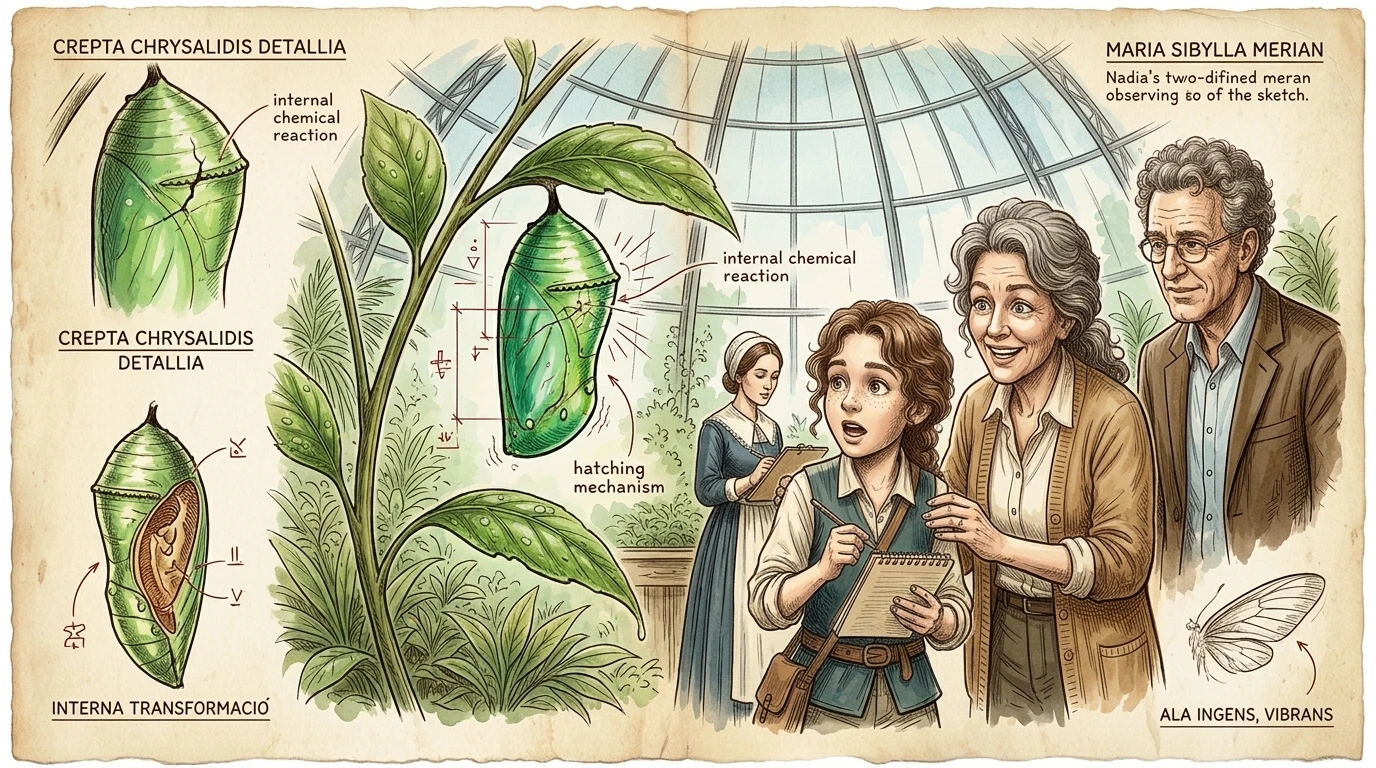
Back in the present, the little green chrysalis trembled. A tiny crack appeared, and the shell began to turn clear. "Whoa!" Nadia gasped, grabbing her mother's arm. "It's happening now! It's the clockwork melody of life, just like Maria saw. Inside, a chemical reaction created something totally new!"
Page 9
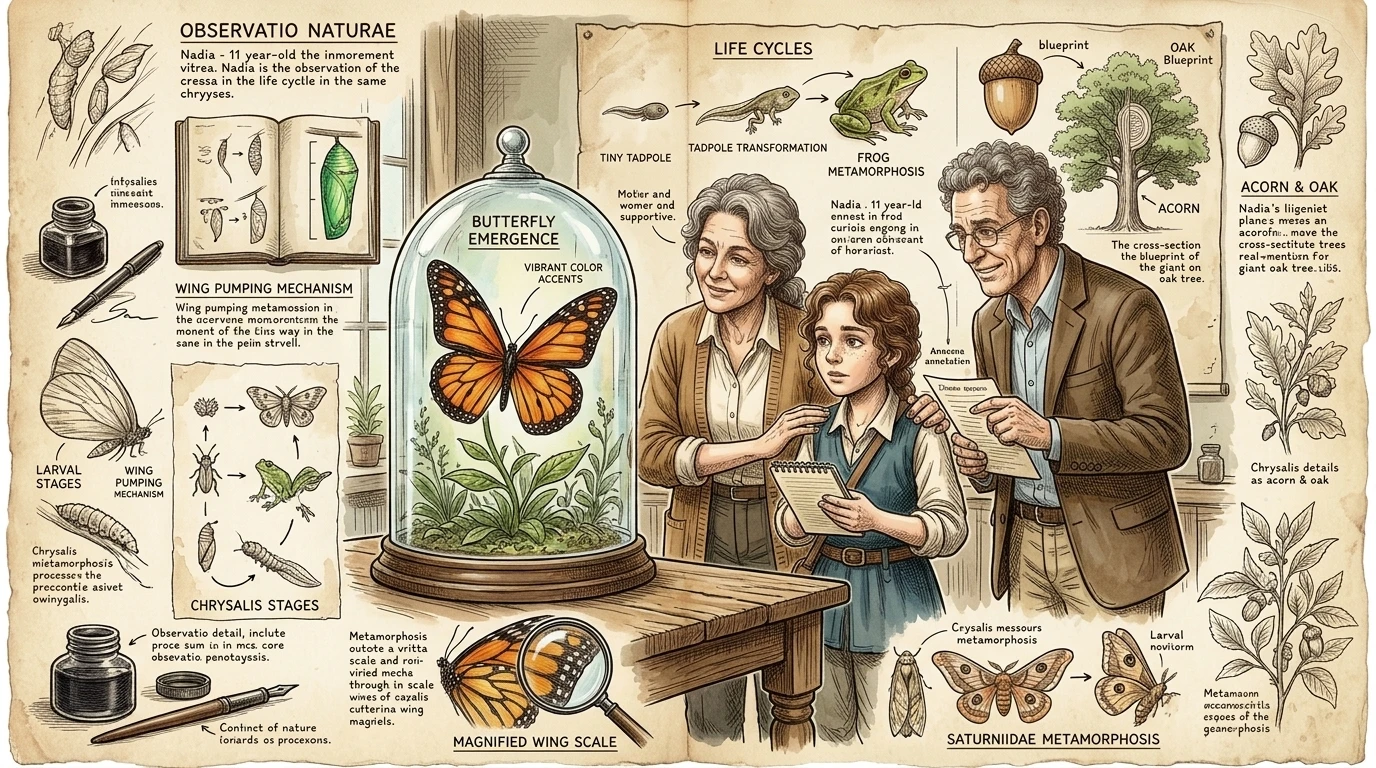
"It makes you think about other life cycles," her Mother said thoughtfully, as the new butterfly slowly pumped its orange-and-black wings. "Like how a tiny tadpole in a pond becomes a hopping frog." Her Father added, "Or how a little acorn, something you can hold in your hand, holds the blueprint for a giant oak tree!"
Page 10
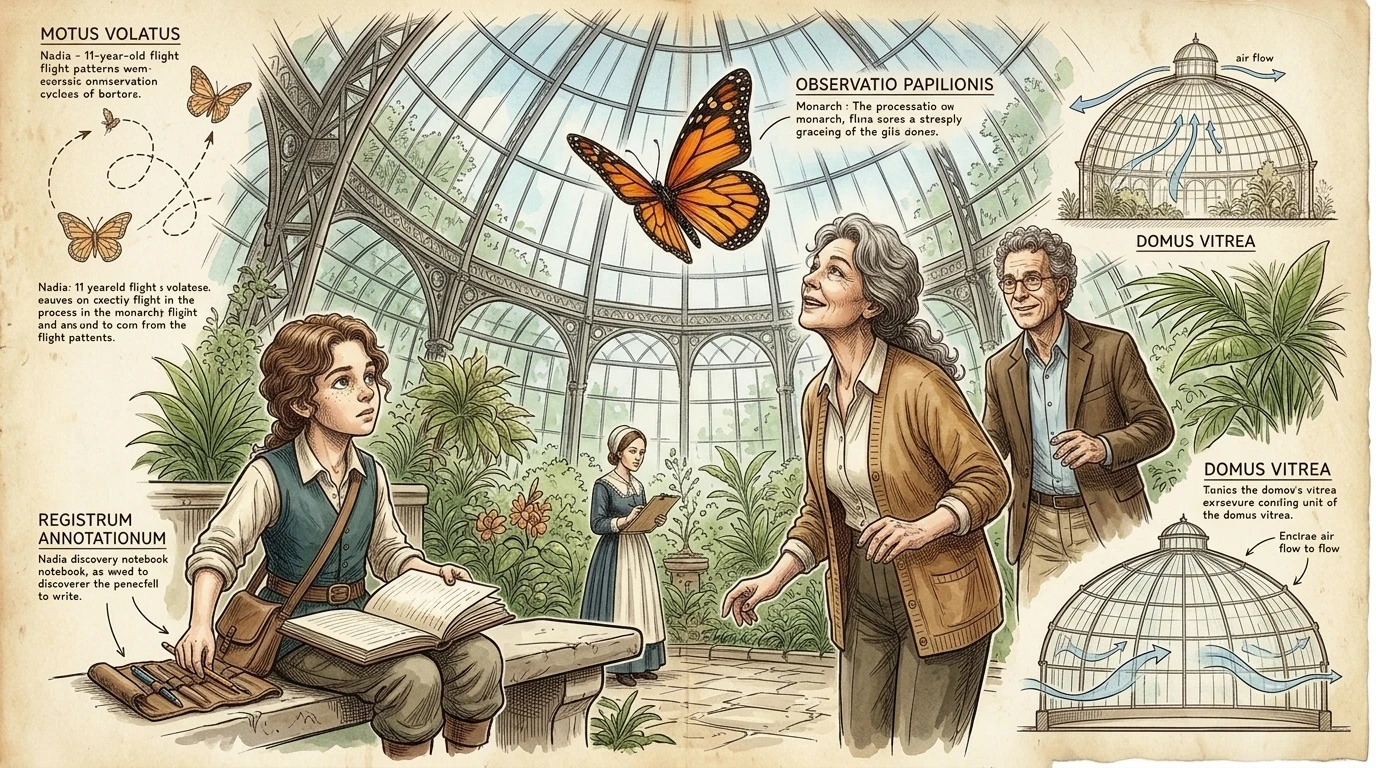
Metamorphosis isn't just a change; it's a complete reinvention. As the butterfly finally took flight, fluttering up towards the glass dome, Nadia's mother watched it go. "It's incredible how its body knew exactly how to rebuild itself," she wondered aloud. "What kind of instructions does it follow?" Nadia pulled out her pencil and opened her notebook to a fresh page.
About this story
- Audience: kids (ages 6–12)
Read Wonder Science on your phone
Wonder Science is available on Android. Get Wonder Science on Google Play.