The Biology of Climate Change
The Biology of Climate Change — an illustrated science story. 10 illustrated pages, free to read on Wonder Science.
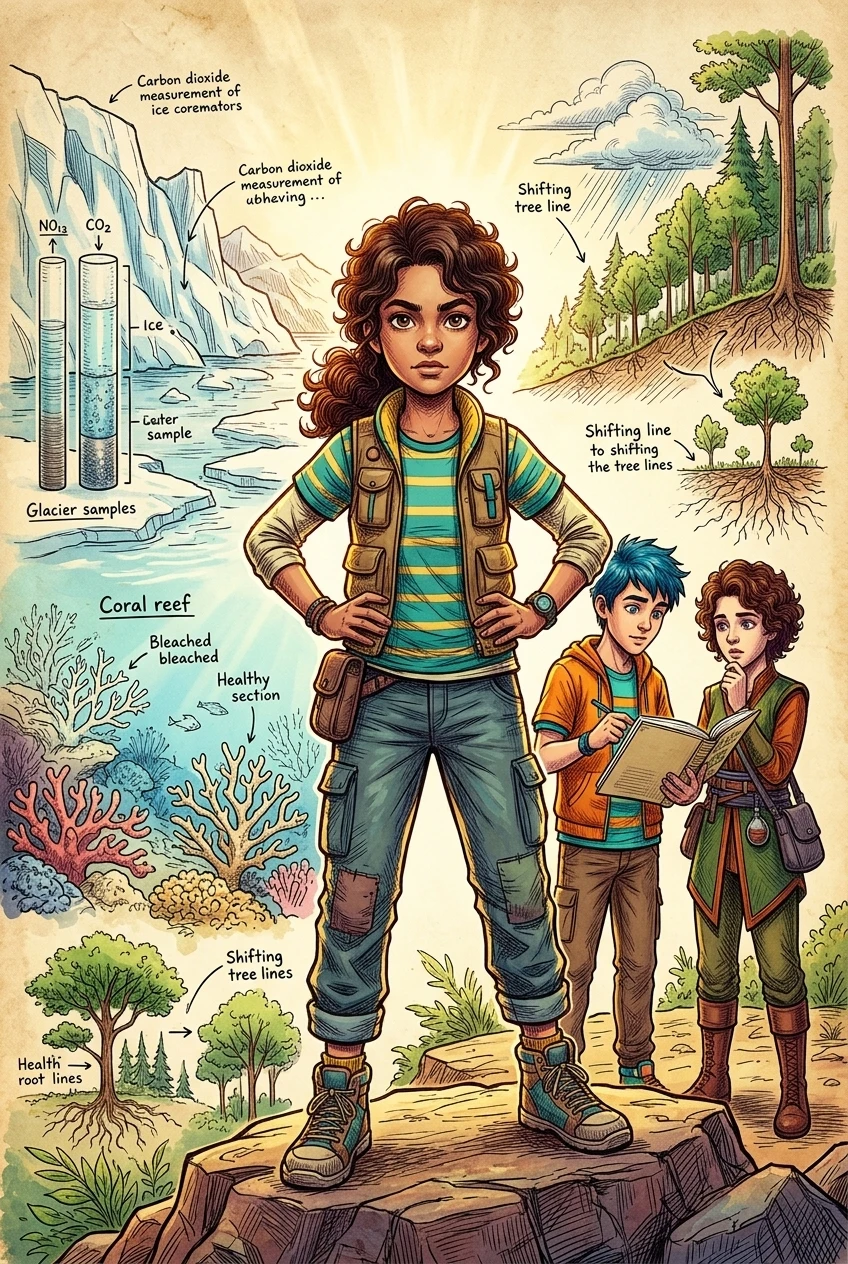
Page 1
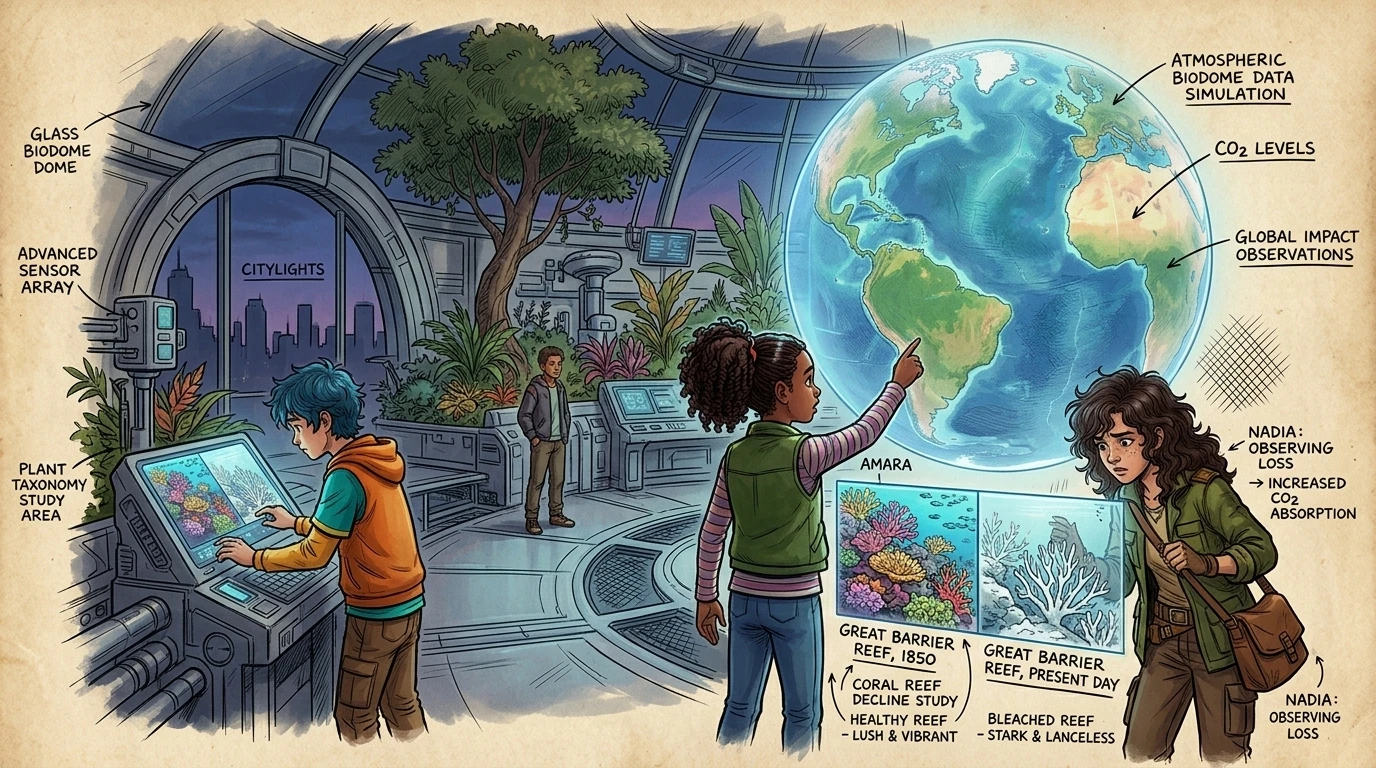
From the space station's biodome, Amara pointed a finger at the huge holographic Earth. "Look at the Great Barrier Reef... the colors on the live feed are so much paler than in the old photos." Hiro brought up a century-old image for comparison, the vibrant corals standing in stark contrast to the modern, ghostly white ones. Nadia leaned forward, her reflection captured on the screen, her expression turning somber.
Page 2
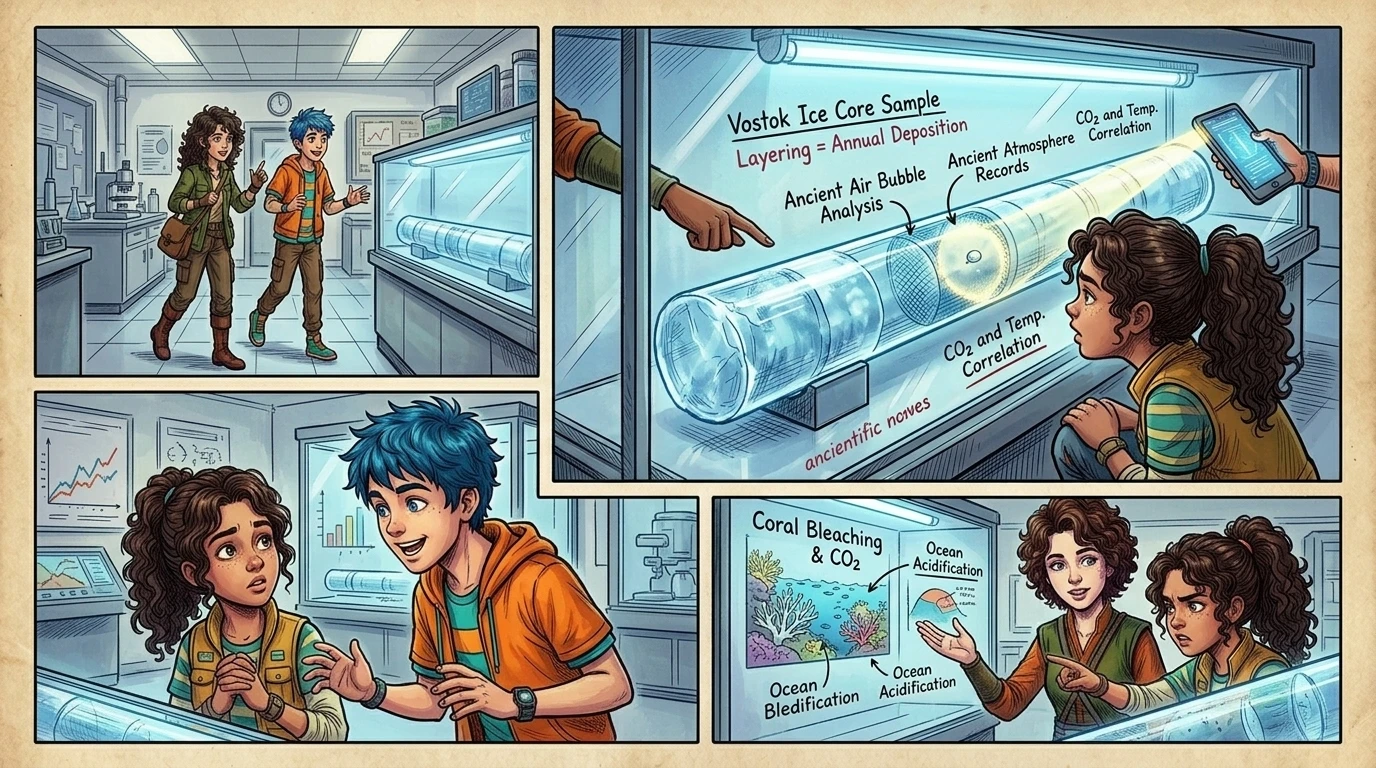
"It's called coral bleaching," Nadia said softly, gesturing toward a brightly lit display case in their science lab. "This ice core holds a clue from the past." Hiro tapped his datapad, projecting a beam of light onto the core. "These trapped bubbles let us read ancient air, like a secret code." Amara knelt down, her nose almost touching the glass as she spotted one perfectly preserved bubble. "If we crack the code, can we figure out why the corals are getting sick?"
Page 3
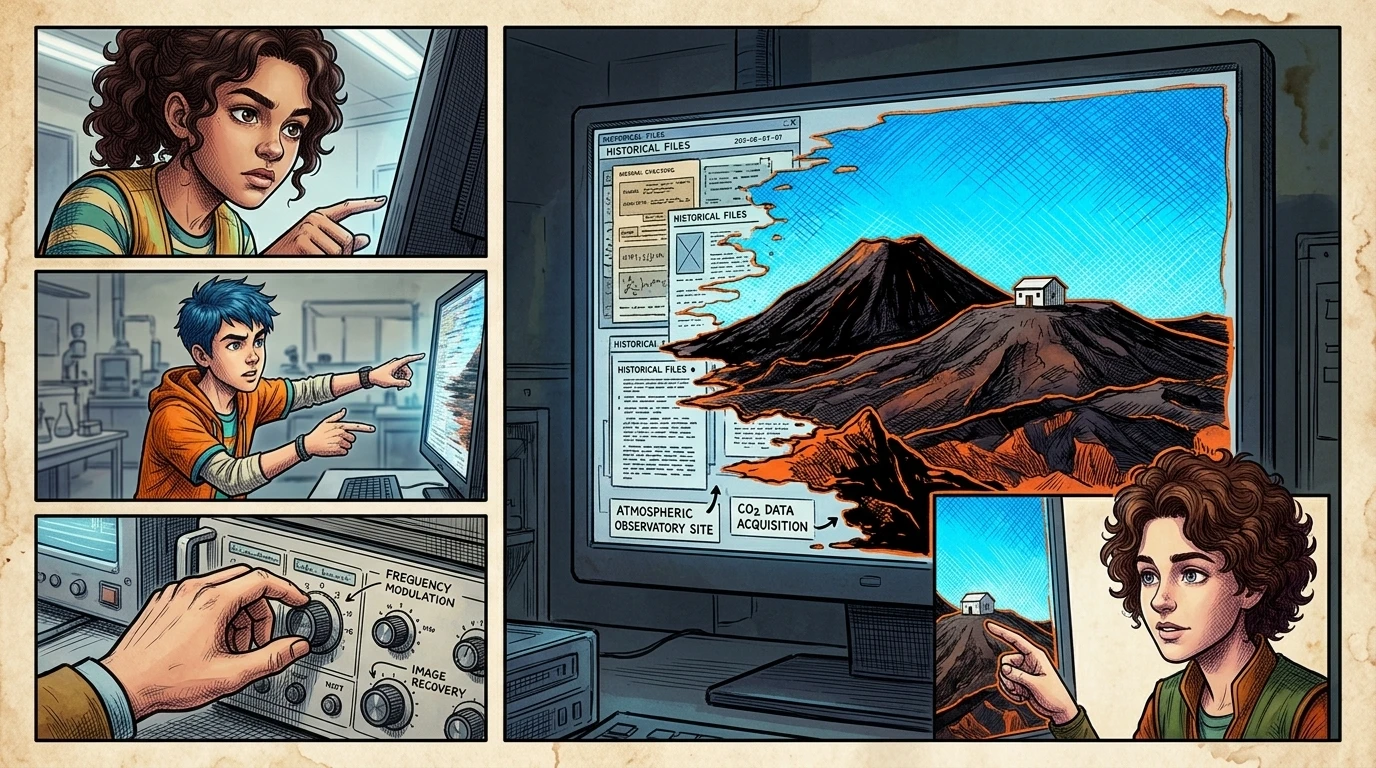
"This code was a huge puzzle for a long time," Hiro explained, swiping a historical file onto the main screen. "To understand it, we have to go back to the 1950s, to a scientist who decided to measure the air itself with more precision than anyone ever had." The lab's display flickered, dissolving from their station to a stark, rocky landscape under a brilliant blue sky. A lone, simple building stood on the side of a massive, dark volcano.
Page 4
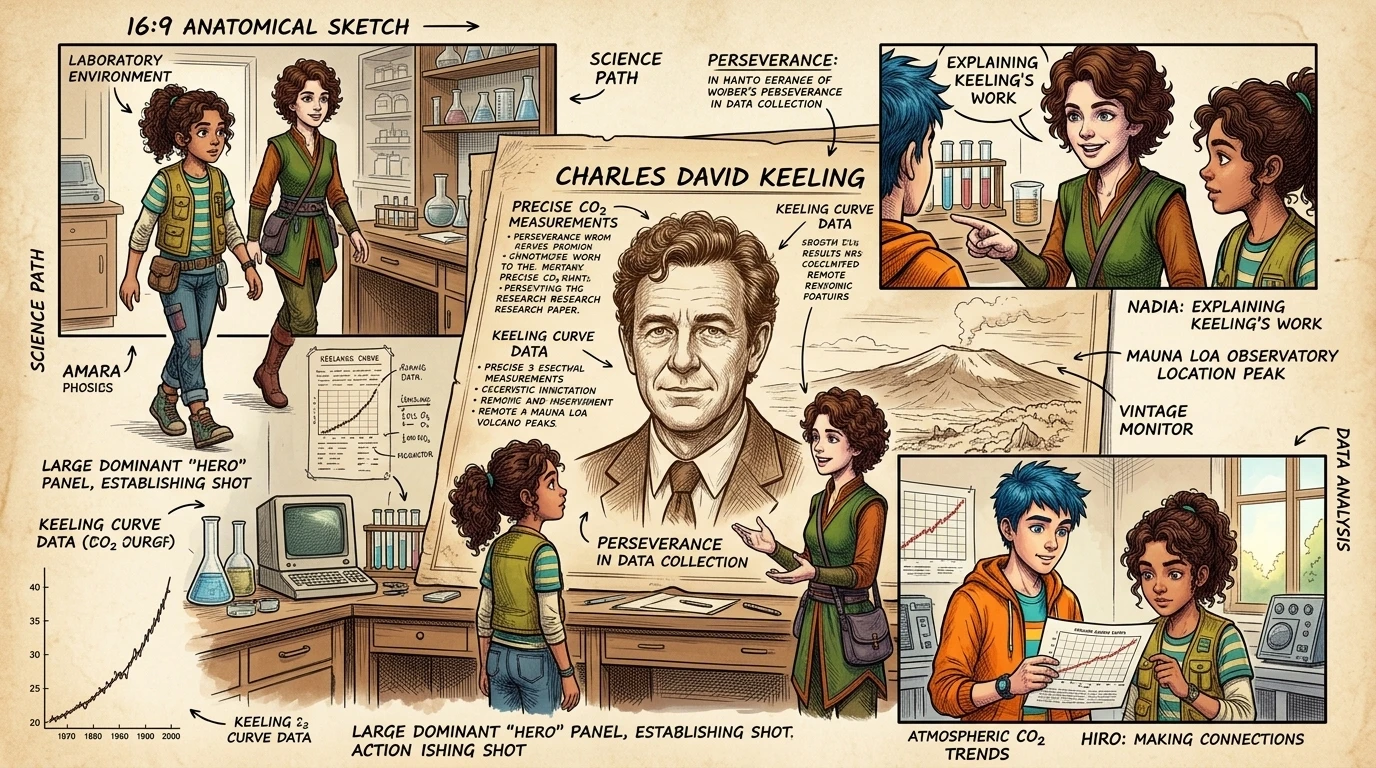
"That's the Mauna Loa Observatory, and this is Charles David Keeling," Nadia said, as an old photo of a focused man appeared. "He knew that to get a true measurement of Earth's atmosphere, he had to get as far away from cities and forests as possible." Keeling believed the secret was perseverance: measuring the same thing, in the same remote place, over and over again without fail. His dedication to accuracy was the key that would finally crack the code.
Page 5
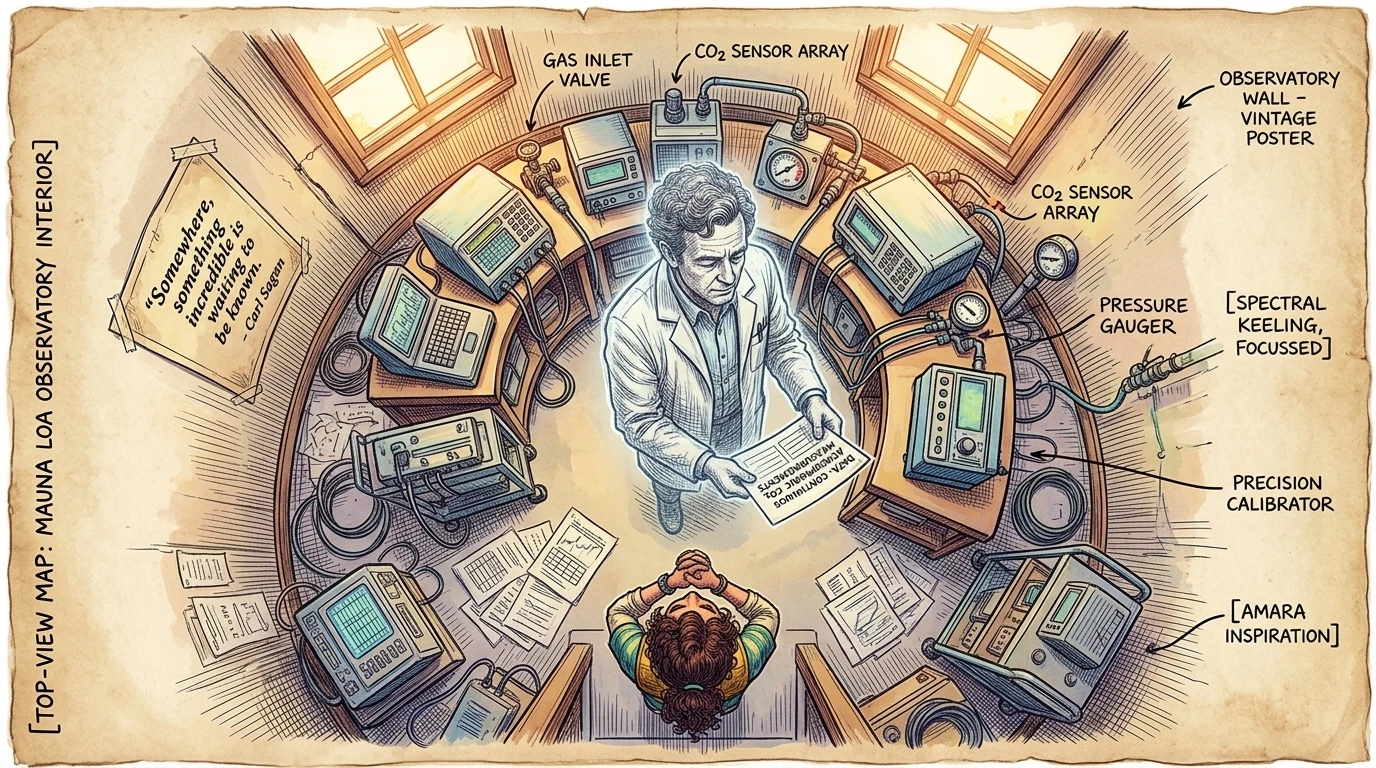
"His funding almost ran out after just two years, and people told him his work was 'just routine' data collection," Hiro noted grimly. "But Keeling fought tooth and nail to keep the project going because he suspected something important was happening." Amara watched the ghostly image of the scientist working tirelessly. "He reminds me of what the astronomer Carl Sagan said: 'Somewhere, something incredible is waiting to be known.' He just had to persevere."
Page 6
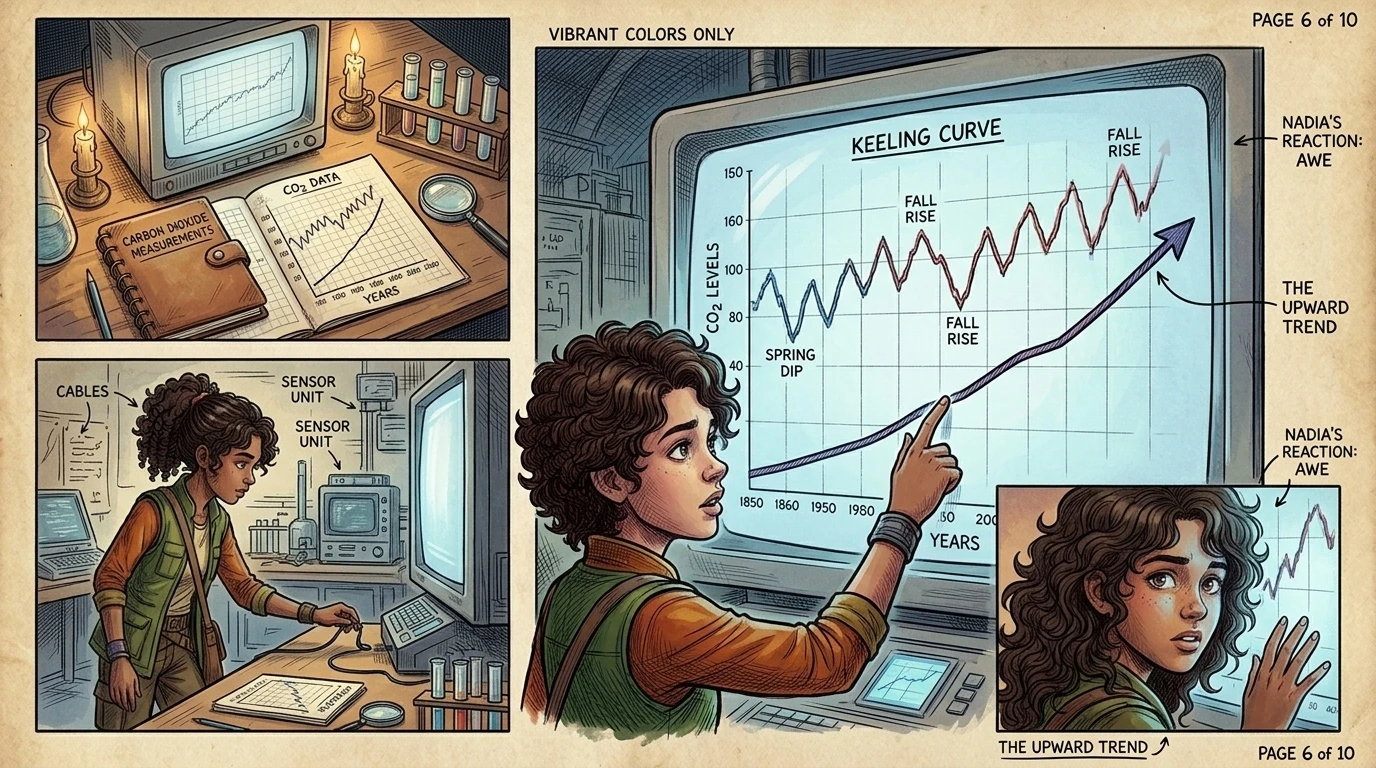
"And then, after months of meticulous work, he found it," Nadia whispered, as a graph began to draw itself on the historical display. "The planet was breathing! CO2 levels dropped in the spring as Northern Hemisphere plants grew, and rose in the fall as they decayed." But beneath that yearly zigzag, the data revealed a shocking, unmistakable trend. The entire line was going steadily up.
Page 7
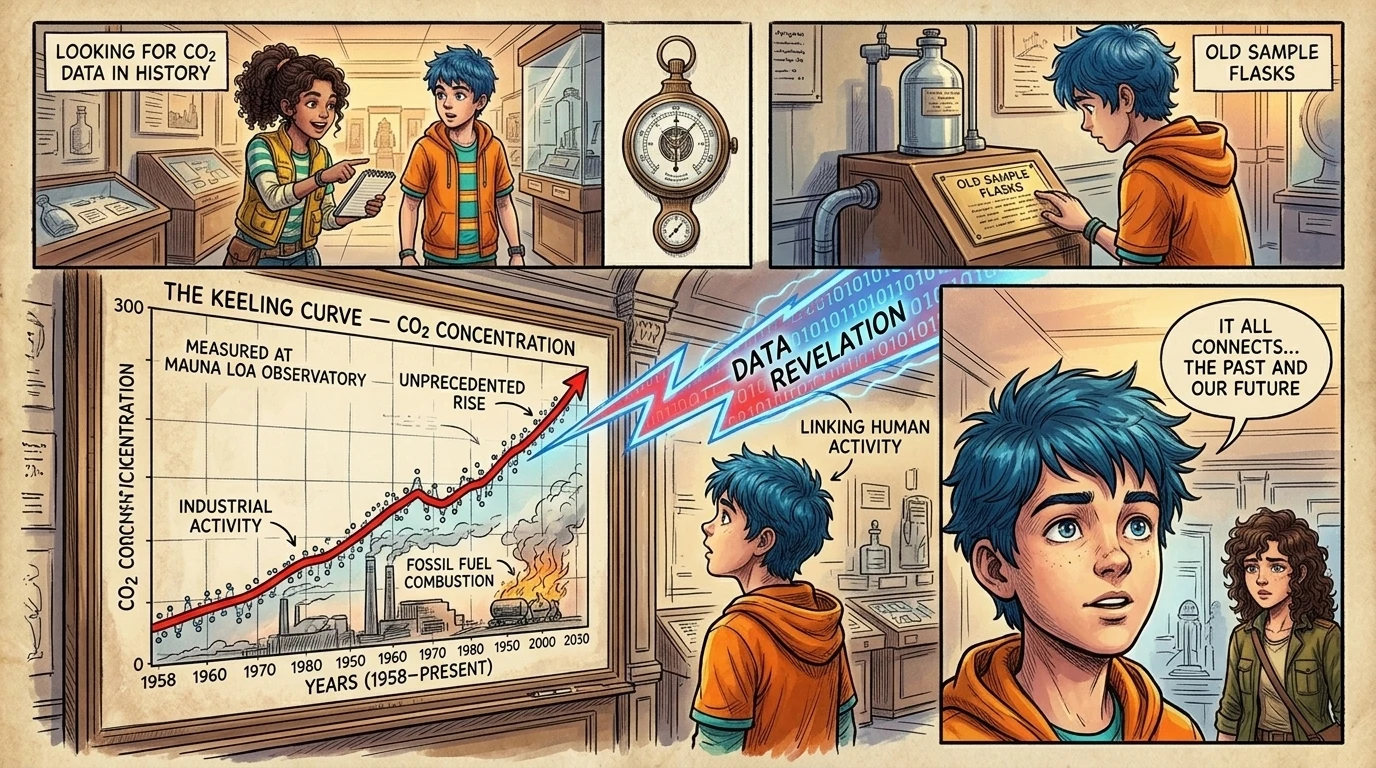
"That rising line was the first undeniable proof of what was happening to our world," Hiro said, his voice filled with awe. "The code was cracked: human activity was adding carbon dioxide to the atmosphere faster than the planet could absorb it." That one simple, persistent measurement from a remote volcano changed everything. Sometimes a lightning bolt of data can be five times hotter and more illuminating than the surface of the Sun.
Page 8
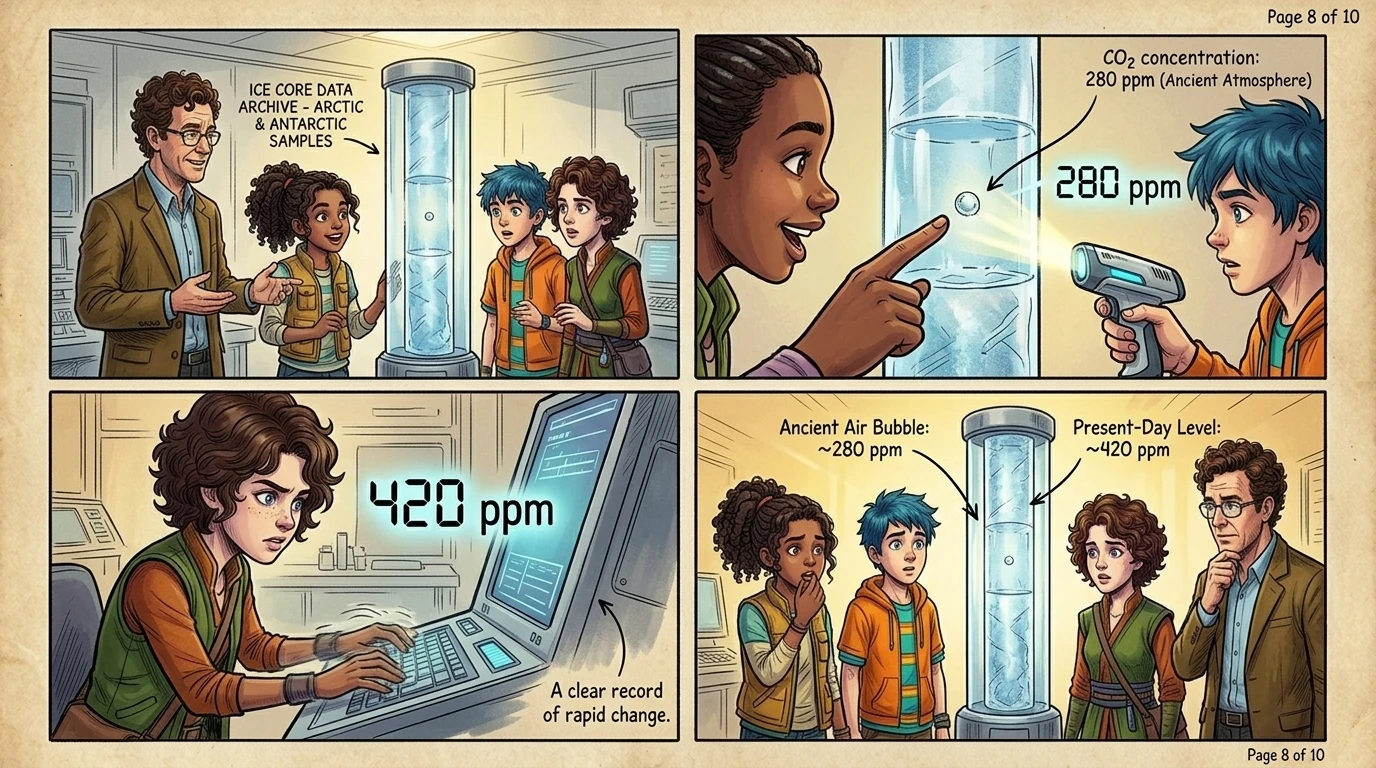
Back in the space station lab, Amara pointed excitedly at the ancient bubble in the ice core. "So this bubble has air from before the industrial revolution!" Hiro aimed a handheld scanner at the core, and a number flashed in the air: '280 ppm'. "And the live reading from Mauna Loa today?" Nadia asked, typing on her console. A new number appeared beside the first: '420 ppm'. The silence in the lab was deafening.
Page 9
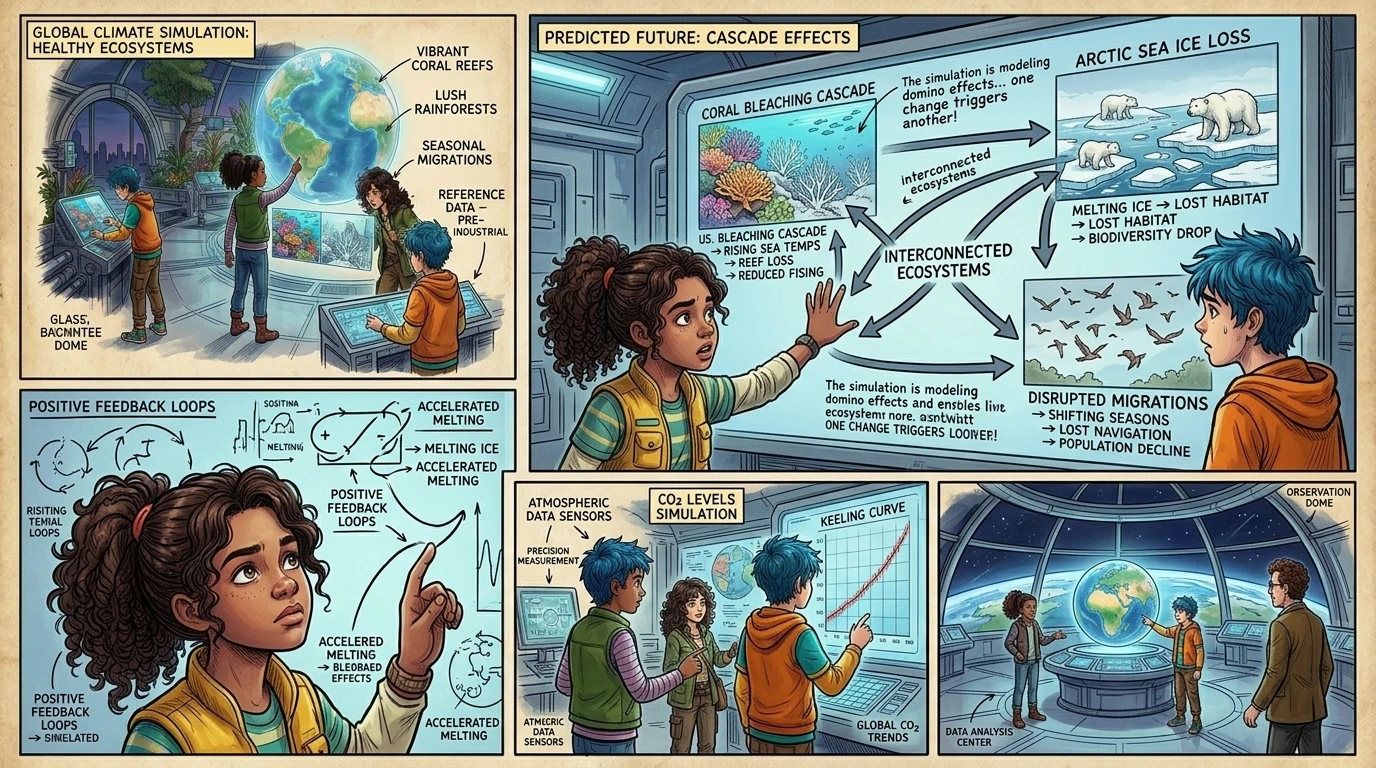
"And that huge difference is what changes everything for life on Earth," Nadia explained, pulling up a simulation. "It warms the ocean and makes it more acidic, which is what's killing the corals." "It melts sea ice, changing where polar bears can hunt, and it messes with the seasons that migrating birds rely on," Hiro added grimly. Amara watched the simulation of a vibrant ecosystem collapsing. "So the air, the ocean, and all the animals... they're all connected."
Page 10
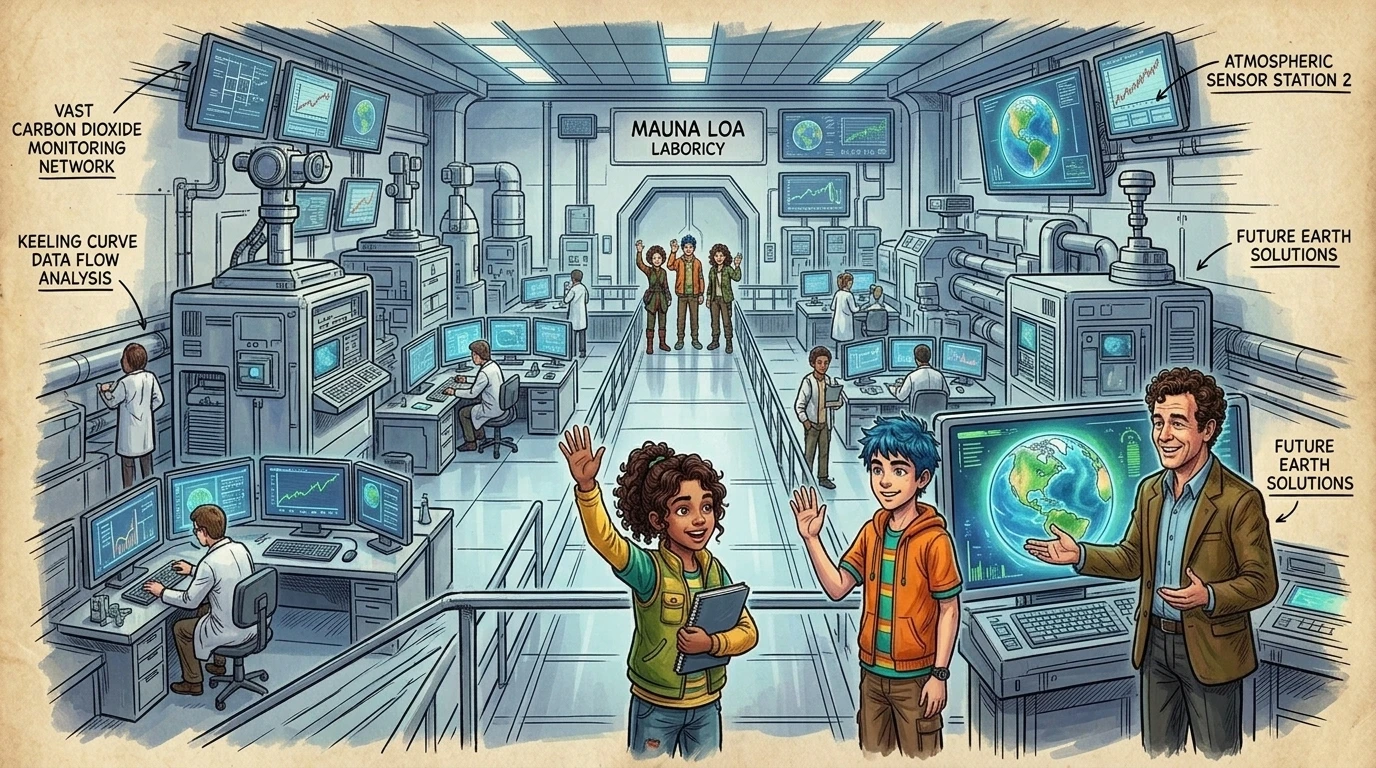
Amara opened her small notebook and wrote, "Discovery #7: Measuring one invisible gas can reveal the health of an entire planet." She looked at her friends, a new determination in her eyes. "Keeling's perseverance showed us the problem, so now we have to show the same perseverance to find solutions." Hiro nodded, looking at the Earth on the monitor. "So if burning fossil fuels is the problem... what's the best way to make clean energy for everyone?"
About this story
- Audience: kids (ages 6–12)
Read Wonder Science on your phone
Wonder Science is available on Android. Get Wonder Science on Google Play.