The Boy Who Caught Lightning
The Boy Who Caught Lightning — an illustrated science story. 10 illustrated pages, free to read on Wonder Science.
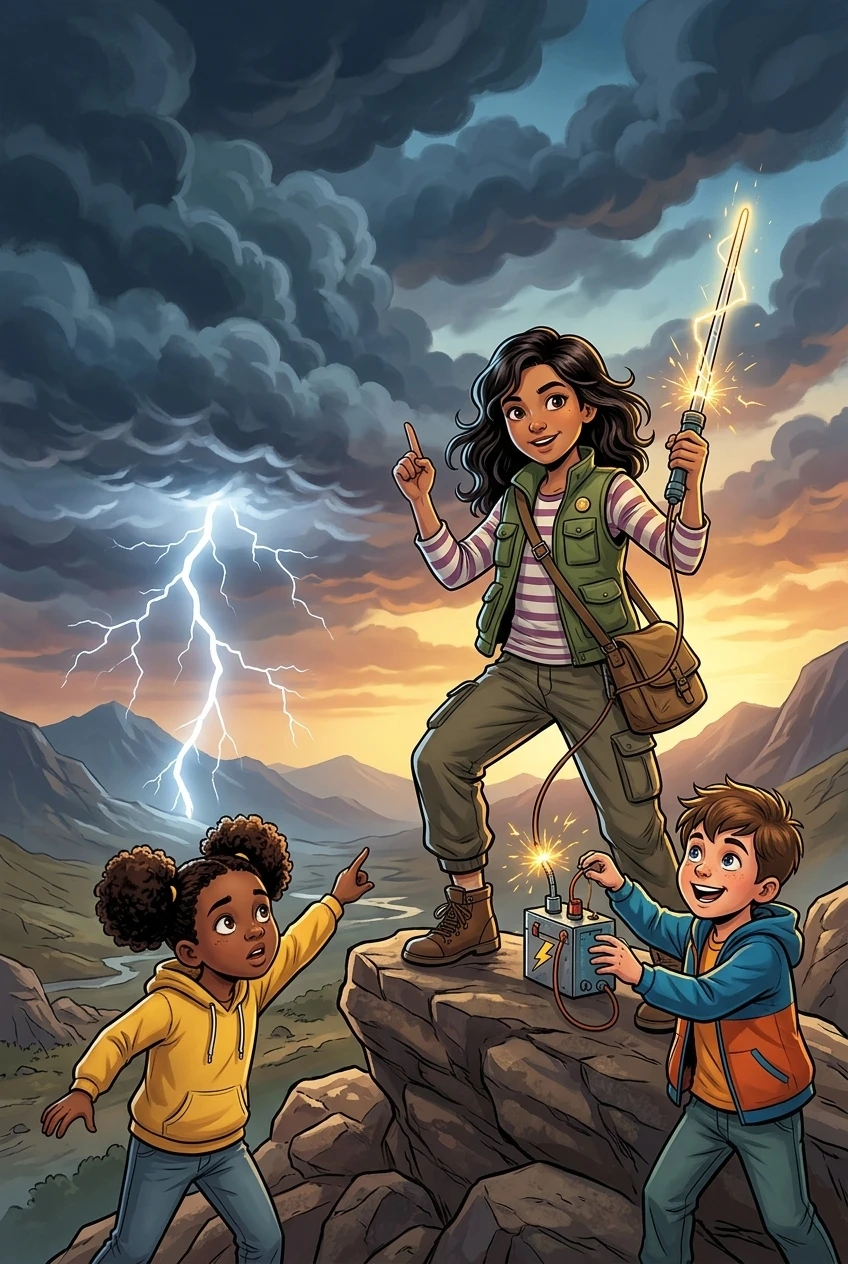
Page 1
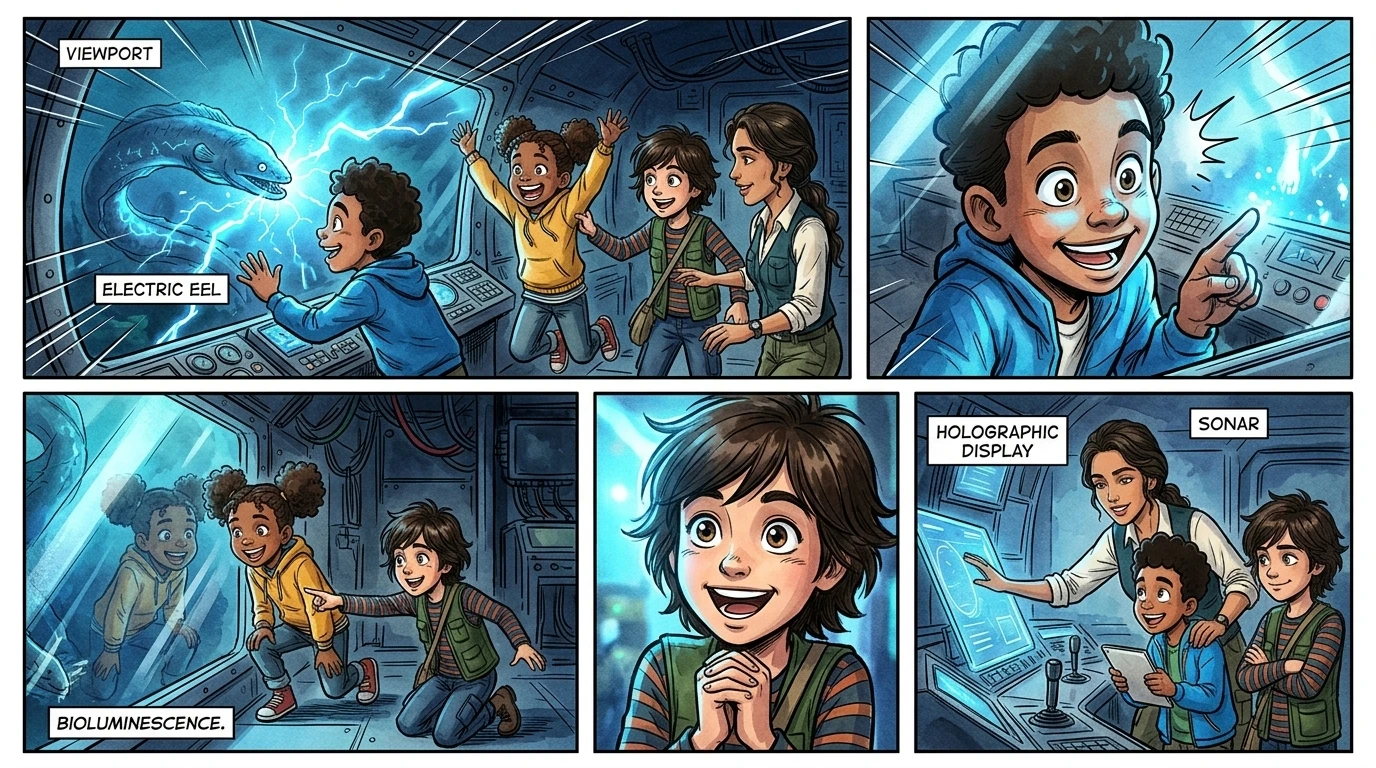
Inside the deep-sea research submersible, Anders pressed his face against the thick acrylic viewport. "Woah, look! That one glows like a firefly!" A giant electric eel, sleek and powerful, suddenly discharged a visible crackle of energy, illuminating the murky depths. Amara jumped back with a gasp, grabbing onto Clara's arm. "What was that?" Clara stared, her eyes wide with awe, and asked the scientist beside them, "Dr. Eva, was that... underwater lightning?"
Page 2
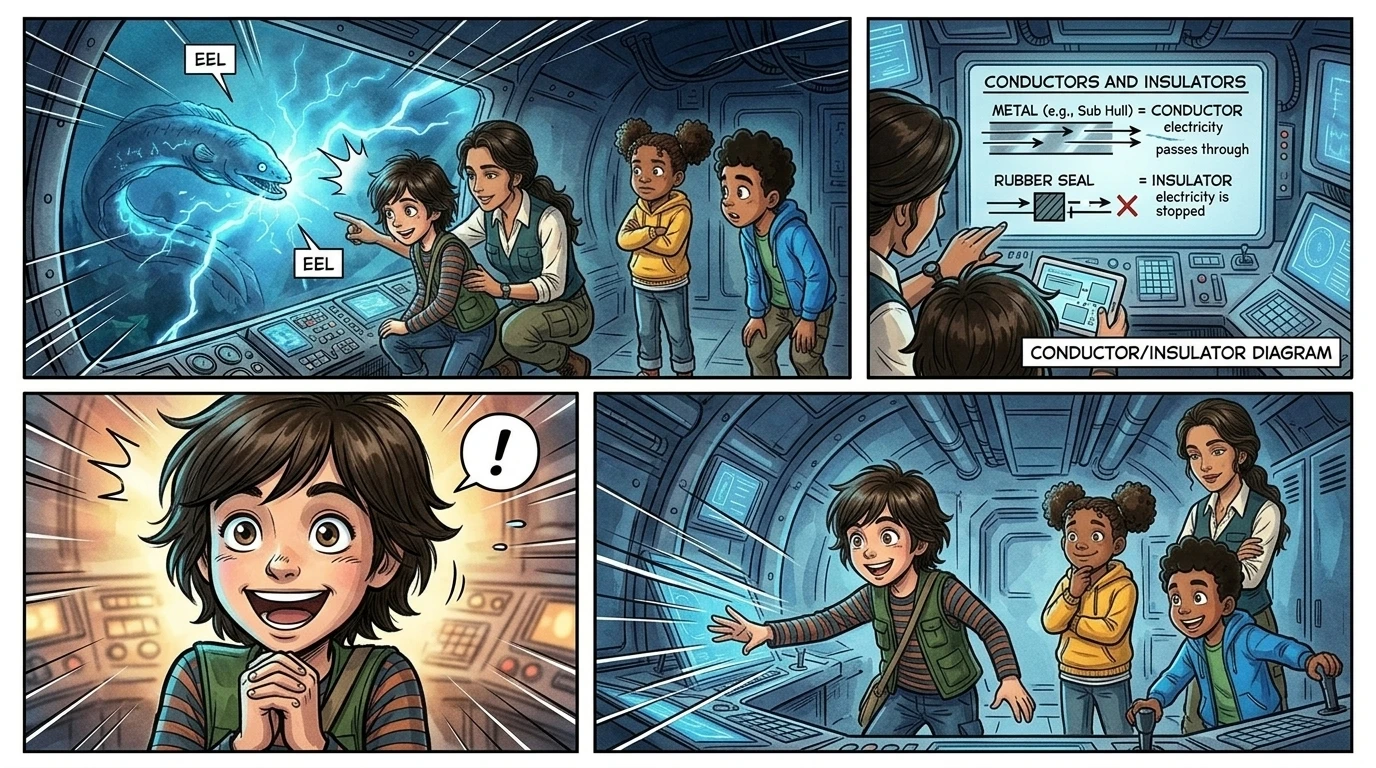
"That's a great question, Clara! It's called bioelectricity, but it works on the same principle as lightning," explained Dr. Eva, kneeling beside them. "Both are caused by the movement of tiny things called electrons." She pointed to the rubber seals around the viewport. "Some materials let electricity pass through easily—those are conductors. Others, like this rubber, stop it. Those are called insulators."
Page 3
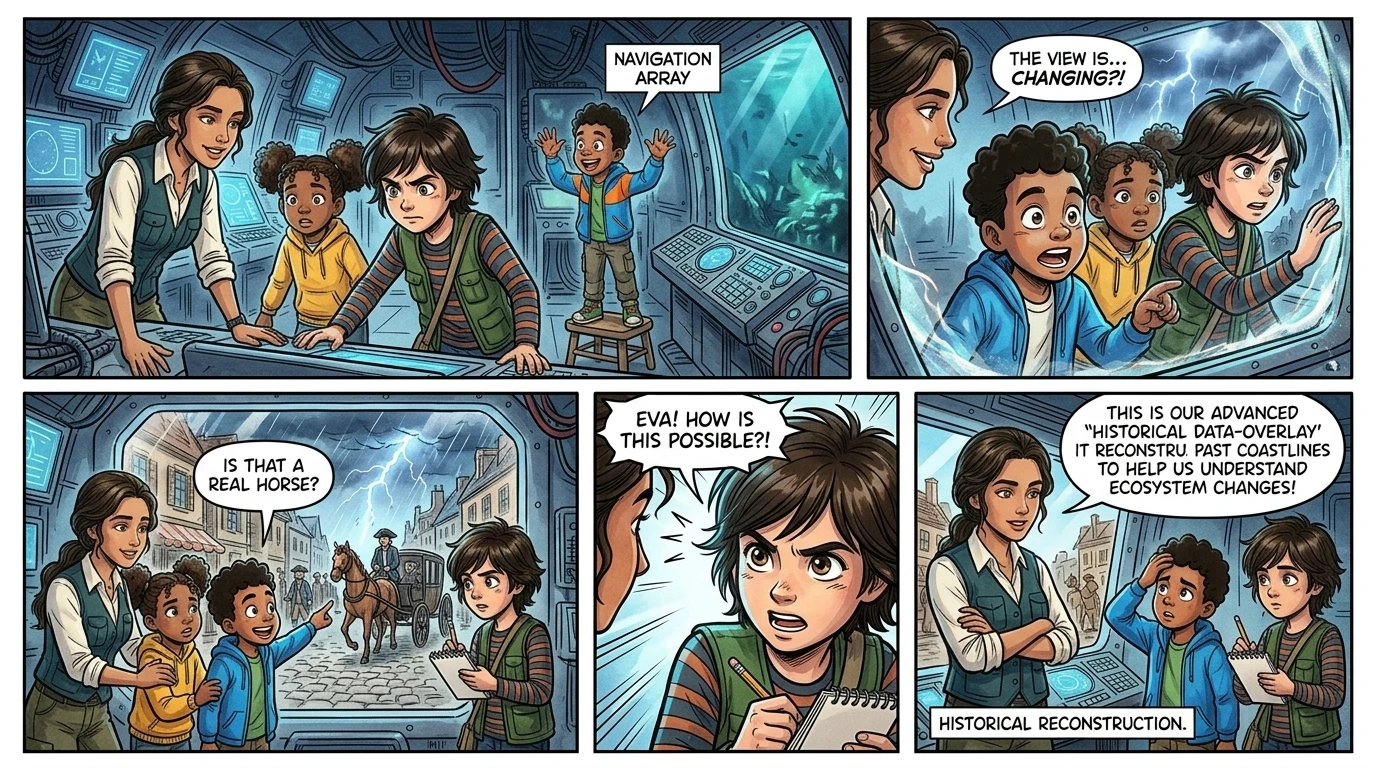
Dr. Eva smiled. "To understand that flash in the dark, we have to travel back in time, long before submersibles existed." The view outside the window seemed to shimmer and change, the deep ocean fading away. "Imagine a bustling city in the American colonies, around the year 1750, where thunderstorms were a terrifying and mysterious force of nature."
Page 4
"In that city lived a man who was curious about everything, from printing books to the nature of lightning itself," Dr. Eva's voice narrated. "His name was Benjamin Franklin, and he wasn't just a scientist; he was an inventor, a writer, and one of America's founders. But more than anything, he loved solving puzzles that nobody else could figure out."
Page 5
Franklin believed that lightning was just a giant spark of electricity, the same kind you could make by rubbing amber on wool. His friends warned him that it was too dangerous to prove. He simply smiled and said, 'An investment in knowledge pays the best interest,' quoting himself. He knew that understanding the world was the greatest reward of all.
Page 6
So, in June of 1752, he and his son flew a kite into a thunderstorm. It had a metal wire to attract the electrical charge and a wet hemp string to conduct it down. At the bottom, he tied a metal key, and to hold the string, he used a dry silk ribbon. As Franklin once said, he knew that silk was an insulator that would stop the electricity from flowing into his body.
Page 7
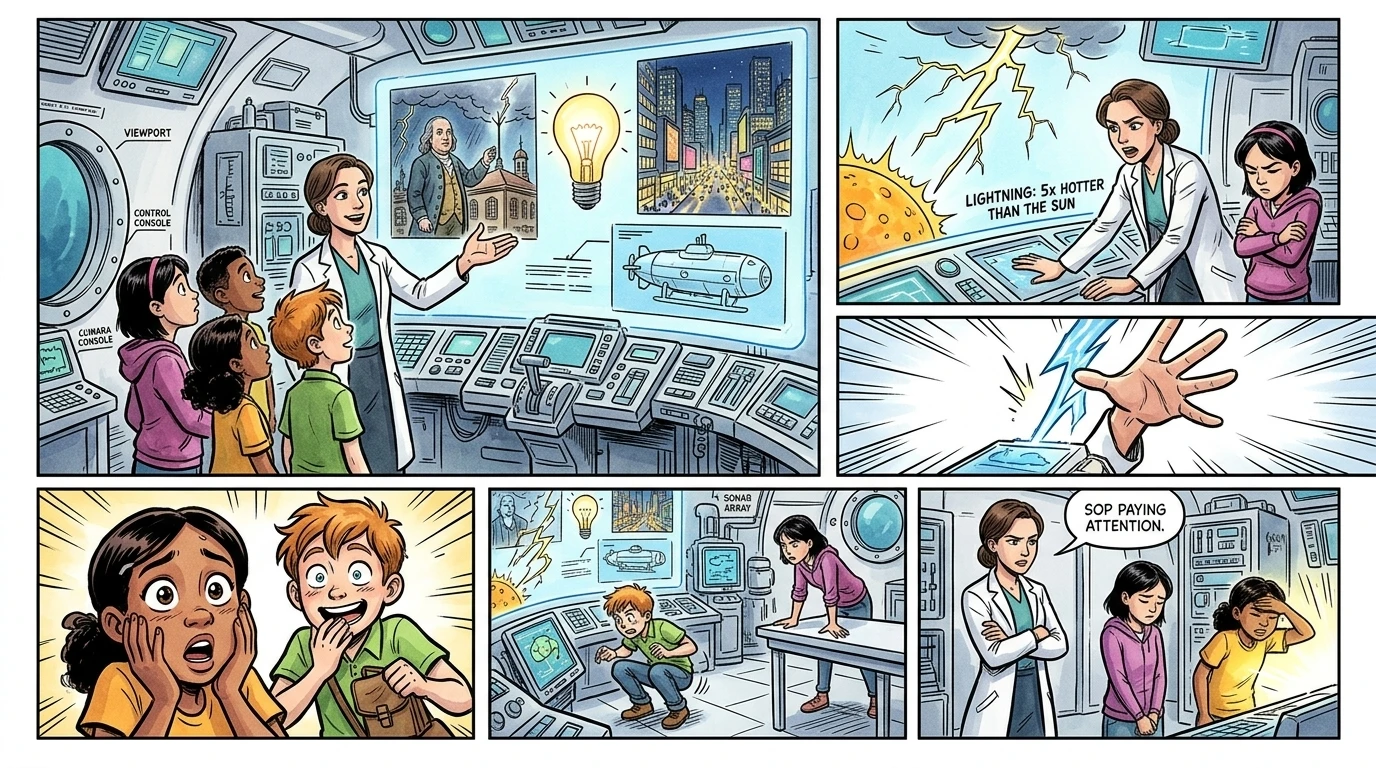
"He proved lightning was electricity!" Dr. Eva continued. "That single discovery led to his invention of the lightning rod, which has saved countless buildings from fires." This understanding of electrical currents paved the way for everything from light bulbs to the very submersible we're in now. In fact, a single lightning bolt is five times hotter than the surface of the Sun, so taming it was a huge step for humanity.
Page 8
The view outside the window returned to the deep, dark ocean. "Oh! So that's why we're safe!" Clara exclaimed, tapping the metal wall. "The eel's electricity flows around the outside of the sub because metal is a great conductor!" Anders nodded, finally understanding. "And the electricity doesn't come inside to get us!"
Page 9
"Exactly! It's like when I shuffle on the carpet and give my mom a tiny shock," Anders added. Amara chimed in, "Or like the batteries that make my race car go!" Clara looked from the eel outside to the control panel inside. "It's amazing to think we're using the same force that makes lightning to explore the bottom of the ocean. We should be very grateful for what scientists like Franklin discovered."
Page 10
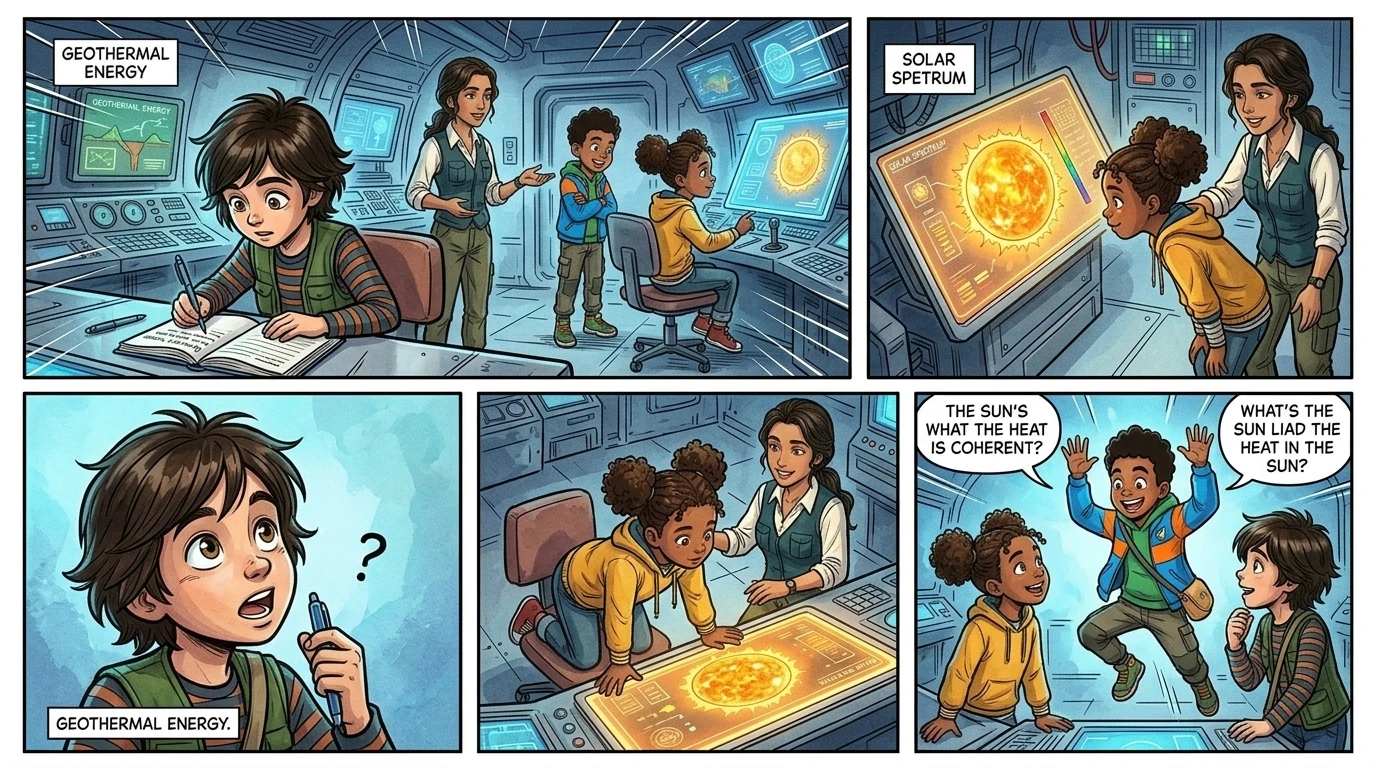
Clara wrote in her notebook, "Electricity is the powerful energy that flows all around us, from storms in the sky to creatures in the sea." She capped her pen and looked at Dr. Eva with a new question already forming. Amara, looking at a diagram of the sun on a nearby screen, voiced it first. "If lightning is so hot," she asked, "what makes the actual Sun so hot?"
About this story
- Audience: kids (ages 6–12)
Read Wonder Science on your phone
Wonder Science is available on Android. Get Wonder Science on Google Play.