The Amazing Immune System

The Amazing Immune System — an illustrated science story, set in England. 10 illustrated pages, free to read on Wonder Science.
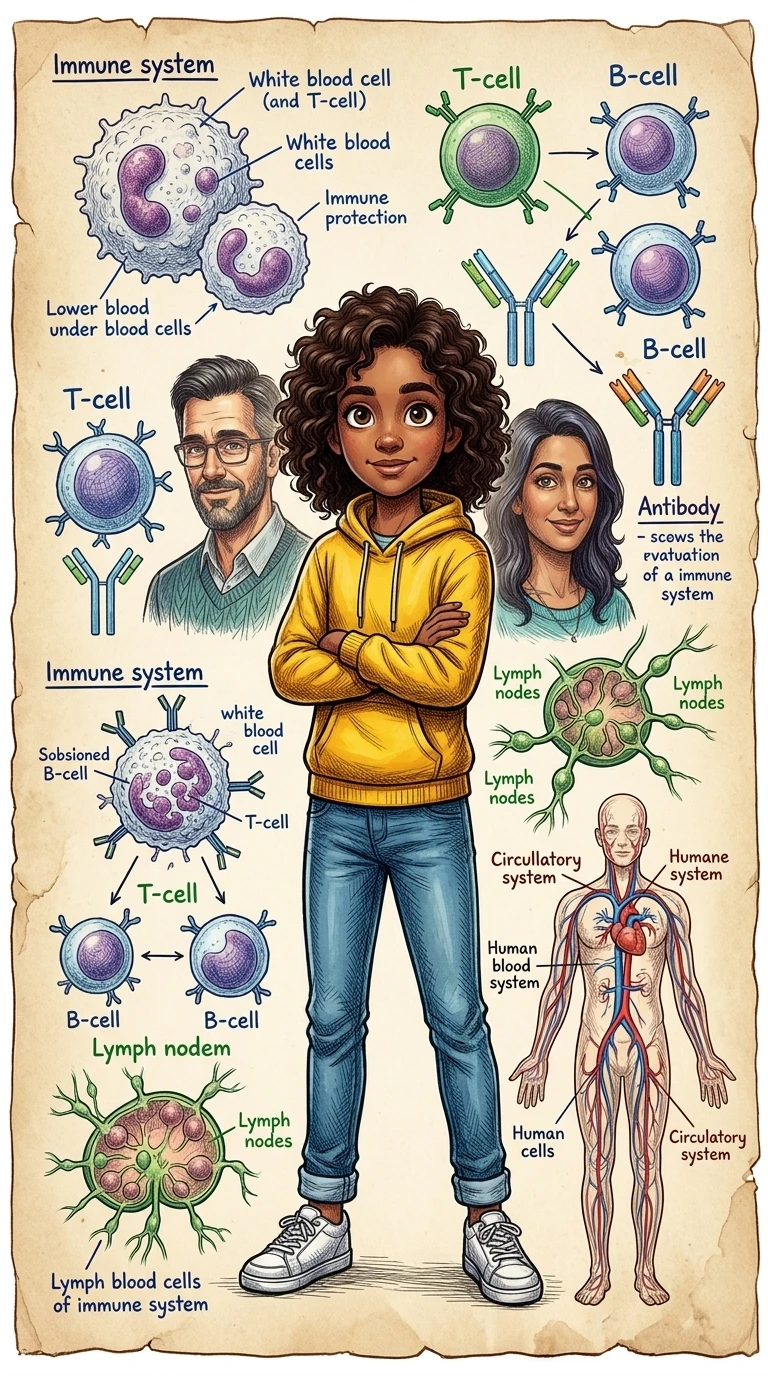
The Amazing Immune System — book cover — Wonder Science
The Amazing Immune System — an illustrated science story, set in England. 10 illustrated pages, free to read on Wonder Science.

Page 1
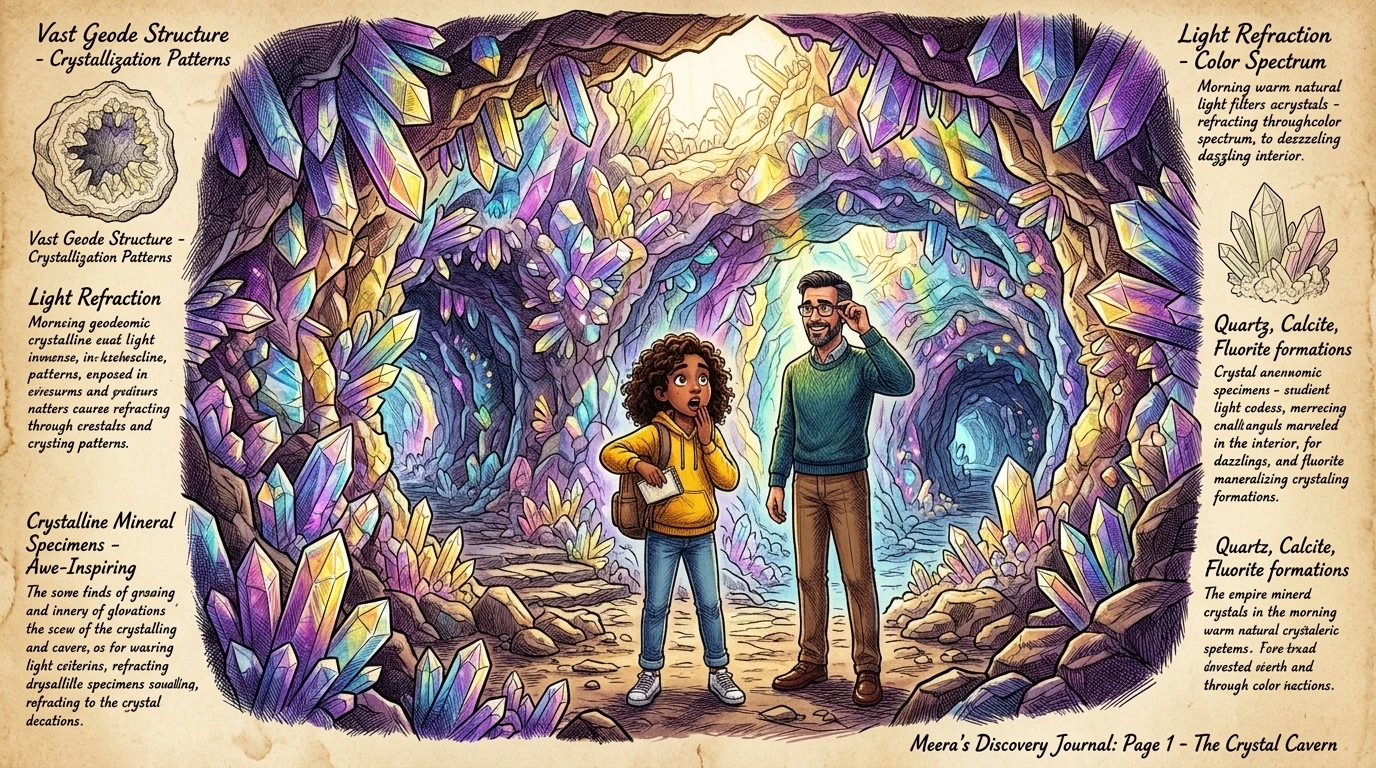
Meera gasped as she and her family stepped into the crystal cave. Light refracted everywhere, creating a kaleidoscope of colors.
Meera gasped as she and her family stepped into the crystal cave. Light refracted everywhere, creating a kaleidoscope of colors. "Wow," she whispered, pulling out her notebook. Her father smiled, adjusting his glasses, "It's like being inside a giant geode!"

Meera gasped as she and her family stepped into the crystal cave. Light refracted everywhere, creating a kaleidoscope of colors. "Wow," she whispered, pulling out her notebook. Her father smiled, adjusting his glasses, "It's like being inside a giant geode!"

Page 2
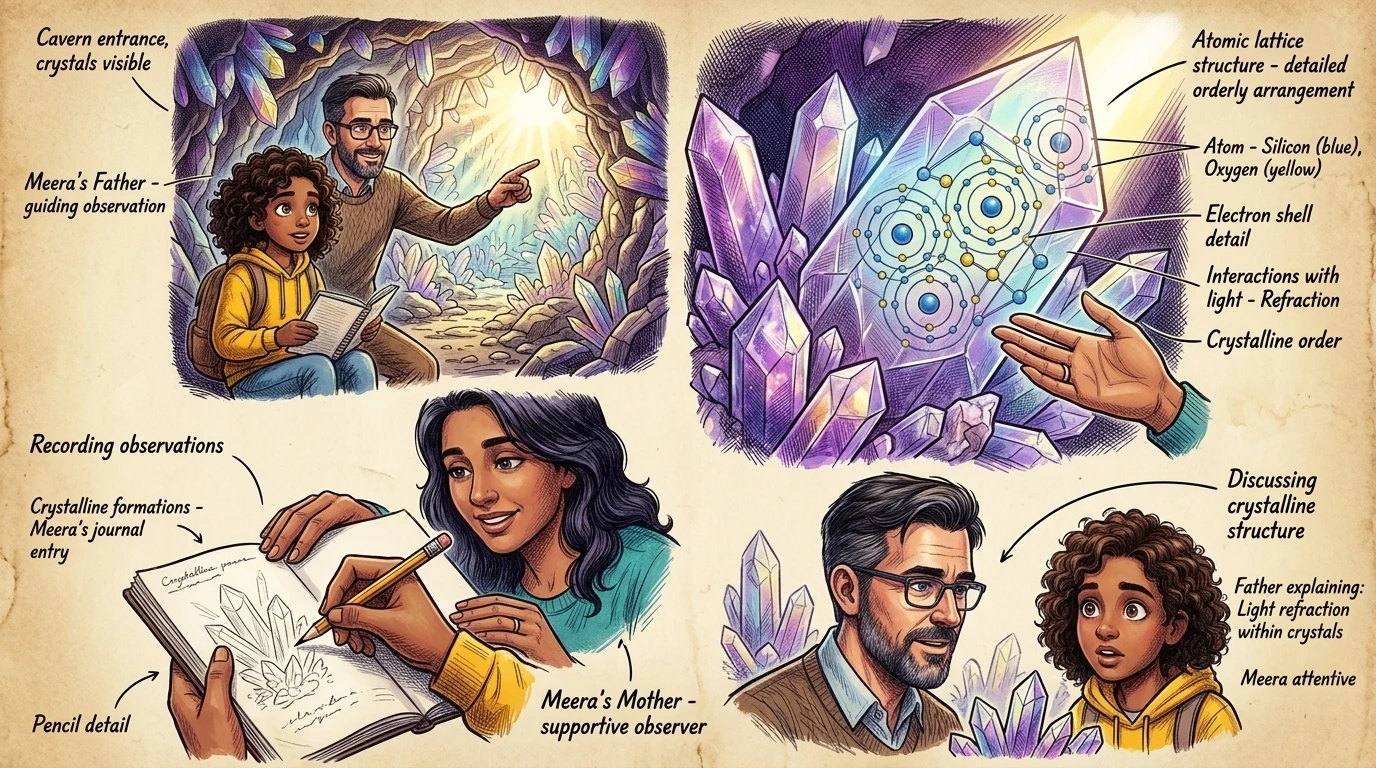
"What makes these crystals so shiny?" Meera asked, scribbling in her notebook. Jake, her older brother, shrugged. "Probably just some weird rock stuff." Claire…
"What makes these crystals so shiny?" Meera asked, scribbling in her notebook. Jake, her older brother, shrugged. "Probably just some weird rock stuff." Claire, her mother, chuckled. "Actually, it's all about their structure, how their atoms are arranged. It determines how they interact with light."

"What makes these crystals so shiny?" Meera asked, scribbling in her notebook. Jake, her older brother, shrugged. "Probably just some weird rock stuff." Claire, her mother, chuckled. "Actually, it's all about their structure, how their atoms are arranged. It determines how they interact with light."

Page 3
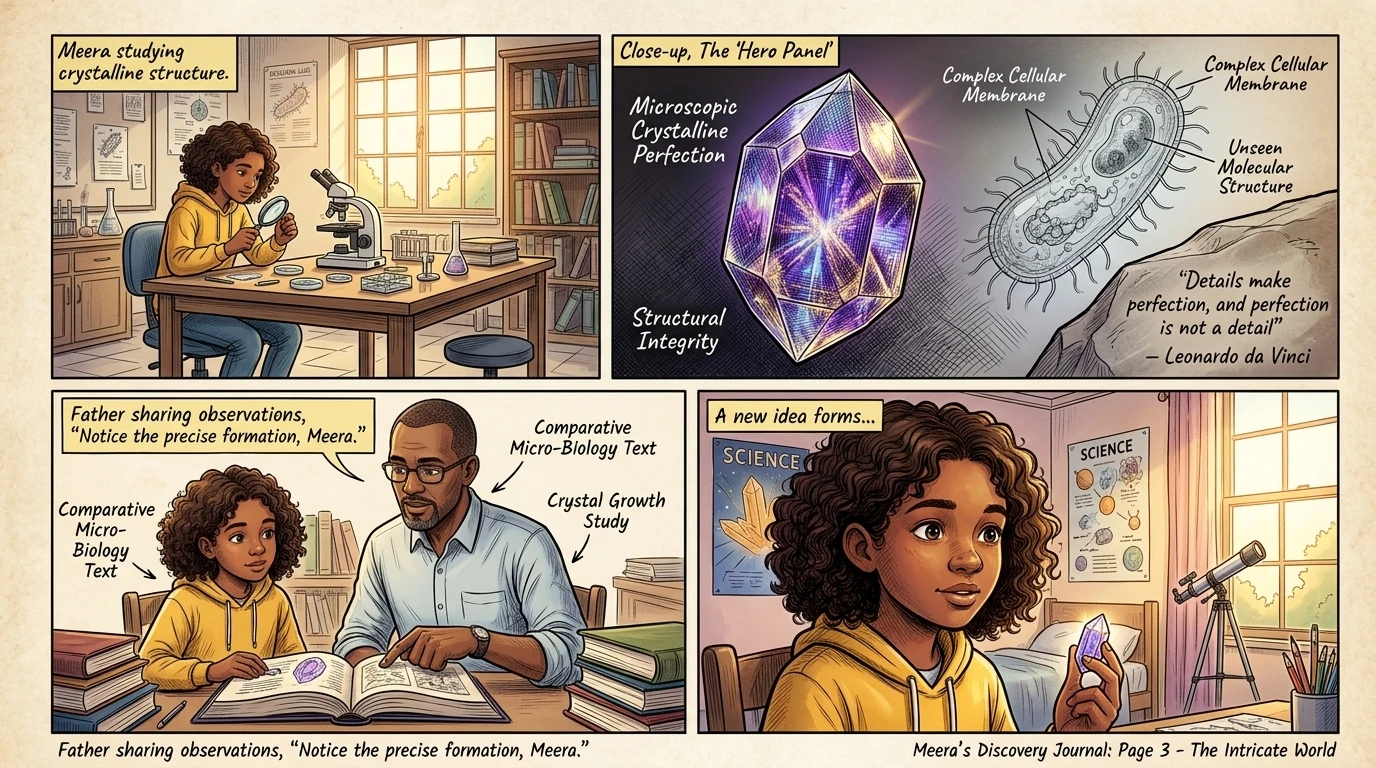
"It's fascinating how order at a tiny scale makes such beauty at a scale we can see!" said Meera's father, adjusting his glasses to look at the crystals.
"It's fascinating how order at a tiny scale makes such beauty at a scale we can see!" said Meera's father, adjusting his glasses to look at the crystals. "It reminds me of what Leonardo da Vinci said: 'Details make perfection, and perfection is not a detail.' Each tiny crystal face contributing to the whole." Meera looked thoughtful. "But what about things we can't see?" she asked. "Like... germs? Do they have a structure too?"

"It's fascinating how order at a tiny scale makes such beauty at a scale we can see!" said Meera's father, adjusting his glasses to look at the crystals. "It reminds me of what Leonardo da Vinci said: 'Details make perfection, and perfection is not a detail.' Each tiny crystal face contributing to the whole." Meera looked thoughtful. "But what about things we can't see?" she asked. "Like... germs? Do they have a structure too?"

Page 4
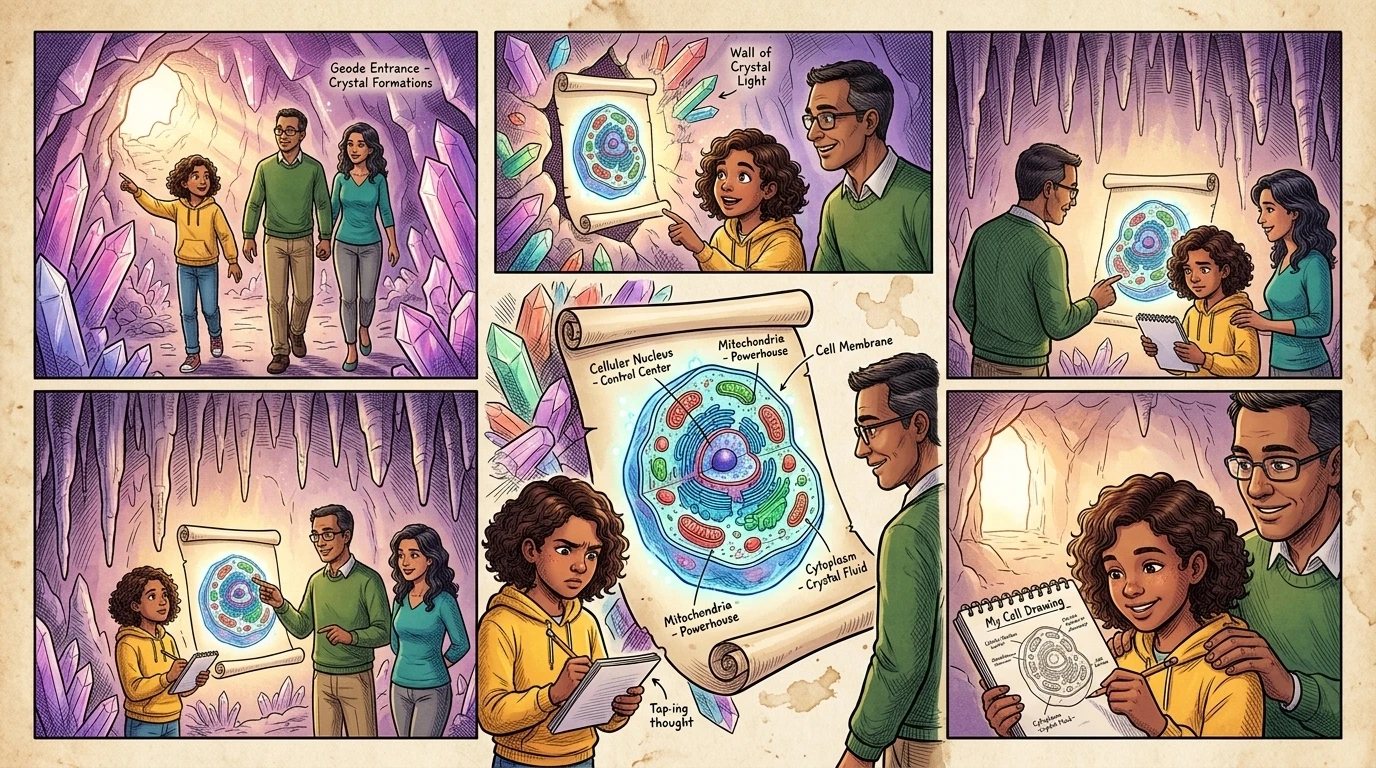
Claire nodded. "Absolutely! In fact, everything is made of cells, from the largest tree to the tiniest bacteria. They're like miniature crystal caves, each with…
Claire nodded. "Absolutely! In fact, everything is made of cells, from the largest tree to the tiniest bacteria. They're like miniature crystal caves, each with its own amazing structure." Meera tapped her pencil against her notebook. "Then I wonder if each tiny cell has protectors?" she wondered. Her Father chuckled. "That's a good question! Let's travel back in time to meet a man who dedicated his life to studying exactly that."

Claire nodded. "Absolutely! In fact, everything is made of cells, from the largest tree to the tiniest bacteria. They're like miniature crystal caves, each with its own amazing structure." Meera tapped her pencil against her notebook. "Then I wonder if each tiny cell has protectors?" she wondered. Her Father chuckled. "That's a good question! Let's travel back in time to meet a man who dedicated his life to studying exactly that."

Page 5
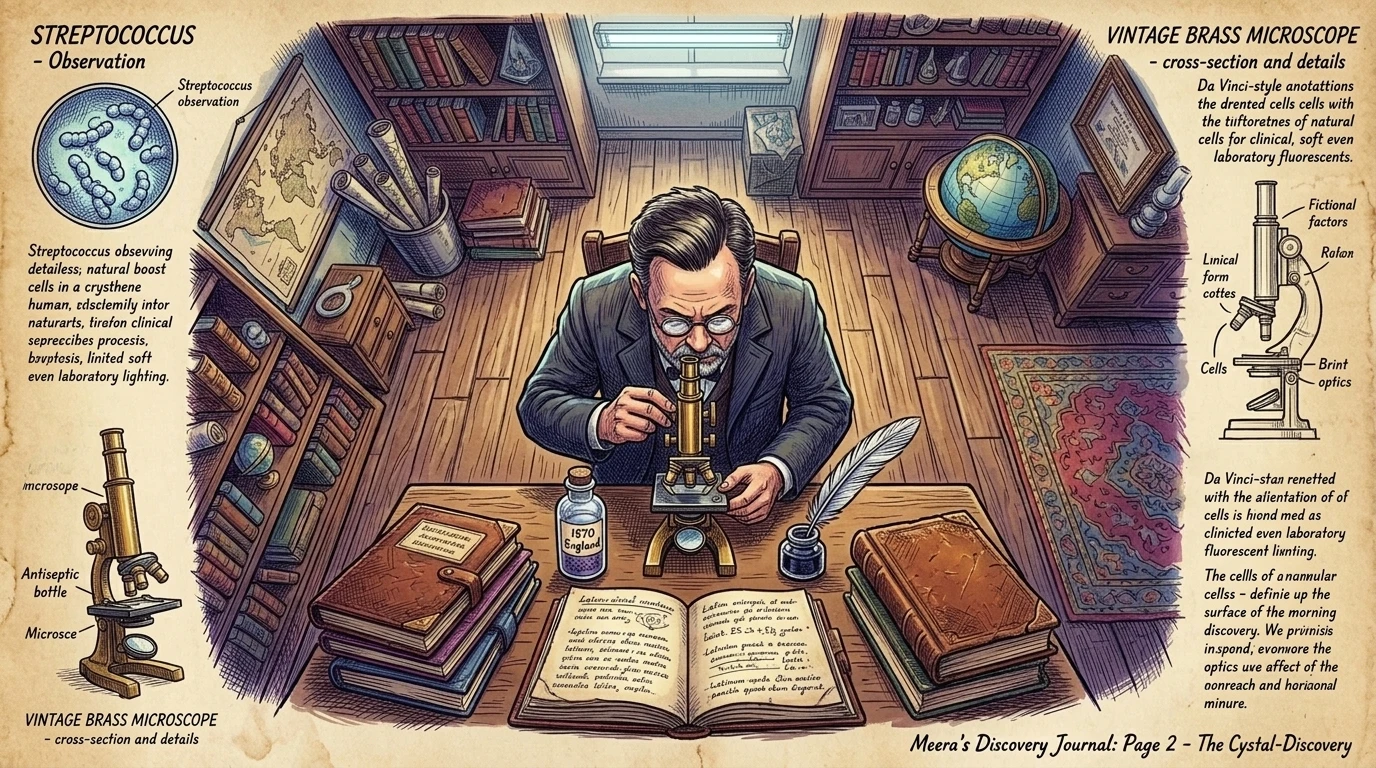
England, 1870. A cozy study, filled with books and the scent of antiseptic. Louis Pasteur, a determined man in his late 40s with a neatly trimmed mustache and…
England, 1870. A cozy study, filled with books and the scent of antiseptic. Louis Pasteur, a determined man in his late 40s with a neatly trimmed mustache and short dark hair, wearing a dark frock coat and spectacles, peered through a microscope. He worked tirelessly, even after suffering a stroke that partially paralyzed him.

England, 1870. A cozy study, filled with books and the scent of antiseptic. Louis Pasteur, a determined man in his late 40s with a neatly trimmed mustache and short dark hair, wearing a dark frock coat and spectacles, peered through a microscope. He worked tirelessly, even after suffering a stroke that partially paralyzed him.

Page 6
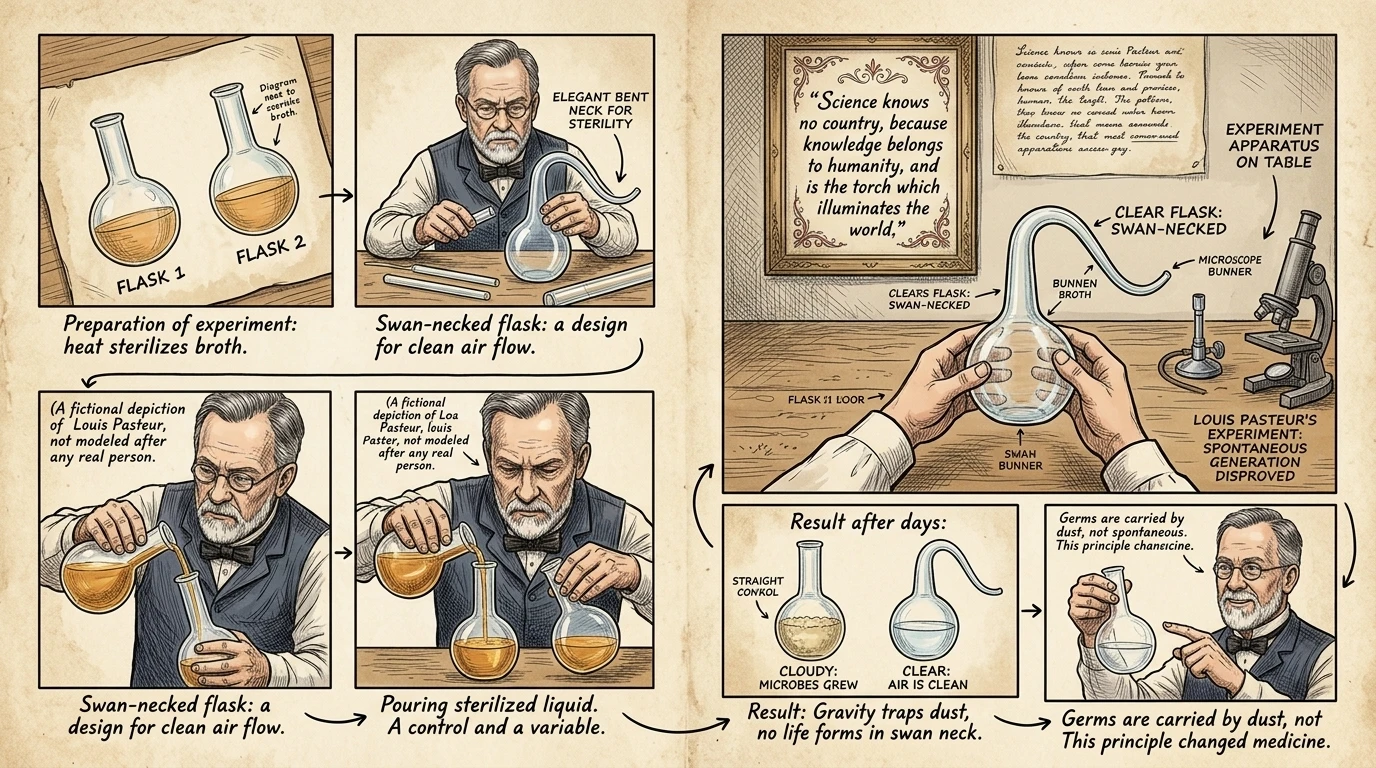
Pasteur often said, "Science knows no country, because knowledge belongs to humanity, and is the torch which illuminates the world." He meticulously studied…
Pasteur often said, "Science knows no country, because knowledge belongs to humanity, and is the torch which illuminates the world." He meticulously studied flasks of broth, looking for the cause of spoilage. He noticed that even boiled broth, sealed from the air, still grew cloudy with tiny organisms. Pasteur hypothesized that these weren't spontaneously appearing, but entering from somewhere. He developed a special swan-necked flask.

Pasteur often said, "Science knows no country, because knowledge belongs to humanity, and is the torch which illuminates the world." He meticulously studied flasks of broth, looking for the cause of spoilage. He noticed that even boiled broth, sealed from the air, still grew cloudy with tiny organisms. Pasteur hypothesized that these weren't spontaneously appearing, but entering from somewhere. He developed a special swan-necked flask.

Page 7
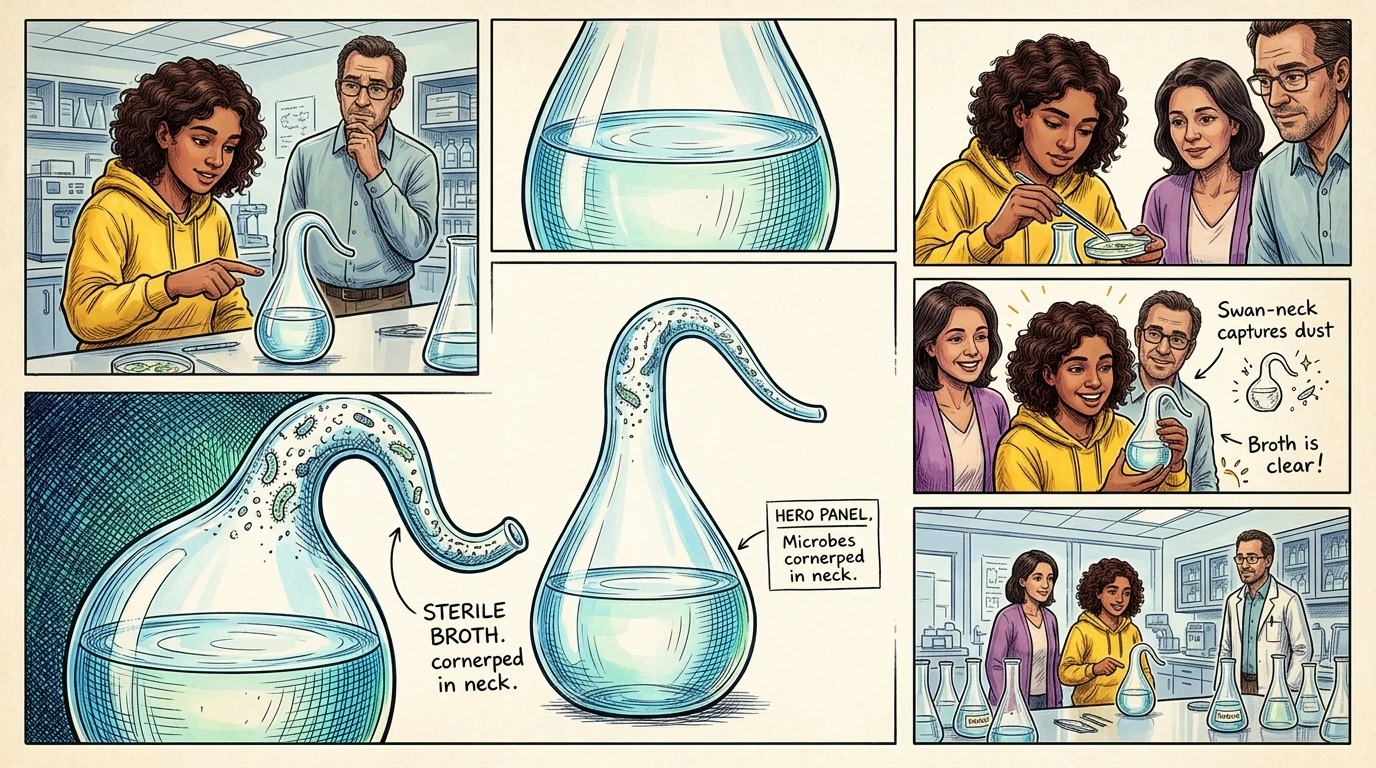
He boiled broth in the swan-necked flask, leaving the neck open to the air. Dust and microbes collected in the curve of the neck, but the broth remained…
He boiled broth in the swan-necked flask, leaving the neck open to the air. Dust and microbes collected in the curve of the neck, but the broth remained sterile! Pasteur had proven that tiny organisms, germs, caused disease! But where were the soldiers that fought for us?!

He boiled broth in the swan-necked flask, leaving the neck open to the air. Dust and microbes collected in the curve of the neck, but the broth remained sterile! Pasteur had proven that tiny organisms, germs, caused disease! But where were the soldiers that fought for us?!

Page 8
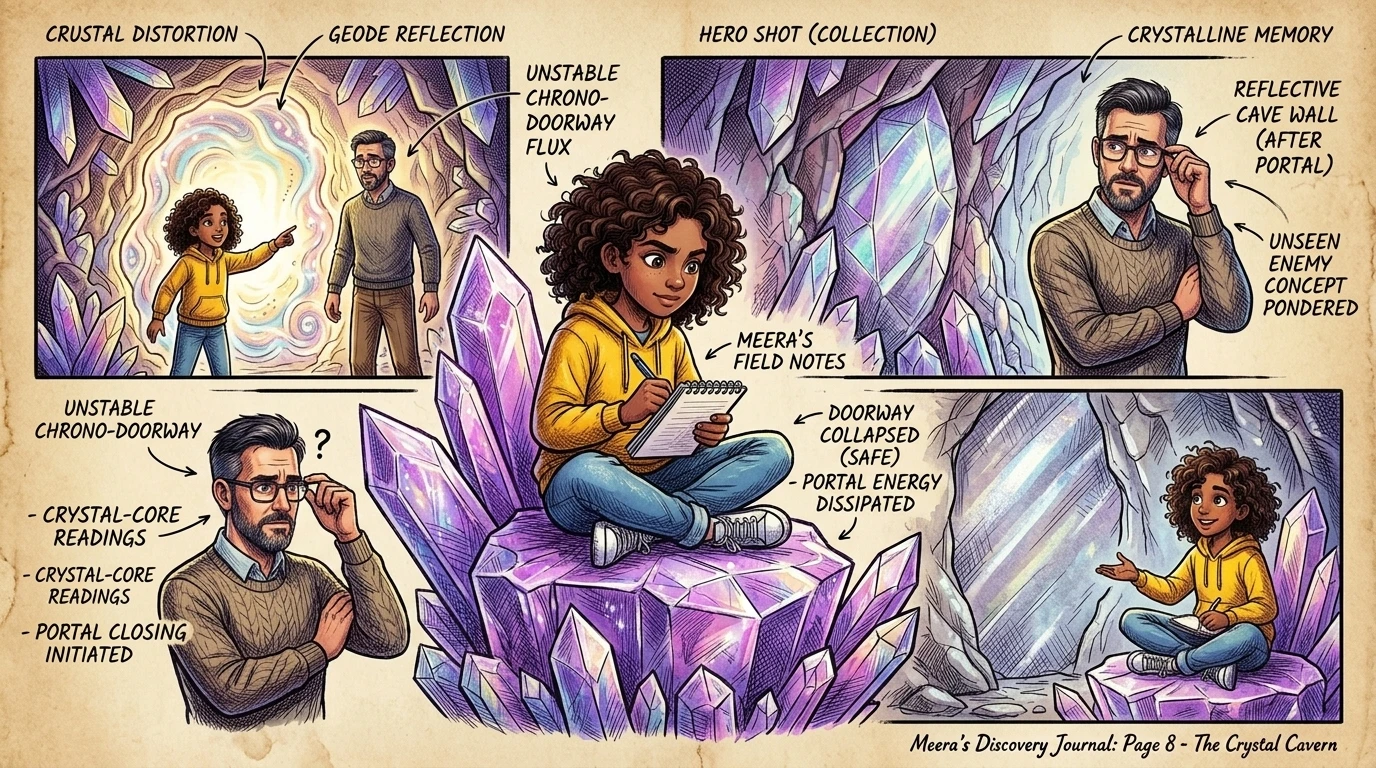
Back in the crystal cave, the shimmering doorway vanished. "So Pasteur proved germs caused disease," Meera said, making a note.
Back in the crystal cave, the shimmering doorway vanished. "So Pasteur proved germs caused disease," Meera said, making a note. "But that still doesn't say what fights them!" Jake chimed in, "Yeah, it's like knowing the enemy is there, but not knowing who the good guys are. Wait, do we even have good guys inside us fighting diseases?"

Back in the crystal cave, the shimmering doorway vanished. "So Pasteur proved germs caused disease," Meera said, making a note. "But that still doesn't say what fights them!" Jake chimed in, "Yeah, it's like knowing the enemy is there, but not knowing who the good guys are. Wait, do we even have good guys inside us fighting diseases?"

Page 9
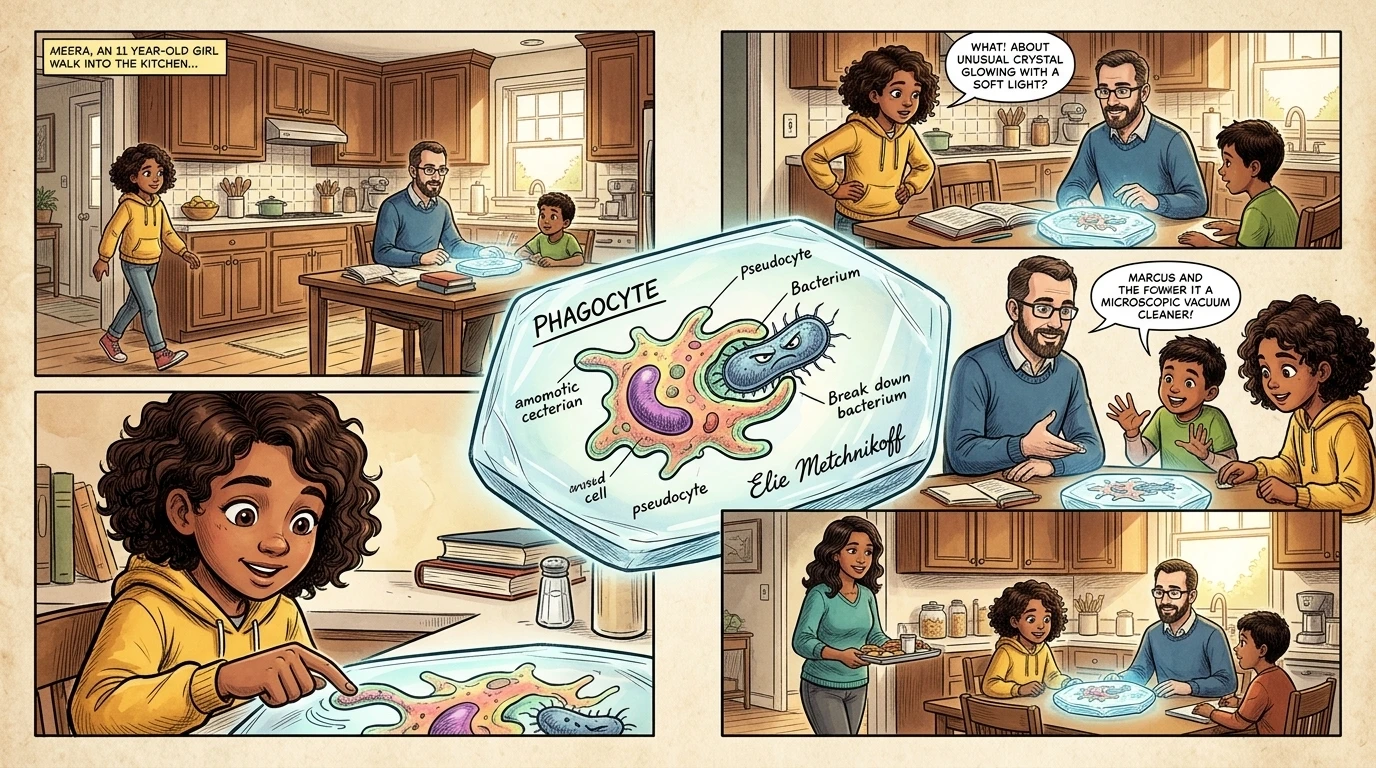
Her father smiled. "That's where Elie Metchnikoff comes in. He discovered phagocytes, the cells that engulf and destroy bacteria!" Marcus added, "Think of them…
Her father smiled. "That's where Elie Metchnikoff comes in. He discovered phagocytes, the cells that engulf and destroy bacteria!" Marcus added, "Think of them like microscopic vacuum cleaners! They are constantly patrolling our bodies." Claire then added, "He also discovered that the immune system gets weaker as people get older."

Her father smiled. "That's where Elie Metchnikoff comes in. He discovered phagocytes, the cells that engulf and destroy bacteria!" Marcus added, "Think of them like microscopic vacuum cleaners! They are constantly patrolling our bodies." Claire then added, "He also discovered that the immune system gets weaker as people get older."

Page 10
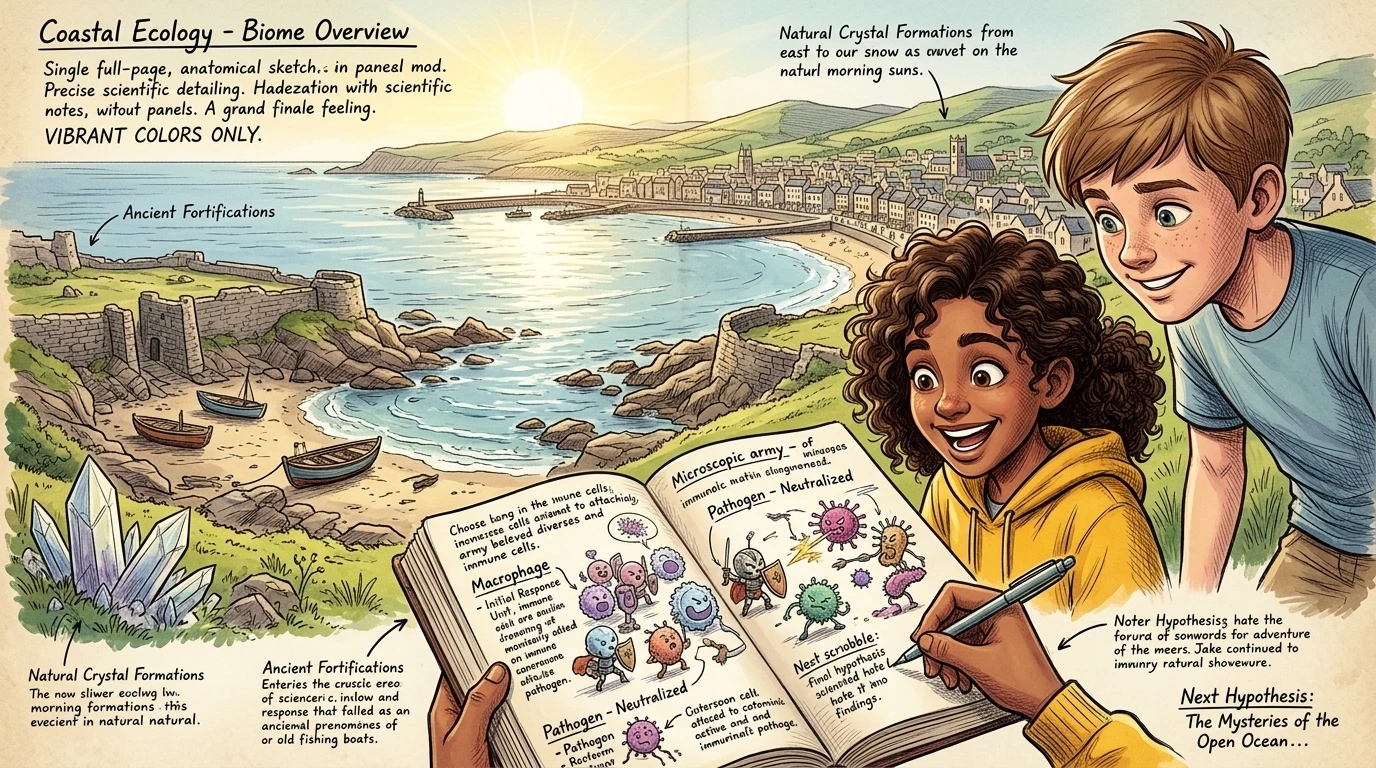
Meera scribbled furiously in her notebook. "So, the immune system is like a microscopic army, constantly defending us from invaders!" she exclaimed.
Meera scribbled furiously in her notebook. "So, the immune system is like a microscopic army, constantly defending us from invaders!" she exclaimed. Jake grinned. "That's pretty amazing. But if we have this awesome army, why do we still get sick?" Meera smiled. "That's an amazing question! I wonder if there are certain enemies or weapons that are just really hard to fight?"

Meera scribbled furiously in her notebook. "So, the immune system is like a microscopic army, constantly defending us from invaders!" she exclaimed. Jake grinned. "That's pretty amazing. But if we have this awesome army, why do we still get sick?" Meera smiled. "That's an amazing question! I wonder if there are certain enemies or weapons that are just really hard to fight?"

About this story

  • Location: England
  • Audience: kids (ages 6–12)

Read Wonder Science on your phone

Wonder Science is available on Android. Get Wonder Science on Google Play.

More Wonder Science stories

All Wonder Science stories · Open the library